Official report available on South Australia’s blackout last week
 Derek Abbott uploaded a file. No High Level International Nuclear Waste Dump in South Australia, 5 Oct 16
A NEW wave of wind farm developments is sweeping Victoria
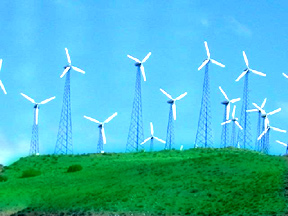 Wind farm developments crank up across Victoria
 , PETER HUNT, The Weekly Times
UK company RES, which has built 5000 turbines worldwide, is building its latest wind farm on 17 Murra Warra farmers’ land, including Victorian Farmers Federation president David Jochinke’s property.
Mr Jochinke, who will have six turbines built on his property, said it was a great to have all landholders working together on the project.
RES Murra Warra project manager Kevin Garthwaite said the company had chosen Murra Warra on the flat Wimmera plain because it was on a major transmission line, had “good” wind and was capable of generating more than 400 megawatts of electricity, enough to supply about 220,000 homes.
He said the project would employ 250-300 people during construction, with ongoing employment for 10-15 workers once completed.
“We’ve been really pleased with the level of community support,” Mr Garthwaite said. “If it goes through (the planning process) without a hitch we’d hope to start construction towards the end of 2017.”……..http://www.weeklytimesnow.com.au/news/national/wind-farm-developments-crank-up-across-victoria/news-story/d6f4464f23be9c83c0d83a98e9223498
South Australia: Electranet’s privately owned and run electricity transmission system is in a mess.
Dennis Matthews , 3rd October 2016
 Electranet now wants the public to pay for new infrastructure. Electranet’s proposed investment will be rewarded with a handsome guaranteed return on the amount invested, which will be funded by all South Australian electricity users in the form of increased tariffs.
Why do we need such a high capacity transmission network? It is to service big electricity users to the north of Port Wakefield, like BHP. Getting everyone to pay for the new infrastructure is a huge publicly funded cross-subsidy to the mining industry. It is a publicly-funded disincentive for more efficient and reliable distributed generation. It is anti-competitive.
The windfall profits reaped by Electranet will then go offshore.
This is a win for Electranet and the big energy guzzling mining companies but, as usual, a huge kick in the guts for small businesses and the average South Australian.
New South Wales govt push for electricity interconnector with South Australia
NSW push for electricity interconnector with South Australia, SMH, Kirsty Needham , 2 Oct 16 The Baird government will push for a high-voltage interconnector to be built between NSW and South Australia following South Australia’s blackout, convinced the incident has highlighted the need for national energy security.
NSW Minister for Energy Anthony Roberts will attend an emergency meeting of COAG’s Energy Council on Friday, where the South Australian government is expected to seek to speed up a proposal to build the new interconnector between South Australia and the east coast.
The $500 million proposal would involve South Australia’s ElectraNet and NSW’s Transgrid constructing a 300-kilometre transmission route, potentially between Buronga in NSW and Robertson in South Australia, that could supply surplus electricity from NSW.
NSW can already exchange power with Queensland and Victoria.
The project must first be approved by the Australian Energy Regulator because the construction cost will ultimately be passed on to electricity consumers.
But the Baird government argues the interconnector would not only ensure the lights stay on but also boost the growth of the NSW renewable energy sector, particularly solar farms in regional NSW, which would be able to access South Australian customers…….
The NSW Greens energy spokesman Jeremy Buckingham said: “NSW should adopt a state-based renewable energy target, otherwise all the investment and jobs in the clean energy sector will be attracted to other states that do have state-based targets and NSW will miss out.
“Mike Baird can either dance with the coal-loving dinosaurs or he can embrace the booming clean energy future.”
ElectraNet is expected to lodge an application for approval for the interconnector project by the end of the year. An analysis by PWC for Transgrid has estimated the cost to NSW households at $8 a year. http://www.smh.com.au/nsw/nsw-push-for-electricity-interconnector-with-south-australia-20160930-grspxa.html
West Australian wave energy company in CETO wave farm deal with Sri Lankan company
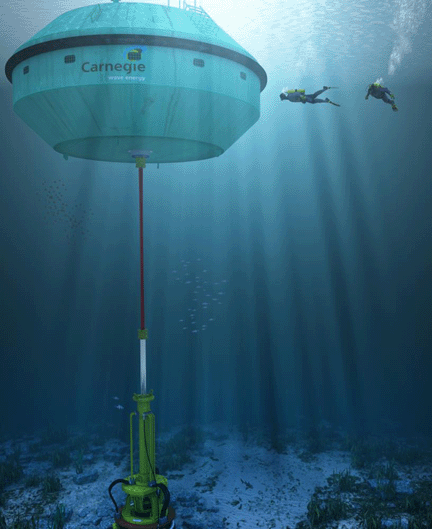 Carnegie Wave Energy up on Sri Lankan agreement https://au.news.yahoo.com/thewest/wa/a/32773367/carnegie-wave-energy-up-on-sri-lankan-agreement/#page1 – on September 30, 2016
The wave energy firm will work with Lanka Energy Conservation to identify opportunities and development pathways for its technology on the island nation.
Specifically the two companies will examine opportunities to enable CETO wave farms to be integrated into the existing or new power infrastructure to supply clean power and freshwater.
Carnegie’s chief operating officer Greg Allen said the company had made significant progress in its entry into the “small island” market this year.
“The signing of this MOU provides us with another opportunity to provide services to explore the possibility of incorporating CETO, along with microgrid solutions, to enable high penetration of renewable energy, displacing imported diesel,” he said.
Mr Allen said island nations were assessing clean, cost effective, alternative energy solutions to remove their reliance on electricity generated using imported fossil fuels.
“These imported fossil fuels come at a high cost, do not provide energy security and have a significant environmental footprint,” he said.
“Carnegie presents an effective clean energy alternative that can provide a solution for island and fringe of grid communities globally.” Lanka Energy Conservation chairman and managing director Dammica Wickramaratne said Sri Lanka showed good potential for wave, solar and wind energy power.
Australia can have renewable energy AND energy security
Director of CME Bruce Mountain said while it would take time and preparation to change the nation’s  generation mix, it was “entirely solvable” and had been done in places where renewables had made a large penetration of the energy market, such as Texas, Denmark, Portugal and Norway.
“There is nothing intrinsic to renewable capacity that implies a lower security and certainty of supply than a fossil system,” he said.
“There is nothing intrinsic to it. It is just not the case. There is a different mix of generation, a different operating regime of the existing capacity, a different operating regime of the power system and the transmission system, all of which is entirely within the skill set of engineers, power system operators, planners and so on.”
Nothing stopping Australia from having both energy security and renewable energies say experts, as Federal Government ramps up attacks, Examiner,
2 Oct 2016, There is no reason Australia can’t have energy security and a network increasingly reliant on renewables, energy experts say, as the Federal Government steps up its attacks on Labor state governments’ “aggressive” targets.
Energy Minister Josh Frydenberg said he wanted the Labor state governments, which included Queensland, South Australia and Victoria, to “understand there is a cost and there are implications to these aggressive state-based renewable energy targets”.
But Mr Frydenberg was also forced to admit preliminary inquiries had shown the mass South Australian blackout that sparked the debate was the fault of an unprecedented storm, and not the state’s increasing reliance on renewable energy.
But Mr Frydenberg said the experience should be used as a starting point for a national conversation for what he called “aggressive” renewable energy targets set by Labor state governments and those targets could not take precedence over energy security. …….
“The Australian Energy Market Operator has pointed out as recently as August this year that, if the interconnectors between South Australia and Victoria went down, because of the high reliance on intermittent supply, namely wind and solar, there would be in their words, a high likelihood of a full regional blackout,” he said.
But energy experts said there was no reason the nation could not have energy security while transitioning to a power network more heavily reliant on clean energy. Continue reading
Australia’s conservative government renews its attacks on renewable energy
 Coalition launches rubbish attack on wind and solar after SA blackout, Independent Australia Giles Parkinson 30 September 2016 Coalition claptrap back on agenda: coal-fired power causes global warming which causes extreme weather. When record storm destroys transmission towers causing a blackout, BLAME RENEWABLES!
THE COALITION GOVERNMENT launched a ferocious attack against wind and solar energy after the major South Australian blackout, even though energy minister Josh Frydenberg and the grid operators admit that the source of energy had nothing to do with catastrophic outage.
Frydenberg, however, lined up with Prime Minister Malcolm Turnbull, Deputy Prime Minister Barnaby Joyce, One Nation’s Malcolm Roberts, Independent Senator Nick Xenophon and a host of conservative commentators, including Andrew Bolt, Alan Moran, the ABC’s Chris Ullmann, and Fairfax’s Brian Robins to exploit the blackout to question the use of renewable energy.
Frydenberg used the blackout to continue his persistent campaign against the renewable energy targets of state Labor governments in South Australia, Victoria and Queensland, saying that the blackout was proof that these targets were “unrealistic.”
He made clear that he wanted the states – South Australia and Queensland which are pushing for 50% renewable energy, and Victoria 40% – to abandon their schemes and conform to the Federal target, which has target of about 23.5% renewables.
The Federal scheme effectively ends in 2020, while the state based schemes provide longer term investment signals by providing a 2025 and 2030 timeframes…….
Electranet – which runs the grid in South Australia – and other grid authorities, have made clear that the blackout – which is unprecedented in Australia and led to its first ever “black start” – would have happened whatever the fuel source at the time.
Power lost after 3 of the 4 transmission lines were brought down by the storm
Bruce Mountain goes into detail about what was happening in this analysis here. But it is now clear that at least 23 high voltage power poles were lost in five different locations, bringing down three of the big four transmission lines that carry electricity to and from the north of the state, sparking a State-wide outage and its isolation from Victoria…….
His views were echoed by the likes of Roberts, Xenophon, the fossil fuel lobby, the South Australian Opposition, and even ABC commentator Chris Uhlmann, who agreed with Joyce that the wind farms were not working because the wind was blowing too hard…..https://independentaustralia.net/politics/politics-display/coalition-launches-rubbish-attack-on-wind-and-solar-after-sa-blackout,9532
politicians blame renewable energy for blackout – though none can say HOW!
 Politicians blame wind power for taking out electrical grid in South Australia, Mashable, BY ANDREW FREEDMAN , 30 Sep 16 In the wake of an unprecedented blackout that cut off an entire Australian state from electricity on Wednesday into Thursday, some politicians are vilifying renewable power sources, particularly wind turbines.
Considering the rapid rise in renewables around the world, including the U.S., the political fight that has broken out in Australia is not an issue limited to one nation. In fact, it could foreshadow future fights if blackouts occur in the U.S. or Europe, two areas where renewable energy use has increased recently……..
However, ElectraNet, which owns transmission lines in South Australia, said the severe storm — which included powerful winds and tens of thousands of cloud-to-ground lightning strikes, damaged three out of the four transmission lines that connect Adelaide with northern parts of South Australia.
None of the politicians have proposed an explaination for how wind turbines could’ve caused such a widespread outage, a first in Australia’s history, whereas ElectraNet has done so.…….
Prime Minister Malcolm Turnbull told reporters that the state’s aggressive push into renewables may have contributed to the unprecedented statewide blackout.
A federal inquiry is likely to be launched into the cause of the more than 24-hour blackout, which may settle some of the debate going on now. Officials in states with a high reliance on wind power, such as Texas, will be closely watching the developments Down Under. http://mashable.com/2016/09/29/south-australia-blackout-wind-power/#KFHs2CKfmiqG
For Tasmania, Renewables rapidly proving a cheaper option
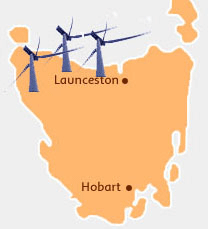 Renewables rapidly proving a cheaper option
 JACK GILDING, Mercury
Bloomberg New Energy Finance says renewables are already cheaper than new fossil fuel plants in Australia. The conservative predictions of the Australian Government’s Bureau of Resources and Energy Economics say they will be within a decade.
Of particular interest for Tasmania is the relative costs of electricity from wind and solar. Solar is getting cheaper faster than wind. Again, opinions vary on when the crossover will be. Recent statements by major Australian players suggest it will not be long……
Tasmania rightly prides itself on its potential for renewable energy development, but the unfortunate reality is that no large projects have commenced since the opening of the Musselroe Wind Farm in 2014.
Tasmania may only have a limited time to garner its rightful share of the $280 billion being invested globally in renewable energy each year.
Right now windy Tasmania has an advantage, but as the cost of solar drops, investors will look to sunnier locations. Continue reading
Autralia’s PM Malcolm Turnbull peddling “ignorant rubbish” over renewable energy
 ‘Ignorant rubbish’: PM under fire over renewables lecturing Victorian Premier Daniel Andrews has lashed out at the prime minister, accusing him of peddling “ignorant rubbish” over renewable energy. SBS World News,
Source:
AAP Malcolm Turnbull has taken another swipe at the renewable energy policies of some state governments as he and Victorian Premier Daniel Andrews exchanged angry words over the issue.
Mr Andrews lashed out at the prime minister, accusing him of peddling “ignorant rubbish” over renewable energy after South Australia was blacked out in ferocious storms this week……..
Mr Andrews told ABC radio on Friday Mr Turnbull was “peddling ignorant rubbish, lecturing people about things he knows nothing about and conflating an extreme weather event”.
“It seems like Tony Abbott is back.”
The prime minister had no credibility when he talked about establishing a national renewable energy scheme.
“We are the only jurisdiction in the developed world that had a price on carbon and got rid of it and had a renewable energy target and wound it back,” Mr Andrews said.
The only way Australia could reach the Commonwealth’s renewable energy target of 23.5 per cent by 2020 was through the ambitions of state schemes.
Queensland and South Australia are aiming for 50 per cent and Victoria for 40 per cent, although over longer time frames.
Queensland’s acting energy minister Leeanne Enoch said her state was sticking to its target.
“You never know which Malcolm Turnbull you’re going to get – are we going to get the renewable champion one day and then we’re going to get an almost climate denier the next day,” she said.
“It’s bizarre.”…….http://www.sbs.com.au/news/article/2016/09/30/ignorant-rubbish-pm-under-fire-over-renewables-lecturing
South Australia’s electricity blackout was caused by extreme weather, not by renewables – energy experts
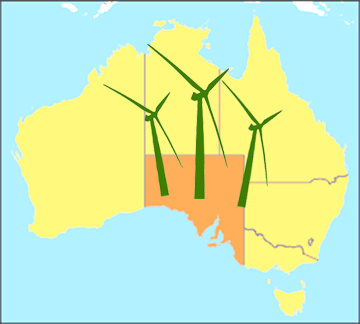 SA weather: No link between blackout and renewable energy, experts say, ABC News, 29 Sep 16 By political reporter Matthew Doran Linking the statewide blackout in South Australia with the state’s heavy reliance on renewable energy is unfounded, energy industry experts say.
Key points:
- South Australia has the highest rate of renewable energy in Australia
- The ‘one in a 50 year’ weather event ‘couldn’t have been prevented or foreseen’
- SA to be an example for other states and territories when planning for significant weather events
A severe storm caused the entire state to go dark yesterday afternoon, following serious damage to more than 20 transmission lines.
That infrastructure failure put extra strain on the interconnector system that links the South Australian electricity grid with the east coast — and tripped safeguards which shut down the power supply to the state………
Mr Frydenberg highlighted the underlying cause of the blackout was the weather.
South Australia has the highest rate of renewable energy in the country, with a fraction over 40 per cent of the state’s power supply generated from sources such as wind and solar farms.
Earlier this week, the Grattan Institute released a report detailing the pressure high uptake in renewables had put on the state’s wholesale power prices, and how it was being viewed as a test case for the rest of the nation. But the report’s author, Tony Wood, said the blackout was as a result of a particularly violent storm and it was usual for a system to shut down to protect itself from further damage. “My understanding, at least at the moment, is there’s no evidence to suggest these two issues are related,” Mr Wood said.
“There’s no evidence to suggest this was caused by too much wind power, or the dependence on wind power, or anything else, or would’ve been any different if any of the power stations that had been shut down earlier this year had still been operating.
“If you’ve got a wind farm or a coal-fired power station at the end of a transmission line, and that system either is taken out by a storm or is forced to shut down to protect itself from a storm, it doesn’t matter what the energy source is.”
There are two interconnector power lines between South Australia and the eastern states, but Mr Wood said there was no indication having more links would have prevented the issue.
“When this event has occurred, it’s created a fault in the system which has caused the generation to trip offline,” the Clean Energy Council’s Tom Butler said.
“It’s separate to the interconnector entirely.
“This is a one-in-a-50 year, almost-unprecedented event for the state that couldn’t have been prevented or foreseen.”
Mr Butler said the Snowtown wind farm, north of Adelaide, was actually helping to prop up the state’s power supply ahead of gas power stations as the network was gradually brought back online.
Labor’s assistant spokesman for climate change, Pat Conroy, told AM it was premature to link the blackout to renewables.
“The South Australian Government has made the point that even if the coal-fired power station that was recently closed down was still operating, it would not have been able to supply power to the state,” he said.“This was a failure of the transmission network, and it didn’t matter what sort of fuel was feeding into the grid, power was not able to flow……..http://www.abc.net.au/news/2016-09-29/sa-weather:-no-link-between-blackout-and-renewables-expert-says/7887052
World first wave/solar power grid for Western Australia
WA firm’s world first wave/solar power grid https://au.news.yahoo.com/thewest/wa/a/32755148/wa-power-firm-to-integrate-solar-wave-and-batteries/#page1 – on September 29, 2016,
The new features will be integrated with Carnegie’s CETO 6 wave technology which uses wave action to drive turbines and create electricity.
The Australian Renewable Energy Agency will kick in $2.5 million and construction will start by the end of the year.
The company is aiming to start commissioning in the first half of next year. “The Garden Island Microgrid Project will be the first time anywhere in the world that wave energy will be combined with solar and batteries in a microgrid configuration,” Carnegie’s managing director and chief executive Michael Ottaviano said.
“The demonstration of this microgrid project will help drive the commercialisation of CETO and will be a model we will roll out to island nations around the world.
“Island nations are desperate for an energy innovation to replace their current reliance on electricity generated using imported fossil fuels, which is extremely expensive and has a large environmental footprint.
“Now Carnegie presents an effective green alternative, with the GIMG project acting as a template for remote island and grid communities globally.”
Carnegie’s CETO technology is different from other wave energy devices as it operates under water.
A new political low: Politicians use S.A. blackout to attack renewable eneregy
 Is this a new low: politicians using a natural disaster to push a fact-free agenda?, Guardian, Matt Grudnoff, 29 Sept 16
Unburdened by evidence, anti-wind campaigners used the South Australian blackout to kick off a debate about renewables while others waited for facts Normally natural disasters are off limits to politicking, at least in the period straight after the event. So it was pretty awful watching politicians and commentators pushing their anti-renewables message on the back of aonce in 50 year storm that hit South Australia and knocked out the electricity grid.
The outage is more likely to have something to do with the 80,000 lightning strikes and the winds that knocked over 22 transmission poles. Who knew violent storms could knock the power out?
It’s hard to imagine how coal fired power would have remained on without a grid for the electricity to flow through.
Just before the grid shut down, renewables were not offline. Wind energy was busy producing almost 1,000 Megawatts of electricity. The problem was not a lack of renewable power but a storm-ravaged grid that couldn’t get it to the consumers…….
Resilient renewables
The real irony is that an electricity system that has decentralised renewable energy with battery storage would be more resilient to these kinds of storms. Houses and businesses with their own batteries could have kept the lights on even when the grid went down.
In the past, renewables were more expensive – but those days are over.Renewable energy has fallen in price and battery storage is close behind. Change in how we produce electricity is coming and an anti-renewables campaign will only slow it and make the transition more difficult.
Rather than attack renewables, the government should be putting in place policies that help with the transition. The economics of renewable energy and the reality of climate change mean that it is inevitable that we will leave fossil fuel electricity generation behind. The question is how can we move to the new energy future in the smoothest way possible?
Renewable energy targets, system changes that make it easier to install battery storage, and a moratorium on new coal mines will all help.
Attacking renewables in the wake of a massive storm might help some people’s political agenda but it will do nothing to help South Australians build a reliable and resilient energy system.
Matt Grudnoff is the Senior Economist for The Australia Institute. https://www.theguardian.com/commentisfree/2016/sep/29/is-this-a-new-low-politicians-using-a-natural-disaster-to-push-a-fact-free-agenda?CMP=soc_568
Business Investment in Renewable Energy hit by government cuts to Australian Renewable Energy Agency.
ARENA Cuts Impact Renewable Energy Businesses  Business investment in Australia’s renewable energy sector will take a direct hit, with up to $5 billion of private funding at risk, as a result of the federal government’s decision to cut half a billion dollars from the Australian Renewable Energy Agency. Pro Bono, Wednesday, 21st September 2016 Ellie Cooper, Journalist Future Business Council executive director Tom Quinn said the government’s decision to cut funding to ARENA in the budget savings bill could have run-on effects on matched private-sector funding for renewable energy.
ARENA was saved from a worse fate, with the Coalition originally planning to strip $1.3 billion from the agency. Negotiations with the opposition secured $800 million in funding over the next five years.
But Quinn said the damage to the renewable energy sector would still be significant.
“The cuts to ARENA are shaking business confidence even further in the renewable energy space. This is a boom sector of this century, Australia’s got natural advantages in this space,” Quinn told Pro Bono Australia News.
“But the one thing holding back the industry is policy uncertainty created by hostile government actions.”
He said demand for renewable energy technology was “enormous”, with $329 billion invested globally in the sector last year.
But he said the role of ARENA was critical in launching renewable startups, growing viable businesses, and attracting local and international investment.
“If we’re talking about innovation in any new technology then early stage investment is critical, and that’s really where government comes in. Government has the ability to invest where the private sector can’t, and all too often that’s where Australia has let down its innovators and entrepreneurs,” he said.
“We haven’t got a good track record of backing early-stage innovation, and this is where ARENA was critical…….https://probonoaustralia.com.au/news/2016/09/arena-cuts-impact-renewable-energy-businesses/
Moratorium on fracking now in place in Northern Territory
Fracking moratorium takes effect in NT, Chief Minister Michael Gunner says, By Avani Dias A moratorium on hydraulic fracturing, or fracking, begins today, with Northern Territory Chief Minister Michael Gunner announcing the move at an oil and gas summit in Darwin.
“I announce that the Government will as of today implement this election commitment to introduce a moratorium of hydraulic fracturing of the Territory’s unconventional gas resources,” Mr Gunner told the South East Asia Australia Offshore and Onshore Conference…….http://www.abc.net.au/news/2016-09-14/nt-government-introduces-fracking-moratorium/7843502
1 This month

of the week – Australians for War Powers Reform (AWPR)
To see nuclear-related stories in greater depth and intensity
 Antinuclear