Sapphire Wind Farm to bring huge benefits to Australian Capital Territory’s economy
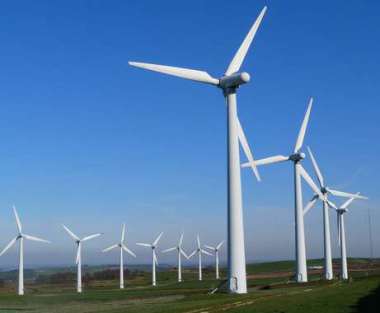 Latest wind auction winner promises millions in benefits to Canberra economy, SMH March 4, 2016 – Tom McIlroy Legislative Assembly reporter at The Canberra Times The fifth and final winner of the ACT government’s large-scale wind reverse-auction will provide enough power for more than 48,000 Canberra homes.
Environment and Climate Change Minister Simon Corbell has announced Sapphire Wind Farm, 18 kilometres west of Glenn Innes in north-eastern New South Wales, as the latest successful proponent from the government’s second wind auction, promising an estimated $100 million dollars in economic benefits to the ACT
Sapphire has been awarded a feed-in-tariff of $89.10 per mW/h for 100mW capacity. The company will spend $34 million on development of an ACT-based asset and operations management centre, relocating operations from Newcastle.
A spokesman for Mr Corbell said the consortium behind the bid included companies Continental Wind Partners and Wind Energy Holdings.
“By the time Sapphire starts producing energy in 2018, the ACT will be sourcing 80 per cent of its energy needs from renewable sources and well on the way to achieving 90 per cent by 2020,” Mr Corbell said.
In August last year, the government called for bids in its second wind auction to power up to 106,000 Canberra homes, seeking 200 megawatts in new capacity to come online within three years.
It follows two previous auctions: in 2013, three solar farms won 20-year feed-in deals, delivering 40 megawatts capacity, and in a wind auction earlier this year three wind farms won similar deals, delivering 200 megawatts among them.
CWP Renewables managing director Alex Hewitt said the auction result had allowed commencement of construction of what will be the largest wind farm in the NSW. http://www.smh.com.au/environment/energy-smart/latest-wind-auction-winner-promises-millions-in-benefits-to-canberra-economy-20160303-gn9n0a.html
Renewable energy micro-grid plannned for Kalbarri, Western Australia
 Renewable energy micro-grid could help restore faith in Kalbarri power supply, ABC News, 3 Mar 16 By Bonnie Christian The WA Government has announced it will commit $300,000 to investigate a way to build an energy micro-grid powered by renewables for the coastal town of Kalbarri.
Kalbarri has experienced several extended power outages over the past two years, costing local businesses thousands of dollars in lost trade and tourism.
The outages had been blamed on a build up of dust and salt on the 140-kilometre-long feeder line that delivers power to the town from Geraldton………..
Rebuilding trust in power supply
Western Power chief executive Paul Italiano said if the new grid did go ahead it would be the largest of its kind in Australia.
“What we’re proposing to do here is evaluating the feasibility of building a micro-grid in Kalbarri that has a combination of solar, perhaps wind, and large scale battery storage that work together to create a level of self-sufficiency for the town,” he said.
“This particular trial — if we’re able to pull it off — will be the largest in Australia.
“There’ll be lessons from this that we can apply to the rest of Western Australia. But more importantly for the whole power industry nationally.”…….http://www.abc.net.au/news/2016-03-02/kalbarri-looks-to-renewable-energy-micro-grid-for-power-solution/7215630
Solar thermal power push to keep jobs in Port Augusta
 THE “dominoes” are lined up for Port Augusta to switch from coal-fired to solar thermal power generation and advocates are urging governments to summon the “political will” to secure the project….(subscribers only)
http://www.adelaidenow.com.au/news/south-australia/solar-thermal-power-push-to-keep-jobs-in-port-augusta/news-story/dd0e42df6d28e5e0bb5959966ac676be
Solar energy to the grid: New South Wales’ Moree solar farm in operation
 Moree solar farm starts feeding energy into grid http://www.abc.net.au/news/2016-02-29/moree-solar-farm-starts-feeding-the-grid/7207942 ABC New England By Kelly Fuller The largest single-axis tracking solar farm in the country is now feeding energy back into the grid from Moree in New South Wales.

The solar farm is led by Fotowatio Renewable Ventures (FRV) and has been funded with assistance of a $102 million grant from Australian Renewable Energy Agency and $47 million in debt financing from the Clean Energy Finance Corporation.
At full capacity the project is expected to generate 140,000 megawatt hours per annum, or the equivalent energy to supply the needs of 15,000 homes.
The company’s country manager Cameron Gamsworthy said feeding energy back into the grid was a significant step in the project’s development.
“It’s absolutely a major milestone. We’re now generating clean, renewable energy for the country,” he said. “[We are] looking forward to getting the project fully commissioned over the course of the next month.”
The farm’s 222,000 panels are expected to have a life of 30 years, and the company hopes the project will be at full capacity in a month’s time.
Mr Gamsworthy said FRV was considering other projects in the region.
Farm solar is the future
While the Moree project is unique, a University of New England academic said there was a growing demand for solar energy, particularly among rural communities.
“Farmers are getting more and more hungry for mobile technology that can be distributed around the farm,” said Professor David Lamb, from the university’s Smart Farm. “It could be a little water bore pump or some sort of gate alarm system or a trough monitor,” he said. “All of these technologies are going to need solar themselves because we obviously don’t want powerlines running around farms.
“I wouldn’t be surprised if there are literally thousands of little solar panels balancing on the back seat of old tractors that are used to keep the battery alive while it is left out in the weather for the next start.”At the end of the day the solar panel is becoming the set of pliers on a farm — you see them everywhere you look.”
Professor Lamb said the university was putting up ‘smart trees’ around the Smart Farm. “We literally have little sensors in the trees showing the amount of water these guys suck out of the ground, and each and every one of these trees has their own solar panel,” he said.
“[It] is quite ironic when you consider that trees are one of the most efficient harvesters of solar energy that we know.”
Tasmania’s great opportunities in renewable energy
King Island is emblematic of the challenges and opportunities facing the state. It is blessed with natural resources, but punished by its relative remoteness and lack of economies of scale. It has been a perfect testing ground for renewable technology, and has led to the Hydro exporting novel approaches to overseas markets. The project has already avoided the use of 18 million litres of diesel, and saved more than $24 million.
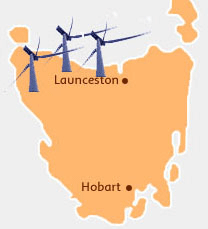 Tassie must look to future in renewables, February 29, 2016, ROSALIE WOODRUFF, Mercury “……… The Paris climate agreement sends a clear message to governments and investors that the age of fossil fuels is finished. There is a momentum around renewable energy generation, pushed by an urgency to respond to global warming and an explosion of new technology.
From crisis comes opportunity. The Greens are focused on the long-term task of transitioning Australia away from dependence on fossil fuels. The future is clearly in renewable energy generation, for pragmatism and prosperity.
We have released the Greens Energy Strategy, a blueprint for how the state can get started immediately on setting the business conditions we need to attract medium to large-scale renewable projects.
Our target is for Tasmania to be self-sufficient in clean electricity generation by 2022, and to be net exporters to the mainland. This is achievable. Continue reading
AGL proceeding with Silverton wind farm project in far west NSW
AGL vows to go ahead with Silverton wind farm project in far west NSW ABC Broken Hill
By Declan Gooch 27 Feb 16 Energy company AGL has reaffirmed its commitment to the Silverton wind farm project in far west New South Wales, and says studies of the site will get under way within weeks.
The proposed site along the Barrier Ranges just outside the Silverton township was first proposed in 2007 by Epuron, but stalled after AGL took over in 2012. AGL blamed uncertainty about the federal government’s Renewable Energy Target for the pause, with development approval set to run out in May.
The company announced at a community meeting on Thursday night it applied that day to have another five years added to the approval, and announced a new project manager, Adam Mackett.”We’re already doing work through the hydrogeological study where we’re committed to this project, so we’re showing that,” Mr Mackett said. “It is a half-a-billion-dollar project so before we then fully commit to constructing it we need to do a bit of work.”
Mr Mackett is no stranger to the state’s far west, having managed the construction of the Broken Hill solar farm around 25 minutes away. He also oversaw the construction of South Australia’s Hallett wind farm.
“We’re confident of having [the Silverton project] extended, we think the Silverton wind farm is a fantastic opportunity.”
AGL hopes the wind farm will generate enough power to supply around 120,000 average homes.
Funding will be contributed from AGL’s newly-announced Powering Australian Renewables Fund, which will be seeded partly by the Broken Hill solar farm……… AGL said it hopes its Powering Australian Renewables fund will be set up by the middle of the year, and that the extension to the project’s approval will be signed off in the next three months. http://www.abc.net.au/news/2016-02-26/agl-vows-to-go-ahead-with-silverton-wind-farm-project/7202338
Australia at risk of missing its 2020 renewable energy target
Some continue to blame the sluggish investment on the uncertainty created by then Prime Minister Tony Abbott’s ferocious push across 2014 and 2015 to cut the renewable energy target. Last year the government and Labor struck a deal to lower the target.
In recent times there have been some positive signs of movement.. This month energy giant AGL launched an investment fund aimed at delivering 1000 megawatts worth of renewable energy, while Origin Energy head Grant King was quoted saying his company was preparing to back new projects………
 Australia risks missing clean power goals, with households to pick up the bill, SMH, February 28, 2016 Tom Arup Environment editor, The Age Australia risks not hitting its 2020 renewable energy target with analysts now forecasting that interim goals will be missed – a situation that will trigger penalties that households will have to pay.
Many in the energy industry agree that this year will be “make or break” for achieving the end-of-decade target, which aims to deliver about 23 per cent of Australia’s electricity from clean technologies such as wind and solar.
“This year is critical” said Kane Thornton, who heads the Clean Energy Council……….. Continue reading
Gas company APA joins throng to spend on renewable energy projects
APA aims to ramp up renewable energy spending, The Age February 28, 2016 Brian Robins APA wants a seat at the table in the multibillion-dollar investment boom in renewable energy sources over the next few years amid national moves to meet the mandated renewable energy target.
This month, AGL said it might launch a $3 billion fund to build renewable energy projects such as wind and solar farms.
Rival Origin Energy said it might invest in similar projects but would most likely buy the output under long-term contracts.
Under federal government policy, one-fifth of electricity must be sourced from renewable energy by 2020. The move is expected to hasten the closure of heavily polluting coal-fired power stations…….
APA is considering several projects, including a potential solar farm in Western Australia, if it wins support from Australian Renewable Energy Agency funding and signs a power sales agreement. It is also bidding on an estimated 90MW of wind turbine capacity in the Northern Territory………http://www.theage.com.au/business/apa-aims-to-ramp-up-renewable-energy-spending-20160224-gn2a1g.html
Melbourne Girls’ College’s original approach to becoming carbon neutral
 Melbourne Girls’ College pedals toward carbon neutral status with outdoor cinema, solar installations, ABC News, 19 Feb 16 774 ABC Melbourne By Clare Rawlinson An all-girls Melbourne high school is on its way to becoming the first Victorian school to go carbon neutral.
Melbourne Girls’ College is working towards carbon neutral status through the installation of solar arrays and energy reduction projects, spearheaded by the school’s Sustainability Collective.
The passionate young environmentalists are hosting an outdoor cinema powered by bicycles and ergo machines on Friday, to share their quest with the public and draw attention to the true cost of energy.
The students will pedal all day to charge the cinema batteries for the screening of movie Oddball, as well as the power for coffee carts and popcorn machines.
“The idea behind it is to show people what a watt hour is and how much electricity goes into these events,” former student Ruby Wynn Williams said.
Sustainability coordinator Andrew Vance said the first step towards the school’s goal of carbon neutrality was awareness. “It’s really easy to burn some coal to watch a movie but it’s completely out of sight and out of mind,” he said. “When you get on the bike and pedal two watts, it’s like an epiphany.”
Reputation for environmental sustainability
The school’s reputation for environmental sustainability has already earned it acclaim through a major international competition, the Zayed Future Energy Prize. In 2015 it was selected as one of five schools globally to receive the competition’s $US100,000 funding grant for sustainability projects.
The majority of the prize money has been spent on converting the school’s permanent power source to solar, with the installation of a 33kW solar array on one side of the gymnasium roof.
It plans to cover the other side of the roof with community-funded solar arrays.
“[Each person] who buys a panel will get their name on it … so they can go and look at how much carbon they’ve offset and the equivalent in trees,” Mr Vance said.
“That will get us close to our carbon neutral goal.”…….http://www.abc.net.au/news/2016-02-19/melbourne-girls-college-pedals-toward-carbon-neutrality/7180684
Clean Energy Finance Corporation funding exciting solar initiative by Melbourne University
 Melbourne Uni taps CEFC loan to cut power costs, grid dependence, http://reneweconomy.com.au/2016/melbourne-uni-taps-cefc-loan-to-cut-power-costs-grid-dependence-70503 REneweconomy, By Sophie Vorrath on 16 February 2016 The Clean Energy Finance Corporation has announced it will loan up to $9.1 million to the University of Melbourne, to accelerate the installation of solar PV and other renewable and energy efficiency technologies in an effort to cut energy costs and improve sustainability.
The University says the measures – including voltage optimisation, freezer upgrades, and the installation of solar PV, solar thermal and wind micro-turbines – will reduce its grid electricity use by around 8 per cent; not bad considering the university has the energy requirements of a town the size of Warrnambool.
The voltage optimisation equipment – which controls and corrects incoming power voltage to increase building energy efficiency – is expected to produce the biggest energy saving, reducing consumption by more than 4GWh per annum. It also has the added benefit of reducing operating and maintenance costs.
The funding will also see a total of 1.5MW of solar PV installed across 18 roof spaces, which will offset grid energy by generating more than 2.2GWh of electricity a year. The university also plans to install three micro wind turbines on three separate buildings, to demonstrate their potential.
A concentrated solar thermal power system will also be installed, to be used for space and swimming pool heating, with expected energy savings of 0.75GWh. The measures are also expected to cut the university’s emissions by more than 9,000 tonnes a year, thus contributing to its commitment to achieve carbon neutrality by 2030.
For the CEFC, the project falls under the green bank’s investment mandate of financing emerging and innovative renewable energy technologies and energy efficiency for cities and the built environment.
“Australia’s 39 universities make a major contribution to the national economy and to the Australian community,” said the CEFC’s executive director of corporate and project finance, Paul McCartney.
“Yet they face the ongoing challenges of public budget restraint, intensifying global competition and the need to use cutting edge technologies to meet increasing student expectations.
“Clean energy installations like those being undertaken by the University of Melbourne can help universities meet these challenges through an investment that results in reduced environmental impact, higher productivity and stronger financial performance.”
McCartney said the CEFC was looking to work on similar projects with other Australian universities, to help them achieve increased sustainability and cost cuts through energy efficient and renewable technologies.
“The CEFC’s finance can be structured over a longer term than traditionally offered by banks, tailored to match the cost savings delivered through the reduction in grid energy usage,” he said.
Solar energy trading between households a – new concept becoming a reality
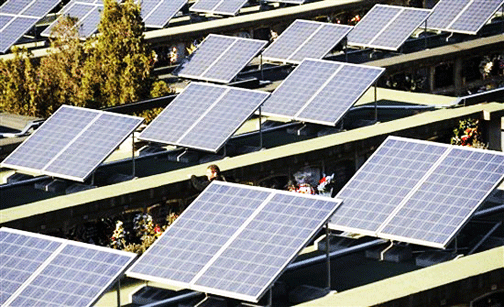 Trading solar-generated power between households to change the way consumers buy electricity, ABC News By consumer affairs reporter Amy Bainbridge, 18 Feb 16 The concept of bypassing major energy retailers to trade rooftop solar-generated electricity between households, small businesses and community groups is inching closer to reality.
Key points:
- Home-based energy generation grows in popularity
- CitiPower and Powercor, owners of poles and wires in Victoria’s power network, installing 18 solar battery power test sites
- Companies say their grid could help facilitate home-generated power in the future
- Community groups and homeowners eager to be part of Tesla solar battery trials
This month’s arrival of the Tesla battery in Australia is slated as a major shift in favour of consumers taking charge of their energy storage.
One Sydney entrepreneur has devised a system that would allow consumers to set up a virtual shop to trade their surplus energy with other households, small businesses and community groups in their grid.Jitendra Tomar, from the Sydney-based start-up Local Volts, said it was about changing the way consumers buy electricity. “Anybody, whether you’re big or small, whether you’re a farmer or residential person, whether you’re a high school or tennis club, can become an energy farmer,” he said……..
The Institute for Sustainable Futures at the University of Technology Sydney is conducting virtual trials of local energy trading at five sites along the eastern seaboard.
The Footscray Community Arts Centre in Melbourne’s Western suburbs is looking to become the first organisation of its kind to be powered by solar.
CEO and director Jade Lillie said the centre was running a crowdfunding campaign to combine with philanthropic donations to buy the panels and a battery. “We’re putting 30 kilowatts of solar panels on this roof, which is the warehouse, and 10 kilowatts of solar panels on Henderson House, which is the heritage-listed building,” she said. “What we’ll be able to do is actually through the Tesla battery is store that energy during the day as well and then use it in the evening so we’re less reliant on mainstream grid-based power sources.”
Ms Lillie says the centre aimed to save $15,000 in power bills each year. The project will also fund LED house lights for its performance space.
The Australian Energy Council, which represents retailers and generators, said it was early days, but there was work underway to study the implications of solar trading within the electricity grid.
With a large component of energy bills made up of network fees and charges, it remains to be seen how much cheaper energy bills will be if consumers are able to trade between each other. http://www.abc.net.au/news/2016-02-17/tesla-trading-solar-generated-power-change-electricity-market/7156934
The Nuclear Commission findings do not bode well for Australia’s renewable energy development
The repeal of the carbon price and the stalling of renewable energy development has put Australia on a path to increase emissions to record levels and will likely not reach a peak before 2030.
The nuclear industry is essentially counting on failure on these tasks, and then having some sort of Marshall plan to allow for the extra expense of nuclear generation.
 Nuclear commission findings spell more trouble for wind and solar in Australia REneweconomy, By Giles Parkinson on 15 February 2016 The South Australian Royal Commission into the nuclear fuel cycle has conceded that nuclear power is not a viable alternative for Australia, but has urged authorities to consider it anyway – in what could have serious implications for the roll out of renewable energy across the country.
The commission delivered the results of its “tentative” findings on Monday, indicating that it supports the establishment of a nuclear waste facility in the state, the storing of spent nuclear fuel and the expansion of uranium mining.
On the subject of nuclear generation, the commission admitted that it wasn’t viable in South Australia in the foreseeable future (2030) – even with a significant carbon price and a sharp reduction in the cost of capital.
It conceded that Australia should only adopt “proven” new nuclear technologies such as “small modular reactors” and next generation “fast reactors” , but that these were some way off, and likely to be very costly.
 But commission chairman Kevin Scarce wants the nuclear generation dream to continue. He admitted that while there were real risks in nuclear generation – and there are “no guarantees on its safety” – he doesn’t “think the positive side of nuclear power is being presented.” Continue reading
Kind of incestuous: pro Nuclear Commission quotes its own pro nuclear Commissioner
Despite what nuclear boosters tell us about wind and solar, numerous reports, including by the Australian Energy Market Operator, the French government, and various think tanks, say 100% renewable energy based largely around wind and solar is perfectly feasible, and will likely even reduce costs.
 Nuclear commission findings spell more trouble for wind and solar in Australia REneweconomy, By Giles Parkinson on 15 February 2016 “………The Royal Commission has chosen to run with some of those myths, which is disappointing, but not surprising given that one of the biggest proponents is a web-site operated by one of the commissioners, Professor Barry Brook. A paper co-authored by Brook is repeatedly cited in the commission’s report and by pro-nuclear submissions to the commission.
Among these myths, promoted by Scarce on Monday, is the need for more peaking gas and imports in South Australia because of the growth in wind and solar. Actually, as has been pointed out repeatedly,South Australia now uses less peaking gas and less imports from Victoria than before it produced a lot of wind and solar.
The document also says that solar PV has had a negligible impact on peak demand in South Australia. Actually, it has had a significant impact on peak demand, pushing the peak from late afternoon and into the evening and made it smaller, to the benefit of the network in heat waves.
The royal commission document also says battery storage applications are not yet commercial. Actually, they are, and Ergon Energy has already rolled out dozens of 100kWh, utility-scale battery storage arrays, saying it reduces grid upgrade costs by one-third – with no subsidy. Continue reading
New South Wales Riverina could become a solar energy hub
 Solar company sees potential for NSW Riverina to become renewable energy hub ABC Riverina, 16 Feb 16, A solar energy company believes the western New South Wales city of Griffith has the potential to market itself as a renewable energy hub. http://www.abc.net.au/news/2016-02-16/solar-company-envisages-nsw-riverina-energy-hub/7170684
Riverina Solar wants to build a $62 million, 30 megawatt solar farm at Yoogali near Griffith. The project has been shortlisted for funding from the Australian Renewable Energy Agency.
Director Steve McCall is hopeful a second solar farm project, also shortlisted for funding, will receive backing. He said it could be the start of a new industry for the region.
“We’ve been talking with Griffith council as well. We believe there’s a great opportunity for Griffith to become a renewable energy hub, or a region where you’ve got large scale solar here,” he said.
“That would hopefully potentially attract universities coming in and doing studies. “We’re also looking at other options, potentially in the future of how solar or how other renewable energies could be attracted to the area.”
Information sessions about the Riverina Solar proposal will be held at the Griffith Regional Theatre on Tuesday and Thursday.
Mr McCall said he would like to have the project’s environmental impact statement completed by the end of the month, and is hopeful the solar farm may be approved by mid-year.
“Griffith has an excellent substation based at Yoogali and it has just recently been upgraded over the last few years, so it has sufficient capacity to be able to connect into that site without a great deal of further upgrade,” he said. Mr McCall said the project would not be affected by the grants process. “We’ve got a number of different, interested offtakers and so once we establish that and finalise that aspect of it, that completes the commercial aspect of the project,” he said.
“While the funding would be terrific, and it’s only a small portion of the project, it doesn’t look like it would jeopardise our project going forward in any sense.”
BENEFITS OF SOLAR FAR OUTWEIGH THE RISKS OF NUCLEAR
 Solar Citizens calls on the South Australian Government to harness the sun to generate low-cost clean energy and kick-start jobs and economic growth rather than becoming a dumping ground for an expensive, toxic nuclear waste.
The findings come as new polling released today shows a majority of voters are more likely to give their vote in the upcoming election to a party supporting ambitious goals and innovation for solar”[1]
The preliminary findings of a Royal Commission into nuclear claim that
-
An expansion of uranium mining is “not the most significant opportunity” to develop South Australia’s economy
-
“It would not be commercially viable to generate electricity from a nuclear power plant in South Australia in the foreseeable future.”
-
Storage and disposal of nuclear fuel waste is “likely” to deliver economic benefits to the State.
“We welcome the Commission’s findings which shows that nuclear mining and power generation is not the solution for South Australia”, said Claire O’Rourke, National Director of Solar Citizens.
“The best way the South Australian Government can support clean energy is supporting households in making the transition to solar energy and reducing people’s power bills. The South Australian Government is leading other states with a target of 50% renewable energy by 2025 and has commissioned research which shows it can get to 100% renewable energy as part of its target of net zero carbon emissions by 2050 ”
“One in four households in South Australia now has rooftop solar and the power they generate from the sun supplies about five per cent of the state’s energy demand.
“These 190,000 South Australian solar homes are only the beginning of the global solar boom, as affordable, reliable home battery storage places lowering the cost of power bills in reach for the majority of households.
“It is important that the State Government makes sure it adopts policies that encourage further investment in renewables, and the jobs this will create.
“The state’s abundant solar resources have already caught the attention of US solar thermal giant SolarReserve, which in November made a bid to build Australia’s first-ever solar thermal plant with storage in Port Augusta. https://drive.google.com/file/d/0B9kNVP3oyB-cQ2NQbnROWVlrUjIxbW1TaUhxTlpKZlNkNHNB/view?usp=sharing

1 This month

of the week – Australians for War Powers Reform (AWPR)
To see nuclear-related stories in greater depth and intensity
 Antinuclear