Olympic Dam uranium mine’s unlimited water access is killing the Arabana people’s mound springs
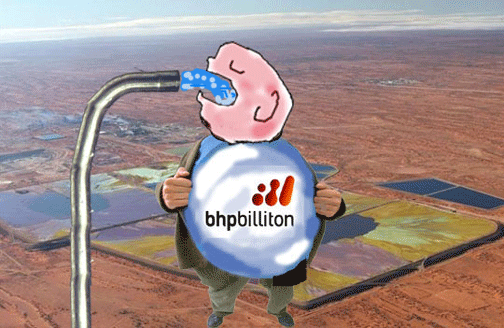
South Australia’s disappearing springs raise questions for miner BHP– https://www.smh.com.au/environment/sustainability/south-australia-s-disappearing-springs-raise-questions-for-miner-bhp-20201117-p56f6m.html
Few in big cities know about the ‘mound springs’, but they are of deep cultural significance for the Arabana people who hold native title over Lake Eyre and its surrounds.By Richard Baker November 23, 2020
Dotted around the vast arid harshness of outback South Australia are thousands of small springs fed by ancient waters from the Great Artesian Basin.
Few in big cities know about the “mound springs”, but they are of deep cultural significance for the Arabana people who hold native title over Lake Eyre and its surrounds. They are also a precious source of life for humans, animals and plants in a hostile environment.
A mound spring near the shore of Lake Eyre in South Australia.
But the Arabana people fear the extraction of tens of millions of litres of water from the basin each day by mining, petroleum and pastoral industries threatens the existence of the springs by reducing flow pressure in the aquifer to the extent that the springs dry up.
The federal parliamentary inquiry into Rio Tinto’s destruction in May of 46,000-year-old rock shelters at the Juukan Gorge in Western Australia has given the Arabana people the chance to put the fate of the springs on the national agenda.
“In our country there are over 6000 of these springs and they are of great significance to the Arabana people,” said the chair of the Arabana registered native title body, Brenda Underwood, in a submission to the inquiry.
“The springs themselves can be as small as a cup or large enough that you could swim in them, however, we don’t because of the stories associated with them. To us, and to many Australians, they are a beautiful sight in a harsh environment.
“Unfortunately, our springs are disappearing. How many have disappeared, we are not yet sure, but we are undertaking some research to find out just how many have actually disappeared.”
Rio Tinto’s blasting at Juukan Gorge drew widespread public criticism, prompted the resignation of its chief executive and put a spotlight on state and federal laws that are meant to balance the protection of Indigenous heritage against the commercial interests of miners.
In the case of the springs, another mining giant, BHP, is playing a central role. BHP is licensed by the South Australian government to extract the equivalent of up to 42 million litres of water per day from the Great Artesian Basin to operate the massive Olympic Dam copper, gold and uranium mine near Roxby Downs.
Millions of litres of water are also taken from the basin each day by pastoral stations and various petroleum companies, and more is lost through evaporation from thousands of disused bores that have not been properly capped.
RMIT environmental engineering expert Gavid Mudd has studied the mound springs closely for more than 20 years and said there was no doubt the extraction of so much groundwater had contributed to a reduction in flow pressure. Some had dried up entirely.
Although the Arabana submission to the inquiry acknowledges water users such as pastoralists and petroleum companies, it largely focuses on BHP’s water use and the unique South Australian laws that grant it a virtually unchallenged right to groundwater.
Under the 1982 Roxby Downs Indenture Act, the original Olympic Dam owner Western Mining and present owner BHP are afforded special privileges that trump Aboriginal heritage laws and almost all other state laws and regulations.
“Each day they [BHP] take 35 million litres of water from our springs and the Great Artesian Basin and now they wish to increase that amount to 42 million litres per day,” Ms Underwood’s statement said
“We are told that this will continue for at least the next 60 years. Given the number of springs that have disappeared, in 60 years we have a great fear that there will be none left whatsoever. The Arabana people have tasked me and the board of directors of the corporation to protect the springs. The big question is how?”
Ms Underwood and the 1000-strong Arabana community fear the South Australian government will be reluctant to change the status quo for BHP.
The mining company’s recent announcement to pause a planned $3 billion expansion of Olympic Dam is likely to see its water take remain about the mid 30 million litres per day mark.
The Arabana people have asked their Adelaide lawyer, Stephen Kenny, to advise them if the Commonwealth can get involved. Mr Kenny has said the Commonwealth could act to protect the springs, but previous cases such as that involving South Australia’s Hindmarsh Island suggested it would not.
Australian government weakening of Environmental Law will weaken nuclear and uranium safeguards
• The National Environmental Standards for MNES should include one for nuclear actions. To provide community confidence, the Standard should reflect the regulatory guidelines and protocols of all relevant national laws and requirements.”
This scope is necessary to respect Indigenous rights and interests to protect their country & culture.
I commend the strong Arabana Aboriginal Corporation Submission No.92 (11 August) to the federal Juukan Caves Inquiry and the Arabana Chairperson’s call for protection of their GAB Springs: …… “
Australian government is rushing to weaken Environmental Laws
 David Noonan, 18 Nov 20, The Federal Liberal gov has called a rushed Committee of Inquiry into Federal Environment and Nature Laws.
But limited the scope of their Inquiry to their Abbott era untenable ‘One Stop Shop’ Bill to divest EPBC Act Approval powers to the States & Territories…
Public submissions close tomorrow Wednesday 18th, and only one day of Hearings is to be allowed.
New Inquiry: Environment Protection and Biodiversity Conservation Amendment (Streamlining Environmental Approvals) Bill 2020
Date Referred: 12 November 2020 to the Senate Environment and Communications Legislation Committee,
Reporting Date: 27 November 2020
see Inquiry homepage:
My 3-page input of concern at a rushed Inquiry & a flawed Bill itakes a national interest focus on ‘nuclear actions’,
Extracts:
Due process and the national interest responsibility to the protection of Matters of National Environmental Significance (NES) are compromised by this deeply flawed Bill and rushed Inquiry. …
It appears reckless that a core pre-requisite audit of State resourcing and capacity to undertake EPBC Approvals and enforcement roles has not been undertaken at this late stage of events. …
Community confidence requires the EPBC Act to retain Approval powers at a Federal level, and to retain the “whole of environment” scope of Assessment and Protection of the Environment in ‘nuclear actions’ as has been required in our national EPBC Act laws since 1999.
This Inquiry should take up the Arabana People’s call for Federal protection of their GAB Springs.
Contacts: The Committee Secretary
Senate Standing Committees on Environment and Communications
Phone: +61 2 6277 3526
Fax: +61 2 6277 5818
ec.sen@aph.gov.au
Note the ACF has provided a proforma sign on letter option to this Inquiry – which you may wish to avail of,. (see sidebar at right.)
Rocket launches on the Eyre Peninsula wil damage the environment
Nature Conservation Society of SA fears Whalers Way rocket launch site will damage the environment
Worry rocket launch site will damage environment The Advertiser Clare Peddie, Science Reporter, The Advertiser, November 4, 2020
A proposed rocket launch facility at Whalers Way, on the tip of Eyre Peninsula, threatens vulnerable wildlife and coastal wilderness, conservationists say.
The Nature Conservation Society of South Australia is challenging the development, citing heightened fire danger, noise disturbance and land clearing, enabling the spread of feral predators and pests.
Society vice-president Rick Davies said the area was so special that it was protected under a legally binding heritage agreement, meaning it is be managed as a privately-owned conservation area in perpetuity. “We support a space industry in SA, but this is the wrong place for this development,” Dr Davies said.
With our country already seeing more large, uncontrolled fires, why would we allow a commercial firing range and all its propellant fuels in the middle of one of the best expanses of native coastal vegetation?”
The area is home to species at risk of extinction, including nationally vulnerable white-fronted whipbirds and the Eyre Peninsula southern emu-wren.
Dr Davies says these shy secretive birds require long unburnt vegetation and will be impacted both by both direct habitat destruction and associated industrial disturbance.
Coastal raptors such as vulnerable white-bellied sea eagles and rare osprey, which require vast hunting territories, will also be disturbed, he says.
The Eyre Peninsula Southern Emu-wren is endangered in South Australia. This male was briefly captured for research purposes and then released. Picture: Marcus Pickett
The State Government has given the Whalers Way Orbital Launch Complex major development status.
The company behind the development, Southern Launch, is now preparing a development application, including an environmental-impact statement.
Executive director Mike Damp expected those documents would be made available as part of the public consultation process early next year.
“Site selection took a long time and it was diligent; it wasn’t selected willy nilly or with disregard to the environment,” he said.
“Right from the outset, I want to dispel any inclination that you might have that we are prepared to ride roughshod over the environment.
“From the very beginning, we have been very mindful of the area that we are operating out of and we have, therefore, cemented into the bedrock of the company our biodiversity management strategy, so we intend to improve the conservation status of Whalers Way.”
The rugged coastline at Whalers Way, south of Port Lincoln on the Eyre Peninsula, including an osprey nest on a rocky outcrop. Picture: Marcus Pickett
A State Government spokesman said that the project would go through all required environmental-assessment processes.
“The sub-orbital launch facility will be one of two in the southern hemisphere – and presents enormous opportunity for growth in rapidly developing space sector,” he said.
“Projects like this will be critical in our state’s recovery from the global coronavirus pandemic,” he said.
But Shadow Environment Minister and deputy leader of the opposition Susan Close shares the conservationist’s concerns.
“I have serious concerns about the impact of this development on rare species and valuable habitat, and the risks it may pose for fire and damage to adjacent marine life,” she said.
“I urge the government to consider alternative locations which do not involve compromising environmental values and overriding existing protections.”
Long-term research shows ocean acidification ramping up on the Reef
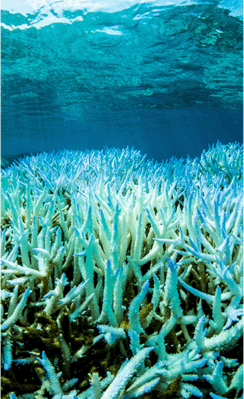 The future is now: long-term research shows ocean acidification ramping up on the Reef The future is now: long-term research shows ocean acidification ramping up on the Reef
A new study has shown ocean acidification is no longer a sombre forecast for the Great Barrier Reef but a present-day reality AUSTRALIAN INSTITUTE OF MARINE SCIENCE https://www.eurekalert.org/pub_releases/2020-10/aiom-tfi102820.phpResearch News Ocean acidification is no longer a sombre forecast for the Great Barrier Reef but a present-day reality, a new study reveals. The study, published in the international Journal Scientific Reports, shows carbon dioxide (CO2) and ocean acidification are rapidly increasing on the Reef. Seawater CO2 has risen 6 per cent over the past 10 years and matches the rate of CO2 increases in the atmosphere, confirming the influence of atmospheric CO2 on seawater CO2 levels. “People talk about ocean acidification in terms of 50 years’ time, but for the first time our study shows how fast ocean acidification is already happening on the Reef,” said Dr Katharina Fabricius, lead author and Senior Principal Research Scientist at the Australian Institute of Marine Science (AIMS). The research, a collaboration between AIMS and CSIRO, drew on over a decade of observations collected as part of Australia’s Integrated Marine Observing System (IMOS) to conclude that the Reef’s rich carbonate seafloor is not buffering against ocean acidification as previously thought. “Our research shows that acidification is rapidly changing the conditions that support the growth of coral on the Reef. It’s never been more important to address ocean acidification in plans to manage the Reef”, said Dr. Bronte Tilbrook, a Senior Principal Research Scientist at CSIRO who leads IMOS’ observational projects for CO2 and ocean acidification. Ocean acidification results from seawater absorbing excess CO2 that has been emitted into the atmosphere. The CO2 dissolves in the seawater where it changes the chemistry. This includes decreasing the water’s pH, and reducing the aragonite saturation state, which is critical for building the skeletons of reef-building coral and other marine organisms. Under reduced pH conditions, their calcium carbonate skeletons take longer to form and weaken, leaving them more susceptible to damage and erosion. While long-term data exist for CO2 and ocean acidification trends in open oceans, there have been very few long-term data on these trends in coastal waters around the world, including the Great Barrier Reef. Biological and physical processes like respiration create large fluctuations in CO2 in coastal areas, making the detection of trends more difficult. The study has filled this important knowledge gap by analysing 10 years of CO2, pH and aragonite saturation state data (2009-2019). These data were collected as part of Australia’s IMOS network at two long-term monitoring stations, located 650 kilometres apart at contrasting locations. The researchers found the minimum CO2 concentrations measured today were likely to already have passed the highest CO2 levels expected 60 years ago, even after accounting for the effects of temperature, nutrients, salinity, and daily and seasonal changes. “We know now that oceans are taking up about 23% of the excess CO2 from the air. They actually provide a service to humanity by slowing climate change. But the price to pay is that the seawater’s carbon chemistry is changing, and we didn’t know it was happening in dynamic coastal waters at such fast rates,” Dr Fabricius said. In another research first, AIMS and CSIRO scientists have used data from 1384 Reef sites to show coastal acidification’s negative impacts on three important indicators of Reef health:
The study, published earlier this year in the journal Global Change Biology, found these baby coral and coralline algae also decreased and seaweed increased as fine suspended sediment increased across the Reef — with the greatest sediment concentration and organism changes observed closer to the shore. The researchers highlighted effective water quality management as an achievable solution to reduce coastal acidification’s impact on the Reef. ### Australia’s Integrated Marine Observing System (IMOS) is enabled by the National Collaborative Research Infrastructure Strategy (NCRIS). It is operated by a consortium of institutions as an unincorporated joint venture, with the University of Tasmania as Lead Agent. |
|
Scientific women get together in plan for marine protected area for Antarctica Peninsula
|
All-female scientific coalition calls for marine protected area for Antarctica Peninsula Plus other ways to help penguins, whales, and seabirds, EurekAlert, UNIVERSITY OF SYDNEY, Research News 19 Oct 20, The Western Antarctic Peninsula is one of the fastest warming places on earth. It is also home to threatened humpback and minke whales, chinstrap, Adélie and gentoo penguin colonies, leopard seals, killer whales, seabirds like skuas and giant petrels, and krill – the bedrock of the Antarctic food chain.With sea ice covering ever-smaller areas and melting more rapidly due to climate change, many species’ habitats have decreased. The ecosystem’s delicate balance is consequently tilted, leaving species in danger of extinction.
Cumulative threats from a range of human activities including commercial fishing, research activities and tourism combined with climate change is exacerbating this imbalance, and a tipping point is fast approaching. Dr Carolyn Hogg, from the University of Sydney School of Life and Environmental Sciences, was part of the largest ever all-female expedition to the Antarctic Peninsula, with the women in STEMM initiative, Homeward Bound, in late 2019. There, she witnessed the beauty and fragility of the area, and the negative impacts of climate change and human activity on native species, first-hand. As part of the Homeward Bound program she learnt about the science, conservation and governance of Antarctica. In a new commentary piece published in Nature, Dr Hogg and her colleagues from the expedition outline these threats, and importantly, offer ways to counter them. More than 280 women in STEMM who have participated in the Homeward Bound initiative are co-signatories to the piece. A global initiative, Homeward Bound ‘aims to elevate the voices of women in science, technology, engineering mathematics and medicine in leading for positive outcomes for our planet’. Women are noticeably absent in Antarctica’s human history, which is steeped in tales of male heroism. Female scientists are still a minority in the region’s research stations. “Now, more than ever, a broad range of perspectives is essential in global decision-making, if we are to mitigate the many threats our planet faces,” said Dr Hogg. “Solutions include the ratification of a Marine Protected Area around the Peninsula, set to be discussed on 19 October, at a meeting of a group of governments that collectively manage the Southern Ocean’s resources,” said Dr Hogg. “The region is impacted by a number of threats, each potentially problematic in their own right, but cumulated together they will be catastrophic.” Decreasing krill affects whole ecosystem The Peninsula’s waters are home to 70 percent of Antarctic krill. In addition to climate change, these krill populations are threatened by commercial fishing. Last year marked the third largest krill catch on record. Nearly 400,000 tonnes of this animal were harvested, to be used for omega-3 dietary supplements and fishmeal. “Even relatively small krill catches can be harmful if they occur in a particular region, at a sensitive time for the species that live there,” said Dr Cassandra Brooks, a co-author on the comment from the University of Colorado, Boulder. “For example, fishing when penguins are breeding lowers their food intake, and affects their subsequent breeding success. A Marine Protected Area will conserve and protect this unique ecosystem and its wildlife, and we need to implement it now.” Climate change is fundamentally altering the Western Antarctic Peninsula:…… Three ways to protect the Peninsula 1. A Marine Protected Area (MPA) designation for the waters……… 2. Protect land areas ……… 3. Integrate conservation efforts……. ….https://www.eurekalert.org/pub_releases/2020-10/uos-asc101520.php |
|
Morrison government’s devastating cuts to Environmental research and teaching
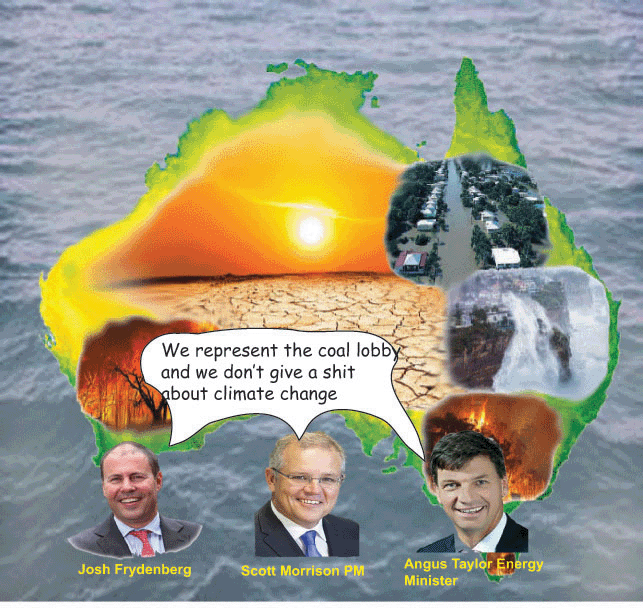 ‘Devastating’: The Morrison government cuts uni funding for environment courses by almost 30%, The Conversation, Dianne Gleeson, Professor, Science, University of Canberra, Ian Clark, Associate professor, University of South Australia, Stuart Parsons, Professor, Queensland University of Technology, 14 Oct 20,
 - agriculture, to address threats as diverse as water quality in the Great Barrier Reef, better retention of nitrogen fertilisers in soils and adaptation to climate change
- mining, for advice on site planning and restoration to ensure minimal environmental harm during and after the mine’s operation
- water management in rivers and wetlands, to respond to climate change and higher demand from growing populations…….
We need environmental experts
Australia’s recent, brutal experience with bushfires and drought shows just how badly we need world-class environmental expertise. As climate change grows ever worse, these experts will be critical in steering us through these challenges.
What’s more, the COVID-19 pandemic – linked to land clearing and more human-wildlife interaction – shows just what can happen under poor environmental management.
Australia is uniquely vulnerable to climate change, and in 2019, recorded its worst-ever environmental conditions. These university funding cuts affect the people with the answers to our pressing environmental problems – they are a blow to the future of all Australians.
Read more: A major scorecard gives the health of Australia’s environment less than 1 out of 10 https://theconversation.com/devastating-the-morrison-government-cuts-uni-funding-for-environment-courses-by-almost-30-147852
Australia a leader in the worst sense – biodiversity loss and risk of ecosystem collapse

Fifth of countries at risk of ecosystem collapse, analysis finds https://www.theguardian.com/environment/2020/oct/12/fifth-of-nations-at-risk-of-ecosystem-collapse-analysis-finds
Trillions of dollars of GDP depend on biodiversity, according to Swiss Re report, Damian Carrington Environment editor @dpcarrington, Mon 12 Oct 2020 .One-fifth of the world’s countries are at risk of their ecosystems collapsing because of the destruction of wildlife and their habitats, according to an analysis by the insurance firm Swiss Re.
Natural “services” such as food, clean water and air, and flood protection have already been damaged by human activity.
More than half of global GDP – $42tn (£32tn) – depends on high-functioning biodiversity, according to the report, but the risk of tipping points is growing.
Countries including Australia, Israel and South Africa rank near the top of Swiss Re’s index of risk to biodiversity and ecosystem services, with India, Spain and Belgium also highlighted. Countries with fragile ecosystems and large farming sectors, such as Pakistan and Nigeria, are also flagged up.
Countries including Brazil and Indonesia had large areas of intact ecosystems but had a strong economic dependence on natural resources, which showed the importance of protecting their wild places, Swiss Re said.
“A staggering fifth of countries globally are at risk of their ecosystems collapsing due to a decline in biodiversity and related beneficial services,” said Swiss Re, one of the world’s biggest reinsurers and a linchpin of the global insurance industry.
“If the ecosystem service decline goes on [in countries at risk], you would see then scarcities unfolding even more strongly, up to tipping points,” said Oliver Schelske, lead author of the research.
Jeffrey Bohn, Swiss Re’s chief research officer, said: “This is the first index to our knowledge that pulls together indicators of biodiversity and ecosystems to cross-compare around the world, and then specifically link back to the economies of those locations.”
The index was designed to help insurers assess ecosystem risks when setting premiums for businesses but Bohn said it could have a wider use as it “allows businesses and governments to factor biodiversity and ecosystems into their economic decision-making”.
The UN revealed in September that the world’s governments failed to meet a single target to stem biodiversity losses in the last decade, while leading scientists warned in 2019 that humans were in jeopardy from the accelerating decline of the Earth’s natural life-support systems. More than 60 national leaders recently pledged to end the destruction.
The Swiss Re index is built on 10 key ecosystem services identified by the world’s scientists and uses scientific data to map the state of these services at a resolution of one square kilometre across the world’s land. The services include provision of clean water and air, food, timber, pollination, fertile soil, erosion control, and coastal protection, as well as a measure of habitat intactness.
Those countries with more than 30% of their area found to have fragile ecosystems were deemed to be at risk of those ecosystems collapsing. Just one in seven countries had intact ecosystems covering more than 30% of their country area.
Among the G20 leading economies, South Africa and Australia were seen as being most at risk, with China 7th, the US 9th and the UK 16th.
Alexander Pfaff, a professor of public policy, economics and environment at Duke University in the US, said: “Societies, from local to global, can do much better when we not only acknowledge the importance of contributions from nature – as this index is doing – but also take that into account in our actions, private and public.”
Pfaff said it was important to note that the economic impacts of the degradation of nature began well before ecosystem collapse, adding: “Naming a problem may well be half the solution, [but] the other half is taking action.”
Swiss Re said developing and developed countries were at risk from biodiversity loss. Water scarcity, for example, could damage manufacturing sectors, properties and supply chains.
Bohn said about 75% of global assets were not insured, partly because of insufficient data. He said the index could help quantify risks such as crops losses and flooding.
Australian State laws have weak environmental standards
Major gaps’: no state meets national environment standards, The Age, Mike Foley, October 4, 2020 — State and territory governments should make major reforms to their environmental laws and increase compliance regimes to meet the national standards, new research has found.
The findings are revealed in a report from the “Places You Love” alliance of conservation groups, released on Monday, which found “not only does no state or territory law meet national standards, but in some jurisdictions, the environmental protections in state and territory laws have actually been weakened”.
This week the Senate is set to debate the federal government’s bill to hand approval powers for major projects to state governments, in a bid to remove bureaucratic duplication and speed-up project development to boost the economy.
Environment Minister Sussan Ley has pledged that any changes to The Environment Protection and Biodiversity Conservation Act will not reduce current level of environmental regulation…….
Ms Ley has been criticised by environment groups for rushing her bill through Parliament. It passed the lower house in August and could be enacted as soon as next week – ahead of a major review of the laws by former competition watchdog boss Professor Graeme Samuel, which is due by the end of October.
Professor Samuel said Australia’s “current environmental trajectory is unsustainable”. National laws were “not fit to address current or future environmental challenges”, he said, while for industry they are “ineffective and inefficient”…….
The EPBC Act was enacted in 1999 and created a list of “matters of national environmental significance”, including World Heritage areas, internationally listed wetlands and threatened species. While state laws do include some protections for these matters, federal government has wielded the most powerful protections for the past two decades.
The report found no state or territory legislation met the necessary suite of “national environmental standards required to protect matters of national environmental significance”.
Morrison government refuses to sign leaders’ pledge on biodiversity
|
Scott Morrison declined as 10-point plan calls for commitments considered inconsistent with government policy, Guardian Lisa Cox 28 Sept 20, The Morrison government has said it refused to sign a global pledge endorsed by 64 countries committing them to reverse biodiversity loss because it was inconsistent with Australia’s policies. Emmanuel Macron, Angela Merkel, Justin Trudeau, Jacinda Ardern and Boris Johnson are among world leaders who signed the Leaders’ pledge for nature which was launched on Monday ahead of a major UN summit on biodiversity being hosted virtually from New York. The summit is working towards a Paris-style global agreement on nature. The federal government was invited to sign but refused because the 10-point plan calls for commitments that are inconsistent with Australian policy – including a greater ambition to reduce greenhouse gas pollution and reach net zero emissions by 2050…….. Apart from Australia, other countries that didn’t sign the pledge include the United States, Brazil, China, Russia and India. The pledge warns humanity is in a state of “planetary emergency” due to the intertwined crises of biodiversity loss, ecosystem degradation and climate change. It states that the decline of the natural world is accelerating at an unprecedented rate. “Nature fundamentally underpins human health, wellbeing and prosperity,” the pledge states. “We need to appropriately value nature and the services it provides as we make decisions and recognise that the business case for biodiversity is compelling.” Australia was recently singled out for mammal extinction in a UN report that found the world had failed to meet a single target to slow the loss of the natural world and preserve land and marine ecosystems. The pledge promises a stronger global effort to reduce deforestation, halt unsustainable fishing practices, eliminate environmentally harmful subsidies and begin the transition to sustainable food production systems and a circular economy during the next decade. Leaders promised to ensure “biodiversity, climate and the environment as a whole” were at the heart of responses to the economic crisis brought on by the Covid-19 pandemic. “Against the backdrop of Covid-19, which has crippled the world’s economies and pressured governments everywhere to begin the process of rebuilding and renewing, decisions made now will have ramifications for all of us and for generations to come,” the pledge states. Labor’s environment spokeswoman, Terri Butler, said the prime minister, Scott Morrison, should explain why Australia would not commit to a stronger effort to protect wildlife. “Australia is in the midst of an extinction crisis, 3 billion animals have died or were displaced by last summer’s bushfires and 12m hectares of land burnt . But the Morrison government doesn’t think we have a problem,” Butler said. The Greens environment spokeswoman, senator Sarah Hanson-Young, said a global target on extinction, similar to the Paris target, was necessary to stem the rapid loss of biodiversity. She said Australia was “squandering an opportunity” to take a leading role after the bushfire crisis, which accelerated the loss of habitat and wildlife and has forced the government to consider new threatened listings for iconic species, including the koala. “Our biodiversity is under significant threat and with it our tourism industry and local economy,” Hanson-Young said. “Australia’s lack of commitment at this summit is shameful and ultimately will be bad for our economy, as well as our environment.”…….. https://www.theguardian.com/environment/2020/sep/29/australia-joins-us-china-and-russia-in-refusing-to-sign-leaders-pledge-on-biodiversity |
|

Australians recorded frog calls on their smartphones after the bushfires – and the results are remarkable
Jodi Rowley, Australian Museum and Will Cornwell,
Frogs are one of the most threatened groups of animals on Earth. At least four of Australia’s 240 known frog species are extinct and 36 are nationally threatened. After last summer’s bushfires, we needed rapid information to determine which frogs required our help.
Australian government never intended to follow the advice of the review on environmental law
|
Coalition began writing landmark environment bill before receiving review it had ordered, Guardian, Lisa Cox, Wed 16 Sep 2020 Review of EPBC Act was delivered to government 11 days after process of drawing up legislation had begun, The Morrison government started preparing controversial legislation to amend Australia’s environmental laws before it had received a report from a formal review into whether the act was working.The environment department instructed the Office of Parliamentary Counsel to begin drafting the changes to the legislation on 19 June, 11 days before the government received the interim report of the review of Australia’s national environment laws.Labor, the Greens and environment groups say the evidence, provided in answers to a Senate committee, suggests the government never intended to adopt the expert advice of the review, chaired by the former competition watchdog head Graeme Samuel. Samuel delivered his interim report, a once-in-a-decade statutory review of the Environment Protection and Biodiversity Conservation (EPBC) Act, to the government on 30 June. It found Australian governments had failed to protect Australia’s unique wildlife and habitats and recommended an overhaul of the laws to make the country’s systems of environmental protection more effective. Samuel recommended the devolution of approval powers to the states along with the introduction of national environmental standards and an independent regulator to enforce the law.
But the bill introduced in August was a near replica of failed “one-stop-shop” legislation introduced under former prime minister Tony Abbott. It contained no reference to any of Samuel’s other recommendations, including national standards. It passed the lower house last month after the government gagged debate…………. Basha Stasak, from the Australian Conservation Foundation, said Samuel’s report had warned against the approach adopted by the Abbott government in 2014, in part because it lacked legislated national environmental standards. “Yet before the federal government had even received Prof Samuel’s interim report, it was already drafting legislation to hand over environmental responsibility to weaker state regimes without national standards,” she said. Crossbench senators have indicated they will not support the proposed changes, in part because they include nothing to improve the protection of Australia’s ailing wildlife and natural heritage. https://www.theguardian.com/environment/2020/sep/16/coalition-began-writing-landmark-environment-bill-before-receiving-review-it-had-ordered |
|

Australia’s environmental law: the danger in moving powers to the States
‘We are relying on a pinky promise’: The problem with the Government moving its environmental powers to states, ABC , By national science, technology and environment reporter Michael Slezak, 13 Sept, 20
Just over a month ago — perhaps an eternity in the political news cycle — Environment Minister Sussan Ley welcomed a landmark review into our national environment laws by reaching across the aisle…….
After years of partisanship on what to do with the laws, Professor Graeme Samuel’s recommendations laid out a middle path. It delivered the deregulation sought by the Morrison Government, while protecting the environment with fundamental safeguards.
With that middle path laid out, Labor also came to the table, dropping their long-held opposition to deregulation.
Fast-forward just five weeks and the Government introduced amendments which, to a large degree, rehashed Abbott-era deregulation amendments, without yet introducing the fundamental protections recommended by Professor Samuel.
And partisanship is back at full throttle.
The Government rushed the amendment through the upper house, quashing debate. The crossbench and Labor called foul, and now conservationists have written to the United Nations calling for it to “express alarm” about the changes. And now the crossbenchers in the Senate appear set to block the bill.
How did we get here and where is all this going? And what could all this mean for the environment?
An old policy by a new name
For years, the Coalition has had one overriding reform planned for Australia’s environmental laws: devolving federal assessment and approval powers to the states.
When a proposed project — think a mine, farm or building — has the potential to damage matters of national environmental significance, it requires environmental approval from both state and federal governments.
Under Abbott, the devolution of federal approval powers to states was called a “one stop shop”. It’s been relabelled “single touch approval” under Morrison but it’s the same thing.
Graeme Samuel’s review recommended that devolution of powers to states proceed with some key safeguards to ensure the environment is protected.
Samuel called for an “independent cop on the beat” — a regulator that would function at arm’s length from the minister. That was immediately rejected.
But crucially, Samuel said the deregulation must be built on what he called “national standards” that would ensure state processes protected the environment. He described these as the “foundation for effective regulation”.
Minister Ley immediately accepted that recommendation.
But last week she introduced a bill to Parliament that devolved approval powers to states, without any reference to national standards.
Rather than allow a parliamentary debate of the matter, the Government rushed it through the House of Representatives, blocking debate, stopping crossbenchers from moving amendments to the bill and sent it straight to the Senate — although too late for it to be considered there this month.
Labor, the Greens and crossbenchers were furious, claiming that democracy was under threat. That anger seemed to jump to the Senate, with crossbenchers now looking to vote the bill down.
The missing national standards
The Minister still insists there will be national standards; that they will be legally enforceable; and they will be “Commonwealth led”. So why weren’t they in that bill?
In an interview with the ABC last week, Minister Ley said the Government already had a bill “ready” that would set up the framework for national standards and would introduce it soon………….
Does it matter?
Dr Megan Evans, an environmental policy expert from UNSW, says the law passed by the lower house gives the minister too much latitude to set the standards.
“It provides the Commonwealth with total discretion over the terms if entering into a bilateral agreement,” Dr Evans said. “This means we are relying on a pinky promise from the Government.”
Dr Peter Burnett from the ANU College of Law said “the mode of setting the Standards does make a difference”. According to him, it’s a matter of who will be able to enforce those standards.
“If they form part of a bilateral agreement between two governments, then it is likely that only the Commonwealth could take action against a state that did not comply with the standards, as only the parties to an agreement can enforce it,” Dr Burnett said.
If the standards were in federal legislation, then it is likely that third parties — like environmental groups — could challenge non-compliance by states in court.
And who’s enforcing the laws could make all the difference.
Of all the threatened species habitat cleared since the laws were first put in place, only seven per cent of it was even assessed under the act.
And according to the Auditor General, among projects that were assessed and approved by the Federal Government, 80 per cent were non-compliant or contained errors.
But how the Government will get these standards agreed to by states — without money on the table to help apply them — is still up in the air.
And this week in NSW, we saw just how fraught state environmental laws can be.https://www.abc.net.au/news/2020-09-13/environmenal-law-deregulation-states/12656318
Australia’s environmental scientists are being gagged
|
Research reveals shocking detail on how Australia’s environmental scientists are being silenced The Conversation Don Driscoll -Professor in Terrestrial Ecology, Deakin University, Bob Pressey, Professor and Program Leader, Conservation Planning, ARC Centre of Excellence for Coral Reef Studies, James Cook University, Euan Ritchie, Associate Professor in Wildlife Ecology and Conservation, Centre for Integrative Ecology, School of Life & Environmental Sciences, Deakin University, Noel D Preece, Adjunct Asssociate Professor, James Cook University, September 9, 2020 Ecologists and conservation experts in government, industry and universities are routinely constrained in communicating scientific evidence on threatened species, mining, logging and other threats to the environment, our new research has found.
Our study, just published, shows how important scientific information about environmental threats often does not reach the public or decision-makers, including government ministers. In some cases, scientists self-censor information for fear of damaging their careers, losing funding or being misrepresented in the media. In others, senior managers or ministers’ officers prevented researchers from speaking truthfully on scientific matters. This information blackout, termed “science suppression”, can hide environmentally damaging practices and policies from public scrutiny. The practice is detrimental to both nature and democracy.
Code of silenceOur online survey ran from October 25, 2018, to February 11, 2019. Through advertising and other means, we targeted Australian ecologists, conservation scientists, conservation policy makers and environmental consultants. This included academics, government employees and scientists working for industry such as consultants and non-government organisations. Some 220 people responded to the survey, comprising:
In a series of multiple-choice and open-ended questions, we asked respondents about the prevalence and consequences of suppressing science communication.
About half (52%) of government respondents, 38% from industry and 9% from universities had been prohibited from communicating scientific information. Communications via traditional (40%) and social (25%) media were most commonly prohibited across all workplaces. There were also instances of internal communications (15%), conference presentations (11%) and journal papers (5%) being prohibited.
Ministers are not receiving full information’Some 75% of respondents reported having refrained from making a contribution to public discussion when given the opportunity – most commonly in traditional media or social media. A small number of respondents self-censored conference presentations (9%) and peer-reviewed papers (7%). Factors constraining commentary from government respondents included senior management (82%), workplace policy (72%), a minister’s office (63%) and middle management (62%). Fear of barriers to advancement (49%) and concern about media misrepresentation (49%) also discouraged public communication by government respondents. Almost 60% of government respondents and 36% of industry respondents reported unduly modified internal communications.
One government respondent said:
University respondents, more than other workplaces, avoided public commentary out of fear of how they would be represented by the media (76%), fear of being drawn beyond their expertise (73%), stress (55%), fear that funding might be affected (53%) and uncertainty about their area of expertise (52%). One university respondent said: I proposed an article in The Conversation about the impacts of mining […] The uni I worked at didn’t like the idea as they received funding from (the mining company)……….
The system is brokenOf those respondents who had communicated information publicly, 42% had been harassed or criticised for doing so. Of those, 83% believed the harassers were motivated by political or economic interests………… https://theconversation.com/research-reveals-shocking-detail-on-how-australias-environmental-scientists-are-being-silenced-140026 |
–
|
Morrison government rushing to make Austraia’s environment laws even weaker: a recipe for extinctions
‘Recipe for extinction’: why Australia’s rush to change environment laws is sparking widespread concern
Critics argue shifting approval powers to the states without an independent regulator will fail to protect the environment, Guardian, Lisa Cox– 6 Sept 20
Anger over proposed changes to national environmental laws is escalating, with legal, health and conservation groups urging that they not pass the Senate, with some warning it would increase the extinction rate.
The government rammed its legislation to change Australia’s Environment Protection and Biodiversity Conservation Act through the lower house on Thursday night, prompting outrage from Labor, the Greens and crossbench.
WWF-Australia says the bill in its current reform is a “recipe for extinction” and lacks standards that would ensure strong protections for nature, as well as a commitment to an independent regulator to enforce the law.
“There is more than just wildlife at stake here,” Rachel Lowry, WWF-Australia’s chief conservation officer, says. “If approved, this bill will fail Australians at this critical moment in time because it fails to incentivise win-win solutions that stimulate our economy and protect the places and animals we love.
“Shifting approval powers to the states without an independent regulator to ensure enforcement would be the most damaging environmental decision to occur within Australia in recent decades.”
The government’s bill would amend Australia’s environmental laws, clearing the way for the transfer of development approval powers to state and territory governments.
The prime minister, Scott Morrison, and the environment minister, Sussan Ley, have argued the changes are necessary to aid Australia’s economic recovery from the Covid-19 pandemic.
The proposed changes passed the lower house on Thursday night after the government used its numbers to gag debate on the bill and amendments proposed by Labor and the crossbench.
No member of the government spoke on the bill, which still has to pass the Senate and will likely be debated during the October budget sittings.
Rachel Walmsley, the policy and law reform director at the Environmental Defenders Office, says the government is trying to avoid scrutiny.
She warns the bill has the potential to undermine the statutory review of the EPBC Act, chaired by the former competition watchdog head Graeme Samuel, which is not due to table its final report until the end of October.
The key finding of Samuel’s interim report was that Australia’s system of environmental protections had failed and the decline of wildlife and habitat was unsustainable.
“It was a fairly atrocious process that, moments before adjournment, they rammed it through,” Walmsley says.
“The gagging of the debate, the fact they prevented voting on amendments and the fact no government MP stood up to justify the policy – it prevented proper parliamentary scrutiny.”
The Climate and Health Alliance, which is a coalition of Australian health organisations, has called on the Senate to block the amendments.
“Australia’s natural environment is declining on every possible measure. We lead the world in animal extinctions,” says the alliance’s executive director, Fiona Armstrong. “There is no economy without a healthy environment.
“The government is trying to rush through amendments to our environmental protection laws that would weaken them in favour of expanding gas and fossil fuel projects that harm the environment and threaten human health.”
The Law Council of Australia has called for the bill to be put before a parliamentary committee for inquiry and not rushed through the Senate.
The government and One Nation have blocked several attempts by the Greens to have a parliamentary committee examine the bill.
International obligations
The Law Council says the government needs to make sure it retains oversight of matters of national environmental significance if it enters into bilateral approval agreements with state and territory governments.
The council says this is particularly important for ensuring Australia still meets its obligations under some 33 international treaties and protocols to which it is signatory, including for world heritage sites…….. https://www.theguardian.com/australia-news/2020/sep/06/recipe-for-extinction-why-australias-rush-to-change-environment-laws-is-sparking-widespread-concern
1 This month

of the week – Australians for War Powers Reform (AWPR)
To see nuclear-related stories in greater depth and intensity
 Antinuclear