Sorry history of the inadequate clean-up of radioactive Maralinga nuclear bomb test site
 “By ploughing soil at Taranaki without first removing contaminated fragments the British failed to achieve a significant reduction in radiological hazard and made the situation more difficult to remedy,”
Under a 1956 agreement, the UK accepted responsibility for cleaning up the site. In a subsequent agreement in 1968, Australia released the UK from that responsibility.
Clean-up work finally started in 1996 and continued to 2000, with the worst-affected area now deemed safe to visit but not for permanent occupancy, including by traditional owners the Maralinga-Tjarutja people who officially got their land back only in 2009.

 Aust demands UK pay up for nuclear mess http://www.9news.com.au/national/2016/01/01/00/09/aust-demands-uk-pay-up-for-nuclear-mess In 1990, [Prime Minister] Bob Hawke faced one of his more challenging missions, demanding British PM Margaret Thatcher pay to clean up the God-awful mess left behind when her predecessors let off A-bombs in the outback. Continue reading
Australia’s nuclear weapons plan, and the connection with NSW nuclear reactor
On Nov. 2, 1956, Australia’s Defense Committee formally recommended the acquisition of kiloton-range tactical nuclear weapons.
In 1969, the government announced plans to construct a 500-megawatt nuclear reactor at Jervis Bay in New South Wales.
The intention was clear — this reactor was to support a nuclear weapons program. The reactor project pushed ahead and preliminary site work commenced.
 Revealed: Australia’s Failed Bid for Nuclear Weapons, Chris Walsh, The
  National Interest 16 Sept 15, At 9:00 in the morning on Oct. 3, 1952, a 25-kiloton nuclear explosion vaporized the retired British frigate HMS Plym off Australia’s remote western coast. The Operation Hurricane detonation in the Monte Bello Islands was a seminal moment for Britain and marked its return to the club of great powers.
But for Australia, these tests and others served a murkier purpose – as important and deliberate steps toward Australia’s own acquisition of nuclear weapons. It was in the tense Cold War environment of the late 1950s and early 1960s that these aspirations moved beyond talk and into concrete action.
By the time the Hurricane detonation took place, Australia was already experienced in weapons of mass destruction. From 1943 and in the shadow of a possible Japanese invasion, Australia built extensive stocks of chemical weapons and delivery systems…….
Australia — with its vast coastlines and deserts — emerged as a key player in Britain’s nuclear strategy.
When Britain approached Australia to host nuclear tests, a sympathetic government led by Prime Minister Robert Menzies readily agreed. While Menzies — an Anglophile — focused on his relationship with the United Kingdom, others saw this as an opportunity for Australia to buy membership into the nuclear club. Continue reading
The Kakadu Charter led to stopping of uranium mining
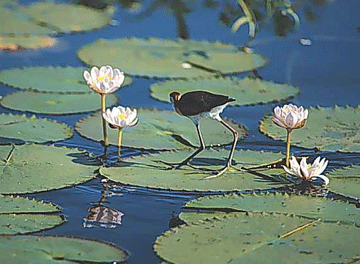 The 15th anniversary of the Kakadu Charter is a good time for Aboriginal and environmental advocates to re-confirm our shared concern, action and effectiveness for the long awaited total rehabilitation and completion of Kakadu National Park.
The Kakadu Charter Which Helped Stop A Uranium Mine Marks 15 Years Of Shared Values https://newmatilda.com/2015/11/16/the-kakadu-charter-which-helped-stop-a-uranium-mine-marks-15-years-of-shared-values/ Tomorrow marks a significant anniversary in a landmark battle to protect a people, and a place. Justin O’Brien and Dave Sweeney explain.
Continue reading
Camp Concern: protestors recall and reactivate anti nuclear campaign in Kakadu
“The mining company that has benefited and profited from the use of this area and the mining lease now needs to move towards a comprehensive clean-up.
“We’re still not completely aware of contamination problems that need to be rehabilitated.
“What’s promising is the protest from Aboriginal communities against the mining is as strong as ever. There’s a lesson [from Camp Concern] in partnerships between Indigenous and non-Indigenous activists sharing information together.”
Camp Concern: Activists reunite for anti-uranium mining protest 40 years later inside Kakadu 105.7 ABC Darwin By Emilia Terzon and Lisa Pellegrino , 27 Oct 15 As uranium mining near Kakadu faces an uncertain future, activists calling themselves Camp Concern have reunited inside the Northern Territory park to mark 40 years on from the launch of an anti-mining protest. Continue reading
Australia’s history of trying to get nuclear weapons
In 1969, the government announced plans to construct a 500-megawatt nuclear reactor at Jervis Bay in New South Wales. The intention was clear — this reactor was to support a nuclear weapons program.
in 1972, the conservative Gorton government was swept from power and replaced. Gough Whitlam, a longtime advocate of arms control, wasted no time ratifying the NPT and abandoning the Jervis Bay reactor. In a heartbeat, the 40-year quest for Australian nuclear capability was over.
Australia’s Failed Bid for the Bomb, War Is Boring, Chris Walsh, 15 Sept 15 Canberra was captivated by atomic weapons in the 1950s — then ruined its chances of ever getting them
At 9:00 in the morning on Oct. 3, 1952, a 25-kiloton nuclear explosion vaporized the retired British frigate HMS Plym off Australia’s remote western coast. The Operation Hurricane detonation in the Monte Bello Islands was a seminal moment for Britain and marked its return to the club of great powers.
But for Australia, these tests and others served a murkier purpose – as important and deliberate steps toward Australia’s own acquisition of nuclear weapons.
Troubled history of Australia’s Ranger uranium mine – ABC Radio
‘So to Mirarr, I guess what they see is very, very large disturbance, they see mountains of waste rock and low-grade ore, and sometimes that does affect their views of important sites like Djidbidjidbi or just the landscape.
‘It will never look the same again and the site will have to be monitored for decades to come after it is finished being rehabilitated so that we can make sure that it is actually in a stable chemical condition, the biodiversity is doing okay and the ecosystem is functional and so on.’
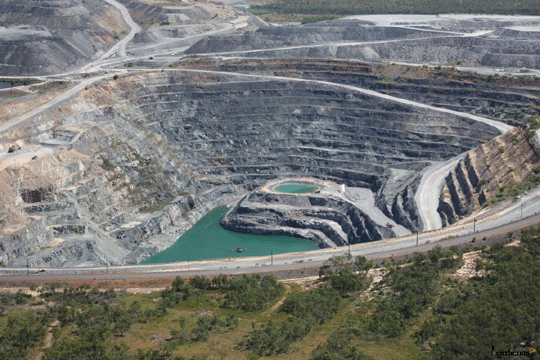
According to ERA figures, rehabilitation is expected to cost close to $500 million.
The long and controversial history of uranium mining in Australia, ABC Radio, Rear Vision, 14 July 2015 Keri Phillips Last month’s announcement that Energy Resources Australia will pull the plug on the Ranger uranium mine in the Northern Territory signals the end of one of the most controversial chapters in Australian mining history. Keri Phillips traces the history of uranium mining in Australia and Ranger’s role in it……. Continue reading
1919 – ANZAC Sermon – To Right the Wrongs
‘The Anzac sermon was preached by an army chaplain;
it was a glorification of the Australians, with some humorous sidelights.
It had none of the dignity and impressiveness that one would have thought the occasion demanded,
and offered no comfort to those present who had lost relatives at Gallipoli and on other battlefields.
He denied absolutely the oft-repeated statement that the Australian soldiers were undisciplined.
They were splendidly disciplined, he said, but their disciplined conduct had no trace of servility.
He spoke feelingly of the social conditions that had killed soldiers before they entered the trenches.
The evidence in the trenches of the terrible results of those social conditions
had roused many men to the sense of their duty to their fellows,
and made them resolve that when they returned to civil life they would
do all in their power to right the wrongs under which their comrades had lived.’
Woman Voter 7 August 1919 State Library of Victoria
First World War Women working for peace 1914-1919
womensweb.com.au
Daphne Marlatt 2001
South Australia’s proud history of the win against nuclear waste, a win led by Aboriginal women
One media narrative, as espoused in the AFR, is that this defeat was the result of a revolt by SA politicians. But this version of the story ignores the powerful campaign led by the Kupa Piti Kungka Tjuta, the senior aboriginal women’s council of Coober Pedy.
This story has been recorded by movement researchers Nina Brown and Sam Sowerwine and in a book, Talking Straight Out: Stories from the Irati Wanti Campaign.
Many members of the Kunga-Tjuta were survivors of the British government’s atomic testing in the 1950s and 60s, and so understood the devastating history of the nuclear industry. Upon hearing about the waste dump proposal, the group issued this statement:
We are the Aboriginal Women. Yankunytjatjara, Antikarinya and Kokatha. We know the country. The poison the Government is talking about will poison the land. We say, “No radioactive dump in our ngura – in our country. It’s strictly poison, we don’t want it.

The traditional residents of this supposedly “benign and sparsely populated geology” fought hard to protect their country using the tools they had available. They explained, demanded, marched and sang. They worked with green activists and wrote passionate letters. They urged politicians to “get your ears out of your pockets”. They won.
As South Australia faces another push from the nuclear industry, we would do well to remind ourselves of these stories. To paraphrase the late historian Howard Zinn, we need to emphasise what is possible by remembering those moments in our recent history when people demonstrated their capacity to resist, come together, and occasionally, to win.http://theconversation.com/south-australias-broad-brush-nuclear-review-is-meant-to-sideline-opponents-38110
Australian governments’ political risks in promoting the really quite marginal uranium industry
Given that Australia’s uranium mining and export accounts for less than 1 percent of its hundred billion dollar mineral export business (iron ore, bauxite, coal, copper, nickel etc),36 however, these decisions by Australian leaders risked significant political capital over what has been a highly contentious issue in Australia’s recent political history
Undermining Nuclear Non-Proliferation: Energy and Security Politics in the Australia-India-Japan-U.S. Nuclear Nexus 核不拡散の土台崩し オーストラリア·インド·日本·米国間におけるエネルギーと安全保障政策 The Asia-Pacific Journal, Vol. 12, Issue 46, No. 2, November 1, 2014 Adam Broinowski “……Until 2014, along with China, Japan has also seen a boom in mostly solar and wind electricity generation. But this has been stalled by utilities who have refused to take an influx of renewable power into the grid or to reduce electricity prices.10 With fewer nuclear plants scheduled for construction around the world than for shutdown, however, the nuclear industry faces the likely prospect of contraction11 and replacement by rapidly advancing renewable energy options, including solar, wind, tidal, hydro and possibly geothermal power over the longer term.
Despite this gloomy prognosis for the uranium sector, confidence began to return to the uranium mining industry in Australia from late 2012. Continue reading
Remembering the Howard government and businessmen’s push for nuclear power
 Call to’unveil nuclear plans’ http://www.sbs.com.au/news/article/2007/02/27/call-tounveil-nuclear-plans Labor is demanding the federal government reveal what it knows about plans by three leading businessmen for Australia’s first nuclear reactor. Source: AAP 27 FEB 2007 – UPDATED 22 AUG 2013
Former federal Liberal Party treasurer Ron Walker, Hugh Morgan and Robert Champion de Crespigny are the key shareholders in Australian Nuclear Energy Pty Ltd, a private company reportedly behind the plan. Continue reading
Cabinet papers 1988-89; Bob Hawke and the Aboriginal Treaty that never came
Cabinet papers 1988-89 SMH: Aboriginal Treaty SMH Damien Murphy 1 Jan 15 “……...The treaty that never came Bob Hawke attended the Barunga festival in the Northern Territory in June 1988 and promised an historic treaty with the Aboriginal people.
The Hawke government had been promising to improve representation of Aboriginal interests and issues, but by 1985 attempts to frame a “national model” for land rights had stalled in compromise, amid farmer and miner opposition and distrust from Aboriginal groups. So Hawke’s treaty had more than a touch of the sun about it. Continue reading
Australian governments’ sorry history of deception over India uranium deal, revealed by Wikileaks
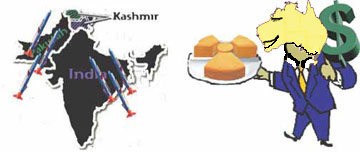 Australia will now contribute to spreading nuclear weaponry as India will be able to use Australian-supplied uranium for civilian purposes and reserve its indigenous supplies for its nuclear weapons program.
Moreover, India has a poor nuclear safety record.
 WikiLeaks exposes gov’t lies, shifts on India uranium deal, Green Left December 8, 2014 By Linda Pearson Prime Minister Tony Abbott signed an agreement in September to allow sales of Australian uranium to India for the first time. Uranium sales were initially approved by then-Coalition PM John Howard in August 2007 but Howard’s successor, Kevin Rudd, reinstated the ban.
Rudd’s action was in accordance with long-standing Labor Party policy that uranium should only be sold to countries that have signed the Nuclear Non-Proliferation Treaty (NPT). A 2008 Lowy Institute poll found that 88% of Australians supported this policy.
By the end of 2011, however, Labor had switched to the Liberal Party’s position at the behest of Rudd’s successor, Julia Gillard.
As US diplomatic cables published by WikiLeaks show, both parties were ultimately willing to change Australia’s long-standing nuclear policy to aid the Australian uranium industry and match strategic US objectives…………..
The US Embassy in Canberra regarded Rudd as a strong supporter of the US alliance. But there was concern over whether Labor’s nuclear policy would stop Australia supporting the US position at the NSG.
The cables show that pressure on the Rudd government to back the exemption came from the Australian High Commission in India as well as the US. They reveal how Labor’s official position on nuclear matters differed from the private views of individual members of the government.
This made the government’s support for the exemption and the party’s eventual approval of uranium sales in 2011 all but inevitable……………..
Secret support
The Rudd government’s public position before the NSG meeting in August 2008 was that it would consider the arguments on both sides and then decide whether to support the exemption. On July 24, 2008, Smith stuck to the official line during a joint interview with US Secretary of State Condoleezza Rice, saying “we haven’t made a decision”.
However, the cables suggest the government had already decided to support the exemption……………
After several days of deliberation and more intense US lobbying, the NSG approved the exemption on September 6, 2008. A cable reported that Canada’s ambassador to the United Nations, Marius Grinius, said “most NSG members ‘gave up’ and ‘joined the bandwagon’ rather than fully supporting a nuclear agreement with India”.http://wikileaks.org/cable/2009/05/09USUNNEWYORK497.htmlhttp://wikileaks…
The NSG decision opened the door to uranium sales to India. But while the Rudd government supported this exemption, its public position remained that Australia would not sell uranium to India unless it joined the NPT. On a visit to India shortly after the NSG decision, Smith said this policy “remains unaffected by the NSG decision”.
However, US diplomatic cables published by WikiLeaks suggest Labor leaders were already preparing to change its policy………………
[2009] According to another cable from Canberra, federal resources minister Martin Ferguson confirmed to US Ambassador Jeffrey Bleich that the ALP’s policy could change.
Bleich wrote in November 2009 that in Ferguson’s view, “the recent expansion in uranium development in Australia reflected a shift in willingness to consider nuclear energy”.
Additionally, according to the cable, Ferguson had said that the Australian government might have to revisit the issue of nuclear energy if other technologies “failed to develop commercially quickly enough” for Australia to meet its “clean” energy goals.
Moreover, Ferguson had told Bleich that he had “personally supported the US-India nuclear agreement” and believed that “a deal to supply India with nuclear fuel could be reached in 3-5 years”.
These comments contradicted his party’s official position at the time, but Ferguson’s support for the uranium industry was no secret. He led efforts to overturn Labor’s three-mines policy at the party’s 2007 conference.
After his comments on India in this cable were divulged by Fairfax in February 2011, Ferguson side-stepped questions and repeated the official line, saying: “We will only supply uranium to countries that are signatories to the NPT and have signed a bilateral agreement with Australia.”
Corporate advice
US diplomats in Australia also consulted representatives of mining giant BHP for their views on the industry and the prospect of uranium sales to India.
In April 2009, a cable from the US Consulate in Melbourne reported that BHP manager for integrated planning Barry Hewlett had told the consul-general that “India represents a potentially massive market” for the uranium in BHP’s Olympic Dam mine.
However, in November 2009, another cable from the consulate in Melbourne reported comments by BHP CEO Marius Kloppers that suggested the renewed international nuclear cooperation with India permitted by the NSG waiver was more important to BHP than the Australian government’s position on uranium exports.
“As long as someone can sell to the Indians,” Klopper said, “the world market will continue to expand, which helps us.”
Ferguson’s prediction in relation to uranium sales turned out to be true. In November 2011, Gillard announced she would push for the ALP to change its policy at its December party conference.
Gillard’s decision was motivated in part by a desire to help the uranium industry recover from the effects of the March 2011 Fukushima nuclear disaster. Demand dropped in the wake of the disaster and the price of uranium plummeted.
Smith publicly backed Gillard ahead of the vote. Smith said Rudd also supported the policy change. With the help of Ferguson and Australian Workers Union head Paul Howes, Gillard was able to overcome the opposition from the party’s left and the conference voted narrowly to allow uranium sales to India.
The decision was not supported by the Australian public. A 2012 opinion poll by the Lowy institute found that 61% of Australians opposed uranium sales to India, with only 9% strongly in favour.
Nevertheless, the Gillard government began talks with India on a bilateral nuclear safeguards agreement in March last year, which were concluded by Tony Abbott in September.
India’s record
Both Labor and the Coalition claim India has an “impeccable” record on non-proliferation and therefore deserves an exemption from the rules that apply to other states. This is not true.
India’s new status as a “responsible nuclear state” is more a reflection of the power of the US to influence international bodies, like the NSG and the International Atomic Energy Agency, to do favours for its friends and punish its enemies.
India chose to stay outside the NPT so it would be free to develop nuclear weapons. India’s first nuclear test in 1974 was carried out using plutonium from a nuclear reactor supplied by Canada strictly for civilian purposes.
The US and Australia imposed sanctions on India after it carried out another series of nuclear tests during its escalating arms race with Pakistan in 1998.
Australia will now contribute to spreading nuclear weaponry as India will be able to use Australian-supplied uranium for civilian purposes and reserve its indigenous supplies for its nuclear weapons program.
Moreover, India has a poor nuclear safety record. In 2012, the country’s auditor-general warned that a Fukushima-like disaster could result from the absence of effective industry regulation…………..https://www.greenleft.org.au/node/57962
Lest we forget: Aboriginal victims of Maralinga atomic bomb testing- theme for June19
Australian atomic massacre still ignored By David T. Rowlands from Green Left Weekly issue 971 June 29, 2013
 Lallie Lennon provided convincing testimony of the injuries suffered from the fall-out.
Nearly 60 years have passed since Totem 1, a British nuclear test in the Australian desert, was recklessly conducted in unfavourable meteorological conditions.Nuclear testing of any sort, even in the most “controlled” of circumstances, is inherently abusive, a crime against the environment and humanity for countless generations to come. Yet the effects of Totem 1 were particularly bad, even by the warped standards of the era.The mushroom cloud did not behave in the way it was supposed to. Instead of rising uniformly, part of it spread laterally, causing fallout to roll menacingly at ground level over a remote yet still populated corner of South Australia, sowing injury, illness and death in its wake.
The number of casualties is unknown because the secretive and unaccountable nuclear establishment has always declined to investigate the full impact of its own criminal negligence. But it has been suggested by investigators that perhaps 50 short-term Aboriginal fatalities resulted.
In addition to those who died, many others were exposed to harmful levels of radiation. The long-term health effects on these individuals have never been charted — but anecdotal reports of high cancer rates and horrendous birth defects in isolated “downwinder” communities have circulated.
At the time of the tests, it was well known by authorities that communities of Aboriginal people were close by. Yet the official attitude was that the concerns of a “handful of natives” could not be allowed to interfere with the “interests” of the British Commonwealth.
Imagine you are out with your family one morning when suddenly a loud explosion issues from the distant horizon. The ground rumbles and shakes, as though it were about to open up. Minutes later, a thick, churning dark dust cloud engulfs the surrounding desert countryside.
Terrified, with all your senses in recoil from these unnatural developments, you wonder if an event of apocalyptic proportions is taking place. And your troubles are only just beginning.
This is what happened to 22-year-old Yankunytjatjara woman Lallie Lennon and her three young children at Mintabie on October 15, 1953. A 10-kiloton device (roughly two-thirds the yield of the Hiroshima bomb) was detonated 180 kilometres away at Emu Field, near Maralinga.
Lallie and her son Bruce, aged 3, were covered in the gunpowder-smelling dust and smoke that came rushing through the trees with such intensity that it apparently created eclipse-like visibility conditions. “It went dark and dark,” recalled Lallie in 2006. “Dark — we couldn’t see anything. The place was black, you couldn’t see nothing.”
The levels of beta radiation contained in this toxic plume were so great that it felt like being “rolled in a fire”. The “kids were [ ing] … it was terrible … We was glad we was alive but we got sick. We were sicker and sicker.”
About a year later, both Lallie and her son Bruce developed a debilitating skin condition that involves the periodic eruption of oozing, agonising sores all over the body.
Lallie said: “It went away and then came back and the sores were getting bigger and bigger every time … I was in a mess after the sores.” Her two daughters, who were in a tent at the time the mist swept through, were spared the beta burns, but developed other symptoms consistent with radiological contamination.
Lallie’s story first achieved public recognition when she spoke about her experiences for a 1981 documentary, “Backs to the Blast”.
Aboriginal struggles to save beautiful Kakadu from uranium mining
The Dog Catcher of Jabiru, About Place Journal, Margaret Spence 24 Nov 14 “……….Uranium was discovered in Kakadu in 1953 and for the next decade much of the ore was bought by British and American governments for the development of atomic weapons. If the Aborigines knew of the potential fate of their ancestral earth, their objections were overruled.
But the nineteen seventies were a period of change for civil rights, and Aboriginal people campaigned to have their lands returned to them. In stages, the Australian Federal Government acquired title to the tracts of land that had been taken over the years by private, non-Aboriginal settlers. The land was returned to Traditional Owners under the newly established Aboriginal Land Rights Act (Northern Territory) and most of it was leased to the Commonwealth to become the joint managed Kakadu National Park.
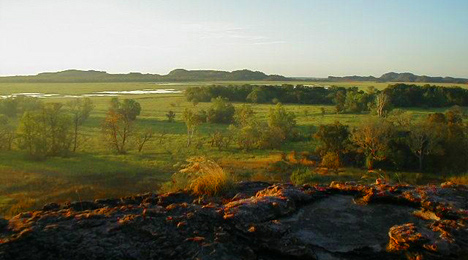
Three areas were excised from the National Park due to the presence of significant uranium deposits. While this land was granted to Traditional Owners as Aboriginal Land, the legal right to veto mining projects which the new laws provided was explicitly removed in the case of Ranger uranium mine and mining commenced there in 1981 against the clear opposition of the Mirarr Traditional Owners……… Continue reading
In brief: how Maralinga nuclear bomb caused illness and environmental destruction
Secret Outback nuclear testing site handed back to traditional land owners 50 years after British did HUNDREDS of nuclear tests causing fatal radiation poisoning
- The British nuclear testing site in outback Australia has been returned to its Aboriginal owners
- Seven atomic bombs were detonated on ‘Section 400’ in the 1950s
- There were also about 600 smaller nuclear tests on the area
- The land traditionally belonged to the Maralinga-Tjarutja community
- Britain’s nuclear tests in Australia caused widespread radiation poisoning
- Aborigines and Australian and UK soldiers suffered disease and death
- Radioactive fallout in remote Australia was three time greater than predicted
- Australia spent $100 million cleaning up the traditional lands
- The government held on to the 1782sq km testing range until this week
By CANDACE SUTTON FOR DAILY MAIL AUSTRALIA and AAP, 6 November 2014……………………Hundreds of nuclear trials were carried out. Britain dropped twelve nuclear bombs at Maralinga, and then went on to test nuclear warheads.

Although many Aboriginal people were forcibly removed from their land, more than a thousand were directly affected.
The widespread radioactive fallout of the bombs across the environment, which the local Aboriginal people called ‘puyu’ or ‘black mist’, caused disease and death……..http://www.dailymail.co.uk/news/article-2822906/Secret-nuclear-testing-site-Australian-outback-known-Section-400-finally-handed-Aboriginal-traditional-land-owners-50-years-British-dropped-atomic-bombs-causing-radiation-poisoning-death.html
1 This month
7 April – WEBINAR – Australia and the Doomsday Clock – Preventing nuclear war through NoFirstUse and other policies
Online | Tuesday April 7, 4:00-5:30pm, Australian Eastern Time / 8:00-9:30am Central Europe Time
– Access the registration link
15 April – Zoom –Nuclear Power is Not the Solution
Apr 15, 2026 01:00 AM in Canberra, Melbourne, Sydney

Join the International Physicians for the Prevention of Nuclear War (IPPNW) on Tuesday, April 14th for a timely webinar exploring the risks associated with nuclear power and challenging the myth that it offers a simple, safe, carbon-free solution to the climate crisis

21 April Webinar: No Nuclear Weapons in Australia
Start: 2026-04-21 18:00:00 UTC Canberra, Melbourne, Sydney (GMT+10:00)
End: 2026-04-21 19:30:00 UTC Canberra, Melbourne, Sydney (GMT+10:00)
Event Type: Virtual
A virtual link will be communicated before the event.
Host Contact Info: australia@icanw.org

of the week – Australians for War Powers Reform (AWPR)
To see nuclear-related stories in greater depth and intensity
 Antinuclear