ISIS vs IDF. Selective justice and the fall of Australian law
by Andrew Brown | Feb 4, 2026, https://michaelwest.com.au/isis-vs-idf-selective-justice-and-the-collapse-of-australian-law/
Australians who went to fight for ISIS were prosecuted, their families vilified, while former IDF soldiers fighting for Israel walk freely among us. Andrew Brown reports on the double standards.
Australians like to believe our justice system is governed by principle, and crimes judged by what was done, not by who did them. We like a comforting story about ourselves. That justice is served, and accountability painful but even-handed. We tell it often. We believe it when it suits us.
That story collapses the moment it is tested.
After the Brereton Report, Australia demonstrated what accountability looks like when it chooses to take law seriously. Entire Australian Defence Force platoons were investigated. Whole units placed under suspicion. Soldiers interrogated repeatedly. Careers frozen. Medals questioned. Command structures dismantled. Hundreds of millions of public dollars spent. One soldier charged. Many others left suspended indefinitely, their lives stalled in legal limbo.
This pursuit of accountability was not timid or symbolic. It did not flinch at rank, reputation, or heroism. Australia went after its returning heroes, including Victoria Cross recipients, and some of the most decorated units in its military history. It did so publicly and without fear or favour.
“No medal or mythology placed anyone beyond scrutiny.”
Australia wanted the world to see that it would investigate its own forces, not just individuals but units and chains of command, even when it was humiliating and politically costly.
Soldiers going overseas
When Australians travelled to join ISIS, the response was faster and harsher. Passports cancelled. Homes raided. Surveillance expanded. Citizenship stripping powers deployed. Wives treated as accomplices. Children framed as future threats. Suspicion alone was often enough to trigger punishment. Due process became optional.
If Australians fought for Russia against Ukraine, arrests would follow. Prosecutions under foreign incursion and war crimes laws. Media outrage before the luggage carousel stopped turning. The word traitor would appear instantly.
That is the standard Australia claims to uphold.
Gaza
Now consider Gaza. What is occurring is not chaotic warfare. It is a civilian catastrophe with a measurable pattern. Credible casualty analyses based on hospital records, death registries, and independent verification show that approximately 84% of those killed are civilians and around 33% are children. Not combatants miscounted. Not teenagers caught in crossfire. Children.
By comparison, in Ukraine, children account for around 0.3% of casualties. That is a difference of more than one hundredfold.This is not incidental harm. It is demographic concentration.
The destruction follows the same logic. Entire residential districts have been levelled. Homes, schools, universities, bakeries, water infrastructure, and sewage systems have been systematically destroyed. This is not damage caused by fighting around civilians.
“It is the removal of the conditions required for civilian life to continue.”
Hospitals have been a central target. Gaza’s major medical complexes were besieged, raided, and rendered inoperable. Electricity was cut. Fuel was denied. Oxygen supplies ran out. Patients died untreated on floors. Premature infants were left in incubators without power. Medical staff were detained directly from wards and operating theatres, taken without charge, many remaining in detention months later.
This is not collateral damage. It is the dismantling of a healthcare system in real time.
Human rights atrocity
Mass detention has accompanied the physical destruction. Thousands of Palestinians have been taken without charge or access to legal counsel. Human rights organisations have documented beatings, starvation, stress positions, and sexual abuse in detention. Medical professionals and journalists were not spared. They were targeted.
Journalists have been killed at a rate unmatched in any modern conflict. Aid workers have been killed despite operating in clearly marked vehicles and facilities. Among them was Australian humanitarian Zomi Frankcom, killed during a coordinated strike on an aid convoy.
And then there is Hind Rajab.
A six-year-old girl was trapped in a car after her family was shot dead. She called emergency services. Her voice was recorded. An ambulance was dispatched to rescue her. The ambulance was destroyed. Hind was later found dead alongside the paramedics sent to save her.
There was no firefight. No exchange of fire. No ambiguity.
Doctors from Australia, the United States, and Canada who worked in Gaza later testified publicly to treating repeated waves of children with gunshot wounds consistent with sniper fire. Identical entry wounds to heads and chests. These were not anecdotes.
They were clinical observations recorded by trained professionals.
The crime scene
This is why the language of genocide is no longer rhetorical. It is legal. The International Court of Justice has found a plausible risk of genocide and ordered provisional measures. The International Criminal Court is pursuing accountability for war crimes and crimes against humanity arising from Israeli actions.
What is unfolding in Gaza is not a tragedy without authorship.
It is a crime scene.
Australia has chosen silence.
That silence is no longer ignorance. At the National Press Club, senior human rights lawyer Chris Sidoti warned that Australians who served in Gaza may face criminal liability if genocide or war crimes are established. He was explicit. Genocide does not require pulling a trigger. Assistance, facilitation, or knowing contribution can be enough.
“The government did not contest the law. It did nothing.”
The government did not contest the law. It did nothing.
No Australian Federal Police task force. No examination of units or command chains. No transparency. No framework for investigating potential complicity in genocide or war crimes under Australian law.
Instead, indulgence.
An estimated 1,000 former or current Israeli Defence Force soldiers now live freely in Australia. They stroll through Caulfield, Bondi, Dover Heights, and Double Bay. They drink lattes in Sydney cafes. They enjoy suburban normality without scrutiny, while Gaza remains a ledger of rubble, amputations, mass graves, and dead children.And the indulgence does not stop at inaction. It now edges toward empowerment.
NSW Premier Chris Minns has publicly canvassed expanding armed community protection roles, including the involvement of current or former Israeli soldiers in guarding Jewish institutions in Australia. The stated aim is protection against antisemitism. That aim is legitimate. The implications are not.
Policing and the authorised use of force are public functions. They exist because weapons in civilian life require training, oversight, accountability, and law. When governments contemplate arming individuals with recent service in a foreign military now under investigation for genocide, the issue becomes immediate and domestic.
Run the test honestly.
ISIS vs IDF
If ISIS returnees sought to bear arms in public under the guise of community protection, the state would answer with handcuffs and prison, not consent. The request itself would be treated as evidence of danger.
That this proposal can be entertained for one category of foreign fighter while unthinkable for another exposes the fiction at the heart of Australia’s claim to equal justice. The law has not changed. Only who it is prepared to protect has.
“This is not neutrality. It’s policy.”
Australia destroyed careers investigating its own soldiers. It went after its most decorated units without fear or favour. It acted ruthlessly against ISIS recruits. It would move instantly if Australians fought for Russia.
When Australians fight in Gaza under the Israeli flag, amid credible allegations of genocide now before international courts, the state looks away.
“That is not restraint, but complicity.”
History will remember this as the moment Australia blinded its own law, allowing returning IDF soldiers to pass unexamined and exposing fairness before the law as a deliberate lie.
Clear as a bell

The question put to the Prime Minister; whether Richardson will have the same powers as the royal commissioner, misses the point. Richardson does not need the same powers. He needs different ones. He needs access to classified intelligence briefings, internal agency communications, and operational protocols that a public Royal Commission cannot examine without compromising national security or prejudicing the trial.
| By David Tyler on 9 January 2026, https://theaimn.net/clear-as-a-bell/ |
Bondi deserves answers. A Royal Commission, right now, will struggle to deliver them. The nation is being sold catharsis; what is on offer is legally hobbled – a rarefied type of theatre that cannot go where the public most wants it to go.
There is a reflex in Australian politics that turns grief into a ladder-climbing contest. We are world champions at it. A calamity shatters lives. Families are inconsolable. Cameras roll. A chorus forms. And before the ambulances have finished their last run, someone on air is demanding the biggest, most theatrical instrument in the civic toolkit: a Royal Commission. After Bondi, that chorus has swelled into something close to compulsory. Families, community leaders, health professionals, MPs and commentators have all called for a federal Royal Commission, framed as the only “serious” response.
It’s our modern-day Malleus Maleficarum. This mirrors the 15th-century Malleus Maleficarum – the infamous “Hammer of Witches” – a witch-hunting playbook by Heinrich Kramer that turned folk panic into systematic purge. Written around 1486, it codified hysteria as policy: classify deviance as heresy, mandate torture for confessions, and execution as the only cure. Our modern model? Calamity spawns moral panic; the “inquiry” becomes the hammer smashing dissent, delay or difference.
A blast from the past
Kramer’s manual thrived on spectacle – public trials, devil pacts, women’s “weakness” fuelling mass executions (but not in England) – much like today’s commissions that amplify grief into political theatre before facts settle. In both, urgency trumps evidence; the ladder-climbers win by promising exorcism.
Time-wasters HQ and the live crime scene
You can see how this plays in Canberra. A reporter fronts the Prime Minister and asks whether “his man”, Dennis Richardson; retired spook, now hunched over Manila folders while staffers colour-code Post-it notes – will be given the same powers as the royal commissioner.
The daft question treats coercive powers like a staff entitlements issue, not a matter of statute and jurisdiction. It also sidesteps the central, inconvenient fact: Bondi is not just a national trauma; it is a live criminal matter.
Lawyer Michael Bradley puts it simply in Crikey: one alleged shooter is alive, in custody and facing charges; that makes Bondi, first and foremost, a crime scene. While that prosecution is afoot, the justice system’s first priority is the accused’s right to a fair trial – an obligation that exists not to protect the accused from scrutiny, but to protect the public from injustice and to preserve the integrity of verdicts. Sub judice rules are built precisely to prevent material with a real and definite tendency to prejudice a trial from being sprayed across the public square.
A Royal Commission inquiry; even one led by someone as formidable as Virginia Bell, the former High Court judge now appointed, does not sit outside those rules. It sits squarely within them. The terms of reference granted to Bell are careful, constrained and cognisant of the legal reality: while criminal proceedings remain on foot, what can be examined, what witnesses can be compelled to say, and what findings can be published are all subject to the overriding requirement not to interfere with the trial.
Virginia Bell is not the problem. She is a jurist of the highest calibre. Her terms of reference ; drivers of violent extremism, systemic failures in mental health, gaps in intelligence sharing, the adequacy of threat assessment frameworks, are comprehensive in ambition. But ambition is not the same as reach. Her commission can summon documents, hold hearings, hear from families and experts. What it cannot do, while the accused awaits trial, is probe the specific circumstances, decisions and chains of causation that led to fifteen people being murdered at Bondi, Sunday, 14 December 2025.
The commission may hear about systemic failures in surveillance services. It may document coordination breakdowns between state and federal agencies. It may map the ideological landscape of online and in community radicalisation. But it cannot ask: why did this person, with this history, acquire that weapon? Why was this red flag ignored? What did this officer know, and when?
Those are questions for the criminal trial. And until that trial concludes, a process that may take years, those questions remain legally out of bounds.
This is not pedantry. It is constitutional bedrock. The separation between investigation and prosecution, between inquiry and trial, exists to safeguard the administration of justice. A Royal Commission that wandered into the specifics of a pending criminal case would risk tainting the jury pool, compromising witness testimony, and handing the defence grounds for appeal or even a mistrial.
The public interest in accountability does not override the public interest in a fair trial. Both matter. And right now, one must yield to the other.
The theatre of inquiry: catharsis without closure
So what, then, is the Royal Commission for? If it cannot answer the questions the public most urgently wants answered, what function does it serve? The answer, increasingly, is symbolic. Royal Commissions have become our civic grief ritual. They signal that something momentous has occurred, that the state is Doing Something, that the dead will not be forgotten.
They offer a stage for testimony, a forum for families, a mechanism for catharsis. These are not trivial functions. Grief demands witness. Trauma demands acknowledgment. But they are not the same as accountability. And they are certainly not the same as answers.
Michael Bradley is blunt about this in his Crikey analysis. A Royal Commission into Bondi, launched now, will be “an elaborate and expensive exercise in delay”. It will take a year. It will produce an interim report that skirts the live criminal matter, and a final report that arrives long after the initial trauma and public attention has moved on. Its recommendations will be debated, some accepted, others shelved. Governments will thank the commissioner, express solemn commitment to reform, and then do what governments always do: implement the easy bits, defer the hard ones, and declare victory.
This is the pattern. We have seen it before. One of the most shocking is the Royal Commission into Aboriginal Deaths in Custody (1987-1991): 339 recommendations on care, justice reform, and reconciliation. Implementation: partial at best; data collection improved, coronial processes tightened, but Indigenous incarceration rates soared 300% since: with the number of Aboriginal people dying in custody is reaching appalling, record figures (26 in 2024-25 alone).
The aged care royal commission delivered a damning report; the government’s response was a fraction of what was recommended. The banking royal commission uncovered systemic corruption; prosecutions were few, structural reform limited. The disability royal commission has been hearing harrowing testimony for years; whether it produces genuine change remains to be seen.
Royal Commissions are better at diagnosis than cure. They are superb at mapping failure. They are far less effective at compelling repair.
Dennis Richardson and the consolation prize
Enter Dennis Richardson. The Prime Minister’s pick. The interim investigator. The placeholder while the Royal Commission gears up and the criminal trial grinds on. Richardson is reviewing national security coordination, intelligence sharing, and threat assessment protocols. His task is narrower, more technical, less theatrical. He will not hold public hearings. He will not take testimony from grieving families. He will not generate headlines. But he might, if given the resources and the mandate, deliver something useful: a clear-eyed account of what went wrong in the machinery of state surveillance and response.
The question put to the Prime Minister; whether Richardson will have the same powers as the royal commissioner, misses the point. Richardson does not need the same powers. He needs different ones. He needs access to classified intelligence briefings, internal agency communications, and operational protocols that a public Royal Commission cannot examine without compromising national security or prejudicing the trial.
His work is not meant to satisfy the public’s hunger for spectacle. It is meant to identify, quietly and methodically, the points of failure that allowed a known threat to become a mass casualty event.
Whether Richardson will be allowed to do that work; whether his findings will be acted upon, or filed away as politically inconvenient, is another question entirely. History suggests caution. Reviews commissioned in the shadow of tragedy tend to be weapons of delay, not engines of reform. They allow governments to say “we’re looking into it” while doing very little. But Richardson, at least, has the advantage of operating outside the glare of a public hearing. He can ask uncomfortable questions without a media gallery taking notes. He can follow the evidence without worrying about headlines. If there is a chance of learning something concrete from Bondi, it may lie more with Richardson’s quiet review than with Bell’s necessarily constrained commission.
What the public is owed – and what it can have
The families of the victims deserve answers. The community deserves to know what failed. The nation deserves accountability. None of that is in dispute. But a Royal Commission launched now, while criminal proceedings are live, cannot deliver those things. It can offer process, yes. It can offer visibility, acknowledgment, a national platform for grief. It can produce a report, eventually, that maps systemic failures and makes recommendations. But it cannot; legally, constitutionally, practically, go to the heart of what happened in Bondi Junction and why. That work belongs to the criminal justice system.
And it could take years.
This is not an argument against accountability. It is an argument for realism. The appetite for a Royal Commission after Bondi is understandable. The political pressure is immense. But the law does not bend to political pressure, and for good reason. The accused has the right to a fair trial. Witnesses have the right not to be compelled to give evidence that could prejudice that trial. The criminal process has priority. This is not a technicality. It is a cornerstone of the rule of law.
What the public is being offered, then, is not what it thinks it is getting. It is being sold a Royal Commission as the gold standard of inquiry, the big gun, the serious response. What it is actually getting is a carefully circumscribed process that will spend months skating around the core questions, deferring the hard answers until after the trial, and producing a report that will be debated, diluted and half-implemented. That is not cynicism. That is the historical record.
The alternative no one is offering
There is another way. It is less theatrical, less politically satisfying, and almost certainly more effective. It involves letting the criminal justice system do its work; properly resourced, properly scrutinised, properly held to account. It involves giving Dennis Richardson the mandate and the access to conduct a serious, classified review of intelligence and coordination failures, and then acting on his findings. It involves empowering existing oversight bodies; the Inspector-General of Intelligence and Security, the Commonwealth Ombudsman, parliamentary committees, to do their jobs without interference. It involves, in short, using the accountability mechanisms we already have, rather than reaching for the shiny new one that makes for better television.
This approach has no champions. It generates no headlines. It does not satisfy the public hunger for a Big Moment. It is not what families are calling for, because families – rightly – want something that feels commensurate with their loss. But it is the approach most likely to produce actual change. Royal Commissions delay, defer and dilute. They turn urgent questions into multi-year research projects. They produce doorstop reports that governments cherry-pick. They are a mechanism for managing political heat, not for delivering accountability.
If the goal is to learn from Bondi, to fix what broke, to prevent the next tragedy, then the focus should be on the hard, long, unglamorous work of institutional repair. Strengthening intelligence sharing protocols. Closing gaps in mental health and law enforcement coordination. Ensuring that red flags are acted upon, not just filed. Resourcing frontline services properly. None of that requires a Royal Commission. It requires political will, funding, and a commitment to follow through. Those are the very things Royal Commissions tend to defer.
Conclusion: grief, law and the limits of theatre
Virginia Bell will conduct her inquiry with rigour and integrity. Her final report will be thorough, considered and damning in its account of systemic failure. It will make headlines. It will be tabled in Parliament. The families will read it. The media will dissect it. And then it will join the long shelf of Royal Commission reports that documented failure, recommended reform, and achieved far less than they promised.
This is not Bell’s fault. It is the nature of the instrument. A Royal Commission is not a magic wand. It is a legal process, bounded by the same constraints as any other. It cannot override sub judice protections. It cannot compel witnesses to incriminate themselves. It cannot force governments to act. It can investigate, document and recommend. That is all. And while the accused awaits trial, it cannot even do that much.
The nation is being sold catharsis. What is on offer is a legally hobbled, year-long process that will arrive at conclusions long after the moment of grief has passed. The families deserve better. The victims deserve better. And if the goal is genuine accountability, not the theatre of it, but the substance, then we need to stop pretending that a Royal Commission is the answer. The courtroom is where the answers will be found. The trial is where accountability begins. Everything else is noise.
A Royal Commission is not a memorial. It is not closure. It is not justice. It is a process. And right now, it is the wrong one. The lobbyists have got their way. The PM has conceded to their pressure. But it’s very hard to see the healing; impossible to spot that social cohesion, he is so overly fond of invoking. That at least, from the outset, is as clear as a bell.
This article was originally published on URBAN WRONSKI WRITES
Navi Pillay. Don’t be complicit in genocide Australia, warns former UN High Commissioner for Human Rights
Former Chair of the UN Commission of Inquiry on the Occupied Palestinian Territory, Judge Navi Pillay has warned that Australia risks complicity in genocide if we fail to act on Israel’s assault on Gaza, Stephanie Tran reports.
by Stephanie Tran | Nov 5, 2025 https://michaelwest.com.au/navi-pillay-dont-be-complicit-in-genocide-australia-warns-former-un-judge/
Speaking at the National Press Club, the former UN High Commissioner for Human Rights reiterated calls for the Australian government to fulfil its obligations under international law in light of the findings of the UN Commission of Inquiry on the Occupied Palestinian Territory which concluded that Israel’s actions in Gaza meet the threshold for genocide under international law.
‘We are all witnesses to the carnage’
Pillay stressed that every government, including Australia’s, had witnessed the livestreamed atrocities in Gaza unfold in real time and could not claim they “didn’t know” what was happening.
“We are all witnesses to the carnage in real time on our TV screens…. 65,000 Palestinian civilians [have been] killed, including women and children and it was all shown live on our TV sets, so nobody can say we didn’t know what was happening. No Australian parliamentarian could say we didn’t know what was happening. That was the defence the Nazis put up. …That is what some South African whites said.”
The veteran jurist, who presided over the International Criminal Tribunal for Rwanda, said the Commission’s findings were based on verified evidence collected over the past two years. Pillay said that in determining whether Israel had genocidal intent, the panel implemented the legal test established by the International Court of Justice, that genocidal intent is the “only reasonable inference” from the facts.
“We followed UN rules, and we followed the test for genocidal intent. … It must be the only reasonable inference from the acts themselves.”
In September, the Commission concluded that genocidal intent was “the only reasonable inference” from Israel’s conduct, pointing to the military’s use of heavy munitions in densely populated areas, the systematic destruction of cultural and religious sites, and repeated defiance of International Court of Justice (ICJ) rulings ordering provisional measures.
The report also found that Israeli authorities committed four of the five genocidal acts defined by the Genocide Convention, namely killing, causing serious bodily or mental harm, deliberately inflicting conditions of life calculated to bring about the destruction of the Palestinians in whole or in part, and imposing measures intended to prevent births.
Australia’s obligations under the Geneva Convention
Pillay criticised Australia’s muted response to the Commission’s finding that Israel has committed genocide in Gaza.
“Under the Genocide Convention, every state… has the legal obligation to prevent the commission of genocide, to deal with the commission of genocide, and to protect against genocide.”
She called on the Australian government to define and publicise its policy on genocide prevention, warning that the government’s maintenance of ties to entities complicit in the genocide could leave it open to prosecution.
“Be careful what you’re doing,” Pillay said.
Listen to this story
4 min
Former Chair of the UN Commission of Inquiry on the Occupied Palestinian Territory, Judge Navi Pillay has warned that Australia risks complicity in genocide if we fail to act on Israel’s assault on Gaza, Stephanie Tran reports.
Speaking at the National Press Club, the former UN High Commissioner for Human Rights reiterated calls for the Australian government to fulfil its obligations under international law in light of the findings of the UN Commission of Inquiry on the Occupied Palestinian Territory which concluded that Israel’s actions in Gaza meet the threshold for genocide under international law.
‘We are all witnesses to the carnage’
Pillay stressed that every government, including Australia’s, had witnessed the livestreamed atrocities in Gaza unfold in real time and could not claim they “didn’t know” what was happening.
“We are all witnesses to the carnage in real time on our TV screens…. 65,000 Palestinian civilians [have been] killed, including women and children and it was all shown live on our TV sets, so nobody can say we didn’t know what was happening. No Australian parliamentarian could say we didn’t know what was happening. That was the defence the Nazis put up. …That is what some South African whites said.”
The veteran jurist, who presided over the International Criminal Tribunal for Rwanda, said the Commission’s findings were based on verified evidence collected over the past two years. Pillay said that in determining whether Israel had genocidal intent, the panel implemented the legal test established by the International Court of Justice, that genocidal intent is the “only reasonable inference” from the facts.
“We followed UN rules, and we followed the test for genocidal intent. … It must be the only reasonable inference from the acts themselves.”
In September, the Commission concluded that genocidal intent was “the only reasonable inference” from Israel’s conduct, pointing to the military’s use of heavy munitions in densely populated areas, the systematic destruction of cultural and religious sites, and repeated defiance of International Court of Justice (ICJ) rulings ordering provisional measures.
The report also found that Israeli authorities committed four of the five genocidal acts defined by the Genocide Convention, namely killing, causing serious bodily or mental harm, deliberately inflicting conditions of life calculated to bring about the destruction of the Palestinians in whole or in part, and imposing measures intended to prevent births.
Australia’s obligations under the Geneva Convention
Pillay criticised Australia’s muted response to the Commission’s finding that Israel has committed genocide in Gaza.
“Under the Genocide Convention, every state… has the legal obligation to prevent the commission of genocide, to deal with the commission of genocide, and to protect against genocide.”
She called on the Australian government to define and publicise its policy on genocide prevention, warning that the government’s maintenance of ties to entities complicit in the genocide could leave it open to prosecution.
“Be careful what you’re doing,” Pillay said.
“You may one day face charges of complicity in genocide.”
Her comments come amid growing pressure on the Albanese government over Australia’s defence ties with Israel, via the F-35 program and contracts with Israeli weapons manufacturers.
Danish Arbitration Court has decided against Greenland Minerals A/S case to develop uranium industry.

Energy Transition Minerals is an Australian company (formerly Greenland Minerals Limited)
On 28 October 2025, the Arbitration Court ruled on whether the case brought by Greenland Minerals A/S against Naalakkersuisut can be heard by an arbitration court. The Arbitration Court has decided that the issue of the right to exploit minerals at Kuannersuit cannot be brought before an
arbitration court and that the Danish state cannot be a party to the case.
The case was brought before the Arbitration Court by Greenland Minerals A/S on 22 March 2022. According to Greenland Minerals A/S’ claim,
Naalakkersuisut should be ordered to grant the company a permit to exploit minerals at Kuannersuit.
The case arose from the adoption of the Uranium
Act, which prohibits preliminary investigations, exploration and
exploitation of uranium. The Act prevents a permit for exploitation from
being granted in the company’s license area, as the uranium values exceed
the Uranium Act’s de minimis limit.
The Greenland Government was surprised that the company chose to bring the case before an arbitration court, as the Greenland Government’s discretionary decisions can only be brought before the courts, and the Greenland Government has maintained throughout the case that the arbitration court does not have jurisdiction to decide
the case. The arbitration court’s decision was therefore expected.
Naalakkersuisut 28th Oct 2025, https://naalakkersuisut.gl/Nyheder/2025/10/2810_voldgiftsretten
Zionists v Keane, Riemer, Kostakidis. Australia’s massive test cases for free speech.
by Michael West | Oct 12, 2025, https://michaelwest.com.au/zionists-v-keane-riemer-kostakidis-australias-massive-test-cases-for-free-speech/?fbclid=IwY2xjawNZg3NleHRuA2FlbQIxMQBicmlkETFHazM4NnFGVW9VUEZ0S0xyAR7ySwD_jNr3_vorgPkT2cUqNmreGCAefd2xOE-r0WDxjuF9f0r3ZKf9jMf50A_aem_zu59pfZ3k4MYHUAsDOlS-Q
The Zionist lawsuit against Sydney Uni academics John Keane and Nick Riemer is – as is the suit against Mary Kostakidis – a mighty test case for free speech in Australia. Michael West reports.
Criticising Zionism and the state of Israel is *not* antisemitic. That is the guts of the defence in the case brought against two Sydney University academics in the Federal Court, which kicks off on Monday, 13 October.
This is a significant case for free speech in Australia. Critical even. The lawsuits, brought under Australia’s Racial Discrimination Act against academics Professor John Keane and Nick Riemer, are, in the opinion of this observer, lawfare; an attempt, as is the messy action against journalist Mary Kostakidis, to muzzle criticism of Israel and its atrocities against the Palestinians.
A mountain of costs
The interlocutory judgment in the Kostakidis trial foreshadows a long and difficult trial whose sheer costs may make it more of a contest of money than justice. More on this later.
The claim against Keane and Riemer is a similar story. It seeks to litigate the events and the myths of the Hamas attacks on Israel on October 7, 2023. And if the Judge rules that the examination of the events of October 7 is admissible, the case would have a global impact.
Clause 26 is unlikely to be true for a start.
Israel has never held an inquiry into October 7, and apparently for good reason. Wild Israeli claims of “40 babies beheaded” and “mass rapes” have been discredited – there is no forensic evidence of Israeli rape victims – and it is not known how many of the alleged “1,200 Israelis” mentioned in the claim were killed by the IDF.
Will this be tested in Court? If so, we are in for a long and expensive case.
It has been established in Israeli media and elsewhere that the Hannibal Directive was invoked that day. Under the Hannibal Directive, the IDF was ordered to prevent “at all costs” the abduction of Israeli civilians or soldiers, possibly leading to the death of a large number of Israeli civilians and IDF personnel in the area at the time.
Pictures of the carnage from that day prove the point that small arms fire from Hamas operatives could not have possibly caused so much destruction. Instead, by Apache helicopter gunships.
This is merely one disputed clause in the statement of claim and would prove costly for an Australian court to hear.
The “affected or aggrieved persons” making the Keane claim (it is not known who is funding it) – Zionist academics from Sydney University – assert they have been hurt by pro-Palestinian posts on social media; “offended, insulted, humiliated or intimidated by the posting”.
MWM does not doubt that their feelings have been hurt. Feelings have been hurt daily on both sides since the events of October 7 and during the ensuing American/Israeli genocide in Gaza. Yet, the question should be asked … is an expensive court case testing the infamous clause 18c clause in the Racial Discrimination Act in the public interest?
Should the aggrieved persons win the case, it will have a chilling effect on free speech in Australia. And in the Kostakidis case the stakes are arguably higher.
Mary Kostakidis
This week, Justice McDonald struck out parts of the statement of claim against Kostakidis while providing another opportunity for the applicants’ amended SOC to be amended again.
Taking to X, Mary Kostakidis tweeted that 18c was a “bad law, a lengthy and costly legal case can be brought against you by anyone who claims you are motivated by racism and are responsible for their feelings. And fair comment on a matter of public interest, and journalism, may be exceptions that can be pleaded, but that has to be proven at trial. Anyone involved in public discourse, including any journalist, must prove they are not motivated by racism.”
Proving that you are not a racist, proving intent, is a tough one. “It is not logically impossible that a particular news reporter, even when acting as a news reporter, might engage in particular acts because of people’s race or ethnic or national origin,” the Judge found. “Whether there is a basis to draw that conclusion in a particular case will depend on an assessment of the evidence in that particular case”.
Attempt to shut down genocide critics
Said Kostakidis, “The attempt to shut down criticism of a genocide is morally reprehensible and dangerous. Those trying to control the narrative will not prevail”. Her case is even more tricky than those engulfing Keane and Riemer, as the Zionist Federation of Australia has cherry-picked a lot of her social media activity for its claim, including tweets about Mossad and dead pedophile Jeffrey Epstein.
It’s a test case for social media too, as the claim against her includes retweets, posts by other people, which may or may not be deemed to be endorsing a particular view. As she told MWM, “If I retweet Smotrich (Israel’s extremist finance minister Bezalel Smotrich) does that amount to an endorsement?”
The opening round of hearings in the Keane and Riemer cases will take place before Justice Kennett in the Federal Court of Australia in Sydney on Monday and Tuesday.
A large number of Jewish colleagues have defended Keane and Riemer’s statements. They have said the complainants ‘do not speak for us as Jewish people’, and demanded that the complaint, which they describe as vexatious, be dropped.
The University of Sydney, too, is in the crosshairs, also being sued because the plaintiffs claim the Uni has ‘vicarious liability’ for the statements of the defendants Keane and Riemer, who claim that if Palestine supporters can’t say what they have said, then criticism of Israel will be outlawed under the law.
Trump’s rap sheet is long, but this may top them all

The International Atomic Energy Agency (IAEA) has not blown the whistle as claimed by the Australian government, nor has the UK or our European allies.
any resolution to condemn the bombing of Iran will be vetoed by the US , presumably with the support of Australia
The Age, Geoffrey Robertson , 24 June 25, – (print version)
Although few may bother to point this out, Trump has just committed a crime much worse than all the others on his rap sheet.
It is the war crime of aggression- the “supreme” war crime, according to the judgement at Nuremberg. It is constituted by using armed force against a felloe United Nations member with such “character, gravity and scale” that it violates the UN charter prohibition on one member country attacking another. A “spectacular military success, the bombing of Iran’s nuclear facilities may have been, but it was, as a matter of international law, no different from Russia’s attack on Ukraine, or the George W Bush Tony Blair, John Howard invasion of Iraq. These a all cases of a breach of the world order agreed after the last war and likely to encourage emulation.
This is not about saving Iran, or the danger of making Putin look better. If any government in the world deserves to be destroyed, it is the mullahs without mercy in Iran. Many of them were involved in the mass slaughter of political prisoners in1988 – the worst crime against POWs since the Japanese death marches. – and ever since their record of killing peaceful protestors, women and dissidents has been disgusting. Iran has bankrolled terrorist organisations and wagedpropaganda wars against the Big (US) and Little (UK) Satan, but it has not invaded Israel or done anything to America to justify its aggression.
Were some hypothetical war crimes court ever to get its hands on Israeli Prime Minister Benjamin Netanyahu, it would reduce his sentence by taking Iranian provocation into account – but the man would still be guilty as charged. He could not argue self-defence, which requires the threat defended against to be reasonably proximate. The threat of Iran building and using nukes is much further away than the threat of Israeli submarines, said to be already stationed within range of Tehtan.
It is not even clear that Iran is close to building a nuclear weapon – several dozen countries also signatory to the nuclear weapons treaty by which they forswear any such development. could build nukes within a few months. The International Atomic Energy Agency (IAEA) has not blown the whistle as claimed by the Australian government, nor has the UK or our European allies.. And just like Saddam Hussein’s “weapons of mass destruction” there is no reason to think Iran has completed a project that in fact started under .the Shah in the 1970s.
Only last wee, Trump said in effect to the Ayatollah, in the tone of a gangster “Wee know where you live”, but he promised the cleric he would be safe “for now” and gave him two weeks. He bombed three days later (This is a man on whose word Australia has just made a down payment for AUKUS).
The true disaster of Trump’s attack is that it is another nail in the coffin of the rules-based world order that provided some protection for international pdeace and security since it was put in place in 1945.
It is now unfit for its purpose declared in the UN Charter to stop the slaughter of war. The General Assembly is a talking shop, while all power resides in the permanently poleAxed Security Council which cannot function because of the big power veto.
Resolutions for peace in Ukraine are vetoed by Russia, for peace in Gaza they are vetoed by America on behalf of Israel, and any resolution to condemn the bombing of Iran will be vetoed by the US , presumably with the support of Australia.
Besides, the problem with Iran goes beyond nuclear weapons. It’s a conflict between the rights of its people and the wrongs of its dictatorship. That is a conflict that only its people can resolve, however much the West may wish to help.
Trump has already made a mockery of US law, from which his Supreme Court has declared him immune. Hewill now make a mockery of international law, roo.
Geoffrey Robertson KC is an expert in international and human rights law. He is the author of Mullahs Without Mercy and Crimes Against Humanity.
“We will not back down:” Court tells Greenpeace to pay billion dollar damages bill to oil and gas company

The case has been mired in controversy from the outset with many jurors holding unfavourable views of the protests and it was reported that more than half the jurors selected to hear the case had ties to the fossil fuel industry.
the US decision is a good indicator about what may be in store for Australia.
Royce Kurmelovs, Mar 20, 2025,
https://reneweconomy.com.au/we-will-not-back-down-court-tells-greenpeace-to-pay-billion-dollar-damages-bill-to-oil-and-gas-company/
A jury in the US has hit Greenpeace with $US660 million ($A1.04 billion) in damages for defamation and other claims for the green group’s part in a campaign led by First Nations people against an oil pipeline in 2016 and 2017.
The Standing Rock protests marked a major turning point in the movement against new oil and gas infrastructure, when the Standing Rock Sioux Tribe led a campaign against the construction of the Dakota Access pipeline.
Right wing organisations and groups mobilised in response to the protests that became a flashpoint in the broader fight over climate change, with sweeping anti-protest laws rolled out across the United States.
The case against Greenpeace is the latest reaction to the protest with Dallas-based oil and gas company, Energy Transfer Partners, alleging it lost $70 billion as a result of the campaign. It pursued Greenpeace in the courts alleging defamation and incitement of criminal behaviour against the project.
The lawsuit relied upon a US-specific statute, the Racketeer Influenced and Corrupt Organizations Act (RICO), that was initially written to target the mob, but has since been used to prosecute international football federation FIFA for corrupt conduct and ExxonMobil for its role in attacking the science of climate change.
By seeking hundreds of millions in compensation against an organisation that played a minimal role in the protests, legal experts have described the litigation known as “strategic litigation against public participation”, or a “SLAPP Suit”. These are cases brought by large corporation to shut down public criticism or protest about a company’s activities.
The case has been mired in controversy from the outset with many jurors holding unfavourable views of the protests and it was reported that more than half the jurors selected to hear the case had ties to the fossil fuel industry.
Greenpeace made multiple attempts to move the hearings to another venue over concerns it would not get a fair hearing but were denied.
Following the verdict, Greenpeace International Executive Director Mads Christensen linked the decision to a broader corrosion of the right to protest in the US under the Trump administration.
“We are witnessing a disastrous return to the reckless behaviour that fuelled the climate crisis, deepened environmental racism, and put fossil fuel profits over public health and a liveable planet,” Christensen said.
“The previous Trump administration spent four years dismantling protections for clean air, water, and Indigenous sovereignty, and now along with its allies wants to finish the job by silencing protest.”
“We will not back down. We will not be silenced.”
David Mejia-Canales, a senior human rights lawyer from the Human Rights Law Centre, said the US decision is a good indicator about what may be in store for Australia.
SLAPP suits are not new in Australia, but the US lawfirm representing oil company Santos in the recent Munkara decision that ruled against the Environmental Defenders Office used an approach similar to US-style RICO litigation.
Coalition leader Peter Dutton has already pledged to defund the Environmental Defenders Office after the ruling in Munkara found its lawyers had behaved improperly, but has recently proposed to formally introduce RICO-style laws into Australia if elected.
Mejia-Canales said it was early days on the opposition leader’s proposal that seemed “a bit of a thought bubble” but said that should these laws be introduced, they had “potential to be abused”.
“In a way, the Greenpeace decision in the US is peering a little bit into our own future,” he said. “What we are seeing happening in the US today might be happening here tomorrow.”
“If these RICO type laws get introduced in Australia, they’re not doing it for the greater good or the greater purpose, it’s to stop us critiquing these massive companies whose behaviour leads to a whole lot of criticism and we should be able to do that safely.”
The Human Rights Law Centre is working to draft a bill that would introduce a set of principles for Australian courts to follow when confronted by a SLAPP litigation.
Nuclear law: Could Australia go nuclear?
Holding Redlich, 11 March 2025, Scott Schlink, Valentina Hanna
Key takeaways
- The Coalition continues to advocate for its plan to introduce nuclear into Australia’s energy mix, claiming that it will provide cheaper, cleaner and consistent power. Part of this plan includes the construction of 7 nuclear power plants across the country.
- Australia has legislated prohibitions at commonwealth, state and territory levels against the construction and operation of nuclear plants and installations.
- The House Select Committee on Nuclear Energy recently published an interim report, concluding that nuclear power generation is not a viable option for Australia’s energy needs due to the significant deployment time and costs.
- A future Coalition Government must therefore navigate through a series of social, political and economic barriers to bring nuclear energy into the mix.
……………………………………………………………………………………………………………………………………………………… https://www.holdingredlich.com/nuclear-law-could-australia-go-nuclear
Judge Orders Britain’s Crown Prosecution Service (CPS) to Come Clean on Deleted Assange Docs
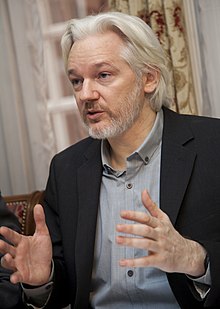
A judge in London has ruled that Britain’s Crown Prosecution Service (CPS) must explain what happened to certain documents in the Julian Assange case that it claims no longer exist, reports Joe Lauria.
By Joe Lauria, Consortium News, January 10, 2025, https://consortiumnews.com/2025/01/10/judge-orders-cps-to-come-clean-on-deleted-assange-docs/
Italian journalist Stefania Maurizi has been waging a legal battle for seven years against the Crown Prosecution Service to discover the truth about a CPS claim that it deleted a number of documents Maurizi has sought in a Freedom of Information request about the case of Julian Assange.
Now a judge on the London First-tier Tribunal has ruled that the CPS must explain to Maurizi what it knows about when, why and how the documents were allegedly destroyed. The Jan. 2 ruling was first reported by Maurizi’s newspaper il Fatto Quotidiano on Friday.
Judge Penrose Foss has given the CPS until Feb. 21 to respond or it could be held in contempt of court.
The ruling says:
The Crown Prosecution Service must, by no later than 4.00 p.m. on 21 February 2025:
- (1) Confirm to the Appellant whether it held recorded information as to when, how and why any hard or electronic copies of emails referred to in the Appellant’s request to the Crown Prosecution Service of 12 December 2019 were deleted;
- (2) If it did hold such information, either supply the information to the Appellant by 4.00 p.m. on 21 February 2025 or serve a refusal notice under section 17 of the Freedom of Information Act 2000, identifying the grounds on which the Crown Prosecution Service relies.A failure to comply with this Substituted Decision Notice could lead to contempt proceedings.”
Swedish Case
The documents Maurizi seeks were in relation to Sweden’s request to the U.K. for Assange’s extradition.
Her argument was heard before the three judges of the tribunal on Sept. 24, 2024. The allegedly deleted emails involved a CPS exchange with Sweden about a Swedish prosecutor’s attempt, beginning in 2010, to extradite the WikiLeaks publisher from Britain.
Assange was wanted at the time in Sweden for questioning during a preliminary investigation into allegations of sexual assault, which was dropped three times, definitively in 2017. He was never charged. After losing his battle against extradition to Sweden at the U.K. Supreme Court, Assange took refuge in the Ecuadorian embassy in June 2012, fearing that Sweden would send him to the United States.
Assange spent seven years in the embassy protecting himself from arrest until April 2019, when British police dragged him from the diplomatic mission and threw him into London’s maximum security Belmarsh prison.
It was only when the U.S. realized it would lose on appeal after a four-year extradition battle that the Department of Justice cut a plea deal with Assange who was released on June 24, 2024 and returned to his native Australia.
Assange had been charged in the United States under the Espionage Act for possessing and publishing defense information, which revealed evidence of U.S. war crimes. Britain took an active role in Assange’s prosecution.
In the earlier Swedish case, the CPS sought to stop Sweden from going to the embassy to question him.
Seeking to learn more about Britain’s role, Maurizi first made a Freedom of Information Act (FOIA) request in 2015 for all emails between the British and Swedish governments concerning Assange.
Some of the emails she obtained showed political motivation on the part of the lead British prosecutor, Paul Close.
One email Maurizi obtained from the Swedish Prosecution Authority (SPA) revealed that Close appeared to be pressuring Swedish prosecutors to continue seeking Assange’s extradition instead of dropping the case or questioning him at the Ecuadorian embassy, where Assange had been granted asylum.
“My earlier advice remains, that in my view it would not be prudent for the Swedish authorities to try to interview the defendant [Julian Assange] in the UK,” Close wrote to the SPA, in 2011, according to one of the emails obtained by Maurizi.
Keir Starmer, the British prime minister, was head of the CPS at this time. He led the service from 2008 to 2013, though it is unknown what role Starmer may have played in this correspondence.
“Don’t you dare get cold feet!!!,” he wrote to Marianne Ny, Sweden’s director of public prosecutions, in 2012. A year after that, Close wrote, “Please do not think this case is being dealt with as just another extradition.”
After Maurizi noticed a sizeable gap in the emails released to her she filed another FIOA seeking to obtain the missing emails.
The CPS first claimed that it had destroyed the emails. It said that when Close retired, his account along with his emails, were automatically destroyed.
But Maurizi did not buy it. She asked the court at the hearing last month to order the CPS to turn over “metadata” — data about data, such as file creation and modification dates, email sender and recipient addresses, timestamps, email routing information, keywords, and subject lines — proving the emails really were deleted and when.
“We have NO certainty whatsoever” that the emails were destroyed, Maurizi wrote in a message to Consortium News. Maurizi went to court because she believes the allegedly deleted emails could provide additional evidence of a politically motivated prosecution of Assange.
She also wants metadata on a CPS document that it says is from 2012 explaining the CPS’ email deletion policy, which was only sent to her in 2023.
The supposed 2012 policy document says that 30 days after an email account is disabled, the “email data” associated with it “will be automatically deleted and no longer accessible.”
“How is it possible that they provided this document only in 2023, after multiple requests, multiple appeals, no-one ever mentioned it or knew about it?” Maurizi told CN.
Such a policy does not explain why thousands of emails related to an ongoing case would be deleted.
Denied on the Metadata
In order to figure out whether the 2012 policy document on deletions is genuine, Maurizi requested the relevant metadata of the file. She wanted to make sure it was not created years later as an attempt at retroactively justifying the deletion of Close’s emails.
Judge Foss for the Tribunal, however, ruled against Maurizi on the release of the metadata. Foss ruled
“In our view there was nothing in the letter or spirit of the 2019 Request as to when, how and why the emails of the CPS lawyer were deleted, which required the CPS to disclose the metadata of any document which substantiated the information it provided in response to that request. […]
It would be extraordinary, in our view, if every time a public authority was presented with a request for information recorded in such a way as to have meant that the creation of that record generated metadata, the request should be taken inevitably to require the metadata behind the form of record.”
Unsatisfactory Explanations
It is simply “not credible” Maurizi’s lawyer argued during the September hearing that Close neither sent nor received emails to Swedish prosecutors when Sweden issued the arrest warrant for Assange; when Assange took refuge in the embassy; and when he was granted asylum by Ecuador.
“[I]t has never been established that there was anything untoward in those gaps, that there were emails that weren’t published,” argued Rory Dunlop KC, on behalf of the prosecution authority, during his closing remarks.
“The CPS are keen to make clear that it has never been accepted and [it has] never been established one way or another,” he insisted. Over the years, in response to FOIA requests and appeals, the CPS’ position on the deletion of Close’s account has varied.
For example, in 2017, after Maurizi challenged the gap in the emails, a CPS employee said in a witness statement that, “If there ever existed further emails they were not printed off and filed” and therefore “are no longer in the possession of the CPS.”
According to an article by Maurizi in il Fatto Quotidiano, five years later, the CPS said in response to a separate FOIA request from Labour MP John McDonnell that “deletion of an email account of a former member of staff at the time would not have led to the deletion of emails held on the case file.”
The CPS also admitted to McDonnell that they are only aware of one other case in the last decade which resulted in the premature destruction of case materials, according to Maurizi’s article.
The Sept. 24 tribunal also heard that the CPS’ Records Management Manual states that general correspondence “should be retained in the case file within five years from the date of the most recent correspondence,” which would not allow for deletion upon retirement by the prosecutor on the case.
Mohamed Elmaazi contributed to this article.
The legal decision on the Murdoch media – what does it mean for us?

NOEL WAUCHOPE, DEC 13, 2024, https://theaimn.com/the-legal-decision-on-the-murdoch-media-what-does-it-mean-for-us/
There is nothing either good or bad, but only thinking makes it so.
Shakespeare’s profound idea applies to that recent legal case, about the Murdoch Family Trust, in the Probate Court in Nevada.
The 93 year-old Rupert Murdoch sought to change the existing “irrevocable trust” which is to govern the arrangements of his media empire, after his death. The issue was that the trust should be in “the best interests” of the Murdoch children.
Rupert Murdoch argued that after his death, his children would benefit best if control of his media empire were to be changed from the existing trust arrangement which gives control to four of his children – Lachlan, Elizabeth, James and Prudence. Murdoch wanted that changed to control by only eldest son Lachlan. The other three disagreed, and took the case to court.
Rupert Murdoch’s given reason was that the whole media enterprise would thus be more profitable, – so all four children would get more money. That way, Elizabeth, James, and Prudence would not have control, but would be richer, and this would be “in their best interest”. Under the present unchanged “irrevocable” trust arrangement, they would share the control with Lachlan, but they would be less rich.
Many commentators are arguing that Rupert Murdoch’s real goal is power and influence – so that is why he wanted the very right-wing Lachlan to be in charge of the media show. Perhaps this is true.
The case was heard in a secret court, but the core of Rupert Murdoch’s argument was that the children’s monetary gain was in their best interest, rather than them having any control of the media and its content.
Apparently the three did not think so, and neither did Commissioner Edmund J Gorman, who ruled in the children’s favour, concluding that Murdoch and his son Lachlan, had acted in “bad faith”, in a “carefully crafted charade”.
Lachlan shares the same right-wing views as his father does, even more so,- while Elizabeth, James and Prudence are reported as having more moderate views. Murdoch has controlling interests in Fox News and News Corp , the Wall Street Journal, in the UK the Times and the Sun, the Australian and others. Apparently it is assumed by all, that the media empire will continue its current record profits only under Lachlan’s leadership. In 2023–24 the Fox Corporation’s net income was US$1.5 billion (A$2.35 billion).
This case raises the question – what is the purpose of the news media ?
According to the Murdoch argument, the purpose is to enrich the owners of the media. That would include all the shareholders, too, I guess. The means by which this is done is to provide entertainment and information to the public. And this is central to Rupert Murdoch’s stated argument.
Some people, including many journalists, and perhaps the Murdoch children, might see the informational role of the news media as its main purpose, with excessive profitability as a secondary concern.
Apparently Elizabeth, James and Prudence preferred to have some control in the media empire, even if that meant less money for them. They thought that “having a say” in the business was in their best interest. It is possible that they might take some pride in news journalism that would be more accurate and balanced than the Murdoch media is now.
Only thinking makes it so
The best example of “Murdoch media thinking” -is in its coverage of climate change. For decades, the Murdoch view was pretty much climate denialism – climate concern seen as a “cult of the elite” and the “effects of global warming have so far proved largely benign”. But more recently, this view was moderated, towards concern that some action should be taken to limit global warming – coinciding with the new right-wing push for nuclear power as the solution to climate change.
In the USA, Murdoch media has a powerful influence, supported by the big corporations, and the right wing in general, and by the Trump publicity machine, but it does have some competition from other right wing outlets like Breitbart and the Daily Wire, and in talk radio, and blogs. It has lost some influence in the UK, following its phone hacking scandal in 2011.
That Murdoch interpretation contradicts the view of thousands of scientists, yet is welcomed by the fossil fuel industries, the nuclear industry, and the right-wing governments that they support. Similarly, the Murdoch media’s view on international politics generally favours military action that the USA supports – on Ukraine’s side, by Israel, and now in Syria. All this is seen to be good – by the USA weapons manufacturers and salesmen, US and UK politicians, and presumably by the public.
In the USA, Murdoch media has a powerful influence, supported by the big corporations, and the right wing in general, and by the Trump publicity machine, but it does have some competition from other right wing outlets like Breitbart and the Daily Wire, and in talk radio, and blogs. It has lost some influence in the UK, following its phone hacking scandal in 2011.
In Australia, Murdoch media is far more pervasive, and has been described as a virtual monopoly – with the only national newspaper, newspapers in each state, (often the only newspaper), and News Corp controls radio and television in Australia through a number of assets.
So – what now, after this remarkable probate court decision?
Commissioner Gorman’s recommendation could still be rejected by a district judge. Murdoch’s lawyers can appeal the decision. Even if the decision is finally upheld, it will be a complicated process to rearrange the control of the media in the event of Rupert Murdoch’s death – and that might not happen for a decade or more. News Corp has a dual-class share structure which gives the family 41% of company votes, despite having just 14% of an overall stake in the company. Shareholders might change this arrangement.
In the meantime – fertile ground for endless speculation on what it all might mean – for the share price, for the future direction of the media, for the Murdoch family relationships.
Only thinking makes it so
Some see this legal decision as such a blow to the Murdoch empire – leading to its fatal collapse. And that thought can be viewed as a bad outcome. Even if Rupert Murdoch overturns the decision on appeal, it might have dealt a big blow to the empire.
Some welcome it, visualising a change in direction, with a more progressive media, directed by the three siblings with their more moderate opinions. For Australians who don’t like Donald Trump, and fear a Peter Dutton election win in 2025, well, it really doesn’t matter much. For the foreseeable future, the political right wing is still hanging on to its grip on news and information across this continent, thanks to the Murdoch empire.
Senior Netanyahu Adviser Served in Victorian Court facing Genocide Charges
Camp Sovereignty, December 6, 2024, https://theaimn.com/senior-netanyahu-adviser-served-in-victorian-court-facing-genocide-charges/
Mark Regev, former senior adviser to Israeli Prime Minister Benjamin Netanyahu and Australian citizen, has been served with charges of advocating genocide. The next hearing will take place at the Victorian Magistrates’ Court on 10 December 2024.
The case, initiated by Krautungalung Elder and human rights advocate Uncle Robbie Thorpe, accuses Regev of publicly endorsing actions constituting genocide during the Gaza siege. In statements broadcast on Australian media, Regev allegedly supported policies aimed at destroying the Palestinian population in Gaza, including advocating for starvation. These actions, in breach of Section 80.2D of the Criminal Code Act 1995, carry a maximum penalty of seven years’ imprisonment.
This case is a significant step forward compared to ongoing International Criminal Court (ICC) prosecutions involving Netanyahu and Israeli Defence Minister Yoav Gallant, as the ICC case cannot proceed until their arrests. In contrast, the prosecution of Regev is already underway.
The legal proceedings unfold against the backdrop of Australia’s shifting stance on Palestine, marked by its recent vote at the United Nations in support of a resolution demanding an end to Israel’s occupation of Palestinian territories. This marks a departure from Australia’s traditional alignment with the United States.
Under the Criminal Code Act 1995, this case tests Australia’s commitment to upholding justice, both locally and in the context of international accountability. With Israel invoking diplomatic immunity on Regev’s behalf, the decision to proceed with prosecution now lies with the Commonwealth and the Department of Public Prosecutions. This highlights the far-reaching implications of the case.
“This case will show whether Australia is serious about prosecuting crimes of genocide, or whether we allow our citizens to shield themselves behind bureaucracy. We have a law in place with a lower burden of proof than international law. It must be applied now to ensure accountability for actions that promote destruction and suffering” Uncle Robbie Thorpe stated.
Thorpe urges the Commonwealth Director of Public Prosecutions to take decisive action in filing an indictment against Regev. He believes this case presents an opportunity for Australia to lead in enforcing laws against genocide. “Australia has the tools, the evidence, and the obligation. Now we must act. Failure to prosecute Mark Regev for advocating genocide would be a stain on our nation’s conscience,” Uncle Robbie said.
“The charges against Mark Regev mark an important moment in the fight for accountability and justice. For far too long, leaders and officials responsible for the suffering and destruction of marginalised communities have acted with impunity. This case isn’t just about Gaza, it’s about the broader principle that no individual, no matter their position or connections, is above the law.” said Keiran Stewart-Assheton, president of the Black Peoples Union and a Traditional Owner of Wani-Wandian Country in the Yuin Nation.
If the Australian courts fail to pursue the case to its full conclusion or diplomatic immunity prevents a fair prosecution, the matter could escalate to the International Criminal Court (ICC). The ICC holds jurisdiction over genocide and other international crimes when domestic systems are unable or unwilling to act. With Regev already served and the case progressing, this prosecution presents an opportunity to set a precedent for domestic accountability while reinforcing global justice mechanisms.
Finally Free, Assange Receives a Measure of Justice From the Council of Europe

In the U.S., “the concept of state secrets is used to shield executive officials from criminal prosecution for crimes such as kidnapping and torture, or to prevent victims from claiming damages,” the resolution notes. But “the responsibility of State agents for war crimes or serious human rights violations, such as assassinations, enforced disappearances, torture or abductions, does not constitute a secret that must be protected.”
In his first public statement since his release, Assange said, “I’m free today … because I pled guilty to journalism.”
By Marjorie Cohn , Truthout, October 4, 2024
he Parliamentary Assembly of the Council of Europe (PACE), Europe’s foremost human rights body, overwhelmingly adopted a resolution on October 2 formally declaring WikiLeaks founder Julian Assange a political prisoner. The Council of Europe, which represents 64 nations, expressed deep concern at the harsh treatment suffered by Assange, which has had a “chilling effect” on journalists and whistleblowers around the world.
In the resolution, PACE notes that many of the leaked files WikiLeaks published “provide credible evidence of war crimes, human rights abuses, and government misconduct.” The revelations also “confirmed the existence of secret prisons, kidnappings and illegal transfers of prisoners by the United States on European soil.”
According to the terms of a plea deal with the U.S. Department of Justice, Assange pled guilty on June 25 to one count of conspiracy to obtain documents, writings and notes connected with the national defense under the U.S. Espionage Act. Without the deal, he was facing 175 years in prison for 18 charges in an indictment filed by the Trump administration and pursued by the Biden administration, stemming from WikiLeaks’ publication of evidence of war crimes committed by the U.S. in Iraq, Afghanistan and Guantánamo Bay. After his plea, Assange was released from custody with credit for the five years he had spent in London’s maximum-security Belmarsh Prison.
The day before PACE passed its resolution, Assange delivered a powerful testimony to the Council of Europe’s Committee on Legal Affairs and Human Rights. This was his first public statement since his release from custody four months ago, after 14 years in confinement – nine in the Ecuadorian Embassy in London and five in Belmarsh. “Freedom of expression and all that flows from it is at a dark crossroads,” Assange told the parliamentarians.
A “Chilling Effect and a Climate of Self-Censorship”
The resolution says that “the disproportionately harsh charges” the U.S. filed against Assange under the Espionage Act, “which expose him to a risk of de facto life imprisonment,” together with his conviction “for — what was essentially — the gathering and publication of information,” justify classifying him as a political prisoner, under the definition set forth in a PACE resolution from 2012 defining the term. Assange’s five-year incarceration in Belmarsh Prison was “disproportionate to the alleged offence.”
Noting that Assange is “the first publisher to be prosecuted under [the Espionage Act] for leaking classified information obtained from a whistleblower,” the resolution expresses concern about the “chilling effect and a climate of self-censorship for all journalists, editors and others who raise the alarm on issues that are essential to the functioning of democratic societies.” The resolution also notes that “information gathering is an essential preparatory step in journalism” which is protected by the right to freedom of expression guaranteed by the European Court of Human Rights.
The resolution cites the conclusion of Nils Melzer, UN Special Rapporteur on torture and other cruel, inhuman or degrading treatment or punishment, that Assange had been exposed to “increasingly severe forms of cruel, inhuman or degrading treatment or punishment, the cumulative effects of which can only be described as psychological torture.”
Condemning “transnational repression,” PACE was “alarmed by reports that the CIA was discreetly monitoring Mr. Assange in the Ecuadorian embassy in London and that it was allegedly planning to poison or even assassinate him on British soil.” The CIA has raised the “state secrets” privilege in a civil lawsuit filed by two attorneys and two journalists over that illegal surveillance.
In the U.S., “the concept of state secrets is used to shield executive officials from criminal prosecution for crimes such as kidnapping and torture, or to prevent victims from claiming damages,” the resolution notes. But “the responsibility of State agents for war crimes or serious human rights violations, such as assassinations, enforced disappearances, torture or abductions, does not constitute a secret that must be protected.”
Moreover, the resolution expresses deep concern that, according to publicly available evidence, no one has been held to account for the war crimes and human rights violations committed by U.S. state agents and decries the “culture of impunity.”
The resolution says there is no evidence anyone has been harmed by WikiLeaks’ publications and “regrets that despite Mr Assange’s disclosure of thousands of confirmed — previously unreported — deaths by U.S. and coalition forces in Iraq and Afghanistan, he has been the one accused of endangering lives.”
Assange’s Testimony
The testimony Assange provided to the committee was poignant. “I eventually chose freedom over realizable justice … Justice for me is now precluded,” Assange testified. “I am not free today because the system worked. I am free today after years of incarceration because I pled guilty to journalism.” He added, “I pled guilty to seeking information from a source. I pled guilty to obtaining information from a source. And I pled guilty to informing the public what that information was.” His source was whistleblower Chelsea Manning, who provided the documents and reports to WikiLeaks. “Journalism is not a crime,” Assange said. “It is a pillar of a free and informed society.”………………………………………………………………………………
PACE Urges US to Investigate War Crimes
The resolution calls on the U.S., the U.K., the member and observer States of the Council of Europe, and media outlets to take actions to address its concerns.
It calls on the U.S., an observer State, to reform the Espionage Act of 1917 to exclude from its operation journalists, editors and whistleblowers who disclose classified information with the aim of informing the public of serious crimes, such as torture or murder. In order to obtain a conviction for violation of the Act, the government should be required to prove a malicious intent to harm national security. It also calls on the U.S. to investigate the allegations of war crimes and other human rights violations exposed by Assange and Wikileaks.
PACE called on the U.K. to review its extradition laws to exclude extradition for political offenses, as well as conduct an independent review of the conditions of Assange’s treatment while at Belmarsh, to see if it constituted torture, or inhuman or degrading treatment.
In addition, the resolution urges the States of the Council of Europe to further improve their protections for whistleblowers, and to adopt strict guidelines to prevent governments from classifying documents as defense secrets when not warranted.
Finally, the resolution urges media outlets to establish rigorous protocols for handling and verifying classified information, to ensure responsible reporting and avoid any risk to national security and the safety of informants and sources.
Although PACE doesn’t have the authority to make laws, it can urge the States of the Council of Europe to take action. Since Assange never had the opportunity to litigate the denial of his right to freedom of expression, the resolution of the Council of Europe is particularly significant as he seeks a pardon from U.S. President Joe Biden. https://truthout.org/articles/finally-free-assange-receives-a-measure-of-justice-from-the-council-of-europe/
In the Woomera Manual, International Law Meets Military Space Activities

by David A. Koplow, September 12, 2024, https://www.justsecurity.org/100043/woomera-manual-international-law-military-space/
The law of outer space, like so much else about the exoatmospheric realm, is under stress. The prodigious growth in private-sector space activities (exemplified by SpaceX’s proliferating Starlink constellation, and other corporations following only shortly behind) is matched by an ominous surge in military space activities – most vividly, the creation of the U.S. Space Force and counterpart combat entities in rival States, the threat of Russia placing a nuclear weapon in orbit, and China and others continuing to experiment with anti-satellite weapons and potential techniques. The world is on the precipice of several new types of space races, as countries and companies bid for first-mover advantages in the highest of high ground.
The law of outer space, in contrast, is old, incomplete, and untested. A family of foundational treaties dating to the 1960s and 1970s retains vitality, but provides only partial guidance. Space is decidedly not a “law-free zone,” but many of the necessary guard rails are obscure, and few analysts or operators have ventured into this sector.
A new treatise, the Woomera Manual on the International Law of Military Space Activities and Operations, has just been published by Oxford University Press to provide the first comprehensive, detailed analysis of the existing legal regime of space. As one of the editors of the Manual, I can testify to the long, winding, and arduous – but fascinating – journey to produce it, and the hope that it will provide much-needed clarity and precision about this fast-moving legal domain.
Military Manuals
This Manual follows a grand tradition of prior efforts to articulate the applicable international military law in contested realms, including the 1994 San Remo Manual on Naval Warfare, Harvard’s 2013 Humanitarian Policy and Conflict Research Manual on Air and Missile Warfare, and the 2013 and 2017 Tallinn Manuals on Cyber Operations. The Woomera Manual was produced by a diverse team of legal and technical experts drawn from academia, practice, government, and other sectors in several countries (all acting in their personal capacities, not as representatives of their home governments or organizations). The process consumed six years (slowed considerably by the Covid-19 pandemic, which arrested the sequence of face-to-face drafting sessions).
The Manual is co-sponsored by four universities, among other participants: the University of Nebraska College of Law (home of Professor Jack Beard, the editor-in-chief), the University of Adelaide (with Professor Dale Stephens on the editorial board), the University of New South Wales—Canberra, and the University of Exeter (U.K.) The name “Woomera” was chosen in recognition of the small town of Woomera, South Australia, which was the site of the country’s first space missions, and in acknowledgement of the Aboriginal word for a remarkable spear-throwing device that enables greater accuracy and distance.
Comprehensive Coverage of a Broad Field
Three features of the Woomera Manual stand out. The first is the comprehensive nature of the undertaking. The Manual presents 48 rules, spanning the three critical time frames: ordinary peace time, periods of tension and crisis, and during an armed conflict. There may be a natural tendency to focus on that last frame, given the high stakes and the inherent drama of warfare, but the editors were keen to address the full spectrum, devoting due attention and analysis to the background rules that apply both to quotidian military space activities and to everyone else in space.
Complicating the legal analysis is the fragmentation of the international legal regime. In addition to “general” international law – which article III of the Outer Space Treaty declares is fully applicable in space – two “special” areas of law are implicated here. One, the law of armed conflict (also known as international humanitarian law) provides particularized jus in bello rules applicable between States engaged in war, including wars that begin in, or extend to, space. But the law of outer space is also recognized as another lex specialis, and it accordingly provides unique rules that supersede at least some aspects of the general international law regime. What should be done when two “special” areas of international law overlap and provide incompatible rules? The Woomera Manual is the first comprehensive effort to unravel that riddle.
The Law as It Is
A second defining characteristic of this Manual is the persistent, rigid focus on lex lata, the law as it currently is, rather than lex ferenda, the law as it may (or should) become. The authors, of course, each have their own policy preferences, and in their other works they freely opine about how the international space law regime should evolve (or be abruptly changed) to accommodate modern dangers and opportunities. But in this Manual, they have focused exclusively on describing the current legal structure, concentrating on treaties, customary international law, and other indicia of State practice. This is not the sort of manual in which the assembled experts “vote” on their competing concepts of the legal regime; instead, Woomera addresses what States (the sources and subjects of international law) say, do, and write. The authors have assembled a monumental library of State behaviors (including words as well as deeds, and silences as well as public pronouncements), while recognizing that diplomacy (and national security classification restrictions) often impede States explaining exactly why they did, or did not, act in a particular way in response to some other State’s provocations.
One feature that enormously facilitated the work on the Manual was a phase of “State engagement.” In early 2022, the Ministries of Foreign Affairs and Defense of the government of the Netherlands circulated a preliminary draft of the Woomera Manual to interested national governments and invited them to a June 2022 conference in The Hague to discuss it. Remarkably, two dozen of the States most active in space attended, providing two days of sustained, thoughtful, constructive commentary. The States were not asked to “approve” the document, but their input was enormously valuable (and resulted in an additional several months of painstaking work in finalizing the manuscript, as the editors scrambled to take into account the States’ voluminous comments and the new information they provided).
Space as a Dynamic Domain
Third, a manual on space law must acknowledge the rapidly-changing nature and scope of human activities in this environment, and the great likelihood that even more dramatic alterations are likely in the future. Existing patterns of behavior may alter abruptly, as new technologies and new economic opportunities emerge. The Manual attempts to peer into the future, addressing plausible scenarios that might foreseeably arise, but it resists the temptation to play with far-distant “Star Wars” fantasies.
The unfortunate reality here is that although the early years of the Space Age were remarkably productive for space law, the process stultified shortly thereafter. Within only a decade after Sputnik’s first orbit, the world had negotiated and put into place the 1967 Outer Space Treaty, which still provides the cardinal principles guiding space operations today. And within only another decade, three additional widely-accepted treaties were crafted: the 1968 astronaut Rescue Agreement, the 1971 Liability Convention, and the 1975 Registration Convention, as well as the 1979 Moon Convention (which has not attracted nearly the same level of global support and participation). But the articulation of additional necessary increments of international space law has been constipated since then – no new multilateral space-specific treaties have been implemented in the past four decades, and none is on the horizon today.
Sources and Shortcomings of International Space Law
The corpus of international space law is not obsolete, but it is under-developed. We have the essential principles and some of the specific corollaries, but we are lacking the detailed infrastructure that would completely flesh out all those general principles. Some important guidance may, however, be found in State practice, including the understudied negotiating history of the framework treaties for space law, particularly the Outer Space Treaty. The Manual provides important insights in this area, notably with respect to several ambiguous terms embedded in the treaties.
The authors of the Woomera Manual, therefore, were able to start their legal analysis with the framework treaties – unlike, for example, the authors of the Tallinn Manuals, covering international law applicable to cyber warfare, who had to begin without such a structured starting point. Still, the Woomera analysis confronted numerous lacunae, where the existing law and practice leave puzzling gaps. The persistent failure of the usual law-making institutions to craft additional increments of space arms control is all the more alarming as the United States, NATO, and others have declared space to be an operational or war-fighting domain.
Conclusion
It is hoped that the process of articulating the existing rules – and identifying the interstices between them – can provide useful day-to-day guidance for space law practitioners in government, academia, non-governmental organizations, the private sector, and elsewhere. The prospect of arms races and armed conflict in space unfortunately appears to be growing, and clarity about the prevailing rules has never been more important. It is a fascinating, dynamic, and fraught field.
FBI Sued For Withholding Files On Assange And WikiLeaks
Kevin Gosztola, Sep 12, 2024, https://thedissenter.org/fbi-sued-for-withholding-files-on-assange-and-wikileaks/
“With the legal persecution of Julian Assange finally over, the FBI must come clean to the American people,” Chip Gibbons, policy director for Defending Rights & Dissent.
The civil liberties organization Defending Rights and Dissent sued the FBI and United States Justice Department for withholding records on WikiLeaks and its founder Julian Assange.
“For nearly a decade and a half, we’ve been trying to get at the truth about the U.S. government’s war on WikiLeaks,” declared Chip Gibbons, the policy director for Defending Rights and Dissent.
Gibbons added, “With the legal persecution of Julian Assange finally over, the FBI must come clean to the American people.”
On June 25, 2024, U.S. government attorneys submitted a plea agreement [PDF] in the U.S. District Court for the Northern Mariana Islands after Assange agreed to plead guilty to one conspiracy charge under the U.S. Espionage Act.
Assange was released on bail from London’s Belmarsh prison, where he had been jailed for over five years while fighting a U.S. extradition request. He flew on a charter flight to the Northern Mariana Islands, a U.S. territory where a plea hearing was held.
The plea agreement marked the end of a U.S. campaign to target and suppress Assange and WikiLeaks that spanned 14 years and first intensified after WikiLeaks published documents from U.S. Army whistleblower Chelsea Manning that exposed crimes committed in U.S. wars in Iraq and Afghanistan as well as U.S. complicity in human rights abuses in dozens of countries around the world.
“As soon as we began publishing newsworthy stories about US war crimes in 2010, we know the US government responded to what was one of most consequential journalistic revelations of the 21st century by spying on and trying to criminalize First Amendment-protected journalism,” stated WikiLeaks editor-in-chief Kristinn Hrafnsson.
Hrafnsson continued, “While WikiLeaks has fought for transparency, the U.S. government has cloaked its war on journalism in secrecy. That’s why Defending Rights & Dissent’s lawsuit is so important, as it will help unmask the FBI’s efforts to criminalize journalism.”
On June 27, Defending Rights and Dissent requested [PDF] “all records created, maintained, or in the custody of the FBI that mention or reference: WikiLeaks; Julian Assange.”
The FBI separated the request into two requests—one for files mentioning “WikiLeaks,” one for files mentioning Julian Assange. And by August 19, the organization was informed by the FBI that it would take around five and a half years (2,010 days) to “complete action.”
Previously, on June 22, 2021, Defending Rights and Dissent submitted a nearly identical request. It took the FBI two years to respond and notify the organization that the documents could not be provided because there was a “law enforcement” proceeding that was pending against Assange.
The FBI became involved in pursuing an investigation against Assange and WikiLeaks in December 2010.
In 2011, FBI agents and prosecutors flew to Iceland to investigate what they claimed was a cyber attack against Iceland’s government systems. But as Iceland Interior Minister Ögmundur Jónasson told the Associated Press in 2013, it became clear that the FBI agents and prosecutors came to Iceland to “frame” Assange and WikiLeaks.
The FBI was interested in interviewing Sigurdur Thordarson, a serial liar and sociopath who embezzled funds from the WikiLeaks store and sexually preyed on underage boys. As I recount in my book “Guilty of Journalism: The Political Case Against Julian Assange,” Thordarson subsequently became an FBI informant or cooperating witness.
“When I learned about it, I demanded that Icelandic police cease all cooperation and made it clear that people interviewed or interrogated in Iceland should be interrogated by Icelandic police,” Jónasson added.
A little more than a year before the U.S. government’s prosecution against Assange collapsed, the FBI approached three journalists who had worked with Assange but had a falling-out with him. Each refused to help U.S. prosecutors further their attack on journalism.
“The decision to respond to reporting on U.S. war crimes with foreign counterintelligence investigations, criminal prosecutions, and dirty tricks continues to cast a dark shadow over our First Amendment right to press freedom,” Gibbons said.
Gibbons concluded, “We will work tirelessly to see that all files documenting how the FBI criminalized and investigated journalism are made available to the public.”
1 This month
7 April – WEBINAR – Australia and the Doomsday Clock – Preventing nuclear war through NoFirstUse and other policies
Online | Tuesday April 7, 4:00-5:30pm, Australian Eastern Time / 8:00-9:30am Central Europe Time
– Access the registration link
15 April – Zoom –Nuclear Power is Not the Solution
Apr 15, 2026 01:00 AM in Canberra, Melbourne, Sydney

Join the International Physicians for the Prevention of Nuclear War (IPPNW) on Tuesday, April 14th for a timely webinar exploring the risks associated with nuclear power and challenging the myth that it offers a simple, safe, carbon-free solution to the climate crisis

21 April Webinar: No Nuclear Weapons in Australia
Start: 2026-04-21 18:00:00 UTC Canberra, Melbourne, Sydney (GMT+10:00)
End: 2026-04-21 19:30:00 UTC Canberra, Melbourne, Sydney (GMT+10:00)
Event Type: Virtual
A virtual link will be communicated before the event.
Host Contact Info: australia@icanw.org

of the week – Australians for War Powers Reform (AWPR)
To see nuclear-related stories in greater depth and intensity
 Antinuclear