ABC challenges the validity of Federal Police raids
 We don’t want any sensationalist headlines,’ AFP
  allegedly told ABC, https://www.theage.com.au/national/we-don-t-want-any-sensationalist-headlines-afp-allegedly-told-abc-20191028-p534ux.htmlby Michaela Whitbourn ,October 28, 2019 —An Australian Federal Police agent told the ABC it wanted to avoid “sensationalist headlines” such as “AFP raids ABC” before it seized a raft of documents from the broadcaster’s Sydney headquarters, the Federal Court has heard.
The ABC is challenging the legal validity of the search warrant authorising the June 5 raid by the federal police on its offices in Ultimo and is seeking the return of documents seized at the time. Continue reading
A new court order is being abused in order to harass a journalist
YOU CAN’T HANDLE THE TRUTH! Media’s dwindling role in Democracy Panel
Toxic “Safety” orders the latest tool to shut down free speech https://www.michaelwest.com.au/toxic-safety-orders-the-latest-tool-to-shut-down-free-speech/, by Michael West — 25 October 2019 It’s #YourRightToKnow. There are many ways to silence the media: persecution of whistleblowers, defamation threats, contempt of court claims, lobbying of media bosses by powerful interests, injurious falsehood claims, the government’s draconian secrecy laws and police raids on journalists. Michael West reports on the latest abuse against free speech.
Today we can unveil yet another threat to freedom of speech: the Personal Safety Intervention Order (PSIO), a court order which is intended to help victims of domestic violence but instead is being abused as a tool to harass journalists, namely Sandi Keane, Editor of this publication.
It’s #YourRightToKnow. There are many ways to silence the media: persecution of whistleblowers, defamation threats, contempt of court claims, lobbying of media bosses by powerful interests, injurious falsehood claims, the government’s draconian secrecy laws and police raids on journalists. Michael West reports on the latest abuse against free speech.
Today we can unveil yet another threat to freedom of speech: the Personal Safety Intervention Order (PSIO), a court order which is intended to help victims of domestic violence but instead is being abused as a tool to harass journalists, namely Sandi Keane, Editor of this publication.
There have been some reports about the abuse of Personal Safety Intervention Orders in Victoria by those seeking malicious revenge. The editor of this journal, Sandi Keane, is believed to be the first journalist to be silenced in this way. She’s attended court seven times after receiving two Orders and has been threatened with a third. “An Intervention Order is now a sure fire way to shut down a story,” says Keane. “Getting an Intervention Order in Victoria is instant and cost-free (no lawyer required).”
The two essential criteria are for applicants to claim they have been threatened and are suffering mental stress as result.
An Interim Order will be issued immediately against anyone in Australia.
Sandi Keane says the applicants lied about the threats but no evidence was needed until the Final Contested Hearing some 12-18 months later.
The effect on public interest reporting therefore is chilling as most news is time-critical, so by the time the story might eventually be published, its news value might have evaporated.
There are no consequences for abusing the legal system and costs cannot be claimed by the Respondent in the proceedings.
The Applicant can also manipulate the date of the final hearing as a magistrate will only set a date for the Final Hearing if both sides have had a chance to get a lawyer; are ready for the hearing; or agree to the date.
Furthermore, court reporters cannot report on an Intervention Order unless they withhold the name of the court and names of the relevant parties.
So, not only does an Intervention Order trump an Injunction in the High Court with all its attendant costs and adverse publicity, it also ticks the Suppression Order box.
Yet the sting in the tail is that, from the date of the Interim Order, all references to the “protected person” must be deleted from any media site including social media (Condition 10).
Journalists can forget about getting another colleague to publish the story as this is prohibited under Condition 8.
Breaching the order risks a criminal conviction or prison sentence.
Journalists union, the Media Arts and Entertainment Alliance (MEAA), has met with the Victorian Attorney General with the hope of amending the Personal Safety Intervention Order Act to protect freedom of the press. In a letter to the Chief Magistrate, the MEAA wrote:
“This is a dangerous assault on press freedom, has a chilling effect on legitimate journalism in the public interest and undermines the public’s right to know.”
Editor’s Note:
Sandi Keane’s investigation was into the fraudsters operating in the pedigree dog industry. She was successful in contesting one of these orders. The unsuccessful Applicant in this case had served a jail sentence for fraud and was also found guilty of arson. The other applicant also has a conviction for fraud. These two people have taken out five PSIOs of which we know. The others were granted against people who had taken legal action against them, made an official complaint or given evidence against them.
The rise of PSIOs, and their abuse, coincides with the rise in other forms of suppression of free speech in Australia, by all three branches of government: the judiciary, the executive and the legislature.
It’s time to enshrine free speech in the constitution such as is the case in the US. You can take action to stand up for your right to know. Check out MEAA’s Take Action site here.
Attorney General Christian Porter backs laws that restrict journalists’ reporting
|
Material from raid on journalist’s home ‘may be used to prosecute’, The Age, By Dana McCauley October 25, 2019 — Attorney-General Christian Porter has launched an extraordinary intervention in a High Court case over raids by Australian Federal Police (AFP) on News Corp journalist Annika Smethurst’s home, asking the court to block a move to destroy material that may be used for future prosecution.
Mr Porter, who has sought to reassure media companies fighting for press freedom that he is “seriously disinclined” to approve prosecutions over public interest journalism, said in a joint submission to the court that the AFP was still weighing up whether to refer the matter to prosecutors. “If charges are laid, the data seized from Ms Smethurst’s phone may well be important. In those circumstances, the court should not order that the data be destroyed,” Mr Porter’s joint submission with the Australian Federal Police said. “It should leave it to the trial judge in any future criminal prosecution to determine whether that material will be admitted.” Australian media outlets – including Nine, publisher of The Sydney Morning Herald and The Age – have united with a ‘Right to Know’ campaign to warn against growing censorship, calling for reforms to shield whistleblowers and journalists from prosecution. Mr Porter has asked the court to uphold the validity of the AFP raid warrant and secrecy laws that restrict journalists’ reporting, which News Corp and Ms Smethurst are challenging. AFP officers raided Ms Smethurst’s home in June over a story published in the Sunday Telegraph a year earlier, in which she reported on a government plan to allow the Australian Signals Directorate to spy on Australian citizens for the first time. News Corp and Ms Smethurst argue the raid breached the implied freedom of political communication in Australia’s Constitution because the prohibition on publishing classified information was not limited to “inherently harmful” disclosures and gave the government “unconstrained discretion” to protect information, even if it was “merely embarrassing”…….. The Parliamentary Joint Committee on Intelligence and Security inquiry into press freedom will report at the end of November……… On Friday, the information watchdog launched an investigation into the Home Affairs department’s compliance with freedom of information laws after it emerged the department was failing to release documents within the legal deadline in one out of four cases. https://www.theage.com.au/politics/federal/material-from-raid-on-journalist-s-home-may-be-used-to-prosecute-20191025-p534cr.html |
|
Judge denies Julian Assange a delay in extradition hearings

|
WikiLeaks founder Julian Assange denied delay to extradition hearing by London judge, https://www.abc.net.au/news/2019-10-22/wikileaks-founder-assange-in-court-to-fight-extradition/11625042 The full extradition hearing of WikiLeaks founder Julian Assange will go ahead in February 2020 after a London judge declined a request by his lawyers to delay proceedings by three months.
Key points:
The 48-year-old appeared in a packed court on Monday to fight extradition to the United States, where he faces 18 counts, including conspiring to hack into Pentagon computers and violating an espionage law. Britain’s former Home Secretary Sajid Javid signed an order in June allowing Assange to be extradited to the US, where authorities accuse him of scheming with former Army intelligence analyst Chelsea Manning to break a password for a classified government computer. He could spend decades in prison if convicted. Assange and his legal team said he needed more time to prepare his case, but failed to convince District Judge Vanessa Baraitser that a slowdown was justified. The full extradition is still set for a five-day hearing in late February, with brief interim hearings in November and December. Assange — clean shaven, with his silvery-grey hair slicked back — defiantly raised a fist to supporters who jammed the public gallery in Westminster Magistrates Court. After the judge turned down his bid for a three-month delay, Assange, speaking very softly and at times appearing to be near tears, said he did not understand the proceedings. He said the case was not “equitable” because the US government had “unlimited resources” while he did not have easy access to his lawyers or to documents needed to prepare his battle against extradition while confined to Belmarsh Prison on the outskirts of London. Lawyer Mark Summers, representing Assange, told the judge that more time was needed to prepare Assange’s defence against “unprecedented” use of espionage charges against a journalist. Mr Summers said the case has many facets and would require a “mammoth” amount of planning and preparation. He also accused the US of illegally spying on Assange while he was inside the Ecuadorian Embassy seeking refuge, and of taking other illegal actions against the WikiLeaks founder. “We need more time,” Mr Summers said, adding that Assange would mount a political defence. Mr Summers said the initial case against Assange was prepared during the administration of former president Barack Obama in 2010 but wasn’t acted on until Donald Trump assumed the presidency. He said it represented the US administration’s aggressive attitude toward whistleblowers. Representing the US, lawyer James Lewis opposed any delay to the proceeding. The case is expected to take months to resolve, with each side able to make several appeals of rulings. The judge said the full hearing would be heard over five days at Belmarsh Court, which would make it easier for Assange to attend and contains more room for the media. Assange’s lawyers said the five days would not be enough for the entire case to be heard. Health concerns for Assange Outside the courthouse, scores of his defenders — including former London mayor Ken Livingstone — carried placards calling for Assange to be released. Wikileaks editor-in-chief Kristinn Hrafnsson said it was a “big test case for journalism worldwide”. “This should be thrown out immediately because this is a total violation of a bilateral treaty between the US and the United Kingdom which basically states that you cannot extradite someone for political offences, and this is a political case,” he said. Regarding Assange’s health, Mr Hrafnsson said he was in a “stable condition” but was living in “de facto solitary confinement”. “After three or four weeks it starts to bite in and you can feel that he is suffering,” he said. Assange supporter Malcolm, who did not give his surname, told the ABC there was “not nearly enough” people actively campaigning for Assange’s freedom, and he wanted to see the whole street blocked at the next hearing. Another supporter accused the Australian government of failing to “defend their own citizen”. The crowd outside court was largely well-behaved but briefly blocked traffic when a prison van believed to be carrying Assange left court. |
|
Indigenous landowner challenges Sussan Ley’s decision for coal mine
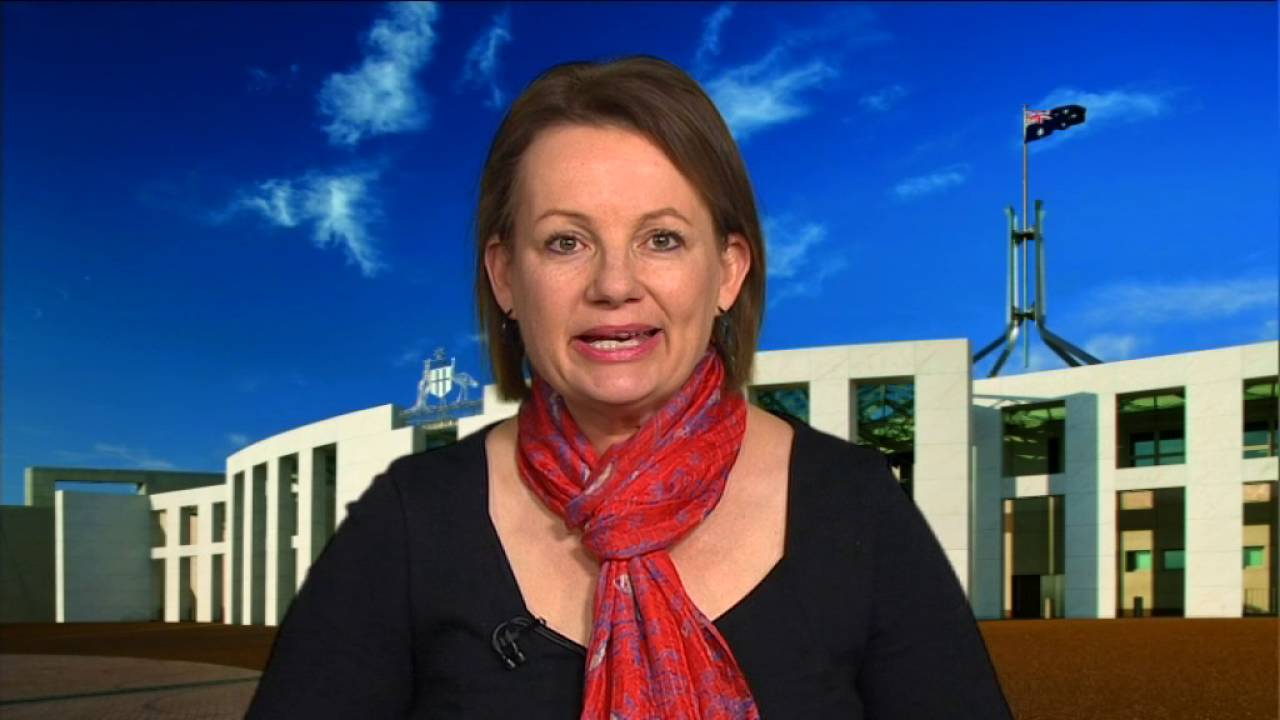 Legal challenge over Sussan Ley’s decision to put potential mining jobs at Shenhua Mine before cultural heritage, ABC News, By Indigenous affairs correspondent Isabella Higgins and Sarah Collard 25 Aug 19, A family fighting to defend their traditional country from mining are suing Environment Minister Sussan Ley after she rejected their heritage protection bid in favour of a controversial Chinese coal project.
Key points
- Environment Minister is being sued for rejecting heritage protection in favour of a proposed coal mine
- Lawyers say it could be an important test case if the decision is found to be unlawful
- Traditional owners fear important sacred sites will be destroyed if the mine goes ahead
Last month, the Gomeroi Traditional Custodians failed in a bid to have sacred sites in north-west New South Wales preserved and protected from development due to cultural importance.
The land near Gunnedah had already been earmarked for the $1.2 billion Shenhua Watermark Coal Mine, which gained conditional federal approval in 2015 and has state development consents.
Ms Ley rejected their application on the grounds that the potential jobs generated from the mine were more important than cultural preservation.
She acknowledged the project could cause “mental health impacts … a sense of dislocation, displacement and dispossession,” among Indigenous people, but determined the social and economic value of the project took priority.
On behalf of the Gomeroi people, traditional owner Dolly Talbott has launched legal action against Ms Ley, with the case due before court for the first time on Wednesday.
She is being represented by the NSW Environmental Defender’s Office (EDO) which will argue that the minister’s decision was “unlawful” and contravenes the constitutional basis of the heritage protection act.
“If we don’t try to save these sites, then we are not fulfilling our obligations to our elders and our ancestors … and our children and grandchildren,” Ms Talbott said.
“[The national Indigenous heritage laws] are supposed to be there for the protection of Aboriginal culture and it doesn’t seem to be working.”……
Benefits of mine outweigh destruction of heritage: Minister
When deciding on the intervention request, Ms Ley acknowledged the mine would result in the “likely destruction of parts of their Indigenous cultural heritage”.
“I considered that the expected social and economic benefits of the Shenhua Watermark Coal Mine outweighed the impacts on the applicants [Gomeroi people]” she said in the rejection document seen by the ABC…….
The Minister has the final say on which applications receive protection status, under the National Aboriginal and Torres Strait Islander Heritage Protection Act. …….
Shenhua development courts controversy
This legal battle is the latest saga, in a long-running series of controversies involving the mine.
It sparked vehement protests in recent years, with farmers, environmentalists and Indigenous groups all fiercely opposed to the development.
They have raised concerns about how the mine will impact groundwater and wildlife and whether it’s economically viable.
Nationals MP Barnaby Joyce previously labelled the project “ridiculous” after his own government approved the mine, which falls in his New England electorate.
The NSW Government bought back half of the company’s mining exploration license in 2017, at a cost of $262 million, which at the time it said was to protect prime farming land.
Winning this case would mean Gomeroi people can continue to teach their children culture on country, Ms Talbott said.
“The stories of the land that we continue to tell our children today, and hopefully these sites are still there so they can tell their children.
South Australian law – no public money towards nuclear waste dumping facility
NUCLEAR WASTE STORAGE FACILITY (PROHIBITION) ACT 2000 – SECT 13
13—No public money to be used to encourage or finance construction or operation of nuclear waste storage facility
(1) Despite any other Act or law to the contrary, no public money may be appropriated, expended or advanced to any person for the purpose of encouraging or financing any activity associated with the construction or operation of a nuclear waste storage facility in this State.
(2) Subsection (1) does not prohibit the appropriation, expenditure or advancement to a person of public money for the purpose of financing the maintenance or sharing of information or to enable the State to engage with other jurisdictions.
The Kimba nuclear waste dump ballot – breaching South Australian law?

ENuFF[SA], 21 Aug 19, Today Kimba Council announced a date for a community ballot on the radioactive suppository ~ October 3rd.
http://www.kimba.sa.gov.au/page.aspx?u=408&c=10102
The legality of conducting such a ballot needs to be tested in the courts, since s.13 of the Radioactive Waste Storage Facility (Prohibition) Act SA 2000 prohibits public monies being spent “…. encouraging or financing any activity associated with the construction or operation of a nuclear waste storage facility in this State.”
http://classic.austlii.edu.au/au/legis/sa/consol_act/nwsfa2000430/s13.html
This concerns & will affect ALL South Australians, not just Kimba. We should start a fund for a court injunction based upon s.13 “… any activity …” of the Radioactive Waste Facility [Prohibition] Act ~ & then engage Maurice Blackburn Lawyers [eg] to mount a case against the ballot.
Yeelirrie uranium project court outcome shows environment laws in need of urgent repair
|

Federal court rules against Aboriginal group who wanted inclusion in nuclear waste dump ballot
Federal Court dismisses bid to stop ballot on nuclear storage facility near Kimba, ABC, By Candice Prosser, Claire Campbell and Sara Garcia 12 July 19, A South Australian Aboriginal group has lost a bid to stop a council ballot on whether a nuclear storage facility should be built on the Eyre Peninsula.
Key points:
- The Kimba District Council planned to hold a vote to gauge support for the waste dump
- Representatives of the Barngarla people were excluded from the ballot
- They argued it contravened the Racial Discrimination Act, but the Federal Court dismissed the application
The Barngarla Determination Aboriginal Corporation launched legal action against the District Council of Kimba, arguing it contravened the Racial Discrimination Act by excluding native title holders from the ballot.
The council planned to hold a vote to gauge community support among its ratepayers for having radioactive waste stored in their area, after the Federal Government shortlisted two sites near Kimba as possible locations for the facility.
A third site in Hawker, near the Flinders Ranges, has also been shortlisted.
The native title holders won an injunction to halt the ballot last year, while the legal challenge was being heard.
Justice Richard White ruled that no contraventions of the Racial Discrimination Act had been established, and dismissed the application.
SA Greens leader Mark Parnell said he was disappointed with the court’s decision.
“Here we are in NAIDOC week, celebrating Aboriginal culture, and the court has determined it is not a breach of the Racial Discrimination Act to deny traditional owners a vote on whether a nuclear waste dump can be built on their land,” he said.
“Clearly in this country we have a very long way to go before we achieve anything like reconciliation.
“The Aboriginal traditional owners have legitimate rights over this country, yet they’ve been denied a right to vote on whether a nuclear waste dump can be built.
“The Federal Government is obviously keen to get their project up but they only want to ask people who are going to say yes.”
In a statement the Barngarla people said they respected the Federal Court’s decision, but said their lawyers were considering an appeal.
“The Barngarla respects the decision of the Federal Court, as the court has to interpret complicated legislation,” the statement read.
“However, more generally we consider it sad that in the 21st century we are required to take legal action to allow us to have the right to vote on the major decision of the day.
“This case has been about standing up for the right of Aboriginal people to vote on important issues which affect their rights.”……….
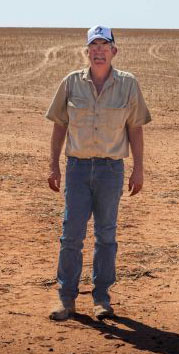
Landholder Jeff Baldock [at left] has volunteered a portion of his property in Kimba for the proposed facility and said he welcomed today’s decision.
“Now hopefully we get to have our democratic vote … if there’s nothing else that gets in the road,” he told ABC News………
The proposal has the community divided, with Kimba resident and former Liberal MP Barry Wakelin also opposing the facility. …….
The latest Federal Government proposal is to build a single facility in regional South Australia for all of the nation’s waste. https://www.abc.net.au/news/2019-07-12/bid-to-stop-ballot-on-nuclear-storage-facility-in-sa-dismissed/11302852
Adani mining project: Court asks Australian govt to look into public concerns
Adani mining project: Court asks Australian govt to look into public concerns https://www.nationalheraldindia.com/international/adani-mining-project-court-asks-australian-govt-to-look-into-public-concerns 14 June 19
A local court in Australia has asked Federal Govt to listen to public grievances on Adani’s North Galilee Water Scheme. It spells fresh trouble for Adanis and their billion dollar coal mining project
In what is being interpreted as fresh trouble for the Adanis in Australia, who are on way to set up USD 16 billion dollar coal mining project in the Queensland state, a local court has asked the Federal Government to listen to public grievances on Adani’s North Galilee Water Scheme.
The Australian Conservation Foundation (ACF), which had filed a case the Federal Government has said that the latter has conceded public grievances on the Adani’s water scheme were ignored.
ACF said, “This is a massive outcome for the broader community, who raised grave concerns about the effect this project would have on Australia’s precious water resources”, adding, “In conceding the case, the Federal Environment Minister has admitted the Federal Government failed to consider all of the thousands of valid public submissions about if and how Adani’s project should be assessed, in direct breach of the Environment Protection and Biodiversity Conservation Act 1999.”
According to ACF, “Those people were denied their right to a voice in this process. This win will ensure their voice is heard. Now the Government will need to go back to the drawing board and open up assessment of the project for public comment again. It’s a big moment in the Adani story, and it couldn’t have happened without the bold vision of ACF in launching the case, backed by the hard work and expertise of the legal team.”
It continued, “This win is a humiliating outcome for the Federal Government over its assessment of Adani’s North Galilee Water Scheme – the plan to pump up to 12.5 billion litres of water a year from the Suttor River to the company’s Carmichael mine site. Thousands of Australians made valid public comments on Adani’s North Galilee Water Scheme referral, many concerned about the project’s impact on our precious water resources during a time of extreme drought.”
According to ACF, “The Federal Environment Minister has now admitted her delegate did not consider these comments, as required by law. In fact, she has admitted that her Department lost an unknown number of public comments made over the controversial project. This botched process points to a worrying lack of oversight in core assessment procedures designed to protect Australia’s precious water resources.”
It insisted in a statement, “The Federal Environment Minister did not concede our client’s initial argument in the case, which was that the ‘water trigger’ should have applied to the Scheme. The ‘water trigger’ is a measure that ensures any action which has a significant impact on water resources and involves a large coal mining development requires a more rigorous assessment under the EPBC Act.”
It added, “The community is still no closer to having an answer on why the ‘water trigger’ should not have applied to the North Galilee Water Scheme – a project which will take billions of litres of water a year from Central Queensland to service a coal mine. The Australian people have a right to know the impact big projects like this have on their precious water resources.”
Adani coalmine: minister loses legal challenge on water pipeline assessment
Australian Conservation Foundation says case shows federal government hasn’t scrutinised Carmichael project, Guardian, Lisa Cox, 12 June 19, The federal government will have to reassess water infrastructure for Adani’s Carmichael coalmine after conceding in a legal challenge that was lodged with the federal court.The Australian Conservation Foundation has succeeded in its appeal against the government’s assessment of Adani’s north Galilee water scheme, with the federal government admitting it failed to properly consider public responses to the proposal and even lost some submissions.
The new environment minister, Sussan Ley, will now have to reconsider the proposal, which would see a 100km-long pipeline constructed to transport 12.5bn litres of water a year from the Suttor river and Burdekin basin. The project would also expand an existing 2.2bn-litre dam to 10bn litres.
The government will need to reopen the project for public comment.
While the decision is a win for the environment movement in its fight against the project, it will not prevent Adani from commencing preliminary construction at the mine site if it receives approval for its groundwater plans from the Queensland government on Thursday.
But the ACF said the government’s concession in the case is a demonstration it has not properly scrutinised Adani’s plans…….
The ACF lodged the appeal last year, challenging Price’s decision not to apply the water trigger in her assessment of the water scheme.
Through the proceedings it became evident that the process leading to the minister’s approval hadn’t properly considered the more than 2,200 public submissions that had been made, with some even being lost.
As a result, the ACF amended the grounds to challenge the failure to consider those submissions and the government conceded.
The government could still face further legal challenge if it reapproves the project without applying the water trigger in its reassessment.
“The water trigger is in Australian law because water is scarce on our dry continent. It should be applied to every relevant proposal, including Adani’s plan to take billions of litres of Queensland’s precious water,” O’Shanassy said.
“ACF will continue to scrutinise all decisions around Adani’s proposal, including groundwater approvals that were rushed through on the eve of the election.”
A spokesperson for Ley said the decision had no bearing on the federal approval for the Carmichael coalmine itself…….
The outcome has some similarities to a 2015 challenge to Adani’s mine approval, which saw the then environment minister Greg Hunt’s decision to approve the mine set aside after he failed to consider advice about two threatened species, the yakka skink and the ornamental snake.
The mine was reapproved two months later. https://www.theguardian.com/environment/2019/jun/12/adani-coalmine-federal-government-loses-legal-challenge-on-water-assessment
Swedish court rules in favour of Julian Assange: he will not be extradited to Sweden
Sweden’s Uppsala District Court has found in favour of Assange: the court ruled NOT to detain Assange in absentia. The preliminary investigation can proceed without Assange’s extradition to Sweden. This was always the case as Assange has always cooperated with the investigation.
Suzie Dawson on Julian Assange’s mistreatment #FreeAssange
Julian Assange will now not face Espionage Act charges.
 Assange won’t face charges over role in devastating CIA leak The decision surprised national security experts and some former officials, given prosecutors’ recent decision to go after the WikiLeaks founder on Espionage Act charges.
WikiLeaks founder Julian Assange will not face charges for publishing Vault 7, a series of documents detailing the CIA’s arsenal of digital code used to hack devices Politico, By 6/2/19
It’s a move that has surprised national security experts and some former officials, given prosecutors’ recent decision to aggressively go after the WikiLeaks founder on more controversial Espionage Act charges that some legal experts said would not hold up in court. ……
Prosecutors were stymied by several factors. First, the government is facing a ticking clock in its efforts to extradite Assange to the United States from the United Kingdom, where he is being held. Extradition laws require the U.S. to bring any additional charges against Assange within 60 days of the first indictment, which prosecutors filed in March, accusing Assange of helping former Army intelligence analyst Chelsea Manning hack into military computers.
The U.S. Justice Department has decided not to charge Julian Assange for his role in exposing some of the CIA’s most secret spying tools, according to a U.S. official and two other people familiar with the case.
It’s a move that has surprised national security experts and some former officials, given prosecutors’ recent decision to aggressively go after the WikiLeaks founder on more controversial Espionage Act charges that some legal experts said would not hold up in court. The decision also means that Assange will not face punishment for publishing one of the CIA’s most potent arsenals of digital code used to hack devices, dubbed Vault 7. The leak — one of the most devastating in CIA history — not only essentially rendered those tools useless for the CIA, it gave foreign spies and rogue hackers access to them.
First, the government is facing a ticking clock in its efforts to extradite Assange to the United States from the United Kingdom, where he is being held. Extradition laws require the U.S. to bring any additional charges against Assange within 60 days of the first indictment, which prosecutors filed in March, accusing Assange of helping former Army intelligence analyst Chelsea Manning hack into military computers.
Second, prosecutors were worried about the sensitivity of the Vault 7 materials, according to an official familiar with the deliberations over whether to charge Assange. Broaching such a classified subject in court risks exposing even more CIA secrets, legal experts said. The CIA has never officially confirmed the authenticity of the leaked documents, even though analysts widely believe them to be authentic……
So instead, the Justice Department will go after Assange on the one count for allegedly assisting Manning and the 17-count Espionage Act indictment. There are no plans to bring any additional indictments prior to his extradition. https://www.politico.eu/article/julian-assange-wont-face-charges-over-cia-leak-whistleblower-spy-tools-national-security/
Swedish court rejects effort to delay Assange hearing
https://www.theage.com.au/world/europe/swedish-court-rejects-effort-to-delay-assange-hearing-20190529-p51s61.html 29 May 19. Stockholm: A Swedish court has rejected efforts to postpone a hearing relating to Julian Assange, a lawyer for the WikiLeaks founder says.
A Swedish prosecutor this month filed a request for Assange to be detained for a June 3 hearing about a rape allegation.
Defence lawyer Per Samuelson told Reuters he visited Assange in British custody on Friday before seeking to postpone the hearing.
“One of the reasons is that Assange’s health situation on Friday was such that it was not possible to conduct a normal conversation with him,” Samuelson said.
“I meant that it should be postponed until I had time to meet again and go through the issues in peace and quiet. I suggested no specific date and meant it should be postponed until everything was ready, but the district court has now decided that this won’t happen .
he Uppsala district court, where the hearing is due to take place, was not immediately available for comment. A prosecutors’ office spokesman declined to comment.
Sweden reopened the investigation into alleged rape, which Assange denies, in early May. It was begun in 2010 but dropped in 2017 while Assange was in refuge in Ecuador’s London embassy.
Assange was arrested in London last month after spending nearly seven years inside the embassy.
US authorities are separately seeking to extradite Assange on charges relating to the public release by WikiLeaks of a cache of secret documents, and last week unveiled 17 new criminal charges against him, including espionage.
The British courts will have to rule on the two extradition requests, with the home secretary having the final say on which one takes precedence.
Australian companies, later, governments, may face legal action over climate issues
 Brace for impact – climate change litigation is fast approaching https://www.canberratimes.com.au/story/6184421/brace-for-impact-climate-change-litigation-is-fast-approaching/?cs=14246, Arthur Marusevich , 30 May,19 Brace for impact – climate change litigation is fast approaching https://www.canberratimes.com.au/story/6184421/brace-for-impact-climate-change-litigation-is-fast-approaching/?cs=14246, Arthur Marusevich , 30 May,19
Since the late 1990s, Australian politics on climate change has been divisive. Although Australia signed the Kyoto Protocol in 1998, it did not ratify it until 2007. Then, in 2011, the Clean Energy Act purporting to reduce greenhouse emissions was passed, only to be repealed in 2014. In 2016, Australia ratified the Paris Agreement and the Doha Amendment to the Kyoto Protocol; however, any serious action on climate change remains to be seen.
At the same time, some states and territories also have emissions reduction targets. The uncoordinated approach is a problem for at least two important reasons. Second, there is a rising wave of climate change-related litigation globally which is headed for Australia. Climate change litigation 2.0 (targeting companies) and climate change litigation 3.0 (targeting governments) will sink Australia, unless drastic measures are implemented.
Under the current legal regime, company directors may only be liable if found to be in breach of their duty of care or for failing to address a foreseeable risk. However, guidance from case law suggests that it is difficult to establish that the actions or omissions of a particular entity or director caused or contributed harm to be suffered by another. With the arrival of climate change litigation 2.0, this will all change. For one, litigation 2.0 will force companies to assess and report on the risks of climate change and potentially set out plans for mitigating those risks. The recent tide of comments from the Australian Securities and Investments Commission, the Australian Prudential Regulatory Authority and the Reserve Bank of Australia are a testament to this. Companies and their directors could soon face liability (including personal liability) if they fail to assess and address risks relating to climate change. Investors, shareholders and even communities will be able to recover losses and seek damages from companies and their directors, auditors and advisors, for failing to assess and mitigate risks. As major climate change attribution studies emerge to assist in tracing particular weather events with greenhouse gasses, causation will be easier to establish. It is likely that in the future, courts will rely on such studies to conclude that a particular entity has contributed, at least in some proportion, to a particular harm. It would be interesting to see how companies and directors brace for impact as climate change litigation 2.0 approaches. Although unprecedented and unheard of in Australia, climate change litigation 3.0 will be the next phase. It will allow Australians to bring action against the government for failing to mitigate risks. Claims of this nature around the world are already proving to be quite successful. The Urgenda litigation in the Netherlands is the leading example. In that case, a Dutch NGO argued that the Netherlands Government had breached its duty of care to the Dutch people by failing to mitigate the risks of climate change and reducing greenhouse gases. The remedy ordered by the court was that the Netherlands Government reduce emissions by at least 25 per cent by the end of 2020. Similarly, the Juliana case brought against the US government argued that current policies fail to satisfy their obligations to hold certain essential resources on trust for all US citizens. The case is currently awaiting a determination as to whether it will go to trial. We can only ignore it for so long – in the coming years, we are destined to see a rise in climate change litigation in Australia. While this may be welcome news for practitioners, it is not so much for companies and governments, who need to re-examine their approach to assessing and mitigating climate change risks now. If not, litigation 2.0 and 3.0 will do it for them.
|
|
1 This month
7 April – WEBINAR – Australia and the Doomsday Clock – Preventing nuclear war through NoFirstUse and other policies
Online | Tuesday April 7, 4:00-5:30pm, Australian Eastern Time / 8:00-9:30am Central Europe Time
– Access the registration link
15 April – Zoom –Nuclear Power is Not the Solution
Apr 15, 2026 01:00 AM in Canberra, Melbourne, Sydney

Join the International Physicians for the Prevention of Nuclear War (IPPNW) on Tuesday, April 14th for a timely webinar exploring the risks associated with nuclear power and challenging the myth that it offers a simple, safe, carbon-free solution to the climate crisis

21 April Webinar: No Nuclear Weapons in Australia
Start: 2026-04-21 18:00:00 UTC Canberra, Melbourne, Sydney (GMT+10:00)
End: 2026-04-21 19:30:00 UTC Canberra, Melbourne, Sydney (GMT+10:00)
Event Type: Virtual
A virtual link will be communicated before the event.
Host Contact Info: australia@icanw.org

of the week – Australians for War Powers Reform (AWPR)
To see nuclear-related stories in greater depth and intensity
 Antinuclear