Trump masters the art of “dobbing” on an Australian journalist

By Vince Hooper | 20 September 2025, https://independentaustralia.net/politics/politics-display/trump-masters-the-art-of-dobbing-on-an-australian-journalist,20177
Trump turned a simple conflict-of-interest question into a schoolyard spat — threatening to “tell on” a journo to Australia’s Prime Minister, writes Vince Hooper.
IT TAKES A CERTAIN theatre of the absurd to transform a routine White House press gaggle into a diplomatic sideshow. Yet that is precisely what happened when an Australian Broadcasting Corporation journalist, researching U.S. President Donald Trump’s family business interests, asked a straightforward question about whether it is appropriate for a sitting president to be engaged in so many business activities.
The question was sober and reasonable: a matter of conflicts of interest, wealth accumulation, and transparency in public office. Trump’s response, however, veered quickly into the surreal. He first insisted that his children were running the business empire, then abruptly shifted the ground.
Instead of grappling with the premise, he went after the journalist’s nationality, declaring:
“The Australians, you’re hurting Australia.”
And then came the kicker — Trump promised to personally inform Prime Minister Anthony Albanese about the journalist’s behaviour, as if geopolitics had suddenly collapsed into a schoolyard spat where the ultimate threat was tattling to the headmaster. The art of dobbing.
At one level, the episode is comic, a reminder of Trump’s instinct for spectacle and grievance. But beneath the absurdity lies something darker: a consistent refusal to treat journalistic inquiry as a legitimate part of democracy. Instead, accountability is reframed as disloyalty. The president of the United States, confronted with a basic question about conflicts of interest, responded not with explanation but with a kind of diplomatic intimidation.
This is part of a longer pattern. From his first term to his second, Trump has cast journalists as enemies rather than interlocutors. The “war on the media” is not rhetorical garnish but central to his political style. In this worldview, truth-seekers are painted as traitors, tough questions are reframed as acts of sabotage, and now even foreign allies are enlisted as props in his domestic culture wars. By claiming that the ABC reporter was “hurting Australia,” Trump implied that the act of pressing a leader for clarity was somehow an attack on his allies themselves.
What is most revealing is how quickly Trump personalised diplomacy. The U.S.–Australia relationship is built on strategic alignment, trade, military cooperation, and shared democratic values. It is not dictated by whether a reporter poses a question he finds confrontational. Yet in his rhetoric, the fate of nations collapsed into the thin skin of one man. This habit of reducing statecraft to personal loyalty tests is not merely undignified; it is dangerous. If bilateral alliances can be bent around one leader’s grievances, they risk becoming unstable, transactional, and unpredictable.
Trump turned a simple conflict-of-interest question into a schoolyard spat — threatening to “tell on” a journo to Australia’s Prime Minister, writes Vince Hooper.
IT TAKES A CERTAIN theatre of the absurd to transform a routine White House press gaggle into a diplomatic sideshow. Yet that is precisely what happened when an Australian Broadcasting Corporation journalist, researching U.S. President Donald Trump’s family business interests, asked a straightforward question about whether it is appropriate for a sitting president to be engaged in so many business activities.
The question was sober and reasonable: a matter of conflicts of interest, wealth accumulation, and transparency in public office. Trump’s response, however, veered quickly into the surreal. He first insisted that his children were running the business empire, then abruptly shifted the ground.
Instead of grappling with the premise, he went after the journalist’s nationality, declaring:
“The Australians, you’re hurting Australia.”
And then came the kicker — Trump promised to personally inform Prime Minister Anthony Albanese about the journalist’s behaviour, as if geopolitics had suddenly collapsed into a schoolyard spat where the ultimate threat was tattling to the headmaster. The art of dobbing.
At one level, the episode is comic, a reminder of Trump’s instinct for spectacle and grievance. But beneath the absurdity lies something darker: a consistent refusal to treat journalistic inquiry as a legitimate part of democracy. Instead, accountability is reframed as disloyalty. The president of the United States, confronted with a basic question about conflicts of interest, responded not with explanation but with a kind of diplomatic intimidation.
This is part of a longer pattern. From his first term to his second, Trump has cast journalists as enemies rather than interlocutors. The “war on the media” is not rhetorical garnish but central to his political style. In this worldview, truth-seekers are painted as traitors, tough questions are reframed as acts of sabotage, and now even foreign allies are enlisted as props in his domestic culture wars. By claiming that the ABC reporter was “hurting Australia,” Trump implied that the act of pressing a leader for clarity was somehow an attack on his allies themselves.
What is most revealing is how quickly Trump personalised diplomacy. The U.S.–Australia relationship is built on strategic alignment, trade, military cooperation, and shared democratic values. It is not dictated by whether a reporter poses a question he finds confrontational. Yet in his rhetoric, the fate of nations collapsed into the thin skin of one man. This habit of reducing statecraft to personal loyalty tests is not merely undignified; it is dangerous. If bilateral alliances can be bent around one leader’s grievances, they risk becoming unstable, transactional, and unpredictable.
Compare this to other democratic leaders. Joe Biden, for all his gaffes, generally responds to press scrutiny with irritation at worst, never with the threat of raising the matter in a diplomatic call. Anthony Albanese himself fields barbed questions from Australian journalists on policy, integrity, and leadership without implying that the act of questioning undermines Australia’s alliances. Even populist figures like Britain’s ex-PM Boris Johnson or India’s Narendra Modi, while often prickly, have not suggested that reporters risk harming national security simply by doing their jobs. Trump stands almost alone in converting a press query into a matter of international loyalty.
In the end, Trump’s outburst says less about Australia than about America. It was not Australia’s reputation on trial, nor the alliance, nor the ABC reporter’s patriotism. It was the president’s tolerance for accountability — and that, once again, proved to be vanishingly thin and fake.
Vince Hooper is a proud Australian/British citizen and professor of finance and discipline head at SP Jain School of Global Management with campuses in London, Dubai, Mumbai, Singapore and Sydney.
Sky’s ‘War Cabinet’ manufactures panic and prophecy over proof
By Binoy Kampmark | 21 August 2025, https://independentaustralia.net/politics/politics-display/skys-war-cabinet-manufactures-panic-and-prophecy-over-proof,20069
Sky News assembling a cabinet of experts to talk about Australia’s readiness for war is a problem we should be worried about, writes Dr Binoy Kampmark.
TWENTY-FOUR-HOUR NEWS networks have demonstrated that surfeit kills discretion. The search for fillers, distractions and items that will titillate, enrage or simply sedate, is an ongoing process.
Gone are the days when discerning choices were made about what constituted worthy news, an admittedly difficult problem that would always lead to priorities, rankings and judgments that might well be challenged. At the very least, news could be kept to specific time slots during the day, meaning that audiences could, at the very least, be given some form of rationing.
Such an approach culminated in that most famous of occasions on April 18, 1933 when the BBC’s news announcer declared with a minimum of fuss that, “There is no news.” This was followed by piano music playing out the rest of the segment.
On the pretext of coming across as informed and enlightened, such networks have also bought into astrology masquerading as sound comment. The commentators are intended to lend an air of respectability to something that either has not happened or something they have little idea about. Their credentials, however, are advertised like glitzy baubles, intended to arrest the intelligence of the viewing audience long enough to realise they have been had.
Sky News Australia is one such cringing example. The premise of The War Cabinet, which aired on August 11, was clear: those attending it were simply dying for greater militarism and war preparedness on the part of the Australian Government, while those preferring diplomacy would be treated like verminous denialists yearning for some sand to bury their heads in.
The point was less a matter of news than prediction and speculation, an exercise of mass bloviation. To lend a wartime flavour to proceedings, the event was staged in the Cabinet Room of Old Parliament House, which host Chris Uhlmann celebrated as the place Australia’s Prime Minister “John Curtin and his ministers steered the nation through World War II.” Former ministers, defence leaders, and national security experts were gathered “around the Cabinet table to answer a single question: is Australia ready for war?”
The stale view from Alexander Downer, Australia’s longest and, in many ways, most inconspicuous foreign minister, did little to rustle or stir. Liberal democracy, to be preserved in sacred glory, needed Australia to be linked to a “strong global alliance led by the United States”. That such an alliance might itself be the catalyst for war, notably given expectations from Washington about what Australia would do in a conflict with China, was ignored with an almost studious ignorance.
Instead, Downer saw quite the opposite:
“If this alliance holds, if it’s properly cemented, if it is well-led by the Americans… and if we, as members of the alliance, are serious about making a practical contribution to defence through our spending and our equipment, then we will maintain a balance of power in the world.”
His assessment of the current Albanese Government was one of some dottiness.
“I think the government here in Australia has made a major mistake by playing, if you like, politics with this issue of the dangers of the region and losing the balance of power because they don’t want to be seen as too close to President Trump.”
Any press briefing from Defence Minister Richard Marles regarding the anti-China AUKUS pact would ease any anxiety on Downer’s part. Under the Albanese Government, sovereignty has been surrendered to Washington in a way so remarkable it could be regarded as treasonous. While the Royal Australian Navy may never see a single U.S. nuclear-powered submarine, let alone a jointly constructed one, U.S. naval shipyards are rolling in the cash of the Australian taxpayer.
Former Labor Defence Minister, Joel Fitzgibbon, lamented that Australia’s strategic outlook in the Indo-Pacific was “deteriorating rather markedly,” a formulation utterly vague and a mere parroting of just about every other hawkish analyst that sees deterioration everywhere.
Thankfully, we had Strategic Forum CEO Ross Babbage to give some shape to it, which turned out to be that ragged motif of the Yellow Horde to the North readying to strike southwards. The Oriental Barbarians with a tinge of Communist Red were primary reasons for a worsening strategic environment, aided by their generous military expenditure. With almost a note of admiration, Babbage felt that China was readying for war by adjusting its economy and readying its people “for tough times that may come”.
The venal, ever noisy former Home Affairs Department Secretary Mike Pezzullo, who has an unhealthy appetite for warring matters, drew upon figures he could not possibly know, along with everybody else who have tried to read the inscrutable entrails of international relations.
Chances of conflict in the Indo-Pacific by 2027, for instance, was a “10 to 20 per cent” likelihood. Sky News, living down to its subterranean standards, failed to mention that Pezzullo had misused his position as one of Canberra’s most powerful bureaucrats to opine on ministerial appointments via hundreds of private text messages to Liberal Party powerbroker Scott Briggs.
The Australian Public Service Commission found that Pezzullo had, among other things, used his “duty, power, status or authority to seek to gain a benefit or advantage for himself” and “failed to maintain confidentiality of sensitive government information” and “failed to act apolitically in his employment”. His employment was subsequently terminated, and his Order of Australia stripped in September last year. Fine credentials for balanced commentary on the strategic outlook of a state.
Other talking heads were keen to push spine-tingling prospects of wicked regimes forming alliances and making mischief. Oleksandra Molloy, billed as an aviation expert, thought the “emerging axis” between Russia, North Korea and Iran “quite concerning”. Former naval officer and defence pundit Jennifer Parker urged the fattening of the defence budget to “develop a degree of autonomy”.
Retired Australian Army major general Mick Ryan was most unimpressed by the “zero risk” mentality that seemed to pervade “pretty much every bit of Australian society”.
The Department of Defence needed to take greater risks in terms of procurement, innovation and reducing “the amount of time it takes to develop capability”. His fantasy was positively Spartan in its military totalitarianism: an Australian state nurturing “a spirit of innovation that connects military, industry and society”. The cry for conscription must be just around the corner.
Chief war monger and think tanker Peter Jennings aired his all too familiar views on China, which have become pathological.
“It is utterly false for our government to say that somehow they have stabilised the relationship with China. Things may have improved on the trade front, but that is at the expense of ignoring the strategic developments which all of our colleagues around the table have spoken about, which is China is positioning for war.”
And there you had it: an hour of furious fretting and wailing anxiety with all figures in furious agreement, with a resounding boo to diplomacy and a hurrah for astrology.
Dr Binoy Kampmark was a Commonwealth Scholar at Selwyn College, Cambridge. He currently lectures at RMIT University
The dark cloud of Murdoch has no silver lining

News Corp, Sky after dark, Fox News … they spew lies and propaganda around the globe, and the evil empire’s tentacles keep wrapping around the fearful and the ignorant.
by Nicole Chvastek, 7 May 2025, https://thepolitics.com.au/the-dark-cloud-of-murdoch-has-no-silver-lining/
As Saturday’s bloodbath washes through the Liberal corridors of no power, the electoral train wreck has turned attention to other overly cocky players: the Murdoch media.
From the moment the poll was called, Rupert Murdoch’s news culture warriors turned up the heat on Labor, exhorting the brilliance of Peter Dutton’s failed nuclear fantasy and his war on migrants, “woke” schools, people who work from home and Welcomes to Country — while tearing down anyone who dared suggest he and his party were not fit for office.
But on election night none of that mattered. None of the confected outrage, the miles of newsprint, the spin and the bullying had made a jot of difference and was more likely to have worked against the Liberals’ interests. Australians it seems have a finely tuned bullshit radar.
Sky pirates
Greens Senator Sarah Hanson-Young nailed it when she told Radio National on Monday:
“I think what has happened to the Coalition is they spent a bit too much time hangin’ out with Sky News and they forgot to really hear what people were saying. The other big loser is the Murdoch press. They created an echo chamber for themselves.”
Dr Denis Muller of the Centre for Advancing Journalism at the University of Melbourne said the Murdoch media were “agents of disaster” for the Coalition:
“I see the sun beginning to set on Rupert’s influence in Australian politics. News Corp created a bubble in which their journalists and Coalition politicians cocooned themselves, talking to each other on Sky after dark, persuading each other that everything was going to be fine.”
A setting sun? It’s a big call. Australian politicians of all persuasions famously make the trek to Murdoch headquarters after an election for a ritual known as “kissing the ring”, and Anthony Albanese, Richard Marles and Penny Wong were quick to do their duty in 2022.
Strings attached
Eric Beecher, a former News Corp employee, recalls being sued (unsuccessfully) by Lachlan Murdoch who issued a writ for defamation over an opinion piece linking the Murdoch news empire with 2021’s January 6 Capitol riots:
“The day after the defamation writ was issued, a large Commonwealth government car pulled up outside the Holt Street Surry Hills headquarters in Sydney of News Corp. Three people got out of that car to go upstairs and visit Lachlan in his office: the prime minister, the deputy prime minister and the foreign [affairs] minister of Australia. It’s been going on for 100 years and it should stop.”
The reach of puppetmaster Rupert Murdoch into governments and policy making knows no bounds and there have been countless exposés on unethical business practices. But the machine roars on, a powerhouse of global disinformation and propaganda while pretending to be a news-gathering organisation.
In January, Murdoch was photographed reclining in the Oval Office as Donald Trump signed an executive order creating a sovereign wealth fund. Fox News cable spits out Trump propaganda daily and is credited with helping to return the convicted felon and sex predator to office. Murdoch has called Trump “increasingly mad” and yet publicly admitted he knew Fox commentators were lying when they broadcast falsehoods about a “stolen rigged election” in 2020. But hey, it was good for business.
Nuke the enemy
The habitual process of retribution and vendetta from News Corp is bitter and legendary. The Australian Financial Review reports that Malcolm Turnbull and Kevin Rudd blame Murdoch for their political demise. In 1974, Murdoch famously directed his editors to “kill Whitlam” 10 months before Gough Whitlam’s electoral ousting.
Every day, Murdoch’s media rival, the ABC, is a target of sneering “hit jobs”, and any politician or voice that suggests climate change is real or nuclear reactors are a fantasy or billionaires don’t deserve tax breaks are hounded, possibly for life. The Herald Sun still runs revelations about former Labor premier Dan Andrews and sporadic pieces of condemnation over a car accident his wife had 20 years ago. According to Beecher in his book The Men Who Killed The News, Andrews was the only premier who refused to schlep up to News Corp headquarters for the compulsory kissing of the ring.
In Australia, the power base is the print media, overwhelmingly controlled by News Corp with a huge digital presence and backed by Sky News. In 2020, Rudd and Turnbull joined forces to call for a royal commission into Murdoch’s concentrated media holdings. Rudd claimed his media power is “routinely used to attack opponents in business and politics by blending editorial opinion with news reporting”.
Break the News
How is it that such deep, lasting damage to democracy, businesses and people’s lives can be inflicted with precisely zero repercussions? One part of the answer is the acceptance that democracies cannot flourish without a free press. Section 65A of the Trade Practices Act provides a general exemption to most of the media as publishers of news and current affairs from liability for publishing misleading or deceptive material. Former chairman of the ACCC Allan Fels said concerns around Murdoch’s practices are more likely to be addressed by a royal commission, an idea the government and opposition have not supported.
“I don’t have a view on whether he should be reined in. All media mislead to some extent. It’s not the sort of thing consumer protection law addresses.”
Dr Victoria Fielding, senior lecturer in strategic communication at the University of Adelaide, was bolder. She said legislative change was needed to rein in Murdoch excesses. She agrees a healthy democracy needs an independent free press populated by balanced journalists who hold the powerful to account and publish verifiable information — but that’s not what the Murdoch media are:
“If there was some legislation that said if you want to be a commentary organisation you can only have a particular share of the market — like any competition commissioner can do — you break it up. You say: ‘You can no longer be that large.’ It’s distorting our democracy.”
Running scared
The other part of the answer is fear, fear of taking on a monolithic disinformation machine which countless readers think is a news outlet and being publicly torn down and repeatedly shredded by a media gorilla with few scruples and deep pockets.
Remarkably, after cheerleading the Liberals to disaster on May 3, The Australian leapt back up onto its feet to brush off its flesh wound and lecture the Coalition on “missing the warnings”:
“Of all the mistakes that led to this result, one was fatal: the untested assumption that Labor was out of touch and unaligned with the mainstream values of Australians. There can be no other interpretation that that this is fundamentally wrong.”
This from the paper that tells us pretty much every day that Labor is out of touch and unaligned with the mainstream values of Australians.
Culture vultures
Reports of the death of the Murdoch brand in Australia may well be exaggerated. Like any good parasite it is known to stew and grow before attacking the host again. Fielding reminds us that backed by the Murdoch press, Dutton was on track to win the federal election as recently as January — until the catastrophic reality of the Trump presidency became obvious to Australians.
Murdoch has withstood worse setbacks than crashing an election and, like Monty Python’s Black Knight, his culture warriors rebound after each atrocity and, still bleeding, berate their victims for taking the advice.
I’d like to think the tide is turning on news outlets that amplify bullshit while bragging they are society’s moral pulse and insisting their bullshit is good for you. But if the tide is not for turning, you can always join the Liberals, and learn the hard way.
Nuclear power is shaping up as an election loser, and the Murdoch media is not happy

RenewEconomy, Jim Green, May 2, 2025
Whatever happens on election day, it’s certain that the Coalition’s promotion of nuclear power will cost it votes. It will probably cost the Coalition seats. It may cost the Coalition the election. And if the Coalition does unexpectedly well, it will be despite and not because of the nuclear policy.
The Murdoch press released polling results on April 19 showing that Labor’s campaign against the Coalition’s nuclear power policy is “driving a collapse in the Coalition’s primary vote in marginal seats across Australia.”
The RedBridge-Accent poll of 20 marginal seats found that Labor’s opposition to the Coalition’s nuclear plan is “a clear winner with a ‘net agree’ rating of 43.” Fifty-six per cent of poll respondents agreed with Labor’s claim that the Coalition’s plan will cost $600 billion and require spending cuts to pay for it, while only 13 per cent disagreed.
The Murdoch press reported on May 1 that 41 per cent of 1011 respondents to a Redbridge-Accent national poll ranked concerns that Peter Dutton’s nuclear plan will cost $600 billion and will require cuts to pay for it among their top five reasons for deciding to oppose a particular party.
Only one issue topped nuclear power as a vote-changing turn-off. The article was titled ‘Where the Libs went off track: Inside the Coalition’s disastrous campaign’ and it ran alongside another titled ‘Coalition nuked by nervous electors.’
In March 2024, James Campbell warned that the Coalition’s nuclear power policy is “stark raving mad.” In the same month, Tony Barry described the nuclear policy as “the longest suicide note in Australian political history.”
Meanwhile, the Coalition’s attempt to go quiet on its unpopular nuclear policy has only drawn further attention to it.
Costings
The Coalition’s decision not to release nuclear costings until December left a void which Labor filled with the $600 billion figure. Furious responses to the $600 billion figure have only served to focus attention on the expansive cost of Dutton’s taxpayer-funded nuclear frolic.
Just in the past couple of days, the Sky News Youtube channel has featured these videos:
‘Don’t listen to their lies’: Barnaby Joyce slams Labor’s nuclear costings
Labor’s $600 billion anti-nuclear lie given them lots of ‘traction’ in the election
‘Absolute balderdash’: Labor clings to ‘fictitious numbers’ of Coalition’s nuclear pricings
Labor’s anti-nuclear and power bill lies a ‘low point’ for Australia
A frustrated Barnaby Joyce told Andrew Bolt on Sky News:
“What they’ve done, ladies and gentlemen, is they’ve come up with this fantastic number. … The nuclear power stations are going to cost $600 billion. It’s like Dr Evil off one of those movies, you know coming out and saying ‘Oh you know 600 billion dollars’. BS. What they did, ladies and gentlemen, it’s like they got a turbo-charged Porsche and multiplied it by seven and said that is the price of every car in Australia.”
None of which comports with reality. Multiply the Coalition’s nuclear cost estimate by 2.5 and you’ll get the actual cost of recent reactor construction projects in the US, the UK and France. The Coalition assumes that reactors can be built in Australia for less than half the cost of recent projects in countries with vastly more experience and expertise. And much more quickly.
Liberals Against Nuclear
Polling commissioned by the Liberals Against Nuclear group provides further evidence of the political poison of the Coalition’s nuclear policy. The group said in an April 28 media release:
“A new uComms poll shows leading Liberal frontbencher Michael Sukkar could lose his seat at the coming election if the Party persists with its unpopular nuclear plan.
“The poll, commissioned by Liberals Against Nuclear, shows Labor and the Coalition tied at 50-50 in two-party preferred terms in Deakin. However, the same polling reveals that if the Liberals dumped their nuclear policy, they would surge to a commanding 53-47 lead.
“The polling follows a broader survey across 12 marginal seats that showed the Liberal Party would gain 2.8 percentage points in primary vote if it abandoned the nuclear energy policy.
“An earlier poll in the seat of Brisbane found the nuclear policy was a significant drag on Liberal candidate Trevor Evans’ support.
“The Deakin polling showed women voters are particularly opposed to the nuclear policy, with 53.2% of women saying it makes them less likely to vote Liberal compared to 41.3% of men. Overall, 47.5% of Deakin voters are less likely to support the Coalition because of the nuclear policy.
“The data also revealed that 56.1% of respondents don’t support nuclear power at all, with concerns about renewable energy investment reductions (19.0%), nuclear waste management (15.9%), and high build costs (13.0%) being the primary objections.
“In the crucial 35-50 age demographic that makes up many families in Deakin, 48.4% are less likely to vote Liberal due to the nuclear policy.”
Another UComms poll found that Dutton could be vulnerable in the seat of Dickson because of the nuclear policy. Forty-six per cent of those surveyed said they were less likely to vote for Dutton because of the policy.
National Climate Action Survey
The latest National Climate Action Survey of more than 4,000 respondents conducted by Griffith University’s Climate Action Beacon in partnership with the Monash Climate Change Communication Research Hub found that support for nuclear power has fallen since the Coalition announced some details of its policy in June 2024.
The survey found that:
* 59 percent of respondents wanted to keep a legal ban on nuclear power in 2024 (up from 51 percent in 2023), while the number opposing the ban fell from 34 percent in 2023 to 30 percent in 2024.
* Only 18 percent of women were in favour of lifting the ban compared to 36 per cent of men. Two-thirds (66 per cent) of women want the ban to stay, 51 per cent of men want it to stay.
* Those who said the benefits of nuclear power far outweighed the risks fell from 24.5 per cent support in 2023 to 22 per cent in 2024. Those who said the risks of nuclear power far outweighed the benefits rose from 21.9 per cent in 2023 to 26 per cent in 2024.
* 54.8 per cent of respondents would be very or extremely concerned if a nuclear power plant was built near them while only 11 percent would be comfortable.
Local opposition
The Coalition claims to have a social licence to build nuclear power reactors in the seven selected regions, and uses that as an excuse for the paucity of visits to those regions during the election campaign – by Peter Dutton in particular.
But polling in March 2025 by research firm 89 Degrees East for the Renew Australia for All campaign found just 27 per cent support for “developing large-scale nuclear energy infrastructure” in Gladstone, 24 per cent in the rest of Central Queensland, 24 per cent in Bunbury, 22 per cent in Central West NSW which includes Lithgow, 32 per cent in Hunter, and 31 per cent in Gippsland.
The poll also found that just 13 per cent of people polled thought nuclear reactors would bring down their bills the fastest compared to 72 per cent for renewables.
RE-Alliance National Director Andrew Bray said: …………………………………………………………………………………. https://reneweconomy.com.au/nuclear-power-is-shaping-up-as-an-election-loser-and-the-murdoch-media-is-not-happy/
A former Miss America takes her nuclear sales pitch to audiences in Australia
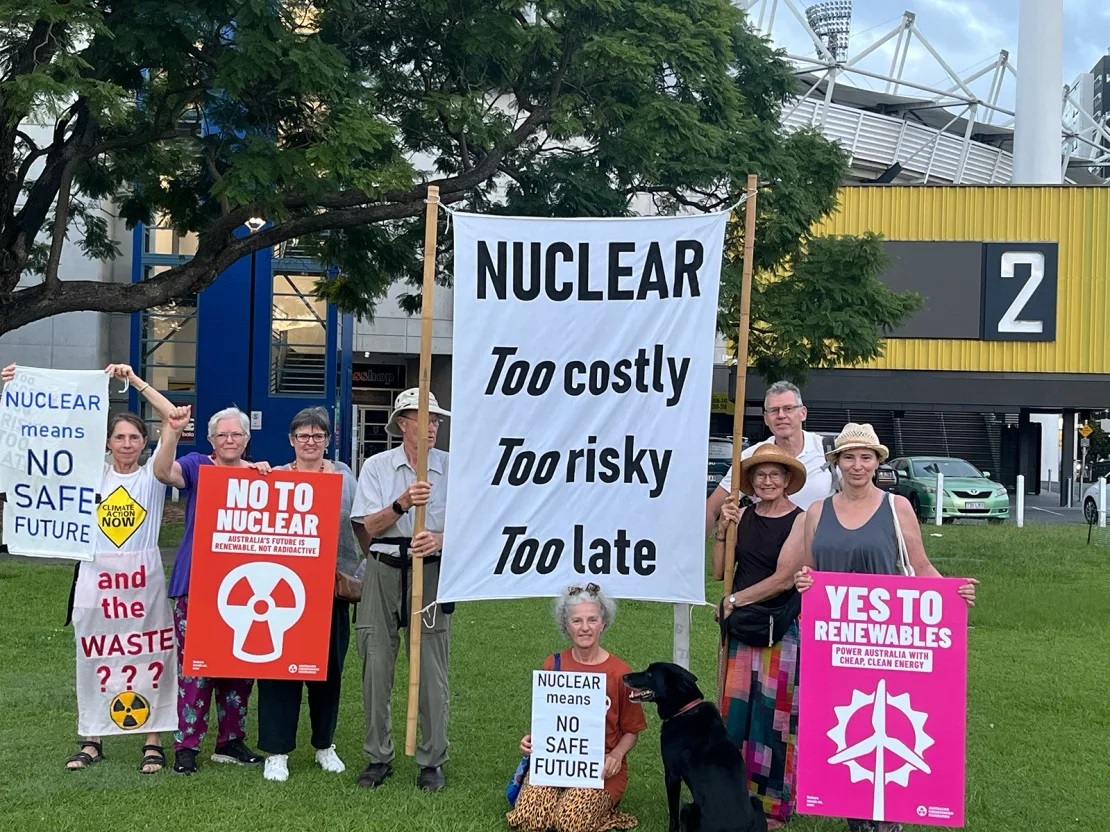
By Hilary Whiteman, CNN, February 6, 2025, Brisbane, Australia,
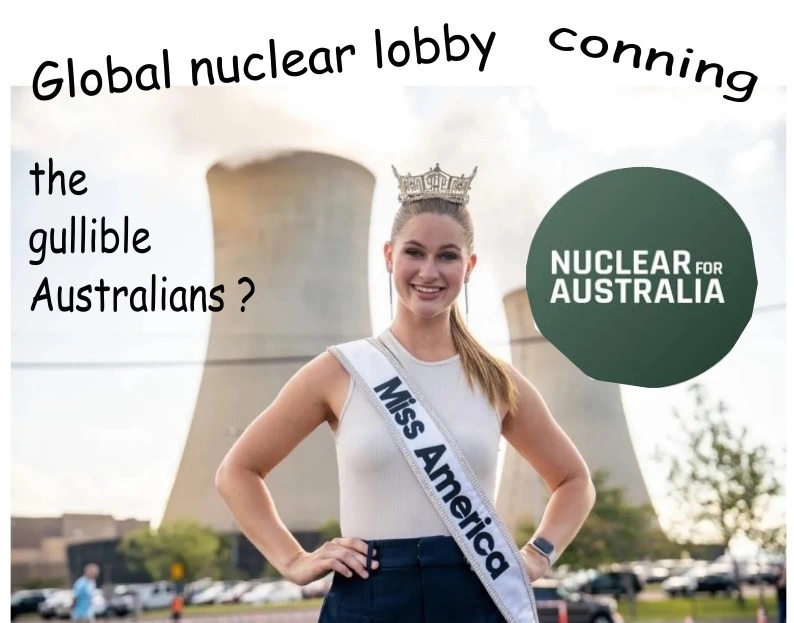
Nuclear engineer and former Miss America Grace Stanke has entered the fierce debate in Australia over its future energy policy with a 10-day national tour extolling the benefits of nuclear power in a country where it’s been banned for almost 30 years.
The speaking tour is familiar territory for the 22-year-old former beauty queen, who said she studied nuclear engineering as a “flex,” but now works for US energy giant Constellation as a spokesperson and as an engineer on its nuclear team.
Her recent arrival comes at a delicate time in Australia, months before a national election that could put the opposition Liberal Party in power, along with its promises to build seven nuclear power stations – upending the current Labor government’s plan to rely on renewable energy and gas.
For several days, Stanke has been speaking to hundreds of Australians, in events organized by Nuclear for Australia (NFA), a charity founded by 18-year-old Will Shackel, who has received backing from a wealthy Australian pro-nuclear entrepreneur.
Most talks were well-attended by attentive crowds, but not all audience members were impressed by Stanke’s message.
As she started to speak in Brisbane last Friday, a woman in the audience began shouting, becoming the first of several people to be ejected from the room as other attendees booed and jeered. One woman who was physically pushed from the premises by a security guard has since filed a formal complaint.
……………Those against nuclear power say it’s too expensive, too unsafe and too slow to replace Australia’s coal-fired power stations that would need to keep burning for several more years until nuclear plants came online.
………………….A numbers game
Australia banned nuclear energy in 1998 as part of a political deal to win approval for the country’s first and only nuclear research facility that’s still operating in southern Sydney.
A change in government in an election, to be held before mid-May, would see seven nuclear reactors built in five states to provide power alongside renewable energy – a bold shift in direction that would not only require changes to federal law, but amendments to laws in states where premiers oppose nuclear power.
According to the plan proposed by Liberal Party leader Peter Dutton, the nuclear reactors would be funded by 331 billion Australian dollars ($206 billion) in public money and the first could be working by 2035.
Both forecasts are disputed as underestimates by the government acting on the advice of the country’s independent science agency – the Commonwealth Scientific and Industrial Research Organisation (CSIRO) – which says renewables are still the cheapest and the most efficient way for Australia to reach net zero by 2050.
…………………..“I do believe that a strong grid requires both renewables and nuclear energy combined,” Ms Stanke said, referring to the argument for a “baseload” energy source that doesn’t rely on unpredictable weather.
That argument is challenged by experts worldwide, who say the need for “baseload” energy is an outdated concept, and that stability can be achieved by other means, including batteries.
……………………………………………..Advance, a conservative campaign group that says it works to counter “woke politicians and elitist activist groups” is promoting a 48-minute documentary it claims tells the “untold stories” of farmers whose “lives have been upended by the rapid rollout of wind and solar projects.”
………………………………….Rural areas where opposition is building to renewable projects are fertile ground for Shackel and his nuclear campaign. He’s already visited some areas earmarked for power stations under the Liberal proposal. And while he says NFA isn’t politically aligned with either of the major parties, he accepts he’s doing some of the groundwork to bring the community on side………………………….
Nuclear ‘foolishness’
Bringing a former Miss America to Australia was part of a plan to raise support for nuclear power among Australian women, who according to one survey are far less enthusiastic than men about the proposal.
According to several people who attended sessions in various states, the audience was dominated by older men, many of whom didn’t seem to need convincing.
Jane McNicol, the first protester escorted from the room in Brisbane, told CNN she’s been an anti-nuclear campaigner since the 1980s. She said she stood up to “ensure that this foolishness does not take off.”
“It’s just a way of spinning the fossil fuel industry out for a bit longer, and we cannot afford to do that,” she said. “You can see how the climate is collapsing around us. Look at Los Angeles. Those poor people over there lost everything.”
Others said the panel – which included local nuclear experts – made generalizations and didn’t get to the nub of issues specific to their area, like the potential strain they say a nuclear power station could have on resources in Victoria’s Latrobe Valley.
“There is literally no water for a nuclear power station. The existing allocation is already committed to mine repair,” said Adrian Cosgriff, a member of community advocacy group Voices of the Valley, who attended the Melbourne talk.
“Australians know nuclear power exists. That’s fine. It’s just not suitable for here. That’s kind of the argument,” he said.
David Hood, a civil and environmental engineer who attended the Brisbane talk, said: “Renewables are working right now. We can’t wait 10 to 20 years for higher cost and risky nuclear energy.”
Stanke and Shackel delivered a parliamentary briefing in Parliament House, Canberra on Wednesday, to politicians and aides across the political spectrum.
Prime Minister Anthony Albanese was unsurprisingly not in attendance, having already labelled his political rival’s nuclear proposal as “madness” and a “fantasy, dreamed-up to delay real action on climate change.”……………. https://edition.cnn.com/2025/02/06/australia/australia-nuclear-debate-grace-stanke-intl-hnk-dst/index.html
Going nuclear: Meet Grace Stanke, the American pageant queen on a mission in Australia
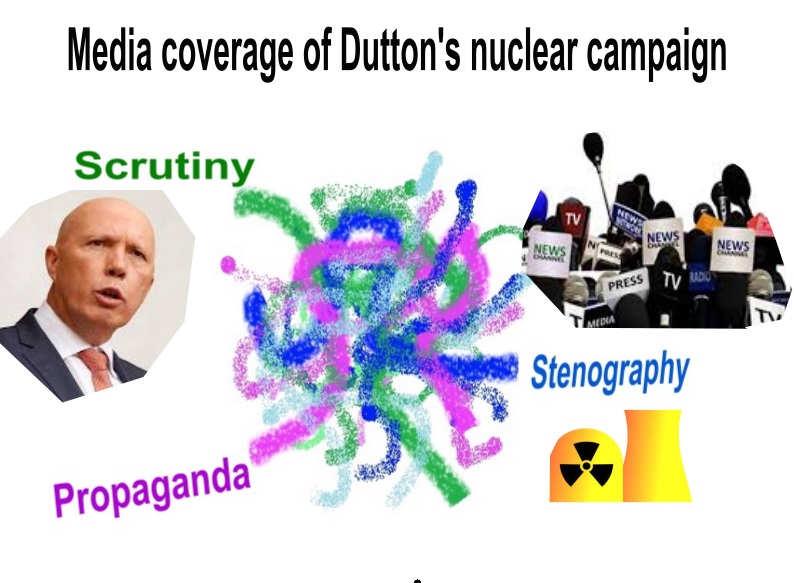
COMMENT. This article is pretty good for SCRUTINY, giving both the nuclear propaganda in spades, but also the environmental, safety, economic and political objections to it.
It does show Grace Stanke as a clever operator, with her giving simplistic, but impressive sounding pro-nuclear spin
By Maddison Leach, Feb 8, 2025, https://www.9news.com.au/national/nuclear-power-australia-miss-america-grace-stanke/74f1791d-be18-420f-8a76-5026bb3de4c1
Nuclear power has been banned in Australia since the turn of the century. Former Miss America Grace Stanke is the unlikely figure who wants to change that.The 22-year-old American has been in Australia for over a week, advocating for nuclear power at events hosted by Australia’s largest nuclear power advocacy organisation, Nuclear for Australia.
Her arrival seems perfectly timed for Opposition Leader Peter Dutton and the Coalition as they promote their nuclear plans ahead of the 2025 federal election.
If elected, the Coalition says it plans to build taxpayer-funded nuclear reactors at seven sites around Australia. The first is slated to start operating in 2035.
Mr Dutton has said the plan will help lower carbon emissions and make electricity cheaper for Australians, however climate experts have challenged those claims.
Hailing from the US, which home to 94 operable nuclear reactors and remains the world’s largest producer of nuclear power, Stanke wants to see Australia follow in her home nation’s footsteps and embrace nuclear power.
“This is a necessary part of the future,” she told 9news.com.au, adding that the federal and state bans on nuclear power “baffle” her.
“Nuclear is safe, it’s effective, it’s reliable, it requires a small amount of land, it provides high paying jobs and helps build up strong communities around it.”
With a degree in nuclear engineering and a Miss America title (she was crowned in 2023), Stanke is already the poster girl for nuclear advocacy in the US.
“People look at a woman and they make assumptions,” Stanke said, then laughed.
“Usually they are not expecting me to speak about nuclear energy or nuclear engineering, so it is a ton of fun.”
The Wall Street Journal called her the “new face of nuclear energy” in 2023 and she appeared on the Forbes 30 under 30 for Energy list the following year.
Inspired by her impact in the US, Nuclear for Australia’s 18-year-old founder Will Shackel flew her to Australia in a bid to further the conversation around nuclear power here too.
That has meant addressing environmental and financial concerns around the Coalition’s nuclear plans.
Mr Dutton claims the plan will slash energy bills but research from the Institute for Energy Economics and Financial Analysis (IEEFA) suggests it would actually increase Aussie households’ energy bills by about $665 annually.
The Coalition also claims the plan would reduce Australia’s carbon emissions but energy experts estimate that extending the life of coal plants as part of the plant could produce 1.7 billion tonnes of extra emissions by 2050.
Stanke questioned these figures, citing studies from the Nuclear Energy Institute in the US as proof nuclear power is a cost-effective and “emissions free” energy source.
“To produce your entire lifetime’s amount of electricity, we’ll only create enough waste that it fits inside of a soda can,” she said in response to environmental concerns.
Though she acknowledges that building the reactors would come with financial and environmental costs, Stanke is focused on the end result: “clean energy” for millions of Australians.
However, there are also questions about how long it would take Australia to build seven nuclear reactors.
The Coalition plans to have the first up and running by 2035 but CSIRO experts argue that it’s unlikely any of the plants would be ready until at least the early 2040s.
It takes an average of nine years to build a nuclear power station according to the Australian Conservation Foundation, plus another 10 years for planning and licensing, but Stanke firmly believes Australia can get these reactors built within a decade.
“I would completely disagree on the idea that Australia is not a nuclear nation,” she said.
She noted that Australia’s only nuclear reactor OPAL in Lucas Heights, which opened in 2007, was built in just nine years and said that “if Australians can do that in nine years”, this country can surely “do even better in the future”.
However, OPAL was build on the site of an existing nuclear reactor while the Coalition’s proposed reactors would be built on coal-fired power stations.
And the Coalition doesn’t just have to build these nuclear reactors; it also has to regulate and staff them, and overturn federal and state bans on nuclear power.
It will be easier said than done given that Labor, the Greens and some independents oppose nuclear energy, as do many state premiers and opposition leaders.
As well as the financial, environmental and legal concerns, some Australians fear the potential community and health risks associated with building nuclear reactors across the country.
Though she’s received some pushback from everyday Aussies and anti-nuclear groups while touring Australia, the 22-year-old hopes her visit will inspire more open dialogue about the possibilities nuclear power presents for Australia.
“This deserves a fair discussion [and] I’m here to help start that conversation.”
Explained: Why nuclear power has been banned in Australia for more than 25 years
COMMENT. This news item from 9 news is a rare example of SCRUTINY, in that, although it basically delivers the facts (Stenography), it shows some insight into the arguments and reasons behind Australian attitudes.
For a commercial media article, this is remarkably unbiased.
By Maddison Leach Feb 9, 2025, https://www.9news.com.au/national/why-is-nuclear-power-banned-in-australia-explained/9f758cf3-0677-4787-bfce-a5
Opposition accuses Labor of scare campaign over Nuclear, PM says he holds economic concerns
Nuclear power is shaping up to be a hot button issue in the 2025 federal election, with Opposition Leader Peter Dutton and the Coalition pushing a plan to build seven nuclear reactors across Australia if elected.
Such reactors are currently banned at a federal level, meaning the Coalition would have overturn federal and even some state laws to build their proposed reactors.
Here’s everything you need to know about the nuclear power bans in Australia.
Why is nuclear power banned in Australia?
Nuclear power as an energy source has been banned in Australia since the late 1990s, when Prime Minister John Howard’s Coalition government passed two laws prohibiting it.
First came an amendment to the National Radiation and Nuclear Safety Act (1998) which banned the development of any new nuclear power sites in Australia.
The following year, the Commonwealth Environment Protection and Biodiversity Conservation Act (1999) introduced new rules prohibiting the construction or operation of any facilities that generated nuclear power, fabricated nuclear fuel, enriched uranium or processed nuclear waste.
At the time these laws were passed, there was only one site in Luca Heights, south of Sydney. It remains the site of Australia’s only nuclear reactor, which is used for medical and industrial research.
Some state governments have also introduced additional nuclear prohibitions.
Which countries have banned nuclear power?
Countries that have banned the construction of new nuclear power plants like Australia include Austria, Denmark, Greece, Italy, Ireland, Norway and Serbia.
Several other nations have also announced plans to phase-out nuclear power, including Belguim, Germany, the Phillipines and Switzerland.
Why is Australia anti-nuclear?
There was a dramatic shift in public opinion on nuclear power after the catastrophic Chernobyl disaster in 1986.
That shift likely contributed to the introduction of anti-nuclear laws in Australia in 1998 and 1999, which have remained in place ever since.
Modern Australian attitudes towards nuclear power are mixed but the majority of anti-nuclear sentiment centres around the financial and environmental costs.
It would cost billions to establish a nuclear power network in Australia and though nuclear power is considered “clean” (it doesn’t produce carbon emissions), it is not renewable.
Is it illegal to build a nuclear reactor in Australia?
Yes. The National Radiation and Nuclear Safety Act (1998) and Commonwealth Environment Protection and Biodiversity Conservation Act (1999), as well as some additional state legislations, prohibit the construction or operation of nuclear reactors.
Is there support for nuclear power in Australia?
Some. The Coalition is leading support for a nuclear future for Australia with its nuclear power proposal, which would see seven nuclear reactors built across the country.
Nuclear for Australia, the country’s largest nuclear power advocacy organisation, has voiced support for the plan.
What is Peter Dutton proposing?
Opposition Leader Peter Dutton and the Coalition are proposing overturning existing laws banning nuclear power in Australia in order to build seven new nuclear plants.
“This will make electricity reliable, it will make it more consistent, cheaper, for Australians and it will help us decarbonise as a trading economy as we must,” Dutton said.
“The fact is we can deliver a plan which is going to keep the lights on and we have a plan and a vision for our country which will help grow businesses, not close them down.”
The Coalition has claimed the plan is 44 per cent cheaper than the government’s renewable energy plan and would lower Australians’ electricity bills.
However, the Coalition’s figures are based on a scenario that produces about 45 per cent less energy by 2050 than renewables.
What does nuclear power cost?
Modelling from the Coalition suggests its nuclear policy would cost Australia more than $300 billion, significantly less than the government’s renewables plan.
But the CSIRO’s draft GenCost 2024-25 report projected that building nuclear reactors would actually cost at least twice as much as renewable power in Australia.
By 2040, it predicted nuclear-generated electricity would cost about $145-$238 per MWh by 20204, compared to $22-$53 per MWh for solar, and $45-$78 per MWh for wind.
What does nuclear power mean for the climate/environment?
Nuclear power doesn’t produce greenhouse gasses, however it’s not renewable as the process of fission (which generates nuclear energy) requires fuel, typically uranium.
Though Australia has one of the world’s largest uranium reserves, it is a finite resource and therefore isn’t renewable.
Nuclear waste also poses an environmental threat, especially in the case of a disaster like the Chernobyl or Fukushima.
Pro-nuclear lobby group ramps up social media ad spend by nearly 150 pct

Rachel Williamson, Feb 6, 2025, https://reneweconomy.com.au/pro-nuclear-lobby-group-ramps-up-social-media-ad-spend-by-nearly-150-pct/#google_vignette
A pro-nuclear lobby group founded by high school student Will Shackel and backed by businessman Dick Smith has boosted its ad spend on Mark Zuckerberg-owned Meta sites by 148 per cent in January, new data has revealed.
The splurge was noticed by London-headquartered Who Targets Me, which tracks digital political ads, and local climate communications group Comm Declare.
The pro-nuclear group, Nuclear for Australia, spent $24,000 trying to reach 5 million people in Australia during the first month of the year.
Ads on Meta, which owns Facebook, Instagram and WhatsApp, mainly targeted middle-aged men (45-54 years) in Queensland with claims that nuclear power is safe, reliable and zero emissions. It also asked them to sign a petition to lift Australia’s ban on nuclear power.
On youth-focused Tiktok, the ads were more focused on motivational explainer videos by Shackel, memes, and recently promotions for a pro-nuclear tour by 22-year-old nuclear engineer and former Miss America, Grace Stanke, also funded by Smith.
“In this election year, it’s clear the opponents of renewable energy will peddle the fantasy that nuclear energy is a viable climate solution for Australia. Nuclear power is too expensive, too slow and too much of a risk,” said Comms Declare founder Belinda Noble.
The ramp in advertising dollar spend by this group mirrors other campaigns, such as the Minerals Council of Australia which launched its own in August last year.
During January it ramped advertising spending by 33 per cent to $9,937 on its Get Clear on Nuclear campaign, which run on Youtube, Facebook, Instagram and Tiktok.
That campaign was designed by New Zealand ad agency Topham Guerin, which worked with Australia’s Liberal Party and the the UK’s Conservative Party in their election-winning 2019 year.
“Are they winning? Yes. Because what are you and I taking about right now? [Nationals MP] Ted O’Brien’s brain fart,” he told Renew Economy.
“It’s been very effective. It’s fact free politics. As an analyst I find it impossible to push back on it. The trouble is it’s got serious traction and they’re using their social media platforms to say ‘why can’t we talk about it?’ And they’re conflating nuclear mining with nuclear power plants, and they’re conflating [nuclear powered] defense with energy.”
Lidia Thorpe erupts in a fiery outburst at an American pro-nuclear activist during her visit to Parliament, (Media coverage of Dutton’s nuclear campaign- example 2)
This article, despite “fiery” language , is the STENOGRAPHY style of journalism – i.e – tells us what was said and done, without being propaganda, but also without examining, scrutinising, what was said.
- American visitor Grace Stanke heckled by Thorpe
- Ms Stanke’s sponsor, Dick Smith, welcomes publicity
The 22-year-old is touring Australia advocating nuclear energy, in a trip partly funded by entrepreneur Dick Smith.
Mr Smith told Daily Mail Australia that Ms Stanke is ‘obviously very capable’ and he will meet her at a dinner in Sydney on Wednesday night.
In reaction to Sen Thorpe’s outburst, Mr Smith said: ‘That’s going to create some publicity for this important issue, I think it’s good.
‘I’m very concerned about climate change for our grandchildren and we need as much discussion as possible.
‘My strong view is that the only way we can reduce carbon to very low levels is nuclear.’
He added that he had a ‘lot of Leftie friends that are completely and utterly opposed to nuclear and it’s like a religion with them’.
‘I’m pro-renewables but it’s delusional to run the country on them.’
The businessman has previously come out in support of Opposition leader Peter Dutton’s nuclear plan.
Last year Mr Dutton pledged to build seven publicly-owned nuclear power plants in Australia if elected, with the first predicted to come online from the mid-to-late 2030s, as they require meticulous development.
He has argued nuclear will be crucial to stopping blackouts and lowering electricity bills as it can provide relatively cheap baseload power in the same way coal did, without the pollution.
He also said his $331billion plan will be 44 per cent cheaper than Labor’s program to almost replace coal and gas power with solar and wind energy within 15 years.
Labor’s plan is for renewable energy to comprise 82 per cent of Australia’s energy generation by 2030, rising to 98 per cent by 2040 based on solar and wind.
Both sides of politics support a goal of net zero carbon dioxide emissions by 2050, but the Coalition sees nuclear making up 38 per cent of Australia’s electricity generation by that time, with solar and wind energy making up 49 per cent.
Media coverage of Dutton’s nuclear campaign, Example No 1.
6 Feb 25
Dr Victoria Fielding divides journalism on Dutton’s nuclear campaign into three types – scrutiny, stenography or propaganda:
- Scrutiny – a useful form of journalism that critically assesses the viability of the nuclear policy.
- Stenography – just repeating the plan without scrutiny.
- Propaganda (news presented to look like news but what is actually a form of political advocacy, aiming to persuade readers to support Dutton’s nuclear plan, or ).
So – I’m starting today – with this item – Lidia Thorpe crashes pro-nuclear press conference fronted by ex Miss America winner Grace Stanke.
It’s not that easy to categorise news items. I think that there should be another type * Read Between The Lines. I think that this article by Jessica Wang could belong in that group. However, using Dr Fielding’s groups —
Lidia Thorpe crashes pro-nuclear press conference fronted by ex Miss America winner Grace Stanke. – fits narrowly into *Propaganda – because:
“heckling” is seen here as a “bizarre encounter” – although heckling is a time-honoured political activity in Australia. The pro-nuclear message from Nuclear For Australia is repeated without comment or analysis, So this news item is close to Stenography , too, (but with that possible element of Read Between The Lines. )
Lidia Thorpe crashes pro-nuclear press conference fronted by ex Miss America winner Grace Stanke
“We had standing room only in Morwell … we had a really good reception in the room,” said Mr Shackel.
“We thought it was a really successful event, and … people showed a huge standard of support in that community.”
[REALITY: Questions from the floor were not permitted…….. Security was tight for the event, with tickets and bags checked upon arrival. Tickets were not available at the door……..here were some who felt the Morwell event became little more than a Yankee talkfest. https://latrobevalleyexpress.com.au/news/2025/02/04/morwell-hears-from-miss-america-on-nuclear/]
The firebrand senator crashed a press conference fronted by 2023 Miss America Grace Stanke, who called for bipartisan support on nuclear energy.
Jessica Wang, February 5, 2025, more https://www.news.com.au/national/politics/lidia-thorpe-crashes-pronuclear-press-conference-fronted-by-ex-miss-america-winner-grace-stanke/news-story/4a49832f5bbedbb6b5fc8a0137a3df1f
Firebrand independent senator Lidia Thorpe has heckled a pro-nuclear press conference fronted by former Miss American and nuclear engineer Grace Stanke, yelling: “We don’t want nuclear in this country”.
The bizarre encounter unfolded just before the well-attended press conference on Wednesday, which was organised by Nuclear for Australia and slated to start at the Mural Hall in Parliament House, Canberra.
Walking past the Nuclear for Australia sign on her way to the elevator, Senator Thorpe yelled that nuclear would “poison your children’s children,” and said “You have no consent”.
The press conference began shortly after, with no acknowledgment of Senator Thorpe’s outburst.
Ms Stanke, who won the Miss American 2023 and is employed by US nuclear energy giant Constellation Energy, urged the Australian government to work with the Australian people, industry and manufacturers, instead of trying to wedge opposition.
The nuclear-advocate is currently on a nationwide speaking tour visiting communities which will be affected by Peter Dutton’s plan to build seven nuclear reactors by 2050.
“The one thing that was the most shocking part of this tour so fair is how split it has been in terms of a political conversation, coming from America with nuclear energy is relatively bipartisan, and to I go so far as to say nonpartisan” she said.
“Because of that I think it’s so important to mention that here in Australia, this conversation is must be discussed, not only to help build and bridge bipartisan support, but to continue educating the Australian people so they can make informed decisions.”
She said had the nuclear debate began 10 to 20 years earlier, Australians would have a different “base level of knowledge”.
Nuclear for Australia founder Will Shackel also defended an event attended by himself and Ms Stanke last week which had been criticised for solely promoting the Coalition’s nuclear election bid.
The event, which was funded by electronics mogul Dick Smith, took place in the Victorian town of Morwell in the Latrobe Valley, where the Coalition are proposing to construct a reactor at the site of the Loy Yang power station.
“I think it would have been easier from the context that people wouldn’t have been citing The Simpsons as a source,” she said.
“We had standing room only in Morwell … we had a really good reception in the room,” said Mr Shackel.
“We thought it was a really successful event, and … people showed a huge standard of support in that community.”
Morwell hears from Miss America on nuclear

Intriguing coverage of the Miss America pro-nuclear blitz….
Questions from the floor were not permitted……. Security was tight for the event……… the selected few who did not entirely agree with what was being said quietly walked out.
By LIAM DURKIN, https://latrobevalleyexpress.com.au/news/2025/02/04/morwell-hears-from-miss-america-on-nuclear/
COMMUNITY passion was evident on Sunday night, as locals congregated to hear from international nuclear experts in Morwell.
The Nuclear for Australia roadshow made its way to the Latrobe Valley, with more than 200 people cramming into the function centre of the Italian Australian Club.
The panel discussion was headlined by former Miss America and nuclear engineer Grace Stanke.
Ms Stanke spoke for around half-an-hour, detailing her career and attempting to spell out some misconceptions surrounding a possible nuclear future for the Latrobe Valley.
She was followed by UBH Chief Nuclear Officer, Mark Schneider, speaking on the finer points of nuclear operations, and University of Adelaide Adjunct Nuclear Law Lecturer, Kirsty Braybon on what would need to take place for nuclear to be given the green light at federal level.
Well-known local union delegate Mark Richards (of the Mining Energy Union) also spoke briefly.
The panel then took questions, although these were selected by the emcee through an online system.
Questions from the floor were not permitted.
Nationals MPs Darren Chester and Danny O’Brien were in attendance, as was Latrobe City Mayor, Dale Harriman and deputy mayor, Sharon Gibson.
Security was tight for the event, with tickets and bags checked upon arrival. Tickets were not available at the door.
Crowd behaviour was first rate, and the selected few who did not entirely agree with what was being said quietly walked out. One man did however mutter a few unpleasantries on his way to the exit.
With Ms Stanke and Mr Schneider both hailing from the United States, their speeches focussed greatly on nuclear in their home country. As a result, it was understandable there were some who felt the Morwell event became little more than a Yankee talkfest.
For the majority however, most reported finding the evening informative and insightful.
Full coverage of the seminar will feature in next week’s Express.
Media coverage of Dutton’s nuclear ‘plan’: Scrutiny, stenography or propaganda.
By Victoria Fielding | 28 January 2025, https://independentaustralia.net/politics/politics-display/media-coverage-of-duttons-nuclear-plan-scrutiny-stenography-or-propaganda,19
Unsurprisingly, the conservative media has failed to scrutinise Peter Dutton’s nuclear plan, once again displaying bias towards the Coalition, writes Dr Victoria Fielding.
WHEN OPPOSITION LEADER Peter Dutton snuck his dodgy nuclear energy “plan” out just before Christmas, it was an important moment for Australian news media to demonstrate the quality of journalism they produce: scrutiny, stenography or propaganda.
It was also their opportunity to be honest with the public about why Dutton is backing nuclear power, an opportunity they unsurprisingly did not take.
I analysed 37 news reports published by the ABC, The Guardian, News Corp and Nine newspapers on 13 December 2024, the day Dutton released his long-awaited “plan” for nuclear power. I categorised each article as either scrutinising the plan (a useful form of journalism that critically assesses the viability of the nuclear policy), as stenography (just repeating Dutton’s plan without scrutiny), or as propaganda (news presented to look like news but what is actually a form of political advocacy, aiming to persuade readers to support Dutton’s nuclear plan).
Here are the results.

In what will not be surprising to anyone, propagandistic content made up the majority of News Corp’s 20 articles about Dutton’s nuclear plan, with 14 out of 20 enthusiastically supporting nuclear power as a viable energy solution for Australia.
One notable example of this propagandistic approach by News Corp was in The Australian’s editorial on the subject which clearly gave away the views of the masthead.
‘…the Opposition Leader has taken an important and brave step, setting out the economics of the issue in a context relevant to concerns about living costs, especially power bills… Frontier’s modelling shows that the Coalition’s plan, incorporating nuclear and renewables, would cost $331 billion across 25 years, 44 per cent less than Labor’s renewables approach.’
Just like much of News Corp’s propagandistic content advocating for right-wing policies and politicians, the implied suggestion that nuclear is cheaper than renewables is manipulatively deceiving.
According to Climate Council reports using CSIRO’s analysis:
‘…the cost of electricity generated from nuclear reactors by 2040 would be about $145-$238 per MWh, compared to $22-$53 for solar, and $45-$78 for wind. So that’s at least twice as much for nuclear, or up to ten times as much when comparing with the lowest-cost solar.’
Dutton and his News Corp collaborators never let facts get in the way of manipulating voters.
Next, we have stenography. Stenography is the laziest form of journalism. Rather than doing the difficult work of analysis and being a watchdog to ensure only credible information is relayed to voters, stenographers just repeat what a politician has said, uncritically.
This has the effect of allowing manipulative politicians like Dutton to put information in the public domain which is false and/or misleading. Stenography is actually the opposite of what of journalism is meant to be.
Nine’s newspapers published six articles which just lazily repeated Dutton’s nonsensical nuclear plan, giving it undue credibility and failing to adequately scrutinise it.
For example, Phillip Coorey in the Australian Financial Review authored a piece originally titled ‘New costings signal war over energy’, which starts with the sentence:
‘The Coalition’s nuclear power plan will cost up to $263 billion less than Labor’s renewable rollout between now and 2050, translating into cheaper electricity over the long run, its long-awaited economic modelling purports.’
Coorey would no doubt claim that he is not responsible for any manipulative or misleading content he has included in his article, because he is just reporting what Dutton said. But that is exactly the problem with stenography. Although it is not as bad as News Corp’s overt propagandist style, it still gives Dutton a platform to mislead the newspaper’s audience.
The only useful form of journalism out of the three categories is scrutiny. Indeed, the whole point of political journalism is to scrutinise politicians and policies to ensure voters are not misled and have useful information in which to make an informed decision when voting. All four outlets included at least some articles with extensive scrutiny of Dutton’s nuclear plan. News Corp had five and Nine published three.
The ABC (four articles) and The Guardian (three) were the only two outlets to only present Dutton’s nuclear policy alongside critical analysis.
One shining example of scrutiny from The Guardian’s Graham Readfearn and Josh Butler’s explainer, titled ‘The glaring gaps and unanswered questions in the Coalition’s nuclear plan and costings’, methodically lays out the facts and problems with Dutton’s plans — including the true higher cost comparison with renewables and the huge amount of time it would take nuclear to come online.
The ABC and The Guardian’s useful critique of Dutton’s plan is exactly the information that voters need to accurately appraise whether Dutton’s nuclear policy is beneficial to them and their community. No doubt News Corp and Nine would claim that this scrutiny just shows the ABC and The Guardian are “left wing”, but it shows no such thing. The ABC and The Guardian are doing a public service in scrutinising a major policy announcement and providing factual analysis comparing the real costs of nuclear and renewable energy.
If a left-wing party announced a different energy policy, they would do exactly the same thing. It is called public interest journalism.
Unfortunately, however, this is not the end of the story. There was one major element of Dutton’s nuclear policy which was only included in one of the 37 news reports I analysed — the motive behind Dutton’s nuclear push. This was included in The Guardian’s Readfearn and Butler explainer, albeit only in two after-thought quotes at the end of the piece.
Under the sub-title ‘How have critics responded?’ The Greens’ Adam Bandt was reported to have said “the nuclear strategy relied on extending the life of fossil fuels”. The Australia Institute’s Rod Campbell similarly said the nuclear plan was a “distraction to prolong fossil fuel use and exports”.
Disappointingly, no articles overtly pointed out to the public that the whole point of Dutton’s nuclear policy was to undermine investment in renewable energy, unsettling the transition to a low carbon economy, to slow down efforts to address climate change, all in aid of fossil fuel and mining billionaires. This exclusion is not just a small part of the story of Dutton’s nuclear policy, it is the story.
This truth, unfortunately, is the story journalists collectively have failed to tell.
The legal decision on the Murdoch media – what does it mean for us?

NOEL WAUCHOPE, DEC 13, 2024, https://theaimn.com/the-legal-decision-on-the-murdoch-media-what-does-it-mean-for-us/
There is nothing either good or bad, but only thinking makes it so.
Shakespeare’s profound idea applies to that recent legal case, about the Murdoch Family Trust, in the Probate Court in Nevada.
The 93 year-old Rupert Murdoch sought to change the existing “irrevocable trust” which is to govern the arrangements of his media empire, after his death. The issue was that the trust should be in “the best interests” of the Murdoch children.
Rupert Murdoch argued that after his death, his children would benefit best if control of his media empire were to be changed from the existing trust arrangement which gives control to four of his children – Lachlan, Elizabeth, James and Prudence. Murdoch wanted that changed to control by only eldest son Lachlan. The other three disagreed, and took the case to court.
Rupert Murdoch’s given reason was that the whole media enterprise would thus be more profitable, – so all four children would get more money. That way, Elizabeth, James, and Prudence would not have control, but would be richer, and this would be “in their best interest”. Under the present unchanged “irrevocable” trust arrangement, they would share the control with Lachlan, but they would be less rich.
Many commentators are arguing that Rupert Murdoch’s real goal is power and influence – so that is why he wanted the very right-wing Lachlan to be in charge of the media show. Perhaps this is true.
The case was heard in a secret court, but the core of Rupert Murdoch’s argument was that the children’s monetary gain was in their best interest, rather than them having any control of the media and its content.
Apparently the three did not think so, and neither did Commissioner Edmund J Gorman, who ruled in the children’s favour, concluding that Murdoch and his son Lachlan, had acted in “bad faith”, in a “carefully crafted charade”.
Lachlan shares the same right-wing views as his father does, even more so,- while Elizabeth, James and Prudence are reported as having more moderate views. Murdoch has controlling interests in Fox News and News Corp , the Wall Street Journal, in the UK the Times and the Sun, the Australian and others. Apparently it is assumed by all, that the media empire will continue its current record profits only under Lachlan’s leadership. In 2023–24 the Fox Corporation’s net income was US$1.5 billion (A$2.35 billion).
This case raises the question – what is the purpose of the news media ?
According to the Murdoch argument, the purpose is to enrich the owners of the media. That would include all the shareholders, too, I guess. The means by which this is done is to provide entertainment and information to the public. And this is central to Rupert Murdoch’s stated argument.
Some people, including many journalists, and perhaps the Murdoch children, might see the informational role of the news media as its main purpose, with excessive profitability as a secondary concern.
Apparently Elizabeth, James and Prudence preferred to have some control in the media empire, even if that meant less money for them. They thought that “having a say” in the business was in their best interest. It is possible that they might take some pride in news journalism that would be more accurate and balanced than the Murdoch media is now.
Only thinking makes it so
The best example of “Murdoch media thinking” -is in its coverage of climate change. For decades, the Murdoch view was pretty much climate denialism – climate concern seen as a “cult of the elite” and the “effects of global warming have so far proved largely benign”. But more recently, this view was moderated, towards concern that some action should be taken to limit global warming – coinciding with the new right-wing push for nuclear power as the solution to climate change.
In the USA, Murdoch media has a powerful influence, supported by the big corporations, and the right wing in general, and by the Trump publicity machine, but it does have some competition from other right wing outlets like Breitbart and the Daily Wire, and in talk radio, and blogs. It has lost some influence in the UK, following its phone hacking scandal in 2011.
That Murdoch interpretation contradicts the view of thousands of scientists, yet is welcomed by the fossil fuel industries, the nuclear industry, and the right-wing governments that they support. Similarly, the Murdoch media’s view on international politics generally favours military action that the USA supports – on Ukraine’s side, by Israel, and now in Syria. All this is seen to be good – by the USA weapons manufacturers and salesmen, US and UK politicians, and presumably by the public.
In the USA, Murdoch media has a powerful influence, supported by the big corporations, and the right wing in general, and by the Trump publicity machine, but it does have some competition from other right wing outlets like Breitbart and the Daily Wire, and in talk radio, and blogs. It has lost some influence in the UK, following its phone hacking scandal in 2011.
In Australia, Murdoch media is far more pervasive, and has been described as a virtual monopoly – with the only national newspaper, newspapers in each state, (often the only newspaper), and News Corp controls radio and television in Australia through a number of assets.
So – what now, after this remarkable probate court decision?
Commissioner Gorman’s recommendation could still be rejected by a district judge. Murdoch’s lawyers can appeal the decision. Even if the decision is finally upheld, it will be a complicated process to rearrange the control of the media in the event of Rupert Murdoch’s death – and that might not happen for a decade or more. News Corp has a dual-class share structure which gives the family 41% of company votes, despite having just 14% of an overall stake in the company. Shareholders might change this arrangement.
In the meantime – fertile ground for endless speculation on what it all might mean – for the share price, for the future direction of the media, for the Murdoch family relationships.
Only thinking makes it so
Some see this legal decision as such a blow to the Murdoch empire – leading to its fatal collapse. And that thought can be viewed as a bad outcome. Even if Rupert Murdoch overturns the decision on appeal, it might have dealt a big blow to the empire.
Some welcome it, visualising a change in direction, with a more progressive media, directed by the three siblings with their more moderate opinions. For Australians who don’t like Donald Trump, and fear a Peter Dutton election win in 2025, well, it really doesn’t matter much. For the foreseeable future, the political right wing is still hanging on to its grip on news and information across this continent, thanks to the Murdoch empire.
The 101 ways Google serves up Australians to known scammers

Using the world’s biggest search platform to find information on scams can deliver victims straight into the arms of criminals.
The Age, ByAisha Dow and Charlotte Grieve, November 18, 2024
oogle searches are delivering Australians into the arms of fraudsters, as websites and advertisements belonging to scammers are prominently served up to users on the world’s most popular search engine.
In some instances, Google searches provide some scam victims false reassurance that they are investing in legitimate companies.
Once they’ve lost their money, scam victims searching for help on Google are then being shown ads that direct them to a new set of criminals, known as recovery scammers, who claim they can retrieve people’s lost money for a fee, but instead disappear with the cash.
The findings are part of a months-long investigation into how investment scammers use some of the world’s biggest tech companies to find victims.
This masthead found that Google presents scam sites to users, even after those scams were the subject of explicit government warnings.
One example is the scam platform Bitcoin Evolution, which was blacklisted by the UK’s Financial Conduct Authority in 2020. In March, Australian authorities placed it on an investor alert list, declaring it “not to be trusted”.
But this month, when this masthead used Google to search for Bitcoin Evolution, the first result that came up was not an official notification, but two Bitcoin Evolution scam websites.
Registering a phone number with one of the websites resulted in a near-immediate call from a scammer. Invest just $300 and make daily profits of 10 to 15 per cent, the fraudster promised.
Fleeced of $700,000
Based on a Google search alone, it can be difficult for Australians to tell if potential investment companies are real or a scam. Results are sometimes muddied by the presence of scam platforms, fake reviews and fake news articles or blogs promoting scams.
Fleeced of $700,000
Based on a Google search alone, it can be difficult for Australians to tell if potential investment companies are real or a scam. Results are sometimes muddied by the presence of scam platforms, fake reviews and fake news articles or blogs promoting scams.
Swav, a Melbourne man who didn’t want to use his last name for privacy reasons, was connected to overseas criminals through an advertisement that appeared on his Facebook feed in spring 2020.
Although he didn’t realise it at the time, the celebrities who appeared in the ad providing endorsements were fakes, computer-modified replicas of the famous person.
This masthead revealed on Saturday that Meta, owner of Facebook, takes money for these “celeb-bait” scam ads, despite the ads promoting notorious fraudulent investment platforms and coming from accounts that were clearly not legitimate investment companies.
Swav was just one day into the con, and had only handed over $1500, when he noticed a contradiction in the scammer’s sales pitch. It piqued his suspicion, and when he hung up, he began doing a bit more research.
“I started to search intensively about this company to verify if they are legit,” he recalled. “I searched on Google … but most of the reviews were positive.”
Over the following nine months, the fraudster from a platform called StocksCM stole close to $700,000 from him.
This masthead tested Google results based on searches for 100 entities recently added to the Australian Securities and Investment Commission’s (ASIC) investor alert list.
The list includes the names of known scam platforms and businesses targeting Australian consumers without holding the appropriate licences.
It showed that Google was failing to block websites for even these publicised rorts.
In the first page of results, Google returned 101 links to websites for platforms using the same names as the blacklisted entities.
The search results also featured 10 Google ads directly promoting scam brands named in ASIC’s warning list.
Google was accepting money to run ads for the Immediate Connect, Immediate Edge and Immediate Vortex scam platforms, all on ASIC’s alert list.
Ten out of the top 14 Google results that appeared in a search for “Immediate Connect” were likely scam platforms, including the top four results, which were all sponsored links for the scam…………………………………………………………………………………………………………………………..
Simon Smith, a cybersecurity expert with Scam Assist, said many of his clients who had lost their savings were originally connected to scammers by Google ads, including through fraudulent AI auto-trading platforms.
He said the public had high levels of trust in Google, and many assumed that the results served up first would be most relevant to them.
“The fact that you can pay your money to have a scam ad is just, in itself, unbelievable,” he said…………………. more https://www.theage.com.au/business/consumer-affairs/the-101-ways-google-serves-up-australians-to-known-scammers-20241113-p5kqew.html
1 This month

of the week – Australians for War Powers Reform (AWPR)
To see nuclear-related stories in greater depth and intensity
 Antinuclear