Australian Media Are Outright Telling Us They Are Feeding Us War Propaganda About China
Caitlin’s Newsletter, 8 March 23
The mass media in Australia have been churning out brazen propaganda pieces to manufacture consent for war with China, and what’s interesting is that they’re basically admitting to doing this deliberately.
Australians are uniquely susceptible to propaganda because we have the most concentrated media ownership in the western world, dominated by a powerful duopoly of Nine Entertainment and the Murdoch-owned News Corp. Both of those media megacorporations have recently put out appalling propaganda pieces about the need for Australians to rapidly prepare to go to war with China in defense of Taiwan, and in both of those instances have straightforwardly told their audiences that there’s an urgent need to effect a psychological change in the way all Australians think about this war.
Nine Entertainment’s Sydney Morning Herald and The Age have been busy flooding the media with testimony from a panel of war machine-funded “experts” who say Australia must hasten to get ready to join the United States in a hot war with China in the next three years. Yesterday’s dual front-page propaganda assault featured imagery of Chinese war planes flying straight at the reader, awash in red and emblazoned with the words “RED ALERT” to help everyone understand how evil and communist China is.
“Today’s Sydney Morning Herald and Age front-page stories on Australia’s supposed war risk with China represents the most egregious and provocative news presentation of any newspaper I have witnessed in over 50 years of active public life,” former Australian Prime Minister Paul Keating opined in response to the publications.
“Apart from the outrageous illustrations of jet aircraft being shown leaving a profiled red-coloured map of China, the extent of the bias and news abuse is, I believe, unparalleled in modern Australian journalism,” he added.
In the first installment of their “Red Alert” propaganda series, SMH and The Age share that their empire-funded panelists believe there’s a need to bring about a “psychological shift” in the public’s attitude toward war with China, with one panelist asserting that “the nation’s leaders should trust the public enough to include them in what can be a confronting discussion” about the need to prepare for that war.
In the second “Red Alert” installment, this same message is repeated, saying that “Australia’s vulnerabilities are not only physical, but psychological,” and again repeating the need to get everyone talking and thinking about the possibility of war with China.
“It is a real national taboo to think about the likelihood of a conflict in anything other than the most remotely theoretical perspective,” says Peter Jennings of the war machine-funded propaganda firm Australian Strategic Policy Institute, countering that “we will sleepwalk into disaster unless we openly discuss unpalatable scenarios.”
Saying that the real threat is “complacency rather than alarmism,” think tanker Lavina Lee urges Australia to confront “the possibility that we might go to war and what would happen either way. We should talk about what the world would look like if we win and what it would look like if we lose.”
Over and over again they are telling us that something must be done to change the way Australians think and talk about a war with China, in articles designed to change the way Australians think and talk about war with China. They are doing the exact thing they say must be done, while explaining why it needs to be done. They are brainwashing us with propaganda while explaining why it is necessary to brainwash us with propaganda.
Last month Murdoch’s Sky News Australia released an astonishingly propagandistic hour-long special titled “China’s aggression could start new world war,” which in its attempts to show “China’s aggression” hilariously flashed a graphic of all the US military operations currently encircling China. The segment features footage of bayonet-wielding Chinese forces overdubbed with ominous cinematic Bad Guy music, and in Sky News’ promotions for the special all the footage from China was tinged red to help viewers understand how evil and communist China is.
Toward the end of the special, Sky News’ empire-backed “experts” tell their audience that Australia needs to double its military spending, and that those in power need to explain to them why this is so important…………………………………….
Again, they’re saying there’s a desperate need to explain to Australians why they need to make sacrifices to prepare for war with China, while explaining to Australians that they need to make sacrifices to prepare for war with China. They are openly telling us that we need to be propagandized for our own good, while filling our heads with propaganda.
They’re not just filling our minds with war propaganda, they are openly telling us that war propaganda is good for us.
………………………….. This latest propaganda piece says that in the event of a hot war with China, our nation may be struck with intercontinental ballistic missiles, we may find ourselves cut off from the world while the fuel supplies we rely on dry up in a matter of weeks, and we may find our infrastructure rendered useless by massive Chinese cyberattacks.
The empire-funded “experts” acknowledge that this will not be because China is just randomly hostile to Australia, but because we are a US military and intelligence asset who will support the US empire in its war:
But why would China use its limited resources to attack Australia instead of focusing solely on seizing Taiwan? Because of the strategically crucial role Australia is expected to play for the United States in the conflict.
“Our geography means we are a southern base for the Americans for what comes next,” Ryan says. “That’s how they’re seeing us. They want our geography. They want us to build bases for several hundred thousand Americans in due course like in World War II.”
Interestingly, the article contains a rare acknowledgement in the mainstream press that the presence of the American surveillance base Pine Gap makes Australia a legitimate target for ICBMs:
At no time is it ever suggested that the fact that going to war with China could cost Australia its shipping lanes and infrastructure and even get us nuked means we should probably reconsider this grand plan of going to war with China. At no time is it ever suggested that riding Washington’s bloodsoaked coattails into World War Three against our primary trading partner might not be a good idea. At no time is it ever suggested that de-escalation, diplomacy and detente might be a better approach than rapidly increasing militarism and brinkmanship.
And at no time is it ever suggested that we should reconsider our role as a US military/intelligence asset, despite the open admission that this is exactly what is endangering us. We’re not being told to prepare for war with China because China is going to attack us, we’re being told to prepare for war with China because our masters in DC are planning to drag us into one. We’re not being told to prepare for war to defend ourselves, we’re being told to prepare for war because our rulers plan to attack China.
We see this in the way Australia is assembling its war machinery, buying up air-to-ground missiles that cannot possibly be used defensively because their sole purpose is for taking out an enemy nation’s air defenses. We see it in the way Australia is buying up sea mines, which as journalist Peter Cronau has noted is less suitable for protecting our 34,000 km of coastline than for blockading the shipping lanes of an enemy nation you wish to lay siege to. We see it in the fact that China’s military budget remains steady at around one and-a-half percent of its GDP, while the US spends 3.4 percent and Australia is being persuaded to double our share from two to four percent.
We’re not being prepared for a war to defend ourselves, we’re being prepared for a war of aggression to secure US unipolar hegemony — one that has been in the works for many years. We must resist this, and we must resist the tsunami of mass media propaganda that is designed to manufacture our consent for it. China https://caitlinjohnstone.substack.com/p/australian-media-are-outright-telling?utm_source=post-email-title&publication_id=82124&post_id=107109488&isFreemail=true&utm_medium=email
Movie Premiere -“The Road to War”- Australia is being set up to be the US proxy in its coming war with China.
As international tensions rise to a new level, with the Ukraine war passing its first anniversary and the Albanese Government set to announce its commitment of hundreds of billions of dollars to new weaponry, nuclear propelled subs, Stealth bombers etc, The Road to War brings into sharp focus why it is not in Australia’s best interests to be dragged into an American-led war with China.]]

The Road to War is directed by one of Australia’s most respected political documentary filmmakers, David Bradbury. Bradbury has more than four decades of journalistic and filmmaking experience behind him having covered many of the world’s trouble spots since the end of the Vietnam war — SE Asia, Iraq, East Timor, revolutions and civil war in Central and South America, India, China, Nepal, West Papua.
“I was driven to make this film because of the urgency of the situation. I fear we will be sucked into a nuclear war with China and/or Russia from which we will never recover, were some of us to survive the first salvo of nuclear warheads,” says the twice Oscar-nominated filmmaker.
We must put a hard brake on Australia joining in the current arms race as the international situation deteriorates. We owe it to our children and future generations of Australians who already face the gravest existential danger of their young lives from Climate Change,” says Bradbury.
There is general concern among the Defence analysts Bradbury interviews in the film that Australia is being set up to be the US proxy in its coming war with China. And that neither the Labor nor LNP governments have learnt anything from being dragged into America’s wars of folly since World War II — Korea, Vietnam, two disastrous wars in Iraq and America’s failed 20 year war in Afghanistan which ripped that country apart, only to see the Taliban warlords return the country and its female population to feudal times.
We must put a hard brake on Australia joining in the current arms race as the international situation deteriorates. We owe it to our children and future generations of Australians who already face the gravest existential danger of their young lives from Climate Change,” says Bradbury.
There is general concern among the Defence analysts Bradbury interviews in the film that Australia is being set up to be the US proxy in its coming war with China. And that neither the Labor nor LNP governments have learnt anything from being dragged into America’s wars of folly since World War II — Korea, Vietnam, two disastrous wars in Iraq and America’s failed 20 year war in Afghanistan which ripped that country apart, only to see the Taliban warlords return the country and its female population to feudal times.
“Basing US B52 and Stealth bombers in Australia is all part of preparing Australia to be the protagonist on behalf of the United States in a war against China. If the US can’t get Taiwan to be the proxy or its patsy, it will be Australia,” says former Australian ambassador to China and Iran, John Lander.
Military analyst, Dr Richard Tanter, fears the US military’s spy base at Pine Gap near Alice Springs, will be the first target of any direct confrontation between the US and Russia or China.
“The US military base at Pine Gap is critical to the US military’s global strategy, especially nuclear missile threats in the region. The generals in Moscow and Beijing would have it as a top priority on their nuclear Hit List,” says Dr Tanter whose 40 years of ground-breaking research on Pine Gap with colleague, Dr Des Ball, has provided us with the clearest insight to the unique role Pine Gap plays for the US. Everything from programming US drone attacks to detecting the first critical seconds of nuclear ICBM’s lifting off from their deep underground silos in China or Russia, to directing crippling nuclear retaliation on its enemy.
Military analyst, Dr Richard Tanter, fears the US military’s spy base at Pine Gap near Alice Springs, will be the first target of any direct confrontation between the US and Russia or China.
“The US military base at Pine Gap is critical to the US military’s global strategy, especially nuclear missile threats in the region. The generals in Moscow and Beijing would have it as a top priority on their nuclear Hit List,” says Dr Tanter whose 40 years of ground-breaking research on Pine Gap with colleague, Dr Des Ball, has provided us with the clearest insight to the unique role Pine Gap plays for the US. Everything from programming US drone attacks to detecting the first critical seconds of nuclear ICBM’s lifting off from their deep underground silos in China or Russia, to directing crippling nuclear retaliation on its enemy.
“Should Russia or China want to send a signal to Washington that it means business and ‘don’t push us any further’, a one-off nuclear strike on Pine Gap would do that very effectively, without triggering retaliation from the US since it doesn’t take out a US mainland installation or city,” says Dr Tanter.
“It’s horrible to talk about part of Australia in these terms but one has to be a realist with what comes to us by aligning ourselves with the US,” Tanter says.
“Studies show in the event of even a very limited nuclear exchange between any of the nuclear powers, up to two billion people would starve to death from nuclear winter,” says Dr Sue Wareham of the Medical Association for the Prevention of War.
“The Australian Government, Prime Minister Anthony Albanese and Defense Minister Richard Marles, have a serious responsibility to look after all Australians. Not just those living in cities. Were Pine Gap to be hit with even one nuclear missile, Health Minister Mark Butler would be hard pressed to find any volunteer nurses and doctors willing to risk their lives to help survivors in Alice Springs, Darwin and surrounding communities from even one nuclear missile hitting this critical US target,” says Dr Wareham.
The Road to War. Latest Film by David Bradbury
Premiere in Melbourne March 22 at the Carlton Nova cinema
Hobart screening State Cinema March 23 with special guest Bob Brown
Adelaide screening Capri cinema March 29
Further information or interviews with David Bradbury:
Mobile 0409925469
Former Prime Minister Keating lashes Nine newspapers over ‘news abuse’ in China coverage
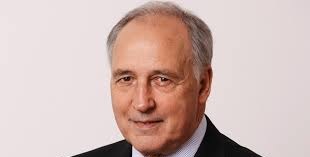
He said Taiwan was a “civil issue” for China, and “not a vital Australian interest”.
“We have no alliance with Taipei. There is no piece of paper sitting in Canberra which has an alliance with Taipei,” he said.
The New Daily@TheNewDailyAU, Mar 7 23 https://thenewdaily.com.au/news/politics/australian-politics/2023/03/07/paul-keating-smh-china/
Former prime minister Paul Keating has unleashed on the Nine newspapers over their coverage of the threat posed by China.
In an incendiary letter, Mr Keating accused the Sydney Morning Herald and Age newspapers of unparalleled “bias and news abuse” after they splashed on Tuesday with a special feature titled “Red alert”.
“Australia faces war threat with China within three years. We’re not ready,” read the headline.
Inside, editorials asked: “Are we prepared for war? The public has a right to know”.
Mr Keating blasted the coverage of “Australia’s supposed war risk with China” as “the most egregious and provocative news presentation of any newspaper I have witnessed in over 50 years of active public life” in an open letter on Tuesday.
“It is way worse than the illustrated sampans shown to be coming from China in the build up to the war in Vietnam in the 1960s,” he wrote.
“Apart from the outrageous illustrations of jet aircraft being shown leaving a profiled red-coloured map of China, the extent of the bias and news abuse is, I believe, unparalleled in modern Australian journalism.”
The former Labor leader also took personal aim at the SMH‘s political and international editor, Peter Hartcher, who was one of the authors of the coverage. Mr Keating described Hartcher as the “arch villain” and a “provocateur and warmonger”, and accused Nine’s editors of being “compliant”.
Tuesday’s coverage included a panel of five China experts who said they believed Australia “faces the prospect of armed conflict in the Indo-Pacific within three years” – most seriously “a Chinese attack on Taiwan that sparks a conflict with the US and other democracies, including Australia”.
They pointed to Chinese President Xi Jinping’s aggressive stance and rapid military buildup. The experts said Australia unprepared for conflict, and the federal government was “reluctant to openly identify the threat we face: An increasingly aggressive Communist China”.
“The thinness of the narrative is built around five supposed ‘experts’, three of whom are regular anti-China commentators – each firmly and long identified with the strategic interests of the United States,” Mr Keating wrote.
“Their views form the basis of this exclusive ‘Red alert’. Not any one of the so-called ‘experts’ has any comprehensive knowledge of China – especially in matters of war and peace. A point Hartcher and his editors well know.”
Keating is a long-standing critic of the bipartisan consensus on Australia’s national outlook and policies such as AUKUS. In an address to the National Press Club in November 2021, he urged Australia not to be drawn into a military engagement over Taiwan – sparking another clash with Hartcher.
He said Taiwan was a “civil issue” for China, and “not a vital Australian interest”.
“We have no alliance with Taipei. There is no piece of paper sitting in Canberra which has an alliance with Taipei,” he said.
In response, a spokesperson for Taiwan’s ministry of foreign affairs told The Guardian that Taiwan and Australia were important partners, sharing universal values and common strategic interests and that China’s aggression had far-reaching implications.
“The crisis in the Taiwan Strait is by no means a domestic matter between Chinese, and the security of the Taiwan Strait involves the stability and prosperity of the Indo-Pacific region, but also the global peace, stability and development,” Joanne Ou said.
Mr Keating finished Tuesday’s letter by declaring “the illegitimacy of the [Nine newspapers] is manifest even to a moderately informed reader”.
“The management and board of Nine Group will have much to answer for should it allow further publication of this wantonly biased and inflammatory material,” he said.
Murdoch Propaganda Pushes Australia To Double Its Military Budget For War With China – The time to start resisting is now.

And at 45:50 we finally get to the real purpose of this Sky News special: the need to “dramatically increase” the Australian military budget, and the need to manufacture consent for that increase.
I always get people complaining that I focus too much on the US war machine when I live in Australia, but anyone who’s paying attention knows the behavior of the US war machine is as relevant to Australians as it is to Americans. They are beating the drums for a future war of unfathomable horror all to please a dark god known as unipolarism, and it threatens to destroy us all.
The time to start resisting is now.
Caitlin Johnstone, Feb 16 2023,
In the latest escalation in Australia’s increasingly forceful campaign to manufacture consent for war with China, the Murdoch-owned Sky News Australia has aired a jaw-droppingly propagandistic hour-long special which advocates a dramatic increase in the nation’s military spending.
Australians are uniquely vulnerable to propaganda because our nation has the most concentrated media ownership in the western world, the lion’s share of it by Rupert Murdoch, who has well-documented ties to US government agencies going back decades. The propaganda campaign against China has gotten so aggressive here in recent years that I’ve repeatedly had complete strangers start babbling at me about the Chinese threat in casual conversation, completely out of the blue, within minutes of our first meeting each other.
The Sky News special is one of the most brazenly propagandistic things I have ever witnessed in any news media, with its opening minutes featuring footage of bayonet-wielding Chinese troops marching while ominous cinematic Bad Guy music plays loudly over the sound of the marching. In its promotional clip for the special, Sky News Australia tinged all footage pertaining to China in red to show how dangerous and communist they are. These are not decisions that are made with the intention of informing the public, these are decisions that are made with the intention of administering war propaganda.
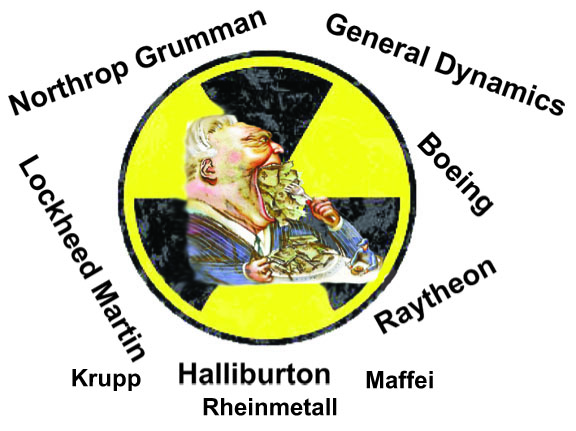
The first expert Sky News brings on to tell viewers about the Chinese menace is Mick Ryan, an Adjunct Fellow at the Center for Strategic and International Studies, which is funded by military-industrial complex entities like Raytheon, Boeing, Lockheed Martin and Northrop Grumman, and is also directly funded by the US government and its client states, including Australia and Taiwan. Sky News of course makes no mention of this immense conflict of interest while manufacturing consent for increased military spending, calling Ryan simply a “former major general.” This is on the same level of journalistic malpractice as running an article by Colonel Sanders on the health benefits of fried chicken but calling him “Harland David Sanders, former fry cook.”
The next expert Sky News presents us with is Australian former major general Jim “The Butcher of Fallujah” Molan, who oh-so-sadly passed away last month. I’ve written about Molan previously specifically because the Australian media love citing him in their propaganda campaign against China, last time when he was pushing the ridiculous claim that China is poised to launch an invasion of Australia.
The other experts Sky News brings in are former CIA Director and US Secretary of Defense Leon Panetta, Taiwan’s Foreign Minister Joseph Wu, Taiwan’s Director of Chinese Affairs Dr Lai Chung, Japan’s ambassador to Australia Yamagami Shingo, Australian Shadow Defense Minister Andrew Hastie, and John Coyne of the Australian Strategic Policy Institute, a virulent propaganda firm which is once again funded by US-aligned governments and military-industrial complex war profiteers.
So it’s about as balanced and impartial a punditry lineup as you’d expect.
At the 8:15 mark of the special, Sky News repeats the unevidenced propaganda claim that former Chinese president Hu Jintao was politically purged during the 20th Communist Party Congress last year.
At 19:15 Jim Molan talks about the need to fight and die with our allies the Americans while patriotic cello music plays in the background.
At 21:30 we are shown images of Australia being bombed alongside the Chinese flag (very subtle, guys).
At 24:25 Sky News accidentally does a version of the “look how close they put their country to our military bases” meme with a graphic display of all the US war machinery that surrounds China. The US would never tolerate being encircled by the Chinese military like that and would immediately wage war if China tried; it’s clear that the US is the aggressor in this conflict and China is reacting defensively.
“The United States plays a major strategic role in the Indo-Pacific,” says Sky News anchor Peter Stefanovic as the screen lights up with graphics showing the military presence surrounding China. “With 375,000 personnel, there’s a vast network of operations that extend from Hawaii all the way to India.”
At 26:30 we are shown a digital representation of China’s satellite systems in space, with the Chinese satellites colored red to help us all appreciate how evil and communist they are.
At 27:45 we are shown illustrations of how much smaller Australia’s military is than China’s or America’s to help us understand how important it is to increase the size of our nation’s war machine, ignoring the fact that Australia’s total population is a tiny fraction of either of those countries.
At 32:45 we are told that the AUKUS pact will “beef up America’s military presence in the north of Australia,” and that “America has long used Australia as a key strategic outpost,” showing images of Pine Gap and other parts of the US war machine which dot this continent. “Now, there’s more to come,” says Stefanovic, with US Secretary of Defense Lloyd Austin describing the surge in US military presence we’re to expect in Australia.
At 34:10 the Australian Strategic Policy Institute guy explains why the US is so keen to use Australia in its planned confrontation with China, saying the continent’s geography puts it in “the Goldilocks location” of being close enough to China to be meaningful but far enough away that its war machinery can’t be easily struck.
At 35:15 Stefanovic warns that “our nation could quite literally be brought to its knees” if a war to the north sees shipping lanes cut off since Australia is so heavily dependent of imports. You would think this is an argument about the importance of maintaining a peaceful relationship with China, but instead it’s used to foment fear of China and argue for the need to be able to defeat it in a war.
And at 45:50 we finally get to the real purpose of this Sky News special: the need to “dramatically increase” the Australian military budget, and the need to manufacture consent for that increase. Australia currently has a military budget of $48.7 billion, a little less than two percent of the nation’s GDP. The late Butcher of Fallujah tells Sky News that “we need to at least double our defense expenditure” to four percent, and the special’s pundits openly discuss the need for Australians to be persuaded to accept this using narrative management…………………….
To be clear, this is not just a call to increase military spending, this is a call to propagandize Australians into consenting to more military spending. It’s not very often that the propaganda comes right out and explains to you why it is propagandizing you.
I always get people complaining that I focus too much on the US war machine when I live in Australia, but anyone who’s paying attention knows the behavior of the US war machine is as relevant to Australians as it is to Americans. They are beating the drums for a future war of unfathomable horror all to please a dark god known as unipolarism, and it threatens to destroy us all.
The time to start resisting is now. https://caitlinjohnstone.substack.com/p/murdoch-propaganda-pushes-australia?r=pf4vw&utm_campaign=post&utm_medium=web&fbclid=IwAR2-MoxPsyKvcurWfgwc2Qd8aFn6YwgGaG4clg0wgUKO7NYQypg76A-zLUY
Sky News presents rubbishy programme on “preparing Australia for war against China”
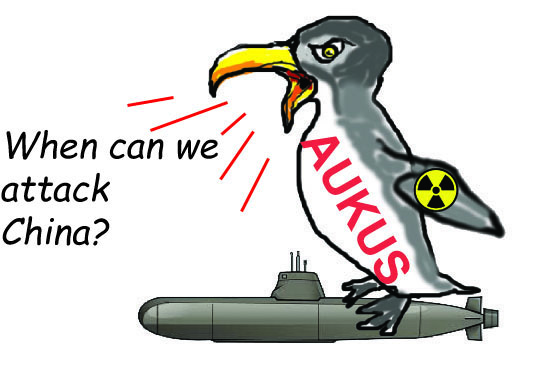
National Times 15 Feb 23 Now Hear This Now Hear This – Pauline Hanson has Spoken ( Eric Remarque for the National Times and Isaac Floyd on Twitter)
SKY TV News has a special Wednesday night program ( shock horror) about preparing for war with China.
REALLY !
Pauline Hanson a noted expert on Foreign Affairs and International Relations is obligingly feeding into this right wing war mongering propaganda.
But it appear that it is NewsCorp who’s on the warpath, not China, not Australia.
How soon before the likes of Pauline Hanson and others on the right side of politics start advocating for conscription.
The question is – do these people really understand that China is a Nuclear Power or that the key to Australia is trade.
Maybe SKY-TV News should understand that their favoured Political Party the Liberals lost the election because the people were sick and tied of the incompetence of the Morrison Government.
Its also worth noting that Lockheed Martin is a sponcor of SKY -TV News.
All things considered companies like this should not be permitted to sponsor news outlets.
So lets treat this SKY-TV News Special for what it is – RUBBISH
7.30 Report: Sarah Ferguson Opens Up New Perspectives on the AUKUS Nuclear Submarine Deal
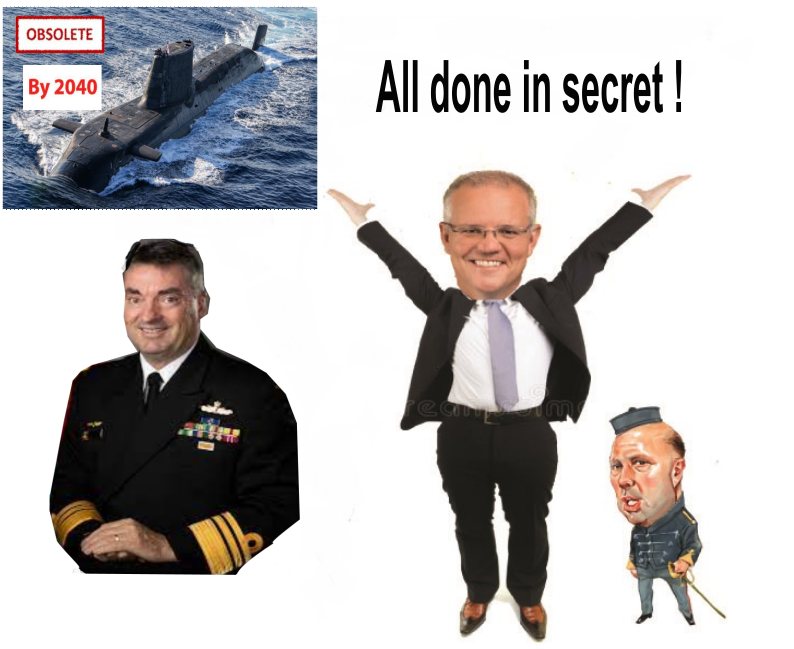
The secrecy associated with the formation of the Submarine Taskforce should be of great concern to Australians of all persuasions as our partners in France had no clues about what was happening behind the scenes as they made preparations to supply the contracted diesel submarines that more fully complied with commitments to the South Pacific Nuclear Free Zone with the support of New Zealand and other island states. No wonder that President Macron had little respect for Scott Morrison. (The video and the news clip of the French President’s remarks are available here.)
February 14, 2023 By Denis Bright
Sincere appreciation must be extended to the Albanese Government for allowing Vice Admiral Jonathan Mead AO to be interviewed in some depth on the 7.30 Report (13 February 2023). Sarah Ferguson was up to speed again in her interviewing skills with a seasoned naval officer who was assigned to active service in the Persian Gulf in 2006 as Captain of HMAS Parramatta.
The Vice Admiral’s understanding of nuclear technology being applied in the selection of the new submarine options was of course beyond reproach through his involvement with the clandestine Nuclear Submarine Taskforce established by the Morrison Government. Our US allies are great salespersons for the Anglo-American military industrial complexes in the post-Brexit era.
At least Britain’s BAE Systems as potential manufacturers of the AUKUS Submarines paid some tax in 2020-21 with a payment of $26.293 million to the ATO on a revenue base of $1.062 billion and a declared taxable income of just $123.484 million. The US military and aerospace giant Lockheed Martin kept its tax bill to $14.891 million on an income take of just over half a billion and a taxable income of $53.056 million (ABC News Taxation List, 2 November 2022).
The concerns of ordinary Australians about the financial and security costs of the AUKUS Submarine deal extend well beyond concerns about the technical capacity of those sealed reactors which are expected to operate for 30 years for the full life of the submarines until the year 2070 approaches.
The secrecy associated with the formation of the Submarine Taskforce should be of great concern to Australians of all persuasions as our partners in France had no clues about what was happening behind the scenes as they made preparations to supply the contracted diesel submarines that more fully complied with commitments to the South Pacific Nuclear Free Zone with the support of New Zealand and other island states. No wonder that President Macron had little respect for Scott Morrison. (The video and the news clip of the French President’s remarks are available here.)
…………………………………………………….. The Naval News video admitted that the Émeraude had transited the South China Sea in stealth mode. This was confirmed by coverage from France 24 (12 February 2021). Perhaps the stealth mode was to test the awareness of Chinese vessels and shore installations. Other military French vessels have done navigation runs through the Taiwan Straits which is always provocative when the current Democratic Party (DPP) holds power in Taipei and is calling for a formal declaration of independence from China to cheers from far-right global opinion.
…………….For China, the Taiwan Straits are definitely disputed waters as most countries in the US Global Alliance supported a One China Policy fifty years ago. This should have ended the US practice of using Taiwan for propaganda purposes throughout the Cold War.
……………………….. Just imagine the outrage in the Murdoch press if Chinese submarines made jaunts into Bass Strait to annoy the naval officers at HMAS Cerberus or to scare students at the Vice Admiral’s old secondary school at St. Bede’s in Mentone if the remnants of the federal LNP tried to establish Tasmania as an Independent Nationalist State with the support of a friendly US Administration.
Annoying China as well as alienating some ASEAN nations and members of the Pacific Island Forum will not assist with the current repair work on trading and investment relations with China.
The proposed AUKUS submarine deal imposes frightful financial burdens on Australia during inflationary times in which costs estimates for the AUKUS submarines extends into the 2040s (The Guardian 14 December 2021). Losses on trade and investment opportunities with China would of course extend these costs with 43 per cent of our exports destined to China at present (Latest data from Trading Economics).
Taiwan can assist to defuse tensions by giving a guarantee that it is not about to make a declaration of independence from the mainland. Relations between Taiwan and the Mainland seem to be improving again as China reverts to commercial diplomacy over displays of military strength. This style of diplomacy at least ensures that the economy of Taiwan is more fully integrated with the Mainland. Over 12,000 Taiwanese students were studying in Chinese academic institutes prior to the COVID-19 epidemic.
Despite all the negative media coverage of China in the Murdoch press, 42 per cent of Taiwan’s exports went to China in 2021-22 and 22 per cent of Chinese imports originated in either China or Hong Kong (CNBC 4 August 2022). Many Taiwan-based companies and services operate in China and Hong Kong.
With President Tsai Lng-wen unable to seek a third term as President in 2024, the popularity of the DPP seems to be on the wane. The opposition KMT gained 50.14 per cent of the vote at the recent local government elections on 26 November 2022 and controls fourteen local government areas to five held by the Democratic Progressive Party (DPP).
The Taiwanese electorate is undoubtedly evaluating the sustainability of nationalist rhetoric favouring a declaration of Taiwanese independence while the Australian government is negotiating those AUKUS submarine deals.
Signs of some thawing in cross-strait relations include a recent visit by the vice-chairman of the KMT to China and the restoration of more frequent fast ferry services between China’s Fujian Province and the adjacent Taiwanese islands of Kinmen and Matsu which are just a few kilometres off-shore.
There is great scope for the 7.30 Report to extend its coverage of the upsurge in regional strategic tensions with China after election cycles in Taiwan which bring the DPP into office. Re-election of the KMT in Taiwan in 2024 may totally defuse the current situation and leave Australians to bear the financial costs of the AUKUS submarine deal.
Opportunities exist to invite guest speakers onto future 7.30 Report programs to consider the impact of nuclear-powered submarines on the South Pacific Nuclear Free Zone which was ratified by all South Pacific nations as well as differing viewpoints on commercial ties with China.
Extending the South Pacific Nuclear Free Zone Treaty to coverage ASEAN Countries, the South China Sea and Taiwan might be a logical extension for consideration.
Toning down provocative visits by unfriendly naval vessels can be part of a Win-Win Deal to avoid future flyovers by Chinese jets.
Even the jellyfish in Moreton Bay are not very welcoming about the prospects of nuclear-powered ships:
According to a leading marine biologist and jellyfish expert Lisa-ann Gershwin, if the fleet is based in Brisbane, which is one of the shortlisted sites of the Australian government, the nuclear-powered submarines may be forced into an emergency reactor shutdown by swarms of jellyfish.
Gershwin added that Brisbane is “close to the absolute worst place” for a nuclear submarine base, due to the conditions in Moreton Bay and the usual jellyfish blooms.
Safety protocols for nuclear powered ships which sometimes carry nuclear weapons into Australian ports have been prepared by all states and territories as the ACT has its Jervis Bay facility which is separated from land-locked Canberra. The Queensland Government has made its precautions public in the publication Nuclear Powered Warship Visits to the Port of Brisbane.
Perhaps more public discussion as presented on the 7.30 Report can give the Australian government more wriggle room before the contracts are signed to initiate the AUKUS submarine deal. Payment of $835 million has already been made by the Albanese Government to France for breach of contract on the previous arrangements as negotiated by Malcolm Turnbull’s Government.
Appeals from our US allies for more military commitment from Australia and more use of the Pine Gap electronic base for offensive operations have landed Australia in compromising situations for decades from interventions in Vietnam to Afghanistan. The nostalgia for a return to the Cold War era with new military bases in the Philippines is an unfortunate regression. The ASEAN region to our north is better off left as a zone of peace and sustainable development.
By the time Australians discuss these issues, there may be a KMT Government in Taipei, and peaceful Win-Win scenarios may make the AUKUS deal redundant. Cheers then to the 7.30 Report’s contribution to strategic sanity. This style of reporting offers guest speakers who are saturated in knowledge of their specialist topics. I can only promote discussion and would be a real novice in head-to-head discussions with the Vice Admiral.
Media keeps mum about earthquake near planned nuclear waste dump.
Kazzi Jai, Fight to stop a nuclear waste dump in South Australia 20 Jan 23
Port Augusta had a magnitude 3.2 earth tremor Sunday morning with epicentre near Port Paterson and not a peep in the media!
It was just below 4.0 (and above)which is considered an earthquake …
Only Geoscience Australia officially recorded it.
So, surely there should have been noise about it in the media….or is it just “selective” news these days?
Port Augusta isn’t that far from Kimba…and we’ll remember the greedy landowner commenting once that the nuclear dump would only “bounce up and down” in the event of SEISMIC ACTIVITY!!
Don’t know about anyone else…but concrete and steel drums bouncing up and down results in cracking of concrete and possible breaching of steel drums (steel and concrete interfaces results in concrete corrosion …not to mention the corrosion caused by interaction of radiation emissions contained within)!
Not SAFE AT ALL considering this dump is meant to FULLY CONTAIN this nuclear waste from the environment FOR 300 YEARS!!!
….IN A FLOOD PRONE AREA!!!!
Guilty of Journalism

The Political Prosecution of Julian Assange
by Kevin Gosztola https://www.sevenstories.com/books/4493-guilty-of-journalism?fbclid=IwAR2np9Ku9WHMKuJ7xTPkrrolJRvbkxdWcmyac0FnEZqKSduuhH2g2M-zPaM 7 Jan 23
From an acclaimed independent journalist, this carefully-documented analysis of the government’s case against Julian Assange and its implications for press freedom acts as a crucial, compelling guidebook to Assange’s upcoming trial.
The legal action against Julian Assange is poised to culminate in a trial in the United States in 2023, and this book will help the public understand the proceedings. The establishment media’s coverage of WikiLeaks founder Julian Assange’s extradition case has focused on his deteriorating health and what CBS News called his “secret family,” but most of this coverage failed to detail the complex issues at stake against Assange.
Guilty of Journalism outlines how WikiLeaks exposed the reality of American wars, the United States government’s unprecedented indictment against Assange as a publisher, and the media’s role in persuading the public to “shoot the messenger.” This new book by Kevin Gosztola, who has spent the last decade covering Assange, WikiLeaks, and the wider war on whistleblowers, tells the full story based on testimony from dozens of witnesses.
It examines abuses of power by the CIA and the FBI, including a spying operation that targeted Assange’s family, lawyers, and doctors. Guilty of Journalism offers a balanced and comprehensive perspective on all the events leading up to what press freedom advocates have called the trial of the century.
The Australian government joined enthusiastically into America’s espionage law attack on whistle blowers and journalists
Key US Allies Collaborate On Espionage Laws Considered Harmful To Whistleblowers And Journalists

Since the legislation was passed, Australian Federal Police have raided the homes and offices of journalists who reported on war crimes in Afghanistan and the monitoring of Australian citizens’ communications.
Groups, such as Reporters Without Borders and the National Union of Journalists, wrote to lawmakers and warned that the bill conflated journalism with spying, expanded the definition of classified information, and disproportionately increased the penalty of espionage to life imprisonment.
Many of these new elements align existing laws with the United States Espionage Act, an antiquated law that was adopted over a century ago.
Richard Spence, Jan 5, 2023 https://thedissenter.org/us-allies-collaborate-to-write-new-espionage-laws/
Ministers and security officials in Australia, Sweden, and the United Kingdom have coordinated with the United States to develop new espionage laws.
Each of the countries have faced criticism from news media and civil society organizations for proposing laws that will harm journalists and whistleblowers’ ability to report on abuse and corruption in their own and each other’s countries.
These states have close intelligence ties to each other and the United States, and they have played some role in the extradition of WikiLeaks founder Julian Assange, whose prosecution is widely recognized as a threat to global press freedom. In fact, disclosures of the kind that Assange published have been cited as what the laws aim to make illegal.
FBI Director Christopher Wray had several days of meetings with “law enforcement partners in the United Kingdom” during July 2022. After these meetings, MI5 chief Ken McCallum promoted the “National Security Bill,” the first change to UK espionage laws since 1989.
The law would purportedly address the perceived threats Wray and McCallum discussed.
McCallum and other intelligence officials’ warnings and suggestions were frequently referenced by parliament members and government ministers who supported the bill when it was debated in the UK Parliament in November 2022.
Priti Patel, when she was UK Home Secretary, said the bill “was designed in close consultation with security services.”
In Sweden, the 2022 Foreign Espionage Act, which was adopted last November, specifically criminalized disclosures that cause “substantial damage” to Sweden’s relations with other countries or organizations. That led reporters to warn that journalists revealing war crimes committed by the US government could be prosecuted.
The Australian espionage bill also defined information that “harm[s] or prejudice[s] Australia’s international relations” as illegal to disclose.
Australia Security Intelligence Organization (ASIO) Director Duncan Lewis, who advised the country’s premier on their legislation, was asked at a parliamentary committee hearing, “Is there a connection, in your view, between our diplomatic and economic relations and our national security? In other words, if someone causes harm to our diplomatic relations with a foreign country, like the United States, can that harm our national security?”
“Absolutely,” Lewis responded. “You would need [to] go no further than perhaps the case of [Edward] Snowden to think about that—the enormous damage that was done to various diplomatic relations as a result of the leaks that came out of Snowden.”
The Espionage and Foreign Interference Act of 2018 introduced a range of measures the Australia government claimed were meant to combat Chinese interference.
A collection of media outlets, including The Guardian and News Corp, opposed the law, saying that “journalists and their support staff continue to risk jail time for simply doing their jobs” due to the possibility of being prosecuted for dealing with classified information.
Since the legislation was passed, Australian Federal Police have raided the homes and offices of journalists who reported on war crimes in Afghanistan and the monitoring of Australian citizens’ communications.
The ASIO gave “extensive operational briefings” on foreign interference to Malcolm Turnbull, when he was Australia’s prime minister, and Turnbull noted their input as he introduced the legislation in Parliament.
ASIO Director Duncan Lewis explained what in part motivated the push to expand the country’s espionage law. “Our international allies and partners with whom we share threat information tell us resoundingly that Australia is not alone in confronting a new threat environment, one that’s different from what we’ve seen before. In ASIO’s view, we must now adjust to this harsh reality.”
Lewis pointed to UK Prime Minister Theresa May who had urged allied powers to do more to “clamp down on the hostile activity of foreign agents.”
During parliamentary debate in the UK, Patel referred to these discussions.
“Let me say something about the legislation we want to introduce. We are learning from other countries, such as Australia—indeed, I had a bilateral meeting just last week. This is also part of the work of Five Eyes,” Patel shared. “A lot of work is being done to look at the institutional impacts of hostile state activity, alongside issues such as foreign agent registration. We want to get this right through future legislation, and that is what we are working on.”
Groups, such as Reporters Without Borders and the National Union of Journalists, wrote to lawmakers and warned that the bill conflated journalism with spying, expanded the definition of classified information, and disproportionately increased the penalty of espionage to life imprisonment.
Many of these new elements align existing laws with the United States Espionage Act, an antiquated law that was adopted over a century ago.
During a Novembr 2021 speech for the right-wing Heritage Foundation on the US-UK alliance, Patel acknowledged this fact.
“We will modernize existing counter-espionage laws to better reflect the contemporary threat; and we will improve our ability to protect official data and strengthen the associated offenses,” Patel declared “Our strategic partnership must continue to address all this activity – which is uninhibited and growing along with all the other threats we see day in, day out.”
The UK’s proposed legislation updates the current espionage laws to now be applicable to non-UK citizens. Press organizations have complained, “The lack of geographic limits and the overly broad definition of the safety and interests of the United Kingdom can extend the reach of the bill across the globe.”
Australia’s new laws also apply outside of the country and like the UK include assisting (or benefiting in the UKs case) foreign entities, leading to criticism that officials are criminalizing those who work with foreign press outlets.
According to the Australian chair of the Five Eyes Law Enforcement Committee, the organization will arrest those who have committed espionage “no matter where those criminals are in the world.”
Swedish military and intelligence officials studied changes to espionage legislation at the behest of the Swedish government and used WikiLeaks’ release of US diplomatic cables in 2010 as an example of a kind of leak that would harm Sweden’s relationship with other countries if it happened today.
Officials also singled out the North Atlantic Treaty Organization (NATO) and the US as powers that were important to protect from damaging leaks.
In June 2022, Conservative Party parliamentary member Sir John Hayes asked Damian Hinds, who was the UK minister of state for prisons, parole, and probation, if “a WikiLeaks-type disclosure dressed up as being by a guardian of liberty or some such other nonsense” would be illegal.
“The defenses in part one of the bill provide law enforcement with several options for prosecuting disclosures, where the person is acting for or on behalf of a foreign power or where the disclosure would materially assist a foreign intelligence service,” Hinds responded. “That can include bulk disclosures.”
“To be clear, with this bill, the maximum sentence for an indiscriminate disclosure—a bulk data dump—will be higher than it is today if that act is done for a foreign power or the disclosure would materially assist a foreign intelligence service, even if not procured by that foreign intelligence service itself,” Hinds further stated.
Canada, which is a Five Eyes country like Australia and the United Kingdom, has also followed their lead. Canadian security officials briefed the press and politicians, claiming that China aims to influence Canadian democracy.
Security officials in Canada have submitted reports to their government requesting new security laws to prevent Canada from becoming a “weak link” amongst its allies.
Pursuing Assange in a US court could cause even more embarrassment than the WikiLeaks’ publications.
It’s possible that pursuing Assange in a US court could cause even more embarrassment than the WikiLeaks’ publications. As the years have passed, we have learned that a Spanish security firm recorded his every move and those of his visitors and legal counsel in the Embassy of Ecuador. This was passed to the CIA, and was used in the US case for his extradition. The trial of Daniel Ellsberg for leaking the Pentagon Papers failed because his psychiatrist’s records were stolen by investigators, and this should set a precedent for Assange.
Enough is enough for Albanese on Assange: our allies may respect us if we say this more. https://johnmenadue.com/enough-is-enough-for-albanese-on-assange-our-allies-may-respect-us-if-we-say-this-more/ By Alison Broinowski, Dec 2, 2022
The Prime Minister’s surprise revelation that he has raised the case against Julian Assange with US officials and urged that charges of espionage and conspiracy be dropped opens up many questions.
Mr Albanese thanked Dr Monique Ryan for her question on Wednesday 31 November, giving what appeared to be a carefully prepared and timed answer. The Independent MP for Kooyong sought to know what political intervention the government would make in the case, observing that public interest journalism is essential in a democracy.
The news flashed around between Assange supporters in and outside Parliament, and reached the Guardian, the Australian, SBS, and Monthly online. Neither the ABC nor the Sydney Morning Herald carried the story, even the next day. SBS reported that Brazil’s president-elect Luiz Inacio Lula da Silva expressed support for the campaign to free Assange.
But two days earlier, on Monday 29 November, the New York Times and four major European papers had printed an open letter to the US Attorney-General Merrick Garland, deploring the assault on media freedom which the pursuit of Assange represented.
The NYT, the Guardian, Le Monde, Der Spiegel and El Pais were the papers which in 2010 received and published some of the 251,000 classified US documents provided by Assange, many revealing American atrocities in Afghanistan and Iraq.
US Army intelligence analyst Chelsea Manning gave them to Assange, who redacted names of people he considered could be harmed by publication. A senior Pentagon serving officer later confirmed that no-one had died as a result. Manning was imprisoned, and then pardoned by Obama. Assange spent seven years in diplomatic asylum in the Embassy of Ecuador in London before British police removed him and he was imprisoned for breach of bail condition.
Assange has been in Belmarsh high security prison for three years, in poor physical and mental health. Court proceedings against him over extradition to face trial in the US have been farcical, biased, oppressive, and excessively prolonged.
In Opposition, Albanese said ‘Enough is enough’ for Assange, and he has at last done something about it in Government. What exactly, with whom, and why now, we don’t yet know. The PM’s hand may have been forced by the major dailies’ letter to Attorney-General Garland, which made Australian politicians and media appear to be doing nothing. Or he may have raised the Assange case in his recent meetings with Biden, at the G20 for example.
Another possibility is that he was talked into it by Assange’s barrister, Jennifer Robinson, who met with him in mid-November and spoke about the case at the National Press Club. When I asked if she could say if she and Albanese discussed Assange, she smiled and said ‘No’ – meaning she couldn’t, not that they didn’t.
Monique Ryan made the point that this is a political situation, requiring political action. By raising it with US officials, Albanese has moved away from the previous government’s position that Australia couldn’t interfere in British or American legal processes, and that ‘justice must take its course’. That wasn’t the approach Australia took to secure the freedom of Dr Kylie Moore-Gilbert, imprisoned for espionage in Iran, or of Dr Sean Turnell from jail in Myanmar. It isn’t Australia’s approach in China either, where a journalist and an academic remain in detention.
By taking up Assange’s case, Albanese is doing nothing more than the US always does when one of its citizens is detained anywhere, or than the UK and Canada quickly did when their nationals were imprisoned in Guantanamo Bay. Australia allowed Mamdouh Habib and David Hicks to spend much longer in US custody before negotiating their release. We might gain more respect from our allies if we adopted their speedy approach to these cases, than we do by subservience to British and American justice.
It’s possible that pursuing Assange in a US court could cause even more embarrassment than the WikiLeaks’ publications. As the years have passed, we have learned that a Spanish security firm recorded his every move and those of his visitors and legal counsel in the Embassy of Ecuador. This was passed to the CIA, and was used in the US case for his extradition. The trial of Daniel Ellsberg for leaking the Pentagon Papers failed because his psychiatrist’s records were stolen by investigators, and this should set a precedent for Assange.
Even though Biden once called Assange a ‘hi-tech terrorist’, as President he is now an advocate of human rights and democratic freedoms. This might be a good time for him to put them into practice. Doing so would make both Biden and Albanese look better than their predecessors.
‘Publishing is not a crime’: media groups urge US to drop Julian Assange charges

First outlets to publish WikiLeaks material, including the Guardian, come together to oppose prosecution
Guardian, Jim Waterson Media editor, 28 Nov 22
The US government must drop its prosecution of the WikiLeaks co-founder Julian Assange because it is undermining press freedom, according to the media organisations that first helped him publish leaked diplomatic cables.
Twelve years ago today, the Guardian, the New York Times, Le Monde, Der Spiegel, and El País collaborated to release excerpts from 250,000 documents obtained by Assange in the “Cablegate” leak. The material, leaked to WikiLeaks by the then American soldier Chelsea Manning, exposed the inner workings of US diplomacy around the world.
The editors and publishers of the media organisations that first published those revelations have come together to publicly oppose plans to charge Assange under a law designed to prosecute first world war spies.
“Publishing is not a crime,” they said, saying the prosecution is a direct attack on media freedom.
Assange has been held in Belmarsh prison in south London since his arrest at the Ecuadorian embassy in London in 2019. He had spent the previous seven years living inside the diplomatic premises to avoid arrest after failing to surrender to a UK court on matters relating to a separate case.
The then UK home secretary, Priti Patel, approved Assange’s extradition to the US in June but his lawyers are appealing against this decision.
Under Barack Obama’s leadership, the US government indicated it would not prosecute Assange for the leak in 2010 because of the precedent it would set. The media outlets are now appealing to the administration of President Joe Biden – who was vice-president at that time – to drop the charges.
The full letter sent by the media organisations
Publishing is not a crime: The US government should end its prosecution of Julian Assange for publishing secrets.……………………………………………………………….. more https://www.theguardian.com/media/2022/nov/28/media-groups-urge-us-drop-julian-assange-charges?CMP=Share_AndroidApp_Other
Nukes Corp Australia carries on

https://wordpress.com/read/feeds/89854964/posts/4401845915 25 Nov 22
Several times in the months since voters blatantly defied Rupert Murdoch’s direction to return the government of Scott Morrison, News Crap Australia has demonstrated its willingness to continue campaigning for the Liberal and National parties.
Not long after voters got it so very wrong and dared to elect a Labor Party government, new Opposition Leader Peter Dutton floated the idea of Australia adding nuclear power to its energy mix.
……………. one thing is clear, on the nuclear issue Mr Dutton has – as usual – enjoyed the active support of the Coalition parties’ advertising agency of choice, News Crap Australia.
Further evidence of the Murdoch media’s handiwork on behalf of Mr Dutton and his nuclear campaign has been on show in the national broadshit The Australian in just the past few days. (below on original)
Given that a group of pro-nuclear scientists will present their case at an event in Canberra today, we’ll no doubt see more and more Liberal Party advertisements… sorry, we’ll no doubt see more news stories and commentary in News Crap Australia outlets right up to the next federal election
It is difficult to fathom the commercial logic behind the nuclear push by News Crap Australia.
Surely, as our MGH researchers argue, young Australians are likely to be the strongest advocates of action to tackle climate change through the wider embrace of renewable energies.
They are also likely to be the last to support nuclear power with its long-term problems of waste storage and disposal and its ability to impact the health of individuals when things go wrong. Just think Chernobyl, Three Mile Island, and Fukushima.
So does News Crap Australia really believe it will attract the next generation of news consumers to its side by peddling the nuclear option?
Or does its obligation to the Coalition parties outweigh even the long-term size of its subscriber base?
A Father Fights for His Son & What’s Left of Democracy
The film Ithaka, about the quest of Julian Assange’s father to save his son, makes its U.S. premiere on Sunday in New York City. It is reviewed by Joe Lauria.
By Joe Lauria
Special to Consortium News
To the extent that the media has covered the tragedy of Julian Assange at all, the focus has been on politics and the law.
Consortium News, which has provided perhaps the most comprehensive coverage of the prosecution under the Espionage Act of the WikiLeaks publisher, has also focused more on the case and less on the man.
The great issues involved transcend the individual: war, diplomacy, official deception, high crimes, an assault on press freedom and on the core of what little democracy is left in a militarized and money-corrupted system.
Assange supporters sometimes also overlook the person and concentrate instead on the larger issues at stake. Ironically, it has been Assange’s enemies and detractors who’ve long focused on the person in the worst tradition of ad hominem assaults.
He has been attacked to deflect public attention from what WikiLeaks has revealed, from what the state is doing to him and to hide the impact on freedom in the media and standards in the courtroom.
There has been a steady and organized stream of smears against Assange, from ridiculous stories about him smearing feces on Ecuadoran Embassy walls to the widely reported falsehood that he was charged with rape. That case was dropped three times before any charges were filed, but the “rape” smear persists.
These personal attacks were planned as far back as March 8, 2008 when a secret, 32-page document from the Cyber Counterintelligence Assessment branch of the Pentagon described in detail the importance of destroying the “feeling of trust that is WikiLeaks’ center of gravity.” The leaked document, which was published by WikiLeaks itself, said: “This would be achieved with threats of exposure and criminal prosecution and an unrelenting assault on reputation.”
An answer to these slurs and the missing focus on Assange as a man is Ithaka. The film, which makes its U.S. premiere Sunday night in New York, focuses on the struggle of Assange’s father, John Shipton, and his wife, Stella Assange, to free him.
f you are looking for a film more fully explaining the legal and political complexities of the case and its background, this is not the movie to see. The Spanish film, Hacking Justice, will give you that, as well as the more concise exposition in the brilliant documentary, The War on Journalism, by Juan Passarelli.
Ithaka, directed by Ben Lawrence and produced by Assange’s brother, Gabriel Shipton, humanizes Assange and reveals the impact his ordeal has had on the people closest to him.
The title comes from the poem of that name by C.P. Cavafy (read here by Sean Connery) about the pathos of an uncertain journey. It reflects Shipton’s travels throughout Europe and the U.S. in defense of his son, arguably the most consequential journalist of his generation.
The story begins with Shipton arriving in London to see his son for the first time behind bars after the publisher’s rights of asylum were lifted by a new Ecuadoran government leading to him being carried out of the embassy by London police in April 2019.
“The story is that I am attempting in my own … modest way to get Julian out of the shit,” Shipton says. “What does it involve? Traipsing around Europe, building up coalitions of friendship.” He meets with parliamentarians, the media and supporters across the continent. Shipton describes the journey as the “difficulty of destiny over the ease of narrative.”……………………………
We learn that Julian Assange’s frustration with the inability to stop the 2003 Iraq invasion, despite the largest, worldwide anti-war protests in history, motivated him to start WikiLeaks.
The releases he published about the Iraq and Afghanistan wars, leaked by Army intelligence analyst Chelsea Manning, were published not only by WikiLeaks but by its partners at The New York Times, Die Spiegel and The Guardian, yet only Assange has been prosecuted.
The main focus of the film is the extradition hearing in Westminster Magistrate’s Court that began in February 2020 and ended in September of that year…………………………
One of several scenes that drives home the personal side of the story is audio of Assange speaking from Belmarsh Prison to Stella about what children’s books to read to their two sons. The toll it is taking on her is seen as she breaks down emotionally during the recording of a BBC interview that has to be paused.
“Extraditions are 99 percent politics and one percent law,” Stella says. “It is entirely the political climate around the case that decides the outcome. And that is shaped by the media. For many years there was a climate that was deliberately created through false stories, smears; through a kind of relentless character attack on Julian to reduce that support and make it more likely to successfully extradite him to the United States.”
“This is the public narrative that has been spread in the media for ten years,’ Nils Melzer, the now former U.N. Special rapporteur on torture, says in the film.
“No one has been able to see how much deception there is. Why is this being done? For ten years all of us were focused only on Julian Assange, when he never wanted it to be about him. It never was about him. It was about the States and their war crimes and their corruption. That’s what he wanted to put a spotlight on – and he did. And that’s what made them angry. So they put the spotlight on him.”
“He just needs to be treated like a human being,” says Stella, “and be allowed to be a human being and not denied his dignity and his humanity, which is what has been done to him.”
Ithaka makes its first theatrical showing in the U.S. at the SVA Cinema, 333 W. 23rd St, New York, N.Y., on Sunday, Nov. 13, at 7:45 pm. There will be a Q&A following the first screening with Ben Lawrence, Gabriel Shipton, Adrian Devant, cinematographer Niels Ladefoged, and John Shipton.
For ticket information: https://docnyc.net/film/ithaka/ https://consortiumnews.com/2022/11/11/a-father-fights-for-his-son-whats-left-of-democracy/
Australia’s slack journalists – mindlessly regurgitate handouts from military-industrial-corporate complex – especially re nuclear submarines

Captive media: what does the submarine scandal tell us about our “defence correspondents”?
The Washington Post documentation of the compromising of the Australian submarine procurement program is a devastating example of Australian state capture by foreign influences – state and corporate – in the case of Australia’s planned largest-ever defence spend.
But the Australian media are missing in inaction.
By Richard Tanter. Oct 26, 2022,
Why did no Australian media outlet tell us the easily discovered truth about the compromising of the integrity of the Australian submarine decision process revealed by US journalists last week?
On October 18th the Washington Post published a closely documented article by Craig Whitlock and Nate Jones titled “Former U.S. Navy Leaders Profited From Overlapping Interests On Sub Deal”.
In unarguable detail Whitlock and Jones laid out the role played by a veritable squadron of retired US admirals and former senior US defence officials in the Australian decision to acquire nuclear-powered submarines.
The opening paragraphs of the Washington Post article make clear the extent to which the Australian submarine procurement decision has been hopelessly compromised and indeed corrupted:
“Two retired U.S. admirals and three former U.S. Navy civilian leaders are playing critical but secretive roles as paid advisers to the government of Australia during its negotiations to acquire top-secret nuclear submarine technology from the United States and Britain.
“The Americans are among a group of former U.S. Navy officials whom the Australian government has hired as high-dollar consultants to help transform its fleet of ships and submarines, receiving contracts worth as much as $800,000 a person, documents show.
“All told, six retired U.S. admirals have worked for the Australian government since 2015, including one who served for two years as Australia’s deputy secretary of defense. In addition, a former U.S. secretary of the Navy has been a paid adviser to three successive Australian prime ministers.
“A Washington Post investigation found that the former U.S. Navy officials have benefited financially from a tangle of overlapping interests in their work for a longtime ally of the United States. Some of the retired admirals have worked for the Australian government while simultaneously consulting for U.S. shipbuilders and the U.S. Navy, including on classified programs.”
Former Defence official Mike Scrafton responded by calling for an urgent public review, saying:
“On the evidence it appears that the nuclear powered submarine decision process was heavily influenced by a clique of former US Navy Admirals with potential conflicts of interest, and who were generously paid by the Australian government. What confidence can Australians have in the soundness of this opaque, overpriced, strategically unjustifiable, and massively underspecified project?”
Scrafton’s excoriating and incisive assessment missed one important aspect of the explosive Washington Post story.
Why was this extraordinarily important story about the compromising of Australian sovereignty and the integrity of Defence procurement discovered by two American journalists and published in a US newspaper?
The documentation of the Washington Post article is complex and detailed, but almost wholly based on documents obtained under the US Freedom of Information Act.
The journalists’ work must have been assiduous over a long period, and would have required funding and editorial support from Post management.
But on the face of it, it was a straightforward, albeit brilliant, use of FOIA materials.
Nothing would have stopped our correspondents in Canberra doing the same thing.
Non-US citizens can use the US FOIA, and distance from Washington is no barrier.
Moreover, as Whitlock and Jones indicate, much of the story was lying about the Canberra landscape in plain sight.
Why then did no defence correspondents for the Australian media majors beat the Post to the story? Or have a go at even a small part of it?
The various parts of the News Corp Australia, the sometime Fairfax-now Nine Entertainment, and Seven West Media commercial media companies, as well as the ABC News division, all have dedicated “defence correspondents”, all filing frequently.
Most in reality do little more than rehashing media releases from the bloated Defence and ADF media units and their better-funded military industry corporate suppliers.
It is a long time since any Australian media major has had a proper and well-supported defence or national security correspondent. It is over a decade since the then Fairfax group laid off the best national security journalist of his generation, Philip Dorling.
The failure of our national media to reach even minimal standards of scrutiny of our massive defence spending programs and the lobbying networks of retired politicians, officials and ADF senior officers on the books and boards of multinational arms companies is effectively another case of state capture.
Other Australian instances have been well documented by studies such as the Australian Democracy Network’s Confronting State Capture, and Michelle Fahy and her colleagues in the Undue Influence group.
With well documented and carefully argued studies, both groups have demonstrated the vulnerability of Australian democracy and sovereignty to undue, illegitimate, and unacknowledged influences – especially in defence.
The Washington Post documentation of the compromising of the Australian submarine procurement program is a devastating example of Australian state capture by foreign influences – state and corporate – in the case of Australia’s planned largest-ever defence spend.
But the Australian media are missing in inaction.
Nukes Corp swings into action

Do Australians want to embrace nuclear energy? While our Media Glass House researchers can’t provide a definitive answer to that question, they do know we are all about to be told we do need it and should want it.
A few weeks back Opposition Leader Peter Dutton floated the idea of embracing nuclear power as a way to deliver supposedly cheaper, more reliable base-load power, and emissions-free energy.
Mr Dutton is obviously in the business of differentiating himself from the “woke” Labor Party which has a policy opposed to nuclear power, apart from its use in new submarines apparently.
The Liberal Party leader even set out an implied deadline for when we should have nuclear power plants up and running – 2030.
“Sixty percent of the capacity of our coal-fired generators is expected to leave the market by 2030,” he warned.
So obviously the question of whether we go nuke or not (and therefore to vote Liberal or not) is set to be a big issue in the 2025 federal election.
It would be a big change and Mr Dutton has a big job ahead of him to convince his fellow Australians.
But, as always, the Liberals Party is already being given considerable assistance by the Liberal and National parties’ retained advertising agency, News Crap Australia.
Right on cue News Crap Australia and its army of right-wing columnists and commentators have been spruiking the Dutton talking points.
The national broadshit soon published an “exclusive” (what else?) story based on sources in the American nuclear power sector which claimed a nuclear power network across Australia made up of US-made (naturally) mini-reactors would be quite feasible. (below on original)
Apparently the power plants would take just three years each to build (a perfect fit for Dutton’s timeline) and the cost of power would be lower than solar once the cost of batteries is taken into account.
All that information came from the people making the power plants so we should believe them, right?
LNP Queensland Senator Matt Canavan, who sits with the Nationals in Canberra, has also used one of his regular columns to explain how badly we need to go nuke. (below on original)
At the weekend columnist Vikki Campion, a columnist whose partner is former Nats’ leader and nuclear supporter Barnaby Joyce, joined in. (below on original)
Liberal Party promoter, Sky News “after dark” ranter, and News Crap Australia columnist had a go in her column in News Crap Australia’s Sunday turdbloids. (below on original)
A 2011 poll by the Lowy Institute showed 62% of respondents were “somewhat against” or “strongly against” nuclear power while 25% were “strongly in favour” or “somewhat in favour”.
So, as we noted above, there’s a bit of a job to be done by Dutton and Co to make their case.
But, as always, they can rely on the support and advocacy of News Crap Australia. https://thebugonline.com.au/2022/10/03/nukes-corp-swings-into-action/?fbclid=IwAR3kWQp1VD_vTGwQYEwHK2-k3wCzJJgXMLAjAH0lu01gFAMt1XfLqK3NC4w
1 This month


Help Aunty Sue Protect Her Land and Sacred Sites From Destructive Rocket Testing.
.

Australians deserve the truth
about
AUKUS – https://aukuspublicinquiry.com/

PETITION – To: Prime Minister Anthony Albanese and the Australian Labor Government

of the week – Australians for War Powers Reform (AWPR)
To see nuclear-related stories in greater depth and intensity

