Rex Patrick demolishes Richard Marles’ slick lies about AUKUS and the nuclear submarines.

Michael West Media, by Rex Patrick | Aug 19, 2023 (the original shows Rex Patrick’s Freedom of Information request for documents on 6 aspects of the nuclear submarine arrangement, and the 6 responses from the Defence Deapatment – in each case “Deny Access”.)
At this week’s Labor Conference Defence Minister Richard Marles distributed a 32 paragraph statement for insertion into the ALP National Platform to explain the Albanese’s Government’s rationale for an incredible $368B of public expenditure on submarines. At $11.5B per paragraph, one can be left very disappointed in his words. Rex Patrick provides readers with a hard hitting paragraph-by-paragraph analysis that reveals a massive swindle.
A peaceful and secure region
- Labor believes that Australia’s interests lie in shaping a region that is peaceful, stable and prosperous. A predictable region, operating by agreed rules, standards and laws. Where no country dominates, and no country is dominated. A region where sovereignty is respected, and all countries benefit from a strategic equilibrium.
Labor is no stranger to hypocrisy when it comes to international affairs. To take but one example, West Papua is neither “peaceful, stable or prosperous”. Slow motion genocide is taking place there. Indonesia has engaged in shocking abuses of indigenous Papuans, including child killings, disappearances, torture and mass displacement of people. Hundreds of thousands of West Papuans have died in a struggle to be free of Indonesian rule.
Since becoming Defence Minister, Marles has sat down and met with his Indonesia counterpart, Prabowo Subianto on three occasions.
In the early 1990s, as the commander of Kopassus Group 3, Prabowo commanded Indonesian special forces and militias that were responsible for murder, torture and other human rights abuses in East Timor. In 1996 he led Indonesian forces in bloody reprisal actions against West Papua separatists.
In 1998 troops under Prabowo’s command kidnapped and tortured democracy activists and the General was implicated orchestrating mob violence in Jakarta against Indonesians of Chinese descent. He was banned from entry into the United States on account of his human rights abuses.
It appears some breaches of “agreed rules, standards and laws” that Marles talks about are subject to ‘looking the other way’, as is convenient.
Labor is using all elements of our national power to shape the world in our interests and to shape it for the better. We will always use diplomacy as our primary effort to reduce tensions and create conditions for peace. Labor will continue to build on our strong diplomatic efforts in our region and will rebuild Australia’s international development program.
The truth is that Australia’s international development program is a drop in the budget bucket when compared to the $368B being spent on AUKUS submarines, and which goes to UK and US defence contractors.
Labor is committed to maintaining peace, regional development, positive relationships and stability across our region. Labor is committed to a peaceful and nuclear weapons free Pacific.
In 1984 New Zealand’s Labour Prime Minister David Lange banned nuclear-powered and nuclear-armed ships from using New Zealand ports or entering New Zealand waters. Lange’s decision was widely seen as marking a milestone in New Zealand’s development as a nation and an important act of sovereignty and self-determination.
Australian Labor wasn’t quite so inclined. Labor Leader Bill Hayden’s declaration that nuclear-powered and nuclear armed ships would not be welcome in Australian ports never came to fruition. Instead, the Hawke Labor Government ensured that the South Pacific Nuclear Free Zone was watered down and that US nuclear-armed ships could continue to visit Australian ports. Labor’s leadership has now moved to ownership of nuclear-powered ships.
Securing Australia’s Sovereignty
- Labor’s defence policy is founded on the principles of Australian sovereignty and self-reliance.
All six Collins Class submarines were built in Australia. We own the intellectual property for the Collins submarines and we conduct 92% of the sustainment work here in Australia.
With AUKUS, we abandon that sovereign capability and self-reliance, buying out first three submarines from the US. We go from being builders and sustainers, to buyers and roadside assistance.
Building Australia’s military defence capability sits alongside our diplomatic efforts, as we play our part in collective deterrence of aggression. By having strong defence capabilities of our own, and by working with partners investing in their own capabilities, we change the calculus for any potential aggressor.
We are putting all of our Defence capability eggs in one basket, with a long term, bank breaking, monolithic program to get to the point where, at some stage in the late 2050’s, we’ll be able to keep just three submarines available for use at any time – in the context of China, Paul Keating describes this as “throwing toothpicks at the mountain”.
Defence cooperation partnerships, including with our ally the United States, are managed through robust policy frameworks and principles that maintain and protect our sovereignty. These frameworks govern the activities of foreign governments in, from or through Australia – and how we partner with other nations to acquire capabilities in line with our national interests. Australia’s Defence partnerships are anchored in Australian sovereignty.
We have gone from hosting the Pine Gap intelligence collecting facility near Alice Springs, the submarine communication station at North West Cape and participation in the Five Eye intelligence network to hosting US Marines and their helicopters in Darwin, B-52s from Katherine, US and UK submarines from Perth, U.S. Navy Maritime Patrol and Reconnaissance Aircraft from Australian air bases, pre-positioning of US Army stores and material in Victoria with a plan to establish a US Logistics Support Area in Queensland.
We’re seeing more US capability turning up on our shores. When the US engages in a conflict in the regions, we’ll have no choice but to be involved. Even if we were to refuse direct involvement, we’ll have capabilities and facilities here that will be involved in supporting US operations and they will be of (targeting) interest to the opposing side. The Joint Defence Facility Pine Gap will be intimately involved in providing intelligence to support US operations across the Pacific and Asia, including operations which will be staged from Australia.
But our forces will be directly involved, anyway. The integration and interchange marriage that’s being aggressively pursued will demand it.
Australia’s Defence partnerships isn’t anchored in Australian sovereignty, as Marles claims, it’s anchored to the US.
- Labor commits that our cooperation with these partners strengthens, rather than detracts from, our sovereignty by affording us access to capability, technology, and intelligence we could not acquire on our own and provides us with an opportunity to export our defence products.
Instead of focussing on ensuring Australia has the sovereign capabilities to defend ourselves and ensure we can make our own decisions about war and peace, our Government and the ADF leadership have chosen to go ‘all the way’ with the USA.
Instead of ensuring our equipment can communicate and work alongside the US’s and other’s equipment, we’ve embarked on a course of total integration into the US Armed Forces. We’ve surrendered interoperability choice to integration and interchangeability (identical equipment) in the context of US controlled operations.
Making our contribution to the collective security of our region and to the maintenance of the global rules-based order – so fundamental to Australia’s prosperity – is at the heart of Australia’s strategic intent behind acquiring a conventionally-armed, modern and fit for purpose nuclear-powered submarine capability.
The AUKUS submarine project is not about the long standing national security bedrock strategy of ‘Defence of Australia’. It’s about dovetailing the ADF into US strategy to fight a war against China in North Asia. It isn’t about defending Australian trade, it’s about acquiring the ability to strike at targets in the South China Sea, the East China Sea, the Yellow Sea and along China’s coast.
Labor will ensure that irrespective of whether our defence assets are developed indigenously, acquired from abroad, or developed in partnership – Australia will always make sovereign, independent decisions as to how they are employed.
Australia will make our sovereign decisions within an alliance framework in which we are the minor dependent partner. When it comes to decisions about war and peace in the Pacific, Washington will act according to its global interests and its increasingly erratic and confused domestic political situation. AUKUS has handcuffed Australia to US strategy at a time when the US is less reliable as a partner than it has been at any time over the past eight decades.
- Labor will ensure that all Australian warships, including submarines, are Australian sovereign assets, commanded by Australian officers and under the sovereign control of the Australian Government.
Each and every pawn on a chess board sits alone and acts singularly, but always under the direction of the chess player. Australia’s pawns will ultimately be directed by US decision-makers.
Labor believes that Australia’s acquisition of submarines does not involve any ante facto commitment to participate in, or be directed in accordance with, the military operations of any other country.
The idea that an Australian Government would be neutral in a conflict between the US and China over Taiwan won’t be given any serious consideration. Kim Beazley made that clear in confidential talks with the US years ago. In 2006 the then Labor leader privately told the US Embassy that “In the event of a war between the United States and China, Australia would have absolutely no alternative but to line up militarily beside the U.S. … Otherwise, the alliance would be effectively dead and buried, something Australia could never afford to see happen.”
The private thinking of Labor’s leadership is no different today, and through their embrace of AUKUS they have tightened the ties that bind immeasurably. If war comes, the only question will be how much of our still very small Defence Force will we directly commit to a high intensity conflict
“Opportunities for Australian workers“……………………….There’s been a big pitch on this to get Labor’s union base onside with AUKUS. However, while Marles talks big, the Government has given very few details. The Department of Defence is refusing to release its workplace study under FOI……….Past experience shows that Defence Department projections of Australian industry/jobs benefits are always over promised and under delivered. …. The US and the UK will be experiencing the benefits of Australian AUKUS funding well before any job creation at Osborne in South Australia. …………..
“Nuclear Safety and Stewardship”………………
Labor will redouble its efforts to strengthen the nuclear non-proliferation and disarmament regime, including the NPT. Labor will ensure Australian remains fully committed to the South Pacific Nuclear Free Zone Treaty, known as the Treaty of Rarotonga. Labor will uphold its proud history of championing practical disarmament efforts, its commitment to high non-proliferation standards and its enduring dedication to a world without nuclear weapons.
This is at best disingenuous. Labor has no forward disarmament or non-proliferation agenda. Labor’s national conference commitment to sign the Nuclear Weapons Prohibition Treaty was written with so many caveats as to always be a dead letter and it’s well and truly moribund now in the context of AUKUS. And there’s nothing else – there are no multilateral disarmament or non-proliferation negotiations underway, and Australia isn’t doing anything to advance the cause. ………………………………….
Labor will maintain the prohibition on the establishment of nuclear power plants. This prohibition does not apply to a naval nuclear propulsion plant related to use in a conventionally-armed, nuclear-powered submarine.
There is a bit of Animal Farm playing out here; nuclear plants on land – bad, nuclear plants on water – good.
- Labor will ensure Australia is a responsible nuclear steward and maintains the highest level of nuclear safety in respect of nuclear-powered submarines. This includes the establishment of an independent statutory regulator, the Australian Nuclear-Powered Submarine Safety Regulator, that will be responsible for providing independent oversight and regulation of the nuclear-powered submarine program. Labor will continue to support the important work of Australia’s Nuclear Science and Technology Organisation (ANSTO) in nuclear research and medicines as a priority.
The “independent” safety regulator sits within the Defence Department and will operate with a high degree of secrecy. It will never be truly independent. This was against the advice of Australian nuclear safety experts who emphasised the need for true independence and transparency, but it appears to be a compromise to accommodate US/UK security requirements.
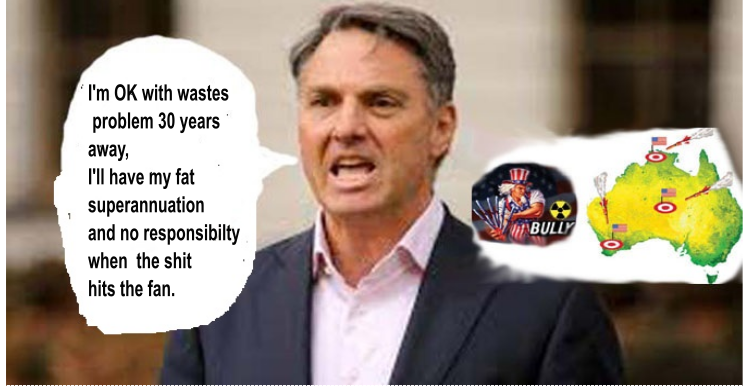
Labor is committed to ensuring the management of radioactive waste and spent nuclear fuel responsibly, including through an appropriately independent regulatory system. A rigorous process will determine the site of the nuclear waste facility, on the current or future Defence estate, with appropriate public consultation and agreement with First Nations communities to respect and protect cultural heritage. Australia will not be responsible for disposing spent nuclear fuel or accept other high-level radioactive waste from any other country.
Despite four decades of effort, Australia still hasn’t selected a site for a national low level radioactive waste repository. A high level waste repository is an even more difficult project – technically and politically. Albanese, Marles and other current decision makers will likely be long retired before this aspect of AUKUS is sorted out.
Even if the issue is solved, AUKUS radioactive legacy will linger for thousands of years.
Labor will ensure that regular updates are provided to Parliament, including relevant Parliamentary committees, and the relevant stakeholders, including defence industry, unions, and the ALP National Conference on the progress of Australia’s acquisition of conventionally-armed, nuclear-powered submarines.
The words in this paragraph are completely divorced from the reality of questions that have not been answered in the Senate and FOI’s which have been refused in full……………………………………………………more https://michaelwest.com.au/marles-mauled-rex-patrick-demolishes-defence-sophistry-on-aukus-submarines-nuclear/?utm_source=newsletter&utm_medium=email&utm_term=2023-08-24&utm_campaign=Michael+West+Media+Weekly+Update
So much Labor hope is riding on an empty vessel

Labor’s leaders have put staying in government first. But it’s a bit pointless when they cannot even persuade their own supporters why they are taking the positions they are.
AFR Laura Tingle, Columnist 18 Apr 23
On one side of the discussion there was a disparate collection of people expressing concerns about a profound policy shift which has a multitude of troubling – and unanswered – questions attached to it.
On the other, a cabinet full of ministers who before September 15, 2021, when it was announced by Scott Morrison, had never remotely considered that Australia buying nuclear-powered submarines from the Americans was obviously the strategic……………………………. (Subscribers only) https://www.afr.com/politics/federal/so-much-labor-hope-is-riding-on-an-empty-vessel-20230814-p5dw8a
Coalition’s campaign for nuclear energy implausible, experts say
SMH. By Mike Foley, August 21, 2023
Former chief scientist Alan Finkel says it would take decades to develop a local nuclear energy industry, as he and other experts reject the Coalition’s push to switch focus from renewables to nuclear energy as implausible since Australia needs urgent replacement for its ageing coal-fired power plants.
Opposition Leader Peter Dutton wants Australia to deploy emerging nuclear power technology, while Nationals leader David Littleproud has criticised what he calls the government’s “reckless race to renewables” and asked for the government’s clean energy target to be paused and reconsidered.
The Albanese government has pledged to more than double the amount of power the electricity grid sources from renewables to 82 per cent by 2030, to help achieve its target of cutting greenhouse gas emissions by 43 per cent by the same deadline.
Federal parliament banned nuclear power in 1998 and the moratorium has remained in place with bipartisan support, but Dutton is calling for the deployment of small modular reactors to reduce emissions from the electricity sector, instead of renewables that require a vast array of new power lines to link wind and solar farms to the cities.
Finkel said it was highly unlikely that Australia could open a nuclear power plant before the early 2040s, pointing out the autocratic United Arab Emirates took more than 15 years to complete its first nuclear plan using established technology………………………………………………..
Responding to assertions that small modular reactors, which are smaller than traditional nuclear plants, may be quicker and cheaper to build, Finkel said: “The reality is, it’s not being done in Europe and America.
“There’s no operating small modular reactor in Canada, America or the UK, or any country in Europe.”
Finkel noted that private company Nuscale is aiming to commission 12 small modular reactors starting from 2029, but he said it would probably take at least a decade to follow suit in Australia.
“I just can’t see anything less than 10 years from the time that the [Australian] government saw Nuscale start operating in America,” he said.
……………………………Energy analyst Dylan McConnell said deploying a small modular reactor at an old coal plant would not be the “plug-and-play” operation some optimists have suggested.
“You would have to decommission the existing coal plant and then build a new nuclear plant,” he said.
Alison Reeve, a climate and energy expert at the Grattan Institute, said investors could not start to investigate a nuclear project in Australia until the moratorium was lifted by federal parliament, and it would probably take years after that for states to pass their own laws and for a regulatory framework to be developed.
“This is not as simple as just removing the moratorium and then everything will be fine,” Reeve said. https://www.smh.com.au/politics/federal/coalition-s-campaign-for-nuclear-energy-implausible-experts-say-20230821-p5dy2a.html
‘Unbelievable’: Defence spends $8.5m on consultants for AUKUS nuclear regulator
Greens defence spokesperson Senator David Shoebridge said: “It’s genuinely unbelievable that in the middle of a national scandal about outsourcing core government functions to the big four consultants, Defence has gifted an $8.5 million contract to one of them to design a new national nuclear regulator.
“It was always wrong to have Defence in control of its own regulator for the AUKUS nuclear submarines, and now we can see how they have hand-picked a pro-nuclear consultant to design the whole thing.”
SMH, Matthew Knott, August 21, 2023
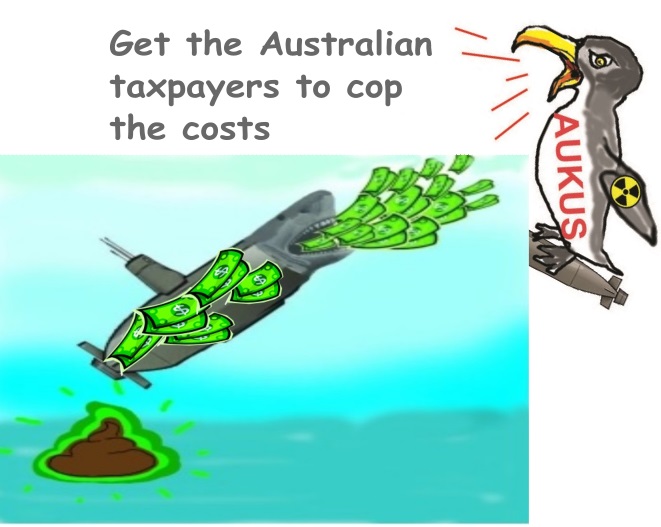
One of the big four consultancy firms will receive almost $8.5 million in taxpayers’ money over the next year to help design a new agency to monitor safety issues associated with Australia’s acquisition of nuclear-powered submarines under the AUKUS pact.
The Defence Department contract with EY, also known as Ernst & Young, comes amid a growing debate about the federal public service’s reliance on advice from external consultants for tasks that would previously have been performed in-house.
The Albanese government announced in March that it would create a new agency, known as the Australian Nuclear-Powered Submarine Safety Regulator, to “regulate the unique circumstances associated with nuclear safety and radiological protection across the lifecycle of Australia’s nuclear-powered submarine enterprise”.
The regulator, which will sit within the Defence Department, will also monitor infrastructure and facilities associated with the AUKUS pact such as the yet-to-be determined east coast submarine base.
Prime Minister Anthony Albanese stared down concerns from Labor’s Left faction about AUKUS, including about nuclear safety and the risks of nuclear proliferation, at the party’s national conference on the weekend.
Earlier this month the Defence Department revealed that it had awarded a 12-month contract to EY worth $8.4 million to advise on the design of a future nuclear regulatory agency.
Greens defence spokesperson Senator David Shoebridge said: “It’s genuinely unbelievable that in the middle of a national scandal about outsourcing core government functions to the big four consultants, Defence has gifted an $8.5 million contract to one of them to design a new national nuclear regulator.
“It was always wrong to have Defence in control of its own regulator for the AUKUS nuclear submarines, and now we can see how they have hand-picked a pro-nuclear consultant to design the whole thing.”
Shoebridge said he was troubled by EY’s deep connections to nuclear companies including US firm NuScale Power Corporation and China General Nuclear Power Co, as well as its role as the longstanding auditor for Japan’s Tokyo Electric Power Company, which operated the now decommissioned Fukushima power plant.
“This contract needs to be torn up and then this core duty of government, designing a nuclear oversight agency, needs to be done by government, not by a hired gun from the big four,” Shoebridge said………………………………………………………………………………………..
EY declined to respond to questions about the contract.
During a Senate appearance in July EY Oceania chief executive David Larocca distanced the firm from rival PwC, which is under fire for leaking confidential government information to its clients.
Shoebridge said the nuclear safety regulator should sit inside a separate department – such as the Department of Climate Change, Energy, the Environment and Water – rather than Defence to ensure it could provide independent oversight of the AUKUS submarine program.
…………………………… The government has been widely expected to name Port Kembla, in the Illawarra region of NSW, as the east coast base for Australia’s fleet of nuclear-powered submarines, but the idea has attracted a backlash from residents and unions.
The government has said it will store nuclear waste from the AUKUS submarines on defence land. Woomera in remote South Australia is seen as the most likely location. https://www.smh.com.au/politics/federal/unbelievable-defence-spends-8-5m-on-consultants-for-aukus-nuclear-regulator-20230820-p5dxxo.html
Why the Coalition backs nuclear

“Our sense of this is that nuclear is a debating issue that gives the Coalition cover for its quite diverse and often quite split positions … It enables them to not have to announce what their actual policy position is.” (Dave Sweeney of Australian Conservation Foundation)
The Saturday Paper, By Mike Seccombe, AUGUST 19 – 25, 2023 | No. 463
Previously staunch opponents of nuclear energy in the Coalition are now backing it as an alternative to renewables, despite largely unproven technology, long delays for approvals and the unsolved problem of waste. .
In his younger days, Ted O’Brien, the federal shadow minister for climate change and energy, was strongly anti-nuclear. But these days, he marches with a different crowd. Indeed, he leads it.
Tony Abbott is among them. As is Gina Rinehart, the richest person in the country. And Warren Mundine, a leader of the campaign against an Indigenous Voice to Parliament. And Andrew Liveris, an architect of former energy minister Angus Taylor’s abortive “gas-fired recovery” plan. And the climate change sceptics at the Institute of Public Affairs (IPA). And a raft of right-wing commentators, particularly in the Murdoch media, which also dutifully records each new salvo fired by Rinehart, Mundine, Liveris and others on the latest front in the climate wars.
The front is the battle for acceptance of nuclear power as an alternative energy source to renewables.
It is perhaps unsurprising things have come to this. Despite the efforts of the last federal government to slow-walk the shift to renewables and to extend the life of fossil fuels – particularly the dirtiest of them, coal – it has long been increasingly obvious they are on the way out. There will never be another coal-fired power station built in this country. Gas is an expensive alternative of very limited and declining utility.
Having spent years fomenting resistance to wind and solar, battery storage and new transmission infrastructure, the political right could hardly be expected to reverse course. Nuclear, though, presented an opportunity for differentiation. And so, last month, Opposition Leader Peter Dutton grasped it firmly. In a speech to the IPA, he accused the Albanese government of “renewable zealotry … putting our nation at risk”.
“The Albanese government is recklessly rushing to renewables and switching off the old system before the new one is ready,” he said.
………… Dutton offered a new variation on an old, radioactive theme.
………………… [Dutton advocated] “next-generation nuclear technologies which are safe and emit zero emissions. Namely, small modular reactors, or SMRs. And microreactors or micro modular reactors – MMRs – which are also known as nuclear batteries.”
A single SMR, Dutton said, could power 300,000 homes. An MMR could power a hospital, a factory, a mining site or a military base…………………………………. Dutton was singing from the songsheet Ted O’Brien has been assiduously composing for years.
………………. In 2019, the House Standing Committee on the Environment and Energy, chaired by O’Brien, conducted an inquiry into nuclear power.
Interestingly, it did not give a blanket endorsement. It found Australia should definitely reject old nuclear technology, but conditionally approve new and emerging technologies of the sort Dutton spoke about. There were dissenting reports from Labor members on the committee and the independent Zali Steggall.
The report’s title was “Not without your approval”, a recognition that nukes faced a big problem in gaining social licence.
It stressed that nuclear plants and waste facilities should not be imposed on local communities.
The response – or rather lack of response – from O’Brien’s superiors suggest they also worried about its public acceptability. The government made no move towards addressing the threshold problem with having nuclear power in Australia: that it is illegal under two separate pieces of legislation, passed under the Howard government.
…………. The most optimistic forecasts, including by O’Brien himself, suggest that even if new legislation were passed to remove the existing bans, it would take at least five years to get a reactor approved, up and running. A significant weight of expert opinion suggests far longer – probably 10 to 15 years.
Way back in 2006, the Howard government appointed the nuclear physicist Ziggy Switkowski from the board of the Australian Nuclear Science and Technology Organisation to conduct a review of Australia’s possible nuclear future.
The review concluded nuclear power would likely be between 20 and 50 per cent more costly to produce than power from a new coal-fired plant. It would take 10 to 15 years, and government subsidies, to get any nukes into the grid. Switkowski also foresaw cost reductions in renewable generation that would make them even more competitive.
That was before SMRs were contemplated, of course, but in the years since, the calculus hasn’t changed much, except that renewables and storage have become cheaper and faster.
Big questions remain about the cost of power from SMRs and the timeframes for deploying them.
Even Dutton’s assertion that modular reactors are a “feasible and proven technology” is questionable. They certainly look feasible, but they are hardly proven.
Mark Ho, newly elected president of the Australian Nuclear Association, an independent professional body of nuclear advocates, says there are currently just two operational SMRs in the world – one in Russia and one in China. Many more are in prospect. According to Dutton – and there is no reason to doubt him – 50 or more countries “are exploring or investing in new SMRs and nuclear batteries”.
But they are a way off being operational, Ho says. “In the US, there’s two leading designs, the NuScale reactor and BWRX, slated for completion by 2029.” In the UK, Rolls-Royce plans to have a first SMR up and running by 2029. Others are under development in Canada and elsewhere, Ho says, all looking to be operational around the end of the decade.
These timeframes mean SMRs would do nothing to help Australia meet its 2030 emissions reduction target…………………
It’s noteworthy that none of the talk reflects an actual policy commitment, says Dave Sweeney, nuclear-free campaigner for the Australian Conservation Foundation. “Our sense of this is that nuclear is a debating issue that gives the Coalition cover for its quite diverse and often quite split positions,” he says.
The debate gives the impression that the conservative parties are sincere about finding the best way forward, he suggests, when in reality a significant portion of its ranks “just don’t want renewables” and remain committed to fossil fuels.
“It enables them to not have to announce what their actual policy position is. When asked what is their response to energy and climate issues, what they say is ‘we need to consider everything’,” says Sweeney.
“They talk about the need for discussion, conversation, all that sort of stuff – as if we haven’t talked about it and had royal commissions about it and federal/state inquiries about it ad nauseam.”
Which is essentially what O’Brien tells The Saturday Paper when asked what the opposition’s actual policy is………………………..
The opposition is constrained, too, by its internal divisions. Sweeney cites a recent example, from last month’s Liberal National Party Queensland convention, “where there was a motion to support nuclear and [state party leader David] Crisafulli just slapped it down”.
……………………………………………………….. The same pro nuclear argument was made by Coalition senators in a report from yet another parliamentary inquiry, which came down last week.
The impetus for this one was a private member’s bill introduced last year by a Nationals senator and implacable foe of renewable energy, Matt Canavan, and co-sponsored by eight other conservatives. Its purpose, Canavan told the Senate, was to remove the bans on nuclear power “because that would be the best way to take advantage of future technological developments that could see nuclear energy as the most competitive carbon free option to produce electricity”.
Two pieces of Commonwealth legislation prohibit nuclear power in Australia. They are the Environment Protection and Biodiversity Conservation Act and the Australian Radiation Protection and Nuclear Safety Act, and they prevent the construction or operation of nuclear facilities for power generation, as well as facilities for the fabrication of nuclear fuel, uranium enrichment and the reprocessing of nuclear waste.
A further complication is that the three large east coast states, New South Wales, Victoria and Queensland, also have legislation prohibiting the construction of nuclear plants, while Western Australia, South Australia and the Northern Territory have legislation that prohibits the transport or disposal of nuclear waste.
Canavan’s bill was duly shunted to a committee, and when it reported back, it was, to no one’s surprise, split.
The majority recommended the bans remain, citing eight reasons: that “next generation” nuclear technology was unproven; that expert evidence held it would take 10 or 15 years to come online, by which time it would be unnecessary because Australia would have hit its 83 per cent emissions reduction target; that it was inflexible in its output; that it posed risks to human health and the environment; that it required vast quantities of water for cooling; that it created national security risks because neighbouring nations might suspect we would make nuclear weapons, and might in response target us; that it lacked a social licence and that renewables were cheaper.
Coalition members produced a dissenting report…………………………..
Regardless of the relative merits of the competing arguments, what mattered was what always matters in politics: the numbers. And the government had the numbers on the committee, just as it has the numbers in the parliament. So the ban on nukes stays, so long as Labor and the anti-nukes who dominate the cross benches hold power.
And they hold power so long as public opinion is with them.
On that front, much has been made in conservative media of an opinion poll taken in May, which found 45 per cent of voters either strongly or somewhat supported nuclear power as a domestic energy source, with 23 per cent opposed and the rest undecided. It also found 51 per cent support for removing the bans on nuclear energy.
The poll was commissioned by the Minerals Council of Australia, a body that has long supported the nuclear industry, but the questions asked were pretty straightforward.
It would be interesting to see the results of a poll that asked voters if they would like to see a nuclear plant or waste facility in their electorate. Because you can bet that’s the scare campaign nuclear opponents would mount if the opposition formally adopted the position Dutton, O’Brien, and the conservative members of that committee have intimated.
And in that case, you really have to wonder whether the endorsement of such prominent supporters as Gina Rinehart, Tony Abbott, Warren Mundine and Andrew Liveris and the power of the IPA or even the Murdoch media would sway many votes. https://www.thesaturdaypaper.com.au/news/environment/2023/08/19/why-the-coalition-backs-nuclear
Albanese defends against attempt to strike nuclear submarines out of Labor platform
ABC News, By political reporter Jake Evans; 19 Aug 23
Prime Minister Anthony Albanese has fought off an attempt to have references to nuclear-powered submarines struck from Labor’s platform.
Key points:
- The government has faced off a motion to strike nuclear-powered submarines from Labor’s platform
- Some delegates wanted to avoid Labor committing to nuclear submarines, which are fiercely opposed by some members
- The party instead resolved to redouble its non-nuclear efforts
Mr Albanese is in favour of the AUKUS defence deal with the United States and United Kingdom, as he attempts to quiet internal rebellion against the plan to acquire nuclear-powered submarines.
……………………………… “If you come to the position, as I have, that Australia as an island continent needs submarines, then it is compulsory … that nuclear-powered submarines are what Australia needs.”
It was Mr Albanese’s only intervention into a debate at the conference so far.
The government succeeded in blocking the rebellion, as well as ensuring Friday morning that the conference was prevented from debating a wider motion to have references to “AUKUS” struck from the platform.
Electrical Trades Union secretary Michael Wright, moving the attempt to have references to nuclear propulsion struck from the platform, said his union did not support AUKUS.
“Why would this decision we are taking here not ripple around the world?
“Serious questions must be asked: is this the best way of securing our national interest? Is this the best spend of $360 billion?” he asked.
Mr Wright said Labor should not lock nuclear submarines into its platform, but “keep the window open” for further debate.
Defending the government’s policy, Defence Minister Richard Marles said Australia’s security depended on acquiring nuclear-powered submarines.
“In a difficult moment, Australians are looking to us. I know the word ‘nuclear’ evokes a strong reaction, but we are not talking about nuclear weapons.
“We will never base nuclear weapons on our shores.”
Defence Industry Minister Pat Conroy told Labor delegates only “strength” would deter war, not “appeasement”.
Labor MP Josh Wilson, one of the only government MPs to break ranks on AUKUS, said the decision to acquire nuclear-propelled submarines was “not justified”.
“To a person with a hammer, every problem looks like a nail. Deterrence is not a one word justification for every defence position,” Mr Wilson said.
“And with the greatest respect to delegate Conroy, the suggestion that anyone who questions a particular defence and security decision or acquisition is in the game of appeasement … is ridiculous.”
Government seeks to reassure rank and file, redoubling non-nuclear commitment
The government instead moved to recognise “the growing danger that nuclear weapons pose” and committing the government to redouble its efforts towards nuclear disarmament in an effort to settle disquiet within its ranks on AUKUS.
Several local branches have opposed AUKUS and the pact now faces a challenge from internal group Labor Against War, represented by former senators Doug Cameron and Margaret Reynolds.
Outside the conference, Labor Against War convenor Marcus Strom said Friday’s debate at the conference was just the beginning of a campaign against AUKUS.
“The best opposition we get is, ‘Look, let’s keep things calm, we don’t want to scare the horses ahead of elections,’ but this is more important than one election, one parliament, one government,” Mr Strom said.
“This is a 30-year program, multi-billion dollars of wasted opportunity we could be spending on housing, on cost of living pressures, on the transition to a green economy.”
https://www.abc.net.au/news/2023-08-18/government-defends-aukus-at-labor-conference-nuclear-submarines/102745950
Assange Be Weary: The Dangers of a US Plea Deal

August 18, 2023
By Binoy Kampmark / CounterPunch, https://scheerpost.com/2023/08/18/assange-be-weary-the-dangers-of-a-us-plea-deal/
At every stage of its proceedings against Julian Assange, the US Imperium has shown little by way of tempering its vengeful impulses. The WikiLeaks publisher, in uncovering the sordid, operational details of a global military power, would always have to pay. Given the 18 charges he faces, 17 fashioned from that most repressive of instruments, the US Espionage Act of 1917, any sentence is bound to be hefty. Were he to be extradited from the United Kingdom to the US, Assange will disappear into a carceral, life-ending dystopia.
In this saga of relentless mugging and persecution, the country that has featured regularly in commentary, yet done the least, is Australia. Assange may well be an Australian national, but this has generally counted for naught. Successive governments have tended to cower before the bullying disposition of Washington’s power. With the signing of the AUKUS pact and the inexorable surrender of Canberra’s military and diplomatic functions to Washington, any exertion of independent counsel and fair advice will be treated with sneering qualification.
The Albanese government has claimed, at various stages, to be pursuing the matter with its US counterparts with firm insistence. Prime Minister Anthony Albanese has even publicly expressed his frustration at the lack of progress in finding a “diplomatic solution” to Assange’s plight. But such frustrations have been tempered by an acceptance that legal processes must first run their course.
The substance of any such diplomatic solution remains vague. But on August 14, the Sydney Morning Herald, citing US Ambassador to Australia Caroline Kennedy as its chief source, reported that a “resolution” to Assange’s plight might be in the offing. “There is a way to resolve it,” the ambassador told the paper. This could involve a reduction of any charges in favour of a guilty plea, with the details sketched out by the US Department of Justice. In making her remarks, Kennedy clarified that this was more a matter for the DOJ than the State Department or any other department. “So it’s not really a diplomatic issue, but I think there absolutely could be a resolution.”
In May, Kennedy met members of the Parliamentary Friends of Julian Assange Group to hear their concerns. The previous month, 48 Australian MPs and Senators, including 13 from the governing Labor Party, wrote an open letter to the US Attorney General, Merrick Garland, warning that the prosecution “would set a dangerous precedent for all global citizens, journalists, publishers, media organizations and the freedom of the press. It would also be needlessly damaging for the US as a world leader on freedom of expression and the rule of law.”
In a discussion with The Intercept, Gabriel Shipton, Assange’s brother, had his own analysis of the latest developments. “The [Biden] administration appears to be searching for an off-ramp ahead of [Albanese’s] first state visit to DC in October.” In the event one wasn’t found, “we could see a repeat of a very public rebuff delivered by [US Secretary of State] Tony Blinken to the Australian Foreign Minister two weeks ago in Brisbane.”
That rebuff was particularly brutal, taking place on the occasion of the AUSMIN talks between the foreign and defence ministers of both Australia and the United States. On that occasion, Foreign Minister Penny Wong remarked that Australia had made its position clear to their US counterparts “that Mr Assange’s case has dragged for too long, and our desire it be brought to a conclusion, and we’ve said that publicly and you would anticipate that that reflects also the positive we articulate in private.”
In his response, Secretary of State Blinken claimed to “understand” such views and admitted that the matter had been raised with himself and various offices of the US. With such polite formalities acknowledged, Blinken proceeded to tell “our friends” what, exactly, Washington wished to do.
Assange had been “charged with very serious criminal conduct in the United States in connection with his alleged role in one of the largest compromises of classified information in the history of our country. The actions that he has alleged to have committed risked very serious harm to our national security, to the benefit of our adversaries, and put named sources at grave risk – grave risk – of physical harm, and grave risk of detention.”
Such an assessment, lazily assumed, repeatedly rebutted, and persistently disproved, went unchallenged by all the parties present, including the Australian ministers. Nor did any members of the press deem it appropriate to challenge the account. The unstated assumption here is that Assange is already guilty for absurd charges, a man condemned.
At this stage, such deals are the stuff of manipulation and fantasy. The espionage charges have been drafted to inflate, rather than diminish any sentence. Suggestions that the DOJ will somehow go soft must be treated with abundant scepticism. The pursuit of Assange is laced by sentiments of revenge, intended to both inflict harm upon the publisher while deterring those wishing to publish US national security information. As the Australian international law academic Don Rothwell observes, the plea deal may well take into account the four years spent in UK captivity, but is unlikely to either feature a complete scrapping of the charges, or exempt Assange from travelling to the US to admit his guilt. “It’s not possible to strike a plea deal outside the relevant jurisdiction except in the most exceptional circumstances.”
Should any plea deal be successfully reached and implemented, thereby making Assange admit guilt, the terms of his return to Australia, assuming he survives any stint on US soil, will be onerous. In effect, the US would merely be changing the prison warden while adjusting the terms of observation. In place of British prison wardens will be Australian overseers unlikely to ever take kindly to the publication of national security information.
AUKUS a cover for the Coalition’s nuclear power agenda
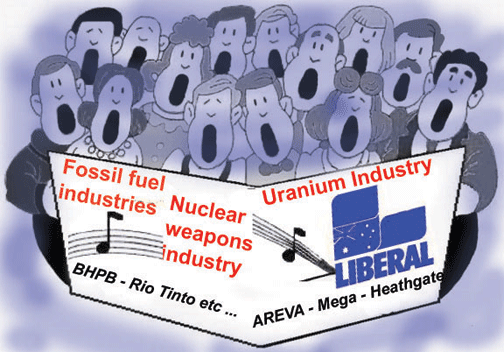
By Jim Green, Aug 18, 2023 https://johnmenadue.com/aukus-a-cover-for-the-coalitions-nuclear-power-agenda/?fbclid=IwAR0tsw-FLtHUY-EFgpbh_b1Lm2jlJSceGe5qkDm0EaLfgKe7NPUlExm4DQw
The federal Coalition’s dissenting report on a Senate inquiry into nuclear power claims that Australia’s “national security” would be put at risk by retaining federal legislation banning nuclear power and that the “decision to purchase nuclear submarines makes it imperative for Australia to drop its ban on nuclear energy.”
The Senate Environment and Communications Legislation Committee released a report into nuclear power on August 11. The majority report, endorsed by Labor and Greens Senators, argued against nuclear power and against the repeal of Howard-era legislation banning nuclear power in Australia. A dissenting report by Coalition Senators argued for repeal of the legislation banning nuclear power.
The majority report concludes that repeal of the legal ban “would create an unnecessary escalation of risk, particularly given Australia is able to utilise readily available firmed renewable technology to secure a reliable, affordable and clean energy system for Australia’s future”.
The Coalition Senators put forward a suite of false and questionable claims in their dissenting report: that nuclear power is expanding worldwide; it is popular; it is important and perhaps essential to underpin the AUKUS nuclear submarines project; promoting low-carbon nuclear proves that the Coalition is serious about greenhouse emissions reductions; and renewables are unreliable and more expensive than nuclear.
The Coalition has yet to state clearly that it will repeal laws banning nuclear power if elected, but it’s only a matter of time. The nuclear push has the full support of Opposition Leader Peter Dutton.
The Coalition’s economic illiteracy
The Coalition Senators’ dissenting report makes a number of absurd economic claims.
It cites Tony Irwin from the SMR Nuclear Technology company, who claims that the costs of nuclear and solar are “basically the same”. He bases his calculation on the assumption that a small modular reactor (SMR) would generate 13 terawatt-hours (TWh) of electricity per year. But reactors typically generate about 7.2 TWh per 1,000 megawatts (MW) of capacity, so a 300 MW reactor (the upper end of the range for SMRs) would generate about 2.2 TWh – nearly six times less than Irwin claims.
Based on that nonsense, Irwin goes on to make the equally absurd claim that until legislation banning nuclear power is removed, “Australia’s power system will continue to be constrained at great cost to the economy.”
SMR Nuclear Technology also fed economic nonsense to a federal parliamentary inquiry in 2019/20. As RenewEconomy editor Giles Parkinson noted, the company’s claim that 100 per cent renewables would cost four times more than replacing coal with nuclear was based on “Mickey-Mouse modelling” by a husband and wife team who used absurd figures for solar and wind and admitted to deliberately ignoring anticipated cost reductions.
Of course there’s no need for Tony Irwin, SMR Nuclear Technology director (and coal baron) Trevor St Baker, or any other nuclear lobbyist to get their facts straight. As long as their claims fit the narrative, they will be parroted by the Coalition and by the Murdoch/Sky echo-chamber.
Cost blowouts
The dissenting report cites John Harries from the Australian Nuclear Association complaining that CSIRO GenCost reports aren’t “looking at the actual builds happening around the world at the moment.”
Be careful what you wish for, John. Does the nuclear lobby really want to draw attention to the six- to twelve-fold cost blowouts in reactors under construction in the US, the UK and France, with the latest cost estimates ranging from A$25-30 billion per reactor?
The dissenting report concludes that: “If nuclear is more expensive than alternatives, as the CSIRO and others claim, then legalising nuclear energy will not change anything because investors will choose to build the cheaper options.”
However there isn’t a single reactor project in the world that isn’t propped up by state support and taxpayer subsidies.
As for private-sector SMR projects, not one has reached the construction stage anywhere in the world — and perhaps none ever will.
The 2015/16 South Australian Nuclear Fuel Cycle Royal Commission commissioned research on the economic potential of two SMR designs: Generation mPower and NuScale Power.
Generation mPower was abandoned in 2017, and NuScale is struggling. Despite lavish US government subsidies, NuScale is struggling to secure private-sector finance to get the project off the ground and it still has licensing hurdles to clear.

NuScale’s latest cost estimates indicate it has no hope of competing with renewables. NuScale estimates capital costs of A$14.4 billion for a 462 MW plant, with levelised costs estimated at A$138 per megawatt-hour. The Minerals Council of Australia states that SMRs won’t find a market unless they can produce power at a cost of A$60‒80 / MWh.
NuScale’s history can be traced to the turn of the century but it hasn’t even begun construction of a single reactor. Likewise, Argentina’s SMR project can be traced back to the last millennium but it hasn’t completed construction of a single reactor.
A dog whistle to climate denialists
Continue readingA profound change’: AUKUS debate looms for Labor’s rank and file.

The New Daily James Robertson 15 Aug 23
At this week’s ALP national conference, delegates will vote on a proposal to remove an expression of support for the AUKUS security pact in Labor’s platform.
Some 400 party members will attend the conference, which will be in Brisbane and run from Thursday to Saturday.
One of two motions expected to be put to the conference stops short of rebuking AUKUS but would instead amend the party’s draft platform on defence by removing an explicit endorsement.
“Our self-reliant defence policy will be enhanced by strong bilateral and multilateral defence relationships, including AUKUS,” the platform currently reads.
The proposed amendment would delete the words “including AUKUS”.
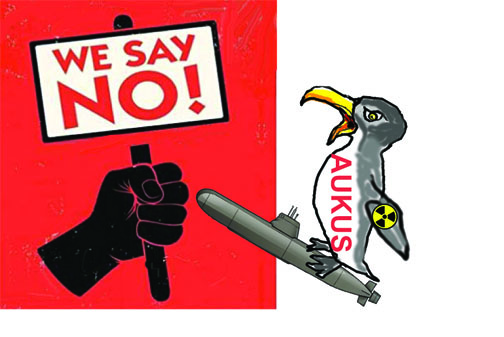
Under the deal, Australia will acquire and build nuclear-powered submarines from America and the UK.
Five federal electorate councils have passed motions either expressing reservations about AUKUS or calling for it to be reviewed or delayed, according to a tally kept by Labor Against War, a party activist group.
A spokesman for the group, Marcus Strom, said the conference motion was a significant step, noting earlier reports that it would not be on the agenda.
“Forcing AUKUS to be debated is a victory for the rank and file,” he said. “The first of many, we expect, as we campaign against it.”
Members of the Labor Left will comprise a majority of delegates.
But they are not expected to vote as a unified bloc on either defence policy or a vote to elect party executive members.
Supporters of Prime Minister Anthony Albanese and Foreign Minister Penny Wong, both of the Left, are not expected to back the AUKUS amendment.
It will be brought by NSW MP Anthony D’Adam, from a grouping once known as the “soft” Left and historically a rival to Mr Albanese’s support base.
ALP president Wayne Swan said last week he expected a conference debate on AUKUS in keeping with Labor tradition.
“National defence has always loomed large in our national conferences,” he said.
Majority support
But the former Treasurer predicted most delegates would support the Prime Minister’s position.
“Our position in the region has changed so dramatically in the last decade or so [that it] has brought about a profound change […in] our defence stance and orientation,” he said.
Defence Minister Richard Marles and Defence Industry Minister Pat Conroy held a briefing for party members on AUKUS via Zoom on Monday night.
Mr Marles described AUKUS as a “difficult call” but said it had been the right decision, one person on the call said.
AUKUS also includes a second phase for sharing advanced defence technology.
US representatives are pushing for export controls to be eased so Australia can access these technologies more quickly, such as quantum computing and artificial intelligence.

In October, Mr Albanese will be received at a state dinner in Washington.
Other issues on the agenda in Brisbane……………https://thenewdaily.com.au/news/politics/2023/08/14/aukus-debate-labor-conference/
Senate inquiry nixes nukes. Here’s why

Renew Economy, Jim Green 15 August 2023
The Senate Environment and Communications Legislation Committee released a report into nuclear power last Friday.
The majority report, endorsed by Labor and Greens Senators, argued against nuclear power and against the repeal of Howard-era legislation banning nuclear power in Australia.
A dissenting report by Coalition Senators argued for repeal of the legislation banning nuclear power.
The majority report concludes that repeal of the legal ban “would create an unnecessary escalation of risk, particularly given Australia is able to utilise readily available firmed renewable technology to secure a reliable, affordable and clean energy system for Australia’s future.”
The majority report gives the following reasons for its conclusions:………………………………………………………………….
Coalition Senators’ dissenting report
The Coalition’s dissenting report was endorsed by Senators Matthew Canavan and Gerard Rennick (Qld), Alex Antic and David Fawcett (SA), Hollie Hughes and Ross Cadell (NSW), Richard Colbeck (Tas), and Matt O’Sullivan (WA).
The Coalition has yet to state clearly that it will repeal laws banning nuclear power if elected, but it’s only a matter of time. The nuclear push has the full support of opposition leader Peter Dutton.
The Coalition Senators argue in their dissenting report that nuclear power is expanding worldwide – it is popular; it is important and perhaps essential to underpin the AUKUS nuclear submarines project; SMRs are the bees knees; promoting low-carbon nuclear proves that the Coalition is serious about greenhouse emissions reductions; and renewables are unreliable and more expensive than nuclear.
Is nuclear power growing? No – it has been stagnant for the past 30 years and if there’s any non-trivial change over the next 20 years, it will be downwards.
Just 16 per cent of the world’s countries operate nuclear power reactors (31/195), so clearly the Coalition Senators are wrong in describing Australia as a nuclear “outcast.”
Nine per cent of the world’s countries are building reactors (17/195), 91 per cent are not. Only six countries are building more than two reactors.
The International Energy Agency (IEA) expects record global renewable capacity additions in 2023 amounting to 440 gigawatts. Nuclear power has gone backwards so far in 2023, with a net loss of one reactor or 2.4 gigawatts.
The IEA projects that in 2027, renewable electricity generation will have increased to 38 per cent of total global generation. Nuclear power has fallen below 10 per cent and will likely never reach double figures again.
Economics
The Coalition Senators’ dissenting report makes a number of absurd economic claims.
It cites Tony Irwin from the SMR Nuclear Technology company, who claims that the costs of nuclear and solar are “basically the same.” He bases his calculation on the assumption that a “small-body reactor” would generate 13 terawatt-hours (TWh) of electricity per year.
But reactors generate about 7.2TWh per 1,000 megawatts (MW) of capacity, so a 300MW reactor (the upper end of the range for SMRs) would generate about 2.2TWh – nearly six times less than Irwin claims.
The Coalition has yet to state clearly that it will repeal laws banning nuclear power if elected, but it’s only a matter of time. The nuclear push has the full support of oppositi
Is nuclear power growing? No – it has been stagnant for the past 30 years and if there’s any non-trivial change over the next 20 years, it will be downwards.
Just 16 per cent of the world’s countries operate nuclear power reactors (31/195), so clearly the Coalition Senators are wrong in describing Australia as a nuclear “outcast.”
Nine per cent of the world’s countries are building reactors (17/195), 91 per cent are not. Only six countries are building more than two reactors.
The International Energy Agency (IEA) expects record global renewable capacity additions in 2023 amounting to 440 gigawatts. Nuclear power has gone backwards so far in 2023, with a net loss of one reactor or 2.4 gigawatts.
The IEA projects that in 2027, renewable electricity generation will have increased to 38 per cent of total global generation. Nuclear power has fallen below 10 per cent and will likely never reach double figures again.
Based on that nonsense, Irwin goes on to make the equally absurd claim that until legislation banning nuclear power is removed, “Australia’s power system will continue to be constrained at great cost to the economy.”
SMR Nuclear Technology also fed economic nonsense to a federal parliamentary inquiry in 2019/20. As RenewEconomy editor Giles Parkinson noted, the company’s claim that 100 per cent renewables would cost four times more than replacing coal with nuclear was based on “Mickey-Mouse modelling” by a husband and wife team who used absurd figures for solar and wind and admitted to deliberately ignoring anticipated cost reductions.
Of course there’s no need for Tony Irwin, SMR Nuclear Technology director (and coal baron) Trevor St Baker, or any other nuclear enthusiast to get their facts straight. As long as their claims fit the narrative, they will be parroted by the Coalition and by the Murdoch/Sky echo-chamber.
The dissenting report cites John Harries from the Australian Nuclear Association complaining that CSIRO GenCost reports aren’t “looking at the actual builds happening around the world at the moment.”
Be careful what you wish for, John. Does the nuclear lobby really want to draw attention to the six- to twelve-fold cost blowouts in reactors under construction in the US, the UK and France, with the latest cost estimates ranging from $A25-30 billion per reactor?
The dissenting report concludes that: “If nuclear is more expensive than alternatives, as the CSIRO and others claim, then legalising nuclear energy will not change anything because investors will choose to build the cheaper options.”
However there isn’t a single reactor project in the world that isn’t propped up by state support and taxpayer subsidies.
In the UK, the government insisted that reactors would not be subsidised, but the UK National Audit Office estimates that taxpayer subsidies for two reactors under construction at Hinkley Point – the only reactor construction project in the UK – could amount to £30 billion (A$58.6 billion) while other credible estimates put the figure as high as £48.3 billion (A$94.4 billion).
A dog whistle to climate denialists
The Coalition Senators’ dissenting report claims that nuclear must be in the mix “if we are serious about the reduction of emissions to meet targets”.
But the Coalition isn’t serious about reducing greenhouse emissions. ……………………………………….
Promoting nuclear power doesn’t provide the Coalition with any cover or credibility. The Climate Council, comprising Australia’s leading climate scientists, speaks for those of us with a genuine interest in reducing greenhouse emissions. The Council issued a policy statement in 2019 concluding that nuclear power plants “are not appropriate for Australia – and probably never will be”…………..
https://reneweconomy.com.au/senate-inquiry-nixes-nukes-heres-why/
Game changer: defence industry ‘revolving door’ database to be created.
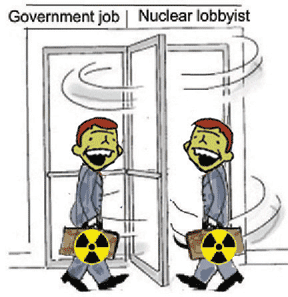
Undue Influence has been awarded funding from the Jan de Voogd Peace Fund to create an Australian-first database
MICHELLE FAHY, AUG 16, 2023
Our long-held goal of creating a database that makes plain the extent of the revolving door between the government/military/public service and the weapons industry in Australia is set to become reality.
Undue Influence has been awarded a grant to cover the research and development required to fulfil this vision. Work on the database has commenced. More on the grant below.
The well-trodden path from public defence roles into the private weapons industry
With AUKUS expected to cost Australian taxpayers more than $350 billion, at a time of decreasing transparency and poor accountability for record expenditure on armaments, the need for this database has never been greater. Exposing the insidious links between global weapons corporations and the government is now essential. Before an egregious practice can be stamped out, it must be documented. Hence, this project.
When senior people depart politics, the military, or the public service for roles in the weapons industry they take with them extensive national and international contacts, deep institutional knowledge and rare and privileged access to the highest levels of government. Their inside knowledge, contact books and high-level access entrenches the undue influence of the weapons industry on government decision-making, which can undermine integrity and open the door to corruption.
The Grattan Institute described the revolving door problem like this:
…firms that employ former government officials are more successful at getting meetings with government. Relationships matter in politics because they affect both the opportunity to influence and the likelihood of influence. Individuals with personal connections are more likely to get time with policy makers and a sympathetic hearing when they do.
It’s human nature that we’re more likely to listen to people we know and like. Establishing credibility is critical to persuasion, and existing relationships help clear that initial barrier. This is why hiring or employing people with the right connections can ‘buy’ influence.
Undue Influence has reported extensively on the revolving door as a channel of backroom influence on government by the weapons industry. Information on revolving door appointments into and out of this industry must be made public to achieve greater transparency, accountability and integrity in Australian public life.
What the database will cover
The database will document revolving door appointments into and out of the weapons industry from the year 2000 onwards. While it is modelled on the Project On Government Oversight (POGO) Pentagon Revolving Door website, the Undue Influence project will include more information. For example, we will include short articles accompanying key entries explaining the context and significance of certain appointments.
Users will be able to search by individual or by company. Some individuals in the database will have multiple revolving door appointments; this web of appointments across numerous companies will be revealed. Searching by weapons company will provide a list of former public officials hired by that company.
Undue Influence is delighted to be working with Evan Predavec as the project’s technical specialist and website/database creator. Evan is founder of Political Gadgets (politicalgadgets.com), a website that makes government and related information readily accessible to the public. Evan’s unique skillset and can-do attitude has been invaluable in designing and creating our website and database infrastructure.
More about the grant
Undue Influence has been awarded $60,000 by the Jan de Voogd Peace Fund to create the database. Jan de Voogd, a Quaker, died in 2021 leaving his estate to be spent on projects that foster peace and social justice. The bequest is administered by the NSW Regional Meeting of the Religious Society of Friends (Quakers)……………………………………..
When will the database be ready?
The database will be launched by 29 February 2024.
How you can help
If you have information about revolving door appointments into and out of the Australian weapons industry, please email us.
Email undueinfluence@protonmail.com (encrypted)
Create an encrypted protonmail address (free): https://proton.me/mail https://undueinfluence.substack.com/p/game-changer-defence-industry-revolving-door?utm_source=post-email-title&publication_id=297295&post_id=136105135&isFreemail=true&utm_medium=email
An Assange Plea Deal? For What Crime? – Good Journalism?
Caitlin’s Newsletter Notes From The Edge Of The Narrative Matrix, CAITLIN JOHNSTONE, AUG 16, 2023
Whenever I talk about the need to dismantle government secrecy I always get some know-it-all empire simp going “Without secrecy we wouldn’t be able to wage wars and coordinate against our enemies and have nukes, you idiot.”
And it’s like, uh, yeah. That’s kind of my point. They only use secrecy to do evil things and act against the interests of normal human beings.
The lie is that the government uses secrecy in order to counter its enemies and win wars, when in reality the government uses secrecy to make enemies and start wars.
Julian Assange said “The overwhelming majority of information is classified to protect political security, not national security.” It doesn’t exist for our benefit, it exists for theirs. It’s so our rulers can keep doing depraved things with no accountability. That’s why they keep expanding government secrecy and increasing the punishment of those who breach it: because they want to do more depraved things and remain unaccountable.
It really is nuts how there’s now talk of Julian Assange being offered a “plea bargain” for rightly exposing US war crimes. What’s he meant to plead guilty to? Good journalism?
The last time there was a credible military threat to the United States near the US border, the US responded so aggressively that it nearly ended the world. The reason people don’t tend to get it when you compare Ukraine or Taiwan to a hypothetical scenario in which Russia or China were amassing heavily armed proxy forces on the Mexican border is because people literally can’t wrap their minds around that happening. It’s just too remote and unthinkable a proposition in today’s world.
But that shows you just how clear it is that the US is the aggressor in those standoffs: it’s doing something so freakishly aggressive that people literally cannot imagine it happening on the US border. If you see amassing a heavily armed threat on the border of an enemy nation as normal and fine in one instance and literally unfathomable in another, that shows you your perception and expectations have been warped by propaganda…………………………………….. https://www.caitlinjohnst.one/p/an-assange-plea-deal-for-what-crime?utm_source=post-email-title&publication_id=82124&post_id=136101620&isFreemail=true&utm_medium=email
Suggestion of completely unsuitable Woomera as nuclear dump site shows gross ignorance

15 Aug 23, The recent suggestion by the Hon. Nick Minchin of using the rocket
range in the relatively remote Woomera region of South Australia for
the disposal of this country’s nuclear waste generated by AUKUS is
quite irrational smacking of gross ignorance.
It has been well known for many years that the Woomera area by its
topography and geological setting is completely unsuitable for any
form of nuclear waste disposal and is clouded – forgive the pun – by
the consequences of the extensive nuclear testing in the region over
seventy years ago.
The consequences of that testing are still being felt by the Aboriginal
peoples of the region and has turned the majority of South
Australia’s general community against any form of nuclear waste
storage in its State.
The Department of Defence already has a significant volume of
nuclear waste held in the Woomera area for which it is seeking a
suitable means of disposal that to a large extent was lost with the federal government recently abandoning its proposals for nuclear waste management at Kimba.
The proof of the pudding is that if the Woomera region were at all
suitable for the disposal or even long term safe storage of nuclear
waste then the defence authorities would have already joyfully
availed themselves of that opportunity.
In his previous ministerial capacity Mr Minchin argued for the
establishment of a national nuclear waste disposal facility to among
other things dispose of the ostensibly large quantities of nuclear
waste held in over a hundred locations throughout Australia but this
in itself was disingenuous since those locations are mainly hospitals
and research facilities developing lower levels of waste which is
invariably disposed by them on site.
In fact the federal government recently acknowledged that if lucky it
would get less than 10% of that waste for disposal at the facility
proposed for Kimba.
It is comments like those now offered by Mr Minchin which make
Australia’s already glaringly limited proficiency in nuclear waste management by international standards to be even more baseless.
It is quite clear that a major one of these consequences is the
attempted successful implementation of the AUKUS arrangements
which Mr Minchin was no doubt trying to achieve with his rather
inopportune suggestion of Woomera
Civil Society faces imposition of an AUKUS military High Level nuclear waste dump
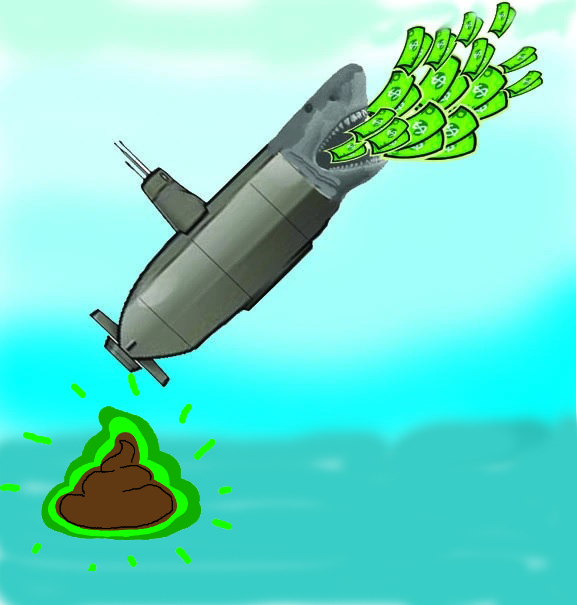
https://nuclear.foe.org.au/wp-content/uploads/AUKUS-nuclear-waste-David-Noonan-brief-13Aug2023.pdf Updated Briefing by David Noonan, Independent Environment Campaigner 13 August 2023
The Federal ALP belatedly disclosed a secret pre-condition in AUKUS plans to buy existing US nuclear submarines: for Australia to keep the US subs military High Level nuclear waste forever.
In a breach of trust the ALP is seeking to ‘normalise’ High Level nuclear waste in Australia. Claims of
‘nuclear stewardship’ in taking on US nuclear subs and in retaining the US sub wastes are a farce.
Disposal of High Level nuclear waste is globally unprecedented, with our AUKUS ‘partners’ the US
and UK having proven unable to do so in over 60 years since first putting nuclear submarines to sea.
New military Agencies are being set up with an ‘Australian Submarine Agency’ (ASA) set up to:
“enable the necessary policy, legal, non-proliferation, workforce, security and safety arrangements”.
A new military nuclear regulator, the statutory ‘Australian Nuclear-Powered Submarine Safety
Regulator’ is to be established. Both Agencies will report directly to the Minister for Defence.
An array of federal legislation is required to manage nuclear submarines, supporting infrastructure
and facilities, from acquisition through to disposal. The Reforming Defence Legislation Review
proposes to take on Defence Act powers to override State and Territory legislation to ‘provide
certainty’ to Defence roles, operations and facilities.
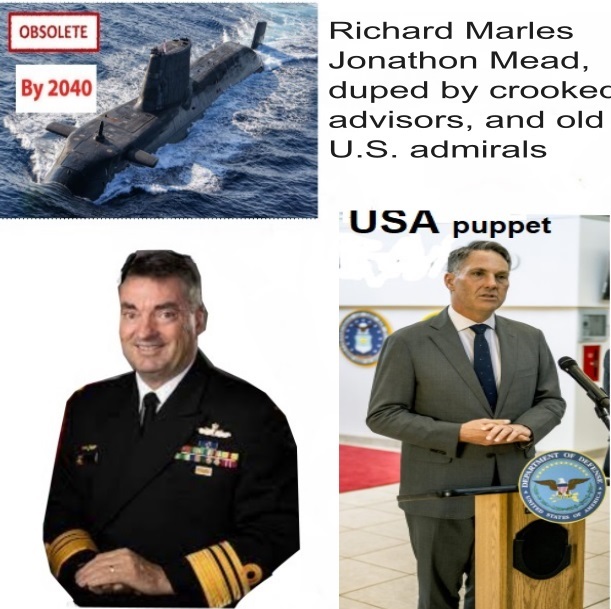
Minister for Defence Richard Marles MP has stated there will be ‘an announcement’ by early 2024 on
a process to manage High Level nuclear waste and to site a waste disposal facility, saying “obviously
that facility will be remote from populations” (ABC News 15 March 2023).
Defence is already working to identify potential nuclear waste disposal sites. Political leaders in WA,
Queensland and Victoria have rejected a High Level nuclear waste disposal site. The SA Labor
Premier has so far only said it should go to a safe ‘remote’ location in the national interest.
AUKUS compromises public confidence in government and sets up a serious clash with
hcivil society:
- Defence must be transparent and made accountable over AUKUS policy, associated rights and
legal issues, and the proposed High Level nuclear waste dump siting process; - Defence must commit to comply with the United Nations Declaration on the Rights of Indigenous
Peoples Article 29 provision of Indigenous People’s rights to “Free, Prior and Informed Consent”
over storage or disposal of hazardous materials on their lands. - Defence must declare whether the SA Nuclear Waste Storage (Prohibition) Act 2000 is intended
to be over-ridden to impose an AUKUS dump on lands and unwilling community in SA.
The public has a right to know who is targeted and a right to Say No to imposition of nuclear wastes.
The ALP National Platform (2021, Uranium p.96-98) makes a commitment to oppose overseas waste:
- Labor will: 8. d. Remain strongly opposed to the importation and storage of nuclear waste
that is sourced from overseas in Australia.
In contrast, AUKUS proposes Australia buy existing US military nuclear reactors in subs that are to be
up to 10-12 years old, loaded with intractable US origin weapons grade High Level nuclear wastes.
An AUKUS military nuclear dump is likely to be imposed on community in SA or in NT, with override
of State laws, compulsory land acquisition, and disregard for Indigenous Peoples rights to Say No.
Woomera is being targeted as a ‘favoured location’ for an AUKUS nuclear dump, in an
untenable affront to democratic rights in SA and to Indigenous People’s rights
SA community and the Barngarla People have just overcome federal plans to store ANSTO nuclear
fuel wastes and ILW on agricultural land near Kimba that had divided community on Eyre Peninsula.
The Bargarla People won a hard fought court case against the Federal Government that set aside the
Kimba dump siting decision by Coalition Minister Pitt as affected by bias and pre-judgement.
In response, Labor Minister Hon Madeleine King MP decided to not appeal the Judge’s finding of
apprehended bias, saying “The judgement was clear, and the Government is listening.”
The next day the national press reports: “Woomera looms as national nuclear waste dump site
including for AUKUS submarine high-level waste (afr.com) (11 August 2023). The article states the
AFR understands the Woomera rocket range is the ‘favoured location’ for the submarine waste.
The federal gov may also decide to ‘co-locate’ AUKUS submarine waste with ANSTO nuclear fuel
wastes and long lived ILW. However, the regulator says ANSTO wastes can be securely retained at the
Lucas Heights reactor site for decades. An imposed AUKUS dump will discredit any associated plans.
A suite of public interests are already at stake. For instance, which Ports will be requisitioned for
roles in AUKUS nuclear waste plans? (the federal gov previously targeted the Port of Whyalla).
AUKUS nuclear waste dump plans trigger the United Nations Declaration on the Rights of Indigenous
Peoples (adopted by United Nations, Sept 2007) in Indigenous People’s Article 29 rights to “Free,
Prior and Informed Consent” over storage or disposal of hazardous materials on their lands.
Traditional owners must have a right to Say No to nuclear wastes, see “AUKUS nuclear waste dump
must be subject to Indigenous veto” (By Michelle Fahy May 2023): “Bipartisan secrecy and Defence’s
poor record with Indigenous groups at Woomera are red flags for consultations over an AUKUS
nuclear waste dump. Human rights experts say government must establish an Indigenous veto right.”
The “Woomera Protected Area” (WPA) a large Defence weapon testing range in SA had already been
flagged by other State Premiers as a site for a military High Level nuclear waste disposal facility.
Most of the WPA is State owned Crown land and not federal owned Defence lands. Siting a nuclear
dump on the WPA would be imposed through compulsory land acquisition and over-ride of SA laws.
Storage and disposal of nuclear wastes compromises the safety and welfare of the people of South
Australia, that is why it is prohibited by the SA Nuclear Waste Storage (Prohibition) Act 2000.
The Objects of this Act cover public interest issues at stake, to protect our health, safety and welfare:
“The Objects of this Act are to protect the health, safety and welfare of the people of South
Australia and to protect the environment in which they live by prohibiting the establishment
of certain nuclear waste storage facilities in this State.”
Defence are already ignoring Aboriginal Heritage law and contravening protections in SA, see
“Defence bombing Indigenous site in Woomera” (May 2023). Defence is now further ‘angling for
exemption from State laws it admits serve important public purposes’.
The SA Premier is yet to say if he will support an Indigenous right to Say No to an AUKUS dump in SA.
South Australians have a democratic right to decide their own future and to reject an AUKUS dump.
Stop renewables and wait for nuclear: Nationals stunning rejection of science and industry
Giles Parkinson 14 August 2023 https://reneweconomy.com.au/stop-renewables-and-wait-for-nuclear-nationals-stunning-rejection-of-science-and-industry/
Nationals leader David Littleproud says he wants to have an “honest” conversation about Australia’s energy transition. Well and good. But maybe Littleproud himself can help that process by not telling outright lies.
On Sunday, Littleproud did us all a favour by spelling out in detail the Nationals energy policy, just in case it wasn’t already obvious: Stop renewables and wait for nuclear.
It has been, he admitted, the party’s policy for at least the last decade, if not longer.
That’s not surprising, given that its the favoured policy and strategy of Big Oil, Big Gas, Big Coal, and the likes of Gina Rinehart to whom the Nationals appear completely beholden. And it wins support at all levels of the Nationals grass roots through a co-ordinated and quite extraordinary campaign of fear and misinformation.
Littleproud’s train crash of an interview on ABC’s Insiders program on Sunday – well, it might have been a train crash if he had been questioned by someone with the wit to hold his talking points up to scrutiny – highlight the tragedy of Australia’s and the world’s current climate policies.
All these policies are focused on net zero by 2050, or 2060 if you happen to be China. As many scientists fear, it’s a target that is used as a prompt by naysers and do-nothings – such as the Nationals and the fossil fuel industries – to put things off for another day.
It is another excuse for delay, delay, and yet more delay – even though the science tells us, quite clearly, and more emphatically given the summer in the northern hemisphere and tumbling heat records – that what matters most is how quickly we act now.
Littleproud is completely unfazed by the science. In fact, it is a stunning rejection of the science. He wants a “pause” to the roll out of wind and solar and transmission links and a stop to the “reckless pursuit” of the government’s 82 per cent renewables targets.
He suggests that wind and solar has its place, but that solar should be built on city rooftops, not on “prime agricultural” farmland, or in remnant forests. We should wait for nuclear, he says, because “we’ve got time” and net zero by 2050 is the government’s “only commitment.”
He wasn’t asked the obvious question about the Nationals acceptance of climate science, the need to act by 2030, the need to try and cap average global warming to 1.5°C, a target that would require net zero to be reached more than a decade earlier.
Littleproud appealed for “honest conversations”, and then said the federal government’s 83 per cent renewables target requires 28,000 kms of new transmission lines.
Let’s be absolutely clear, that is simply not true.
The Australian Energy Market Operator’s Integrated System Plan suggests that up to 10,000kms of new transmission will be needed over the next two decades under its “step change” scenario, which includes the 82 per cent renewable share that is now the federal government’s target.
That renewables target, by the way, is key to reaching Australia’s modest emissions reduction target of 43 per cent below 2005 levels – a year chosen because of its peak land clearing of remnant forests under the Liberal/National Coalition.
Granted, the preparation work for the transmission lines have been poorly handled, by transmission companies, governments and the likes of AEMO, but it should be noted that most of these transmission lines are considered necessary even in the “slow scenario”, where science is completely ignored and coal hangs around a lot longer.
Littleproud’s number of 28,000kms is only mentioned in the “hydrogen superpower” scenario that imagines huge arrays of wind and solar in remote areas that might need to be connected to the grid. It is of course, his sponsors’ worst nightmare – because it means the end of the fossil fuel industry as we know it.
Littleproud then goes on to mention the prospect of nuclear SMRs (small modular reactors), and even something called “micro reactors”, which are little more than an idea, and probably even further down the pipeline than the SMRs, which are themselves at least a decade away, and not likely to be cheap.
The Nationals leader reckons big industry users like smelters might like the idea of micro reactors because they are modular, and about 3-5MW and can be used to power their facilities, and bring down costs.
It’s a ridiculous suggestion. A smelter draws up to about 500MW of load, so it will need around 100 of these things that don’t exist, and as the former head of the US Nuclear Regulatory Commission wrote recently, only ideologues and ‘tech bros” think that nuclear can be cheap. And the Coalition.
The owners of Australia’s smelters, for the record, have already made their views clear. Rio Tinto, for instance, has said that its smelters only have a future beyond the end of the decade if they can convert their power supply to renewables by 2030.
If not, they will not be able to compete with the rest of the world, either on cost, or on emissions. And who is providing the biggest stumbling block to renewables? The Nationals and fossil fuel industry led campaign against wind, solar and transmission.
And therein lies the tragedy, the dishonesty, and the absurdity of the Nationals’ and the Coalition’s stance against green energy.
It will stuff industry in Australia, and the local economy, long before it stuffs the planet and the environment. But by then, they – and the Murdoch media which trumpet their positions, and the mainstream media that refuses to question it – will have found something else to whinge about.
1 This month
25 October – Film –Britain’s Nuclear Bomb Scandal: Our Story – part of the Adelaide Film Festival,
Screening and Conversation
A screening of Britain’s Nuclear Bomb Scandal: Our Story (2024) followed by a talk with 2026 Bettison and James Awardee and Tradtional Owner Karina Lester in conversation with Simone Tur.
When: Sun 25 Oct, 12:00pm-Screening, 1:15pm-Talk
Where: The Mercury
Free admission, register below by clicking on BUY TICKETS and select free event tickets, at end of web page:
https://www.adelaidefilmfestival.org/program/2026/britains-nuclear-bomb-scandal-our-story
.

Australians deserve the truth
about
AUKUS – https://aukuspublicinquiry.com/

PETITION – To: Prime Minister Anthony Albanese and the Australian Labor Government

of the week – Australians for War Powers Reform (AWPR)
To see nuclear-related stories in greater depth and intensity

