AUKUS and nuclear submarines: Defence Minister Richard Marles sets Australia’s course in lockstep with USA-UK’s animosity to China.
the United States wants to build the first several nuclear-powered submarines for Australia and provide it with a submarine fleet by the mid-2030s in response to China’s growing military power.
Australia Sets New Defense Course To Establish Nuclear Submarines Fleet – Defense Minister

https://eurasiantimes.com/australia-sets-new-defense-course-to-establish-nuclear-submarines/—By EurAsian Times Desk November 8, 2022
Australia has set the course of its next defense strategy, which includes the development of nuclear-powered submarines to repel attacks far from the country’s shores, Australian Defense Minister Richard Marles said on Tuesday.
“Increasingly, we are going to need to think about our Defence Force in terms of being able to provide the country with impactful projection, meaning an ability to hold an adversary at risk much further from our shores across the full spectrum of proportionate response,” Marles said, delivering a speech at a university in Canberra, as quoted by the Australian Financial Review newspaper.
The minister also said that the new defense strategy relies on the establishment of a submarine fleet in cooperation with the United States and the United Kingdom within the AUKUS trilateral partnership.
Australia, the US, and the UK announced the AUKUS defense partnership in September 2021. The first initiative announced under the AUKUS pact was the development of nuclear-powered submarine technology for the Royal Australian Navy, which prompted the Australian government to abandon a $66 billion agreement with France’s Naval Group company for the construction of diesel-electric submarines.
Earlier, the Wall Street Journal had reported that the Biden administration is in the middle of discussions to expedite the construction of Australia’s first nuclear-powered submarines as guaranteed in the AUKUS defense pact.
The report said on Friday, citing Western officials, that the United States wants to build the first several nuclear-powered submarines for Australia and provide it with a submarine fleet by the mid-2030s in response to China’s growing military power.
The United States’ recommendation has not yet been formally approved, but a final decision on this matter is expected in March, the report said.
The report also highlighted the challenges the United States would face to complete the task, including the need to secure billions of dollars to expand its submarine-production capacity and a contribution from Australia to back the effort.
The White House said in a press release that Australia, the United Kingdom, and the United States – the countries that comprise the AUKUS security pact – have made significant progress toward ensuring that Australia would acquire conventionally armed, nuclear-powered submarines. The AUKUS allies will provide the submarines at the earliest possible date, the release said.
In September, the three allies announced the new trilateral security partnership, forcing Australia to abandon its $66 billion contract with France to receive 12 state-of-the-art conventionally-powered attack submarines from the United States.
In May, the Chinese Foreign Ministry said the AUKUS security pact is provoking an arms race in the South Pacific without any consultation with island countries of the region.
China believes that the AUKUS partnership escalates the arms race in the region and urges the US, the UK, and Australia to commit to the non-proliferation of nuclear weapons, Chinese Defense Ministry spokesman Tan Kefei had said earlier.
“The trilateral security partnership and cooperation on nuclear submarines between the US, the UK and Australia create serious risks of proliferation of nuclear weapons, escalate the regional arms race, undermine regional peace and stability as well as threaten global peace and security,” Tan had said.
The official noted that China had always believed that any regional cooperation should strengthen mutual trust among countries in the region and pose no threat to others.
“We urge the US, the UK, and Australia to abandon the Cold War mentality and ‘zero-sum game’ ideas and fulfill its obligations in good will regarding non-proliferation of nuclear weapons,” the spokesman had added
Government accused of hiding ‘lazy $591 million’ in extra costs from scrapped French submarine program
ABC, By defence correspondent Andrew Greene, 8 Nov 2022
Details of up to $591 million in additional expenses for the cancelled French submarine program have emerged, including asset writedowns on unused infrastructure and re-employment programs in Adelaide.
Key points:
- The extra costs to taxpayers only came to light in a late-night hearing
- $470 million has been spent on a South Australian facility which will have to be partially bulldozed
- A talent pool program costing $28 million has secured 223 jobs
The extra costs to taxpayers were revealed by officials from the government-controlled enterprises Australian Naval Infrastructure (ANI) and Australian Submarine Corporation (ASC) during a late-night Senate estimates hearing on Monday.
Last year the Morrison government cancelled the $90 billion Attack-class submarine program with French company Naval Group, in favour of nuclear-powered boats under the AUKUS partnership.
Earlier this year the Albanese government agreed to an $830 million compensation payment to Naval Group for the scrapped project, but more than half a billion dollars in other costs has now emerged in parliament.
In Senate estimates ANI confirmed a $300 million asset writedown related to the Osborne North Development project, a naval yard constructed for the now scrapped French designed Future Submarine project.
The committee was told $470 million has been spent to date on the Osborne North facility, including some assets which could still be repurposed for the new nuclear submarine program.
However ANI CEO Andrew Seaton told Greens senator David Shoebridge a partly-built “platform land-based test facility” which had been designed for the French submarines would probably now have to be bulldozed.
Separately the head of ASC also revealed that the cost of rehiring workers from the scrapped French submarine program is expected to reach $291 million over three years, but may be extended by the Defence department.
Since beginning six months ago, the Sovereign Shipbuilding Talent Pool (SSTP) has cost $28 million, with 223 workers hired by ASC following the scrapping of the French submarine program………………
Senator Shoebridge said the additional costs had been “ferreted away off the Defence budget”, but the public was paying the price for the scrapped submarine project.
“Only in a bungled multi-billion Defence project would a government even try to hide a lazy $591 million in additional costs,” he said.
“When we pay an extra $591 million for not building submarines we lose those funds for public housing, schools or income relief.
“While there are strategic arguments for retaining skilled staff, the fact that the ASC contract costs $1.3 million for every job is astounding.” https://www.abc.net.au/news/2022-11-08/591-million-most-in-costs-scrapped-french-submarines-australia/101629310
Military buildup in Australia stirs fears

Greg Sheridan, foreign editor of the right-wing, Rupert Murdoch-owned newspaper The Australian, wrote in a commentary on Nov 1 that the reports of the B-52 deployment heralded a “growing ‘prewar’ environment”.
https://global.chinadaily.com.cn/a/202211/09/WS636b0813a3105ca1f2274e75.html By KARL WILSON in Sydney | China Daily Global , 2022-11-09,
Reports of nuke-equipped US aircraft for base fit with secretive tradition
The pandemic and rising household bills have left most Australians blissfully blind to a military buildup that has been taking place in the country’s north.
The Australian Broadcasting Corporation’s flagship current affairs program Four Corners aired on Oct 31 a report outlining how the United States is upgrading a major Australian air force base near Darwin in the Northern Territory that will house at least six nuclear-capable B-52 bombers.
The initiative will also involve major infrastructure upgrades at the Tindal Royal Australian Air Force base and a massive fuel storage depot near Darwin.
In addition, the report exposed a major upgrade to the highly secretive Pine Gap intelligence-gathering facility near Alice Springs in Central Australia. So secretive is this facility that only a few Australians have clearance to enter it. During the Cold War, the former Soviet Union had the facility marked as a “must “target in the event of a nuclear war.
Greg Sheridan, foreign editor of the right-wing, Rupert Murdoch-owned newspaper The Australian, wrote in a commentary on Nov 1 that the reports of the B-52 deployment heralded a “growing ‘prewar’ environment”.
Australian Defense Minister Richard Marles, in a media conference on Nov 2, tried to play down the significance of the military buildup, saying that nuclear-capable US bombers had been visiting Australia since the 1980s.
In a media briefing on Oct 31, Chinese Foreign Ministry spokesman Zhao Lijian, when asked to comment on the reports, said the move by the US and Australia “escalates regional tensions, gravely undermines regional peace and stability, and may trigger an arms race in the region”.
“China urges parties concerned to abandon the outdated Cold War zero-sum mentality and narrow geopolitical mindset, and do more things that are good for regional peace and stability and mutual trust among all parties,” he said.
Zhao said that any defense and security cooperation between countries must “contribute to regional peace and stability and must not target any third party or undermine their interests”.
But Marles said that those against the buildup should “take a deep breath”.
“What we’re talking about is a US investment in the infrastructure at Tindal, which will help make that infrastructure more capable for Australia as well,” the minister said.
Objection voiced
David Shoebridge, an Australian Greens senator and the group’s defense spokesman, objected to the B-52 deployment, saying in a tweet: “This is a dangerous escalation. It makes Australia an even bigger part of the global nuclear weapons threat to humanity’s very existence — and by rising military tensions it further destabilizes our region.”
Indonesia has, in the past, voiced its concern over Australia’s nuclear direction, especially following the formation of the AUKUS security pact for military cooperation with the United Kingdom and the US.
Jim Green, national nuclear campaigner with environmental and social justice organization Friends of the Earth Australia, said: “The plan to base nuclear-capable B-52 bombers at RAAF Tindal escalates and worsens a pattern of Australia providing practical and political support for the US nuclear weapons program.”
In an email to China Daily, Green said: “Australia should refuse to allow US nuclear weapons to be located on Australian territory under any circumstances. The federal Labor government has committed to signing and ratifying the UN’s Treaty on the Prohibition of Nuclear Weapons. The stationing of nuclear weapons on Australian soil flies in the face of the government’s commitment to the UN Treaty.”
Reports of the impending deployment came days after the administration of US President Joe Biden released a Nuclear Posture Review that nonproliferation advocates said makes catastrophe more, rather than less, likely.
When it comes to the US’ deployment of weapons of mass destruction in the region, Australia is not alone.
The Saipan Tribune noted in a report in January that during the Cold War, Guam was a target of the Soviet military in part because it was home to US Navy submarines that carried intercontinental ballistic missiles containing nuclear warheads. “The United States has not spent … money to fully protect Guam and the Chamorro people from military attack,” the report said, referring to the Indigenous people in Guam.
And the same holds true for Australia.
US warns Australia against joining treaty banning nuclear weapons

US embassy in Canberra says treaty ‘would not allow for US extended deterrence relationships’
Daniel Hurst, 9 Nov 22,
The US has warned Australia against joining a landmark treaty banning nuclear weapons, saying the agreement could hamper defence arrangements between the US and its allies.
But New Zealand said it was “pleased to observe a positive shift” in Australia’s position in a United Nations vote and “would, of course, welcome any new ratifications as an important step to achieving a nuclear weapon-free world”.
The comments follow the Albanese government shifting Australia’s voting position on the treaty on the prohibition of nuclear weapons to “abstain” after five years of blanket opposition by the Coalition government.
The relatively new treaty imposes a blanket ban on developing, testing, stockpiling, using or threatening to use nuclear weapons – or helping other countries to carry out such activities. But so far it has been shunned by all of the nuclear weapons states and many of their allies.
The US embassy in Canberra said the treaty “would not allow for US extended deterrence relationships, which are still necessary for international peace and security”.
That is a reference to Australia relying on American nuclear forces to deter any nuclear attack on Australia – the so-called “nuclear umbrella” – even though Australia does not have any of its own atomic weapons.
The embassy said the treaty also risked “reinforcing divisions” within the international community…………………………
The comments are a sign of the pushback Australia faces from its top security ally if it gets closer to signing and ratifying the treaty – although that still seems distant.
New Zealand said it welcomed “constructive developments in Australia’s approach” to the treaty, including the shift from opposing a NZ-backed resolution on the topic at the UN general assembly first committee last month.
New Zealand’s minister for disarmament and arms control, Phil Twyford, has met with Australian representatives.
A spokesperson for the Ministry o
f Foreign Affairs and Trade said New Zealand continued to urge all countries that were not yet a party to the treaty to sign and ratify it “at the earliest opportunity”, while acknowledging it was “for Australia to determine its position”.
The Australian prime minister, Anthony Albanese, has been involved in advocacy against nuclear weapons and has described them as “the most destructive, inhumane and indiscriminate weapons ever created”.
Albanese moved the motion at Labor’s 2018 national conference backing the TPNW, saying the task would not be easy or simple but it would be “just”.
The treaty now has 91 signatories, 68 of which have formally ratified it, and it entered into force last year.
Friends of the Earth urge all South Australian federal Labor politicians to push for the scrapping of Kimba nuclear waste plan.
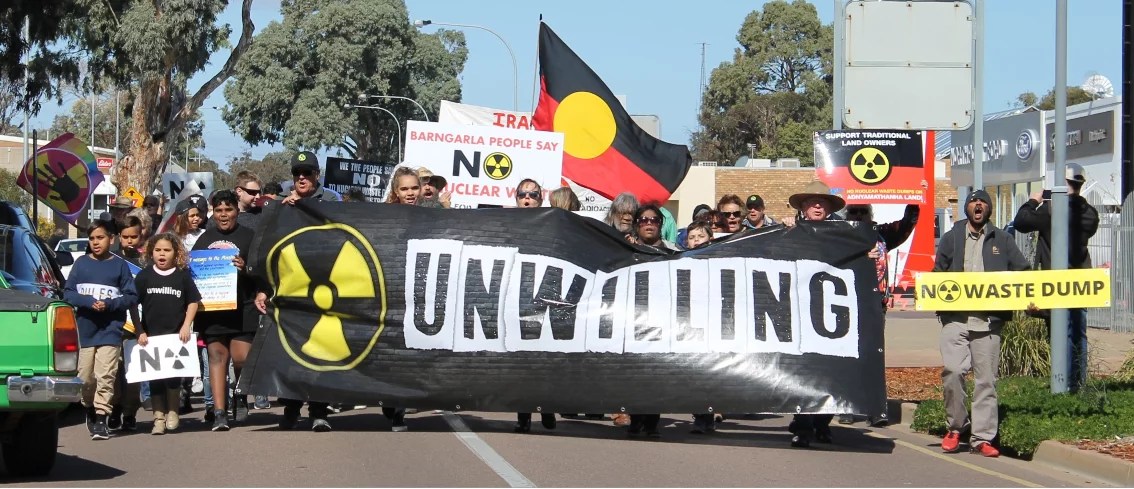
From Friends of the Earth – The letter below was sent today to all South Australian federal ALP politicians.
We are writing in regard to the proposed construction of a National Radioactive Waste Management Facility (nuclear waste dump) at Napandee, near Kimba in South Australia.
We wish to thank the SA Labor Caucus for its resolution at the recent South Australian ALP State Convention supporting “a veto right for the Barngarla community on this facility”. The resolution states, “Continuing with this project, including ancillary earthworks outside of current legal injunctions, despite the opposition of the Barngarla people, undermines efforts toward reconciliation.”
As a Labor Party politician elected to federal parliament to represent South Australia, we urge you to push for the implementation at the federal level of SA Labor’s position on this matter. We are concerned that the current Minister for Resources Madeleine King is following the lead of the bureaucracy in pursuing the former Coalition government’s policy on the nuclear waste dump.
Napandee was announced as the chosen site for the permanent disposal of low level radioactive waste (LLW) and temporary storage of intermediate level radioactive waste (ILW) in February 2020 by then federal resources minister Senator Matt Canavan. It was subsequently officially declared on 26 November 2021 by Senator Canavan’s successor Mr Keith Pitt MP. There is no reason why the current Labor government should allow itself to be bound by policies of the previous government promoted by National Party politicians Senator Canavan and Mr Pitt.
To pursue this project risks undermining the Labor government’s signature policy of enshrining in the Constitution a First Nations Voice to Parliament. A voice to parliament would enable Aboriginal and Torres Strait Islander people to provide advice to the parliament on policies and projects that impact their lives. The clear advice from the Barngarla people, the Traditional Owners of this area, is that they don’t want a nuclear waste dump on their land. The Barngarla people were excluded from a community ballot conducted by the Kimba District Council in November 2019, so they conducted their own independent poll. Not a single Traditional Owner voted in favour of the dump.
Besides the Barngarla people, significant other affected communities have not been consulted. A facility that would involve transportation of radioactive waste through South Australia should involve consultation with all communities along the transport route and with the wider public. No such consultation has occurred.
There are better alternatives to a centralised waste dump in regional South Australia. The overwhelming majority of the waste comes from the Australian Nuclear Science and Technology Organisation’s (ANSTO) Lucas Heights facility. The safest and most secure place to continue to manage and store the waste is at Lucas Heights, especially given that the proposed Napandee site would only provide temporary storage for intermediate level radioactive waste (ILW). A final disposal site for ILW would still have to be found. What is the point of double handling it?
We urge you to push for the federal government to promptly overturn the previous government’s declaration of the Napandee site and to cease all work at the site.
Australia is addicted to fighting other people’s wars

The legal status of the island [Taiwan] as a province of China is clearly little understood; or that military involvement, as far as international law is concerned, would be an illegal invasion of China and would be seen in that way in many parts of the world.
This brings us back to the question of war with China over the future of Taiwan. So many decisions and commitments have already been made in secret that going to war will be easy. The only question left to us now is can involvement in a likely catastrophe be avoided? Or will our addiction to war and our insouciance about its consequences finally catch up with us?
https://johnmenadue.com/australia-is-addicted-to-warfare/ By Henry ReynoldsNov 6, 2022,
How do we explain that half the Australian community thinks we should go to war with China? After twenty years of conflict in the Middle East, will our addiction to war and our insouciance about its consequences finally catch up with us in an American war over Taiwan?
‘Paddy the Irishman’ was one of the stock characters who appeared in the cartoons in the Sydney Bulletin in the early C20th. In one of the cartoons Paddy addressed the readers but behind him was a sketch of what appeared to be a brawl. He asked:’ Is this a private fight or can anyone join in’? I was reminded of the cartoon after reading two news items published last week.
The first was a report of the results of a YouGov survey into public opinion about attitudes to a possible future war over the fate of Taiwan. I found the results both surprising and troubling. As the Guardian reported, almost half of Australians (46%) believe the country should send troops to help defend Taiwan against China if required. More surprising was that it was a much higher percentage than in the U.S with(33%) or Japan with (35%).
Two days later the government announced that it was setting aside $475 million for assistance to Ukraine and dispatching 70 ADF personnel to Britain to help train their soldiers. No matter how sympathetic we might be about the beleaguered nation, Australian involvement is quite strange. Ukraine has the strong support of the thirty members of NATO, many with much larger armies and defence budgets than Australia. Are we just making a declaration that we wish to now tag along as NATO’s camp followers? And if our Department of Defence has a lazy half billion dollars it would have been more appropriate to spend it as a gesture of reparation for the destruction and devastated families we left behind after twenty years of war in Iraq and Afghanistan. We might then be able to convince observers all over the world that our empathy is not colour coded.
How do we explain that half the community thinks we should go to war with China? We might well have thought that twenty years of conflict in the Middle East with little to show for it had mollified our addiction to warfare. What is outstanding here is the combination of belligerence and insouciance. Little thought seems to have been given to the possibility of landing troops on Taiwan and of ever getting them back again. The legal status of the island as a province of China is clearly little understood; or that military involvement, as far as international law is concerned, would be an illegal invasion of China and would be seen in that way in many parts of the world.
But the government’s slapdash preparation for war is far more consequential. There are innumerable military exercises on land, sea and in the air. Weapons and tactics are methodically tested. We have an ongoing enquiry into strategic objectives. But is anyone calculating the cost of war with China? Is there any serious assessment of the impact on the national economy which might well be devastated? Do we have any precedents for a country that decided to go to war with its major trading partner? Has anyone considered what would happen to large segments of the mining industry? And what would happen to shipping to and from Australia?
Access to Japan and South Korea would be seriously inhibited. And regardless of outcomes we would have to assume that we would have hostile relations with China for a generation and more. Then there is the question of our large Chinese community. Do our war mongers give them any consideration? Would they just be treated with restless suspicion or would a government under pressure consider the detention which was imposed on Germans and Italians during the Second World War? All this and more for Taiwan which many Australians could not mark on a map? How much suffering does our defence establishment estimate they will subject us to? Have they any idea? Do they actually want to know?
All of these questions remind us of outstanding features of Australia’s distinctive history of engagement in wars in far- away places against enemies who presented no threat to the homeland. The British inducted us into a tradition of engagement in Imperial adventurism. They were incessantly at war somewhere in the world for most of the C19th. As the great liberal Prime Minister William Gladstone observed: ‘The English piously believe themselves to be a peaceful people. Nobody else is of the same belief.’ At the time of federation the Australian colonies followed the British into conflict in both South Africa and China. It was the start of a long tradition.
The Empire made it easy for the Australians to go to war. Enemies were chosen for them. The decisions about where, when and how to fight were presented ready- made. Debate about strategy, legality or morality was left to Britain. Loyalty to Crown and Empire was sufficient motivation for the majority and was used as a gag to smother dissent. So going to war could proceed without serious debate about Australia’s obligations or responsibilities as a nascent nation state or the wider ramifications of its geographical location. Return from wars was also easy. If things did not turn out as expected there was no need for introspection because Australia had been there merely to lend a hand. The Australians showed themselves to be proficient and resourceful warriors. And that was enough. There was no need to give serious thought to warfare itself. Ultimate responsibility, reassessment and soul searching could be left to the British. This was graphically illustrated in the case of the South African War of 1899-1902. There was far more dissent in Britain than in Australia and there was almost nothing like the profound reassessment which resulted in the war being seen as disgraceful descent into ‘methods of barbarism’.
How the patterns are replicated! Our behaviour in our ‘American wars’ in Iraq and Afghanistan is similar to that of earlier ’British’ ones. Going to war was easy. Using our legal inheritance from the common law which determined that war and treaty making are the preserve of the Crown or more correctly the Prime Minister. As many people now understand it can all be done without reference to the parliament. Our enemies were chosen for us. The fact that we knew comparatively little about the location didn’t matter. The legality and morality of the conflict was defined in Washington. Even the rhetoric was borrowed including repeated reference to the non- existent ‘weapons of mass destruction.’ Return from war was just as easy. There was no public scrutiny about whether the wars were a good idea, whether the cost in lives and billions of dollars was worth it. War seems to be the only aspect of government which escapes any serious cost/benefit analysis. There was little of the soul searching which followed the Iraq war in Britain and America.
This brings us back to the question of war with China over the future of Taiwan. So many decisions and commitments have already been made in secret that going to war will be easy. The only question left to us now is can involvement in a likely catastrophe be avoided? Or will our addiction to war and our insouciance about its consequences finally catch up with us?
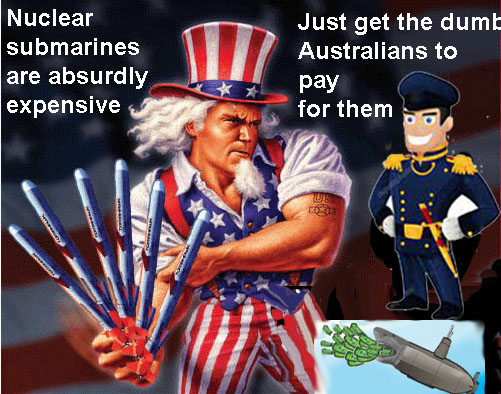
Australia’s ongoing nuclear submarine debacle – A tangle of overlapping interests’
https://undueinfluence.substack.com/p/a-tangle-of-overlapping-interests?utm_source=post-email-title&publication_id=297295&post_id=82059669&isFreemail=true&utm_medium=email Michelle Fahy 5 Nov 22
The federal government’s secret hiring from 2015 of numerous former US Navy officials to advise on Australia’s submarine procurement was exposed by The Washington Post a fortnight ago. “Some of the retired admirals have worked for the Australian government while simultaneously consulting for US shipbuilders and the US Navy, including on classified programs,” the Post said. The US officials benefited financially from “a tangle of overlapping interests”. The Post revealed that one former US admiral had been consulting to Australia while also occupying a full time position as chairman of the board of Huntington Ingalls Industries, a US company that builds US nuclear-powered submarines. That arrangement was abandoned in April this year due to conflict of interest concerns.
Australian defence experts Mike Scrafton and Richard Tanter have outlined the implications of these revelations in John Menadue’s public policy journal, Pearls and Irritations.
Mike Scrafton said, “What remains unclear now is the extent to which the abandonment of the French submarine and the decision to pursue a nuclear powered version was influenced by the Americans. The dramatic shift to the AUKUS project casts the role of the ex-US officials in a different light.”
Red flags have been a feature of Australia’s submarine procurement process since the original deal with France’s Naval Group in 2016. Concerns there included the government’s selection of Naval Group despite it being under investigation for corruption in three earlier shipbuilding contracts, with a fourth investigation added after Australia handed Naval Group the deal. Neither this alarming fact, nor other questionable aspects of the deal, triggered a rethink to find a more suitable contractor. The Washington Post revelations now raise even more questions about the backroom dealings in this disastrous extended procurement process.
B52’s mark the demise of Australia as a self-reliant nation
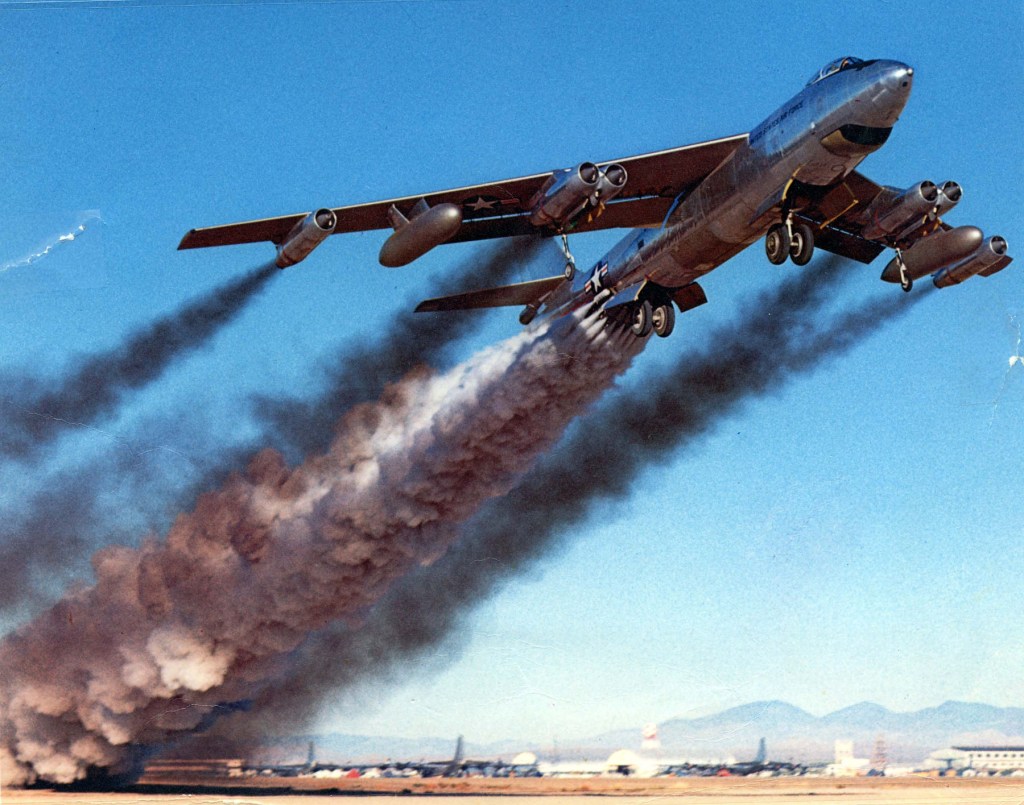
Australia has become a base for the possible use of US nuclear weapons against China………………..
And all this has happened without the Parliament being consulted
https://johnmenadue.com/b52s-mark-the-demise-of-australia-as-a-self-reliant-nation/
By Bruce Haigh, Nov 5, 2022
News that the US plans to base six B52’s at RAAF, Tindal, will likely change the dynamic, in what has admittedly been a half-hearted attempt by Australia, at improving relations with China.
The Foreign Minister, Penny Wong, got off to a good start, but the momentum was slowed by Prime Minister Albanese’s remarks that China constituted a threat, his rushed attendance at an anti-China NATO Summit meeting, the QUAD meeting and the Abe funeral. Abe like his grand farther Kishi was very anti-Chinese.
Albanese’s remarks echo those of Biden, who has chosen on a number of occasions to say that the US would ‘defend’ Taiwan. These guarantees have each time been denied by White House spokes persons but have been reiterated often enough by Biden to indicate where he stands on the question of the ‘reintegration’ of Taiwan with China.
Biden in his confusing way did nothing to stop the ill-conceived Pelosi visit to Taiwan. Biden has refused, indeed prevented, diplomatic negotiations toward ending the war in the Ukraine. He sees the war, mistakenly and naively, as an opportunity to break Russia. Albanese has gone along with this, recently sending 70 Australian soldiers to the UK to train Ukrainian troops. His thinking, and that of Biden, appear in lockstep over the major foreign policy and defence issues confronting Asia and Europe, mainly created and fanned by the US.
An almost frenzied pace is building in the US for confrontation of China. Why? John Menadue, Richard Tanter, Mike Scrafton and Jeffrey Sachs have all recently written in Pearls & Irritations on this unfolding madness.
The basing of B52’s in the Northern Territory changes the nature of Australia’s defence relationship with the USA and our diplomatic relationship with China. Australia has become a base for the possible use of US nuclear weapons against China. Tentative and overly cautious moves to re-establish a sound and workable relationship with China will have been set back, if not put on ice. Moves that Morrison was a party to, or patsy to, have proceeded apace without the brakes being applied by Marles or Albanese. The horse has bolted. And all this has happened without the Parliament being consulted. So much for Australian democracy. All this talk about Western Democracies standing up to totalitarian regimes is so much cant.
China is unlikely to regard Australia as having acted in good faith and nor is the region and the Pacific. Overnight the US and Australia changed the nature of the game with no prior warning and no special briefings. It is a unilateral and hostile upping of the anti.
It is also unlikely that Australia will be advised if the aircraft are carrying nuclear weapons on planned patrols. The line that can be expected is that for operational and security reasons information relating to carriage of nuclear weapons is classified and can neither be confirmed or denied.
No doubt the Chinese are seriously thinking of writing Australia off as being incapable of independent decision making- a vassal state, a follower, lacking the capacity and courage to shape its regional destiny. The chances of Xi Jinping meeting with Albanese at the G20 have receded, if not evaporated.
Perhaps it is symbolic that the ubiquitous B52 marks the demise of Australia as a self-reliant nation.
The B52 is the symbol of US foreign policy failure in Asia. Not satisfied with the terms of the Paris peace settlement, Nixon and Kissinger decided to bomb the Accord, as it was termed, out of existence. Over a ten-day period beginning on 18 December 1972, B52’s bombed Hanoi and surrounding areas. It was a disaster anywhere from 15 to 30 aircraft were shot down, depending on whether you believe the Americans or Vietnamese. The US was forced back to the negotiating table and agreed to the original terms.
B52’s bombed Laos and Cambodia during the same undeclared war with a greater tonnage of bombs than the US used over Europe in WWII. Fields are still being cleared of unexploded armaments and men, women and children are still being maimed.
The basing of the B52’s blind sides the Defence Review called by Albanese and Marles and gives a great deal of weight to AUKUS, details of which are yet to be put to the Australian Parliament. It is unconscionable that AUKUS is bandied about as a joint defence arrangement when little is known about it.
It is presumed that all that is currently taking place and has taken place between the US and Australia, such as the embedding of US personnel in the ADF, base upgrades and proposed and past purchases of defence equipment, such as the Mark II Abrams tank, were all done under AUKUS, except that the UK seems to have been notably absent. So, is it AUUS? Or against the wishes of the Japanese people will it become JAPAUUS? Or AUJAPUS? OR AUJAPUKUS?
Whatever the Monty Python outcome, it needs to go before the Australian Parliament. It has been a big mistake for Prime Minister, Albanese, to take on and run with Morrison’s dirty and deceitful deal. Australia needs to be aware of the immediate and long-term consequences of the US military and industrial China folly of which once again we have been railroaded into. No debate, no consideration and no brains.
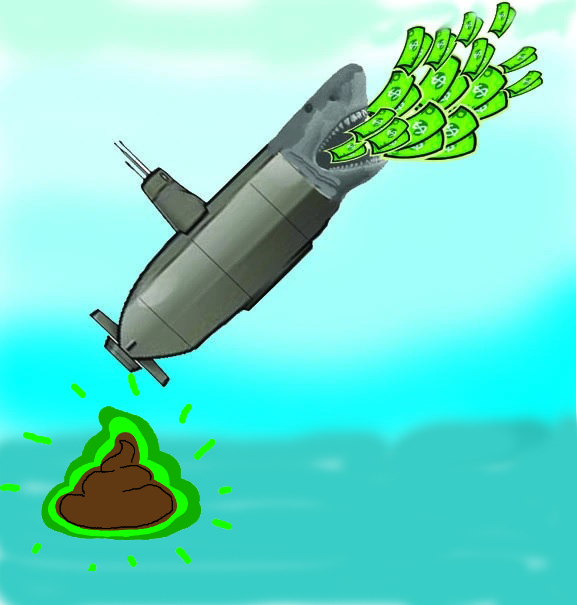
Australia’s $multibillion submarine madness and the phoney China threat
According to the Australian Strategic Policy Institute, the cost of eight would be $171 billion after inflation. More recent estimates are over $200 billion.
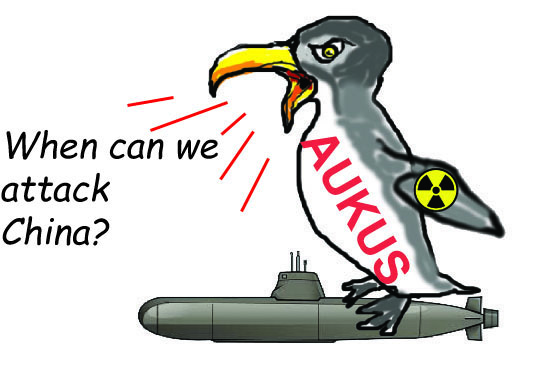
https://johnmenadue.com/australian-submarine-madness/ By Brian Toohey, Nov 4, 2022
Nobody knows what military threats to Australia from China or anyone else will exist in 2050. In these circumstances, it is folly to commit to spending over $200 billion on acquiring eight US designed nuclear attack submarines to deploy in support of the US on the China coast.
This is particularly extravagant when modern conventionally powered submarines are much cheaper and far harder to detect. Nuclear submarines are noisy because they rely on a reactor to power a steam engine with cooling pumps, turbines, reduction gears and steam in the pipes. They also expel hot water that can be detected, as can the wake on the surface when travelling at high speeds.
Modern battery powered submarines, which Australia perversely has no plans to get, maintain near silent operation with what’s called air independent propulsion (AIP) supplied by a hydrogen fuel cell in Singapore’s German submarines, a Sterling engine favoured by the Swedes or in the case of the latest Japanese submarines, by advanced batteries with long endurance.
These submarines have the great advantage of making the crew far safer than noisy nuclear ones while leaving funds over for much needed improvements in Australian’s health, education, and social security systems as well as for tackling climate change.
Yet the Albanese government has a 350 strong task force in Defence planning the big changes needed to build nuclear powered submarines in Adelaide. In contrast, a prize-winning essay published in the US Naval Institute’s magazine Proceedings in June 2018 said the US Navy would do well to consider acquiring “some quiet, inexpensive and highly capable diesel-electric submarines. It said, “The ability of AIP was demonstrated in 2005, when HMS Gotland, a Swedish AIP submarine, ‘sank’ many U.S nuclear fast-attack subs, destroyers, frigates, cruisers, and even the USS Ronald Reagan aircraft carrier in joint exercises”. However, the Australian Navy somehow sees a great advantage in getting US nuclear attack subs such as the Virginia Class that were sunk in the exercise.
One of the US’s most highly regarded defence analysts, Winslow Wheeler, recently pointed out that these subs have been available only 15 times in 33 years for their six-monthly deployments. This suggests fewer than two of Australia’s eight nuclear submarines would be operationally available, on average, each year. According to the Australian Strategic Policy Institute, the cost of eight would be $171 billion after inflation. More recent estimates are over $200 billion.
Australia could build ten of the latest German submarines operated by Singapore for about $10 billion. They also have an outstanding maintenance record, as well as being well suited to the shallow waters in Australia’s region. A similar figure could apply to the latest Swedish ones, but they may not be so readily available. Japan’s new Taigei class would cost roughly the same to buy, but more to operate its bigger crew. The Japanese government would be reluctant to build it in other than in its own shipyards.
These figures suggest that the job of defending Australia could be performed for a reasonable cost, particularly if greater use were made of modern, low-cost, drones. The trend for low-cost drones to become more useful is only likely to grow by 2050 when Australia might be getting its first operational nuclear submarine.
At some stage, a reality check needs to apply to the barrage of claims about increased Chinese aggression or the China threat. The last major war involving China was in Korea in 1950. China argues its rapid arms build-up reflects how it’s surrounded by potential enemies, including the US, which has been in many more aggressive wars and spends much more on its military.
The Pentagon 2021 annual report to Congress on China acknowledged it had withdrawn six land claims to settle border disputes with neighbours. Contrary to the common assumption that it is ready to invade Taiwan, the Pentagon said “There is no indication it is significantly expanding its force of tank landing ships and landing craft – suggesting a traditional large-scale direct beach assault operation requiring extensive lift remains aspirational”.
China could settle some of the extreme territorial sea claims that were originally made by the Communist Party’s political opponent, the Nationalist Party, before 1949. Taiwan also makes these claims. Although abrasive, nobody has been killed. By 2050 the US, with Australia tagging along, may have extended its well-established history of killing people by engaging in international aggression in violation of the rules. Alternatively, in 2050 China could engage in its first major war since 1950 by attempting to invade Australia, except no one no one has suggested any plausible motive.
Although Australian nuclear submarines will not be available, many Australian pundits see a need to go to Taiwan’s aid if secret intelligence analysis says China is about to attack it. Following the illegal invasion of Iraq in 2003 based on concocted intelligence, the Challis chair of international law at Sydney University, Ben Saul, said it’s important to ask if a war over Taiwan would be legal. He wrote in the Lowy Institute’s The Interpreter, “The conventional legal answer favours China. Only a state has the right to use military force in self-defence against an armed attack by another state – and to ask other states to help it to defend itself.”
The Australian Foreign Affairs department says Taiwan is not a state. Saul adds, “In a world with a plurality of different political systems, states are not permitted to use force simply to protect democracy or ‘freedom’ abroad. The US backed Taiwan even when it was a military dictatorship until the 1990s; its defence has never really been about freedom.”
‘Target Oz’: Defence Strategic Review must address nuclear risks
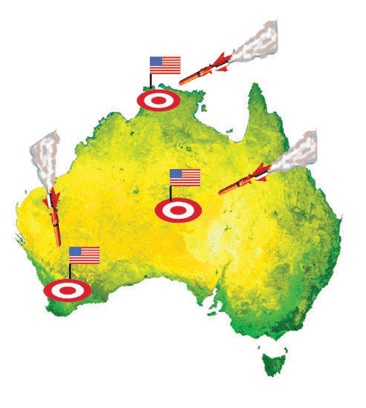
Pine Gap near Alice Springs, RAAF Base Tindal for US B-52’s near Katherine, Darwin Harbour, North-West Cape near Exmouth, and the Stirling submarine base near Fremantle are all potential targets for a strike by China in a conflict with the US over Taiwan or the South China Sea
Pearls and Irritations, By David Noonan, Nov 3, 2022
The Defence Strategic Review must act in accordance with Australia’s commitment to sign the UN “Treaty on the Prohibition of Nuclear Weapons” (the ‘Ban Treaty’) and not seek to compromise that path by supporting roles in nuclear warfare alongside the US.
Anthony Albanese made a commitment in his “Changing the World” Speech (ALP National Conference, 18 Dec 2018), stating:
“We have on our side the overwhelming support of the Australian people. …
Our commitment to sign and ratify the nuclear weapons ban treaty in government is Labor at our best”
The ALP National Platform (2021, p.117) commits “to sign and ratify the Ban Treaty” and Australia must do so in this term of the ALP in federal office.
The Ban Treaty Article 1 Prohibitions require nations to never under any circumstance use or threaten to use nuclear weapons, OR to assist or encourage, in any way, anyone to do so.
To come into compliance with the Ban Treaty, the Defence Review must evolve our Alliance with the US to put an end to defence reliance on US ‘nuclear deterrence’.
The US ‘nuclear weapons umbrella’ is a threat to use nuclear weapons in Australia’s defence policy – a threat that has long been contrary to International Humanitarian Law and is now illegal since the Ban Treaty came into force as a permanent part of International Law from 22 January 2021.
The roles of Pine Gap and the North-West Cape communications base must evolve to exclude military operations related to the use, or threat to use, nuclear weapons.
The ICAN Report “Choosing Humanity” (July 2019) best sets out the case for Australia to sign the Ban Treaty. Foreign Affairs Minister Penny Wong should now refer the Ban Treaty to an Inquiry by the Joint Standing Committee on Treaties as a proposed treaty action.
Australians have a right to know the risk exposure we face in peace time and in war:
While preparing for war, a second lead task for the Defence Review is to provide transparency on the consequences for Australia as a target in an escalating conflict between the US and China.
The Review must report on the scenarios, risks, and consequences of a nuclear or conventional attack by China on bases in Australia and on the potential resultant health calamity.
Both China and Russia’s priority and capacity to attack US bases in Australia has long been recognised. An ASPI Report (Sept 2022) states Pine Gap is a high-level nuclear target, noting:
“We need to understand what the implications would be for Alice Springs, which is a town of 32,000 people only 18 kilometres from the base.”
The lead author of the report, Paul Dibb has stated: “The risk of nuclear war is now higher than at any time since the Cold War. … Australia should not feel its geographic distance from the epicentre of conflict affords it any significant protection. … We need to plan on the basis that Pine Gap continues to be a nuclear target, If China attacks Taiwan, Pine Gap is likely to be heavily involved.”
A Lowy paper (09 August 2021) also cites Darwin as a potential target in a US-China conflict:
“The arena of hostilities for any such conflict would be mostly confined to East Asia, with the possible exception of strikes against US forces using Darwin as a rear-area staging base.”
No doubt Australia acquiring nuclear powered attack submarines and visits or basing US or UK nuclear subs at Stirling naval base near Fremantle escalates the risk profile we face.
Beijing’s Global Times “China needs to make a plan to deter extreme forces of Australia” (07 May 2021) threatened “retaliatory punishment” with missile strikes “on the military facilities and relevant key facilities on Australian soil” if Australia coordinates with the US in a war over Taiwan:
“China has a strong production capability, including producing additional long-range missiles with conventional warheads that target military objectives in Australia when the situation becomes highly tense.”
Pine Gap near Alice Springs, RAAF Base Tindal for US B-52’s near Katherine, Darwin Harbour, North-West Cape near Exmouth, and the Stirling submarine base near Fremantle are all potential targets for a strike by China in a conflict with the US over Taiwan or the South China Sea……………………more

David Noonan B.Sc., M.Env.St., is an Independent Environment Campaigner and was a long-term campaigner for Australian Conservation Foundation.
See the public submission to the Defence Review by David Noonan (29 Oct 2022).
Why does Australia still sell uranium to China?
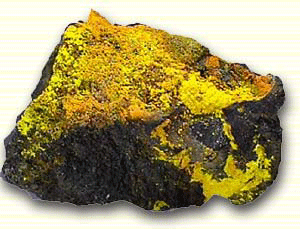
‘Target Oz’: Defence Strategic Review must address nuclear risks, Pearls and Irritations, By David Noonan, Nov 3, 2022“…………… War with China is in open debate. China has potential to attack Australia with nuclear weapons.
Australia banned sale of uranium to Russia in 2014, with Prime Minister Tony Abbott stating:
“Australia has no intention of selling uranium to a country which is so obviously in breach of international law as Russia currently is.”
China should be disqualified from receiving Australian uranium sales given China’s severe breaches of Human Rights and International Humanitarian Law against the Uighur and Tibetan peoples.
I have campaigned against uranium sales to China “Uranium policy a hypocrisy” (Opinion, The Age & SMH, 5 Oct 2009) and raised Human Rights cases:
“Australian uranium will effectively disappear off the safeguards radar on arrival in China, a country whose military is inextricably linked to the civilian nuclear sector and where nuclear whistle-blowers and critics are brutally suppressed and jailed. This alone is reason to disqualify China from acquiring Australian uranium.”
The routine “substitution” of Australian uranium in China, and the Illusion of Protection in ASNO safeguards, warrant an exit from uranium sales to China.
Transparency is a core pre-requisite to any ‘trust’ in nuclear issues but is sorely lacking in China.
BHP Olympic Dam is the only outfit still selling Australian uranium to China.
At best this frees up China to divert its own limited supply of uranium for use in its military nuclear regime, at worst, it directly contributes to nuclear weapons. This is a Defence Review issue.
Australia has no leverage on China and must end our exposure in BHP’s risky uranium sales to China. https://johnmenadue.com/target-oz-the-defence-strategic-review-and-our-risk-exposure-with-the-us-and-china/
As Australia gets American nuclear-capable bombers, it risks becoming a dangerous military mess and target – like Guam
China’s furious reaction as Australia gets US nuclear-capable bombers A furious Beijing has blasted reports of the US gifting Australia nuclear-capable bombers, prompting a concerning warning from China.
https://www.news.com.au/technology/innovation/military/chinas-ominous-threat-to-australia-over-us-nuclearcapable-bombers/news-story/ca67d55d29ef716883078e4fb8e2101f Ally Foster and Frank Chung, November 1, 2022 –
Australia has been issued an ominous threat, after China lashed out at reports of the US sending nuclear-capable bombers to the Northern Territory.
According to an investigation by the ABC’s Four Cornersthat aired on Monday, Washington has drawn up plans to build a dedicated a “squadron operations facility” at the Tindal air base south of Darwin that will house “six B-52s”.
These aircraft are capable of delivering both nuclear and conventional weapons, with a combat range of more than 14,000km.
The news has prompted a furious response from Beijing, with the former editor-in-chief of the CCP-run Global Times issuing an ominous warning to Australia.military
Commentator Hu Xijin said Australia would need to “bear the risks” of this move.
“The PLA’s Dongfeng missiles definitely fly faster than the B-52 bombers,” he wrote on Twitter.
“If Australia wants to become a “big Guam,” then it must bear the corresponding strategic risks.”
There have even been warnings that accepting these bombers could “trigger a regional arms race”.
Chinese Ministry of Foreign Affairs spokesman Zhao Lijian said by sending the bombers to Australia, the US had “increased regional tensions, seriously undermined regional peace and stability, and may trigger a regional arms race”.
“Defence and security co-operation between any countries should be conducive to regional peace and stability and not target or harm the interests of third parties,” he told reporters in Beijing.
Mr Zhao said Beijing was urging all the countries concerned to “abandon the old Cold War zero-sum thinking and narrow geopolitical concepts”.
The focus should instead be on contributing more to regional peace and stability and enhancing “mutual trust”, he said.
With nuclear-capable B-52 bombers in Australia, USA could make lethal nuclear attack on mainland China.
The ability to deploy the long-range bombers to Australia sends a strong message to adversaries about Washington’s ability to project lethal air power, the US Air Force was quoted as saying in the report.
China slams report US to deploy nuclear-capable B-52 bombers in Australia amid Taiwan tensions, SCMP 31 Oct 22
The US Air Force said deploying long-range bombers to Australia sends a message to adversaries about Washington’s ability to project lethal air power
As the B-52s could reach and potentially attack mainland China, they will serve as a warning to Beijing over a Taiwan assault, a defence analyst said
The United States is planning to deploy up to six nuclear-capable B-52 bombers to an airbase in northern Australia, a source familiar with the matter said on Monday, amid heightened tensions with Beijing.
Dedicated facilities for the bombers will be set up at Australian air force’s remote Tindal base, about 300km (190 miles) south of Darwin, the capital of Australia’s Northern Territory, said the source, who declined to be identified because they are not authorised to speak publicly on the issue.
The development was first reported by the Australian Broadcasting Corp (ABC)‘s Four Corners programme, citing US documents………………………..
Australia’s Northern Territory is already host to frequent military collaborations with the United States. Thousands of US marines rotate through the territory annually for training and joint exercises, first started under President Barack Obama.
Australian Defence Minister Richard Marles’ office did not immediately respond to a request seeking comment…………………
The ability to deploy the long-range bombers to Australia sends a strong message to adversaries about Washington’s ability to project lethal air power, the US Air Force was quoted as saying in the report.
Last year, the US, Britain and Australia created a security deal that will provide Australia with the technology to deploy nuclear-powered submarines, riling China.
Becca Wasser, senior fellow at the Washington-based Centre for a New American Security, told the ABC that putting B-52s that could reach and potentially attack mainland China in Australia will be a warning to Beijing, as fears grow of an assault on Taiwan.
Asked about US nuclear bombers being positioned in Australia, Chinese Foreign Ministry spokesperson Zhao Lijian said defence and security cooperation between countries should “not target any third parties or harm the interests of third parties.”
“The relevant US behaviours have increased regional tensions, seriously undermined regional peace and stability, and may trigger an arms race in the region,” Zhao told reporters at a regular briefing in Beijing
“China urges the parties concerned to abandon the outdated Cold War and zero-sum mentality and narrow-minded geopolitical thinking, and to do something conducive to regional peace and stability and enhancing mutual trust between the countries,” Zhao added. https://scmp.com/news/asia/australasia/article/3197806/amid-taiwan-tensions-us-deploy-nuclear-capable-b-
Australia’s slack journalists – mindlessly regurgitate handouts from military-industrial-corporate complex – especially re nuclear submarines

Captive media: what does the submarine scandal tell us about our “defence correspondents”?
The Washington Post documentation of the compromising of the Australian submarine procurement program is a devastating example of Australian state capture by foreign influences – state and corporate – in the case of Australia’s planned largest-ever defence spend.
But the Australian media are missing in inaction.
By Richard Tanter. Oct 26, 2022,
Why did no Australian media outlet tell us the easily discovered truth about the compromising of the integrity of the Australian submarine decision process revealed by US journalists last week?
On October 18th the Washington Post published a closely documented article by Craig Whitlock and Nate Jones titled “Former U.S. Navy Leaders Profited From Overlapping Interests On Sub Deal”.
In unarguable detail Whitlock and Jones laid out the role played by a veritable squadron of retired US admirals and former senior US defence officials in the Australian decision to acquire nuclear-powered submarines.
The opening paragraphs of the Washington Post article make clear the extent to which the Australian submarine procurement decision has been hopelessly compromised and indeed corrupted:
“Two retired U.S. admirals and three former U.S. Navy civilian leaders are playing critical but secretive roles as paid advisers to the government of Australia during its negotiations to acquire top-secret nuclear submarine technology from the United States and Britain.
“The Americans are among a group of former U.S. Navy officials whom the Australian government has hired as high-dollar consultants to help transform its fleet of ships and submarines, receiving contracts worth as much as $800,000 a person, documents show.
“All told, six retired U.S. admirals have worked for the Australian government since 2015, including one who served for two years as Australia’s deputy secretary of defense. In addition, a former U.S. secretary of the Navy has been a paid adviser to three successive Australian prime ministers.
“A Washington Post investigation found that the former U.S. Navy officials have benefited financially from a tangle of overlapping interests in their work for a longtime ally of the United States. Some of the retired admirals have worked for the Australian government while simultaneously consulting for U.S. shipbuilders and the U.S. Navy, including on classified programs.”
Former Defence official Mike Scrafton responded by calling for an urgent public review, saying:
“On the evidence it appears that the nuclear powered submarine decision process was heavily influenced by a clique of former US Navy Admirals with potential conflicts of interest, and who were generously paid by the Australian government. What confidence can Australians have in the soundness of this opaque, overpriced, strategically unjustifiable, and massively underspecified project?”
Scrafton’s excoriating and incisive assessment missed one important aspect of the explosive Washington Post story.
Why was this extraordinarily important story about the compromising of Australian sovereignty and the integrity of Defence procurement discovered by two American journalists and published in a US newspaper?
The documentation of the Washington Post article is complex and detailed, but almost wholly based on documents obtained under the US Freedom of Information Act.
The journalists’ work must have been assiduous over a long period, and would have required funding and editorial support from Post management.
But on the face of it, it was a straightforward, albeit brilliant, use of FOIA materials.
Nothing would have stopped our correspondents in Canberra doing the same thing.
Non-US citizens can use the US FOIA, and distance from Washington is no barrier.
Moreover, as Whitlock and Jones indicate, much of the story was lying about the Canberra landscape in plain sight.
Why then did no defence correspondents for the Australian media majors beat the Post to the story? Or have a go at even a small part of it?
The various parts of the News Corp Australia, the sometime Fairfax-now Nine Entertainment, and Seven West Media commercial media companies, as well as the ABC News division, all have dedicated “defence correspondents”, all filing frequently.
Most in reality do little more than rehashing media releases from the bloated Defence and ADF media units and their better-funded military industry corporate suppliers.
It is a long time since any Australian media major has had a proper and well-supported defence or national security correspondent. It is over a decade since the then Fairfax group laid off the best national security journalist of his generation, Philip Dorling.
The failure of our national media to reach even minimal standards of scrutiny of our massive defence spending programs and the lobbying networks of retired politicians, officials and ADF senior officers on the books and boards of multinational arms companies is effectively another case of state capture.
Other Australian instances have been well documented by studies such as the Australian Democracy Network’s Confronting State Capture, and Michelle Fahy and her colleagues in the Undue Influence group.
With well documented and carefully argued studies, both groups have demonstrated the vulnerability of Australian democracy and sovereignty to undue, illegitimate, and unacknowledged influences – especially in defence.
The Washington Post documentation of the compromising of the Australian submarine procurement program is a devastating example of Australian state capture by foreign influences – state and corporate – in the case of Australia’s planned largest-ever defence spend.
But the Australian media are missing in inaction.
Rather than an endlessly reheated nuclear debate, politicians should be powered by the evidence

[Liberal Coalition opposition leader Peter] Dutton was mostly dismissive of batteries in his budget reply, and implied small modular nuclear reactors (SMRs) – a commercially unproven technology that has been repeatedly delayed and more expensive than promised – could be the answer that ensures cheap energy.
No evidence has been presented to suggest Small Modular Nuclear Reactors are needed to meet demand in Australia, given the country’s wealth of renewable options. Never mind that no independent evidence has been offered to suggest it could compete on price.
Guardian Adam Morton, 31 Oct 22, A renewable-dominated system is comfortably the cheapest form of power generation, according to research.
We should be wary of simple declarations about the increasingly rapid transformation of the electricity grid.
The government has been given a sharp reminder of this after leaning too heavily on pre-election modelling that suggested its policies to boost renewable energy could lead to a $275 cut in bills by 2025. You never know when a Vladimir Putin-shaped villain might disrupt international fossil fuel markets, wreck your assumptions and leave you accused of breaking an election pledge.
Peter Dutton doesn’t have this excuse. The most generous thing that can be said about his foray into the debate over electricity last week is that he might want to get a broader range of advice.
Giving his budget reply speech, the opposition leader said the Coalition wanted more renewable energy, but it just wasn’t possible yet, and it was a mistake for the government to allow ageing and expensive fossil fuel power to be phased out now.
More specifically: “The technology doesn’t yet exist at the scale that is needed to store renewable energy for electricity to be reliable at night, or during peak periods. That is just the scientific reality.”
To put it mildly, this is not the consensus opinion of experts in the field.
David Osmond, a Canberra-based engineer with the global energy developer Windlab, is among those with a markedly different, evidence-based take. For more than a year, he has been posting weekly results from a live simulation tracking what would happen in Australia’s main electricity grid if it relied primarily on renewable energy.
Using a live stream of electricity data from Opennem, he adjusted inputs to see what would happen if there was enough wind and solar energy to supply 60% and 45% of demand respectively. He added enough short-term storage, likely to be in the form of batteries, to supply average demand for five hours.
The results are encouraging. They suggest close to 100% of demand – 98.9% over a 61-week period – could be delivered by solar and wind backed by existing hydro power and the five hours of storage. Nearly 90% of demand was met directly by renewable energy and 10% had to pass through storage. Achieving it would require a major expansion of transmission, as proposed by Labor under its Rewiring the Nation policy………………………………………………………
Plenty of other studies have reached similar conclusions. The big one is the Australian Energy Market Operator’s integrated system plan, a roadmap for the optimal future grid that was released in June. It backed an accelerated build of available technology to reach 83% of renewable generation by 2030, 96% by 2040 and 98% by 2050 as the best, most likely option.
Presented with this evidence, Dutton and the Coalition continue to opt for none of the above.
They appear to have joined a small band, including many in the usual right-wing media echo chambers, convinced that the evidence presented is wrong. Dutton was mostly dismissive of batteries in his budget reply, and implied small modular nuclear reactors (SMRs) – a commercially unproven technology that has been repeatedly delayed and more expensive than promised – could be the answer that ensures cheap energy.
No evidence has been presented to suggest SMRs are needed to meet demand in Australia, given the country’s wealth of renewable options. Never mind that no independent evidence has been offered to suggest it could compete on price.
If SMRs prove economically viable and safe elsewhere there is nothing to stop Australia considering their use, perhaps at remote off-grid industrial sites. It will be a good thing if they are viable, given not every country has ample alternatives to fossil fuels. But they are not designed to do the job needed here – to turn on occasionally and fill gaps in a system running on cheaper, renewable energy.
Rather than an endlessly reheated debate about nuclear – the Coalition is holding another review, so expect plenty more of this – Australians would be better served if its politicians had a close look at a major report last week by the International Energy Agency.
For the first time, the IEA forecast that fossil fuel use across the globe would peak in the next few years as Russia’s invasion of Ukraine accelerated a shift to clean fuels. It found existing policies would soon lead to coal use falling and demand for gas would plateau by the end of the decade. The declines will be much faster if, as expected, climate action continues to ramp up.
Australia has one of the world’s largest fossil fuel export industries. It is supporting massive developments expected to last until late into the century as though nothing much is going to change.
The significant climate impact of these developments is still routinely overlooked by the major parties on the grounds the gas and coal are burned overseas, and therefore somehow not Australia’s problem. But what about the economic and social impact of their potentially rapid decline?
Now there’s an issue truly worthy of more parliamentary debate and action. https://www.theguardian.com/environment/2022/oct/30/rather-than-an-endlessly-reheated-nuclear-debate-politicians-should-be-powered-by-the-evidence
1 This month
7 April – WEBINAR – Australia and the Doomsday Clock – Preventing nuclear war through NoFirstUse and other policies
Online | Tuesday April 7, 4:00-5:30pm, Australian Eastern Time / 8:00-9:30am Central Europe Time
– Access the registration link
15 April – Zoom –Nuclear Power is Not the Solution
Apr 15, 2026 01:00 AM in Canberra, Melbourne, Sydney

Join the International Physicians for the Prevention of Nuclear War (IPPNW) on Tuesday, April 14th for a timely webinar exploring the risks associated with nuclear power and challenging the myth that it offers a simple, safe, carbon-free solution to the climate crisis

21 April Webinar: No Nuclear Weapons in Australia
Start: 2026-04-21 18:00:00 UTC Canberra, Melbourne, Sydney (GMT+10:00)
End: 2026-04-21 19:30:00 UTC Canberra, Melbourne, Sydney (GMT+10:00)
Event Type: Virtual
A virtual link will be communicated before the event.
Host Contact Info: australia@icanw.org

of the week – Australians for War Powers Reform (AWPR)
To see nuclear-related stories in greater depth and intensity
 Antinuclear