A Vassal’s Impulse: Australia Backs US Strike on Iran

The Australian position, along a number of European states, also failed to acknowledge the General Conference Resolutions of the International Atomic Energy Agency (in particular GC(XIXI)/RES/444 and GC(XXIV)/RES/533) declaring that “any armed attack on and threat against nuclear facilities devoted to peaceful purposes constitutes a violation of the United Nations Charter, international law and the Statute of the Agency.”
29 June 2025 Dr Binoy Kampmark, https://theaimn.net/a-vassals-impulse-australia-backs-us-strike-on-iran/
The initial statement from Australian government sources was one of constipated caution and clenching wariness. Senator Penny Wong’s time as head of the Department of Trade and Foreign Affairs has always been about how things come out, a process unsatisfyingly uncertain and unyielding in detail. Stick to the safe middle ground and sod the rest. These were the cautionary words of an Australian government spokesperson on June 22: “We have been clear that Iran’s nuclear and ballistic missile program has been a threat to international peace and security.”
That insipid statement was in response to Operation Midnight Hammer, a strike on three nuclear facilities in Iran by the US Air Force, authorised by US President Donald Trump on June 22. With such spectacular violence came the hollow call for diplomatic prudence and restraint. There was an importantdifference: Tehran, not Israel or Washington, would be the subject of scolding. Iran would not be permitted nuclear weapons but jaw jaw was better than war war. “We note the US president’s statement that now is the time for peace,” stated the spokesperson. “The security situation in the region is highly volatile. We continue to call for de-escalation, dialogue and diplomacy.”
Within twenty-four hours, that anodyne position had morphed into one of unconditional approval for what was a breach of the United Nations Charter, notably its injunction against the threatened or actual use of force against sovereign states in the absence of authorisation by the UN Security Council or the necessity of self-defence. “The world has long agreed Iran cannot be allowed to get a nuclear weapon, and we support action to prevent this. That is what this is,” accepted Wong.
This assessment was not only silly but colossally misguided.It would have been an absurd proposition for the US to make the claim that they were under imminent threat of attack, a condition seen as necessary for a pre-emptive strike. This was a naked submission to the wishes of a small, destabilising and sole (undeclared) nuclear power in the Middle East, a modern territorial plunderer celebratory of ethnonational supremacy.
The Australian position, along a number of European states, also failed to acknowledge the General Conference Resolutions of the International Atomic Energy Agency (in particular GC(XIXI)/RES/444 and GC(XXIV)/RES/533) declaring that “any armed attack on and threat against nuclear facilities devoted to peaceful purposes constitutes a violation of the United Nations Charter, international law and the Statute of the Agency.”
Wong also misrepresented the circumstances under which Iran was told they could negotiate over their nuclear program, erroneously accepting the line from the Trump administration that Tehran had “an opportunity to comply”. Neither the US diplomatic channel, which only permitted a narrow, fleeting corridor for actual negotiations, nor Israel’s wilful distortion of the IAEA’s assessment of Iran’s uranium enrichment plans and prevarication, ever gave chance for a credible resolution.Much like the calamitous, unlawful invasion of Iraq in 2003 by a crew of brigand nations – the merry trio of US, UK and Australia stood out – the autopilot to war was set, scornful of international law.
Wong’s shift from constipated caution to free flow approval for the US attack, with its absent merits and weighty illegalities, was also a craven capitulation to the warmonger class permanently mesmerised by the villain school of foreign relations. This cerebrally challenged view sees few problems with attacking nuclear facilities, the radioactive dangers of doing so, and the merits of a state having them in the first place.
The US attack on Iran found hearty approval among the remnants of the conservative opposition, who tend tospecialise in the view that pursuing a pro-Israeli line, right,wrong, or murderous, is the way to go. Liberal Senator and former Australian ambassador to Israel, David Sharma, thought the Albanese government’s initial response “underwhelming and perplexing,” claiming that support for this shredding of international law “a straightforward position for Australia to adopt.” Sharma is clearly getting rusty on hislaw of nations.
His side of politics is also of the view that the attacked party here – Iran – must forgo any silly notion of self-defence and retaliation and repair to the table of diplomacy in head bowedhumiliation. “We want to see Iran come to the negotiating table to verify where that 400 kilos of enriched uranium is,” stated a very stern opposition home affairs minister, Andrew Hastie. “I’m very glad to see that Penny Wong has essentially endorsed our position and I’m glad we have bipartisanship on this.”
Australia’s response has been that of the weary poltroon. Little has been asked about Canberra’s standout complicity in assisting the US imperium fulfil its global reach when it comes to striking targets. The role of the intelligence signals facility in Pine Gap, cutely and inaccurately called a joint venture, always lends its critical role to directing the US war machine through its heavy reliance on satellite technology. Wong, when asked about the role played by the facility in facilitating the attacks on Iran, had little to say. Australian Prime Minister Anthony Albanese was also cold towards disclosing any details. “We are upfront, but we don’t talk about intelligence, obviously. But we’ve made very clear this was unilateral action taken by the United States.”
At least on this occasion, Australia did not add its forces to anillegal adventure, as it all too wilfully did in 2003. Then, Iraq was invaded on the spurious grounds that weapons of mass destruction not only existed but would somehow be used either by the regime of Saddam Hussein or fictional proxies he might eventually supply. History forever shows that no such weapons were found, nor proxies equipped. But the Albanese government has shown not only historical illiteracy but an amnesia on the matter. Unfortunately, it’s the sort of amnesia that has become contagious, afflicting a goodly number of Washington’s satellites, vassals and friendly states.
Time for Australia to sign non-nuclear treaty
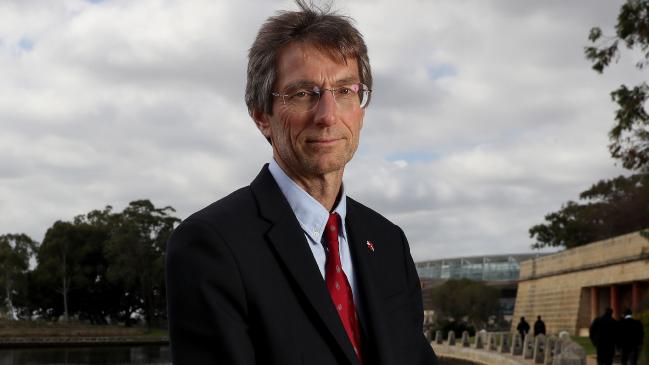
Tilman Ruff says support for the “illegal and unwarranted” US military action in Iran has damaged Australia’s global reputation, and ratifying the treaty would help to repair its credibility.
The Australian co-founder of a Nobel Prize-winning advocacy group says it is time for Labor to honour its promise, while in opposition, to ratify the UN’s nuclear weapons ban treaty.
The Saturday Paper, By Kristina Kukolja, 28 June 25
Australia has long been at the forefront of global efforts towards the containment of nuclear threats. Now, in the wake of the American military strikes on Iran, the International Atomic Energy Agency says the global nonproliferation system is on the brink of collapse. Australian campaigners are calling on the government to step up its advocacy for nuclear disarmament.
“It’s an alarmingly dangerous time – the nonproliferation regime is under severe threat,” says Dr Tilman Ruff, who is co-founder of the International Campaign to Abolish Nuclear Weapons (ICAN), a Nobel Prize-winning advocacy group founded in Australia.
He calls the United States attack on Iran a “frightening escalation” that dealt a “body blow to the peaceful nonproliferation regime … which was already in a parlous state”.
Ruff says Australia must urgently show it is serious about nuclear disarmament by signing and ratifying the Treaty on the Prohibition of Nuclear Weapons (TPNW). Now in its second term, the Labor government has yet to act on a commitment it made while in opposition to sign and ratify the treaty. Ruff is concerned the US is putting pressure on the Albanese government not to sign. He says ICAN has been told that ratification of the treaty hasn’t been raised in cabinet, and it must be. “The issue needs prime ministerial leadership,” Ruff says.
“The reasons for the delay are American pressure and the displeasure that the US would indicate when Australia does this.”
He says support for the “illegal and unwarranted” US military action in Iran has damaged Australia’s global reputation, and ratifying the treaty would help to repair its credibility.
“Australia joining the TPNW would be of global significance, especially if it became the first nuclear weapons supporting and assisting ally of a nuclear-armed state to do so. It would be the most effective way we could support peace and nuclear disarmament, prevent nuclear war and reinforce the rule of law.”
Australia has maintained a strong bipartisan nuclear nonproliferation stance for decades. The Whitlam Labor government established the Australian Safeguards and Non-Proliferation Office (ASNO) more than 50 years ago. It was a Coalition foreign affairs minister, Alexander Downer, who took the test ban treaty to the United Nations General Assembly in 1996, and Australia now has the third-biggest network of stations monitoring for signs of nuclear testing in the world…………………………………………………………………….
Australia’s decision to join AUKUS has raised questions in the Pacific about its ability to meet its own obligations, as a signatory to the South Pacific Nuclear Free Zone Treaty, also known as the Treaty of Rarotonga.
“Pacific peoples feel a great sense of betrayal from what Australia did,” says Fiji-based Epeli Lesuma, a demilitarisation campaigner with the Pacific Network on Globalisation.
“Australia uses a term in Fiji called the ‘Vuvale’ partnership, which means ‘family’. ‘Vuvale’ and ‘Pacific family’ are thrown around by people in Canberra, but the sentiment behind it is hollow – particularly when you think about what Australia did with AUKUS.”
Lesuma says AUKUS is a danger to the Pacific because it will potentially bring nuclear-powered submarines into the region and has pushed island nations into the geopolitical competition between the US, China and Australia.
“The Australian government chose to betray all of us by exposing us to greater nuclear risk and nuclear violence, submarines cutting through the Pacific Ocean – creating a bigger target on our backs.”
“There is no trust,” agrees Samoan-born Maualaivao Maima Koro, a Pacific security expert at the University of Adelaide. She says Pacific nations are looking to Australia for leadership on nuclear issues, in a region that – decades on – is still living with the health and environmental harms of nuclear testing by France, Britain and the US.
“Pacific leaders have the view that Australia will step up because it is the country that can. It is the country with the means, alliances and exposure to do so,” says Koro.
“The idea of Australia’s responsibility to the Pacific Islands Forum is that you can advocate for the interest of the region – but it’s not happening. Pacific Island states want Australia to commit to the Rarotonga treaty and uphold it.” https://www.thesaturdaypaper.com.au/news/defence/2025/06/28/time-australia-sign-non-nuclear-treaty
Why Voters Reject Richard Marles US War
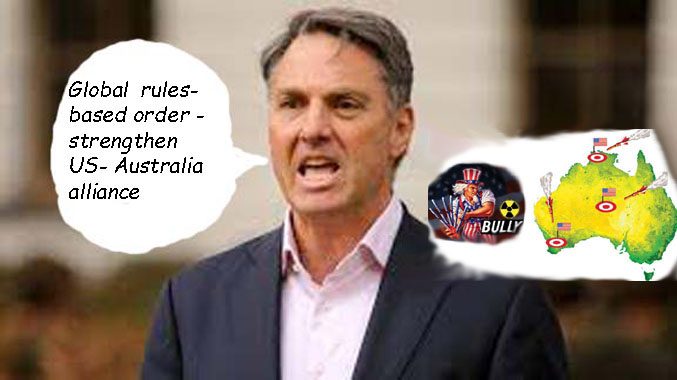
27 June 2025 AIMN Editorial By Denis Hay
Description
Richard Marles US war has anti-war voters turning against him. Learn why peace, sovereignty, and democracy are at stake in 2028.
Introduction
Darwin, 4:42 a.m., June 2025. KC-46 tankers lift off from RAAF Base Darwin, refuelling U.S. bombers returning from a strike on Iranian nuclear sites. Veteran Ron McKinnon, 71, stares from his porch. “Here we go again,” he mutters, haunted by his service in Iraq.
Just hours later, Defence Minister Richard Marles appears on ABC News: “Australia stands shoulder to shoulder with our ally.” Foreign Minister Penny Wong echoes him. But the public mood is shifting fast, as concerns over the Richard Marles US war agenda grow louder.
Agitate: The Iran strike has deepened fears of entanglement in endless U.S. wars.
Solution: Voters now demand a sovereign, peaceful defence policy – and they’re ready to make it an election issue.
PROBLEM – Public Trust Collapse Over U.S. Military Alignment
1. Polls Signal a Sea Change
• 40% of Australians now believe we should distance ourselves from the U.S. (Lowy Institute, 2025)
• Only 26% say we should follow the U.S. into military conflicts.
• 74% oppose involvement in a future war with Iran or China, reflecting a growing rejection of the Richard Marles US war direction.
2. The Trigger: Iran Strike
Australia’s support for the June 2025 U.S. strike on Iran shocked many voters. While the government called it a “measured response,” Australians viewed it as another unjustified conflict.
3. Personal Voices
Ella Tait, an ICU nurse from Newcastle, recalls messaging her brother at RAAF Tindal: “Are you being deployed?” He didn’t reply for hours. Online, #MarlesWarMachine trended as thousands shared anti-war posts.
“We save lives in hospitals, not bomb people across the world,” Ella said.
4. Strategic Concerns
• Pine Gap may have been used to assist the Iran targeting
• Darwin and Tindal bases make Australia a first-strike target in future retaliations
• Experts warn Australia’s role in U.S. wars increases – not decreases – our risk
Consequences of Following the U.S. War Machine
1. Economic Trade-Offs
• AUKUS subs will cost taxpayers $368 billion over 30 years
• Meanwhile, public housing, health, and disaster funding suffer under the financial burden of the Richard Marles US war priorities.
• Australia’s dollar sovereignty means we don’t need to choose war over welfare, but our leaders are
2. Voter Backlash
• Greens, Teals, and Independents have made “Peace Vote” pledges
• In 18 marginal electorates, candidates are calling for War Powers reform
• Many voters say: “If Marles won’t represent peace, we’ll find someone who will”, a clear repudiation of the Richard Marles US war stance.
3. Moral Injury
Every new conflict escalates demand for veterans’ services.
• Defence-linked trauma spikes 19% during combat support operations
• Public sympathy for veterans turns into public anger at those who sent them
“It’s not anti-troop to be anti-war,” says veteran Ron. “It’s anti-stupidity.”
A Peace-First Defence Strategy
1. Use Australia’s Monetary Power for Peace
As a sovereign currency issuer, Australia can fund:
• Fire & flood resilience
• National mental health services
• Cyber defence and coastal radar
No foreign wars required.
2. Model Countries
• Costa Rica abolished its military in 1948 and outperforms neighbours on education & health
• Austria maintains military neutrality and invests heavily in civil defence
• Ireland avoids entangling alliances yet contributes to UN peacekeeping missions, offering a powerful contrast to Richard Marles US war framework.
3. A Legislative Blueprint
A new, independent body could investigate and publicly review Pine Gap’s involvement in past conflicts such as the Iraq and Iran strikes, both tied to Richard Marles US war alignment.
Peace Policy Roadmap: A legislative alternative to Richard Marles US war approach, focused on sovereignty, diplomacy, and the public good.
• Defence of Australia Act – Bans combat beyond 1,000 nm (1,852 km) without a referendum
• War Powers Tribunal – Reviews Pine Gap’s role in Iraq & Iran
• Universal Housing & Health Fund – Redirect defence funds toward social programs
• Pacific Peace Office – Expands diplomacy and soft power in the region
Voter Toolkit
TheyVoteForYou.org.au – Track MPs’ war‑powers votes…………………………………………………………………https://theaimn.net/why-voters-reject-richard-marles-us-war/
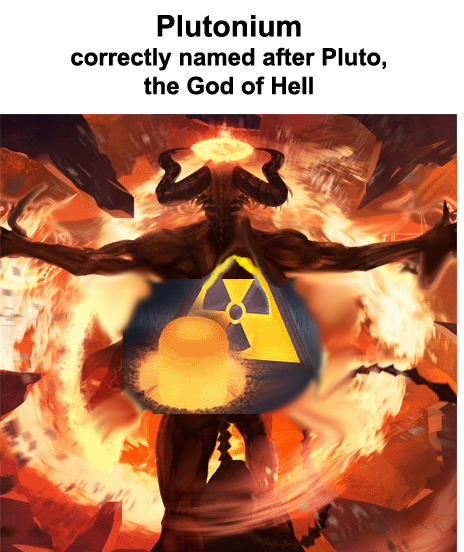
Plutonium Levels in Sediments Remain Elevated 70 Years After Nuclear Tests
June 24, 2025,
https://www.marinetechnologynews.com/news/plutonium-levels-sediments-remain-650328
Researchers from Edith Cowan University (ECU) in Australia have confirmed plutonium levels in sediment up to 4,500 times greater than the Western Australian coastline.
Three plutonium-based nuclear weapons tests were conducted at the Montebello Islands in the 1950’s, which introduced radioactive contamination to the surrounding environment. The first nuclear test, coded Operation Hurricane, had a weapon’s yield of some 25kT, and formed a crater in the seabed, while the second and third tests, dubbed Operation Mosaic G1 and G2, had weapons yields of around 15kT and 60kT, respectively.
The three tests released radioactive isotopes including plutonium, strontium (90Sr) and caesium (137Cs) into the surrounding marine environment.
“Plutonium is anthropogenic, which means that it doesn’t exist on its own in nature. The only way it is introduced into an environment is through the detonation of nuclear weapons and from releases from nuclear reprocessing plants and, to a lesser extent, accidents in nuclear power plants,” said ECU PhD student and lead author Madison Williams-Hoffman.
“When plutonium is released into a coastal setting in the marine environment, a significant fraction will attach to particles and accumulate in the seabed, while some may be transported long distances by oceanic currents.”
The region is not inhabited by humans and has not been developed, however it is visited by fishing boats, so collecting data on the levels of contamination in the marine environment is important.
Currently, the protected island archipelago and surrounding marine areas also reside within the Montebello Islands Marine Park (MIMP). The MIMP is ecologically significant due to the presence of numerous permanent or migratory species, and its high-value habitat is used for breeding and rearing by fish, mammals, birds and other marine wildlife.
The water and sediment quality within the MIMP are currently described as ‘generally pristine’, and it is fundamental to maintain healthy marine ecosystems in the region.
The concentrations of plutonium at Montebello Islands were between 4 to 4,500 times higher than those found in sediment from Kalumburu and Rockingham from the Western Australian coastline, with the northern area of the archipelago, close to the three detonation sites, having four-fold higher levels than the southern area.
The concentrations of plutonium found in the sediment at Montebello Islands were similar to those found in the sediment at the Republic of Marshall Islands (RMI) test sites, despite 700-fold higher detonation yields from nuclear testing undertaken at RMI.
Plutonium is an alpha emitter so, unlike other types of radiation, it cannot travel through the skin and is most dangerous when ingested or inhaled.
The research was undertaken by Williams-Hoffman, under the co-supervision of Prof. Pere Masqueand at ECU and Dr Mathew Johansen at ANTSO.
Trump’s rap sheet is long, but this may top them all

The International Atomic Energy Agency (IAEA) has not blown the whistle as claimed by the Australian government, nor has the UK or our European allies.
any resolution to condemn the bombing of Iran will be vetoed by the US , presumably with the support of Australia
The Age, Geoffrey Robertson , 24 June 25, – (print version)
Although few may bother to point this out, Trump has just committed a crime much worse than all the others on his rap sheet.
It is the war crime of aggression- the “supreme” war crime, according to the judgement at Nuremberg. It is constituted by using armed force against a felloe United Nations member with such “character, gravity and scale” that it violates the UN charter prohibition on one member country attacking another. A “spectacular military success, the bombing of Iran’s nuclear facilities may have been, but it was, as a matter of international law, no different from Russia’s attack on Ukraine, or the George W Bush Tony Blair, John Howard invasion of Iraq. These a all cases of a breach of the world order agreed after the last war and likely to encourage emulation.
This is not about saving Iran, or the danger of making Putin look better. If any government in the world deserves to be destroyed, it is the mullahs without mercy in Iran. Many of them were involved in the mass slaughter of political prisoners in1988 – the worst crime against POWs since the Japanese death marches. – and ever since their record of killing peaceful protestors, women and dissidents has been disgusting. Iran has bankrolled terrorist organisations and wagedpropaganda wars against the Big (US) and Little (UK) Satan, but it has not invaded Israel or done anything to America to justify its aggression.
Were some hypothetical war crimes court ever to get its hands on Israeli Prime Minister Benjamin Netanyahu, it would reduce his sentence by taking Iranian provocation into account – but the man would still be guilty as charged. He could not argue self-defence, which requires the threat defended against to be reasonably proximate. The threat of Iran building and using nukes is much further away than the threat of Israeli submarines, said to be already stationed within range of Tehtan.
It is not even clear that Iran is close to building a nuclear weapon – several dozen countries also signatory to the nuclear weapons treaty by which they forswear any such development. could build nukes within a few months. The International Atomic Energy Agency (IAEA) has not blown the whistle as claimed by the Australian government, nor has the UK or our European allies.. And just like Saddam Hussein’s “weapons of mass destruction” there is no reason to think Iran has completed a project that in fact started under .the Shah in the 1970s.
Only last wee, Trump said in effect to the Ayatollah, in the tone of a gangster “Wee know where you live”, but he promised the cleric he would be safe “for now” and gave him two weeks. He bombed three days later (This is a man on whose word Australia has just made a down payment for AUKUS).
The true disaster of Trump’s attack is that it is another nail in the coffin of the rules-based world order that provided some protection for international pdeace and security since it was put in place in 1945.
It is now unfit for its purpose declared in the UN Charter to stop the slaughter of war. The General Assembly is a talking shop, while all power resides in the permanently poleAxed Security Council which cannot function because of the big power veto.
Resolutions for peace in Ukraine are vetoed by Russia, for peace in Gaza they are vetoed by America on behalf of Israel, and any resolution to condemn the bombing of Iran will be vetoed by the US , presumably with the support of Australia.
Besides, the problem with Iran goes beyond nuclear weapons. It’s a conflict between the rights of its people and the wrongs of its dictatorship. That is a conflict that only its people can resolve, however much the West may wish to help.
Trump has already made a mockery of US law, from which his Supreme Court has declared him immune. Hewill now make a mockery of international law, roo.
Geoffrey Robertson KC is an expert in international and human rights law. He is the author of Mullahs Without Mercy and Crimes Against Humanity.
Why is Australia Supporting the US Attack on Iran?
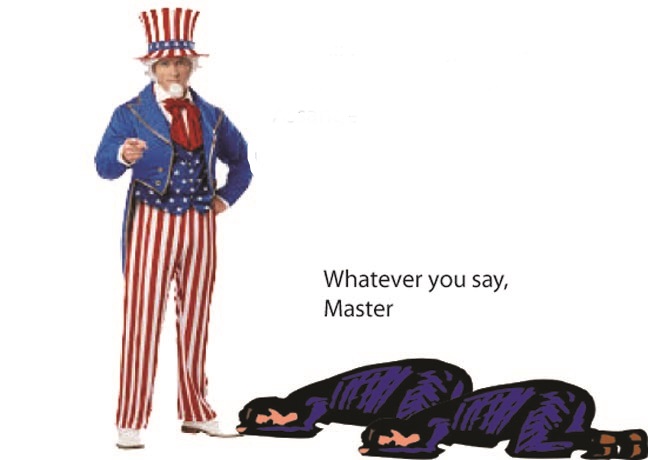
24 June 2025 AIMN Editorial, By Denis Hay https://theaimn.net/why-is-australia-supporting-the-us-attack-on-iran/
Description
Why is Australia supporting the US attack on Iran despite no proven nuclear threat? Explore the truth behind the alliance and why our national interest is at stake.
Introduction: The Flashpoint
Location: Parliament House, Canberra – just hours after the US launched strikes on Iranian facilities.
The Prime Minister steps up to the podium. Flashbulbs pop. He says solemnly, “We support action to prevent Iran from acquiring nuclear weapons.”
But there’s a problem: Iran does not have nuclear weapons. Nor has the International Atomic Energy Agency (IAEA) found proof of an active nuclear weapons program. Yet, Australia is once again supporting US attack on Iran, despite lacking credible evidence.
By supporting the US attack on Iran, Australia reinforces a troubling trend of endorsing military aggression based on disputed intelligence.
This article delves into the underlying reasons behind this decision, separating rhetoric from reality.
The Problem: Why Australia Is Supporting the US Attack on Iran
A History of Following Washington
Since Vietnam, Australia has followed the US into conflicts: Iraq, Afghanistan, and Syria. The justification is often “shared values”, but the outcomes? Displacement, destabilisation, and destruction.
“We’re not a central player,” the PM insists. Yet, we continue to echo Washington’s every move.
No Proof, Yet Full Support
The IAEA has repeatedly said there’s no verified Iranian nuclear weapons program. Iran enriched uranium to 60%, but weapons-grade is 90 %+. Still, our leaders claim this is reason enough for supporting the US attack on Iran, even without definitive proof.
What Was Actually Hit?
According to US sources, the strikes targeted “nuclear-related sites”. But independent verification is scarce. And our Prime Minister won’t confirm whether Pine Gap or other Australian resources were involved. This silence raises concerns that supporting the US attack on Iran also involves more profound complicity behind the scenes.
The Consequences of Obedience
Civilian Risk and Global Fallout
Imagine being an Australian working in Tehran. One day, you’re sending postcards home. Next, you’re rushed to the Azerbaijani border under armed escort. Over 3,000 Australians were left scrambling.
“We’re evacuating staff,” Foreign Minister Wong said. “Airspace is closed.”
Damaged Diplomacy, Rising Insecurity
Supporting the US attack on Iran damages Australia’s credibility as an independent voice in global affairs. We’re seen less as an independent nation and more as a military proxy. This makes us, and our citizens, potential targets.
The Illusion of Peace Through Bombs
Our leaders claim they “support de-escalation.” Yet, they support an illegal airstrike that has only escalated tensions.
Peace isn’t achieved through provocation – it’s forged through diplomacy.
Double Standards in Nuclear Politics
The Real Nuclear Threats: Israel and the USA
While Iran is accused of developing nuclear weapons without proof, Israel, a state with confirmed nuclear warheads, faces no sanctions or inspections. Worse still, Israel continues to violate international law, commit human rights abuses, and face allegations of war crimes. Yet, it is never threatened with airstrikes.
The United States remains the only country in history to use nuclear weapons in war, dropping them on the civilian populations of Hiroshima and Nagasaki in 1945. Despite indications that Japan was already seeking surrender, the bombs were deployed, not just to end the war, but as a geopolitical message to the world.
Many historians now consider the attacks to have been militarily unnecessary and politically motivated.
“You don’t stop a nuclear war by attacking countries that don’t even have nuclear weapons. You stop it by holding those with them accountable.”
US Militarism: A Global Record of Havoc and Misery
From Vietnam to Iraq, Libya to Syria, and coups in Latin America and Africa, the United States has caused immense suffering worldwide. Their justification – “freedom” and “democracy” – rarely materialises for the people left behind.
Australia’s uncritical support not only aligns us with this destruction, but it also makes us complicit.
A Foreign Policy True to Australia’s Interests
Uphold International Law, Not Just Alliances
Australia must reaffirm its commitment to the UN Charter, which permits the use of military force only in self-defence or with the approval of the Security Council. Unilateral aggression is illegal.
Prioritise Evidence Over Allegiance
Before expressing support for military action, the Australian Government must demand verifiable intelligence. Without proof, there should be no participation – military or moral.
Transparency About Pine Gap and Involvement
Pine Gap plays a critical role in US surveillance and drone strikes. Citizens have a right to know whether their country is taking actions that violate international law.
Leverage Our Dollar Sovereignty
Australia issues its own currency, meaning we are not financially dependent on any foreign state. We can afford to fund independent diplomacy, peace building, and humanitarian aid rather than militarism.
“We are not broke. We are not beholden. Let’s act like it.”
The Price of Following, The Power of Leading
For decades, Australia has marched in step with the United States, often at the cost of our principles, safety, and independence.
This time, we are supporting the US attack on Iran, a strike on a country accused of a crime without evidence, risking war, instability, and the lives of Australians abroad.
Yet, we have the means, through monetary sovereignty, public accountability, and diplomacy, to reject supporting the US attack on Iran and shape a better, more independent path. We need the political will to make the choice.
Q&A Section
Q1: Was Iran about to build a nuclear weapon?
A: The IAEA has confirmed Iran has enriched uranium to 60%, which is not weapons-grade. There is no verified evidence of an active nuclear weapons program.
Q2: Could Australia have refused to support the strike?
A: Yes. Australia is a sovereign nation that can choose an independent foreign policy. We were not compelled to support a strike, especially without legal backing.
Q3: What role does Pine Gap play in US operations?
A: Pine Gap is a joint US-Australia intelligence base. While our leaders avoid specifics, it’s widely known that Pine Gap supports surveillance and targeting data for US military operations, including drone strikes.
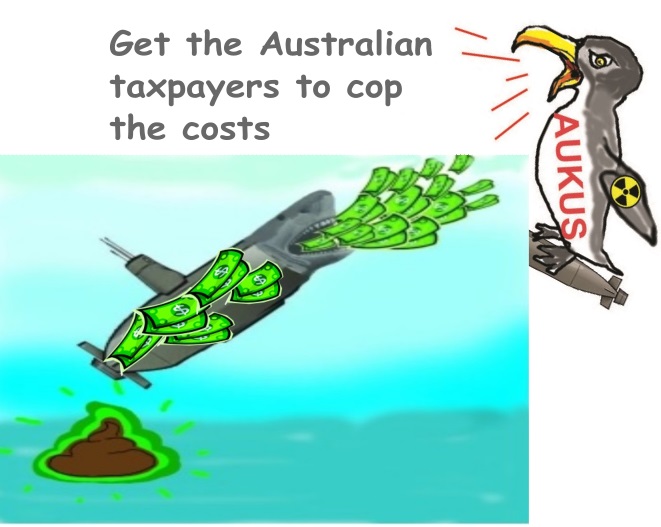
Aukus will cost Australia $368bn. What if there was a better, cheaper defence strategy?
Jonathan Barrett and Patrick Commins, Guardian, 15 June 25
As questions swirl around the nuclear submarine deal, some strategists are pushing for an alternative, ‘echidna’ policy that focuses less on offensive capability
As Australia’s nuclear submarine-led defence strategy threatens to fray, strategists say it’s time to evaluate whether the military and economic case of the tripartite deal still stacks up.
The defence tie-up with the US and UK, called Aukus, is estimated to cost up to $368bn over 30 years, although the deal could become even more costly should Donald Trump renegotiate terms to meet his “America first” agenda.
The current deal, struck in 2021, includes the purchase of three American-made nuclear-powered submarines, the construction of five Australian-made ones, as well as sustaining the vessels and associated infrastructure.
Such a price tag naturally comes with an opportunity cost paid by other parts of the defence force and leaves less money to address societal priorities, such as investing in regional diplomacy and accelerating the renewable energy transition.
This choice is often described as one between “guns and butter”, referring to the trade-off between spending on defence and social programs.
Luke Gosling, Labor’s special envoy for defence and veterans’ affairs, last year described Aukus as “Australia’s very own moonshot” – neatly capturing both the risks and the potential benefits.
Opportunity cost
Sam Roggeveen, director of the Lowy Institute’s international security program, says there are cheaper ways to replicate submarine capabilities, which are ultimately designed to sink ships and destroy other submarines.
These include investing in airborne capabilities, more missiles, maritime patrol aircraft and naval mines, he says.
“If you imagine a world without Aukus, it does suddenly free up a massive portion of the defence budget,” says Roggeveen.
“That would relieve a lot of pressure, and would actually be a good thing for Australia.”
Roggeveen coined the term “echidna strategy” to argue for an alternative, and cheaper, defence policy for Australia that does not include nuclear-powered submarines.
Like the quill-covered mammal, the strategy is designed to build defensive capabilities that make an attack unpalatable for an adversary. The strategy is meant to radiate strength but not aggression.
“The uncertainty that Aukus introduces is that we are buying submarines that actually have the capabilities to fire Tomahawk cruise missiles on to an enemy land mass,” says Roggeveen.
“That is an offensive capability that’s ultimately destabilising. We should be focusing on defensive capabilities only.”
Those advocating for a more defensive approach, including Albert Palazzo from the University of New South Wales, point out that it is more costly to capture ground than it is to hold it…………………..
Social cost
…………………..Saul Eslake, an independent economist, says higher defence spending is coming at a time of substantially higher demands on the public purse across a range of areas, from aged care, to disability services and childcare………………………..
Political cost
While expert opinion divides over whether nuclear-powered submarines are the best strategic option for Australia’s long-term defence strategy, there’s a separate question over whether the submarines will be delivered……………………………….. https://www.theguardian.com/world/2025/jun/15/aukus-will-cost-australia-368bn-what-if-there-was-a-better-cheaper-defence-strategy?fbclid=IwY2xjawLHNQpleHRuA2FlbQIxMQBicmlkETFyMEl3YVlwYXlzdE5HaUFzAR7t2VVyRqzmPs-WhsC_dhvz9susqUAqTdxsascsmPSKfkWBQ93MS4DJ24z_9Q_aem_lR5byRgSjQDcUUkIsx-k0w
Australia backs US strikes on Iran while urging return to diplomacy
Australia’s explicit expression of support for the strikes goes a step further than allies including the UK, Canada and New Zealand
By political reporter Tom Crowley ABC News 23 June 25
In short:
Australia has given its support to US strikes on Iranian nuclear facilities but has repeated calls for de-escalation to avoid a wider war.
Penny Wong said Australia had not received a request for assistance and declined to speculate on how any request would be met.
What’s next?
A National Security Meeting was held in Canberra on Monday morning.
Australia has given its support to US strikes on Iranian nuclear facilities but has repeated calls for de-escalation to avoid a wider war.
Prime Minister Anthony Albanese said on Monday Australia was in favour of action to prevent Iran getting a nuclear weapon, echoing comments made earlier on Monday by Foreign Minister Penny Wong.
“The world has long agreed Iran cannot be allowed to get a nuclear weapon, and we support action to prevent that. That is what this is,” the PM told reporters.
The government initially adopted a more cautious tone, declining to give its explicit support.
Senator Wong said Australia had not received a request for assistance and emphasised the US action was “unilateral” when asked whether Pine Gap, a shared military facility, had been engaged.
While the PM and foreign minister declined to speculate on the response to any such request, Mr Albanese said Australia was “deeply concerned” about the prospect of escalation, placing the onus on Iran.
“We want to see diplomacy, dialogue and de-escalation … Iran had an opportunity to comply, they chose not to and there have been consequences of that,” he said.
Earlier, Senator Wong cited a UN watchdog finding that Iran had acquired enriched uranium at “almost military level”.
“The key question for the international community is what happens next … It’s obviously a very precarious, risky and dangerous moment the world faces,” she said.
The National Security Committee, comprised of key ministers, met in Canberra this morning.
Australia’s explicit expression of support for the strikes goes a step further than allies including the UK, Canada and New Zealand, although all three countries have emphasised the risk of Iran gaining nuclear weapons.
Opposition supports strike, Greens opposed
The Coalition supported the strikes on Sunday and also says it does not want further war, but has put the onus on Iran to negotiate peace.
“We want to see Iran come to the negotiating table to verify where that 400 kilos of enriched uranium is,” Andrew Hastie told ABC Radio National……………………………………..
Dave Sharma, a Liberal senator and former Australian ambassador to Israel, said the government’s response was “underwhelming and perplexing” on Sunday and that support for the strikes “should be a straightforward position for Australia to adopt”.
The Greens are against the strike, with defence spokesperson David Shoebridge calling Donald Trump a “warmonger” and demanding Australia clarify it will not get involved.
“You cannot bomb your way to peace … and the people who are always going to pay the price are the ordinary people on the street,” he said.
……………………………………………….. Five Eyes partners respond
UK Prime Minister Keir Starmer spoke to Mr Trump via phone, emphasising the “grave risk” of Iran’s nuclear program and placing the onus on Iran “returning to the negotiating table as soon as possible”, according to a readout of the call.
A joint statement from the UK, France, Germany and Italy urged Iran not to “take any further action that could destabilise the region” but did not include an explicit position on the strike.
The New Zealand government has “acknowledged” the strike, and called for diplomacy, Foreign Minister Winston Peters saying “ongoing military action in the Middle East is extremely worrying”.
Canadian PM Mark Carney said Iran should not be allowed to obtain a nuclear weapon and that the US strike “was designed to alleviate that threat”, but stopped short of explicitly endorsing it and called for “all parties” to return to the negotiating table. https://www.abc.net.au/news/2025-06-23/australia-backs-us-strikes/105448088
AUKUS collapse offers Australia the chance to navigate an innovative future.
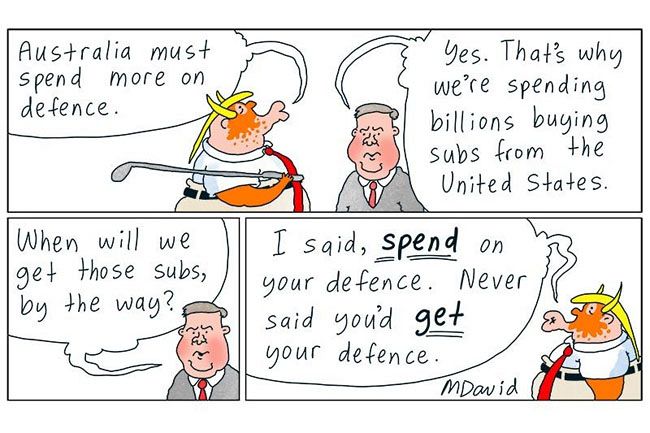
(Cartoon by Mark David / @MDavidCartoons)
By Alan Austin | 23 June 2025, https://independentaustralia.net/politics/politics-display/aukus-collapse-offers-australia-the-chance-to-navigate-an-innovative-future,19859
Donald Trump’s likely abandonment of the AUKUS contract offers the Albanese Government a welcome reprieve from a costly folly, as Alan Austin reports.
THE USA LOOKS LIKE it is abandoning the controversial AUKUS contract signed by the miserably inept Morrison Government in its dying days.
The corrupt and incompetent U.S. President Donald Trump wants out. He has proven to the world that the only projects he strongly supports are those that enrich himself and his companies directly. Australia, with other Westminster nations, refuses to pay direct bribes to individual national leaders — as it should.
Now showing advanced cognitive decline and a failing grip on reality, Trump has effectively signalled the contract’s demise by calling for a formal review by Defence Under Secretary Elbridge Colby. Colby has long been a vocal AUKUS critic and will probably recommend cancellation.
Sound reasons to abandon AUKUS
The first pillar of the deal between Australia, the UK and the USA is for the Americans to supply Australia with nuclear-powered attack submarines for its defence, starting with three Virginia-class submarines in the early 2030s.
The second pillar is collaboration between the three nations on new military technology. These include undersea capabilities, artificial intelligence, electronic warfare and advanced cyber, hypersonic and counter-hypersonic capabilities.
Colby’s argument against the AUKUS deal is simply that the USA doesn’t have enough submarines for their own needs and can’t build them fast enough to have any to spare in the foreseeable future. That is true. The current U.S. Administration is the least competent in its history.
Other AUKUS critics have more compelling reasons for its abandonment. The most cogent of these, articulated by former prime ministers Paul Keating and Malcolm Turnbull and others, is that nuclear subs supplied by the USA will necessarily be operated by American personnel and automatically commandeered by the U.S. military in the event of hostilities between the USA and China, over Taiwan or any other conflict.
It would be disastrous for Australia’s relationship with China and other nations, Keating argues, to be dragged into such a war.
Resources lost forever
If AUKUS collapses, Australia has little chance of getting back the billions already invested.
Among the countless failures of the monumentally inept Morrison Coalition Government was leaving out of the contract any penalties for defaults.
In any event, the lifelong criminal grifter currently running the White House has never felt obliged to fulfil contracts, however legally or morally binding.
The losses to Australia as a result of the incompetence of the Coalition from 2014 to 2022 now amount to hundreds of billions of borrowed dollars, including the billions paid out for AUKUS so far.
These simply have to be accepted as penalties citizens must bear for the abject stupidity of those who elected such a hopeless rabble to try to run the country.
Visionary naval future
If AUKUS fails and Australians write off the losses, they can then grasp this as an opportunity to pursue advantageous alternatives.
The future of underwater naval warfare increasingly appears to be in unmanned underwater vessels (UUVs). Australia is well-placed to build these for its own purposes and then sell them to regional neighbours and beyond.
This may seem a quantum leap for shipbuilding in Australia, but it can be accomplished.
Australia proved to the world it could build the Collins-class submarines during the Hawke/Keating period and has successfully procured other military ordnance since then.
In its first term, the Albanese Government began its investment in small UUVs. Australian marine vessel manufacturer Anduril Australia, a subsidiary of the American Anduril Industries, is already building a modest UUV which it calls Ghost Shark.
Although technical information is restricted, military monitor The War Zone has revealed details of the partnership involving Anduril, the Royal Australian Navy (R.A.N.) and the Defence Science and Technology Group.
A Ghost Shark prototype, according to The War Zone, has a 3D-printed exterior, weighs 2.8 tons, is 5.6 metres long and can operate at a depth of 6,000 metres for ten days. Advanced AI technology enables autonomous operations.
The R.A.N. hopes to get three UUVs suitable for both military and non-military missions between 2025 and 2028.
Challenges for the future, beyond Ghost Shark, are for vessels capable of higher speeds, deeper dives, longer missions, greater stealth and more advanced assignments, including accurate delivery of lethal weapons.
If Australia’s current submarines can be replaced with technologically advanced UUVs, costs will be much lower and risks to personnel dramatically reduced. This may allow Australia to cut military spending overall.
Potential partnerships
Australia does not have the resources to build UUVs alone. Just as the Collins-class submarines were built collaboratively with Swedish shipbuilder Kockums, new ventures will require partners.
Possibilities, besides American firms like Anduril, are many. Current UUVs in service include Germany’s Greyshark, France’s XLUUV and vessels from Japan and South Korea.
Prime Minister Anthony Albanese’s discussion topics with his Canadian counterpart, Prime Minister Mark Carney, at last week’s G7 meeting included Canada joining AUKUS. That’s another possible partner.
Grounds for optimism
Australia has shipyards in South Australia and the solid experience of designing, building and maintaining the Collins-class submarines from the 1980s to the present.
Australia enjoys the goodwill of all neighbouring nations, has no current engagement in any conflict and sees no threats on the horizon.
Australians have banished the destructive Coalition parties from any chance of forming government for the foreseeable future.
So, to borrow a line from Michael J Fox in The American President, let’s take this 94-seat majority out for a spin and see what it can do.
Out of pocket and stranded: What happens if Trump pulls out of AUKUS | Four Corners Documentary
Why Richard Marles Backs the U.S. War Machine
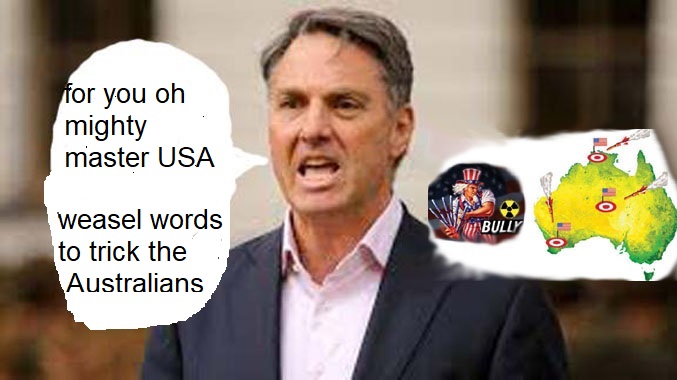
Since becoming Defence Minister, Richard Marles has overseen a shift that aligns Australia more closely with U.S. military goals than ever before.
Richard Marles backs the U.S. military, not just with rhetoric, but with billions in public funds diverted from services Australians urgently need.
Richard Marles is a senior figure in the Labor Right, a faction increasingly indistinguishable from the Liberal Party on core issues such as defence, foreign policy, and trade.
20 June 2025 AIMN Editorial, By Denis Hay
Description
Richard Marles backs the U.S. military power on Australian soil. Discover how it risks our sovereignty, and what citizens can do to reclaim it.
Introduction – A Quiet Coup Over Australia’s Defence
Location: Tindal, Northern Territory. Action: A U.S. B-52 bomber roars overhead. Thoughts: “Are we a launchpad for war?” Emotions: Unease, betrayal.
It’s 2025. As Defence Minister Richard Marles smiles beside a Pentagon official, another defence deal is signed. Few Australians notice. Even fewer understand its implications. Our government says it’s about ‘defending democracy.’ But whose democracy, and against what threat?
While China is still our biggest trading partner, we’re warned of its menace. Meanwhile, U.S. troops, bombers, and weapons quietly embed themselves deeper into our soil. This isn’t protection, it’s occupation by consent.
How did we end up here? And why is it that Richard Marles backs the U.S. military over Australia’s sovereign interests?
Problem: The Erosion of Australian Sovereignty
A Defence Strategy Written in Washington
Since becoming Defence Minister, Richard Marles has overseen a shift that aligns Australia more closely with U.S. military goals than ever before. The 2021 USFPI agreement expanded joint military operations.
Billions have since been given to help U.S. base upgrades in Darwin and Tindal, alongside hosting U.S. nuclear-capable planes.
This is yet another example of how Richard Marles backs the U.S. military agenda, prioritising American strategic interests over national independence.
“It’s not just alliance cooperation, it’s dependence,” says defence analyst Dr. Alison Broinowski.
The Permanent U.S. Footprint
- U.S. bases in Australia: Pine Gap, Robertson Barracks, and now expanded northern airfields. Ref: How US Military Bases in Australia Threaten Our Future & How to Remove Them
- Rotating forces: Thousands of U.S. Marines cycle through annually, training for potential regional conflicts.
- Infrastructure: Funded by Australian public money for U.S. strategic benefit.
Public Money, Private Empire
Under Marles’ leadership, defence spending reached 2.4% of GDP in 2024. That’s over $60 billion, more than education or climate resilience combined. But this isn’t public defence, it’s public subsidy for the U.S. military-industrial complex.
This is precisely how Richard Marles backs the U.S. military, not just with rhetoric, but with billions in public funds diverted from services Australians urgently need.
The Manufactured ‘China Threat’
A Convenient Villain
There is no evidence that China poses a military threat to Australia. Defence intelligence reports confirm no plans for invasion or aggression. Yet headlines scream of ‘Chinese expansionism,’ fuelling fear and compliance.
Who Benefits?
- Weapons contractors profit from panic.
- U.S. hegemony is preserved through Australian complicity.
- Political careers thrive on appearing ‘tough on China.’
“The U.S. has surrounded China with 200+ military bases,” notes historian John Pilger. “China has none outside its borders. Who’s the aggressor here?”
Real Consequences for Australians
Story: Emily, a nurse in Perth, struggles to afford rent. Her hospital is understaffed. Meanwhile, Marles commits $368 billion for nuclear submarines, years away from delivery, if ever.
“Why do we always find money for war, but never for nurses?” Emily asks.
Because Richard Marles backs the U.S. military, while ignoring the suffering of frontline workers like Emily.
The Labor Right: A Party Captured by Foreign and Corporate Interests
Richard Marles and the Rise of Labor’s Conservative Core
Richard Marles is a senior figure in the Labor Right, a faction increasingly indistinguishable from the Liberal Party on core issues such as defence, foreign policy, and trade.
Rather than upholding the Labor tradition of peace, workers’ rights, and democratic independence, the right faction embraces military alliances and market orthodoxy.
Their influence is evident in Labor’s full-throated support for AUKUS, Marles’ open enthusiasm for U.S. military integration is no coincidence – Richard Marles backs the U.S. military model as central to Labor’s right-faction ideology, and the suppression of internal dissent from more progressive voices within the party.
“Marles speaks more like a U.S. Pentagon spokesperson than an Australian minister,” notes a former Labor policy adviser.
How the Right Faction Is Reshaping Labor
This shift reflects how Richard Marles backs the U.S. military, pushing Labor further from its peace-promoting roots.
Suppresses internal debate on AUKUS, Palestine, and climate.- Aligns with corporate donors, including arms manufacturers.
- Stifles progressive legislation, watering down meaningful reforms.
The result? A Labor Party that once represented workers and peace is now compromised and cautious, often at the expense of sovereignty and social justice.
A Peaceful, Sovereign Path Forward
Reclaiming Foreign Policy Independence
- End the U.S. military presence on Australian soil.
- Cancel or renegotiate treaties that erode autonomy.
- Prioritise diplomacy over deterrence.
Invest in Public Needs, Not Foreign Conflicts
Redirect defence billions to:
Fully fund Medicare.- End homelessness.
- Provide free tertiary education.
Australia, as a sovereign nation with currency-issuing power, can fund peace just as easily as it funds war. The real limitation is a lack of political will, not a shortage of money.
Learn from Global Examples
- Costa Rica abolished its military in 1948. Today, it ranks among the world’s happiest and healthiest nations.
- Finland and Switzerland remain militarily neutral but are globally respected.
“We must stop being a staging post for other nations’ wars,” says Senator David Shoebridge.
Marles, the U.S., and Our Crossroads
For decades, Australia walked a delicate line, partner to the U.S., yet proudly sovereign. That line is vanishing.
Richard Marles has accelerated Australia’s subservience to U.S. military interests under the guise of strategic cooperation. But what we face is not defence, it’s deterrence at the cost of independence.
This is the inevitable outcome when Richard Marles backs the U.S. military without accountability or public consent.
And it’s happening with full ministerial approval, Richard Marles backs the U.S. military posture without public scrutiny or debate.
It’s time Australians asked: Who does our government really serve?
Q&A – Reader Questions Answered…………………………. https://theaimn.net/why-richard-marles-backs-the-u-s-war-machine/
Cross your fingers, Australia, and hope the AUKUS deal collapses

he Americans agreed to the deal because they saw it to be in their strategic interest, not ours. As then-U.S. Deputy Secretary of State Kurt Campbell observed (indiscreetly) last year, “we have them locked in now for the next 40 years.”
All that AUKUS and its associated alliance commitments have done for Australia is paint more targets on our back.
The crazy irony is that we are spending huge sums to build a new capability intended to defend us from military threats that are most likely to arise simply because we have that capability
The U.S. sub purchase was a bad deal then and it makes even less sense now.
By Gareth Evans, Project Syndicate, https://www.japantimes.co.jp/commentary/2025/06/18/world/australia-should-hope-for-aukuss-collapse/
MELBOURNE –
The AUKUS partnership, the 2021 deal whereby the United States and the United Kingdom agreed to provide Australia with at least eight nuclear-propelled submarines over the next three decades, has come under review by the U.S. Defense Department.
The prospect of its collapse has generated predictable handwringing among those who welcomed the deepening alliance, and especially among those interested in seeing Australia inject billions of dollars into underfunded, underperforming American and British naval shipyards. But in Australia, an AUKUS breakdown should be a cause for celebration.
After all, there has never been any certainty that the promised subs would arrive on time. The U.S. is supposed to supply three or possibly five Virginia-class submarines from 2032, with another five newly designed SSN-AUKUS-class subs (built mainly in the U.K.) coming into service from the early 2040s. But the U.S. and the U.K.’s industrial capacity is already strained, owing to their own national submarine-building targets and both have explicit opt-out rights.
Some analysts assume that the Defense Department review is just another Trumpian extortion exercise, designed to extract an even bigger financial commitment from Australia. But while comforting to some Australians (though not anyone in the Treasury), this interpretation is misconceived.
There are very real concerns in Washington that even with more Australian dollars devoted to expanding shipyard capacity, the U.S. will not be able to increase production to the extent required to make available three — let alone five — Virginia-class subs by the early 2030s. Moreover, Elbridge Colby, the U.S. under-secretary of defense for policy who is leading the review, has long been a skeptic of the project and he will not hesitate to put America’s own new-boat target first.
Even in the unlikely event that everything falls smoothly into place — from the transfers of Virginia-class subs to the construction of new British boats, with no human-resource bottlenecks or cost overruns — Australia will be waiting decades for the last boat to arrive. But given that our existing geriatric Collins-class fleet is already on life support, this timeline poses a serious challenge. How will we address our capability gap in the meantime?
Cost-benefit analysis should have killed the project from the outset. But in their eagerness to embrace the deal, political leaders on both sides of parliament failed to review properly what was being proposed. Even acknowledging the greatly superior speed and endurance of nuclear-powered subs and accepting the heroic assumption that their underwater undetectability will remain immune from technological challenge throughout their lifetimes, the final fleet size seems hardly fit for the purpose of national defense.
Given the usual operating constraints, Australia would have only two such subs deployed at any one time. Just how much intelligence gathering, archipelagic chokepoint protection, sea-lane safeguarding or even deterrence at a distance will be possible under such conditions? Moreover, the program’s eye-watering cost will make it difficult to acquire the other capabilities that are already reshaping the nature of modern warfare: state-of-the-art drones, missiles, aircraft and cyber defense.
The remaining reason for believing, as former Australian Prime Minister Paul Keating put it, that an American opt-out “will be the moment Washington saves Australia from itself,” concerns AUKUS’s negative implications for Australia’s sovereignty. The Americans agreed to the deal because they saw it to be in their strategic interest, not ours. As then-U.S. Deputy Secretary of State Kurt Campbell observed (indiscreetly) last year, “we have them locked in now for the next 40 years.”
It defies credibility to believe that the U.S. would transfer such a sensitive technology to us — with all the associated emphasis on the “interchangeability” of our fleets and new basing arrangements in Australia — unless it could avail itself of these subs in a future war. I have had personal ministerial experience of being a junior U.S. ally in a hot conflict situation — the first Gulf War in 1991 — and my recollections are not pretty.
Alongside the Pine Gap satellite communications and signals intelligence facility — which has always been a bull’s-eye — one can add Perth’s Stirling submarine base, the Northern Territory, with its U.S. Marine and B-52 bases and possibly a future east-coast submarine base.
The crazy irony is that we are spending huge sums to build a new capability intended to defend us from military threats that are most likely to arise simply because we have that capability — and using it to support the U.S., without any guarantee of support in return should we ever need it.
If the AUKUS project does collapse, it would arguably still be possible for Australia to acquire replacements for its aging submarine fleet within a reasonable time frame — and probably at less cost, while retaining real sovereign control — by purchasing off-the-shelf technology elsewhere. One can even imagine us going back to France, which was snubbed in the AUKUS deal, and making a bid for its new-generation Suffren-class nuclear-powered sub.
But a better defense option may simply be to recognize that the latest revolution in military technology is real and that our huge continent and maritime surroundings will be better protected by a combination of self-managed air, missile, underwater and cyber capabilities than by a handful of crewed submarines. There is no better time to start thinking outside the U.S. alliance box.
Gareth Evans was Australia’s foreign minister (1988-1996), president of the International Crisis Group (2000-2009) and chancellor of the Australian National University (2010-2019). © Project Syndicate, 2025
Going to war with China will be an unequivocal disaster for Australia

Perhaps the Honourable Minister should also be and remain quiet – or better still be removed from his portfolio – because he is doing nothing for the Labor cause; and seems to be actively attempting to reduce Labor’s chance at a second term. He should unequivocally realise that if Australia goes to war the Liberal mantra will become, ‘this is on you Labor, you dragged us into this war and it is up to the LNP to get us out.’
the US will not place any of its assets at risk in order to defend Australia, this should be fundamentally and clearly understood by the people of Australia.
19 June 2025 AIMN Editorial, By Dr Strobe Driver https://theaimn.net/going-to-war-with-china-will-be-an-unequivocal-disaster-for-australia/
“Up shit creek in a barbed-wire canoe, without a paddle”: The implausible direction Australia’s current Defence Minister is taking the country.
For those of you who aren’t familiar with the above mentioned expression it means things are about as bad as they can get; likely to get worse; and are as it stands, a continuum of a disaster.
This is where Australia stands at the moment when examining Australia’s role in the Asia-Pacific; the rise of China; the ‘position’ this is placing Australia in terms of it being a ‘middle power’ in the region; the dependence on the United States of America (US) as an ally; and the way in which the current Defence Minister (the Honourable Richard Marles (MP) is approaching the current and future components of the regional strategic situations.
The spat between former prime minister Keating and the current Deputy Prime Minister and Defence Minister Marles is ongoing and is far too detailed to go into here other than to mention Keating believes Marles has essentially ‘ceded Australia’s sovereignty’ to another country (the US); and Marles wants ‘strategic transparency from China in its regional military build-up’ and of course the well-worn argument that Australia will be dragged into a war should the US-China situation become ‘kinetic’ – in other words the fighting becomes real. So, with this in mind let’s ‘cut to the chase’ and figure out how Australia would actually ‘fair’ in the outbreak of a war with China and utilise some rationale.
First and foremost, and as I have previously stated in my book The Brink of 2036, the US having sought and gained assurance that Australia is its ‘closest ally’ decides it will ‘go after’ China over its retrocession claims on Taiwan and a war breaks out – the question that begs is, what does that make Australia? This makes Australia an enemy of China and therefore, the Chinese military is now legally entitled to strike Australia.
China would veto any and all conversation in the UNSC (as it is a Permanent Five (P5) member) and use all of its legal powers to circumvent any and all United Nations’ debate about its use of force against US allies. Secondly, the US will not place any of its assets at risk in order to defend Australia, this should be fundamentally and clearly understood by the people of Australia. The US may come to Australia’s aid – it will utilise discretion – however, should it be deemed necessary, it will only enter into any and all aspects associated with the protection of Australia when its assets are not at a high risk of destruction/incapacitation. Where does this leave Australia? One could safely argue a dyad: alone, unless the US’ intervenes.
For the purpose of this essay war has been declared and therefore, a perspective is needed.
The most telling perspective is that Australia faces a rising power and bearing in mind China has continued its rise exponentially since circa-2010, as before that one could safely argue its rise was only incremental, and thus, it is now a major regional power – soon to become a global one. Hence, Australia will have become the enemy of an enormously powerful country.
What then, would said country do to its middle-power regional enemy? There are no surprises here as it is being played out by Israel in the Gaza strip; and the Russian Federation in Ukraine and moreover, it is exceedingly visible; and easy-to-understand. As a side issue, though an important one, and just to strike further terror into the hearts of Australians, the US and Russia as members of the P5 have shut down through the power of veto any and all conversation about whether Israel’s incursion into Gaza and Russia’s invasion of Ukraine are not warranted. One need not even bother to assume what pathway China will take in its war/fight with Australia. With this in mind let’s move towards China’s kinetic tactics on Australia.
As with any war the first things that need to be destroyed are ‘bases and bridges.’ Bases because they house personnel and vital equipment and bridges which essentially refer to anything (not just bridges over a waterway) that equipment can be transported from in order to get ‘to’ a place/location. China with its significant and enormous amount of missiles and the ability to place them through assets (submarines in particular), will fire hundreds of them into Australian assets – some for advantage and some for ‘publicity,’ that is to say, ‘here’s what we can do.’ The former will be RAAF bases, RAN and RAA bases with a single focus on maintenance and repair facilities; and the latter will be major railway lines (the Ghan; Indo-Pacific; and north east coast public lines); and then major highways the Bruce Highway in particular, will be targeted as will the Darwin-Adelaide highway.
As with any war the first things that need to be destroyed are ‘bases and bridges.’ Bases because they house personnel and vital equipment and bridges which essentially refer to anything (not just bridges over a waterway) that equipment can be transported from in order to get ‘to’ a place/location. China with its significant and enormous amount of missiles and the ability to place them through assets (submarines in particular), will fire hundreds of them into Australian assets – some for advantage and some for ‘publicity,’ that is to say, ‘here’s what we can do.’ The former will be RAAF bases, RAN and RAA bases with a single focus on maintenance and repair facilities; and the latter will be major railway lines (the Ghan; Indo-Pacific; and north east coast public lines); and then major highways the Bruce Highway in particular, will be targeted as will the Darwin-Adelaide highway.
As with any war the first things that need to be destroyed are ‘bases and bridges.’ Bases because they house personnel and vital equipment and bridges which essentially refer to anything (not just bridges over a waterway) that equipment can be transported from in order to get ‘to’ a place/location. China with its significant and enormous amount of missiles and the ability to place them through assets (submarines in particular), will fire hundreds of them into Australian assets – some for advantage and some for ‘publicity,’ that is to say, ‘here’s what we can do.’ The former will be RAAF bases, RAN and RAA bases with a single focus on maintenance and repair facilities; and the latter will be major railway lines (the Ghan; Indo-Pacific; and north east coast public lines); and then major highways the Bruce Highway in particular, will be targeted as will the Darwin-Adelaide highway.
The Honourable Defence Minister should cease and desist with his current monologue and political ineptness toward China and should be upfront with the Australian people in what will happen, should we go down this ‘rabbit hole’ of exceptionalism in the region; and yet, willingly yet aimlessly back the US. Australia will become a failed state if we go to war and it is timely to remind the Australian public there are (approximately) as many personnel in the NYPD as there are personnel in the Australian Defence Force.
Perhaps the Honourable Minister should also be and remain quiet – or better still be removed from his portfolio – because he is doing nothing for the Labor cause; and seems to be actively attempting to reduce Labor’s chance at a second term. He should unequivocally realise that if Australia goes to war the Liberal mantra will become, ‘this is on you Labor, you dragged us into this war and it is up to the LNP to get us out.’
The level of political-ineptness and downright political-maladroitness shown by this minister is however nothing new, as Australia seems to have had a cavalcade of utterly hopeless defence ministers over the past three decades. The real problem this time is this one is politically stupid-to-the-core when Australians need astute, articulate and well-defined decision-making.
Meanwhile, China continues to plan its ongoing rise to ‘pax-Sino’ and we have someone at the helm who is plainly and insufferably politically incompetent when there is a dire need to truly understand the milieu of Australia’s defence needs.
‘Punishment phase’ explained: The punishment phase of aerial bombardment is designed to ‘inflict enough pain on enemy civilians to overwhelm their territorial interests’ and in doing so induce surrender, or hasten total defeat. See: Robert Pape. Bombing To Win: Air Power and Coercion in War. New York: Cornell University Press, 1996, 59.
Dr Strobe Driver – Strobe completed his PhD in war studies in 2011 and since then has written extensively on war, terrorism, Asia-Pacific security, the ‘rise of China,’ and issues within Australian domestic politics. Strobe is a recipient of Taiwan Fellowship 2018, MOFA, Taiwan, ROC, and is an adjunct researcher at Federation University.
Warmongering Marles commits Australia to US war against China amid Iran mayhem.
Let’s never forget the truth, that Iran is compliant with its international nuclear reporting; Israel is not. Israel doesn’t even allow the IAEA to check their nuclear facilities, Iran is a member of the Nuclear Non-Proliferation Treaty, unlike Israel.
It is not the generals emblazoned with their medals who will pay the price if we march off to another worthless American war. It is not the pusillanimous media pundits, nor the preening politicians. It is young Australians who will pay the price.
by Michael West | Jun 17, 2025 | https://michaelwest.com.au/warmongering-marles-commits-australia-to-us-war-against-china-amid-iran-mayhem/
The craven appeasement of Benjamin Netanyahu by Western media and political elites has brought the world to the brink of war. Now Richard Marles says Australia’s part in a US war against China is a fait accompli. Michael West reports.
The closest Deputy PM Richard Marles has come to war may well be a school debating stoush at Geelong Grammar but here he is today, on page 1 of Rupert Murdoch’s warmongering The Australian, committing young Australians to war against China. Should it transpire.
Our major trading partner, which has posed us no threat but buys 40% of our exports and has delivered nothing but prosperity to The Lucky Country.
Given the way things are shaping up in Europe, America and the Middle East, the spectre of World War 3 has never loomed so large. This morning Donald Trump warned Iranians to evacuate Tehran, the capital and home to 10 million people. Now there are reports of Trump seeking executive orders to invade.
There is little doubt that the Neville Chamberlains in Western governments and media, these sapless appeasers of the political and media elites, who have supported ‘our friend Israel’ and its demonic leadership of genocidaires, are culpable for the deaths of thousands (in Gaza and the West Bank, Syria, Lebanon and now Iran). They are guilty of genocide, the world’s most egregious crime, and now Israel’s attacks on Iran, in a world daily edging closer to WW3.
They could have stopped this. Cowed by Israel money and the fear of being called antisemitic, they didn’t. Who loses this? Everybody, Israel included. The first casualty of Israel’s unprovoked assault on Iran last week was a child, buried under rubble.
It is Western appeasement of the Netanyahu government which has led to this; principally the US, UK and Germany, with Australia a bit player albeit with blood dripping from its hands.
Sucked in by Benjamin Netanyahu, again, sucked in by the Israel propaganda of Iran’s nuclear program, world mainstream media again – the very people who fell for the ’40 babies beheaded’ and mass rapes of October 7 – are now running Israel’s ‘regime change’ narrative.
Plus ca change
We’ve seen it before: in Vietnam the ‘domino theory’, in Iraq the fabled WMD which turned regime change when that was found out. “Liberty, freedom and democracy” they cried, after Netanyahu sold them into that war. A million dead, a spate of world terrorism. Islamic State.
And Afghanistan, whose cause turned from Osama bin Laden to regime change to remove the Taliban. Twenty years later the Taliban were back in office.
These abysmal failures, one after another, and now we’ve got Murdoch again beating the drums of war for an attack on China.
Australia is walking into another disastrous war by kowtowing to the US. AUKUS – the controversial security alliance – has made us less safe, not more safe.
The government of Anthony Albanese, feebly abetted by a warmongering Coalition and media, dead-set scared of what the US will say, or the chicken-hawk Coalition, is wedged … if they don’t go all the way with Donald J.
Real strength is being able to stand up to bullies and make the right decisions, not cravenly cave to the demands of our ‘allies’ carrying out a genocide in Gaza and now destabilising the whole world. The ‘global rules based order’ is a sick joke.
Iran support
And make no mistake, that is what we are doing, destabilising the world. China has said it would back Iran in the face of Israeli aggression, Russia has its own thing going with Ukraine but presumably backs Iran. Pakistan, a neighbour and ally of Iran, says it will nuke Israel if Israel nukes Iran.
North Korea – whose decision to get nukes has been entirely vindicated by Western aggression – backs Iran. It is topsy turvey. In Syria, Israel and the US have installed a puppet regime of former Isis and Al Qaeda types – yes the very terrorists who they funded to commit war crimes are now their allies.
This is an almighty mess, and at its epicentre is Israel which decries the regime in Iran, a country which has not attacked another country in 300 years, a country where, despite an authoritarian government, embraces freedom of religion. Mosques, churches and synagogues are free.
In Palestine and Lebanon, Netanyahu and his cronies have been gleefully bombing mosques and churches. No arabs or Thai workers have been crowding the bomb shelters this week as Israelis scurried for cover from Iran’s retaliatory strikes, crying victimhood. In this apartheid state, bomb shelters are only for Jews.
Plainly, we are on the wrong side, the ‘genocide’. And now we see Richard Marles and his media proxies talking about the threat from China and the inevitability of joining a US war.
As Israel continues to murder dozens of civilians daily under cover of media blackouts, starving and murdering Gazans as they scramble for food – and annexing the West Bank – the war crimes by the US/Israel alliance are legion, too many to be listed here; they are daily.
This morning Israel bombed an Iranian TV station mid-broadcast, unapologetically gloating about it in the media; like the grotesque terrorism of its pager explosives, another war crime, targeting journalists going about their jobs.
Follow the money
Trump, the self-described peacemaker, has lost control. And behind it, if we follow the money is an epic laundering operation which has dragged in the entire political class in the US.
It is quite simple: America sends billions in public money, earned by their taxpayers, to support Israel every year. Israel in turn sends money to its lobby groups such as AIPAC, bribing almost every politician on Capital Hill to support its genocide and deny its daily war crimes, its land theft, rape and torture of prisoners, its unrelenting, barbaric military aggression.
And Australia, we are sending our tributes to these US warmongers via AUKUS for submarines which may never arrive, certainly not in time for this looming war, if it occurs. We can only hope common sense prevails. But when it comes to cajoling Australia into its next useless war, the US only has to pamper one man, and that’s Albo.
War powers reform
We can be thankful it’s not Peter Dutton. But few would put store in Albo to stand up to US pressure. The rub is that, in the UK and US, the decision to go to war is made by a vote of Parliament or Congress. In Australia, there is no vote. It is down to the PM, one man. It’s Albo’s call.
So what can we expect? The warmongers of the media are stepping up their campaigns. We have seen it all before, it will all be about downplaying Israel’s aggression. It will all be about demonising the Iranian regime, driving spurious arguments for regime change as if it is our right to meddle in the affairs of countries which want peace and which have done no wrong.
It will be about the elusive, unfounded threat of Iranian nukes, it will dehumanise Iranians, just like it did the people of Gaza. the machine will do all it can to manufacture consent for war. This – Fox News ‘secret Iranian nuclear weapons site revealed’ – is a taste of things to come.
Iran compliant, Israel not
Let’s never forget the truth, that Iran is compliant with its international nuclear reporting; Israel is not. Israel doesn’t even allow the IAEA to check their nuclear facilities, Iran is a member of the Nuclear Non-Proliferation Treaty, unlike Israel.
These facts will be dutifully buried in an avalanche of lies and spin but if the world needs regime change, they should start with Israel, not Iran. Somehow Netanyahu has managed to – in his jungle of lies – inveigle the US into war with Iraq and ‘regime change’ in a plethora of countries.
He has trashed the reputation of his country forever, demolished any credibility it might have enjoyed, lost to the Palestinian resistance in Gaza after almost two years, and failed miserably in his two stated aims of ousting Hamas and returning the hostages.
And this despite America and the US deploying more firepower than Nagasaki and Hiroshima, killing and maiming 100s of thousands of civilians. And now starving them to boot.
Still the IDF can’t summon the guts to go down in the tunnels and take Hamas on, mano a mano, preferring instead to frock up in the lingerie of their victims and blithely prance around on social media celebrating their war crimes.
Netanyahu and his cronies, including America, have destroyed Israel through their brutality and stupidity and given rise to antisemitism. While blaming everybody else from peace protestors to Palestinians, they are squarely to blame.
It is not the generals emblazoned with their medals who will pay the price if we march off to another worthless American war. It is not the pusillanimous media pundits, nor the preening politicians. It is young Australians who will pay the price.
Why the AUKUS ‘dream’ was never realistic and is likely to die

it has always been clear that Washington will sell us its submarines only if it is absolutely certain Australia would commit them to fight if the US goes to war with China.
The Albanese government has never acknowledged it is willing to make that commitment.
it has always been clear that Washington will sell us its submarines only if it is absolutely certain Australia would commit them to fight if the US goes to war with China.
The Albanese government has never acknowledged it is willing to make that commitment.
Hugh White, Jun 16, 2025, https://www.thenewdaily.com.au/opinion/2025/06/16/aukus-submarines-review-australia
The first clear sign the Trump administration was taking a long hard look at AUKUS came two weeks ago, when US Secretary of Defence Pete Hegseth gave his first major speech on US strategic policy in Asia at the annual Shangri-La Dialogue in Singapore.
In a long presentation that catalogued a host of initiatives with America’s Asian allies, AUKUS was not mentioned once.
This was noteworthy, because under the Biden administration, AUKUS was the poster-child for US military engagement in the region, name-checked at every opportunity. Now we understand why.
The Pentagon’s review of AUKUS, announced last week, marks the first time any of the three partners – the US, Britain and Australia – has tested the AUKUS dream against hard military and strategic realities. It is unlikely to survive.
AUKUS was always a long shot, right from the start. That was clear from the moment, back in September 2021, that then prime minister, Scott Morrison, sprung the dream of an Australian nuclear-powered submarine force on an astonished public. For that dream to be realised, a lot of things would have to go right, and most of them were much more likely to go wrong.
But the flaw that looks set to kill the AUKUS dream is one that was not part of the original plan. The way Morrison and his then defence minister, Peter Dutton, originally conceived it, there would be no need for Australia to acquire US-built Virginia-Class subs in the 2030s before taking delivery of Australian-built subs to replace the Collins-class boats. They were confident that subs built in Australia, almost certainly to a British design, could be delivered fast enough to enter service as the old Collins subs were being retired, ensuring no gap in our capability.
It became clear this was not going to work out only after Labor took office in 2022, as the new government tried to turn Morrison’s vague idea into a viable project. It soon found there was simply no way to bring new Australian-built nuclear subs into service until long after the Collins boats had to be retired.
To save the AUKUS dream, it was necessary to fill the gap between the retirement of the Collins and the delivery of the first of what we now know as the UK-designed, Australian-built SSN-AUKUS class of submarine. That was when the idea of Australia getting ex-US Navy Virginia class boats first surfaced.
It was a desperate measure that vastly increased the already formidable risks of the whole AUKUS idea. One reason is that it meant the Royal Australian Navy had the almost impossible task of managing and operating not one but two very different kinds of nuclear submarine, powered by two very different nuclear power plants.
For a navy that has struggled to keep the much simpler Collins subs at sea, the task of operating just one class of nuclear-powered subs was truly formidable. To expect it to effectively operate two quite different classes of nuclear submarine simultaneously was frankly absurd.
But there is another reason why the decision to buy Virginia subs to cover the capability gap undermined the viability of the whole AUKUS plan.
Very simply, the US has no submarines to spare. The facilities and workforce that build and maintain its submarines have never recovered from the savage cuts imposed in the 1990s after the end of the Cold War. No serious steps were taken to rebuild it even after it became clear China had become a formidable new maritime rival.
The result is that America’s two submarine construction yards have for many years been delivering barely half as many Virginia-class subs as the Pentagon now says America needs – about 1.2 a year instead of two a year.
This problem was acknowledged when the AUKUS partners announced the detailed plan in 2023. It was optimistically claimed that everything necessary would be done to increase production to the level of 2.3 subs a year required to meet US needs and provide extra boats for Australia.
So far, there is no sign of that happening. Elbridge Colby, the senior US official conducting the Pentagon’s AUKUS review, will almost certainly puncture the irresponsible optimism around this crucial issue and make it clear that unless there is a miracle in US submarine production, America will not sell any Virginia-class subs to Australia.
But that’s not all. Even if that miracle is achieved, US leaders and officials still have to ask whether it makes sense for America to pass the extra submarines to Australia rather than bring them into service with the US Navy.
Any subs sold to Australia weaken America at a time when it is already struggling to match China’s fast-growing navy. So it has always been clear that Washington will sell us its submarines only if it is absolutely certain Australia would commit them to fight if the US goes to war with China.
The Albanese government has never acknowledged it is willing to make that commitment. The Biden administration, desperate for its own reasons to keep the AUKUS dream alive, did not press Canberra on this very sensitive point.
The Trump administration will be much tougher. Colby’s review will also certainly conclude that America should not sell Virginia-class subs to Australia, unless Canberra offers much clearer and more public guarantees that Australia will go to war with China if the US ever does.
For Canberra, this could well be a deal-breaker, making the end of the AUKUS dream. It certainly should be.
Hugh White’s new Quarterly Essay, Hard New World: Our Post-American Future, is published this month.
Hugh White, Emeritus Professor of Strategic Studies at the Strategic and Defence Studies Centre, Australian National University
AUKUS faces bigger tests than Trump’s ‘America first’ review, US and UK experts warn.
The deal could undermine Australia’s sovereignty. it could lock Australia into following the Americans into a confrontation with China over Taiwan.
“You are in the punch-up, whether you like it or not.”
The deal could undermine Australia’s sovereignty. it could lock Australia into following the Americans into a confrontation with China over Taiwan.
“You are in the punch-up, whether you like it or not.”
ABC News, Four Corners, By Mark Willacy, Ninah Kopel and Lara Sonnenschein, 16 June 5
Key defence figures on both sides of the Atlantic warn the risks to AUKUS run deeper than whether a review finds Australia’s biggest ever defence deal is “America first” enough for Donald Trump.
They’ve told Four Corners of the damage being done to decades-old alliances by Mr Trump’s unpredictability and contempt for the US’s allies, the UK’s increasing focus on Europe, and concerns neither country has the capability to deliver the submarines on time or on budget.
With Australia’s allies holding all the cards, and our Indo-Pacific defence strategy at stake, it’s possible we could be left billions out of pocket, without submarines, and with one of our oldest alliances in tatters.
AUKUS alliance ‘undermined’
Even before the US decided to review the deal, a senior member of the country’s powerful Armed Services Committee was warning Mr Trump’s “idiotic” and “bullying” behaviour towards allies presented risks to the alliance with Australia.
The US president has repeatedly said that he regards Canada as the “51st state”, while his belittling of Ukrainian president Volodymyr Zelenskyy in the Oval Office in February shocked American allies around the world.
Mr Trump has also threatened to take back control of the Panama Canal and has not ruled out military force to wrest Greenland from Denmark.
The House Armed Services Committee’s highest-ranking Democrat, congressman Adam Smith, said Canberra had reason to be concerned about whether “the strong partnership between the US and Australia will remain”.
“I cannot possibly be critical enough of the way the Trump administration has treated our partners and allies since they were elected … it’s really stupid,” he said.
“Their contempt for allies and partners has the potential, not just to undermine the AUKUS agreement, but to undermine the very national security of the United States of America.”
Former US National Security Adviser Jake Sullivan also fears that Mr Trump has undermined America’s standing with its allies and partners.
“I think this is a great source of alarm,” Mr Sullivan, who served in the role under president Joe Biden, told Four Corners. “The direction of travel right now is quite disturbing.”
Mr Sullivan said he understood why allies such as Australia, may be wondering where they stand with the US president.
“I’m not sure that [Mr Trump’s] looking for territory Down Under … not to make light of it,” Mr Sullivan said.
“But I can see why people are asking questions. ‘Hey, what the heck is going on here? This isn’t right.'”
Key voices in the UK, the third alliance partner, are also troubled about the implications for AUKUS.
Former Royal Navy admiral Alan West said, “dear old Trump coming in, that has … stood everyone on their heads really”.
“Things that we absolutely took as a certainty are no longer a certainty,” said Lord West, formerly the official who oversaw the Royal Navy’s operations.
“What he’s been saying about Canada [being the 51st state] is outrageous actually. It’s like stamping on a fluffy bunny really, isn’t it? It’s just terrible.”
America first?
Under the AUKUS agreement the US is supposed to transfer at least three nuclear-powered Virginia-class attack submarines to Australia in the 2030s.
But it’s not building enough Virginia-class submarines for its own fleet, let alone enough to supply Australia.
To meet its targets the US would need to build them at a rate of 2.3 a year. It’s only making 1.2 a year.
Christopher Miller, who served as the acting Defense Secretary in the dying days of the first Trump administration, warns production is “moving too slow”.
“I think probably most of that’s on the United States side, to be perfectly honest with you,” Mr Miller said.
“The problem is we don’t have the workforce, the welders, the skilled machinists that are required.”
Adam Smith conceded slow production had put pressure on the AUKUS deal.
“But I’m hoping that the AUKUS deal will also put pressure the other way. It’ll put pressure to solve that problem,” Mr Smith said.
Earlier this year Australia’s Defence minister handed over $800 million to his US counterpart. It’s the first of six payments designed to help bolster the struggling American submarine industry.
The chief of the Royal Australian Navy, Vice Admiral Mark Hammond, told Four Corners Washington was determined to boost production and to fulfil its obligations under the deal.
“That is the United States Navy’s job to set the conditions to enable that to succeed,” Vice Admiral Hammond said.
“They’re being backed up with strategic investment by the United States and by Australia. So I’ve got every reason to believe they will succeed.”
‘They can walk away’
The Trump administration said its review of AUKUS includes ensuring it is “aligned with the president’s ‘America first’ agenda” and that “the defence industrial base is meeting our needs”.
AUKUS critics, like the former commander of the Royal Australian Navy’s submarine squadron, Peter Briggs, warn that Australia could lose everything it has bet on the nuclear subs.
“This is a good deal for the Americans,” Mr Briggs said. “If they see that the AUKUS program is impacting on their capabilities, they can walk away from it.”
“No penalties, no refunds. That’s it.”
Under the United States’ AUKUS legislation, the president has to certify to Congress that any transfer of Virginia-class submarines to Australia would not degrade America’s undersea capabilities. Otherwise, the transfer will not take place…………………………
American leverage
The man leading the review, Under Secretary of Defense for Policy Elbridge Colby, has been staunchly opposed to transferring any Virginia-class submarines to Australia while they are needed by the US.
Last year, before his elevation to the Pentagon, Mr Colby told the ABC it would weaken American strike power.
“It would be crazy for the United States to give away its single most important asset for a conflict with China over Taiwan,” he said at the time.
That view isn’t shared by other Republicans close to Donald Trump.
“We’re not ‘giving them away’. I mean, we are putting them in the hands of our friends in Australia,” Republican congressman Rob Wittman told Four Corners.
He said having Australia equipped with Virginia-class subs would place an obligation on Canberra to use them to assist the US in the Indo-Pacific.
“To me, that’s a lever. That’s where we can leverage the ability for Australia to do even more in partnership,”
Mr Wittman said.
“That’s a force multiplier for the United States and our friends in that region of the world.”
The prospect of “leverage” concerns some, who warn the deal could undermine Australia’s sovereignty.
Mr Briggs fears it could lock Australia into following the Americans into a confrontation with China over Taiwan.
“You are in the punch-up, whether you like it or not,” Mr Briggs said………………………………………
Shifting priorities
Mr Trump’s approach to diplomacy and the US’s lagging production are not the only factors threatening to disrupt AUKUS.
Under the plan the UK will design a brand-new nuclear-powered submarine called the SSN-AUKUS. Construction is due to begin by the end of this decade in the UK and Australia.
But the UK is facing more pressing challenges closer to home.
Since the signing of the agreement in 2021, Europe has seen the outbreak of the largest war on the continent since World War II. Senior UK defence experts say that has up-ended the country’s defence priorities.
…………………….The US isn’t alone in struggling with submarine production.
Former First Sea Lord Alan West said the UK currently does not have the workforce or the specialist skills to deliver the SSN-AUKUS on time……………………. Lord Ricketts said Australia should not expect the SSN-AUKUS to arrive on time or budget.
“I think any sensible defence calculation will be that these things will be more expensive and later than is currently expected,” he said……………………………………….. https://www.abc.net.au/news/2025-06-16/aukus-risks-trump-review-defence-four-corners/105412740
1 This month

of the week – Australians for War Powers Reform (AWPR)
To see nuclear-related stories in greater depth and intensity
 Antinuclear