Coalition pushes for nuclear ban to be lifted, Labor says its madness,

Coalition pushes for nuclear ban to be lifted, Labor says its madness, https://reneweconomy.com.au/coalition-pushes-for-nuclear-ban-to-be-lifted-labor-says-its-madness-43980/, Sophie Vorrath, Federal Coalition MPs have called on the Morrison government to lift the ban on nuclear energy and pave the way for “emerging nuclear technologies to be introduced into Australia’s energy mix, despite their enormous expense, huge environmental risks, and as-yet unproven technical status.
The controversial push comes with the tabling of a 230-page report on Friday, the result of the inquiry into nuclear power called by energy and emissions reduction minister, and ex anti-wind campaigner Angus Taylor.
It was conducted by the Liberal dominated House Standing Committee on the Environment and Energy and chaired by pro-nuclear MP Ted O’Brien. See also: Federal nuclear inquiry report: Loopy lunatics in charge of the asylum
The finding from the Coalition MPs is unsurprising, but it should be noted that it goes against the advice from some of Australia’s foremost energy market authorities, including the Australian Energy Market Operator, who – as part of an expert panel including representatives from the market regulator (AER) and rule maker (AEMC) – told the inquiry that nuclear power just didn’t stack up against firmed renewables.
The nuclear report – entitled Not without your approval – was unveiled by O’Brien on Friday, who said it was “informed” by months of evidence-taking and the assessment of over 300 submissions on the prerequisites for nuclear energy in Australia.
In a statement released with the report, O’Brien urged Australians to “say a definite ‘No’ to old nuclear technologies but a conditional ‘Yes’ to what he called new and emerging technologies such as “small modular reactors,” which the inquiry was told by nearly all experts would not be commercially available for at least a decade.
But the Coalition report largely skated over the costs, and the delays in new technologies, and the projections from AEMO that Australia’s grid could reach 90 per cent renewables by the time that nuclear could be built in Australia, and instead relied on the highly contestable submissions from a group of nuclear proponents and ginger groups.
The focus on small modular reactors, or SMRs, is in line with the advice to the Committee from Ziggy Switkowski, who headed up the Coalition’s last nuclear thought bubble.
In fact, Switkowski told the Committee that the only hope for nuclear in Australia hinged on the future of Small Modular Reactors – which, as Jim Green explains here, are currently “non-existent, overhyped, and obscenely expensive.” The CSIRO and the AEMO agree – at least on the expensive bit.
O’Brien appears to have taken Switkowski’s advice and spun it into something resembling action on climate change, which is a new angle for the federal Coalition.
“If we’re serious about reducing greenhouse gas emissions, we can’t simply ignore this zero-emissions baseload technology,” he said, ignoring AEMO’s and other advice about the potential of emission cuts from renewables, something backed up by the latest government report.
“But we also need to be humble enough to learn lessons from other countries who have gone down this path. It’s as much about getting the technology right as it is about maintaining a social license based on trust and transparency.” No mention of the massive cost blowouts and delays in every other western country that has tried to build new nuclear.
O’Brien said “the Australian people should be at the centre of any approval process, and refer to a separate and possibly self-defeating recommendation of the report, that the partial-lift of the moratorium be subject to a technology assessment and a commitment to community consent as a condition of approval for any nuclear power or nuclear waste disposal facility.
The federal opposition has slammed O’Brien’s recommendation, which it says has been made “despite clear evidence nuclear power is enormously expensive, slow, inflexible, and dangerous to the environment and human health.”
The Committee’s deputy chair, ALP MP Josh Wilson, said O’Brien’s view was not supported by Labor – which has argued in a dissenting report that the pursuit of nuclear power is “madness.”
Senate Inquiry recommends consideration of nuclear energy, but public must approve
 Dave Sweeney, 13 Dec 19, A parliamentary committee has released a report into nuclear energy that puts the Australian people at the centre of any approval process for a future nuclear plant. “Nuclear energy should be on the table for consideration as part of our future energy mix”, said Member for Fairfax Ted O’Brien who chairs the House Standing Committee on the Environment and Energy. “Australia should say a definite ‘No’ to old nuclear technologies but a conditional ‘Yes’ to new and emerging technologies such as small modular reactors. “And most importantly,” said Mr O’Brien “the Australian people should be at the centre of any approval process”.
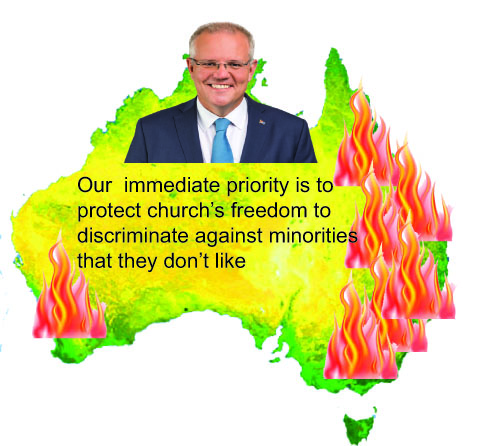
Scott Morrison and the Coalition are fiddling as Australia burns
|
Scott Morrison and the Coalition are fiddling as Australia burns On climate action, the Coalition is the party of wreck, defer and obfuscate, the party with a shameful and indefensible record, Guardian Katharine Murphy Political editor, @murpharoo, Tue 10 Dec 2019 “………… Swathes of the country are burning, and we’ve only just entered summer. While Christian Porter was working through his various concessions on religious discrimination on Tuesday, trying to contain blowback from the churches and from colleagues, dot point by dot point, thick smoke was choking Sydney. In Canberra, the heat is also blistering, and the smoke from Braidwood rolls in and out, triggering memories of that traumatic January in 2003 that many of us lived through, our treasured possessions tucked in boxes, babies on hips, sheltering friends displaced from the western suburbs of the city; a city ready to flee, watching a red sky, raining ash and burning cinders, houses on fire, trees on fire. I flew to Brisbane on Sunday. The ground below me was dust for a thousand kilometres and the sky was a milky fog of smoke and heat haze. Dear prime minister. The country is not parched but desiccated, and it is burning like a tinderbox, and people are frightened. They are frightened about today and the terrible business of defending property and saving lives, and they are frightened about whether this is what spring and summer in Australia now looks like as droughts lengthen and deepen, and the fire season extends and intensifies because of climate change – which is what scientists have been trying to tell us all these years, so many times, in so many different ways, experts maligned and mangled in a culture war, pleading to be understood. Fear has accompanied the dry, and the heat and the flames, and that is a difficult and frankly politically unwelcome development for a prime minister who won an election just a few months ago at least in part by telling people to calm down about climate change, because the Coalition had things under control. It wasn’t true of course. That pitch has no basis in fact because the Coalition has done more than any other political party in Australia to frustrate climate action. If anyone is inclined to think wrecking is behaviour of the past, a vestige of Abbottism rather than behaviour of the present, because Morrison is so much more sensible, just remember this very week, in Madrid, Australian officials are making the case we need to use an accounting loophole to meet our Paris target. Far from meeting our 2030 target in a canter, Australia will not meet the target at all unless we invoke carryover credits to carry about half the abatement load. By taking this stance, we not only defer corrective action in our own country that should be happening now, in orderly fashion over this decade, we also validate the inclination of other countries, with higher emissions than us, to hunt for workarounds too. To cut a long story short, we make it less likely that the world will deliver the ambition we need to avert the worst of warming. So let’s be very clear. On climate action, the Coalition is the party of wreck, defer and obfuscate, the party with a shameful and indefensible record, the party that only last year bundled Malcolm Turnbull out of office in part because of a policy idea that might have settled a decade of partisan warfare that the Coalition believes is helpful to its re-election prospects. Morrison pursued an electoral strategy in May of telling voters in the cities the Coalition had climate under control, there was no need for hysterics, while in the regions, out of sight of the metro campaigns, the government weaponised climate change against Labor. So the Coalition in 2019 is the party of placate where necessary and punch on where politically profitable – which feels like the grimmest story of all. It might be grim, but it will remain the model as long at there’s enough voters in enough regional seats either not buying the science, or more worried about their immediate material circumstances than the science, to swing an election in the Coalition’s favour. As long as the status quo delivers a pathway to victory, the climate war in Australia will go on being an artefact of partisan politics rather than a practical problem to be solved. It’s hard, that truth, so hard I flinch. But truth is hard, and it’s past time truth won this argument rather than being obscured in the emoting, and the bobble head ranting, and the posturing, and the dissembling, and the clever strategising. Now by carrying on resolutely while the country burns, and being seen to carry on while things are being managed, Morrison is not avoiding the issue so much as trying to set the tone. The prime minister doesn’t want to validate the rising fear in the community by looking perturbed about the disaster currently in progress, because that obviously makes a lie of the Coalition’s “everything is fine” messaging. He wants to be getting on with ordinary business in full public view, not flapping about with special summits with the premiers just because Turnbull said he should do it on Q&A. …… The obfuscation, the false comfort, the changing of the subject, the head-patting, will keep happening as long as we let it. It will keep happening as long as soft and hard denialism is enabled in mainstream media outlets, as long as journalists prioritise other lines of inquiry over rigorously pursuing accountability on this issue, and as long as Australian voters abdicate responsibility by telling themselves all political parties are as bad as each other so it doesn’t matter who you vote for. The only way things will change is if we choose, as a country, to do something else. To take responsibility. To demand something better. Because, ultimately, this, the future, is on us. https://www.theguardian.com/australia-news/2019/dec/10/australia-is-burning-like-a-tinderbox-and-the-coalition-wont-acknowledge-voters-rising-fears |
|
NUCLEAR WASTE DUMP DECEPTION
|
Kim Mavromatis No Nuclear Waste Dump Anywhere in South Australia, 11 Dec 19, The whole of SA should wake up to what ANSTO and the Fed govnt is proposing. ANSTO and the Fed govnt are not being honest about what they are going to dump at the proposed sites near Kimba or in the Flinders Ranges near Hawker. ANSTO state that spent nuclear fuel from the Lucas Heights reactor is Intermediate Level Nuclear Waste – but it’s really High Level Nuclear Waste. International Atomic Energy Agency (IAEA) Definition of High Level Nuclear Waste : “High-Level Radioactive Waste (HLW) is produced from the burning of uranium fuel in nuclear power reactors. It is of two kinds: spent fuel, declared as waste and ready for disposal, or waste resulting from the reprocessing of spent fuel. Due to its high radioactivity and very long half-life, HLW has to be well contained and isolated from the human environment.” Even after 30 years, spent nuclear fuel from nuclear reactors is still 10,000 times more radioactive than uranium ore. And the waste that is shipped back to Australia from France from the reprocessed spent nuclear fuel still contains 95% of the radioactivity. As well as low-level waste, ANSTO are proposing to temporarily dump High Level Nuclear Waste in SA (deceptively classifed as Intermediate) for up to 100 years until a permanent solution can be found. If a nuclear waste accident occurs, it’s likely to be catastrophic for the region and South Australia. The Spencer Gulf is connected to aquifers from the Flinders Ranges and floodwaters from significant flooding events at the proposed site end up in the Spencer Gulf via Lake Torrens. Why on earth would ScoMo’s Federal Liberal govnt want to dump nuclear waste in the Flinders Ranges, on a floodplain, in a seismically active region, bordered by natural springs, in an iconic tourism destination, or on Eyre Peninsula farmland, near Kimba and next to Lake Gilles Conservation Park????? The govnt have stated that there’s never been a nuclear material transport accident in Aust – but there has been, and the people affected were treated badly and many died of cancers – watch our film : “NUCLEAR WASTE CRASH COVERUP – POISONED POLICE SPEAK OUT” https://vimeo.com/372781616 |
|
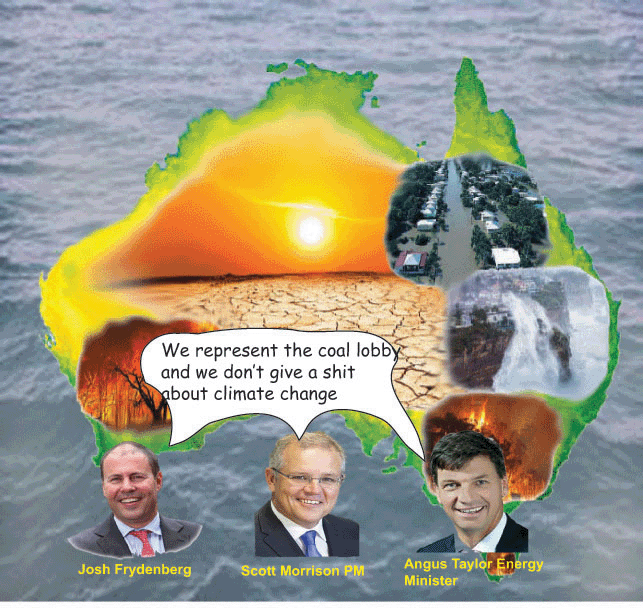
Australia at the bottom of the list in global assessment of climate action
 ‘Cause for great concern’: Australia ranked last in global assessment on climate action, Australia’s record on climate change has been panned in the latest Climate Change Performance Index tracking nation’s efforts to combat global warming, SBS NEWS, BY TOM STAYNER, 1 Dec 19, Australia’s climate change record has been ranked among the bottom five nations in the world in a global assessment of countries’ emissions trajectories. ‘Cause for great concern’: Australia ranked last in global assessment on climate action, Australia’s record on climate change has been panned in the latest Climate Change Performance Index tracking nation’s efforts to combat global warming, SBS NEWS, BY TOM STAYNER, 1 Dec 19, Australia’s climate change record has been ranked among the bottom five nations in the world in a global assessment of countries’ emissions trajectories.
The Climate Change Performance Index (CCPI) measures the emissions, renewable energy share and climate policies of 57 countries and the European Union. It has been released at COP25, the UN climate summit being held in Madrid, as nations attempt to thrash out the way forward on the global Paris framework responding to the crisis. According to the report, Australia, Saudi Arabia, and the United States give “cause for great concern” over their performance on emissions, renewable energy development and climate policy. Australia’s climate policy rating was ranked the lowest in the world with analysts noting that “the newly elected government continued to worsen performance at both national and international levels.” Its policies were given a 0.0 rating, in comparison the United Stated ranked one position higher held a 2.8 rating and the top-performing nation Portugal received a 98.7. National experts observe a lack of progress in these areas with the [Australia] government failing to clarify how it will meet the country’s insufficient 2030 emissions reduction target and inaction in developing a long-term mitigation strategy,” the report reads. “While the government is not proposing any further targets for renewable energy beyond 2020, it continues to promote the expansion of fossil fuels and in April 2019 approved the opening of the highly controversial Adani coalmine.” Across the assessment, Australia ranked 44th on emissions, 50th on renewable energy, 52nd on energy use and 61st on climate policy. National experts observe a lack of progress in these areas with the [Australia] government failing to clarify how it will meet the country’s insufficient 2030 emissions reduction target and inaction in developing a long-term mitigation strategy,” the report reads. “While the government is not proposing any further targets for renewable energy beyond 2020, it continues to promote the expansion of fossil fuels and in April 2019 approved the opening of the highly controversial Adani coalmine.” Across the assessment, Australia ranked 44th on emissions, 50th on renewable energy, 52nd on energy use and 61st on climate policy……. HTTPS://WWW.SBS.COM.AU/NEWS/CAUSE-FOR-GREAT-CONCERN-AUSTRALIA-RANKED-LAST-IN-GLOBAL-ASSESSMENT-ON-CLIMATE-ACTION |
|
Strong opposition to nuclear waste dump plan for Flinders Ranges
South Australia’s nuclear dump deadline looms large, Newcastle Herald, Amy Green, 11 Dec 19
South Australia’s Flinders Ranges nuclear waste ballot closes tomorrow.
Thousands of people have signed an open letter to the federal government asking it not to proceed with the current plan. The Australian Conservation Foundation is behind the letter, which has garnered more than 5000 signatures, addressing Minister for Resources Senator Matt Canavan.
Nuclear Free Campaigner Dave Sweeney has labelled the process “deeply flawed and irresponsible”. “The current federal waste plan lacks key information of such important things as waste acceptance criteria, who would manage any facility and transport methods and routes,” Mr Sweeney said.
“It also fails to make any credible case for doubling handling the long lived intermediate level waste (ILW). “The vast majority of this ILW waste is currently securely stored above ground at the ANSTO Lucas Heights facility in southern Sydney, but the federal Department want to re-locate this above ground storage in regional SA – pending future disposal via a yet to fund or identified place or process.
“There is a real risk this waste will become stranded at any future SA site.”
The Department of Industry, Innovation and Science is encouraging interested people who haven’t done so already, to have their say on the proposed National Radioactive Waste Management Facility.
The department is consulting with two South Australian communities who live near three potential sites volunteered by landowners – two near Kimba and one near Hawker.
The results of these ballots and surveys, together with public submissions and feedback received elsewhere will be given to Minister Canavan to assist him in deciding whether the facility can be established at one of the potential sites…. https://www.newcastleherald.com.au/story/6538918/sa-nuclear-dump-deadline-looms-large/?cs=9397
A foreign corporation gets 89 BILLION litres of Australia’s water, as drought worsens
|
Water restrictions for you, an endless supply for them: How a foreign corporate giant is snapping up 89 BILLION litres of Australia’s H20 as the country suffers its worst drought ever
By ALISHA ROUSE FOR DAILY MAIL AUSTRALIA DAILY MAIL UK 12 December 2019 |A multi-billion dollar Singaporean food company is selling 89,000 megalitres of Australian water to a Canadian pension fund. The mega sale of Australian permanent water rights comes as the country is crippled by one of the worst droughts in its history. On Tuesday, NSW brought in a complete ban on hoses as part of the toughest water restrictions implemented for more than a decade. But no such problem existed for food and agriculture giant Olam International, which sold the 89billion litres of permanent water rights for an astonishing $490 million. The company sold it to an entity associated with the Public Sector Pension Investment Board, one of Canada’s largest pension investment managers, according to Straits Times. It will use the water to irrigate almond trees, in a business venture likely to draw criticism over foreign ownership of farms and water. The water rights are in the lower Murray-Darling Basin. The chairman of the Victorian Farmers Federation’s water council, Richard Anderson, told the Sydney Morning Herald: ‘Really, all you’ve got is a change of ownership, it (the water) has gone from a Singapore-owned company to a Canadian pension fund……. Water restrictions in Sydney, the Blue Mountains and Illawarra were upgraded to level two as dam levels in the region sank to just 45 per cent capacity, the lowest levels since the Millennium Drought took hold in 2003….. The Bureau of Meteorology has predicted a hot-than-usual summer, with no forecast for significant rain. The sale is understood to be giving Olam a ‘one-time pre-tax capital gain of about $311 million’, the paper reported. The agreement is for 25 years, with the option to renew for another 25. In March, the government released its foreign ownership of water entitlement register, showing that investors from China and the US had the largest stake in Australia’s foreign-owned water entitlements. It showed that one in 10 water entitlements is foreign owned. A water entitlement is the right to an ongoing share of water, which can be sold by irrigators, companies or investors. Acting as a property right, it gives access to an exclusive share of water from a water resource. This is different to a water allocation, which is the right to access a volume of water for use or trade. https://www.dailymail.co.uk/news/article-7780983/Foreign-company-sells-89-billion-litres-Australian-water-rights-490m-drought.html?fbclid=IwAR3wKbYP6OnXTEPhNoZiDeQ2Oj1o6uMzWUmkQSOgMxYjkZn6i0cJFj60Zo4&fbclid=IwAR3oHKAi9vQG4MctY4LMYNppX-pbY88hw0Zj4ACzypNTB_WI9nTtkc710bc |
|
Community of small rural town Kimba “blown apart” by nuclear waste dump plan
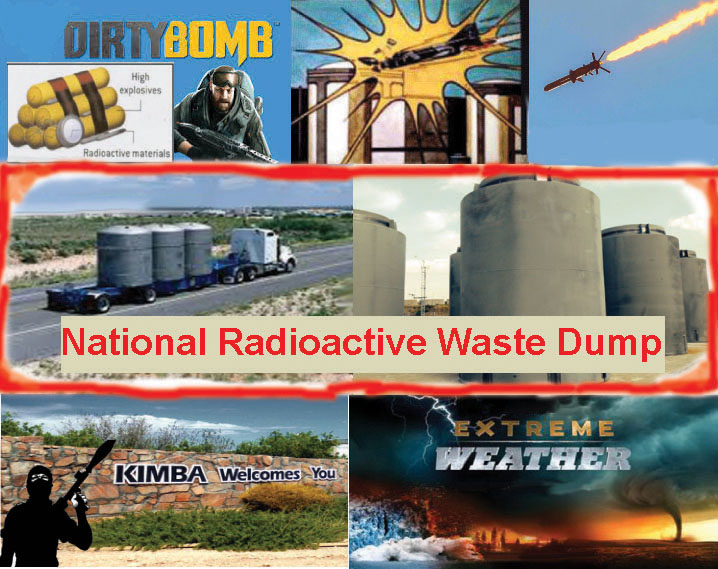
The Australian town divided over hosting the country’s first nuclear waste dump, The small South Australian farming town of Kimba is split in two by the proposal to host Australia’s first permanent nuclear waste facility. Here, SBS News meets residents on both sides of the debate.
The women, who both live with their families on farms, have come to the decision that it is time to move on.
“It used to be such a close-knit community, but it’s blown apart.”
Ms Miller says the debate over the proposal for Kimba to host Australia’s first permanent nuclear waste facility has led to so much community division that some people no longer talk to each other.
“It’s not a nice place to live, you don’t want to go down the street because there are people that shun you and won’t talk to you,” Ms Miller says.
“The whole atmosphere is just really depressing”.
For four years, this small town on the edge of the Australian outback has been at the centre of debate, consultation and planning as a potential site to host the facility.
After promises of 45 ongoing full-time jobs and more than $30 million in federal government money earmarked to flow into town projects if the proposal goes ahead, the community last month voted on whether or not to host the site.
Sixty-two per cent of Kimba residents backed the site going ahead in the ballot run by the Australian Electoral Commission, and 38 per cent voted against it.
The public vote was a key final hurdle to indicate community support for the plan and federal resources minister Matt Canavan is expected to make a decision on which site will host the dump in early 2020.
There are three sites that remain on the shortlist, two near Kimba and the other further north near Hawker, in South Australia’s Flinders Ranges region.
Support for the facility
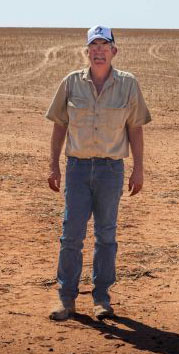 Grain and livestock farmer Geoff Baldock is a third-generation farmer in the Kimba region. He and his family farm more than 700 hectares of land here and he is preparing to sell off a small slice of that, around two per cent, to the federal government for them to build their nuclear waste facility.
He won’t reveal exactly how much the government is offering to pay for his land but says the offer has been “generous”…..
He hopes the proposal will go ahead and play a vital role in securing the future of the Kimba town, which has been in economic and population decline for a number of years. ……
Opponents of the proposal are deeply distrustful of the federal government and the promises made by politicians and scientists on government-paid salaries. They want independent scientists brought in to the safety assessments of the site. ……
The public vote in the town of Hawker closes on December 12 and the government will make a decision on which site will go ahead with the plan early next year.
But for friends Ms Tiller and Ms Miller it is too late. Their properties are on the market and both families are planning to move elsewhere in South Australia as soon as they can. HTTPS://WWW.SBS.COM.AU/NEWS/THE-AUSTRALIAN-TOWN-DIVIDED-OVER-HOSTING-THE-COUNTRY-S-FIRST-NUCLEAR-WASTE-DUMP?CX_CID=EDM%3ANEWSAM%3A2019&FBCLID=IWAR2B19ZUOG9WHGBO9CVSO_81AOYNXY0R4AFZAJFJW4EJWKMW_N6_B2M01WQ
BHP’s Olympic Dam expansion plan deserves serious attention and scrutiny
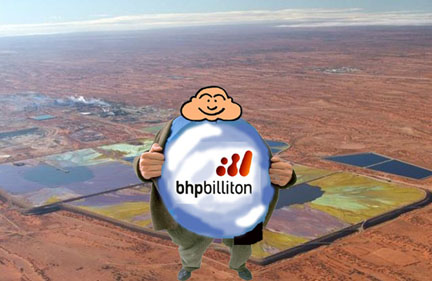
10 Dec 19, BHP is formally seeking to expand the Olympic Dam mine in northern South Australia and public comment on the federal EPBC referral – the Olympic Dam Resource Development Strategy – closes today.
Conservation SA, Friends of the Earth Australia and the Australian Conservation Foundation have sent a joint submission to the federal Environment department.
After today’s close of public comment the federal Minister has up to twenty business days to make a decision on the required level of assessment.
We maintain that the Olympic Dam expansion plan deserves serious attention and scrutiny for three key reasons: it involves the long lived and multi-faceted threat of uranium, it proposes to use massive amounts of finite underground water and the company is in trouble globally over the management of mine wastes and residues currently stored in multiple leaking – and sometimes catastrophically failing – tailings dams. BHP has identified and conceded that three of the existing Olympic Dam tailings dams are in the most severe global ‘extreme risk’ category.
The key recommendations from environment groups include:
- That BHP’s Olympic Dam operation be assessed in its entirety with the full range of project impacts subject to public consultation.
At a minimum, EPBC Act responsibilities to protect Matters of NES require that the BHP Olympic Dam Referral must be subject to a public environmental impact assessment process.
- A comprehensive Safety Risk Assessment is needed for all Olympic Dam mine tailings facilities.
- BHP must lodge a Bond to cover 100% of Olympic Dam rehabilitation liabilities.
- BHP must stop the use of evaporation ponds to reduce mortality in protected bird species.
These issues are further explored in detailed project briefing papers linked with the joint groups submission.
David Noonan – the submission author is available to provide further issue background on 0414 519 419
The comments below are attributable to ACF spokesperson Dave Sweeney (0408 317 812):
“As the world’s largest miner BHP has a responsibility to adopt best practise standards to every aspect of its Olympic Dam operation, including transparency, rigour and extent of assessment.
“A federal review when BHP wanted to expand Olympic Dam as an open cut mine earlier this decade made clear recommendations about the need to assess the projects cumulative impacts – this approach must be reflected in the current federal consideration of BHP’s proposal.
“Uranium is a unique mineral and risk and is always contested and contaminating.
“The global uranium price remains depressed after Fukushima and BHP should actively model a project configuration where uranium is not part of Olympic Dam’s mineral products.”
(note: there is direct DFAT confirmation that Australian uranium was inside Fukushima when the reactors failed: Australian uranium fuelled Fukushima’s fallout)
“Any increase in the footprint of Olympic Dam would mean an increase in the complexity and cost of future clean up and rehabilitation.
“Cleaning up a uranium mine is never easy and always costly – BHP must be required to ensure there is the dedicated financial capacity to fund this clean-up work – it cannot be allowed to become a future burden to the SA taxpayer or wider community.
“Existing federal government standards require the Ranger uranium mine in Kakadu to isolate its radioactive tailings for at least 10,000 years. The same standard must be applied at Olympic Dam – especially as BHP has confirmed that three of Olympic Dam’s existing tailings dam are in the global ‘extreme risk’ category. There should be no new pressure on this already compromised tailings management system without comprehensive and independent review.”
Federal Nuclear Inquiry Report expected this week
 Report due on nuclear power industry, Canberra Times, Report due on nuclear power industry, Canberra Times, Paul Osborne, 9 Dec 19, A report looking into the potential for nuclear power in Australia is expected to be released later this week. The parliamentary environment and energy committee was tasked by Energy Minister Angus Taylor in August to examine the potential for nuclear power. Mr Taylor told the committee the moratorium on nuclear energy would remain, but he wanted some “sensible” advice on economic, environmental and safety implications. The inquiry received evidence on the potential for micro-reactors – some as small as five megawatts – and even floating nuclear power stations which are being developed in Russia……. Environment groups said there were huge health, environmental and financial risks from a nuclear industry, which would also need massive taxpayer subsidies. They warned suggestions of small modular reactors were a pipedream and the nuclear waste storage problem had not yet been solved…… It is understood the committee is aiming to table the report in parliament by the end of the week, but no formal release date has been set. https://www.canberratimes.com.au/story/6534160/report-due-on-nuclear-power-industry/ |
|
|
Australia on fire. Scott Morrison under fire over bushfire emergency
‘Australians are paying the price’: Scott Morrison under fire over bushfire emergency, The unprecedented severity of Australia’s bushfire season is igniting calls for stronger action in response to the climate emergency. SBS, BY TOM STAYNER , 9 Dec 19, As Australia burns, public concern over the need for greater action against the devastating bushfire season and climate change is igniting.
Dozens of bushfires continue to burn across the nation’s east coast with the effects of these blazes ranging from razed homes on the frontlines to smoke choking metropolitan centres.
The fire season has captured international attention with media outlets from the New York Times to the BBC drawing attention to criticism against the Morrison government’s inaction on climate change.
The Climate Council has also laid fresh blame on the Federal government, accusing it of being “out of touch” with the action Australians are demanding.
“It is irresponsible not to connect the dots – it is absolutely clear … that climate change is exacerbating dangerous bushfire conditions,” the Climate Council’s Dr Martin Rice told SBS News.
“Australia must act on climate change it must join the global collective effort – we’re falling woefully behind and Australians are paying the price.”…..
The Department of Environment and Energy released the “Australia’s emissions projections 2019” report on Sunday citing the nation would exceed its 2030 Paris target by 16 million tonnes of carbon dioxide equivalent.
But Dr Rice said the numbers point to a “dodgy accounting” trick through using “carry-over” credits to reach the commitment, symptomatic of a failure to respond to the “escalating climate crisis”.
“Australia is on the frontline of the escalating crisis, now is not the time to cut corners on climate,” he said.
“We need to actually prepare our emergency services and our fire services and our community for the escalating threats.”…..
More than 90 fires were burning across NSW alone on Sunday evening and there are fears of worsening conditions when temperatures soar later this week.
Amid these conditions, Labor has again urged Mr Morrison to hold an urgent COAG meeting to prepare Australia for the bushfire season.
“We can see, smell and feel the changing climate but our Government says we’re only imagining it,” Opposition leader Anthony Albanese said over the weekend…..
[Morrison] has faced criticism for not meeting with a group of ex-fire chiefs, at the centre of a petition signed by more than 100,000 Australians which calls for a national emergency summit…..
Climate change is Australia’s labyrinth without an exit’
The horrific fire conditions have spawned international headlines about Australia’s response with the New York Times writing the fires revealed “once again” that Australia’s “pragmatism stops at climate change”.
The outlet cited political spats over climate changes and the link to bushfires including Deputy Prime Minister Michael McCormack’s jibe against “raving inner-city lunatics”, The Greens.
“Climate change is Australia’s labyrinth without an exit, where its pragmatism disappears,” the New York Times wrote.
One of those Greens, Senator Sarah Hanson-Young again took aim at Mr Morrison this weekend over his government’s response.
“Our nation is our fire,” she said.
“Australians deserve better than politicians with their heads in the sand.” HTTPS://WWW.SBS.COM.AU/NEWS/AUSTRALIANS-ARE-PAYING-THE-PRICE-SCOTT-MORRISON-UNDER-FIRE-OVER-BUSHFIRE-EMERGENCY
Hypocrisy of Australian Labor Party on climate change
The ALP remains far more worried about looking like it is attacking people who work in coalmines than getting on the front foot on climate change.
It is 2019 and the leader of the ALP is now repeating lines about our exports of coals that Tony Abbott used.
The ALP cannot afford to play games on this issue. You can’t say climate change is real and then ensure your messaging is about protecting coal.
|
The Coalition isn’t being honest about the climate crisis. But neither is Labor https://www.theguardian.com/business/grogonomics/2019/dec/10/the-coalition-isnt-being-honest-about-the-climate-crisis-but-neither-is-labor, Greg Jericho @GrogsGamut Tue 10 Dec 2019
Of course we need to think about those who will be affected by mine closures, but cripes, we’re all affected by climate change. In the weekend I flew up to Sydney to attend a conference held by the Chifley Research Centre, the ALP’s thinktank. As the plane approached Sydney, the site of the fire front in the Blue Mountains was stomach-churning. And then I got to experience the air quality of Sydney that has become news around the world.Upon returning to Canberra, I discovered a wind change had meant the nation’s capital was now enveloped in a haze of smoke – and expected to be so for the rest of the week. This, I need not tell you, is not normal. Because of climate change, areas of south-eastern Australia are going to be drier and hotter, the times for doing preventative hazard reduction burning will shrink, and as a result our fire seasons will become longer, and the fires will become more intense. This is due to one thing – climate change. The only way to prevent this is to reduce our emissions and to pressure the rest of the world to reduce emissions as well. We are not doing either of those things. Continue reading |
Australia is copping it at COP25 – and rightly so
|
Australia is copping it at COP25 – and rightly so, Canberra Times, Dermot O’Gorman , 9 Dec 19,
This week the world’s climate ministers, including Australia’s embattled Minister for Emissions Reduction Angus Taylor, are meeting in Madrid for international climate talks. It has already been an inauspicious start to the COP25 UN Climate Change Conference, where Australia is receiving a well-deserved kicking from the international community for its inaction on the issue.
Australia bagged the infamous Fossil of the Day award from environment groups on the opening day. The satirical award, presented each day of the conference, was in recognition of the Australian government’s downplay of the link between climate change and the bushfires that continue to devastate communities across the country. As the talks continue, we shouldn’t be surprised to see members of the European Union, who are leading the way in tackling climate change, taking aim at Australia for our weak climate commitments. Trade Minister Simon Birmingham recently got a taste of this when France pushed Australia to adopt enforceable climate change targets as part of a planned trade deal with the EU. COP25 should be a wake-up call that our domestic climate policies and position on thermal coal exports are undermining Australia’s standing in the world…..https://www.canberratimes.com.au/story/6532512/australia-is-copping-it-at-cop25-and-rightly-so/?cs=14246 |
|
Victoria’s chemical waste scandal
 The man who made a toxic waste disaster, Greed, lax oversight and poor regulation allowed one man to distort the national market for toxic waste disposal and create an environmental catastrophe.The Age, By Chris Vedelago, Sumeyya Ilanbey and Cameron Houston, DECEMBER 8, 2019 August 2012, former truck driver and sandblaster Graham Leslie White bought a 567-hectare block of useless scrubland outside the tiny western Victorian town of Kaniva, nearly five hours from his home and businesses in Melbourne.He began by building a road, designed to support the weight of heavy vehicles, into the desolate patch. Later, White bulldozed a network of tracks deep into the interior of the property that dead-ended in oddly shaped clearings of rough, red earth. The man who made a toxic waste disaster, Greed, lax oversight and poor regulation allowed one man to distort the national market for toxic waste disposal and create an environmental catastrophe.The Age, By Chris Vedelago, Sumeyya Ilanbey and Cameron Houston, DECEMBER 8, 2019 August 2012, former truck driver and sandblaster Graham Leslie White bought a 567-hectare block of useless scrubland outside the tiny western Victorian town of Kaniva, nearly five hours from his home and businesses in Melbourne.He began by building a road, designed to support the weight of heavy vehicles, into the desolate patch. Later, White bulldozed a network of tracks deep into the interior of the property that dead-ended in oddly shaped clearings of rough, red earth.
White claimed it was a quad-biking course for his children, an answer that satisfied the curiosity of the council officer. But five years on, we know the truth. Covered by a thin layer of topsoil were the pits that White had dug and that he was filling with toxic waste — millions of litres of chemicals and tonnes of asbestos-contaminated products brought by the truckload. The Kaniva property was the final destination for an illegal dumping syndicate whose operations grew so large they distorted the national market in toxic waste disposal. Victoria’s Environment Protection Authority — relying on a paper-based tracking system and a lax inspection regime — was blindsided by this dark market that threatened public safety and the welfare of emergency services personnel. By the time the scheme was accidentally exposed in 2018, White and his associates at Bradbury Industrial Services had illicitly buried or stockpiled an estimated 50 million litres of highly flammable solvents and other toxic materials. The failure to arrest this operation also laid the groundwork that sparked two of Melbourne’s worst-ever industrial fires. The value propositionSome time after 2013, White made an informal arrangement with waste recycling and remediation company, Bradbury. Their pitch to the producers and owners of toxic waste was simple — we can do it cheaper. Industry sources who declined to be identified for fear of retribution by their employers say the waste industry operates on thin margins. The syndicate offered to dispose of products at up to half the cost of competitors. Sometimes they offered to transport chemicals from the factory door for free. An investigation by The Age has revealed that manufacturers, chemical companies, waste processors, and paint, automotive and cleaning businesses across the eastern states quickly signed up. …… https://www.theage.com.au/national/victoria/the-man-who-made-a-toxic-waste-disaster-20191205-p53h1x.html |
|
Australian govt’s dodgy climate accounting tricks to be tested in Madrid
Australia’s ‘betrayal of trust’ emissions plan to be tested in Madrid, SMH, By Peter Hannam, December 9, 2019, The Morrison government could be forced to justify Australia’s plan to count “carry-over credits” towards the country’s Paris climate target, with a global summit set to debate eliminating their use.
The 25th Conference of the Parties (COP25) meeting in the Spanish capital of Madrid is scheduled to debate the so-called “rulebook” for the goals agreed by the nearly 200 Paris signatory nations.
According to the draft “guidance on cooperative approaches“, one “option” for debate will be that “Kyoto Protocol units, or reductions underlying such units, may not be used by any Party toward its [nationally determined goals]”.
The Morrison government has repeatedly said Australia is entitled to use “surplus” units the country will generate during the Kyoto period (2008-2020) to count against the 2021-2030 Paris target.
Australia’s latest emissions projections report, released over the weekend, showed the government is planning to count 411 million tonnes of carbon dioxide equivalent (MtCO-e) from the Kyoto-agreement era. The use of such credits would mean Australia could meet its pledge of cutting 2005-level emissions 26-28 per cent by 2030 with minimal effort.
Malte Meinshausen, co-director of the Energy Transition Hub at Melbourne University and a former climate negotiator with Germany, said it was good the Kyoto option appears “to be on the table”.
The use of Kyoto credits was “a betrayal of the trust which all countries signed up to at Paris”, Professor Meinshausen said, noting New Zealand, European Union and Pacific states opposed them.
While climate laggards such as Russia and Brazil may join Australia in opposing the Kyoto “option”, “it’s a reminder that the international community does not want to give up easily the good cooperative fruits developed in Paris”, he said…….
Australia will certainly have to defend its carryover and depending on how the text evolves might find itself increasingly isolated,” said Richie Merzian, an emissions analyst with The Australia Institute and former climate treaty negotiator for the Australian government.
“There are apparently over 100 countries supporting the restriction to limit Kyoto Protocol units from being used to meet Paris Agreement commitments,” he told the Herald and The Age from Madrid.
“Australia’s usual allies – other developed countries – either have ruled out using these credits voluntarily or don’t have skin in the game,” Mr Merzian said. “Australia’s only support might come from China and Brazil keen to use their carbon market credits from Kyoto to cash into Paris.”
Adam Bandt, Greens climate spokesman, said “Scott Morrison’s dodgy climate accounting is now up in lights on the world stage.
“Australia is burning at home, and Angus Taylor is turning up at an international event asking for the right to keep on polluting,” he said…….
“[The emissions drop] is driven mainly by declines in the electricity sector because of strong uptake of rooftop solar and the inclusion of the Victoria, Queensland and Northern Territory 50 per cent renewable energy targets,” the report said.
Jamie Hanson, head of campaigns at Greenpeace Australia Pacific, said the Liberal National coalition had long been using “dodgy accounting tricks like these so-called carryover credits to mislead the Australian public on their appalling track record on emissions”.
“Scrapping the ability to rely on carryover credits and shifty accounting is a great step towards holding governments like Australia to account over their rising emissions,” he said. https://www.smh.com.au/environment/climate-change/australia-s-betrayal-of-trust-emissions-plan-to-be-tested-in-madrid-20191208-p53hyv.html
1 This month.
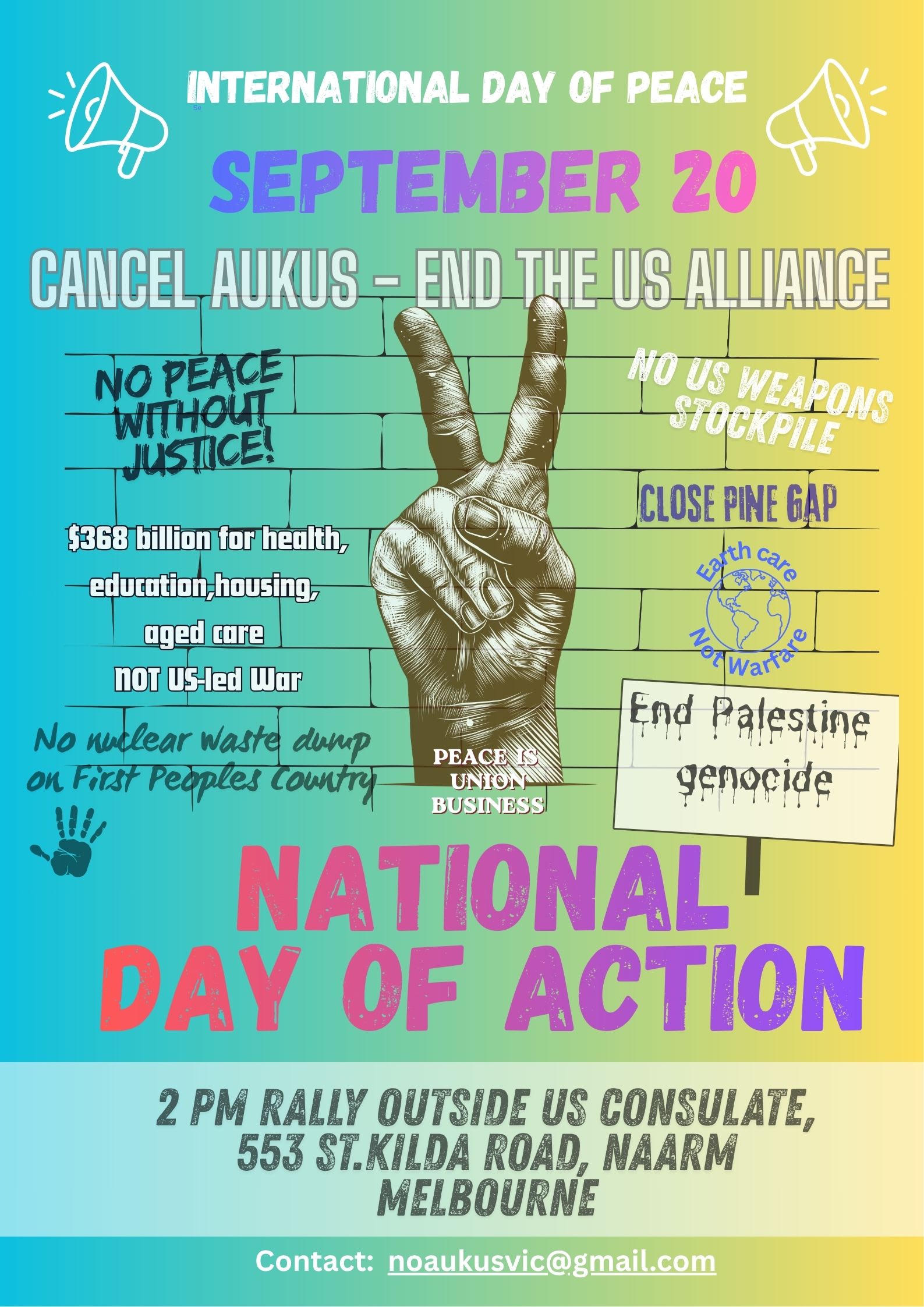
20 September –National Day of Action in Melbourne on the International Day of Peace

Help Aunty Sue Protect Her Land and Sacred Sites From Destructive Rocket Testing.
.

Australians deserve the truth
about
AUKUS – https://aukuspublicinquiry.com/
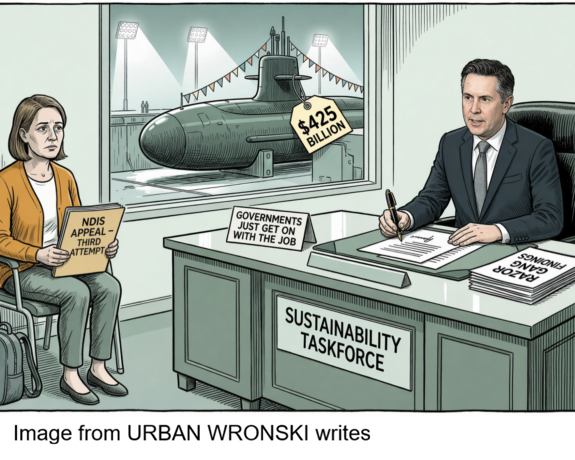

PETITION – To: Prime Minister Anthony Albanese and the Australian Labor Government

of the week – Australians for War Powers Reform (AWPR)
To see nuclear-related stories in greater depth and intensity
 Antinuclear