Sydney afflicted with smoke, as many fires out of control in New South Wales
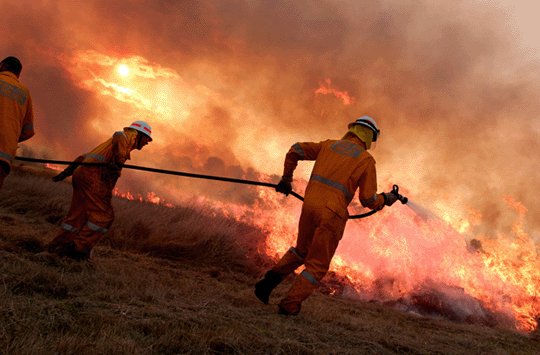 Sydney set for more ‘poor’ air quality as NSW South Coast bushfires continue to burn, SBS, 3 Dec 19, The Bureau of Meteorology says smoke is forecast to linger in parts of Sydney on Tuesday, creating “poor” air quality in the city…….. The state government says air quality on Tuesday will be “poor due to particles” from the extensive smoke coming from bushfires burning across the state…… Sydney set for more ‘poor’ air quality as NSW South Coast bushfires continue to burn, SBS, 3 Dec 19, The Bureau of Meteorology says smoke is forecast to linger in parts of Sydney on Tuesday, creating “poor” air quality in the city…….. The state government says air quality on Tuesday will be “poor due to particles” from the extensive smoke coming from bushfires burning across the state……
There were 119 bush and grass fires burning across NSW on Monday evening with 48 of these uncontained. The out-of-control fire at Currowan is burning across almost 25,000 hectares and is being pushed east towards coastal communities but tempered overnight as gusty northeasterly winds moderated…… Two million hectares of NSW land have been burnt since July in more than 7000 fires, with authorities dubbing it the “most challenging bushfire season ever”. Six people have died while 673 homes have been destroyed to date. https://www.sbs.com.au/news/sydney-set-for-more-poor-air-quality-as-nsw-south-coast-bushfires-continue-to-burn |
|
COP25, and Australia’s position at the Madrid climate talks
 Earth has a couple more chances to avoid catastrophic climate change. This week is one of them https://theconversation.com/earth-has-a-couple-more-chances-to-avoid-catastrophic-climate-change-this-week-is-one-of-them-128120 Robert Hales
Director Centre for Sustainable Enterprise, Griffith University, December 3, 2019 Almost 200 world leaders gather in Madrid this week for climate talks which will largely determine the success of the Paris agreement, and by extension, the extent to which the planet will suffer under climate change.
Negotiations at the so-called COP25 will focus on finalising details of the Paris Agreement. Nations will haggle over how bold emissions reductions will be, and how to measure and achieve them.
Much is riding on a successful outcome in Madrid. The challenge is to get nations further along the road to the strong climate goals, without any major diplomatic rifts or a collapse in talks.
What COP25 is about
COP25 is a shorthand name for the 25th meeting of the Conference of Parties to the UN Framework Convention on Climate Change (or the nations signed up to the Paris agreement).
After Paris was signed in 2015, nations were given five years in which to set out bolder climate action. Current targets expire in 2020. At next year’s November COP in Glasgow, nations will be asked to formally commit to higher targets. If Madrid does not successfully lay the groundwork for this, the Glasgow talks are likely to fail.
The United Nations says the world must reduce overall emissions by 7.6% every year over the next decade to have a high chance of staying under 1.5℃ warming this century.
The 1.5℃ limit is at the upper end of the Paris goal; warming beyond this is likely to lead to catastrophic impacts, including near-total destruction of the Great Barrier Reef.
Presently, emissions reduction targets of nations signed up to Paris put Earth on track for a 3.2℃ increase.
A global carbon market
Parties will debate the mechanism in the Paris agreement allowing emissions trading between nations, and via the private sector.
Such mechanisms could lower the global cost of climate mitigation, because emissions reduction in some nations is cheaper than in others. But there are concerns the trading regime may lack transparency and accountability.
Among the risks are that emissions cuts are “double counted” – meaning both the buying and selling nation count the cuts towards their targets, undermining the aims of the agreement.
Help for vulnerable nations
Small island states say COP25 is the last chance to take decisive action on global emissions reduction.
Fossil fuel burning in the developing world is largely responsible for the carbon dioxide that drives global warming. Developing nations are particularly vulnerable to the loss and damage caused by climate change.
Parties will discuss whether an international mechanism designed to assess and compensate for such damage is effective.
Developing nations are expected to contribute to the Green Climate Fund to help poorer nations cope with and mitigate climate change. Some 27 nations contributed US$9.78 billion in the last funding round.
Some nations have indicated they will not contribute further, including Australia, which says it already helps Pacific nations through its overseas aid program.
Arguments about cost
Nations opposed to adopting stronger emissions reduction targets often argue the costs of decarbonising energy sectors, and economies as a whole, are too high.
However, recent cost benefit analysis has found not taking action on climate change will be expensive in the long run.
Realisation is also growing that the cost of emissions reduction activities has been overestimated in the past. In Australia, prominent economist Ross Garnaut recently said huge falls in the cost of equipment for solar and wind energy has created massive economic opportunity, such as future manufacturing of zero-emission iron and aluminium.
The shift in the cost-balance means nations with low ambition will find it difficult to argue against climate mitigation on cost grounds.
Australia’s position at Madrid
At the Paris talks, Australia pledged emissions reduction of 26-28% by 2030, based on 2005 levels. The Morrison government has indicated it will not ramp up the goal.
About 68 nations said before COP25 they will set bolder emissions reduction targets, including Fiji, South Africa and New Zealand. This group is expected to exert pressure on laggard nations.
This pressure has already begun: France has reportedly insisted that a planned free trade deal between Australia and the European Union must include “highly ambitious” action on climate change.
The Climate Action Tracker says Australia is not contributing its fair share towards the global 1.5℃ commitment. Australia is also ranked among the worst performing G20 nations on climate action.
The Madrid conference takes place amid high public concern over climate change. Thousands of Australians took part in September’s climate strikes and the environment has reportedly surpassed healthcare, cost of living and the economy as the top public concern.
Climate change has already arrived in the form of more extreme weather and bushfires, water stress, sea level rise and more. These effects are a small taste of what is to come if negotiations in Madrid fail to deliver.
Johanna Nalau, Samid Suliman and Tim Cadman contributed to this article.
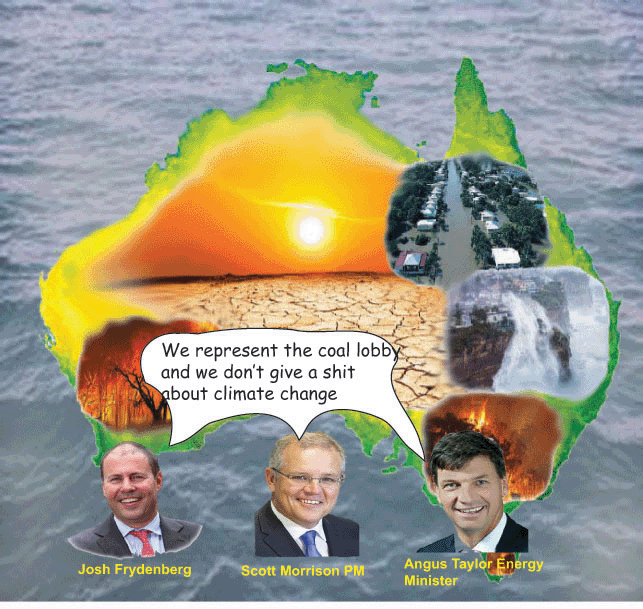
To National Party members. “Climate Change” is real, not “dirty words”
Nobody called the thoroughly urban mayor of Venice, Luigi Brugnaro a “raving inner city lunatic” when he said flooding due to climate change had brought his city “to its knees”.
Equally not prone to lunacy, Japan’s Prime Minister, Shinzo Abe, cautioned in the wake of Typhoon Hagibis that “making the world more resilient to natural disasters will be more important in the years to come”, in light of studies showing an “increase in cyclone intensity because of climate change”.
In contrast, amid recent Californian wildfires, US President Donald Trump tweeted the state’s Governor, Gavin Newsom, had done “a terrible job of forest management”, failing to “clean” his forest floors. Newsom retorted: “You don’t believe in climate change. You are excused from this conversation.”
In their absolute refusal to “go there” on climate change, our parliamentarians have more in common with Trump than the rest of the world when it comes to their inability to walk and chew gum on disaster response and climate change.
Fair enough, Deputy Prime Minister Michael McCormack was right to point out that what people in the grip of disaster most urgently need “is a little bit of sympathy, understanding and real assistance”. But that shouldn’t mean treating them like simpletons, and ruling out any discussion on the cause of their trauma and strategies to prevent it.
And it’s not just, as McCormack claimed, “woke capital city greenies” demanding answers. The Nationals’ own constituency wants to have the conversation.
Rural newspaper The Land surveyed its readers on the eve of the March NSW election. A “whopping 63 per cent” of respondents, the news outlet declared, “believed in climate change”. And 15 per cent said the issue would determine their vote.
The state poll delivered an average swing of 25 per cent against the Nationals in four seats. These are electorates devastated by mass fish kills and long-term drought. There’s no hesitation among some in National Party ranks about what needs to change.
WA Nationals leader Mia Davies told The West Australian that the party’s constituents expect them “to be a part of the conversation” on climate change. “When you live in regional Western Australia you see the impact of climate change … we are dealing with [it] on a day-to-day basis.”
The party’s own polling ahead of the May federal election revealed “climate change is a key issue” for voters in National-held seats. The party’s member for Gippsland, Darren Chester, remarked many of his most ardent supporters are “practical environmentalists” who “expect a balanced and rational … response to climate change”.
There. He said it. Climate change. Not so hard after all.
Nuclear Inquiry Report now delayed, due to scandal over Energy Minister Angus Taylor?
Nuclear power inquiry to be pushed back amid scandal over Energy Minister Angus Taylor, Lanai ScarrThe West Australian, Monday, 2 December 2019
A parliamentary inquiry report on nuclear power is likely to be pushed back until next year amid Energy Minister Angus Taylor’s woes surrounding a police investigation of allegations his office forged documents to accuse Sydney’s Lord Mayor of excessive travel spending.
The West Australian understands the committee examining the prerequisites for nuclear energy in Australia, which was due to release its report before the end of the year, could now delay it until mid-January or later.
The standing committee on the environment and energy, which includes two West Australians Labor’s Josh Wilson and the Coalition’s Rick Wilson was directed by under siege Mr Taylor in August to hold the first probe into nuclear power in more than a decade after calls from within his party to put the option on the table for reliable, zero-emissions power.
Among them was former deputy prime minister Barnaby Joyce.
It is not clear if the potential delay is linked to Mr Taylor’s woes or due to other scheduling issues.
A meeting on Wednesday will discuss the proposed recommendations.
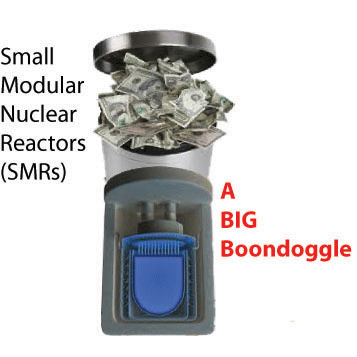 It is understood one recommendation to be considered is an economic feasibility study into nuclear power, particularly emerging technology such as small modular reactors.
News of the push back comes after NSW Police last week launched an investigation of Mr Taylor and his office for false accusations that Sydney Lord Mayor Clover Moore spent $15 million on travel.
It also comes as research conducted on behalf of the Minerals Council of Australia today reveals more Australians support lifting the ban on nuclear energy in Australia than those who are opposed.
Under the current Environment Protection and Biodiversity Act, which is under review, there is a moratorium on nuclear power.
The research by JWS Research of 1500 Australians found 39 per cent support using nuclear power and 40 per cent support lifting the nuclear power ban.
“39 per cent support using nuclear power and 40 per cent support lifting the nuclear power ban.”
Even key Green seats those with twice the national average number of Greens voters are just as likely as everywhere else to be in favour.
Chair of the standing committee on the environment and energy, Liberal National Party of Queensland MP Ted O’Brien, said the report validated the need for a thorough inquiry.
On his inquiry’s report being pushed back, Mr O’Brien said: “I can’t pre-empt the conclusions that will be drawn from our inquiry and nor has a date been set for the inquiry to be concluded.”
Fremantle MP Mr Wilson, who is deputy chair of the inquiry, said the Minerals Council survey material contained some “misleading claims” and could not be relied on.
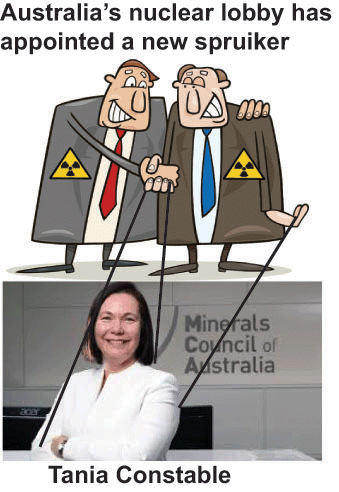
Council chief executive Tania Constable said WA would be a “big winner” if the moratorium on nuclear power were lifted.
Minerals Council renews push for nuclear energy, but rather coy about its costs
“The construction of nuclear power plants has proven to be an economic disaster for the corporations involved and a massive waste of public monies, given the plants are all entirely reliant on government financial subsidies,” IEEFA said.
Nuclear inquiry sparks industry campaign to lift moratorium, https://www.theage.com.au/politics/federal/nuclear-inquiry-sparks-industry-campaign-to-lift-moratorium-20191201-p53fsz.htl By Mike Foley, December 1, 2019 — The Minerals Council is ramping up its long-run campaign to remove Australia’s ban on nuclear power, claiming new market research shows majority community support for the technology.
Federal Parliament banned nuclear power in 1998, and the moratorium has remained in place with bipartisan support ever since.
The Morrison government has asked the House of Representatives Standing Committee on Environment and Energy to investigate the prerequisites for nuclear energy in Australia.
According to the Minerals Council of Australia, one prerequisite for nuclear power, community support, could be achieved if the public are properly informed about the technology.
The Minerals Council commissioned JWS Research to sample Australians’ support for nuclear power. The survey of 1500 people found 40 per cent support nuclear power and 33 per cent oppose it.
The support for nuclear energy rose to 47 per cent when respondents were presented a range of positive and negative facts about the technology.
“The more people learn about it, the greater the support for nuclear energy,” said Minerals Council chief executive Tania Constable.
She said the survey showed politicians that Australians wanted nuclear to be considered in their future energy mix.
“This should give them the courage to act. Any government serious about addressing climate change must be looking at nuclear, the zero-emissions foundation of electricity systems across the globe.”
The factors for nuclear energy were delivery of emissions-free power around the clock, Australia’s vast landmass could safely house reactors in remote locations, increased uranium mining, and nuclear power plants could bring jobs growth, and Australia already permits uranium exports – which could be utilised at home.
The factors against nuclear energy were the potential for human error to cause accidents at a reactor or waste facility, previous catastrophic failures such as Three Mile Island and Fukushima, concerns of health impacts for people living near reactors or waste facilities, and the risk that uranium exports could be used for weapons.
Energy analyst Lazard’s estimates the current cost of energy production for nuclear is more expensive than renewables.
The levelised cost of solar power around the world for solar power is about $60 per megawatt hour, $42/Mwh for wind, $145/Mwh for coal, and $220/Mwh for nuclear.
Nuclear power production costs could come with new technology. Small to medium sized reactors are proposed as potential cost savers, but there are no commercial examples in operation.
Government contributions would likely be required to underwrite private investment in a nuclear power plant in Australia. The cost of building Britain’s first nuclear plant in a generation, Hinkley Point, has blown out to more than $42 billion. It is contracted to supply the government with power at $176/Mwh.
The Institute for Energy Economics and Financial Analysis submission to the inquiry believes nuclear is one of the most expensive power sources.
“The construction of nuclear power plants has proven to be an economic disaster for the corporations involved and a massive waste of public monies, given the plants are all entirely reliant on government financial subsidies,” IEEFA said.
The Minerals Council submission said nuclear’s zero emissions power generation had to be incorporated into Australia’s future energy mix.
Three Tjiwarl women from WA’s goldfields win conservation award for uranium mine campaign
 https://www.miragenews.com/three-tjiwarl-women-from-wa-s-goldfields-win-conservation-award-for-uranium-mine-campaign/ 29 Nov 19, Over the decades they have seen off at least three mining companies, including BHP, and in the process they have given strength and courage to their own community and many others.”
Three Tjiwarl women, Shirley Wonyabong, Elizabeth Wonyabong and Vicki Abdullah, have been awarded the 2019 Peter Rawlinson Award for their decades-long campaign to protect their country and culture from a proposed uranium mine at Yeelirrie in outback Western Australia.
The award, which celebrates outstanding voluntary contributions to protect the environment, will be conferred on the women at the Australian Conservation Foundation’s (ACF) annual general meeting in Melbourne tonight.
“Shirley, Elizabeth and Vicki, along with other Tjiwarl people, have spoken up for their country and culture around campfires, in politicians’ offices, on the streets of Perth and in Western Australia’s highest court, all the while looking after their grandchildren and each other,” said ACF’s Chief Executive Officer, Kelly O’Shanassy.
“Every year for the last eight years, these women have taken people from all over the world through their country on a one-month walking tour. In this way, hundreds have seen their land.
Shonky opinion poll results to give the go-ahead for Kimba nuclear waste dump?
 An ill-advised plan to boost a small rural town’s economy is likely to do the very opposite.
But anyway, should the purpose of a national nuclear waste dump be primarily to improve the economics of a small rural town?
Kazzi Jai Fight To Stop Nuclear Waste In The Flinders Ranges, 30 Nov 19
Letter to the Editor:
The recent result of the vote for hosting a National Radioactive Waste Management Facility was positive for the Kimba community, with a significant increase in a number of people welcoming the facility.
Going according to figures taken from previous surveys , the NO vote only lost 12 votes. Would not call that a significant increase!
The 90 per cent engagement in the vote is a great indication of how much the people of our community care about its future.
The engagement was centred on “objective criteria”…whatever that was chosen to mean – it’s all secret, despite being told that this is meant to be an “open and transparent” process!
Small communities including Kimba are finding it more and more difficult to sustain their volunteer rates, fill sporting teams each week, and individuals are having to travel for FIFO (fly-in fly-out) work to be able to provide for their families.
All small communities have feast and famine times.
After three main businesses have closed in the past 18 months, we have to act now.
And they closed why? Probably because of the threat of a proposed nuclear waste dump happening there! You are already becoming orchestrators of your own demise!
But you haven’t actually looked that far have you?
The proposed facility is also set to increase the economy across the Eyre Peninsula and greater South Australia during the construction phase.
Where are the figures for this bit of fiction? Increase the economy? More like damage our economy forever! If it really was such a golden opportunity, then there are plenty of sites actually in NSW which would be suitable! Even agricultural ones! Why are they not demanding that they be considered instead!…..
Oh wait! There was… at Sallys Flat NSW which was also deemed suitable by the Federal Government as one of the SIX proposed sites around Australia. Why was this site not hounded like the South Australian ones were! Only 260kms from Lucas Heights….and not 1500+kms like the ones in South Australia! Even Oman Ama in Qld, also deemed suitable by the Federal Government, is only 780kms from Lucas Heights.
No one is DEMANDING to be considered for this “WONDERFUL” opportunity….why do you think that is?
We believe in the capacity of our community and its people, we have four years of facts that prove to us the proposed facility, transport and storage will be monitored and safe and we will keep positively working towards a sustainable future, for the wage earners, the farmers, the children, the home owners, the aged and more.
You have had four years of slow burn HALF TRUTHS and not FULL FACTS. They can promise you the world…..but the REALITY is something VERY DIFFERENT!
Are you really prepared to willingly contaminate your land. To undertake EVERY DAY the thought that today may be the day that the shielding and containment FAIL. That you will be left alone and abandoned as the Federal Government have achieved what THEY wanted to achieve – more political votes and NOT dealing with the waste PROPERLY in the first place, but rehashing the SAME plan which was drawn up in 1980…..which is FORTY YEARS AGO!
You may THINK you are SPECIAL now…..but you are simply A MEANS TO AN END!
And you are deliberately exposing your children and your land which you currently take for granted, to a poison which will remain dangerous for hundreds if not thousands of years!
When has any NORMAL person actually TRUSTED a Government with its promises? You are either naïve…..or very foolish!
We are told on a regular basis from others across the Eyre Peninsula and SA how awesome it would be for Kimba and the region, so let’s hear the voices of the positive people and I encourage all to write to the minister and department at radioactivewaste@industry.gov.au or call 13 28 46.
No you are not! You just choose to hear what you want to hear! That is TOTALLY DIFFERENT! And when it all goes pear-shaped, which is not a matter of IF but WHEN, then you will be one of the first to leave and head for another state! People who spruik for this dump are often the ones with the least to lose!
There is no way a sensible person would support having nuclear waste in agricultural land, nor in the iconic Flinders Ranges! It is sheer lunacy!
MATT & MEAGAN LIENERT
KimbaFighting for the future of our next generations who will have to deal with the liability and problems from people like you who have chosen EASY money (a once off payment mind you!) over the interests not only of Kimba and Hawker, but the rest of South Australia, since both proposed sites are not isolated islands in all of this!
South Australia is NOT Lucas Height’s nor the rest of the Nation’s Nuclear Dumping Ground!
Each state should deal with its own waste!
NO MEANS NO!
Australia to get high level nuclear wastes from UK, in return for Lucas Heights nuclear waste sent to UK
Kazzi Jai No Nuclear Waste Dump Anywhere in South Australia, 1 Dec 19,
We then have a Joint Committee report in 2017 which you can find on the ARPANSA website which states ”As stated in the 2014 report, ANSTO and the UK Nuclear Decommissioning Authority enacted a substitution agreement in 2013, under which ANSTO gave up title to the reprocessed residues from the reprocessing of 114 SFEs at Dounreay.
Instead, ANSTO agreed to take a radioactive equivalent to the Dounreay waste in the form of four canisters of CSD-V vitrified material currently held at Sellafield. Planning for the return of this material is underway. An agreement for the supply of a second TN-81 container has been enacted with AREVA TNI, and negotiations for the eventual removal from storage and transportation of the canisters are underway with the UK. It is anticipated that the shipment to Australia will occur in or after late 2020,resulting in the full disposition of spent fuel from the HIFAR reactor.”
Soooooo….The next question is….these canisters are CSD-V……
According to La Hague in France…..
”A high level glass-ceramic for the vitrification of legacy, highly-corrosive UMo fission products (from recycled GCR fuel). These are known as CSD-U canisters.
A high level borosilicate glass for the vitrification of UOX fission products (fission product solutions derived from the processing of LWR fuel), with a high throughput (the capacity of the vitrification line is doubled by retrofitting a CCIM). These are known as CSD-V canisters.”
So….what are we getting back from Sellafield again….you have it ….CSD-V!!
And…..From an Assessment Report tabled by ANSTO for Interim Waste Store Safety Assessment 2014… ”The analysis is bounded by the thermal power of the CSD-V (i.e. vitrified waste from HLW) which generates about 3.7 times more heat than CSD-U.”
Just as well the TN-81 casks have cooling fins!!
Sir David Attenborough hits out at the federal government over climate position,
https://www.sbs.com.au/news/sir-david-attenborough-hits-out-at-the-federal-government-over-climate-position Sir David Attenborough has taken another swipe at the Australian government’s climate policies, expressing his shock at the government’s hesitation to link recent extreme weather with global warming.
Public opinion: for the first time, Environment is Australians’top concern
 Environment is prime worry for the first time: poll, The Age Matt Wade Environment is prime worry for the first time: poll, The Age Matt Wade
December 2, 2019 The environment has for the first time surpassed healthcare, cost of living and the economy to be the number one concern for Australians.
The Ipsos Issues Monitor,which asks a representative sample of Australians to select the three top issues facing the nation, found 32.1 per cent rated the state of the environment among their biggest worries in November – the highest share in the decade-long history of the survey. The result follows devastating spring bushfires in NSW and Queensland and worsening drought conditions in many regional areas. These events have been widely attributed to climate change caused by global warming. The survey shows anxiety about the state of the environment has risen steadily since the middle of the decade…. https://www.theage.com.au/national/environment-is-prime-worry-for-the-first-time-poll-20191201-p53fu5.html |
|
|
The nuclear industry – an unsustainable water-guzzler
Ethics of Nuclear Energy Abu-Dayyeh (P.hD) Amman – H.K. of Jordan Ayoub101@hotmail.com E_case Society (President) www.energyjo.com [Extract]
“…….4- Sustainability
Environmental Ethics is perceived as the practical dimension of ethics concerning environmental issues. It is also conceived by some as an “education for sustainability”, and “an important vehicle to transmit values, to change attitudes and to motivate commitment” (40). Therefore, sustainability is a crucial element in our moral decision over the choice of energy.
The new technologies in shale-gas extraction are expected to extend the life-time of gas reserves worldwide many folds the life span predicted for oil reserves, which are unlikely to last more than 40 years. On the other hand, uranium reserves of high concentrations (above 1000 ppm) mainly exist in Canada and Australia (41), as can be seen in Figure 2: [on original]
Therefore, considering the present consumption of uranium U3O8 per year, which stands at around 70,000 tonnes, the world reserves of around 3.5 million tonnes will not last more than 50 years. A report published in the International Journal of Green Energy in 2007 suggests that if a nuclear renaissance is expected soon, according to the myth of a nuclear renaissance which the nuclear lobbies and the IAEA are trying to promote, the uranium reserves will only be sufficient to keep the world’s nuclear reactors functioning for only 16.5 years (42). In another words, most of the reactors that are proposed now for future investment would practically be out of enriched fuel soon after they are commissioned.
The other choice out of this impasse would be to acquire fuel from reprocessing of depleted fuel and from the plutonium of nuclear warheads that has been neutralized after the cold-war. However, this industry is extremely complicated, risky and it’s environmental impact is highly controversial; two reprocessing plants had already been shut down after Fukushima, one in Japan; the Rokkasho Reprocessing Program; which economical feasibility has already been questioned by Sakurai Yoshiko and Inose Naoki. A governmental committee estimated the cost of reprocessing existing nuclear waste in Japan at 18.8 trillion yen (43); around 200 Billion US$; the second facility shut down was in the UK at Sellafield.
After the Japanese disaster at Fukushima on March 11, 2011 the maximum world capacity of fuel reprocessing at the present time has become around 20% of the total depleted fuel produced all around the world, thus causing a serious set-back; not only for providing a new source of fuel, but also to depositing depleted fuels at lower radioactive level and less segregating radioactive isotopes.
We can thus conclude that fission-fuel technology is not a sustainable source of energy for the future……
Even if the depletion of uranium is postponed much further, it remains an unsustainable source of energy per excellence, particularly if water, energy and CO2 emissions are taken into consideration as shown in Figure 3.
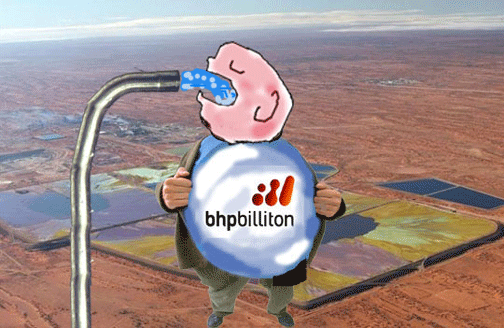
If we take the Olympic Uranium Project as an example we can see that more than 3402 KL of water is needed for each tonne of U3O8 mined, this number is more than doubled at the Beverley Mines. If we add the amount of water needed for all the by-products, such as enrichment of fuel, cooling the reactors, etc. we can say that huge amounts of water are consumed in the overall process. The poorer the grade of uranium ore is the more water is needed. The Australian Olympic and Beverly mines ore grade are around 640-1800 ppm, so we can postulate the much larger amount of clean water are needed for poorer quality, at 200 ppm or even less!
Each tonne also consumes more than 1700 GJ of energy and can emit more than 320 tonnes of CO2 for each tonne U3O8 produced. [table on original]……”
“Intermediate Level” nuclear wastes for South Australian are really “High Level”
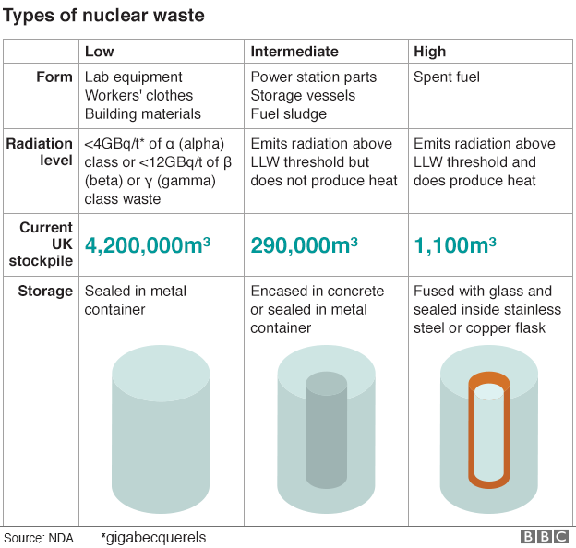
Barb Walker shared a post. Fight To Stop Nuclear Waste In The Flinders Ranges. Relaying important information at the request of Dr. Susi Andersson
Intermediate level radioactive waste (ILW) is not the gloves, masks and gowns mentioned by Alan Moskwa (Nuclear Safety (26/11/19). Australia’s intermediate level waste (ILW) includes the spent fuel elements of the HIFAR (Australia’s first) reactor, which are classified as high level waste in many other countries. In ANSTO’s words, 98% of their ILW is waste specific to the post reactor processing of uranium targets to produce Mo-99 and other radiopharmaceuticals.
Dr. S Andersson https://www.facebook.com/groups/941313402573199/
The Murray Darling water crisis and what governments must do to fix this
|
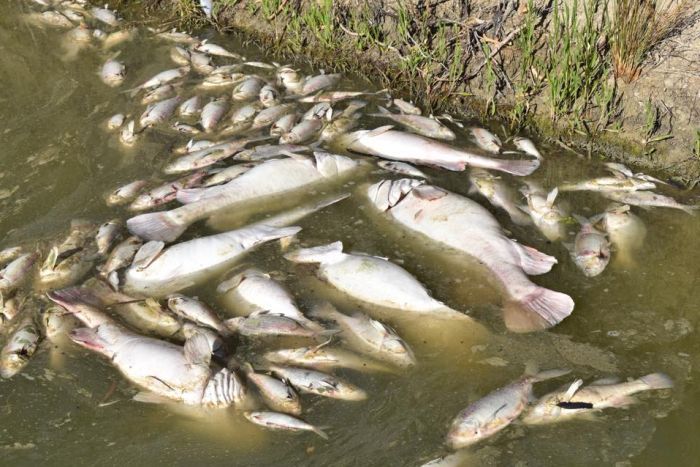
Fish kills and undrinkable water: here’s what to expect for the Murray Darling this summer, The Conversation, Jamie Pittock
Professor, Fenner School of Environment & Society, Australian National University, November 27, 2019 A grim summer is likely for the rivers of the Murray-Darling Basin and the people, flora and fauna that rely on it. Having worked for sustainable management of these rivers for decades, I fear the coming months will be among the worst in history for Australia’s most important river system.The 34 months from January 2017 to October 2019 were the driest on record in the basin. Low water inflows have led to dam levels lower than those seen in the devastating Millennium drought. No relief is in sight. The Bureau of Meteorology is forecasting drier-than-average conditions for the second half of November and December. Across the summer, rainfall is also projected to be below average. So let’s take a look at what this summer will likely bring for the Murray Darling Basin – on which our economy, food security and well-being depend. Not a pretty pictureAs the river system continues to dry up and tributaries stop flowing, the damaging effect on people and the environment will accelerate. Mass fish kills of the kind we saw last summer are again likely as water in rivers, waterholes and lakes declines in quality and evaporates. Three million Australians depend on the basin’s rivers for their water and livelihoods. Adelaide can use its desalination plants and Canberra has enough stored water for now. But other towns and cities in the basin risk running out of water. Governments were warned well before the drought to better secure water supplies through infrastructure and other measures. But the response was inadequate. Some towns such as Armidale in New South Wales have been preparing to truck water to homes, at great expense. Water costs will likely increase to pay for infrastructure such as pumps and pipelines. The shortages will particularly affect Indigenous communities, pastoralists who need water for domestic use and livestock, irrigation farmers and tourism business on the rivers………. How to fix thisGovernments must assume that climate-induced drought conditions in the basin are the new normal, and plan for it. Action should include:
Investing in these adaptation actions now would provide jobs during the drought and prepare Australia for a much drier future in the Murray-Darling Basin. https://theconversation.com/fish-kills-and-undrinkable-water-heres-what-to-expect-for-the-murray-darling-this-summer-126940 |
|
More than 160 bush and grass fires are burning across New South Wales
NSW firefighters battle 100 new blazes, Herald Sun, Heather McNab, 27 Nov 19, More than 160 bush and grass fires are burning across NSW after about 100 fresh blazes ignited in a 24-hour period.
The NSW Rural Fire Service on Wednesday evening said 163 fires were burning in NSW with 75 uncontained. There were more than 2200 personnel in the field working to slow the progress of the blazes.
The Bureau of Meteorology said thunderstorms which hit Sydney on Tuesday afternoon and the state’s northeast in the evening had produced large hailstones and damaging winds – while lightning also sparked fresh fires.
“Over the past 24 hours, around 100 new fires kicked off,” the RFS posted on Twitter at 5.30pm on Wednesday.
“Crews will work over coming days to control this large number of fires ahead of forecast elevated fire danger on Saturday,” the agency posted later that evening…….. https://www.heraldsun.com.au/news/breaking-news/almost-130-fires-burning-across-nsw/news-story/67d86650512ce39d8af0cb2e34109b21
Australia’s ‘permanently wet’ rainforests now burning for the first time

Bushfires devastate rare and enchanting wildlife as ‘permanently wet’ forests burn for first time ABC, RN BY ANN ARNOLD 27 NOV 19 The rainforests along the spine of the Great Dividing Range, between the Hunter River and southern Queensland, are remnants of Gondwana, the ancient supercontinent that broke up about 180 million years ago.
“Listening to the dawn chorus in these forests is literally an acoustic window back in time,” ecologist Mark Graham tells RN’s Saturday Extra.
“It’s like listening to what the world sounded like in the time of the dinosaurs.”
The forests are mountaintop islands that have been “permanently wet” for tens of millions of years.
But now, these forests are being burnt for the first time.
“We are seeing fire going into these areas where fire is simply not meant to go,” says Mr Graham, a fire specialist with the Nature Conservation Council.
Most of the focus of Australia’s catastrophic fires has been on people and property — with the exception of koalas, which have come to symbolise the non-human costs.
Beyond the koalas are many rare and fascinating creatures whose lives and homes have been destroyed, or remain threatened.
“The fauna in these landscapes requires permanently wet conditions, and many of the fauna species in these landscapes simply have no tolerance to fire,” Mr Graham says.
The most ancient birds on the planet
The songbirds that live in these ancient wet forests have always lived there…….
One reason the north coast of New South Wales is a global biodiversity hotspot is it has the most species of eucalypts in the world, and the best areas of Antarctic Beech forest.
“These forests are recognised globally for their outstanding universal values because they are essentially the oldest forests remaining on the planet,” Mr Graham says.
The tree hollows host many fauna species, for shelter and breeding. The hollows take centuries to develop to full size. They can’t be replaced.
“You have to wait 200 to 400 years until they develop again,” Mr Graham says.
One of two nature conservation areas he privately owns, and manages for their natural values, has been almost obliterated by fire.
He wants to present only the facts, and avoid fuelling a media and political circus around the fires……https://mobile.abc.net.au/news/2019-11-27/bushfires-devastate-ancient-forests-and-rare-wildlife/11733956
1 This month.
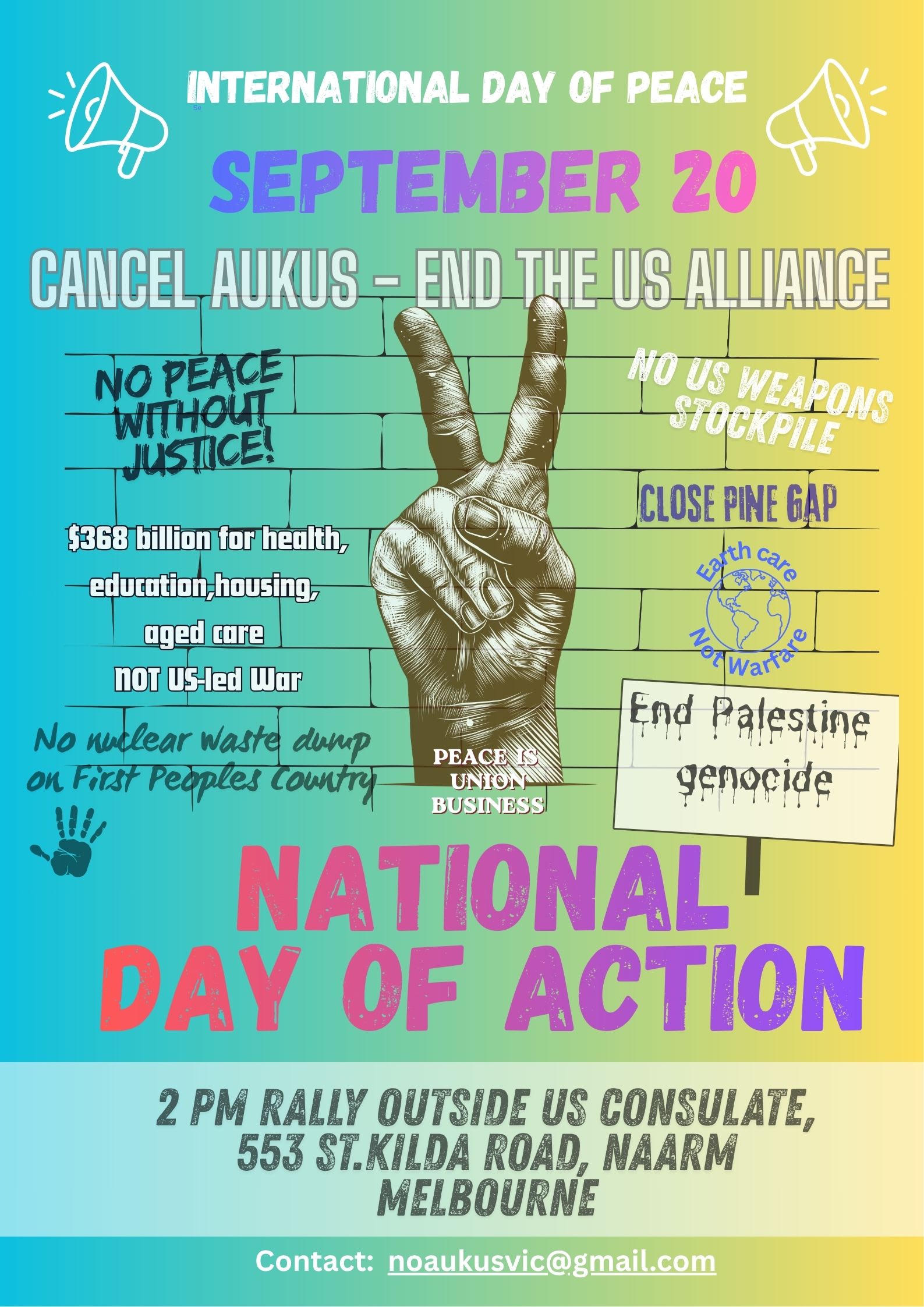
20 September –National Day of Action in Melbourne on the International Day of Peace

Help Aunty Sue Protect Her Land and Sacred Sites From Destructive Rocket Testing.
.

Australians deserve the truth
about
AUKUS – https://aukuspublicinquiry.com/

PETITION – To: Prime Minister Anthony Albanese and the Australian Labor Government

of the week – Australians for War Powers Reform (AWPR)
To see nuclear-related stories in greater depth and intensity
 Antinuclear