Will Scott Morrison repeat John Howard’s mistake, and join in military action against Iran?
 Acting on Iran has painful shades of joining the US in Iraq The Age, Tony Walker, 1 July 19, Here’s a word of advice to Prime Minister Scott Morrison. Unless he wants to risk a smudge on his reputation of the sort that accompanies John Howard to this day: don’t get involved in conflict with Iran beyond limited naval engagement in a Gulf peace-keeping role.
When we read that Canberra is open to joining an international effort to ratchet up pressure on Iran “in consultation with our allies and partners”, this invites disquieting questions.
If Morrison is talking about involvement in a “global coalition”, as described by the hawkish US Secretary of State Mike Pompeo, then he might remind himself of what happened when Australia last lent itself to a so-called “Coalition of the Willing”.
That was 17 years ago in 2002 when John Howard – as one of the “three amigos” with Britain’s Tony Blair and Spain’s Jose Maria Aznar – joined George W. Bush in promoting a disastrous invasion of Iraq.
Only World War II, which absorbed one-third of American GDP, or $4 trillion in today’s dollars, has cost more than the Iraq debacle at $1 trillion (a total $2 trillion if Afghanistan is included).
These are the measurable costs in people, materiel and nation building. Incalculable are the ongoing costs of the destabilisation of the entire Middle East, and the empowerment of Iran…..
In a multi-year assignment in the Middle East I reported the Iran-Iraq war (1980-88); the first Gulf War (1990-1991), in which the US and its allies routed the Iraqi military; and the invasion of Iraq (2003). If I learned anything from those experiences it is that wars are easier to start than to finish. …..
Morrison is surrounded by a weak national security team. The national security committee of cabinet does not include one individual with credible security experience. …….
Morrison might remind himself that Canada’s then-prime minister, Jean Chretien, kept his country out of the Iraq war. The sky did not subsequently fall in on Ottawa.
All this is relevant today given that Morrison found himself last week in the presence over dinner of the two most hawkish members of the Trump administration. Secretary of State Pompeo and National Security Adviser John Bolton both advocated air strikes against Iranian targets in retaliation for suspected Iranian attacks on gulf oil facilities before the President, at the 11th hour, called off military action.
Bolton has been an intemperate advocate of regime change in Tehran. In an interview with The Australian newspaper, Pompeo said Australia had a key role in a “global coalition”. What that means is anyone’s guess.
Morrison would be well advised not to be suckered into joining a counter-punch against Iran. His response to requests for any significant Australian military involvement should be emphatically: No. https://www.theage.com.au/world/middle-east/acting-on-iran-has-painful-shades-of-joining-the-us-in-iraq-20190628-p5227h.html
A grandmother explains the Australian Religious Response to Climate Change

Our Future || Caring for planet is a moral responsibility https://www.canberratimes.com.au/story/6244511/caring-for-planet-is-a-moral-responsibility/?cs=14246 Thea Ormerod, 30 June 19
I am a grandmother with eight grandchildren. Sometimes I lie awake at night worrying about how our changing climate is going to affect their future.
I attend the church of Our Lady of Fatima at Kingsgrove.
It was signed by 153 religious leaders from across the spectrum, many of them in very senior roles.
Climate change and the burning of fossil fuels is a moral issue. Saving the world is a spiritual matter. I don’t interpret spiritual as “other worldly”.
Spirituality for me is about being responsible and reasonable, which shows in healthy relationships.
You see the fruits in laughter, peace and kindness towards each other. In his time on earth, Jesus himself was less interested in rules and who was or wasn’t praying.
He was interested in who was caring about people, especially people who are suffering.
Today, the people who have been hit hardest by climate change are mostly in developing countries, and they’ve done nothing to contribute to the problem.
Those suffering most in Australia are largely people in rural and regional areas. They are on the frontline of droughts, bushfires, intense heat and flooding, left grieving for lost herds and ruined crops.
But people in these areas are being sold short by politicians who are not planning for a more sustainable future, which includes an orderly transition away from the mining and burning of fossil fuels.
Many other nations are making big commitments to reduce emissions but Australia is out of step.
Our elected representatives may think politics is not about religion or spirituality. But it is about morality and caring about people.
Tiny nations challenge Australia’s carbon ‘carryover credits’
 Tiny nations challenge Australia’s carbon ‘carryover credits’ SMH Peter Hannam, June 30, 20Nations from Senegal to Tuvalu have used a United Nations climate conference to challenge the Morrison government’s use of carbon “carryover credits” to virtually halve Australia’s abatement ambition out to 2030.
The conference that wrapped up at the end of last week in Bonn, Germany, debated among other things, the rules of the Paris Agreement.
The discussions included whether nations including Australia should be allowed to count the surplus it expects to generate during the Kyoto Protocol period that runs to 2020.
On the government’s projections, 328 million tonnes of Australia’s pledged cut of about 695 million tonnes of carbon dioxide equivalent could be met by counting the Kyoto surplus for the Paris pledge over the decade from 2021-2030.
Among the nations that opposed the use of “carryover credits” at the Bonn conference included the Association of Small Island states, including Tuvalu.
South Korea, the European Union and New Zealand were also against using Kyoto surplus, according to Kate Dooley, a researcher with the the Climate and Energy College at the University of Melbourne, who was an observer at the Bonn conference.
“Discussions here in Bonn have made it clear that most countries do not accept the carry-over of Kyoto units into the Paris Agreement,” Dr Dooley said.
“The world’s most vulnerable countries have spoken out to say that accounting tricks, such as those the Australian government intends to use, are not consistent with limiting warming to 1.5 degrees.”
…….. The Bonn talks were largely focused on preparing the rules for Article 6 of the Paris Agreement ahead of a Conference of the Parties (COP25) summit in Santiago, Chile later this year. The article is one of the main unresolved issues from the pact signed in Paris in 2015.
The Carbon Pulse newswire said while the new text agreed at Bonn had the potential to scupper Australia’s plans to use Kyoto credits without a specific prohibition in place they would still be able to be banked.
Still, the newswire quoted Gilles Dufrasne of Carbon Market Watch as raising the issue of how such credits had undermined nations’ abatement efforts.
“We have seen how damaging this has been under the Kyoto Protocol and we cannot afford to repeat the experience under the Paris Agreement,” Mr Dufrasne said. “It is very important that [Kyoto Protocol] units are not allowed for use towards [national targets}.” https://www.smh.com.au/environment/climate-change/tiny-nation-s-challenge-australia-s-carbon-carryover-credits-20190630-p522n0.html
Scott Morrison backs Donald Trump in getting tough on Iran
|
Scott Morrison backs Donald Trump in getting tough on Iran, The Age, By David Crowe and David Wroe
June 28, 2019 Osaka: Prime Minister Scott Morrison has backed Donald Trump in taking a harder line against Iran in an escalating dispute over its nuclear program after the US President came close to launching a retaliatory strike against the country last week.Mr Morrison said the federal government would throw its support behind Mr Trump’s effort to force the country to the negotiating table as experts predict it will breach its agreed cap on low-enriched uranium within days. Osaka: Prime Minister Scott Morrison has backed Donald Trump in taking a harder line against Iran in an escalating dispute over its nuclear program after the US President came close to launching a retaliatory strike against the country last week. Mr Morrison said the federal government would throw its support behind Mr Trump’s effort to force the country to the negotiating table as experts predict it will breach its agreed cap on low-enriched uranium within days……. Mr Morrison warned that it was “very premature” to canvass the ways Australia might back the Trump administration in the Middle East but he did not rule out options in the wake of the attacks on two oil tankers in the Gulf of Oman and Iran’s decision to shoot down a US drone aircraft. Mr Morrison said “no requests were made” by Mr Trump for Australian measures but he did not rule out military or other assistance……. https://www.theage.com.au/politics/federal/scott-morrison-backs-donald-trump-in-getting-tough-on-iran-20190628-p522bv.html |
|
Four Corners let that dill Sussan Ley off lightly on environmental issues
 Extinction Nation: Four Corners program raises environmental questions, Independent Australia, By Sue Arnold | 28 June 2019 A recent Four Corners interview with Environment Minister Sussan Ley failed to ask some of the more critical questions, writes Sue Arnold.
FOUR CORNERS: Extinction Nation portrayed a vivid picture of outrageous environmental damage in Victoria and Tasmania — a timely program which barely touched the critical issues.
Of particular concern was the failure of reporter Stephanie March to ask the new Minister for the Environment, Sussan Ley, the most relevant questions in relation to Australia’s ongoing appalling loss of biodiversity and wildlife. Why she allowed Ley to get away with blaming the states is more than curious.
Independent Australia poses 16 questions to Minister Ley, questions which demonstrate a concerning lack of research or censorship by the ABC in its Extinction Nation program. These questions are critical in terms of the future survival of Australia’s unique wildlife……… https://independentaustralia.net/environment/environment-display/extinction-nation-four-corners-program-raises-environmental-questions,12847
PM Scott Morrison looks favourably on Trump’s belligerent attitude to Iran ?
The US secretary of state, Mike Pompeo, has asked Australia to toughen its stance on Tehran and play a key role in a new “global coalition” against the regime.
Tensions between the US and Iran are at their worst point since the White House pulled out of what the president said was an “unfair” nuclear deal known as the joint comprehensive plan of action in May last year.
Before the G20 summit in Osaka, Pompeo called on Australia to join what he described as a “global coalition” against Iran, which last week shot down a US surveillance drone. Iran has said the drone was in its airspace.
But as the Trump administration escalates its sanctions and rhetoric, Pompeo said the US would welcome a move from Australia to impose additional economic sanctions on Iran.
“I think Australia is an important player here,” he told the Australian……… https://www.theguardian.com/world/2019/jun/28/scott-morrison-on-iran-well-seriously-consider-any-us-request-to-join-military-action?CMP=soc_567&fbclid=IwAR2ZnGgRGPj4wv1BwpN5qH4dGYCjM0Od6LAqOVJnW2A6nXA64SHwfscb7
Nuclear enthusiasm from Australia’s right-wing MPs – the triumph of quackery over substance
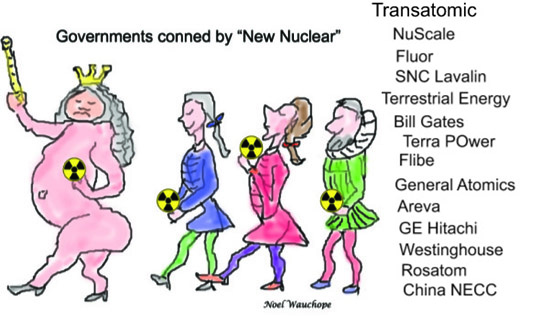 Minister Sussan Ley could open the door to overturning Australia’s nuclear power ban, news.com.au, 27 June 19 There are some very good reasons why the push to reverse Australia’s ban on nuclear power is a bad idea. Malcolm Farr@farrm51
in numerology. That pretty well sums up the new enthusiasm for nuclear power within Government ranks — a triumph of quackery over substance. The nuclear proponents and their media cheer squad seem so determined to see Australian uranium dug up and used to light up the nation, they have diminished the scientific realities of the exercise.
Minister Ley has said she is open to a review of the ban on nuclear power plants.
This isn’t as easy as her turning Susan into Sussan because, as she explained in 2015, “if you add the numbers that match the letters in your name you can change your personality”.
It is a matter of introducing a power source which would be expensive to build, expensive to run, and expensive to turn off. Plus it would be dangerous.
Make that “very dangerous”.
We have a National Wind Farm Commissioner — created by Tony Abbott when PM — overseeing the largely mythical health hazards caused by turbines generating electricity.
If we do that for a few hundred windmills, imagine the huge bureaucracy monitoring the health effects of a nuclear power plant.
Little of which is being addressed by the new gushing tribe of nuclear fans.
It is unfair to load all of this on Ms Ley, but she does administer the Environmental Protection and Biodiversity Conservation Act, which contains the nuclear ban.
It says, “Nuclear action will require approval if it has, will have, or is likely to have a significant impact on the environment. Nuclear actions should be referred to the Minister and undergo an environmental assessment and approval process.”
The pressure for change is coming from a wide range of political figures including One Nation’s new NSW Legislative Council member Mark Latham. And within the Government the pro nuclear voices have included that of Queensland Nationals federal MP Keith Pitt who told The Australian this month, “In our view, the technology has moved on and small modular reactors and thorium need to be investigated…….
If the pro-nuclear MPs are so confident of safety they would have to accept a reactor in their own neighbourhoods, assuring voters they would not become the next Chernobyl, Fukushima or Three Mile Island….
If not, maybe they would accept nuclear waste being buried in their patch, where it would contaminate for thousands of years.
Neither opportunity is likely to embraced by them. https://www.news.com.au/technology/environment/minister-sussan-ley-could-open-the-door-to-overturning-australias-nuclear-power-ban/news-story/2c6214dd0abf15c02f7f9c6dc62fbf11
Energy Users Association of Australia opposes nuclear power: it’s ‘not the answer’
 Nuclear energy ‘not the answer’ to Australia’s power price hikes https://thenewdaily.com.au/money/finance-news/2019/06/26/nuclear-power-not-the-answer/ Rod Myer 26 June 19, Nuclear energy is unlikely to fill the growing void in Australia’s energy system caused by the closure of old power stations and spiking electricity prices, industry insiders say.

Australians are paying about 120 per cent more for electricity than in 2008 after the closure of major coal-fired power stations and spikes in gas prices.
Fears that things could get worse were raised this week with news that Victoria’s Yallourn power station could close before the scheduled date of 2032, if market conditions changed.
Deja vu
Despite recent claims that nuclear could be the answer to power problems, major energy users say that is highly unlikely.
“We’ve been down the nuclear path before with Ziggy Switkowski’s report to the Howard government, which showed it would take at least 10 years to get a project up,” said Andrew Richards, CEO of the Energy Users Association of Australia.
Nuclear energy would not be suited to the developing Australian power system.
“We are getting a lot more increasingly variable, renewable energy coming into the system. To firm that, we need generation that can turn on and off quickly,” Mr Richards said.
“Nuclear power plants operate best when you turn the power on and let it run.”
Nuclear is also an increasingly expensive option, with research from the OECD finding that a high-cost nuclear plant would be 118 per cent more expensive than high-cost solar and 128 per cent dearer than high-cost wind.
That gap is opening up, with Dr Switkowski saying last year “the window for gigawatt-scale nuclear has closed” and that nuclear power is no longer cheaper than renewables, with costs rapidly shifting in favour of renewables.
Mr Richards said the costs of nuclear power are far greater than simply the design, construction and maintenance of power stations, and governments would need to back the technology financially.
“Governments would need to support insurance, dismantling and disposal costs for nuclear power stations, as the private sector won’t take on those risks,” Mr Richards said.
Nuclear costs skyrocket
While renewable-energy generation costs have been falling in recent years, nuclear power prices are skyrocketing.
In 2009, Dr Switkowski said that the construction cost of a 1000MW power reactor Australia would be $4 billion to $6 billion.
However, real-world experience has shown costs are four times that, Renew Economy reported last week.
Costs of plant construction in Europe and North America in recent years for similar generation capacity have been between $14 billion and $24 billion.
Nukes in the mix?
A report from Industry Super Australia into the power sector released on Wednesday said nuclear energy should be considered as part of Australia’s energy mix.
“If you look at the output of the nuclear industry, and if you consider its future relative to other technologies, it looks awfully good, relative to some of the other potential technologies and, therefore, it shouldn’t be excluded from consideration,” ISA’s chief economist Stephen Anthony told ABC radio.
Mr Richards said the possibility of using nuclear power should not be totally discounted.
“Every generation technology should be considered. Maybe nuclear could play a role, but there are significant market and financial problems to overcome,” he said.
The best way to balance the growing renewable generation was likely to be gas generation if governments can set aside gas for the local market at a fair price.
“We need to have gas at below $8 per gigajoule to solve our problems in energy supply and manufacturing,” Mr Richards said.
Currently the price is $10 per gigajoule, he said.The New Daily is owned by Industry Super Holdings
Industry Super Australia (ISA) hitches its wagon to the nuclear unicorn

Industry super urges Australia to consider the nuclear power option https://www.abc.net.au/news/2019-06-26/industry-super-funds-consider-the-nuclear-option/11248202, The World Today By senior business correspondent Peter Ryan 26 June 19
Nuclear reactors should be considered as a realistic option to confront Australia’s deepening energy crisis, according to a study from industry superannuation’s chief lobby group.
Key points:
- Industry Super says Australia should “build some capacity to operate a nuclear facility”
- The report says nuclear is often dismissed as “even more immoral than burning coal”
- It suggests a future energy mix including solar, wind, gas, coal and carbon capture
In a report that raises concerns about the ability of battery technology to maintain the baseload power, Industry Super Australia (ISA) argued that investment in nuclear energy should not be sidelined simply because of its controversial nature.
“If you look at the output of the nuclear industry, and if you consider its future relative to other technologies, it looks awfully good relative to some of the other potential technologies and therefore it shouldn’t be excluded from consideration,” ISA’s chief economist Stephen Anthony told The World Today.
Nuclear power the ‘ugly duckling’, batteries too costly
In addition to nuclear, the report argued technologies such as solar, wind, coal, gas generation and carbon capture and storage need to be considered.
The study also raised concerns about battery schemes, finding that using Tesla batteries to achieve 1.5 days power backup would cost $6.5 trillion, or the cost of building around 1,000 nuclear reactors.
It warned that generating power for a renewable energy system in the same period would require 100 Snowy Hyrdo 2.0 schemes at a cost of $700 billion.
In a discussion paper released today, Industry Super Australia acknowledged that investing in the nuclear option would raise concerns among environmental groups, particularly because of accidents in recent decades such as Chernobyl, Three Mile Island and Fukushima.
The report refers to research saying “nuclear power is now the ugly duckling of the power generation industry. People somehow dismiss it as immoral, even more immoral than burning coal”.
‘Something has got to give’
ISA chief economist Stephen Anthony told The World Today there was a case for industry fund intervention given the energy policy stalemate from Canberra.
“While the climate debate rages on, Australia’s ageing infrastructure continues to fall further and further behind the rest of the world,” Mr Anthony said.
“If this policy inertia continues, regulatory uncertainty will continue to rise, allowing some investors to capitalise on price movements and maximise public subsidies to game the market.
“Something has to give and this is where industry super funds come in.”
The study found that cashed-up industry super funds are ready to invest in energy infrastructure but are waiting on policy direction from the Federal Government.
“The lack of a genuine, long-term, technology neutral energy policy is a major factor undermining fund investment,” the report concluded.
In the normal course, portfolio investors would be lining up to fund long-term solutions in this changing industry for Australia. But so far, the silence from investors is deafening.
“Right now, it seems the only politically acceptable investments appear to be relatively small scale, quickly deployed renewable wind or solar projects.”
The Australian Energy Market Operator estimates that about 60 per cent of current coal-fired generation capacity will be retired by 2040.
“The reality is that, even without climate change, the existing fleet of base load generators needs replacing,” the report noted.
The report excludes a range of technologies from the mix of energy options, including biomass because of its high emissions intensity, and it dismisses tidal and wave power as unrealistic because of the cost and scale required.
Australia’s escalatede defence spending, Christopher Pyne and his convenient advice to Ey defence consulting
 Pay Day: Christopher Pyne’s Defence bonanza a fee fillip for EY https://www.michaelwest.com.au/pay-day-christopher-pynes-defence-bonanza-a-fee-fillip-for-ey/, Jun 27, 2019 It dwarfs all other government spending. It is secretive. A huge chunk of it does not even go out to tender. The lion’s share goes to foreign multinationals who pay no tax in Australia. It is defence spending. Michael West reports on the explosion in defence spending which has tripled to more than $60 billion in one year since the Coalition took office, and since Christopher Pyne became Minister for Defence Industry on July 19, 2016.
Christopher Pyne – Defence Minister in May – Defence Industry Lobbyist in July
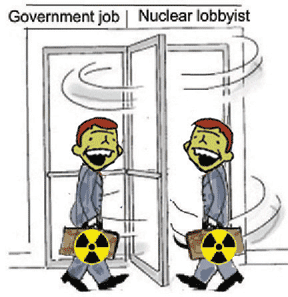 The Fixer in a fix over EY move https://www.afr.com/business/accounting/the-fixer-in-a-fix-over-ey-move-20190626-p521cj Edmund Tadros and Tom McIlroy 26 June 19 Former defence minister Christopher Pyne is under fire for taking a role at big four advisory firm EY that will see him consult to companies in the defence sector.
Despite the lion’s share of the defence sector stemming from federal procurement, EY said the former minister, who retired from politics at the election, would not be lobbying or meeting with MPs or the Defence Department.
The ministerial code of conduct requires cabinet members to wait for 18 months after leaving office before advocating or having business meetings with members of the government, Parliament, public service or defence force on any matters on which they have had official dealings.
Outgoing ministers cannot take personal advantage of information to which they have had access or which is not generally available to the public.
Mr Pyne’s two most recent ministerial roles were as minister for defence and minister for defence industry. He issued a short statement about the job on Wednesday after it was revealed by The Australian Financial Review: “I’m looking forward to providing strategic advice to EY, as the firm looks to expand its footprint in the defence industry.”
A spokeswoman for the Office of the Prime Minister, which administers the code of conduct, did not comment when asked if the role breached the code of conduct
“The rules for former ministers are clear and we refer you to the statements made by Mr Pyne and EY on his new position,” the spokeswoman said.
EY at first described Mr Pyne’s role in the context of “ramping up its defence capability”, but later clarified that Mr Pyne would only deal with the “private sector side of the business”.
“He will not be lobbying or meeting with public sector MPs, public service or defence force in his EY role. He is supporting the private sector side of the business,” the EY spokeswoman said.
Pyne to ‘lead conversations’
EY’s defence leader Mark Stewart said: “Christopher Pyne is also here to help lead conversations about what states need to do to meet the challenges and opportunities this huge defence investment will bring.”
He said EY was “ramping up its defence capability ahead of a surge in consolidation activity and the largest expansion of our military capability in our peacetime history … Large domestic defence players are actively looking for mergers to bulk up to deliver on the government’s $200 billion integrated investment program”.
Australia’s religious leaders call on Prime Minister Scott Morrison to act on climate change
‘For the sake of generations to come’: Faith leaders unite on climate change https://www.sbs.com.au/news/for-the-sake-of-generations-to-come-faith-leaders-unite-on-climate-change 26 June 19, More than 150 religious leaders have issued an open letter to Prime Minister Scott Morrison, urging him to show moral leadership on the issue of climate change.
Faith leaders from across the religious divide have gathered in Sydney to call on Prime Minister Scott Morrison to show moral leadership on climate change.
The joint press conference kicked off with Rabbi Johnathan Keren-Black blowing a ram’s horn to symbolise raising the alarm.
Environmental Advisor for the Council of Progressive Rabbis, Rabbi Keren-Black said the world is facing a “climate emergency”.
Judaism believes that we have a responsibility to be caretakers for God’s world, and we’re not doing a very good job of it at the moment.”
More than 150 religious leaders – including the heads of the Uniting Church in Australia, the Federation of Australian Buddhist Councils, Muslims Australia and the National Council of Churches – on Tuesday issued an open letter to Mr Morrison.
The letter calls on the Prime Minister to make addressing climate change his number one priority.
Australian Religious Response to Climate Change (ARRCC) President Thea Ormerod described climate change as a moral issue that needs to be urgently addressed.
“We have an urgent challenge which we all share, a moral challenge. It’s not just a political issue or an economic issue, it’s also a moral issue and all of us are standing together with one voice today,” she said.
Under the banner of Australian Religious Response to Climate Change, the group is calling for a stop to new coal and gas projects, stopping Adani’s controversial coal mine in central Queensland and moving to 100 per cent renewable energy by the year 2030.
Despite the differences in our faith, we all regard addressing the climate emergency as our shared moral challenge. We stand together for our common home, the Earth,” the letter says.
“Will you and your Government have the courage to agree to this simple threefold agenda? We pray that you will.”
Loreto Sister Libby Rogerson said there is a sacred responsibility to care for the earth and all living beings.
“We are concerned for the poorest and most vulnerable, and it is the poorest and most vulnerable of people and nations that are affected by Climate Change,” she said.
Federation of Australian Budhist Councils Spokesperson Gawaine Powell Davies also attended the press conference, and said climate change is driven by “human foolishness”.
“We have a very sharp analysis of human foolishness which has led us to put greed and short-term benefit ahead of the long-term interests of ourselves and our children, and our grandchildren,” Mr Powell Davies said.
The Grand Mufti of Australia, Ibrahim Abu Mohammed, along with senior Rabbis, bishops and theologians have also signed the letter.
Australia a top G20 leader in subsidising the coal industry
 Australia leads the G20 nations’ pack in aid for coal-fired power, SMH Peter Hannam, June 25, 2019 Subsidies for coal-fired power production almost tripled in the three years to 2016-17 among G20 nations, with Australia providing among the largest support, an international study has found.The report by UK think tank, the Overseas Development Institute, found aid for such power stations soared from US$17.2 billion ($24.7 billion) in 2013-14 to $US47 billion in the most recent year. It’s in contrast to pledges made by the 20 biggest economies in 2009 to phase out subsidies to reduce the risks of climate change……
The highest amounts of total support to coal consumption were identified in Indonesia at US$2.3 billion per year, Italy and Australia, both about US$870 million, the US at US$708 million, and the UK with US$682 million, it reported.
“These tens of billions of dollars a year of G20 support to coal are not just locking in the high-carbon
economy and leading to stranded assets, they are also a missed opportunity to support a clean energy transition and to achieve other sustainable development objectives,” the study said……
‘Ecological crisis’
Jamie Hanson, head of campaigns at Greenpeace Australia Pacific, said Australia was in an “ecological crisis driven by climate change”.
“Coal is the primary cause of the climate damage that is causing extinctions all over the country, drought and fire that has torched ancient rainforests, and that has killed half the Great Barrier Reef in the last five years,” he said.
“Climate-destroying government handouts to the coal industry defy all logic – especially now, when we know that clean renewable energy is the cheapest form of new power.”
Separately, Australia’s climate ambassador Patrick Suckling has argued at a United Nations conference in Bonn, Germany that the country’s carbon reduction efforts were “having a positive effect”. https://www.smh.com.au/environment/climate-change/g20-nations-aid-for-coal-fired-power-triples-in-three-years-report-20190625-p5213r.html
Busting the spin of Australia’s pro nuclear propagandists
A Powerful Depiction’: Chernobyl Workers Reflect On HBO Series
ABC’s Media Watch takes aim at nuclear misinformation and bias
The ABC’s Media Watch program last night took aim at Australia’s pro-nuclear propagandists and the extreme bias of Australia’s nuclear ‘debate’.
Media Watch discussed HBO’s hit miniseries ‘Chernobyl’, which tops IMDB’s list of the greatest TV shows of all time, and took aim at Andrew Bolt and others for trivialising the death toll (discussed here) and for ignoring the broader impacts of the disaster such as the permanent relocation of 350,000 people and the thousands of children who suffered thyroid cancer due to exposure to radioactive fallout.
Dr Jim Green, national nuclear campaigner with Friends of the Earth Australia, said: “Nuclear lobbyists argued that Chernobyl was a result of the dysfunctional Soviet system and that a similar disaster couldn’t happen in Western countries. That argument collapsed with the March 2011 Fukushima disaster in Japan. Nuclear disasters can happen anywhere and a nuclear disaster anywhere is a nuclear disaster everywhere due to the spread of radioactive fallout. Chernobyl’s radioactive fallout contaminated the whole of Europe and Fukushima fallout reached northern Australia.”
“In addition to their other devastating impacts, nuclear disasters greatly increase the overall cost of nuclear power. The cost of the Chernobyl disaster is estimated at over one trillion dollars [US$700 billion] and the Fukushima disaster could prove to be just as expensive.”
Citing a recent expert analysis, Media Watch noted that nuclear power “doesn’t even get to first base on cost” and took nuclear lobbyists to task for failing to acknowledge the extraordinarily high cost of nuclear power (all reactors under construction in western Europe and north America are estimated to cost $14‒24 billion each while the South Carolina reactor project was abandoned in 2017 after the expenditure of at least A$12.9 billion).
Dr Green said: “Dr Ziggy Switkowski used to be Australia’s most prominent supporter of nuclear power and he led the Howard government’s nuclear review in 2006. But nuclear costs have increased four-fold since then and Dr Switkowski has acknowledged that the window for large-scale nuclear power in Australia has closed as renewables are clearly cheaper.“
“John Howard was no anti-nuclear ideologue yet he had the good sense to ban nuclear power. Prime Minister Scott Morrison needs to state unambiguously that the legislation banning nuclear power in Australia will remain in place,” Dr Green concluded.
Contact: Dr Jim Green 0417 318 368 More information: Last night’s Media Watch segment on nuclear power (video and transcript) A recent detailed article by Dr Green, cited by Media Watch.
Ignorance of the Morrison Government on the scientific and medical aspects of Small Modular Nuclear Reactors
Fancy giving the go-ahead the day before the 2019 Federal Election was announced for the Yeelirrie Uranium Mine in Western Australia, with no time for rational and informed input or debate! The fact is that Canadian Cameco, the world’s largest uranium miner and processor, wants to mine this uranium. Our alliance with spurious organisations clearly leads us astray.
To be quite frank, almost all of our politicians are scientifically and medically ignorant and in an age where scientific evolution has become extraordinarily sophisticated, it behoves us – as legitimate members of democracy – to both educate ourselves and our naive and ignorant politicians for they are not our leaders, they are our representatives.
Many of these so-called representatives are now being cajoled into believing that electricity production in Australia could benefit from a new form of atomic power in the form of small modular reactors (SMRs), allegedly free of the dangers inherent in large reactors — safety issues, high cost, proliferation risks and radioactive waste.
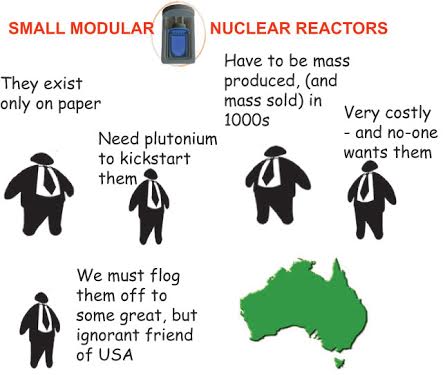
But these claims are fallacious, for the reasons outlined below. Continue reading
1 This month.
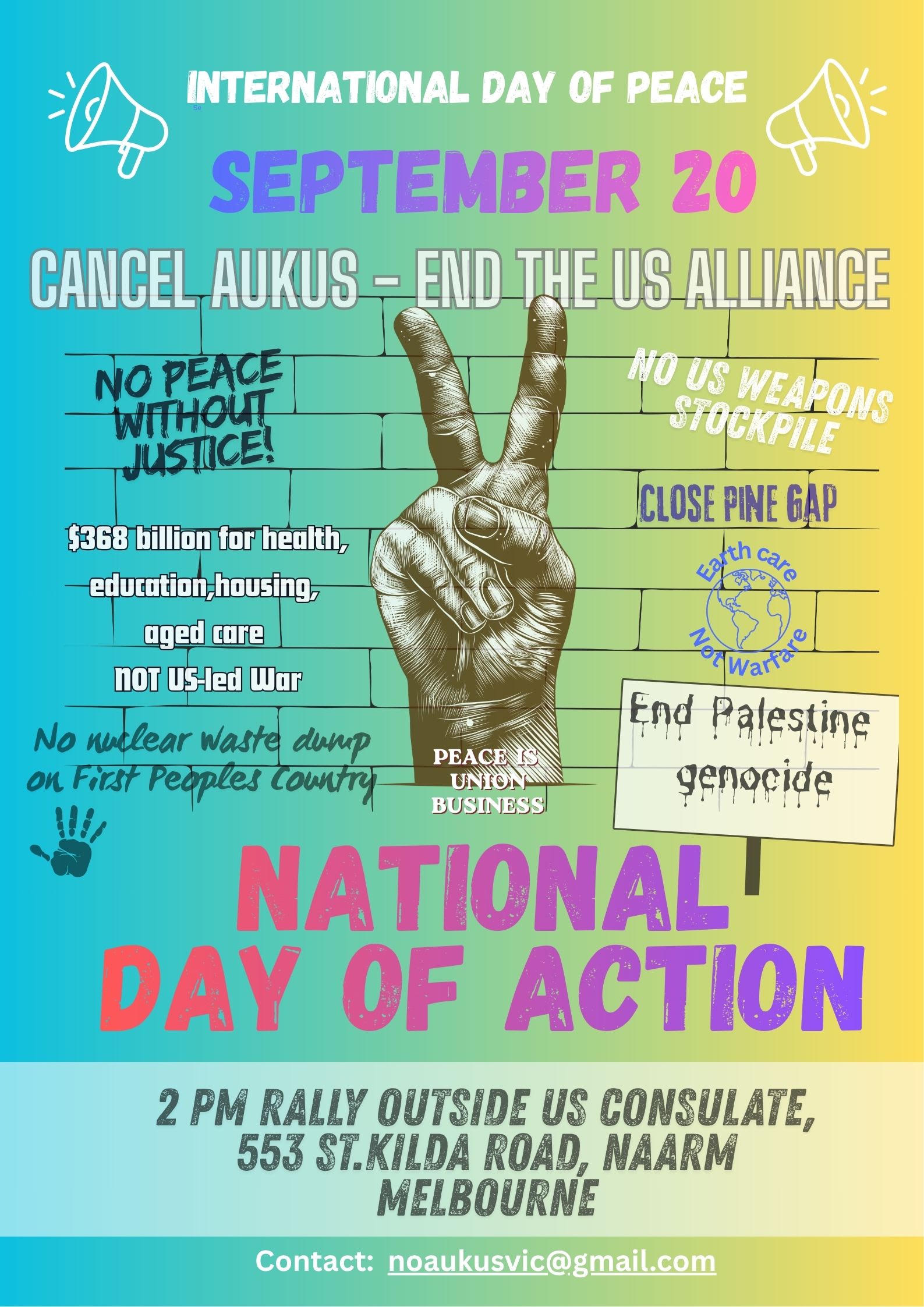
20 September –National Day of Action in Melbourne on the International Day of Peace

Help Aunty Sue Protect Her Land and Sacred Sites From Destructive Rocket Testing.
.

Australians deserve the truth
about
AUKUS – https://aukuspublicinquiry.com/
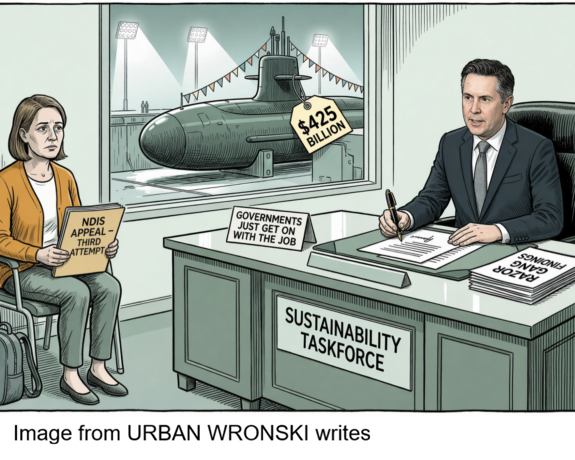

PETITION – To: Prime Minister Anthony Albanese and the Australian Labor Government

of the week – Australians for War Powers Reform (AWPR)
To see nuclear-related stories in greater depth and intensity
 Antinuclear