Rising seas will threaten 1.5 million Australians by 2050 – report
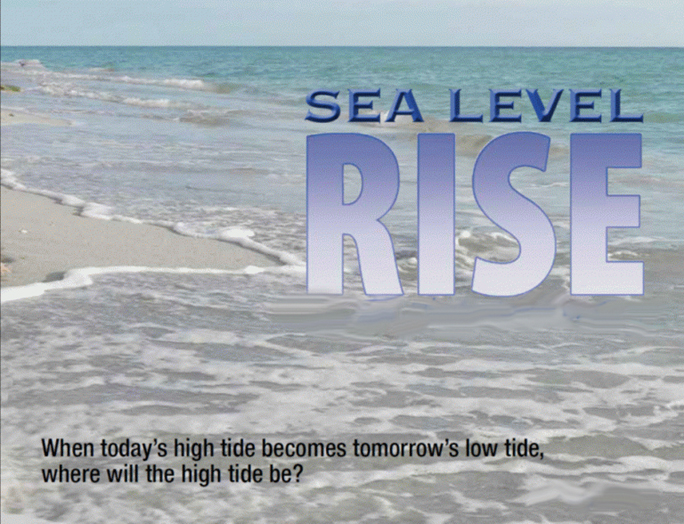
One and a half million Australians living in coastal areas are at risk
from rising sea levels by 2050, a landmark climate report has warned.
Australia’s first National Climate Risk Assessment predicted more frequent
and severe climate hazards like floods, cyclones, heatwaves, droughts and
bushfires. “Australians are already living with the consequences of climate
change today,” Climate Change Minister Chris Bowen said, “but it’s clear
every degree of warming we prevent now will help future generations avoid
the worst impacts in years to come.”
The report looked at three global
warming scenarios – above 1.5C, above 2C and above 3C. Australia – one of
the world’s biggest polluters per capita – has already reached warming of
above 1.5C, the report said, noting that at 3C, heat-related deaths in
Sydney may rise by more than 400% and almost triple in Melbourne. The
72-page report – released days before the government announces its
emissions reduction targets for 2035 – found that no Australian community
will be immune from climate risks that will be “cascading, compounding and
concurrent”.
BBC 15th Sept 2025,
https://www.bbc.co.uk/news/articles/c930454e77xo
I am ANTIFA

The Anti-Fascist I Was Raised to Be
Michael Taylor, he Australian Independent Media Network. 9 Sept 25, https://theaimn.net/i-am-antifa/
I am ANTIFA. Or so says President Donald Trump, branding me and millions like me as terrorists in the same breath he decries “fake news” and “radical left” bogeymen.
It’s a label that stings not because it’s novel – God knows we’ve heard worse – but because it erases the very soil from which it springs.
Let me tell you who I really am, before the algorithms and outrage machines bury the truth. My father fought in World War II. He was one of the Diggers who stormed the beaches, dodged the shells, and stared down the abyss in places whose names still echo like ghosts: Tobruk, El Alamein, New Guinea.
When the war spat him out, he landed in a Soldier Settlers camp on the dusty fringes of rural Australia – a patchwork of tin shacks and hopeful paddocks where broken men tried to stitch lives from the scraps of peace. Everybody’s father there had fought. The camp was a republic of the scarred: limps from shrapnel, coughs from gas, eyes that flickered away when thunder rolled like distant artillery.
Nobody talked about the war. Not really. The soldiers wore their deep wounds like second skins – visible to all, but spoken of in silences around the communal fire, or in the way a man’s hand trembled pouring tea. Their lives were irrevocably changed, folded and refolded like old maps no longer leading anywhere familiar. But they carried on. They planted crops in unforgiving soil, raised kids who knew the taste of damper bread and the sting of billy tea, and built a world where freedom wasn’t a slogan but a hard-won breath.
We’d eventually learn, piecing it together from half-heard stories and library books, that they weren’t just fighting other armies. They were battling ideals – the poison of fascism that choked Europe, Asia, and beyond. Ideals that promised order but delivered ovens and gulags, that crushed the human spirit under the boot of blind obedience.
My father and the thousands around the world – Allies from every corner of the globe – were the antidote. They were anti-fascists, plain and simple. Not with hashtags or headlines, but with bayonets and bullets, with the sweat of reconstruction and the vigilance of survivors.
And so were we, the children, schooled in the camp’s unspoken creed: Guard the light. Question the shadows. Forgive the man, but never the machine that marched him to madness.
As scarred as those soldiers were, something extraordinary happened in that camp. Former enemies – Germans, Italians, even Japanese migrants fleeing their own ruins – washed up on Australian shores, seeking the same fragile peace. Friendships formed over shared fences and shearing sheds. My father put it to me one evening, his voice gravel from years of unspoken grit: “Michael, I forgave the enemy the day the war ended. The ordinary bloke on the other side? He was just like me – sent to die for a lie. But not the government that shipped us off like cannon fodder. And never the belief that drove those governments to war. That’s the real enemy. That’s what we fought.”
That forgiveness wasn’t weakness; it was the ultimate defiance of fascism’s divide-and-conquer rot. It built bridges where bombs had fallen. It echoed the Nuremberg trials, the Universal Declaration of Human Rights, the quiet revolutions of decency that followed. Anti-fascism wasn’t a club or a costume – it was the air we breathed, the legacy etched into every settler’s callused hand.
Yet now, in 2025, President Trump tells me – and millions like me – that I belong to a terrorist organisation. ANTIFA, he calls it, a shadowy cabal of chaos when, in truth, it’s the ghost of that very fight: a refusal to let authoritarianism creep back in, disguised as populism or “America First.” As a result, I see good people – everyday folks with ‘settler blood in their veins’ – being abused on social media. Labeled “warmongering ANTIFA bastards” for daring to call out lies, for marching against wars and white nationalism, for remembering that fascism doesn’t die; it just rebrands. I seem to have missed something.
What changed? The weapons? No – the ideals are the same: the cult of the strongman, the demonisation of the “other,” the march toward unchecked power. The difference is the battlefield. It’s not Normandy or the Pacific; it’s Twitter feeds and town halls, where words are the new front lines. And the soldiers? We’re still here, the children of those camps, scarred by our own wars – of inequality, climate denial, eroded truths – but carrying on.
Trump’s slur isn’t just an insult; it’s an erasure. It paints the anti-fascist as the fascist, the defender as the destroyer. But history doesn’t bend that way. My father’s forgiveness teaches me to pity the man behind the microphone, twisted by his own government’s machine. Yet it also demands I fight the belief that fuels him – the one that whispers war is glory, division is strength, and truth is optional. So yes, Mr. President, call me ANTIFA. I’ll wear it like my father’s medals: not for the shine, but for the weight. Because in the end, the real terrorists aren’t the ones who remember the war. They’re the ones who want to start another.
US Threat to World Peace, AUKUS, and Dollar Sovereignty
US threat to world peace, why AUKUS spending risks Australia, and how dollar sovereignty offers a safer path.
Social Justice Australia, by Denis Hay, 17/09/2025
The US threat to world peace sits at the centre of a heated claim that the United States underpins peace in our region. Is that really true, or just easy politics? The facts tell a different story. Australia has pledged hundreds of billions for the AUKUS defence deal, with an additional $12 billion for the Henderson Defence Precinct, enabling the servicing of US and future Australian nuclear submarines in WA.
Australia now targets more than 2.3% of GDP for defence by 2033 to 2034, while NATO’s counting methods inflate figures by adding items like pensions and infrastructure.
Stat box, big picture:
- AUKUS cost envelope, 268 to 368 billion dollars.
- Defence to rise beyond two-point three per cent of GDP by 2033 to 2034.
- Australians’ trust in the US has fallen to record lows in two decades of polling.
Why accept the line that Washington guarantees peace when ordinary Australians see mounting risks, higher costs, and shrinking control?
The Problem: Why Australians Feel Stuck
Root cause, alliance pressure and spending metrics
Pressure to lift spending, often framed in GDP targets, now runs alongside discussion of higher NATO style thresholds and even a five per cent security envelope in Atlantic debates.
The government dismisses a fixation on GDP, yet the headline numbers continue to climb, and new shipyard commitments lock in path dependency.
Reflective question: Are we buying safety or buying into someone else’s strategy?
Power question: Who benefits when accounting rules redefine defence to push the headline number up?
Consequences for citizens
Australians worry the alliance could drag us into conflict in Asia, even as trust in US leadership falls. The truth is that fear and doubt grow when commitments rise faster than accountability. Who carries the risk if a submarine schedule slips or a crisis erupts in the Taiwan Strait?
The Impact: What Australians Are Experiencing
Everyday effects
AUKUS locks in decades of spending, crowding out housing, health, and climate resilience. The WA maintenance push at Henderson aims to support docking and servicing, including for US boats, tying local industry to the US force structure.
Reflective question: Will your family be safer because a US submarine gets serviced in WA next year, or because your town is flood-ready?
Power question: Why should budget rules expand for weapons while social services are told to tighten their belts?
Who benefits
Prime contractors and allied militaries gain capacity and access. Communities near critical bases, such as Pine Gap, a joint US-Australia intelligence hub central to US operations, often become a focus of protests.
The Hidden Cost for Every Australian
The AUKUS defence deal is not just an abstract number. It means about $368 billion spread across a population of roughly 26.5 million Australians, which equals $13,900 for every man, woman, and child.
Imagine if every Australian family received the value of this public investment in tangible safety and wellbeing:
- Housing security: Build more than one million new social and affordable homes to end the housing crisis.
- Health and aged care: Expand Medicare to include dental and mental health, and properly staff aged care.
- Education and skills: Abolish student debt, guarantee free TAFE and university, and fund lifelong learning.
- Climate and disaster resilience: Construct nationwide flood defences, bushfire readiness systems, and renewable energy infrastructure.
- Jobs guarantee: Use dollar sovereignty to ensure meaningful work for every Australian, focused on local and sustainable projects.
Reflective question: Which makes your community safer, a nuclear submarine or a flood levy that holds?
Power question: Why does Canberra accept scarcity for health and housing, but never for warships?
Rally line: We can do better. We must do better.
The Solution: What Must Be Done
Australia dollar sovereignty and reform
Australia issues its own currency. That means we can always purchase what is available in our currency, including public purpose jobs and resilience, without needing foreign approval.
Real constraints are inflation, resources, skills, and the exchange rate, not a household budget analogy. So, the choice to pour hundreds of billions into AUKUS defence deal is political.
Use that fiscal capacity for civil security first, such as climate adaptation, cyber defence, and regional diplomacy.
Reflective question: If we can fund subs, why not fund safety at home?
Power question: Who says the only credible path is more weapons?
Doug Cameron’s Warning on Militarism and Sovereignty
Cameron argues AUKUS erodes sovereignty, risks entrapment, and diverts billions from real security.
- Entrapment risk, US access: AUKUS ties Australia to US operations, including US submarine use of Henderson, WA, raising escalation and targeting risks. Reuters
- Mega-cost, weak timelines: The AUKUS envelope, up to $368b over decades, risks obsolescence as detection tech advances. Who benefits if subs are outdated by delivery? ABC+1
- Bases and nuclear exposure: Pine Gap’s role and HMAS Stirling’s US maintenance periods deepen Australia’s role in US war-fighting networks. Is this the path to peace or a bullseye on home soil? Wikipedia+2Defence+2
- Accountability gap: Parliamentary intelligence oversight remains constrained, though reforms are proposed. Why spend the most on a kit without thorough scrutiny? Parliament of Australia+1
- Opportunity cost: The $12b Henderson spends and broader AUKUS outlays crowd out housing, health, climate resilience, and jobs. Real security starts with people. SBS
Rally line: Prepare for peace, not war. Ordinary Australians deserve safety, not pre-commitments to foreign conflicts.
Source: Australian Sovereignty and the Path to Peace – Doug Cameron | 2025 Laurie Carmichael Lecture
Policy solutions and demands
-
-
- Publish complete life cycle AUKUS costs, schedule risks, and opportunity costs in one transparent report each year.
- Cap major platform shares of the defence budget and shift funds to cyber, disaster response, and diplomacy.
- Require independent reviews of US base roles and accident liability at HMAS Stirling and Pine Gap.
- Adopt a regional peace plan with ASEAN and the Pacific that prioritises de-escalation and climate security.
- Use dollar sovereignty to guarantee jobs in housing retrofit, flood levees, and bushfire readiness, with measurable outcomes.
-
Rally line: We can do better. We must do better…………………………………………. https://socialjusticeaustralia.com.au/us-threat-to-world-peace-sovereignty/
Australia rooftop solar hits 26.8 GW as home battery uptake surges

Australia is on track to exceed its 2030 rooftop solar targets with a combined 1.1 GW of new capacity installed across 115,584 households and businesses in the first half of 2025.
September 15, 2025 David Carroll, https://www.pv-magazine.com/2025/09/15/australia-rooftop-solar-hits-26-8-gw-as-home-battery-uptake-surges/
A new report from the Clean Energy Council (CEC) shows that at the end of June there was a combined 26.8 GW of rooftop solar capacity deployed across 4.2 million homes and small businesses in Australia.
The CEC’s Rooftop Solar and Storage Report reveals that 115,584 rooftop solar units were installed nationwide in the first six months of the year, down 18% on the same period 12 months prior, while the total installed capacity of 1.1 GW was 15% lower than the 1.3 GW installed over the same period in 2024.
Despite the slowdown, the CEC said Australia is likely to exceed the Australian Energy Market Operator’s (AEMO) 2030 target for rooftop solar.
AEMO’s Integrated System Plan, which underpins the federal government’s 82% by 2030 renewable energy target, expects rooftop solar to contribute 36 GW to the National Electricity Market by the end of the decade.
The CEC said based on current trends, it expects the rollout of rooftop solar in Australia will reach 37.2 GW by June 2030, beating projections by 3.3%.
CEC Distributed Energy General Manager Con Hristodoulidis said the figures highlight the pivotal role of rooftop solar in keeping Australia’s energy transition on track.
“Australian consumers and small businesses are delivering the transition at breathtaking speed, turning suburban roofs into one of the biggest power stations in the country,” he said.
Rooftop solar contributed 12.8%, or 15,463 GWh, of Australia’s total energy generation in the first six months of the year, up from 11.5% in the same period 12 months prior.
The report also shows that Australians are embracing home batteries at record pace, with 85,000 battery units sold in the first half of 2025, representing a 191% increase from the same period last year.
The uptake has surged again since the introduction of the federal government’s Cheaper Home Batteries program with government data revealing more than 43,500 installations installed in July and August alone.
“Just as Australians have long understood the value of solar in lowering household energy bills, we are now seeing a surge in battery adoption, which allows households to store their own clean energy and maximise savings,” Hristodoulidis said.
Queensland added the most rooftop solar in the first half of 2025, with 326 MW of installed capacity, followed by New South Wales (NSW) and Victoria with 321 MW and 230 MW, respectively.
NSW has the highest level of total installed rooftop solar capacity in the nation at 7.5 GW, with Queensland second at 7.2 GW, ahead of Victoria with 5.4 GW. Queensland remains the state with the most installations, with 1.1 million.
Could Australia defend itself?
by Rex Patrick | Sep 7, 2025 , https://michaelwest.com.au/could-australia-defend-itself/
Supporters of the Australian Defence Force being more closely integrated with the US military, and of AUKUS, seem convinced that we need the US to defend ourselves. Former senator and submariner, Rex Patrick, explains why they’re wrong.
While there are clear concerns in the US and Australia with China’s growing military power and how that power might be utilised, no-one reasonably thinks China has aspirations of attacking Australia. But, for defence purposes, we plan for worse-case, and so in assessing whether Australia could defend itself, a Chinese attack is a convenient scenario to explore.
Nuclear attack
It’s estimated China possesses more than 500 operational nuclear warheads, and by 2030, they’ll have over 1,000. Most of those will be aimed at US targets – US air and military bases in Guam and Hawaii, US bases in the territories of America’s allies in north-east Asia – Japan and South Korea; as well as a growing list of strategic facilities and cities in the continental United States itself.
And as China enters an era of nuclear weapon abundance, there’ll be long-range missiles and warheads to spare for US-related targets down under – the signals intelligence facility at Pine Gap near Alice Springs, the submarine communications station near Exmouth, the RAAF base at Darwin and naval facilities at Garden Island south of Perth.
It’s clear that an expanding US military presence in Australia has increased the likelihood of nuclear weapons being directed at us by China.
Our best protection against the risk of nuclear war is a government policy of support for the system of mutual deterrence and effective arms control. In this, the AUKUS program isn’t helpful, as Australia’s past diplomatic engagement on nuclear arms control and non-proliferation has been downgraded. We are trying to persuade other nations that Australia should be permitted to receive weapon-grade plutonium in the reactors of our anticipated US- and UK-sourced submarines.
Conventional conflict and the tyranny of distance
Launching a conventional attack on Australia is a very hard thing to do.
Geography is our great advantage. What historian Geoffrey Blainey called the “tyranny of distance” is a big problem for any country wanting to attack Australia. In World War II, the invasion of Australia was operationally and logistically a bridge too far for the Imperial Japanese Army and Navy. During the Cold War, Australia enjoyed defence on the cheap because there was no direct conventional military threat from the Soviet Union.
We’re a long way from China, surrounded by a ‘moat’ and are further assisted in our defence by an inhospitable vastness between a hostile force landing on our northern shores and our major population centres.
We can also afford to defend ourselves if we sensibly reallocate the $365B cost of eight AUKUS submarines to focus on the defence of Australia first.
Here’s how.
Keeping a watch
An intelligence capacity, focused on areas of primary strategic interest to support an independent defence of Australia, is crucial. This would involve cooperation with other nations (including as part of 5Eyes), defence-focused spying by the Australian Secret Intelligence Service and eavesdropping by the Australian Signals Directorate, covert submarine intelligence missions and intelligence collection by deployed RAN surface ships and RAAF surveillance aircraft.
Open source intelligence should not be discounted.
We also need a highly capable surveillance capability for detecting, identifying and tracking potentially hostile forces moving into our military area of interest.
Australia should invest in satellite surveillance system ($5B, leaving $363B in available funds from cancelling the $368B AUKUS program) to complement our three Over-The-Horizon Radars at Longreach in Queensland, Laverton in WA and at Alice Springs in the NT and double the size of our P-8 Maritime Patrol and Response fleet from 8 to 20 aircraft ($6B, $357B).
We should also invest in deployment of long-range acoustic systems ($1B, $356B), e.g. in places like Christmas Island to detect and identify foreign submarines transiting the Lombok Strait.
We need to ensure we have reliable ships and submarines with well-trained crews deployed in our northern approaches, particularly near the many southern exit points of the Indonesian archipelago.
Defending the moat
Defence of Australia, in the lead-up to conflict, would require sea and air denial.
To do this, we need all relevant defence assets to be capable of launching stand-off anti-shipping missiles, in particular the Naval Strike Missile and Joint Strike Missile, which will be made in a Kongsberg facility being built in Newcastle.
These missiles would be an essential capability in our 20 air-independent propulsion submarines ($30B, $326B), our expanded surface fleet with a further 10 frigates ($10B, $316B), our F-35 Joint Strike Fighters and P-8 Poseidon maritime patrol aircraft.
We also need to boost our airborne capabilities with additional fighter aircraft ($25B, $291B) oriented towards maritime strike, land, and more air-to-air refuelling capacity ($1B, $290B) to support these fighter jets. We also need to enhance our land-based anti-air defences ($1B, $289B).
Closer to shore, we should expand our capability to utilise sea mines. Since World War II, mines have damaged and sunk more vessels than any other means; they are a highly effective asymmetric weapon that the ADF has only recently reintroduced into its inventory, and we should expand our capabilities and capacity in this area. ($1B, $288B).
At the same time, we need to beef up our anti-submarine warfare capabilities to protect our sea lanes, stop foreign submarines passing through choke points in our northern approaches and to protect our new strategic fleet ($20B, $268B), which Prime Minister Albanese promised but has not delivered on, critical for supporting continued economic activity and our defence effort in our northern coastal waters
Protecting defence, economic and population assets
In protecting Australia, we would need to have regard to keeping open our northern, naval and major ports, which would be vulnerable to enemy mines. Australia’s mine countermeasures have atrophied. This would have to be reversed ($5B, $263B).
Turning to ground forces, we need to be able to deal with lodgements on our territory or major raids. We need to be able, assisted by our geography, to oppose any march south, whilst also being able to supply our forces to the north. We need to double our heavy airlift capability with a further large transport aircraft ($4B, $259B).
Lessons from Ukraine are particularly relevant; the rise of drone systems and their effects on force architectures and land warfare, the effects of electronic warfare on the modern battlefield, the challenges of sustaining logistics in a contested environment (mindful of the huge distances involved in supporting Australian forces in the top end) and air defence.
In addition to existing Army programs, Australia must spend money to capitalise on the lessons learned. We need to be investing in drone and anti-drone capabilities ($2B, $257B), indigenous electronic warfare capabilities ($5B, $252B), 12 additional tactical transport aircraft ($2B, $250B), 48 additional utility helicopters ($2B, $248B), unmanned ground logistics vehicles ($2B, $246B) and shoulder fired anti-aircraft missiles ($2B, $244B).
Other priorities
Distance is not a barrier to effective cyber warfare. Australia must ensure our highly electronic and network-connected utilities are not disrupted by conflict. We need to increase investment in our cyber warfare capabilities ($5B, $239B).
We also need to address a huge deficit in our fuel security. ensuring we have a minimum 90 days in-country fuel supplies ($8B, $231B) and that we have a resilient general industry capability and self-sufficiency of critical commodities ($60B, $171B) that can keep the country running during conflict (or a pandemic).
We need to further learn the lessons of our Ukrainian friends and boost the capability and capacity to produce missiles and other munitions here. That includes the full gamut of weapons we use, from small arms to missiles to bombs to torpedoes, and many of the other consumables of war that can quickly run out. An investment in the order $10B is required ($5B, $166B).
Finally, the Government must stop embarking on highly costly and risky defence programs that don’t work out. It should be buying off-the-shelf capabilities, some built here where it makes sense, and enhanced by Australian industry. Industry would need to be configured to properly sustain all of our critical military capabilities onshore.
Yes, we can
With the US becoming more and more unreliable, it’s time for Australia to tilt to independence in defence. No-one can believe we are the US’s most important friend (the PM is still trying to get a meeting with Trump), or that they will stand by us in conflict. Those days have passed.
While China attacking Australia is a remote possibility, we must plan for the worst, an invasion of Australia. The good news is that the tyranny of distance is working in our favour. With determination and reform in Defence procurement, Australia can independently defend itself. We can make ourselves such a hard and difficult target that no one will try it on, or try to coerce us.
The numbers throughout this article show that we can cancel AUKUS and do what’s required, and walk away with over $150B left in consolidated revenue to do more for education, increasing productivity, economic advancement and social support.
Rex Patrick
Rex Patrick is a former Senator for South Australia and, earlier, a submariner in the armed forces. Best known as an anti-corruption and transparency crusader, Rex is also known as the “Transparency Warrior.”
Nuclear likely to remain part of Coalition’s energy policy as Dan Tehan warns Australia risks being left ‘stranded’

Nuclear power looks set to remain part of the Opposition’s energy policy, with the Liberal MP responsible for developing the Coalition’s policy warning Australia risks being “left stranded” as other countries embrace the technology.
Patrick Hannaford, Digital Reporter, Sky News, September 8, 2025
The Coalition’s energy policy has been under review since its record defeat at the May election, with Opposition Leader Sussan Ley having set Victorian MP Dan Tehan the task of leading a comprehensive review with the aim of developing a policy that lowers energy costs and reduces emissions.
Mr Tehan provided a major signal the Coalition remained committed to nuclear on Monday, after he arrived in the United States for a nuclear-focused fact-finding mission…………………………..
“So we have to make sure that we are absolutely on top of everything that’s going on. And it’s not only in nuclear space, when it comes to SMRs and large scale reactors that are being built globally. But also the latest developments which are taking place in fusion, which could be absolutely groundbreaking in five or 10 years’ time.
“If we’re not on top of this, then as a country, and especially as a nation which needs energy abundance to keep up with the rest of the world, we’re just not going to be in the picture, sadly.”
The Victorian MP said he planned to visit Idaho to investigate developments relating to small modular reactors, before going to Oak Ridge, where research is being done on nuclear fusion. “I’ll also be discussing fusion there, because there will be a fusion reactor, which will be up and trialling in 2027 here in the US,” he said………………………………………………………………… https://www.skynews.com.au/australia-news/politics/nuclear-likely-to-remain-part-of-coalitions-energy-policy-as-dan-tehan-warns-australia-risks-being-left-stranded/news-story/eeabb56aee6aeb681a12da64c2ba72eb
SSN AUKUS – Heading for a quagmire (Part II)

Peter Briggs, September 6, 2025 , https://johnmenadue.com/post/2025/09/ssn-aukus-heading-for-a-quagmire-part-ii/
In the first part, I identified the factors mitigating against the sale of 3-5 Virginia class submarines to cover the gap until the arrival of the British designed SSN AUKUS.
In the final analysis, the USN remains well short of its target of 66 attack submarines and it will be this shortfall in numbers that will be the deciding factor.
Could be SSN AUKUS be fast tracked to fill the gap? SSN AUKUS depends on the UK’s capacity to design and build two new classes of nuclear-powered submarines.
The first priority for the UK’s submarine design and building capability is four of the large, Dreadnought class ballistic missile submarines, to replace the ageing, worn out Vanguard class, which have reached their end of life.
The UK’s second priority, the Astute attack submarine program is late, over-budget and experiencing reliability issues. Of the five submarines delivered currently none are at sea:
- Astute has just entered mid-life refit, joining her sister ship Audacious in Devonport dry docks.
- Ambush is alongside in the submarine base in Faslane and has not been to sea for three years, along with her sister ship, Artful, which has not been to sea for two years.
- The fifth and final operational SSN, Anson, has just returned to Faslane.
Two of the class are yet to be delivered.
The UK’s third priority is SSN AUKUS.
The UK’s Submarine Arm appears to have fallen below critical mass, evidenced by the difficulties they have experienced in replacing the senior submarine leadership. Recovery will be challenging and prolonged. A recent decision to allow rescrubs on the UK’s submarine commanding officer’s course (it was called the “Perisher”, as failure meant exiting the submarine arm) illustrates the compromises in standards now required. An expansion to meet the government’s recently announced goal of 12 new attack submarines, delivered at 18-month intervals, would be a huge challenge. The call comes as the UK struggles to meet higher priority defence challenges in implementing its “ NATO first” policy.
The UK’s submarine design, supply chain and build capability are in no better shape to meet this political goal. Such a program would require:
- Laying down an attack submarine every 18 months.
- Having sufficient space for the resultant production line:
- For example, a delivery interval of 18 months and a build time of say, 10 years, means there will be 6-7 submarines in various stages of construction at the peak of the program.
- A shipyard with sufficient space and equipped to accommodate this is required.
- The second critical input is the workforce to staff the production line and supply chains.
- None of these capabilities exists today.
- Is SSN AUKUS the solution for Australia?
Is SSN AUKUS the solution for Australia?
The new SSN AUKUS is to be over 10,000 tonnes, more than 27% larger than the Virginias proposed to be sold to Australia. Why Australia needs such a large, expensive submarine has not been explained.
The submarine is still being designed – there are no costings, no production schedules and no milestones publicly available to validate “schedule free” assurances that all is well. Earlier talk of a mature design is no longer heard.
The project to manufacture the reactor cores for the new ballistic missile submarines and SSN AUKUS is in serious difficulties. Three successive years of red cards from the UK’s independent auditor, which noted that “Successful delivery of the project appears to be unachievable” – another mess! Unlike its predecessors, no shore base prototype has been built to de-bug and validate the design. Any delay in manufacturing the reactor cores will impact delivery of the new ballistic missile submarines and hence, delay starting on the SSN AUKUS production line.
Based on past performance and the issues set out above, the British program to deliver SSN AUKUS cannot be fast tracked. Indeed, it is highly likely that it will be late, over budget and with the first of class issues which are a feature of any new design.
The final mess: the Australian Government has proved unwilling to increase the Defence vote to fund the program. Instead, funds are being diverted from other important defence capabilities – Australia’s SSN AUKUS program is eating everyone else’s lunch.
Decision-making and funding for essential infrastructure to support the capability is now years behind schedule. This is similar to the situation which has led to Britain’s inability to sustain its submarines.
The existing plan is, therefore, comprised of multiple, serial risks; I would describe it as a quagmire.
With Australia’s access to Virginia class submarines in grave doubt and SSN AUKUS, at this stage, a high-risk design project, Australia is in danger of losing its submarine capability. Far from increasing Allied submarine capability, AUKUS now threatens to reduce both the US and Australian operational submarine forces.
AUKUS Pillar 1, Australia’s transition to a sovereign, nuclear-powered, conventionally armed submarine capability is a good idea. However, the path we are on leads elsewhere, to a series of unmanageable risks, many beyond our control.
The government needs to change course, to avoid others’ unmanageable risks and better manage our own:
- Plan B should settle on one class of submarine, not the impractical, highly unlikely to arrive, Virginia/SSN AUKUS mix now envisaged.
- The submarine selected should be based on a mature design, in production, not, as SSN AUKUS is, a new design from questionable antecedents.
- There are two obvious options; a Virginia derivative, or the French Suffren.
- It will have to be built in Australia; there is no spare capacity in the US, Britain or France. The KISS rule applies.
- Perhaps a competitive process should select the best fit, easiest to build in Australia option?
Australia must control its own destiny, not outsource it to become part of someone else’s unmanageable risk. However, the path we are on leads elsewhere, to a series of unmanageable risks and a drop in Allied submarine capability/deterrence when we can least afford it.
Changing at this late stage would not inject further delay; it will most likely be quicker. The current plan is not going to deliver a sovereign, operational capability any time soon and, given the uncertainties set out above, certainly not as planned and possibly, never. Since we have no accurate, contracted costings for the current plan, it is difficult to conclude that an accurately priced contract for a known design would be more expensive compared to the great unknown and serial delays which await SSN AUKUS. Yes, it would require political courage, but given the growing concerns over the current plan, a change that provides greater sovereignty, increased Allied submarine capability, plus improved certainty over costs and timings would be a welcome.
When ambition meets reality, reality always wins – eventually! Time for Plan B!
Read Part 1 of this series.
Secret antisemitism research. Envoy Jillian Segal hides evidence?
by Emma Thomas | Aug 31, 2025 https://michaelwest.com.au/secret-antisemitism-research-envoy-jillian-segal-hides-evidence/
Jillian Segal, the government-appointed Special Envoy for Antisemitism, has refused to answer questions from the NSW parliament about her plan. Emma Thomas reports.
The Special Envoy’s Plan to Combat Antisemitism has been heavily critiqued since it was released last month. The plan proposes a suite of interventions across government and civil society, including allowing the Special Envoy to weigh in on immigration issues and to ‘monitor’ public media.
Among the plan’s more controversial (and impractical) recommendations is a proposal to withhold government funding from universities and arts bodies that fail to meet the Special Envoy’s criteria.
Since the plan’s release on 10 July, critics have denounced it as “authoritarian”, “insulting”, designed to “enforce ideological conformity” while risking “deepening community divisions.” The plan is marred by a “biased argument”, “weak evidence”, and silence on Gaza and is “simultaneously too thin [on facts…] and overblown in its recommendations”, commentators say. It has been labelled “one of the worst public policy documents produced in recent years”.by Emma Thomas | Aug 31, 2025 |
The plan’s architect, Jillian Segal, has meanwhile retreated from public view. This follows her seemingly ill-prepared appearance on ABC on 10 July (coinciding with the release of the plan) and a 12 July report detailing her family trust’s $50,000 donation to the right-wing lobby group Advance, which is known for promoting racism and campaigning against an Indigenous Voice to Parliament.
Last week, however, the Special Envoy responded to a series of questions about her plan posed by the parliamentary committee inquiring into antisemitism in NSW.
Evidence-free policy proposals
The plan’s lack of sources, statistics or citations – that is, any evidence that might support its claims and underpin its proposed policies – has been widely noted and critiqued.
Yet, in her response to the NSW parliamentary inquiry, Segal claimed that there is a “wide base of research” behind her plan, which includes “commissioned surveys, consultations with community organisations, and international comparisons.” The plan, she insists, “is a policy framework grounded in both evidence and expert practice.”
She has, however, refused to provide evidence or publicly release any research supposedly conducted by her taxpayer-funded office, citing “security and privacy reasons.”
When asked specifically about what data or evidence supports her claim of systemic antisemitism in Australia’s public sector, Segal simply reasserted the claim that “There is clear evidence of antisemitic discrimination in parts of the public sector.” Although she provides none, she suggests the committee “review publicly available data.” Again, no such data was provided.
When asked for evidence of “foreign funding” supporting “clusters of antisemitism” in Australian universities, Segal pointed only to “credible concerns” that this “could” be happening. Pressed for specific examples of universities failing to act against antisemitism or of media outlets presenting “false or distorted narratives”, she again provided none. Instead, she described that plan as “proactive” and “precautionary”.
Neither in her plan nor in her responses to the NSW inquiry does Segal cite a single study, piece of evidence or expert assessment, from either the national or international context, that might support the efficacy of her plan to combat antisemitism. It’s possible that there are none.
No evidence for IHRA’s effectiveness
Segal’s plan hinges on Australia’s widespread adoption and application of the International Holocaust Remembrance Alliance (IHRA) working definition of antisemitism – “including its illustrative examples”.
The 11 illustrative examples are highly contested because seven of them relate to criticism of the State of Israel, whose prime minister is currently wanted by the International Criminal Court for war crimes and crimes against humanity.
The examples are so contentious that IHRA’s decision-making body, the Plenary, itself has not endorsed them as part of the definition. IHRA itself describes the examples only as “illustrations” that may guide the organisation’s own work. Segal’s suggestion that the definition, along with the examples, be “required” across all levels of government, public institutions and regulatory bodies
“goes well beyond IHRA’s own framework”.
First published in 2005 by the European Union agency, the European Monitoring Centre on Racism and Xenophobia, the definition was intended for use in data collection, not policymaking. In 2013, the definition was abandoned. It was repackaged as the “IHRA’s non-legally binding working definition of antisemitism” in 2016.
In the nine years since the definition’s adoption by IHRA, no evidence has been provided that it is effective in combating antisemitism – not in Segal’s plan, nor in external studies,
There is, however, a wealth of academic and legal critique showing that the definition fosters self-censorship and penalises speech on Israel’s violations of international law and advocacy for Palestinian rights. The definition’s efficacy – like that of Segal’s proposed plan – lies in the “proactive” and “precautionary” implementation. And as historian Avi Shlaim states, it
“has little to do with antisemitism.”
Emma ThomasDr Emma Thomas is a researcher and writer based in the Greater Sydney area. As a historian, she has spent the last fifteen years studying and teaching at universities in Australia and the United States. One of the first things she teaches all her students is that opinions and evidence-based arguments are not the same thing.
Think Tanker Demands for AUKUS: What Australia Should do with US Submarines.
“AUKUS is only going to lead to more submarines collectively in 10, 15, 20 years, which is way beyond the window of maximum danger, which is really this decade.”
26 August 2025 Dr Binoy Kampmark, https://theaimn.net/think-tanker-demands-for-aukus-what-australia-should-do-with-us-submarines/
The moment the security pact known as AUKUS came into being, it was clear what its true intention was. Announced in September 2021, ruinous to Franco-Australian relations, and Anglospheric in inclination, the agreement between Washington, London and Canberra would project US power in the Indo-Pacific with one purpose in mind: deterring China. The fool in this whole endeavour was Australia, with a security establishment so Freudian in its anxiety it seeks an Imperial Daddy at every turn.
To avoid the pains of mature sovereignty, the successive Australian governments of Scott Morrison and Anthony Albanese have fallen for the bribe of the nuclear-powered Virginia Class SSN-774 and the promise of a bespoke AUKUS-designed nuclear–powered counterpart. These submarines may never make their way to the Royal Australian Navy. Australia is infamously bad when it comes to constructing submarines, and the US is under no obligation to furnish Canberra with the boats.
The latter point is made clear in the 2023 National Defense Authorization Act, which directs the US President to certify to the relevant congressional committees and leadership no later than 270 days prior to the transfer of vessels that this “will not degrade the United States underseas capabilities”; is consistent with the country’s foreign policy and national security interests and furthers the AUKUS partnership. Furthering the partnership would involve“sufficient submarine production and maintenance investments” to meet undersea capabilities; the provision by Australia of “appropriate funds and support for the additional capacity required to meet the requirements”; and Canberra’s “capability to host and fully operate the vessels authorized to be transferred.”
In his March confirmation hearing as Undersecretary of Defense Policy, Eldridge Colby, President Donald Trump’s chief appointee for reviewing the AUKUS pact, candidly opined that a poor production rate of submarines would place “our servicemen and women […] in a weaker position.” He had also warned that, “AUKUS is only going to lead to more submarines collectively in 10, 15, 20 years, which is way beyond the window of maximum danger, which is really this decade.”
The SSN program, as such unrealised and a pure chimera, is working wonders in distorting Australia’s defence budget. The decade to 2033-4 features a total projected budget of A$330 billion. The SSN budget of A$53-63 billion puts nuclear powered submarines at 16.1% to 19.1% more than relevant land and air domains. A report by the Strategic Analysis Australia think tank did not shy away from these implications: “It’s hard to grasp how unusual this situation is. Moreover, it’s one that will endure for decades, since the key elements of the maritime domain (SSNs and the two frigate programs) will still be in acquisition well into the 2040s. It’s quite possible that Defence itself doesn’t grasp the situation that it’s gotten into.”
Despite this fantastic asymmetry of objectives, Australia is still being asked to do more. An ongoing suspicion on the part of defence wonks in the White House, Pentagon and Congress is what Australia would do with the precious naval hardware once its navy gets them. Could Australia be relied upon to deploy them in a US-led war against China? Should the boats be placed under US naval command, reducing Australia to suitable vassal status?
Now, yet another think tanking outfit, the Washington-based Center for Strategic and International Studies (CSIS), is urging Australia to make its position clear on how it would deploy the Virginia boats. A report, authored by a former senior AUKUS advisor during the Biden administration Abraham Denmark and Charles Edel, senior advisor and CSIS Australia chair, airily proposes that Australia offers “a more concrete commitment” to the US while also being sensitive to its own sovereignty. This rather hopeless aim can be achieved through “a robust contingency planning process that incorporates Australian SSNs.” This would involve US and Australian military strategists planning to “undergo a comprehensive process of strategizing and organizing military operations to achieve specific objectives.” Such a process would provide “concrete reassurances that submarines sold to Australia would not disappear if and when needed.” It might also preserve Australian sovereignty in both developing the plan and determining its implementation during a crisis.
In addition to that gobbet of hopeless contradiction, the authors offer some further advice: that the second pillar of the AUKUS agreement, involving the development of advanced capabilities, the sharing of technology and increasing the interoperability between the armed forces of the three countries, be more sharply defined. “AUKUS nations should consider focusing on three capability areas: autonomy, long-range strike, and integrated air defense.” This great militarist splash would supposedly “increase deterrence in both Europe and the Indo-Pacific.”
In terms of examples, President Trump’s wonky Golden Dome anti-missile shield is touted as an “opportunity for Pillar II in integrated air defense.” (It would be better described as sheer science fiction, underwritten by space capitalism.) Australia was already at work with their US counterparts in developing missile defence systems that could complement the initiative. Developing improved and integrated anti-missile defences was even more urgent given the “greatly expanding rotational presence of US military forces in Australia.”
This waffling nonsense has all the finery of delusion. When it comes to sovereignty, there is nothing to speak of and Australia’s security cadres, along with most parliamentarians in the major parties, see no troubles with deferring responsibility to the US imperium. In most respects, this has already taken place. The use of such coddling terms as “joint planning” and “joint venture” only serves to conceal the dominant, rough role played by Washington, always playing the imperial paterfamilias even as it secures its own interests against other adversaries.
US bases including Pine Gap saw Australia put on nuclear alert, but no-one told Gough Whitlam.
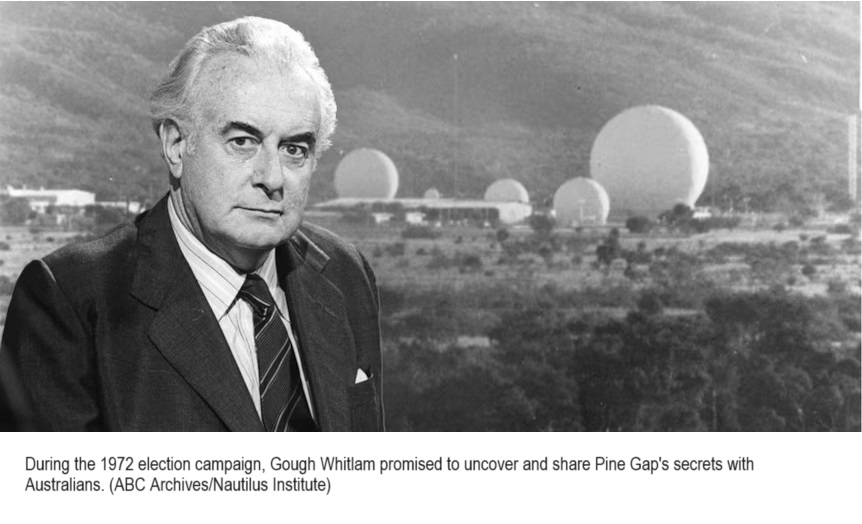
By Alex Barwick for the Expanse podcast Spies in the Outback
When Australia was placed on nuclear alert by the United States government in October 1973, there was one major problem.
No-one had told prime minister Gough Whitlam.
One of the locations placed on “red alert” was the secretive Pine Gap facility on the fringes of Alice Springs.
Officially called a “joint space research facility” until 1988, the intelligence facility was in the crosshairs with a handful of other US bases and installations around Australia.
In fact, almost all United States bases around the world were placed on alert as conflict escalated in the Middle East. Whitlam wasn’t the only leader left out of the loop.
A prime minister in the dark
“Whitlam got upset that he hadn’t been told in advance,” Brian Toohey, journalist and former Labor staffer to Whitlam’s defence minister Lance Barnard, said.
Toohey said Whitlam should have been told that facilities including North West Cape base in Western Australia, and Pine Gap were being put on “red alert”.
“There had been a new agreement knocked out by Australian officials with their American counterparts, that Australia would be given advance warning.”
They weren’t.
Suddenly, the world was on the brink of nuclear war.
Why were parts of Australia on ‘red alert’?
The Cold War superpowers backed opposing sides in the Yom Kippur War.
The Soviet Union supported Egypt and the United States was behind Israel.
As the proxy war escalated in October 1973, United States secretary of state Henry Kissinger believed the crisis could go nuclear and issued a DefCon 3 alert.
A DefCon 3 alert saw immediate preparations to ensure the United States could mobilise in 15 minutes to deliver a nuclear strike.
The aim was to deter a nuclear strike by the Soviets.
And, it simultaneously alerted all US bases including facilities in Australia that a nuclear threat was real.
This level of alert has only occurred a few times, including immediately after the September 11 attacks.
Politics, pressure and protest
The secretive intelligence facility in outback Australia caused Whitlam more trouble beyond the red alert.
During the 1972 election campaign, the progressive politician had promised to lift the lid on Pine Gap and share its secrets with all Australians.
“He gave a promise that he would tell the Australian public a lot more about what Pine Gap did,” Toohey said.
But according to Toohey, the initial briefing provided to Whitlam and Barnard by defence chief Arthur Tange left the prime minister with little to say.
“Tange came along and he said basically that there was nothing they could be allowed to say. And that was just ridiculous,” Toohey said.
“He said, the one thing he could tell them was the bases could not be used in any way to participate in a war. Well, of course they do.”
Whitlam would cause alarm in Washington when he refused to commit to extending Pine Gap’s future.
In 1974 on the floor of parliament he said:
“The Australian government takes the attitude that there should not be foreign military bases, stations, installations in Australia. We honour agreements covering existing stations. We do not favour the extension or prolongation of any of those existing ones.”
According to Toohey, “the Americans were incredibly alarmed about that”.
“As contingency planning, the whole of the US Defence Department said that they would shift it to Guam, a Pacific island that America owned,” he said.
And the following year, allegations would emerge that the CIA were involved in the prime minister’s dismissal on November 11, 1975.
Former Labor defence minister Kim Beazley labels the scuttlebutt as “bulldust”.
“I’d heard that stuff about the Americans getting frightened and therefore getting involved. I put the matter to study, I got a couple of senior public servants to have a look at it, nothing there, nothing there.”
Despite no conclusive evidence, the rumours continue to swirl.
Episode Two of the ABC’s Expanse podcast: Spies in the Outback is now available. This episode explores the wild political tensions surrounding the spy base in Australia’s backyard. Listen here.
Nationals double down on nuclear power policy.

Energy, 25 Aug 25
The Nationals are doubling down on introducing nuclear power to Australia, with leader David Littleproud vowing to take the policy to the next election.
Littleproud told National party members the nuclear policy was at the centre of the party’s fallout with the Liberals following the May federal election………………………..
“We have to have, as part of our energy mix, nuclear in that mix. It was something that we believe in passionately because we see the consequences,” he said.
“There is a sensible way to fix it and that’s what we’re going to take to the next election.”
This move comes despite The House of Representatives Select Committee on Nuclear Energy releasing an interim report in which it has found establishing nuclear power generation would be too late and too costly to support the country’s energy targets.
Committee chair Dan Repacholi MP, Federal Member for Hunter, said, “This interim report focuses on two key issues that have dominated the evidence we’ve received to date: whether nuclear power generation could be rolled out in Australia in an acceptable timeframe, and how affordable it would be—particularly compared to alternative power generation technologies currently available in Australia.”
“From the evidence considered by the Committee to date, it is apparent that it could be well into the 2040s before we might see nuclear energy generated in Australia if that form of energy generation were to be pursued. This would be too late to meaningfully support the achievement of Australia’s climate and energy targets or to help our coal power plant workforce and communities as we transition away from coal power.” https://esdnews.com.au/nationals-double-down-on-nuclear-power-policy/
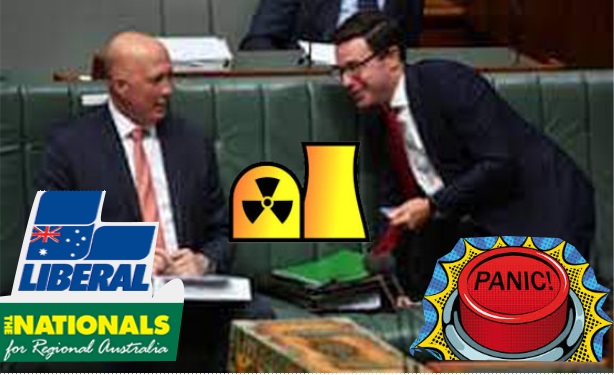
Nationals Leader David Littleproud says nuclear power policy ‘sensible’ next step.
ABC News, Sat 23 Aug, 25
In short:
Nationals Leader David Littleproud told the Liberal National Party annual convention nuclear had to be part of the country’s energy mix.
It would help with food security and the environment, he said.
What’s next?
Nuclear power and energy alternatives dominated discussions at the convention’s opening day on Friday, following the near-unanimous passing of a resolution to abandon net zero by 2050………………………
Coalition practice after an election meant policies taken to the campaign would remain and only be dumped by exception, he told the Liberal National Party annual convention in Brisbane……………………
“We have to have, as part of our energy mix, nuclear in that mix. It was something that we believe in passionately because we see the consequences,” he said……………………………. https://www.abc.net.au/news/2025-08-23/nationals-leader-david-littleproud-says-nuclear-power/105689740
In Alice Springs everyone has an opinion on the Pine Gap spy base, but no-one wants to talk about what happens inside.
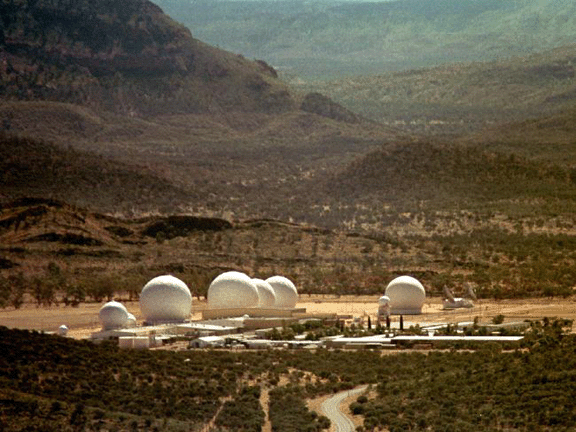
I wanted to hear from the traditional owners of the Arrernte land it was built on, and from the spies tasked with finding targets in Afghanistan and Iraq during the Global War on Terrorism. But how do you investigate something as secretive as Pine Gap when everyone who works there has made a promise never to talk about what they do?
serious claims being made that intelligence gathered at the facility was being used in the Israel-Gaza war.
By Alex Barwick for Backstory, Thu 16 May 2024. https://www.abc.net.au/news/backstory/2024-05-16/backstory-expanse-podcast-spies-in-the-outback-pine-gap-barwick/103844652
In journalism, it’s often politicians who won’t answer your questions.
But in my outback town, it’s just as likely to be the neighbours who won’t, or rather can’t, answer this basic conversation starter: “So, what do you do at work?”
That’s because about 800 of the town’s 25,000 residents are employed at the most secretive intelligence facility in Australia — the Joint Defence Facility Pine Gap — on the edge of Alice Springs/Mparntwe.
When I rolled into this beautiful landscape 16 years ago and began working at the ABC’s Alice Springs bureau, it quickly became clear I wouldn’t hear from this significant section of the community.
Given local radio is all about connecting with the community and sharing people’s stories, this silence felt strange.
My curiosity grew and the book Peace Crimes, written by long-term local journalist Kieran Finnane, motivated me to start looking deeper.
I wanted to know what was going on in my backyard, but I knew trying to make a podcast about a secret military facility hidden in a secluded valley in Central Australia wouldn’t be easy.
Telling this story in a town the size of Alice Springs would undoubtedly feel personal and would likely offend parts of the community.
It’s a line regional journalists walk all the time — telling stories that are in the public interest, while living in the community that is affected by them.
Covering difficult stories in a small town
The words we write as journalists — or say, like in the Expanse: Spies in the Outback podcast — do have real world implications for real people.
That includes everyone from my neighbours, to the parents of my kids’ friends, to people I see regularly at community events.
For them, it’s not a story – it’s their life.
And that can get awkward.
But there are stories in the public interest that the Australian government won’t comment on and this often means they’re shrouded in mystery, or rife with rumour.
Pine Gap is one of those stories.
What goes on beneath the cluster of enormous, oversized-golf-ball-shaped domes covering the military base’s listening antenna on the desert floor, raises big questions for all of Australia, not just my town.
The Pine Gap intelligence-gathering facility is often described as the jewel in the crown of our military partnership with the United States.
But what have we got ourselves into, and do we benefit from it?
Protesters, politicians and spies
Over the past six months, I’ve had lots of off-the-record coffees, trawled the news and library archives, followed some bizarre leads and heard plenty of wild stories, as I have tried to understand the goings-on behind the razor wire.
I wanted to know why America’s Central Intelligence Agency (CIA) decided to build a so-called “space base” in outback Australia in the mid 1960s.
What motivated former prime minister Gough Whitlam to rock the boat and promise to reveal its secrets to the public?
Why were thousands of people so convinced it was a nuclear target they flocked to the desert to demand its closure?
And how had it drawn Australia onto one battlefield after the next through its large-scale surveillance and intelligence gathering?
While plenty of people outside Alice Springs/Mparntwe have never heard of this desert spy base, most people in town have an opinion on it.
There are three main camps: those who say it’s vital for the town’s economy and global peace; those who still see it as a nuclear target and want it shut down; and those who feel generally apathetic to its existence.
And yet, nobody really talks about Pine Gap.
Still, I felt it was important to really understand the diversity of views on this outback spy base as I conducted my research.
I wanted to hear from the traditional owners of the Arrernte land it was built on, and from the spies tasked with finding targets in Afghanistan and Iraq during the Global War on Terrorism.
But how do you investigate something as secretive as Pine Gap when everyone who works there has made a promise never to talk about what they do?
I certainly wasn’t looking to see anyone exiled to Russia like Edward Snowden after he leaked a raft of National Security Agency (NSA) documents, including information on Pine Gap.
In the end, gentle, determined persistence meant I was able to tell the Pine Gap story in a way that lifted the lid but didn’t put national security at risk, and that (I hope) was sensitive to the lives of those in Alice Springs affected by it.
Back in the national spotlight
And then, in late 2023 as I tracked down activists, former spies and politicians … protesters were suddenly blocking the road to Pine Gap again.
There were serious claims being made that intelligence gathered at the facility was being used in the Israel-Gaza war. With Pine Gap back in the spotlight, I knew I had to look deeper.
This spy base, which became operational in 1970 during the Cold War, had expanded through the decades in scale and capability and was more relevant than ever.
The Australian government says Pine Gap is one of the country’s “most longstanding security arrangements” with the United States but it does not comment on its operation.
As each episode of Expanse: Spies in the Outback has been released, I’ve received emails and text messages that confirm why it was an important story to tell.
Some people have been shocked and appalled, while others have been grateful to learn we have this secret intelligence facility in our backyard.
Even in my own town of Alice Springs, where everyone knows someone who works at Pine Gap, there is an appetite to know more – regardless of how uncomfortable that might be.
Follow Expanse: Spies In The Outback on the ABC listen app to hear every episode of season three.
Sky’s ‘War Cabinet’ manufactures panic and prophecy over proof
By Binoy Kampmark | 21 August 2025, https://independentaustralia.net/politics/politics-display/skys-war-cabinet-manufactures-panic-and-prophecy-over-proof,20069
Sky News assembling a cabinet of experts to talk about Australia’s readiness for war is a problem we should be worried about, writes Dr Binoy Kampmark.
TWENTY-FOUR-HOUR NEWS networks have demonstrated that surfeit kills discretion. The search for fillers, distractions and items that will titillate, enrage or simply sedate, is an ongoing process.
Gone are the days when discerning choices were made about what constituted worthy news, an admittedly difficult problem that would always lead to priorities, rankings and judgments that might well be challenged. At the very least, news could be kept to specific time slots during the day, meaning that audiences could, at the very least, be given some form of rationing.
Such an approach culminated in that most famous of occasions on April 18, 1933 when the BBC’s news announcer declared with a minimum of fuss that, “There is no news.” This was followed by piano music playing out the rest of the segment.
On the pretext of coming across as informed and enlightened, such networks have also bought into astrology masquerading as sound comment. The commentators are intended to lend an air of respectability to something that either has not happened or something they have little idea about. Their credentials, however, are advertised like glitzy baubles, intended to arrest the intelligence of the viewing audience long enough to realise they have been had.
Sky News Australia is one such cringing example. The premise of The War Cabinet, which aired on August 11, was clear: those attending it were simply dying for greater militarism and war preparedness on the part of the Australian Government, while those preferring diplomacy would be treated like verminous denialists yearning for some sand to bury their heads in.
The point was less a matter of news than prediction and speculation, an exercise of mass bloviation. To lend a wartime flavour to proceedings, the event was staged in the Cabinet Room of Old Parliament House, which host Chris Uhlmann celebrated as the place Australia’s Prime Minister “John Curtin and his ministers steered the nation through World War II.” Former ministers, defence leaders, and national security experts were gathered “around the Cabinet table to answer a single question: is Australia ready for war?”
The stale view from Alexander Downer, Australia’s longest and, in many ways, most inconspicuous foreign minister, did little to rustle or stir. Liberal democracy, to be preserved in sacred glory, needed Australia to be linked to a “strong global alliance led by the United States”. That such an alliance might itself be the catalyst for war, notably given expectations from Washington about what Australia would do in a conflict with China, was ignored with an almost studious ignorance.
Instead, Downer saw quite the opposite:
“If this alliance holds, if it’s properly cemented, if it is well-led by the Americans… and if we, as members of the alliance, are serious about making a practical contribution to defence through our spending and our equipment, then we will maintain a balance of power in the world.”
His assessment of the current Albanese Government was one of some dottiness.
“I think the government here in Australia has made a major mistake by playing, if you like, politics with this issue of the dangers of the region and losing the balance of power because they don’t want to be seen as too close to President Trump.”
Any press briefing from Defence Minister Richard Marles regarding the anti-China AUKUS pact would ease any anxiety on Downer’s part. Under the Albanese Government, sovereignty has been surrendered to Washington in a way so remarkable it could be regarded as treasonous. While the Royal Australian Navy may never see a single U.S. nuclear-powered submarine, let alone a jointly constructed one, U.S. naval shipyards are rolling in the cash of the Australian taxpayer.
Former Labor Defence Minister, Joel Fitzgibbon, lamented that Australia’s strategic outlook in the Indo-Pacific was “deteriorating rather markedly,” a formulation utterly vague and a mere parroting of just about every other hawkish analyst that sees deterioration everywhere.
Thankfully, we had Strategic Forum CEO Ross Babbage to give some shape to it, which turned out to be that ragged motif of the Yellow Horde to the North readying to strike southwards. The Oriental Barbarians with a tinge of Communist Red were primary reasons for a worsening strategic environment, aided by their generous military expenditure. With almost a note of admiration, Babbage felt that China was readying for war by adjusting its economy and readying its people “for tough times that may come”.
The venal, ever noisy former Home Affairs Department Secretary Mike Pezzullo, who has an unhealthy appetite for warring matters, drew upon figures he could not possibly know, along with everybody else who have tried to read the inscrutable entrails of international relations.
Chances of conflict in the Indo-Pacific by 2027, for instance, was a “10 to 20 per cent” likelihood. Sky News, living down to its subterranean standards, failed to mention that Pezzullo had misused his position as one of Canberra’s most powerful bureaucrats to opine on ministerial appointments via hundreds of private text messages to Liberal Party powerbroker Scott Briggs.
The Australian Public Service Commission found that Pezzullo had, among other things, used his “duty, power, status or authority to seek to gain a benefit or advantage for himself” and “failed to maintain confidentiality of sensitive government information” and “failed to act apolitically in his employment”. His employment was subsequently terminated, and his Order of Australia stripped in September last year. Fine credentials for balanced commentary on the strategic outlook of a state.
Other talking heads were keen to push spine-tingling prospects of wicked regimes forming alliances and making mischief. Oleksandra Molloy, billed as an aviation expert, thought the “emerging axis” between Russia, North Korea and Iran “quite concerning”. Former naval officer and defence pundit Jennifer Parker urged the fattening of the defence budget to “develop a degree of autonomy”.
Retired Australian Army major general Mick Ryan was most unimpressed by the “zero risk” mentality that seemed to pervade “pretty much every bit of Australian society”.
The Department of Defence needed to take greater risks in terms of procurement, innovation and reducing “the amount of time it takes to develop capability”. His fantasy was positively Spartan in its military totalitarianism: an Australian state nurturing “a spirit of innovation that connects military, industry and society”. The cry for conscription must be just around the corner.
Chief war monger and think tanker Peter Jennings aired his all too familiar views on China, which have become pathological.
“It is utterly false for our government to say that somehow they have stabilised the relationship with China. Things may have improved on the trade front, but that is at the expense of ignoring the strategic developments which all of our colleagues around the table have spoken about, which is China is positioning for war.”
And there you had it: an hour of furious fretting and wailing anxiety with all figures in furious agreement, with a resounding boo to diplomacy and a hurrah for astrology.
Dr Binoy Kampmark was a Commonwealth Scholar at Selwyn College, Cambridge. He currently lectures at RMIT University
Billions in Israel defence contracts put Australia at risk.
by Stephanie Tran | Aug 17, 2025, https://michaelwest.com.au/billions-in-israel-defence-contracts-put-australia-at-risk/
The Australian Government risks breaking international law, splashing billions in public money on Israel weapons deals. A Stephanie Tran analysis.
The Australian government has funnelled $2.5 billion of taxpayer funds to Israeli arms manufacturers over the past two decades via government contracts.
An analysis of Austender data shows that since 2004, the Australian government has signed dozens of deals with Israel’s largest defence companies, making them some of the country’s most significant foreign suppliers of arms.
But this is just the tip of the iceberg. The true sum is certainly much higher, as the government is not required to disclose subcontracting arrangements, such as the $900 million deal between Elbit Systems and South Korean firm Hanwha to supply the Australian Army with armoured vehicles.
The breakdown of the funds is as follows:
- $1.92 billion to Elbit Systems and its subsidiaries Elistra Electronic System Ltd, Universal Avionics Systems, Geospectrum Technologies and Ferranti Technologies
- $307 million to Israel Aerospace Industries and its subsidiaries, Elta Systems and Elta Electronics industry
- $180 million to Rafael Advanced Defense Systems, its subsidiary Pearson Engineering and a joint venture with Australian company Varley Group, “Varley Rafael”
- $10 million to Israel Military Industries, also known as IMI Systems. (Note: IMI Systems was acquired by Elbit Systems in 2018)
- $870,000 to Plassan
- $210,00 to Rada Electronic Industries
Breaking international law
Lara Khider, Senior Lawyer at the Australian Centre for International Justice, said the contracts place Australia at risk of breaching its international legal obligations.
“States have been put on notice that Israel may be committing internationally wrongful acts in relation to its military and other operations in Gaza and through its unlawful occupation of Palestinian territory,” Khider said, citing multiple International Court of Justice (ICJ) rulings in the South Africa v Israel genocide case and its advisory opinion on Israel’s occupation of Palestinian territory.
“On this basis, States have an obligation to cease aid and assistance to Israel in relation to the commission of these acts. Otherwise, States may be deemed complicit in internationally wrongful conduct.”
She said the ICJ was unequivocal that all states must avoid trade or economic dealings that entrench Israel’s unlawful presence in occupied Palestinian territory and refrain from aiding or assisting its maintenance. Under the Arms Trade Treaty, to which Australia is a signatory, governments are required to block weapons transfers if there is an overriding risk they would be used to commit serious violations of the Geneva Conventions.
The Australian Centre for International Justice has called for a two-way arms embargo “as a bare minimum” to ensure Australia does not contribute directly or indirectly to violations of international law in the Occupied Palestinian Territories.
Department of Defence did not respond – does it ever?
The Department of Defence did not respond to a request for comment regarding whether it would cancel its existing contracts and refrain from entering into new contracts for the procurement of arms from Israeli defence companies in light of the ongoing genocide in Gaza.
Greg Barns SC, a spokesman for the Australian Lawyers Alliance, said continuing the contracts undermines Australia’s moral and legal credibility.
“Australia has an obligation to comply with all of the international agreements, treaties and covenants to which it is a signatory. That any Australian government would allow the supply of defence equipment to a country committing war crimes and genocide is morally reprehensible and a clear breach of international law,” Barns said. “This reduces Australia’s standing globally in terms of adherence to the rule of law.”
1 This month
.

Australians deserve the truth
about
AUKUS – https://aukuspublicinquiry.com/

PETITION – To: Prime Minister Anthony Albanese and the Australian Labor Government

of the week – Australians for War Powers Reform (AWPR)
To see nuclear-related stories in greater depth and intensity

