Nuclear test survivor Sue Coleman-Haseldine International Campaign to Abolish Nuclear Weapons look what Aunty Sue Coleman-Haseldine said to 115 Governments assembled at the UN to ban nuclear weapons!
Australia has consistently maintained that as long as nuclear weapons exist, it must rely on the American nuclear umbrella, the protection of the deterrent effect of the US’s nuclear arsenal, the second largest in the world.
But political sentiment in Australia appears to support the ban treaty negotiations.
The Australian Senate passed a motion Monday urging the government to participate in the talks, and polling shows nearly three-quarters of Australians want Australia to be part of negotiations on a nuclear weapons ban treaty.
proponents say a nuclear weapons ban will create moral suasion – in the vein of the cluster and landmine conventions – for nuclear weapons states to disarm, and establish an international norm prohibiting nuclear weapons’ development, possession and use.
Negotiations to ban nuclear weapons begin, but Australia joins US boycott https://www.theguardian.com/world/2017/mar/28/negotiations-to-ban-nuclear-weapons-begin-but-australia-joins-us-boycott At least 113 countries meet at UN to discuss ban, but US ambassador says the world is too unsafe for the US not to have nuclear weapons, Guardian, Ben Doherty, 28 Mar 17, Negotiations on a treaty to outlaw nuclear weapons have begun in New York, but have been publicly condemned by the United States, which is leading a coalition of more than 40 countries – including Australia – boycotting the talks.
At least 113 countries are part of the negotiations which have begun at UN headquarters in New York this week, aiming to negotiate a “legally binding instrument to prohibit nuclear weapons, leading towards their total elimination”.
But, Nikki Haley, appointed as the United States’ ambassador to the UN by Donald Trump in January, spoke outside the meeting saying the world was too unsafe for the US not to have nuclear weapons……
France and the UK, fellow nuclear weapons states, also spoke against the ban treaty negotiations, saying they would not assist in disarming nuclear states.
Support for a ban treaty has been growing steadily over years, with frustration at the ineffectiveness of the nuclear non-proliferation treaty in reducing nuclear arsenals. More than 123 nations – the majority of nations at the UN – voted in favour of negotiations to outlaw nuclear weapons.
But a ban treaty has no support from the states that actually have nuclear weapons. The nine known nuclear states – the US, China, France, Britain, Russia, India, Pakistan, Israel and North Korea – all oppose a ban treaty.Of the non-nuclear states opposing the ban treaty, Australia has been one of the most outspoken. Continue reading →
Ben Heard regards UNSCEAR as the “peak body” investigating radiation effects. “Impeccably
credentialed”, he says, “the foremost experts”. Heard claims that “The generally accepted evidence is that 100mSv per year is the minimum long term dose at which ANY increased cancer risk is perhaps detectable” and , re Fukushima, “The possibility of any latent fatality is exceedingly low.”
I wonder what he makes of UNSCEAR’s 2013 report?
” E7. The lifetime baseline risk of solid cancer in the general population of Japan is about 35% on average (males about 41%; females about 29%) [W12]. Following a hypothetical exposure of a group from the same population corresponding to an acute uniform whole-body dose of 1 Sv (equivalent to an absorbed dose of 1 Gy of low-LET radiation to all organs and tissues of the body), the Committee previously estimated the additional lifetime risk of solid cancer due to that exposure to be approximately 13% on average (annex A, table 70 in the Committee’s 2006 Report [U9]). Following doses of 0.1 Sv and 0.01 Sv, the additional lifetime risk due to the exposure was estimated to be smaller by factors of about 10 and 100, respectively.
“31. Adults living in the city of Fukushima were estimated to have received, on average, an effective dose of about 4 mSv in the first year following the accident; estimated doses for 1-year-old infants were about twice as high. Those living in other districts within the Fukushima Prefecture and in neighbouring prefectures were estimated to have received comparable or lower doses; even lower doses were estimated to have been received elsewhere in Japan. Lifetime effective doses (resulting from the accident) that, on average, could be received by those continuing to live in the Fukushima Prefecture have been estimated to be just over 10 mSv; this estimate assumes that no remediation measures will be taken to reduce doses in the future and, therefore, may be an overestimate. The most important source contributing to these estimated doses was external radiation from deposited radioactive material.”. http://www.unscear.org/docs/reports/2013/13-85418_Report_2013_Annex_A.pdf
The population of Fukushima Prefecture is about 2 million. Anyone can do the figures. Even the 100% pro-nuclear UNSCEAR’s own estimates point to an eventual additional cancer total over the next 80 years of about 2,600.
SA power: Government introduces bill giving Energy Minister power over AEMO, ABC News, 28 Mar 17 By Sara Garcia and Nick HarmsenThe South Australian Government has introduced legislation to give the Energy Minister the power to direct electricity generators to turn on when required — a move it says would have prevented the September statewide blackout.
Energy Minister Tom Koutsantonis said the powers would have also prevented the statewide blackout on September 28 as he would have ramped up generation in South Australia in preparation for the catastrophic event.
“We would have constrained the interconnector in the morning as I asked AEMO and there would have been more South Australian generation on,” Mr Koutsantonis said.”[I asked and they responded] there wasn’t a credible contingency to constrain the interconnector.”
Mr Koutsantonis said the powers the Government was seeking currently exist under a state of emergency.But he said he needed the power to prevent a state of emergency in the first place.”What we’re doing is extending those powers before an emergency situation exists to make sure we can avoid it,” he said.”These powers will give me the ability to direct either AEMO or direct generators individually and direct individuals.”That power will ensure that market power is not the driving aspect of our energy security in this state.”
Premier Jay Weatherill said the current system was “broken” and put “profits before people”.”We’re taking back control and putting South Australians first,” he said.
S.A. network says solar plus battery storage to cost just 15c/kWh, REneweconomy, By Giles Parkinson on 28 March 2017 The price of rooftop solar and battery storage for household and business consumers will fall to just 15c/kWh within a few years, leading to a dramatic reshaping of the energy grid, according to a leading network operator. Rob Stobbe, the head of SA Power Networks, which operates the local network in South Australia, says rooftop solar has already fallen to around 5c/kWh for households and businesses. Continue reading →
Batteries not configured to remove demand peaks, network says[good graphs], REneweconomy. By Giles Parkinson on 27 March 2017 SA Power Networks, currently running the largest residential battery storage trial in the country, says its early finding suggest that battery storage devices are not configured to help reduce network peaks. In fact, in some ways they may be making the situation worse.
SAPN last year installed 100 batteries in customer premises in the city of Salisbury, in what is the largest virtual power plant installed to date, and is now getting some early results from the three-year trial.
The most dramatic finding is represented in this graph below [on original] . It shows how solar affects grid demand and what happens when battery storage is added. Rather than smoothing out the peaks, it can actually make the “ramp up” periods more abrupt.
According to Mark Vincent, SAPN’s head of network investment strategy and planning, this is not a good outcome.
Vincent told RenewEconomy during a recent visit to SAPN’s innovation centre in Adelaide that it underlines the need for new algorithms to be put in place to change the behaviour of battery storage devices so it takes the peaks – both bottom and low……….
Battery storage will be crucial for the SA network, because the state has traditionally had the highest volatility, and with the introduction of more wind and solar, will reduce its dependence on traditional fossil fuel plants.
That leaves battery storage to play a crucial role in meeting peak demand and providing grid stability, and SAPN hopes that it will help offset further investment in new poles and wires or equipment upgrades.
Already, the state has 650MW of rooftop solar, accounting for nearly 6 per cent of its demand in 2015/16, and within a decade the output of rooftop solar is expected to be more than minimum demand in the state………
“To maximise the benefits of solar PV/battery installations, smarter algorithms in battery management software are needed to slow down the rate of charging of the batteries and their rate of energy discharge so we can lop off the demand and generation peaks.
“In turn, we need to make sure that our tariffs are designed to encourage battery vendors to configure their systems in this way, and so that customers will also see a benefit.
“Without those changes to the configuration of batteries so that they charge and discharge in smarter ways, widespread uptake of batteries has the potential to lead to inefficiencies that will require a significant response from us as distribution network managers.”
SAPN says that while it “doesn’t make financial sense” for most customers to invest in batteries just yet – contrary to some private estimates – it admits that prices are reducing rapidly.
Australia should help ban the bomb http://www.theage.com.au/comment/the-age-editorial/australia-should-help-ban-the-bomb-20170324-gv5u0j.html, 25 Mar 17, The footage is mesmerising as much as it is terrifying. Enormous explosions, wild enough to blow the clouds away, a churning blast wave across the earth as a giant mushroom of dust and smoke slowly rises above. This display of the destructive power of nuclear weapons – seen in newly declassified film of early atomic tests from 1945 and 1962, and now released online – should be seen as a stark warning. Such weapons must never again be used in anger.
The only true guarantee to save humanity from its own destructive ability is to completely rid the world of nuclear weapons stockpiles. Much as we have become inured to the danger over the years since Hiroshima and Nagasaki, and the heightened tension of the Cold War, there is no managing this risk. Too many atomic bombs remain ready to fire at a moment’s notice; there are too many chances for human error that would see a catastrophic mistake.
At a time when the temperament of many leaders is rightly questioned, this should be the time to redouble efforts for nuclear disarmament, rather than trust the luck of the last 70 years will hold.
In that spirit, on Monday, negotiations will commence in New York for a new treaty that would outlaw nuclear weapons – not regulate, but ban the bomb outright. More than 120 countries have pledged to participate. Regrettably, however, Australia is not among them.
The Turnbull government has decided to stand apart from the negotiations believing that the proposed treaty is not “practical”.
The declared nuclear-armed powers, the US, Russia, France, Britain and China, have refused to participate, nor will the rogue nuclear states, Pakistan, India, Israel and North Korea, who have developed atomic weapons in the face of international law.
But a proposed ban on nuclear weapons offers the chance for the rest of the world to declare, forthrightly, that it has tired of living under the ever-present threat of annihilation.
Australia’s boycott sends a poor signal about this nation’s commitment to disarmament, especially as a crucial player in the nuclear industry as a supplier of uranium. Such a treaty would carry moral force, to pressure the nuclear-armed powers to fulfil the obligations of what the government presumably does see as a practical agreement, the 1968 Nuclear Non-Proliferation Treaty.
The genius of that document was to strike a grand bargain between the nuclear-armed countries and the rest of the world; forgo the pursuit of the bomb, and in turn, the nuclear powers agreed to eliminate their own over time. For nations such as Australia, this swayed a decision not to pursue an independent nuclear weapon capacity.
The non-proliferation treaty has been extraordinarily successful, in that no signatory (other than North Korea, who withdrew as a party to the treaty) has developed a nuclear weapon. But the pledge by the nuclear powers to work towards disarmament has been fitful at best and at worst cynical, as the trend appears to be the opposite.
Under the guise of a modernisation program, the United States is actually increasing the destructive yield of its nuclear arsenal, while Donald Trump complains about past disarmament deals with Russia. Meanwhile, Vladimir Putin has belligerently pushed the flight path of Russia’s strategic bombers closer to European nations in blatant provocation.
The conundrum to solve has always been one of trust. How can anyone be sure that a country would truly surrender its nuclear weapons, and who will have the faith to move first? Australian defence planners may feel a need to rely on the nuclear arsenal of its US ally for deterrence, but that deterrence is only required as long as nuclear weapons exist.
It takes a very special person to label the photographed, documented, filmed and studied phenomenon of mass coral bleaching on the Great Barrier Reef“fake news”.
You need lashings of chutzpah, blinkers the size of Donald Trump’s hairspray bill and more hubris than you can shake a branch of dead coral at.
It also helps if you can hide inside the bubble of the hyper-partisan Breitbart media outlet, whose former boss is the US president’s chief strategist.
So our special person is the British journalist James Delingpole who, when he’s not denying the impacts of coral bleaching, is denying the science of human-caused climate change, which he says is “the biggest scam in the history of the world”.
Delingpole was offended this week by an editorial in the Washington Post that read: “Humans are killing the Great Barrier Reef, one of the world’s greatest natural wonders, and there’s nothing Australians on their own can do about it. We are all responsible.”
Like the thriving polar bear, like the recovering ice caps, like the doing-just-fine Pacific islands, the Great Barrier Reef has become a totem for the liberal-left not because it’s in any kind of danger but because it’s big and famous and photogenic and lots and lots of people would be really sad if it disappeared. But it’s not going to disappear. That’s just a #fakenews lie designed to promote the climate alarmist agenda.
Now before we go on, let’s deal with some language here.
When we talk about the reef dying, what we are talking about are the corals that form the reef’s structure – the things that when in a good state of health can be splendorous enough to support about 69,000 jobs in Queensland and add about $6bn to Australia’s economy every year.
The Great Barrier Reef has suffered mass coral bleaching three times – in 1998, 2002 and 2016 – with a fourth episode now unfolding. The cause is increasing ocean temperatures.
“Is the Great Barrier Reef dying due to climate change caused by man’s selfishness and greed?” asks Delingpole, before giving a long list of people and groups who he thinks will answer yes, including “the Guardian” and “any marine biologist”.
“Have they been out there personally – as I have – to check. No of course not,” says Delingpole.
Yes. James Delingpole has been out there “personally” to check, but all those other people haven’t. He doesn’t say when he went but he has written about one trip before. It was back in late April 2012. Everything was fine, he said, based on that one visit. I can’t find any times when he has mentioned another trip since.
So here’s the rhetorical question – one that I can barely believe I’m asking, even rhetorically.
I mean, come on? Why can those two things – Delingpole making a boat trip with mates and a coordinated and exhaustive scientific monitoring and data-gathering exercise – not be the same?
So it seems we are now at a stage where absolutely nothing is real unless you have seen it for yourself, so you can dismiss all of the photographs and video footage of bleached and dead coral, the testimony of countless marine biologists (who, we apparently also have to point out, have been to the reef ) and the observations made by the government agency that manages the reef.
Senator Pauline Hanson and her One Nation climate science-denying colleagues tried to pull a similar stunt last year by taking a dive on a part of the reef that had escaped bleaching and then claiming this as proof that everything was OK everywhere else…….
Government ministers at federal and state levels, of both political stripes, claim they want to protect the reef.
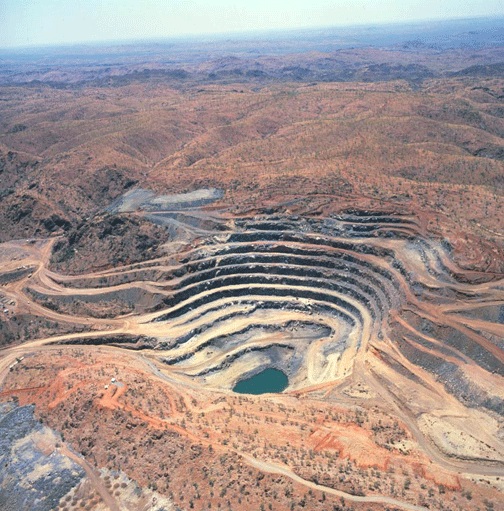
Cabinet papers released today after 30 years reveal a submission in August 1986 from then mines minister Ivan Gibbs, outlining how 330 cubic metres of contaminated soil was trucked to the mine site and unloaded into the water.
The submission said that in 1984, the UQ Experimental Mine at Indooroopilly was found to have radioactive material from uranium ore samples taken at the Anderson Lode (14km west of Mount Isa).
“Officers of the Health Department carried out a detailed survey of the site and concluded that the pilot plant tailings had caused contamination of the soil under and around the stockpile area, the total mass of contaminated material required to be moved amounting to about 330 cubic metres,” Gibbs’ submission said.
“Discussions were held with officers of my department to identify a suitable site for disposal of the material and I approved for it to be dumped into the abandoned open cut.
“Expert advice has been received that seepage will not take place from the open cut to the surrounding rocks, and studies have shown that the water level in the open cut will stabilise at least 40m below the overflow level.’’
Gibbs said the soil was classed “low specific activity material’’ under the code of practice for the safe transport of radioactive substances. A convoy of trucks transported the soil to the open-cut mine and dumped it below water level. “The access ramp was sealed with large rocks,’’ Gibbs said. “Each truck was washed down and checked for zero radioactive contamination.”
The submission stated that the government was satisfied that material in the abandoned mine would not have any effect on surface or groundwater in the area.
Gibbs said local National Party MP Bob Katter and Mount Isa mayor Tony McGrady objected to the disposal and sought assurances that no more soil would be dumped there.
Gibbs said: “Although it is highly unlikely that the cost of transporting any radioactive material to Mary Kathleen would be justified in future, the possibility of using the abandoned open cut for special cases should not be totally excluded.’’
Canavan wants $1b for Adani, limits to green tax lurks, AFR, 26 Mar 17,Resources Minister Matt Canavan says it is time for the government to consider restricting the tax-deductible status of politically active green groups………
Stop Bob Brown
The Turnbull government is still considering whether the tax-deductibility of environmental groups should be administered by the Australian Taxation Office instead of the Register of Environmental Organisations and no less than 25 per cent of green group donations should be spent on environmental remediation rather than protests, after a House of Representatives inquiry reporting last May.
The Stop Adani Alliance, a collection of 13 green groups headed by former Greens leader Bob Brown, came to Parliament House last week calling for more scrutiny of a proposed $1 billion taxpayer-funded loan to build a railway line for the Adani Carmichael coal mine in North Queensland.
Senator Canavan told The Australian Financial Review the main opposition to the Adani mine came from “fly-in, fly-out” protesters who did not live in the region……..
$1b for Adani
There is growing scrutiny of the government agency, the North Australia Infrastructure Facility, responsible for assessing the proposed $1 billion taxpayer loan to Adani and championed by Senator Canavan and Deputy Prime Minister Barnaby Joyce.
Greens push for electricity crisis to be taken out of politicians’ hands, The Age Adam Morton, 25 Mar 17,
The Greens are pushing for a new public authority to take responsibility for Australia’s beleaguered electricity system out of politicians’ hands.
It follows several organisations, including energy company Origin, the Australian Council of Trade Unions and ClimateWorks, calling for an independent body, similar to the Reserve Bank, to manage what has been described as an energy crisis.
Focus on the future of the electricity system has heightened in the lead-up to the closure this week of Hazelwood, Australia’s oldest and most emissions-intensive power plant, which when fully operational had the capacity to deliver about a quarter of Victoria’s electricity.
The Greens will introduce legislation in the Senate to create what it calls Renew Australia, which it says can short-circuit a stand-off between the federal and state governments by taking responsibility for the transition to a clean electricity supply……
Energy companies, business groups, unions, charities, scientists and environmentalists have called for a bipartisan national plan, including an emissions intensity scheme, to drive a smooth change as greenhouse gas emissions are cut.
The Snowy Hydro Scheme, owned by the NSW, Victorian and federal governments, is the latest to back this sort of scheme. The federal government has rejected this sort of scheme.
Not all the above groups would endorse the Greens’ model, which requires that at least 90 per cent of energy is renewable by 2030, expands the national renewable energy target and introduces a emissions intensity standard that sets out a timetable for the closure of coal-fired power plants.
The authority would cost $500 million and would be expected to leverage $5 billion of energy construction in four years. The Greens also want to create a $250 million clean energy transition fund to help coal communities as plants close and change electricity market rules to make it encourage large-scale battery storage…….
In a submission to an energy security review by chief scientist Alan Finkel, ClimateWorks – a research body affiliated with Monash University – called for an independent statutory body to take over regulatory responsibilities from the COAG Energy Council, which is made up of federal and state energy ministers.
Origin backed the creation of a body similar to the Reserve Bank to manage the shift to lower emissions.
The ACTU called for the introduction of an Energy Transition Authority. Its responsibilities would include managing a planned closure of coal plants and an industry-wide scheme that allowed retrenched coal workers to get jobs at other power stations.
Clean energy grant companies see profits climb, says Department of Industry chief economist, The Age, Eryk Bagshaw, 26 Mar 17, “……..a new report from the Department of Industry’s Office of the Chief Economist has found the $1.2 billion Clean Technology Program saw not only gains for Coca Cola, but 547 other projects across Australia, with a 10 per cent reduction in manufacturing emissions.
“Both employment and turnover among these firms grew about 25 per cent faster than similar firms without Clean Tech grants,” the report’s author economist Sasan Bakhtiari found. “Exports grew about 50 per cent faster, but only for those Clean Tech firms already exporting.”
In Gunnedah the local leather processing site replaced lighting, compressed air and water heating systems to reduce the carbon emissions intensity of the facility by 13 per cent and save $95,000 in energy costs per year, while new trout smoking equipment at the Snowy Mountain Trout Farm in Blowering Dam reduced carbon emissions by 84 per cent and banked yearly savings of $3000 in energy costs.
Libs looking to Asia to build new coal-fired power station in north, THE AUSTRALIAN, DAVID CROWE, 26 Mar 17, THE TURNBULL GOVERNMENT HAS OPENED TALKS WITH ASIAN INVESTORS TO BUILD A COAL-FIRED POWER STATION BACKED BY ITS $5 BILLION NORTHERN AUSTRALIA FUND……..
Resources Minister Matt Canavan is fast-tracking the plan amid a growing fight with Labor and the Greens over support for coal power, as cabinet ministers prepare to decide how to encourage big investors into the market.
Senator Canavan told The Australian there was a “high degree of interest” from Asia helping to develop the new power station in northern Queensland, arguing that finance from the Northern Australia Infrastructure Fund would be needed to give the project long-term certainty…….
As the imminent close of the ageing Hazelwood power station reignites debate about electricity shortages and price spikes, Labor climate change spokesman Mark Butler has declared there is no support from industry to build new coal-fired power stations in Australia.
The Australian Energy Council, which represents companies supplying electricity to 10 million homes, warns it has become “very difficult” to finance coal-fired power stations when investors are ramping up wind and solar projects as well as gas generators that provide baseload power with lower greenhouse gas emissions than coal.
But the government is determined to keep the coal proposal on the agenda by raising the prospect of funding from the northern Australia fund, which is also a potential source of support for the controversial coalmine planned for central Queensland by Indian company Adani.
Senator Canavan said there was “no doubt” of the rudimentary economic and commercial case for a coal-fired power station in northern Queensland but that the government’s challenge was to set the energy market rules to offer certainty…..
A Senate inquiry led by a Labor and Greens majority last year argued for an “orderly retirement” of the nation’s coal-fired power stations but the government believes there is strong support in northern Queensland for a new coal project at a time of rising electricity price
Senator Canavan is examining options for a new power station near the Adani coalmine in the Galilee Basin, in Collinsville, to add to an existing power station or in Gladstone near an existing power station and taking advantage of transmission lines that are already in place.
The Resources Minister, who is also the Minister for Northern Australia and oversees the infrastructure fund, rejected suggestions that the help for a coal-fired power station would be a “subsidy” that meddled with the market….
Mr Butler is warning against the use of taxpayer funds for the rail line to the Adani mine or a new power station, claiming the long-term future for coal is one of decline.
This energy may be clean but banks won’t back coal-fired plants, THE AUSTRALIAN, 26 Mar 17 “…..It is no wonder that the government is looking at ways to allow the Clean Energy Finance Corporation to invest in “clean coal”-fired power stations because the banks and the local financial sector are unlikely to do so.
The simple reason for this is that investments in such technologies are too risky for any self-interested bank credit officer to give any proposed clean-coal project the thumbs up…..
The Australian Prudential Regulation Authority’s Geoff Summerhayes effectively put banks and other financial institutions on notice that he now expects them to take into account “transition” climate risks……
offshore banks would face the same risk hurdles as local banks…
What other forms of funding might be available for a clean coal plant? Offshore banks are a possibility and they have backed syndicates investing in local infrastructure, particularly Chinese and Indian banks. The State Bank of India was slated as a potential provider of a $1bn loan for the Adani coalmine in Queensland, but prospects of that loan being approved dimmed when Reuters reported a bank source as saying “the credit guys are not comfortable with the project”.
This is a salient reminder that offshore banks would face the same risk hurdles as local banks.
Another possibility is that private sector superannuation funds or the federal government’s Future Fund could provide backing. But they need to confront the big stick from APRA or the Australian Securities & Investments Commission about the need to take into account climate change and associated sovereign risk.
That seems to leave only the government to finance any such projects and, hence, the idea of changing the Clean Energy Finance Corporation legislation to allow it to invest in clean coal.
But let’s take stock here: haven’t we just imposed a whole swag of new regulations on banks to stop them from getting involved in lending that is too risky? If the risks around clean coal are too daunting for those irritating banks to take on, why on earth would the taxpayer do so?
Taking into account all of these risks, coupled with the difficulty in offsetting them via the market or through portfolio diversification, and the multitude of uncertainties surrounding any proposals for a clean-coal generator, we should assume that no bank funding will be forthcoming for clean coal- fired power stations.
Protest outside Parliament House, Canberra, Tuesday 28th March at 8am
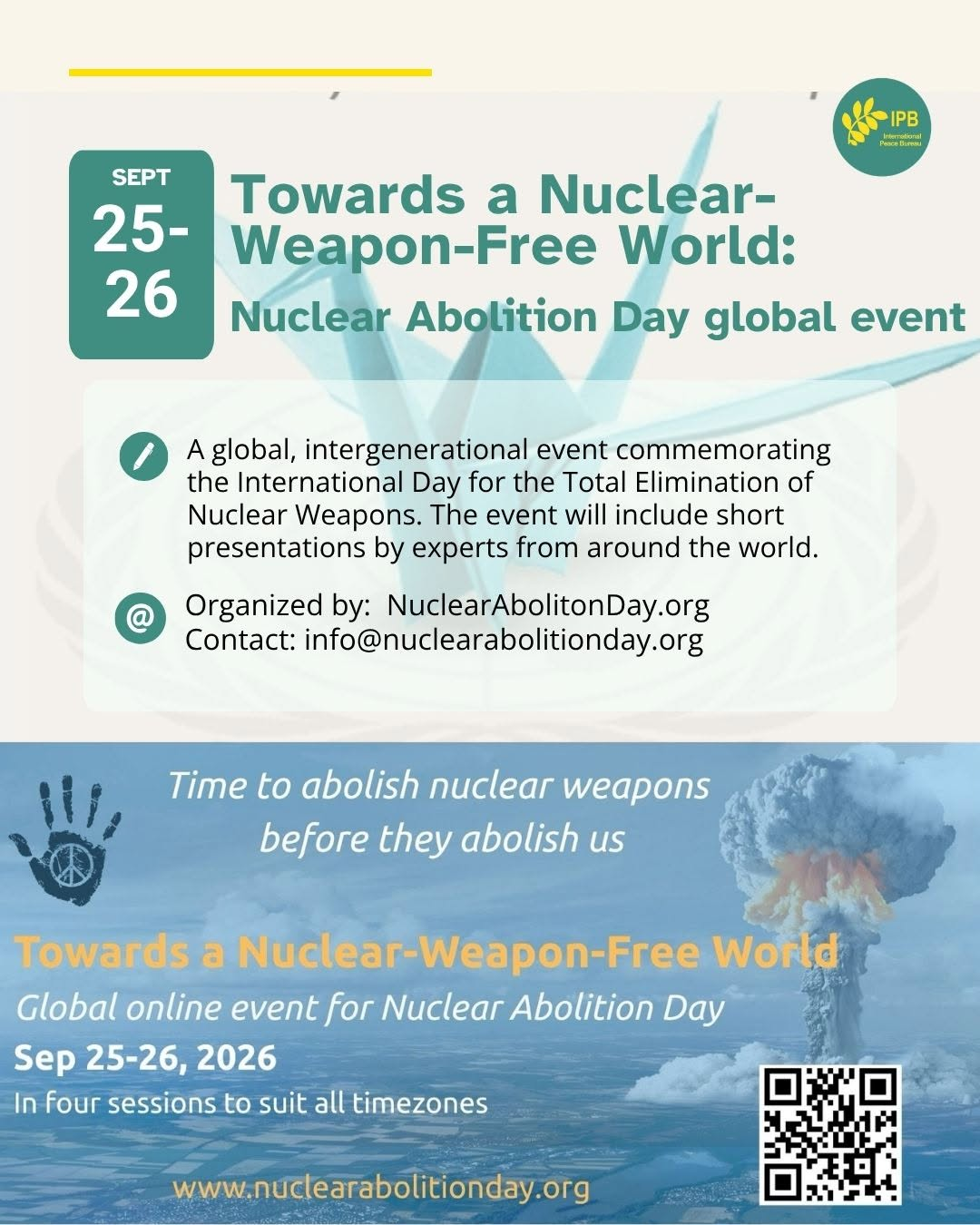
On Monday 27th March, the United Nations will begin the first of two sessions to negotiate a legally binding instrument for the prohibition and elimination of nuclear weapons. This conference was launched by a resolution at October’s UN General Assembly, with support from 123 nations.
Australia announced it will boycott the negotiations despite being obliged by Article VI of the nuclear Non-Proliferation Treaty (NPT) to pursue negotiations on effective measures relating to nuclear disarmament in good faith. The Government believes that nuclear weapons should remain an Australian defence option, via the policy of US weapons based ‘extended nuclear deterrence’. This contrasts to strong support for a ban amongst almost all neighbouring countries in South-East Asia and the Pacific.
Protestors will gather outside Parliament at 8am on Tuesday March 28 to support a ban treaty. Speakers will include Senator Lisa Singh, Senator Scott Ludlam and Bishop Pat Power.
The ban treaty negotiations have arisen from a series of conferences examining the devastating and long-term impacts of any nuclear weapon detonation. A critical mass of nations is now pursuing a new legal instrument to outlaw nuclear weapons, creating a global stigma on their production, stockpiling, possession, use and threat of use.
The US Government has pressured its allies not to participate in the negotiations over concerns of the impact a ban will have on the ability to plan for nuclear war. The US Ambassador to the UN, Nikki Haley, will deliver a statement outside the General Assembly Hall as ban negotiations kick off on Monday.
A new poll* shows that 74% of Australians want the Government to support the UN ban negotiations, while only 10% agree with the boycott.
The major parties are divided on the issue, with the ALP platform firmly supporting “the negotiation of a global treaty banning [nuclear] weapons”. Anthony Albanese MP and Senator Lisa Singh have introduced motions in both chambers urging the Government to participate in the ban negotiations.
Indigenous nuclear test survivor Sue Coleman-Haseldine is in New York to speak at the negotiating conference on the impact of nuclear weapons testing. “The new treaty should make sure that countries have to look after the needs of impacted people. To look after us is also to look after our land,” she said.
“In a time of global insecurity, our world urgently needs this new action plan for pursuing nuclear disarmament – and Australia should embrace it,” said ICAN’s Outreach Coordinator, Gem Romuld. “The ban negotiations are modelled on comparable bans on chemical and biological weapons and landmines. This is a timely and historic opportunity to make nuclear weapons illegal along with the other weapons of mass destruction”.
“Boycotting the ban talks flies in the face of Australia’s international obligations and casts doubt on our commitment to the UN. Australia must choose the right side of history and join the ban negotiations without delay”.
” … The Adani corporation’s dirty coalmine is an impending disaster with effects which will reach far beyond Australia.
“Everywhere I go people ask me about it. They cannot believe that, at a time when we should be drastically cutting the pollution which drives global warming, Australia’s authorities would even consider building the world’s biggest export coalmine.
“Lending Mr Adani, a billionaire, a billion dollars of taxpayers’ money to carry this project into reality would be the political mistake of the decade. The Turnbull government would be literally paying Adani
to ride roughshod over Indigenous rights, to contaminate the groundwater of the Galilee Basin, to consign threatened species to the dustbin of history and to increase the already disastrous impact of coral death worldwide. … “