Virtual reality film “Collisions” tells one Aboriginal man’s story of Maralinga nuclear bombing
Aboriginal man’s story of Maralinga nuclear bomb survival told with virtual reality By Alex Mann ABC News, 7 Oct 16 In an unlikely collision of cultures, state-of-the-art 3D film technology is bringing an Aboriginal man’s unique tale of nuclear bomb survival to audiences across Australia.
In the 1950s Nyarri Morgan was a young man, walking and hunting in South Australia’s northern deserts. His dramatic first contact with whites came when he witnessed a nuclear bomb explosion at the British testing site at Maralinga.
Now, as an old man, and with the help of director Lynette Wallworth and some technology, he is sharing his story in a film called Collisions that is screening in selected venues around Australia.
“It happened in a desert where people assumed there were very few people [and] there was not much life and not much to be lost,” Wallworth said.
“Every one of those assumptions was wrong.”
‘People still have that poison today’ As the radioactive dust fell, Mr Morgan walked an ancient trade route at the edge of the test site. He had no idea of what he was witnessing.
In making the film, Wallworth asked Mr Morgan what he thought he was seeing. “He said, ‘We thought it was the spirit of our gods rising up to speak with us’,” she said. “[He said] ‘then we saw the spirit had made all the kangaroos fall down on the ground as a gift to us of easy hunting so we took those kangaroos and we ate them and people were sick and then the spirit left’.”
Mr Morgan is sharing his story, in his words, so it won’t ever be forgotten. “After the explosion the fallout went north,” Mr Morgan said. “Powder, white powder killed a lot of kangaroos [and] spinifex [grass]. Water was on fire, that’s what we saw.”
Mr Morgan said water “died” but that he and the two men he was with drank the water, even though it was still hot. “The smoke went into our noses, and other people still have that poison today,” he said.
“We all poisoned, in the heart, in the blood and other people that were much closer they didn’t live very long, they died, a whole lot of them.” ‘In virtual reality everything becomes personal’………..http://www.abc.net.au/news/2016-10-07/aboriginal-mans-story-of-nuclear-bomb-survival-told-in-vr/7913874
Legal challenge to Adani’s Abbot Point plans in Queensland’s Supreme Court
 Adani’s Abbot Point plans face court challenge,SMH , 7 Oct 16 Whitsunday residents are bound for court in a bid to show the Queensland government failed the environment when it approved a port expansion for Adani’s new mega-coal mine.
Whitsunday Residents Against Dumping say dredging required for Adani’s expansion of the Abbot Point coal terminal, north of Bowen, could do untold environmental harm and the mine itself will fuel global warming and endanger the reef.
Lawyers for the group will appear in the Supreme Court in Brisbane on Friday, arguing Queensland’s environment department failed to properly assess the port project before it gave Adani the go ahead.
The expansion is needed to ship coal from Adani’s planned $16 billion Carmichael mine in the Galilee Basin…….
The action group’s case will be heart in the Supreme Court in Brisbane from 10am (AEST). http://www.smh.com.au/business/mining-and-resources/adanis-abbot-point-plans-face-court-challenge-20161007-grx2s3.html
8 – 9 October – Nuclear Citizens Jury 2, Adelaide: LOOK OUT FOR THE WITNESS LIST
 I say “Look out for the witness list, because for citizens’ jury 1, the big weakness was in
 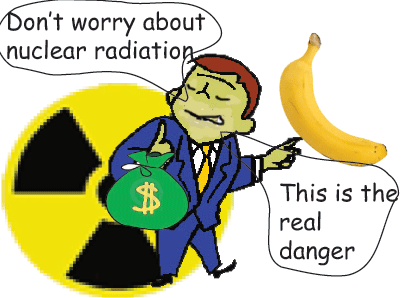 the witnesses – some of whom were clearly ignorant and biaseed. This was particularly apparent in the appalling way they covered (up) the question of ionising radiation and health.
October 8th and 9th Citizens’ Jury Two Livestreaming and Video
See the agenda here. Note these two important sections on Sunday 9th:
3.45pm Working afternoon tea – witness selection
4.15pm Defining the witness list
Citizens’ Jury Two will be held over two weekends in October and one weekend in November. The original 50 members of Citizens’ Jury One will be supplemented by an additional 300 South Australians to answer the question: Under what circumstances, if any, could South Australia pursue the opportunity to store and dispose of nuclear waste from other countries?
The Jury will deliberate on the question using both the Nuclear Fuel Cycle Royal Commission Report and first Citizens’ Jury report, with feedback from the community consultation and expert witnesses also used as important inputs.
The unedited and unchanged jury report will be presented to the Premier and tabled in the South Australian Parliament. The report will play a vital role in informing the State Government’s response to the Royal Commission’s Report later this year.
Dates for Citizens’ Jury Two are 8/9 October, 29/30 October, 5/6 November 2016.
Inconvenient truths the nuclear “citizens’ jury” needs to hear

7 Oct 16 As the South Australian Government’s second nuclear “citizens’ jury” gets underway this weekend, it’s essential that participants aren’t denied important facts about global nuclear waste, says Mark Parnell MLC, Parliamentary Leader of the SA Greens.
Here are eight inconvenient truths that the citizens’ jury needs to hear:
1. The much-heralded Finnish underground nuclear waste facility (visited by the Premier recently) does NOT yet have a licence to accept nuclear waste, will not open for at least six years and has been three decades in planning. It is also 20 times SMALLER than the facility proposed for SA by the Royal Commission.
2. The nuclear industry is without peer in terms of cost blow-outs and time over-runs. This is likely to eliminate any anticipated profit for South Australia – which is the sole rationale for the proposed SA dump.
3. According to the Royal Commission’s own consultants, it could cost South Australia more than $600 million before we even know whether the project is viable.
4. The main client countries anticipated to send nuclear waste to South Australia, including South Korea and Japan, are already exploring domestic solutions to their nuclear waste problem and are not considering overseas solutions.
5. The world’s only operating underground nuclear waste facility, in New Mexico, USA, closed in 2015 following a chemical explosion brought about by human error. It is still contaminated and yet to re-open.
6. The most advanced nuclear nation on Earth, the USA, is yet to come up with a permanent solution for waste from its nuclear power plants. The proposed underground nuclear dump in Yucca Mountain, Nevada, has been stalled by community opposition and may never go ahead.
7. Whilst it may be the best idea so far, nobody knows if deep geological disposal of nuclear waste will work in the long term, because it has never been done before.
8. South Australia is not unique in its geology and has regular earthquakes of magnitude 4 and above.
Without all the facts, the citizens’ jury can’t possibly make an informed decision.
NOTE: Mark Parnell MLC is a member of the Parliamentary Joint Select Committee that is investigating the Royal Commission’s findings. Mark and other Committee members recently returned from inspecting nuclear waste facilities under construction in Finland and France, as well as failed facilities in the United States.
Mainstream media carefully ignored important anti -Pine Gap rally and conference
 Pine Gap: Important talks but who was listening? Alice Springs News, 6 Oct 16 By ERWIN CHLANDA The anti Pine Gap rally, conference and public forum wrapped up yesterday after four days of being noticed but studiously ignored.
This is surprising because two senators of the Australian Parliament were here demanding that the military base be closed, and at least three academics supported that view at a public forum, including Professor Richard Tanter from Melbourne University.
Making an enquiry about Pine Gap is a journalistic investigation quite unlike most: Usually in Australia you can ask questions and get answers and comment, and you can check your facts with the subject of your investigation. But the base is strictly zip-the-lip. One needs to work with secondary sources, such as the US Congressional record, which fortunately is quite revealing – unlike similar Australian sources.
Rather than rubbing up against characteristic Australian scepticism and democratic spirit, that attitude is spreading. A remarkable circumstance locally was that at the forum held at the Chifley on Friday evening, the sunset gathering atop Anzac Hill on Saturday, and a rally outside the gates to the base yesterday morning – all open to the public – there was no sign of currently serving members of the Legislative Assembly, nor the town council, nor any of the main lobbies for commerce and tourism in town. The leaders of Alice Springs have their head firmly stuck in the sand.
This is a worry considering that Pine Gap could be a nuclear target – increasingly plausible given its escalating role in US military action around the world – and if this were to eventuate, this town would be annihilated. It’s been a well documented discussion point since the mid-seventies……….
Senator Lee Rhiannon (at left,outside Pine Gap) told the crowd of about 80: “US people are welcome here. We want to work with people from around the world. But not where there are bases with such destructive agendas.
“The nuclear war agenda was run out of this place. Now that the drones are being directed from here is something we must inform all Australians.”
The organisers focussed on that transformation of the base, along the way prying into the private lives of billions of people under the banner of protection through global surveillance.
Greens Senator Scott Ludlam on Friday gave a brilliant and scathing account of the democracy we live in, where matters of life and death are dealt with not by Federal Parliament, but by the executive and a handful officials.
We pressed him further on these issues outside the Pine Gap gates. He said: “Whether it’s defence, any kind of treaty making agreement, any of these large scale instruments that sign us up to large scale obligations, the Parliament doesn’t get a look-in until after the deal is already done.”……….
The way the cops have been dealing with the events was clearly guided by knowledge that media coverage follows arrests on camera. There were none, and consequently there was scarcely any media coverage………. http://www.alicespringsnews.com.au/2016/10/03/important-talks-but-who-was-listening/
Malcolm Turnbull could, and should, now ratify the Paris climate agreement
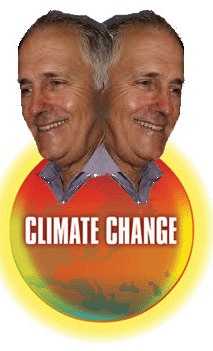 Australian ratification of international treaties is done through the executive, not the parliament. Prime Minister Turnbull makes the final decision as to whether Australia will ratify the Paris Agreement.
Paris climate agreement comes into force: now time for Australia to step up, The Conversation, The Paris climate agreement is set to enter into force next month after the European Union and Canada ratified the agreement overnight. The agreement, reached last December, required ratification by at least 55 countries accounting for 55% of global emissions to become operational.
US President Barack Obama hailed the news as perhaps “a turning point for our planet”, but also noted that it “will not solve the climate crisis” alone.
So far, 73 countries accounting for 56% of emissions have ratified the agreement. This includes the world’s two largest emitters: China and the US. This week the European Parliament approved ratification of the agreement for the EU. The European Council has formally adopted this decision and finalised ratification.
This has put the agreement over the 55% threshold and triggered entry into force. However, by the rules of the agreement, 30 days must now elapse before the agreement becomes operational. The agreement will enter into force on November 4.
This will mean that, from that date, the agreement will be active and legally binding on those who have ratified it……..
Ratifying Paris imposes few additional actions on countries, aside from making a pledge every few years. Not ratifying would make the dissenting country a climate pariah internationally. There is little for parliaments and leaders to debate.
The speed of entry into force may simply betray how little is expected of parties to the pact. It could be a sign of weakness, rather than strength and momentum.
What about Australian ratification? Continue reading
Australia’s first sun-tracking solar farm opens at Majura, Canberra
Majura solar farm set to power more than 600 homes after four years of planning, The Age, Clare Sibthorpe, 6 Oct 16, Hundreds of Canberra homes are set to be powered by one of Australia’s first sun-tracking solar farms which opened in Majura on Thursday.The 2.3MW solar farm adjacent to the Mount Majura winery will generate 4,300 MW per hour within a year, which equals about 600 houses.
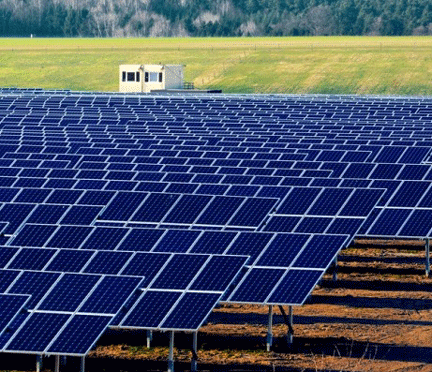
The farm has one of the first self-powered and single axis tracking technology to be used in Australia, which increases output by up to 40 per cent…..
ACT Chief Minister Andrew Barr said the completion of Canberra’s fourth solar farm – with the others in Mugga Lane, Williamsdale and Royalla – helped ensure Canberra’s future renewable power supply was guaranteed…….
He said the ACT government had contracted 640 megawatts of power which exceeded the amount needed to make the territory entirely renewable by 2020.http://www.theage.com.au/business/energy/majura-solar-farm-set-to-power-more-than-600-homes-after-four-years-of-planning-20161006-grw501.html
Look to our sun, urges Hewson
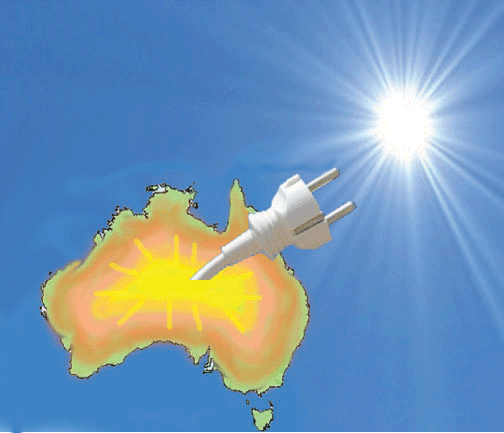 DR John Hewson is leading the charge for more renewable energy – and wants a system redesign.
 Tory Shepherd, Political Editor, The Advertiser, October 6, 2016 AUSTRALIA needs more renewables, not less, former Liberal leader John Hewson says.
Australia still an international leper on climate change
“A key reason why countries have moved so fast after Paris is that they now recognise the great attractiveness of the growth and development paths for both rich and poor countries that will result from the transition to a low-carbon economy,”
Australia, however, is showing no such ambition. The Coalition is rejecting any talk of increasing its targets in next year’s policy review, and is looking at trying to force states that have higher renewable energy targets to bring them back to the less ambitious national target.
On green finance, Australia is also moving in the opposite direction……..“The race has begun: September has been an extraordinary month for green finance globally”……But, not in Australia.
 Australia on the outer again as Paris climate treaty comes into force http://reneweconomy.com.au/2016/australia-on-the-outer-again-as-paris-climate-treaty-comes-into-force-32276 By Giles Parkinson on 5 October 2016
The speed of the ratification – less than a year after the Paris treaty was voted to general acclimation last year – compares with the eight years it took to get its predecessor, the Kyoto Protocol, into force after it was adopted in 1997.
The move will impact Australia in two ways. Firstly, under current arrangements only those countries who have ratified the treaty can vote in negotiations for the next step in the treaty’s implementation. That means Australia would be excluded from these processes, although it may have observer status.
It also means that Australia will reinforce its status as a climate outlier, a reputation it earned when former prime minister Tony Abbott and former Canadian prime minister Steven Harper were branded “climate villains” because of their opposition to action on climate change.
Malcolm Turnbull was expected to change this. but has instead entrenched the policies of his predecessor. Continue reading
Simple explanation of why the Australian government hates renewable energy
Wonder why the Coalition dislikes renewables so much? https://www.crikey.com.au/2016/10/03/wonder-coalition-dislikes-renewables-much/ Malcolm Turnbull says he has lots of solar panels. But the Coalition’s hatred of renewable energy isn’t so much about personal views as about the cash.Bernard Keane Politics Editor

The lights were still out in South Australia while Coalition politicians, right up to and including Prime Minister Malcolm Turnbull, were either directly blaming renewable energy for the blackout or attacking “aggressive” renewable energy targets for the infrastructure that collapsed. Turnbull was quick to point out he’s a personal fan of renewable energy given he has solar panels on the roof of his luxury Point Piper mansion. But as Michael says in The Godfather, “it’s not personal, Sonny, it’s strictly business”. This is where donations from energy and coal companies have gone in the last five years to the federal branches of the major parties.
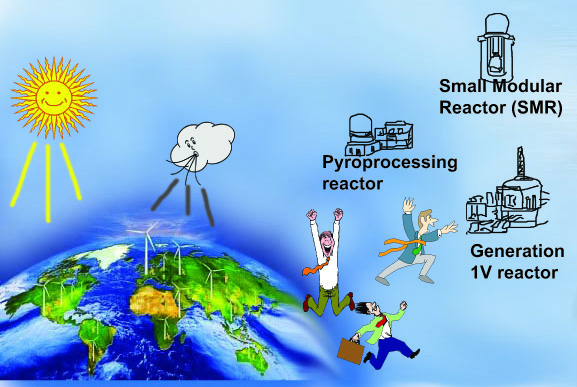
Australia’s nuclear lobbyists are very wrong about Gen IV ‘fast breeder’ nuclear reactors
India’s failed fast reactor program India’s fast reactor program has been a failure……
Russia’s snail-paced program Russia’s fast reactor program is the only one that could be described as anything other than an abject failure. But it hasn’t been a roaring success either……
China’s program going nowhere fast….. China might have one commercial-scale fast reactor by 2034 ‒ but probably won’t.
the [Australian] nuclear lobbyists’ game plan − making overblown claims about fast reactors and other Generation IV reactor concepts, pretending that they are near-term prospects, and being less than “abundantly clear” about the truth.
Nuclear: The slow death of fast reactors Jim Green, 5 Oct 2016, RenewEconomy, http://reneweconomy.com.au/2016/nuclear-the-slow-death-of-fast-reactors-21046
Generation IV ‘fast breeder’ reactors have long been promoted by nuclear enthusiasts, writes Jim Green, but Japan’s decision to abandon the Monju fast reactor is another nail in the coffin for this failed technology.
Fast neutron reactors are “poised to become mainstream” according to the World Nuclear Association. The Association lists eight “current” fast reactors although three of them are not operating. That leaves just five fast reactors ‒ three of them experimental.
Fast reactors aren’t becoming mainstream. One after another country has abandoned the technology. Nuclear physicist Thomas Cochransummarises the history: “Fast reactor development programs failed in the: 1) United States; 2) France; 3) United Kingdom; 4) Germany; 5) Japan; 6) Italy; 7) Soviet Union/Russia 8) U.S. Navy and 9) the Soviet Navy. The program in India is showing no signs of success and the program in China is only at a very early stage of development.”
The latest setback was the decision of the Japanese government at an extraordinary Cabinet meeting on September 21 to abandon plans to restart the Monju fast breeder reactor. Continue reading
Official report available on South Australia’s blackout last week
 Derek Abbott uploaded a file. No High Level International Nuclear Waste Dump in South Australia, 5 Oct 16
A NEW wave of wind farm developments is sweeping Victoria
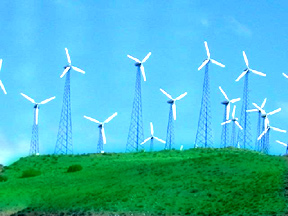 Wind farm developments crank up across Victoria
 , PETER HUNT, The Weekly Times
UK company RES, which has built 5000 turbines worldwide, is building its latest wind farm on 17 Murra Warra farmers’ land, including Victorian Farmers Federation president David Jochinke’s property.
Mr Jochinke, who will have six turbines built on his property, said it was a great to have all landholders working together on the project.
RES Murra Warra project manager Kevin Garthwaite said the company had chosen Murra Warra on the flat Wimmera plain because it was on a major transmission line, had “good” wind and was capable of generating more than 400 megawatts of electricity, enough to supply about 220,000 homes.
He said the project would employ 250-300 people during construction, with ongoing employment for 10-15 workers once completed.
“We’ve been really pleased with the level of community support,” Mr Garthwaite said. “If it goes through (the planning process) without a hitch we’d hope to start construction towards the end of 2017.”……..http://www.weeklytimesnow.com.au/news/national/wind-farm-developments-crank-up-across-victoria/news-story/d6f4464f23be9c83c0d83a98e9223498
Ignite Energy Resources pulls out of a $90 million clean coal project
 Company withdraws from government-funded clean coal scheme in Victoria’s Latrobe Valley ABC Gippsland, 4 Oct 16
The call comes as Ignite Energy Resources pulls out of a $90 million Advanced Lignite Demonstration Program to find cleaner uses for Victorian brown coal.
Chinese company Shanghai Electric last year also withdrew from the program, after being offered $25 million to develop a demonstration plant to convert coal into briquettes.
Environment Victoria campaigns manager Nicholas Aberle said there needed to be a focus on other ways of developing the Latrobe Valley economy, outside of coal………
Dr Aberle said the continued focus on coal was distracting from other efforts to develop the regional economy.
Greens energy spokeswoman Ellen Sandell said government grants for failed coal schemes should be redirected to renewable energy initiatives in the Latrobe Valley.
“This money should support the transition to clean, modern jobs, not prop up dead-end coal projects,” Ms Sandell said.
“The future will be powered by the sun and the wind. With support the Latrobe Valley could become a renewable energy powerhouse.”……..
State says ‘not one dollar’ went to Ignite
A spokeswoman for Victorian Resources Minister Wade Noonan said not one government dollar had gone to Ignite Energy Resources because the company had failed to meet the benchmarks for the Advanced Lignite Demonstration Program.
Ignite was offered $10 million from the State Government and $10 million from the Federal Government.
The Victorian Government said it was yet to allocate those unused funds.
A third company, Coal Energy Australia, remains in the Advanced Lignite Demonstration Program, with access to $30 million in government support. http://www.abc.net.au/news/2016-10-04/clean-brown-coal-fail-in-latrobe-valley/7899900
“Moral” argument for nuclear waste import is rejected, economic one is dodgy, too
at a dinner hosted by the Eurajoki municipal council at its restored 16th-century Vuojoki Mansion, the South Australian delegation was told to put aside any so-called moral obligations.
Mr Jalonen joined others who have urged caution and questioned whether the economic benefits are overblown.
Unlike the potential riches being speculated about in South Australia — more than $100 billion over 120 years — Mr Jalonen said there was only a “little bit” of money on offer for his region.
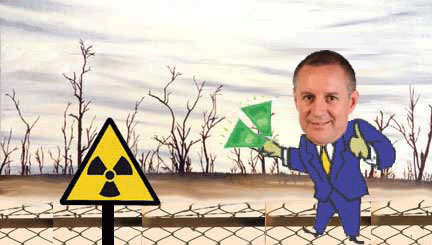
 Premier Weatherill’s nuclear ‘moral’ case rejected The Australian
  ,October 3, 2016 MICHAEL OWEN SA Bureau Chief Adelaide @mjowen
The head of a governing body in Finland where the world’s first permanent disposal facility for nuclear waste is being built has rejected Premier Jay Weatherill’s “moral” case that South Australia should consider following suit because of its uranium exports.
Mr Weatherill, who last month toured the site at Eurajoki, due to open in the early 2020s, has said South Australia is primarily considering permanent nuclear fuel disposal because of its potential long-term economic prosperity.
But during the visit, accompanied by The Australian, he also said that given South Australia accounted for 25 per cent of the world’s uranium reserves mined and exported for use in nuclear facilities internationally and creating waste, it was “sensible for us to ask ourselves ‘can we play a role in this nuclear fuel cycle?’ and ‘are we the appropriate place to store the material?’ given that this waste does exist in the world.
“Simply, does South Australia consider itself a global citizen?”, he said. Some of the 400 or so nuclear power plants around the world, including those in Finland, use Australian uranium. Continue reading
1 This month


Help Aunty Sue Protect Her Land and Sacred Sites From Destructive Rocket Testing.
.

Australians deserve the truth
about
AUKUS – https://aukuspublicinquiry.com/

PETITION – To: Prime Minister Anthony Albanese and the Australian Labor Government

of the week – Australians for War Powers Reform (AWPR)
To see nuclear-related stories in greater depth and intensity

