Nuclear Fuel Chain Royal Commission ignores the facts on low level radiation
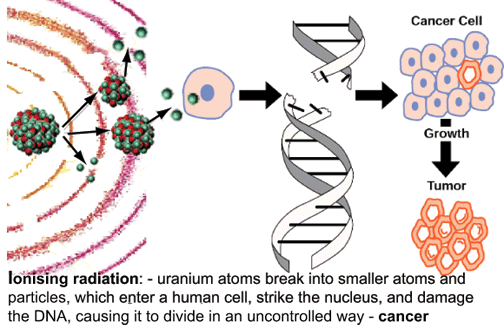 Chris Murray 16 Feb 16 The issue of low level radiation is crucial to the nuclear debate. If the threshold/hormesis outliers are successful in their campaign, radiation protection limits will be raised and nuclear costs will fall dramatically.
It is unfortunate therefore that The Royal Commission is so economical with the truth on low level radiation. It specifically quotes WHO and UNSCEAR to paint a particular picture. The omission of very relevant material from the same sources does not inspire confidence in its findings. Although it states that “a precautionary approach is appropriate”, by minimizing the possible casualties from Chernobyl and Fukushima, it effectively dumps any such precautionary approach.
While UNSCEAR, citing uncertainties, refuses to give any estimates for the absolute number of casualties from Chernobyl, it does state that “”Although the numbers of cancers projected to be induced by radiation exposure after the accident are very small relative to the baseline cancer risk, THEY COULD BE SUBSTANTIAL IN ABSOLUTE TERMS”
(My emphasis – even a “very small” increase of say, 0.5%, in baseline risk would cause 5,000 extra cancers in a 5 million population, assuming normal cancer mortality of 20% of all deaths.)
Also unmentioned is that the WHO/Chernobyl Forum (of which UNSCEAR was a member) stated that
“The Expert Group concluded that there may be up to 4 000 additional cancer deaths among the three highest exposed groups over their lifetime (240 000 liquidators; 116 000 evacuees and the 270 000 residents of the SCZs)”
http://www.who.int/ionizing_radiation/chernobyl/backgrounder/en/
(this is for the most exposed areas alone)
Also ignored is that the WHO/CF, while acknowledging considerable uncertainties (which can lead to underestimation of effects as easily as overestimation), estimated a possible further 5,000 fatal cancers from the most contaminated areas in wider Belarus, Russia and Ukraine, giving a total of 9,000.
“Predictions, generally based on the LNT model, suggest that up to 5 000 additional cancer deaths may occur in this population from radiation exposure, “
http://www.who.int/ionizing_radiation/chernobyl/backgrounder/en/
Nor is there any mention that even UNSCEAR accepts a proven risk down to 10 mSv:
“Risk estimates vary with age, with younger people generally being more sensitive; studies of in utero radiation exposures show that the foetus is particularly sensitive, with elevated risk being detected at doses of 10 mSv and above.”
Also ignored is that UNSCEAR, in its recent Fukushima report, no longer uses a DDREF (Dose and Dose Rate Effectiveness Factor). No DDREF means that the 9,000 could legitimately be doubled to 18,000. And again, this is from the most contaminated areas. The fallout and its effects did not stop there, unless one is claiming a definite threshold, an ideological position rejected again and again by the scientific establishment (See the recent US EPA statement athttp://www.regulations.gov/#!documentDetail;D=NRC-2015-0057-0436 ).
Again, unmentioned in the report, the WHO/CF admits that “Chernobyl may also cause cancers in Europe outside Belarus, the Russian Federation and Ukraine.“
The Commission seems to have adopted the nuclear industry spin that low level radiation is of no concern if it’s comparable to background radiation. This is like saying it’s ok to deliberately electrocute people so long as the numbers are comparable to those killed by “natural electricity” ie lightning. The Commission seems to have no awareness that the BEIR VII committee, the ICRP, the 21st H L Gray conference etc. examined the “evidence” for the claim that background radiation was harmless and found it wanting, the studies either being ecological or lacking statistical power.
Likewise the Commission seem unaware that a recent study – A record-based case-control study of natural background radiation and the incidence of childhood leukaemia and other cancers in Great Britain during 1980-2006 – has shown that background radiation may be responsible for 12% of childhood leukaemias. And if it’s responsible for leukaemia, it is almost certainly responsible for other cancers.
One of the authors of this study is Richard Wakeford, the former BNFL principal research sciencist, who can hardly be accused of being an unscientific tree-hugger, an anti-nuke idealogue, a Greenpeace or coal industry shill, etc. etc.
Shockingly, none of this, much from the Commission’s own sources, is mentioned. Instead it hides behind “ongoing scientific debate”, and cherrypicks the most reassuring quotes.
Weatherill Democracy in Action – Nuclear Fuel Chain Royal Commission Tentative Findings
Only on the question of the importation, storage and disposal of nuclear waste is the inquiry up-front. This is seen as a definite goer. A big bold tick for the world’s unloved and unwanted nuclear waste. Oh, and by the way, this includes fuel originating from SA’s uranium via “fuel leasing”. The plan is to store the waste for over a decade before it is disposed.
This happens to be just the sort of time delay that would allow the setting up of a plant to produce fresh  uranium fuel from the spent fuel. Another discretely hidden tick, this time for processing.
Dr Dennis Matthews (BSc Hon, PhD), 15 Feb 16 After setting up an inquiry with biased terms of reference, chaired by a person with known sympathies for the nuclear industry, and appointing a committee calculated to support a pro-nuclear agenda, Premier Jay Weatherill now says, with his best poker-face, that this will be a test for democracy.
Well may Jay say that this is a test for democracy, because in setting the test he has bastardised democracy and is now endeavouring to head off any objections. One can almost hear the storm troopers rattling their swords as they look forward to putting down anyone with the temerity to challenge the beloved leader.
The so-called “tentative findings” of Weatherill’s mock democratic consultation are as devious as the man himself.
Weatherill would like us to believe that all he is doing is setting up a nuclear waste industry that will bring untold economic benefits to SA, benefits which the rest of the world seems significantly less eager to embrace, especially those with mature nuclear industries generating this noxious product.
In fact, this travesty of an inquiry is preparing the ground for a full-on nuclear SA with uranium mining, nuclear waste importation, nuclear fuel manufacturing and nuclear power. Continue reading
South Australia is too good to waste.
 Today’s Royal Commission ‘Tentative Findings’ report clearly states that nuclear power will not be economically viable. It also says that uranium conversion, uranium enrichment and nuclear fuel reprocessing are not economically viable. The state’s peak environmental body Conservation Council SA welcomes these findings.
However the report says that South Australia should consider importing international nuclear waste.
“We have had the Royal Commission, now any nuclear waste dump needs South Australia’s permission”, says Conservation SA Chief Executive Craig Wilkins.
“This is a decision for all South Australians. The issue of genuine acceptance and consent is absolutely critical.
“If we pursue a nuclear waste dump path, we are saying “the best we can do is accept the worst the world has got”. I honestly think we can do better than that.”
An opinion poll commissioned by The Advertiser last year found that less than one in six (15.7%) South Australians support a nuclear waste dump in SA.*
“Now comes the hard part. We’ve had a technocratic, distant process so far – now it turns to real people, real places and real values,” says Mr Wilkins.
“The Royal Commission presents an optimistic view of potential profits from offering Australia as the world’s nuclear waste dump. The Commission acknowledges that nuclear waste needs to be isolated from the environment for “many hundreds of thousands of years” yet there is no attempt to cost the management of waste over those timeframes.
“If there’s one thing we know, the nuclear industry is expert at overstating the benefits and radically understating the costs and risks.
“Ultimately, we think it’s essential that all current and future South Australians should have the freedom to choose. Saying yes to nuclear makes that choice forever, there is no going back.”
Greens: Nuclear Royal Commission findings: It’s all about the dump!
 The tentative findings of the Royal Commission into the Nuclear Fuel Cycle, released this morning tell us what we already know, according to Greens SA Parliamentary Leader, Mark Parnell MLC.
As predicted when the Royal Commission was established – this process is all about softening South Australians up to be the World’s nuclear waste dump.
We’ve known for years that the uranium reprocessing market is “uncertain” and that there is “no opportunity for commercial development” [Royal Commission quotes]. We’ve also known for decades that nuclear power for SA is “not commercially viable … in the foreseeable future” [Royal Commission quotes].
“The outcome of the Royal Commission isn’t at all surprising. The Greens knew that the most likely result of this process was to support South Australia becoming the World’s nuclear waste dump.
However, the Royal Commission’s tentative findings on the nuclear waste dump are based on dubious economics, heroic assumptions and a big dose of guess work. The Commission has identified a problem that lasts hundreds of thousands of years and proposed a solution with income that lasts just a few decades, but with costs lasting virtually forever. If anything goes wrong in the future – we’re on our own.
“The Greens are calling on the Weatherill Labor Government to protect our State’s reputation and not leave our descendants to deal with a toxic future as their legacy.
Previous State Labor Premier Mike Rann fought off a Liberal plan for a national nuclear waste dump in South Australia last decade. The current proposals are far more sinister and dangerous because they involve South Australia taking the most dangerous radioactive waste on the planet.
South Australians will now need to ask themselves and their politicians: “Is this the best future that we can aspire to?”
BENEFITS OF SOLAR FAR OUTWEIGH THE RISKS OF NUCLEAR
 Solar Citizens calls on the South Australian Government to harness the sun to generate low-cost clean energy and kick-start jobs and economic growth rather than becoming a dumping ground for an expensive, toxic nuclear waste.
The findings come as new polling released today shows a majority of voters are more likely to give their vote in the upcoming election to a party supporting ambitious goals and innovation for solar”[1]
The preliminary findings of a Royal Commission into nuclear claim that
-
An expansion of uranium mining is “not the most significant opportunity” to develop South Australia’s economy
-
“It would not be commercially viable to generate electricity from a nuclear power plant in South Australia in the foreseeable future.”
-
Storage and disposal of nuclear fuel waste is “likely” to deliver economic benefits to the State.
“We welcome the Commission’s findings which shows that nuclear mining and power generation is not the solution for South Australia”, said Claire O’Rourke, National Director of Solar Citizens.
“The best way the South Australian Government can support clean energy is supporting households in making the transition to solar energy and reducing people’s power bills. The South Australian Government is leading other states with a target of 50% renewable energy by 2025 and has commissioned research which shows it can get to 100% renewable energy as part of its target of net zero carbon emissions by 2050 ”
“One in four households in South Australia now has rooftop solar and the power they generate from the sun supplies about five per cent of the state’s energy demand.
“These 190,000 South Australian solar homes are only the beginning of the global solar boom, as affordable, reliable home battery storage places lowering the cost of power bills in reach for the majority of households.
“It is important that the State Government makes sure it adopts policies that encourage further investment in renewables, and the jobs this will create.
“The state’s abundant solar resources have already caught the attention of US solar thermal giant SolarReserve, which in November made a bid to build Australia’s first-ever solar thermal plant with storage in Port Augusta. https://drive.google.com/file/d/0B9kNVP3oyB-cQ2NQbnROWVlrUjIxbW1TaUhxTlpKZlNkNHNB/view?usp=sharing

South Australian premier out on a limb, as national Labor dithers about nuclear policy
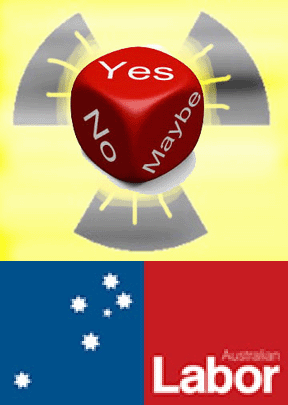 Royal commission tipped to back radioactive dump REBECCA PUDDY, The Australian, Monday 15 February Australia could be a step closer to establishing a nuclear industry today when the interim findings of South Australia’s nuclear royal commission are handed down amid an increasingly favourable political landscape…… it is widely tipped to recommend establishing a high-level radioactive waste dump as a money spinner for the struggling state economy.
The findings are also likely to leave open the option of building a nuclear power reactor in the southern state………..
While Premier Jay Weatherill has committed to responding to the report before the end of the year, his response could be constrained by his party’s national platform. In July it was revealed that Labor had shelved a move to end the party’s opposition to nuclear energy through amending its national platform, which outlines the party’s opposition to nuclear energy.
Labor’s resources spokesman Gary Gray, who was leading the campaign to change Labor’s position, said at the time that the draft proposal to soften the party’s stance on nuclear energy had been set aside while the South Australian Nuclear Fuel Cycle Royal Commission was under way.
The release of the commission’s findings will be accompanied by four technical documents commissioned by Rear Admiral Scarce, which will outline the costs and economic benefits of engaging in the nuclear fuel cycle.
Evidence provided to the commission over the course of its 34 sitting days included a business case that estimated an Australian nuclear reactor would cost between $3 billion and $6bn to build, with operations starting in 2030.
The findings will be released at 11am, with the first of a series of public meetings on the issue scheduled for tonight at the Adelaide Town Hall.
Environmental campaigner David Noonan said anti-nuclear activists would be present at the meeting but would be “deliberately polite”, to ensure the public’s focus stayed on the issue. He said neither of the major parties would advocate for a change in direction with nuclear power or storage until after the federal election, leaving the South Australian Labor government out on a limb.
“There’s a lot of caution there in the political landscape right now,” Mr Noonan said. “Josh Frydenberg will try to get his low-level radioactive waste site over the line before he moves on anything else.”
Tasmanian Greens stick up for civil liberties, and the right to protest
 Protest laws under fire as Greens to attempt to have legislation banished from statute books http://www.themercury.com.au/news/tasmania/protest-laws-under-fire-as-greens-to-attempt-to-have-legislation-banished-from-statute-books/news-story/a7eec43b2cea4197b229e2a28fbc7c35 February 15, 2016 THE Greens will launch a bid to overturn the state’s anti-protest legislation, which they say is being used to stifle the democratic right to protest.
Acknowledging the attempt had little chance of success in the Liberal-dominated State Parliament, Greens leader Cassy O’Connor said the legislation needed to be overturned
Ms O’Connor said the legislation — which carries maximum fines of $10,000 and mandatory jail terms for repeat offenders — was being used against citizens protesting logging operations in the Lapoinya Forest — contrary to government promises about its intent.
“In recent weeks up at Lapoinya up in North West Tasmania, we’ve seen the Government’s draconian anti-protest legislation actually target the very people that Paul Harriss said it wouldn’t — mum and dad protesters.
“This Bill is not only highly political and draconian it is unnecessary — there is already legislation in Tasmania for trespass and public nuisance and we want to see this Bill banished from the statue books. “I believe this law will not remain on the statue books in Tasmania forever. It may be subject to a High Court challenge. It really has no place in a civil and democratic society like ours.”
Tasmanian spokesperson for Civil Liberties Australia. Rajan Venkataraman, said the Bill was a severe infringement on the right to peaceful protest. “The provisions in this Act are quite unique to Tasmania,” he said.
“Around most jurisdictions in Australia and indeed many countries around the world, they have provisions regarding trespass and public nuisance and certainly violent protest … but this kind of Act specifically targets protesters and specifically peaceful protesters. “The offences created by the Act and the penalties imposed are extreme and not in proportion to penalties imposed under other statutes, even for quite serious and violent offences.”
Resources Minister Paul Harriss dismissed opposition to the laws.
“It says a lot about the Greens that at a time when the state is a facing a number of serious challenges, they are most concerned about changing the law to allow their mates to try to stop others from lawfully harvesting a regrowth forest.”
World’s best-known climate crusader Al Gore urges Australian Government rethink on CSIRO cuts
FORMER US vice president and climate crusader Al Gore has added to the chorus of protest at plans to cull CSIRO’s ocean and atmosphere research positions, of which as many as 193, or 80 per cent, are in Hobart..
http://www.themercury.com.au/news/tasmania/worlds-bestknown-climate-crusader-al-gore-urges-australian-government-rethink-on-csiro-cuts/news-story/feda0e3aaaea4aba128e540d5c4de015
A Constitutional Lawyer examines the arguments for thye UN decision on Julian Assange
Whether or not you believe Mr. Assange is guilty of a sexual offence, whether or not you think he is a self-publicist deliberately resisting arrest, the fact remains that the authorities could use less restrictive means without compromising the initial investigation into the allegations regarding his sexual conduct in Sweden
Liora Lazarus: Is the United Nations Working Group on Arbitrary Detention Decision on Assange ‘So Wrong’? UK Constitutional Law Association 13 Feb 16 The United Nations Working Group on Arbitrary Detention handed down its decision on Julian Assange on Friday 5 February 2015 (A/HRC/WGAD/2015/54). It has been met with almost universal ridicule from a line of British officials, legal academics and the press. The decision has been described as ‘ridiculous’ by the UK Foreign Secretary, Phillip Hammond, and former Director of Public Prosecution Ken MacDonald argues that describing Assange’s conditions as ‘arbitrary detention’ is ‘ludicrous’. The press is equally incredulous. ………
Julian Assange UN Ruling – Geoffrey Robertson QC Joseph Kotrie-Monson interviewed
Factual background
Mr. Assange is wanted for questioning in Sweden to answer allegations of sexual assault. The Swedish prosecutorial authorities have issued a European Arrest Warrant (EAW) which the UK authorities are bound to implement. Mr. Assange, after arrest of 10 days and house arrest thereafter, was granted asylum by Ecuador after his appeal against the EAW failed. This is when he took up residence in the Ecuadorian Embassy in 2012. Assange argues that he fears ultimate extradition from Sweden to the USA on the grounds of his involvement in Wikileaks.
This is obviously no small fear, given the sentencing and treatment of Chelsea Manning in the USA, and the decision of Edward Snowden to take up asylum in Russia. The Swedish authorities refuse to grant Assange any guarantee of non-refoulement to the US, and his right to asylum has also not been recognized by the UK or Sweden. ……..
Mr. Assange argues that he is not free to leave the Embassy; he would have to accept the conditions of his immediate arrest, his extradition to Sweden and his subsequent questioning there. He would have to undertake the risk that he would be extradited to the US, and the subsequent risks to his rights were that to happen.
The mandate of the UN WGAD and the test for ‘deprivation of liberty’ Continue reading
South Australian nuclear waste import plan simply cannot succeed
Given the wildly optimistic price for waste modelled by the mid-scenario, not to mention the 56,000 tonnes of waste left over with no costed solution, and with all the uncertainties in developing the new technologies required, the simple conclusion is that this plan is simply all risk with no reward.
No-one else will line up to take advantage of this “once in a lifetime opportunity”, because the opportunity does not exist. The plan simply cannot succeed.
The impossible dream Free electricity sounds too good to be true. It is. A plan to produce free electricity for South Australia by embracing nuclear waste sounds like a wonderful idea. But it won’t work. THE AUSTRALIA INSTITUTE Dan Gilchrist February 2016
“……NO GOOD OUTCOME The free energy utopia depends on two new, as yet unproven technologies: PRISM reactors, and cheap borehole disposal. The Edwards plan appears to rely on these technologies not only being successfully developed, but remaining entirely in Australian hands. Competition is certainly not addressed in the plan.
Northern Territory Mine Regulator gives a free pass for uranium mining companies to pollute
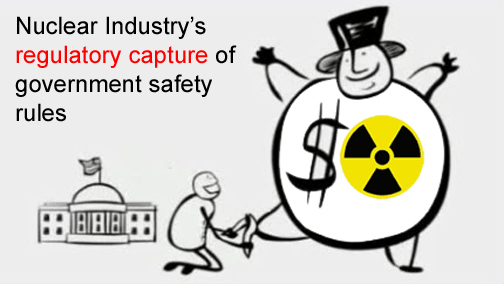 What is a regulator for again? http://linkis.com/greensmps.org.au/1cNkL 12 Feb 2016 The Northern Territory mine regulator is inviting uranium companies to ignore any environmental safeguards with their refusal to prosecute Energy Resources Australia, the Australian Greens said today.
“After more than two years, the NT regulator has given ERA a pass. The Ranger mine leaked nearly 1.5 million litres of radioactive acidic sludge into the plant area, and could have got people killed,” Australian Greens Deputy Leader Senator Scott Ludlam said today.
“Under estimates questioning we were told that the report into the leach tank spill was kept from the public while a decision was made about whether or not to prosecute. It’s hard to envisage a scenario that warranted the application of the full force of the law more than this one.
“The regulator failed to prevent the spill, they took years to deliberate, and came up with nothing. They’ve essentially announced to mining companies in the NT that there are no legal consequences for catastrophic negligence,” Senator Ludlam said.
“We urge the NT government to reverse this decision immediately and force ERA to be accountable.”
No charges over radioactive spill! How nice for ERA!
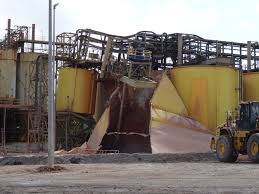 ERA radioactive slurry spill: NT Government won’t lay charges against miner A uranium miner has avoided charges over a 2013 spill of 1,400 cubic metres of radioactive slurry at its Ranger mine in the Northern Territory. ABC News 12 Feb 16
Key Points:
- Report focuses on radioactive spill from 2013 at Ranger Mine near Kakadu NP
- NT Government says not in public interest to lay charges
- Mining company Energy Resources Australia welcomes findings
The spill at the Energy Resources of Australia (ERA) Ranger uranium mine, which is surrounded by Kakadu National Park, saw a holding tank collapse on December 7, 2013. Workers discovered a hole in the side of the tank and were evacuated before the tank burst and the slurry escaped.
ERA said no-one was injured and no uranium leaked off the site into Kakadu.
The NT Government on Friday released the findings of its Completed Investigation Into Failure of Leach Tank 1 Ranger Uranium Mine.
Department of Mines and Energy chief executive, Ron Kelly, explained in the report that he accepted the “admission of fault by ERA to the unauthorised spill as a result of the failure of Leach Tank 1”.
“However I have decided that it is not in the public interest to lay a charge against ERA under Section 33 of the NT Mining Management Act [MMA],” he said……..
EDO blames ‘lack of political will’ for failure to prosecute
Principal lawyer with the non-profit Environmental Defenders Office in the NT, David Morris, said the Government did not need to show that ERA intended for the spill to occur to successfully prosecute the miner.
“The reason they are not bringing this prosecution? I think, lack of political will,” Mr Morris said.
“What this decision does is send a message to the Northern Territory community that we are not going to hold companies to account for a really poor standard of quality control on their mine sites,” Mr Morris said.
He said being forced to shut down the site was not a penalty.
“That is the cost of doing business when you do business poorly.” http://www.abc.net.au/news/2016-02-12/era-avoids-charges-over-radioactive-slurry-spill/7163560
Independent Australia cracks the mystery of “international award” to (Anti) Environment Minister Greg Hunt
 Mystery explained: Hunt’s award handed out by the oil industry, Independent Australia Lachlan Barker 12 February 2016, MANY THIS week, myself definitely included, were gobsmacked by Greg Hunt receiving an award for – get your sick bags ready everyone – “Best Minister in the World“.
When I first saw this, again like so many of you, I thought it was satire, perhaps done by that excellent SBS site The Backburner. I’ve repeatedly been taken in by this site, so plausible are their funny stories and so appalling is our federal government.
But no, when we all got off the floor, the stories were indeed real and Hunt had, indeed, been given this award.
However, I knew there was something rotten here and so I thought I better find out how this bizarre occurrence came about. So I went to the site of the organisation that gave out the award, the World Government Summit. There on the home page is a link to “Partners“, so I clicked on that and discovered that the intriguingly entitled ‘Entrepreneurship Partner’ is the Abraaj Group.
So I clicked on that and we come to the Abraaj page and discover their portfolio. Among them are such heartwarming industries as Chemicals, Metals and Industrials,Pharmaceuticals, Construction and Manufacturing and of course Energy, Mining and Utilities.
[Author lists the companies, with their logos]
One company, Auro Mira Energy is focussed on renewables; they pursue hydro and biomass power generation in India.
However, the rest is largely fossil fuels……..
So there you have it mystery solved, Greg Hunt’s award was sponsored in large part by the energy industry, most prominently oil.
Once I found this out, it kind of made Hunt’s award make sense.
The award was for “Best Minister in the World” and so if you are going to pick a minister who does more than any other to enable the continued and increased use of fossil fuels, then clearly Greg Hunt is your man………
Greg Hunt is the best at enabling ongoing and increasing use of fossil fuels, against all financial and global ecological sense. So they can give him an award, as long as it’s for “Most Destructive Environment Minister the Earth has ever Known”.
Lachlan Barker blogs at cyclonecharlie88.blogspot.com.au. You can follow him on Twitter at@cyclonecharlie8. https://independentaustralia.net/environment/environment-display/mystery-explained-hunts-award-handed-out-by-the-oil-industry,8672
Exploding Senator Edward’s plan for nuclear waste importing
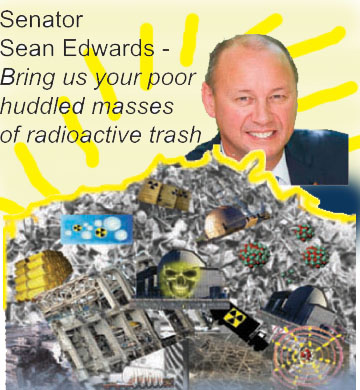 The impossible dream Free electricity sounds too good to be true. It is. A plan to produce free electricity for South Australia by embracing nuclear waste sounds like a wonderful idea. But it won’t work. THE AUSTRALIA INSTITUTE Dan Gilchrist February 2016
2900 scientists urge Malcolm Turnbull to prevent the drastic cuts to CSIRO’s climate researchers
Australia played a vital role in monitoring and modelling, particularly for the southern hemisphere.
 CSIRO climate cuts ‘devastating’, almost 3000 scientists tell Malcolm Turnbull http://www.smh.com.au/environment/climate-change/csiro-climate-cuts-devastating-almost-3000-scientists-tell-malcolm-turnbull-20160211-gms3ea.html Peter Hannam Environment Editor, Almost 3000 scientists from nearly 60 nations have appealed to Prime Minister Malcolm Turnbull and other Australian leaders to halt the CSIRO’s plans to halve the number of researchers working on climate monitoring and modelling.
In a letter that was also sent to the CSIRO’s board and chief executive Larry Marshall, the 2900 researchers said the decision to cut 100 full-time positions out of about 140 staff from two units of the Oceans and Atmospheric division “alarmed the global research community”.
“The decision to decimate a vibrant and world-leading research program shows a lack of insight, and a misunderstanding of the importance of the depth and significance of Australian contributions to global and regional climate research,” the letter said.
“The capacity of Australia to assess future risks and plan for climate change adaptation crucially depends on maintaining and augmenting this research capacity.”
The letter follows a statement earlier this week by the World Climate Research Program that the proposed axing risked severing “vital linkages with Australian colleagues and to essential southern hemisphere data sources, linkages that connect Australia to the UK, the US, New Zealand, Japan, China and beyond”. Continue reading
1 This month
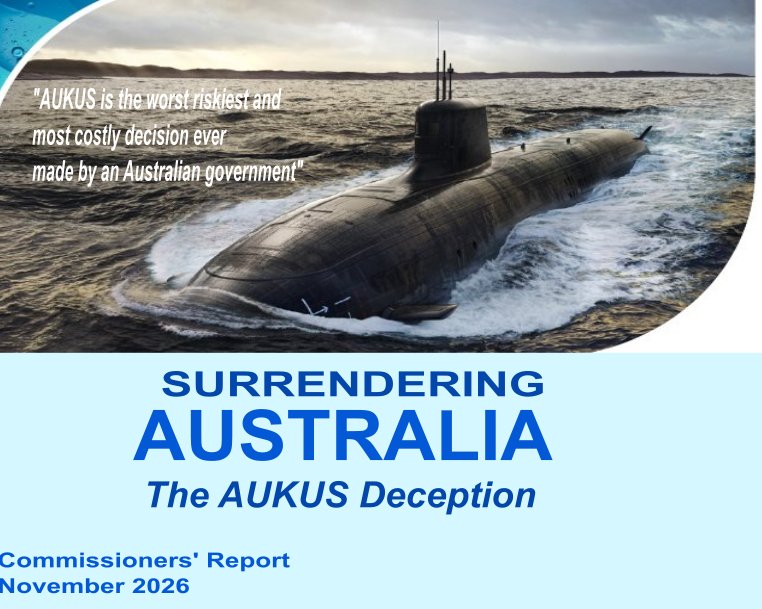
Read the Public Inquiry Report, the Commissioners’ report, Surrendering Australia: The AUKUS Deception is available to download for free at aukuspublicinquiry.com. Or just watch the replay of the National Press Club Luncheon.
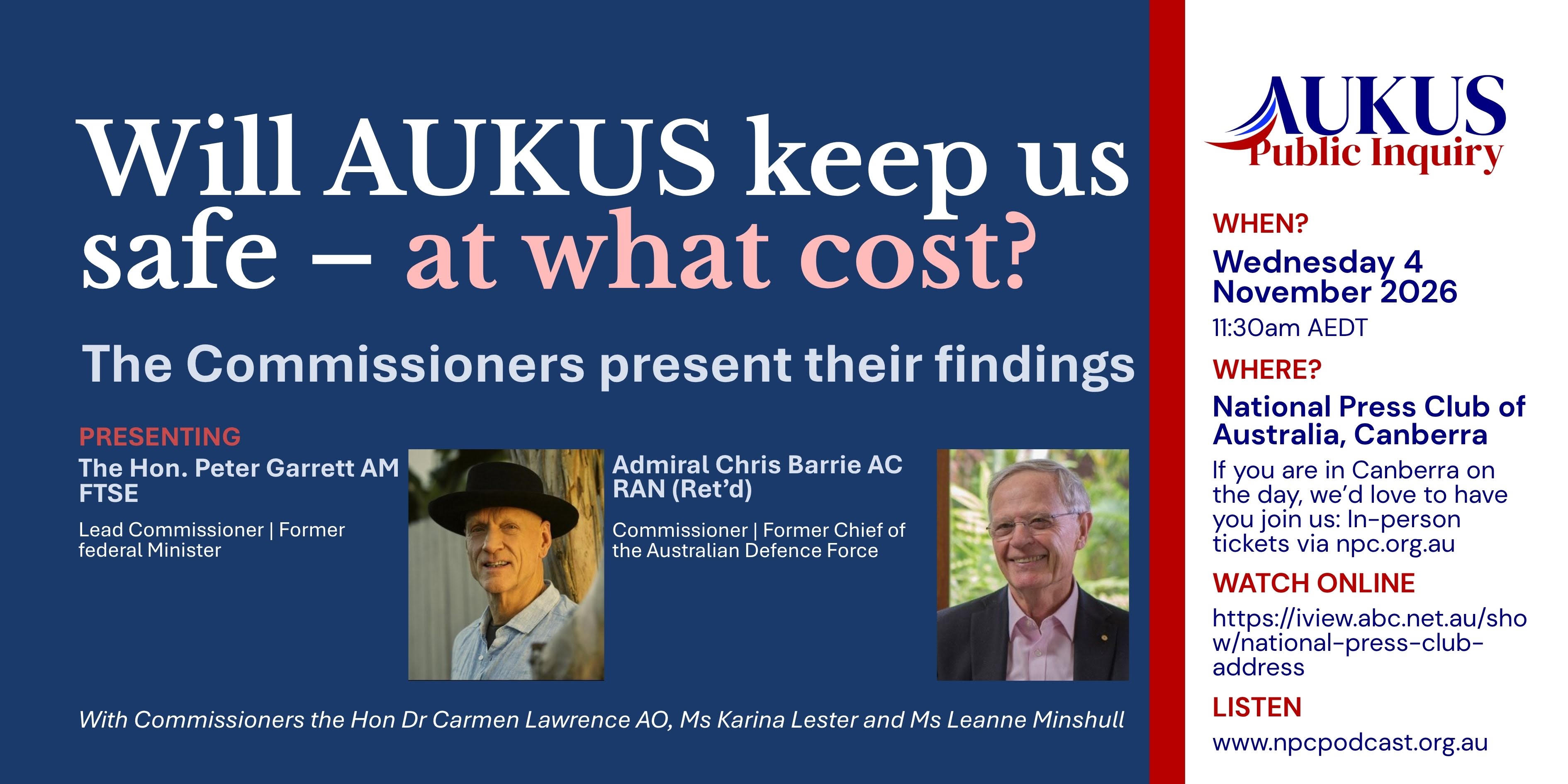
4 November – Will AUKUS keep us safe – at what cost?
the Commissioners of the AUKUS Public Inquiry present their findings at the National Press Club of Australia in Canberra. iview.abc.net.au/show/national-press-club-address
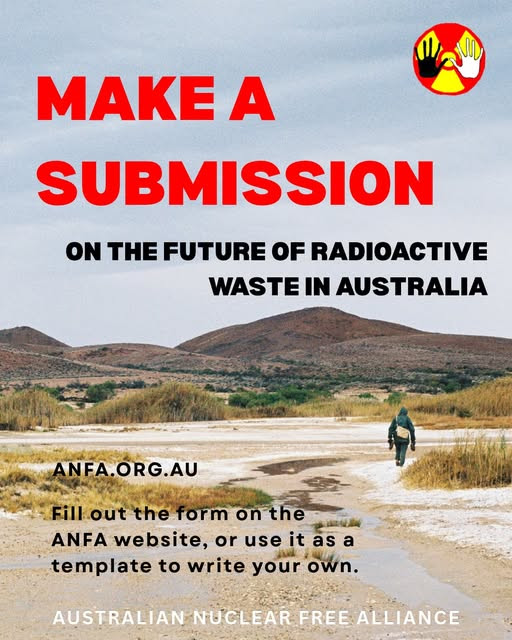
Submissions to the federal government’s new draft framework close on the 13th November 2026.
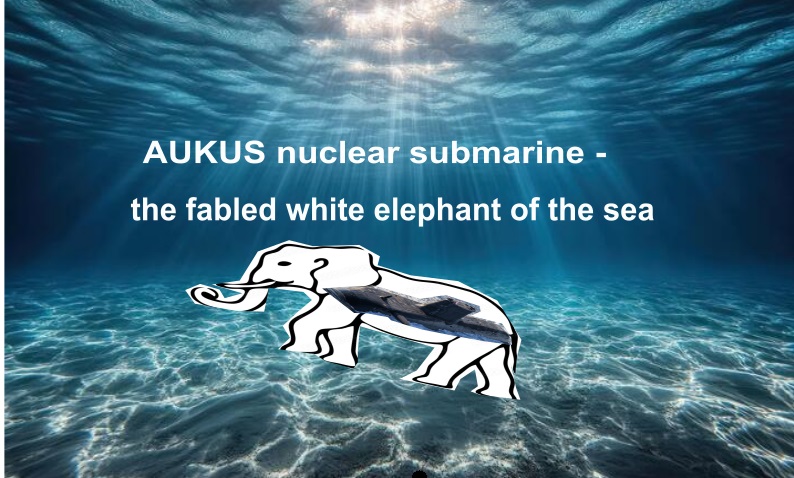
Australians deserve the truth
about
AUKUS – https://aukuspublicinquiry.com/

PETITION – To: Prime Minister Anthony Albanese and the Australian Labor Government

of the week – Australians for War Powers Reform (AWPR)
To see nuclear-related stories in greater depth and intensity

