The endeavours of our scientists and engineers are needed in dealing with the many facets of climate challenge, including the transition to renewable energy, and they should be focused on this.
 Nuclear waste dump just another bad option — what about renewable energy? http://www.adelaidenow.com.au/news/opinion/nuclear-waste-dump-just-another-bad-option–what-about-renewable-energy/news-story/92f494cdde1dcae41481a45e5ac4f4ac February 18, 2016 John Willoughby The Advertiser SOUTH Australia’s Nuclear Fuel Cycle Royal Commission, in its tentative findings, has recommended avoiding some bad options: no nuclear power generation and no reprocessing or fuel leasing in the foreseeable future.
However, a bad option it found acceptable is allowing a proportion of the world’s most dangerous high-level nuclear waste to be transported to SA for long-term disposal. Continue reading →
February 19, 2016
Posted by Christina Macpherson |
NUCLEAR ROYAL COMMISSION 2016, South Australia, wastes |
1 Comment
 Support for proposed nuclear storage facility at Kimba difficult to determine
ABC Rural 18 Feb 16 The South Australian town of Kimba is divided over the benefits or otherwise of a low level nuclear storage facility in the area.
The Federal Government has released a shortlist of six sites nominated to store low-to-intermediate nuclear waste, with three of them located in South Australia.
The three South Australian sites are Cortlinye and Pinkawillinie near Kimba on the Eyre Peninsula, and Barndioota near Hawker, north of Port Augusta.
The prospect of Kimba region being selected has caused deep divisions in the community of Kimba.
The ABC has been told some people are boycotting local businesses in town due to their opposing views  on the issue but the Federal Member for Grey,Rowan Ramsey believes as the debate continues more people are coming around to the idea.
“That’s very concerning, I had not anticipated that people would go to those lengths. All I have ever wanted was a calm rational debate,” Mr Ramsey said…….
Mr Ramsey has been a key player in the debate even offering up his own property as a possible site to host the facility before it was deemed a conflict of interest……
Andrew Baldock and his father Graeme nominated 100 hectares of cropping country at Cortlynie outside Kimba to host the nuclear site……
Melanie Woolford who runs Merinos and prime lambs with her husband, kilometres from the proposed site at Pinkawilinie does not share that view. Ms Woolford is concerned the risk of jeopardising the regions clean, green image does not justify the proposed benefits of having a nuclear waste facility in the region.
“It scares me to think what could happen to our kids or our grandchildren, I think we have a right to say no. “It’s good farming land and I don’t understand why you’d want to put it (a nuclear storage facility) in the middle of farming land,” Ms Woolford said.
“I’ve been here for 13 years and I don’t enjoy coming to Kimba anymore, it’s horrible.” http://www.abc.net.au/news/2016-02-18/nuclear-dump-support-at-kimba-diifficult-to-determine/7181410
February 19, 2016
Posted by Christina Macpherson |
AUSTRALIA - NATIONAL, politics, South Australia, wastes |
Leave a comment
Fossil-fuel industry gets $2,000 in ‘subsidies’ for each $1 in party donations
 Activist group 350.org claims fossil-fuel companies’ $3.7m donations to Liberal, National and Labor parties taints the electoral process, Guardian, Michael Slezak 17 Feb 16 Major political parties have receive $3.7m in donations from fossil-fuel companies since the last election, and will deliver $2,000 in subsidies to the industry for every dollar donated, according to a 350.org report.
“The ongoing failure of our politicians to tackle climate change is directly attributable to the political influence of the fossil-fuel industry,” said Blair Palese, the chief executive of 350.org Australia.
“If we are serious about climate solutions, we must end the cosy relationship between our politicians and the big polluters.” (Below donations by mining industries)

The activist organisation has launched the report alongside a campaign asking individual federal politicians to sign a “pollution-free politics pledge”, where they commit to refuse donations from the fossil-fuel industry.
It has already been signed by all federal Greens politicians, independents Cathy McGowan and Andrew Wilkie, and outgoing Labor MPs Melissa Parke and Kelvin Thomson.
A list of those who have signed is being curated by 350.org. Continue reading →
February 19, 2016
Posted by Christina Macpherson |
AUSTRALIA - NATIONAL, climate change - global warming, politics |
Leave a comment
 Melbourne Uni taps CEFC loan to cut power costs, grid dependence, http://reneweconomy.com.au/2016/melbourne-uni-taps-cefc-loan-to-cut-power-costs-grid-dependence-70503 REneweconomy, By Sophie Vorrath on 16 February 2016 The Clean Energy Finance Corporation has announced it will loan up to $9.1 million to the University of Melbourne, to accelerate the installation of solar PV and other renewable and energy efficiency technologies in an effort to cut energy costs and improve sustainability.
The University says the measures – including voltage optimisation, freezer upgrades, and the installation of solar PV, solar thermal and wind micro-turbines – will reduce its grid electricity use by around 8 per cent; not bad considering the university has the energy requirements of a town the size of Warrnambool.
The voltage optimisation equipment – which controls and corrects incoming power voltage to increase building energy efficiency – is expected to produce the biggest energy saving, reducing consumption by more than 4GWh per annum. It also has the added benefit of reducing operating and maintenance costs.
The funding will also see a total of 1.5MW of solar PV installed across 18 roof spaces, which will offset grid energy by generating more than 2.2GWh of electricity a year. The university also plans to install three micro wind turbines on three separate buildings, to demonstrate their potential.
A concentrated solar thermal power system will also be installed, to be used for space and swimming pool heating, with expected energy savings of 0.75GWh. The measures are also expected to cut the university’s emissions by more than 9,000 tonnes a year, thus contributing to its commitment to achieve carbon neutrality by 2030.
For the CEFC, the project falls under the green bank’s investment mandate of financing emerging and innovative renewable energy technologies and energy efficiency for cities and the built environment.
“Australia’s 39 universities make a major contribution to the national economy and to the Australian community,” said the CEFC’s executive director of corporate and project finance, Paul McCartney.
“Yet they face the ongoing challenges of public budget restraint, intensifying global competition and the need to use cutting edge technologies to meet increasing student expectations.
“Clean energy installations like those being undertaken by the University of Melbourne can help universities meet these challenges through an investment that results in reduced environmental impact, higher productivity and stronger financial performance.”
McCartney said the CEFC was looking to work on similar projects with other Australian universities, to help them achieve increased sustainability and cost cuts through energy efficient and renewable technologies.
“The CEFC’s finance can be structured over a longer term than traditionally offered by banks, tailored to match the cost savings delivered through the reduction in grid energy usage,” he said.
February 19, 2016
Posted by Christina Macpherson |
energy, solar, Victoria |
Leave a comment
 Trading solar-generated power between households to change the way consumers buy electricity, ABC News By consumer affairs reporter Amy Bainbridge, 18 Feb 16 The concept of bypassing major energy retailers to trade rooftop solar-generated electricity between households, small businesses and community groups is inching closer to reality.
Key points:
- Home-based energy generation grows in popularity
- CitiPower and Powercor, owners of poles and wires in Victoria’s power network, installing 18 solar battery power test sites
- Companies say their grid could help facilitate home-generated power in the future
- Community groups and homeowners eager to be part of Tesla solar battery trials
This month’s arrival of the Tesla battery in Australia is slated as a major shift in favour of consumers taking charge of their energy storage.
One Sydney entrepreneur has devised a system that would allow consumers to set up a virtual shop to trade their surplus energy with other households, small businesses and community groups in their grid.Jitendra Tomar, from the Sydney-based start-up Local Volts, said it was about changing the way consumers buy electricity. “Anybody, whether you’re big or small, whether you’re a farmer or residential person, whether you’re a high school or tennis club, can become an energy farmer,” he said……..
The Institute for Sustainable Futures at the University of Technology Sydney is conducting virtual trials of local energy trading at five sites along the eastern seaboard.
The Footscray Community Arts Centre in Melbourne’s Western suburbs is looking to become the first organisation of its kind to be powered by solar.
CEO and director Jade Lillie said the centre was running a crowdfunding campaign to combine with philanthropic donations to buy the panels and a battery. “We’re putting 30 kilowatts of solar panels on this roof, which is the warehouse, and 10 kilowatts of solar panels on Henderson House, which is the heritage-listed building,” she said. “What we’ll be able to do is actually through the Tesla battery is store that energy during the day as well and then use it in the evening so we’re less reliant on mainstream grid-based power sources.”
Ms Lillie says the centre aimed to save $15,000 in power bills each year. The project will also fund LED house lights for its performance space.
The Australian Energy Council, which represents retailers and generators, said it was early days, but there was work underway to study the implications of solar trading within the electricity grid.
With a large component of energy bills made up of network fees and charges, it remains to be seen how much cheaper energy bills will be if consumers are able to trade between each other. http://www.abc.net.au/news/2016-02-17/tesla-trading-solar-generated-power-change-electricity-market/7156934
February 19, 2016
Posted by Christina Macpherson |
AUSTRALIA - NATIONAL, solar |
Leave a comment
Australia’s greenest city: Adelaide pulls ahead of Sydney and Melbourne, Guardian, Annie Kane, 12 Feb 16 Across the nation, city councils are tackling climate change at a grassroots level, with green buildings, electric transport and ambitious emissions targets. “……Last year, Adelaide city council and the government of South Australia announced that they were working in partnership to make the state capital the “world’s first carbon neutral city” (or at least by 2025). According to a spokesman, Adelaide City Council allocates 1% of total rates to its Climate Change Action Initiatives Fund annually. In 2015/16 this is $932,000.
An action plan is in the works for later this year, but it is hoped the program will bring $10bn of low-carbon investment to the state and eradicate nearly a million tonnes of greenhouse gas emissions every year.
The state has also committed to match-fund the city’s incentives scheme so that all building owners and tenants installing energy-efficient devices could claim back some of the costs, ranging from $120 for energy-monitoring systems to $5000 for solar panels and energy storage systems.
“One of the things I noticed while in Paris at COP21 in December 2015, was the uniqueness of the partnership we have here in Adelaide between the city council and the state government,” says Adelaide’s lord mayor, Martin Haese.
“Effective collaboration between the city and the state is essential for real progress.”
Indeed, with the federal government still to announce details of how it will meet its COP21 commitment to reduce its greenhouse gas emissions to 26 to 28% of 2005 levels by 2030, any work that can come from a state or local level is welcome.
Sydney’s lord mayor, Clover Moore, says: “As we know, the time for action on climate change is now. In the face of inaction from the federal government, we’re calling on other Australian cities to pick up our plan and help us get on with the job of tackling climate change.” http://www.theguardian.com/sustainable-business/2016/feb/12/australias-greenest-city-adelaide-pulls-ahead-of-sydney-and-melbourne
February 19, 2016
Posted by Christina Macpherson |
climate change - global warming, South Australia |
Leave a comment
Aboriginal elders on Tuesday accused authorities of paying lip service to traditional owners’ fears that waste could be dumped in the outback.
 Australian Nuclear Free Alliance co-chair and Kokatha-Mula woman Sue Coleman-Haseldine says the proposal threatens her people’s spiritual health.
“We can’t survive in this world without our culture and the land is the main part of that. We’ve got sacred sites, we’ve got Dreamtime stories out there,” she told AAP on Tuesday.
“We don’t seem to be able to get this through the government’s heads, the people’s heads. All they see is the dollar signs.” 9 News Feb 16
February 17, 2016
Posted by Christina Macpherson |
aboriginal issues, AUSTRALIA - NATIONAL, wastes |
Leave a comment

 UN urges WA Government not to bring in anti-protest laws, ABC News, By Briana Shepherd, 16 Feb 16 The United Nations has called on the West Australian Government to withdraw controversial new legislation that imposes harsh penalties on protesters.
The proposed laws were first introduced into Parliament in March 2015, and the Government insists it will only target radical protesters using devices like chains or thumb locks to block or stop lawful activities.
But the UN said it would “result in criminalising lawful protests and silencing environmentalists and human rights defenders”.
“If the bill passes, it would go against Australia’s international obligations under international human rights law, including the rights to freedom of opinion and expression as well as peaceful assembly and association,” the UN Human Rights Office said in a statement.
“The bill would criminalise a wide range of legitimate conduct by creating criminal offences for the acts of physically preventing a lawful activity and possessing an object for the purpose of preventing a lawful activity.
“For example, peaceful civil disobedience and any non-violent direct action could be characterised as ‘physically preventing a lawful activity’.” Under the proposed legislation, an offence would carry serious penalties of imprisonment of one year and a fine of $12,000.
If the offence was committed in circumstances of aggravation, the penalty could be as high as imprisonment for two years and a fine of $24,000. Continue reading →
February 17, 2016
Posted by Christina Macpherson |
civil liberties, Western Australia |
Leave a comment
 Bill Shorten flags shift on nuclear waste storage, THE AUSTRALIAN, Michael Owen, Jared Owens, 16 Feb 16 “……..In a big shift from his position a year ago, when he refused to back South Australia’s nuclear royal commission, the Opposition Leader yesterday signalled the possibility of bipartisan support for the inquiry’s proposal that South Australia store some of the world’s high-level nuclear waste.
The radical plan could not proceed without bipartisan support to change commonwealth laws, with federal Labor viewed as the major roadblock.
Visiting a school in Adelaide yesterday, Mr Shorten said federal Labor supported safe storage of low-level domestic nuclear waste and could be persuaded under the right conditions to consider “getting into the international business of storing other people’s nuclear waste”…….
His remarks dismayed some in the ALP, with the party platform “strongly opposed” to storing of imported nuclear waste.
Melissa Parke, the federal MP for Fremantle, said Labor members were “very passionate” about the platform. “Therefore federal Labor’s response to any proposal to store international high-level nuclear waste must be a resounding ‘no’,” she said.
A year ago, Mr Shorten refused to back South Australian Premier Jay Weatherill’s establishment of a royal commission to examine whether the state should increase nuclear fuel cycle activities.
In 2013, he quashed a call by Labor MPs for the party to reopen debate about support for a nuclear industry. Another move last year to change the policy was put on hold until the commission delivered its final report to the Weatherill government. This is due on May 6. http://www.theaustralian.com.au/national-affairs/bill-shorten-flags-shift-on-nuclear-waste-storage/news-story/ef1280d83926b7c7d10692d5910e15a6
February 17, 2016
Posted by Christina Macpherson |
AUSTRALIA - NATIONAL, politics |
2 Comments
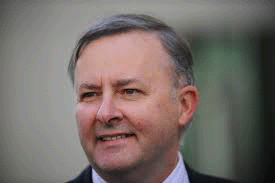 Albanese ‘cautious’ on SA nuclear proposal 9 News 17 Feb 16 Senior Labor figure Anthony Albanese says he is “very cautious” about a proposed high-level nuclear waste dump in South Australia’s outback.
This comes after opposition leader Bill Shorten indicated he was open to a royal commission recommendation that SA earn billions of dollars and create thousands of jobs by storing and disposing nuclear waste.
But Labor’s infrastructure spokesman Mr Albanese appears more wary of the proposal, telling 5AA radio “I would be very cautious about it”.
“You should examine it and all the implications and there should be a community debate,” he said.
Mr Albanese also said he was “not a fan” of the nuclear fuel cycle and said renewable energies were more economically viable……… http://www.9news.com.au/national/2016/02/17/10/25/albanese-cautious-on-sa-nuclear-proposal#JtxocOdo0XoCmzd1.99
February 17, 2016
Posted by Christina Macpherson |
AUSTRALIA - NATIONAL, politics |
1 Comment
The repeal of the carbon price and the stalling of renewable energy development has put Australia on a path to increase emissions to record levels and will likely not reach a peak before 2030.
The nuclear industry is essentially counting on failure on these tasks, and then having some sort of Marshall plan to allow for the extra expense of nuclear generation.
 Nuclear commission findings spell more trouble for wind and solar in Australia REneweconomy, By Giles Parkinson on 15 February 2016 The South Australian Royal Commission into the nuclear fuel cycle has conceded that nuclear power is not a viable alternative for Australia, but has urged authorities to consider it anyway – in what could have serious implications for the roll out of renewable energy across the country.
The commission delivered the results of its “tentative” findings on Monday, indicating that it supports the establishment of a nuclear waste facility in the state, the storing of spent nuclear fuel and the expansion of uranium mining.
On the subject of nuclear generation, the commission admitted that it wasn’t viable in South Australia in the foreseeable future (2030) – even with a significant carbon price and a sharp reduction in the cost of capital.
It conceded that Australia should only adopt “proven” new nuclear technologies such as “small modular reactors” and next generation “fast reactors” , but that these were some way off, and likely to be very costly.
 But commission chairman Kevin Scarce wants the nuclear generation dream to continue. He admitted that while there were real risks in nuclear generation – and there are “no guarantees on its safety” – he doesn’t “think the positive side of nuclear power is being presented.” Continue reading →
February 17, 2016
Posted by Christina Macpherson |
AUSTRALIA - NATIONAL, energy, politics |
1 Comment
Despite what nuclear boosters tell us about wind and solar, numerous reports, including by the Australian Energy Market Operator, the French government, and various think tanks, say 100% renewable energy based largely around wind and solar is perfectly feasible, and will likely even reduce costs.
 Nuclear commission findings spell more trouble for wind and solar in Australia REneweconomy, By Giles Parkinson on 15 February 2016 “………The Royal Commission has chosen to run with some of those myths, which is disappointing, but not surprising given that one of the biggest proponents is a web-site operated by one of the commissioners, Professor Barry Brook. A paper co-authored by Brook is repeatedly cited in the commission’s report and by pro-nuclear submissions to the commission.
Among these myths, promoted by Scarce on Monday, is the need for more peaking gas and imports in South Australia because of the growth in wind and solar. Actually, as has been pointed out repeatedly,South Australia now uses less peaking gas and less imports from Victoria than before it produced a lot of wind and solar.
The document also says that solar PV has had a negligible impact on peak demand in South Australia. Actually, it has had a significant impact on peak demand, pushing the peak from late afternoon and into the evening and made it smaller, to the benefit of the network in heat waves.
The royal commission document also says battery storage applications are not yet commercial. Actually, they are, and Ergon Energy has already rolled out dozens of 100kWh, utility-scale battery storage arrays, saying it reduces grid upgrade costs by one-third – with no subsidy. Continue reading →
February 17, 2016
Posted by Christina Macpherson |
AUSTRALIA - NATIONAL, energy, NUCLEAR ROYAL COMMISSION 2016 |
1 Comment
 Solar company sees potential for NSW Riverina to become renewable energy hub ABC Riverina, 16 Feb 16, A solar energy company believes the western New South Wales city of Griffith has the potential to market itself as a renewable energy hub. http://www.abc.net.au/news/2016-02-16/solar-company-envisages-nsw-riverina-energy-hub/7170684
Riverina Solar wants to build a $62 million, 30 megawatt solar farm at Yoogali near Griffith. The project has been shortlisted for funding from the Australian Renewable Energy Agency.
Director Steve McCall is hopeful a second solar farm project, also shortlisted for funding, will receive backing. He said it could be the start of a new industry for the region.
“We’ve been talking with Griffith council as well. We believe there’s a great opportunity for Griffith to become a renewable energy hub, or a region where you’ve got large scale solar here,” he said.
“That would hopefully potentially attract universities coming in and doing studies. “We’re also looking at other options, potentially in the future of how solar or how other renewable energies could be attracted to the area.”
Information sessions about the Riverina Solar proposal will be held at the Griffith Regional Theatre on Tuesday and Thursday.
Mr McCall said he would like to have the project’s environmental impact statement completed by the end of the month, and is hopeful the solar farm may be approved by mid-year.
“Griffith has an excellent substation based at Yoogali and it has just recently been upgraded over the last few years, so it has sufficient capacity to be able to connect into that site without a great deal of further upgrade,” he said. Mr McCall said the project would not be affected by the grants process. “We’ve got a number of different, interested offtakers and so once we establish that and finalise that aspect of it, that completes the commercial aspect of the project,” he said.
“While the funding would be terrific, and it’s only a small portion of the project, it doesn’t look like it would jeopardise our project going forward in any sense.”
February 17, 2016
Posted by Christina Macpherson |
New South Wales, solar |
Leave a comment
Karina Lester’s father was affected by the Maralinga atomic tests in the 1950s in outback SA and vowed she would fight to keep any dump out of Aboriginal communities.
“I want to urge all my Anangu representatives and also the wider Aboriginal community to be very actively involved in this and to speak up to tell their stories, because we all have a story to talk about how this nuclear [testing] has impacted on us,” she said.
“We’ve got cultural responsibilities and we’ve also got responsibilities to our next generation.
“It is very immoral and it’s catastrophic to be talking about waste. The waste is not going to end up in Adelaide — it will be remote South Australia.” – ABC News 15 Feb 16
February 15, 2016
Posted by Christina Macpherson |
aboriginal issues, NUCLEAR ROYAL COMMISSION 2016, South Australia |
Leave a comment
 The Age today reported on the South Australian Nuclear Fuel Chain Royal Commission. I guess we should be thankful that this news actually got into more than just the South Australian press and the corporate mouthpiece THE AUSTRALIAN.
Of course, this is in the Business section, not the major part of the paper. . After all, it’s not as if the question of importing radioactive trash is of concern to Australian sin general. Or is it?
Anyway – some of the contradictions, omissions and problems in the Royal Commission findings, as reported.
QUESTIONS
Optimism about money?. I really doubt that anyone has a clue about the long term costs of the 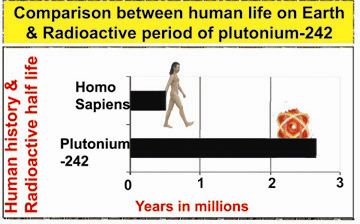
nuclear waste import plan.
“…….. waste disposal facility could deliver $5 billion in revenue annually for the first 30 years, and would be “highly profitable” because of strong demand from other countries……..
Mr Scarce said he had been conservative in his assumptions.
“I want to under-promise and over-deliver,” he said…..”
“Facility could be open in a decade“….Really?
“He [Scarce] said during the life of a nuclear storage facility, a net present value of profits of more than $51 billion had been calculated”. Why hasn’t some other country with nuclear expertise and experience grasped this opportunity?
The tax-payer will be up for huge costs?
“He [Scarce] recommended that such a facility be government owned.….. the facility would require a dedicated port facility, airport and rail freight line”. Who pays for all that?
OMISSIONS
“There are significant quantities of used fuel from nuclear reactors in temporary storage in the Asia-Pacific region and these quantities will grow ” -not a mention of the transport problems and dangers .
CONTRADICTIONS
“There’s always an opportunity if we dawdle that someone would take the competitive advantage away from us,” he [Scarce] said…
…..Mr Weatherill said.“The critical thing here is we don’t rush the process. There’s no doubt there’s some exciting possibilities for South Australia contained in the report”…… [this statement appears in the online version, but not in the print version]
February 15, 2016
Posted by Christina Macpherson |
AUSTRALIA - NATIONAL, media, NUCLEAR ROYAL COMMISSION 2016 |
1 Comment