Greens welcome Victorian government ending agreement with Elbit
Guardian, 28 Nov 24
The Greens MP Gabrielle de Vietri has welcomed the news the Victorian government has ended its agreement with weapons manufacturer Elbit Systems:
Relentless community pressure has forced Victorian Labor to end its partnership with Elbit – a company whose drones killed Australian aid worker Zomi Frankcom and countless Palestinian and Lebanese civilians. It shouldn’t have taken this long for Labor to cut its ties with genocide.
She questioned why the government hadn’t announced the Elbit decision since writing to the Labor MP Bronwyn Halfpenny last week:
This is an important step in the right direction, but why are Labor still leaving Victorians in the dark, they clearly have something to hide. https://www.theguardian.com/australia-news/live/2024/nov/28/australia-politics-live-climate-super-social-media-ban-senate-anthony-albanese-peter-dutton-question-time
Emergency leaders say nuclear reactors pose unnecessary risk

November 27, 2024, by: The AIM Network, Emergency Leaders for Climate Action. https://theaimn.com/emergency-leaders-say-nuclear-reactors-pose-unnecessary-risk/
NUCLEAR REACTORS WOULD introduce significant and unnecessary risk to Australian communities and emergency responders, including firefighters already stretched by escalating climate fuelled disasters, warns Emergency Leaders for Climate Action (ELCA) in a submission to the parliamentary inquiry into nuclear power generation in Australia.
Greg Mullins, speaking on behalf of 38 former fire and emergency service chiefs from across Australia said: “Our firefighters are on the frontlines of escalating climate fuelled disasters, like bushfires and floods, fuelled by climate pollution. They’re not trained or equipped to deal with nuclear emergencies that could arise from nuclear reactors or the transportation and storage of radioactive waste.”
The ELCA submission highlights that nuclear reactor emergency planning and management has not been addressed by proponents of nuclear energy and emphasises that Australian emergency services lack the experience and resources to handle potential nuclear emergencies.
“Australian emergency services would have to be built up from scratch to respond to nuclear disasters, with no costings or plans in place to achieve this. There are no fully staffed urban fire service stations near the proposed sites for nuclear reactors, and it’s neither feasible nor reasonable to expect volunteer bushfire fighters to handle such high-risk emergencies,” said Mr Mullins
“I oversaw the deployment of Australian firefighters to assist in the wake of the earthquake and tsunami that led to the Fukushima disaster, where the chaos and devastation caused by nuclear failures was stark. First responders, many of them civilian firefighters, were thrown into situations they weren’t trained for. That’s not a risk we should take in Australia, no matter how remote.
“There are no safety or environmental frameworks in place to manage the risks of nuclear reactors or to safely transport and store radioactive waste in Australia.
“Placing nuclear reactors in disaster-prone areas like Latrobe, Lithgow, Singleton, and South Burnett would add to the burden emergency services already face responding to worsening bushfires, floods, and storms.
Beyond the safety risks, former Commissioner Mullins called the proposal a “dangerous distraction” from the energy solutions Australia urgently needs right now. “Every coal-fired power station will shut down before a single watt of nuclear power can enter our system. Nuclear reactors simply cannot be built quickly to address the urgent task of slashing pollution and reducing climate disaster risks right now.
“Our communities and emergency services are bearing the brunt of worsening disasters driven by burning coal, oil and gas. We don’t have the luxury of waiting decades for new power stations, we must slash climate pollution now to protect Australians. Australia can’t afford to risk our energy security, economy and safety on a nuclear fantasy when renewables can cut pollution today and help ensure a safer future for our kids.”
About Emergency Leaders for Climate Action: We are 38 former senior Australian fire and emergency service leaders who have observed how climate change is driving increasingly catastrophic extreme weather events that are putting lives, properties and livelihoods at greater risk and overwhelming our emergency services.
Canada’s nuclear waste organisation joins forces with the Australian Radioactive Waste Agency
World Nuclear News, November 25, 2024
Canada’s Nuclear Waste Management Organization said it recently signed a
new co-operation agreement with the Australian Radioactive Waste Agency
at a ceremony in the Australian Parliament in Canberra. The NWMO and
ARWA will collaborate on a range of issues related to the safe
management of radioactive waste, including the important topic of
reconciliation with Indigenous peoples.
The NWMO said it was honored to
learn from the experiences of Aboriginal Australians and Torres Strait
Islanders during the visit and it “looks forward to a relationship of
partnership and knowledge-sharing”.
Coalition-linked nuclear expert questioned by parliament over coal industry ties

by political reporter Tom Lowrey, 22 Nov 24, https://www.abc.net.au/news/2024-11-22/coalition-nuclear-expert-questioned-coal-funding/104629770
In short:
A Labor-led committee has questioned a nuclear expert with close links to the Coalition over whether he made a potentially misleading statement to parliament over his funding for research.
Adjunct professor Stephen Wilson told a committee hearing he had not received funding from the “fossil fuel” sector, but government MPs are pointing to comments that contradict that.
What’s next?
Professor Wilson has denied that he “personally received payment from ‘fossil fuel’ companies” to fund his work looking into nuclear power.
A nuclear expert from the University of Queensland and a conservative think-tank have been questioned over possibly misleading parliament over funding for his work.
Parliamentary officials, writing on behalf of the Labor-led committee looking into nuclear power, have written to adjunct professor Stephen Wilson to clarify his ties to the coal industry.
In response to questions from the ABC, Professor Wilson said he had not “personally” received funding from the “fossil fuel” sector for his work on nuclear power.
Professor Wilson gave evidence to the inquiry last month in his capacity as a nuclear expert with the Institute of Public Affairs, a conservative think-tank.
He has been regularly cited by the Coalition as an advocate for the technology, which forms the centrepiece of the Coalition’s energy policy heading into the next election.
Professor Wilson travelled to North America with shadow energy minister Ted O’Brien on a nuclear study tour in 2023, including meetings with executives from nuclear giant Westinghouse.
He has also spoken at events with Mr O’Brien, criticising the current government’s renewables-led energy approach and talking up the potential of nuclear power.
During the evidence Professor Wilson gave to the nuclear inquiry in October, he was asked if he had “accepted donations from the fossil fuel industry to fund your research on energy”.
“No, I have not,” he replied.
n a letter sent this week, officials have pointed to comments made by Professor Wilson in a speech delivered to an IPA event in mid-2023.
In a transcript of the speech, Professor Wilson describes his work with the IPA’s energy security research program, and thanks donors for their support.
“I have taken on the challenge of working with Scott [Hargreaves] and the IPA staff, supported and encouraged by the far-sighted group of donors that Nick Jorss is bringing together,” he said.
Mr Jorss is the executive chairman of coal miner Bowen Coking Coal, and chair of lobby group Coal Australia.
The letter seeks “clarification on what appears to be contradictory information on the issue of donorship”.
The committee now questioning Professor Wilson was set up by the government in the House of Representatives to scrutinise nuclear power, which the Coalition has committed to ahead of the next election.
Professor Wilson has been cited by Opposition Leader Peter Dutton in speeches making the case for the Coalition’s proposed pivot to nuclear power.
In a speech in July last year, Mr Dutton quoted Professor Wilson calling on Australia to “prepare real options to deploy nuclear energy … in case we need them.”
The ABC contacted Professor Wilson with questions over the sources of his funding, and whether he had misled the committee.
In response, he denied having directly receiving funding from ‘fossil fuel’ sources for his work.
“I have not personally received payment from ‘fossil fuel’ companies for my research into the need for Australia to embrace carbon-free, nuclear energy,” he said.
“I have advocated strongly for years, in my own capacity, for energy policy to be developed and implemented on a rational basis.
“As an energy engineer and economist with 30 years’ experience in the economics and dynamics of energy systems around the world, and electricity and resources markets, I understand how vital it is for Australia to have energy security. Encouragingly, more and more Australians are starting to share this view.”
Submissions to Parliamentary Inquiry into nuclear power generation in Australia – (Part one).

The Committee will inquire into matters referred to in the resolution of appointment and is required to present its final report by no later than 30 April 2025. https://www.aph.gov.au/Parliamentary_Business/Committees/House/Select_Committee_on_Nuclear_Energy/Nuclearpower
Submissions to this Inquiry have now closed, and are being published at https://www.aph.gov.au/Parliamentary_Business/Committees/House/Select_Committee_on_Nuclear_Energy/Nuclearpower
So far, 202 submissions have been published. My plan is to go through them all. So far, I have read through just the first 20 submissions 19 by male writers, one female. 12 were opposed to nuclear power, 7 were in favour of nuclear power, and one was unable to be read.
Arguments were around topics of energy needs, indigenous concerns, environmental impacts, and radioactive waste. I plan to outline these as I read through more submissions.
Consultation, full disclosure, and an environmental audit: Nuclear Free Local Authorities’ triple demand of Australian government over nuke sub waste dump down under

the NFLAs have raised our fundamental objections to any siting of nuclear powered, and possibly nuclear armed, submarines at Garden Island as a violation of Australia’s legal commitments as a signatory to the Treaty of Rarotonga, which established a South Pacific nuclear free zone. The proposal will increase military tensions with China and make Rockingham a target for a counterstrike should war break out.
a White House paper states that Australia ‘has committed to managing all radioactive waste generated through its nuclear-powered submarine program, including spent nuclear fuel, in Australia’.
NFLA 22nd Nov 2024
With an international outlook and solidarity in mind, in response to a consultation by the Australian Federal Government, the UK / Ireland Nuclear Free Local Authorities have posted their objections to plans to station nuclear-powered subs and establish a waste dump in Western Australia.
As part of the AUKUS military pact established between Australia, the United Kingdom and United States, Australia intends to acquire a fleet of nuclear powered submarines, powered by reactors built by Rolls-Royce in Derby, as well as permitting Royal Navy and United States Navy nuclear submarines to operate from Australian naval bases.
In March 2023,the AUKUS Nuclear-Powered Submarine Pathway was announced by the three partners centred on the HMAS Stirling Naval Base on Garden Island in Western Australia’s Cockburn Sound. The Australian Government has allocated AUS $8 billion for base improvements.
Under the AUKUS ‘Force Posture Agreement’, from 2027, US Virginia Class submarines are to be stationed here, with British Astute submarines joining them on rotation in the 2030’s. Around this time, the base will also become the home port of Australia’s first nuclear powered submarines, with three and up to five Virginia Class submarines being purchased from the US (subject to Congressional approval).
The Federal Government has passed new legislation to allow for the domestic storage of nuclear waste from all these submarines, and in July after a limited consultation the Australian Radiation Protection and Nuclear Safety Agency (ARPANSA) issued a licence to the Australian Submarine Agency to prepare a nuclear waste storage site at the base. Without it, visiting United States and British nuclear-powered submarines could not undertake maintenance in Australia, so the nuclear dump is seen as essential to the pact.
The extent and nature of the waste to be stored, and for how long it would be stored, remains unclear. The Conservation Council of Western Australia (CCWA) complained to the regulatory authorities that: ‘The consultation documents provided no details about the volume of waste or how long it would be stored at the island. They also made confused and misleading claims about the types of low-level waste that would be accepted’.
Whilst regulators insist that it would be low-level waste, this claim has been refuted by critic Australian Green Senator David Shoebridge who said the Federal legislators were told in a Senate Estimates Hearing by the Australian Submarine Agency that it would include intermediate waste. It is also contradicted by a White House paper which states that Australia ‘has committed to managing all radioactive waste generated through its nuclear-powered submarine program, including spent nuclear fuel, in Australia’.
This waste would include US Virginia-class submarine reactors, which each weigh over 100 tonnes and contain over 200 kilograms of highly enriched uranium. Ian Lowe, an expert on radiation health and safety, told The Conversation in March 2023 that when the first three AUKUS submarines are at the end of their lives — 30 years from when they are commissioned — Australia will have 600 kilograms of ‘spent fuel’ and ‘potentially tonnes of irradiated material from the reactors and their protective walls’. The fuel being weapons-grade will require ‘military-scale security’.
Australian campaigners have also complained bitterly that the submarine base and the storage site are located in the wrong place.
Mia Pepper, Campaign Director at the CCWA, said that ‘Garden Island in one of the most pristine and diverse environments in the Perth region’ and that ‘This plan for both nuclear submarines and nuclear waste storage will inevitably impact access to parts of Cockburn Sound and Garden Island’.
And when responding to ARPANSA, the CCWA stated that the facility is ‘within an area of dense population’ and in the vicinity of ‘important and diverse heavy industrial facilities, including a major shipping port’. The CCWA also raised the ‘unaddressed community concerns regarding an accident’ on the site and complained about the ‘lack of transparency and rigour’ throughout the regulatory process.
Nor is there any long-term solution to storage. Garden Island would be seen as a temporary store, but it is unclear for how long. A Federal Government proposal to establish a nuclear waste dump at Kimba was resisted by local Indigenous people who launched a successful legal challenge to defeat the plan.
In its response to the consultation being conducted by the Australian Department of Climate Change, Energy, the Environment and Water, the NFLAs have raised our fundamental objections to any siting of nuclear powered, and possibly nuclear armed, submarines at Garden Island as a violation of Australia’s legal commitments as a signatory to the Treaty of Rarotonga, which established a South Pacific nuclear free zone. The proposal will increase military tensions with China and make Rockingham a target for a counterstrike should war break out.
We also called on the Federal Government to conduct a proper consultation and make a full disclosure of the facts, and requested that officials conduct a full environmental audit of the likely impact of the waste storage site…………………………………………. https://www.nuclearpolicy.info/news/consultation-full-disclosure-and-an-environmental-audit-nflas-triple-demand-of-australian-government-over-nuke-sub-waste-dump-down-under/
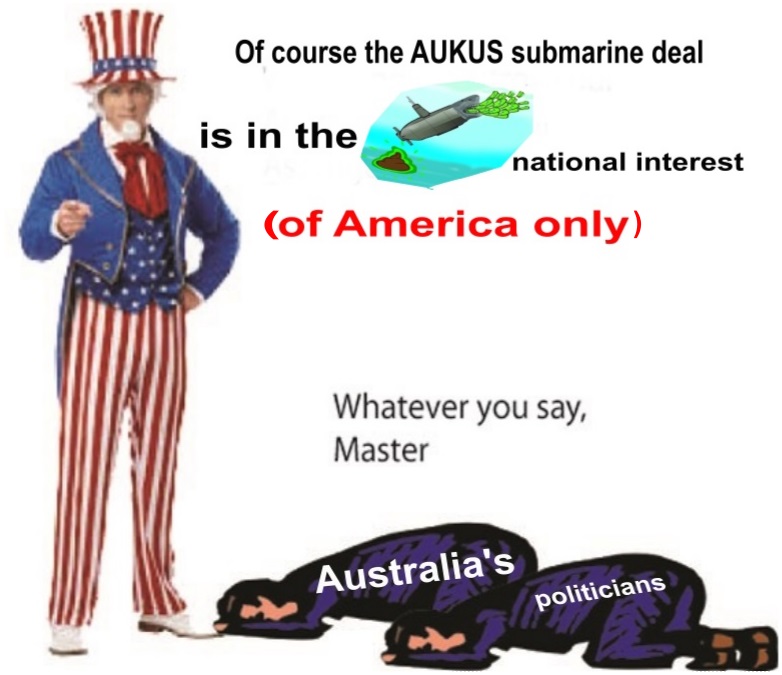
Trump, AUKUS and Australia’s Dim Servitors
November 22, 2024, Dr Binoy Kampmark, https://theaimn.com/trump-aukus-and-australias-dim-servitors/
There is something enormously satisfying about seeing those in the war racket worry that their assumptions on conflict have been upended. There they were, happily funding, planning and preparing to battle against threats imagined or otherwise, and there comes Donald Trump, malice and petulance combined, to pull the rug from under them again.
What is fascinating about the return of Trump to the White House is that critics think his next round of potentially rowdy occupancy is going to encourage, rather than discourage war. Conflict may be the inadvertent consequence of any number of unilateral policies Trump might pursue, but they do not tally with his anti-war platform. Whatever can be said about his adolescent demagogic tendencies, a love of war is curiously absent from the complement. A tendency to predictable unpredictability, however, is.
The whole assessment also utterly misunderstands the premise that the foolishly menacing trilateral alliance of AUKUS is, by its nature, a pact for the making of war. This agreement between Australia, the UK and the US can hardly be dignified as some peaceful, unprovocative enterprise fashioned to preserve security. To that end, President Joe Biden should shoulder a considerable amount of the blame for destabilising the region. But instead, we are getting some rather streaky commentary from the security wonks in Australia. Trump spells, in the pessimistic words of Nick Bisley from La Trobe University, “uncertainty about just what direction the US will go.” His policies might, for instance, “badly destabilise Asia” and imperil the AUKUS, specifically on the provision of nuclear–powered submarines to the Royal Australian Navy. On the last point, we can only hope.
The Australians, being willing and unquestioning satellites of US power, have tried to pretend that a change of the guard in the White House will not doom the pact. Australian Foreign Minister Penny Wong expressed a “great deal of confidence” that things would not change under the new administration, seeing as AUKUS enjoyed bipartisan support.
Australia’s ambassador to the US, Kevin Rudd, is also of the view that AUKUS will survive into the Trump administration as it “strengthens all three countries’ ability to deter threats, and it grows the defence industrial base and creates jobs in all three countries.”
Another former ambassador to Washington, Arthur Sinodinos, who also occupies the role of AUKUS forum co-chair, has pitched the viability of the trilateral pact in such a way as to make it more appealing to Trump. Without any trace of humour, he suggests that tech oligarch Elon Musk oversee matters if needed. “If Musk can deliver AUKUS, we should put Musk in charge of AUKUS, and I’m not joking, if new thinking is needed to get this done,” advises the deluded Sinodinos.
The reasoning offered on this is, to put it mildly, peculiar. As co-head of the proposed Department of Government Efficiency, Musk, it is hoped, will apply “business principles” and “new thinking”. If the Pentagon can “reform supply chains, logistics, procurement rules, in a way that means there’s speed to market, we get minimum viable capability sooner, rather than later.”
These doltish assessments from Sinodinos are blatantly ignorant of the fact the defence industry is never efficient. Nor do they detract from the key premise of the arrangements. Certainly, if an anti-China focus is what you are focusing on – and AUKUS, centrally and evidently, is an anti-China agreement pure and simple – there would be little reason for Trump to tinker with its central tenets. For one, he is hankering for an even deeper trade war with Beijing. Why not also harry the Chinese with a provocative instrument, daft as it is, that entails militarising Australia and garrisoning it for any future conflict that might arise?
Whatever the case, AUKUS has always been contingent on the interests of one power. Congress has long signalled that US defence interests come first, including whether Australia should receive any Virginian class submarines to begin with.Trump would hardly disagree here. “Trump’s decisions at each phase of AUKUS cooperation will be shaped by zero-sum balance sheets of US interest,” suggests Alice Nason of the University of Sydney’s US Studies Centre rather tritely.
If Trump be so transactional, he has an excellent example of a country utterly willing to give everything to US security, thereby improving the deal from the side of Washington’s military-industrial complex. If there was one lingering, pathological complaint he had about Washington’s NATO allies, it was always that they were not doing enough to ease the burdens of US defence. They stalled on defence budgets; they quibbled on various targets on recruitment.
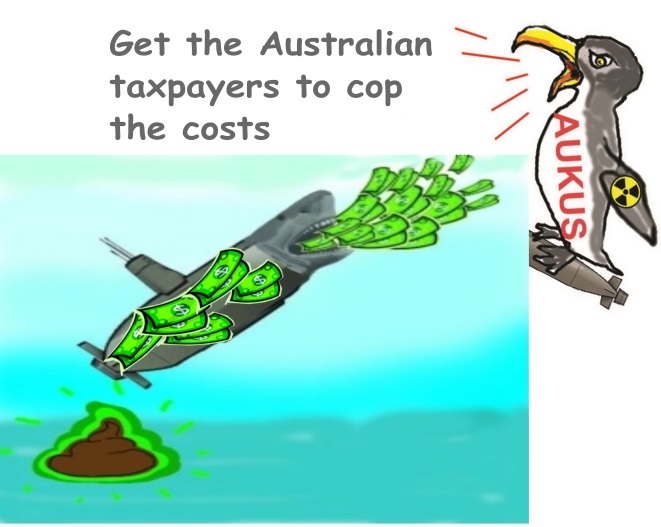
This can hardly be said of Canberra. Australia’s government has abandoned all pretence of resistance, measure or judgment, outrageously willing to underwrite the US imperium in any of its needs in countering China, raiding the treasury of taxpayer funds to the tune of a figure that will, eventually, exceed A$368 billion. Rudd openly acknowledges that Australian money is directly “investing into the US submarine industrial base to expand the capacity of their shipyards.” It would be silly to prevent this continuing windfall. It may well be that aspect that ends up convincing Trump that AUKUS is worth keeping. Why get rid of willing servitors of such dim tendency when they are so willing to please you with cash and compliments?
Signing US/UK nuclear deal would shred Australia’s credibility: Turnbull
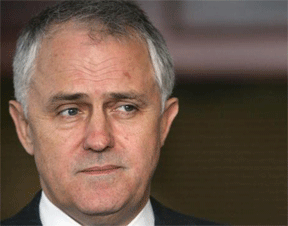
Australia would kill its credibility internationally if it were to embrace domestic nuclear power to please key foreign allies, Malcolm Turnbull has warned, accusing the Coalition of gaslighting voters over power prices.
Amid a heated fight in parliament over a nuclear agreement signed by the United States and the United Kingdom at the COP29 talks in Azerbaijan this week, the former prime minister said Australia had distinct advantages on renewable energy and must make decisions in its national interest.
“The job of the Australian prime minister is to stand up for Australia and recognise Australia has distinct interests and distinct characteristics,” Mr Turnbull told The Australian Financial Review.
“Simply falling into line and being some sort of sycophantic copier of everybody else’s agendas doesn’t bring you in any respect.”
The former Liberal leader’s comments followed Britain and the US signing a deal for civil nuclear collaboration at the summit in Baku, part of plans to combine billions of dollars for research and development of new technologies.
An early version of the British government’s statement announcing the deal said Australia would be among a number of other countries signing on. But the UK government conceded on Tuesday that Australia had been included in the statement erroneously.
The original statement, viewed by the Financial Review, said countries signing on would include Canada, France, Japan, South Korea, South Africa, China, Switzerland and Australia.
But the updated agreement, published online by UK Energy Secretary Ed Miliband, has the names of participating countries removed and says only that Russia will remain excluded because of its invasion of Ukraine.
A spokeswoman for Energy Minister Chris Bowen, who is representing Australia at the talks, ruled out any participation, noting Australia had no nuclear energy industry and a federal ban on nuclear power is in place.
The government said Australia would remain as an observer to the deal, and support scientists in other nuclear research fields.
In question time on Wednesday, Acting Prime Minister Richard Marles accused the Coalition of exaggerating the significance of the statement.
“Every expert out there makes it completely clear that what we are awaiting is a 20-year duration before we could reasonably expect to have nuclear energy in this country, were we to go down that path,” he said.
“Even then, all we are talking about is a contribution of 4 per cent to the electricity grid.
“What we are pursuing is policies in the here and now, which are being pursued around the world: firmed renewable energy, which is the cheapest form of energy, which is being brought online around the world.”
Mr Dutton accused the government of a stubborn refusal to consider nuclear, as countries including South Korea, Turkey and Nigeria had joined another pledge to triple global nuclear power by 2050. He said nuclear could “reduce emissions and deliver energy at a reasonable cost”.
Long a critic of Mr Dutton’s leadership, Mr Turnbull said nuclear would not complement renewable energy.
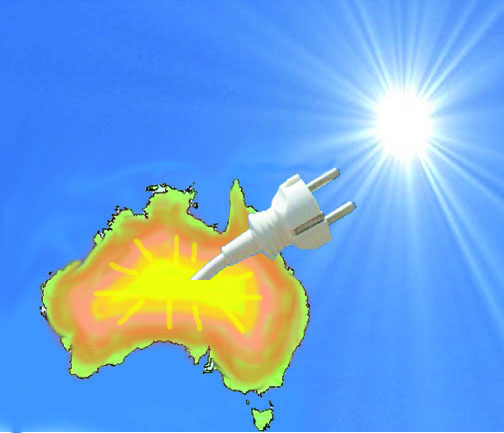
“That is nonsense. That’s gaslighting, quite frankly,” he said. “What complements renewables is something that is flexible. We have 4 million households in Australia. Over a third of all Australian homes have got solar panels on. It’s the highest percentage of solar household solar penetration in the world.”
Tom McIlroy is the Financial Review’s Canberra Bureau Chief based in the press gallery at Parliament House. He was previously the AFR’s political correspondent. Connect with Tom on Twitter. Email Tom at thomas.mcilroy@afr.com
Paul Smith edits the technology coverage and has been a leading writer on the sector for 20 years. He covers big tech, business use of tech, the fast-growing Australian tech industry and start-ups, telecommunications and national innovation policy. Connect with Paul on Twitter. Email Paul at psmith@afr.com
Albanese government gives firm ‘no’ to joining UK-US agreement to advance nuclear technology
The Conversation, November 19, 2024, Michelle Grattan, Professorial Fellow, University of Canberra
The Albanese government has been put on the spot by a new agreement – which it has declined to join – signed by the United Kingdom and the United States to speed up the deployment of “cutting edge” nuclear technology.
The original version of the British government’s press release announcing the agreement said Australia, among a number of other countries, was expected to sign it.
But the reference was removed from the statement.
The UK Energy Secretary Ed Miliband and the US deputy Secretary of Energy David Turk signed the agreement in Baku during COP29…….
A spokesperson for Energy Minister Chris Bowen, who is at the COP meeting, said: “Australia is not signing this agreement as we do not have a nuclear energy industry.
“We recognise that some countries may choose to use nuclear energy, depending on national circumstances.
“Our international partners understand that Australia’s abundance of renewable energy resources makes nuclear power, including nuclear power through small modular reactors, an unviable option for inclusion in our energy mix for decarbonisation efforts.”
Australia would remain as observers to the agreement to continue to support its scientists in other nuclear research fields, the spokesperson said………
In parliament, acting Prime Minister Richard Marles said for Australia to pursue a path of nuclear energy would add $1200 to the bills of each household in this country.
………………………Update: UK government seeks to clear things up
Later The Guardian reportred: “The UK government has conceded it made a mistake in including Australia in a list of countries that has signed up to a US-UK civil nuclear deal”. https://theconversation.com/albanese-government-gives-firm-no-to-joining-uk-us-agreement-to-advance-nuclear-technology-244041
AUKUS will ‘cannibalize’ other programs with no budget boost: Former top Aussie general
At the same conference, US Deputy Secretary of State Kurt Campbell urged the incoming Trump administration to work closely with Australia and New Zealand to counter a “relentless” China and not to turn inward.
BREAKING DEFENSE, By Colin Clark November 20, 2024
SYDNEY — Sounding the alarm that the AUKUS nuclear submarine deal will eat into non-naval priorities, the former head of the Australian Defense Force today called for a significant boost in defense spending, up to 3 percent of GDP.
Sir Angus Houston was Australia’s top military officer from 2005-2011 and was tapped to co-lead the recent Defense Strategic Review, making him a key, respected voice on matters of defense. While the DSR TKTKT, his comments today reflect what he sees as changed situation. The review and its Integrated Investment Plan projected a $55.5 billion AUD budget for 2024-25, rising to $67.9 billion in 2027-28 — roughly 2.2 percent of GDP.
………………………in comments at the US Studies Centre here, Houston made clear he wasn’t just talking about spending more because of the threats. He made an important structural point, that Australia must increase its defense spending so that buying and building nuclear powered attack submarines — the AUKUS program with the US and UK — does not consume too much of the defense budget.
Houston said the AUKUS boats “must be a net addition to Australia’s military capability. The only way they can be a net addition to Australian military capability is to increase our defense spending by 3 percent plus of GDP as we move into and through the 2030s.”
If that does not happen, it will mean the military can only buy the subs “through the cannibalization of other military capability. So that is the challenge for us. And I don’t think either side of the body politic in Australia has really come to terms with that.”
The question of whether AUKUS will eat up other programs for the Australian defense community has been an open one ever since the project, the most expensive endeavor in the country’s history, was launched. Officials have largely towed the line that the Lucky Country can do everything.
………………………………..there may be signs of budget pressure emerging already. Earlier this month, Australia killed a $5.3 billion AUD satellite contract with Lockheed Martin, with one analyst saying more cuts will likely have to happen as the true cost of AUKUS emerges.
The current government in Canberra has pledged to increase defense spending by $50.3 billion over the next decade, with the plan being to hit $100 billion by 2033. That would put the country at 2.4 percent — well below what Houston believes is needed……………………………………………………………………………………………
Unlike some NATO countries, which Trump has criticized for spending too little, Australia has committed more than $6 billion USD to expanding the tripartite sub industrial base and plans to spend a total of $368 billion on Virginia- and SSN AUKUS-class subs. https://breakingdefense.com/2024/11/former-top-aussie-general-warns-aukus-will-cannibalize-other-programs-with-no-defense-boost/
Big batteries and EVs to the rescue again as faults with new nuclear plant cause chaos on Nordic grids
The Australian Energy Market Operator has already made clear that its biggest headache is managing the unexpected outages of big generators, such as the ageing and increasingly unreliable coal fired power stations that the federal Coalition wants to keep open while it waits for nuclear to be rolled out and commercial SMRs to be invented.
Giles Parkinson, Nov 19, 2024 https://reneweconomy.com.au/big-batteries-and-evs-to-the-rescue-again-as-faults-with-new-nuclear-plant-cause-chaos-on-nordic-grids/?fbclid=IwY2xjawGqC8xleHRuA2FlbQIxMQABHadLKvCjeIJudeDt86k27LkV53Q1FcfYmtcRSA_HGcWU1b1TmW7voTgIOA_aem_wwFpyxMordh4V_FbOJ3lfw
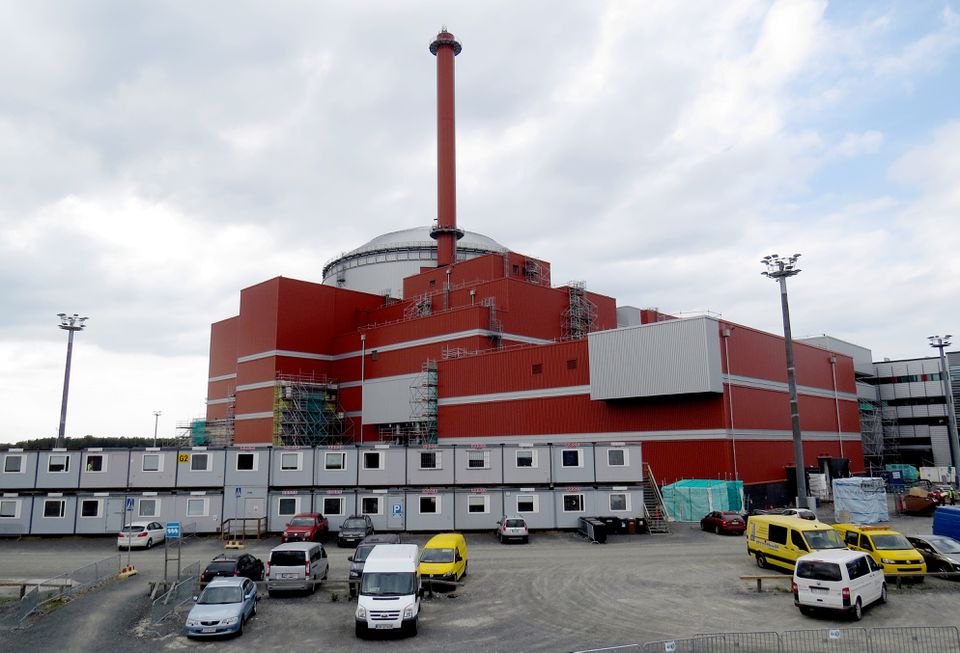
The newest and most powerful nuclear reactor in Europe that was delivered more than a decade late and nearly four times over budget is also proving to be a headache for grid operators now that it is finally up and running.
On Sunday, the 1,600 megawatt Olkiluoto 3 nuclear reactor tripped again, the latest in a series of faults and outages that have plagued the new facility and caused the market to reach out for back-up power to fill the gap.
Olkiluoto owner TVO says the reactor tripped on Sunday due to a turbine malfunction in the generator’s seal oil system. “The repair is taking longer than expected, and based on the current information, the plant is estimated to return to electricity production in approximately two days,” it said in a statement.
It’s not the first time the unit has failed. In October, it was forced to reduce power suddenly when one of the reactor’s control rods unexpectedly dropped into the reactor.
Its sister reactor, Olkiluoto 2, was off line for three weeks due to a faulty water-cooled rotor that had to be replaced and will run for months at reduced output because of the fear of failure.
But on Sunday, when the entire 1,600 MW capacity of Olkiluoto 3 was taken out of the system with no notice, it had a big impact on the grid, sending frequency plunging to 49.55 Hz, well outside the normal band.
“Olkiluoto is starting to compete with the Swedish nuclear power plant, Forsmark, for being the leading cause of major (loss of generation) disturbances in the Nordic power system,” writes Andreas Barnekov Thingvad, a Denmark-based trading systems director at battery company Hybrid Greentech.
He says his company contributed to the market response to stabilise frequency (see graph on original ) and the grid with its portfolio of batteries and virtual power plants, including electric vehicles.
Olkiluoto was finally connected to the grid last year, at an estimated cost of €11 billion ($18 billion) compared to the original budget of €3 billion. That cost blowout forced its developer, the French company Areva, to be bailed out by the French government.
When it did come online, nuclear boosters in Australia hailed it as being responsible for a steep fall in electricity prices. They failed to mention the fact that the reactor was more than a decade late, and Finland was forced to turn to highly expensive Russian gas in the interim to make up the shortfall.
Indeed, TVO, the reactor owner, says now that the new reactor has been commissioned, there is often too much production on the Finnish grid, and the reactor has to be dialled down, or curtailed, in much the same way that renewables often are. It is still not allowed to run at full capacity.
“The electricity system in Finland faces on an increasingly frequent basis a situation where more down-regulating production capacity is needed because there is too much production,” TVO notes.
The new reactor has also spent large periods off line (see the graph above from TVO’s most recent interim report). Its annual outage was supposed to last 37 days, but stretched to double that, to 74 days. TVO blamed “defect repairs and technical problems with inspection equipment took more time than had been planned.”
The point of this story is to highlight another bit of nonsense from the nuclear lobby, who like to claim that renewable sources such as wind and solar require back up, while nuclear does not.
That is simply not true, and the world’s big investment in pumped hydro in the 1970s and 1980s was principally designed to provide back up to nuclear reactors then in vogue. Ontario has ordered some of the world’s biggest batteries to support its nuclear fleet, most of which will be offline for several years for upgrades and maintenance.
Thingvad noted the multiple recent outages that had occurred in both the Finnish and Swedish nuclear reactors over the last few months:
- – On November 17th, at 15:25:51, Olkiluoto 3 had another turbine failure, tripping all 1600 MW of generation and causing the Nordic system frequency to drop to 49.59 Hz. The failure is expected to last several days.
- – On September 3rd, Olkiluoto 3 experienced a fault that caused it to drop 640 MW, leading the Nordic frequency to fall to 49.77 Hz.
- – On June 10th, Forsmark Block 3 experienced a reactor trip of 1172 MW, causing the Nordic system frequency to drop to 49.61 Hz.
- – On June 3rd, 2024, Olkiluoto 3, with 1600 MW, suddenly tripped due to a turbine malfunction. The Nordic system frequency dropped to 49.58 Hz.
- – On May 13, 2024, the Forsmark Block 1 nuclear power plant in Sweden, which has a capacity of 1 GW, tripped due to a grid failure. Forsmark experienced multiple outages – each of at least a gigawatt – in 2023.
- The scale of such outages would be significant in a grid like Australia, where the biggest single unit – at the Kogan Creek coal fired generator in Queensland – is 750 MW.
If, as the federal Coalition proposes, it wants to put in units sized at a gigawatt or more, then the market operator will have to invest in more standby capacity in case of the inevitable trips and outages.
The bigger the unit, the more back up power that is required. Wind and solar may be variable, but those variations are easily and reliably predicted. The sudden loss of a 1,600 MW facility is not.
The Australian Energy Market Operator has already made clear that its biggest headache is managing the unexpected outages of big generators, such as the ageing and increasingly unreliable coal fired power stations that the federal Coalition wants to keep open while it waits for nuclear to be rolled out and commercial SMRs to be invented.
“The repeated outages at Olkiluoto and Forsmark nuclear plants are a stark reminder of the critical need for grid resilience and diversification in our energy systems,” noted Eric Scheithauer-Hartmann, a German-based energy executive.
“It’s encouraging to see companies like Hybrid Greentech stepping up to support the Nordic power grid with advanced battery storage and intelligent energy solutions.
“As we continue to face challenges with traditional power generation, investing in smart grid technologies and renewable integration isn’t just beneficial—it’s essential for maintaining stability and meeting future energy demands.”
David Crisafulli stares down LNP division on abortion and nuclear power
Consternation remains in the ranks about way Queensland party handled two divisive issues, sources say
Guardian, Ben Smee 17 Nov 24,
The Queensland premier, David Crisafulli, has told Liberal National party members the party “does not exist for culture wars” in an address seeking to stare down potential division about his positions on abortion rights and nuclear power.
Crisafulli’s speech to the LNP state council meeting in Rockhampton on Sunday was his first opportunity to speak directly to the organisational wing, and party members, since last month’s state election victory.
Despite the election success, LNP sources say there remains consternation in the ranks about the way the party handled divisive issues including abortion and nuclear power, where the views of the grassroots membership – and the private views of many MPs – are at odds with Crisafulli’s promises not to change existing laws.
The premier did not directly mention either issue. But his speech to members hinted at “scare campaigns” by Labor during the election and said these would not work in four years if the party kept its word.
“One thing I can guarantee you about me … that is my word counts for something and I value a culture when you say you’re going to do something you do it, and when you say you won’t do something, you won’t do it,” Crisafulli said……………………………………. more https://www.theguardian.com/australia-news/2024/nov/17/david-crisafulli-stares-down-lnp-division-on-abortion-and-nuclear-power
Plan to dispose of nuclear waste from Aukus submarines unanimously rejected by Adelaide council
City of Port Adelaide Enfield’s mayor says she hadn’t received correspondence about storage or disposal before or after bill passed federal parliament
Guardian Petra Stock, 18 Nov 24
Plans to dispose of low-level nuclear waste from Aukus submarines at an Adelaide naval facility have been unanimously opposed by the local council for the area, who say they weren’t consulted.
The Osborne naval shipyard, 25km north of Adelaide CBD, and HMAS Stirling at Garden Island 50km south of Perth in Western Australia, have both been designated as “radioactive waste management facilities” for nuclear waste from Aukus submarines under the Australian naval nuclear power safety bill, which passed parliament in October.
Last week, the City of Port Adelaide Enfield – responsible for the area surrounding the Osborne shipyard – voted to unanimously oppose the storage and disposal of radioactive waste at the site.
Its mayor, Claire Boan, said council had been briefed on aspects of the Aukus project but it had not received any correspondence or communication about management and disposal of nuclear waste at the site.
“While the decision-making regarding this is out of the control of the council, we will continue to advocate for our community and lobby for community consultation throughout the process,” she said.
Rex Patrick, a former independent senator for South Australia, said the situation highlighted the lack of consultation and transparency regarding Aukus nuclear waste.
“Albanese called for Dutton to disclose where he was going to put his nuclear power reactors, and yet there’s been complete secrecy around the entire process associated with where they’ll put the high-level waste from naval reactors,” he said.
No public announcements have been made about the site selection or consultation process for dealing with the high-level nuclear waste associated with the Aukus submarines, which the government agreed Australia would dispose of in March last year……………………….. https://www.theguardian.com/environment/2024/nov/18/plan-to-dispose-of-nuclear-waste-from-aukus-submarines-unanimously-rejected-by-adelaide-council
Adelaide residents blindsided by decision to store AUKUS nuclear waste at submarine shipyards
The act allows radioactive waste to be stored at both sites but does not define what level
the legislation was also ambiguous about the disposal of nuclear material from UK and US nuclear submarines.
By Angelique Donnellan 7.30 ABC
In short:
Federal parliament has passed legislation that allows for nuclear waste to be stored and disposed of at a shipping yard in Adelaide.
Residents said they were not consulted or told of the plan.
What’s next?
Construction of nuclear submarines is expected to start in Adelaide by the end of the decade.
The $368 billion AUKUS pact is promising thousands of jobs and the return of submarine construction to South Australia.
But residents have just learned the deal also means nuclear waste will be stored on their doorstep.
“It’s madness. It’s not only close to a residential area, but it’s right on a waterway,” Adelaide resident Eileen Darley told 7.30.
Last month legislation quietly passed the federal parliament that will allow for the storage and disposal of nuclear waste at the Adelaide shipyard in Osborne, which is 25 kilometres north-west of the city’s CBD and near the popular seaside suburb of Semaphore and historic Port Adelaide.
Residents said it was the first time they heard about plans for the waste facility.
Nuclear submarine construction at Osborne is expected to start by the end of the decade.
“There’s 30,000 people that live in this area,” Ms Darley, who runs the local action group Port Adelaide Community Opposing AUKUS, said.
“All the childcare centres, all the schools and the families that live in this area, but also waterways that feed the mangroves, that is a dolphin sanctuary, and so forth.
“None of us in this area have been consulted about it at all.”
The Osborne shipyard is in federal Health Minister Mark Butler’s safe Labor electorate of Hindmarsh.
In an interview with 7.30, he said residents would be consulted closer to when the facility would be established but stated the waste facility would go ahead even if residents did not want it.
“This is going to happen,” he said.
“The government and parliament have decided that the future defence strategy of the country will involve nuclear-propelled submarines.”
Indigenous elder criticises government’s ‘sly and conniving’ moves
The state Labor government is in lock-step with the Commonwealth on AUKUS but community concerns are growing.
The Port Adelaide Enfield Council has resolved to oppose any nuclear waste storage or disposal at Osborne and is calling for widespread community engagement.
Local resident and Indigenous elder Margaret Brodie said she was disappointed the government legislated the facility without people having a say. The shipyard is on the traditional lands of the Kaurna people.
“It’s sly and conniving. That’s how I feel about it,” she told 7.30.
“As an Indigenous woman I think I get used to it, government being underhanded, not telling us anything, or not asking.
“If you talk about closing the gap, they’re not going to close the gap by doing things like this.”
The legislation declares the Osborne Shipyard as well as the HMAS Stirling naval base near Perth as designated naval nuclear propulsion facilities.
The act allows radioactive waste to be stored at both sites but does not define what level……………………………………………………………………………
Ms Darley was sceptical.
“It does not allay our concerns to hear that the government is saying that it’s temporary and it’s low level,” she said.
“We’re the people who are most affected if something goes wrong.”
The Naval Nuclear Power Safety Regulator, which reports to the defence minister, would grant the licence for the operation of the waste facilities.
Waste from UK and US subs
Greens senator David Shoebridge told 7.30 the legislation was also ambiguous about the disposal of nuclear material from UK and US nuclear submarines.
“One of the key amendments we wanted was to prohibit the storage of high-level nuclear waste from any foreign country, the United Kingdom or the United States, and that was aggressively resisted by both the government and the opposition,” he said.
“Neither the UK or the US have any permanent solution for their nuclear waste, and the UK is the one that’s in the most trouble … and they have seen with AUKUS a potential sucker down here in Australia who’s literally put their hand up and said, ‘Yeah, we’ll take some of that. We’ll help out.'”
There is also opposition to the waste facility at Perth’s naval base, which needs to be up and running as early as 2027 when one UK nuclear submarine and up to four US boats start regular rotations.
But Mr Butler stated it would also only hold low-level nuclear waste taken from UK or US submarines which came to Australia.
“Intermediate and high-level waste [from overseas] will not be stored in Australia,” he said.
………………………………………………………………………………………………………………………………………………………………………………………………………………. In South Australia, the Port Adelaide Community Opposing AUKUS said it was prepared for a fight ahead of next year’s federal election.
“How far are we prepared to go? Well, I think we’re in it for the long haul. That’s for sure,” Ms Darley said.
“We don’t want our children, our grandchildren, to have to deal with this in the long run.
“We’ll definitely be making this an election issue.” https://www.abc.net.au/news/2024-11-18/aukus-nuclear-waste-to-be-stored-adelaide-suburbs/104605640
The 101 ways Google serves up Australians to known scammers

Using the world’s biggest search platform to find information on scams can deliver victims straight into the arms of criminals.
The Age, ByAisha Dow and Charlotte Grieve, November 18, 2024
oogle searches are delivering Australians into the arms of fraudsters, as websites and advertisements belonging to scammers are prominently served up to users on the world’s most popular search engine.
In some instances, Google searches provide some scam victims false reassurance that they are investing in legitimate companies.
Once they’ve lost their money, scam victims searching for help on Google are then being shown ads that direct them to a new set of criminals, known as recovery scammers, who claim they can retrieve people’s lost money for a fee, but instead disappear with the cash.
The findings are part of a months-long investigation into how investment scammers use some of the world’s biggest tech companies to find victims.
This masthead found that Google presents scam sites to users, even after those scams were the subject of explicit government warnings.
One example is the scam platform Bitcoin Evolution, which was blacklisted by the UK’s Financial Conduct Authority in 2020. In March, Australian authorities placed it on an investor alert list, declaring it “not to be trusted”.
But this month, when this masthead used Google to search for Bitcoin Evolution, the first result that came up was not an official notification, but two Bitcoin Evolution scam websites.
Registering a phone number with one of the websites resulted in a near-immediate call from a scammer. Invest just $300 and make daily profits of 10 to 15 per cent, the fraudster promised.
Fleeced of $700,000
Based on a Google search alone, it can be difficult for Australians to tell if potential investment companies are real or a scam. Results are sometimes muddied by the presence of scam platforms, fake reviews and fake news articles or blogs promoting scams.
Fleeced of $700,000
Based on a Google search alone, it can be difficult for Australians to tell if potential investment companies are real or a scam. Results are sometimes muddied by the presence of scam platforms, fake reviews and fake news articles or blogs promoting scams.
Swav, a Melbourne man who didn’t want to use his last name for privacy reasons, was connected to overseas criminals through an advertisement that appeared on his Facebook feed in spring 2020.
Although he didn’t realise it at the time, the celebrities who appeared in the ad providing endorsements were fakes, computer-modified replicas of the famous person.
This masthead revealed on Saturday that Meta, owner of Facebook, takes money for these “celeb-bait” scam ads, despite the ads promoting notorious fraudulent investment platforms and coming from accounts that were clearly not legitimate investment companies.
Swav was just one day into the con, and had only handed over $1500, when he noticed a contradiction in the scammer’s sales pitch. It piqued his suspicion, and when he hung up, he began doing a bit more research.
“I started to search intensively about this company to verify if they are legit,” he recalled. “I searched on Google … but most of the reviews were positive.”
Over the following nine months, the fraudster from a platform called StocksCM stole close to $700,000 from him.
This masthead tested Google results based on searches for 100 entities recently added to the Australian Securities and Investment Commission’s (ASIC) investor alert list.
The list includes the names of known scam platforms and businesses targeting Australian consumers without holding the appropriate licences.
It showed that Google was failing to block websites for even these publicised rorts.
In the first page of results, Google returned 101 links to websites for platforms using the same names as the blacklisted entities.
The search results also featured 10 Google ads directly promoting scam brands named in ASIC’s warning list.
Google was accepting money to run ads for the Immediate Connect, Immediate Edge and Immediate Vortex scam platforms, all on ASIC’s alert list.
Ten out of the top 14 Google results that appeared in a search for “Immediate Connect” were likely scam platforms, including the top four results, which were all sponsored links for the scam…………………………………………………………………………………………………………………………..
Simon Smith, a cybersecurity expert with Scam Assist, said many of his clients who had lost their savings were originally connected to scammers by Google ads, including through fraudulent AI auto-trading platforms.
He said the public had high levels of trust in Google, and many assumed that the results served up first would be most relevant to them.
“The fact that you can pay your money to have a scam ad is just, in itself, unbelievable,” he said…………………. more https://www.theage.com.au/business/consumer-affairs/the-101-ways-google-serves-up-australians-to-known-scammers-20241113-p5kqew.html
1 This month
.

Australians deserve the truth
about
AUKUS – https://aukuspublicinquiry.com/

PETITION – To: Prime Minister Anthony Albanese and the Australian Labor Government

of the week – Australians for War Powers Reform (AWPR)
To see nuclear-related stories in greater depth and intensity

