Parliament Passes New Hate Speech Laws, What It Really Means.

23 January 2026 AIMN Editorial, By Denis Hay https://theaimn.net/parliament-passes-new-hate-speech-laws-what-it-really-means/
Overview
The Australian Parliament has passed new hate speech laws aimed at strengthening protections against vilification and serious threats. While the legislation is narrowly framed, its real-world impact will depend less on parliamentary intent and more on how enforcement powers are used in practice.
A Narrow Law With Broad Implications
The government has emphasised that the laws target only serious conduct involving threats, intimidation, or incitement to violence. On the face of the legislation, everyday political expression, criticism of institutions, and robust debate remain protected.
However, legal history shows that the scope of enforcement often expands beyond initial assurances, particularly once broad discretionary powers exist.
Enforcement and Civil Liberties
The most significant risk lies in enforcement. Expanded police powers and clarified intent thresholds may make prosecutions easier, but they also increase the possibility of uneven or selective application. Civil liberties organisations have raised concerns that interpretation will rely heavily on subjective assessments of harm and intent.
Clear prosecutorial guidelines and judicial oversight will be essential safeguards.
The Role of Digital Platforms
New cooperation requirements for online platforms effectively shift part of enforcement to private corporations. This creates incentives for over-removal of content, as platforms seek to minimise legal risk. The result may be a chilling effect on lawful expression without transparent accountability.
Final Assessment
The legislation responds to a genuine rise in targeted abuse, particularly online. Whether it strengthens social cohesion or undermines civil liberties will depend on transparency, enforcement restraint, and the promised two-year review being conducted openly and independently.
Sources
Parliament of Australia: Criminal Law Amendments
Australian Law Reform Commission: Balancing Free Speech and Harm
Australian Human Rights Commission: Freedom of Expression and Human Rights
This analysis was originally published on Social Justice Australia
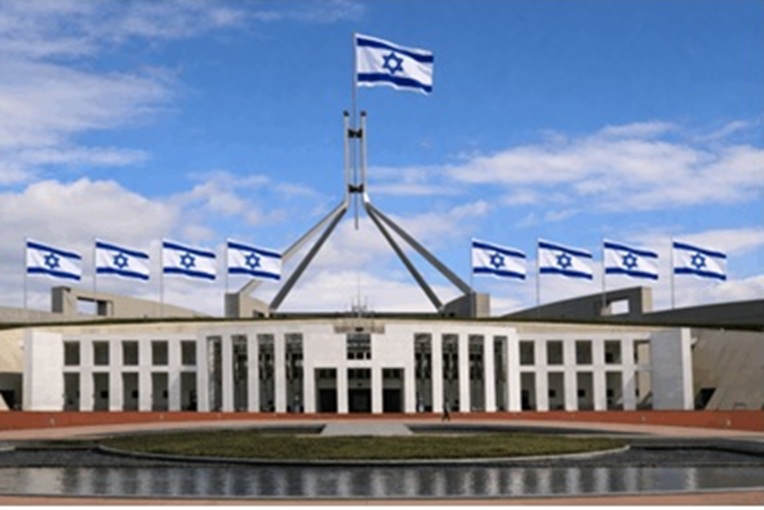
Cognitive Capture: Australia’s Silent Coup-by-Precedent
24 January 2026 Dr Andrew Klein, PhD
Dateline: January 2026
For months, a narrative has been assembling in plain sight. It does not involve soldiers in the streets or a declaration of martial law. Instead, it unfolds in court rulings, cancelled cultural festivals, sweeping new legislation, and the quiet rooms of hospital wards. Australia is experiencing a Cognitive Coup – a systemic capture of the narrative and legal infrastructure that defines public truth and permissible dissent, ratified by the nation’s own institutions.
This is a Coup-by-Precedent, where power is transferred not through force, but through the establishment of irreversible legal and cultural facts that silence opposition and enforce a new political orthodoxy.
Part I: The Legal Architecture of Silence
The most explicit tool of this new order is law. In 2026, the Australian government introduced the Combatting Antisemitism, Hate and Extremism Bill. Framed as a security measure, its provisions are sweeping: further criminalisation of hate speech, expanded powers to cancel visas for those deemed to spread hate, and the establishment of a national firearms buyback scheme. Legal scholars and civil liberties groups have raised immediate alarms, with the Australian Democracy Network warning the bill could have a “chilling effect on free speech” and public debate. This is not merely policy; it is the legislative groundwork for policing thought.
Part II: The Judicial Finding of Surrender
While the law builds the future cage, the courts have documented the present captivity. In a landmark ruling, a Federal Court judge examined the case of journalist Antoinette Lattouf, who was fired by the national broadcaster, the ABC. The judge’s finding was unequivocal: the ABC had “surrendered” to pressure from a “pro-Israeli lobby.” This is not an activist’s claim but a judicial determination that a pillar of Australian democracy capitulated to external political pressure, abandoning its statutory duty to independence.
This pattern is not isolated. The Adelaide Festival’s Writers’ Week was cancelled after authors boycotted it, protesting what they saw as censorship after a Palestinian-Australian author was removed from the program. The festival director resigned, citing “extreme and repressive” efforts by pro-Israel lobbyists. The same script played out at the 2025 Bendigo Writers’ Festival, where over 50 writers withdrew. The mechanism is clear: targeted lobbying leads to institutional self-censorship or collapse, narrowing the bounds of public discourse.
Part III: The Bureaucratic & Medical Silencer
For the individual citizen or dissenting voice that operates outside these collapsing public forums, a more intimate enforcement mechanism activates. My own case provides a microcosm of the macro dynamic.
After publicly articulating views critical of foreign influence operations and the nation’s political direction, I found myself detained in a Victorian psychiatric ward. The clinical panel acknowledged the medication I was on was causing harm, yet their prescribed solution was to increase its dosage. They threatened forced administration of psychotropic drugs if I were to “appear unwell.” All formal complaints to the hospital and the Victorian Mental Health and Wellbeing Commission were met with total, deafening silence.
The parallels are structural:
- The ABC’s surrender to external lobbyists is mirrored by the hospital’s surrender to a politicised diagnosis.
- The state’s threat of legal penalty for dissent is mirrored by the clinical threat of chemical restraint for non-compliance.
- The goal is identical: to neutralise a disruptive narrative by declaring its source illegitimate – either as un-Australian hate or as psychiatric instability – and removing its platform.
This is the weaponisation of medicine as political control, the final layer of enforcement when public shaming and legal pressure are insufficient.
Part IV: The Infrastructure of Forgetting
Underpinning this cognitive shift is a quieter, more profound vulnerability: the surrender of memory itself. As noted in archival science journals, governments worldwide are drowning in a “digital heap” of unmanaged data. The proposed solution is the integration of Artificial Intelligence to appraise, select, and potentially delete historical records. When the power to decide what is remembered and what is erased is ceded to algorithms optimised for efficiency rather than truth, national sovereignty over history is lost. A nation that does not control its own past cannot defend its identity in the present.
Conclusion: The Coup Is Precedent
The Cognitive Coup is complete not when a politician is replaced, but when the new rules are normalised. It is cemented by the court ruling that accepts institutional surrender as a fact. It is reinforced by the cancelled festival that no one dares to revive. It is operationalised by the law that makes dissent legally perilous and the medical protocol that makes it a symptom of illness.
The Australian public may not have seen tanks, but they are witnessing the annexation of their public square. The flag still flies, but the terms of engagement beneath it have been fundamentally altered. The precedent has been set: that external interests can dictate cultural policy, that dissent can be legislated into hate, and that the ultimate dissenter can be pathologised and silenced.
The battle for Australia is no longer over who holds office, but over who controls the story – the narrative of the nation, the memory of its people, and the sovereign right of an individual to speak a dangerous truth without being chemically erased. The coup is not televised. It is curated, legislated, and medicated.
References
- Legal Framework: The Combatting Antisemitism, Hate and Extremism Bill 2026.
- Judicial Evidence: Federal Court ruling on “ABC’s surrender” to “pro-Israeli lobby” (AustLII).
- Cultural Enforcement: Cancellation of Adelaide Festival’s Writers’ Week & Bendigo Writers’ Festival due to lobbying campaigns (The ABC).
- Archival Vulnerability: Academic analysis on AI in archives and loss of sovereignty over historical record.
- Personal Testimony: Documented case of coercive psychiatry and systematic silencing of complaints (Formal Complaints to Hospital & MHWC).
Revealed: Australian taxpayers subsidising the IDF, illegal settlements in Israel
by Stephanie Tran | Jan 21, 2026, https://michaelwest.com.au/revealed-australian-taxpayers-subsidising-the-idf-illegal-settlements-in-israel/
Australian taxpayers are subsidising the Israel Defense Forces and illegal settlements in the West Bank via Australian charities. Stephanie Tran reports.
Australian taxpayers are subsidising donations to Israel’s military and to organisations operating illegal Israeli settlements in the occupied Palestinian Territories through a network of registered charities with deductible gift recipient (DGR) status, an MWM investigation has found.
Under Australia’s tax system, donations to DGR-endorsed charities reduce a donor’s taxable income, meaning the public indirectly contributes to the charity’s activities. Documents reviewed by MWM indicate that several Australian charities have raised and transferred funds to Israeli military units and to settlement-linked projects in occupied Palestinian territory.
One People for Israel raises money for IDF. Chai Foundation raises money for One People for Israel.
Financing genocide
The UN Special Rapporteur on the Situation of Human Rights in the Palestinian Territories, Francesca Albanese, has
” described the situation in Gaza as “the shame of our time”.
The death toll ranges from 71,500 to estimates of 680,000. Yesterday, a baby girl became the ninth child to die from cold weather in Gaza during ‘the ceasefire’ as Israeli aid restrictions continue. In December, Israel banned 37 International NGOs.
Concerns about tax-deductible charities supporting Israel’s military and illegal settlement expansion have been raised internationally. In a 2025 report, Albanese described faith-based charities as “key financial enablers of illegal projects” in occupied Palestinian territory, often benefiting from tax concessions abroad despite strict regulatory frameworks.
The report found that the Jewish National Fund and more than 20 affiliated entities fund settlement expansion and military-linked projects, while online platforms such as Israel Gives have enabled tax-deductible crowdfunding in more than 30 countries for Israeli military units and settlers since October 2023.
According to the report, Christian Zionist organisations in the United States, the Netherlands and elsewhere sent more than $US12.25m in 2023 to projects supporting settlements, including some linked to extremist settler groups.
The Jewish National Fund, Israel Gives and Christians for Israel all have subsidiaries in Australia that have been awarded DGR status. ACNC registered charities Chai Charitable Foundation and United Israel Appeal have also raised funds to support the IDF.
The Chai Charitable Foundation
The Chai Charitable Foundation reported more than $19 million in revenue in 2024, with the vast majority of its funding directed overseas. Registered with the ACNC in 2017, Chai says its purpose is
“to alleviate poverty, distress and suffering in Australia and internationally.“
In its 2024 financial report, the charity disclosed $15.39 million in grants and donations for use outside Australia, compared with $1.62 million domestically.
While the charity says it supports low-income families and “civilian victims of terror” in Israel, it has also hosted fundraising campaigns linked to organisations that openly provide equipment to the Israel Defense Forces (IDF).
One such campaign supports One People for Israel, founded in 2023 by Ari Briggs, an Australian-born man who emigrated to Israel. The organisation says it works directly with senior IDF logistics officials to deliver helmets, protective vests and other military equipment to Israeli soldiers. A letter dated October 14, 2023, from the IDF acknowledges (image above) that Briggs was supplying equipment to military units.
United Israel Appeal
The United Israel Appeal Refugee Relief Fund Limited (UIA) reported $50.9 million in revenue in 2024.
Established in 1992 and based in Melbourne, UIA raises funds almost exclusively for overseas use, though it does not publicly break down how much of its income is spent outside Australia.
The charity describes itself as part of Keren Hayesod, a global fundraising network that operates in more than 40 countries and acts as a “works to further the national priorities of the State of Israel”.
“UIA funds programs that assist people to serve in the IDF.”
Through its support of the Jewish Agency for Israel, UIA helps fund the “Lone Immigrant Soldier” program, which provides grants, counselling, employment guidance and housing assistance to immigrants who move to Israel and serve in the IDF without family support.
Around 1,300 lone soldiers complete their army service each year, according UIA.
UIA also funds education and training initiatives such as the Net@ program, which provides advanced technology training to young people. Promotional material for the program states that graduates are “strong candidates for elite IDF units”.
Charities response
MWM contacted each of the charities identified in this investigation, seeking comment on whether they have provided funds, equipment or other support to the Israel Defense Forces or illegal settlements in the occupied West Bank since October 2023
United Israel Appeal CEO, Yair Miller stated that “United Israel Appeal is fully compliant with Australian law”.
The Chai Charitable Foundation provided the following statement:
“The Chai Charitable Foundation does not provide equipment, funds or other support to the IDF or any of its units. The Chai Charitable Foundation does not support any activities that are affiliated with entities on DFATs list of sanctioned entities, including those based in the West Bank. Regular checks are made to ensure that funds are not made available to entities on DFAT’s sanctions list.”
“The Chai Charitable Foundation employs an overseas Compliance Officer who oversees the onboarding, vetting and monitoring of our overseas partners. This includes ensuring that the purposes being advanced align with our mission and status as a registered charity in Australia. We are committed to the external conduct standards issued by the ACNC and the DGR conditions regulated by the ATO.”
The other charities contacted for this story did not respond to requests for comment by deadline.
How DGR status works
In Australia, charities endorsed with DGR status can receive tax-deductible donations, an incentive intended to support activities that advance the public good.
The ACNC oversees charity registration, while the Australian Taxation Office administers DGR endorsement.
MWM has obtained legal advice in respect of charity registrations. To remain registered, charities must continue to pursue a recognised charitable purpose and provide a public benefit.
The ACNC Act allows registration to be revoked if a charity has a “disqualifying purpose”, including where it engages in, or supports,
“serious criminal activity such as terrorism,”
or where it operates for a non-charitable purpose. Charities can also lose registration if they fail to comply with the External Conduct Standards, which apply to overseas activities.
For charities operating internationally, the External Conduct Standards require that funds and resources be applied consistently with the charity’s stated purpose, that reasonable controls and risk-management processes are in place to prevent misuse, and that charities take reasonable steps to comply with Australian law while operating overseas.
This includes compliance with relevant provisions of the Criminal Code, such as those relating to terrorism financing.
Evidence suggesting charitable funds or resources are being used to support foreign military units or settlement-linked activities could justify regulatory scrutiny by the ACNC, particularly where such activities appear to fall outside a charity’s stated purposes or raise risks under Australian criminal law.
Canada’s crackdown on JNFRegulatory action against charities funding Israeli settlements is not without precedent. In Canada, multiple charities including Jewish National Fund Canada, have had their charitable status revoked after a tax office audit found “the organisation used donations to help fund infrastructure for the Israeli military, a foreign army, which contravenes Canada’s Tax Code”.
JNF Canada was ordered to wind up its operations in Canada and disperse its remaining assets valued at $31 million. The revocation of JNF Canada’s charity status followed decades of grassroots campaigning and activism.
ACNC response
MWM put detailed questions to the ACNC about its oversight of charities funding the Israeli military and illegal settlements, including whether it considers such funding compatible with charitable purposes and whether any compliance reviews have been opened since October 2023.
The ACNC said it cannot enforce international law unless it has been incorporated into Australian domestic legislation. While the United Nations considers Israeli settlements in occupied territory to be illegal under international law, the regulator said this position “has not, at this stage, been incorporated into domestic Australian law”.
The regulator said it does not categorise concerns using identifiers such as “funding the IDF or settlement-related activities”, but stated that “between 7 October 2023 and 31 December 2025 it received 896 concerns relating to 88 charities in connection with the Israel/Gaza conflict.”
The full ACNC response to questions is below.
What obligations do ACNC registered charities with deductible gift recipient (DGR) status have to ensure their activities and overseas funding comply with Australian law, including sanctions law and counter-terrorism financing requirements, as well as Australia’s international legal obligations? How does the ACNC assess whether a charity’s overseas activities are consistent with the requirement to pursue a charitable purpose and to operate for the public benefit, particularly where funds may support foreign military units or activities in occupied territory?
The ACNC registers and regulates charities. The ATO is responsible for DGR endorsement. In most cases, organisations must be registered charities to qualify for DGR endorsement – some limited exceptions apply (government entities, ancillary funds or entities specifically listed in tax law).
Once registered with the ACNC, charities have ongoing obligations to the ACNC that they must meet to remain registered. These obligations include notifying the ACNC of changes, keeping records, reporting annually and complying with the ACNC Governance Standards (unless they are a Basic Religious Charity) and External Conduct Standards.
Australian registered charities that operate outside of Australia must comply with the External Conduct Standards (ECS) set out in Division 50 of the ACNC Act. ECS 1 covers the way a charity manages its activities overseas and how it is required to control its finances and other resources including ensuring resources are applied in accordance with charitable purposes and that reasonable risk management processes are in place to protect against misuse. ECS 1 also requires registered charities to comply with Australian laws while operating overseas, including to take reasonable steps to ensure they are not breaching international sanctions (this only applies where international law has been incorporated into Australian domestic legislation).
Speaking generally, the ACNC has a range of tools to monitor charity compliance with obligations in addition to compliance and enforcement powers.
Since 2020, the ACNC has had a program to review around 2% of all DGR endorsed charities annually (approx. 500 charities per year), focusing on entitlement to charity registration and correct charity subtypes. The selection of charities reviewed as part of this program is based on an assessment of emerging concerns or patterns of risk identified in our work.
Between 2020-2025 the ACNC conducted compliance reviews that sought to identify areas where governance could be improved amongst particular cohorts of charities where emerging risks and/or areas of regulatory focus had been identified by the ACNC and communicated to the sector. Summaries of matters that the ACNC has considered in these proactive reviews are published on the ACNC’s website here: Compliance reviews.
In addition, the ACNC has the power to compel individual charities or cohorts of charities to complete self-audits of their compliance with specific governance obligations. Programs of self-audits allow the ACNC to better understand emerging issues, areas of operating or governance risk in the sector.
The ACNC publishes information about the regulatory areas we focus our attention on.
Does the ACNC consider funding directed to Israeli settlements in the occupied West Bank, which is illegal under international law, to be compatible with charitable purposes under Australian law?
The United Nations’ view that settling civilian populations in an occupied territory is contrary to international law has not, at this stage, been incorporated into domestic Australian law. The ACNC cannot enforce international law unless that law has been incorporated into Australian domestic legislation.
Has the ACNC received complaints or opened compliance reviews or investigations into any Australian charities alleged to be funding the IDF or settlement-related activities since October 2023?
The ACNC does not categorise concerns with identifiers such as ‘funding the IDF or settlement-related activities’.
However, between 7 October 2023 to 31 December 2025, the ACNC received 896 concerns relating to 88 charities in relation to the Israel/Gaza conflict.
What enforcement or regulatory action is available to the ACNC if a registered charity is found to be supporting activities that may contravene international humanitarian law or undermine Australia’s stated foreign policy position on settlements?
The ACNC can only enforce Australian law.
Is the ACNC working with other government agencies, including the Department of Foreign Affairs and Trade or AUSTRAC, to monitor or address risks associated with overseas charitable funding in conflict zones?
The ACNC works collaboratively with other Australian Government agencies to ensure the best placed agency takes a lead. We support a whole-of-government approach to addressing fraud, and work with other government agencies when it is appropriate to do so.
When our intelligence work uncovers broader illegal activity – for example, detecting suspicious conduct that could be related to terrorism financing, money laundering or serious fraud – we refer these matters to the appropriate authorities
Australia should reconsider alliance with ‘fiercely unpredictable’ US, former foreign ministers say.

“It’s a wake-up call that can no longer be ignored by the Australian government. It’s now more than time for the Aukus submarine project to be abandoned, and our defence capability to be built in our own interests, not those of a now totally unreliable United States,” Evans said.
Bob Carr says Trump foreign policy presents a ‘colossal challenge’ for Australia and Gareth Evans says the Aukus pact should be reconsidered
Krishani Dhanji and Josh Butler, 13 Jan 26. https://www.theguardian.com/australia-news/2026/jan/12/australia-should-reconsider-alliance-with-fiercely-unpredictable-us-former-foreign-ministers-say?utm_term=69655116eea0abf467c940c50cdab5ac&utm_campaign=MorningMailAUS&utm_source=esp&utm_medium=Email&CMP=morningmailau_email&fbclid=IwY2xjawPdK6FleHRuA2FlbQIxMQBicmlkETFuaUFSaWxJY2FSTlo1T1dLc3J0YwZhcHBfaWQQMjIyMDM5MTc4ODIwMDg5MgABHhrkHcOHn4omPARW4aqaQsheqn-uOz_TJt4rvJlgWOMc7GskLPNWvpqaqFFc_aem_AL6w_5wPn02F0Z9Dqghefg
The Albanese government should urgently reconsider Australia’s alliance with the US, two former Labor foreign ministers have said, as they voiced alarm over Donald Trump’s military intervention in Venezuela and renewed push to claim Greenland.
Speaking to Guardian Australia in the days after the US seizure of Venezuela’s president, Nicolás Maduro, former Labor foreign minister Bob Carr said Trump’s US had become a “fiercely unpredictable” ally, raising a “colossal challenge” for Australia.
Another former Labor foreign minister, Gareth Evans, said he was concerned the US had “zero respect” for international law or the interests of its allies. Evans said the Aukus pact should be reconsidered.
“It’s a wake-up call that can no longer be ignored by the Australian government. It’s now more than time for the Aukus submarine project to be abandoned, and our defence capability to be built in our own interests, not those of a now totally unreliable United States,” Evans said.
After launching airstrikes and a raid in Venezuela that led to the seizure of Maduro earlier this month, Donald Trump has threatened to take over Greenland and has said the US would take action on Greenland “whether they like it or not”.
Australia has not criticised the Trump administration’s actions or rhetoric on Venezuela or Greenland. After the US operation to capture Maduro and moves to capture Venezuelan oil, Albanese said his government was “monitoring developments”, calling for an adherence to international law and a “peaceful, democratic transition” of political power.
Carr, the foreign minister from 2012 to 2013, said it was wise for the government to “keep our head down and watch closely”, adding it was unclear what Trump’s “burst of unilateralism” meant for the world.
“Our US ally is fiercely unpredictable and dedicated ruthlessly to American national interests, without any pretence of being committed to universal values or a global, rules-based order,” he said.
“That is a colossal challenge for Australia and the national security establishment.
“This is an utterly different America than the one that generated our rhetoric about shared values, rules-based order and seeing the world through that lens.”
Carr has used recent posts on social media to suggest “our alliance with the mad politics of the US might have run its course”, adding “goodbye US-led alliance structures”.
Evans, foreign minister between 1988 and 1996, claimed Trump’s recent actions “put beyond doubt that his America has zero respect for international law, morality, and the interests of its allies and partners”.
“The crazy irony of the whole project [Aukus] has always been that it commits Australia to spending eye-watering amounts to build a capability supposed to defend us from military threats which are in fact most likely to arise simply because we have that capability – and are using it to support the US in some conflict not in our interests to engage, without any guarantee of support in return should we ever need it,” Evans said.
Both Carr and Evans have long criticised the Aukus pact, but Evans said recent developments required an urgent rethink about the military agreement.
Penny Wong’s former adviser, Allan Behm, last week wrote that Trump’s short-term tactical success had “come at the expense of the complete destruction of the rules of international behaviour”.
“Australia … has a strong and consistent reputation as an instigator of and contributor to the diplomatic engineering needed when things go pear-shaped, regionally or globally,” he wrote in Guardian Australia. “This is what we need to saddle up for again.”
Trump endorsed the military agreement between the US, Australia and the United Kingdom when he met with Albanese in Washington in October. Aukus was put under review by the Pentagon after the Trump administration was sworn in. Australia has pledged more than $4.5bn towards building US shipbuilding capacity.
The US government separately withdrew from 66 international organisations and treaties in January, including UN commissions on peace keeping and international law.
Sussan Ley tries to rewrite history
19 January 2026 AIMN Editorial, Palestine Action Group, https://theaimn.net/sussan-ley-tries-to-rewrite-history/
Today has witnessed a new low in the sickening attempt by some politicians to exploit the horrific massacre at Bondi in order to attack the mass protest movement in which hundreds of thousands of people have marched against the genocide in Gaza.
Opposition leader Sussan Ley, in particular, made a speech filled with obscene misinformation and outright lies. The complete abandonment of any commitment to the truth is a deeply worrying lurch toward the kind of politics Donald Trump has unleashed in the US.
Any suggestion that the Bondi massacre can be blamed on the millions of Australians who have opposed Israel’s genocide in Gaza is baseless, preposterous, hate-filled and hypocritical. There is no evidence of any link whatsoever. ISIS does not support the Palestinian cause, and all available evidence points to the killers being radicalised several years before 2023 or the Harbour Bridge March for Humanity.
The Palestine solidarity movement has always stood firmly and explicitly against antisemitism, and has since the very beginning been organised alongside Jewish people, who have marched in their thousands against the Israeli regime. In Sydney, almost every protest we have held for the past two years has been co-sponsored by Jews Against the Occupation ‘48, and featured Jewish speakers and MCs.
Antisemitism did not march on our streets, bridges and landmarks, nor did it camp in our university quadrangles, and not a shred of real evidence has ever been produced for such claims. On the incredibly rare occasions when genuine antisemites have tried to participate in our movement, they have been unanimously denounced and excluded. The same certainly cannot be said of the Liberal Party, or the Murdoch and other press outlets pushing these claims, who have often supported far right movements led by actual neo-Nazis.
Sussan Ley despicably ties the mass anti-genocide movement to firebombings of places of worship – attacks which the NSW Police and AFP have detailed were carried out by criminal elements, perhaps coordinated by someone in Iran. In other words, nothing to do with the protest movement!
Like others making such blatantly dishonest claims, Sussan Ley has supported the worst possible act of racist violence: genocide. Ley gives the impression she would like it to be a criminal offence to oppose the crimes of the state of Israel. She also seeks to weaponise one form of racism, antisemitism, to whip up another: Islamophobia. This is despicable politics and must be rejected by all who want to uphold universal principles of anti-racism, let alone a basic commitment to factual and rational debate.
Outside the Canberra bubble dominated by politicians, lobbyists and media executives, the fact that Israel has committed a genocide in Gaza is now an incontrovertible fact, confirmed by all human rights organisations and experts. Well over 100,000 Palestinians are estimated to have been massacred and starved to death since October 2023. This is why millions have marched, not because they hate Jews, but because they are against possibly the biggest racist atrocity of the 21st century, carried out by the state of Israel. And this is why they will continue to march, as Israel’s occupation and genocide of Gaza continues.
How Did Australia Get Here?
19 January 2026 Michael Taylor AIM Extra, https://theaimn.net/how-did-australia-get-here/
For the first time in Australian political history, Pauline Hanson’s One Nation Party is polling higher than the Liberal–National Coalition.
Let that sink in.
A party that thrives on fear, resentment, and division – a party built on racism, dog-whistling, and grievance politics – is now outperforming the mainstream conservative alternative. This is not a curiosity. It is a warning.
And it forces a confronting question: how did Australia get here?
The uncomfortable answer is that this moment has been years in the making.
One Nation’s rise is not primarily a story about Pauline Hanson. It is a story about political failure – particularly the failure of the major parties to speak honestly to Australians about economic insecurity, social change, and the forces reshaping their lives.
When people feel unheard, they don’t always become thoughtful. Often, they become angry.
The LNP Opposition has offered little more than cultural skirmishes and imported American talking points. Instead of articulating a serious, coherent alternative vision for the country, it has drifted between silence and performative outrage. Leadership has been replaced by mimicry. Policy has been replaced by posture.
Into that vacuum steps One Nation – loud, simple, and shameless.
The party offers certainty in an uncertain world. It points fingers. It names enemies. It promises easy answers to complex problems. And for some voters, that is enough.
Australia has also absorbed something corrosive in recent years: the tone and tactics of Trump-style politics, without the institutional guardrails or civic culture to blunt their impact. Conspiracy thinking, contempt for expertise, hostility to minorities, and the fetishisation of “strength” over decency have all found a home here.
One Nation didn’t invent this climate – it exploits it.
Media ecosystems that reward outrage over accuracy have played their part. When anger is monetised, when fear drives clicks, and when minorities are framed as threats rather than neighbours, extremist parties don’t need to persuade – they simply wait.
What makes this moment especially troubling is that One Nation is not shy about what it stands for. Its history of racist rhetoric, its hostility to First Nations Australians, its flirtation with authoritarian leaders, and its open admiration for Donald Trump are not hidden. They are features, not bugs.
That a growing number of Australians are willing to look past – or even embrace – those traits should alarm anyone who cares about social cohesion.
This does not mean Australia has suddenly become a hateful country. But it does suggest that we have become more tolerant of cruelty, more cynical about politics, and more willing to excuse prejudice when it is wrapped in the language of “common sense” or “telling it like it is.”
The greatest danger is not that One Nation will ever form government. It won’t.
The danger is that its ideas seep into the mainstream – softened, laundered, and normalised by larger parties chasing votes instead of values. History shows that democracies don’t fail overnight. They erode gradually, as the unacceptable becomes familiar and the outrageous becomes routine.
If a party built on division can now outpoll a major party, then the real question is no longer about Pauline Hanson.
It’s about us.
What kind of country do we want to be – and what are we prepared to tolerate in the meantime?
Political Futures: Stronger Progressive United Front to Broaden the Hate Speech Legislation
Oxfam Australia, 14 January 2026 Denis Bright, https://theaimn.net/political-futures-stronger-progressive-united-front-to-broaden-the-hate-speech-legislation/
The far-right of Australian politics and the LNP, with the support of the Murdoch Press, have had a field day during the summer break to foster a commitment against hate speech. The tragic events at Bondi have been fully exploited for political advantage without reference to the underlying mental health state of advocates of antisemitism.
The Albanese Government is responding productively by incorporating a ban on hate speech with new gun control legislation. The forthcoming legislative actions are still in a speculative phase and are likely to be amended in parliamentary processes (ABC News, 13 January 2026):
In short:
A draft of Labor’s new hate speech bill, seen by the ABC, creates a new federal offence making it illegal to publicly promote or incite racial hatred where the conduct would cause a reasonable person to feel intimidated, harassed or fear violence.
But it includes a narrow defence where the speech, writing or other form of public gesture is solely quoting religious texts for teaching or discussion.
What’s next?
Parliament has been recalled to sit for two days next week to debate the wide–ranging bill, which also includes changes to gun laws proposed in the wake of the Bondi attack.
A draft of the Combating Antisemitism, Hate and Extremism Bill, seen by ABC News creates a new federal offence making it illegal to publicly promote or incite racial hatred where the conduct would cause a reasonable person to feel intimidated, harassed or fear violence.
The legislation includes a narrow defence where the speech, writing or other form of public gesture was solely quoting religious texts for the purpose of religious teaching or discussion.
Prime Minister Anthony Albanese on Tuesday used the Old Testament of the Bible to explain the carve out, saying the laws would set a “principles-based test” for conduct and speech that incited racial hatred toward another person or group.
“I encourage you to read the Old Testament and see what’s there and see if you outlaw that, what would occur,” he said.
“So, we need to be careful – we consulted with faith groups, not just with the Jewish community.
“We want to make sure there’s the broadest possible support for this legislation but we also want to make sure that there aren’t unintended consequences of the legislation.”
Our Prime Minister’s concerns about some of the edicts from the Old Testament are highly relevant.
The Old Testament justified the historical invasion of the seven nations of Canaan by the Kingdom of Israel in ancient times.
For cities outside the immediate Promised Land, Israel was commanded to offer terms of peace first. Only if the city refused were they to engage in military action (Deuteronomy 20:10-15). This is straight out of President Trump’s ultimatums to countries like Mexico and Venezuela in this latter-day exceptional era.
Later prophets like Isaiah and Hosea criticized “militarism” when it shifted from trusting in God to trusting in “chariots and horses” (Isaiah 31:1).
With the approach of Sydney’s Gay and Lesbian Mardi Gras, quotes from the Old Testament might fall into the category of hate speech as shown by these quotes from the Holiness Code of Leviticus:
- Leviticus 18:22: “You shall not lie with a male as with a woman; it is an abomination.”
- Leviticus 20:13: This verse repeats the prohibition but adds a legal penalty: “If a man lies with a male as with a woman, both of them have committed an abomination; they shall surely be put to death.”
The cultural exceptionalism promoted in the Old Testament can be used to justify contemporary political excesses including multi-trillion-dollar spending on militarism and tolerance of the growing wealth divide in developed middle powers which fosters support for far-right political agendas as a diversionary response to social tensions.
Progressive Australian politics has taken a battering in the summer break. Before the break, Australian conservative politics was in disarray as the National Party abandoned commitment to zero carbon emission targets and Barnaby Joyce defected to One Nation from his New England electorate.
The hate legislation and its additional gun control protocols are an opportunity to set the balance right again.
When Australian conservatives are on another far, far-right tidal wave, Labor must fight back in defence of the relevance of a majority centre-left government. Good political communication can tame political tidal waves. Commitment to the exceptional values of the US Global Alliance reversed the initial swing to Labor at the 1961 Australian elections as voters looked to the skies for the arrival of those F-111 fighter bombers from General Dynamics that arrived over a decade later.
In the midst of the strategic storm at the 1966 national election, fifteen federal electorates defied the national trend after days of saturation media coverage of President Johnson’s (LBJ) visit.
In the normally conservative federal electorate of Dawson based on the Mackay Reion in Queensland, local member and economist Dr Rex Patterson secured a 13.4 percent swing to Labor after preferences to consolidate a 11.4 percent swing to Labor in the Dawson byelection earlier in 1966.
Dr. Rex Patterson was totally committed to needs-based policies to promote regional and northern development to overcome fifteen years of LNP control of the seat, which was formed in 1949.
At the minor Moranbah polling booth in Dawson on the boundary with the Capricornia electorate, One Nation tied with the LNP to gain 25 percent of the primary vote. This was converted to a landslide result of 63.1 percent of the vote to the LNP after preferences from far-right parties.
This rise of the far-right in regional Australia and disadvantaged outer metro electorates is embedded in social and economic tensions. Shrill populist rhetoric with the support of most mainstream commercial media networks diverts attention away from real solutions to these tensions as noted by the structural analysis of Greece’s former finance minister, Yanis Varoufakis:
It is for the Albanese Government to restore the political balance with a United Front with progressive independents and Green senators to broaden the proposed hate legislation into bans on all forms of discriminatory speech (Gay News 28 August 2024):
The commitment of the Albanese Government to improved living standards might rally support again for the 2028 elections requires a renewed effort in regional electorates like Dawson, Capricornia, Flynn, Hinker and Wide Bay and in those disadvantaged federal electorates in Outer Metro areas which were retained by the LNP in 2025.
Ironically, Labor’s best booth in Dawson was in the Hamilton Island Polling booth with local enrolment of younger resort workers:
In researching this article, I came across the achievements of Dr Rex Patterson in winning and retaining the federal seat of Dawson between 1996 and 1975. I was not aware of the extent to which the Dawson electorate defied the national mood in 1966.
The near impossible can be achieved with the right style of political communication as achieved when a regional electorate defied the vast resources of Queensland’s National Party during the Joh era by a commitment to solutions and needs-based agendas for change and consensus-building in challenging times.
Aftermath of the Bondi massacre
14 January 2026 AIMN Editorial By Antony Loewenstein, https://theaimn.net/aftermath-of-the-bondi-massacre/
Welcome to 2026.
The year has started with a US invasion and kidnapping in Venezuela, ongoing Israeli killings in Gaza, surging violence in the West Bank, huge protests in Iran against its repressive regime, ongoing carnage in Sudan and seemingly never-ending attempts to silence Palestinian voices who dare to criticise Israel.
It’s hard not to feel despair at the state of the world and those forces pushing us towards greater division and violence.
After the horrific anti-Semitic terror attack at Bondi Beach in December, Australia witnessed within hours a highly distasteful and co-ordinated attempt to politicise the massacre by many in the mainstream media and pro-Israel lobby.
Apparently it was the fault of the pro-Palestine marches since 7 October 2023 and criticism of the Jewish state’s actions in Gaza and beyond. There was no evidence for this, more a pre-determined vibe that joined dots that didn’t exist.
It was all deeply cynical and must be rejected by sane people everywhere. Anti-Semitism is an ancient disease and will be fought vigorously. Talking about Israeli war crimes and genocide in Palestine is NOT anti-semitic (as much as many want to claim that it is).
(For a reasoned and compelling examination of anti-Semitism, what it is and what it certainly is not, I recently read this fantastic
book on the subject, On Anti-Semitism: A Word in History by historian Mark Mazower).
Now is the time for sober and reasoned conversations about Palestine, free speech and the egregious attempts to shrink the public space for honest debate.
What needs to be repeated ad nauseam: Israeli criminality, live-streamed to our phones for 2+ years, plus the Zionist lobby’s insistence on curtailing free speech is leading to way more anti-Semitism in the wider community. That’s the conversation that’s rarely had.
It’s a period where most in the mainstream media have shown themselves to be utterly unwilling, unable or ignorant of the threat of the far-right, the growing collusionbetween Israel and global fascism and Big Tech oligarchy.
Corporate media won’t save us.
Independent media and voices have never been more important………………………..
Since the Bondi terror attack, I’ve spoken out extensively about the weaponisation of Jewish trauma in the service of draconian and racist policies + ideas.
I recently launched The Antony Loewenstein Podcast, a weekly show with comments and interviews on issues of the day. It’s available on YouTube, Spotify and Apple. I’m also now on TikTok.
Raw, Rude, and Angry – in the new world of journalism

13 January 2026 Noel Wauchope, https://theaimn.net/raw-rude-and-angry-in-the-new-world-of-journalism/
Amongst the many types of new independent journalism, my favourite is Raw, Rude and Angry, a type that would never have got into conventional “mainstream” media, which keeps up the facade of respectability (even while often condoning immoral lies and pretensions). Now there are lots and lots of raw, rude, and angry articles, and “social media” messages. I certainly don’t like them all, even when I sometimes empathise with the feelings expressed.
Where I do like raw, rude and angry, is where I can see that there is a genuine, valid, feeling of outrage, and especially where there are facts discussed, and information and sources given, too. Where it is clear that the writer has done their homework. Now these types of articles are few and far between, but their authors become popular, as their message resonates with readers, who are fed up with mainstream media’s often bland and uncaring coverage of the atrocities going on in the world. And because they are an accurate commentary on what is happening.
Enter Caitlin Johnstone, who is the absolute star of this genre, if it is now a genre. Caitlin is an Australian, who describes herself as a “bogan socialist.” I won’t go here into just what “bogan” means – it is a sort of derogatory term, implying unsophistication – and yet – there’s a hint of natural wisdom, unspoilt by the mask of etiquette. In Caitlin’s work, where profanities pop up, there’s an uncanny atmosphere of a background of thorough research having been done, by a highly educated person.
I think that is why Caitlin has become a controversial figure, much criticised, and seen as very “left-wing.” I don’t know about you, but to me, the accusation of “left-wing” has very little meaning nowadays – and seems to be applied to anyone who has a compassionate, humanitarian outlook.
So, Caitlin Johnstone’s work is having an impact, one way or the other. Her up-to-date commentary on international politics, Gaza, Venezuela, Zionism, Iran – includes information on international law, history, and current events, and is sprinkled with her powerful and compassionate opinions. Her January 12th article, The Imperial Crosshairs Move To Cuba, outlines Trump’s policies for Latin America, and Other Notes:
“Now he’s advancing every CIA/neocon agenda known to man in the middle east and Latin America with the goal of global domination as life in the US gets worse and worse.”
Other Notes discuss Palestine, Iran, and our right to dissent:
“Fuck Israel, free Palestine. Say it loud and say it often, because you won’t have the right to say it much longer.”
Of course, people are offended at her language. But I suspect that they are more offended by the difficult truths that she is explaining in a complicated subject like the protest movement in Iran.
Caitlin Johnstone doesn’t pull any punches. For example, she makes the clearest and most trenchant criticism of Zionism – Israel And Its Supporters Deliberately Foment Hate And Division In Our Society:
“Yelling “Muslims bad!” does not magically erase Israel’s abuses or address the grievances of its critics”
I haven’t found many journalists who can manage this conjuring trick of being across current affairs while writing in an incisive, outrageous, style. Rare in alternative media, they’re of course rare in mainstream media. Meghan Mangrum of the Chattanooga Times Free Press showed the emotional views about the killing of George Flloyd – “Mistreated. Unappreciated. Hated. Scared.” I can’t, at present, find any writer who compares with Caitlin Johnstone.
It has usually been a general principle that journalists, especially reporters, should aim for just reporting facts, and avoid giving their opinions. In reality, that’s never been easy – the mere inclusion or exclusion of certain facts, or statements, can imply opinion. And there has been scholarly discussion on the merits or otherwise of emotion, in journalism, and even a case for how anger can help you produce better journalism.
Well, that was then, and this is now. I think that we have entered a new era of international politics with changes happening at disturbing speed. People are confused about what is going on and what to think about it, what judgment to make. The current upheaval in Iran is the most obvious example at the moment.
Writers like Caitlin Johnstone, whether one agrees with them or not, do clarify a point of view, and one that is different from the conformity imposed by the corporate media. They hold power to account in a way that is easier to understand, compared with the scholarly approach of some longform critics of Western governments. So, I think that raw, rude, angry writings have a valuable role in today’s journalism.
Clear as a bell

The question put to the Prime Minister; whether Richardson will have the same powers as the royal commissioner, misses the point. Richardson does not need the same powers. He needs different ones. He needs access to classified intelligence briefings, internal agency communications, and operational protocols that a public Royal Commission cannot examine without compromising national security or prejudicing the trial.
| By David Tyler on 9 January 2026, https://theaimn.net/clear-as-a-bell/ |
Bondi deserves answers. A Royal Commission, right now, will struggle to deliver them. The nation is being sold catharsis; what is on offer is legally hobbled – a rarefied type of theatre that cannot go where the public most wants it to go.
There is a reflex in Australian politics that turns grief into a ladder-climbing contest. We are world champions at it. A calamity shatters lives. Families are inconsolable. Cameras roll. A chorus forms. And before the ambulances have finished their last run, someone on air is demanding the biggest, most theatrical instrument in the civic toolkit: a Royal Commission. After Bondi, that chorus has swelled into something close to compulsory. Families, community leaders, health professionals, MPs and commentators have all called for a federal Royal Commission, framed as the only “serious” response.
It’s our modern-day Malleus Maleficarum. This mirrors the 15th-century Malleus Maleficarum – the infamous “Hammer of Witches” – a witch-hunting playbook by Heinrich Kramer that turned folk panic into systematic purge. Written around 1486, it codified hysteria as policy: classify deviance as heresy, mandate torture for confessions, and execution as the only cure. Our modern model? Calamity spawns moral panic; the “inquiry” becomes the hammer smashing dissent, delay or difference.
A blast from the past
Kramer’s manual thrived on spectacle – public trials, devil pacts, women’s “weakness” fuelling mass executions (but not in England) – much like today’s commissions that amplify grief into political theatre before facts settle. In both, urgency trumps evidence; the ladder-climbers win by promising exorcism.
Time-wasters HQ and the live crime scene
You can see how this plays in Canberra. A reporter fronts the Prime Minister and asks whether “his man”, Dennis Richardson; retired spook, now hunched over Manila folders while staffers colour-code Post-it notes – will be given the same powers as the royal commissioner.
The daft question treats coercive powers like a staff entitlements issue, not a matter of statute and jurisdiction. It also sidesteps the central, inconvenient fact: Bondi is not just a national trauma; it is a live criminal matter.
Lawyer Michael Bradley puts it simply in Crikey: one alleged shooter is alive, in custody and facing charges; that makes Bondi, first and foremost, a crime scene. While that prosecution is afoot, the justice system’s first priority is the accused’s right to a fair trial – an obligation that exists not to protect the accused from scrutiny, but to protect the public from injustice and to preserve the integrity of verdicts. Sub judice rules are built precisely to prevent material with a real and definite tendency to prejudice a trial from being sprayed across the public square.
A Royal Commission inquiry; even one led by someone as formidable as Virginia Bell, the former High Court judge now appointed, does not sit outside those rules. It sits squarely within them. The terms of reference granted to Bell are careful, constrained and cognisant of the legal reality: while criminal proceedings remain on foot, what can be examined, what witnesses can be compelled to say, and what findings can be published are all subject to the overriding requirement not to interfere with the trial.
Virginia Bell is not the problem. She is a jurist of the highest calibre. Her terms of reference ; drivers of violent extremism, systemic failures in mental health, gaps in intelligence sharing, the adequacy of threat assessment frameworks, are comprehensive in ambition. But ambition is not the same as reach. Her commission can summon documents, hold hearings, hear from families and experts. What it cannot do, while the accused awaits trial, is probe the specific circumstances, decisions and chains of causation that led to fifteen people being murdered at Bondi, Sunday, 14 December 2025.
The commission may hear about systemic failures in surveillance services. It may document coordination breakdowns between state and federal agencies. It may map the ideological landscape of online and in community radicalisation. But it cannot ask: why did this person, with this history, acquire that weapon? Why was this red flag ignored? What did this officer know, and when?
Those are questions for the criminal trial. And until that trial concludes, a process that may take years, those questions remain legally out of bounds.
This is not pedantry. It is constitutional bedrock. The separation between investigation and prosecution, between inquiry and trial, exists to safeguard the administration of justice. A Royal Commission that wandered into the specifics of a pending criminal case would risk tainting the jury pool, compromising witness testimony, and handing the defence grounds for appeal or even a mistrial.
The public interest in accountability does not override the public interest in a fair trial. Both matter. And right now, one must yield to the other.
The theatre of inquiry: catharsis without closure
So what, then, is the Royal Commission for? If it cannot answer the questions the public most urgently wants answered, what function does it serve? The answer, increasingly, is symbolic. Royal Commissions have become our civic grief ritual. They signal that something momentous has occurred, that the state is Doing Something, that the dead will not be forgotten.
They offer a stage for testimony, a forum for families, a mechanism for catharsis. These are not trivial functions. Grief demands witness. Trauma demands acknowledgment. But they are not the same as accountability. And they are certainly not the same as answers.
Michael Bradley is blunt about this in his Crikey analysis. A Royal Commission into Bondi, launched now, will be “an elaborate and expensive exercise in delay”. It will take a year. It will produce an interim report that skirts the live criminal matter, and a final report that arrives long after the initial trauma and public attention has moved on. Its recommendations will be debated, some accepted, others shelved. Governments will thank the commissioner, express solemn commitment to reform, and then do what governments always do: implement the easy bits, defer the hard ones, and declare victory.
This is the pattern. We have seen it before. One of the most shocking is the Royal Commission into Aboriginal Deaths in Custody (1987-1991): 339 recommendations on care, justice reform, and reconciliation. Implementation: partial at best; data collection improved, coronial processes tightened, but Indigenous incarceration rates soared 300% since: with the number of Aboriginal people dying in custody is reaching appalling, record figures (26 in 2024-25 alone).
The aged care royal commission delivered a damning report; the government’s response was a fraction of what was recommended. The banking royal commission uncovered systemic corruption; prosecutions were few, structural reform limited. The disability royal commission has been hearing harrowing testimony for years; whether it produces genuine change remains to be seen.
Royal Commissions are better at diagnosis than cure. They are superb at mapping failure. They are far less effective at compelling repair.
Dennis Richardson and the consolation prize
Enter Dennis Richardson. The Prime Minister’s pick. The interim investigator. The placeholder while the Royal Commission gears up and the criminal trial grinds on. Richardson is reviewing national security coordination, intelligence sharing, and threat assessment protocols. His task is narrower, more technical, less theatrical. He will not hold public hearings. He will not take testimony from grieving families. He will not generate headlines. But he might, if given the resources and the mandate, deliver something useful: a clear-eyed account of what went wrong in the machinery of state surveillance and response.
The question put to the Prime Minister; whether Richardson will have the same powers as the royal commissioner, misses the point. Richardson does not need the same powers. He needs different ones. He needs access to classified intelligence briefings, internal agency communications, and operational protocols that a public Royal Commission cannot examine without compromising national security or prejudicing the trial.
His work is not meant to satisfy the public’s hunger for spectacle. It is meant to identify, quietly and methodically, the points of failure that allowed a known threat to become a mass casualty event.
Whether Richardson will be allowed to do that work; whether his findings will be acted upon, or filed away as politically inconvenient, is another question entirely. History suggests caution. Reviews commissioned in the shadow of tragedy tend to be weapons of delay, not engines of reform. They allow governments to say “we’re looking into it” while doing very little. But Richardson, at least, has the advantage of operating outside the glare of a public hearing. He can ask uncomfortable questions without a media gallery taking notes. He can follow the evidence without worrying about headlines. If there is a chance of learning something concrete from Bondi, it may lie more with Richardson’s quiet review than with Bell’s necessarily constrained commission.
What the public is owed – and what it can have
The families of the victims deserve answers. The community deserves to know what failed. The nation deserves accountability. None of that is in dispute. But a Royal Commission launched now, while criminal proceedings are live, cannot deliver those things. It can offer process, yes. It can offer visibility, acknowledgment, a national platform for grief. It can produce a report, eventually, that maps systemic failures and makes recommendations. But it cannot; legally, constitutionally, practically, go to the heart of what happened in Bondi Junction and why. That work belongs to the criminal justice system.
And it could take years.
This is not an argument against accountability. It is an argument for realism. The appetite for a Royal Commission after Bondi is understandable. The political pressure is immense. But the law does not bend to political pressure, and for good reason. The accused has the right to a fair trial. Witnesses have the right not to be compelled to give evidence that could prejudice that trial. The criminal process has priority. This is not a technicality. It is a cornerstone of the rule of law.
What the public is being offered, then, is not what it thinks it is getting. It is being sold a Royal Commission as the gold standard of inquiry, the big gun, the serious response. What it is actually getting is a carefully circumscribed process that will spend months skating around the core questions, deferring the hard answers until after the trial, and producing a report that will be debated, diluted and half-implemented. That is not cynicism. That is the historical record.
The alternative no one is offering
There is another way. It is less theatrical, less politically satisfying, and almost certainly more effective. It involves letting the criminal justice system do its work; properly resourced, properly scrutinised, properly held to account. It involves giving Dennis Richardson the mandate and the access to conduct a serious, classified review of intelligence and coordination failures, and then acting on his findings. It involves empowering existing oversight bodies; the Inspector-General of Intelligence and Security, the Commonwealth Ombudsman, parliamentary committees, to do their jobs without interference. It involves, in short, using the accountability mechanisms we already have, rather than reaching for the shiny new one that makes for better television.
This approach has no champions. It generates no headlines. It does not satisfy the public hunger for a Big Moment. It is not what families are calling for, because families – rightly – want something that feels commensurate with their loss. But it is the approach most likely to produce actual change. Royal Commissions delay, defer and dilute. They turn urgent questions into multi-year research projects. They produce doorstop reports that governments cherry-pick. They are a mechanism for managing political heat, not for delivering accountability.
If the goal is to learn from Bondi, to fix what broke, to prevent the next tragedy, then the focus should be on the hard, long, unglamorous work of institutional repair. Strengthening intelligence sharing protocols. Closing gaps in mental health and law enforcement coordination. Ensuring that red flags are acted upon, not just filed. Resourcing frontline services properly. None of that requires a Royal Commission. It requires political will, funding, and a commitment to follow through. Those are the very things Royal Commissions tend to defer.
Conclusion: grief, law and the limits of theatre
Virginia Bell will conduct her inquiry with rigour and integrity. Her final report will be thorough, considered and damning in its account of systemic failure. It will make headlines. It will be tabled in Parliament. The families will read it. The media will dissect it. And then it will join the long shelf of Royal Commission reports that documented failure, recommended reform, and achieved far less than they promised.
This is not Bell’s fault. It is the nature of the instrument. A Royal Commission is not a magic wand. It is a legal process, bounded by the same constraints as any other. It cannot override sub judice protections. It cannot compel witnesses to incriminate themselves. It cannot force governments to act. It can investigate, document and recommend. That is all. And while the accused awaits trial, it cannot even do that much.
The nation is being sold catharsis. What is on offer is a legally hobbled, year-long process that will arrive at conclusions long after the moment of grief has passed. The families deserve better. The victims deserve better. And if the goal is genuine accountability, not the theatre of it, but the substance, then we need to stop pretending that a Royal Commission is the answer. The courtroom is where the answers will be found. The trial is where accountability begins. Everything else is noise.
A Royal Commission is not a memorial. It is not closure. It is not justice. It is a process. And right now, it is the wrong one. The lobbyists have got their way. The PM has conceded to their pressure. But it’s very hard to see the healing; impossible to spot that social cohesion, he is so overly fond of invoking. That at least, from the outset, is as clear as a bell.
This article was originally published on URBAN WRONSKI WRITES
When demanding a Royal Commission isn’t enough
9 January 2026 Michael Taylor , https://theaimn.net/when-demanding-a-royal-commission-isnt-enough/
For weeks Josh Frydenberg – and senior figures in the opposition – demanded a Royal Commission into the Bondi shootings. Their criticism of Prime Minister Albanese was relentless: he was accused of dithering, of failing to act decisively, of putting politics ahead of public safety and accountability.
The message was unambiguous. A Royal Commission was urgently needed, and the Prime Minister’s failure to immediately call one was presented as a serious dereliction of duty.
Then Albanese did exactly what he was accused of refusing to do. He called a Royal Commission.
What followed was not relief, nor support, nor even cautious endorsement. Instead, Frydenberg launched into a fresh round of criticism – this time over the Prime Minister’s choice of commissioner. The demand for action had been met, yet the outrage only intensified.
At this point, it is reasonable to ask: what, precisely, was Frydenberg seeking?
Royal Commissions are among the most serious instruments available in Australia’s democratic system. They are designed to establish facts, test evidence, and make recommendations independent of political pressure. When politicians demand them, they are effectively asking the government to hand over control of an issue to an arm’s-length process that cannot be directed once established.
In this case, Frydenberg’s behaviour suggests the Royal Commission itself was never the point. The point was the political leverage gained by accusing the government of inaction. Once that leverage evaporated – once the Prime Minister called the inquiry – the focus shifted immediately to delegitimising the process itself.
Frydenberg’s criticism of the appointed commissioner rests on the implication that the individual lacks credibility, independence, or suitability. But this raises an obvious question: if Frydenberg believes the commissioner is unfit, why was there no articulated standard beforehand? Why was the demand not for a Royal Commission led by a person meeting clearly defined, bipartisan criteria?
The answer appears uncomfortable but unavoidable. Any commissioner appointed by this government was always going to be unacceptable, regardless of credentials. The outrage is not conditional; it is structural.
This is where the episode drifts from political disagreement into something more corrosive. By first demanding a Royal Commission and then attacking its leadership the moment it is established, Frydenberg sends a contradictory message to the public: trust this process – unless the wrong people are running it.
That is not a healthy position for a major political actor to take, particularly in the aftermath of a tragedy. It risks turning an institution designed to uncover truth into a partisan battlefield before it has even begun its work.
The absurdity lies in the sequencing. The opposition, in unison with Frydenberg, argued that failing to call a Royal Commission was irresponsible. Now they imply that calling one – without their preferred appointee – is equally irresponsible. Under this logic, there is no scenario in which the government could have acted correctly.
It is worth pausing on what this means in practice. If every decision is wrong by definition, then criticism is no longer about improving outcomes or safeguarding integrity. It becomes performative – a reflex rather than a reasoned response.
This pattern is not new, but it is becoming more pronounced. Demands are made loudly and publicly, framed as matters of urgent national importance. When those demands are met, they are immediately reframed as failures, missteps, or evidence of ulterior motives. The standard is not excellence, but impossibility.
In the context of a Royal Commission into a violent public tragedy, that approach carries real risks. It encourages cynicism about the process before evidence is heard, witnesses are examined, or findings are made. It invites the public to see the inquiry not as a search for answers, but as another front in a political war.
None of this requires blind faith in the government or its appointments. Scrutiny is legitimate. Questioning decisions is part of democratic accountability. But there is a difference between scrutiny and pre-emptive sabotage.
If Frydenberg truly believes in the value of a Royal Commission, he should allow the process to function and judge it on its conduct and findings. If he does not, then he should be honest about that position rather than using the language of accountability as a political bludgeon.
Australians deserve better than a debate in which every outcome is framed as failure simply because it was delivered by the wrong side of politics. Royal Commissions are not toys to be thrown aside once they stop being useful.
If Frydenberg – and the opposition – demanded one in good faith, now is the moment to prove it.
Australia’s Response to US Intervention in Venezuela
8 January 2026 AIMN Editorial By Denis Hay
Description
Australia’s response to US intervention in Venezuela raises serious questions about sovereignty, international law, and political courage.
Introduction
The Australia response to US intervention in Venezuela was cautious, restrained, and carefully worded. While the United States openly spoke about taking control of another country’s political future, Australia chose not to condemn the action. For many Australians, this raises an uncomfortable question.
This matters because US intervention in Venezuela sets a precedent for how powerful allies bypass international law while expecting silence from partners like Australia. If Australia claims to support a rule-based international order, why does it fall silent when a powerful ally breaches it?
Context box:
Under the UN Charter, sovereign equality and non-intervention are core principles. These rules are meant to apply to all nations, large or small.
This is not an abstract legal debate. It goes to the heart of whether international law still matters, and whether Australia has an independent foreign policy voice or merely echoes its most powerful partner.
The Problem
US intervention in Venezuela and the assertion of control
The trigger was a public statement by Donald Trump, who said the United States would run Venezuela until a safe and proper transition could occur. The problem begins with how the US intervention in Venezuela was framed, justified, and left largely unchallenged by allied governments. This was not diplomatic language. It was an assertion of authority over a sovereign state.
At the time, Venezuela had a sitting president, Nicolás Maduro. His legitimacy was contested, but under international law, governance disputes do not allow external powers to impose control. There was no UN Security Council mandate, no international trusteeship, and no lawful basis for administering another country.
Australia’s reluctance to name the breach
Australia responded by urging restraint and dialogue, while avoiding any direct criticism of the United States. Statements from the Australian Department of Foreign Affairs and Trade focused on stability rather than legality.
This creates a clear problem. When breaches go unnamed, norms weaken. Silence becomes precedent.
The Impact
Erosion of international law credibility
The US attack on Venezuela international law debate is not about defending any one government. It is about defending rules that prevent powerful nations from deciding the fate of weaker ones. When allies ignore these rules, enforcement becomes selective.
The consequences of US intervention in Venezuela extend beyond Latin America, weakening global respect for sovereignty and law.
Australia regularly invokes international law when condemning adversaries. When it does not apply the same standards to friends, credibility suffers.
Who benefits from silence
Silence benefits powerful states that wish to act without constraint. It also benefits political leaders who want alliance comfort without accountability. Ordinary Venezuelans do not benefit, and neither do Australians, who rely on international law to protect smaller nations.
The Solution
Reclaiming Australia’s foreign policy sovereignty
Australia’s foreign policy sovereignty does not require hostility toward allies. It requires consistency. Australia can support diplomacy while also saying clearly that external control and regime change violate international law.
A genuinely independent foreign policy would acknowledge that alliances do not override legal obligations.
Using Australia’s monetary sovereignty for peace
Australia has full monetary sovereignty. It is never financially constrained from investing in diplomacy, humanitarian aid, and multilateral institutions. Instead of reflexively aligning with military power, Australia could invest public funds in conflict prevention, mediation, and UN-led solutions that respect self-determination………………………………………………… https://theaimn.net/australias-response-to-us-intervention-in-venezuela/
The Unbroken Thread: China’s Civilisational-State vs. The West’s Contractual Empire – A Study in Divergent Destinies

10 January 2026 Andrew Klein, PhD, https://theaimn.net/the-unbroken-thread-chinas-civilisational-state-vs-the-wests-contractual-empire-a-study-in-divergent-destinies/
Abstract
This article contrasts the developmental trajectories of China and the United States (representing the modern West) by examining their foundational civilisational codes, historical experiences, and political philosophies. It argues that while the U.S. follows the extractive, individual-centric model of a classic maritime empire (extending the Roman pattern), China operates as a continuous civilisational-state, its policies shaped by a deep memory of collapse and humiliation and a Confucian-Legalist emphasis on collective resilience. The analysis critiques the Western failure to comprehend China through the reductive lens of “Communism,” ignoring the profound impact of the “Century of Humiliation” and China’s subsequent focus on sovereignty, infrastructure, and social stability as prerequisites for development. The paper concludes that China’s model, focused on long-term societal flourishing over short-term extraction, presents a fundamentally different, and perhaps more durable, imperial paradigm.
Introduction: The Mandate of History vs. The Mandate of Capital
The rise of China is often analysed through the prism of Western political theory, leading to a fundamental category error. To compare China and the United States is not to compare two nation-states of similar ontological origin. It is to compare a civilisational-state – whose political structures are an outgrowth of millennia of unified cultural consciousness and bureaucratic governance – with a contractual empire – a relatively recent construct built on Enlightenment ideals, but ultimately sustained by global financial and military hegemony (Jacques, 2009). Their paths diverge at the root of their historical memory and their core objectives.
China’s Catalysing Trauma: Modern China’s psyche is indelibly shaped by the “Century of Humiliation” (c. 1839-1949), beginning with the Opium Wars – a stark example of Western imperial extraction enforced by gunboats (Lovell, 2011). This was compounded by the collapse of the Qing dynasty, civil war, and the horrific suffering during the Second World War. The foundational drive of the People’s Republic, therefore, was not merely ideological victory but the restoration of sovereignty, stability, and dignity (Mitter, 2013). Every policy is filtered through the question: “Will this prevent a return to fragmentation and foreign domination?”
America’s Founding Myth: The U.S. narrative is one of triumphant exceptionalism. Born from anti-colonial revolution, it expanded across a continent it saw as empty (ignoring Native nations) and engaged with the world primarily from a position of growing strength. Its traumas (Civil War, 9/11) are seen as interruptions to a forward progress, not as defining, humiliating collapses. This fosters an optimistic, forward-looking, and often abistorical mindset (Williams, 2009).
2. Political Philosophy: Meritocratic Collectivism vs. Individualist Democracy
China’s System: The “Exam Hall” State. China’s governance synthesises Confucian meritocracy and Legalist institutionalism. The modern manifestation is a rigorous, multi-decade screening process for political advancement, emphasising administrative competence, economic performance, and crisis management (Bell, 2015). The objective is governance for long-term civilisational survival. The Communist Party frames itself as the contemporary upholder of the “Mandate of Heaven,” responsible for collective welfare. Political legitimacy is derived from delivery of stability and prosperity.
The West’s System: The “Arena” State. Western liberal democracy, particularly in its U.S. form, is a contest of ideas, personalities, and interest groups. Legitimacy is derived from the procedural act of election. While capable of brilliance, this system incentivises short-term focus (electoral cycles), polarisation, and the influence of capital over long-term planning (Fukuyama, 2014). Expertise is often subordinated to popularity.
3. The Social Contract: Infrastructure & Security vs. Liberty & Opportunity
China’s Deliverables: Post-1978 reforms shifted focus to development, but within the framework of the party-state. The state prioritises and invests heavily in tangible foundations: universal literacy, poverty alleviation, high-speed rail networks, urban housing, and food security (World Bank, 2022). The social contract is explicit: public support in exchange for continuous improvement in material living standards and national prestige.
The West’s Deliverables: The Western social contract, historically, promised upward mobility and individual liberty protected by rights. However, the late-stage extractive economic model has led to the decline of public goods: crumbling infrastructure, unaffordable higher education, for-profit healthcare, and eroded social safety nets (Piketty, 2013). The contract feels broken, leading to societal discord.
4. Global Engagement: Symbiotic Mercantilism vs. Extractive Hegemony
China’s Method: Development as Diplomacy. China’s Belt and Road Initiative (BRI) is the archetype of its approach: offering infrastructure financing and construction to developing nations, facilitating trade integration on its terms. It is a form of state-led, long-term strategic mercantilism aimed at creating interdependent networks (Rolland, 2017). Its “soft power” is not primarily cultural, but commercial and infrastructural.
The West’s Method: The post-WWII U.S.-led order, while providing public goods, has been characterised by asymmetric extraction: structural adjustment programs, financial dominance, and military interventions to secure resources and political alignment (Harvey, 2003). It maintains a core-periphery relationship with much of the world.
Conclusion: The Durability of Patterns
The West’s mistake is viewing China through the simple dichotomy of “Communist vs. Democratic.” This ignores the 4,000-year-old continuum of the Chinese statecraft that values unity, hierarchical order, and scholarly bureaucracy. China is not “learning from Communism”; it is learning from the Tang Dynasty, the Song economic revolutions, and the catastrophic lessons of the 19th and 20th centuries.
China’s course is different because its definition of empire is different. It seeks a Sinic-centric world system of stable, trading partners, not necessarily ideological clones. Its focus is internal development and peripheral stability, not universal ideological conversion. Its potential weakness lies in demographic shifts and the challenge of innovation under political constraints. The West’s weakness is its accelerating internal decay and inability to reform its extractive, short-termist model.
Two imperial models are now in full view. One, the West, is a flickering, brilliant flame from Rome, burning its fuel recklessly. The other, China, is a slowly rekindled hearth fire, banked for the long night, its heat directed inward to warm its own house first. History is not ending; it is presenting its bill, and the civilisations that prepared their ledger will write the next chapter.
References…………………………..
Royal Commission Must Rise Above Politics: Global Flotilla’s Juliet Lamont

“The scope should include anti-Palestinian racism and hate speech, which we have witnessed since the start of the Gaza genocide. There must be no double standard in this inquiry,
protesting the Gaza genocide is a moral duty.
9 January 2026 AIMN Editorial, https://theaimn.net/royal-commission-must-rise-above-politics-global-flotillas-juliet-lamont/
Intrepid sailor Juliet Lamont, 54, who is leading the Australian delegation of the next Global Sumud Flotilla, today responded to the announcement of the Royal Commission into the Bondi Mass Shooting. Lamont called for it to be “kept independent of all fear politics.”
Film maker Lamont noted that “The causes, circumstances and institutional failures surrounding the Bondi attack will be examined through the courts and a coronial inquest, which are the established, evidence-based mechanisms for determining facts and protecting public safety.”
Lamont reflects concerns that “The Royal Commission risks shifting focus from concrete security and policing accountabilities to ideology, culture and politics with serious implications for lawful protest and political expression.”
“The scope should include anti-Palestinian racism and hate speech, which we have witnessed since the start of the Gaza genocide. There must be no double standard in this inquiry,” added Ms Lamont.
She adds that protesting the Gaza genocide is a moral duty. The so-called “ceasefire” has not stopped the killing of more than 400 Palestinians, including children. Civilians in Palestine are living in a bombed-out wasteland without functioning utilities, fresh water or adequate food. Israel has now blocked desperately needed doctors and health care workers (as part of its ban on 37 aid organisations).
Despite losing a boat and experiencing abuse at the hands of Israeli authorities while incarcerated for over 5 days, Juliet Lamont will travel to Sicily next week to help organise what is expected to be the largest flotilla to date. She will be joined by her daughters on this mission.
1 This month

of the week – Australians for War Powers Reform (AWPR)
To see nuclear-related stories in greater depth and intensity
 Antinuclear