Inside the nuclear influence machine

Documents unearthed by The Fifth Estate lay bare how funding for the strategy, now in motion, is coordinated by a coal mining leader from Queensland, working with possibly Australia’s most influential conservative think tank, and also a key member of Australia’s unofficial nuclear club.
Is the push for nuclear power in Australia more stalking horse for coal than a genuine alternative for a clean energy future? Here’s how the nuclear cabal is working its pitch
THE FIFTH ESTATE, MURRAY HOGARTH, 29 May 24
There’s a sophisticated, well funded strategy underway to prolong coal and gas and eventually take Australia down the nuclear road.
Documents unearthed by The Fifth Estate lay bare how funding for the strategy, now in motion, is coordinated by a coal mining leader from Queensland, working with possibly Australia’s most influential conservative think tank, and also a key member of Australia’s unofficial nuclear club.
For this to work, the Liberal-National coalition needs to win back political power at the next federal election due by May next year.
- A key conservative think tank aims to keep coal until nuclear power arrives
- Its energy security argument is echoed by Peter Dutton as coalition policy
- A Queensland coal baron mustered donors to fund this influence machine
As things stand, nuclear power is currently prohibited in Australia, and the Labor government is committed to fast-tracking a renewables-led energy transition and says it has no plans to lift the ban.
Canberra retreat
The documents we’ve obtained and refer to in this article are the script and slides from a revealing energy security project update to a private strategy retreat held in Canberra last year on 12 May 2023 by the Institute of Public Affairs (IPA).
Behind the current campaign to bring nuclear energy to Australia is a deliberate agenda to prolong coal generation and disrupt the renewables rollout
The Fifth Estate contacted the speaker and two other key IPA-connected figures identified in this story for comment on Monday 27 May, inviting on-the-record interviews and providing questions. On Tuesday evening 28 May, the IPA chief executive officer Scott Hargreaves responded by email but declined to be interviewed. Full details of that response and related information are included at the end of this article.
The Melbourne based IPA is known as Australia’s leading conservative think tank, a key influencer of Coalition policies, and breeding ground for conservative politicians.

It habitually loads speaking point bullets for coalition politicians to fire. And it looked like Opposition Leader Peter Dutton did just that when he delivered his headland nuclear policy speech at an IPA public event, just two months after the Canberra retreat on 7 July last year.
In 2023, the IPA threw an arm around one of the favourite sons of the nuclear club, University of Queensland Adjunct Professor Stephen Wilson, making him a Visiting Fellow, as part of a big new donor-funded influence project, running over three years.
A key and recurring focus of this project and subsequent related policy talking points is energy security.
The internal IPA documents, authored by Wilson, lay out what many people suspect and have alleged: that behind the current campaign to bring nuclear energy to Australia is a deliberate agenda to prolong coal generation and disrupt the renewables rollout.
The final commentary and slide in Wilson’s presentation show an IPA-orchestrated master plan for Australia to defend and preserve coal and gas in the 2020s; then build “mini and small modular reactor (SMR)” nuclear plants in the 2030s under the mantle of reaping energy security, environmental and low-cost rewards in the 2040s.
It’s a parallel universe to the view a vast number of people have of Australia’s energy future. And it’s totally at odds with the clean energy transition agenda and the federal government’s targets of 43 per cent greenhouse gas emissions reductions below 2005 levels and 82 per cent renewables by 2030.
Threat to climate targets
It’s also likely to breach Australia’s staged progress, with five yearly sub targets (for example 43 per cent by 2030, with 2035 targets due to be announced early next year, with a range of 65-75 per cent being evaluated by the Climate Change Authority), towards its bipartisan commitment to 100 per cent net zero by 2050, which was made by the former Morrison coalition government ahead of the UN Climate Summit in Glasgow in the UK in 2021.
The IPA, however, is no fan of UN processes, and as Wilson made clear in his project update notes for the IPA insiders, the aim of its strategy was definitely not to prolong a Labor government……………………………..
The coal connection
Wilson also identified in the presentation who was pulling together the funding for his IPA project, with a bit of ideological explanation to set the scene:…………………………………………………………………….
Bring on Peter Dutton
The private IPA retreat in Canberra on 12 May last year was followed less than two months later by Dutton’s major speech to launch the coalition’s new energy security themed nuclear policy. This was delivered at a public IPA event in Sydney on 7 July.
Dutton’s speech mirrors the theme
Dutton’s headland nuclear speech substantially mirrored the energy security theme and language from the IPA retreat. And it also picked up on themes from earlier “nuclear club”events and activities, a number of them involving Stephen Wilson. If Australia’s nuclear club has anyone it would like to make its intellectual rock star, it’s Wilson.
Dutton’s IPA speech directly referenced Wilson, most significantly:
Professor Wilson says that we must stop procrastinating and prepare real options to deploy nuclear energy in case we need them. Countries are queuing up to put in their orders. Australia could have SMRs [small modular reactors] installed within a decade.
Wilson also confirmed his presentation to the IPA retreat in the video of another IPA event earlier this year, its 2024 Generation Liberty IPA Academy aimed at young conservatives, and relayed how Dutton had quoted him on a couple of occasions, expressing some surprise, saying, “I didn’t know he was going to do that.” (Dutton’s 7 July speech also quoted three other nuclear club regulars, as well as Wilson.)
Since then, SMRs have been a disappointment. Very inconveniently for Dutton and Wilson, the US showcase for new and thus far commercially-unproven SMR-design nuclear power stations, the NuScale project in Idaho, was cancelled in November last year due to cost overruns and lack of electricity buyer interest.
NuScale’s chief executive officer was reported as saying: “Once you’re on a dead horse, you dismount quickly. That’s where we are here.”
On message for energy security
However insecure the NuScale experience sounds, it’s worth remembering that the core theme of Wilson’s earlier 12 May IPA presentation, based on the notes and slides, was energy security. That was also a central theme of Dutton’s 7 July IPA speech:………………………………………………………………
The future of the nation and Western civilisation as we know it
On a geo-political note, national security was weighing heavily on Wilson’s mind on 12 May, as it did for Dutton on 7 July. According to Wilson’s speaking notes, at stake was nothing less than the future of the nation and Western civilisation as we know it:…………………………………………………………………..
Nuclear club bona fides
To be clear, this is the same Stephen Wilson who joined Queensland Liberal MP Ted O’Brien, Dutton’s Shadow Minister for Climate Change and Energy, and other nuclear club players, on a so-called “due diligence” study tour to the US and Canada in January-February 2023.
As Wilson’s slide deck for the IPA Canberra Retreat showed, the study tour group visited major nuclear industry companies, government representatives, lobbyists and campaign organisations. (Ted and friends’ excellent nuclear adventure in North America will feature in other upcoming articles in The Nuclear Files.)
By his own account, judging by a number of publicly available videos, Wilson imbibed deeply in the North American nuclear sector Kool-Aid, riffing off a theme he picked up on the US study tour, to proclaim that: energy security IS national security.
That became the inspiration for a key paper he published with the IPA on 1 November 2023, titled Energy security is national security. Its 1 November 2023 launch, in London on the perimeters of a global gathering of about 1500 ultra-conservatives, is another story coming soon from The Nuclear Files.
The Fifth Estate’s questions to key players in this story
The Fifth Estate provided these questions to IPA CEO Scott Hargreaves early on Monday afternoon:………………………………………………………………………………
The nuclear story, then and now, in brief
Nuclear power has been considered for Australia numerous times over the past nearly 70 years, from the 1950s, but has never happened, mainly for economic reasons. Historically because of the low cost and wide availability of coal, and now it is the low cost of renewables. This month the 2024 CSIRO GenCost report found that traditionally designed large scale nuclear power stations would cost at least 50 per cent more than solar and wind backed by batteries, and take at least 15+ years to develop, and more technically-advanced Small Modular Reactors (SMRs) could be four to six times more expensive than renewables.
On ABC Radio Sydney on Wednesday morning, 29 May, Opposition nuclear frontman Ted O’Brien was pressed on the timing for release of the coalition’s highly anticipated nuclear policy, and insisted it would be revealed “in due course”. He confirmed that the coalition wanted to replace coal-fired power stations, as they exit the electricity grid, with nuclear ones, and that gas generation would fill any gap (which could be one to two decades) between coal shutting down and nuclear starting up. https://thefifthestate.com.au/columns/columns-columns/the-nuclear-files/inside-the-nuclear-influence-machine/
CSIRO stands by nuclear power costings that contradict Coalition claims

The Coalition has attacked the GenCost report that found nuclear power plants would be at least 50% more expensive than solar and wind
Graham Readfearn, 29 May 24, https://www.theguardian.com/australia-news/article/2024/may/29/csiro-nuclear-power-plant-australia-cost-peter-dutton-liberal-coalition
The CSIRO says it stands by its analysis on the costs of future nuclear power plants in Australia after the Coalition attacked the work, which contradicted its claims reactors would provide cheap electricity and be available within a decade.
The opposition’s energy spokesperson, Ted O’Brien, claimed on Tuesday in the Australian newspaper that the CSIRO should re-run its modelling to account for longer life-spans and running times of nuclear generators in other countries with nuclear programs.
Last week the CSIRO released its GenCost report on the costs of different generation technologies, saying nuclear would be at least 50% more expensive than solar and wind and would not be available any sooner than 2040.
The Coalition has yet to reveal any detail on its nuclear plan, including what type of reactors it would build, how large they would be and where they would put them.
A CSIRO spokesperson told Guardian Australia: “CSIRO provides impartial and independent advice and does not undertake modelling for specific policy directions.
“While we stand by the data provided, any alternative scenarios assessed by others would not carry CSIRO’s endorsement.”
O’Brien pointed to an assumption used in the GenCost report that nuclear plants would have a “capacity factor” – how often they are generating electricity relative to their maximum capacity – of between 53% and 89%.
O’Brien wanted the CSIRO to use a higher figure of 92.7% for nuclear based on the performance of plants in the US.
But the GenCost report discusses the reasons for setting capacity factors, saying new baseload generators such as nuclear “are expected to struggle to present the lowest cost bids to the dispatch market” and would, therefore, likely be generating less often.
O’Brien also wanted the CSIRO to model the full lifespan of nuclear plants – which could be as long as 80 years – and to add a start date of 2035 to its modelling.
The report provides cost estimates for power from different generation technologies, including both large and small reactors, for the years 2023, 2030 and 2040.
The CSIRO spokesperson said: “Specific issues in regard to economic life of generation assets and capacity utilisation, including large scale nuclear, have been assessed by the GenCost team as part of the consultation process for the 2023-24 report.”
Australia has never built a nuclear reactor for electricity and the technology has been banned since 1998.
The CSIRO report said if a decision was made in 2025 to adopt nuclear power, it would be at least 15 years until a reactor was producing power.
The report said: “Nuclear technologies need to undergo more extensive safety and security permitting, nuclear prohibitions need to be removed at the state and commonwealth level and the safety authorities need to be established.”
The report estimated if Australia could establish a nuclear industry, then a 1,000MW plant would cost $8.6bn, but the first reactors could cost double that amount – more than $17bn.
The report said: “Given the lack of a development pipeline and the additional legal and safety and security steps required, the first nuclear plant in Australia will be significantly delayed. Subsequent nuclear plant could be built more quickly as part of a pipeline of plants.”
Among opposition leaders, Peter Dutton is a miracle survival story. But is he about to nuke himself with women voters?
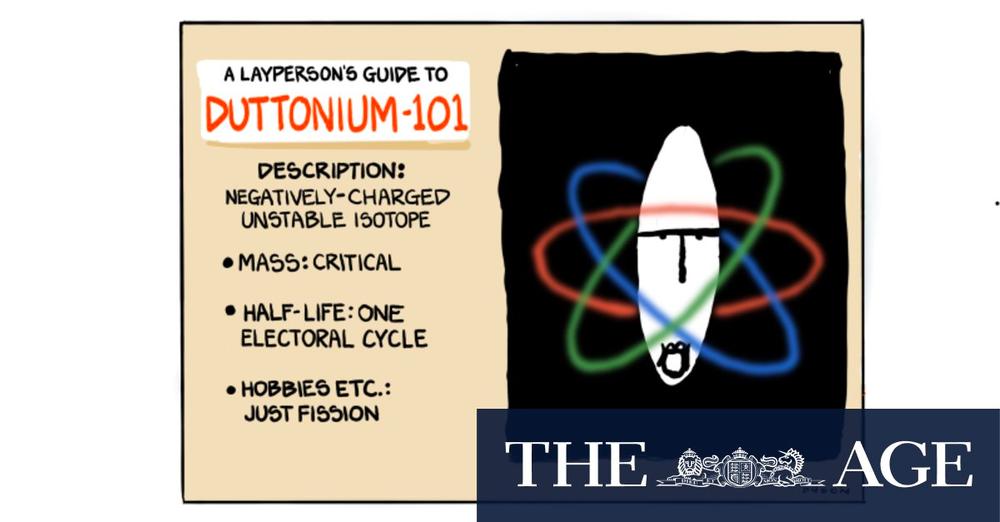
ABC, By Annabel Crabb 29 May 24
Peter Dutton is a freak of nature. Politically, that is…………………………………
Two years in, Dutton is not only still in office, but nobody inside his own party — or even in the National Party — is trying to blow him out of it. It is a truly extraordinary achievement.
His public popularity remains firmly in negative territory, according to Newspoll. So why isn’t this translating into the customary seasonal orgy of backstabbing?
Two reasons.
The first is that there really isn’t, ahem, any alternative……………………………………………………………………………….
Dutton much a much more dangerous opponent for Anthony Albanese than is commonly assumed.
But there is one risk associated with this unseasonably warm bath of internal approbation……………………..his decision to pursue nuclear energy as a principal policy decision is a high-risk call, as a new piece of research — supplied to the ABC — makes clear……………………
When it comes to nuclear, public opinion divides along gender lines
Over recent weeks, the RedBridge Group conducted a survey of around 2,000 Australian voters, seeking their views on various issues including nuclear energy. Respondents were asked whether they would support or oppose an Australian government lifting the ban on nuclear power so private investors could build nuclear power plants here.
The responses, across all voters, were kind of evenly divided. Strong supporters constituted 17 per cent, another 17 said they were supportive, 19 per cent were “neither”, 15 per cent were opposed, 20 per cent strongly opposed, and 12 per cent were unsure. This shakes out to an extremely slender net negative of-1
But the truly fascinating detail in the survey comes when you dig down into who especially loves the idea of nuclear, and who hates it.
And the biggest difference of opinion on nuclear, it turns out, breaks along gender lines……………….
Women disapproved of nuclear power strongly – just 7 per cent strongly agreed a ban should be lifted, compared with 24 per cent of male respondents. That’s a net negative of -29 for women, and net positive of 26 for men.
The only demographics showing real enthusiasm for nuclear power were Coalition voters, those aged over 65, those who earn more than $3,000 a week, and those who own their own home. In each of these instances, every other group was majority opposed.
In other words, every other party’s voters apart from the Coalition’s registered a net negative, as well as every other age bracket apart from the most elderly, and all other income brackets apart from the top one.
Renters and mortgage holders alike disapproved on the whole. Among those who described themselves as under “a great deal of financial stress”, the feeling on nuclear ran at negative 15. Among those under “no stress at all”, however, the reception was much warmer – positive 19…………………………………………………………………………….
And in the two years that have elapsed since female voters demonstrated their annoyance at being ignored and talked down to, the Liberal Party has failed to do anything about its structural under-representation of women in parliament, …………………………………………………………..
There always seems to be an abundance of reasons to get rid of women; almost as many reasons as traditionally abound for holding on to and even promoting male duds. Women do notice this stuff.
And “Never mind ladies, have a nuclear power plant” may not be a very compelling change of subject. https://www.abc.net.au/news/2024-05-29/peter-dutton-nuclear-power-policy-may-risk-alienating-women/103870338
Nuclear will cost Queensland jobs

JOINT STATEMENT Premier The Honourable Steven Miles, Minister for Energy and Clean Economy Jobs, The Honourable Mick de Brenni, 13 May, 2024 https://statements.qld.gov.au/statements/100305
- The LNP backed “Nuclear for Climate Australia” has identified multiple sites in North Queensland for nuclear reactors.
- This would see nuclear reactors in Townsville, the Sunshine Coast, Rockhampton, Brisbane Valley, Toowoomba, the Darling Downs and more.
- LNP going nuclear risks Copperstring jobs, critical minerals boom for Townsville to Mount Isa
- Labor backs clean and renewable energy not nuclear.
- The Miles Government is already delivering jobs and clean energy through the Queensland Energy and Jobs Plan and development of the SuperGrid.
- Those jobs would be at risk with the LNP’s nuclear plans.
The Miles Government is focussing on clean energy jobs and has a working plan for a safe and responsible transition to renewable energy, that will protect existing jobs and create new ones.
Queenslanders from Townsville to Mt Isa are at the heart of Labor’s leading plan for a clean economy future.
Our plan to build CopperString will provide more than 800 jobs during construction and will unlock the $500 billion North West Minerals Province, by linking it with Hughenden and up to 6,000 MW of renewable energy.
This is the nation’s largest expansion to the power grid and it is paid for by progressive coal royalties.
By putting their fossil fuel friends before Queensland’s transition, the LNP is risking thousands of jobs and return to high unemployment.
The LNP’s nuclear option is an LNP recipe for a cost-of-living meltdown. Nuclear is the most expensive option. It is 5 times the price of renewables.
International examples show it will take around 19 years to build a nuclear power station.
This is decades too late for Townsville employers who need clean, affordable energy now to remain competitive.
Nuclear is neither clean nor renewable. And it’s illegal in both Queensland and Australia.
The LNP backed proposal targets nuclear power stations in Townsville, Gladstone, Sunshine Coast, Toowoomba, Brisbane Valley, Ipswich, Darling Downs, the Western Downs, Rockhampton, and Callide.
Quotes attributable to Premier Steven Miles:
“The LNP are proposing nuclear reactors right across this state. Up to three near Townsville, while they have earmarked locations on the Sunshine Coast, Toowoomba, Brisbane Valley and Ipswich.
“What we know about those nuclear reactors is that they will be much more expensive. As much as five times more expensive for your household power bills.
“We also know that as a result of those reactors, future generations of Queenslanders will have to manage nuclear waste forever.
“That’s the LNP’s plan. Higher prices and nuclear waste; putting our waterways, our environment and our beautiful state at risk.”
Quotes attributable to Energy Minister Mick de Brenni:
“Everyone from Townsville Enterprise to the Queensland Resources Council backs Labor’s plan on renewable energy, because Copperstring means jobs and long-term prosperity for the region.
“The only exception is the LNP, who voted in Parliament to oppose the Energy and Jobs Plan, because they are opposed to renewables and public ownership.
“It seems that everybody in Townsville wants local manufacturing and jobs here, except David Crisafulli, who will not stand up to Peter Dutton and Ted O’Brien and actually back Townsville jobs.
“We know how risky and expensive nuclear is and we know David Crisafulli deserted North Queensland for the glitter strip on the Gold Coast, and now he’s setting Townsville up for an unemployment and cost of living meltdown.
“North Queensland already has the world’s best plan to protect local jobs through the transition, so why would the LNP turn its back on the Queensland Energy and Jobs Plan and Copperstring, just so they can cosy up to their big donors?
“Labor is backing renewable energy because it protects jobs in North Queensland, from Townsville to Mt Isa and beyond, and Labor is not prepared to risk those jobs.”
Quotes attributable To Thuringowa MP Aaron Harper:
“I do not want to see a nuclear reactor in Townsville and anywhere near the banks of the much loved and well used Ross River.
“Nobody in Thuringowa and the Upper Ross will accept nuclear waste travelling down Riverway Drive.
“We know the LNP back nuclear energy and are against renewable energy.
“We know that David Crisafulli and the state LNP are too weak to stand up to Peter Dutton’s nuclear agenda.
“There are serious questions to answer from the LNP about their connections to Nuclear for Climate’s plan for nuclear power in Townsville.
“Peter Dutton and David Crisafulli’s nuclear agenda pose an unacceptable risk to Townsville.”
Background information:
- Nuclear for Climate Australia, which has the backing of the Coalition, has identified multiple sites in Queensland as ideal spots to host nuclear reactors.
- Nuclear power is currently illegal in Queensland.
- Miles Government is delivering cheaper, cleaner, reliable power to develop the North West Minerals Province.
- Nation’s largest expansion to the power grid – SuperGrid, not a MiniGrid.
- CopperString will connect nation’s largest renewable energy zone at Hughenden and power a critical minerals industry that will supply world’s transition
- CopperString will be 100% publicly owned
Fast Facts
- Nuclear power production is prohibited under two pieces of legislation:
- Australian Radiation Protection and Nuclear Safety Act 1998
- Environment Protection and Biodiversity Conservation Act 1999
- CSIRO estimate the capital cost of small modular reactors in 2030 to be $15,959/kW, compared to wind at $2105/kW and solar at $1134/kW.
Nuclear subs’ $13bn cost tip of the iceberg
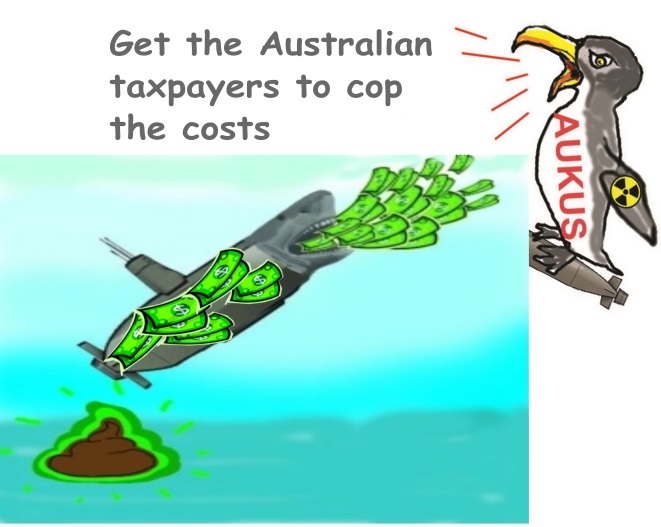
By Kym Bergmann, THE AUSTRALIAN, May 28, 2024
The Defence budget papers for the 2023-24 Financial Year show for the first time that the approved four-year spend on nuclear-powered attack submarines is $13.6bn. This is just the tip of the iceberg because it does not include the submarines themselves, just some of the preparatory costs.
The Defence department is notoriously vague about many details of project funding, and it is only by deduction that this figure involves a gift that will eventually reach a total of $4.6bn to the US submarine industrial base. It also seems to include a smaller, undefined payment to the UK industry for some long lead time nuclear reactor components – but over time that will also reach an identical $4.6bn figure. No one outside a handful of officials knows how these huge numbers were calculated……………………………………..
Also in the US, additional funds are now being committed to submarine construction to boost output. After something of a shaky start, supplemental funding of $3bn has finally been approved by Congress. This is in addition to two lots of $4.7bn in successive financial years which means that funding should no longer be an issue.
It is unknown whether these amounts include the Australian contributions or whether they are treated separately. What is at stake for Australia is a requirement for the USN to have sufficient excess Virginia-class submarines so some can be sold to Australia. The magic number is the construction of 2.33 SSNs per year, an increase in the long-term annual average of 1.4…………………………………….
Another development is that in the complex web of funding negotiations, Congress is now seeking to put the construction of two new Virginia boats back into the budget for the 2025 financial year, which in the US starts on October 1.
Somewhat surprisingly the Presidential Budget Request for next year included just a single Virginia – a move criticised by supporters of the AUKUS deal as slowing down production at a time when it needs to be ramped up.
The summary is that the US is definitely increasing submarine production, with new Colombia-class nuclear missile-firing SSBNs the top priority.
What remains unclear is the date when production will reach the 2.33 level and what happens to the Australian sale if the target slips by a few years. The overall SSN schedule is about three years late and there is a huge maintenance backlog for older boats.
In the next few years, the USN’s fleet of attack submarines declines as older Los Angeles boats face retirement faster than Virginias can be built. There are some work-arounds such as slowing down the retirement process, but numbers will remain tight for a while.
For the sale to Australia to go ahead, a future US president will need to legally certify that the transfer of SSNs will not negatively impact USN capabilities, which is another hurdle that will need to be overcome. In Australia, preparations are under way for the expansion of HMAS Stirling in Western Australia to handle the rotational deployment of nuclear-powered submarines from the US and the UK beginning in 2027.
Defence Industry Minister Pat Conroy has frequently said this involves a $7bn investment – though that number could not be found anywhere in the budget documents either.
Australia, Israel and the ICC. One rule for Ukraine, another for Palestine

by Ian McGarrity | May 28, 2024 https://michaelwest.com.au/australia-israel-and-icc-one-rule-for-ukraine-another-for-palestine/
Already on trial for genocide, Israel has defied the International Court of Justice and amped up its slaughter of Palestinians. Ian McGarrity looks at the ‘global rules based order’, Australia and the predicament for world justice.
ICJ orders and ICC’s Netanyahu arrest warrant
How many times have you heard Australian political leaders and senior bureaucrats intone our country’s belief in, and strategic reliance on the international community conforming to the ‘rules-based international order’?
But how consistent is a country like Australia likely to be when faced with supporting orders and obligations flowing from last week’s actions of rules-based entities like the International Criminal Court (ICC) and International Court of Justice (ICJ) when it doesn’t suit us or our own domestic values environment? Let alone those espoused by our ally, the United States?
The ICC is like a standing war crimes entity that deals with individuals accused of committing certain prescribed international crimes who are not likely to be dealt with by their own nation’s judicial system. The ICJ is a UN instrumentality dealing with disputes between countries.
Anthony Albanese and our urbane Foreign Minister, Penny Wong, are currently trying to navigate the complex thicket the ICC and ICJ have presented them. And the PM is seemingly not making a great fist of mastering the nuanced political, and arcane legal language used by the ICJ and the ICC in their respective orders and actions concerning the Gaza war last week.
ICJ orders and ICC’s Netanyahu arrest warrant
The ICJ made orders on May 17, which, on their face, appear to require Israel to cease military operations in the Gaza city of Rafah. The language of these orders is so tortured from seeking compromise and agreement from 13 of the 15 relevant judges, that international legal experts and the two dissenting judges are not really sure of their exact legal meaning.
Yet international political commentators seem to have no such difficulty interpreting the majority of the ICJ’s Rafah orders. They often take a small amount of knowledge and understanding and organically grow that into awesome conclusions that may not be factually sound.
The Chief Prosecutor of the ICC, on the other hand, put very clear meat on his bones regarding the action he wants: for a three-judge panel of the ICC to approve the issuing of arrest warrants against three Hamas leaders and the Prime Minister and Defence Minister of Israel. And if those arrest warrants are issued, for the 124 signed-on member countries of the ICC, including Australia, to arrest any of those five should they land in Australia.
One senior Australian Government Minister, Chris Bowen, has supported what he believes (really can he be sure he knows) the ICJ has ordered Israel to do by saying: “Australia believes international law should be complied with”.
Australia believes the binding rulings (of the ICJ) should be complied with, and we believe Rafah should not be invaded by Israel.
I wonder whether he’ll be as certain of his position if the Benin, Romanian and Mexican ICC judge panel of three decides Australia should arrest the Israeli Prime and Defence Ministers in accordance with the arrest warrant the ICC’s Chief Prosecutor seeks.
Or will he say the 124 members of the ICC are obligated to arrest the three Hamas leaders should their arrest warrants be approved, but remain silent on any applying to Benjamin Netanyahu and Yoav Gallant?
Australia’s response
Our PM, of course, and Foreign Minister Wong back in January had already opined that they did not agree with the basic premise of the genocide case South Africa brought before the ICJ.
Presumably, that means they must have some doubts about the ICJ orders last Friday (even if Bowen does not) concerning Israel and Rafah, which, also presumably, to some extent support the contention before the ICJ that genocide is happening or about to happen in Gaza.
So much for our PM’s reluctance last week to comment mid-stream on the ICC’s arrest warrant process when he and Wong clearly did just that back in January concerning the ICJ process.
The fact is, the ‘rules-based international order’ is really a minefield inhabited by a range of countries seeking different outcomes, usually ‘according to each’s national interest’.
The ICJ and, in particular, the ICC are fundamentally political as well as judicial entities. They are not just finding that the facts comprise ‘2’ and ‘3’ and hence the sum of those facts is ‘5’. They are dealing, like Justice Lee, in the Higgins Lehmann case, much more in ‘the balance of probabilities’.
Palestine and the ICC
The matter actually begins with the ICC admitting the State of Palestine as a member of the ICC on 1 April 2015. That was nine years ago.
As a member, on 22 May 2018, Palestine raised an issue for the ICC to adjudicate regarding relevant crimes alleged to be committed by Israelis in the territory of Palestine since 13 June 2014, with no end date.
On 5 February 2021, a previous ICC panel of three judges determined (by a 2-1 majority) that the ICC had jurisdiction to examine the alleged relevant crimes covered in the Palestine referral. The previous ICC Chief Prosecutor had referred this jurisdiction matter to the panel on 22 January 2020.
Australia provided its views to the three-judge panel on 14 February 2020 and opposed the ICC having jurisdiction concerning the relevant crimes set out in the Palestine referral of 22 May 2018. The investigation by the office of the Prosecutor, which led to last week’s application to the ICC three judge panel for arrest warrants to be issued, commenced on 3 March 2021.
Note that all this action over the 6 years since Palestine became a member of the ICC, and
occurred at least 19 months before the Hamas attack on Israel on 7 October last year and the Israeli response.
The ICC genocide case – what’s next?
On 17 November 2023, the current Chief Prosecutor, Karim Khan, received referrals from five ICC members, South Africa, Bangladesh, Bolivia, Comoros, and Djibouti, requesting an investigation into possible relevant crimes in the West Bank, East Jerusalem and Gaza (the ‘territory’ of a member’s ‘state’ – Palestine). Chile and Mexico were added to the list of referral members on 18 January 2024.
Under the Rome Statute, where a signatory has referred a matter to the Office of the Prosecutor and it determines that a reasonable basis exists to commence an investigation, the Office is obliged to act. This is thre process that led to last week’s referral.
In my view, the political and legal options open to the three judges from Benin, Romania and Mexico now considering Khan’s request for 5 arrest warrants to be issued are:
- Neither Hamas nor Israeli leaders (notwithstanding the Prosecutor’s request and the referrals from the eight members)
- Issue arrest warrants for leaders of either Hamas or Israeli leaders alone; or
- c. Issue arrest warrants for leaders of both Hamas and Israel
I can only imagine that many, if not all, at the top of the ICC tree probably think it would be best for its panel to find any substantial reason to delay any decision on the arrest warrant application because all of the options above are almost certain to do great damage to the ICC.
For theICC’s sake I hope in view of the majority only (2-1) decision regarding jurisdiction of February 2021 – and the cleft stick on which the ICC rules and processes have hoisted the Chief Prosecutor and the ICC judges – the panel can refer the decision on jurisdiction for further review.
This would place the Prosecutor’s application for arrest warrants into Chelmsford like deep sleep.
Albanese and Wong must also be hoping that deep sleep envelops Karim Khan’s latest application for arrest warrants to be issued against Netanyahu and Gallant.
What about Putin and Ukraine?
However this was not their view when Khan requested the ICC issue arrest warrants for Vladimir Putin, and his Commissioner for Children’s Rights Maria Lvova-Belova, on 22 February 2023 and such warrants were approved by the Court just 23 days later.
Australia had joined 42 other countries in referring the Ukraine invasion matter to Khan at the ICC and indicated it would act on the warrants if ever that was relevant.
Can one pick and choose which international rules-based order decisions one supports or rejects?
Could Australia say it would not support arrest warrants for Netanyahu and Gallant and remain an ICC member?
Coalition’s brave nuke world a much harder sell after new CSIRO report
Graham Readfearn, https://www.theguardian.com/australia-news/article/2024/may/26/coalitions-brave-nuke-world-a-much-harder-sell-after-new-csiro-report?CMP=soc_568
The agency’s GenCost analysis says a first nuclear plant for Australia would deliver power ‘no sooner than 2040’ and could cost more than $17bn
The Coalition’s pitch on nuclear energy for Australia has had two recurring themes: the electricity will be cheap and it could be deployed within a decade.
CSIRO’s latest GenCost report – a document that analyses the costs of a range of electricity generation technologies – contradicts both of these points. It makes the Coalition’s job of selling nuclear power plants to Australians ever more challenging.
For the first time, the national science agency has calculated the potential costs of large-scale nuclear electricity in a country that banned the generation technology more than a quarter of a century ago.
Even using a set of generous assumptions, the CSIRO says a first nuclear plant would deliver power “no sooner than 2040” and could cost more than $17bn.
It is likely to spark an attack on the credibility of the report from nuclear advocates and those opposed to the rollout of renewable energy. Opposition leader, Peter Dutton, has already attacked the report.
In the meantime, Australia waits for the Coalition to say what kind of reactors it would deploy, where it would put them and how much it thinks they would cost.
Now that CSIRO has released its report, here’s what we know about the viability of a nuclear industry in Australia.
What’s new on nuclear costs?
CSIRO’s GenCost report says a 1,000 megawatt nuclear plant would cost about $8.6bn to build, but that comes with some large caveats. The main one is that this was the theoretical cost of a reactor in an Australia that already had an established and continuous program of building reactors.
The $8.6bn is based on costs in South Korea, which does have a continuous reactor building program and is one country the least beset by cost blowouts.
To make the cost more relevant, CSIRO compared the Australian and South Korean costs of building modern coal plants. Costs were more than double in Australia.
But CSIRO warns the first nuclear plants in Australia would be subject to a “first of a kind” premium that could easily double the $8.6bn build cost.
In the UK, a country that has been building reactors intermittently, costs for its under-construction Hinkley C reactor (more than three times the size of a theoretical 1,000MW reactor in Australia) started at $34bn and could now be as high as $89bn.
In the United States, the country’s largest nuclear plant has just turned on its final unit seven years behind schedule and at double the initial cost. There are no more nuclear plants under construction in the country.
What about the cost of the electricity?
CSIRO also offers cost estimates for the electricity produced by large-scale reactors, but those too assume a continuous nuclear building program in Australia.
Electricity from large-scale reactors would cost between $141 per megawatt hour and $233/MWh if they were running in 2030, according to GenCost.
Combining solar and wind would provide power at between $73 and $128/MWh – figures that include the costs of integrating renewables, such as building transmission lines and energy storage.
What about those small modular reactors?
The Coalition has also advocated for so-called “small modular reactors” which are not commercially available and, CSIRO says, are unlikely to be available to build in Australia until 2040.
One United States SMR project lauded by the Coalition collapsed in late 2023 because the cost of the power was too high.
That project, CSIRO says, was significant because its design had nuclear commission approval and was “the only recent estimate from a real project that was preparing to raise finance for the construction stage. As such, its costs are considered more reliable than theoretical projects.”
GenCost reports that power from a theoretical SMR in 2030 would cost between $230 and $382/MWh – much higher than solar and wind or large-scale nuclear.
How quickly could Australia build a nuclear plant?
Nuclear advocates tend to point to low nuclear power costs in countries that have long-established nuclear industries.
Australia has no expertise in building nuclear power, no infrastructure, no regulatory agency, no nuclear workforce and a public that is yet to have a serious proposition put in front of it.
Australia’s electricity grid is fast evolving from one dominated by large coal-fired power plants to one engineered for and dominated by solar, wind, batteries and pumped hydro with gas-fired power working as a rarely used backup.
This creates a major problem for the Coalition, because CSIRO estimates “if a decision to pursue nuclear in Australia were made in 2025, with political support for the required legislative changes, then the first full operation would be no sooner than 2040.”
Tony Wood, head of the Grattan Institute’s energy program, says: “By 2040, the coal-fired power stations will be in their graves. What do you do in the meantime?”
“You could keep the coal running, but that would become very expensive,” he says, pointing to the ageing coal fleet that is increasingly beset by outages.
Wood says the GenCost report is only a part of the story when it comes to understanding nuclear.
The Coalition, he says, would need to explain how much it would cost to build an electricity system to accommodate nuclear.
Could you just drop nuclear into the grid?
The biggest piece of generation kit on Australia’s electricity grid is a single 750 megawatt coal-fired unit at Kogan Creek in Queensland. Other power stations are larger but they are made up of a series of smaller units.
But the smallest of the “large-scale” nuclear reactors are about 1,000MW and most are 1,400MW.
Electricity system engineers have to build-in contingency plans if large units either trip or have to be pulled offline for maintenance. That contingency costs money.
In Australia’s current electricity system, the GenCost report says larger nuclear plants would probably “require the deployment of more generation units in reserve than the existing system consisting of units of 750MW or less.”
But by the time a theoretical nuclear plant could be deployed, most if not all the larger coal-fired units will be gone.
Who might build Australian nukes?
Some energy experts have questioned whether any company would be willing to take up a contract to build a reactor in Australia when there are existing nuclear nations looking to expand their fleets.
Right now, nuclear reactors are banned federally and in several states.
The GenCost report also points to another potential cost-raiser for nuclear – a lack of political bipartisanship.
The report says: “Without bipartisan support, given the historical context of nuclear power in Australia, investors may have to consider the risk that development expenses become stranded by future governments.”
WA Liberals reject Peter Dutton’s nuclear plan
New Daily, AAP, May 26, 2024,
The Western Australia Liberal Party has poured cold water on the federal Coalition’s plan for nuclear power in the state, while backing coal to keep the lights on.
Energy spokesman Steve Thomas says federal Opposition Leader Peter Dutton’s plan for nuclear power won’t work in WA.
“To get approvals and construction happening on a nuclear power plant, whatever the size is, is probably a 15-to-20-year timeframe,” he told reporters on Sunday.
“In the meantime, we have to keep the lights on we have to keep the air conditioners running and we have to do it at a cost that the community can afford.”
WA’s power system was small and a large cost-effective nuclear power plant wouldn’t work, Mr Thomas said.
“The size of the unit would matter significantly because as CSIRO has said, the small ones which will fit into our marketplace are more than two-to-three times as expensive per unit of electricity as the large ones,” he said.
“There might one day be room for a small one when the time is right and the business case steps up and the community accepts it.”
A CSIRO report released last week found building a large-scale nuclear power plant in Australia would take 15 years, cost at least $8.5 billion and produce electricity about twice the cost of renewables.
Any nuclear plant in WA would need significant federal government investment and Mr Thomas said he was happy to look at Mr Dutton’s business case and continue talks.
“This is a long, ongoing discussion and we the state Liberals are not afraid of nuclear energy … but it has to stack up and it has to have support,” he said………………………………… https://www.thenewdaily.com.au/news/2024/05/26/wa-liberals-reject-dutton-nuclear-plan
Dutton’s devoid-of-details nuclear plan an atomic failure
By Belinda Jones | 25 May 2024 https://independentaustralia.net/politics/politics-display/duttons-devoid-of-details-nuclear-plan-an-atomic-failure,18632
Given the absence of substance in Peter Dutton’s nuclear policy so far, his ‘lack-of-details’ cry over The Voice must surely come back to haunt him, writes Belinda Jones.
TWO YEARS AGO, Nationals Leader David Littleproud called for a national discussion on nuclear energy.
Said Littleproud:
‘Peak business groups and unions are calling for the moratorium on nuclear power to be lifted, amid a push to ensure Australia is “technology agnostic” during its transition to cut emissions. It’s time to have the discussion.’
Almost two years later, neither Littleproud nor Dutton has yet produced anything of substance on the issue for the Australian public to consider — just broken promises and delays over when details on the Coalition’s nuclear energy policy will be delivered.
Prime Minister Anthony Albanese has called on the Coalition to release details on its nuclear energy policy.
Dutton’s level of preparedness for a discussion on nuclear energy appears only to have extended to a tweet at this stage.
Since taking over the nuclear conversation, Dutton has incurred the ire of the Commonwealth Scientific and Industrial Research Organisation (CSIRO), which was forced to defend its reporting in a “rare intervention”
In March 2024, Dutton made incorrect claims about Australia’s national science agency’s costings and slammed its GenCost 2023/24 report, prompting a warning from CSIRO chief executive Douglas Hilton that public trust requires our political leaders refrain from disparaging science.
In a telling statement this week, Member for Wannon Dan Tehan pledged his support for the Coalition’s nuclear energy policy — just not in his electorate. This may be the reason for Dutton’s delay in releasing the policy details: a divided party room.
To be fair, mainstream media has attempted to elicit answers from Dutton for months now, to no avail. The public’s desire for detail on the Coalition’s nuclear policy is becoming more pressing as both the 2024 Queensland State and 2025 Federal Elections loom.
IA contacted Peter Dutton to try to get some direct answers for our readers, asking the following questions:
In terms of transmission of nuclear energy, what changes to existing power grids and transmission systems will have to be made to accommodate nuclear reactors or SMRs? What will be the cost and timeframe of those changes?
How many nuclear reactors or small nuclear reactors (SMRs) does the Liberal/National Coalition want to build?
What will be the average cost per nuclear reactor and SMR?
What is the estimated date of nuclear reactors or SMRs being operational?
Where will the proposed nuclear reactors or SMRs be located?
In proposed nuclear reactor or SMR locations, what steps has the Coalition taken to consult with the local community, environmental agencies and other levels of government about the impacts of the proposed nuclear reactor or SMR, and are any details of those consultations available to the public?
Does the Coalition plan for nuclear include significant taxpayer investment? If so, how much?
What budget measures will have to be taken to free up funding for nuclear reactors or SMRs, that is, what cuts in other areas of the budget will have to be made?
How many short-term jobs will be created during the construction phase of each proposed nuclear reactor or SMR? Will those jobs be mainly local jobs or FIFO?
Traditionally, government support of a new enterprise/industry is conditional on the creation of secure, new, ongoing jobs. Given the fact nuclear reactors and SMRs will likely be fully automated requiring very few jobs when operational, what is the quid pro quo for government funding? Will taxpayer funding secure an equity stake in nuclear businesses in return for government support in lieu of a significant number of jobs?
How will the nuclear reactors or SMRs be cooled? Do the proposed locations have enough water to support a nuclear reactor or SMR, especially during drought? Please provide evidence to support your answer.
Will the Coalition’s proposed nuclear reactors or SMRs draw water from the Great Artesian Basin at any time? If so, how much and what will be the impact?
What is the Coalition’s plan for the nuclear waste generated by nuclear reactors and SMRs and the long-term site repatriation costs and timeframe of any proposed nuclear reactor or SMR site?
What business groups, individual persons or businesses, or private investors have expressed interest to the Coalition in building nuclear reactors or SMRs? And what is the current estimate in dollar terms of that interest?
Are any of those business groups, individual persons or businesses, or private investors already invested in other industries associated with nuclear energy, such as mining and resources?
Two hours later we received a curt reply stating, ‘… we will announce further detail regarding our energy policy in due course’.
The email also suggested IA “continues its own research”.
This reply from Dutton’s office is wholly unsatisfactory, so IA will continue seeking answers from the Coalition to these important questions — answers that our readers have a right to know – until we get a more informative response. After all, it was the Coalition that called for a conversation on nuclear energy in the first place and its “plan” is to implement a nuclear policy if it wins office in less than 12 months.
Time is running out for Dutton to present his nuclear energy policy — important electoral dates approach.
But, clearly, the Coalition’s behaviour around the much-awaited policy details indicates how totally unprepared it is to hold government. It wants to lead the conversation and the country, yet it hasn’t put in the work. After almost two years of “discussion”, the Opposition still comes to the table empty-handed — no information, no plan, just a series of thought bubbles and meaningless L-NP talking points.
Dutton’s words –“When you deliberately keep the detail back, people become suspicious” – will no doubt come back to haunt him. Because when it comes to the Coalition’s nuclear energy policy — if Australians don’t know, they’ll vote no.
Powering ahead: Dutton to name nuclear sites within weeks

The Age, By James Massola, Mike Foley and Hamish Hastie, May 22, 2024
The federal opposition is set to announce the locations of up to seven proposed nuclear power sites in a matter of weeks, with two of the sites to be in Liberal-held seats and either four or five sites in Nationals-held seats.
Possible nuclear power plant sites that have been discussed within the Coalition include the Latrobe Valley and Anglesea in Victoria, the Hunter Valley in NSW, Collie in Western Australia, Port Augusta in South Australia, and even potentially a plant in Nationals leader David Littleproud’s electorate of Maranoa in south-west Queensland.
All of these sites currently host either coal or gas-fired power stations.
This masthead has been told by a coalition MP, who asked not to be named to brief on confidential deliberations, that the much-anticipated announcement of the six or seven sites – a closely guarded secret for months – has been finalised, and a policy launch has been pencilled in to take place by early June.
That MP said technical work on the Coalition’s policy was still under way, discussions had been held with nuclear construction companies who could build the plants, and that the launch, which would include detailed costings, was imminent.
The revelation that sites are all but locked in comes after a day of mixed messages from shadow ministers including Littleproud, Angus Taylor and Jane Hume over the timing and details of a policy that will be at the heart of the Coalition’s election pitch.
Opposition Leader Peter Dutton dismissed the CSIRO’s annual GenCost report, which found that the first large scale nuclear reactor in Australia would cost more than $16 billion and would not come on line before 2040, while the cost of subsequent reactors would ultimately fall to about $8 billion
Dutton questioned the credibility of the report as it was “based on the current government settings” and said it didn’t consider what he claimed was a more than trillion-dollar cost for the Albanese government’s renewables roll out.
The GenCost report factored in $40 billion worth of transmission lines as well as batteries by 2030 and still found an electricity network that was 80 per cent powered by renewables would provide cheaper power than gas, coal or nuclear power.
Asked when the Coalition would finally release its policy, Dutton said “we’ll provide that information in due course”, and added that Prime Minister Anthony Albanese had said there were 12 months until the next election.
Dutton refused to say where the sites would be: “I haven’t ruled out or in any sites. I’ve said that we’re looking at coal-fired power stations that are coming to an end of life.”
Victorian Nationals MP Darren Chester, whose seat takes in much of the Latrobe Valley, last month spoke out to caution that his constituents would need a significant economic package if they were to host a nuclear power station.
Several MPs, who asked not to be named, expressed concern that the nuclear policy had been delayed after Dutton had flagged, back in March, that it would be released before the May federal budget.
One MP said “this is a complex policy and we will have to educate 26 million people. There will be a scare campaign from Labor and they will frame the next election as a referendum on nuclear.”
In March, 12 Coalition MPs publicly backed lifting the moratorium on nuclear power in Australia but would not commit to hosting a nuclear power plant in their own electorate.
Littleproud told Sky News on Wednesday that “we’re going to announce them, we’ve been very clear, we’ve been very honest about this, that we will get to juncture in the coming weeks”.
But Taylor told the National Press Club the opposition would release its energy policy “in the coming months”, and ruled out offering subsidies to ensure the plants are commercially viable……………………………………………………. https://www.theage.com.au/politics/federal/powering-ahead-dutton-to-name-nuclear-sites-within-weeks-20240522-p5jflb.html
Australia can learn from the American experience with nuclear power

Amory B Lovins, May 21, 2024, https://reneweconomy.com.au/australia-can-learn-from-the-american-experience-with-nuclear-power/#google_vignette
During my current visit to Australia I’ve been surprised to see nuclear power promoted by the federal Coalition and by certain media.
Rather than fact-check the questionable claims of nuclear proponents, let me here outline the recent experience with nuclear power in my home country, the United States, and then discuss how that experience could inform the energy debate in Australia.
Nuclear power in the US is in decline. A dozen reactors have been shut down over the past decade — 41 in all. The decline will continue because US reactors average 42 years old, beyond their original design life. Of 259 US power reactors ordered since 1955, 94 are still in service; by 2017, only 28 remained competitive and hadn’t suffered at least one outage of at least a year. That’s an 11 percent success rate.
Only two nuclear power construction projects have commenced this century, and Australians should take careful note of those projects’ failure despite massive government support.

The V.C. Summer project in South Carolina, comprising two Westinghouse AP1000 reactors, began construction for an estimated US$11.5bn total in 2013. It was abandoned in 2017 after costs rose to US$25bn, wasting US$9bn. Westinghouse soon filed for bankruptcy protection.
In addition to a $US9 billion hole in the ground, the V.C. Summer fiasco gave rise to the ‘nukegate’ scandal, a web of corruption that has already seen some culprits jailed with others likely to follow.
The other US reactor construction project was the Vogtle project in Georgia, also comprising two AP1000 reactors. It was recently completed but many years behind schedule and at extravagant cost, echoing similar experience in Finland, France, and the UK.

Westinghouse said in 2006 that it could build an AP1000 reactor for as little as US$1.4 billion. The Vogtle project’s final cost was over 10 times greater at US$17.5 billion per reactor. That money that would have been far better spent on renewables and energy efficiency programs. Buying nuclear power instead displaced less fossil fuel per year and per dollar, worsening climate change.
Small modular reactors
The failure of large reactor construction projects has led the industry to pivot to so-called small modular reactors (SMRs). But SMRs don’t exist, unless you count two demonstration plants in Russia and China. SMRs are unlikely to improve the safety, security or waste problems of large reactors, and SMRs’ economics are even more unattractive than large reactors’.

NuScale Power, leading America’s most advanced SMR project, recently abandoned its flagship project in Idaho due to soaring costs despite about US$4bn in US government subsidies. With no other credible customers, the firm seems more likely to go bankrupt than to build any SMRs.
NuScale’s most recent cost estimate was an astronomical US$9.3 billion for a 462 megawatt (MW) plant with six 77-MW reactors. That’s US$20,100 per kilowatt (kW). Compare the actual 2023 market prices per kW found by leading US investment firm Lazard: US$700-1400 for utility scale solar PV and US$1025-1700 for onshore wind.
Nuclear’s higher capital cost per kW far outweighs its greater output per kW, leaving it several-fold out of the money before counting its substantial operating costs. And including grid integration costs would actually widen nuclear’s disadvantage because its outages tend to be bigger, longer, sharper, and less predictable than solar and wind power’s variations, requiring more and costlier backup.
Other companies hoping to develop SMRs or so-called ‘advanced’ reactors are faring no better. Indeed a pro-nuclear lobby group noted late last year that efforts to commercialize a new generation of ‘advanced’ nuclear reactors “are simply not on track” and it warned nuclear enthusiasts not to “whistle past this graveyard”.
Coal-to-nuclear
The Coalition’s energy spokesperson Ted O’Brien claims that “evidence keeps mounting that a coal-to-nuclear strategy is good for host communities, and especially workers as zero-emissions nuclear plants offer more jobs and higher paying ones.”

Mr. O’Brien has promoted Terrapower’s plan to replace coal with nuclear in Wyoming but the company is at the early stages of a licensing process and it is unclear whether finance can be secured or whether the adventurous new technology can ever get built and compete on the grid despite about US$2bn of government subsidy.
In 2009, applications for 31 new reactors were pending in the US. Nothing eventuated other than the abandoned South Carolina project and the recently completed Georgia project. No reactors — large or small — are currently under construction in the US. For the time being at least, we’re being spared the economic and climate costs of further disastrous nuclear projects.
Lessons for Australia
What lessons can Australia learn from the US experience?
Industry claims should be treated with skepticism. Early cost estimates for the Vogtle project were out by a factor of 10. Westinghouse’s claim that it could build an AP1000 reactor in “approximately 36 months” also proved to be wildly inaccurate: the Vogtle reactors took 10 and 11 years to build; closer to 20 years if you include the planning and licensing process.
Proponents claiming that Australia could have reactors operating by the mid-2030s are sadly mistaken. Most or all of Australia’s remaining coal power plants will have closed long before nuclear reactors could take their place in the energy market.
It’s vital that Australians consider the fact that you would be starting a nuclear power industry with none of the United States’ 70-plus years’ experience – despite which 42 reactor projects were abandoned, 41 built but closed, and scores now operate only thanks to government rescues. It would be folly to imagine that Australia can do better.
The point was made sharply by NSW Chief Scientist Hugh Durrant-Whyte in a 2020 report prepared for the NSW Cabinet. A former Chief Scientific Adviser at the UK Ministry of Defence, Dr Durrant-Whyte said: “The hard reality is Australia has no skills or experience in nuclear power plant building, operation or maintenance – let alone in managing the fuel cycle. Realistically, Australia will be starting from scratch in developing skills in the whole nuclear power supply chain.”
Likewise, former Australian Chief Scientist Dr Alan Finkel states: “Any call to go directly from coal to nuclear is effectively a call to delay decarbonisation of our electricity system by 20 years.”
I’m pleased to learn that the Australian government aims to double renewable supply to the National Energy Market to reach 82 percent by 2030. It’s especially impressive to witness the world-class renewable energy revolution in South Australia, where renewables provide 74 percent of electricity on average and the state government aims to reach 100 percent net renewables as soon as 2027.
Nuclear power is a minor distraction, adding each year at best only as much electricity supply as renewables add every few days. It has no business case or operational need anywhere. Especially it has no place in Australia’s energy future. No one who understands energy markets would claim otherwise.
Amory Lovins has been an energy advisor to major firms and governments in 70+ countries for 50+ years; has authored 31 books and about 900 papers; is an integrative designer of superefficient buildings, factories, and vehicles; and has won many of the world’s top energy and environmental awards. He is Adjunct Professor of Civil and Environmental Engineering at Stanford University.
We’ve underestimated the ‘Doomsday’ glacier – and the consequences could be devastating

The Thwaites Glacier, dubbed ‘Doomsday’, could trigger a two-foot rise in global sea levels if it melts completely
Katie Hawkinson, 22 May 24, https://www.independent.co.uk/climate-change/news/thwaites-doomsday-glacier-melting-study-b2548765.html
A vast Antarcticglacier is more vulnerable to melting than previously thought, according to new research, with potentially devastating consequences for billions of people.
The Thwaites Glacier — dubbed the “Doomsday” glacier because of the grave impacts for global sea level rise if it melts — is breaking down “much faster” than expected, according to a peer-reviewed study published Monday in the academic journal, Proceedings of the National Academy of Sciences.
Using satellite imagery, scientists determined that widespread contact between the glacier and warm ocean water is speeding up the melting process. The climate crisis is interrupting natural processes across large parts of the continent, according to the Antarctic and Southern Ocean Coalition.
The glacier, roughly the size of the United Kingdom, could cause global sea levels to rise more than 2 feet if it melts completely, according to the study.
“Thwaites is the most unstable place in the Antarctic and contains the equivalent of 60 centimeters of sea level rise,” study co-author Christine Dow said in a statement.
“The worry is that we are underestimating the speed that the glacier is changing, which would be devastating for coastal communities around the world,” she continued.
Record rising sea levels have already had severe consequences for coastal and island communities. In February, 1,200 residents of the island, Gardi Sugdub, began to relocate to mainland Panama as the rising Caribbean Sea overtake their home, according to the BBC.
As a result, the indigenous Guna people have become some of the first climate refugees in the Americas.
United Nations Secretary-General Antonio Guterres said last year that more than 900million people face extreme danger from rising sea levels — a projection made even before this week’s discovery about the rapidly-melting glacier.
Mr Guterres said cities across the globe including Mumbai, Shanghai, London, New York, and Buenoes Aires will face “serious impacts”
“The consequences of all of this are unthinkable,” he said. “Low-lying communities and entire countries could disappear forever. We would witness a mass exodus of entire populations on a biblical scale. And we would see ever-fiercer competition for fresh water, land and other resources.”
Peter Dutton to reveal nuclear power locations ‘soon’ amid energy debate

MY COMMENT on Dutton’s statement – He said the report was a blueprint for investors, and the Coalition was centring its nuclear policy around what would be best for consumers.
So Dutton thinks that if nuclear power is bad for investors, it would somehow be good for the public – “consumers”
Well, I guess that means that it would have to be paid for by tax-payers?
The backyards where the Coalition plans to build nuclear power plants will be announced “soon”, as Australia’s energy debate ramps up.
Ellen Ransley, May 23, 2024
Australians “won’t have to wait long” to find out if the Coalition plans to build a nuclear reactor in their backyard, with policy and possible locations to be announced soon.
The Coalition won’t be drawn on reports it is set to announce the locations of up to seven proposed power sites within weeks, which according to Nine Newspapers, could include sites in two Liberal-held seats and four or five Nationals-held seats.
They reportedly include the Latrobe Valley and Anglesea in Victoria, the Hunter Valley in NSW, Collie in WA, Port Augusta in South Australia, and potentially a plant in the southwest Queensland electorate of Maranoa, held by Nationals leader David Littleproud.
All of those areas currently house coal or gas-fired power stations.
Coalition energy spokesman Ted O’Brien wouldn’t comment directly on whether the opposition had those sites in its sights, offering instead a promise of an announcement “in due course”………………………..
Environment Minister Tanya Plibersek said the Coalition’s plan was “still a fantasy
Why doesn’t Peter Dutton just front up and tell us. It was coming nine weeks ago!” she told Sky News.
“We need to know where they will go, how much they will cost, and when they will be released.”
Asked directly if Collie was a location, Mr Dutton said he hadn’t “ruled it out or in”.
“I’ve said that we’re looking at coal-fired power stations that are coming to an end of life,” he said.
Mr Dutton also dismissed the CSIRO’s annual GenCost report, after it found the country’s hypothetical first large-scale nuclear reactor could cost up to $17bn and take until 2040 to be built.
Moreover, the report found the cost of the electricity it would generate would be twice as much as that of renewables.
Mr Dutton said the report was “based on the current government settings, which are against the use of nuclear”, and said it didn’t consider what he claimed was a more than trillion dollar cost for the government’s renewables rollout.
Mr O’Brien said while some of the capital cost assumptions in the report were unproblematic, it was “hard to say exactly what the first plant would cost”.
He said the report was a blueprint for investors, and the Coalition was centring its nuclear policy around what would be best for consumers.
“Once you have nuclear in the mix, prices come down,” he said.
Treasurer Jim Chalmers, meanwhile, said the CSIRO report “torpedoes” Mr Dutton’s nuclear “fantasy”.
“I think the CSIRO has completely torpedoed this uncosted nuclear fantasy of Peter Dutton’s,” he said.
“The madness of this I think is laid bare in the CSIRO report for Australia we have immense opportunity in the renewable sector as the world transitions to net zero.” https://www.theguardian.com/australia-news/article/2024/may/22/australia-nuclear-power-plants-csiro-peter-dutton-liberal-coalition-plan
Isle of Wight-size iceberg breaks from Antarctica

BBC News, Jonathan Amos, Science correspondent, 20 May 24
Another big iceberg has broken away from an area of the Antarctic that hosts the UK’s Halley research station.
It is the third such block to calve near the base in the past three years.
This new one is not quite as large, but still measures some 380 sq km (145 sq miles) – roughly the size of the Isle of Wight.
The British Antarctic Survey (BAS) took the precaution of moving Halley in 2017 because of concerns over the way the local ice was behaving.
Its buildings were shifted on skis to take them away from immediate trouble.
The station is also now routinely vacated during the long dark months of the southern winter. The last personnel were flown out in February.
Halley sits on top of the Brunt Ice Shelf, which is the floating protrusion of glaciers that have flowed off the continent into the Weddell Sea.
This shelf will periodically shed icebergs at its forward edge and it is currently going through an extremely dynamic phase.
In 2021, the shelf produced a berg the size of Greater Paris (1,300 sq km/810 sq miles) called A74, followed in 2023 by an even bigger block (1,500 sq km/930 sq miles) the size of Greater London, known as A81.
The origin of the new berg goes back to a major crack that was discovered in the shelf on 31 October, 2016. Predictably, it was nicknamed the “Halloween Crack”.
A further fracture perpendicular to Halloween has now cut a free-floating segment of ice that has already begun to drift out into the Weddell Sea………………..
Satellite imagery confirms the GPS data. The berg is surrounded by seawater on all sides.
The loss of so much ice from the Brunt structure these past three years has triggered a rapid acceleration in the shelf’s seaward movement.
Historically, it has flowed forward at a rate of 400-800m (1,300-2,600ft) per year. It is now moving at about 1,300m (4,300ft) a year………………………….
“This latest calving reduces the Brunt Ice Shelf to its smallest observed size,” commented remote sensing specialist Prof Adrian Luckman, from Swansea University…………………………………………… more https://www.bbc.com/news/articles/c033wr32ewno
Lidia Thorpe warns new laws will turn Australia into “the world’s nuclear waste dump”

Giovanni Torre – May 13, 2024, https://nit.com.au/13-05-2024/11377/lidia-thorpe-warns-new-laws-will-turn-australia-into-the-worlds-nuclear-waste-dump?mc_cid=a41a81cd8c&mc_eid=261607298d
Senator Lidia Thorpe has warned new legislation to regulate nuclear safety of activities relating to AUKUS submarines has left Australia open to becoming “the world’s nuclear waste dump”.
Under the AUKUS deal, the federal government agreed to manage nuclear waste from Australian submarines, but under legislation to be introduced in June, Australia could be set to take nuclear waste from UK and US submarines also, Senator Thorpe warned.
The Gunnai, Gunditjmara and Djab Wurrung independent senator for Victoria called on the government to urgently amend the bill to prohibit high-level nuclear waste from being stored in Australia, a call she said is backed by experts in the field and addresses one of the major concerns raised during the inquiry into the bill.
“This legislation should be setting off alarm bells, it could mean that Australia becomes the world’s nuclear waste dump,” Senator Thorpe said on Monday.
“The government claims it has no intention to take AUKUS nuclear waste beyond that of Australian submarines, so they should have no reason not to close this loophole.
“Unless they amend this bill, how can we know they’re being honest? They also need to stop future governments from deciding otherwise. We can’t risk our future generations with this.”
In March, Senator Thorpe questioned Foreign Affairs Minister Penny Wong about the long-term cost from storage of nuclear waste, and whether Australia would take on foreign nuclear waste under the AUKUS deal. The minister responded that this cost is not included in the current $368 billion estimated for AUKUS, and she could not confirm that foreign waste would not be stored in Australia.
Senator Thorpe noted that the US Environmental Protection Agency warns high-level nuclear waste remains dangerous for at least 10,000 years; managing the risk posed by the decommissioned fuel rods from the AUKUS submarines would require storage and management that is future-proof, something that has proven challenging even in countries with advanced nuclear industries.
She also pointed out on Monday that the bill has also been criticised for lack of transparency and accountability; and allows the Minister of Defense to bypass public consultation and override federal and state laws to determine sites for the construction and operation of nuclear submarines, and the disposal of submarine nuclear waste.
Senator Thorpe said there are serious concerns about a lack of community consultation and the risk of violating First Peoples right to Free, Prior and Informed Consent.
Historically, governments have tried to push the storage of radioactive waste on remote First Nations communities, with successful campaigns in Coober Pedy, Woomera, Muckaty, Yappala in the Flinders Ranges and Kimba fighting off these attempts.
“We’ve seen how far the major parties will go to ingratiate themselves with the US. Labor must amend this bill to prove they’re putting the interests of our country first,” Senator Thorpe said.
“And they need to change the powers that allow the Minister and the Department to choose any place they like for nuclear waste facilities with no oversight or community consultation.
“That’s complete overreach and will undermine First Peoples rights for Free, Prior and Informed Consent under the United Declaration on the Rights of Indigenous Peoples.”
The senator said “time and again” governments have attempted to turn remote communities into nuclear waste dumps, with the risks from nuclear waste always being put on First Peoples.
“I’m concerned that this time it will be no different,” she said.
“The Bill allows the government to contract out liability for nuclear safety compliance, includes no emergency preparedness or response mechanisms, no consideration of nuclear safety guidelines from the Australian Radiation Protection and Nuclear Safety Agency and leaves many other questions on nuclear safety unanswered.”
“This Bill fails to set out a nuclear safety framework for the AUKUS submarines and instead focuses on defence objectives, while sidestepping safety, transparency and accountability. It’s a negligent and reckless bill that should not pass the Senate.”
1 This month

of the week – Australians for War Powers Reform (AWPR)
To see nuclear-related stories in greater depth and intensity
 Antinuclear