Australia’s transformation from centralised to decentralised energy generation
A ‘new normal’ has not yet been established but all the indications are that the emerging model will lower the cost of new infrastructure, improve competition and greatly improve the degree to which existing infrastructure is used efficiently.
Distributed generation has already succeeded in moving beyond a characterisation as a niche part of the energy industry. However the speed of that transition will depend on the extent to which the market allows for innovation and how quickly the new entrants of today are allowed to become the incumbents of tomorrow.

Centralised to decentralised energy: What does it mean? REneweconomy, By David Green on 16 March 2014 We are in the early stages of a transformation in the way we build, operate and finance our electricity infrastructure in Australia. For decades, Australia’s electricity sector – just like most across the western world – has operated on a model of centralised, state-owned power plants, typically co-located with major sources of fuel. This has meant that not only have a small number of large power plants provided the vast bulk of electricity needs, but that often these plants have been physically clustered together in places like the Latrobe Valley in Victoria and the Hunter Valley in New South Wales. Today, Australia’s energy market is increasingly integrated into one large east coast market and several smaller grids, with the Victorian market fully liberalised. Others, such as Queensland, Western Australia, and Northern Territory are still largely state-owned, and the remaining states are in various degrees of transition.
The core logic behind the physical co-location of generation plants was that the economic efficiency gains from being positioned close to the fuel source (typically coal or large hydro) were greater than the economic inefficiency of transmission losses from transporting power long distances to major population and industrial centres.
New technology and the economic dynamic of the market mean this is now changing. Continue reading
Hooray, Labor Leader Bill Shorten speaks out on Climate Change
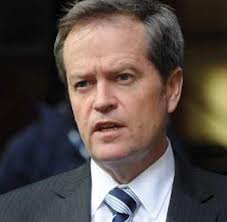 Bill Shorten vows to fight climate change deniers and conspiracy theorists The Age, March 17, 2014 James Massola Political correspondent Opposition Leader Bill Shorten has lashed out at the conspiracy theorists, keyboard warriors and social media trolls who have hijacked the debate about man-made climate change. There’s an important difference between tackling the misinformation peddled by climate change deniers, and stooping to their level.
And Mr Shorten has pledged to be a “disciple of science and innovation”, promising the Labor Party will encourage risk-taking and entrepreneurialism and warning “Australia can either get smarter or get poorer – we can choose to compete or give up”.
The Opposition Leader has been under sustained political pressure from the federal government to support the repeal of the carbon tax, but he has promised to vote against repeal if the alternative is the government’s Direct Action policy. He has also committed to taking a market-based system for pricing carbon to the 2016 election.
“Labor won’t be walking away from our action on climate change – or bowing to the will of a Prime Minister who offers cynical nostrums that emissions trading is rendered meaningless because it deals with an ‘invisible, odourless substance’,” he said.
Mr Shorten told the annual Science Meets Parliament conference in Canberra on Monday the climate change debate was a “cautionary tale for what happens if we abandon the field to the conspiracy theorists and keyboard warriors, the social media trolls and the angry shouts of talkback radio”.
“Too many of us took the popular support for action on climate change for granted,” he said.
“A mistake that has seen Australia move from a co-operative conversation on the best international method for dealing with the causes of climate change and mitigating against its effects to an argument poisoned by allegations of conspiracy and alarmist ‘warmism’.”… http://www.theage.com.au/federal-politics/political-news/bill-shorten-vows-to-fight-climate-change-deniers-and-conspiracy-theorists-20140317-34×01.html
Abbott govt shows its allegiance to BHP and Rio Tinto
 Taxpayers fund $110m loan to venture run by BHP, Rio Tinto The Age, March 18, 2014 Peter Ker, James Massola Australian taxpayers will lend $US100 million ($110 million) to a mining joint venture run by BHP Billiton and Rio Tinto in Chile, under the latest funding deal by Australia’s controversial Export Finance and Insurance Corporation.
The loan to two of Australia’s largest and most profitable companies is being made despite recent criticism of EFIC by the Productivity Commission. It advised the corporation to focus more on small exporters who were unable to secure finance rather than wealthy multinationals.
It also comes at a sensitive time for the Abbott government, which has denied financial assistance to companies such as Alcoa and Holden, amid its campaign to ”end the age of entitlement”.
Under the terms of the latest loan, the $US100 million will be lent to a holding company called Minera Escondida Limitada, which is 57.5 per cent owned by BHP and 30 per cent owned by Rio. Japanese companies Mitsubishi and Nippon Mining own the rest…..http://www.theage.com.au/business/mining-and-resources/taxpayers-fund-110m-loan-to-venture-run-by-bhp-rio-tinto-20140317-34y5u.html
Victoria’s govt joins Abbott’s war on green energy schemes – to axe Energy Efficiency Target
 Victorian Energy Efficiency Target Threatened http://www.energymatters.com.au/index.php?main_page=news_article&article_id=4223 18 March 14 The war on green schemes relating to energy is continuing – the latest victim could be the Victorian Energy Efficiency Target (VEET).
The VEET scheme is designed to make energy efficiency improvements more affordable. It commenced on 1 January 2009 and was legislated to continue in three-year phases until 1 January 2030.
However, it may meet a very premature end. On Sunday, the Herald Sun published a story on a “secret government report” into the scheme that recommended it be abolished and replaced by 2015. Among the reasons reportedly stated is the scheme has been labeled inefficient and a burden to other electricity users.
The Clean Energy Council says claims axing the scheme would provide substantial power bill relief are wrong; as is the conclusion it is ineffective. “The program is getting through to those that need it most and previous studies have shown that it is working well at a low cost,” said Clean Energy Council Chief Executive David Green.
“Two out of every five households in the program have below-average incomes and a third are on some form of welfare.”
Among the products covered under the scheme are selected solar hot water systems and heat pumps. Water heating represents one of the most greenhouse gas and energy intensive activities in a household. This is particularly so in Victoria given much of the state’s electricity generation is through the burning of brown coal – one of the filthiest fossil fuels.
Mr Green said the ‘secret’ modelling released to select media outlets should be fully released for public scrutiny and is confident that scrutiny will reveal VEET is continuing to deliver, both in terms of household savings and the economic activity it creates.
According to the Clean Energy Council, VEET has slashed energy costs for approximately 1.3 million households and businesses; plus has supported thousands of jobs in Victoria’s economy.
Australian Renewable Energy Agency (ARENA) helping remote miners with hybrid energy
the mining industry, although a little shy about risking the money on such brave new projects, is one of the best places for ARENA to make investments, to offset those risks and help industry to find the confidence to get involved in experimenting with renewable energy sources that, in the long run, will deliver lower operating costs for everything from small exploration camps, right up to production level power generation
Hybrid power meeting the challenges for a renewable mining future, Australian Mining, 17 March, 2014 Ben Hagemann Miners are finally starting to look at ways to get their power generation off the grid with renewable energy sources.
Although the technology is burgeoning, the way of the future lies with hybrid power generators……….In remote locations where there’s little to no access to grid power, which means most Australian resource sites, the problem of power generation needs in mining camps, construction projects, exploration crews, and telecommunications is usually dealt with by traditional diesel fired generators. Continue reading
Audio: New book reveals Aborigine’s complex farming and agricultural practices
 AUDIO: Dark Emu argues against ‘Hunter Gatherer’ history of Indigenous Australians ww.abc.net.au/local/audio/2014/03/17/3965103.htm By Hilary Smale and Vanessa Mills
A fresh perspective of Indigenous history showing evidence of village populations, crop harvesting, and irrigation, is all explored Bruce Pascoe’s new book Dark Emu. The common perception of Indigenous Australians leading a ‘hunter-gatherer’ lifestyle before European settlement is ignoring strong evidence of sophisticated farming and agriculture practices, argues Mr  Pascoe.
“There certainly was a lot of movement… but there was also a lot more sedentary living than we were led to believe.”……….Mr Pascoe would like to see the book change how history is now taught.
“I never learnt it when I was at school; my son never learnt it, my daughter never learnt it.
Why are we not telling Australian children of the success and the achievements of Aboriginal Australia?”
Dark Emu is published through Magabala Books.
Bruce Pascoe spoke about Dark Emu with Vanessa Mills for Kimberley Mornings.
Solar PV will take over from coal as new financing models favour solar
 Solar PV to replace coal as “incumbent” technology REneweconomy, By Giles Parkinson on 17 March 2014 Australia is embarking on a radical transformation of its electricity system that will see solar PV transition from being “disruptive” technology to the “incumbent” technology, displacing coal and sparking a radical change in the way that electricity is provided.
This is the assessment from Clean Energy Council CEO David Green (pictured), who in a presentation last week said generation will move from its traditional place at the point of supply to at or near the point of use; the primary role of the grid will be converted to that of a back-up “battery”; and consumers will play a key role in a more competitive market.
Green told a Davos Connection conference on infrastructure last week that the core logic behind having large scale generation plants close to their fuel source (coal or hydro) was being challenged by shifts in the basic cost parameters of many sources of energy allow generation (mostly solar) to be built closer to where it is used.
It was clear, he said, that solar PV has been taken up more rapidly in lower-income suburbs than higher income – because of the attraction for lower-income households to get a lower, fixed rate of electricity.
Now, new financing models – such as leasing and community ownership, as well as models for renters – was likely to spark a third wave of investment in solar PV. ….
……….RenewEconomy’s Take: Green is right, and this speech is welcome. It is about time that the clean energy industry articulates such a vision for the future in a co-ordinated and vigorous manner. There is much at stake.
As in the US, there is a mixture between those who see opportunity, and those who see only threat. Right now, it appears, it is the latter dominating policy settings. The utilities are resisting change, and so are the government owners.
The carbon price is being wound back, the renewable energy target is under threat, and energy efficiency schemes are also being wound back. In the meantime, tariffs and regulations appear ready to be deployed to slow down the uptake of the solar and solar storage and other technologies. It should be a quite battle..http://reneweconomy.com.au/2014/solar-pv-replace-coal-incumbent-technology-38095
Bernie Fraser deplores Abbott Govt’s policies opposing action on Climate Change
 Abbott government is putting business profits ahead of the community: Bernie Fraser http://www.theage.com.au/federal-politics/political-news/abbott-government-is-putting-business-profits-ahead-of-the-community-bernie-fraser-20140313-34os6.html March 13, 2014 Lisa Cox National political reporter Former Reserve Bank governor Bernie Fraser says the Abbott government is working in the short term interests of business and not the long term interests of the community in its policies on climate change.
Mr Fraser, in an address to the National Press Club, has also expressed surprise at the “brazenness and scale” of the campaign waged by the government and big business against the carbon and mining taxes.
The chairman of the Climate Change Authority, which the government plans to abolish, said on Thursday that the debate over climate policy in Australia was now devoid of balance and maturity.
Australians must learn from Aboriginal management of the land

The massive destruction whites have inflicted on the landscape is unforgiveable. Now we have no excuse. Gammage has told us how it was done. Let’s hope it is not too late. As Gammage says, one day we might be able to call ourselves Australian.
Australia: How the Aboriginal people managed ‘the biggest estate on Earth Review by Coral Wynter
The Biggest Estate on Earth: How Aborigines made Australia
By Bill Gammage
Links, March 13, 2014 – Links International Journal of Socialist Renewal –– This is an extraordinary book, one that will increase your appreciation of the country’s first people, as we begin to understand their amazing knowledge and sheer genius in the way they cared for the land, or as Bill Gammage calls it the “biggest estate on Earth”.
Gammage describes with many examples how the Aborigines looked after the land. No corner was forgotten, including deserts, rainforests and rocky outcrops, across the entire continent for at least 60,000 years until the colonisers began to destroy all this labour after their arrival in 1788.
The Aborigines judiciously used fire to create parklands, with huge, stately trees and grass underneath on rich black soil to feed, then harvest kangaroos and wallabies, as well as to grow yams and spinach. They used cool fires to preserve and maintain the biodiversity of Australia’s orchids, ferns, fruit trees and edible plants. They used “templates” to judiciously burn areas with plants sensitive to fire.
Australia in 1788 was a paradise, which was much more than just sustainable, but instead yielded an abundance of food, which could feed a huge population, some estimates say as many as 8 million people. Continue reading
Market outlook for solar power to 2025
 Solar PV in Australia, Market Outlook to 2025, 2013 Update – Capacity, Generation, Levelized Cost of Energy (LCOE), Investment Trends, Regulations and Company Profiles Market Watch LONDON, March 13, 2014 /PRNewswire/ — Reportbuyer.com just published a new market research report: Solar PV in Australia, Market Outlook to 2025, 2013 Update – Capacity, Generation, Levelized Cost of Energy (LCOE), Investment Trends, Regulations and Company Profiles Solar PV in Australia, Market Outlook to 2025, 2013 Update – Capacity, Generation, Levelized Cost of Energy (LCOE), Investment Trends, Regulations and Company Profiles Summary “Solar PV in Australia, Market Outlook to 2025, 2013 Update – Capacity, Generation, Levelized Cost of Energy (LCOE), Investment Trends, Regulations and Company Profiles” is the latest report from GlobalData, the industry analysis specialists that offer comprehensive information and understanding of the solar PV market in Australia.
Labor’s miserable silence on Climate Change
Bill Shorten was right when he called it a defining issue for our parliament and our nation. It’s also a defining issue for Labor, and for  him
him
Climate change bad guys apply heat to Labor, The Age March 14, 2014 Gay Alcorn While the vocal sceptics have free rein on climate change, Labor is disturbingly quiet. “……..The conservative Lord Deben, the head of Globe International which assesses climate laws worldwide, told the Financial Times last month that the Australian government’s policies were ”so unintellectual as to be unacceptable; I mean it is just amazing”. Of its survey of 66 countries, Australia was one of only two winding back climate change laws.
But what of Labor, whose supporters and parliamentary members overwhelmingly do accept the mainstream science and the need to take strong measures to minimise damage to our economy and our way of life?
[Bernie] Fraser’s criticism of the ALP stings because Labor lacks the excuse of ignorance or the hard right’s conviction that climate change is a left-wing plot to destroy capitalism. Continue reading
Call to Northern Territory’s Country Liberal Party to oppose radioactive waste dump plan
 CLP needs to stand up for the Territory over Canberra’s radioactive waste plan. 13 Mar 14, National and Territory environment groups have called on Chief Minister Adam Giles to send a clear message to Canberra to end plans for a radioactive waste dump in the NT.
The call comes on the second anniversary of former federal Labor Minister Martin Ferguson pushing ahead with controversial federal laws for a radioactive waste dump at Muckaty, north of Tennant Creek.
“Radioactive waste is long lived, hazardous and serious stuff but sadly the Muckaty plan is based more on broken promises and dodgy political expedience than credible science or proper process,” said Australian Conservation Foundation campaigner Dave Sweeney.
“The approach taken by successive federal governments has not been inclusive, scientific or robust and is not consistent with either international industry best practise or Australia’s obligations”.
The Muckaty plan is strongly contested by many Traditional Owners, environment, public health and trade union groups and is the focus of current Federal Court legal action due to go to trial in June 2014.
“For over two decades there has been a push by Canberra for a remote waste dump – first defeated by a strong community campaign in South Australia, and now their sites are firmly set on the NT. This has occurred without a scrap of evidence or success to support such a plan, and in the absence of community consent or a social license,” said ECNT campaigner Lauren Mellor.
“The Territory community and environment deserves better than Canberra playing short term politics with a long term problem.”
“It is time for the Chief Minister to send a clear message to Canberra.Territorians don’t want, and won’t cop, a cynical and dodgy dump plan. We want a genuine examination of how to responsibly manage Australia’s radioactive waste”.
For comment: Dave Sweeney, ACF, 0408 317 812 Lauren Mellor, ECNT, 0413 534 125
Aboriginal landowners firm: time to scrap draconian Radioactive Waste Law
 Renewed call for Muckaty dump plan to be scrapped as ‘draconian’ nuclear waste legislation hits two-year mark, Natalie Wasley, 13 Mar 14 Marking two years since passage of the National Radioactive Waste Management Act (NRWMA), Traditional Owners and supporters have renewed calls for the government to drop plans for locating the first national radioactive waste dump at Muckaty, 120km north of Tennant Creek in the NT.
Beyond Nuclear Initiative convenor Natalie Wasley said, “The National Radioactive Waste Management Act is draconian and gives the Minister absolute discretion in key aspects of radioactive waste management. It overrides any state or territory law that would ‘hinder’ the plan, and limits the application of environmental protection laws, Aboriginal heritage protection legislation, and appeal rights. It does not grant ‘procedural fairness’ in relation to the existing Muckaty nomination.”
“Radioactive waste management laws should require engagement with civil society stakeholders in line with international standards. Australia’s targeting of remote communities considered politicially expedient through application of draconian legislation like the NRWMA is an international embarrassment.”
Traditional Owner Penny Phillips said “We had very hurt feelings when the legislation passed the Senate two years ago. We had been saying no for a long time- my old aunty Bunny Nabarula cried her heart out. People are upset that the new government is pushing ahead, but we are not going to stop fighting. We want the government to put a full stop to the nomination.”
“If the Northern Land Council prepares another nomination on Muckaty then we will stand up to them again. Continue reading
Awkward for Abbott govt – nuclear power will need carbon tax!
This is interesting stuff for Tony Abbott’s conservative government. Many of his advisors favour nuclear
if Abbott was ever to entertain nuclear as a serious option – it could only do so by abandoning the idea of a cheap fuel source, accepting the need for loan guarantees, and for a carbon price.
UK nuclear power plant builders want higher carbon tax http://reneweconomy.com.au/2014/uk-nuclear-power-plant-builders-want-higher-carbon-tax-28916 By Giles Parkinson on 12 March 2014
The Telegraph in the UK is reporting that EdF, the mostly French government owned nuclear giant that is proposing to build the $26 billion Hinkley Point C, is now pushing the UK government to increase its carbon tax so the financials for the first nuclear plant in the UK for nearly three decades adds up. Continue reading
High Court rules: mining leases do not extinguish native title
Indigenous community hails High Court native title ruling http://www.sbs.com.au/news/article/2014/03/12/indigenous-community-hails-high-court-native-title-rulingThe High Court in Canberra has unanimously held that native title rights held by the Ngarla people in the Pilbara region of Western Australia are not extinguished by the grant of two mineral leases. SBS News, By Myles Morgan Source NITV News 12 Mar 14,
In a one page statement, The High Court of Canberra found the native title rights of the Ngarla people in Western Australia could exist alongside mining leases in the area.
“We’re very satisfied and very happy and jubilant on behalf of the Ngarla people who have obviously fought very hard to get this outcome,” said CEO of the Yamatji Marlpa Aboriginal Corporation, Simon Hawkins.
The dispute was concerned with land situated at the former iron-ore mine at Mount Goldsworthy, located over 1000 kilometres north of Perth in the state’s Pilbara region. The Ngarla people first went to court to claim native title over an area of 11,000 square kilometres in 1998.
Since then, it’s been a constant battle between the West Australian government, mining company BHP Billiton and the Ngarla people.
“Well this ends the matter so there’s nothing that they can do. So effectively, this is the law now and we were successful in challenging the state and others and now this is what everyone has to operate in,” said Mr Hawkins
1 This month
17 October, Free Public Talk on Nuclear Issues in South Australia
David Noonan will speak on public interest concerns over the new Roxby Downs Indenture Act 2026 on BHP copper-uranium mining and ore processing in SA, and on how AUKUS may face SA with a High-Level nuclear waste agenda.
Dr Jim Green will discuss international developments in the field of nuclear power including ‘small modular reactors’ and Generation 4 ‘advanced’ nuclear reactor concepts.


Help Aunty Sue Protect Her Land and Sacred Sites From Destructive Rocket Testing.
.

Australians deserve the truth
about
AUKUS – https://aukuspublicinquiry.com/

PETITION – To: Prime Minister Anthony Albanese and the Australian Labor Government

of the week – Australians for War Powers Reform (AWPR)
To see nuclear-related stories in greater depth and intensity

