Bungled design blamed for cracks in the lining of ANSTO’s new nuclear waste plant
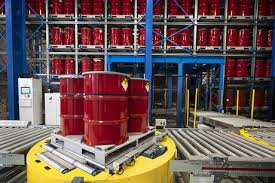
A bitter clash has erupted over who is to blame for cracks appearing in the lining of the “hot cells” of a brand new radioactive waste plant.
Linda Silmalis, Chief Reporter, May 12, 2024, The Sunday Telegraph https://www.dailytelegraph.com.au/news/nsw/bungled-design-blamed-for-cracks-in-the-lining-of-anstos-new-nuclear-waste-plant/news-story/07b3fc1e633cd769bbecb9da90e4932a
The lining within the “hot cells” of the new radioactive waste treatment plant at Lucas Heights has literally been peeling off, with secret details about the defect in the ANSTO-designed facility unveiled during a legal dispute.
The construction of the $27 million plant has been at the centre of a protracted legal battle between ANSTO and the contractor, with each blaming the other for the bungle.
The plant – which will become operation in the late 2020s – has been built to treat waste from the production of a special radioisotope called Mo-99 to be used in medicine.
Contractors were invited in 2017 to build the plant with ANSTO and Icon SI (Aust) – comprising Cockram Construction – awarded a contract for $27 million for the construction of the building.
However, Icon SI has since taken ANSTO to court with the two parties in dispute over the works, including the withholding of payments and who is responsible for the so-called “epoxy defect”.
A technology and construction list statement filed in the NSW Supreme Court late last year by lawyers for Icon IS revealed how ANSTO had noted a “subsisting defect in the epoxy coating”.
However, Icon SI’s lawyers claimed it was ANSTO which had caused the problem – now rectified – as it was its design.
“The defendant’s design at the junctions of steel and concrete failed to take into account the different thermal expansion of the two materials,” the statement said.
“The different thermal expansion of the two materials causes the epoxy coating at the junctions to crack.”
An Icon spokeswoman said the choice of lining within the hot cells had been found to be inadequate, resulting in the delamination and “peeling”.
While ANSTO was trying to “blame the builder”, it had only engaged Cockram under a “construct-only” contract, she said. She also claimed Cockram had been engaged before ANSTO had completed the design, drawings and broader contract documentation for the project.
“ANSTO has consistently tried to blame what are in fact design defects on the builder,” she said.
“One such issue is the lining chosen inside of the hot cell, which contains the nuclear waste. This specification has been found to be inadequate, resulting in delamination/peeling. The design of the hot cell remains unsuitable for its intended purpose.”
The Sunday Telegraph has been told the epoxy coating was applied to the internal floors and walls in the facility, and to the front and back of the hot cells.
The hot cells have yet to receive nuclear waste – which occurs during the “hot commissioning” phase – with the defect detected as it was undergoing cold commissioning. The plant has now been returned to “fit out” stage with defect being rectified by ANSTO.
An ANSTO spokeswoman said it was inappropriate to comment on the matter given the ongoing legal proceedings.
NSW Supreme Court Justice Michael Ball last month sent the matter to arbitration.
Coalition MPs dismiss International Energy Agency advice to ditch nuclear plans

IEA chief urges Australia to prioritise ‘untapped potential in solar and wind’ as opposition pushes on with its nuclear policy
Guardian Sarah Basford Canales, Fri 10 May 2024
Coalition MPs have dismissed advice from the world’s international energy body urging Australia to ditch any nuclear plans in favour of the “untapped potential” of solar and wind power.
After the Albanese government’s announcement on Thursday that gas will remain key to the country’s energy and export sectors to “2050 and beyond”, the opposition has doubled down on its plans to unveil a nuclear energy policy before the next federal election.
While details of the plan, including the location of up to six possible sites for nuclear plants, have yet to be announced, the Nationals leader, David Littleproud, said the Coalition’s goal was to plan for a “gradual transition from coal to nuclear, gas and renewables built in the right place and in the right concentration”.
In an interview with the Australian Financial Review, the International Energy Agency (IEA) executive director, Dr Fatih Birol, said politicians in Australia should be prioritising the country’s renewable energy sources over investing in new nuclear projects…………..
Birol told Nine newspapers nuclear was not an avenue Australia should be looking at.
Birol said he hoped discussions around nuclear “can be made more factual, less emotional and political”, stressing Australia should prioritise the “untapped potential in solar and wind”…………………………………………………….
O’Brien’s Nationals colleague, Keith Pitt, similarly dismissed Birol’s advice as coming from a “Paris-based” commentator, saying the IEA has had “more positions on energy advice to Australia than the Kama Sutra”.
It is understood the Coalition will propose locating nuclear power plants on the site of retiring coal power plants, claiming the use of existing transmission infrastructure would bring down costs.
Figures released by the federal energy department last September revealed the plan could cost as much as $387bn. The analysis showed a minimum of 71 small modular reactors – providing 300MW each – would be needed if the policy were to fully replace the 21.3GW output of Australia’s retiring coal fleet.
CSIRO’s GenCost report showed that once up and running, a theoretical small modular reactor built in 2030 – which is unlikely to exist – is estimated to cost $382 to $636 per MWh while solar and wind would cost between $91 and $130 per MWh once integration costs are included.
Outside the Coalition, political support for a domestic nuclear power industry is limited.
The climate change minister, Chris Bowen, has previously accused advocates for an Australian nuclear industry as “peddling hot air”, saying Labor’s plan backs the IEA chief’s comments.
The Fremantle MP, Josh Wilson, a loud nuclear critic within Labor, questioned the Coalition’s “obsession” with the “most expensive and slowest form” of energy generation.
The independent ACT senator David Pocock, a vocal advocate for renewable energy, said nuclear power “makes no sense in this country”.
The senator’s lower house independent colleagues Monique Ryan and Kate Chaney agreed but added that Labor’s future gas strategy was also the wrong path forward.
Chaney said it was a “no-brainer” that IEA would steer Australia towards its obvious solar and wind advantages, noting it was “driven by data rather than politics”.
Ryan said Australia was once again being seen as a pariah internationally on climate policy.
The Greens leader, Adam Bandt, said the federal government should deliver “massive investment” in public solar and wind, instead of opening up more gas mines. https://www.theguardian.com/australia-news/article/2024/may/10/coalition-mps-dismiss-international-energy-agency-advice-to-ditch-nuclear-plans
Australia votes ‘yes’ at United Nations as Palestinian push for full membership gathers momentum

It’s not all that often, these days, that I can feel proud of my government’s foreign policy, or international statements.
But on this occasion, I can at last feel proud.
ABC News 11 May 24
- In short: A Palestinian bid for full membership of the United Nations gathered momentum on Friday, after a resolution passed through the organisation’s General Assembly recognising it was qualified to join.
- A total of 143 nations — including Australia — voted in favour, while nine were against and 25 abstained.
- What’s next? The vote doesn’t grant the Palestinians full membership, but they have been given extra “rights and privileges”.
Australia voted “yes” and the United Nations General Assembly emphatically supported a Palestinian bid to become a full member of the organisation by recognising it as qualified to join.
The vote, held at the UN’s New York headquarters on Friday, local time, passed with 143 nations in favour and nine against — including the United States and Israel — while 25 countries abstained.
The resolution was seen as a de facto step towards future Palestinian statehood.
The Palestinian push for full UN membership comes seven months into a war between Israel and Hamas in Gaza.
While there is a Palestinian ambassador to the UN, they are considered an “observer”.
Australia, which had previously abstained from voting on a call for an immediate humanitarian truce in the war, voted “yes” on Friday.
It does not give the Palestinians full UN membership, but simply recognises them as qualified to join, and gives them more “rights and privileges”.
“We value this decision. And we thank Australia for this position,” said Omar Awadalla, the assistant minister for the United Nations from the Palestinian Liberation Organisation (PLO) that governs the West Bank.
“And this is an action and actionable step by Australia toward recognising the rights of the Palestinian people to self-determination, and to their membership to the United Nations,” Mr Awadalla told the ABC.
He said Australia was supporting with its actions the two-state solution.
“And we think that those states who want to support the peace and justice and stability in the Middle East should take the same decision like Australia did, by accepting Palestine in having their membership to the United Nations as a step toward achieving their independence … and having the two-state solution based on international law and very well-known differences and the Arab Peace Initiative.”
Full membership unlikely……………………………………………………… more https://www.abc.net.au/news/2024-05-11/australia-votes-yes-at-un-for-more-palestinian-rights/103833838
Were Australian weapons used in mass killings by Saudi Arabia?
A report by Human Rights Watch on the mass killing of hundreds, possibly thousands, of defenceless migrants and asylum seekers on the Saudi-Yemen border raises disturbing questions.
MICHELLE FAHY, Undue Influence, MAY 10, 2024. Joint report with Suzanne James (Green Left)
Yemen has been mired in a nine-year civil war between the Saudis and the Houthis which has left the country’s socioeconomic systems teetering on the edge of total collapse. Some 9.8 million children require humanitarian assistance, says Unicef.
The dominant reason for the war given in media reports is that Yemen risks becoming a satellite of Saudi Arabia’s rival, Iran. However, the conflict in Yemen is more complex.
The country is also important globally because of its proximity to the Gulf of Aden, a busy global shipping lane that carries an estimated US$1 trillion in goods annually.
Yemen has also been in the news recently because the Houthi government has launched drones and missiles against ships supplying Israel with weapons. The United States and Britain, with Australian government support, have conducted retaliatory attacks on Yemen.
Given these multi-layered conflicts, Yemen has proved to be an arms traders’ paradise, with the multitrillion-dollar global arms industry the biggest gunrunners of all. Australian arms exports to Saudi Arabia and the United Arab Emirates (UAE) form a small part of this mix.
Australia’s Defence Department has approved 131 export permits to Saudi Arabia and 257 to the UAE in the 8½ years to January 29, according to Freedom of Information figures obtained by the author. No export applications for the UAE were denied in that period, while the five denied for Saudi Arabia were back in 2019–20 and 2020–21.
The ethics of Australian companies supplying arms to Saudi Arabia is again in the spotlight after Human Rights Watch (HRW) uncovered evidence that at least hundreds, possibly thousands, of unarmed migrants and asylum-seekers have been killed at the Yemen-Saudi border, allegedly by Saudi officers.
Human Rights Watch demands investigation…………………………………………………………
Have Australian weapons been used?
The report contains satellite images of a Saudi border guard post with what HRW says may be a Mine-Resistant Ambush Protected vehicle parked nearby. The vehicle was seen in satellite imagery from 10 October 2021 to 31 December 2022.
The report notes the vehicle ‘appeared to have a heavy machine gun mounted in a turret on its roof’. This description matches military equipment that Australia sold to Saudi Arabia a couple of years earlier.
Have Australian weapons been used?
The report contains satellite images of a Saudi border guard post with what HRW says may be a Mine-Resistant Ambush Protected vehicle parked nearby. The vehicle was seen in satellite imagery from 10 October 2021 to 31 December 2022.
The report notes the vehicle ‘appeared to have a heavy machine gun mounted in a turret on its roof’. This description matches military equipment that Australia sold to Saudi Arabia a couple of years earlier. ………………………………………………………………………………………………
EOS started exporting its weapons systems to Saudi Arabia in mid-2019. According to Dr Ben Greene, then chief executive of EOS, the equipment was being supplied for US programs to support the Saudi Ministry of Interior for its border operations (emphasis added).
…………………………………………………………….The delivery of 500 EOS weapons systems into this location at this time raises serious questions about whether any of this Australian-made equipment has been used in the atrocities documented by Human Rights Watch.
The Department of Defence did not respond to questions. Dr Andreas Schwer, chief executive of EOS, also failed to respond.
A spokesperson from the Department of Foreign Affairs and Trade said:
The Australian Government is concerned by the reports of violence against Ethiopian migrants crossing the Saudi-Yemen border in a HRW report released in August 2023.
Australian officials raised this report directly with the Saudi Government and with the Saudi Human Rights Commission, emphasising Australia’s commitment to international humanitarian law.
Human Rights Watch has called for a UN investigation into the Yemen-Saudi borderland atrocities.
As concerns grow about Australia’s weapons exports, an urgent and transparent investigation would be appropriate, with results reported to parliament. https://undueinfluence.substack.com/p/were-australian-weapons-used-in-mass?utm_source=post-email-title&publication_id=297295&post_id=144491858&utm_campaign=email-post-title&isFreemail=true&r=1ise1&triedRedirect=true&utm_medium=email
How long does it take to build a nuclear reactor? We ask France

Sophie Vorrath, May 8, 2024, https://reneweconomy.com.au/how-long-does-it-take-to-build-a-nuclear-reactor-we-ask-france/
A short answer to this question might be, it depends who you ask. Ask Opposition leader Peter Dutton, for instance, and he will tell you a federal Coalition government under his leadership could have a nuclear power plant up and running in Australia within a decade.
Ask the highly experienced French state-owned nuclear power giant EDF, which manages 56 reactors in the world’s most nuclear dependent country, and you would get rather a different answer.
Bloomberg reports that EDF this week got regulatory approval to start up its newest nuclear reactor, the 1.6GW Flamanville plant in France’s north west – a milestone that is 12 years behind schedule and more than four times over budget, thanks to a range of construction problems including concrete weakness and faulty pipe welds.
The green light allows EDF to load the fuel in the reactor, proceed with trials, then begin operations, the Autorite de Surete Nucleaire said in a statement on Tuesday. Further approvals will be needed upon reaching key milestones during the trial phase, the regulator said.
According to other reports, EDF said last month it hoped to connect the Flamanville pressurised reactor to the national grid by the European summer and reach full power by the end of the year.
But it will not be smooth sailing from there. A faulty vessel cover still needs replacing at the plant, with reports suggesting this has been pushed out to 2026, when the plant would be shut down for up to a year.
Meanwhile, EDF in March raised its cost estimate for the construction of six new nuclear reactors to €67.4 billion ($A102.5 billion), Reuters has reported, up from the company’s first estimated their cost of €51.7 billion.
So, how long does it take to build a nuclear reactor?
Kobad Bhavnagri, Bloomberg New Energy Finance’s energy expert and global head of strategy says the long delay and cost blowout at Flamanville 3 is not an isolated incident.
“Very similar delays and multifold cost blowouts have occurred with recent reactor builds in the UK, Finland and USA,” Bhavnagri writes on LinkedIn.
“Countries with well established nuclear industries.
“The lesson here? Don’t believe anyone who says they know how much it will cost and how long it will take to build a new nuclear plant (unless they are in China).”
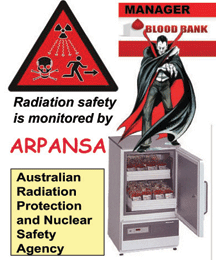
Radiation Protection Agency to Decide on Facility Licence Soon
https://www.miragenews.com/agency-to-decide-on-facility-licence-soon-1231158/ 8 May 24
Australian Radiation Protection and Nuclear Safety Act 1998
Australian Radiation Protection and Nuclear Safety Regulations 2018
As required by subsection 48(2) of the Australian Radiation Protection and Nuclear Safety Regulations 2018, the CEO of ARPANSA gives notice that she intends to make a decision under section 32 of the Australian Radiation Protection and Nuclear Safety Act 1998 regarding the following application for a facility licence:
Application No A0346 by the Australian Submarine Agency to prepare a site for a prescribed radiation facility (namely a low level waste management and maintenance facility) to be known as the ‘Controlled Industrial Facility’ at the existing HMAS Stirling site, at Garden Island, Rockingham in Western Australia.
ARPANSA regulates Commonwealth entities that use or produce radiation and is responsible for regulation of relevant activities undertaken by the Australian Submarine Agency until a dedicated naval nuclear power safety regulator is established.
An overview of this licence application is now available for public comment through our Consultation Hub. Submissions close at 11:59pm on 7 June 2024.
Have your say by completing the online survey or visit the ARPANSA Consultation Hub
Federal election 2025: Peter Dutton’s nuclear plans worry voters in Nationals-held seat of Gippsland.
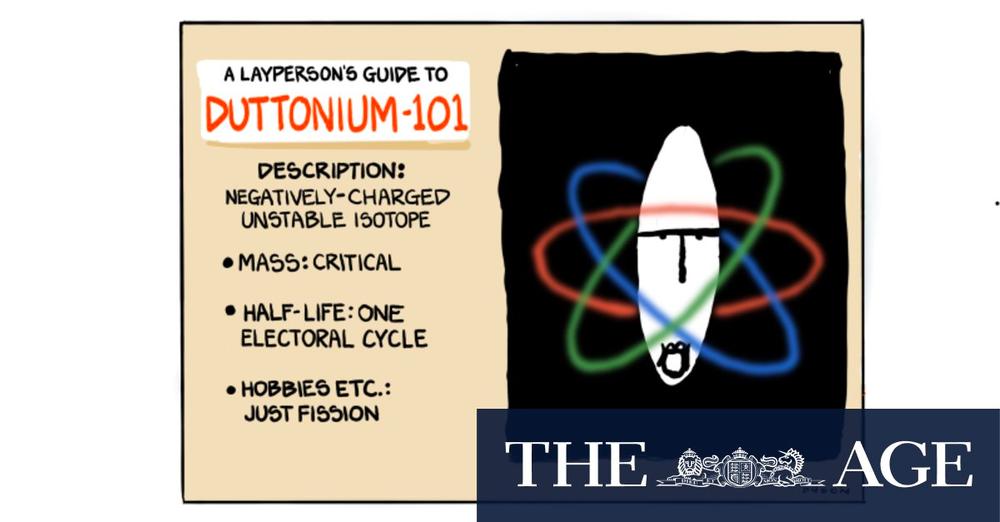
‘A big risk’: Voters wary of nuclear replacing coal-fired power Tom McIlroy Political correspondent, AFR 7 May 24
Voters in Victoria’s Latrobe Valley have raised the Chernobyl and Fukushima nuclear disasters when asked about Peter Dutton’s plan to build large-scale reactors near them, suggesting strong reservations about the energy plan.
As the Coalition finalises a policy for coal-fired power station sites to host nuclear energy – and for small modular reactor technology to be deployed in other places – focus group research in the federal electorate of Gippsland showed voters had safety concerns about living near a reactor.
Mr Dutton wants nuclear to provide baseload power to firm renewable energy and ensure Australia achieves net-zero emissions by 2050.
Communities near coal plants would be called on to host nuclear facilities, with at least six sites expected to be named before the next election.
Mr Dutton says nuclear must stack up on four key criteria: safety, waste disposal, location and cost.
But a focus group of Coalition-leaning voters questioned by polling firm Redbridge last week revealed doubts in the seat held by Nationals MP Darren Chester.
One male participant said he was opposed to nuclear replacing coal-fired power at sites like Loy Yang A, Loy Yang B and Yallourn.
“I know there’s a lot of safeguards with nuclear but it is still a very big risk if something does happen,” he said.
“It uses up a lot of resources and at the end of the day, once it has used up all its radioactiveness, we have to go bury it in the desert somewhere because we can’t do anything with it.”
A woman told the group she did not know much about the plan but had strong concerns.
“The thought of it makes me want to move. I’ve got kids. I don’t want them to be exposed to something that could affect them.”
Another woman said future generations would suffer if Australia lifted the ban on nuclear power.
“We’ve seen in the past with Chernobyl. Obviously, the situation has got better and people have learnt from things but mistakes happen and it’s a risk that you have to weigh up when considering putting something into an area with population.”
Another male participant cited the 2011 accident at Japan’s Fukushima power plant. He said Australia could face the risk of a similar disaster if nuclear was developed here. Another suggested that carp in local waters would “be huge” in the event of a nuclear spill………………………………………………………..
Fellow director Tony Barry said there was “intense” opposition in Gippsland.
“There is some limited opportunity for the Coalition to leverage a perception that a nuclear reactor in the region might produce local economic benefits.
“However, the problem for the Coalition is that to overcome these wide and deep concerns and to successfully leverage the perceived benefits they will need to spend millions of campaign dollars on messaging.”…………………………………… https://www.afr.com/politics/federal/a-big-risk-voters-wary-of-nuclear-replacing-coal-fired-power-20240506-p5fp9d
Bill lets UK/US “dump nuclear submarine waste here”

Ben Packam 6 May 24
The British company appointed to build Australia’s nuclear submarines says the government’s draft nuclear safety laws would allow the disposal in Australia of high -level radioactive wastes from UK submarines.
BAE Systems chief counsel made observation at committee hearing examining the government’s naval nuclear power safety bill, which is due to be pushed through Parliament after next week’s federal budget………….
Under questioing by Greens Senator David Shoebridge, BAE’s Peter Quinlivian agreed that the wording of the bill opened a pathway for the disposal of high-level British radioactive waste in Australia.
“The legislation as drafted is in language that would accommodate that scenario” he said.
Britain is yet to dispose of any of the nuclear submarines it has decommissioned since the 1980s. It estimates it won’t fully dispose of the boats, plus seven more dure to retire in coming years, until the late 2060s.
Mr Quinlivian said that BAE had not informed the British government of the prospects that Australia could legally dispose of its nuclear waste “because it didn’t immediately strike us”
The apparent loophole flies in the face of Australia’s reassurances that AUKUS won’t require us to become a dumping ground for other countries’ nuclear wastes.
Liberal Senator David Fawcett asked Defence officials in the April 22 committee hearing whether the bill could be amended to avoid unintended consequences, something that the government is understood to be open to.
In a written response, Defence conceded that a tightening of the bill’s language could be needed. It said specifying the “disposal” of only “Australian submarine” nuclear waste would be consistent with government policy, but the government would have to “carefully consider any amendment which excluded the possibility of regulatory control of the management of low level radioactive waste from UK or US submarines……………….
The Australian Radiation Protection and Nuclear Safety agency is poised to declare a site at the HMAS Stirling naval base off Perth as a low level radioactive waste management facility, but a decision on where to store high level waste from Australia’s planned nuclear submarines is years if not decades away

Defence Minister Richard Marles said that after the government announced its nuclear submarine plans in March 2023, Australia would not take nuclear waste from its AUKUS partners
“We’re not talking about establishing a civil nuclear industry, nor are we talking about opening Australia up as a repository for nuclear waste from other countries” he told the ABC.
Senator Shoebridge said that British bureaucrats were almost certainly “rubbing their hands together at the prospect of the Albanese government being foolish enough to pass this bill”
“Minister Marles has now been embarrassed by not only his own department but the very people he signed up to make the nuclear subs” he said.
The Senate standing committee on foreign affairs defence and trade is to release its report on the Australian Naval Nuclear Power Safety Bill 2023 on May 11.
Off the Books: how the Army privatised SAS elite to dark ops outfit Omni
Michael West Media, by Stuart McCarthy | May 4, 2024
Former SAS officers referred to national corruption watchdog over $230 million in government contracts to private security and intelligence “front company” Omni Executive. A Stuart McCarthy investigation.
According to the company’s website, Omni was established in 2012 and focuses on “delivering innovative national security, intelligence and critical infrastructure solutions to further our national interests.”
Since 2015, Omni has been awarded more than $230 million in security and intelligence related contracts by the departments of Defence, Foreign Affairs and Trade, Home Affairs, Prime Minister and Cabinet, the Australian Signals Directorate, the Australian Federal Police and the Australian Criminal Intelligence Commission.
Omni contracts hidden……………………………………………………………….. more https://michaelwest.com.au/army-privatised-sas-elite-to-dark-ops-outfit-omni/
Australia and the F-35 supply chain: in lockstep with Lockheed
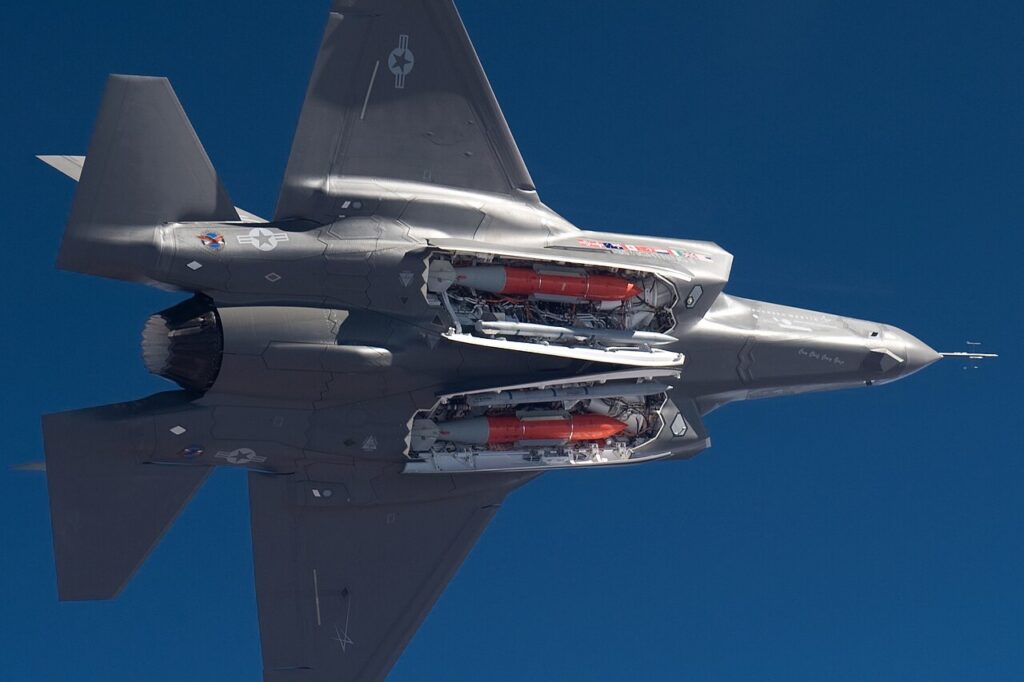
The Australian government has continued arms exports to Israel while assuring Australians it has not sent weapons to Israel for five years
MICHELLE FAHY. MAY 03, 2024, https://undueinfluence.substack.com/p/lockstep-with-lockheed-australia?utm_source=post-email-title&publication_id=297295&post_id=143751160&utm_campaign=email-post-title&isFreemail=true&r=1ise1&triedRedirect=true&utm_medium=email
Australia is one of six western countries that are complicit in the ‘genocidal erasure’ of the Palestinian people by continuing to supply Israel with arms, according to Dr Ghassan Abu-Sittah, a British-Palestinian surgeon and newly elected rector of Glasgow University.
Israel’s relentless bombing campaign has systematically destroyed all of Gaza’s 11 universities plus more than 400 schools, and killed 6,000 students, 230 teachers, 100 professors and deans, and two university presidents.
The elimination of entire educational institutions (both infrastructure and human resources) is ‘scholasticide’ and is a critical component of the genocidal erasure, says Dr Abu-Sittah.
He named the United States, Germany, the United Kingdom, Australia, Canada and France as comprising an ‘axis of genocide’ because they have been supporting the genocide in Gaza with arms, and had also maintained political support for Israel.
Dr Abu-Sittah worked in Gaza for 43 days in the immediate aftermath of the October 7 attacks. His experience was cited in South Africa’s genocide case at the International Court of Justice (ICJ).
In his submission to the ICJ, Dr Abu-Sittah wrote: ‘There was a girl with just her whole body covered in shrapnel. She was nine. I ended up having to change and clean these wounds with no anaesthetic and no analgesic. I managed to find some intravenous paracetamol to give her…her Dad was crying, I was crying, and the poor child was screaming…’
Australia defies the UN
The Albanese government has consistently denied it is supplying weapons to Israel, even as the United Nations pointed a finger directly at Australia, alongside the US, Germany, France, the UK, and Canada, asking these countries to immediately halt all weapons transfers to Israel, including weapons parts, and to halt export licences and military aid.
The Defence Department has refused to answer questions about whether it has halted the arms export permits for Israel that were in place before October 7, the day of Hamas’s deadly attack in Israel.
Defence approved new export permits to Israel after October 7
Defence approved three new export permits to Israel in October 2023, and none in November, December or January (to 29/1), according to figures Defence released following a Freedom of Information (FOI) request I lodged on 29 January.
In a Senate estimates hearing on February 14, the Defence Department revealed it had approved two new export permits to Israel since the Hamas attacks of October 7. Asked for clarification about the timing, Defence’s deputy secretary of Strategy, Policy, and Industry, Mr Hugh Jeffrey, said, ‘Two export permits have been granted since the time of the last estimates’. The previous estimates hearing had been on 25 October 2023.
The Senate Estimates and FOI evidence together show that Defence approved one export permit to Israel prior to October 7 and two in the period October 25–31.
Mr Jeffrey refused to say what items the two new permits covered. Instead he said they ‘would have been agreed on the basis that they did not prejudice Australian national interests under the criterion of the legislation’.
Possible implications
Israel has been using its F-35 fighter jets in its bombardment of Gaza. Australia is one of a number of countries that manufacture and export parts and components into Lockheed Martin’s F-35 fighter jet global supply chain. Given this, there are several reasons why the above information may be significant:
- The head of the F-35 joint program office, Lieutenant General Michael Schmidt, a US Air Force officer, said a year ago that the F-35 program was established with a ‘just in time’ supply chain, where parts arrive just before they’re needed and very little inventory is stockpiled. [Emphasis added.] Lt-Gen Schmidt described that situation as ‘too risky’.
In mid-December, a US Congressional hearing on the F-35 program revealed that the F-35 joint program office had been moving ‘at a breakneck speed to support…Israel…by increasing spare part supply rates’. [Emphasis added.]- More than 70 Australian companies are involved in the global supply chain for the F-35. Several of the companies are the sole global source of the parts they produce. Without them, new F-35 jets cannot be built and those parts in existing jets cannot be replaced. The US recently authorised the transfer to Israel of 25 more F-35s.
The F-35 global supply chain is vulnerable to disruption, which is why Australia could be under pressure to continue meeting supply contracts.
In his testimony to the December 12 Congressional hearing, Lieutenant General Schmidt also made clear the role of the F-35 joint program office in closely supporting Israel:
I had the opportunity to talk with [Israel’s] Chief of Staff just yesterday… [Israel is] very satisfied with [the] performance [the] sustainment enterprise is giving them. We could learn a lot from them in terms of the quickness with which they’re turning airplanes, [plus] all of the things we’re learning ourselves with moving parts around the world in support of a conflict. [Emphasis added.]
Defence Department and Australian industry partnering with F-35 program office
Defence issued a media release on October 30, around the same time it approved the two additional export permits to Israel.
The release announced that Melbourne company Rosebank Engineering had established an important regional F-35 capability that would also contribute to the global F-35 program. The release said Australian industry is playing an increasingly important role in the production and sustainment of the global F-35 fleet and that Rosebank and the Defence Department had partnered with the US F-35 joint program office and Lockheed Martin to establish the new facility.
Lockheed Martin removes information from its website
US multinational Lockheed Martin is the world’s largest arms manufacturer and the prime contractor for the F-35 fighter jet. As the horror of Israel’s war on Gaza has unfolded over the past seven months, there have been court cases and protests targeting the F-35 and its global supply chain.
In this context, Lockheed Martin recently edited the Australian page of its F-35 website to remove the ‘Industrial Partnerships’ section. The text had acknowledged that Australian parts were used in every F-35 fighter jet.
The deleted section can be viewed at the Wayback Machine web archive. This was the opening paragraph:[screenshot on original]
Lockheed Martin has also deleted other information from its website. A feature post about Marand Precision Engineering, another Melbourne-based company supplying the F-35 program, has been removed. The page had described how Marand engineered, manufactured, and now sustains ‘one of the most technically advanced mechanical systems’ ever created in Australia. The system, an engine removal and installation mobility trailer for the F-35, comprises 12,000 individual parts. The page said, ‘Marand has worked in close concert with Lockheed Martin on the F-35 program for many years’ and revealed that in 2022 the company had established a maintenance facility for its F-35 trailer in the US, ‘to better meet Lockheed Martin’s sustainment needs’. The deleted page can be viewed at the Wayback Machine web archive.
Sydney-based Quickstep Holdings is another long-term Australian supplier to the F-35 program. In December 2020, it announced it had produced its 10,000th component for the F-35 program. Quickstep estimated it had completed just 20% of its commitment to the program. The company revealed it manufactures more than 50 individual components and assemblies for the F-35, representing about $440,000 worth of content in each F-35.
Last year, Lockheed Martin also acknowledged that Queensland’s Ferra Engineering had been providing products for the F-35 since 2004 and that it remained a vital partner supporting delivery of the aircraft.
Despite the Albanese government’s persistent and misleading claim that no weapons have been supplied to Israel for the past five years, all of the above companies have supplied parts and components into the F-35’s supply chain during this period.
Threshold for genocide met, says UN Special Rapporteur
On March 26, Francesca Albanese, the UN Special Rapporteur on the Human Rights Situation in the West Bank and Gaza, said, ‘Following nearly six months of unrelenting Israeli assault on occupied Gaza, it is my solemn duty to report on the worst of what humanity is capable of, and to present my findings.’
Ms Albanese said there were ‘reasonable grounds to believe that the threshold indicating the commission of the crime of genocide… has been met’.
On April 5, the UN Human Rights Council adopted a resolution that included a call for an arms embargo on Israel.
Some 28 countries voted in favour of the resolution and 13 abstained. Israel’s two largest suppliers of weaponry, the US and Germany, along with four other countries, voted against it. (The Council has 47 members elected for staggered three-year terms on a regional group basis. Australia is not currently a member.)
Start thinking now about alternatives to AUKUS Pillar 1

The Strategist 30 Apr 2024|, Harlan Ullman
The program to equip the Royal Australian Navy with nuclear submarines is in trouble. The takeaway: Australia must begin thinking now about what to do to avoid program failure.
Why has this situation arisen? First, the prospective program costs are enormous and have been badly underestimated. Second, industrial capacity is inadequate for the tasks of building and supporting a nuclear fleet. Third, the program lacks a powerful leader and an effective management plan to drive it forward.
And, strategically, the planned force of eight nuclear attack submarines (SSNs) armed with only conventional weapons would have minimal deterrent value on Chinese perceptions.
Building the submarines is Pillar 1 of AUKUS, the security partnership of Australia, Britain and the United States. Pillar 2 consists of other technology exchanges among them. It is in Pillar 2 that AUKUS may prove itself.
The United States is to supply three Virginia-class SSNs to Australia—two from the US fleet, which will have to be topped up with newly built vessels, and one straight from a shipyard. Australia has the option to seek to acquire a fourth and fifth Virginia. Britain is to design, in coordination with its partners, a new class, SSN-AUKUS, for the Royal Navy and Royal Australian Navy. The Australians are due to build units of that class to reach a total fleet of eight SSNs by the mid-2050s .
But here is the first constraint. How long does it take to build a new Virginia-class submarine? According to the Congressional Budget Office, the answer is nine years, due to supply chain limitations. Huntington-Ingalls Industries (HII) in Newport News, Virginia, cannot now build enough SSNs for the US Navy. How will it find capacity to build even more to cover acquisitions by Australia?
As well as competing for nuclear talent with General Dynamics, which is constructing the Navy’s top-priority Columbia-class nuclear ballistic-missile submarines (SSBNs), HII is building nuclear aircraft carriers. Delays to delivery of the carrier USS Enterprise illustrate the lack of skilled workers for all the required nuclear construction. And the question of huge cost overruns in the Australian SSN program may not have been fully considered.
The first Columbia class boat will cost about $20 billion. Follow-ons are estimated at lower costs. However, the entire nuclear infrastructure is inordinately expensive. Australia must start from scratch. And, as Britain will rediscover, a new SSN class is almost certain to experience large cost overruns.
Maintenance, repairs, logistics, training and recruiting to maintain a nuclear navy are not cheap. While Australia will benefit from using US and British facilities, that will not significantly offset the costs. Plans to deal with these and other challenges are not fully mature.
The question of who is in overall charge is difficult to answer. There is no czar like Admiral Hyman Rickover, who ruled the US nuclear submarine program for decades with absolute authority. Nor is there a Vice Admiral William (‘Red’) Raborn, who did the same for the US Polaris SSBN program.
It is unclear that these obstacles have been fully digested in an overall plan for completing AUKUS Pillar 1. One practical outcome could be—and emphasis is on ‘could be’—the US selling one or two more older Virginias to Australia as an option.
Those who are more optimistic should think about Skybolt.
In the early 1960s, the US was contracted to build an air-launched ballistic missile as the centerpiece of Britain’s strategic nuclear deterrent. But the concept proved too difficult to engineer, and Skybolt was cancelled, leaving Britain scrambling to find a new way of sustaining its deterrent. Will AUKUS suffer the same fate?…………………………
Ironically, in retrospect, a better choice may have been building diesel submarines with long-range strike missiles and air-independent propulsion for extended underwater loitering. But that is no longer re-negotiable.
The crucial question is this: what impact will eight nuclear submarines, if they can be built and delivered, have on China? Unless nuclear weapons are to be carried, the effect will not be significant. And huge impediments threaten development and construction of the nuclear boats.
What is needed now is a plan to save as much of Pillar 1 of AUKUS as possible and to save Pillar 2 at all costs. This is a grim situation that must be confronted now. Otherwise, the spectre of another Skybolt disaster looms large. https://www.aspistrategist.org.au/start-thinking-now-about-alternatives-to-aukus-pillar-1/
Bowen says Coalition’s nuclear push would put grid reliability at risk due to delays in coal plant closures

ReNeweconomy, Giles Parkinson, Apr 26, 2024
Federal climate and energy minister Chris Bowen has again lambasted the Coalition’s pursuit of nuclear power and its intention to stop renewables, saying it would put reliability of the grid at risk because it would delay the closure of ageing and increasingly decrepit coal fired power stations.
The federal Coalition has yet to release details of its nuclear power plan, but has made no secret of its intention to halt the rollout of large scale wind, solar and storage, and has even threatened to tear up contracts with the commonwealth should it be returned to government.
The Coalition has also made it clear that it has no intention of meeting its commitment to the Paris climate targets, where the bulk of emissions reductions need to occur in the next decade.
That can’t happen if the transition to renewable energy is stopped and coal fired power plants kept on the grid to wait for nuclear some time in the 2040s. The Coalition appears only focused on the 2050 target for “net zero”.
“They know it’s a fantasy,” Bowen said in an interview with Renew Economy’s Energy Insiders podcast of the delays in the release of the Coalition energy policy. “Of course they do. But they are thinking of ways to avoid action and nuclear is the one they’ve settled on.
“Internally, in the Liberal Party, the National Party, I’m advised it is a miss. There’s a lot of anger that they’ve been foisted with this policy. You are seeing it delayed constantly because they are trying to make it stack up, and they can’t.”
Bowen says the push for nuclear is simply an excuse to keep coal fired power station operating longer, and delay renewables.
“That’s what it’s about. But there are two problems with that,” Bowen say
“There’s emissions. But perhaps even more acutely, there’s reliability. It’s a risk to our energy system, because coal fired power is the most unreliable form the power, because of the ageing nature of our coal fired power stations.
“They’ve done good work. They’ve been engineering masterpieces. But they’re very bloody old now. And they break down a lot, sometimes spectacularly, like Callide, and other times, not as spectacular, but still unexpected, and still with a big impact.
“And if we’re relying more and more on that ageing infrastructure, it’s going to be a big risk to reliability. That’s, again, another argument at the next election. And it’s an argument we’re ready for.”
Bowen also attacked the threats by National leader David Littleproud last week to tear up wind and solar contracts that could be signed under the Commonwealth, which has just announced the biggest ever auction of renewables in the country, six gigawatts of new capacity in a process that begins next month.
“I don’t think they will, and I don’t think they can,” Bowen said.
It’s entirely irresponsible – governments, parties to government, Labor and Liberal at the federal level, have consistently said, ‘we will honour contracts’.
“There’s been contracts that the previous government entered into, which I didn’t love and wouldn’t assign if I was the minister at the time, but we honour them. I don’t know what he’s talking about there, to be honest. It’s not a sensible contribution.”
Bowen says the CIS will help re-boot Australia’s transition to green energy, and meet the federal government’s 82 per cent renewable energy target by 2030, which he insists remains both ambitious and achievable. “No question in my mind,” he says.
The 6 GW CIS auction will begin in May, and will include a minimum 2.2 GW that is reserved for NSW, and 300 MW for South Australia, which is already leading the country, and the world, with a 75 per cent share of wind and solar in its in the past 12 months.
Bowen says the early indications – from the initial smaller tenders in NSW and in Victoria and South Australia – are that the CIS will succeed in getting projects moving.
“The early auction results have been outstanding, just outstanding in New South Wales. And the indications are, in terms of the size of the bids we’ve had come in for South Australia and Victoria, they are very high quality, which really indicates to me the pipeline is very strong, the interest is huge.
“The CIS is what was needed to unlock that risk matrix, to really make sure that Australia’s right at the top of the list for renewable investment decisions that are being made by multinational companies.”……………………………………………………………………………………….more https://reneweconomy.com.au/bowen-says-coalitions-nuclear-push-would-put-grid-reliability-at-risk-due-to-delays-in-coal-plant-closures/
Critical worker shortage menaces nuclear-powered submarine workforce

INDUSTRY, 29 APRIL 2024, By: Liam Garman
The document, sourced through a freedom of information request from former independent senator for South Australia Rex Patrick, examined the civilian nuclear workforce required to maintain a nuclear reactor plant.
According to the document, Australia will require over 75,000 additional electricians, construction managers, metal machinists and welders in its “feeder workforce”, a term for Australia’s pool of workers that are eligible to pursue a career in the submarine workforce.
In particular, by financial year 2030–2031, Australia will require:
- An additional 33,553 electricians;
- An additional 19,364 construction managers;
- An additional 11,753 metal machinists;
- An additional 12,280 welders.
The figures were assessed by calculating the difference between the projected demand and supply of skilled workers.
The document warns that the total shortfall will be even larger than the initial figures, confirming that the totals do not include additional demand produced by the nuclear-powered submarine industry.
The report raises an alarm for policymakers, noting that Australia has neither a skilled nuclear-powered workforce to leverage for the construction and maintenance of nuclear-powered submarines, nor does it have a big enough pool of eligible candidates.
“There is no current Australian talent pool with the required mix of qualifications, skills, experience, and behaviours to fulfil the civilian nuclear workforce roles,” the document read……………………………………………………………
Defence may also face additional constraints with the decision to build the SSN-AUKUS at Osborne in South Australia and maintain the capability in Henderson in Western Australia.
The research found the greatest feeder workforce is located in NSW, followed by Victoria and Queensland, while the state with the fewest skills is South Australia. https://www.defenceconnect.com.au/industry/13993-critical-worker-shortage-menaces-nuclear-powered-submarine-workforce
Parliamentarians renew their support for the Treaty for the Prohibition of Nuclear Weapons
Jemila Rushton, Acting Director, ICAN Australia
Australian parliamentarians from across party lines have renewed their support for Australia joining the Treaty on the Prohibition of Nuclear Weapons (TPNW).
In a new video, members of the Parliamentary Friends of the Treaty on the Prohibition of Nuclear Weapons show that action on nuclear disarmament is beyond party politics. Their joint message demonstrates how parliamentarians from across the political spectrum are working together to see the Treaty signed and ratified.
| Featured in the video are Susan Templeman MP (ALP), Member for Macquarie, Jordan Steele-John (GRN), Senator for Western Australia, Monique Ryan MP (IND), Member for Kooyong, Russell Broadbent (IND), Member for Monash, Sam Lim MP (ALP), Member for Tangney, Louise Pratt (ALP), Senator for Western Australia, Lidia Thorpe (IND), Senator for Victoria, Sharon Claydon MP (ALP), Member for Newcastle, Josh Burns MP (ALP), Member for Macnamara, and Josh Wilson MP (ALP), Member for Fremantle. In the video, they state: |
Today, 93 countries around the world are signatories to the Treaty on the Prohibition of Nuclear Weapons – the TPNW.
They are signed up to the legally binding commitment to comprehensively ban nuclear weapons.
Developing them, testing them, producing them, assisting with them, possessing them, threatening to use them, and using them are banned.
The TPNW is giving countries and citizens across the world hope, and a new and promising pathway towards the abolition of these weapons.
It’s about understanding that what we cannot prepare for and what we can adequately respond to, we must prevent.
It’s about continuing Australian leadership when it comes to nuclear disarmament.
It’s about working with our closest neighbours and collaborating with our Pacific family.
It’s about recognising and supporting victims of nuclear weapons testing. For First Nations survivors, for Australia’s nuclear veterans.
As members of the Australian Parliamentary Friends of the TPNW, we are working together to see the Nuclear Weapons Ban Treaty signed and ratified.
We are proud of our country’s commitment to getting rid of other inhumane weapons, like landmines, cluster munitions, biological, and chemical weapons.
We welcome Australia’s engagement with the TPNW under the Albanese Government and we pay tribute to the community activism being undertaken in support of Australia joining this treaty.
History is calling.
Murrumbidgee Council launches survey on establishing nuclear power generator near Coleambally, Darlington Point or Jerilderie
from Greg Phillips -I was wondering if this was a belated April Fool’s joke. Especially since it is an “online survey” with no checks on who votes (as usual I expect it to be overrun by nuclear fanatics pretending to be locals). I think the rate payers in that area will have to pay much more attention to who they let get into the council next time.
30 April 2024 | Oliver Jacques, https://regionriverina.com.au/council-launches-survey-on-establishing-nuclear-power-generator-near-coleambally-darlington-point-or-jerilderie/59543/
Murrumbidgee Council has asked residents of Coleambally, Darlington Point, and Jerilderie to voice their opinions on the idea of establishing a nuclear power generator in their area.
“In an effort to explore diverse energy solutions, the community is invited to participate in an online survey aimed at understanding their appetite for nuclear power,” the council said in a statement.
Nuclear power plants generate electricity by using controlled nuclear chain reactions to heat water and produce steam to power turbines.
Advocates say the plants can generate clean energy without the by-products emitted by fossil fuels, while critics argue nuclear power is expensive, unreliable, possibly unsafe and it produces hazardous waste.
Murrumbidgee Council General Manager John Scarce said the council sought to understand public sentiment regarding the possible integration of nuclear power into the local energy landscape.
Mr Scarce said the concept would be contingent upon dismantling existing renewable energy infrastructure, including solar and wind farms, at the end of their operational life.
“The land would then be reclaimed for agricultural purposes, aligning with sustainability and resource optimisation goals,” he said.
The survey is designed as a precursor to gathering more information on the idea, with a view to undertaking a more formal poll in the future.
Nuclear power is banned in Australia and under current laws, nuclear power stations can’t be built in any state or territory.
At a recent event in Wagga, Essential Energy CEO John Cleland said nuclear energy would remain an important part of the global energy network, but it was an unlikely option for Australia in the near future.
“The lived experience and reality of nuclear is that all new nuclear generation built globally in the last 40 or 50 years has ended up being very expensive,” he said.
“In Australia, we have this wonderful endowment of wind and solar and existing gas reserves and systems that will provide a very robust peaking generation source going forward.
“The economic case for nuclear is challenging but we do need to continue to monitor the evolution of the technology around small-scale modular nuclear reactors because they might in time play a role.”
The Murrumbidgee Council survey can be accessed online at survey monkey and will remain open until 5 pm on 22 May 2024.
1 This month

of the week – Australians for War Powers Reform (AWPR)
To see nuclear-related stories in greater depth and intensity
 Antinuclear