Ted O’Brien sets out long-term plan for uranium-enrichment industry
Joe Kelly, THE AUSTRALIAN, 31 July 24
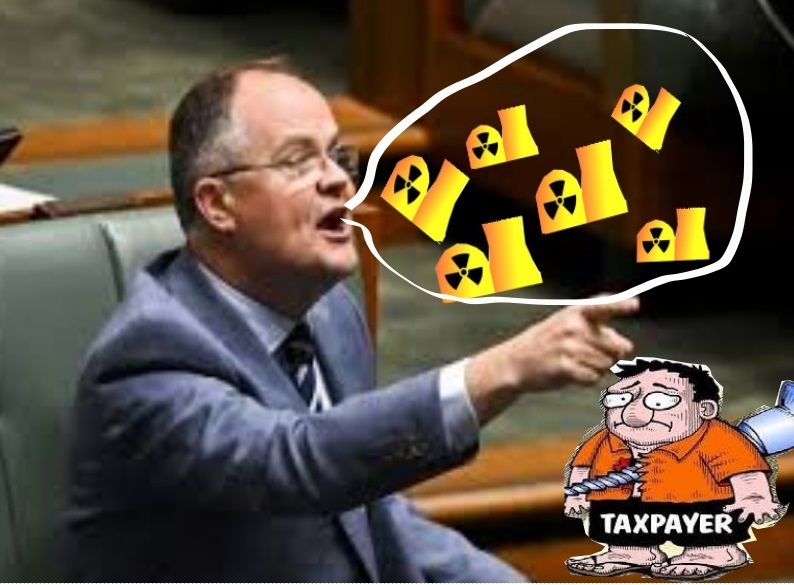
Opposition energy spokesman Ted O’Brien will call for Australia to develop a sovereign capability at the front end of the nuclear fuel cycle – including the enrichment, conversion and fabrication of uranium – as new survey results show a dip in support for nuclear power.
In an address in Adelaide on Thursday night, Mr O’Brien will sketch out a long-term national endeavour to strengthen Australia’s energy security, building on the Coalition’s plans to replace retiring coal-fired power stations with up to seven nuclear power plants.
Mr O’Brien’s long-term nuclear plan for Australia now includes three key planks: the unlocking of the nation’s uranium reserves; the building of nuclear power plants; and a longer-term plan to develop expertise across the front end of the nuclear fuel cycle that would involve the development of a uranium-enrichment industry.
The three-pronged plan is aimed at ensuring Australia can eventually be self-sufficient, and not have to rely on global supply chains for the nuclear fuel rods that will be needed to power a future fleet of nuclear power plants…………………….
“Advancing Australia in this direction would set Australia up for the future, not just economically, but also strategically.”
Mr O’Brien will speak about his longer-term vision at an energy event on Thursday night being hosted by the Institute of Public Affairs, where he will also make a case for Australia to develop the capability to export nuclear fuel…………………….
The speech follows SEC Newgate’s release of its latest Mood of the Nation report on Thursday, which reveals only moderate support for nuclear power and a clear preference for renewables and new transmission infrastructure.
The latest tracking survey of 2021 Australians over the age of 18, taken between July 17 and 23, shows support for nuclear is slightly lower than in April at 37 per cent, while 39 per cent of respondents say they are against nuclear, and 23 per cent are neutral.
The results show a clear preference for building large-scale wind and solar farms with new transmission lines (50 per cent of respondents prefer this option), rather than nuclear power plants that use existing transmission infrastructure (26 per cent of people prefer this option).
Support for the Coalition’s policy to build seven new nuclear power plants is 39 per cent, while 35 per cent of respondents say it makes them less likely to vote with the Coalition, and 26 per cent say it makes them more likely to vote for the Opposition at the next election.
Of those who oppose the Coalition plan, most objections relate to safety concerns (41 per cent say it is too dangerous). However, 19 per cent of opponents to the Coalition plan believe renewables are superior.
AUKUS servility just one facet of poor governance
By Paul KeatingJul 31, 2024, https://johnmenadue.com/aukus-servility-just-one-facet-of-poor-governance/
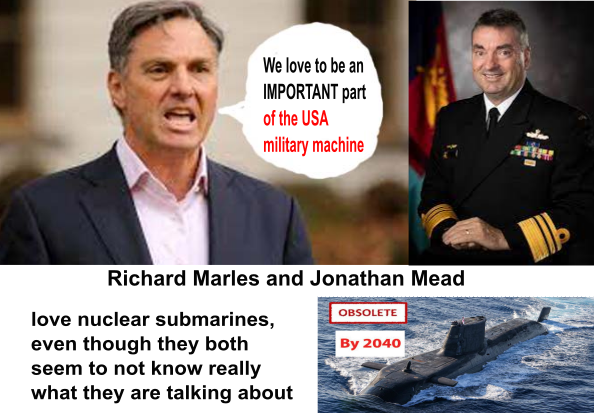
Richard Marles has the Navy out in force firing torpedoes at AUKUS critics.
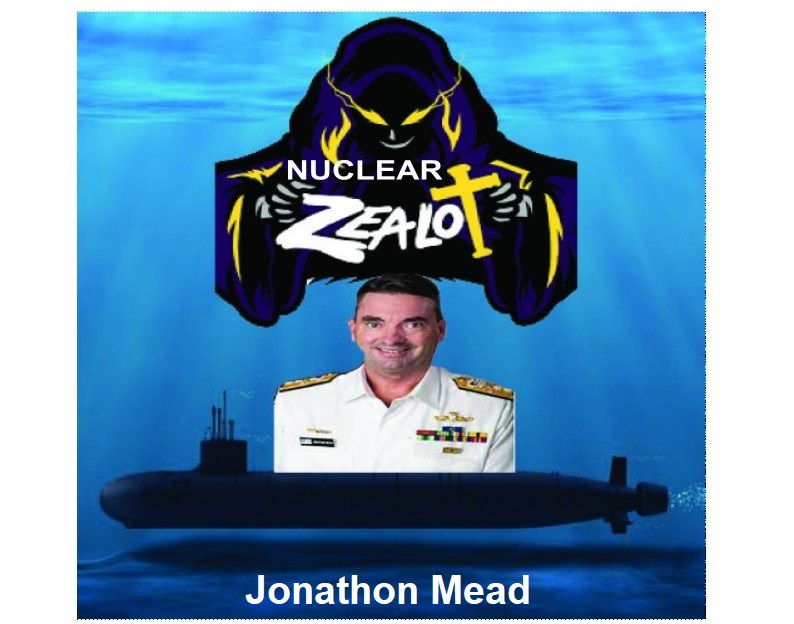
On Friday last, Vice Admiral Jonathan Mead claimed the critics need to produce evidence of any challenges to AUKUS being realised, then on Saturday, Vice Admiral Hammond, Chief of Navy, raised his periscope claiming the AUKUS debate was being ‘hijacked’ by people with ‘specific agendas’ without indicating what these agendas might be or who was likely making them.
The fact is, what clearly is being ‘hijacked’ is national accountability – accountability for the most wayward strategic and financial decision any government has taken since Federation.
Despite AUKUS’s half trillion of budgetary cost and its dangerous strategic implications there has not been one Ministerial Statement explaining its rationale, its strategic policy objective or defending its hugely distorting impact on government expenditures.
Not a coherent or persuasive word has come from the Minister for Defence or for that matter, the Prime Minister, let alone from a parliamentary debate on what is significantly a seminal turn in the country’s strategic and defence policy settings.
Vice Admiral Hammond, ignoring Australia’s geography – its residence among populous and prosperous Asian states, fell back on the old Anglo glee-club adage ‘three developed nations who have over 100 years of shared history, heritage, values and sense of purpose.’

The likelihood is that Australia will not come into possession of nuclear submarines of its own making, but what it will certainly become is landlord and host to American nuclear submarines as the United States appropriates Australian real estate in its attempts, against all odds, to maintain strategic primacy in Asia. Odds that carry the likelihood of Australia being dragged into military skirmishes with China, or indeed, worse.
So irresponsible, secretive and smug has the government been in making its decision, that no amount of ‘hijacking’ by anyone else is likely to disrupt Australia from its current path of effectively falling into American hands, or at least, being abjectly at America’s beck and call.
Republished from Australian Financial Review, July 30, 2024
Prime Minister Albanese’s hypocrisy on matters nuclear
Reverse nuclear secrecy. Albo or Dutton? What’s the scam?
Michael West Media, by Rex Patrick | Jul 28, 2024
“……………………………………………………………………..At the same time, the Prime Minister has launched a full-scale attack on Dutton’s half-baked scheme to build seven nuclear power reactors. Albanese’s problem is that much of Labor’s critique of Dutton’s contentious plans applies to AUKUS too.
It’s hard to criticise power reactors when you’re the man who stamped approval on the $368B AUKUS program as you swung by the political Kabuki show in San Diego last year.
Which leaves the Prime Minister exposed as a hypocrite on an issue he would like to put at the centre of his election campaign. https://michaelwest.com.au/reverse-nuclear-secrecy-albo-or-dutton-whats-the-scam/
Jabiluka uranium mine lease not renewed in decision heralded as ‘huge win’

NT government opts not to grant 10-year lease after considering wishes of Indigenous people and federal government advice
Australian Associated Press, Fri 26 Jul 2024, https://www.theguardian.com/australia-news/article/2024/jul/26/jabiluka-uranium-mine-lease-not-renewed-in-decision-heralded-as-huge-win?CMP
The lease on the Northern Territory’s Jabiluka uranium mine will not be renewed, months after its remote surrounding area was granted new protections.
Energy Resources Australia (ERA) had applied for a 10-year lease renewal on the Jabiluka uranium mine, but was knocked back on Friday.
The NT mining minister, Mark Monaghan, said the decision to not renew was based partially on advice from the federal government.
“We have gone through a thorough process to ensure that all stakeholder views have been considered in this decision,” he said.
“The federal government advice, along with the wishes of the Mirarr people, were critical to this process and outcome.”
The Northern Territory government declared special reserve status over the Jabiluka area, which is in the surrounds of Kakadu national park, in May.
This prevents any future applications for the grant of a mineral title over the Jabiluka area once the current lease ceases on 11 August.
The Australian Conservation Foundation welcomed the decision, calling it a “huge win” for traditional owners.
“This decision allows a line to be drawn under the divisive era of uranium mining in Kakadu,” a statement read.
“This is a responsible decision that ends the threat that has hovered over this very special place for four decades.”
Mirarr people have long opposed any mining in the area, holding protests in the late 1990s and early 2000s when more than 5,000 people travelled to Kakadu to prevent uranium mining at Jabiluka.
Energy Resources of Australia, a subsidiary of the Rio Tinto Group, has been contacted for comment
Solar doesn’t need a toxic “friendship” with nuclear power
Heidi Lee Douglas, Jul 26, 2024. https://reneweconomy.com.au/solar-doesnt-need-a-toxic-friendship-with-nuclear-power/
Federal Opposition Leader Peter Dutton has been in regional Queensland this week promoting hi nuclear plan, which claims nuclear and solar both have a future in Australia’s energy mix.
Yeah, nah.
A new report released this week by the Queensland Conservation Council has revealed building a 1,000 MW nuclear power station in Queensland in 2040 would knock out 3,700 GWh of cheap renewable energy from the grid.
It is the equivalent of shutting an average of 45,000 Queensland household solar systems every day, according to the new analysis.
The report reinforces what other experts are saying – that rooftop solar and nuclear cannot co-exist – and reveals just how detrimental any proposal for nuclear would be for Queensland solar homeowners’ hip pockets.
To make nuclear power plants economically viable, nuclear must run at full capacity. That means a direct clash with rooftop solar whenever the sun is up, and to enable nuclear power production during the day they’ll have to stop rooftop solar panels from exporting to the grid.
The simple truth is adding nuclear power to the Australian energy mix will undermine the interest of rooftop solar owners.
Australia has an abundance of sunshine and renewable resources. Queensland already leads the world with uptake of household-scale solar, with the Sunshine State reaching a record 1 million rooftop solar installations earlier this year.
The second, third, fourth and fifth highest rates of rooftop solar output in Australia are in Bundaberg, Mackay, Toowoomba and Hervey Bay. These communities have the most to lose if their solar output is shut off during the day by nuclear.
With more Australian households nationwide having rooftop solar than swimming pools, it’s time for the Liberals and Nationals to start listening and stop ignoring people power, literally and politically.
Australians have already voted with their rooftops for cheaper, cleaner solar energy, with more than three million rooftop solar installations. Australians have a strong and abiding love of the cost saving, independence and security that comes from making their own solar power.
In fact we’ve invested $25 billion of our own money into rooftop solar, and are the envy of the eye worldwide for our home-grown renewable energy.
Everyday Australians are world leading energy producers – not just energy consumers. Every home solar rooftop should be treated with the respect of being a sustainable home solar energy “farmer”, bringing the cost of power down for all Australians, and simultaebously reducing our carbon emissions.
At Solar Citizens we work with community members from across the political spectrum who, time and again, have been vocal in support of solar because they are empowered by rooftop solar. We know how strong this movement of solar homeowners is. And it would be unwise for political leaders to forget it.
A smarter government investment would be to grow access to rooftop solar for households currently locked out of the benefits of clean energy including renters, people living in apartments or social housing and low-income households. And provide Australian households with assistance for a battery rebate, like the highly succcessful solar rebate.
Enabling more people to install home batteries will mean we can store cleaner, cheaper energy during the day and use it at night or when needed most. This would provide long term energy relief for households, improve our power network reliability and help cut network costs for all by avoiding transmission costs.
Rooftop solar coupled with home batteries delivers the win-win of cost-of-living relief with cheaper power and less climate pollution.
Put simply, solar and renewables would not happily co-exist in a toxic ‘frenemy” relationship’ with nuclear. Instead, we urgently need a great Aussie marriage of home solar with home batteries.
Heidi Lee Douglas is CEO of Solar Citizens, an independent, community-based organisation working to protect and grow solar and renewable energy and clean transport in Australia.
Forget nuclear: 5B says plunging price of PV means giga-scale solar farms the future for old coal plants
Sophie Vorrath, Jul 26, 2024, RenewEconomy,
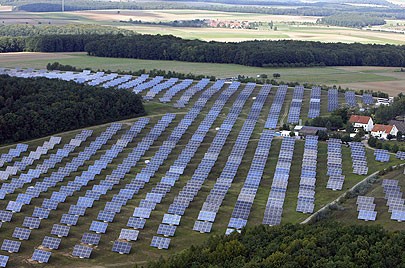
Australian solar innovator 5B says the plunging price of photovoltaic technology has made the company’s prefabricated Maverick arrays cost-competitive with single axis tracking solar plants – and in some cases cheaper, depending on the quality of the solar resource.
In a presentation to the Large-scale Renewable Generation & Storage Summit in Sydney on Thursday, 5B deputy CEO Nicole Kuepper-Russell said the company’s value proposition was “really singing” since module prices fell to just over 10 cents per watt in China in March.
The low cost of solar was a hot topic at the conference, as was the falling cost of storage.
In a presentation by former Clean Energy Finance Corporation chief Oliver Yates, the renewables investment guru argued cheaper batteries mean most existing government and industry plans should be “shredded and start again” to account for the “new solar/battery economic frontier.”
Representing Valent Energy – the energy storage focused joint venture between Gaw Capital and BW ESS – Yates said the cost of dispatchable renewables was now around $200/MWh – $65/MWh for solar production and $135/MWh for battery storage – and “anything producing power higher than that is ridiculous.”
For 5B – as Kuepper-Russell’s presentation illustrated, below [on original]– the levelised cost of energy for a solar project using its Maverick arrays hit price parity with the LCOE of single axis tracker solar towards the end of last year, and has steadily become cheaper as panel prices continue to fall……………………………………………………………………………………………………………………… more https://reneweconomy.com.au/forget-nuclear-5b-says-plunging-price-of-pv-means-giga-scale-solar-farms-the-future-for-old-coal-plants/
Coalition to fast-track nuclear power.

Pearls and Irritations, By Ian McAuley, Jul 27, 2024
The Coalition’s nuclear power idea is based on an obsolete model of electricity supply
Circulating in the media are three arguments against nuclear power in Australia. One is based on safety, an emotive issue, involving unresolved questions about future costs, and the dangers are probably overstated. The danger issue doesn’t need to be argued, however, because the main problems with the Coalition’s nuclear power plans have to do with cost and the long time before the first kWh would be generated.
Those impediments were confirmed in a speech earlier this month by AEMO CEO Daniel Westerman: Australia’s energy transition: What’s needed to keep the momentum going. He said:
Our ISP [Integrated System Plan] does not model nuclear power because it is not permitted by Australian law, and development of nuclear power generation is not a policy of any government. But we know from our work with the CSIRO on the GenCost report that nuclear is comparatively expensive, and has a long lead time. Even on the most optimistic outlook, nuclear power won’t be ready in time for the exit of Australia’s coal-fired power stations.
The Australian Academy of Technological Sciences and Engineering has just released an assessment of the viability of small modular nuclear reactors, which feature strongly in the Coalition’s proposals. These reactors are still at an early development stage: it will be many years before they become established. Although the study does not explicitly address costs, it does point out that early adopters are likely to face much higher costs than those who wait for SMRs s to become a mature product. As ATSE President Katherine Woodthorpe explains on ABC Breakfast, small modular reactors are unlikely to become a realistic energy source in Australia for decades, and our large coal-fired generators are closing in the next few years.
Writing in The Conversation Asma Aziz of Edith Cowan University reminds us of another cost component not covered in the Coalition’s plans: Without a massive grid upgrade, the Coalition’s nuclear plan faces a high-voltage hurdle. The Coalition’s idea is about replacing retiring coal-fired generators with nuclear plants, plugged into the existing transmission infrastructure. But as she points out, demand for electricity is growing rapidly, which means the cost of upgrading the transmission network should be included in the Coalition’s plans. (It is already included in the costings for renewable energy.) The other point she stresses is that all power plants, whatever their technologies, are subject to outages, planned and unplanned. A distributed set of comparatively small solar and wind plants therefore need less transmission redundancy than large centralized nuclear plants.
There is a fourth, and more basic problem with the Coalition’s nuclear proposal. It’s based on an old and inflexible “base load” model, which was determined by the technology of coal-fired generation. There has to be enough capacity in the system to cope with demand peaks, and that was achieved by keeping the boilers hot, keeping the generators spinning, and shovelling in heaps of coal as demand rose. Nuclear is a little different, in that shovels aren’t involved, but the principle is the same.
There are now more flexible and lower-cost ways to meet peaks……………………………………………………………
All the above is in the context of a debate about the comparative cost of nuclear energy and renewables. The Australian community is being distracted from that debate, because the Murdoch media and Coalition-aligned think tanks are spreading absurd misinformation and disinformation about the cost of renewable energy. ……
Even if nuclear power plants were cheaper than renewables (they’re certainly not), there is no way they could replace coal-fired stations as they come to the end of their lives. The lead time for nuclear power is just too long. As Michael West explains, there is a constellation of forces, including the Institute of Public Affairs, Putin’s mate Tucker Carlson, and the Murdoch media, pushing to keep oil and gas burning. That would have to involve new “base-load” coal-fired stations: there is no way to extend the life of our old stations for twenty or more years while nuclear power gets developed.
The other driver of the Coalition’s policy is an intention to cripple the renewable industry through creating uncertainty. That way they can confirm their claim that the government’s renewable plans are failing. It’s doubtful that any seriously cashed-up investor is convinced by the Coalition’s nuclear argument, but the belief that next year’s election could see the election of a government of Trumpian crazies is enough to make investors cautious. ………………more https://johnmenadue.com/coalition-to-fast-track-nuclear-power-north-korean-style-weekly-roundup/
Anthony Albanese slams Opposition’s nuclear ‘obsession’ as he doubles down on renewables push at NSW Labor conference
Prime Minister Anthony Albanese has hit out at Peter Dutton’s nuclear plan, as he doubled down on the government’s push for renewables as the path forward for Australia’s energy future during his address at the NSW Labor conference.
Sky News, Adriana Mageros, Digital Reporter, July 27, 2024
Prime Minister Anthony Albanese has slammed the Opposition’s “obsession with nuclear power”, as he doubled down on the government’s renewables push at the New South Wales Labor conference.
Mr Albanese delivered his speech to hundreds of delegates on Saturday at the annual Labor event, which will run for two days at Sydney’s Town Hall.
Security was earlier heightened in the Sydney CBD as Pro-Palestine protesters gathered outside the venue ahead of the Prime Minister’s arrival.
Speaking to delegates, Mr Albanese declared Labor’s bid for cleaner and renewable energy will produce a “new generation” of manufacturing jobs, particularly across regional Australia.
However, he claimed the Liberal Party’s nuclear agenda was putting this job growth at risk.
“They brag about driving the car industry out of Australia when they were last in government, and now they want to sacrifice a new generation of manufacturing jobs,” Mr Albanese said.
“All in the name of their obsession with nuclear power.”
Mr Dutton unveiled his long-awaited nuclear energy policy in June, proposing to build seven nuclear reactors across regional Australia should the Coalition win the next election.
The proposed power plants would be built on existing sites of aging coal-fired power stations, which are heading into retirement.
“It’s been over a month since the Liberals finally announced their plan for nuclear reactors in every state on the mainland, but they can’t find a single investor to back it,” Mr Albanese said.
“They won’t tell people what the cost of building these reactors will be, and they won’t tell you how long it will take.
“They don’t have an answer about how or where they will safely store the nuclear waste.
……………………………………………………………………………………. In his speech to delegates on Saturday, the Prime Minister also announced the government will be working with traditional owners to make the uranium mine at Jabiluka in the Northern Territory part of the Kakadu National Park.
“This means there will never be mining at Jabiluka,” Mr Albanese declared.
“The Mira people have loved and cared for their land for more than 60,000 years.
“Our government will work with them to keep it safe for all time.”…………………. https://www.skynews.com.au/australia-news/politics/anthony-albanese-slams-oppositions-nuclear-obsession-as-he-doubles-down-on-renewables-push-at-nsw-labor-conference/news-story/2ac731547651c7f26f08aec10676b0a1
Shoalhaven’s nuke-free vote

Shoalhaven City Councillors voted unanimously to remain a nuclear-free zone at Monday night’s ordinary meeting. A motion was tabled seeking council reaffirm its 2006 position that it would oppose any plan or attempt to establish a nuclear reactor or power plant in the region or in the Jervis Bay Territory. It comes after federal Opposition Leader Peter Dutton flagged seven nuclear sites across Australia in June.
Jabiluka’s priceless heritage permanently protected.

“This day will go down in history.”
Gundjeihmi Aboriginal Corporation, representing the Mirarr Traditional Owners of Jabiluka, has today welcomed the decision of Northern Territory Mines Minister Mark Monaghan to refuse mining company Energy Resources of Australia’s application to extend the Jabiluka mining lease. This decision ensures that no mining will happen at Jabiluka, ending a decades-long fight by Mirarr and their supporters.
Mirarr Senior Traditional Owner Yvonne Margarula (pictured above) said:
“We have always said no to this mine, government and mining companies told us they would mine it but we stayed strong and said no. Today I feel very happy that Jabiluka will be safe forever. Protecting country is very important for my family and for me”
The Special Reservation (under the NT Mines Act) will protect Jabiluka from the threat of any mining and takes effect from August 11th when the current lease expires. The next steps for Government will be to seek inclusion in the World Heritage estate and to work with Mirarr to establish a new set of arrangements to incorporate the area into Kakadu National Park.
Gundjeihmi Aboriginal Corporation CEO Thalia van den Boogaard said:
“This news has been a long time coming. It’s a hugely significant day for the Mirarr and for all Australians. Jabiluka will never be mined and the internationally significant natural and cultural value of the site is finally being recognised and will now be protected. The Mirarr and their supporters have been steadfast in their opposition to this mining project for over four decades. Now the job starts of caring for Jabiluka as the heritage of all Australians.
“Mirarr are very concerned that ERA has been in serious financial decline for the past 18 months. Focus now needs to be put on the rehabilitation of the nearby former Ranger uranium mine. It is up to the mining company and the Commonwealth Government to ensure that site is fully rehabilitated so it can be safely returned to the Mirarr and included in the national park.”
Mirarr Traditional Owner Corben Mudjandi welcomed the news:
“This day will go down in history as the day the Mirarr finally stopped Jabiluka. It is great day for the Mirarr people, for Kakadu, the Northern Territory and for Australia. This proves that people standing strong for Country can win. We look forward to welcoming all Australians to share our cultural heritage for decades to come.”
Gina Rinehart’s threat to the proud independence of Australia’s Fairfax newspapers

So why is Gina Rinehart buying? She has no interest as a shareholder in making money. She wants to buy influence.
In 1979, Gina’s father, Lang Hancock argued: “We can change the situation so as to limit the power of government,”
before concluding: “it could be broken by obtaining control of the media and then educating the public”.

The Conversation, By Andrew Jaspan, Editor, 11 Feb 12, News of Gina Rinehart’s tilt at Fairfax Media is a circuit breaker in the never-ending story of the media company’s decline. As a former editor of The Age, one of Fairfax’s prized mastheads, I have spent the day wondering where this might end. Whichever way, it looks bad for quality, independent journalism. This is a defining moment for the kind of Australia we want….
Fairfax’s papers have an awful lot of clout. The combined audience for The Age in print and online is about 1 million readers per day, and the SMH just above. For those who follow these things, that’s higher than for any Channel 7, 9, 10 or ABC news bulletins. And more importantly, the audience for the Fairfax papers, including The Australian Financial Review, is the influential and affluent “AB” market. For these people, what the Fairfax papers report, matters.
Unlike the tabloids read by the bulk of Australians. The Age, SMH and The Fin, along with The Australian, set Australia’s news agenda and are slavishly followed by the radio talk-back and TV news shows.
So why is Gina Rinehart buying? She has no interest as a shareholder in making money. She wants to buy influence. In 2007 she placed full
page ads in The Age and SMH against then-Prime Minister Kevin Rudd’s
proposed mining tax. That campaign ended with the removal of Rudd and
the collapse of the tax. Now instead of buying pages, she wants to buy
the papers.
Such motivation is deep in the Rinehart family genes. In a 1979
polemic called Wake up Australia, Gina’s father, Lang Hancock argued:
“We can change the situation so as to limit the power of government,”
before concluding: “it could be broken by obtaining control of the
media and then educating the public”.
And on the miners’ right to mine anywhere, he wrote: “Nothing should
be sacred from mining whether it’s your ground, my ground, the
blackfellow’s ground or anybody else’s. So the question of Aboriginal
land rights and things of this nature shouldn’t exist.”
The Murdoch press in Australia is already favourably disposed to the
miners and the Minerals Council view of the world. Fairfax provides an
alternative view. And one that Gina no doubt wants neutered, silenced
or turned around. Perhaps by Gina’s favourite columnist, Andrew Bolt?
Whether Australia retains an independent and semi-pluralist media will
become clear within the near future. In the meantime, The Conversation
will keep a close eye on this matter of national importance.
http://blogs.crikey.com.au/croakey/2012/02/07/latest-wrap-of-health-and-medical-reading-from-the-conversation/
Clean Energy Sector Rallies Against Nuclear ‘Mistruths’
by News Of The Area – Modern Media –
THE clean energy industry has accused nuclear energy proponents of threatening the nation’s fragile hold on vital economic reform with “mistruths and outright disinformation”.
“The Australian public are being confused and misled,” Clean Energy Council chief executive Kane Thornton told the industry’s annual summit in Sydney on Tuesday.
“We need to remember the vast majority want wind and solar and hydro to be central to our energy future,” he told business leaders and investors.
He accused “bad faith actors” of preying on anxious communities who feared uncertainty after an energy crisis and amid ongoing cost-of-living pressures, which could be alleviated by cheaper renewable power.
“Vested interests are stepping up to tell their story and peppering it with mistruths and outright disinformation,” Mr Thornton said.
Nuclear power was the “battering ram of bad faith actors” despite it being more expensive and two decades away at best, he said.
Australia has doubled its amount of renewable energy in the past five years and must again by 2030, as coal-fired power plants are phased out and new electrified industries grow.
Coalition energy spokesman Keith Pitt, who says nuclear is the “only option” to achieve net zero emissions and keep the lights on, is due to address the summit on Wednesday.

Dismissing the nuclear debate as a “distraction”, Assistant Minister for Climate Change and Energy Jenny McAllister said it would leave “a pretty big gap” if the coalition pressed pause on renewables now to install nuclear power in the 2040s.
Announcing the fast-tracking of a certification scheme for new exports, Senator McAllister said it would become increasingly important for businesses to be able to account for their products’ emissions intensity to retain access to major markets.
“The guarantee of origin scheme will give Australian companies a competitive advantage by providing government-backed certification of the carbon intensity of key green products,” she said.
A crucial component of the $22.7 billion Future Made in Australia program, the scheme begins with renewable hydrogen in 2025 before expanding to sustainable aviation fuel, green steel and aluminium, and biomethane and biogas.
As the climate-accounting backbone of new green industries, it is designed to allow producers, exporters and users to prove where a product was made and the emissions associated with its production and transport.
Digital certificates, backed by proof of renewable energy use, will be used to establish eligibility for tax credits under the $6.7 billion Hydrogen Production Tax Credit announced in the May budget, and trigger the development of other new industries.
As almost all of Australia’s trading partners have net-zero commitments, official proof of emissions could avoid costly tariffs or trade bans on hydrogen or ammonia production that relies on coal or gas-fired electricity rather than renewable energy.
“Guarantee of origin is a key to new market opportunities for Australian energy exporters in the race to net-zero,” Senator McAllister said.
The first Australia-India renewable energy dialogue was held alongside the Australian Clean Energy Summit, with India aiming for 50 percent renewable energy by 2030.
Despite being big coal and gas exporters and users, the two countries say they share a net zero commitment.
AUKUS and the pride of politicians

By Nick Deane, Jul 24, 2024 https://johnmenadue.com/aukus-and-the-pride-of-politicians/
With AUKUS, the pride of politicians has become an obstacle to reaching the best solution to the ‘national security’ conundrum. In the end, it could be that ego-driven reluctance to shift from entrenched positions results in the Australian people being delivered a disaster.
For my own purposes, I have been keeping a record of articles I have read under the topic ‘AUKUS’. There are now some 300 such items on my spreadsheet – nearly all of them finding fault of one kind or another with this extraordinary project.
The criticisms deal with a wide variety of aspects (mainly focussed on the acquisition of nuclear-powered submarines). To summarise a few, the AUKUS project:-
- Leads Australia in the direction of war;
- Has done damage to Australia’s international reputation;
- Destabilises Australia’s immediate region;
- Brings a nuclear industry with it;
- Introduces the intractable problem of nuclear waste disposal;
- Damages our relationship with our most important trading partner;
- Causes a significant loss of sovereignty;
- Is not good value for money;
- Diverts resources away from social programs;
- Will not be as effective as conventional submarines;
- Is aggressive and not defensive, and
- Will probably not come to fruition in any case.
Highly respected commentators, such as Hugh White, Paul Keating, Sam Roggeveen, Andrew Fowler, Rex Patrick and Clinton Fernandes, have all raised significant concerns. Meanwhile ‘civil society’ is also getting mobilised, with ‘anti-AUKUS’ groups springing up in all the major centres.
However, the proponents of AUKUS (and the mainstream media) appear content to ignore the valid, rational arguments being put forward against it. Indeed, industry-based conferences are going ahead as if there is nothing about to the project that needs to be questioned, and, no doubt, secret, military training programs are already well under way. Within the military-industrial establishment, the project is gathering momentum. Those in the military are excited by the prospect of controlling a new, highly lethal weapon, whilst those in the industry are attracted by the smell of the limitless funds being devoted to it.
It is disturbing to have to concede that rational argument appears to have little impact on AUKUS’s proponents. However there is an even more worrying aspect to add. That is the pride of politicians. For the longer the process continues, with all its secrecy and in the absence of meaningful debate at high levels, the harder it is for politicians to change course. Abandoning the project would already cause senior members of both major parties considerable ‘loss of face’. If it falls over (as some predict), or if opposition becomes a vote-winner at the next election, that ‘loss of face’ will be highly embarrassing. With AUKUS, the pride of politicians has thus become an obstacle to to reaching the best solution to the ‘national security’ conundrum. In the end, it could be that ego-driven reluctance to shift from entrenched positions results in the Australian people being delivered a disaster.
In an ideal, democratic society, voters and the politicians they elect appraise themselves of the ‘pros and cons’ of controversial matters and make decisions on a rational basis. If they do that in the case of AUKUS, it is surely doomed. Politicians beware!
Czech nuclear deal shows CSIRO GenCost is too optimistic, and new nukes are hopelessly uneconomic
John Quiggin, Jul 21, 2024, https://reneweconomy.com.au/czech-nuclear-deal-shows-csiro-gencost-is-too-optimistic-and-new-nukes-are-hopelessly-uneconomic/
The big unanswered question about nuclear power in Australia is how much it would cost. The handful of plants completed recently in the US and Europe have run way over time and over budget, but perhaps such failures can be avoided. On the other hand, the relatively successful Barakah project in the United Arab Emirates was undertaken in conditions that aren’t comparable to a democratic high-wage country like Australia. Moreover, the cost of the project, wrapped up in a long-term contract for both construction and maintenance, remains opaque. Most other projects are being constructed by Chinese or Russian firms, not an option for Australia.
In these circumstances, CSIRO’s Gencost project relied mainly on evidence from Korea, one of the few developed countries to maintain a nuclear construction program. Adjusting for the costs of starting from scratch, CSIRO has come up with an estimated construction cost for a 1000 MW nuclear plant of at least $A8.6 billion, leading to an estimated Levelised Cost of Energy (LCOE) of between $163/MWh-$264/MWh, for large-scale nuclear. But, given the limited evidence base, critics like Dick Smith have been able to argue that CSIRO has overestimated the capital costs.
Thanks to a recent announcement from Czechia, we now have the basis for a more informed estimate. Ever since the commissioning its last nuclear plant in 2003, Czech governments have sought commercial agreements for the construction of more nuclear power plants, with little success until recently.
Finally, after a process beginning in 2020, the Czech government sought tenders from three firms to build at least two, and possibly four 1000 MW reactors. After Westinghouse was excluded for unspecified failures to meet tender conditions, two contenders remained: EDF and KNHP. On 17 July it was announced that KNHP had submitted the winning bid, which, coincidentally, set the cost per GW at $8.6 billion.
Sadly for nuclear advocates, that figure is in $US. Converted to $A, it’s 12.8 billion, around 50 per cent more than the CSIRO Gencost estimate. At that price, the LCOE, even on the most favorable assumptions, will exceed $225/MWh.
And unlike the case in Australia, Czechia is offering a brownfield site, at no additional cost. The new plants will replace existing Soviet-era reactors at Dukovany. By contrast, in Australia under Dutton’s proposals, the costs of a nuclear plant would need to include the compulsory acquisition of existing sites, from mostly unwilling vendors.
The bad news doesn’t stop there. The (inevitably optimistic) target date for electricity generation is 2038, about the time Australia’s last coal plants will be closing. But the Czechs have at least a five year head start on Australia, even assuming that a Dutton government could begin a tender process soon after taking office. In reality, it would be necessary to establish and staff both a publicly owned nuclear generation enterprise and a nuclear regulatory agency with an appropriate legislative framework.
And there’s one more wrinkle. Westinghouse, excluded from the Czech bid is engaged on long-running litigation with KNHP, claiming a breach of intellectual property. It’s been unsuccessful so far, but a final ruling is not expected until 2025. If Westinghouse succeeds, the Czech project will almost certainly be delayed.
Summing up, taking the Czech announcement as a baseline, building two to four 1000 MW nuclear plants in Australia would probably cost $50-$100 billion, and not be complete until well into the 2040s.
If nuclear power is so costly, why have the Czechs chosen to pursue this technology. The explanation is partly historical. The former Czechoslovakia was an early adopter of nuclear power and, despite the usual delays and cost overruns, enthusiasm for the technology seems to have persisted.
More significant, however, is the influence of one man, Vaclav Klaus, a dominant figure in Czech politics from the dissolution of the Soviet bloc to the 2010s. Apart from sharing the same first name, Klaus has little in common with the architect of Czech freedom, Vaclav Havel. Klaus was, and remains an extreme climate science denialist, whose views are reflected by the rightwing party he founded, the Civic Democratic Party (ODS). Although Klaus himself left office under a cloud in 2013, ODS remained a dominant force.
The current Czech Prime Minister, Petr Fiala (also ODS) has followed the same evolution as other ‘sceptics’, shifting from outright denial to what Chris Bowen has described as “all-too-hard-ism”. And with high carbon prices in Europe, persisting with coal is even less tenable than in Australia. In political terms, nuclear power is the ideal solution to the problem of replacing coal without embracing renewables. It’s just a pity about the economics.
With luck, Australia can learn from the Czech lesson. Even under the favorable conditions of a brownfield site and an established nuclear industry, new nuclear power is hopelessly uneconomic.
John Quiggin is a professor of economics at the University of Queensland.
Peter Dutton visits Queensland back country in nuclear energy push

Peter Dutton has hit the sticks to promote his controversial nuclear energy plan but remains mum on how much the “essential” project will cost.
news.com.au Nathan Schmidt, July 22, 2024
Opposition Leader Peter Dutton has for the first time spruiked the Coalition’s controversial nuclear energy plan in an electorate earmarked for a new “modular reactor”, promising the ambitious project will be more efficient than replacing wind turbines “every 25 years”.
The Liberal leader on Monday championed the contested energy project in Mount Murchison, a town of little more than 100 people in the Shire of Banana on Queensland’s central coast, following the unveiling earlier this year of the Coalition’s nuclear energy plan.
Mr Dutton flagged seven sites – two in Queensland and NSW and one each in South Australia, Victoria, and Western Australia – for potential new small-scale nuclear reactors under the plan that he promised to take to the next federal election in 2025.
Despite pushback from energy experts about the proposal’s feasibility, Mr Dutton said nuclear power would be “good for jobs” and “the underpinning of 24/7 reliable power into the future”, blaming Labor for warnings about future power shortages.
“The Coalition’s policy of renewables and gas and of nuclear (power) is absolutely essential to keeping the lights on, to having cheaper power and to making sure that we can reduce our emissions,” Mr Dutton said on Monday alongside Liberal Flynn MP Colin Boyce.
He claimed warnings by the energy regulator about brownouts were based on Labor policies. “The PM and Chris Bowen have us on this 100 per cent renewables-only path which is what’s driving up the price of your power bill. It’s what is making our system unreliable,” Mr Dutton said.
“If we want to have cheaper power, if we want greener power, and if we want reliable power, then nuclear is the way in which we’ll provide that 24/7 power into the future … let’s have an honest discussion because Australians are really struggling under this government.”…………………………………………………..
Under the plan, the Coalition proposed the government would fund the construction of the plants in partnership with experienced nuclear energy companies. The government would own the sites in a similar system set-up to the Snowy Hydro and NBN networks. https://www.news.com.au/technology/environment/sustainability/peter-dutton-visits-queensland-back-country-in-nuclear-energy-push/news-story/c4c311c83edf71a99738c76c484fc542
1 This month
.

Australians deserve the truth
about
AUKUS – https://aukuspublicinquiry.com/

PETITION – To: Prime Minister Anthony Albanese and the Australian Labor Government

of the week – Australians for War Powers Reform (AWPR)
To see nuclear-related stories in greater depth and intensity

