A Coalition pie-in-the-sky nuclear nightmare

(Cartoon by Mark David / @MDavidCartoons)
By Belinda Jones | 22 June 2024, Independent Australia
Having reignited the “climate wars” with pie-in-the-sky nuclear energy plans, if the plans fail, Dutton and Littleproud will face the wrath of a climate-war-weary Australian people at the ballot box, writes Belinda Jones.
AUSTRALIANS finally caught a glimpse of the Coalition’s nuclear energy plan this week. And, we mean “glimpse” — a one-page media release identifying seven proposed locations for nuclear power plants and not much more detail than that.
Nationals’ Leader David Littleproud called for Australia to have “a conversation about nuclear”, which culminated in this week’s long-awaited announcement from Littleproud and Opposition Leader Peter Dutton.
It has taken two years to create a one-page media release. By any standard, that is poor form.
As Betoota Advocate editor Clancy Overell so eloquently summed it up this week,
“Man who was paralysed with fear over lack of details about Indigenous Voice provides a one-page media release for his half a trillion dollar nuclear plan.”
In fact, the Coalition press conference on nuclear energy inspired far more questions than answers, despite Dutton claiming the Coalition has done “an enormous amount of work”.
Obviously, for Australians, the most pressing concerns for nuclear energy are cost and the time it’ll take to build seven nuclear reactors, as well as safety concerns.
As a policy, it’s not off to a good start. State premiers have rejected the idea and their support is crucial to the success of nuclear energy, due to the fact state legislation would have to be amended to allow any nuclear energy plan even to exist…………………………………………………………………..
However, the states’ consensus on nuclear energy may not be a major hurdle for the Coalition’s nuclear plans. Constitutional law expert, Professor Emerita Anne Twomey, suggested “state bans on nuclear could be overridden by a federal law, as outlined in section 109 of the Constitution”.
Section 109 of the Australian Constitution states:
‘When a law of a State is inconsistent with a law of the Commonwealth, the latter shall prevail, and the former shall, to the extent of the inconsistency, be invalid.’
Perhaps, similar to the Coalition’s plan to announce first where they plan to build nuclear reactors, then consult with the local communities affected after the fact, their plan is to bulldoze their way past state laws irrespective of the wishes of constituents, state governments or any other objectors to their nuclear plans — which is hardly a democratic process.
One supporter of the current Coalition’s nuclear energy policy is nuclear physicist Dr Ziggy Switkowski, the former Howard Government advisor on nuclear. This is despite Switkowski telling a Federal Parliamentary Inquiry in 2019 of the risk of “catastrophic failure” and that the “window for ‘large nuclear generation’ had closed for Australia”. At the time, Switkowski cited the “emerging technology of small nuclear reactors [as] the viable option on the table”.
That prediction has been proven to be premature with no small nuclear reactors at a viable or commercial stage in 2024. The USA’s first small modular reactor was cancelled by developer NuScale last year due to cost blowouts.
Switkowski also told the 2019 Inquiry:
“It was unlikely the industry could establish enough support to gain a social licence to operate.”
This week, Switkowski weighed in on the scepticism his work in previous years had helped to foment within Australia saying, “The strong positions some critics have taken in the last 24 hours are ridiculous”.
Australia’s wealthiest woman and enthusiastic Coalition supporter Gina Rinehart has long been demanding nuclear energy be part of Australia’s energy mix — a view that may emanate from her business interests around uranium exploration and mining.
Rinehart is no fan of renewables, claiming they’ll force food prices up and send farmers broke. This is despite the fact that they produce alternative sources of income for farmers and provide reliable energy solutions where “there’s no mains just to switch on” in isolated, rural communities.
The Coalition’s proposed seven nuclear reactors would not provide any benefit to those rural communities to which Rinehart refers that are not connected to mains power, whereas a combination of solar or wind and battery power would.
So, the electorally embattled Dutton and Littleproud face an uphill battle to get their nuclear policy off the ground in the face of overwhelming opposition to their plans. And though their scant plans offer nothing substantial on the issue of Coalition nuclear policy, they have managed to “reignite the climate wars”, which may in fact be the method in their madness.
Rather than bring the nation together, divide and conquer on any issue seems to be their modus operandi.
For a nation exhausted by over a decade of “climate wars” that it hoped were well and truly over, the Coalition has taken a huge risk to bring expensive, pie-in-the-sky nuclear to the table and reignite those wars. If it fails and it likely will, based purely on economics, then both Dutton and Littleproud will face the wrath of a climate-war-weary Australian people at the ballot box and, ultimately, their own political parties.
Dutton and Littleproud have both nailed their colours to the mast, demanding a conversation on nuclear energy with no intention of taking no for an answer. Like their failure to consult with communities before announcing their plans, they may have put the cart before the horse. Time will tell. https://independentaustralia.net/politics/politics-display/a-coalition-pie-in-the-sky-nuclearnightmare,18704
There is no shortage of Coalition U-turns on nuclear. But this Aukus example might be the most remarkable

So the Coalition is going all-in, no longer responsible for upholding the guarantees of government nor at the same risk of sparking proliferation speculation that might arise if it did so while in office.
Karen Middleton, Sat 22 Jun 2024 https://www.theguardian.com/environment/article/2024/jun/22/there-is-no-shortage-of-coalition-u-turns-on-nuclear-but-this-aukus-example-might-be-the-most-remarkable
From the nuclear submarine pact to community vetoes, Peter Dutton has abandoned pledges the Coalition made in government with his latest announcement.
When he unveiled preliminary details of his nuclear power plan this week, Peter Dutton was not asked any questions about the relevance of the Aukus agreement.
His energy spokesperson, Ted O’Brien, mentioned the nuclear-powered submarine pact in his opening remarks at Wednesday’s joint news conference, called to name seven sites for possible future nuclear reactors.
O’Brien’s reference was in the context of safety – that nuclear technology was already in use in Australia medically and anticipated for the military.
Journalists were more concerned about interrogating the absence of details on cost, reactor type, volume of power generated and the like, than exploring what relevance Aukus might have.
But there’s an Aukus-related back story to this week’s nuclear announcement that sheds some new light on how we got here. Or, more precisely, why we didn’t get here sooner.
When Scott Morrison was prime minister, the Coalition thought about having a second go at a nuclear power policy. It had been part of John Howard’s bid to engage with climate change in late 2006 as the Kevin ’07 juggernaut advanced.
Twelve years later, contemplating the 2022 election, Morrison considered having another go. The climate debate had shifted and embracing coal was no longer going to cut it. Nuclear energy offered a possible low-emissions course.
But polling on the proposal came back negative and Morrison quietly shelved the idea immediately, despite the urgings of some who thought a case could be made.
Then came the Aukus negotiations and the extraordinary announcement in September 2021 that Australia had ditched its contract with France to buy conventional submarines, securing a nuclear-powered option instead.
With a Coalition government in power, it seemed logical this might reopen the nuclear energy debate in Australia. But any thoughts of that were banished before they had time to form.
“Australia is not seeking to acquire nuclear weapons or establish a civil nuclear capability,” Morrison declared at the surprise announcement via satellite with the United States president and British prime minister. “And we will continue to meet all our nuclear non-proliferation obligations.”
Turns out, this wasn’t just a definitive Morrison statement. It was a condition of the Americans agreeing to go ahead.
As the Aukus deal reached its crucial end point, the US made it plain to senior members of the Morrison government that if there was any suggestion the submarine deal could precipitate any broader policy change in Australia – anything at all that could generate speculation about acquiring nuclear weapons, no matter how fanciful – the deal was off. It must not, under any circumstances, give rise to any extraneous suggestion that the US was bending non-proliferation rules.
That included any talk of establishing a civil nuclear industry.
At the announcement, all three leaders – Morrison, Boris Johnson and Joe Biden – emphasised that the agreement did not and would not breach the nuclear non-proliferation treaty.
“I want to be exceedingly clear about this: we’re not talking about nuclear-armed submarines,” Biden said at the time, throwing in a shout-out to snubbed and furious France, a “key partner and ally”. “These are conventionally armed submarines that are powered by nuclear reactors. This technology is proven. It’s safe. And the United States and the UK have been operating nuclear-powered submarines for decades.”
Peter Dutton was defence minister at the time. But three years later and now in opposition, his circumstances have changed. Aukus has become a Labor government project. Domestically, the historical public animosity towards nuclear power also appears to have softened – at least in principle
So the Coalition is going all-in, no longer responsible for upholding the guarantees of government nor at the same risk of sparking proliferation speculation that might arise if it did so while in office.
And now Aukus isn’t a handbrake but its own nuclear weapon against Anthony Albanese and his Labor colleagues who are now the agreement’s custodians.
On Wednesday, the fact that journalists gave him no direct opportunity to enlist Aukus to counter inevitable nuclear safety scares did not stop Dutton from doing it.
“There will be a reactor there where submariners, in Australian uniforms, will be sleeping in a submarine alongside the reactor in a safe way,” Dutton said, in a lengthy response to a question that was actually about whether he could convince the Senate to overturn a nuclear ban.
To a question about the viability of getting reactors up and running within 10 years, he said: “I mean, this is a good question to the government in terms of Aukus. The Aukus submarines will arrive in 2040 and that’s a decision that we’ve taken now, with a lead time.”
A question about convincing Australians that nuclear technology is safe allowed him to talk about it again.
“Would a prime minister sign up to an Aukus deal using this nuclear technology to propel submarines, and to have our members of the Australian Navy on those submarines 24/7, if he thought, or she thought that that technology was unsafe?” he asked. “No.”
And there was one final opportunity, when a question came about where nuclear waste should be stored. Dutton said the waste should be stored onsite until the end of the reactor’s life and then moved to a permanent disposal site.
“That should be where the government decides for the waste from the submarines to be stored,” he said.
So Aukus has gone from being the reason Australia couldn’t have a nuclear energy industry to the Coalition’s handiest argument in favour.
It’s not the only aspect of this policy that involves a 180-degree swivel.
The seven sites the Coalition has chosen for nuclear reactors – sites that host coal-fired power stations now – are not negotiable. There was a brief suggestion late on Wednesday from Nationals’ deputy leader Perin Davey that unhappy locals would have a veto.
“If the community is absolutely adamant, we will not proceed,” Davey told Sky News.
Littleproud and Dutton said she was wrong.
But in late 2019, back when the Morrison government was briefly entertaining the idea of nuclear power again, it was the Davey – not the Dutton – view prevailing.
In December that year, the House of Representatives Standing Committee on the Environment and Energy published a report entitled Not Without Your Approval: a Way Forward for Nuclear Technology in Australia. The chair of its inquiry into the pre-requisites for nuclear energy in Australia was Ted O’Brien.
Its terms of reference noted Australia had a bipartisan moratorium on nuclear energy and declared it would “remain in place”. Nonetheless, it was commissioned to look at “the circumstances and prerequisites necessary for any future government’s consideration of nuclear energy generation”.
O’Brien wrote a foreword, which included a final note headed “Honouring the will of the people”.
“The Committee believes the will of the people should be honoured by requiring broad community consent before any nuclear facility is built,” O’Brien wrote. “That is, nuclear power plants or waste facilities should not be imposed upon local communities that are opposed to proposals relating to nuclear facilities presented to them.”
But that was then and this is now.
Whether to the US government or the federal parliament, it seems nuclear undertakings given in government no longer apply.
Australian Futures: Bringing AUKUS Out of Stealth Mode, and the true financial costs

June 21, 2024, by: The AIM Network, By Denis Bright
With both sides of the mainstream Australian political divide supporting the AUKUS deal, debate about the merits of this commitment by Scott Morrison has largely gone into recess.
As the third anniversary of Scott Morrison’s announcement of the AUKUS deal on 16 September 2021 approaches, there is growing confidence in the defence establishment that Australians have accepted the need for nuclear-powered submarines. The Defence Special Supplement in The Australian (28 May 2024) is a sign of this confidence. Multinational defence companies have lined up to fund advertisements which demonstrated their patriotic commitment to AUKUS with the support of the South Australia Government.
Each of the defence companies listed maintains a profitable involvement in both military and civilian projects. The KBR engineering company of Houston emphasizes a benign involvement in Australian civilian engineering projects like the Snowy Mountains upgrade and the Adelaide to Darwin Railway. This company is more deeply involved in the military sector globally.
Readers with access to the Defence Supplement can undertake their own research to uncover the ownership and activities of each of the British and US companies listed in the supplement. Here is a sample of the defence outreach from KPR Engineering:
KBR’s Defense Systems Engineering Business Unit goes beyond providing full spectrum engineering and technical solutions across the lifecycle of DoD military systems on land, at sea, in the air, and in space. KBR differentiates itself in the industry by integrating emerging technologies with platform experience to deliver increased value to US DoD and our allies.
Advertising in combination with sensational eyewitness news reporting works in eroding resistance to AUKUS. The Lowy Institute has monitored quite favourable public support for AUKUS arrangements:
Expect concerns about AUKUS to resurface in the future as the cost burdens increase and the encirclement of China by the US Global Alliance takes its toll on longer-term trade and investment relationships between Australia and China. Strategic mishaps are always possible as surface vessels and submarines compete for space in the South China Sea, the Taiwan Strait and the East China Sea. Sabre rattling over uninhabited rock outcrops and remote islands has continued for a couple of decades over rival claims about freedom of navigation. Fortunately. There have been no major mishaps.
Ironically, the US has not ratified the UN’s Freedom of Navigation conventions from the 1980s. Its strategic policies seek alternatives to Chinese trade and investment links with countries across the US Global Alliance as an afford to the peace outreach of China:
The costs of the AUKUS extend well beyond the financial and strategic costs of future naval hardware. Australia’s support for the naval encirclement of our best trading partnership will have an unknown impact on our own regional economic diplomacy. Australia’s Future Fund Chief Executive Dr Raphael Arndt dared to warn that global strategic tensions had intruded into financial decision-making and risk assessments (AFR Weekend 15 June 2024). The longer-term impact on Australian trade and investment with China is still a matter for speculation.
Financial Costs of AUKUS
According to Al Jazeera News (11 June 2022), the Albanese government completed a final payment to France of approximately $850 million for breach of contract over the abandonment of the purchase of twelve Attack-class submarines from Naval Group. Despite cost increases and construction delays, delivery of the diesel-electric submarines should have commenced in the late 2020s at a cost that was a fraction of the AUKUS estimates.
The costs of the AUKUS deal are less transparent. Construction costs alone extending over 30 years were initially set at up to $368 billion (AFR 17 March 2023). The extended delivery dates are a cause for concern. US and British supplied nuclear-powered (SSN) submarines might be deployed here in the late 2020s. At least three Virginia class submarines will be built for Australia with a new class of British submarines arriving in the late 2030s before Australian built SSNs come online in the 2040s.
Strategic Risks
Hopefully, the strategic risks of maintaining a new SSN fleet were considered prior to the AUKUS announcement by Scott Morrison on 16 September 2021. How could this have been achieved competently with a critical review from only three cabinet ministers?
Media concerns should have been raised after Scott Morrison claimed in the 7.30 Report interview with Sarah Ferguson that discussions on the AUKUS alternatives were made with just two other ministers at a time when he held multiple ministerial portfolios with the approval of the Australian Governor General between March 2020 and the election in 2022 (14 March 2023).
Before attending the G-7 Summit in Cornwall as a specially invited guest of the Summit Chair Boris Johnson, Scott Morrison had been sworn into the portfolios of Health, Finance, Industry, Science, Energy and Resources, Home Affairs and Treasury. The 47th G-7 Summit convened a month after Scott Morrison’s last two ministerial appointments. Perhaps Boris Johnson could be quizzed on this issue. Both Boris Johnson and Scott Morrison met in person at the G7 Summit in Cornwall (11-13 June 2021). It is logical for them to have discussed the emergent AUKUS deal which was hardly the brainchild of Scott Morrison as claimed by Sky News (27 February 2024).
New SSN submarines place at risk our currently favourable economic diplomacy with China. There are hazards for extended operations in stealth mode in disputed waters. Readers can always investigate the risks of accidental collisions, mechanical malfunction, radioactive hazards and psychological stress on crew members.
Even in friendly waters off Hawaii, the USS Greeneville (SSN-772) surfaced too close to a Japanese fishery high school training ship Ehime Maru. It sank with the loss of nine people on 9 February 2001.
A show of force to diffuse a territorial dispute is an archaic concept. Such gimmicks belong to the pre-1914 era. Both Britain and the US have a long history of involving middle powers in bolstering their strategic outreach…………………………………………………………………………………………………………………………
Both sides of Australian mainstream politics want to hoist those imperial umbrellas at great financial and strategic costs to future generations. Continuing to quiz political insiders about the consequences of their strategic and diplomatic policies is imperative in these troubled times. Asking questions should be imperative for all political parties. https://theaimn.com/australian-futures-bringing-aukus-out-of-stealth-mode/
Ziggy Switkowski and another big nuclear back-flip
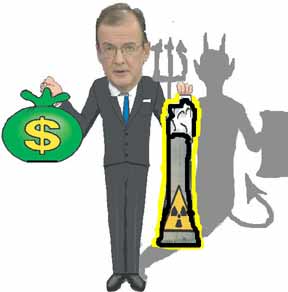
Ziggy 1.0 said in 2009 that the construction cost of a one gigawatt (GW) power reactor in Australia would be A$4-6 billion.
Ziggy 1.0 wasn’t wrong by 4-5 percent, or 40-50 percent. He was out by 400-500 percent. And yet he still gets trotted out in the mainstream media as a credible commentator on nuclear issues. Go figure.
Jim Green, Jun 21, 2024, https://reneweconomy.com.au/ziggy-switkowski-and-another-big-nuclear-back-flip/
Dr Ziggy Switkowski, best known as a former Telstra CEO, less well known as a former oil and gas company director, is a nuclear physicist by training. Wearing his nuclear hat, he was appointed by then prime minister John Howard to lead the 2006 Uranium Mining, Processing and Nuclear Power Review (UMPNER) inquiry.
The UMPNER inquiry didn’t inquire. The panel was comprised entirely of “people who want nuclear power by Tuesday” according to the late comedian John Clarke. Its report was predictably biased and misleading.
Howard evidently decided that he was pushing too hard and too fast. The UMPNER panel was required to finish its report in great haste in late 2006 and the Coalition tried to run dead on the nuclear issue in the lead up to the November 2007 federal election.
However, the Coalition’s political opponents – including Anthony Albanese – were more than happy to draw voters’ attention to the Coalition’s unpopular nuclear power plans. During the election campaign at least 22 Coalition candidates publicly distanced themselves from the government’s policy. Howard lost his seat and the Coalition was defeated. The nuclear power policy was ditched immediately after the election. Past as prologue, perhaps.
Ziggy 2.0
In recent years we’ve had Ziggy 2.0. To his credit, he reassessed his views in light of the cost blowouts with reactor projects and the large reductions in the cost of renewable energy sources.
He said in 2018 that “the window for gigawatt-scale nuclear has closed” and he noted that nuclear power is no longer cheaper than renewables, with costs rapidly shifting in favour of renewables.
Ziggy 2.0 noted in his evidence to the 2019 federal nuclear inquiry that “nuclear power has got more expensive, rather than less expensive,” and that there is “no coherent business case to finance an Australian nuclear industry.”
He added that no-one knows how a network of small modular reactors (SMRs) might work in Australia because no such network exists “anywhere in the world at the moment.”
Ziggy 2.0 noted the “non-negligible” risk of a “catastrophic failing within a nuclear system”. He acknowledged the difficulty of managing high-level nuclear waste from nuclear power plants, particularly in light of the failure of successive Australian governments to resolve the long-term management of low- and intermediate-level waste.
Ziggy 3.0
Now we have Ziggy 3.0, who sounds a lot like Ziggy 1.0. Peter Dutton and shadow energy minister Ted O’Brien “are as well informed on things nuclear as any group I’ve talked to in the last 20 years in Australia,” Ziggy 3.0 says.
Just about everything Dutton and O’Brien say about nuclear power is demonstrably false. Only the ill-informed could possibly claim they are well informed.
Ziggy 3.0 is spruiking the next generation of nuclear plants. Perhaps he’s talking about non-existent SMRs, or failed fast breeder technology, or a variety of other failed technologies now being dressed up as ‘advanced’ or ‘Generation IV’ concepts.
Who knows what he has in mind, and there’s no reason anyone should care expect that he has, once again, assumed the role of a prominent nuclear cheerleader.
“I think it’s unreasonable for anybody to expect the opposition leader to come out with a fully documented and costed plan at this stage,” Switkowski says.
But why is that so hard? O’Brien chaired a 2019 parliamentary inquiry into nuclear power. Coalition MPs initiated and participated in a 2022/23 parliamentary inquiry. And they have a mountain of other research to draw from.
Baseload
According to the Sydney Morning Herald, Switkowski now says “the cost curve for solar and wind has moved aggressively down” and he praises CSIRO for its work on the higher relative cost of nuclear power compared to renewables.
But Ziggy 3.0 goes on to say that “you need to have nuclear as well for baseload power”. Seriously? Nuclear power as a complement to renewables as we head to, or towards, 82 per cent renewable supply to the National Electricity Market by 2030? That’s nuts.
Perhaps he thinks non-existent SMRs can integrate well with renewables? Does he support the Coalition’s plan to expand and prolong reliance on fossil fuels until such time as SMRs i) exist anywhere in the world and ii) are operating in Australia?
Apart from the practical constraints (not least the fact that they don’t exist), the economics of SMRs would go from bad to worse if using them to complement renewables. According to the Institute for Energy Economics and Financial Analysis, power from an SMR with a utilisation factor of 25% would cost around A$600 per megawatt-hour (MWh).
Likewise, a recent article co-authored by Steven Hamilton – assistant professor of economics at George Washington University and visiting fellow at the Tax and Transfer Policy Institute at the ANU – states:
“Opposition Leader Peter Dutton said: “Labor sees nuclear power as a competitor to renewables. The Coalition sees nuclear power as a companion to renewables”.
“The trouble is that nuclear is a terrible companion to renewables. The defining characteristic of being “compatible” with renewables is the ability to scale up and down as needed to “firm” renewables.
“Even if we don’t build a single new wind farm, in order to replace coal in firming renewables, nuclear would need to operate at around 60 per cent average utilisation (like coal today) to keep capacity in reserve for peak demand. This alone would push the cost of nuclear beyond $225/MWh. To replace gas as well, the cost skyrockets beyond $340/MWh.”
Making sense of Ziggy 3.0
Ziggy 1.0 said in 2009 that the construction cost of a one gigawatt (GW) power reactor in Australia would be A$4-6 billion. Compare that to the real-world experience in the US (A$23.4 billion / GW), the UK (A$27.2 billion / GW) or France (A$19.4 billion / GW).
Ziggy 1.0 wasn’t wrong by 4-5 percent, or 40-50 percent. He was out by 400-500 percent. And yet he still gets trotted out in the mainstream media as a credible commentator on nuclear issues. Go figure.
Dr. Jim Green is the national nuclear campaigner with Friends of the Earth Australia and co-author of the ACF’s new report, ‘Power Games: Assessing coal to nuclear proposals in Australia’.
Australia’s media on nuclear power – wading through the quagmire

First of all, I’d like to commend a top article, which analyses the political significance for Peter Dutton, of his extraordinary policy :
Patricia Karvelas: Peter Dutton’s nuclear energy plan breaks all the rules of policy making. Is it genius or career self-destruction?
More recent articles at https://antinuclear.net/2024/06/24/from-25th-june-the-most-recent-australian-nuclear-news/
Below is a list of news articles. Now I have not here included the pro nuclear propaganda ones, nor the ravings of the very right-wing shock jocks of commercial radio – such as Melbourne’s 3AW. But you can find all that stuff on mainstream, mainly Murdoch media. The ABC is doing its best to stay afloat and actually give the facts. I am sure that those brave female TV and radio voices are now under quite vicious attack – Patricia Karvelas, Sarah Ferguson and Laura Tingle
I will try to keep this list up-to date – but that is going to be a daunting task –
National politics Dutton’s plan to nuke Australia’s renewable energy transition explained in full . No costing, no clear timelines, no easy legal path: deep scepticism over Dutton’s nuclear plan is warranted Nuclear plan is fiscal irresponsibility on an epic scale and rank political opportunism. Dutton’s nuclear lights are out and no one’s home. Peter Dutton launches highly personal attack on Anthony Albanese, calling him ‘a child in a man’s body’ while spruiking his new nuclear direction. Peter Dutton vows to override state nuclear bans as he steps up attack on PM. Peter Dutton is seated aloft the nuclear tiger, hoping not to get eaten.
Local politics. Nuclear thuggery: Coalition will not take no for an answer from local communities or site owners.
Climate change policy. Peter Dutton’s flimsy charade is first and foremost a gas plan not a nuclear power plan. Coalition’s climate and energy policy in disarray as opposition splits over nuclear and renewables.
Economics Peter Dutton’s nuclear plan could cost as much as $600bn and supply just 3.7% of Australia’s energy by 2050, experts say . The insane amount it could cost to turn Australia nuclear – as new detail in Peter Dutton’s bold plan is revealed. Nuclear engineer dismisses Peter Dutton’s claim that small modular reactors could be commercially viable soon. Wrong reaction: Coalition’s nuclear dream offers no clarity on technology, cost, timing, or wastes. ‘Peter Dutton’s nuclear plan is an economic disaster that would leave Australians paying more for electrici.ty’. Dutton’s nuclear thought bubble floats in a fantasy world of cheap infrastructure. UK’s nuclear plant will cost nearly three times what was estimated.
Energy, Coalition won’t say how much nuclear power its plan will generate until after an election
Health Nuclear industry workers face significant, inevitable and unavoidable radiation health risks
Indigenous issues, How a British nuclear testing program ‘forced poison’ onto Maralinga Traditional Owners.
Technology. Dutton’s plan to build nuclear plants on former coal sites not as easy as it seems Over budget and plagued with delays: UK nuclear lessons for Australia.
Sabotaging renewables. There’s one real Coalition energy policy now: sabotaging renewables.
Secrecy. Port Augusta mayor and local MP kept in the dark about Liberal Coalition’s plant to site nuclear reactors there.
Site locations for reactors. Peter Dutton reveals seven sites for proposed nuclear power plants. Coalition set to announce long-awaited nuclear details.
Safety. Some of the Coalition’s proposed nuclear locations are near fault lines — is that a problem?
Spinbuster. It’s time to go nuclear on the Coalition’s stupidity. Ziggy Switkowski and another big nuclear back-flip . Does the Coalition’s case for nuclear power stack up? We factcheck seven key claims. A Coalition pie-in-the-sky nuclear nightmare.
Gina Rinehart and co are not the slightest interested in nuclear power plants. Goal is just – dig baby dig – coal, gas, uranium – forever. They can just keep mining forever, and funding the Liberal Coalition’s pointless nuclear mirage. Nobody’s really interested in super-expensive nuclear power plants, big or small. But while Australia is conned into believing that this nuclear power plan is actually real, well – it’ll keep on being dig baby dig. As Helen Caldicott once suggested – if these grasping oligarchs could put a blanket around the sun and sell holes – then they’d be interested in solar power,
Ziggy Switkowski- Senior Nuclear Sales Executive – a Trojan horse for the nuclear industry

• waste
• weaponsBy the time Switkowski had rolled out the TELSTRA privatisation, we knew we had been conned.Switkowski will roll out the same business plan for implementing another energy monopoly ensuring there is no democratisation of the Australian national grid.Because what he did with TELSTRA, Switkowski did with NBN Co.
By the time Switowski had got hold of this, then rolled it out, we lost FTTP^
The NBN modified outcome lost emerging generations post-2013, their direct engagement with the global business world and any technological advantage was rapidly lost for SME.
On The Plus Side
Any NBN advantage was handed off to do what Switowski specialises in;
• making money for the corporate state of listed companies
• Boards, CEO, CFOs, EOs, stakeholders and corporate couturiers.
It takes 40 years to achieve ‘proof of concept’ for any bespoke reactor, none have proved economically viable.
Switkowski, is claiming to reach innovation efficiencies just not possible in the engineering world regarding any product.
Let alone one as complex as a nuclear fission reactor, whose economies of scale have never been tested anywhere.
He is a Senior Nuclear Sales Executive, flogging advantage for his friends with benefits, in government, and the corporate sector, including the US Military-Industrial Complex.
As if Australia was a nation of over 80 million people!
Nuclear thuggery: Coalition will not take no for an answer from local communities or site owners
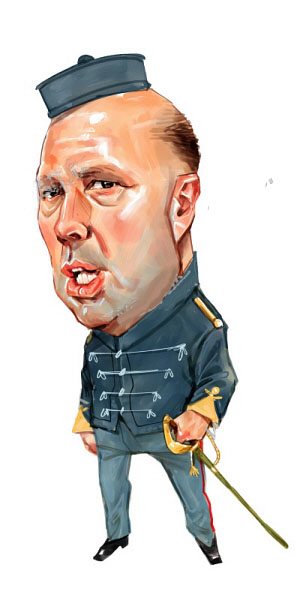
Jim Green, Jun 20, 2024, https://reneweconomy.com.au/nuclear-thuggery-coalition-will-not-take-no-for-an-answer-from-local-communities-or-site-own
Former Liberal prime minister Malcolm Turnbull famously described Coalition leader Peter Dutton as a “thug”. That description appears particularly apt in Dutton’s nuclear power plans.
The Coalition’s nuclear project is opposed by state Labor governments in each of the five states being targeted. Victoria, NSW and Queensland have laws banning nuclear power. The Labor governments in SA and WA may follow suit if they think state legislation will give them some legal protection, or any political advantage.
Could a Dutton government override state laws banning nuclear power? Anne Twomey, a Sydney University Professor Emerita with lengthy experience teaching and practising in constitutional law, argues that states probably could not prevent the Commonwealth establishing a nuclear power plant, nor could they prevent necessary associated operations such as transmission lines and nuclear waste transport.
Would a Dutton Coalition government attempt to override state opposition to nuclear power plants? Almost certainly it would. Nationals leader David Littleproud said in March that “if the Australian people vote for us that’s a fair indication to premiers that they should get out of the way”.
Coalition and Labor federal governments have pursued attempts to impose a national nuclear waste dump in SA and the NT despite state/territory laws banning such facilities. Those attempts have all failed, largely due to community opposition led by affected Aboriginal Traditional Owners.
Legal challenges helped stop three of the four proposed nuclear dump sites — Woomera (SA) under the Howard government, Muckaty (NT) under the Abbott government, and Kimba (SA) under the Morrison and Albanese governments. But the legal difficulties could have been overcome if the government of the day was ruthless enough and wasn’t suffering too much political pain because of its racist, undemocratic thuggery.
What about the companies who own the sites being targeted by the Coalition for nuclear power plants, and who have their own multi-billion dollar plans to develop their own clean energy industrial hubs based around renewables. Well, they can get stuffed too.
Dutton hasn’t bothered to consult these companies, but he has sought legal advice. This is what he said yesterday:
“We will work with the companies, the owners of the sites. If we find a situation where we apply a national interest test and we require that site to be part of the national grid, then the legal advice that we have is that the Commonwealth has ample power to compulsorily acquire that with ample compensation.”
According to energy minister Chris Bowen, six of the owners of the seven targeted sites have ruled out agreeing to nuclear power reactors on their land.
The Coalition also hasn’t bothered to consult communities around the sites targeted for nuclear reactors. And, like state governments and the owners of the targeted sites, the wishes of those communities will also be ignored.
Nationals deputy leader Perin Davey made the mistake of saying that the Coalition would not impose nuclear power plants on communities that were adamantly opposed.
She was corrected by Littleproud, who said: “She is not correct and we made this very clear. Peter Dutton and David Littleproud as part of a Coalition government are prepared to make the tough decisions in the national interest.”
Likewise, Dutton said: “Perin I think made a mistake yesterday as everybody does from time to time … We’ve identified the seven locations and we believe it’s in the community’s interests and the national interest to proceed.”
Democracy is for wimps, apparently, and for traitors who oppose the ‘national interest’ as Comrades Dutton and Littleproud see it.
All this stands in stark contrast to a 2019 parliamentary inquiry led by current shadow energy minister Ted O’Brien. The Committee’s report was titled ‘Not without your approval: a way forward for nuclear technology in Australia’.
O’Brien said in 2019 that a future government should only proceed with nuclear power on the condition that it make “a commitment to community consent as a condition of approval for any nuclear power or nuclear waste disposal facility”.
He also waffled on about “maintaining a social license based on trust and transparency” and putting the Australian people “at the centre of any approval process”.
That was then, this is now. The ‘national interest’ is at stake.
Prof. Anne Twomey notes that the Dutton government would need to get legislation through Parliament, including the Senate, both to repeal federal laws banning nuclear power and also “to provide any necessary legal support and protection for a nuclear power industry in Australia”.
An uncooperative Senate could block Dutton’s nuclear power plans, but could not stop him expanding the use of fossil fuels and derailing the renewable energy transition.
Dr Jim Green is the national nuclear campaigner with Friends of the Earth Australia and co-author of a new ACF report, ‘Power Games: Assessing coal to nuclear proposals in Australia’.
‘Peter Dutton’s nuclear plan is an economic disaster that would leave Australians paying more for electricity

If we use Vogtle as an example, which is the one completed project that employed Dutton’s favoured Westinghouse AP1000 technology, the extra cost to consumers would be very high.
Almost all nuclear power plants in Europe and North America were constructed in the 1970s and 1980s
The Peter Dutton-led Coalition has announced that, if elected, the government will build seven nuclear power stations located across every mainland state.
One can understand the appeal of nuclear power to those who are unfamiliar with the history of the technology. Nuclear power has been with us for many decades, supplying large amounts of emission-free power across a wide number of democratic, developed countries in Europe and North America. Why wouldn’t we make use of a power source that can be turned up and down independent of the weather and which other developed nations have used for decades?
What many Australians probably don’t realise is that almost all of these nuclear power plants were constructed in the 1970s and 1980s. The technology was then largely abandoned as an option for new power supply. Over the 2000s there was talk of a renaissance of the technology as concerns around global warming grew, and the industry unveiled new “generation 3” designs to address nuclear meltdown risks. Yet this expected renaissance never eventuated, with just five generation 3 nuclear power plants under construction over the past decade across Europe and North America.
There is a very good reason for why the appetite to build new nuclear power stations in western nations that already have nuclear power is minimal. Fans of nuclear like to think this is just because of irrational fears of reactor meltdowns and radiation. But in reality it’s got more to do with the fact that nuclear power plants cost too much to build.
What several countries, particularly France and the United States, encountered during their nuclear build programs over the 1970s and 1980s was that the promised costs for nuclear reactors turned out to be badly underestimated. They also found that things didn’t improve as they built more of these reactors – instead they got worse.
Oxford University professor Bent Flyvbjerg, an expert in construction management, has built up a large database of the time and budget records for 16,000 major construction projects across the globe covering a wide array of fields. He finds that nuclear reactors encounter the greatest budget and time blowouts in his database of construction projects, with the exception of just two other project types. One, worryingly, is nuclear waste repositories, which Australia would also need to build. The other is host city Olympic Games infrastructure. Interestingly, Flyvbjerg’s database also reveals the projects which are most likely to achieve construction timeframes and budgets are wind and solar power.
The poor experience over the 1970s and 80s meant there was almost no new nuclear plant construction commitments in Europe and North America until the second half of the 2000s. The table below [on original] summarises the horrific budget blowouts with the five generation 3 reactors committed to construction since then. Of note is that the two projects in the US used the same reactor model Dutton has indicated he’d like to use – Westinghouse’s AP1000. Also worth noting is actual real world experience indicates costs for nuclear per megawatt of capacity, which are significantly higher than the $8.6m estimated recently by the CSIRO.
What we can see is that, contrary to the promises of nuclear technology companies, generation 3 designs did not improve on past experience of budget blow-outs. It should also be noted that one of these projects – Virgil C Summer – was abandoned prior to completion, as the cost blowouts became too great to bear. Unfortunately for South Carolina energy consumers, this was only after the expenditure of $13.5bn on the failed project.
So what does this all mean for you personally?
Contrary to Dutton’s claims, it means you’ll be paying more on your electricity bill. As the table above [on original] shows, exactly how much more will be subject to wide variation depending on how badly the construction process unfolds, as well as a range of other assumptions.
If we use Vogtle as an example, which is the one completed project that employed Dutton’s favoured Westinghouse AP1000 technology, the extra cost to consumers would be very high. Power retailers would need to pay prices for wholesale energy at least three times higher than what they currently pay to recover the cost of this plant. For the average household that would result in an increase in their power bill in the realm of $1,000 per year from Dutton’s plan to go nuclear.
Tristan Edis is a director at Green Energy Markets – a provider of analysis and advice on energy and carbon abatement policy and markets
From Ziggy Switkowski – a new load of nuclear codswallop

Unfortunately, I no longer have access to the full text of this. Somewhere in this article, Switkowski says that small nuclear power is  more economic than large. Interesting that he doesn’t compare it to the cost of other energy forms – solar and wind.
He’s promoting the idea that Australia’s no-nuclear laws should be changed, – perhaps to a compromise – meaning that large nuclear reactors would still be prohibited, but small ones permitted. Good luck with that and all the perambulations involved! Only recently, Switkowski warned on risk of catastrophic failure, if Australia adopts nuclear energy. He sorta covers his back well!
Switkowski preaches for nuclear energy invoking Bill Gates, Elon Musk, AFR, Aaron Patrick, Senior Correspondent
Prominent businessman Ziggy Switkowksi urged Australians to take inspiration from two of the leading entrepreneurs of the twenty-first century, Bill Gates and Elon Musk, and support the development of a nuclear power industry.
Dr Switkowksi, a nuclear physicist, NBN board member and former Telstra chief executive, said nuclear power could become a major contributor to the electricity grid by 2040 if legalisation of the power source began now…..
With three separate inquiries into nuclear power under way, Dr Switkowksi has emerged as a leading advocate for the next generation of nuclear power plants known as small modular reactors, which supporters hope can avoid the huge costs and perceived safety risks of large-scale nuclear plants.
Dr Switkowksi, who has also briefed two separate federal parliamentary committees, told the NSW inquiry that half of NSW’s power supply could eventually be provided by nuclear power, which would compliment renewable sources after the state’s coal stations shut down. ……
Nuclear power is illegal under NSW and federal law. The NSW parliament is considering a proposed law by One Nation MP Mark Latham that would permit a nuclear industry to be developed in the state.
Many environmentalists strongly oppose the plan, including the Nature Conservation Council of NSW and the Australian Conservation Foundation, which also gave evidence to the committee on Monday.
Nuclear advocates, including Dr Switkowksi, have acknowledged that the big impediments to a nuclear industry are the cost of building reactors and the challenge of getting a wary public to support them.
Exploring for uranium is allowed in NSW, but mining is not. One first step towards developing a nuclear industry in the state could be to allow the uranium-mining industry to expand from South Australia across the border to NSW.
Officials from the Department of Planning, Industry and Environment told the inquiry that mining uranium wasn’t very different to any other mineral and that two mineral sands mines near Broken Hill bury uranium that is an inadvertent byproduct of their operations……
Inquiry chairman Taylor Martin, a Liberal MP, suggested that the federal and state laws be changed to prohibit existing forms of nuclear power technology but allow small modular reactors.
The compromise idea is designed to allow Labor MPs to support the development of a nuclear industry without appearing to give in to the demands of the mining industry, which has launched a below-the-radar campaign to legalise nuclear power.
Inquiry chairman Taylor Martin, a Liberal MP, suggested that the federal and state laws be changed to prohibit existing forms of nuclear power technology but allow small modular reactors.
The compromise idea is designed to allow Labor MPs to support the development of a nuclear industry without appearing to give in to the demands of the mining industry, which has launched a below-the-radar campaign to legalise nuclear power. …..https://www.afr.com/companies/energy/switkowski-preaches-for-nuclear-energy-invoking-bill-gates-elon-musk-20191111-p539j1
Patricia Karvelas: Peter Dutton’s nuclear energy plan breaks all the rules of policy making. Is it genius or career self-destruction?

By Q+A and RN Breakfast host Patricia Karvelas, https://www.abc.net.au/news/2024-06-20/nuclear-dutton-coalition-unanswered-questions-beak-rules/104000664
Peter Dutton has broken every single rule when it comes to unveiling radical policy as opposition leader, tearing up the script and gambling with his party’s chances at the next election with his nuclear policy.
If he can pull it off and convince enough voters that his blueprint for an Australian nuclear future is feasible and preferable, it will be the most unorthodox approach we’ve seen from an opposition leader in recent memory. It will rewrite our understanding of how modern politics works and reshape Australia.
Dutton has just placed a target on his back — and many of his state and even federal colleagues are scratching their heads trying to work out what the larger strategy here is. Is it cunning genius or the longest political self-destruction?
But what will it cost?
For months, journalists have been inquiring about when and why the nuclear policy announcement was being delayed. Senior Coalition figures informed me that the opposition — knowing full well that Labor and others would throw everything at pulling it apart — were doing their most comprehensive piece of work to deliver a “bulletproof” policy that could withstand dissection and sustained attack.
Yet when Dutton and his colleagues stood up before the media yesterday, they outlined a policy with many questions unanswered — including, most crucially, the actual cost of their nuclear rollout. The Coalition says it will reveal the cost down the track. But to leave unanswered such a crucial detail when the entire debate is centred around the cost of energy leaves the policy vulnerable and impossible to critically assess.
It is stunning and unheard-of for a mainstream political party to put forward such a significant and consequential policy blueprint without the numbers attached.
One senior Liberal suggested the delay in releasing the figures was to rob Labor of the ability to question the economic basis of the policy — you can’t pull and pick apart numbers that haven’t been provided. Conventional politics would involve the unveiling of modelling and robust independent accounting to explain the cost for taxpayers.
Tony Barry, the director of political research organisation RedBridge Research and a former Liberal Party strategist, says the way the policy had been announced makes the Coalition vulnerable to criticism.
“It isn’t so much ‘bulletproof’ but rather wearing a high-vis vest with a bullseye on it,” Barry told me. “The Coalition has to try and sell its product while Labor only has to convince people not to buy it, and in that scenario, Labor has the easier job.”
There are hurdles to jump
Among the many hurdles for the Coalition to jump before it can even develop a nuclear site will be the state premiers, who have lined up against this blueprint to establish nuclear power plants at seven locations across the country. Peter Dutton says the states’ concerns were easy to deal with.
“Somebody famously said, ‘I would not stand between the premier and a bucket of money’, and we’ve seen the premiers in different debates before where they’ve been able to negotiate with the Commonwealth and will be able to address those issues,” he says.
A Coalition government would also have to convince federal parliament — the Senate too — to lift restrictions on nuclear power and find a solution for nuclear waste. It would also have to build a nuclear workforce from scratch.
Is it achievable? It would be a big departure from the usual way Australia does business.
And then there’s the question of social license. Communities would need to get on board and provide support to build nuclear facilities in their neighbourhood. The Coalition says polling in some of these seats shows that there is support — even if it’s tight.
A poll released by the Lowy Institute earlier this month of 2,000 voters showed 61 per cent said they supported Australia including nuclear generation in its energy mix. Public opinion towards nuclear power in Australia has shifted over time. A significant minority (37 per cent) “somewhat” or “strongly” oppose it. Those who “strongly support” nuclear power generation (27 per cent) outnumber those who “strongly oppose” it (17 per cent).
But on the question of the rights of communities to raise objections, the Nationals were at odds yesterday.
Nationals leader David Littleproud contradicted his deputy, Perin Davey, who said that, “if a community is absolutely adamant, then we will not proceed”. But the Nationals leader later said Davey’s claim was “not correct”.
“Peter Dutton and David Littleproud, as part of a Coalition government, are prepared to make the tough decisions in the national interest. We will consult, and we will give plenty of notice.”
More unanswered questions
Part of the motivation for this massive climate pivot is the opposition to the rollout of renewables. Given the controversy on poles and wires and their rollout on the basis that some communities don’t want them, it seems a stretch that other communities would be pushed to accept nuclear.
The Coalition is right to observe some questioning of the pace and cost of the renewables rollout. But it’s a big leap to go from detecting softening support for renewables to assuming there will be full-blown support for nuclear in the community.
If we accept that community opposition to the idea of nuclear is softening — although we can’t be sure of how much — then the fight shifts to cost.
Will the Coalition be able to convince the public that nuclear will really give them cheaper bills? On this pivotal question, the evidence has not been provided.
The real reason Peter Dutton wants nuclear power
SMH, JUNE 20, 2024
There is no Coalition nuclear plan, except to get re-elected (“Dutton hits the nuclear button”, June 20). No nuclear power plants will ever be built here. Avoiding questions about the exorbitant costs, electorate opposition, absence of technology and radioactive waste, Dutton is exploiting those worried about climate change and energy costs who haven’t the time or ability to question his remedy.
Unfortunately, this will then be followed by countless committees to look into the best way to implement such a “ground-breaking” and “important” policy for another election cycle or two until, finally, some election strategist decides that changes in policy may be needed. Ten years later Australia is left penniless, without enough energy, and polluting the world with the scraps of fossil fuels it is desperately burning to keep the lights on. Andrew Scott, Pymble
Canada, a country similar to Australia, has five nuclear plants containing 22 reactors, built 40 to 60 years ago. They produce only 15 per cent of that nation’s electricity requirements. This raises two issues: Firstly, if we could manage to build two reactors by 2037, as Dutton claims, Australia would still need to source more than 90 per cent of our electricity from fossil fuels or renewables. Secondly, the Canadian Nuclear Safety Commission states on its website that each 600MW reactor produces 90 tonnes of high-level radioactive waste per year which has to be stored on-site in water-filled bays for six to 10 years until cooled enough to be moved to reinforced concrete canisters also on site. John Keene, Glebe
David Crowe (“Seven sites and two black holes: voters deserve better”, June 20) highlights the lack of detail in Dutton’s plan for nuclear power. However, we should allow for the possibility that Dutton thinks that nuclear power will probably never happen in Australia. His only plan is likely to be that of winning the next election by whatever means he can. As in the lead-up to the Voice vote, the aim will be to dominate the framing of the debate and spread division and strengthen tribal partisanship. We may expect a drip feed of bits of the nuclear plan over the coming months, each morsel lacking details. But that won’t matter to Dutton as long as disinformation and division dominate the news cycle. Peter Thompson, Grenfell
Dutton doesn’t care about nuclear. It’s all theatre. What he does care about is causing division with the aim of winning power because the Coalition can’t bear its current irrelevance. He does this via fear, obfuscation and a claim to care about “battlers”. If we voters can’t see through this then all Dutton’s theatrics will pay off. Judy Hungerford, Kew (Vic)
One of the issues in centralising baseload power is national defence planning. Jump forward to 2050, any country threatening us needs just seven intercontinental ballistic missiles to cripple industry and transport over the entire country, never mind the spread of nuclear waste over land and water. Smaller countries could disable the plants effectively with a few drones. Mad Max is real! Keith Smith, Lane Cove
So let me get this right. The political party that claims to be the superior economic manager is offering us an uncosted, unplanned, unsafe, unsure energy efficiency power source on land that they have yet to acquire in communities that it has yet to consult to be constructed decades into the future to address today’s cost of living crisis. Got it! Barry Ffrench, Cronulla
Several years ago I bought a solar array and a battery for my house. The battery was very expensive at $1000 per kW of storage although the costs for gel-ion batteries (developed in Australia) are even less. Our storage carries our household of five through the afternoon/evening peak and most often overnight. We also have a battery-run circuit dedicated to running some lights, the fridge, oven and microwave should there be a blackout in which case we are automatically disconnected from the grid. If the federal Coalition were to spend a portion of the cost of nuclear power stations, say a mere $20 billion, on solar batteries they could currently buy one million 20kW lithium-ion batteries. If the state governments chipped in the same amount, there’d be two million batteries. If the combined governments provided the money as a 50 per cent subsidy, with home and business owners contributing the remaining 50 per cent, there’d be 4 million batteries; eight million if each battery had only 10kW capacity. Even more batteries if gel-ion production was ramped up. Personal storage is one of the best ways to reduce electricity costs. Our worst quarterly bill in three years, for a cloudy, wet autumn was $127 and that included $90 for being connected to the grid. Over a year, we are in credit, so I don’t understand the Coalition’s antipathy to renewables and either state-run or private battery storage. In the face of buying or subsidising battery use, going nuclear would be a mind-boggling silly use … of our taxpayer money. Peter Butler, Wyongah
While visiting a friend in Switzerland recently, she received a package of iodine tablets in the mail. These were issued free by the government, replacing the ones they sent previously which were deemed past their use-by date. Why? Because she lives within 50km of a nuclear power plant … just in case. Julie Wilson, Dubbo
Peter Dutton’s faith in future Coalition leaders is bemusing. I wonder how keen they will be after his maybe six years, to continue with his extraordinarily expensive dream. Where will the costing cuts be made to pay for this? You can bet your life it won’t be negative gearing, franking credits or tax cuts to big business. Watch out you “battlers” facing the cost of living crisis and the need for essential services. Mary Billing, Allambie Heights
Peter Dutton talks of many countries having nuclear power plants, but nearly all of these were built in the past when there were limited other options. Some of the countries are decommissioning functioning plants because of the danger they pose. Very few are building new nuclear plants because there are many better, cheaper, cleaner options. Nuclear is old technology. Peggy Fisher, Manly
Is it too late to nominate the upper north shore for a nuclear plant? With all of our overachieving private schools, there’s no shortage of young people involved in STEM. We’ve also got lots of lawyers and consultants, so the contracts are sorted. As for builders, have you seen the place? Every tradie in Sydney is working on a new six-bedroom, 10-bathroom mansion. We’ve already got lots of trees, so the climate’s covered. As for space, take your pick of the hundreds of parks and ovals ready for development. The upper north shore is ready for a bit of radioactive action. What could go wrong? Chris Andrew, Turramurra
Kudos to John Shakespeare on the brilliant cartoon depicting Peter DOH!tton as Homer Simpson. I expect John Howard will be rolled out soon in desperation as usual by the Libs to play the part of Montgomery Burns. Paul McShane, Burradoo……………………………………………………………………………………………. more https://www.smh.com.au/national/nsw/the-real-reason-peter-dutton-wants-nuclear-power-20240620-p5jna2.html
Dutton’s nuclear lights are out and no one’s home
But none of this matters to Dutton. The reason he is pushing for nuclear is plain: since any nuclear energy plan is unattainable for at least 20 years, it ensures his coal and gas mining mates can continue destroying our natural environment for a long, long time to come.
By Michelle Pini Independent Australia, 20 June 2024
Dutton’s alternative facts on nuclear energy demonstrate that the Coalition is no longer fit for purpose as a credible opposition, let alone a serious government contender. Michelle Pini reports.
APART from frequently changing leaders, nothing has changed about the Liberal-National Party Opposition for a very long time, certainly not since the Abbott/Turnbull/Morrison retrograde regime.
Put simply, since the whole point of an opposition party in a two-party system is to provide credible alternative policies – not to recycle the ideas and innovations of a bygone era – today’s Coalition is simply no longer fit for purpose.
This is perhaps best illustrated by Dutton’s most recent set of alternative facts masquerading as policies, the recycled 1950s nuclear power plan.
Sure, the Liberals/Nationals are the parties of the status quo but the fact is, they have taken this concept well past its natural use-by date. Basically, if this was the age of the telephone invention, Opposition Leader Peter Dutton and his band of unmerry naysayers would be advocating to keep tin cans and string because phones would put can and string manufacturers out of business — not to mention the plight of carrier pigeon trainers.
Wait, that is actually the same reasoning that led to over a decade of third-world-standard NBN, but we digress.
Carrier pigeons and tin cans notwithstanding, today, the Coalition want us to get behind a leader who, if elected, would catapult us back to an age before science, before technology and before we worked out the Earth wasn’t flat — in every facet of our lives.
A word is needed about the role of the entire mainstream media, here, including the national broadcaster – yet again – in providing a framework where Dutton’s idiotic ramblings are given prominence — nay, are exalted as if they came from the Heavens.
There are so many subtle ways in which his party’s every brain fart is reported in the media as a credible idea and Alan Austin’s latest analysis provides a more detailed explanation of how the ABC’s news coverage, in particular, subtly facilitates this Liberal Party agenda. (You can read more here.)
So, to summarise the Dutton Coalition “policy platform”, it goes something like this:
Finding it hard to keep up with the changing world? Need a scapegoat for your woes?
Then, has Dutton got an idiotic plan, a minority group and a few gaslights, courtesy of the establishment media, for you?!
It is the exploitation of these core fears – the primal fears of change and of “others” – that form the basis of Dutton’s Coalition “policy structure”. It is the reason he does not provide any substantial “detail” in support of his claims. And it provides ongoing ammunition for the climate and culture wars he favours. It’s really no more complicated than that.
Let’s take a close look at Dutton’s banal nuclear “power plan”, which has been presented as a legitimate argument in the legacy media.
A NUCLEAR NIGHTMARE
Dutton – or at least the Coalition’s expert advisers, assuming they still have any – is abundantly aware of the following:
- nuclear energy is not safe by any stretch of the imagination;
- it is not clean;
- it is prohibitively expensive; and
- a nuclear energy industry is unachievable, certainly in the foreseeable future.
But none of this matters to Dutton. The reason he is pushing for nuclear is plain: since any nuclear energy plan is unattainable for at least 20 years, it ensures his coal and gas mining mates can continue destroying our natural environment for a long, long time to come.
With the main game already established, it is only necessary to deflect and obfuscate, providing no “details”, such as properly calculated costs or a realistic timeline. Even his claim that the first seven reactors would be built in Victoria, New South Wales and Queensland was debunked by the state premiers, who have unanimously rejected the idea. According to one ABC report, even some state Liberal and National MPs have ‘distanced themselves from nuclear’.
It’s fine, though, according to Dutton, who may eventually give us the details after his party is elected.
NO RENEWABLES FOR US!
Because the efficiency of renewable energies poses a real and imminent threat to fossil fuels, Dutton also plans to ensure any further great strides in this sector will die a quick and unceremonious death by imposing a cap on renewable energy investment.
And because Dutton’s plan is only about fear, he harnesses the fear of running out of power, or of exorbitant energy prices with idiotic statements like, “We can’t allow the lights to go out.”………………………………………………….. https://independentaustralia.net/politics/politics-display/duttons-nuclear-lights-are-out-and-no-ones-home,18701
Nuclear proposal rejected by premiers, who say Dutton has no power to lift state nuclear bans
In Queensland, where the Coalition has proposed establishing two nuclear power stations, the state Liberal-National Party has voiced its opposition to nuclear, leaving the opposition without allies at a state level.
ABC News, By political reporter Jake Evans and staff, 19 June 24
- In short: State premiers have unanimously rejected the federal Coalition’s nuclear proposal, which would require lifting several state bans
- Some state Liberal and National members have also distanced themselves from nuclear, though the NSW opposition is open to the idea
- What’s next? The Coalition has been pushed to detail costings of its proposal for seven nuclear sites, and to provide more detail
Among the many hurdles for the Coalition to leap before it can break ground on a single nuclear site will be the state’s premiers, who have lined up against a proposal to establish nuclear power plants at seven locations across the country.
The Coalition has announced its proposal for Australia to go nuclear, eschewing the ramp up of more solar and wind power, to instead build either traditional nuclear plants or small modular reactors on retiring coal sites in Queensland, NSW, Victoria, South Australia and in Western Australia.
To do so, a future Coalition government would first have to convince federal parliament to lift a prohibition on nuclear power, establish viable sites, find a solution for nuclear waste, convince local communities and train workers before a first plant could be built by late next decade.
And state premiers have emerged as another barrier to entry, with Labor premiers in the states proposed to go nuclear unequivocal in their opposition to the plan — but also some Liberal and National MPs in those states saying they won’t be buying in.
NSW Premier Chris Minns and Victorian Premier Jacinta Allan said even if Liberal leader Peter Dutton managed to lift the federal nuclear ban, he would also have to overcome bans at a state level.
“We’ve got our ban in place … if there’s a constitutional way for a hypothetical Dutton government to move through the state planning powers, I’m not aware of it, but that’s probably a question for him to answer,” Mr Minns said.
Ms Allan said building a plant in Gippsland would also require repealing state legislation in Victoria.
“They want to bring more expensive, more risky, more toxic energy solutions to the people of this country. We won’t stand for that,” Ms Allan said.
The Victorian premier has since written to Mr Dutton to confirm her government “won’t be negotiating” and would do all in its power to stop a nuclear plant in the Latrobe Valley.
In Queensland, where the Coalition has proposed establishing two nuclear power stations, the state Liberal-National Party has voiced its opposition to nuclear, leaving the opposition without allies at a state level.
Queensland Opposition Leader David Crisafulli said his party had been “clear” nuclear was not part of their plan.
“That’s a matter for Canberra. We’ve been consistent the whole way through,” Mr Crisafulli said…………………. https://www.abc.net.au/news/2024-06-19/premiers-reject-nuclear-proposal-nuclear-bans/103997020
Wrong reaction: Coalition’s nuclear dream offers no clarity on technology, cost, timing, or wastes

https://www.acf.org.au/coalition-nuclear-dream-offers-no-clarity-on-technology-cost-timing-or-waste 19 June 24
In response to Opposition leader Peter Dutton’s announcement of his proposed nuclear reactor sites, the Australian Conservation Foundation’s nuclear analyst Dave Sweeney said:
“The Opposition leader has named seven places where he wants nuclear reactors to be built, but he hasn’t been clear about the technology he wants to use, the cost to taxpayers, the timing, or what would happen to the radioactive waste that stays toxic for thousands of years.
“Mr Dutton wants Australians to believe there will be nuclear reactors operating in a decade should he win the next election. Tell him he’s dreaming.
“There is no bipartisan support and there are deep community, legal and political obstacles facing the Coalition in every Australian jurisdiction.
“It’s clear the Opposition leader hasn’t given up on his dream of small modular reactors. Mr Dutton was vague about whether he is promoting big reactors or small reactors, which are not in commercial deployment anywhere in the world.
“Going nuclear would delay the transition away from coal and gas, increase household electricity bills, introduce the possibility of catastrophic accidents and create multi-generational risks associated with the management of high-level radioactive waste – almost certainly with a disproportionate burden on First Nations communities.
“Extensive modelling, including from CSIRO, shows nuclear is far-and-away the most expensive energy option. Taxpayers and households would bear the cost.
“Nuclear is a dangerous distraction to effective climate action. Australia is blessed with plentiful clean energy resources. Our energy future is renewable, not radioactive.”
A detailed new critique of nuclear energy, released today by ACF, shows:
- Australian taxpayers would foot a massive bill for what is the slowest, most expensive form of power generation.
- Australia’s leading insurance companies will not cover damage from a nuclear disaster.
Read more:
Power games: Assessing coal to nuclear proposals in Australia (30-page report)
Why nuclear power will never be right for Australia (10-page summary)
Nuclear plan is fiscal irresponsibility on an epic scale and rank political opportunism

The LNP wants to burn untold tens of billions of public money in a nuclear debt bin fire because nuclear is 100% uncommercial – no private investor will touch it with a ten foot pole short of massive multi-decade subsidies.
The LNP wants to burn untold tens of billions of public money in a nuclear debt bin fire because nuclear is 100% uncommercial – no private investor will touch it with a ten foot pole short of massive multi-decade subsidies.
Tim Buckley & AM Jonson, ReNeweconomy, Jun 19, 2024
While the Coalition has failed to release any detail or costings, today we have confirmation that if it gets into office, Australians will be paying a mult-billion dollar “nukebuilder” tax for generations to come for a national build out of government-owned nuclear reactors across seven locations, including on the sites of former coal-fired power stations.
It beggars belief that opposition leader Peter Dutton proposes nationalising a nuclear public debt bomb and detonating it at the heart of energy policy in this country.
This exacerbates the problem that electricity generated from nuclear is two to four times as expensive as power from firmed renewables – as the CSIRO has confirmed – and would permanently lock in higher energy prices for consumers already crushed by cost of living pressures.
The medium term energy price implications are horrendous. Electricity prices would skyrocket as private investment in new replacement capacity is crowded out, resulting in undersupply for the next 15-25 years while we wait for the LNP’s nuclear white elephants to arrive.
We know that firmed renewables – utility scale solar and wind, backed by big batteries, and orchestrated with accelerated deployments of distributed consumer energy resources such as rooftop solar, storage and EVs in a modernised grid – can and will keep the lights on, delivering consistent, secure, reliable and affordable supply at a fraction of the cost. This transition is already underway and accelerating.
Critically, the Coalition’s announcement puts at serious and imminent risk planned private capital investments in clean energy as policy uncertainty and chaos make proposals uninvestable – especially in light of public statements by Nationals Leader David Littleproud that the LNP would, bizarrely, “cap” renewables investment here.
The thought bubble released this week threatens to undermine our energy and economic security and our future prosperity as it creates sovereign risk.
By destroying investor confidence, it deters the private clean energy capital we need to attract at speed and scale – capital for which we are competing with the rest of the world.
The LNP wants to burn untold tens of billions of public money in a nuclear debt bin fire because nuclear is 100% uncommercial – no private investor will touch it with a ten foot pole short of massive multi-decade subsidies.
As the Investor Group on Climate Change, representing energy investors with $35tn in assets, said, there is “no interest” among investors in nuclear, when nuclear has time blowouts up 15+ years and cost blowouts in the tens of billions, and lowest-cost technologies – renewables, batteries and so on – are available to deploy now.
Further, to model our energy transition on the great government-owned public infrastructure debacles of the last quarter century – Snowy 2.0 and the NBN – is an egregious blunder with dire consequences now and for future generations.
The LNP’s Snowy 2.0 was due to be operational in 2021 at a cost of $2bn. After a rolling series of crises, it’s now expected to come online around 2028 and is likely to cost Australians $15bn, a budget blowout of 700%. And we have been lumped with one of the world’s worst, slowest (64th fastest in the world) and most expensive NBNs after a litany of LNP mismanagement.
The idea that nuclear could be up and running in 2035-37 is fanciful. Community opposition, inevitable protracted state and federal legal challenges, technological hurdles and the requirement that nationwide legislative bans on nuclear be overturned make a 2035 timeline impossible.
There is zero mention of how Australia plans to deal with nuclear waste for many centuries to come, or provide for the $10bn per nuclear plant end of life closure costs, another two LNP debt burdens dumped on future generations. The people of Japan are funding the US$200bn cleanup of the Fukushima disaster for the next century.
The international experience shows that the western nuclear industry is plagued with massive delays and cost blowouts. There is zero reason to expect Australia would be any different when the risks for us are higher, as we have no history of deployment of nuclear energy generation here.
The Vogtle nuclear power plant expansion debacle in Georgia, US, is a case point, massively delayed and the most expensive public works project in US history at $35bn, with consumers left to carry the can for the runaway costs.
And the £33bn Hinkley Point C nuclear plant in England – with completion now delayed to 2031 – is a millstone around UK citizens’ necks for the next 60 years or so, even as owner EDF of France took a €12bn writedown on this white elephant after China General Nuclear (CGN) walked away.
Dutton now centres Australian energy and climate policy on nuclear against the explicit and unequivocal advice of our flagship national scientific agency, the CSIRO, which warned that nuclear would take until at least 2040 to stand up in Australia, if legislative bans and other barriers could be overcome, and the energy generated would cost at least twice that of firmed renewables. …………………………………………………………………………… more https://reneweconomy.com.au/nuclear-plan-is-fiscal-irresponsibility-on-an-epic-scale-and-rank-political-opportunism/
1 This month.
20 September –National Day of Action in Melbourne on the International Day of Peace


Help Aunty Sue Protect Her Land and Sacred Sites From Destructive Rocket Testing.
.

Australians deserve the truth
about
AUKUS – https://aukuspublicinquiry.com/
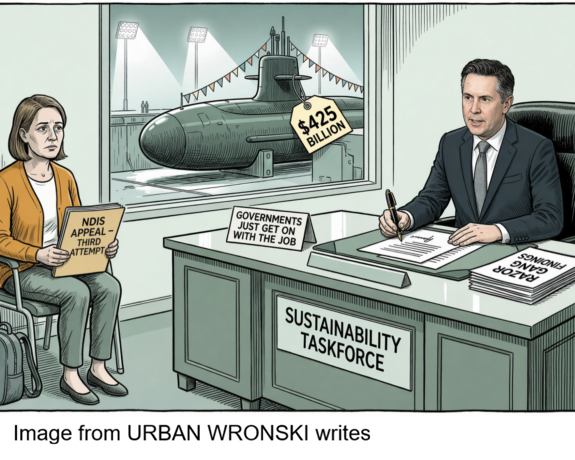

PETITION – To: Prime Minister Anthony Albanese and the Australian Labor Government

of the week – Australians for War Powers Reform (AWPR)
To see nuclear-related stories in greater depth and intensity
 Antinuclear