‘Mr Dutton is right’: Murdoch’s News Corp papers grant nuclear power glowing coverage

News Corp has done a climate turnaround, spruiking the Coalition’s new nuclear policy at every opportunity. But how much Kool-Aid have its reporters drunk?
DAANYAL SAEED, MAR 06, 2024, https://www.crikey.com.au/2024/03/06/news-corp-peter-dutton-nuclear-policy/
The Coalition’s solution to the climate crisis is set to be unveiled, with Peter Dutton reportedly planning to announce sites for a number of nuclear power stations, which would necessarily involve lifting Australia’s long-standing ban on nuclear power.
While the Coalition’s policy has been rubbished as “misinformed bulldust” by the likes of Andrew Forrest, a “dumb idea” by experts and “hot air” by the energy minister, the News Corp papers have been at the forefront of nuclear advocacy.
In the past month, The Australian has published a number of articles on nuclear power, with only one of its many op-eds (the aforementioned “hot air” piece by Energy Minister Chris Bowen) arguing in favour of Australia’s ban on nuclear.
Conversely, the paper has run several opinion pieces in favour of nuclear power, including two editorials advocating for its use, the most recent of which was published this morning.
The paper’s editorial on March 6 said it was “time for a properly costed plan on the nuclear option”, stating “Peter Dutton’s embrace of a nuclear option for consideration is worthwhile”.
“Dutton is right to develop a net-zero plan that includes nuclear,” the piece continued. “Refusing to lift the ban or even consider the issue … makes the federal government look out of touch with what is happening in the modern energy world.”
Crikey asked The Australian’s managing editor Darren Davidson on March 5 whether the paper had an editorial view on the merits of nuclear energy, and how it balanced any view it may have with the Coalition’s policy position, as well as any ethical obligations that may arise in its reportage. He declined to comment.
This morning’s editorial comes on the heels of one published on February 17 headlined “Nuclear option made easy by the renewables miscue”. It went on to describe nuclear power as “a logical option for emissions-free power”, a “sensible option”, but admitted it was “incendiary politics”
It rekindles the climate wars and undermines the certainty that is craved by business.”
Political editor Simon Benson has been responsible for much of this nuclear coverage, penning an op-ed on February 25 that argued the Labor government was “at risk of ending up on the wrong side of history in its fanatical opposition to nuclear power”.
Benson was also responsible for an exclusive, also published on February 25, that showed Newspoll data conducted for The Australian that showed 55% of Australian voters “supported the idea of small modular nuclear reactors as a replacement technology for coal-fired power”.
As early as February 15 Benson had insights into the Coalition’s policy, penning a piece titled “Liberals’ nuclear policy has potential to electrify”.
The Australian has also ran a number of opinion pieces over the past month in favour of the Coalition’s policy, including one by Peta Credlin headlined: “Liberal true believers stand firm against false net-zero gospel”.
However the paper also ran a piece by Sarah Ison on February 16 that highlighted one of the limits of the introduction of nuclear power in Australia. Ison interviewed Australian Industry Group climate change director Tennant Reed, who said that Australia may be waiting for more than 20 years for economically viable nuclear power.
Shock as Australian Prime Minister learns that he is not above international law

the Prime Minister would be wise to seek independent advice from one of several influential Australians who have significant expertise in the field of international humanitarian law.
By Margaret ReynoldsMar 7, 2024, https://johnmenadue.com/shocked-australian-pm-learns-he-is-not-above-international-law/
Prime Ministers are too often monopolised by people telling them what they want to hear. Most political advisers can’t see beyond the latest opinion poll and the Australian bureaucracy has become equally reluctant to offer frank and fearless advice. It appears that the Attorney General, Defence and Foreign Affairs and Trade Departments have each failed to alert the Prime Minister and his government to the risks inherent in ignoring international law when responding to the Gaza crisis.
However, many members of Australian civil society have indeed urged the Federal Government to act strongly to uphold humanitarian standards and avoid crimes against humanity They have demanded the Federal Government restore funding to the United Nations Relief and Works Agency and ban arms sales to Israel. More than 100 non-government organisations have communicated their alarm that Australia could in any way be contributing to the ongoing atrocities being inflicted on the Palestinians. Since January 27th, many Australians have anticipated a public official response to the International Court of Justice interim ruling that a case of genocide against Israel is plausible Yet this weight of urgent correspondence and advocacy has failed to alert the Prime Minister’s staff to Australia’s responsibilities as a signatory of the Genocide Convention.
Today more than 100 Australian lawyers endorsed the referral of Anthony Albanese, together with other members of his government and the Opposition leader, Peter Dutton to the International Criminal Court as Accessory to Genocide in Gaza alleging political and material support to the Israel government and military over the past five months.
The 92-page document sets down specific ways in which this allegation can be upheld.
– Freezing of funding to the United Nations Relief and Works Agency amid a humanitarian crisis
– Providing military aid and approving defence exports to Israel
– Ambiguously deploying an Australian military contingent to the region where its location and exact role have not been disclosed
– Permitting Australians to travel to Israel to join the Israeli Defence Force and take part in its attacks on Gaza.
In response, the Prime Minister has dismissed the referral to the International Criminal Court as “lacking credibility” and it is unsurprising he would go into a defensive denial mode. However, it would be a brave leader who did not now demand detailed briefings on these allegations from those departments that have failed to respond to the International Court of Justice genocide warning. Furthermore, the Prime Minister would be wise to seek independent advice from one of several influential Australians who have significant expertise in the field of international humanitarian law.
Regardless of the long-term future of this and comparable allegations against other western leaders, the Australian Government has been given the chance to review its commitment to international law. It can continue to ignore calls for transparency and Australian independence in foreign policy, or it can start to seriously examine why the allegations of complicity have been made.
There is no doubt that many nations are much more actively concerned about the charge of genocide brought against Israel by the South African government. In February more than fifty countries including Indonesia, Malaysia, Fiji, Japan, Great Britain and Ireland sent official legal delegations to the Hague to present their nations opinions to the International Court of Justice., but Australia was not represented.
In contrast, the Australian Government has avoided any detailed public response to its responsibilities as a signatory to the Genocide Convention. Indeed, it has recently twice closed down parliamentary debate that could lead to a comprehensive House of Representatives discussion. There has been no debate about how Australia may assist in future medical rehabilitation of Palestinians nor how it will contribute to the rebuilding of Gaza. While the Foreign Minister may refer to a “two state solution “ there has been no official announcement that Australia finally recognises the State of Palestine.
Furthermore, the failure of the Australian public service to maintain or prioritise current independent information about the continuing assault in Gaza amounts to negligence. In a recent meeting, United Nations Relief and Works Agency in Gaza, Director Tom White was advised “the Australian Government wanted to be sure UNRWA Gaza aid funding will go to those who need it “! This bland indeed inhuman statement clearly reflects that there is something seriously wrong with how the government is currently managing its international responsibilities.
Of course, it is embarrassing for the current Australian Government to be named as an “accessory to genocide”, but all members of parliament should not be too quick to dismiss the allegation until they have reviewed why and how such a charge could be made. The parliament hears too many simplistic speeches giving loyalty to allies who blatantly ignore international law and it’s time our representatives faced this reality.
Australia has a proud record as a founding member of the United Nations, which is responsible for developing international law. So many well-known Australian names have contributed to a great variety of United Nations achievements, yet few parliamentarians speak up for the importance of the international body. International law is being undermined by governments choosing militarism ahead of the rule of law, so it is imperative that the Australian government and parliament commit to prioritising its international responsibilities. Many Australians will be watching closely, demanding that humanitarian leadership is restored.
Margaret Reynolds is a former councillor and Federal Minister for Local Government. She chaired the Advisory Board of the Australian Centre of Excellence in Local Government at the University of Technology, Sydney 2008-2012.
She has a long history in the peace movement starting during the Vietnam War. As a Labor senator she supported the Pine Gap Women’s Peace camp and visited Greenham Common to support anti-nuclear campaigners . She represented Parliamentarians for Global Action at several human rights and peace conferences in the 1990s. After leaving parliament she taught International Relations at the University of Queensland.
Margaret is the National President of the Women’s International League for Peace and Freedom
Nuclear power: Peter Dutton changes gear in favour of big reactors not small modular ones,

Mr O’Brien told The Australian Financial Review in June 2022 that SMRs, not large-scale power plants, were the future of nuclear.
Mr Dutton is now saying modern giant power plants would be the backbone of the Coalition’s energy policy.
Phillip Coorey, https://www.afr.com/politics/federal/dutton-changes-gear-on-nuclear-plans-pm-dismissive-20240305-p5f9vg 5 Mar 24
Plans by the Coalition to build large nuclear reactors on the sites of old coal-fired power stations would be prohibitively expensive, take more than a decade to implement, and would not work in most cases because such reactors need to be near water, Prime Minister Anthony Albanese said.
Mr Albanese, who as shadow environment minister two decades ago fought plans by John Howard to consider nuclear power plants near populated coastal communities, said little had changed in terms of the political difficulties of such a proposal.
“He is now speaking about large nuclear reactors. They need to be near populations, they need to be near water,” he said of Mr Dutton.
“I look forward to him announcing the locations for nuclear reactors in Australia and for there to be an appropriate debate about that.”
Mr Dutton and his energy spokesman Ted O’Brien are proposing nuclear power be used to provide baseload power to firm renewable energy and ensure Australia can achieve new zero emissions by 20250.
Rather than build, as Labor is intending to do, 28,000 kilometres of poles and wires to transmit renewable energy from wind and solar farms, Mr Dutton is proposing building nuclear power pants on the sites of coal fired plants as they are decommissioned.
The proposal builds on the original plan, which would involve a strong focus on small modular reactors.
Mr O’Brien told The Australian Financial Review in June 2022 that SMRs, not large-scale power plants, were the future of nuclear.
“Nobody wants old Soviet technology, you wouldn’t touch it with a barge pole,” he said.
But SMR technology is still embryonic, and Mr Dutton is now saying modern giant power plants would be the backbone of the Coalition’s energy policy.
“It doesn’t resemble anything that you’ve seen in the past. It’s like comparing a motor vehicle you’re driving off the showroom floor today in 2024, compared to something in 1954,” he said.
“So, the technology is unbelievable compared to what it was 50 or 70 years ago.”
He said bipartisan support for nuclear-powered submarines under the AUKUS deal had removed any opposition to nuclear power on the basis of their needing to have a high-level nuclear waste dump.
Mr Albanese said the nuclear argument had changed little since Mr Howard had businessman and nuclear physicist Ziggy Switkowski examine the option in 2006.
“Every 10 years, there are these proposals, we’ve seen the Switkowski report come and go,” he said.
“What never comes is any investment, because it simply doesn’t stack up commercially.
“I look forward as well to him arguing where the financing will come [from] for such reactors, or whether taxpayers will be expected to pay for this.”
The Opposition argues Mr Albanese should lift the moratorium on nuclear power and let the market decide.
Mr Dutton said Mr Albanese was out of touch with public opinion which, according to opinion polls, is warming to nuclear power.
“It’s … supported by a lot of younger people because they’re well-read, and they know that it’s zero emissions, and it can firm up renewables in the system,” he said.
“The government’s got sort of a wing and a prayer at the moment where they think if we have 100 per cent renewables in the system, the costs will go down, or there can be reliability. Neither of those things will happen, in fact, the opposite.”
Australia has had many significant inquiries into nuclear power, over the past 60 years

Paul Richards, 6 Mar 24
Peter Dutton and his Coalition opposition party keep calling for a “mature” debate on nuclear power, as if no-one has ever discussed it seriously. But Australia has had many “mature” inquiries and discussions related to nuclear energy, uranium mining, and the nuclear fuel cycle over the past 60 years. Here are some notable ones:
1.] Radium Hill Royal Commission (1953):
This inquiry examined the safety and health concerns related to uranium mining at Radium Hill in South Australia. It investigated radiation exposure for workers and nearby communities and made recommendations for improved safety measures.
2.] McMahon Report (1955):
Commissioned by the Australian government, this report explored the potential for nuclear power generation in Australia. It assessed the feasibility, costs, and benefits of establishing nuclear power plants and considered the country’s uranium resources.
3.] Fox Report (1976):
The report, officially titled “Uranium Mining, Processing, and Radiation Safety”, was commissioned by the Australian government to investigate the health and safety aspects of uranium mining and processing. It examined radiation exposure risks for workers and surrounding communities and recommended regulatory measures.
4.] Joint Select Committee on the Environment (1980-1981):
This parliamentary committee inquired into the environmental and health impacts of uranium mining and processing in Australia. It examined issues such as radiation contamination, waste management, and rehabilitation of mining sites.
5.] Commonwealth Government Inquiry into Nuclear Energy (2006):
This inquiry examined the potential for Australia’s involvement in the nuclear fuel cycle, including uranium mining, nuclear power generation, and waste management. The resulting report, known as the Switkowski Report, provided analysis and recommendations on these issues.
6.] South Australian Nuclear Fuel Cycle Royal Commission (2015-2016):
This inquiry was established by the Government of South Australia to investigate the potential for the state’s further involvement in the nuclear fuel cycle, including uranium mining, enrichment, energy generation, and waste management. The final report provided a comprehensive analysis and recommendations regarding these issues.
7.] Federal Government Inquiry into Nuclear Energy (2019):
The Australian Federal Parliament’s Standing Committee on the Environment and Energy conducted an inquiry into the prerequisites for nuclear energy in Australia. It examined the economic, environmental, and safety implications of nuclear power generation and assessed public opinion and regulatory frameworks.
These inquiries reflect Australia’s ongoing evaluations and debates surrounding nuclear energy, uranium mining, and the broader nuclear fuel cycle, considering various economic, environmental, social, and political factors over the past 60 years.
Prime Minister of Australia, and Henchmen, Referred to International Criminal Court for Support of Gaza Genocide
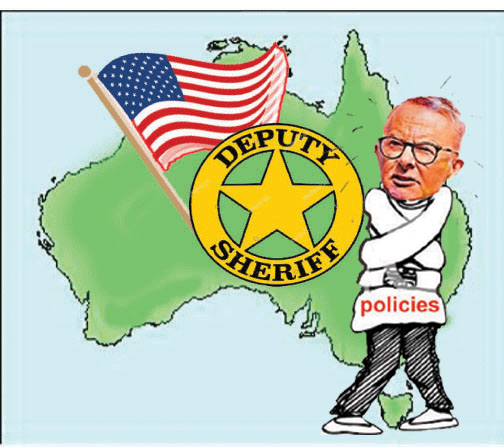
By Birchgrove Legal, March 5, 2024, https://worldbeyondwar.org/prime-minister-of-australia-and-henchmen-referred-to-international-criminal-court-for-support-of-gaza-genocide/
Australian Prime Minister Anthony Albanese has been referred to the International Criminal Court as an accessory to genocide in Gaza, making him the first leader of a Western [Western?] nation to be referred to the ICC under Article 15 of the Rome Statute.
A team of Australian lawyers from Birchgrove Legal, led by King’s Counsel Sheryn Omeri, have spent months documenting the alleged complicity and outlining the individual criminal responsibility of Mr Albanese in respect to the situation in Palestine.
The 92-page document, which has been endorsed by more than one hundred Australian lawyers and barristers, was yesterday submitted to the Office of ICC Prosecutor, Karim Khan KC.
The document sets out a number of actions taken by the PM and other ministers and members of parliament, including Foreign Minister Wong and the Leader of the Opposition, for the Prosecutor to consider and investigate. These include:
- Freezing $6 million in funding to the primary aid agency operating in Gaza – UNRWA – amid a humanitarian crisis based on unsubstantiated claims by Israel after the International Court of Justice had found it plausibly to be committing genocide in Gaza.
- Providing military aid and approving defence exports to Israel, which could be used by the IDF in the course of the prima facie commission of genocide and crimes against humanity.
- Ambiguously deploying an Australian military contingent to the region, where its location and exact role have not been disclosed.
- Permitting Australians, either explicitly or implicitly, to travel to Israel to join the IDF and take part in its attacks on Gaza.
- Providing unequivocal political support for Israel’s actions, as evidenced by the political statements of the PM and other members of Parliament, including the Leader of the Opposition.
Ms Omeri KC said the case was legally significant because it focused exclusively on two modes of accessorial liability.
“The Rome Statute provides four modes of individual criminal responsibility, two of which are accessorial,” Omeri said.
“In relation to accessorial liability, a person may be criminally responsible for a crime set out in the Rome Statute if, for the purpose of facilitating the commission of that crime, that person aids, abets or otherwise assists in the commission of the crime, or its attempted commission, including by providing the means for its commission.
“Secondly, if that person in any other way contributes to the commission of the crime or its attempted commission by a group, knowing that the group intends to commit the crime.”
Ms Omeri KC said the Article 15 communication had been carefully drafted by those instructing her and was now a matter for the Prosecutor to consider.
“The Office of the Prosecutor of the ICC is already pursuing an ongoing investigation into the situation in the State of Palestine, which it has been conducting since March 2021,” Omeri said.
“That includes investigating events which have occurred since 7 October 2023. This Article 15 communication will add to the evidence available to the Prosecutor in relation to that situation.
“The Article 15 communication is of a piece with recent domestic legal cases brought against Western leaders in a number of countries such as in the US, against President Biden, and most recently, in Germany, against, among other senior government ministers, Chancellor Scholz.
“These cases demonstrate a growing desire on the part of civil society and ordinary citizens of Western countries to ensure that their governments do not assist in the perpetration of international crimes, especially in circumstances where the ICJ has found a plausible case of genocide in Gaza.”
Principal solicitor at Birchgrove Legal, Moustafa Kheir, said his team had twice written to Mr Albanese, putting him on notice and seeking a response on behalf of the applicants who make up a large consortium of concerned Australian citizens, including those of Palestinian ethnicity.
Mr Kheir said communications were ignored on both occasions.
“Since October we have attempted communications with our Prime Minister as we reasonably believe that he and members of his cabinet are encouraging and supporting war crimes committed by Israel against Palestinian civilians through their political and military assistance,” Kheir said.
“The Prime Minister has ignored our concerns and given the limited avenues we have for recourse under national law, we have been left with little option but to pursue this Article 15 communication to the International Criminal Court.
“Our communication has been endorsed by King’s Counsel Greg James AM and well over 100 senior counsel and barristers, retired judges, law professors and academics from around Australia who wish to test the strength of international law to hold their own democratic leaders accountable given the barriers we face to do it nationally.
“As lawyers and barristers, it is impossible to sit back and watch sustained breaches of international law while Albanese continues to refer to the perpetrator as “a dear friend.”
A copy of the application can be viewed here: ICC-Referral-Australian-Government-Ministers-and-Opposition-Leader-04032024_BLG.pdf
Or here.
Nuclear slow and expensive, renewables fast and cheap: Bowen slaps down Coalition “fantasy”
Giles Parkinson, Mar 7, 2024, https://reneweconomy.com.au/nuclear-slow-and-expensive-renewables-fast-and-cheap-bowen-slaps-down-coalition-fantasy/—
Federal climate and energy minister Chris Bowen has again slammed the federal Coalition’s “nuclear fantasy”, describing it as a deliberate distraction and the latest “desperate effort” to keep the culture war over energy and climate alive.
“(They say) renewable energy is all too hard, we’ll just have to go nuclear,” Bowen said in comments at the Smart Energy Council conference in Sydney, adding that the technology is “utterly uneconomic.”
Bowen was asked why the government would not support a lifting of the ban against nuclear power and allow – as the Coalition and others suggest – to let the “market decide.” He pointed to the fact that it would take a decade to develop a regulatory regime, and three states also had their own bans in place.
“They say ‘lift the ban’ and the market will sort it,” Bowen said.
“Well, the market hasn’t sorted it out anywhere else in the world, there is not a market in the world where nuclear isn’t subsidised substantially by government. So this idea that we lift the ban and all these foreign investors are going to suddenly come to help Australia’s nuclear sector is just fantasy.”
Bowen said three states would also have to lift their bans, and only then could a regulatory process be put in place which he said would require at least 10 years, before deciding on location, environmental approvals and the question of subsidies.
“It would be a massive distraction,” Bowen said. “And it would send the signal somehow to the market that Australia and the Australian Government are interested in nuclear, when we’re not because it uneconomic, utterly uneconomic.
Coalition leader Peter Dutton and energy spokesman Ted O’Brien had favoured small modular reactors, and dismissed large “Soviet era” reactors, but appear to have now changed their mind and flipped back towards large scale nuclear after the only prospective SMR in the western world was cancelled because of soaring costs.
Bowen says the push to nuclear is simply an extension of the culture war over climate and energy issues.
“We know the sorts of arguments they run. It’s a desperate effort to keep the culture war alive. Renewable energy is all too hard. We’ll just have to go nuclear.”
Federal Labor has adopted a target to reach 82 per cent renewables by 2030, and most energy experts suggest all remaining coal fired power stations would be closed by around 2035.
Nuclear is seen as impossible to deliver in Australia before 2040, notwithstanding its costs, and energy experts question how an essentially “baseload” energy supply can be jammed into what will by then be a grid dominated by wind and solar, and particularly rooftop solar, which will require storage and flexible capacity.
The federal government’s Capacity Investment Scheme is likely to seek 10 GW of new wind and solar capacity in a series of auctions in 2024, and likely a similar amount in 2025, along with at least 3 GW of long durations storage in each of the next three years.
Bowen said a formal announcement is expected soon. He said the result of the first CIS auction, for 600 MW of long duration storage (defined as a minimum four hours) had elicited a very good response and the results would be announced in coming months.
Market has ‘made its decision’ about nuclear energy being too expensive
Labor MP Andrew Charlton says the market has “made its decision” about nuclear energy being too expensive.
Mr Charlton joined Sky News Australia to discuss the latest developments in nuclear energy across the world.
“We saw recently the small nuclear reactor in Idaho was cancelled because of rising costs – that was a market decision to say no to nuclear,” he said.
“Let’s remember, this small nuclear reactor in Idaho is the one that the Liberal Opposition called the future of clean energy – it’s now being cancelled, it’s being scrapped.
“The truth is that the market has made its decision about nuclear energy; it knows that nuclear energy is by far the most costly type of new energy that we could add into the grid, and that’s why it’s not part of the government’s plan.”
Top scientist explains nuclear process and risks: Sunshine Coast previously considered for facility
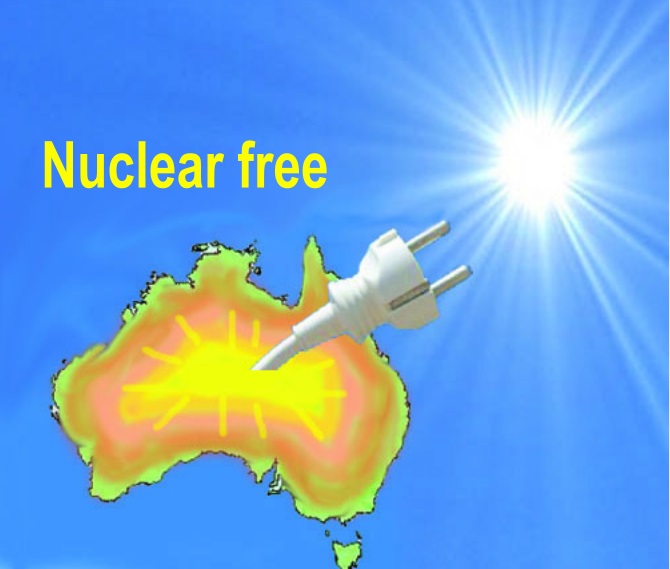
Sunshine Coast News, STEELE TAYLOR, 6 MARCH 2024
A leading local academic has detailed the risks posed by nuclear power, amid revelations the Sunshine Coast was, in 2007, put on a shortlist of possible sites for a facility.
Emeritus Professor Ian Lowe says there are multiple problems with nuclear energy, including high costs, lengthy builds, health threats and international tension.
Professor Lowe explained the process of nuclear energy production, and the potential for accidents.
“In a nuclear reactor, the process of fission (breaking up of unstable large atoms like uranium) releases heat energy, which is used to boil water,” he said.
“It is basically just a more complicated way of boiling water than burning coal or gas.
“The steam produced by the boiling water is used to turn a turbine and generate electricity.
“In normal operation, nuclear reactors have a good safety record but there have been a series of large-scale accidents like the Windscale fire, the Three Mile Island meltdown, the Chernobyl explosion and the destruction of the Fukushima reactor by a tsunami.
Those accidents have made people nervous about living near a nuclear power station.
“In the cases of Chernobyl and Fukushima, whole regions have been made permanently uninhabitable because the radiation levels are not safe for people to live there.
“As well as the small but non-zero risk of serious accidents, nuclear reactors produce radioactive waste that will need to be safely stored for thousands of years.
“This is a problem that is causing real headaches for all the countries that have nuclear power stations, with only one – Finland – being on the path to a solution.”
Professor Lowe says nuclear energy production has multiple requirements, and locations for power plants have been considered.
“If we were to build a nuclear power station in Australia, the need for massive amounts of cooling water would demand a coastal site,” he said.
“It would also need to be connected to the electricity grid and ideally be near a major power user like a capital city.”
The Australia Institute used a checklist of the needs to produce a shortlist of possible sites for nuclear power plants, for a research paper that was produced in late 2006 and released in early 2007.
The Sunshine Coast, where Professor Lowe has lived for the past 20 years, was among the locations named.
“In a nuclear reactor, the process of fission (breaking up of unstable large atoms like uranium) releases heat energy, which is used to boil water,” he station.
“In the cases of Chernobyl and Fukushima, whole regions have been made permanently uninhabitable because the radiation levels are not safe for people to live there.
“As well as the small but non-zero risk of serious accidents, nuclear reactors produce radioactive waste that will need to be safely stored for thousands of years.
“This is a problem that is causing real headaches for all the countries that have nuclear power stations, with only one – Finland – being on the path to a solution.”
Professor Lowe says nuclear energy production has multiple requirements, and locations for power plants have been considered.
“If we were to build a nuclear power station in Australia, the need for massive amounts of cooling water would demand a coastal site,” he said.
“It would also need to be connected to the electricity grid and ideally be near a major power user like a capital city.”
The Australia Institute used a checklist of the needs to produce a shortlist of possible sites for nuclear power plants, for a research paper that was produced in late 2006 and released in early 2007.
The Sunshine Coast, where Professor Lowe has lived for the past 20 years, was among the locations named.
“It is worth adding that the tsunami of panic among sitting members of parliament when that list was released had to be seen to be believed,” he said.
“But we do now have a local member (Fairfax MP Ted O’Brien), promoting nuclear energy with great enthusiasm.”
There is no indication that the Sunshine Coast is on a current shortlist of possible sites………..
Mr O’Brien has previously said, via ABC Radio National, that he would welcome a nuclear facility in his electorate or any other electorate, “where it is proven to be technologically feasible, has a social licence and is going to get prices down”.
But he also told Sunshine Coast News that a nuclear facility would probably be better placed somewhere other than the Coast………………..
Legalities and history
Professor Lowe says there would be legal hoops to jump through to make nuclear power production possible in the country.
“Nuclear power is not legal in Australia. To get support for its Environmental Protection and Biodiversity Conservation Act in 1999, the Howard government included clauses that specifically prohibit uranium enrichment, fuel fabrication and the building of power reactors,” he said.
“So, any proposal for nuclear power would require repealing that prohibition.
“The current government has no interest in doing that; neither did the Coalition at any point in their nine years in office.
“Since the 2007 report, no Australian government – national or state, Coalition or ALP – has shown any serious interest in nuclear power………… there is certainly enough opposition to make any politician very nervous about the chances of the community supporting it.”…………………………………………….. https://www.sunshinecoastnews.com.au/2024/03/06/academic-outlines-risks-of-nuclear-power-coast-on-shortlist/?fbclid=IwAR2I76u7tz5tjM31QVgAq3P_UBlTk8qySjV7dflzmrLmWai10-bUq65Cq9Q—
AUKUS: Are nuclear-powered submarines a good idea for Australia?

“[So] the question for us is, is it sensible for Australia to commit itself to go to war with the US against China — a war we have no reason to believe the US can win, in order to acquire submarines that we don’t need?”
ABC RN / By Nick Baker and Taryn Priadko for Global Roaming 5 Mar 24
There were always going to be questions about a nuclear-powered submarine deal with a (stated) price tag of up to $368 billion.
But, as the dust settles on the AUKUS security pact and Australians patiently wait for the subs that come with it, some defence experts are warning that the deal could fall apart.
“I think the chance of the plan unfolding effectively is extremely low,” Hugh White, an emeritus professor of strategic studies at the Australian National University, tells ABC RN’s Global Roaming.
Professor White was a defence adviser to the Hawke government and worked as a deputy secretary for strategy and intelligence in the Department of Defence. He’s also been a big critic of AUKUS.
So could AUKUS sink? And what would that mean for Australia’s defence plans?
What is AUKUS?
On September 15, 2021, a new trilateral security partnership between Australia, the UK and the US was announced, called AUKUS (A-UK-US).
Australia was scrapping its earlier $90 billion deal with France for 12 conventional-powered submarines and instead securing nuclear-powered submarines through AUKUS.
More details were announced on March 13 last year, including around the two so-called “pillars” of AUKUS.
Pillar One, which has received the most attention, is the submarines.
The plan is for Australia to buy at least three nuclear-powered Virginia class submarines from the US in the early 2030s.
We will then build at least five of a new, nuclear-powered submarine class dubbed the SSN-AUKUS, likely in Adelaide, in the 2030s, 2040s and beyond.
Pillar Two involves the sharing of technology, in areas like quantum computing, artificial intelligence and hypersonic missiles.
Former prime minister Scott Morrison called AUKUS “the best” decision of his government, while current Prime Minister Anthony Albanese has said it would “strengthen Australia’s national security and stability in our region”.
AUKUS worries
Professor White has two main worries around AUKUS.
“We do need submarines. I think submarines are a very important part of a defensive posture for Australia … [But] I don’t think we need nuclear-powered submarines,” he says.
“They’re so much more expensive. They’re so much more difficult to make. They’re so much more difficult to operate. We’ll end up with far fewer of them in our fleet.”
He says his second concern is far bigger: “I don’t think we’re going to get [the submarines].”
He claims the plan is overly reliant on future decisions and assistance from the US and UK governments, and also full of near-insurmountable technical tasks for Australia.
“I think what’s going to happen … is within the next few years, the whole thing will just come apart in our hands. And we’ll be back to square one trying to work out how to get some more conventional [submarines].”
Allan Behm, the director of the international and security affairs program at the Australia Institute, also doubts the likelihood of the AUKUS deal going ahead as planned.
One reason, he says, is that the technologies, skills and workforce that are required from a country like Australia to build and maintain nuclear-powered subs is pushing our limits, even with the involvement of the US and UK.
“We’re going into a technological domain with which we are totally unfamiliar,” says Mr Behm, who has a 30-year career in the Australian public service and was senior advisor to then-shadow minister for foreign affairs Penny Wong.
“We’re talking about a number of submarines with nuclear propulsion systems in them. And we’ve only got one nuclear reactor in Australia, which is nothing like the very, very highly enriched uranium reactors, the pressure water reactors that exist in nuclear-powered submarines,” he says.
“I think the best parallel would be, how would Australia imagine that it would undertake, conduct and retrieve a moon launch?”
US versus China
If AUKUS goes ahead as planned, is it the best way to keep Australia safe?
It’s been framed as a massive deterrent to China, which keeps building up its military.
Mr Morrison told the ABC last year, AUKUS helps to “change the calculus for any potential aggressors in our region”.
But Professor White says there are pitfalls with this strategy too.
He claims AUKUS could pull Australia into a future US-China conflict over Taiwan, which he contends the US may not win.
“China has focused so strongly and so effectively on building precisely the kinds of forces it needs to prevent the US projecting power by sea and air into the Western Pacific,” he says.
“[So] the question for us is, is it sensible for Australia to commit itself to go to war with the US against China — a war we have no reason to believe the US can win, in order to acquire submarines that we don’t need?”
While Australia has made clear it will have full control over the nuclear-powered submarines under the deal, Professor White says the US may still expect us to support them in a future war.
Cost concerns
The estimated cost of the submarine program will be up to $368 billion over the next 30 years. It’s a figure that has attracted no shortage of criticism.
“It puts so many of our defence eggs in one super expensive basket,” Mr Behm says.
“Short of expanding our defence budget by a considerable amount … we would find ourselves with very constrained capabilities in other fields in order to meet the expenditure targets of this project.”
And, based on other defence projects, he contends there will be cost blowouts.
“Whenever [the Department of] Defence says it’s going to cost you $1, always multiply it by three. And so your $368 billion is, in effect, a lifetime cost of $1 trillion,” he says.
“And you can do a hell of a lot with $1 trillion.”
A safer Australia?
The AUKUS critics have their critics too.
Peter Dean, the director of foreign policy and defence at the University of Sydney’s US Studies Centre, says he has a “diametrically opposed” outlook to Professor White and Mr Behm………………………………………………
Scrap AUKUS, totally rethink defence?
Meanwhile, Professor White, from the anti-AUKUS camp, is advocating a totally different approach to AUKUS.
He says Australia should pivot away from the US and think about “how we can develop our national capability to defend ourselves independently against a major Asian power?”
“Traditionally, Australians have believed that as a very big continent with a relatively small population … we couldn’t possibly defend ourselves. But I don’t think that’s right.”
But he says this would need a change in priorities…………………………………………………
A missing part of the discussion
Mr Behm, also from the anti-AUKUS camp, says there’s an element sometimes missing in discussions about defence.
Diplomacy has got to be central to the way in which you think about your long-term national security,” he says.
“You get much more return on your investment in diplomacy than you ever get out of defence systems, which in the life of almost all of them you never use.”………………………………….
Mr Behm advocates for more emphasis on “how you use the intellectual and cultural resources of the nation to both protect and to promote its deep and long-term security”.
“[So] I would be prepared to argue that the pivot on which our national security rests is the foreign minister.” https://www.abc.net.au/news/2024-03-05/aukus-set-to-sink/103534664
Peter Dutton’s climate denial is morphing into a madcap nuclear fantasy. The ban should stay

And don’t think for a moment that the Coalition, if in power and with no nuclear ban standing in its way, would not propose some mad-cap scheme to lock in some unproven projects from the first nuclear salesman that turns up at their door.
And don’t think for a moment that the Coalition, if in power and with no nuclear ban standing in its way, would not propose some mad-cap scheme to lock in some unproven projects from the first nuclear salesman that turns up at their door.
Giles Parkinson, Mar 5, 2024, https://reneweconomy.com.au/peter-duttons-climate-denial-is-morphing-into-a-madcap-nuclear-fantasy-the-ban-should-stay/
The energy tropes on social media are getting so bizarre it is sometimes hard to imagine how anyone would take them seriously.
Welcome to the Trumpian world we now live in: Say something often enough and people may end up believing it. And just when you think it could not get any more weird, up pops the federal Coalition with a plan for nuclear power.
There is a lot to be said about nuclear energy, and despite its exorbitant costs some countries are still trying to build nuclear plants because it either supports their military complex, or because they feel they have no choice.
In most countries, the arguments in favour of nuclear power are usually based around the promise and determination that it can accelerate the transition towards net zero and low carbon economies.
Not in Australia: The Coalition makes their position very, very clear. They don’t buy into the renewables thing, they think it is reckless and will ruin the environment, and the economy. And they are not particularly interested in accelerating, or even meeting, net zero emission targets.
Far better, they say, to stop the renewables transition in its tracks, keep coal fired power stations open and wait for small modular reactors. Which, if they ever arrive, cannot realistically be deployed in Australia before 2040, if then.
Even the large nuclear reactors suggested on Tuesday by Coalition leader Peter Dutton – maybe he realises that SMRs are indeed a fantasy – could not be built before 2040, more likely 2045.
The push for nuclear over renewables, and keeping coal fired power stations open, is an argument you can only prosecute if you happen to believe that climate science is a load of crap, and the result of some UN-based conspiracy to deprive us all of our liberties.
Which just happens to be a core belief of key members of the Coalition, its loudest media mouthpieces, and what appears to be its main advisory body, the Gina Rinehart-funded Institute of Public Affairs.
As Michael Mazengarb reported last week, a whole cast of right-wing so-called “think tanks” are prosecuting the argument for nuclear, attacking renewables, and helping feed the social media frenzy against this and other technology solutions – battery storage, EVs, and the very concept of demand management and smart energy.
The nuclear debate is moving into the mainstream. Surveys, most with loaded questions, suggest there is majority support for nuclear and the removal of Australia’s ban of the technology. That’s questionably, but even Australia’s pre-eminent business commentator, Alan Kohler, bought into the argument this week.
Kohler argued the ban against nuclear should be removed, but won’t matter much because the market will decide, and investors will not put money into nuclear because they don’t want to bury themselves under a wall of debt and absurdly expensive production costs.
“The market will decide” is a key Coalition and nuclear booster talking point.
Kohler is wrong. And so is the Coalition. The market will not decide. The market has not decided the fate of nuclear power stations for decades – they are funded, owned and often enough bailed out by governments and state-owned entities.
And there are not that many actually being built. The Coalition’s “nuclear renaissance” is a mirage and a fiction. According to a report from the International Energy Agency this week, new solar installations across the world rose to 420 gigawatts in 2023, new wind to 117 GW, and new nuclear slumped to just 5.5 GW.
And they are not doing much for emissions either. In the five year period from 2019 to 2023, the IEA says, solar accounted for 1.1 billion tonnes of avoided annual emissions. Wind accounted for 830 million tonnes of avoided annual emissions, and already installed nuclear just 160 million tonnes.
That won’t phase a Coalition government in Australia. The nuclear ban should stay because the country’s ruling parties, and the Coalition in particular, have shown a penchant for hare-brained and vanity projects that make little or no financial or strategic sense.
Think of the Aukus deal – $368 billion for six nuclear submarines, which, as was feared, as acted as a kind of Trojan horse for the nuclear boosters. Think of Snowy 2.0, already costing $12 billion and counting for a project that won’t deliver anything like the benefits claimed, and that does not include the cost of transmission.
Snowy 2.0 is an interesting case.
Read more: Peter Dutton’s climate denial is morphing into a madcap nuclear fantasy. The ban should stayIt could be argued that Snowy 2.0 has done more damage to the Australian renewable energy transition than any other project, or policy position. And you could also argue its parent company, the government-owned Snowy Hydro, could provide the perfect vehicle for Dutton’s nuclear dreams.
The sheer scale of Snowy 2.0 has caused countless of smaller, more sensible and more distributed storage projects to be delayed or cancelled.
The Snowy Hydro rhetoric in support of the project – that battery storage is not feasible, and household batteries are a waste of money – has helped deflect the media and policy debate away from where it needed to be: consumer energy resources.
Snowy Hydro didn’t like want to change their primacy in the market with new fangled ideas. Demand management, its former CEO Paul Broad liked to say, is akin to “forced blackouts.”
Their push against CER and smart energy solutions is much reported and quoted position that has caused pain across the grid and for consumers, and helped derail plans for a sensible and fair transition. Regulators and policy makers only now realise they have been led up the garden path and are scrambling for ways to repair the situation.
And the transmission lines that have been fast-tracked to support Snowy 2.0 – the HumeLink and VNI-West, most notably – have been rushed and poorly handled, and have provided a trigger point for the anti-transmission and anti-renewable agenda that now floods the airwaves.
Snowy Hydro is still at it. During a recent media tour of the stalled and costly Snowy 2.0 tunnelling project, CEO Dennis Barnes was quoted by one of the invited journalists as saying that “no other technology” exists that can deliver more than four hours storage.
“There may be technologies in 15, 20 years, but there is no commercial technology other than pumped hydro that goes beyond four hours,” Barnes was quoted as saying by The Australian.
That would be news to global energy giants such as RWE, BP and Ark Energy (owned by Korea Zinc) who have contracted to build eight-hour batteries for the NSW government as part of their plan to fill the gap that could be created if the Eraring coal generator does close as planned in August next year.
Those eight-hour batteries will all be up and running well before Snowy 2.0.
But it’s merely a symptom of the nonsense and misinformation that must be stated by developers to justify projects that are not such as great idea.
The nuclear cartel and its supporters are no different, and have been emboldened by Trump’s triumph with fake news: Facts don’t seem to matter so much any more.
The energy world, particularly in Australia, is moving away from “baseload” to renewables and “flexible” dispatchable capacity. Rooftop solar is expected to increase four fold over the next two decades, and be accompanied by a mass switch to electrification (business and households), and electric vehicles.
The switch to EVs is significant, because it causes consumers to think on a near daily basis how and where they will charge the electric vehicles, and at what cost.
It makes them focus on their options for solar, and storage, and smart software, and whether they are getting a fair deal from the current market that is now so focused on big centralised power.
The Coalition wants to throw that transition into reverse.
Exactly how the Coalition expects to jam baseload nuclear into a grid where rooftop solar accounts for all grid demand and more during the day is not explained. Don’t expect an answer, because they haven’t thought about it yet, and when they do it will probably feature curtailment and more storage.
See Alan Pear’s comment: How can nuclear fit into a renewable grid where base load cannot compete
And don’t think for a moment that the Coalition, if in power and with no nuclear ban standing in its way, would not propose some mad-cap scheme to lock in some unproven projects from the first nuclear salesman that turns up at their door.
Private investors won’t put up the money for nuclear power plants, but the Coalition – be it the LNP in Queensland with their state-owned utilities, or the Dutton-led Coalition in Canberra with Snowy Hydro – won’t need them.
Perversely, Snowy Hydro, might provide an attractive synergy for the Coalition’s nuclear plans, and not just for their shared disregard and disdain for consumer and distributed energy resources and smart energy solutions.
EdF, the French government-owned utility that runs its nuclear power plants, is also the biggest operator of pumped hydro in the world, because much of the world’s pumped hydro was built half a century ago with the specific task of backing up nuclear energy. As the name suggests, Snowy Hydro, has lots of hydro.
(Yes, nuclear needs back up power, and a lot of it. Because of that, and because its business model is based around “baseload”, it doesn’t really help in the renewables transition. In a country like Australia with world-leading wind and solar resources, it competes against it).
And, like the French government which shields French consumers from the soaring cost of nuclear (it cost $40 billion in 2022/23 alone after half their fleet went offline), the Coalition can dip into the Commonwealth budget for funds – as they did for Aukus – for which the current crop of MPs and Senators will never be accountable.
Their denial of economic reality is total. The only small modular reactor that has got close to regulatory approval and to actually being built, was the NuScale technology in the US, which got pulled because the costs spiralled beyond what even the technology’s naysayers were predicting.
But we are told repeatedly that nuclear isn’t expensive at all. “Billionaires are demanding Australians refuse cheaper, reliable, emission-free nuclear power,” Vikki Campion, the wife of National MP and anti-renewable ring-leader Barnaby Joyce, writes in the Murdoch media. Cheaper than what, exactly? Nothing much.
The Coalition has been trying to stop the renewable energy revolution for the last two decades, and is now launching attacks against institutions such as the CSIRO and AEMO.
Maybe it’s time people paused to reflect about why that is. Exactly whose purpose are they serving, whose interests are they defending? Why was it so important for Dutton to fly to Perth last week for an hour to celebrate Rinerhart’s birthday?
The fossil fuel mafia ganged up on John Howard over the then mandatory renewable target and the proposed carbon price, and right through Tony Abbott and Scott Morrison to Dutton, it’s been the same story. Malcolm Turnbull might have been different, but his legacy is Snowy 2.0.
Labor is now in power, its climate policies still fall short of what the science demands by 2030, but it is having a real crack at meeting the 82 per cent target modelled in the market operator’s Integrated System Plan, and which is now an official target.
Even the biggest energy users – those that run the smelters and the refineries – are demanding the transition to renewables, and are acting on it.
Curiously, the renewables industry stays largely mum on the nuclear issue – relying, perhaps, on the notion that rational thought, science and economics will prevail. We don’t live in that world any more.
Nuclear is nothing more than a distraction, and a dangerous one at that. The ban should stay.
Continue readingMP says coalition ‘must’ explain plan for nuclear power near Anglesea on the Victorian Surf Coast
March 3, 2024 by Tim Lamacraft, https://www.bay939.com.au/local-news/mp-says-coalition-must-explain-nuclear-coast-plan/—
The federal member for Corangamite says the coalition needs to explain where it would build a nuclear reactor on the Surf Coast.
It follows suggestions from Liberal leader Peter Dutton the former Anglesea power station would be a suitable location for nuclear power generator.
Anglesea was in Labor MP Libby Coker’s seat of Corangamite before it moved into the electorate of Wannon for the 2022 election, held by senior Liberal MP Dan Tehan who’s now seeking to downplay nuclear talk there.
Asked last week if Anglesea could host a small modular reactor (SMR) as suggested by his leader, Mr Tehan said Alcoa’s former coal mine and power generator there was already earmarked for an eco-tourism site by the UK based Eden Project.
“Planning is already taking place, and we’re looking at the first small modular nuclear reactor occurring in 2035, obviously the community and everyone hopes that the Eden Project will be up and running by that stage,” he said.
The Eden Project is facing increasing pushback from the Surf Coast community, including from the local shire where the deputy mayor is opposed to it.
“There are a lot like me who are wary of the proposal and definitely question the need, probably very, very sceptical about their being a need for it,” Cr Mike Bodsworth said, who also represents the Anglesea ward.
When asked by Geelong Broadcasters what he thought the chances of nuclear reactor going into Anglesea were, Dan Tehan said he was “on the record as supporting the Eden Project.”
“The community strongly supports the Eden Project, like I do,” Mr Tehan said.
“As we continue to investigate sites around the country, there’ll be other sites which will tick the box more so than Anglesea, where there is already – I think – a very worthwhile proposal.”
Libby Coker remains unconvinced, and says the opposition is yet to outline much of the detail behind its push for nuclear power, including the disposal of spent fuel.
“Peter Dutton and the Coalition must tell us where on the Surf Coast they’re planning to build this nuclear reactor and put its waste,” she said.
Peter Dutton won’t back down on the Coalition’s desire to take its nuclear energy policy to the next election.
news.com.au, Eleanor Campbell, 5 Mar 24
Peter Dutton has doubled down on the Coalition’s decision to push ahead with a nuclear power policy, saying it’s the only ‘credible pathway’ to net zero.
The Opposition Leader has unveiled a draft of his energy policy to take to the next election that proposes to replace existing coal-fired power generators with a mix of small and large scale nuclear reactors to use for net-zero power sources.
He also indicated where the nuclear reactors could be located.
Mr Dutton said nuclear reactors would provide a more reliable and cheaper source of clean energy.
“The Prime Minister’s had an opportunity to put forward a plan,” the Opposition Leader said.
“He doesn’t have the guts to stand up and make the decision that our country needs made and we do need to look at the best technology, zero emissions.
“I think it’s the only credible pathway we have to our international commitment to net zero by 2050.
But his plans have been ridiculed by the Albanese government, which argues it would take “decades” to build and delay Australia’s transition to clean energy.
’Cruel hoax’: Picture has state up in arms
‘Bulldust’: Twiggy lampoons nuclear push
Why this photo sent suburb into meltdown
Peter Dutton has doubled down on the Coalition’s decision to push ahead with a nuclear power policy, saying it’s the only ‘credible pathway’ to net zero.
The Opposition Leader has unveiled a draft of his energy policy to take to the next election that proposes to replace existing coal-fired power generators with a mix of small and large scale nuclear reactors to use for net-zero power sources.
He also indicated where the nuclear reactors could be located.
“If there’s a retiring coal fired generator that’s already got an existing distribution network, the wires and poles are already there to distribute the energy across the network into homes and businesses, that’s really what we’re interested in,” Mr Dutton said
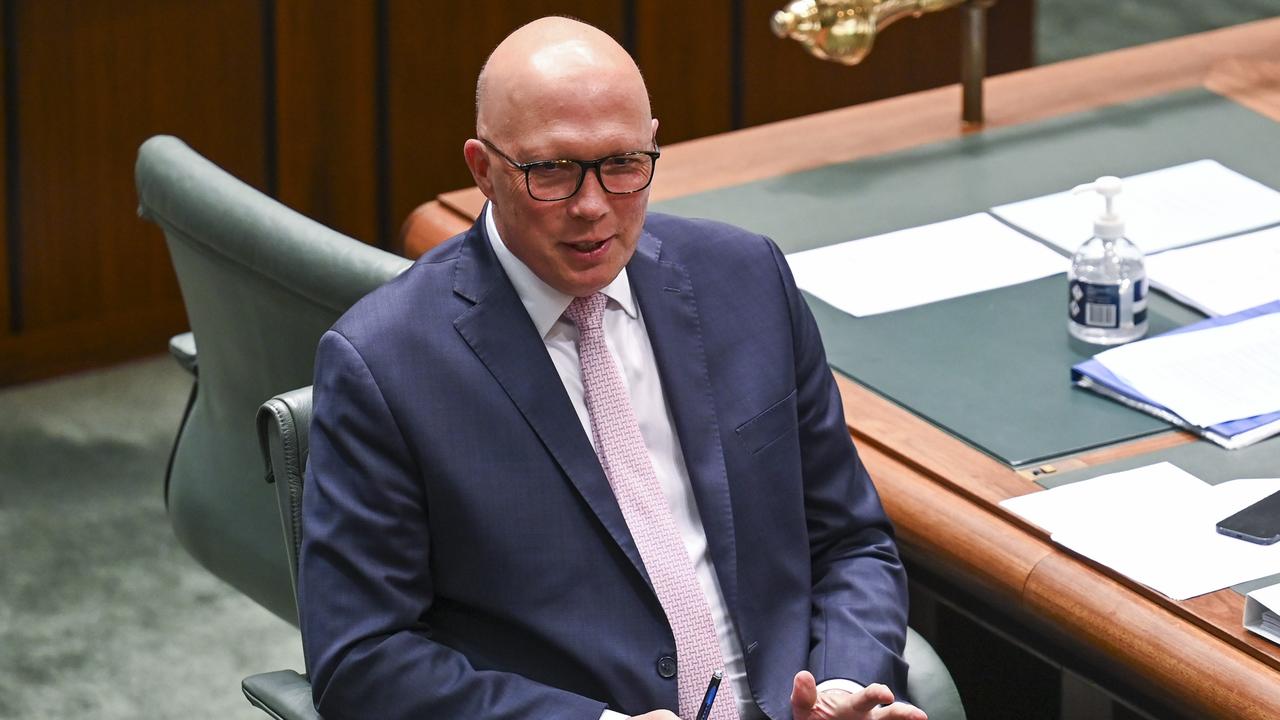
Opposition Leader Peter Dutton says nuclear power is the ‘only credible’ way to net zero. Picture: NCA NewsWire / Martin Ollman
Mr Dutton said nuclear reactors would provide a more reliable and cheaper source of clean energy.
“The Prime Minister’s had an opportunity to put forward a plan,” the Opposition Leader said.
“He doesn’t have the guts to stand up and make the decision that our country needs made and we do need to look at the best technology, zero emissions.
“I think it’s the only credible pathway we have to our international commitment to net zero by 2050.
But his plans have been ridiculed by the Albanese government, which argues it would take “decades” to build and delay Australia’s transition to clean energy.
“I look forward as well to [Mr Dutton] arguing where the financing will come for such reactors, whether taxpayers will be expected to pay for this, because we know the cheapest form of energy in Australia is renewables,” Mr Albanese said.
“Every ten years there are these proposals … what never comes is any investment, because it simply doesn’t stack up commercially.”
Treasurer Jim Chalmers blasted Mr Dutton’s “nuclear fantasy”, saying his plans to overturn laws to build nuclear module reactors would cost taxpayers hundreds of billions of dollars and set the country back in its efforts to reach net zero.
“It’s no surprise to anyone that Peter Dutton has gone for the most expensive option, the most divisive option and longest to build,” the Treasurer said on Tuesday.
“That’s because he’s more interested in cheap and divisive politics than cheap and reliable power. We see that in this more or less culture war over nuclear energy. This a nuclear fantasy.”
Mr Dutton said the technology was “unbelievable” compared with the 1950s and said rerouting the nation’s net-zero path towards nuclear would lead to greater financial relief for households.
Nuclear energy has been banned in Australia since laws were introduced in 1983.
A senate committee was told last year that if a ban on nuclear energy were to be overturned, it would take at least 10 to 15 years to have an operational nuclear power plant in Australia.
Nationals MP Bridget McKenzie said the opposition had anticipated pushback ahead of the announcement.
Independent MP Monique Ryan said the Coalition’s nuclear plan was unrealistic.
“Basically, what the Liberal National Party is doing is kicking the can down the road on the transition because they want to keep in with their friends. The big, you know, coal and gas suppliers because there is not a small functional small modular reactor in the world,” she said.
“I think it’s time that we acknowledge the fact that this is not a realistic plan.”…………………………………. more https://www.news.com.au/technology/environment/sustainability/treasurer-jim-chalmers-rips-into-opposition-leader-peter-duttons-nuclear-energy-plans/news-story/4eb130a74b64224f103e6841ed2a4283
Coalition MPs open to nuclear in their electorates
ABC News, 5 Mar 24
“…………………………………………………………………………………………. The electorates containing coal plants scheduled to close are held almost entirely by Liberal and National MPs, with the exception of Hunter MP Dan Repacholi.
Nationals MP Colin Boyce said the Callide Power Station could be a good option for a nuclear plant, if the community supported it.
“Absolutely on face value I would be supportive of looking at those options. The Callide Power Station at Biloela in central Queensland is number one on the list for closure according to the current Queensland government, so that site there, all the infrastructure that’s already there, the transmission lines, the water supplies, that would be somewhere to me that would be a reasonable outcome,” Mr Boyce said.
“I would suggest that site is a possible site for a possible nuclear small modular reactor, or something similar.
“Having said that we would have to take that to the community and gauge their thoughts on it before any decisions were made.”
He added that safety concerns held by some communities were valid, and that was why an honest conversation to address those concerns was necessary.
Nationals MP Darren Chester, who represents the seat of Gippsland where the Yallourn coal fired plant is scheduled to close, told the ABC last year he would consider a nuclear reactor in the Latrobe Valley if it made sense.
“If a potentially suitable site was identified for a nuclear power station in my electorate, it should be considered in a transparent manner with widespread consultation and an explanation of the potential costs and benefits,” Mr Chester said.
“If it was in the national interest and there were social, economic and environmental benefits, I’m sure that Gippslanders would be willing to have a constructive conversation about nuclear energy.”
Mr Chester told The Australian yesterday any government wanting to introduce nuclear would first have to reassure host communities safety concerns had been managed.
Nationals leader David Littleproud told Perth radio station 6PR yesterday he was ready to lead the way on the prospect of nuclear power in his electorate.
“I’ve got four coal fired power stations [in my electorate], I’ve made it very clear. I’m prepared to lead my community in that discussion,” he said.
“And we’ve got time, we don’t have to do all this by 2030.”
Liberal MP Rick Wilson said it would be premature to speculate on sites, but was open to the idea of a nuclear site in O’Connor.
Communities such as Collie in my electorate, which have experience hosting power stations, have high energy-IQ and their existing infrastructure and workforces could make them potential candidates to host a next-generation nuclear plant in the future,” Mr Wilson said.
He said like any major project, it would need the backing of the community.
Dan Repacholi, whose electorate contains plants scheduled for closure, has been contacted for comment. https://www.abc.net.au/news/2024-03-05/coalition-nuclear-plan-identifies-retiring-coal-likely-sites/103545440
Western Australia’s Premier Cook goes nuclear on Dutton’s ‘simplistic, ridiculous’ power plan
SMH, Hamish Hastie, March 5, 2024 —
A Coalition proposal to build nuclear power stations at the sites of retired or retiring coal stations is ridiculous and a distraction from efforts to reach net zero using renewables, West Australian Premier Roger Cook has said.
Opposition leader Peter Dutton floated the idea of building nuclear power stations on sites of retired coal stations – which could include the South West town of Collie – as a zero-emissions solution to the nation’s energy woes.
Cook blasted the Coalition proposal that federal Nationals leader David Littleproud was spruiking in WA this week as a fantasy.
“The rollout of small nuclear reactors or modular reactors in other countries has been halted because it’s not commercial, it’s not viable,” he said.
“In addition to that, Australia has no experience in nuclear power generation so we don’t have the workforce, we don’t have the know-how to be able to bring them in.
“You simply cannot plonk these things into a landscape and plug it into the grid. These simplistic sort of ideas are ridiculous.
“What we need to do is accept that climate change is a reality and move to exploit the abundance of wind and solar that we have at our disposal.
“There’s no quick fix here, you’ve got actually do the hard work and this is simply a sound grab by the Nationals to distract people from the real hard work which is being done.”……………………………………………………… https://www.smh.com.au/politics/western-australia/cook-goes-nuclear-on-dutton-s-simplistic-ridiculous-power-plan-20240305-p5fa0r.html
Talk of nuclear power plant sites ‘conjecture’, says Liberal MP amid internal division on Dutton’s policy
Rowan Ramsey says overturning ban on nuclear first is the ‘most logical thing’ to do as opposition leader prepares to nominate up to six locations
Paul Karp Chief political correspondent, Guardian, 5 Mar 24
The Liberal MP Rowan Ramsey has said any talk of where nuclear power plants would be built or waste would go is “conjecture” that cannot sensibly be tackled until after the nuclear ban is lifted.
As the opposition leader, Peter Dutton, prepares to announce an energy policy nominating up to six possible sites for nuclear plants, he faces internal divisions about the level of government support required, proposed locations and questions about storage of nuclear waste.
On Tuesday Dutton all but confirmed the Coalition will propose locating nuclear power plants on the site of retiring coal power plants, claiming that this would save having to build new transmission infrastructure for renewables.
The plan would suggest that the Labor-held seat of Hunter, independent Andrew Gee’s seat of Calare and Coalition-held Flynn, Maranoa, O’Connor and Gippsland are on the shortlist for nuclear power stations.
The Gippsland MP, Darren Chester, has argued that his community would need to receive “direct economic benefits” if it were to host power plants.
The Liberal MP for Sturt, James Stevens, has argued that community concerns must be allayed by explaining where and how waste will be stored. This opens another can of worms for the Coalition, as Australia has failed for decades to build a dump for its slowly accumulating intermediate nuclear waste.
Ramsey told Guardian Australia that Kimba, a proposed site for a waste dump in his South Australian electorate of Grey, was “never envisaged, planned or promised to hold high-level waste”……..
It is unclear how the Coalition’s nuclear policy hopes to overcome the enormous cost, long lead-in time and lack of private investment to make new power plants a reality.
Stevens said on Monday that “embracing nuclear generation for civilian electricity purposes is not something to be done on a whim” and that Australians would rightly want to know “how we will deal with some challenges, such as the custody of waste, the location of these generation plants”.
But the Liberal candidate for Cook, Simon Kennedy, who is likely to take Scott Morrison’s seat in parliament, argued on Tuesday that voters in his electorate are “used to” the idea of nuclear waste, because the Lucas Heights reactor – for production of medical and industrial isotopes – is “right outside the electorate”.
Kennedy told Sky News that Australians want “clean, cheap and reliable” power, accusing the Albanese government of being “ideological” for not considering nuclear.
Chester told Guardian Australia he has an “open mind when it comes to the public debate regarding nuclear energy in Australia”.
“It is premature to rule regions in or out as potential locations for a nuclear power station because there’s no proposal on the table,” he said.
“But as a matter of principle, you would need to be able to demonstrate to a potential host community, including Gippsland, that any safety concerns could be ameliorated and there were direct social and economic benefits to our community.”……………………………………
Jason Falinski, the former member for Mackellar and the New South Wales Liberal party president, told Sky News on Monday that “nuclear energy is not something that we are necessarily advocating for”.
“What we’re saying is that it should be part of the mix, part of the option available for Australian policymakers.”
On Tuesday the prime minister, Anthony Albanese, questioned where financing will come from and whether “taxpayers will be expected to pay” for nuclear, because “we know that nuclear is not only the most expensive form of new energy, it is also more than a decade off”.
“I noticed in today’s reports, [Dutton] seems to have backed away a little bit from talking about a technology that does not exist in small, modular reactors that he’s been speaking about,” Albanese told reporters on the sidelines of the Asean conference in Melbourne.
“He’s now speaking about large nuclear reactors. They need to be near populations and need to be near water.”
Albanese said “investment never comes” into nuclear because “it simply doesn’t stack up commercially”.
Dutton told reporters in Brisbane that nuclear is “the only credible pathway we have to our international commitments to net zero by 2050”.
Dutton would not rule out support for large-scale reactors, saying only that the Coalition wanted the “latest technology”.
“We’ve said we’re only interested in sites where you have an end-of-life coal-fired generation asset, so that means you can use the existing distribution network.”
Asked if taxpayers will have to support nuclear, Dutton did not respond but cited the Canadian province of Ontario and the United States as examples where businesses and households pay less for power with nuclear in the mix https://www.theguardian.com/australia-news/2024/mar/05/peter-dutton-liberal-coalition-nuclear-power-plant-policy-locations-waste-rowan-ramsey
1 This month

of the week – Australians for War Powers Reform (AWPR)
To see nuclear-related stories in greater depth and intensity
 Antinuclear