What comes after Rafah
By David Donovan | 22 February 2024, https://independentaustralia.net/life/life-display/what-comes-after-rafah,18353
What will happen after Israeli forces raze Rafah? Founder and director Dave Donovan discusses the ongoing genocide in Gaza and its likely aftershocks.
THIS IS a very important Independent Australia editorial because the world is at a crucial stepping point, a junction, a crisis, where whichever path is chosen will dictate the next 30, or maybe 50, years for global peace.
The crisis is Gaza. The choices are clear. A messy, indeterminate peace or a walk through the tombstones. On from which this world will be – for at least some, and maybe the rest of us – irrevocably altered. A world in which murder and death reign.
Currently, as these words are written, Israel stands on the brink of launching an offensive into the last desperate holdout of the Palestinian people: Rafah.
Israeli nationalists – let’s not dignify their objectives with their favoured demonym, Zionists – weaponise the extremely loaded term, anti-Semitism, to accuse any who object to their expansionary doctrine and indisputable war crimes.
And let us be clear: opposing war crimes is not anti-Semitism. It is not even anti-Zionist or anti-Israel. It is pro-humanity. Our position has been plain and consistent, ever since we began publication. We have indeed held all parties to account in this sphere. We are anti-violence and anti-war.
It is undeniable that not all Jewish people or Zionists are comfortable with the actions of the Israeli Armed Forces in this conflict; nor do all Palestinians endorse Hamas or its actions.
Racism and bigotry are evil but using past wrongs – admittedly horrifying, brutal and evil genocidal wrongs – does not excuse an ongoing mass slaughter, a genocide we have witnessed unfolding night after night on our TV screens, including images of burned and dismembered people, even most distressingly, of babies and small children. No past sin, no sense of self-righteousness, not even the horrific and evil October 7 actions by Hamas, no matter how callous and disgusting, can excuse wholesale slaughter.
But we are on the verge of exactly that.
Let’s make no bones about it, Israel is a rogue state. Netanyahu, Israel’s Far-Right Prime Minister, has repeatedly refused to recognise international law – most recently via the International Court of Justice, which has declared Israel’s current onslaught in Gaza an ongoing genocide – and plans to raze Rafah until the last Hamas fighter is killed.
No one is safe — not refugees, not journalists, not medical professionals, not aid workers.
And so the last of the Palestinians in Gaza will die, even the smallest children, just in case there is a Hamas fighter left among them.
That Australians may be okay with this ethnic cleansing beggars belief. Yet, at best we are complacent onlookers and sadly, more accurately, we are compliant cronies.
And what happens next?
WHAT SHOULD HAPPEN NEXT
The United States should intervene to halt the Israeli Defence Force’s invasion of Rafah. The U.S., the closest ally of Israel, is the only power that could turn it back from its murderous, genocidal intent.
WHAT WILL LIKELY HAPPEN NEXT
After Israel crushes Rafah and sends what remains of the Palestinian people fleeing to refugee camps, perhaps in Egypt, then Israel will, under the guise of eradicating the remaining Hamas terrorists, continue its grand campaign into the Middle East.
Probably first in Lebanon, which it has already begun bombing but wherever territory can be acquired. Then a massive international Islamic force will be mobilised to take on Israel. The U.S. and its allies, including Australia, will step in. World War III.
Total victory in Gaza might be the spark that ignites a global war which has been looming for decades. Russia appears to be spoiling for a war. Global outrage over Israel’s actions is such that the forces which are inclined to oppose America, including Russia and China, will likely use this confrontation to finally mobilise against Israel and the United States.
And if such a war were to occur, which seems likely given any pyrrhic Israeli victory, it would finally end the Zionist dream. One thing is quite certain, irrespective of how such a catastrophic conflagration might end, Israel would be no more.
Israel may win this “battle” against the Palestinians, but it will lose the war. That is what beckons.
Sadly for Australia, when our imperial masters dictate, we will be active participants.
And it would mean that we would once again be needlessly spilling the blood of our children over the “holy land”, as we have done over and over again in numerous conflicts for more than a century.
This is not just a crucial editorial, this is a wake-up call.
Chris Hedges: Julian Assange’s Day in Court

The defense must convince the two judges that the District Judge made serious legal errors to see an appeal granted.
They argued that espionage is, as a matter of law, a political offense and that the extradition treaty with the U.S. prohibits extradition for political offenses. They focused on the extensive UK law, common law and international law that defines espionage as a “pure political offense” because e it is directed against a state apparatus. For this reason, those charged with espionage should be protected from extradition.
The hearing was, after those in 2020 that focused on Julian’s mental and psychological health, refreshing in that it discussed the crimes committed by the U.S. and the importance of making them public.
Julian Assange’s lawyers — in a final bid on Tuesday to stop his extradition — fought valiantly to poke holes in the case of the prosecution to obtain an appeal.
By Chris Hedges https://scheerpost.com/2024/02/21/chris-hedges-julian-assanges-day-in-court/
LONDON — By the afternoon the video link, which would have allowed Julian Assange to follow his final U.K. appeal to prevent his extradition, had been turned off. Julian, his attorneys said, was too ill to attend, too ill even to follow the court proceedings on a link, although it was possible he was no longer interested in sitting through another judicial lynching. The rectangular screen, tucked under the black wrought iron bars that enclosed the upper left hand corner balcony of the courtroom where Julian would have been caged as a defendant, was perhaps a metaphor for the emptiness of this long and convoluted judicial pantomime.
he arcane procedural rules — the lawyers in their curled blonde wigs and robes, the spectral figure of the two judges looking down on the court from their raised dais in their gray wigs and forked white collars, the burnished walnut paneled walls, the rows of lancet windows, the shelves on either side filled with law books in brown, green, red, crimson, blue and beige leather bindings, the defense lawyers, Edward Fitzgerald KC and Mark Summers KC, addressing the two judges, Dame Victoria Sharp and Justice Johnson, as “your lady” and “my lord” — were all dusty Victorian props employed in a modern Anglo-American show trial. It was a harbinger of a decrepit justice system that, subservient to state and corporate power, is designed to strip us of our rights by judicial fiat.
The physical and psychological disintegration of Julian, seven years trapped in the Ecuadorian Embassy in London and nearly five years held on remand in the high-security HM Prison Belmarsh, was always the point, what Nils Melzer the former U.N. Special Rapporteur on torture calls his “slow-motion execution.” Political leaders, and their echo chambers in the media, fall all over themselves to denounce the treatment of Alexei Navalny but say little when we do the same to Julian. The legal farce grinds forward like the interminable case of Jarndyce and Jarndyce in Charles Dickens’ novel Bleak House. It will probably grind on for a few more months — one can’t expect the Biden administration to add the extradition of Julian to all its other political woes. It may take months to issue a ruling, or grant one or two appeal requests, as Julian continues to waste away in HM Prison Belmarsh.
Julian’s nearly 15-year legal battle began in 2010 when WikiLeaks published classified military files from the wars in Iraq and Afghanistan — including footage showing a U.S. helicopter gunning down civilians, including two Reuters journalists in Baghdad. He took refuge in London’s Ecuadorian embassy, before being arrested by the Metropolitan Police in 2019 who were permitted by the Ecuadorian embassy to enter and seize him. He has been held for nearly five years in HM Prison Belmarsh.
Julian did not commit a crime. He is not a spy. He did not purloin classified documents. He did what we all do, although he did it in a far more important way. He published voluminous material, leaked to him by Chelsea Manning, which exposed U.S. war crimes, lies, corruption, torture and assassinations. He ripped back the veil to expose the murderous machinery of the U.S. empire.
The two-day hearing is Julian’s last chance to appeal the extradition decision made in 2022 by the then British home secretary, Priti Patel. On Wednesday the prosecution will make its arguments. If he is denied an appeal he can request the European Court of Human Rights (ECtHR) for a stay of execution under Rule 39, which is given in “exceptional circumstances” and “only where there is an imminent risk of irreparable harm.” But the British court may order Julian’s immediate extradition prior to a Rule 39 instruction or may decide to ignore a request from the ECtHR to allow Julian to have his case heard by the court.
District Judge Vanessa Baraitser in January 2021, at Westminster Magistrates’ Court, refused to authorize the extradition request. In her 132-page ruling, she found that there was a “substantial risk” Julian would commit suicide due to the severity of the conditions he would endure in the U.S. prison system. At the same time, she accepted all the charges leveled by the U.S. against Julian as being filed in good faith. She rejected the arguments that his case was politically motivated, that he would not get a fair trial in the U.S. and that his prosecution is an assault on the freedom of the press.
Baraitser’s decision was overturned after the U.S. government appealed to the High Court in London. Although the High Court accepted Baraitser’s conclusions about Julian’s “substantial risk” of suicide if he was subjected to certain conditions within a U.S. prison, it also accepted four assurances in U.S. Diplomatic Note no. 74, given to the court in February 2021, which promised Julian would be treated well. The “assurances” state that Julian will not be subject to Special Administrative Measure. They promise that Julian, an Australian citizen, can serve his sentence in Australia if the Australian government requests his extradition. They promise he will receive adequate clinical and psychological care. They promise that, pre-trial and post-trial, Julian will not be held in the Administrative Maximum Facility in Florence, Colorado.
Continue readingJulian Assange judge previously acted for MI6
The judge set to rule on the Assange extradition case was previously paid to represent the interests of MI6 and the Ministry of Defence – whose activities WikiLeaks has exposed.
MARK CURTIS AND JOHN MCEVOY, 19 FEBRUARY 2024
One of the two High Court judges who will rule on Julian Assange’s bid to stop his extradition to the US represented the UK’s Secret Intelligence Service (MI6) and the Ministry of Defence, Declassified has found.
Justice Jeremy Johnson has also been a specially vetted barrister, cleared by the UK authorities to access top secret information.
Johnson will sit with Dame Victoria Sharp, his senior judge, to decide the fate of the WikiLeaks co-founder. If extradited, Assange faces a maximum sentence of 175 years.
His persecution by the US authorities has been at the behest of Washington’s intelligence and security services, with whom the UK has deep relations.
His persecution by the US authorities has been at the behest of Washington’s intelligence and security services, with whom the UK has deep relations.
Assange’s journalistic career has been marked by exposing the dirty secrets of the US and UK national security establishments. He now faces a judge who has acted for, and received security clearance from, some of those same state agencies.
As with previous judges who have ruled on Assange’s case, this raises concerns about institutional conflicts of interest.
Exactly how much Johnson has been paid for his work for government departments is not clear. Records show he was paid twice by the Government Legal Department for his services in 2018. The sum was over £55,000.
Briefed by MI6
Justice Johnson became a deputy High Court judge in 2016 and a full judge in 2019. His biography states he has been “often acting in cases involving the police and government departments”.
As a barrister, in 2007 he represented MI6 as an observer during the inquests into the deaths of Princess Diana and Dodi Al Fayed.
Johnson worked alongside Robin Tam QC, previously described by legal directories as a barrister who “does an enormous amount of often sensitive work” for the UK government…………………………………………………….
Defending the ministry
Johnson has also represented the UK Ministry of Defence (MoD) on at least two occasions.
In 2013, he acted for the department during the high-profile Al-Sweady inquiry, which looked into allegations that “British soldiers torture and unlawfully killed Iraqi prisoners” in 2004.
The MoD’s lawyers said the Iraqi allegations were a “product of lies” and that those making the claims “were guilty of a criminal conspiracy”.
Johnson argued there was “compelling and extensive and independent forensic evidence” to refute the case. The five-year inquiry, which cost around £25m, exonerated the British troops.
Johnson also acted for the MoD in 2011, in an appeal case against Shaun Wood, a Royal Air Force (RAF) serviceman. ………………………….
‘Highest security clearance’
Johnson was appointed by the Attorney General to be a “special advocate” in around 2007, Declassified understands. These are specially vetted barristers who act for the purpose of hearing secret evidence in a closed court.
Special advocates “must undergo and obtain Developed Vetting (the highest level of HM Government security clearance) prior to their appointment”, government guidance states.
Developed Vetting is required for individuals having “frequent and uncontrolled access to TOP SECRET assets or require any access to TOP SECRET codeword material”. ………………………………………………………………………………………………………………………….. https://www.declassifieduk.org/julian-assange-judge-previously-acted-for-mi6/
After years of avoiding extradition, Julian Assange’s appeal is likely his last chance. Here’s how it might unfold (and how we got here)
On February 20 and 21, Julian Assange will ask the High Court of England and Wales to reverse a decision from June last year allowing the United Kingdom to extradite him to the United States.
There he faces multiple counts of computer misuse and espionage stemming from his work with WikiLeaks, publishing sensitive US government documents provided by Chelsea Manning. The US government has repeatedly claimed that Assange’s actions risked its national security.
This is the final avenue of appeal in the UK, although Stella Assange, Julian’s wife, has indicated he would seek an order from the European Court of Human Rights if he loses the application for appeal. The European Court, an international court that hears cases under the European Convention on Human Rights, can issue orders that are binding on convention member states. In 2022, an order from the court stopped the UK sending asylum seekers to Rwanda pending a full review of the relevant legislation.
The extradition process has been running for nearly five years. Over such a long time, it’s easy to lose track of the sequence of events that led to this. Here’s how we got here, and what might happen next.
Years-long extradition attempt
From 2012 until May 2019, Assange resided in the Ecuadorian embassy in London after breaching bail on unrelated charges. While he remained in the embassy, the police could not arrest him without the permission of the Ecuadorian government.
In 2019, Ecuador allowed Assange’s arrest. He was then convicted of breaching bail conditions, and imprisoned in Belmarsh Prison, where he’s remained during the extradition proceedings. Shortly after his arrest, the United States laid charges against Assange and requested his extradition from the United Kingdom.
Assange immediately challenged the extradition request. After delays due to COVID, in January 2021, the District Court decided the extradition could not proceed because it would be “oppressive” to Assange.
The ruling was based on the likely conditions that Assange would face in an American prison and the high risk that he would attempt suicide. The court rejected all other arguments against extradition.
The American government appealed the District Court decision. It provided assurances on prison conditions for Assange to overcome the finding that the extradition would be oppressive. Those assurances led to the High Court overturning the order stopping extradition. Then the Supreme Court (the UK’s top court) refused Assange’s request to appeal that ruling.
The extradition request then passed to the home secretary, who approved it. Assange appealed the home secretary’s decision, which a single judge of the High Court rejected in June 2023.
This appeal is against that most recent ruling and will be heard by a two-judge bench. These judges will only decide whether Assange has grounds for appeal. If they decide in his favour, the court will schedule a full hearing of the merits of the appeal. That hearing would come at the cost of further delay in the resolution of his case.
Growing political support
Parallel to the legal challenges, Assange’s supporters have led a political campaign to stop the prosecution and the extradition. One goal of the campaign has been to persuade the Australian government to argue Assange’s case with the American government.
Cross-party support from individual parliamentarians has steadily grown, led by independent MP Andrew Wilkie. Over the past two years, the government, including the foreign minister and the prime minister, have made stronger and clearer statements that the prosecution should end.
On February 14, Wilkie proposed a motion in support of Assange, seconded by Labor MP Josh Wilson. The house was asked to “underline the importance of the UK and USA bringing the matter to a close so that Mr Assange can return home to his family in Australia.” It was passed.
In addition, Attorney-General Mark Dreyfus confirmed he had recently raised the Assange prosecution with his American counterpart, who has the authority to end it.
What will Assange’s team argue?
For the High Court appeal, it is expected Assange’s legal team will once again argue the extradition would be oppressive and that the American assurances are inadequate. A recent statement by Alice Edwards, the United Nations Special Rapporteur on Torture, supports their argument that extradition could lead to treatment “amounting to torture or other forms of ill-treatment or punishment”. She rejected the adequacy of American assurances, saying:
They are not legally binding, are limited in their scope, and the person the assurances aim to protect may have no recourse if they are violated.
The argument that extradition would be oppressive remains the strongest ground for appeal. However, it is likely Assange’s lawyers will also repeat some of the arguments which were unsuccessful in the District Court proceedings.
One argument is that the charges against Assange, particularly the espionage charges, are political offences. The United States–United Kingdom extradition treaty does not allow either state to extradite for political offences.
Assange is also likely to re-run the argument that his leaks of classified documents were exercises of his right to freedom of expression under the European Convention on Human Rights. To date, the European Court of Human Rights has never found that an extradition request violates freedom of expression. For the High Court to do so would be an innovative ruling.
The High Court will hear two days of legal argument and might not give its judgement immediately, but it will probably be delivered soon after the hearing. Whatever the decision, Assange’s supporters will continue their political campaign, supported by the Australian government, to stop the prosecution.
Chris Hedges: Julian Assange’s Final Appeal

Julian Assange will make his final appeal this week to the British courts to avoid extradition. If he is extradited it is the death of investigations into the inner workings of power by the press.
By Chris Hedges / ScheerPost, 18 Feb 24
LONDON — If Julian Assange is denied permission to appeal his extradition to the United States before a panel of two judges at the High Court in London this week, he will have no recourse left within the British legal system. His lawyers can ask the European Court of Human Rights (ECtHR) for a stay of execution under Rule 39, which is given in “exceptional circumstances” and “only where there is an imminent risk of irreparable harm.” But it is far from certain that the British court will agree. It may order Julian’s immediate extradition prior to a Rule 39 instruction or may decide to ignore a request from the ECtHR to allow Julian to have his case heard by the court.
The nearly 15-year-long persecution of Julian, which has taken a heavy toll on his physical and psychological health, is done in the name of extradition to the U.S. where he would stand trial for allegedly violating 17 counts of the 1917 Espionage Act, with a potential sentence of 170 years.
Julian’s “crime” is that he published classified documents, internal messages, reports and videos from the U.S. government and U.S. military in 2010, which were provided by U.S. army whistleblower Chelsea Manning. This vast trove of material revealed massacres of civilians, torture, assassinations, the list of detainees held at Guantanamo Bay and the conditions they were subjected to, as well as the Rules of Engagement in Iraq. Those who perpetrated these crimes — including the U.S. helicopter pilots who gunned down two Reuters journalists and 10 other civilians and severely injured two children, all captured in the Collateral Murder video — have never been prosecuted.
Julian exposed what the U.S. empire seeks to airbrush out of history.
Julian’s persecution is an ominous message to the rest of us. Defy the U.S. imperium, expose its crimes, and no matter who you are, no matter what country you come from, no matter where you live, you will be hunted down and brought to the U.S. to spend the rest of your life in one of the harshest prison systems on earth. If Julian is found guilty it will mean the death of investigative journalism into the inner workings of state power. To possess, much less publish, classified material — as I did when I was a reporter for The New York Times — will be criminalized. And that is the point, one understood by The New York Times, Der Spiegel, Le Monde, El País and The Guardian, who issued a joint letter calling on the U.S. to drop the charges against him.
Australian Prime Minister Anthony Albanese and other federal lawmakers voted on Thursday for the United States and Britain to end Julian’s incarceration, noting that it stemmed from him “doing his job as a journalist” to reveal “evidence of misconduct by the U.S.”
The legal case against Julian, which I have covered from the beginning and will cover again in London this week, has a bizarre Alice-in-Wonderland quality, where judges and lawyers speak in solemn tones about law and justice while making a mockery of the most basic tenants of civil liberties and jurisprudence.
How can hearings go forward when the Spanish security firm at the Ecuadorian Embassy, UC Global, where Julian sought refuge for seven years, provided videotaped surveillance of meetings between Julian and his lawyers to the CIA, eviscerating attorney-client privilege? This alone should have seen the case thrown out of court.
How can the Ecuadorian government led by Lenin Moreno violate international law by rescinding Julian’s asylum status and permit London Metropolitan Police into the Ecuadorian Embassy — sovereign territory of Ecuador — to carry Julian to a waiting police van?
Why did the courts accept the prosecution’s charge that Julian is not a legitimate journalist?
Why did the United States and Britain ignore Article 4 of their Extradition Treaty that prohibits extradition for political offenses?
How is the case against Julian allowed to go ahead after the key witness for the United States, Sigurdur Thordarson – a convicted fraudster and pedophile – admitted to fabricating the accusations he made against Julian?
How can Julian, an Australian citizen, be charged under the U.S. Espionage Act when he did not engage in espionage and wasn’t based in the U.S when he received the leaked documents?
Why are the British courts permitting Julian to be extradited to the U.S. when the CIA — in addition to putting Julian under 24-hour video and digital surveillance while in the Ecuadorian Embassy — considered kidnapping and assassinating him, plans that included a potential shoot-out on the streets of London with involvement by the Metropolitan Police?
How can Julian be condemned as a publisher when he did not, as Daniel Ellsberg did, obtain and leak the classified documents he published?
Why is the U.S. government not charging the publisher of The New York Times or The Guardian with espionage for publishing the same leaked material in partnership with WikiLeaks?
Why is Julian being held in isolation in a high-security prison without trial for nearly five years when his only technical violation of the law is breaching bail conditions when he sought asylum in the Ecuadorian Embassy? Normally this would entail a fine. ………………………………………………………………………………………………………………………….
Julian’s lawyers will attempt to convince two High Court judges to grant him permission to appeal a number of the arguments against extradition which Judge Baraitser dismissed in January 2021. His lawyers, if the appeal is granted, will argue that prosecuting Julian for his journalistic activity represents a “grave violation” of his right to free speech; that Julian is being prosecuted for his political opinions, something which the U.K.-U.S. extradition treaty does not allow; that Julian is charged with “pure political offenses” and the U.K.-U.S. extradition treaty prohibits extradition under such circumstances; that Julian should not be extradited to face prosecution where the Espionage Act “is being extended in an unprecedented and unforeseeable way”; that the charges could be amended resulting in Julian facing the death penalty; and that Julian will not receive a fair trial in the U.S. They are also asking for the right to introduce new evidence about CIA plans to kidnap and assassinate Julian.
If the High Court grants Julian permission to appeal, a further hearing will be scheduled during which time he will argue his appeal grounds. If the High Court refuses to grant Julian permission to appeal, the only option left is to appeal to the ECtHR. If he is unable to take his case to the ECtHR he will be extradiated to the U.S.
…………………………………………………………………………………………………………………………….. No other contemporary journalist has come close to matching his revelations.
Julian is the first. We are next. https://scheerpost.com/2024/02/18/chris-hedges-julian-assanges-final-appealchris-hedges/—
Dutton goes nuclear on government’s renewable plans

The Age, By Mike Foley, February 16, 2024
Opposition Leader Peter Dutton is ramping up his campaign against the Albanese government’s renewable energy goals, making the claim that next-generation nuclear technology is a cheaper, more reliable alternative to wind and solar energy.
Dutton claimed on Friday the government’s renewable goals would drive household power bills “through the roof” and argued nuclear was a climate-friendly option, setting up an energy policy clash with Labor at the federal election due by May next year.
Prime Minister Anthony Albanese won the 2022 election pledging to more than double the share of clean energy to 82 per cent of the grid by 2030. This is a cornerstone of Labor’s commitment to cut greenhouse emissions by 43 per cent on 2005 levels by the end of the decade.
Albanese said on Friday the government had capped the price of coal and gas to lower electricity prices. The government says its renewables policy will lower power bills by $275 a year by 2025.
But Dutton said Australia needed to have a “mature” conversation about nuclear.
“There are 20 countries similar to ours … who have a nuclear industry or they’re committed to do so,” he told media in Adelaide…..
However, experts say nuclear technology is more costly than renewables and would take decades to deploy if Australia lifted its long-standing ban on nuclear power.
The small modular reactors Dutton favours are not in commercial production. Some companies are conducting research and are expected to take several more years to build a working unit.
US company NuScale Power was developing the world’s most advanced commercial SMR project in Utah, but the project was abandoned in November due to a 70 per cent blowout in project costs.
Former chief scientist Alan Finkel, who was also a special adviser to the federal government on low-emissions technology, said it would take at least 20 years from the ban being lifted until a reactor could start generating electricity for the grid.
The government would need to dramatically beef up its nuclear regulation, which was currently equipped only to oversee radioisotopes used in medicine, select sites for construction of a reactor and for waste disposal, and set up a fund for decommissioning.
Finkel said it would also need to wait for a jurisdiction with regulations similar to Australia, such as the United States, United Kingdom, Canada or Europe, to deploy a small modular reactor.
“We are a laggard in the nuclear power industry, we’re not going to suddenly become a trailblazer,” he said.
“It’s very hard to imagine that [deploying nuclear energy] being done in less than 20 years from today.”
……..”if you want to get a fast transition to a low-emissions electricity system, the only option we’ve got today is solar and wind,” he said.
The CSIRO’s GenCost report in December calculated the 2023 costs of electricity generation for renewables, coal and small modular reactors and projected what they would be in 2030.
It found that a mix of wind and solar power in 2023 would generate electricity for $90 to $134 per megawatt hour, falling to $70 to $100 by 2030. These costs include investment of $30 billion to upgrade transmission lines to link wind and solar farms to the grid, and to build back-up power such as hydro dams.
…….If small modular reactors were available today, CSIRO estimated they would generate electricity at a cost of $380 to $640 a megawatt hour, dropping to $210 to $350 in 2030. https://www.theage.com.au/politics/federal/dutton-goes-nuclear-on-government-s-renewable-plans-20240216-p5f5g3.html
Wind and solar are delivering an energy transition at record speed
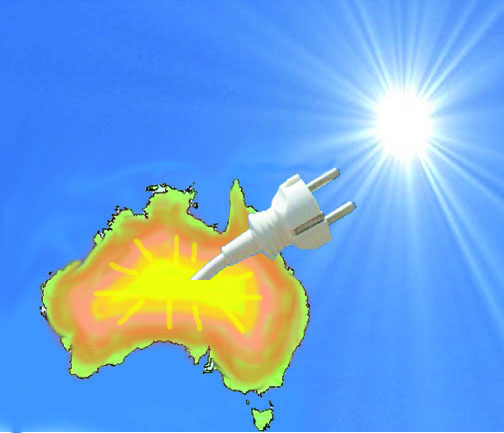
As Australia’s federal Coalition and the Murdoch media intensify their
calls for nuclear to replace the country’s ageing coal fired generators,
thereby ensuring that the switch to renewables is halted and climate action
delayed, it is worth reminding ourselves exactly how quickly wind and solar
can do the job.
As RenewEconomy has noted, South Australia has shone the
light for the rest of the country on the path to renewables, achieving an
average 82 per cent share for wind and solar over the entire December
quarter. That’s a world record share for a grid of this size, and an
achievement that proves the technology doubters wrong. If it can be done at
gigawatt scale, it can be done elsewhere.
Renew Economy 16th Feb 2024
Parliament votes in favour of bringing Assange home
By John Jiggens | 15 February 2024 https://independentaustralia.net/politics/politics-display/parliament-votes-in-favour-of-bringing-assange-home,18333—
In a historic vote, parliamentarians have shown unprecedented support for the return home of imprisoned journalist Julian Assange. Dr John Jiggens reports.
WEDNESDAY 14 FEBRUARY turned out to be an unanticipated Happy Valentine’s Day for Julian Assange supporters. The Australian House of Representatives passed a motion introduced by Tasmanian Independent Andrew Wilkie, on behalf of the Parliamentary Friends of Julian Assange, urging the U.S. and the UK to bring their prosecution of the WikiLeaks founder to a close and allow him to return to his family and home in Australia.
The vote was 86 for Yes (ALP, Greens and Independents) and 42 for No (mostly Liberal and National).
In an unprecedented show of parliamentary support for Assange, two-thirds of the lower house voted for the motion. It was not unanimous because Coalition members overwhelmingly chose to support the U.S. and UK in what the former UN Rapporteur on Torture, Nils Melzer, described as the torture of an Australian journalist.
Greens leader Adam Bandt appealed to the Coalition to support the motion. Assange has become symbolic of journalists around the world who face attacks on press freedom, he argued, ranging from political prosecutions through to murder.
Assange’s prosecution set a chilling precedent for journalists about their ability to hold governments to account and to tell the truth without facing imprisonment and without facing a risk to their own lives.
Bandt said:
“If governments think that participation in the AUKUS agreement and alliance is so critical, surely part of that should be the insistence on human rights and the proper treatment of our citizens — of Australian citizens. If we are sitting around a table with these governments, we should be able to insist that Julian Assange is brought home.”
His appeal fell on deaf ears — it remained AUKUS regardless of any cost.
For Assange, the situation is still perilous. He remains incarcerated in HM Prison Belmarsh in the UK, where he has spent the last five years, locked down for 23 hours each day in a three-metre by two-metre cell, unconvicted of any charges, an innocent man in a living hell, like Dylan’s ‘Hurricane’. Like Nelson Mandela, he walks his long walk to freedom around that tiny cell every day.
In one week, the UK High Court will decide whether he has exhausted all his legal appeals to prevent being extradited to the USA where he would face charges that could see him imprisoned for 175 years under their notorious 1917 Espionage Act for publishing material, which revealed shocking evidence of misconduct by U.S. forces.
As Senator David Shoebridge tweeted on the day of the vote:
‘There are real concerns that if Julian loses next week he will be immediately extradited.’
In this epic David versus Goliath mismatch, one lone Australian journalist pitted against the world’s greatest empire, it was rare good news. Members and supporters of the Parliamentary Friends of Julian Assange tweeted happily.
Andrew Wilkie, Convenor of the Parliamentary Friends of Assange:
‘I successfully moved a motion to recognise the importance of bringing Julian Assange’s extradition to an end. The Govt voted for it in an unprecedented show of political support for Julian. The US must heed these calls & drop the extradition. #FreeAssangeNOW #auspol #politas.’
Adam Bandt, Leader of the Greens:
‘Today – for the first time – the House voted to call on the UK & the USA to bring Julian Assange home. His family, the people and this Parliament want him home.
PM — it’s time we make this a reality.’
Dr Monique Ryan, Independent member, Kooyong:
‘A powerful moment. Today the Government and crossbench called on the United States and the United Kingdom to stop prosecuting Julian Assange so he can come home. This is the ultimate test of our nations’ friendship and I sincerely hope it is heard.’
David Shoebridge, Greens Senator:
‘Today the House of Representatives has voted in favour of a motion from my Parliamentary Friends of Assange colleague @WilkieMP on the need to bring Julian home. This is a genuinely historic moment and a testament to the work of so many for so many years. 86-42 vote.’
Australia’s nuclear future and the legal ramifications of ratifying the Treaty on the Prohibition of Nuclear Weapons (TPNW)
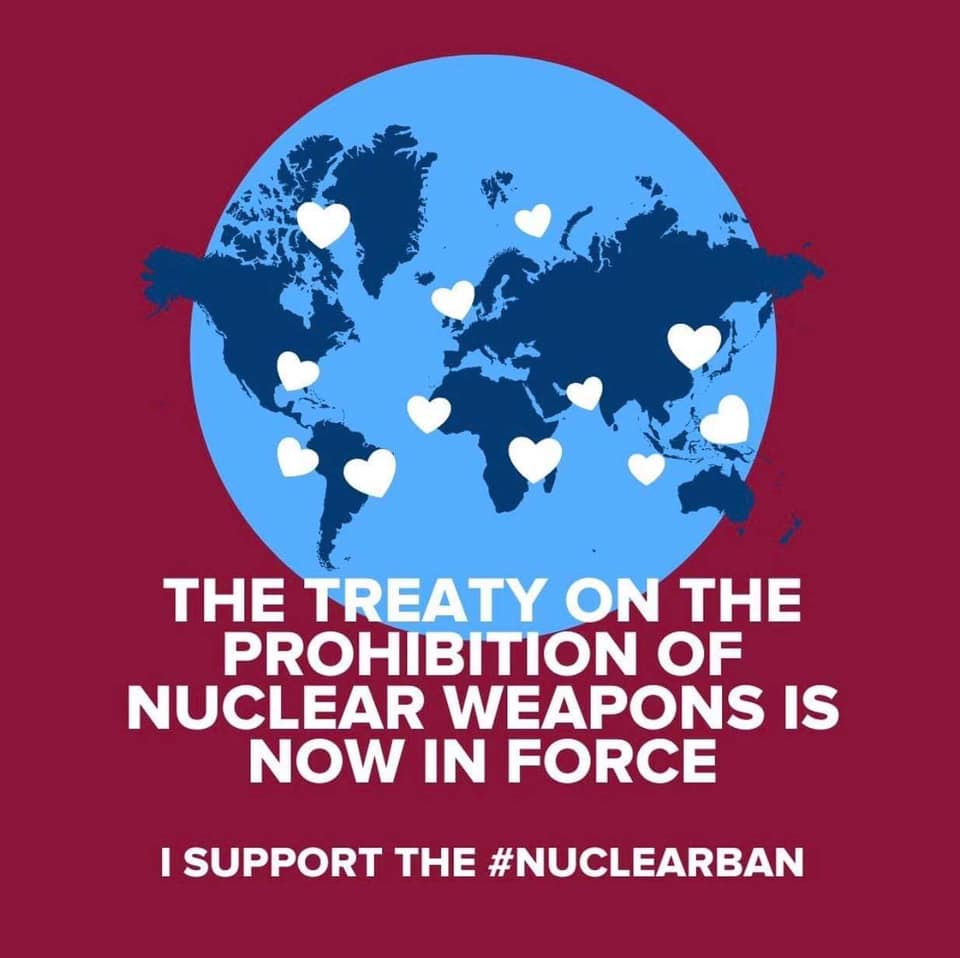
BY CAT WOODS – FEB 15, 2024
5 March marks the International Day for Disarmament and Non-Proliferation Awareness, LSJ speaks to Melissa Parke, Executive Director of the International Campaign to Abolish Nuclear Weapons (ICAN) about the reasons Australia has not signed the Treaty on the Prohibition of Nuclear Weapons (TPNW), and what the consequences may be.
In February 1970, Australia signed the Treaty on the Non-Proliferation of Nuclear Weapons (NPT), committing not to acquire nuclear weapons, and to adhere to strong non-proliferation obligations. It is one of 70 nations that are signatories to the treaty.
Over 40 years later, and despite assurances from the Albanese government that it would do so, Australia has not ratified the Treaty on the Prohibition of Nuclear Weapons (TPNW).
Australia’s history and ratification of treaties
Australia has signed up to both the 1968 Nuclear Non-Proliferation Treaty and the 1986 Rarotonga Treaty.
Further, Australia and Japan jointly established the Non-Proliferation and Disarmament Initiative (NPDI) in July 2010 with the key objective of promoting the implementation of this action plan. The NPDI is a cross-regional group of 12 countries: Australia, Canada, Chile, Germany, Japan, Mexico, Nigeria, the Netherlands, the Philippines, Poland, Türkiye and the United Arab Emirates.
The Treaty on the Non-Proliferation of Nuclear Weapons (NPT) prohibits the manufacture, production or acquisition of nuclear explosive devices; research and development relating to their manufacture or production; the possession or control over such devices; the stationing of nuclear explosive devices in their territories; and testing of nuclear devices.
The NPT requires nuclear weapon states who are signatories of the treaty (US,
The NPT requires nuclear weapon states who are signatories of the treaty (US, Britain, China, Russia and France) not to pass nuclear weapons or technology to non-nuclear weapons states. However, as per Article 4 of the treaty, this requirement specifies a prohibition on the use of nuclear materials associated with nuclear weapons. It makes allowances for the provision of nuclear materials for “peaceful purposes” which is how Australia is defending its AUKUS plan to purchase, build and maintain a fleet of nuclear submarines.
Progress and promises falter
At the United Nations in October 2022, Australia ended a 5-year period of voting in opposition to the 2017 Treaty on the Prohibition of Nuclear Weapons (TPNW) in favour of abstaining to vote, so it was far from endorsing the treaty which ensures a framework of verification and enforcement of the NPT.
Australia’s fence-sitting position had mixed responses. While Indonesia and New Zealand governments praised the end to Australia’s opposition to the treaty, the US claimed that Australia was risking the existing and prospective defence agreements, deemed necessary “for international peace and security”.
The choice to abstain aligned with the Labor Party’s commitment to sign and ratify the TPNW during its national conference in 2018, a resolution made by Anthony Albanese that he reasserted in 2021. When Labor parliamentarian Susan Templeman attended the first meeting of states parties to the TPNW in June 2022, she was galvanised by a joint letter from former Australian ambassadors and high commissioners to the prime minister in support of signing and ratifying the TPNW.
Nevertheless, Australia has not ratified the treaty based on its excuse that the government is continuing to consult with partners and stakeholders while it examines and gathers information. It is a position that jars with the many organisations and political parties advocating for ratification of the TPNW. These include the Australian Red Cross, the Australian Medical Association, the Australian Council of Trade Unions, and more than 40 councils from cities including Brisbane, Canberra, Hobart, Melbourne, and Sydney.
China claimed that the AUKUS deal will eventuate in “the illegal transfer of nuclear weapon materials, making it essentially an act of nuclear proliferation”
The AUKUS plan for nuclear submarines
In February 2023, consequent to the AUKUS plan, Australia announced the deal to purchase three Virginia-class nuclear-powered, conventionally-armed submarines before the 2030s, and plans for Australia to build nuclear-powered submarines aided by US nuclear technology by the 2050s. Australia is the first party to the NPT to own and maintain nuclear submarines beyond the weapons states (US, Russia, China, Britain and France).
The AUKUS plan had already raised alarm both domestically and within the Pacific region.
China claimed that the AUKUS deal will eventuate in “the illegal transfer of nuclear weapon materials, making it essentially an act of nuclear proliferation” in a position paper sent to International Atomic Energy Agency (IAEA) member states during the September 2022 quarterly meeting of the IAEA’s 35-nation Board of Governors.
Australia responded that the fuel in its nuclear submarines could not be used to make nuclear weapons, since this would require chemical processing facilities that Australia was unable and unwilling to accommodate. Australia has defended its position on owning nuclear submarines as a party to the NPT based on an allowance for marine nuclear propulsion where necessary arrangements are made with the IAEA.
The 1986 Rarotonga Treaty which Australia is party to requires that no “nuclear explosive devices” can enter the nuclear-free zone within the South Pacific. It specifies limitations on the distribution and acquisition of nuclear fissile material. While New Zealand does not allow vessels carrying nuclear weapons to visit its ports, Australia does allow this, which the treaty has provisions for.
ICAN perspective
Established in 2007, the International Campaign to Abolish Nuclear Weapons (ICAN) represents a coalition of non-governmental organisations that advocate for adherence to the United Nations nuclear weapon ban treaty.
In September 2023, Melissa Parke commenced her role as Executive Director. Parke is a former United Nations legal expert and Australian government minister with over two decades of experience in international development, human rights, law, and politics. In her capacity as an ICAN Australia ambassador, she campaigned for Australia to ratify the TPNW. She was the former Minister for International Development and former Member of Parliament for the Labor Party for Fremantle between 2007 and 2016. Prior to entering parliament, Parke served as an international lawyer with the United Nations in Kosovo, Gaza, New York and Lebanon between 1999 and 2007…………………………………………………………………………………………………………………………………………
Australia’s nuclear future
Parke says, “I think Australia can play a really important role, as it has in the past, in nuclear disarmament. It’s in a key position to do so. Australia already has a legal obligation in the 1968 NPT to never acquire nuclear weapons and it’s also accepted the Treaty of Rarotonga requirement never to allow another state to carry nuclear weapons into this territory. The 2017 TPNW contains broader prohibitions. Most notably, upon becoming a party Australia would need to refrain from allowing any other state to use, threaten to use, or possess nuclear weapons.”
She continues, “In order to comply with this prohibition, changes would be needed to Australia’s military cooperation arrangements with the United States, because the US possesses more than 5000 nuclear weapons. For example, the joint US-Australian military and intelligence facility at Pine Gap near Alice Springs could not be used for nuclear targeting and Australia could not allow visits to its territory by US aircraft or submarines carrying nuclear weapons. In addition, Australia could not continue to claim protection from the so-called US ‘nuclear umbrella’ because maintaining a military doctrine that envisages the possible use of nuclear weapons by the US on its behalf would be incompatible with the TPNW. Extended nuclear deterrence, which is the doctrine that Australia relies upon, is simply the threat to have the United States murder millions of innocent people indiscriminately. So, that’s not acceptable legally, or morally. In addition to the fact that it’s very unlikely that the United States would sacrifice Los Angeles for Sydney.”
Further, Australia would be required to provide financial assistance to victims of past nuclear testing if it signed the TPNW.
“There are no obstacles to Australia signing the TPNW,” states Parkes. “It was negotiated in 2017, adopted with the support of 122 countries. The US vocally discouraged allies from joining the treaty under the Trump administration, and while Biden has maintained opposition, the US is no longer telling countries not to sign it, according to US state department.”
She adds, “Nothing in ANZUS would prevent Australia becoming party to the treaty, nor would AUKUS. We’ve raised proliferation concerns relating to AUKUS but it doesn’t conflict with TPNW as long as nuclear powered submarines never carry weapons or contribute to the making of such weapons.”
As far as threatening the US alliance with Australia, Parke says that history would suggest that our two nations can have contrasting attitudes to treaties on weapons without damage.
“We have already ratified the 1996 Comprehensive Nuclear-Test-Ban Treaty (CTBT), the Convention on Cluster Munitions, and the 1997 Ottawa Treaty which prohibits anti-personnel mines. We don’t have to mirror the US.”………………………………………………………. more https://lsj.com.au/articles/australias-nuclear-future-and-the-legal-ramifications-of-ratifying-tpnw/
Pacific wants open discussion on AUKUS to ensure region is nuclear free
Eleisha Foon, RNZ Pacific Journalist, @eleishafoon, more https://www.rnz.co.nz/international/pacific-news/508948/pacific-wants-open-discussion-on-aukus-to-ensure-region-is-nuclear-free 12 Feb 24
Keeping the Pacific nuclear-free, in line with the Rarotonga treaty, was a recurring theme from the leaders of Tonga, Cook Islands and Samoa to New Zealand last week.
The New Zealand government’s Pacific mission wrapped up on Saturday with the final leg in Samoa.
Over the course of the trip, defence and security in the region was discussed with the leaders of the three Polynesian nations.
In Apia, Samoan Prime Minister Fiamē Naomi Mataʻafa addressed regional concerns about AUKUS.
New Zealand is considering joining pillar two of the agreement, a non-nuclear option, but critics have said this could be seen as Aoteroa rubber stamping Australia acquiring nucelar-powered submarines.
“We would hope that both administrations will ensure that the provisions under the maritime treaty are taken into consideration with these new arrangements,” Fiamē said.
New Zealand’s previous labour government was more cautious in its approach to joining AUKUS because it said pillar two had not been clearly defined, but the coalition government is looking to take action.
Prime Minister Fiamē said she did not want the Pacific to become a region affected by more nuclear weapons.
She said the impact of nuclear weapons in the Pacific was still ongoing, especially in the North Pacific with the Marshall Islands, and a semblance of it is still in the south with Tahiti.
She said it was crucial to “present that voice in these international arrangements”.
“We don’t want the Pacific to be seen as an area that people will take licence of nuclear arrangements.”
The Treaty of Rarotonga prohibits signatories – which include Australia and New Zealand – from placing nuclear weapons within the South Pacific.
Cook Island’s Prime Minister Mark Brown said Pacific leaders were in agreement over the security matter.
“I think our stance mirrors that of all the Pacific Island countries. We want to keep the Pacific region nuclear weapons free, nuclear free and that hasn’t changed.”
Reflecting on dicussions during the Pacific Islands Forum in 2023, he said: “A review and revisit of the Rarotonga Treaty should take place with our partners such as New Zealand, Australia and others on these matters.”
“It’s timely that we have them now moving forward,” he said.
Last year, Fiji’s Prime Minister Sitiveni Rabuka proposed a Pacific peace zone which was discussed during the forum leaders’ meeting Rarotonga.
This year, Tonga will be hosting the forum and matters of security and defence involving AUKUS are expected to be a key part of the agenda.
Tonga’s Acting Prime Minister Samiu Vaipulu acknowledged New Zealand’s sovereignty and said dialogue was the way forward.
“We do not interfere with what other countries do as it is their sovereignty. A talanoa process is best,” Vaipulu said.
Foreign Minister Winston Peters and Health and Pacific People’s Minister Shane Reti reiterated that they care and have listened to the needs outlined by the Pacific leaders.
They said New Zealand would deliver on funding promises to support improvements in the areas of health, education and security of the region.
Labor’s decision to pull UNRWA funding is just wrong
By Hannah Thomas | 12 February 2024, https://independentaustralia.net/politics/politics-display/labors-decision-to-pull-unrwa-funding-is-just-wrong,18312—
The Albanese Government’s decision to pull UNRWA funding has rendered Australia complicit in the ongoing humanitarian crisis in Gaza, writes Hannah Thomas.
ON 26 JANUARY, the International Court of Justice (ICJ) handed down its provisional ruling ordering Israel to, among other things, not commit acts of genocide and take immediate steps to ensure aid could reach civilians in Gaza.
The logical response, from a government that loves throwing around phrases like “international rules-based order” would have been to publicly back the ICJ’s ruling, demand an immediate and permanent ceasefire to allow aid to reach Palestinians in Gaza, increase aid to Palestine and stop military exports to Israel.
These responses were all logical – and not to mention morally necessary – many weeks ago, but the ICJ’s assessment that Israel’s military campaign is an existential threat to Palestinians in Gaza should have made these steps inevitable for the Albanese Government.
And yet less than 24 hours after the ICJ’s ruling, Minister Penny Wong announced the Albanese Government wouldn’t be stepping in to prevent a genocide. The Albanese Government wouldn’t punish the entity committing the genocide, it would punish its victims.
Based on allegations from the same entity freshly implicated by the ICJ, the Australian Government suspended funding to the UN Relief and Works Agency for Palestine Refugees (UNRWA), blindly and rashly following the United States and other “like-minded” countries.
Now, to the surprise of absolutely no one, the allegations have been exposed as baseless. As reported by the UK’s Channel 4, the dossier sent by Israel to UNRWA donors to justify its allegations didn’t contain a shred of evidence. And yet, the suspension of funding still stands.
Penny Wong and other Labor MPs dance around the issue, acknowledging the crucial, lifesaving work that UNRWA does, saying the Albanese Government is considering its next steps to increase funding for UNRWA in the future, while conveniently ignoring that they are currently crippling its operations at the most crucial of times. It is not clear what evidence they relied on to make the decision.
Every day that funds are suspended has grave consequences. The importance of UNRWA’s role is incontrovertible and utterly immense. In ordinary times, it is the only organisation with a mandate to provide relief and essential services to over 5 million Palestinian refugees in the region — a country’s worth of people.
In current times, more than 2 million Palestinians in Gaza depend on UNRWA for their immediate survival. More than a million people are sheltering in UNRWA schools and facilities as Israel indiscriminately rains hell on Gaza. These UNRWA facilities have been mercilessly targeted by Israel, who have slaughtered over 150 UNRWA staff since 7 October 2023. The Albanese Government has not imposed a single consequence on Israel.
It must be emphasised that even if the allegations were proven true, the decision would still be wrong. UNRWA already acted on the allegations before the Australian Government suspended funding: it sacked nine of those accused, while two are missing and one is dead. Even if UNRWA had not acted, punishing millions of Palestinians for the actions of 12 people would be unreasonable, but the point is that it has.
It is clear that the Albanese Government has already made us complicit in genocide, through military exports to Israel, the significant diplomatic cover it provides Israel and its refusal to call for a ceasefire. But continuing to starve UNRWA takes things to a new level.
Francis Boyle, a human rights lawyer who successfully argued a genocide case at the ICJ for Bosnia and Herzegovina, states that countries cutting off funding to UNRWA, have moved past aiding and abetting Israeli genocide.
He argues:
“These states are now also directly violating Genocide Convention Article 2(c) themselves: ‘Deliberately inflicting on the group conditions of life calculated to bring about its physical destruction in whole or in part’.”
Michael Fakhri, the UN special rapporteur on the right to food, said that by cutting UNRWA funding, countries like Australia had turned an imminent famine into an “inevitable” one.
The decision to suspend UNRWA funding was unforgivable and utterly incomprehensible. To maintain the suspension in the face of what have proven to be baseless allegations is even more unforgivable.
The Albanese Government must immediately reverse its decision and should also increase funding to the UNRWA to compensate for its wrongful suspension.
Worst places in Australia to be if World War Three hits

For Australia, the question isn’t where to hide in the event of a nuclear war. It’s where not to be — and this is the top of the list.
news.com.au Jamie Seidel Jamie Seidel is a freelance writer | @JamieSeidel 12 Feb 24
For Australia, the question isn’t where to hide in the event of a nuclear war. It’s where not to be. And how to cope afterwards.
………………………………………the bomb is back.
And international analysts fear there’s a growing will to use them…………………………………………………………………………….
The Bulletin of the Atomic Scientists chose to keep their “Doomsday Clock” at 90 seconds to midnight late last month – the closest it has ever been to an apocalypse.
They cited the danger of the Russia-Ukraine war, the slaughter in Gaza, and the worldwide diplomatic, economic and environmental toll associated with 2023 being the hottest year in recorded history.
All it takes is one “incident”. Then the domino effect of “Mutually Assured Destruction” kicks into play.
Those with the largest arsenals – China, Russia and the United States – are still likely to hit strategic targets. At least in the first wave of a nuclear exchange.
Australia in the firing line
……………………………………………………“Once we enter the slippery slope of even limited nuclear exchanges, the end result will be escalation to mutual annihilation — something about which both Vladimir Putin and Xi Jinping may need reminding,” says ANU emeritus strategic studies professor Paul Dibb.
PINE GAP has long been known to top the list. This highly secret US military installation exists to detect and track nuclear missiles. Removing it early in any war would degrade the ability of the US to defend its own soil.
“In the late 1970s, it was made quite clear to me during talks in Moscow that Pine Gap was a priority Soviet nuclear target,” Professor Dibb said in a recent ASPI critique.
“And in 2016, I was warned: ‘In the event of nuclear war between Russia and America, you Australians will find that nuclear missiles fly in every direction.
HAROLD E HOLT Naval Communications Station at Northwest Cape, near Exmouth, Western Australia, is in a similar category. This enormous communications facility has been built to communicate with submarines at depths of up to 30 metres. Eliminating it would sow confusion among US attack and ballistic missile submarine commanders.
From here, the list gets more controversial.
RAAF TINDAL near Katherine in the Northern Territory has recently been adapted to host nuclear-capable US B-52 bombers. Any nuclear-capable delivery system is a likely nuclear target…………………….
HMAS STIRLING, the naval base in Perth’s southern suburbs, is slated to become a regular pitstop call for US and UK nuclear-powered submarines. Eventually, it is hoped to also house Australia’s own. But such submarines are incredibly high-value targets because they combine immense firepower, globe-circling range and virtual invisibility.
OSBORNE NAVAL SHIPYARD in Port Adelaide could potentially join its US and UK cousins on a nuclear warhead list. The nuclear-powered submarines it is expected to begin assembling are among the most lethal ships in the sea. But also the hardest to build, maintain and repair.
“Armed with nuclear submarines, Australia itself will be a target for possible nuclear attacks in the future,” Communist Party mouthpiece Victor Gao threatened shortly after then Prime Minister Malcolm Turnbull dropped the AUKUS nuclear submarine pact bombshell in 2021.
“Do you really want to be a target in a possible nuclear war, or do you want to be free from nuclear menace,” he menaced. [ Ed note – “menaced” – I thought it was a fair question]
MARINE ROTATIONAL FORCE – DARWIN is a rotating force of 2500 US Marine troops, aircrew and sailors based in and around Darwin and at RAAF Base Darwin. While small, it does represent the core upon which a much larger force can be built. And it’s a high-profile US presence far from home shores.
RAAF BASE WILLIAMTOWN, 40km north of Newcastle, NSW, is home base to Australia’s small fleet of F-35 Lightning II stealth fighters. But the one thing these aircraft were explicitly designed to do – be invisible to radar – makes attacking their undefended airfields an obvious shortcut.
GARDEN ISLAND NAVAL BASE, Sydney, is already home to a disproportionately large number of Australia’s otherwise limited number of major surface (and subsurface) combat vessels. And while there are no plans for US or UK nuclear attack submarines to visit, Australia’s own will likely operate from this centralised hub. https://www.news.com.au/national/worst-places-in-australia-to-be-if-world-war-three-hits/news-story/1c0180b0a5f8652b024bfc1fe9444313
When Times Were Better: Victoria’s Ties with Israel’s Defence Industry
But now, of course, there’s a live domestic debate about the war, and … most people are concerned about civilian casualties.”………… Israel’s predatory policies towards Palestinians since 1948 can be dismissed as peripheral and inconsequential to the current bloodbath (?)
Given the federal government’s brusque termination of previous agreements entered into by Victoria with purportedly undesirable entities, the Albanese government has a useful precedent.
Complicity with genocide – actual, potential or as yet unassessed by a court – can hardly be in Canberra’s interest. Over to you, Prime Minister Anthony Albanese.
February 9, 2024 Dr Binoy Kampmark, https://theaimn.com/when-times-were-better-victorias-ties-with-israels-defence-industry/
Times were supposedly better in 2022. That is, if you were a lawmaker in the Australian state of Victoria, a busy Israeli arms manufacturer, or cash counting corporate middleman keen to make a stash along the way between the two. That view is premised on the notion that what happened on October 7, 2023 in Israel was stunningly remarkable, a historical blot dripped and dribbled from nothingness, leaving the Jewish state vengeful and yearning to avenge 1200 deaths and the taking of 240 hostages. All things prior were dandy and uncontroversial.
Last month, word got out that the Victorian government had inked a memorandum of understanding (MoU) with the Israeli Defence Ministry in December 2022. “As Australia’s advanced manufacturing capital, we are always exploring economic and trade opportunities for our state – especially those that create local jobs,” a government spokesperson stated in January. It’s just business.
No one half observant to this should have been surprised, though no evidence of the MoU, in form or substance, exists on Victorian government websites. (It is, however, listed on the Australian government’s Foreign Arrangements Scheme register.) For one thing, Israel’s Ministry of Defense had happily trumpeted it, stating that its International Defense Cooperation Directorate (SIBAT) and the Victorian statement government had “signed an industrial defense cooperation statement” that December. Those present at the signing ceremony were retired General Yair Kulas, who heads SIBAT and Penelope McKay, acting secretary for Victoria’s Department of Jobs, Precincts, and Regions.
That an MoU should grow from this was a logical outcome, a feature of the State’s distinctly free approach to entering into agreements with foreign entities. In April 2021, the previous Morrison government terminated four agreements made by the Victorian government with Iran, Syria and China. The agreements with Iran and Syria, signed in November 2004 and March 1999 respectively, were intended as educational, scientific and training ventures. The two agreements with China came in the form of an MoU and framework agreement with the National Development and Reform Commission of the PRC, both part of Beijing’s Belt and Road Initiative (BRI).
The Israeli arms industry has taken something of a shine to Victoria. One of its most aggressive, enterprising representatives has been Elbit Systems, Israel’s prolific drone manufacturing company. Through Elbit Systems of Australia (ELSA), it established a Centre of Excellence in Human-Machine Teaming and Artificial Intelligence in Port Melbourne after announcing its plans to do so in February 2021.
Continue readingAustralia sends sailors to Guam for US Navy nuclear submarine training
By JUAN KING. STARS AND STRIPES • February 9, 2024
A second, larger contingent of Australian sailors is training alongside U.S. counterparts on Guam as part of an agreement to create a nuclear-powered submarine force for the Australian navy.
Australia sent 37 officers and enlisted personnel to Naval Base Guam to train aboard the submarine tender USS Emory S. Land, according to a Feb. 4 news release from the country’s Department of Defence.
The training program falls under the AUKUS pact, an agreement by Australia, the United Kingdom and United States to build eight nuclear-powered submarines for Australia by the 2030s at a cost of about $240 billion over 30 years.
A rotating force of U.S. and U.K. submarines is expected to establish itself in Australia by 2027 as part of the plan. “The opportunity for our Navy personnel to learn from our AUKUS partners demonstrates meaningful progress along Australia’s pathway to acquiring nuclear-powered submarines,” Defence Minister Richard Marles said in the release………………………….. https://www.stripes.com/branches/navy/2024-02-09/nuclear-sub-training-australia-guam-12948455.html—
Assange’s Very Life Is at Stake
Julian Assange will soon find out whether he will be granted a final appeal in the U.K. in his fight against extradition, or will soon face the cruel vengeance of the U.S.
By Mary Kostakidis, 4 Feb 24, https://consortiumnews.com/2024/02/04/mary-kostakidis-assanges-very-life-at-stake/
In Julian Assange’s extradition case, Magistrate Judge Venessa Baraitser determined he would not survive imprisonment in a U.S. Supermax facility – that he is very likely to commit suicide.
One of the final witnesses in the 4 week extradition trial in 2020 was an American lawyer whose client Abu Hamza was held in ADX Colorado where Julian is likely to be sent. Abu Hamza has no hands. He was extradited from the U.K. following assurances by the U.S. that the prison system was able to deal with the special requirements of such a prisoner.
His lawyer testified that despite assurances he would not be placed in total isolation, that is indeed where he was kept, under Special Administrative Measures, and the U.S. had also failed to delivered on other undertakings to protect his human rights – he did not have a toilet in his cell he could operate – he was stripped of all dignity, contrary to guarantees.
In the case of David Mendoza Herrera, the Spanish government successfully pursued the return of their citizen who was extradited to the U.S. following assurances the U.S. reneged on – a process that took many years while the prisoner attempted first to seek redress in the U.S. but ultimately only succeeded after suing the Spanish government for failing to protect his rights. It was forced to act after the Spanish Supreme Court virtually threatened to suspend the Spain-U.S. Extradition Treaty.
The assurances provided by the U.S. in their 2021 High Court Appeal of the District Court’s decision in Assange’s case were not tested in Court. They were automatically accepted, a judge expressing complete confidence in the reliability of a guarantee from the United States Government, and differentiating between the guarantee of a State and that provided by a Diplomat.
(Whilst a Diplomat’s assurance may involve a different signature at the bottom of the page, surely it appears there only after the boss’s approval, but evidently this makes a difference).
Significantly however, the assurances were also conditional — they could be revoked at any time, so not worth the paper they were written on, no matter who signed them.
Since that decision was handed down though, the U.K. Supreme Court has delivered a landmark ruling in a case where the U.K. government had accepted assurances provided by a foreign government (Rwanda). It determined that such assurances cannot be automatically accepted – that there is a requirement for ‘meaningful, independent, evidence- based judicial review focusing on the protection of human rights on the ground in that country’.
In Julian’s case, it is the human rights of national security prisoners in the U.S., their treatment and the conditions in which they are kept.
The U.N. considers solitary confinement beyond 2 weeks as torture – special rapporteurs have been arguing this for decades. In condemning the treatment of Chelsea Manning in a U.S. prison, then Special Rapporteur on Torture Juan Mendez said:
“Prolonged solitary confinement raises special concerns, because the risk of grave and irreparable harm to the detained person increases with the length of isolation and the uncertainty regarding its duration… I have defined prolonged solitary confinement as any period in excess of 15 days. This definition reflects the fact that most of the scientific literature shows that, after 15 days, certain changes in brain functions occur and the harmful psychological effects of isolation can become irreversible.” [Emphasis added.]
Abu Hamza has been in solitary confinement for nine years. His lawyer testified walking was too painful for him because his toe nails were so long, and his pleas for them to be cut were ignored.
Significant Recent Changes in Assange’s Health
The automatic acceptance and reliability of the assurances were not the only problem at that time.
A serious problem that arose during that hearing was its failure to note or take into account the change in Julian’s medical condition. It is a critical failure because the decision delivered was based on assurances the U.S. prison system could mitigate against his known risk factors – the risk he would commit suicide. But he had developed another serious physical risk factor.
After the four-week Extradition hearing in the lower court where Assange appeared boxed in a glass booth at the back of the court where he was prevented from communicating with his lawyers, he was permitted to appear via videolink from Belmarsh at subsequent substantive hearings.
At the start of the U.S. Appeal there was a brief pre-hearing chat between Assange’s lawyer and the judge to the effect that the defendant has elected not to appear due to an increase in medication.
It was extraordinary and inconceivable he would choose not to observe the hearing via videolink. Indeed I was later informed by his wife Stella he had wanted to appear but had not been permitted to by the prison.
Both his absence and the explanation flagged a problem.
Assange had not missed a single hearing. He had shown great determination in his struggle to engage with the drama unfolding in court despite enormous challenges such as not being able to attract his lawyers’ attention (after being denied the tools and time to prepare for his own defence), and in spite of medication and a dramatic deterioration in his health as was so throughly documented by former U.N. Rapporteur on Torture Nils Melzer in his book The Trial of Julian Assange: A Story of Persecution.
Why was he so heavily medicated so as not to be able to sit in the video-link room at Belmarsh? What had necessitated this increase in medication? This question was directly pertinent to the decision the court had to make, but I heard no question from the judge about it and the hearing proceeded.
Then, remarkably, some time into the hearing, Julian appeared.
We journalists observing via a link could see him in a window on our screens. He would have been able to see and hear the judge, and those in the courtroom would be able to see him on a monitor as we could.
He looked mighty unwell, not only drugged. He had to use his arm to prop up his head but one side of his face was noticeably drooping and one eye was shut.
During these hearings we were given very occasional, brief glimpses of the defendant – time enough to note he is still observing his own legal proceeding, be it in a depersoned way. I asked the video link host on the chat facility to show us more of the defendant – we needed a better and more frequent look at him as he looked unwell.
Journalists are warned when we join the video-link that using the chat facility for anything other than communicating about technical issues and only with the host (hearings were frequently hamstrung by audio problems) could result in access being withdrawn. But many of the other 30 or so journalists on the link were sending Me Too messages on the Chat. Remarkably and to my relief the host obliged & we were shown Julian more often and for longer than in any previous hearings.
So after the bizarre news Julian was not going to attend his own hearing, the second thing I could not understand is that given his condition when he did appear, there were no questions or adjournment. Those deciding his fate were not perturbed by his state, or had failed to notice what was immediately evident to us.
Julian persisted in his attempt to focus, but he was clearly severely hampered. He eventually gave up, stood up & moved away from the monitor camera. It was as if he could no longer abide the humiliation of being scrutinised by people unknown, witnesses to a feeble, failed attempt to command his body and mind, a mind that has been razor sharp and never before let him down.
The public learnt some nine weeks later, and days after the judgement came down clearing the way for Julian’s extradition, that he in fact had had a TIA – a Transient Ischemic Attack or minor stroke – often a precursor to a major, catastrophic one when prompt access to an MRI machine would be vital if his life was to be saved.
I don’t know whether it is known, exactly when Julian had the stroke. The monitoring of prisoners is not exactly tailored to pick up and quickly respond to such silent stealthy symptoms. Did the stroke occur before the hearing? Was that why he was so heavily medicated? Or did it occur at the time of the hearing?
One thing is clear – he has had a stroke, so his condition has changed, and the assurances accepted took no account of this, though the Court’s decision was handed down long after he had the stroke and a fewsdays before it was finally made public.
One of the two Justices presiding over the U.S. Appeal, Ian Duncan Burnett, was the Chief Justice of the High Court at the time. His decision in the case of U.K. citizen Lauri Love set a precedent where extradition to the U.S. was denied on the basis of a medical condition.
This engendered a little hope that he may not reverse the District Court’s decision in Julian’s case. But as Law Professor Nils Melzer remarked, you don’t need the Chief Justice on a case where he has already set a precedent that can be followed. However you do need him if his precedent is to be overturned.
Throughout the hearing, the Love decision loomed large in our minds and Love was present in Court, but we realised this potential pathway was a dead end when it was finally raised by Julian’s lawyers.
The Chief Justice responded swiftly, dismissively and categorically: ‘Oh but that was an entirely different case. He had eczema.’ (Verbatim to my memory)
So the difference between being extradited or not, was eczema, and there would be no joy for Julian in this court despite the marked deterioration in his physical and psychological health.
Julian sought leave to appeal the decision of the High Court, in the Supreme Court, but that Supreme Court’s determination was that there were no arguable points of law to form a basis for an Appeal.
The Upcoming Hearing
Over two days on Feb. 20-21, a panel of two High Court judges will rule on whether Julian can appeal both the Secretary of State’s decision to extradite him and Judge Baraitser’s decision on the basis of all the grounds he argued which she knocked back, such as the political nature of the prosecution and the impossibility of a fair trial for him in the U.S..
The reliability and adequacy of the U.S. assurances that he will not be held in a super max prison, nor under S.A.M.s, that his suicide can be prevented, that he would be returned to Australia to serve out a sentence at some point, have not been tested in court, and now the medical condition for which they were furnished has changed. And in the meantime there has been a landmark ruling by the [U.K.] Supreme Court in another case, regarding the necessity for judicial review of foreign govt assurances.
A letter very early this year to the U.K. home secretary from a cross party group of our Parliamentarians is an important and timely one, requesting he “undertake an urgent, thorough and independent assessment of the risks to Mr. Assange’s health and welfare in the event he is extradited to the United States.”
Assange has made an application to attend this month’s hearing in person so he can communicate with his legal team.
The judges may make an immediate decision at the conclusion of the two-day hearing or reserve their judgement.
If Assange wins this case, a date will be set for a full Appeal hearing.
If he is denied the right to appeal there are no further appeal avenues at the domestic level.
He can then apply to the European Court of Human Rights, which has the power to order a stay on his extradition – a Rule 39 Instruction, which is only given in “exceptional circumstances”. It may however be a race to lodge the Appeal before he is bundled off on a plane to the U.S.
If Julian Assange is extradited and the U.S. is successful in prosecuting him he will not receive a fair trial there and unlikely to receive the constitutional protection afforded to its own citizens, the U.S. will have redefined in law, investigative journalism as ‘espionage’.
It will demonstrate that U.S. domestic laws, but not protections, apply internationally to non-U.S. citizens.
It will have cost Assange his freedom & likely his life – an example to anyone who attempts to discredit the state sanctioned narrative. A narrative that has been shattered by independent and citizen journalists in Gaza – explosively, daily, globally, and irrevocably.
This is the text of a speech delivered by Mary Kostakidis to a conference on Julian Assange held in Sydney, Australia on Jan. 29.
Journalist Mary Kostakidis presented SBS World News for two decades as Australia’s first national primetime news anchorwoman. Previous articles include “Watching the Eyes” for Declassified Australia. She covers Julian Assanges’s extradition court proceedings live on Twitter.
1 This month

of the week – Australians for War Powers Reform (AWPR)
To see nuclear-related stories in greater depth and intensity
 Antinuclear