Richard Marles and the ‘seamless’ transfer of Australian sovereignty

Deputy PM wants to ‘break down the barriers’ of defence export controls to create ‘seamless’ trilateral industrial base under AUKUS
MICHELLE FAHY, MAY 18, 2023 https://undueinfluence.substack.com/p/richard-marles-and-the-seamless-transfer?utm_source=post-email-title&publication_id=297295&post_id=122152210&isFreemail=true&utm_medium=email
Speaking at the American Chamber of Commerce on Wednesday, deputy prime minister and defence minister Richard Marles opened with an anecdote praising a former PricewaterhouseCoopers partner. It was an interesting choice given the tax leaks scandal engulfing PwC, which is making headlines globally, and last week forced the resignation of its Australian CEO.
But Marles was amongst friends. ‘I’m thrilled to be among so many great American companies contributing to Australia.’ He said the Defence Strategic Review had recommended the Defence Department become ‘a better customer’ to defence industry by adopting a new approach to acquisition. Furthermore, ‘the intimate relationship between the US and Australia at a government level implies an opportunity for the private sectors of both our countries.’ Christopher Pyne, yet again present with Marles, was approving.
In his speech, Marles talked about creating a ‘seamless’ defence industrial base between Australia, the United States and the United Kingdom. This will match the ‘seamless’ interoperability of Australian and US military forces, to be enabled by changes to Australia’s defence laws.
There are many national and international laws and treaties regulating defence industry and its exports, which get in the way of ‘seamless’. (Certain US senators want to TORPEDO them.) Marles sees these regulations as ‘barriers’ that need ‘breaking down’ to facilitate AUKUS.
He set the scene for his speech by delivering his oft-used lines:
We are seeing the biggest conventional military build-up in the world since the end of World War Two. And it is happening right here in our region.
Some rarely-reported facts are necessary for context when considering that claim.
Global military expenditure in 2022 was $2.24 trillion. Of that, the United States accounted for $877 billion (39%). China was second, spending $292 billion (13%) and Russia third, $86.4 billion (3.9%). (All US$.) The US outspent the next ten countries combined.
The US also dominates the world in major arms exports. For the period 2018-22, the five largest weapons exporters were the USA (40%), Russia (16%), France (11%), China (5.2%) and Germany (4.2%), who together accounted for three-quarters of all exports. Countries in North America and Europe accounted for 87% of all arms exports.
In Australia, there is remarkably little hard data on our defence industry. Australian Defence Magazine’s annual top 40 defence contractor listing provides the only snapshot.
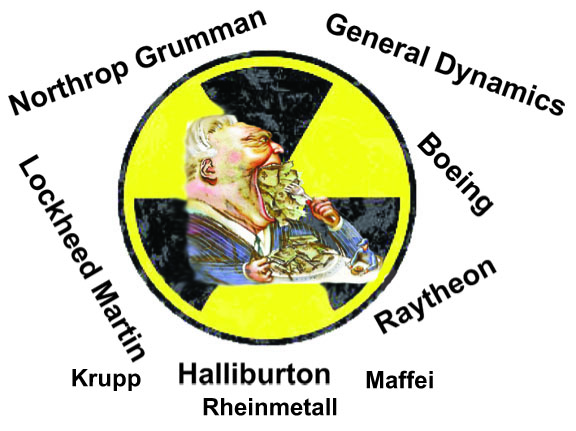
The defence industry in Australia is dominated by some of the world’s largest multinational arms manufacturers: BAE Systems (UK), Thales (France), Boeing (US), Lockheed Martin (US), Rheinmetall (Germany) and Airbus (Europe). For four of the past five years BAE Systems has been the top contractor and Thales has been second. Boeing has been in the top five each time.
In 2017, an analysis by the Australian Strategic Policy Institute (which also used ADM Top 40 data) showed that over the 20 years from 1995-2015, the largest five firms in any given year accounted for, on average, about 65% of total revenue of arms-related contractors. In a chart for 2015, the top 10 took 82% of the revenue and 91% of revenue went to the top 15, leaving less than 10% for the rest, which is where almost all Australian-owned arms companies exist. Updated research is desperately needed, particularly given the significant sums now flowing into this industry.
On the over-hyped subject of jobs, ASPI’s briefing provided useful data: ‘Defence industry accounts for 0.23% of jobs in Australia, and 2.9% of jobs in the manufacturing sector. In terms of annual revenue, defence industry accounts for 0.22% of Australian industry and 1.7% of the manufacturing sector. So, although Australian defence industry is undoubtedly important for our defence force, it represents only a trifling fraction of the overall Australian economy.’ Again, updated research is needed.
In his speech, Marles said the government’s injection of $3.4 billion into a new Advanced Strategic Capabilities Accelerator will ‘help us start delivering advanced, asymmetric capabilities that benefit not just Australia but the US and the UK. And it will start to build a truly trilateral industrial base across our three countries that will see us more seamlessly transfer the skills, workers, and intellectual property we need.’ Australian taxpayers will support the US and UK industries. Why?
He also spoke of ‘breaking down the barriers’ of export controls to facilitate AUKUS.
While there is a shared mission between our countries and an agreement at the highest levels of our governments, there are significant barriers we must break down across our systems… This is particularly true of our export control regimes.
Regulations around transfers of technology, sensitive information and defence materiel are, of course, understandable.
The lip service to regulations being ‘understandable’ was immediately followed by:
But what is really clear is that if we are to realise the ambition of AUKUS, the transfer of technology and information between Australia and the US needs to be seamless…
Australia is committed to breaking down these barriers in our own system while maintaining the robust regulatory and legal frameworks to protect these transfers
The defence minister did not explain how regulatory control could be broken down while concurrently maintaining a robust regulatory framework.
Australia’s defence industry is already dominated by multinational US and UK arms corporations. Local industry (including local subsidiaries of global giants) has been historically lucky if it gained one third of defence acquisition spend, the remainder heading offshore.
If the government removes most of the regulation and creates a ‘seamless’ trilateral industrial base, it is hard to see how anything other than even greater flows offshore to the multinationals will eventuate, despite the political spin.
But what is really clear is that if we are to realise the ambition of AUKUS, the transfer of technology and information between Australia and the US needs to be seamless…
Australia is committed to breaking down these barriers in our own system while maintaining the robust regulatory and legal frameworks to protect these transfers.
The defence minister did not explain how regulatory control could be broken down while concurrently maintaining a robust regulatory framework.
Australia’s defence industry is already dominated by multinational US and UK arms corporations. Local industry (including local subsidiaries of global giants) has been historically lucky if it gained one third of defence acquisition spend, the remainder heading offshore.
If the government removes most of the regulation and creates a ‘seamless’ trilateral industrial base, it is hard to see how anything other than even greater flows offshore to the multinationals will eventuate, despite the political spin.
Labor, Greens & Defence Experts call for AUKUS Parliamentary Inquiry

A range of high-profile politicians, former military leaders and academic experts have signed an open letter calling for a Parliamentary Inquiry into the AUKUS nuclear-powered submarine deal, appearing in full-page ads today in the Australian Financial Review.
The letter is signed by Senior Former Defence personnel, a former Labor Premier, two former Labor frontbenchers, and other politicians and high-profile individuals.
Experts warn that significant questions about AUKUS deal remain unanswered and require parliamentary scrutiny in the national interest.
Key Points:
- Signatories include Former Labor WA Premier the Hon. Carmen Lawrence AO, former Labor Minister the Hon. Peter Garrett AM, Former Shadow Minister Doug Cameron and Former Labor MP the Hon. Melissa Parke
- Senior Defence signatories include Former Chief of the Air Force Air Marshall Ray Funnell AC, and Former Dep. Commander of the UN Peacekeeping Operation in East Timor Major General Michael Smith AO.
- Greens signatories include Senator Penny Allman-Payne, Senator David Shoebridge and Senator Jordan Steele-John
- Signatories include former MPs Tony Windsor AM and Dr. Rob Oakeshott
- Military, political, and academic experts and leaders have called for a parliamentary inquiry into AUKUS, citing a range of concerns including:
- The $268-$368 billion cost to the budget
- The proposed approximate four-decade timeframe for delivery
- The lack of workforce and skills to operate nuclear powered hardware.
- Sovereignty and strategic policy concerns for Australia
- Australia’s nuclear waste and NPT obligations
“For a policy of this magnitude and strategic significance, the AUKUS deal for nuclear-powered submarines has been politically rushed. It requires appropriate scrutiny in the national interest,” said Allan Behm, Director of the Australia Institute’s International & Security Affairs Program.
“At $268-368b this is one of the most expensive spending commitments ever made in Defence, with huge implications for our sovereignty that rightly require appropriate Parliamentary oversight.
“Experts and leaders across military, political and academic spheres hold substantial concerns which remain unanswered. Questions about our sovereignty, Australia’s obligations under the NPT, our ability to manage nuclear waste and our workforce gaps in operating nuclear-powered submarines are all outstanding.
“It’s only appropriate that the Australian people and the Parliament are given the opportunity to have their questions answered.”
Community batteries
To power Australia without fossil fuels will mean using batteries to store
power from solar and wind. We often think this means home batteries – or
large grid-scale installations. There’s another size too: community-scale
or neighbourhood batteries, which are growing rapidly in Australia due to
support from state governments like Victoria and Western Australia and,
more recently, from the federal government.
They seem to solve a lot of
problems we know people are concerned about – such as enabling more
rooftop solar and helping to speed up a transition to renewables. But the
popularity of these batteries shouldn’t be the only factor in decisions
about where they are rolled out. Sometimes – and in some parts of the
grid – they make sense. At other times, they may not be the best
solution.
Renew Economy 17th May 2023
The question of nuclear in Australia’s energy sector
In Australia’s transition to net zero emissions, the energy sector has a major role to play. But does nuclear power have a place in our future grid?
CSIRO, 15 May 23
Key points
- Nuclear power does not currently provide an economically competitive solution in Australia.
- Lead author of Gencost, Paul Graham says the main area of uncertainty with nuclear is around capital costs.
- There is a lack of robust real-world data around small modular reactors (SMRs) due to low global use.
As Australia attempts to hit ambitious emissions reduction targets during the transition to net zero, we know the energy sector has a major role to play. We also know that it makes sense to be informed of and assess a full range of technologies: some new and emerging, some established and proven.
In this context, it’s unsurprising that a debate around nuclear power has been reignited. Nuclear proponents believe there is potential for small modular reactors (SMRs) to be used for low-emissions electricity generation in Australia, providing essential firming capacity to support variable renewables.
However, a review of the available evidence makes it clear that nuclear power does not currently provide an economically competitive solution in Australia – or that we have the relevant frameworks in place for its consideration and operation within the timeframe required. Without more real-world data for SMRs demonstrating that nuclear can be economically viable, the debate will likely continue to be dominated by opinion and conflicting social values rather than a discussion on the underlying assumptions.
GenCost 2022-2023: the cost of electricity generation
Each year CSIRO works with the Australian Energy Market Operator (AEMO) to produce GenCost – a detailed report that provides current and projected costs for electricity generation and storage technology.
The annual GenCost process is highly collaborative and draws on the deep expertise and knowledge of a large number of energy industry stakeholders. There are opportunities for members of the energy community to review the work and provide pre-publication feedback to improve its quality.
Paul Graham, CSIRO energy economist and lead author of the report, says it’s an open, public process that many people can participate in.
“AEMO wants to know that the data they use for planning and forecasting results is from a good level of consultation and lots of quality checking. Everyone in the industry has a fair chance to take part,” Paul says.
On 16 December 2022, the fifth GenCost report was released as a draft for public consultation. It remained consistent with findings from previous years, showing that renewables, led by onshore wind and solar PV, remain the lowest cost power generation technologies………………………………………………………
Using the standard formula for levelised costs plus the additional calculations specific to storage and transmission, wind and solar come in at a maximum of $83 per megawatt hour in 2030. This is a useful point in time for comparison because this is the earliest date at which nuclear SMR could be built in Australia.
In contrast, SMRs come in at $130-311 per megawatt hour. This range allows for nuclear SMR capital costs to halve from where we think they are at present. ………
A lack of real-world data on nuclear
One of the key principles that guides the GenCost process is the need for high quality data to base the report’s calculations on. According to Paul, the lack of robust data has been a challenge when it comes to nuclear – and for SMRs in particular.
…………………………………. Only two SMRs are known to operate in the world, located in Russia and China, and both have experienced cost blowouts and delays.
…………………….. Australian frameworks are not ready
Beyond the unfavourable economics, is the long time to build nuclear capability. The opportunity for the technology to play a serious role in emissions reduction for Australia is fast running out.
According to Renewables 2022, the latest edition of the International Energy Agency’s (IEA) annual report on the sector, renewable energy will surpass coal by early 2025 as the largest source of global electricity. Over the forecast period, their share of power will increase by 10 percentage points, reaching 38 per cent in 2027. Electricity generation from renewables is the only energy source that is expected to grow, while shares for coal, natural gas, nuclear and oil will decline.
………………..in Australia, where there are a range of other considerations at play: not least the fact that that nuclear power is currently not permitted by law. Two separate pieces of Commonwealth legislation – the Australian Radiation Protection and Nuclear Safety Act 1998 and the Environment Protection and Biodiversity Conservation Act 1999 – expressly prohibit the approval, licensing, construction, or operation of a nuclear plant. The only exception to that rule is a research reactor near Sydney, which is used for research and the production of medical isotopes.
“Plenty of other people have made the case against nuclear on the basis of issues like a lack of social licence, or the challenges involved with siting. Those issues are not unique to nuclear – but unlike other technologies, nuclear hasn’t had to go through siting or approval processes before in Australia,” Paul says.
“Taking all that into account and knowing that the longer it takes to build something the more likely it is that real costs will increase rather than decrease, it’s very clear that nuclear is going to find it very challenging to compete against renewables.” https://www.news.com.au/technology/environment/nuclear-power-at-least-15-years-away-says-regulator/news-story/6b8c4ec9c94cd4d05471783678abdb59
‘Dumb idea’: Energy minister fires at Peter Dutton’s nuclear power plan, urging him to ‘come clean’ about the facts
The Climate Change and Energy Minister took aim at the Liberal leader’s “dumb” nuclear power plan, telling him to “come clean” about the facts of the alternate energy source.
Yashee Sharma, Digital Reporter,14 May, https://www.skynews.com.au/australia-news/politics/dumb-idea-energy-minister-fires-at-peter-duttons-nuclear-power-plan-urging-him-to-come-clean-about-the-facts/news-story/c98bcf8500bcc643c93b008b19bc9995
Minister for Climate Change and Energy Chris Bowen has debunked nuclear power statements spruiked by Coalition leader Peter Dutton.
Mr Dutton in his second budget reply on Friday said that “any sensible government must consider small modular nuclear as part of the energy mix”.
He disputed the Labor government’s climate change policies, warning they were putting the country “on the wrong energy path”.
In response, senator Bowen took to social media with an almost 2-minute-long video on “why Peter Dutton’s nuclear plan is a dumb idea for Australia”.
He took aim at the Opposition leader, questioning why the former Liberal government had nine years to introduce the nuclear energy but “never got around” to it.
“Because it’s a very bad idea,” he answered in the video.
The Labor Minister factchecked Mr Dutton with three reasons why nuclear power was not suitable for Australia, with the first being its hefty $400 billion price tag.
He referenced CSIRO findings that detail how renewable energy is the cheapest form of power while nuclear energy the most expensive.
“Wherever nuclear power plants are being built around the world, they are taking longer and costing much more than budgeted for,” he said.
“Even small modular reactors would cost a massive $5 billion each to build and proponents say we need as many as 80 small nuclear reactors spread across the country.
“That’s a whopping $400 billion in cost.”
Mr Bowen then fired at the “huge delays” in nuclear reactor construction, claiming that it would take more than a decade to establish a nuclear power industry.
Minister for Climate Change and Energy Chris Bowen has debunked nuclear power statements spruiked by Coalition leader Peter Dutton.
Mr Dutton in his second budget reply on Friday said that “any sensible government must consider small modular nuclear as part of the energy mix”.
He disputed the Labor government’s climate change policies, warning they were putting the country “on the wrong energy path”.
In response, senator Bowen took to social media with an almost 2-minute-long video on “why Peter Dutton’s nuclear plan is a dumb idea for Australia”.
He took aim at the Opposition leader, questioning why the former Liberal government had nine years to introduce the nuclear energy but “never got around” to it.
“Because it’s a very bad idea,” he answered in the video.
The Labor Minister factchecked Mr Dutton with three reasons why nuclear power was not suitable for Australia, with the first being its hefty $400 billion price tag.
He referenced CSIRO findings that detail how renewable energy is the cheapest form of power while nuclear energy the most expensive.
https://imasdk.googleapis.com/js/core/bridge3.572.0_en.html#goog_1312684880
| SKYNEWS.COM.AU03:37Government must ‘at least consider’ nuclear as part of energy mix: Dutton |
UP NEXT
04:37The budget ‘didn’t go far enough’ on issues which affect all Australia…
07:04Australia should have an ‘open mind’ to nuclear energy
05:41Budget measures ‘left middle Australia behind’: Ley
06:50‘Quarter acre block dream is gone’: Capital cities will have to build …
09:32‘Do this properly’: Ley urges government to ‘start again’ on housing bill
04:13‘Serious constitutional risk’: Liberal MP weighs in on Voice to Parlia…
05:20Don Farrell received ‘visibly warm’ reception during China visit
Government must ‘at least consider’ nuclear as part of energy mix: Dutton
“Wherever nuclear power plants are being built around the world, they are taking longer and costing much more than budgeted for,” he said.
“Even small modular reactors would cost a massive $5 billion each to build and proponents say we need as many as 80 small nuclear reactors spread across the country.
“That’s a whopping $400 billion in cost.”
Mr Bowen then fired at the “huge delays” in nuclear reactor construction, claiming that it would take more than a decade to establish a nuclear power industry.
https://imasdk.googleapis.com/js/core/bridge3.572.0_en.html#goog_2088505775
| SKYNEWS.COM.AU05:29Labor ‘denies’ that Australia is already a ‘nuclear nation’ |
UP NEXT
07:49Prince William and Kate’s royal ‘one-up’ on Harry and Meghan
02:26Meghan Markle missing from King’s coronation was reportedly a ‘blow to…
01:53’Very arrogant’ of sporting codes to suggest they can ‘influence Austr…
05:01’Their bias is on show’: Majority of ABC’s airtime ‘given to those who…
04:36Big Help Out was a ‘huge hit’: Russell Myers
03:49’Nasty and semi-racist’: Media’s spin about Dutton’s ‘obvious point’ o…
04:47‘Big questions’: Prince Andrew wears Garter robes at coronation
Labor ‘denies’ that Australia is already a ‘nuclear nation’
“Even if we started today, the first small reactor wouldn’t be in operation to meet the urgent need to deliver dispatchable power now,” he said.
“We don’t have a nuclear power industry, a regulatory or safety framework, nuclear power expertise or nuclear power workforce.”
The Energy Minister concluded his video, saying Australia is already struggling to store nuclear waste from one small medical reactor and probed Liberals over how they would dispose of waste from 80 reactors.
“If the Liberals want lots of nuclear power plants across Australia, they would need to explain where they’re going to store the nuclear waste,” he said.
“If Mr Dutton and the Liberals want to be taken seriously on their nuclear energy plan, they need to come clean on a few key things.
“Where will these nuclear power plants go? What will they do with the radioactive waste that generate? And when will they be operational? And how on earth are we going to pay for it?”
Former prime minister Malcom Turnbull threw his support behind Senator Bowen after the scathing attack.
“Very good video and absolutely right,” he wrote to Twitter.
Boring new pro nuclear push in Australia – same old excessively optimistic arguments

Bro Sheffield-Brotherton
etnoprSods0ch79hfluh37559ml06c1272a93947f96u8t1220ctltff1gfh ·
On the current unoriginal nuke push from “lovers of science” and “believers in informed public debate”:
If they knew a lot more I would be unsurprised if they even recommended that we should go back in time and watch a vid of Phil Baxter, Ernie Titterton or even “young” Leslie Kemeny to edumacate ourselves?
It is coming up to 47 years since the Ranger Uranium Environmental Inquiry Commissioners wrote in their first detailed report:
What has surprised us more is a lack of objectivity in not a few of those in favour of [nuclear energy], including distinguished scientists. It seems that the subject is one very apt to arouse strong emotions, both in opponents and proponents.
There is abundant evidence before us to show that scientists, engineers and administrators involved in the business of producing nuclear energy have at times painted excessively optimistic pictures of the safety and performance, projected or past, of various aspects of nuclear production.
There are not a few scientists, including distinguished nuclear scientists, who are flatly opposed to the further development of nuclear energy, and who present facts and views opposed to those of others of equal eminence. We note that a few of the government officials who appeared before us showed reluctance in communicating matters of importance to the Commission.”
Not that any of that surprised me. The claim was made repeatedly in the 1970s [and, of course, is popular in the boring new pro-nuclear push in this country] that any negative views that people may have about brittle power were entirely due to their “ignorance” of the subject matter. It was but one reason why some people felt the importance of participating in a public debate on the subject in Australia – most concentratedly 45-50 years ago.
And the experience and evidence is beyond clear; the more that debate continued the greater was the opposition to the mining and export of Australian uranium AND to the use of inefficient, expensive, dangerous electricity generating nuclear reactors in Australia despite the reverse exhortations of the nuclear club of powerful vested interests.
Nuclear advocates energised despite economic reality
Canberra Times By Jacob Shteyman, May 15 2023
Australia could develop a domestic nuclear energy system within 15 years but it would not be economically competitive, a Senate committee has been told.
A procession of energy experts, and a 16-year-old boy, lined up to give their two cents on a proposal to remove the prohibition on installing nuclear power in Australia on Monday.
Gillian Hirth, chief executive of nuclear regulator ARPANSA, told the committee it would take 10 to 15 years to develop nuclear energy facilities, but regulatory frameworks would need to be established first.
There would also need to be a significant uplift in the capability of the nuclear industry, she said.
While new technologies being developed overseas, like small modular reactors, are safer and produce less radioactive waste [a dubious claim!] than traditional nuclear generation, the committee heard the economics behind nuclear doesn’t stack up in the Australian context.
Department of Energy deputy secretary Simon Duggan said work done by the CSIRO found the abundance of low-cost renewable energy in Australia would make it difficult for nuclear technology to compete financially by the time it was ready to be deployed.
The government’s focus is instead on getting as much renewable energy, firming and transmission infrastructure into the grid as possible to provide more stability for consumers, Mr Duggan said.
Will Shackel, 16, told the committee he created advocacy group Nuclear for Australia because he wants to encourage the country to have an open mind on nuclear energy and a fact-based debate.
“Young people are energised by the prospect of nuclear energy, yet government is not reacting,” he wrote in a submission.
“Despite bids to pander to us with utopian fantasies of a clean energy transition through renewables, young people are calling for the commonwealth government to acknowledge that the only pragmatic solution lies in the tabooed energy generation capability of nuclear energy.”
But Dave Sweeney, nuclear policy analyst at the Australian Conservation Foundation, said radioactive waste remains the achilles heel of the industry.
“We get three years with existing commercial reactors of reliable electricity and then we get 100,000 years of an intergenerational carcinogenic, mutagenic waste burden,” he told the committee.
“We need to back a winner and that winner is the renewable sector.”……………………………
The committee is due to report back by June 15 https://www.canberratimes.com.au/story/8196744/nuclear-advocates-energised-despite-economic-reality/
Very bad advice: $368b nuclear submarines and the Federal budget

Although he knows almost nothing about submarines, Albanese gave the go-ahead to acquire nuclear ones without insisting on a cost effectiveness study showing how they compare to modern conventional versions.
An objective study would’ve shown the latest conventional ones are superior – they are much harder to detect and are operationally available far more often because they don’t suffer few serious maintenance problems.
The program cost of twelve high quality conventional subs is only about $18 billion compared to $368 billion for 11 nuclear ones that repeatedly break down
.
By Brian Toohey https://johnmenadue.com/aukus-very-bad-advice/
At a time when the Reserve Bank’s interest rate rise is adding to cost of living pressures and increasing the chances of a recession, Albanese is finding it hard to justify the staggering $368 billion cost of AUKUS nuclear submarines.
Anthony Albanese says it only took him 24 hours to decide to back the AUKUS pact between Australia, the UK and the US. And not much longer, it seems, to decide to get nuclear submarines, if not precisely how. The rush shows. At a time when the Reserve Bank’s interest rate rise is adding to cost of living pressures and increasing the chances of a recession, Albanese is finding it harder to justify the staggering $368 billion cost of these submarines. As explained below, this is 20 times more than 12 superior conventional submarines would cost.
So he’s taken to claiming the job creation benefits of building a handful of subs in Adelaide is just as important as the national security benefits. During his visit to England for the Coronation, Albanese visited Barrow-in-Furness where the Astute class nuclear submarines were built. The shipyard employs 11,000 people, which is due to rise to 17,000. Albanese said, “I see this is being very similar to what the car industry provided for Australia in the post-war period.” In fact, employment in car manufacturing in Australia was much higher at its peak. Employment dropped by 80,000 between 1973 and 1980, yet it was still 45,000 in 2015. Large sums of government funding failed to ensure car manufacturing survived.
Albanese’s government estimates that 20,000 jobs will be created by building seven submarines, called the AUKUS class, at Adelaide. Although sharing the design work for a highly complex product is rarely successful, it will be done in this case between the three AUKUS countries. The construction jobs won’t start to flow at discernible rate until shortly after 2040. Yet Albanese implies the job benefits will be available before the next election. If job creation is the goal, there are much better ways to achieve it.
Given Albanese’s excitement about the quality of the work done at Barrow-in-Furness, it’s worth looking at what actually happened. The National Interest reported in November 2021 that, although the first boat, HMS Astute, had been laid down in 2001, the key design and production facilities had atrophied, resulting in delays and cost overruns that continue to harry the program today. Basic drafting and engineering skills had deteriorated. Problems emerged with software used to design the sub. After HMS Astute entered service in 2014, the crew suffered from excessive heat. It ran aground during sea trials a month after delivery.
Earlier, the Guardian reported in 2012 that during exercises that year a pipe carrying seawater from the back of the submarine to the reactor sprang a leak, forcing the boat to surface. An investigation revealed that a cap was made from the wrong metal, but construction records said the right metal had been installed. The Guardian also said a lead-lined water jacket surrounding the reactor core was fitted with substandard lead, creating a risk that electrical charges in the lead could generate false readings in instruments monitoring the state of the reactor.
A confidential Ministry of Defence memo obtained by the Guardian says extensive corrosion is “a cause for major concern”. The memo said the damage means “severe problems” can be expected in future and warns that the submarines will have to spend more time than planned under repair. All is now supposed to be going well.
Although he knows almost nothing about submarines, Albanese gave the go-ahead to acquire nuclear ones without insisting on a cost effectiveness study showing how they compare to modern conventional versions. An objective study would’ve shown the latest conventional ones are superior – they are much harder to detect and are operationally available far more often because they don’t suffer few serious maintenance problems. The program cost of twelve high quality conventional subs is only about $18 billion compared to $368 billion for 11 nuclear ones that repeatedly break down.

In the circumstances, Albanese’s failure to consider conventional submarines before going nuclear was deeply irresponsible. Perhaps he wasn’t told by his advisors. In any event, no Australian official has publicly mentioned this huge drawback in acquiring nuclear submarines.
Quoting from secret US Navy documents, Newsweek on April 19 confirmed earlier authoritative reports showing that only a quarter of America’s Virginia class submarines are operationally available at any one time, due to highly complex maintenance problems. The highly regarded American defence analyst defence analyst Winslow Wheeler gave the same figure in 2021.
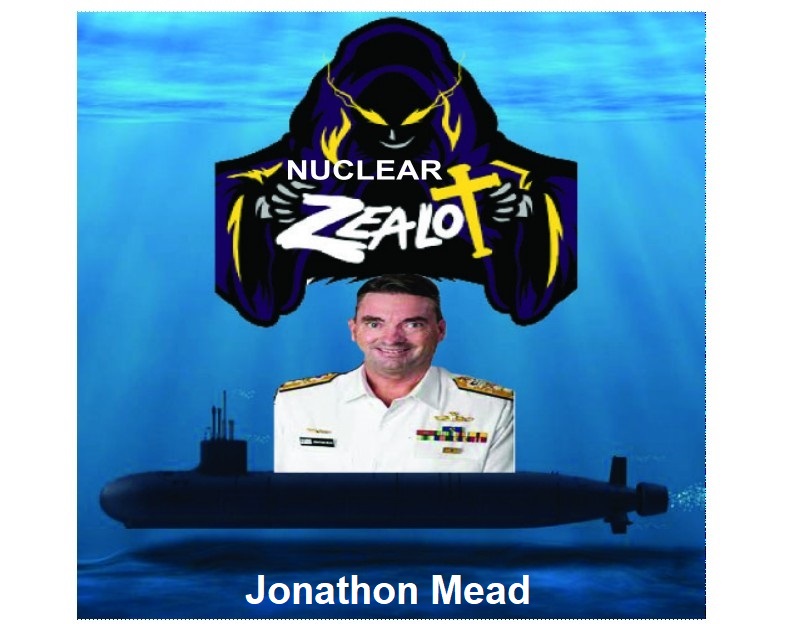
Surely someone in Vice Admiral Jonathan Mead Admiral Mead’s 350 strong advisory team group advising Albanese on nuclear submarines should have stumbled across it.
Mead gave an astonishing interview to the Guardian published on March 8 and 9 this year. Mead wrongly described Australia’s existing Collins class conventional submarines as “the most advanced in the world”. They are certainly not. They lack modern equipment such as fuel cells and advanced batteries that let submarines operate extremely quietly for sustained periods without having to rise to the surface to recharge their batteries every day or two, unlike the Collins class. Modern German, Japanese and South Korean ones are in this category. These submarines have low sustainment costs, unlike the Collins class where this burden has hit almost $700 million a year, not including fuel and crew costs. Taking the Collins out of service would free up billions in funding for new conventional submarines.
Because nuclear subs are significantly bigger than most conventional subs, they are easier to detect as they move through the earth’s magnetic field and the water column. Rapid advances in sensor power and computer processing increase the chances of subs’ detection – and destruction. Mead said he had taken account of the prospect oceans would become more transparent by 2050. His solution is to use underwater drones in places where you don’t want a nuclear submarine to be detected. That would be just about everywhere that the presence of nuclear submarine was supposed to be important. Apparently, the nuclear sub would control a drone at a safe distance. In this case, far cheaper platforms can be used to control the drones.
Nuclear power at least 15 years away, says regulator
Australia’s chief nuclear regulatory body has told a parliamentary inquiry how long it would take to legislate and build a nuclear power plant.
Anthony Anderson and Ellen Ransley 15 May 23, news.com.au
A senate inquiry examining whether Australia’s ban on nuclear energy should be lifted has been told it would take 10-15 years to have a power plant up and running if the moratorium was lifted right now.
The Environment and Communications Legislation Committee sat on Monday to discuss the Environment and Other Legislation Amendment (Removing Nuclear Energy Prohibitions) Bill 2022.
The bill would see amendments made to the Australian Radiation Protection and Nuclear Safety Act 1998 and the Environment Protection and Biodiversity Conservation Act 1999, effectively paving the way for nuclear power generation.
CEO of the Australian Radiation Protection and Nuclear Safety Agency (ARPANSA) Dr Gillian Hirth fronted the inquiry on Monday afternoon, where she was questioned about her organisation’s role in nuclear regulation.
Dr Hirth told the inquiry there would need to be a regulatory framework established for private nuclear generation, since ARPANSA only regulates Commonwealth projects.
“The time frames for implementation, if it were established today, you would be lucky to have it up and running in 15 years … 15 years would be the minimum,” said Dr Hirth.
“It can take three to five years to do a significant review of regulations in Australia … once they’re done, you’re looking at at least 10 years to develop facilities.”
The CSIRO also fronted the inquiry, with representatives grilled over data from 2018 showing nuclear would be prohibitively expensive for Australia.
The discussion focused on small modular reactors (SMRs), a technology of which CSIRO’s executive director for environment, energy, and resources, Dr Peter Mayfield, said there was limited information available……………………………………………………………..
The laws around nuclear technology will also need to be amended to enable Australia to take carriage of nuclear powered submarines, due to arrive in the early 2030s under the recently signed AUKUS agreement.
“(According to) our Act as it currently stands, we can’t regulate nuclear powered submarines,” said Dr Hirth.
“The proposed amendment, in the short term, seeks to give ARPANSA regulatory power until Defence can establish [their own body].”
Earlier, a number of executives in Australia’s leading nuclear industry associations and groups spruiked the benefits which nuclear energy could offer Australia……………………
The committee has twice been granted an extension to develop a report, which at the time of writing will be expected to be finalised on June 15. https://www.news.com.au/technology/environment/nuclear-power-at-least-15-years-away-says-regulator/news-story/6b8c4ec9c94cd4d05471783678abdb59
This week’s budget confirms the death of Labor’s nuclear disarmament diplomacy
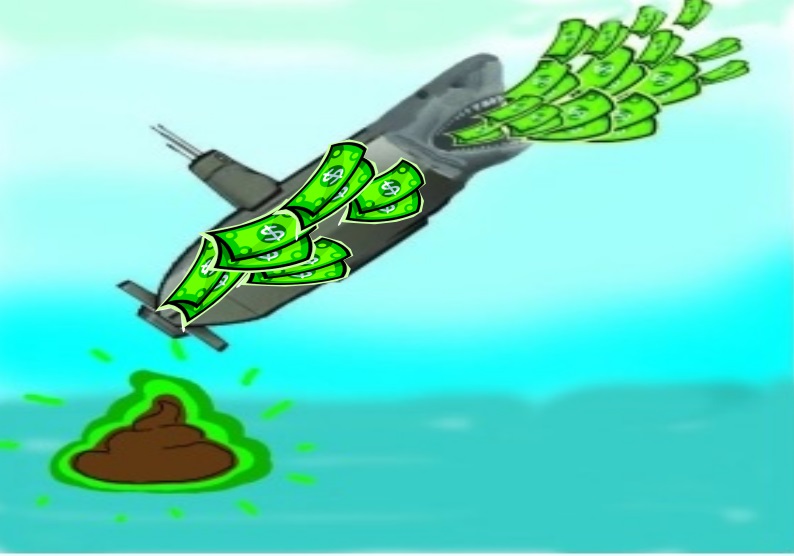
All the new money is to support AUKUS.
Albo and the nukes – the demise of Labor’s disarmament policy, by Philip Dorling | May 12, 2023 https://michaelwest.com.au/albo-and-the-nukes-the-demise-of-labors-disarmament-policy/
A new nuclear arms race is accelerating, but Australia won’t be doing much about this threat to global survival. This week’s budget confirms the death of Labor’s nuclear disarmament diplomacy. Former diplomat Philip Dorling explains.
At his AUKUS submarine announcement on 14 March 2023, Prime Minister Anthony Albanese spoke of Australia’s “proud record of leadership” in nuclear non-proliferation. On 17 April Foreign Minister Penny Wong trumpeted Labor’s “proud history” of championing practical disarmament efforts”.
Labor does have a history of disarmament and non-proliferation leadership. In the 1990s Foreign Minister Gareth Evans was an outstanding diplomatic activist with Australia playing important roles in negotiation of the Chemical Weapons Convention, extension of the Nuclear Non-Proliferation Treaty, and the Comprehensive Nuclear Test Ban Treaty. Evans argued before the International Court of Justice that the use and threat of nuclear weapons is illegal. The Canberra Commission produced a landmark report charting steps to achieve the elimination of nuclear arsenals.
Dollars for diplomacy
Foreign Minister Wong is the latest custodian of Labor’s tradition of middle power disarmament diplomacy. But what are Labor’s priorities now? Well, at the end of the day, money talks and in Tuesday’s Federal Budget the Department of Foreign Affairs and Trade (DFAT) picked up an extra $74.6m for nuclear diplomacy.
Of that, $52.7m is for DFAT to provide “international policy advice and diplomatic support for the nuclear-powered submarine program.” Another $21.9m will go to the Australian Safeguards and Non-Proliferation Office (ASNO) to support the establishment of safeguard arrangements with the International Atomic Energy Agency (IAEA) for the AUKUS project.
All the new money is to support AUKUS.
AUKUS safeguards
For the AUKUS project to proceed within the framework of Australia’s non-proliferation obligations, Australia must negotiate a special arrangement with the IAEA to allow the use of highly enriched uranium in submarine reactors. We already have a Comprehensive Safeguards Agreement (CSA) with the IAEA that covers civilian nuclear activities. Article 14 of the CSA allows for negotiation of an arrangement with the IAEA to oversee the use of nuclear material for non-explosive military purposes, i.e. nuclear naval propulsion.
It’s challenging to combine the safeguards transparency with the secret world of nuclear submarines; but the Australian Government and IAEA Director General Rafael Grossi appear confident an arrangement can be agreed to enable the IAEA to provide credible assurances that submarine fuel is not being used to manufacture nuclear weapons.
The Government has already affirmed that Australia will be provided with complete, sealed reactor units from which the removal of any nuclear material would be extremely difficult. The reactor fuel will “not be in a form that can be directly used in nuclear weapons without further chemical reprocessing, requiring facilities that Australia does not have and will not seek”. Australia’s wider non-proliferation obligations, including acceptance of IAEA inspections anywhere, anytime will remain in place.
A few days before the 14 March AUKUS announcement, Albanese and Wong wrote to Grossi to open formal negotiations. ASNO Director General Geoff Shaw also forwarded “preliminary design information” to the IAEA.
Diplomatic dogfight
However despite what DFAT describes as Australia’s “impeccable non-proliferation credentials”, the negotiations are already politically contentious with China claiming AUKUS “poses serious nuclear proliferation risks”. Beijing alleges Australia is “coercing the IAEA Secretariat into endorsement on the safeguards issue”. Chinese diplomats are demanding an “intergovernmental process” involving all IAEA members with any new arrangement “jointly discussed and decided by the international community”.
Australia’s government doesn’t want AUKUS derailed. We’re relying on advice from the IAEA in 1978 that states an Article 14 arrangement can be negotiated with the IAEA Secretariat before being provided to the IAEA Board of Governors for “appropriate action”. Australia would like Grossi to simply submit the negotiated arrangement to the Board as information. However the Board may insist on subjecting the arrangement to its approval. China and Russia will demand that, and they’ll likely vote against any arrangement regardless of its terms. IAEA Board approval is by no means assured. Even if the Board does approve, China won’t leave the matter there. A fractious dispute could drag on for years.
That’s why $74.6m has been committed to AUKUS diplomacy. This large and complex campaign will involve negotiation with the IAEA Secretariat and engagement with the 35 countries on the IAEA Board, indeed with all 176 members. Australia will be funding plenty of IAEA projects, seminars and workshops. In terms of diplomatic effort it’s equivalent to running for election to a seat on the United Nations Security Council, only more controversial and already actively opposed by China and Russia.
All this comes with big opportunity costs.
A new nuclear arms race
The international situation is deeply worrying. Tension between China and the United States over Taiwan continues to rise. There’s already a naval arms race of which AUKUS is a small part, but the bigger strategic shift is manifest with China’s expansion of its nuclear forces. Construction of hundreds of new silos for a greatly expanded strategic missile force raises the prospect that Beijing is seeking an arsenal much closer to parity with the US.
At the same time, Russia has suspended the New START nuclear arms treaty which will expire in 2026. Moscow’s development of new and potentially destabilising delivery systems makes the future strategic calculus more uncertain. In turn, the prospect of three way nuclear arms competition with China and Russia has led to calls in the US Congress for an expansion of US nuclear forces.
Australian diplomats express concern about “the opaque nuclear arsenal build up in our region”. Others are less coy about the nuclear danger. Veteran foreign policy analyst Professor Joseph Siracusa recently warned that “We are literally on the eve of destruction .
The demise of Labor’s disarmament diplomacy
Labor’s national platform commits the government to move to join the Treaty on the Prohibition of Nuclear Weapons (TPNW), a recent agreement produced under UN auspices to advance nuclear disarmament. Albanese championed Labor’s 2018 commitment to sign the TPNW. In June last year a large group of former Australian Ambassadors and High Commissioners urged the new government to follow through and join the TPNW as demonstration of “a principled foreign policy … that advances the global common good”.
The United States has no enthusiasm for the TPNW and DFAT worried that the new Labor Government would be receptive to something that could complicate AUKUS, especially ensuring bipartisan support in the US Congress.
They needn’t have been concerned. Labor’s pledge to join the TPNW was a dead letter the moment Labor’s leadership signed up to the nuclear submarine project. DFAT submissions released under FOI show Wong agrees that TPNW isn’t a priority. She massaged Labor rank and file concerns by sending Labor backbencher Susan Templeman as an observer to the first TPNW states parties meeting in Vienna in June 2022. But as DFAT noted, “our attendance as an observer did not represent a decision to join the TPNW.”
Questioned in March by independent MP Zoe Daniel about the backflip, Albanese again referenced Labor’s “proud history” of disarmament efforts, but wouldn’t commit to joining the TRNW.
Lost opportunity
Australia could be working with TPNW countries to put an international spotlight on the dangers of a new nuclear arms race. Realistic and practical measures that could be pursued include those proposed by former ASNO Director General John Carlson; pressing nuclear weapon states for “no first use” commitments, a cap on existing arsenals, no modernisation or new weapons and a draw down towards minimum deterrence capabilities.
However with AUKUS dominating the agenda, there isn’t any room for the middle power diplomacy once practiced by Gareth Evans. Instead, Australian diplomats are busy defending our nuclear submarine pact. At a recent meeting in Geneva on nuclear risks, Australian spent nearly as much time and effort rebutting Chinese allegations about AUKUS as what was devoted to substantive issues.
The Government’s budget allocation to DFAT shows they know they have a long diplomatic fight on their hands. It will suck the life out of Australian disarmament diplomacy. We’ll be talking ad nauseam about AUKUS while a nuclear arms build-up makes the world much less safe.
Labor’s disarmament activism is dead, cannibalised by AUKUS.
Philip Dorling
Philip Dorling has some thirty years of experience of high-level political, public policy and media work, much of that at the Australian Parliament.
He has worked in the Australian political environment from most angles, in both the national and state levels of government including as a senior executive; as a senior policy adviser for the Federal Labor Opposition and for cross bench Senators; and as an award-winning journalist in the Federal Parliamentary Press Gallery.
Budget reveals cutbacks on funding for Australia’s military and navy, in order to pay $billions for nuclear submarines.
Budget reveals pressures on Defence for savings to fund nuclear-powered submarines, The Strategist, 10 May 2023|
,,,,,,,,,,,,,,,,,,,,,,,,,,,,,,,,,,,,,,,,,,,,,,,,,,,,,,,,,,,,,,,,,,,,,,, Spending is rising faster than inflation in each year, broadly following the profile set out in the 2020 Defence Strategic Update, but the two big changes over the past year—incorporating the switch from the French conventionally-powered submarine to the AUKUS SSNs, and the unexpected surge in inflation—are squeezing real spending relative to the budget planning ahead of last year’s election.
……………………..AUKUS is a long-term program and the budget forward estimate period, out to 2026-27, only contains the very beginning of spending on the submarines. However, the Defence Department’s portfolio budget statement shows that initial commitment is expected to reach $5.6 billion over the next four years. The statement shows an initial $515 million will be spent in 2023-24, which will include the establishment of the Australian Submarine Agency to manage the project.
The portfolio statements show a big payment of $3.7 billion on submarines in 2025-26, however they say the final allocation of spending will be decided ahead before the end of June.
Capital spending on new capabilities is taking a hit elsewhere. The downsizing of the Army’s planned purchases of infantry fighting vehicles will have an impact over the budget period, with capital outlays in 2024-25 and 2025-26 falling 7.6% from last year’s estimate to $8.5 billion. Capital spending in the Air Force is down 13.1% to $6.9 billion in the same period.
The Navy is also taking a hit on capital outlays. Defence has split out the naval shipbuilding and sustainment program from general acquisition of naval capabilities while the cancellation of the French program also makes direct comparison with last year’s portfolio budget statements difficult. However, Navy capital spending, excluding the shipbuilding and the nuclear submarine program show a 35% or $5.3 billion fall out to 2025-26. The naval shipbuilding program is only $891 million over that period.
……… The portfolio statement highlights the difficulty Defence has had in meeting its staffing targets with the total workforce of 75,464 people falling 3600 short of the goal set last year. The army has had the greatest problem, missing its target by 8.3%, reflecting a higher number of resignations. The Defence department public service met its recruitment target.
Assange and the Australian government’s persecution of alleged Afghan war crimes whistleblower
McBride will be the first person to face court over the war crimes of the Australian military in Afghanistan, i.e., for allegedly revealing them, not perpetrating them.
Ominously, Albanese stated: “A solution needs to be found… and Mr Assange needs to be a part of that of course.” The only way that Assange could be “part of a solution” to his case, is if he were to concede guilt as part of some sort of plea deal arrangement. If the US were to drop the charges, Assange’s “part” would simply be to walk out of prison a free man.
WSWS, Oscar Grenfell @Oscar_Grenfell, 10 May 2023
Over the past week, several prominent members of the Australian Labor government have feigned sympathy for WikiLeaks publisher Julian Assange. The most notable of these interventions was a statement made by Prime Minister Anthony Albanese, while he was in Britain for the coronation of King Charles.
Albanese and other Labor representatives have reiterated the vague comment that “enough is enough” in relation to the Assange case, and it has “gone on for too long.” Assange has been detained in a British prison for more than four years, and faces extradition to the US where he could be jailed for 175 years for exposing American war crimes in Iraq and Afghanistan.
The essential position of Albanese is that he has made comments to the British and US governments along these lines and that is all he can do. As the WSWS has previously noted, this is the antithesis of an aggressive diplomatic and legal campaign aimed at securing the freedom of a persecuted Australian citizen.
The refusal to take any concrete measures to ensure Assange’s release is bound up with Labor’s complete commitment to the US alliance, including Washington’s escalating preparations for war with China.
But that is not the sole issue. A key component of this program of war, with Labor overseeing the country’s largest militarisation in 80 years, is the suppression of anti-war opposition. That is evident in the persecution of Assange, but it is also apparent in several draconian “national security” cases that the Labor government is directly presiding over in Australia.
The most significant is the prosecution of David McBride. A former army lawyer, he is accused of leaking information exposing Australian war crimes in Afghanistan and other violations of international law in that protracted neo-colonial occupation.
The documents that the state claims McBride leaked included details of the potentially unlawful killings of ten Afghan men and boys by Australian Special Forces soldiers.
In one instance, a man and his son were shot dead by Special Air Service Regiment in September, 2013. Official reports indicated that the man had pointed a weapon at the Australian personnel. The leaked documents said that the man and the boy were found shot dead in their beds, indicating that they may have been executed in their sleep.
Other cases also involved children. Some of the documents indicated that prisoners were being killed, execution style, and then posthumously being accused of attempting to seize a weapon.
Most explosively, the files indicated awareness in the military command of a “warrior culture” among special forces that had gotten out of control and threatened breaches of the laws of war.
The publication of details from the files, by the Sydney Morning Herald and the Australian Broadcasting Corporation (ABC), triggered a series of inquiries into the actions of the defence forces in Afghanistan. This culminated in the 2020 release of an official Brereton Report, confirming “credible information” that the Special Forces had murdered 39 Afghan civilians and prisoners.
In other words, whoever leaked the documents in the years earlier provided the public with true information about war crimes that were being hidden from the population.
In June, 2019, the Australian Federal Police carried out an unprecedented raid on the Sydney office of the ABC, over its publication of the Afghan files. It was later revealed that one of the journalists involved in the story, Dan Oakes, had been threatened with national security charges, in what would have been an exact parallel to the Assange case.
That prosecution did not eventuate. But last month, a hearing of the Australian Capital Territory’s Supreme Court confirmed that McBride will stand trial in November. He is charged with “national security” offenses, including unauthorised disclosure of information, theft of commonwealth property and breaching the Defence Act. McBride has pleaded not guilty.
Confirmation that the case will proceed means that McBride will be the first person to face court over the war crimes of the Australian military in Afghanistan, i.e., for allegedly revealing them, not perpetrating them.
Only one soldier has been charged over the documented killings of civilians. He allegedly shot an unarmed Afghan boy at point blank range. That killing occurred in 2012. Footage of it was broadcast in early 2020 on national television, but the soldier was only charged last month. He will not be tried until next year and is out on bail.
Because McBride is charged with federal offenses, the Labor government and specifically its Attorney-General Mark Dreyfus can order an end to the prosecution.
McBride is an alleged whistleblower, whereas Assange is a publisher. But the essence of the case against both is that they should be imprisoned for decades for exposing war crimes. Labor claims it cannot free Assange, because he is subject to British “legal processes,” and is facing extradition to the US. Australia is “not a party” to those proceedings, they assert.
The McBride case gives the lie to these assertions. Labor could drop this prosecution whenever it wanted to. But, like the Biden administration with its pursuit of Assange, the Albanese government is intent on setting new precedents for the suppression of anti-war sentiment, amid an explosion of militarism and war.
There are other cases that Labor is presiding over……………………………………….
Labor is deepening an anti-democratic offensive targeting the civil liberties of the population, of which the US prosecution of Assange is an international focal point.
That underscores the fraud of claims that Labor is conducting “quiet diplomacy” on Assange’s behalf.
In the latest stage of this charade, members of a cross-party federal parliamentary grouping visited US ambassador to Australia Caroline Kennedy to discuss the Assange case. There is no indication that they came away with anything…….
Labor backbencher Julian Hill wrote on Twitter: “I thanked the Ambassador for her willingness to engage. Aside from the issues at stake in Julian Assange’s case, the delay in resolving it is an unwelcome distraction from AUKUS & our work with the US to confront the strategic challenges we face.”
Describing the 12-year state persecution of a journalist, which has brought him to the brink of death, as an “unwelcome distraction” is obscene. The reference to AUKUS is notable. Hill was speaking of the trilateral pact between Britain, the US and Australia, directed against China. The “strategic challenge,” is a veiled reference to the US confrontation with China.
In other words, Hill is arguing that the prosecution of Assange, an anti-war publisher, is a distraction from the US preparations for a new war. In reality, the two go hand-in-hand. One could not conceive of a more right-wing, warmongering argument, nominally in Assange’s defence.
In an interview with the ABC yesterday, Albanese restated his line of “enough is enough” in relation to Assange. He refused to indicate if the Labor government is even asking the Biden administration to end its prosecution of Assange.
Ominously, Albanese stated: “A solution needs to be found… and Mr Assange needs to be a part of that of course.” The only way that Assange could be “part of a solution” to his case, is if he were to concede guilt as part of some sort of plea deal arrangement. If the US were to drop the charges, Assange’s “part” would simply be to walk out of prison a free man.
The statements of Albanese and other Labor leaders are a transparent attempt by a government that has done nothing for his freedom to blunt the widespread public support for Assange. Most immediately, Assange’s plight is viewed as a “distraction,” to use Hill’s words, from the Quadrilateral Dialogue summit, to be held in Sydney later this month. Biden, together with the Indian and Japanese leaders, and Albanese, will gather to discuss the next stage of their preparation for war with China.
Only the naive and the credulous would believe that this warmongering cabal is about to extend a benevolent hand to someone who exposed their past crimes when they are preparing even greater ones. https://www.wsws.org/en/articles/2023/05/11/zljo-m11.html
Nuclear waste is a $476m problem even before AUKUS
Justin Hendry 11 May 23, https://www.innovationaus.com/nuclear-waste-is-a-476m-problem-even-before-aukus/?fbclid=IwAR2jeLiHd5k32VIsMOXxhGnAaIfIyFJUvtLblzvt3mbMFPrGCSnOLL3d8UU
A long-planned nuclear waste facility to store and dispose of radioactive material that has built up over decades has secured significant funding after the former Coalition government settled on a site for the facility.
More than $160 million will be spent on preparatory work for the National Radioactive Waste Management Facility, including “technical, design, regulatory and governance activities, and community engagement”.
But there is no indication when the facility – which has been on the cards in one form or another for 40 years – might be ready, with the funding provided in Tuesday’s federal Budget intended to stretch until 2030.
The facility will become the single location for the disposal of Australia’s low level nuclear waste and a temporary storage location for intermediate level waste which until now has resulted from scientific research and industrial, agricultural and medical applications. [Ed. They don’t here mention the waste generated by the Opal nuclear reactor itself !]
That is set to change from early 2030, when Defence is expected to begin acquiring up to five Virginia-class nuclear powered submarines from the US for delivery, before building a new squadron of nuclear submarines based on a British design for delivery in early 2040.
Existing radioactive waste is currently kept at the Australian Nuclear Science and Technology Organisation’s (ANSTO) Lucas Heights reactor in Sydney, with another 100-plus locations across Australia also being used for storage.
In November 2021, the former Coalition government acquired a site near the town of Kimbra on Eyre Peninsula in South Australia to build the facility, which is opposed by the local Barngarla people.
By May last year, parts of the facility’s design and planning had already been outsourced, despite an ongoing legal challenge from Traditional Owners set to begin next month.
South Australian Premier Peter Malinauskas has reportedly already ruled out the facility handling spent fuel rods from AUKUS submarines, although is lobbying the federal government for the rods to be stored in the state’s Woomera Prohibited Zone.
The funding for the National Radioactive Waste Management Facility is accompanied by further Budget measures to support the development of radioactive waste management, storage and disposal, including a $5.2 million project with Defence and the planned Australian Submarine Agency.
The Department of Industry, Science and Resources will also receive $9.7 million over the next five years to develop a “pathway” for the long-term disposal of intermediate-level radioactive waste generated from non-defence activities.
In total, the Industry department has been allocated $476.4 million, the bulk of which will be used by the Australian Radioactive Waste Agency to continue managing a national inventory of radioactive waste and coordinate its disposal and storage.
Elsewhere in the Budget, the ANSTO has been funded with at least $84.4 million over three years to provide nuclear medicines, with the full 10-year funding package not-for-publication due to “commercial sensitivities”.
More than half of the funding will be used by the agency to manage the shutdown of its OPAL nuclear reactor for maintenance in March 2024, requiring medicines that would ordinarily be produced onshore to be imported.
During the shutdown, the reactor’s unique cold neutron source, which has been used since 2007, will be replaced, promising “increased scientific performance” well into the next decade, according to ANSTO.
The remaining $39.9 million in known funding set aside for ANSTO over the next three years will be used to wind-up ANSTO Nuclear Medicine by June 2024, with its operations, assets and liabilities to be transferred to ANSTO.
An undisclosed amount of funding will be used by ANSTO to build a new nuclear medicine manufacturing building and maintain its current facility, as well as develop a business case for a new facility to “support Australia’s sovereign nuclear security science capability”.
The agency will also receive $16.3 million as part of a $4.5 billion nuclear-powered submarine support package to provide “radiological baselining and monitoring, and provide advice on the safe implementation of nuclear technology”.
As previously announced by the government, a new Australian Submarine Agency will be created within Defence to manage the submarine program, with $7.9 million from that allocation to be used to establish the Australia-Nuclear Powered Submarine Safety Regulator
Do you know more? Contact James Riley via Email.
Weakening of Australia’s nuclear prohibition laws – necessary to develop the submarines

Parliament takes first steps to nuclear submarines. Examiner, By Andrew Brown, May 10 2023
The first step to Australia acquiring nuclear-powered submarines as part of the AUKUS security pact has been introduced to federal parliament.
Laws brought in to the House of Representatives on Wednesday will update rules banning civil nuclear power to allow for work to be done on the submarines……………….
Defence Minister Richard Marles said the bill would be the first of many associated with the vessels, but a civil nuclear energy industry would not be on the cards. https://www.examiner.com.au/story/8190260/parliament-takes-first-steps-to-nuclear-submarines/
—
1 This month

of the week – Australians for War Powers Reform (AWPR)
To see nuclear-related stories in greater depth and intensity
 Antinuclear