Speaking to the Australian Broadcasting Corporation (ABC) this week, Labor Prime Minister Anthony Albanese gave his most extensive comments on the plight of Julian Assange since coming to office in May 2022. Albanese feigned concern for the WikiLeaks publisher, but defended the entire anti-democratic framework of “national security” secrecy under which he is being persecuted.
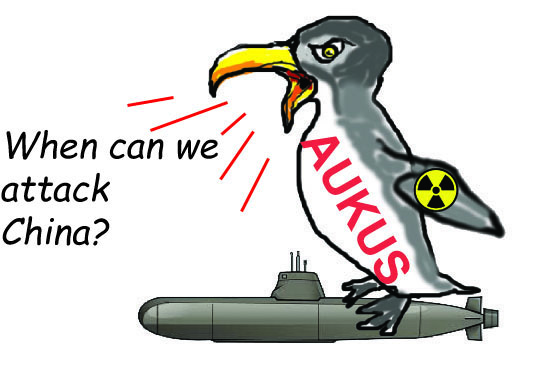
Albanese is in London for the coronation of King Charles. He is also holding discussions with the British government, centring on AUKUS, the aggressive militarist pact between the two countries and the US, aimed at preparing for war against China.
In the same city, Assange has been incarcerated in the maximum-security Belmarsh Prison for more than four years, most of that time on remand. The sole purpose of his detention is to facilitate a US extradition request. The American government is seeking to imprison Assange for up to 175 years for exposing its war crimes in Iraq and Afghanistan and its global diplomatic conspiracies.
Albanese’s comments have been presented widely as his “strongest” in defence of Assange. Throughout his prime ministership, Albanese has sought to avoid even mentioning the WikiLeaks publisher, even though Assange is an Australian citizen and the world’s most significant political prisoner.
Albanese’s long silence, which included his tenure as opposition leader, was clearly a product of political hostility to Assange and WikiLeaks. But as demands for the Labor government to defend Assange grew, Albanese and his colleagues changed tack. They could not speak openly about Assange, supposedly because that would compromise unspecified “quiet diplomacy” they were conducting on his behalf.
Documents obtained via freedom of information requests by lawyer Kellie Tranter have not turned up a single trace of this “quiet diplomacy.” That includes correspondence between the relevant Australian government bodies and its counterparts in the US and Britain.
In the ABC interview, Albanese repeated his refrain that “enough is enough” in relation to the Assange case and “this matter needs to be brought to a close.” These formulations are deliberately ambiguous. They do not even indicate how the case should be “brought to a close,” much less demand that the Biden administration drop the prosecution.
Albanese added: “It needs to be worked through, we’re working through diplomatic channels, we’re making very clear what our position is on Mr Assange’s case.” But again, it is not at all “clear” what the Labor government’s position actually is. Moreover, almost a year of purported “quiet diplomacy” has not altered the course of Assange’s persecution by one iota.
Asked about this, Albanese replied: “I know it’s frustrating. I share the frustration. I can’t do more than make very clear what my position is.” He claimed that the US government was “clear” on Labor’s position, but would not even commit to raising Assange when Biden visits Australia later this month.
Albanese expressed “concern” for Assange’s health, but did not indicate he would do anything about it. It is over three years since hundreds of doctors first warned that the deterioration of Assange’s medical condition could result in his death behind bars, and demanded he be released from Belmarsh Prison.
In the comments that some Assange supporters have presented as most hopeful, Albanese stated: “I think that when Australians look at the circumstances, look at the fact that the person who released the information [Chelsea Manning] is walking freely now, having served some time in incarceration but is now released for a long period of time, then they’ll see that there is a disconnect there.”
Again, this is miles away from a demand that the Biden administration end its prosecution, or a defence of a persecuted Australian journalist. It is more in the manner of, “it is unfortunate that this is occurring, but what can one do?”
That was, in fact, the entire thrust of Albanese’s remarks. Labor had raised the issue, he claimed, made its “position clear” and Assange’s fate was in the hands of Britain and the US. That is diametrically opposed to the repeated aggressive diplomatic and legal interventions Australian governments have previously mounted to free citizens imprisoned abroad.
The fraudulent character of Albanese’s purported defence of Assange was underscored by the fact that his comments were immediately endorsed by opposition Liberal Party leader Peter Dutton. Dutton, a former policeman, is an extreme right-wing figure, who speaks most openly for the repressive state forces that are seeking Assange’s destruction.
Above all, Albanese’s remarks were aimed at placating the growing public support for the WikiLeaks founder and subordinating it to a “quiet diplomacy” that could not be any quieter. Among some prominent Assange supporters, Albanese’s remarks have had their desired effect. They have proclaimed that the Labor government has now demonstrated its commitment to Assange’s freedom, presenting this as a fact to be celebrated.
Such positions, it must be stated, are a self-deluding fantasy that obstructs a genuine fight for Assange’s freedom, lets those involved in his persecution off the hook and creates favourable conditions for a US extradition. Unfortunately, it is not hard to envisage such individuals proclaiming one “victory” after another, right up until Assange is dispatched to his US persecutors.
Several questions must be posed: If Albanese were waging a determined struggle for Assange’s freedom, would he be fawning over King Charles and British Prime Minister Rishi Sunak, the figures who hold the key to Assange’s cell? Would he be preparing to roll out the red carpet for Biden when the US president visits Australia in several weeks? Would he not make demands of the British and US governments, as Australian administrations have when defending other persecuted citizens?
Those who promote the illusion that Assange’s freedom will be granted by one or another benevolent faction of the establishment, without any genuine political struggle, invariably detach the attempted US extradition from its broader political context.
As the WSWS has explained, the US is pursuing Assange, not only as an act of retribution. It is seeking to establish a precedent for the suppression of social and political opposition, especially opposition to war. This forms part of a broader turn to authoritarianism by governments around the world, amid the deepest crisis of the capitalist system since the 1930s.
The imperialist powers are preparing for another catastrophic world war. That is the significance of the US-NATO proxy war against Russia in Ukraine, along with Washington’s confrontation with China, which is viewed as the chief threat to American imperialist hegemony.
Australia, under Albanese, is on the frontlines of these war preparations. Last month, Labor endorsed a Defence Strategic Review, calling for Australia’s largest military build-up since World War II. The review is explicit that this is in preparation for a US-led war against China.
As in the last century, war is incompatible with democratic rights. It requires the suppression of anti-war opposition, because governments are aware that workers and young people are hostile to militarism, and that the program of war will intensify a resurgence of the class struggle that is already well underway.
This basic point was essentially made by Albanese himself.
Why a staggering $5BILLION will need to be found to keep the vital MyGov app running, store Australia’s radioactive waste and even monitor high-risk terrorists: ‘Australians were tricked’
…………….. According to Finance Minister Katy Gallagher, these funding shortfalls or ‘booby traps’ were left by ex-PM Scott Morrison in the hope they would blow up on the incoming Albanese Government……….
‘For example, there was no money in the budget for the agency responsible for safely storing and disposing of Australia’s radioactive waste,………………………..
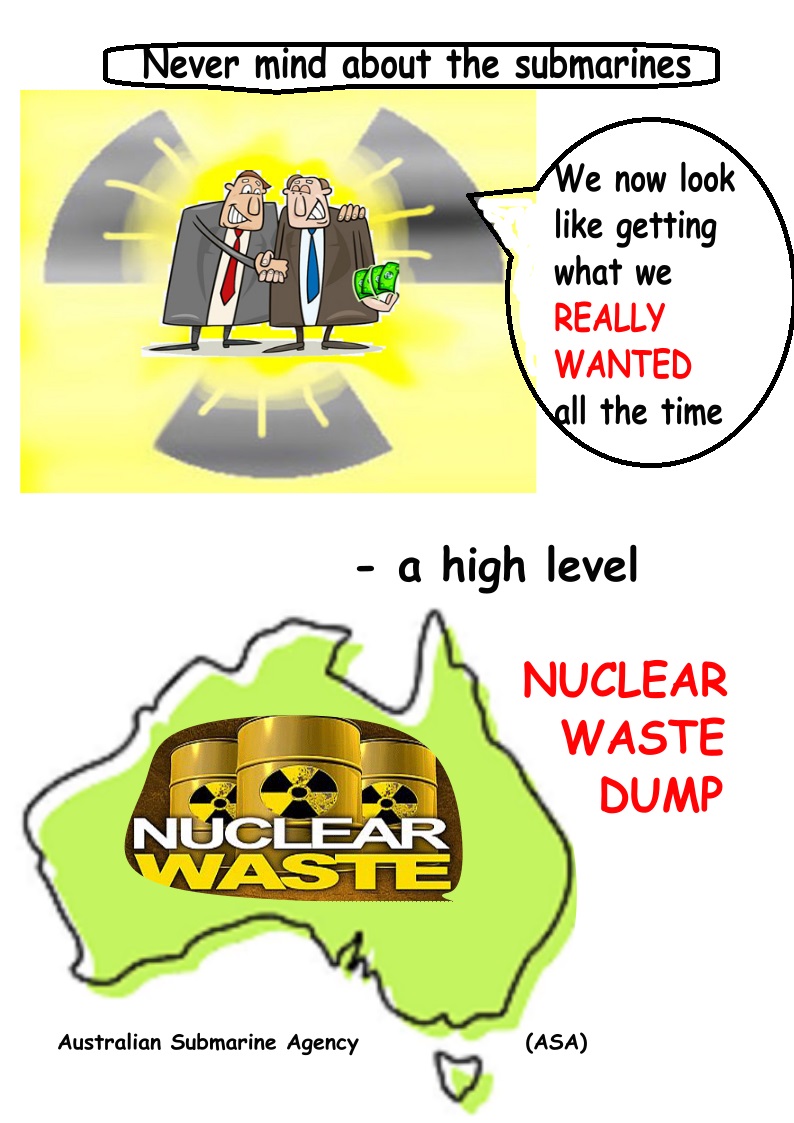
Australian Radioactive Waste Agency
The agency is one of the ‘zombie measures’ in which funding was not taken into account beyond this year, Treasurer Jim Chalmers said.
In leading the delivery of Australia’s nuclear-powered submarines, the ASA will be responsible for cradle-to-grave management, including:
Disposal
New agency and new regulator to deliver nuclear submarine program
The government will establish a new agency and a new regulator as part of its commitment to delivering Australia’s conventionally armed nuclear-powered submarines.
The Australian Submarine Agency (ASA) will be established by Executive Order and be responsible and accountable for the management and oversight of Australia’s nuclear-powered submarine program.
Work to deliver the pathway is already underway and remains a key priority for the government, in line with the recommendations of the Defence Strategic Review.
In leading the delivery of Australia’s nuclear-powered submarines, the ASA will be responsible for cradle-to-grave management, including:
acquisition
delivery
construction
technical governance
sustainment, and
disposal
ASA will also enable the necessary policy, legal, non-proliferation, workforce, security and safety arrangements.
Royal Australian Navy, led by the Chief of Navy, will continue to be responsible for training submariners and operating Australia’s submarines.
The Nuclear-Powered Submarine Taskforce, which currently operates as part of Defence, will transition to the ASA on 1 July 2023.
t will be headed by a Director General, the appointment of whom will be announced by the government at the appropriate time.
The government will also establish a new independent statutory regulator, the Australian Nuclear-Powered Submarine Safety Regulator.
The new regulator will have the functions and powers necessary to regulate the unique circumstances associated with nuclear safety and radiological protection across the lifecycle of Australia’s nuclear-powered submarine enterprise.
This includes associated infrastructure and facilities.
The regulator will be independent of the Australian Defence Force’s chain of command and directions from the Department of Defence.
This will be a fundamental part of a system of regulation, which will work with existing Australian regulators to support the safety of our submariners, Australian and international communities, and the environment.
Both the ASA and the Australian Nuclear-Powered Submarine Safety Regulator will be non-corporate Commonwealth entities within the Defence portfolio and report directly to the Minister for Defence.
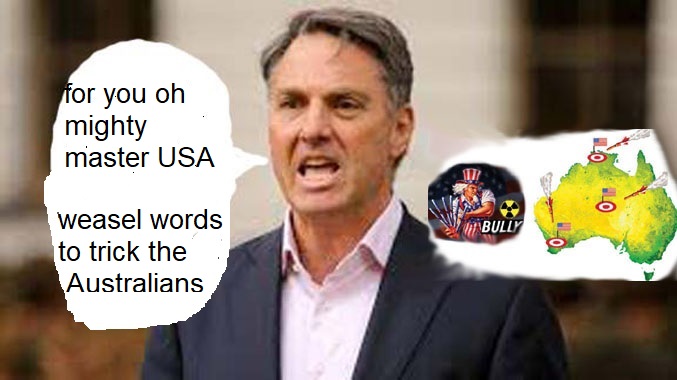
Minister for Defence Richard Marles said the government was delivering on its commitment to the acquisition of nuclear-powered submarines, which is the single biggest investment in our defence capability in our history.
“The establishment of the Australian Submarine Agency and the Australian Nuclear-Powered Submarine Safety Regulator are critical elements of delivering this game-changing capability and will ensure the safe and successful implementation of the pathway for Australia’s acquisition of nuclear-powered submarines,” Mr Marles said.
“The ASA will be responsible and accountable for delivering the ambitious program to acquire Australia’s nuclear-powered submarines.
“A specialised and dedicated regulator – which will be independent of Defence and the Australian Defence Force – will ensure we have the highest standards of nuclear safety and radiological protection across the lifecycle of Australia’s nuclear-powered submarines.”
Thousands of trade unionists (including many members of the Australian Labor Party) and anti-war activists marched through Port Kembla on May 6 to reject the plan to site the AUKUS nuclear-powered submarine base in that town.
The Wollongong May Day march was held in Port Kembla as a symbolic launch of a mass campaign of “feet in the streets” to stop this nuclear military madness, South Coast Labour Council secretary Arthur Rorris told the marchers.
It gave US Secretary of State Antony Blinken an opportunity to do the usual cartwheel. “Far too many governments use repression to silence free expression, including through reprisals against journalists for simply doing their jobs,” goes his May 3 press statement. “We again call on Russian authorities to immediately release Wall Street reporter Gershkovich and all other journalists held for exercising freedom of expression.” What, then, of the Australian publisher and founder of WikiLeaks, Julian Assange?
Selected days for commemoration serve one fundamental purpose. Centrally, they acknowledge the forgotten or neglected, while proposing to do nothing about it. It’s the priest’s confession, the chance for absolution before the next round of soiling.
These occasions are often money-making exercises for canny businesses: the days put aside to remember mothers and fathers, for instance. But there is no money to be made in saving writers, publishers, whistleblowers, and journalists from the avenging police state.
World Press Freedom Day, having limped on for three decades, is particularly fraught in this regard. It remains particularly loathsome, not least for giving politicians an opportunity to leave flimsy offerings at its shrine. These often come from the powerful, the very same figures responsible for demeaning and attacking those brave scribblers who do, every so often, show how the game is played.
Every year, we see reactions often uneven, and almost always hypocritical. The treatment of US journalist Evan Gershkovich is the stellar example for 2023. Here was the caged victim-hero scribbler, held in the remorseless clutches of the Russian Bear.
It gave US Secretary of State Antony Blinken an opportunity to do the usual cartwheel. “Far too many governments use repression to silence free expression, including through reprisals against journalists for simply doing their jobs,” goes his May 3 press statement. “We again call on Russian authorities to immediately release Wall Street reporter Gershkovich and all other journalists held for exercising freedom of expression.” What, then, of the Australian publisher and founder of WikiLeaks, Julian Assange?
With unintended, bleak irony, Reporters Without Borders (RSF) also thought it fitting to rope in the Secretary at a World Press Freedom Day event organised in conjunction with the Washington Post. Talking to his interlocutor, the Post’s David Ignatius, Blinken spoke of efforts to “fight back and push back around the world to help journalists, who – in one way or another, are facing intimidation, coercion, persecution, prosecution, surveillance.” This seemed grimly comical, given that the United States, through its agencies, has engaged in intimidation, coercion, persecution, prosecution and surveillance against Assange, whose scalp they continue to seek with salivating expectation.
In the course of the event, Ignatius and Blinken encountered Code Pink activists Medea Benjamin and Tinghe Barry. Both were keen to test the Secretary’s lofty assessments about Washington’s stance on free expression and journalistic practice. “Excuse me, we can’t use this day without calling for the freedom of Julian Assange,” exclaimed Benjamin, storming the stage where the two men were engaged in bland conversation. A bemused Ignatius duly approved of Benjamin’s eviction by three burly minders, seeing it all as part of “free expression”.
Barry’s own assessment of the whole show summed matters up. “Two hours and not one word about journalist Shireen Abu-Akleh, who was murdered by Israeli occupation forces in Palestine, not one word about Julian Assange.”
Others from the US State Department were also found wanting. A department press briefing from Vedant Patel, principal deputy spokesperson, opened with comments about World Press Freedom Day. He echoed the belief in “the importance of a free press. It’s a – we believe a bedrock of democracy.”
Then came a question from Matt Lee of Associated Press: Did the State Department regard Assange “as a journalist who is – who should be covered by the ideas embodied in World Press Freedom Day?”
Patel’s response did not deviate from the views of his superiors. “The State Department thinks that Mr Assange has been charged with serious criminal conduct in the United States, in connection with his alleged role in one of the largest compromises of classified information in our nation’s history.”
With dutiful adherence to a narrative worn and extensively disproved in Assange’s extradition trial proceedings, Patel spoke of actions that “risked serious harm to US national security to the benefit of our adversaries” (there was none) and subjected “human sources to grave and imminent risk of serious physical harm and arbitrary detention” (no evidence has ever been adduced by the Department of Justice on this point)…………………………………………………………….. more https://theaimn.com/hypocritical-commemorations-world-press-freedom-day/
there is no question Defence would require the free, prior and informed consent of Indigenous people before a high-level nuclear waste facility could proceed on their land. …. in those circumstances the government must provide a veto right, because the project would eliminate future access to traditional Indigenous land.
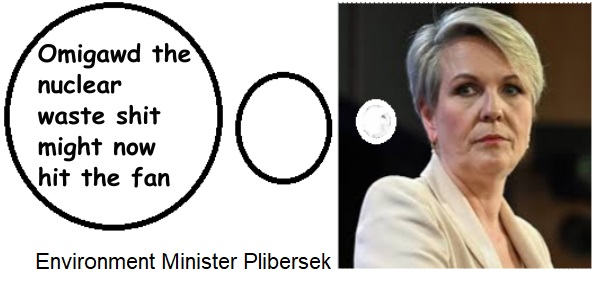
If Plibersek knew about the radioactive waste facility and its intended siting in remote Australia at the time AUKUS was announced she has kept quiet about it.
A far more substantial inequality of power now exists between the Indigenous groups to be consulted about the site of the radioactive waste facility and the Defence Department. The facility has solid bipartisan support. In addition, it is essential to the AUKUS submarine deal, meaning Defence embodies the combined wishes of the Australian, British and United States governments.
Bipartisan secrecy and Defence’s poor record with Indigenous groups at Woomera are red flags for the consultation over AUKUS high-level nuclear waste facility.
The federal government had no public mandate for any of the AUKUS decisions: no mandate to enter the agreement, none to acquire eight nuclear-powered submarines for up to $368 billion, and none to establish a high-level radioactive waste facility. On this last, in fact, it had long term evidence to suggest Australians would likely oppose the proposition.
Perhaps this is why both major political parties concealed for 18 months, a period including the federal election, their shared knowledge that AUKUS requires a high-level radioactive waste facility to be built.
The AUKUS agreement was revealed on 15 September 2021. On 14 March 2023, deputy prime minister and defence minister, Richard Marles, announced the nuclear waste facility. Next day, opposition leader Peter Dutton said: ‘The Labor Party signed up to AUKUS knowing they would have to deal with the waste, and now that they’re in government they know that’s a part of the deal.’ The government has not denied Dutton’s claim.
Furthermore, Marles stated as a fait accompli that the waste facility will be built at a ‘remote’ site – code for Indigenous land – despite the fact that Indigenous people have repeatedly objected, and still are, to radioactive waste being stored on their land.
Meanwhile, the Albanese government continues its work to establish an Indigenous Voice to Parliament. Just nine days after the prime minister was in San Diego announcing the AUKUS submarine deal and his deputy Marles came clean about the radioactive waste facility, Anthony Albanese released the proposed Voice wording. The prime minister noted in his speech the importance of consultation, ‘it’s common courtesy and decency to ask people before you take a decision that will have an impact on them’.
Governments have been trying for decades to put a radioactive waste dump in outback Australia. They have been rebuffed time and time again. Yet the Albanese government is trying once more.
Legal experts have pointed out the international legal requirement to obtain the free, prior and informed consent of Indigenous peoples before making significant decisions that affect them. This process includes giving Indigenous peoples full information about a development in advance and respecting their choice to give or withhold consent.
The UN Declaration on the Rights of Indigenous Peoples, which Australia has pledged to support ‘in both word and deed’, says: ‘[No] storage or disposal of hazardous materials shall take place in the lands or territories of indigenous peoples without their free, prior and informed consent.’
As to whether the government can claim ‘national security’ as a reason to avoid these obligations and dictate a radioactive waste site, international human rights law expert John Podgorelec says: ‘States may not derogate from their responsibilities on the basis of national security unless a “state of emergency” has been formally invoked.’
He adds, ‘A lesson to come out of the Iraq calamity is that manufactured or undisclosed national security intelligence cannot be used to subvert democracy.’
Unfortunately, the Defence Department’s fact sheet on nuclear stewardship and waste is light on detail. It does not mention free, prior and informed consent. Defence commits only to ‘consultation and engagement’ – a lesser standard – and adds that it will also consider ‘wider social license and economic implications’. Globally, the ‘economic implications’ of significant projects habitually undermine human rights, particularly those of Indigenous peoples.
Furthermore, Defence has a poor track record of engagement with Indigenous people in one of its key locations, South Australia’s Woomera Prohibited Area (explored further in part two).
Woomera is used by Australian and foreign military forces, in close partnership with multinational weapons corporations, for extensive weapons testing and military training activities.
‘When militaries around the world need a place to test their weapons and fly their new fighter jets, there’s nowhere better than the rugged expanses of South Australia,’ enthused US weapons giant Raytheon in 2016, talking up ‘a further expansion of US-Australian cooperation’.
The Woomera weapons testing range covers one-eighth of South Australia, occupying more than 122,000km2. Before Defence took over, less than a century ago, Indigenous people had inhabited the region for tens of thousands of years.
Despite the international outcry at the destruction of Juukan Gorge, the Defence Department has not changed its behaviour. For example, it continues to use a registered Indigenous heritage site in Woomera as a target zone for high explosive weapons tests. (I visited this and other sites inside Woomera last year at the invitation of Andrew and Bob Starkey, senior Kokatha lawmen and traditional owners.)
Defence is aware of the site’s significance, just as Rio Tinto was aware of the significance of Juukan Gorge. Defence’s heritage management plan, relevant sections of which I have seen, says the site has a ‘high level of Aboriginal heritage value’ and is a place of ‘sensitive cultural significance that can be easily impacted’. The public might wonder how Defence can know this yet still decide it’s acceptable to direct high explosive munitions onto the site.
‘The Commonwealth cannot give with one hand and take with the other,’ says Podgorelec, who acts for the Starkeys, on the tensions between federal commitments to Indigenous heritage protection and to AUKUS. He says there is no question Defence would require the free, prior and informed consent of Indigenous people before a high-level nuclear waste facility could proceed on their land. He also says in those circumstances the government must provide a veto right, because the project would eliminate future access to traditional Indigenous land.
Australia is not alone in being unable to find a radioactive waste solution. The UK has failed for decades to make meaningful progress on dismantling decommissioned nuclear submarines – it currently has 21 of them floating in dockyards awaiting disposal, mirroring its wider failure to resolve its nuclear waste problems. The US has also failed in this regard: spent fuel from its nuclear submarines remains in temporary storage. Griffith University’s Emeritus Professor Ian Lowe has written that the nuclear waste from US military and civilian reactors ‘is just piling up with no long-term solution in sight’.
Defence does not mention this pertinent information in its brief positive account of US and UK nuclear stewardship.
The federal government gave its response to the Juukan Gorge inquiry report in November 2022. Minister Tanya Plibersek, whose Environment portfolio encompasses Indigenous heritage protection, said:
[T]hese are thorough and considerate reports… the recommendations speak to the principles and priorities that will shape our [heritage protection] legislation. Free, prior, and informed consent.
If Plibersek knew about the radioactive waste facility and its intended siting in remote Australia at the time AUKUS was announced she has kept quiet about it.
Free, prior and informed consent requires that intimidation and coercion be avoided. Plibersek is well aware of the possibility of abuses of power in high stakes developments. In her speech, she noted partnership agreements were signed under ‘gross inequalities of power’ between the traditional owners of Juukan Gorge and Rio Tinto.
A far more substantial inequality of power now exists between the Indigenous groups to be consulted about the site of the radioactive waste facility and the Defence Department. The facility has solid bipartisan support. In addition, it is essential to the AUKUS submarine deal, meaning Defence embodies the combined wishes of the Australian, British and United States governments.
Podgorelec is adamant. ‘Australia cannot enact domestic laws that undermine its international legal obligations. If a project will take away Indigenous cultural connection to land forever – as a high-level nuclear waste facility will do – then the government is obliged to give a right of veto.’
Note: The legal basis for free, prior and informed consent was explained by John Podgorelec as lead author of Adelaide University’s submission to the 2015 SA Nuclear Fuel Cycle Royal Commission. Unfortunately, having been available until recently, the Royal Commission’s website is presently inaccessible. Email us if you would like a copy of the submission: undueinfluence@protonmail.com
Australian Prime Minister Anthony Albanese expressed frustration at the United States’s continuing efforts to extradite WikiLeaks founder and Australian citizen Julian Assange, saying: “There is nothing to be served by his ongoing incarceration.”
Wednesday was World Press Freedom Day, and it saw US Secretary of State Antony Blinken, White House Press Secretary Karine Jean-Pierre, and Deputy State Department Spokesman Vedant Patel confronted about the glaring hypocrisy of the Biden administration’s persecution of Julian Assange for the crime of good journalism.
During an appearance at a World Press Freedom event hosted by The Washington Post’s David Ignatius on Wednesday morning, Blinken was confronted by Code Pink activists Medea Benjamin and Tighe Barry demanding justice for Assange before being swiftly dragged off stage.
“Excuse us, we can’t use this day without calling for the freedom of Julian Assange,” said Benjamin, holding a sign saying “FREE JULIAN ASSANGE”.
The two were immediately rushed by many security staffers, and the audio from the stage was temporarily cut.
“Stop the extradition request of Julian Assange,” Benjamin can be heard saying.
“Two hours and not one word about journalist Shireen Abu-Akleh, who was murdered by the Israeli occupation forces in Palestine, not one word about Julian Assange,” said Barry.
“We’re here to celebrate freedom of expression, and we just experienced it,” said Ignatius without a trace of irony once the dissent had been silenced. He then returned to the subject of how bad and awful the Russian government is for imprisoning American journalist Evan Gershkovich.
Then during a White House press briefing on Wednesday afternoon, Karine Jean-Pierre was asked a question by CBS News’ Steven Portnoy that was so inconvenient the press secretary flat-out said she wouldn’t answer it.
“Advocates on Twitter today have been talking a great deal about how the United States has engaged in hypocrisy by talking about how Evan Gershkovich is held in Russia on espionage charges but the United States has Espionage Act charges pending against Julian Assange. Can you respond to that criticism?” asked Portnoy.
“What is the criticism?” asked Jean-Pierre.
“Well, the criticism is that — the argument is that Julian Assange is a journalist who engaged in the publication of government documents,” Portnoy replied. “The United States is accusing him of a crime under the Espionage Act, and that, therefore, the United States is losing the moral high ground when it comes to the question of whether a reporter engages in espionage as a function of his work. So can you respond to that?”
“Look, I’m not going to speak to Julian Assange and that case from here,” said Jean-Pierre.
And then she didn’t. She just dismissed Portnoy’s question without explanation, then babbled for a while about things Biden has said that are supportive of press freedoms, then again said “I’m not going to weigh in on comments about Julian Assange.”
This type of “I’m not answering that, screw you” dodge is a rare move for a White House press secretary. They don’t normally just come right out and say they refuse to answer the highly relevant and easily answerable question a reporter just asked; typically when the question is too inconvenient they’ll either word-salad a bewildering non-response, say the answer is the jurisdiction of another department, or say they’ll get back to them when they have more information. It’s not the norm for them to just wave away the question without even pretending to provide a reason for doing so.
But really, what choice did she have? As Wall Street Journal White House correspondent Sabrina Siddiqi recently acknowledged on MSNBC, the job of the White House press secretary is not to tell the truth, but to “stay on message and control the narrative.” There is nothing about the Assange case that is on-message with the White House narrative; just the other day Biden said at the White House Correspondents’ Dinner that “journalism is not a crime,” yet his persecution of Assange is deliberately designed to criminalize journalism.
There’s simply no way to reconcile the US government’s story about itself with its efforts to normalize the extradition and persecution of journalists around the world under the Espionage Act. If your job is to make the White House look good, the only way to respond to questions of US hypocrisy regarding the Assange case is not to respond at all.
Later in the press conference, Jean-Pierre responded to another reporter’s questions about press freedoms in China with an assurance that the Biden administration will “hold accountable the autocrats and their enablers who continue to repress a free, independent media.”
Also on Wednesday afternoon, AP’s Matt Lee cited the aforementioned Code Pink protest earlier that day to question Deputy State Department Spokesman Vedant Patel about Assange, and was met with a similar amount of evasiveness.
“So then can I ask you, as was raised perhaps a bit abruptly at the very beginning of his comments this morning, whether or not the State Department regards Julian Assange as a journalist who would be covered by the ideas embodied in World Press Freedom Day?” asked Lee.
“The State Department thinks that Mr. Assange has been charged with serious criminal conduct in the United States, in connection with his alleged role in one of the largest compromises of classified information in our nation’s history,” Patel replied. “His actions risked serious harm to US national security to the benefit of our adversaries. It put named human sources to grave and imminent risk and risk of serious physical harm and arbitrary detention. So, it does not matter how we categorize any person, but this is – we view this as a – as something he’s been charged with serious criminal conduct.”
“Well, but it does matter actually, and that’s my question. Do you believe that he is a journalist or not?” asked Lee.
“Our view on Mr. Assange is that he’s been charged with serious criminal conduct in the United States,” said Patel………………………………………………..
Okay. So, basically, the bottom line is that you don’t have an answer. You won’t say whether you think he is a journalist or not,” Lee replied.
Again, Patel was left with no safe answers to Lee’s questions, because of course Assange is indisputably a journalist. Publishing information and reporting that is in the public interest is precisely the thing that journalism is; that’s why Assange has won so many awards for journalism. Trying to contend that Assange is not a journalist is an unwinnable argument.
Later in that same press conference Patel was challenged on his claim that Assange damaged US national security by journalist Sam Husseini.
“You refer to WikiLeaks allegedly damaging US national security,” said Husseini. “People might remember that WikiLeaks came to prominence because they released the Collateral Murder video. And what that showed was US military mowing down Reuters reporters – workers in Iraq. Reuters repeatedly asked the US Government to disclose such information about those killings, and the US government repeatedly refused to do so. Only then did we know what happened, that the US helicopter gunship mowed down these Reuters workers, through the Collateral Murder video? Are you saying that disclosure of such criminality by the US government impinges US national security?”
“I’m not going to parse or get into specifics,” Patel said, before again repeating his line that Assange stands accused of serious crimes in a way that harmed US national security.
Journalist Max Blumenthal tweeted about Patel’s remarks, “According to this State Dept flack, Julian Assange’s jailing is justified because he ‘harmed US national security.’ But Assange is not an American citizen. By this logic, the US can kidnap and indefinitely detain any foreign journalist who offends the US national security state.”
It is good that activists and journalists have been doing so much to highlight the US empire’s hypocrisy as it crows self-righteously about its love of press freedoms while persecuting the world’s most famous journalist for doing great journalism. Highlighting this hypocrisy shows that the US empire does not in fact care about press freedoms at all, save only to the extent that it can pretend to care about them to wag its finger at governments it doesn’t like.
In a recent briefing with Illawarra industry, community and business leaders, Assistant Defence Minister Matt Thistlethwaite said other locations would be considered.
“Everything is on the table,” he said.
“There are a number of factors — deepwater ports are essential, ensuring that there is a domestic industry base that can service a base like that, ensuring there is a skilled work force.
…………………….. “We are looking at close to a decade before that decision is made.”
Other locations ‘hot potatoes’
The announcement opens the door for defence to reconsider the Garden Island naval base in Sydney and Jervis Bay on the NSW south coast.
The sites were among the top locations identified by Defence in a 2011 report obtained by former South Australian Senator and submariner Rex Patrick under freedom of information laws.
“I think the other sites are political hot potatoes and the government is seeking to diffuse those aspects of this particular AUKUS program,” Mr Patrick said.
“Garden Island in Sydney is a significant population site surrounded by the residents of Sydney who simply will be uncomfortable with the stationing of a nuclear submarine in the harbour.
He said winning community support for a base in Jervis Bay would also be a difficult proposition due to the environmental sensitivity of the site.
“There have been many campaigns over the years to stop the navy conducting activities in Jervis Bay, even though it is a pretty good environmental tenant,” he said.
“I can see huge problems with government trying to impose a nuclear base in that pristine environment.”
‘The air has to be cleared’
The government is also facing a challenge at Port Kembla, where the Illawarra community also has a long history of opposing nuclear projects and has already begun rallying opposition to a base.
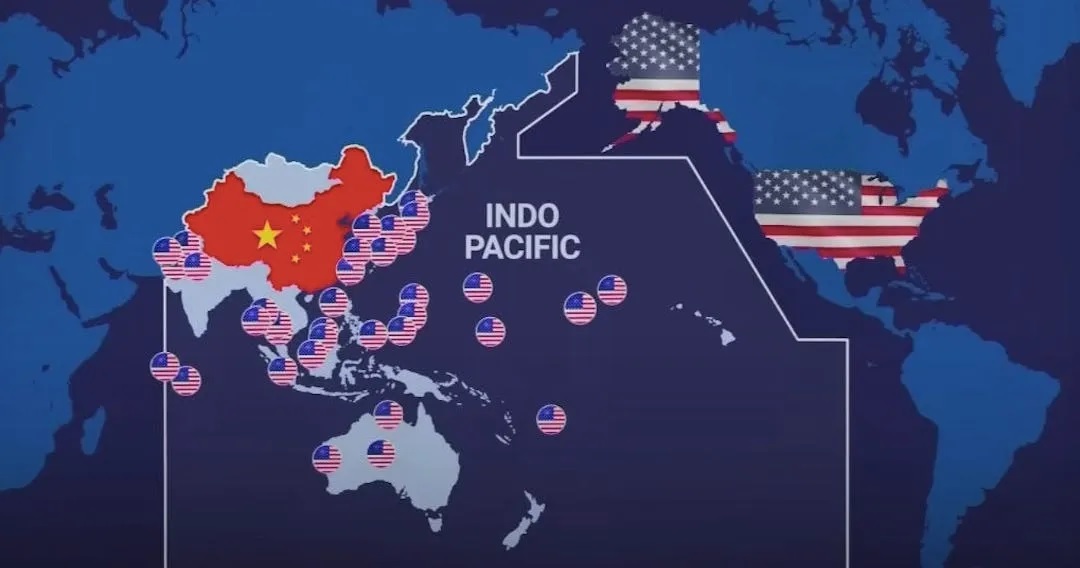
The 2023 Defence Strategic Review has recommended Australia adopt a new strategic conceptual framework dubbed ‘National Defence’ that incorporates a ‘strategy of denial’. This approach is tied to a broader concept of ‘collective security’ in the Indo-Pacific and is aligned with America’s framework for ‘integrated deterrence’ of China. ‘National Defence’ is consistent with American force structure designs to develop the northern Australian expanse as an increasingly important base of operations for force-projection.
From ‘Defence of Australia’ to ‘National Defence’
The recommendation by the 2023 Defence Strategic Review (DSR) to abandon the long-standing strategic doctrine known as ‘defence of Australia’ (DoA) has been met with approval by the Albanese government, even as the doctrine had been previously eviscerated to conform with the requirements of the US alliance.
DoA reached its zenith with the release of the 1986 ‘Dibb Review’ that recommended a shift in Australia’s defence strategy from dependent expeditionary combat to ‘self-reliant’ protection of the continent and the air and maritime approaches to Australia. This was to be achieved by adopting ‘an essentially defensive posture in our region’ and employing a ‘strategy of denial’ with strike capabilities strictly limited in range to accomplish that objective………………………………….
However ………… long-standing aspirations for Australia to be an influential ‘middle power’ in international affairs, or more accurately, a ‘sub-imperial power’, which required undertaking regional ‘burden sharing’ responsibilities to preserve ‘stability’ on behalf of the US-led global order.
………………. A major turning point came in late 2001 when the Howard government committed Australia to America’s ‘global war on terror’. ……………….
……. While DoA and ‘self-reliance’ remained official strategic guidance, operationally the Australian Defence Force (ADF) largely came to serve as an adjunct to the US military.
DoA has now been jettisoned entirely by the DSR in favour of ‘National Defence’, a new strategic conceptual framework based on the prospect of higher-level direct threats to Australia’s ‘national interests’ arising from US-China competition………….. This entails abandoning a ‘balanced’ force in favour of a force structure that is ‘focussed’ on preparing for major war – with China.
…………………….. Today, it is the supposed threat to the ‘rules-based order’ that functions as the new ‘domino theory’, where legitimate concerns about Chinese assertiveness in long-standing territorial disputes in the South China Sea is imagined as a direct military threat to Australia and our ‘national interests’.
………… maintaining a ‘balance of power’ has long been a euphemism in Australian political discourse for sustaining American military dominance or ‘primacy’…………..
……………….. achieving ‘balance’ translates into an agenda for Australia to work even more closely with the United States, and key American security partners like Japan, to further encircle China militarily.
…………………………………..Unlike the strategic approach articulated in the 1986 Dibb Review, the ‘strategy of denial’ adopted by the DSR is tied to a broader concept of ‘collective security’ in the Indo-Pacific and is aligned with America’s framework for ‘integrated deterrence’ of China. It is consistent with American force structure designs to develop the northern Australian expanse as an increasingly important base of operations for force-projection
………..The biggest change foreshadowed by the DSR is to the Army, which will have its infantry fighting force dramatically scaled back and be optimised for littoral operations and enhanced long-range fire.
……………………………… This is the great strategic folly of AUKUS. It will equip the ADF with a potent capability to strike the Chinese mainland and, in coalition with the United States, play a frontline role in hunting China’s nuclear-armed submarine force and its critical second-strike nuclear deterrent capability.
While AUKUS risks contributing to an existential nuclear threat to China, the DSR reassures Australians that we remain safe from nuclear annihilation under the protection of America’s ‘extended nuclear deterrence’, for which there are no credible assurances, and in efforts to pursue ‘new avenues of arms control’, of which there are none, except that which the Albanese government has yet to join – the Treaty on the Prohibition of Nuclear Weapons – despite assurances by the Labor Party to the contrary
Finally, climate change is belatedly recognised as a significant national security issue in the DSR, but largely as a distraction that risks detracting from Defence’s primary objective of defending Australia against China…………………..
The DSR overstates the threat China poses to Australia, appears wilfully blind to the risks of nuclear escalation inherent in the defence strategy it recommends, and understates the existential threat of climate change which it fails to confront. What’s more, ‘National Defence’ dictates an acute focus on preparing Australia’s armed forces to integrate in a substantial way with American force structure plans to carry out what should be utterly unthinkable: a high-end war with a nuclear-armed China that risks wreaking a global catastrophe. https://johnmenadue.com/labors-serial-betrayal-of-australia/
Make no mistake, the Albanese government knows that in joining the US fight against China, Australia will be left defenceless on American withdrawal. And only a dodo could not know this risk is high. Maybe the government doesn’t appreciate that war for America is different. It is the war which matters, not the result. “Winning” is incidental.
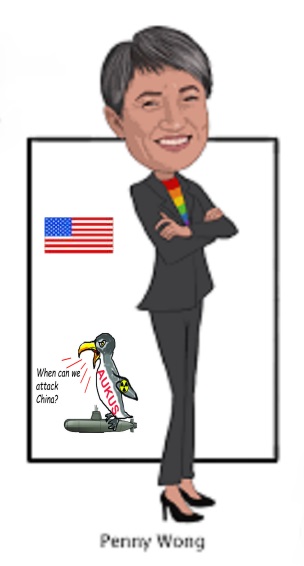
Thinking deeply about Australia’s future is simply beyond the Albanese/ Wong/ Marles triumvirate.
Originally my editor requested a survey of Australia’s media response to the government’s Defence Strategic Review (DSR) – tackily released during the ANZAC devotions. It became clear that this was a trivial exercise. The bulk of our mainstream print, TV and radio accepted the tenet that Australia should treat China as an emerging military threat, and spend heavily against the prospect of war. None challenged it.
A sane assessment would find that China presenting a military threat to Australia is fabrication – to rival that of Iraq’s weapons of mass destruction. Thereby America itself has become a great danger to Australia. Its propensity for conflict and brutal self-interest is amply evidenced, over decades. To Washington’s strategists, Australia exists foremost as another object to be exploited for their world wide web of wars. With some distinguishing attributes. We are an ally which profitably pays it way, eagerly, for which the US is un-obligated. Meaning the US can freely entwine Australia in a war with China, then just go home when things get tough, responsibly in its view. As it does, with practised facility.
Despite our hapless, shameful experiences and ever-mounting evidence of America’s implacable hegemony our governments increasingly have conflated Australia’s interests with America’s.
Once Australians rightly could have expected a Labor government to be discerning of our unique interests. But we have to go back to Hawke and Keating to be confident of it. When America’s interests would not swamp our own. Today, it matters not which major political party holds the reins. Bipartisanly, our leaders are preparing Australia for war against the fresh superpower of China. At America’s instigation. While America complains that it lacks the resources for the job, and must rely critically upon allies. And the massive stakes unique to Australia are subordinated to those US interests.
How could anything else rate higher as an issue for Australia?
The seeds of betrayal
We are told by Defence Minister Marles that the DSR comes at a “watershed moment” and that “Australia has lost ten years of warning time.” That is, Australia should have been preparing for war long ago. In fact, Labor created the watershed moment more than ten years ago,………………………………………
Perhaps those years of Labor hand-sitting while our defences were being turned over to US objectives might have been tolerable, if the Albanese government had set about securing Australia’s interests upon gaining power. But the opposite has unfolded. Labor is accelerating spending for war.
Those with long faith in Labor had assumed that the lie of a China military threat to us would be scrutinised once the LNP government fell. Intelligence advice had to be assessed independently. Because on official Pentagon advice to the US Congress China’s forces are stretched just in trying to meet America’s threat to its periphery. But no, Labor didn’t want to know. Instead of getting to the heart of the matter promptly, a defence review was commissioned. And that same conflicted intelligence apparatus provided the foundation for it. Thereby another year has slipped by, in war preparation.
“The review’s outcome was set before it started by the politics of Labor signing up in a matter of hours to carry Scott Morrison’s Anglophone burden. Paul Keating’s charge remains unanswered that Labor’s defence policy was set by wanting to provide no target when blindsided by Mr Morrison’s submarine adventure.”
Unsurprisingly, the stench of political duplicity intensified as the review proceeded.
America’s wars are not about winning
The big betrayal is Labor’s doubling down on the path to war once in power. It is clear now that this was always the intent. What is new in the DSR is that finally a government admits that Australia is entirely dependent on the US:
4.7 However, Australia does not have effective defence capabilities relative to higher threat levels which can only be achieved by working with the United States…..
Make no mistake, the Albanese government knows that in joining the US fight against China, Australia will be left defenceless on American withdrawal. And only a dodo could not know this risk is high.
Maybe the government doesn’t appreciate that war for America is different. It is the war which matters, not the result. “Winning” is incidental. There is always Stateside to come home to. What matters is disempowerment of the adversary – degradation of state, polity, economy, infrastructure and population. That is grist-to-the-mill for the US State Department. Constantly played out by lounging analysts on buttoned leather sofas in the palatial “map room” at Foggy Bottom. Australia’s fate is amongst those gamed there, incidentally.
Even if it did, there can be little doubt now that the Albanese government has chosen to look straight ahead. It has Australia comfortably settled on America’s accelerating train to war with China. To meet a vigorous superpower on its home ground. The war is unwinnable. Impossible to imagine the residual mess. Which will endure in many dimensions for us. But that is of no matter to America. Who in the government knows, or would care?
Here is the future which the Albanese government is steering Australia into. Without a whimper within the Labor party. Thinking deeply about Australia’s future is simply beyond the Albanese/ Wong/ Marles triumvirate. Creative dimensions such as our former ambassador in Beijing Dennis Argall has espoused are beyond Labor.
The way out
While our nation is engulfed in a spiral to war, Foreign Minister Wong has demonstrated no capacity to protect it. In opposition Wong claimed to appreciate the effect of conflict with China. But now talks merely of “lowering the heat” while lining up stoically behind Marles’ indulgent militarism. Paralysed by politics.
Australia’s prospects are unthinkable. We have no alternative but to embrace wider geostrategic options. To give self-interest and self- belief a real shot.
That new road will be complex to map. And long. Our nation no longer possesses the administrative machinery critical for an independent State. Intelligence is compromised, foreign policy and defence gutted, politicised and Americanised. Fixing that is the basic first step. No doubt the nation still possesses independent, experienced, cultivated minds up for it. We can grow up. Again. https://johnmenadue.com/labors-serial-betrayal-of-australia/
While no threat from China exists, media propagandists are trying to ignite a war the likes of which we’ve never seen. John Pilger reminds us that we need to raise our voices before it’s too late.
“IN 1935, the Congress of American Writers was held in New York City, followed by another two years later. They called on ‘the hundreds of poets, novelists, dramatists, critics, short story writers and journalists’ to discuss the ‘rapid crumbling of capitalism’ and the beckoning of another war………………………………………………
The journalist and novelist Martha Gellhorn spoke up for the homeless and unemployed, and “all of us under the shadow of violent great power”. ………………………….
On 7 March, the two oldest newspapers in Australia – The Sydney Morning Herald and The Age – published several pages on “the looming threat” of China. They coloured the Pacific Ocean red. Chinese eyes were martial, on the march and menacing. The Yellow Peril was about to fall down as if by the weight of gravity.
No logical reason was given for an attack on Australia by China. A “panel of experts” presented no credible evidence; one of them is a former director of the Australian Strategic Policy Institute, a front for the Defence Department in Canberra, the Pentagon in Washington, the governments of Britain, Japan and Taiwan, and the West’s war industry.
There is no threat to Australia. None. The faraway “lucky” country has no enemies, least of all China, its largest trading partner. Yet China-bashing that draws on Australia’s long history of racism towards Asia has become something of a sport for the self-ordained “experts”. What do Chinese-Australians make of this? Many are confused and fearful.
The authors of this grotesque piece of dog-whistling and obsequiousness to American power are Peter Hartcher and Matthew Knott, “national security reporters” I think they are called. I remember Hartcher from his Israeli government-paid jaunts. The other one, Knott, is a mouthpiece for the suits in Canberra. Neither has ever seen a war zone and its extremes of human degradation and suffering.
How did it come to this? Martha Gellhorn would say if she were here. Where on Earth are the voices saying no? Where is the comradeship?
The voices are heard in the samizdat of this website and others. In literature, the likes of John Steinbeck, Carson McCullers and George Orwell are obsolete. Post-modernism is in charge now. Liberalism has pulled up its political ladder. A once somnolent social democracy, Australia, has enacted a web of new laws protecting secretive, authoritarian power and preventing the right to know. Whistleblowers are outlaws, to be tried in secret. An especially sinister law bans “foreign interference” by those who work for foreign companies. What does this mean?
Democracy is notional now; there is the all-powerful elite of the corporation merged with the state and the demands of “identity”. American admirals are paid thousands of dollars a day by the Australian taxpayer for “advice”. Right across the West, our political imagination has been pacified by PR and distracted by the intrigues of corrupt, ultra-low-rent politicians: a Johnson or a Trump or a Sleepy Joe or a Zelensky.
“The Albanese government is giving Defence a totally unprecedented $122 billion stuff-up fund. This is a license to fail on contract negotiations and project delivery for the AUKUS submarine deal.
“It’s extraordinary that a whopping one third of the $368 billion nuclear submarines budget comes with no strings attached.
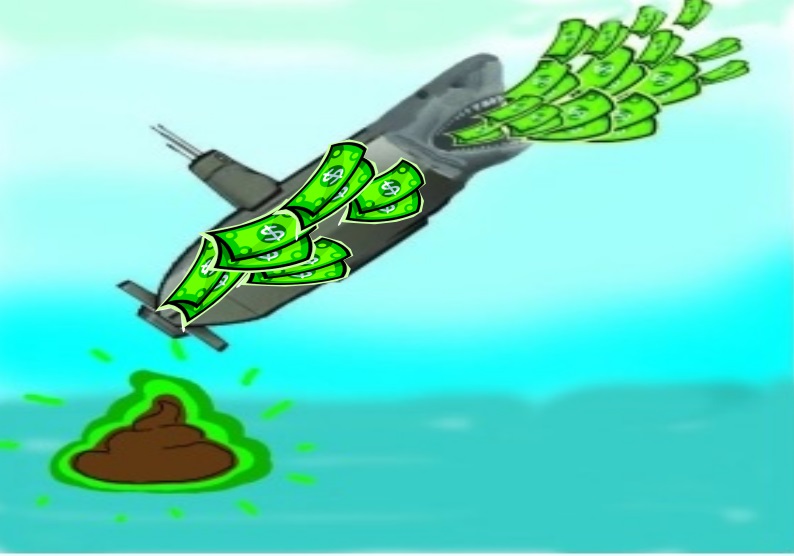
An extraordinary $122.9 billion, that’s one-third of the $368 billion dollar price tag for nuclear submarines, has been allocated to a so-called “contingency” budget, according to new figures released by the Parliamentary Budget Office, commissioned by the Greens.
The PBO analysis, which is based on Defence figures, for the first time shows that $122.9 billion dollars has been earmarked for “contingency” funding as part of the government’s projected budget. The amount of contingency funding is setting off alarm bells about the sheer scale of no-strings-attached public funding allocated to the deal.
The PBO figures also show the unfair intergenerational impact of the AUKUS subs. Hundreds of billions in costs will be heavily skewed to future budgets, forcing deep cuts to public spending for decades.
Australian Greens Defence Spokesperson Senator David Shoebridge said:
“The Albanese government is giving Defence a totally unprecedented $122 billion stuff-up fund. This is a license to fail on contract negotiations and project delivery for the AUKUS submarine deal.
“It’s extraordinary that a whopping one third of the $368 billion nuclear submarines budget comes with no strings attached.
“The scale of this contingency fund demonstrates that the government has no real idea how they will deliver these hugely expensive submarines or what the true costs of the nuclear sub deal will be.
“No serious project planner in any other industry would be allowed to have a third of the total budget as contingency – this is worse than a blank cheque, it’s an incentive for profligate Defence spending.
For the AUKUS subs deal Defence has persuaded the Albanese government to take away any restraint on future spending or project delivery. When you add in the repeated failures of Defence to deliver past projects on time or on budget this is worse than negligent.
“To help sell the deal the Albanese government is burying the most exorbitant expenditure across future budgets, in a brazen attack on future generations. This is deceptive and reckless budgeting and it means young people and future generations will inherit a savage debt.
“Babies who haven’t even been born yet will spend their lives paying for these nuclear subs rather than getting essential public services and support because Labor has signed up to this toxic deal.
“It’s grossly unjust to steal from future generations to pay for today’s political mistakes, but that’s exactly what is happening here with our children and grandchildren saddled with the bulk of the $368 billion bill, ” Senator Shoebridge said.
retired U.S. military figure” generally means someone who used to be paid by the U.S. government to advance the interests of the U.S. empire, and is now paid by corporations and/or foreign governments to advance the interests of the U.S. empire.
Among the American swamp monsters hired by Canberra is the Obama administration’s spy chief, who has an established track record of lying and manipulating to advance the interests of the U.S. empire.
Australia has been paying insiders of the U.S. war machine for consultation on how to run the nation’s military, a massive conflict of interest given that Washington has been grooming Australia for a role in its war agendas against China.
For those who don’t speak imperialist, “retired U.S. military figure” generally means someone who used to be paid by the U.S. government to advance the interests of the U.S. empire, and is now paid by corporations and/or foreign governments to advance the interests of the U.S. empire.
These corrupt warmongers rotate in and out of the revolving door of the D.C. swamp, from government to war-industry jobs to punditry gigs to influential think tanks and then back again into government, advancing the interests of the U.S. empire the entire time and growing wealthy in the process.
This dynamic allows a permanent constellation of reliable empire managers to continually exert influence around the world in support of the U.S. empire, regardless of who gets voted into or out of office in the performative display of electoral politics. It’s a big part of why U.S. foreign policy remains the same regardless of who’s officially running the elected government in Washington, and it’s a big part of why the media and arms industry which support the U.S. war machine keep playing the same tune as well.
Among the American swamp monsters Australia paid for consulting work is the Obama administration’s spy chief James Clapper, who has an established track record of lying and manipulating to advance the interests of the U.S. empire:
In 2013 Clapper committed perjury by telling the U.S. Senate under oath that the NSA does not knowingly collect data on millions of Americans, only to have that lie exposed by the Edward Snowden leaks a few months later.
In 2016 Clapper played a foundational role in fomenting public hysteria about Russia with the flimsy ODNI report on alleged Russian election interference, which remainsriddled with massiveplot holes. He would later go on to repeatedly voice the opinion that Russians are “almost genetically driven” toward nefarious and subversive behavior.
In 2020 Clapper signed the infamous and now fully discredited letter from former intelligence insiders saying the Hunter Biden laptop story was likely a Russian disinfo op, falsely telling CNN that the story was “textbook Soviet Russian tradecraft at work” and that the emails on the laptop had “no metadata” on them.
Also among the American military consultants paid by Australia is a man we just discussed the other day, William Hilarides, who will be telling Australia how to reconfigure its navy because apparently no Australians are available for that job. We now know that according to the released Pentagon documents Canberra has already paid Hilarides almost $2.5 million since 2016 for his consulting work.
This information was originally reported by The Washington Post’s Craig Whitlock and Nate Jones, who last year also broke the remarkable story that a former U.S. navy admiral named Stephen Johnson had actually served as Australia’s deputy navy secretary, a position which needless to say is not normally open to foreigners.
……………………………………… Australia has always seemed like a fairly irrelevant player on the world stage because of its impotent subservience to Washington. But it’s becoming clear it is exactly because of Australia’s blind subservience to Washington that Australia is worth paying attention to, since that relationship may well end up giving the nation a front-row seat to World War Three.
Australians are going to have to wake up to what’s being done and the abominable agendas the nation is being exploited to advance. Australians are being groomed for a military confrontation of unimaginable horror, one which absolutely does not need to take place, all in the name of something as trivial as securing U.S. planetary hegemony. Australians have got to start saying no to this, starting right now.
https://europeanjournalists.org/blog/2023/04/27/free-julian-assange-member-of-our-organisations/ Our Italian FNSI affiliates were visited today in Rome by Julian Assange‘s wife, Stella Morris. The Italian journalists’ union, at the initiative of its Campania branch, presented Julian Assange with an FNSI membership card. The European Federation of Journalists (EFJ) passed on the initiative to its affiliates in Europe: 18 of them decided to follow the Italian example and grant Julian Assange membership (or honorary membership) of their organisations. The EFJ and its affiliates once again call on the UK authorities to release Julian Assange.
Here is the joint appeal delivered to Stella Morris in Rome this morning:
We, the undersigned European unions and associations of journalists, join the International Federation of Journalists (IFJ) in calling on the US government to drop all charges against Julian Assange and allow him to return home to his wife and children.
We are gravely concerned about the impact of Assange’s continued detention on media freedom and the rights of all journalists globally. We urge European governments to actively work to secure Julian Assange’s release.
To show our solidarity, we declare Julian Assange a full member, an honorary member or a free member of our organisations.
Signed:
Maja Sever, EFJ President and TUCJ President, Croatia
Fabrizio Cappella, SUGC-FNSI Secretary, Italy
Satik Seyranyan, UJA President, Armenia
Borka Rudić, BHJA General Secretary, Bosnia & Herzegovina
Hrvoje Zovko, HND President, Croatia
Emmanuel Poupard, SNJ First General Secretary, France
Emmanuel Vire, General secretary SNJ-CGT, France
Tina Groll, dju in ver.di President, Germany
Maria Antoniadou, JUADN President, Greece
Laszlo M. Lengyel, HPU Executive President, Hungary






 Antinuclear