Chris Hedges: Julian Assange’s Final Appeal

Julian Assange will make his final appeal this week to the British courts to avoid extradition. If he is extradited it is the death of investigations into the inner workings of power by the press.
By Chris Hedges / ScheerPost, 18 Feb 24
LONDON — If Julian Assange is denied permission to appeal his extradition to the United States before a panel of two judges at the High Court in London this week, he will have no recourse left within the British legal system. His lawyers can ask the European Court of Human Rights (ECtHR) for a stay of execution under Rule 39, which is given in “exceptional circumstances” and “only where there is an imminent risk of irreparable harm.” But it is far from certain that the British court will agree. It may order Julian’s immediate extradition prior to a Rule 39 instruction or may decide to ignore a request from the ECtHR to allow Julian to have his case heard by the court.
The nearly 15-year-long persecution of Julian, which has taken a heavy toll on his physical and psychological health, is done in the name of extradition to the U.S. where he would stand trial for allegedly violating 17 counts of the 1917 Espionage Act, with a potential sentence of 170 years.
Julian’s “crime” is that he published classified documents, internal messages, reports and videos from the U.S. government and U.S. military in 2010, which were provided by U.S. army whistleblower Chelsea Manning. This vast trove of material revealed massacres of civilians, torture, assassinations, the list of detainees held at Guantanamo Bay and the conditions they were subjected to, as well as the Rules of Engagement in Iraq. Those who perpetrated these crimes — including the U.S. helicopter pilots who gunned down two Reuters journalists and 10 other civilians and severely injured two children, all captured in the Collateral Murder video — have never been prosecuted.
Julian exposed what the U.S. empire seeks to airbrush out of history.
Julian’s persecution is an ominous message to the rest of us. Defy the U.S. imperium, expose its crimes, and no matter who you are, no matter what country you come from, no matter where you live, you will be hunted down and brought to the U.S. to spend the rest of your life in one of the harshest prison systems on earth. If Julian is found guilty it will mean the death of investigative journalism into the inner workings of state power. To possess, much less publish, classified material — as I did when I was a reporter for The New York Times — will be criminalized. And that is the point, one understood by The New York Times, Der Spiegel, Le Monde, El País and The Guardian, who issued a joint letter calling on the U.S. to drop the charges against him.
Australian Prime Minister Anthony Albanese and other federal lawmakers voted on Thursday for the United States and Britain to end Julian’s incarceration, noting that it stemmed from him “doing his job as a journalist” to reveal “evidence of misconduct by the U.S.”
The legal case against Julian, which I have covered from the beginning and will cover again in London this week, has a bizarre Alice-in-Wonderland quality, where judges and lawyers speak in solemn tones about law and justice while making a mockery of the most basic tenants of civil liberties and jurisprudence.
How can hearings go forward when the Spanish security firm at the Ecuadorian Embassy, UC Global, where Julian sought refuge for seven years, provided videotaped surveillance of meetings between Julian and his lawyers to the CIA, eviscerating attorney-client privilege? This alone should have seen the case thrown out of court.
How can the Ecuadorian government led by Lenin Moreno violate international law by rescinding Julian’s asylum status and permit London Metropolitan Police into the Ecuadorian Embassy — sovereign territory of Ecuador — to carry Julian to a waiting police van?
Why did the courts accept the prosecution’s charge that Julian is not a legitimate journalist?
Why did the United States and Britain ignore Article 4 of their Extradition Treaty that prohibits extradition for political offenses?
How is the case against Julian allowed to go ahead after the key witness for the United States, Sigurdur Thordarson – a convicted fraudster and pedophile – admitted to fabricating the accusations he made against Julian?
How can Julian, an Australian citizen, be charged under the U.S. Espionage Act when he did not engage in espionage and wasn’t based in the U.S when he received the leaked documents?
Why are the British courts permitting Julian to be extradited to the U.S. when the CIA — in addition to putting Julian under 24-hour video and digital surveillance while in the Ecuadorian Embassy — considered kidnapping and assassinating him, plans that included a potential shoot-out on the streets of London with involvement by the Metropolitan Police?
How can Julian be condemned as a publisher when he did not, as Daniel Ellsberg did, obtain and leak the classified documents he published?
Why is the U.S. government not charging the publisher of The New York Times or The Guardian with espionage for publishing the same leaked material in partnership with WikiLeaks?
Why is Julian being held in isolation in a high-security prison without trial for nearly five years when his only technical violation of the law is breaching bail conditions when he sought asylum in the Ecuadorian Embassy? Normally this would entail a fine. ………………………………………………………………………………………………………………………….
Julian’s lawyers will attempt to convince two High Court judges to grant him permission to appeal a number of the arguments against extradition which Judge Baraitser dismissed in January 2021. His lawyers, if the appeal is granted, will argue that prosecuting Julian for his journalistic activity represents a “grave violation” of his right to free speech; that Julian is being prosecuted for his political opinions, something which the U.K.-U.S. extradition treaty does not allow; that Julian is charged with “pure political offenses” and the U.K.-U.S. extradition treaty prohibits extradition under such circumstances; that Julian should not be extradited to face prosecution where the Espionage Act “is being extended in an unprecedented and unforeseeable way”; that the charges could be amended resulting in Julian facing the death penalty; and that Julian will not receive a fair trial in the U.S. They are also asking for the right to introduce new evidence about CIA plans to kidnap and assassinate Julian.
If the High Court grants Julian permission to appeal, a further hearing will be scheduled during which time he will argue his appeal grounds. If the High Court refuses to grant Julian permission to appeal, the only option left is to appeal to the ECtHR. If he is unable to take his case to the ECtHR he will be extradiated to the U.S.
…………………………………………………………………………………………………………………………….. No other contemporary journalist has come close to matching his revelations.
Julian is the first. We are next. https://scheerpost.com/2024/02/18/chris-hedges-julian-assanges-final-appealchris-hedges/—
Australia’s nuclear future and the legal ramifications of ratifying the Treaty on the Prohibition of Nuclear Weapons (TPNW)
BY CAT WOODS – FEB 15, 2024
5 March marks the International Day for Disarmament and Non-Proliferation Awareness, LSJ speaks to Melissa Parke, Executive Director of the International Campaign to Abolish Nuclear Weapons (ICAN) about the reasons Australia has not signed the Treaty on the Prohibition of Nuclear Weapons (TPNW), and what the consequences may be.
In February 1970, Australia signed the Treaty on the Non-Proliferation of Nuclear Weapons (NPT), committing not to acquire nuclear weapons, and to adhere to strong non-proliferation obligations. It is one of 70 nations that are signatories to the treaty.
Over 40 years later, and despite assurances from the Albanese government that it would do so, Australia has not ratified the Treaty on the Prohibition of Nuclear Weapons (TPNW).
Australia’s history and ratification of treaties
Australia has signed up to both the 1968 Nuclear Non-Proliferation Treaty and the 1986 Rarotonga Treaty.
Further, Australia and Japan jointly established the Non-Proliferation and Disarmament Initiative (NPDI) in July 2010 with the key objective of promoting the implementation of this action plan. The NPDI is a cross-regional group of 12 countries: Australia, Canada, Chile, Germany, Japan, Mexico, Nigeria, the Netherlands, the Philippines, Poland, Türkiye and the United Arab Emirates.
The Treaty on the Non-Proliferation of Nuclear Weapons (NPT) prohibits the manufacture, production or acquisition of nuclear explosive devices; research and development relating to their manufacture or production; the possession or control over such devices; the stationing of nuclear explosive devices in their territories; and testing of nuclear devices.
The NPT requires nuclear weapon states who are signatories of the treaty (US,
The NPT requires nuclear weapon states who are signatories of the treaty (US, Britain, China, Russia and France) not to pass nuclear weapons or technology to non-nuclear weapons states. However, as per Article 4 of the treaty, this requirement specifies a prohibition on the use of nuclear materials associated with nuclear weapons. It makes allowances for the provision of nuclear materials for “peaceful purposes” which is how Australia is defending its AUKUS plan to purchase, build and maintain a fleet of nuclear submarines.
Progress and promises falter
At the United Nations in October 2022, Australia ended a 5-year period of voting in opposition to the 2017 Treaty on the Prohibition of Nuclear Weapons (TPNW) in favour of abstaining to vote, so it was far from endorsing the treaty which ensures a framework of verification and enforcement of the NPT.
Australia’s fence-sitting position had mixed responses. While Indonesia and New Zealand governments praised the end to Australia’s opposition to the treaty, the US claimed that Australia was risking the existing and prospective defence agreements, deemed necessary “for international peace and security”.
The choice to abstain aligned with the Labor Party’s commitment to sign and ratify the TPNW during its national conference in 2018, a resolution made by Anthony Albanese that he reasserted in 2021. When Labor parliamentarian Susan Templeman attended the first meeting of states parties to the TPNW in June 2022, she was galvanised by a joint letter from former Australian ambassadors and high commissioners to the prime minister in support of signing and ratifying the TPNW.
Nevertheless, Australia has not ratified the treaty based on its excuse that the government is continuing to consult with partners and stakeholders while it examines and gathers information. It is a position that jars with the many organisations and political parties advocating for ratification of the TPNW. These include the Australian Red Cross, the Australian Medical Association, the Australian Council of Trade Unions, and more than 40 councils from cities including Brisbane, Canberra, Hobart, Melbourne, and Sydney.
China claimed that the AUKUS deal will eventuate in “the illegal transfer of nuclear weapon materials, making it essentially an act of nuclear proliferation”
The AUKUS plan for nuclear submarines
In February 2023, consequent to the AUKUS plan, Australia announced the deal to purchase three Virginia-class nuclear-powered, conventionally-armed submarines before the 2030s, and plans for Australia to build nuclear-powered submarines aided by US nuclear technology by the 2050s. Australia is the first party to the NPT to own and maintain nuclear submarines beyond the weapons states (US, Russia, China, Britain and France).
The AUKUS plan had already raised alarm both domestically and within the Pacific region.
China claimed that the AUKUS deal will eventuate in “the illegal transfer of nuclear weapon materials, making it essentially an act of nuclear proliferation” in a position paper sent to International Atomic Energy Agency (IAEA) member states during the September 2022 quarterly meeting of the IAEA’s 35-nation Board of Governors.
Australia responded that the fuel in its nuclear submarines could not be used to make nuclear weapons, since this would require chemical processing facilities that Australia was unable and unwilling to accommodate. Australia has defended its position on owning nuclear submarines as a party to the NPT based on an allowance for marine nuclear propulsion where necessary arrangements are made with the IAEA.
The 1986 Rarotonga Treaty which Australia is party to requires that no “nuclear explosive devices” can enter the nuclear-free zone within the South Pacific. It specifies limitations on the distribution and acquisition of nuclear fissile material. While New Zealand does not allow vessels carrying nuclear weapons to visit its ports, Australia does allow this, which the treaty has provisions for.
ICAN perspective
Established in 2007, the International Campaign to Abolish Nuclear Weapons (ICAN) represents a coalition of non-governmental organisations that advocate for adherence to the United Nations nuclear weapon ban treaty.
In September 2023, Melissa Parke commenced her role as Executive Director. Parke is a former United Nations legal expert and Australian government minister with over two decades of experience in international development, human rights, law, and politics. In her capacity as an ICAN Australia ambassador, she campaigned for Australia to ratify the TPNW. She was the former Minister for International Development and former Member of Parliament for the Labor Party for Fremantle between 2007 and 2016. Prior to entering parliament, Parke served as an international lawyer with the United Nations in Kosovo, Gaza, New York and Lebanon between 1999 and 2007…………………………………………………………………………………………………………………………………………
Australia’s nuclear future
Parke says, “I think Australia can play a really important role, as it has in the past, in nuclear disarmament. It’s in a key position to do so. Australia already has a legal obligation in the 1968 NPT to never acquire nuclear weapons and it’s also accepted the Treaty of Rarotonga requirement never to allow another state to carry nuclear weapons into this territory. The 2017 TPNW contains broader prohibitions. Most notably, upon becoming a party Australia would need to refrain from allowing any other state to use, threaten to use, or possess nuclear weapons.”
She continues, “In order to comply with this prohibition, changes would be needed to Australia’s military cooperation arrangements with the United States, because the US possesses more than 5000 nuclear weapons. For example, the joint US-Australian military and intelligence facility at Pine Gap near Alice Springs could not be used for nuclear targeting and Australia could not allow visits to its territory by US aircraft or submarines carrying nuclear weapons. In addition, Australia could not continue to claim protection from the so-called US ‘nuclear umbrella’ because maintaining a military doctrine that envisages the possible use of nuclear weapons by the US on its behalf would be incompatible with the TPNW. Extended nuclear deterrence, which is the doctrine that Australia relies upon, is simply the threat to have the United States murder millions of innocent people indiscriminately. So, that’s not acceptable legally, or morally. In addition to the fact that it’s very unlikely that the United States would sacrifice Los Angeles for Sydney.”
Further, Australia would be required to provide financial assistance to victims of past nuclear testing if it signed the TPNW.
“There are no obstacles to Australia signing the TPNW,” states Parkes. “It was negotiated in 2017, adopted with the support of 122 countries. The US vocally discouraged allies from joining the treaty under the Trump administration, and while Biden has maintained opposition, the US is no longer telling countries not to sign it, according to US state department.”
She adds, “Nothing in ANZUS would prevent Australia becoming party to the treaty, nor would AUKUS. We’ve raised proliferation concerns relating to AUKUS but it doesn’t conflict with TPNW as long as nuclear powered submarines never carry weapons or contribute to the making of such weapons.”
As far as threatening the US alliance with Australia, Parke says that history would suggest that our two nations can have contrasting attitudes to treaties on weapons without damage.
“We have already ratified the 1996 Comprehensive Nuclear-Test-Ban Treaty (CTBT), the Convention on Cluster Munitions, and the 1997 Ottawa Treaty which prohibits anti-personnel mines. We don’t have to mirror the US.”………………………………………………………. more https://lsj.com.au/articles/australias-nuclear-future-and-the-legal-ramifications-of-ratifying-tpnw/
Pacific wants open discussion on AUKUS to ensure region is nuclear free
Eleisha Foon, RNZ Pacific Journalist, @eleishafoon, more https://www.rnz.co.nz/international/pacific-news/508948/pacific-wants-open-discussion-on-aukus-to-ensure-region-is-nuclear-free 12 Feb 24
Keeping the Pacific nuclear-free, in line with the Rarotonga treaty, was a recurring theme from the leaders of Tonga, Cook Islands and Samoa to New Zealand last week.
The New Zealand government’s Pacific mission wrapped up on Saturday with the final leg in Samoa.
Over the course of the trip, defence and security in the region was discussed with the leaders of the three Polynesian nations.
In Apia, Samoan Prime Minister Fiamē Naomi Mataʻafa addressed regional concerns about AUKUS.
New Zealand is considering joining pillar two of the agreement, a non-nuclear option, but critics have said this could be seen as Aoteroa rubber stamping Australia acquiring nucelar-powered submarines.
“We would hope that both administrations will ensure that the provisions under the maritime treaty are taken into consideration with these new arrangements,” Fiamē said.
New Zealand’s previous labour government was more cautious in its approach to joining AUKUS because it said pillar two had not been clearly defined, but the coalition government is looking to take action.
Prime Minister Fiamē said she did not want the Pacific to become a region affected by more nuclear weapons.
She said the impact of nuclear weapons in the Pacific was still ongoing, especially in the North Pacific with the Marshall Islands, and a semblance of it is still in the south with Tahiti.
She said it was crucial to “present that voice in these international arrangements”.
“We don’t want the Pacific to be seen as an area that people will take licence of nuclear arrangements.”
The Treaty of Rarotonga prohibits signatories – which include Australia and New Zealand – from placing nuclear weapons within the South Pacific.
Cook Island’s Prime Minister Mark Brown said Pacific leaders were in agreement over the security matter.
“I think our stance mirrors that of all the Pacific Island countries. We want to keep the Pacific region nuclear weapons free, nuclear free and that hasn’t changed.”
Reflecting on dicussions during the Pacific Islands Forum in 2023, he said: “A review and revisit of the Rarotonga Treaty should take place with our partners such as New Zealand, Australia and others on these matters.”
“It’s timely that we have them now moving forward,” he said.
Last year, Fiji’s Prime Minister Sitiveni Rabuka proposed a Pacific peace zone which was discussed during the forum leaders’ meeting Rarotonga.
This year, Tonga will be hosting the forum and matters of security and defence involving AUKUS are expected to be a key part of the agenda.
Tonga’s Acting Prime Minister Samiu Vaipulu acknowledged New Zealand’s sovereignty and said dialogue was the way forward.
“We do not interfere with what other countries do as it is their sovereignty. A talanoa process is best,” Vaipulu said.
Foreign Minister Winston Peters and Health and Pacific People’s Minister Shane Reti reiterated that they care and have listened to the needs outlined by the Pacific leaders.
They said New Zealand would deliver on funding promises to support improvements in the areas of health, education and security of the region.
Assange’s Very Life Is at Stake
Julian Assange will soon find out whether he will be granted a final appeal in the U.K. in his fight against extradition, or will soon face the cruel vengeance of the U.S.
By Mary Kostakidis, 4 Feb 24, https://consortiumnews.com/2024/02/04/mary-kostakidis-assanges-very-life-at-stake/
In Julian Assange’s extradition case, Magistrate Judge Venessa Baraitser determined he would not survive imprisonment in a U.S. Supermax facility – that he is very likely to commit suicide.
One of the final witnesses in the 4 week extradition trial in 2020 was an American lawyer whose client Abu Hamza was held in ADX Colorado where Julian is likely to be sent. Abu Hamza has no hands. He was extradited from the U.K. following assurances by the U.S. that the prison system was able to deal with the special requirements of such a prisoner.
His lawyer testified that despite assurances he would not be placed in total isolation, that is indeed where he was kept, under Special Administrative Measures, and the U.S. had also failed to delivered on other undertakings to protect his human rights – he did not have a toilet in his cell he could operate – he was stripped of all dignity, contrary to guarantees.
In the case of David Mendoza Herrera, the Spanish government successfully pursued the return of their citizen who was extradited to the U.S. following assurances the U.S. reneged on – a process that took many years while the prisoner attempted first to seek redress in the U.S. but ultimately only succeeded after suing the Spanish government for failing to protect his rights. It was forced to act after the Spanish Supreme Court virtually threatened to suspend the Spain-U.S. Extradition Treaty.
The assurances provided by the U.S. in their 2021 High Court Appeal of the District Court’s decision in Assange’s case were not tested in Court. They were automatically accepted, a judge expressing complete confidence in the reliability of a guarantee from the United States Government, and differentiating between the guarantee of a State and that provided by a Diplomat.
(Whilst a Diplomat’s assurance may involve a different signature at the bottom of the page, surely it appears there only after the boss’s approval, but evidently this makes a difference).
Significantly however, the assurances were also conditional — they could be revoked at any time, so not worth the paper they were written on, no matter who signed them.
Since that decision was handed down though, the U.K. Supreme Court has delivered a landmark ruling in a case where the U.K. government had accepted assurances provided by a foreign government (Rwanda). It determined that such assurances cannot be automatically accepted – that there is a requirement for ‘meaningful, independent, evidence- based judicial review focusing on the protection of human rights on the ground in that country’.
In Julian’s case, it is the human rights of national security prisoners in the U.S., their treatment and the conditions in which they are kept.
The U.N. considers solitary confinement beyond 2 weeks as torture – special rapporteurs have been arguing this for decades. In condemning the treatment of Chelsea Manning in a U.S. prison, then Special Rapporteur on Torture Juan Mendez said:
“Prolonged solitary confinement raises special concerns, because the risk of grave and irreparable harm to the detained person increases with the length of isolation and the uncertainty regarding its duration… I have defined prolonged solitary confinement as any period in excess of 15 days. This definition reflects the fact that most of the scientific literature shows that, after 15 days, certain changes in brain functions occur and the harmful psychological effects of isolation can become irreversible.” [Emphasis added.]
Abu Hamza has been in solitary confinement for nine years. His lawyer testified walking was too painful for him because his toe nails were so long, and his pleas for them to be cut were ignored.
Significant Recent Changes in Assange’s Health
The automatic acceptance and reliability of the assurances were not the only problem at that time.
A serious problem that arose during that hearing was its failure to note or take into account the change in Julian’s medical condition. It is a critical failure because the decision delivered was based on assurances the U.S. prison system could mitigate against his known risk factors – the risk he would commit suicide. But he had developed another serious physical risk factor.
After the four-week Extradition hearing in the lower court where Assange appeared boxed in a glass booth at the back of the court where he was prevented from communicating with his lawyers, he was permitted to appear via videolink from Belmarsh at subsequent substantive hearings.
At the start of the U.S. Appeal there was a brief pre-hearing chat between Assange’s lawyer and the judge to the effect that the defendant has elected not to appear due to an increase in medication.
It was extraordinary and inconceivable he would choose not to observe the hearing via videolink. Indeed I was later informed by his wife Stella he had wanted to appear but had not been permitted to by the prison.
Both his absence and the explanation flagged a problem.
Assange had not missed a single hearing. He had shown great determination in his struggle to engage with the drama unfolding in court despite enormous challenges such as not being able to attract his lawyers’ attention (after being denied the tools and time to prepare for his own defence), and in spite of medication and a dramatic deterioration in his health as was so throughly documented by former U.N. Rapporteur on Torture Nils Melzer in his book The Trial of Julian Assange: A Story of Persecution.
Why was he so heavily medicated so as not to be able to sit in the video-link room at Belmarsh? What had necessitated this increase in medication? This question was directly pertinent to the decision the court had to make, but I heard no question from the judge about it and the hearing proceeded.
Then, remarkably, some time into the hearing, Julian appeared.
We journalists observing via a link could see him in a window on our screens. He would have been able to see and hear the judge, and those in the courtroom would be able to see him on a monitor as we could.
He looked mighty unwell, not only drugged. He had to use his arm to prop up his head but one side of his face was noticeably drooping and one eye was shut.
During these hearings we were given very occasional, brief glimpses of the defendant – time enough to note he is still observing his own legal proceeding, be it in a depersoned way. I asked the video link host on the chat facility to show us more of the defendant – we needed a better and more frequent look at him as he looked unwell.
Journalists are warned when we join the video-link that using the chat facility for anything other than communicating about technical issues and only with the host (hearings were frequently hamstrung by audio problems) could result in access being withdrawn. But many of the other 30 or so journalists on the link were sending Me Too messages on the Chat. Remarkably and to my relief the host obliged & we were shown Julian more often and for longer than in any previous hearings.
So after the bizarre news Julian was not going to attend his own hearing, the second thing I could not understand is that given his condition when he did appear, there were no questions or adjournment. Those deciding his fate were not perturbed by his state, or had failed to notice what was immediately evident to us.
Julian persisted in his attempt to focus, but he was clearly severely hampered. He eventually gave up, stood up & moved away from the monitor camera. It was as if he could no longer abide the humiliation of being scrutinised by people unknown, witnesses to a feeble, failed attempt to command his body and mind, a mind that has been razor sharp and never before let him down.
The public learnt some nine weeks later, and days after the judgement came down clearing the way for Julian’s extradition, that he in fact had had a TIA – a Transient Ischemic Attack or minor stroke – often a precursor to a major, catastrophic one when prompt access to an MRI machine would be vital if his life was to be saved.
I don’t know whether it is known, exactly when Julian had the stroke. The monitoring of prisoners is not exactly tailored to pick up and quickly respond to such silent stealthy symptoms. Did the stroke occur before the hearing? Was that why he was so heavily medicated? Or did it occur at the time of the hearing?
One thing is clear – he has had a stroke, so his condition has changed, and the assurances accepted took no account of this, though the Court’s decision was handed down long after he had the stroke and a fewsdays before it was finally made public.
One of the two Justices presiding over the U.S. Appeal, Ian Duncan Burnett, was the Chief Justice of the High Court at the time. His decision in the case of U.K. citizen Lauri Love set a precedent where extradition to the U.S. was denied on the basis of a medical condition.
This engendered a little hope that he may not reverse the District Court’s decision in Julian’s case. But as Law Professor Nils Melzer remarked, you don’t need the Chief Justice on a case where he has already set a precedent that can be followed. However you do need him if his precedent is to be overturned.
Throughout the hearing, the Love decision loomed large in our minds and Love was present in Court, but we realised this potential pathway was a dead end when it was finally raised by Julian’s lawyers.
The Chief Justice responded swiftly, dismissively and categorically: ‘Oh but that was an entirely different case. He had eczema.’ (Verbatim to my memory)
So the difference between being extradited or not, was eczema, and there would be no joy for Julian in this court despite the marked deterioration in his physical and psychological health.
Julian sought leave to appeal the decision of the High Court, in the Supreme Court, but that Supreme Court’s determination was that there were no arguable points of law to form a basis for an Appeal.
The Upcoming Hearing
Over two days on Feb. 20-21, a panel of two High Court judges will rule on whether Julian can appeal both the Secretary of State’s decision to extradite him and Judge Baraitser’s decision on the basis of all the grounds he argued which she knocked back, such as the political nature of the prosecution and the impossibility of a fair trial for him in the U.S..
The reliability and adequacy of the U.S. assurances that he will not be held in a super max prison, nor under S.A.M.s, that his suicide can be prevented, that he would be returned to Australia to serve out a sentence at some point, have not been tested in court, and now the medical condition for which they were furnished has changed. And in the meantime there has been a landmark ruling by the [U.K.] Supreme Court in another case, regarding the necessity for judicial review of foreign govt assurances.
A letter very early this year to the U.K. home secretary from a cross party group of our Parliamentarians is an important and timely one, requesting he “undertake an urgent, thorough and independent assessment of the risks to Mr. Assange’s health and welfare in the event he is extradited to the United States.”
Assange has made an application to attend this month’s hearing in person so he can communicate with his legal team.
The judges may make an immediate decision at the conclusion of the two-day hearing or reserve their judgement.
If Assange wins this case, a date will be set for a full Appeal hearing.
If he is denied the right to appeal there are no further appeal avenues at the domestic level.
He can then apply to the European Court of Human Rights, which has the power to order a stay on his extradition – a Rule 39 Instruction, which is only given in “exceptional circumstances”. It may however be a race to lodge the Appeal before he is bundled off on a plane to the U.S.
If Julian Assange is extradited and the U.S. is successful in prosecuting him he will not receive a fair trial there and unlikely to receive the constitutional protection afforded to its own citizens, the U.S. will have redefined in law, investigative journalism as ‘espionage’.
It will demonstrate that U.S. domestic laws, but not protections, apply internationally to non-U.S. citizens.
It will have cost Assange his freedom & likely his life – an example to anyone who attempts to discredit the state sanctioned narrative. A narrative that has been shattered by independent and citizen journalists in Gaza – explosively, daily, globally, and irrevocably.
This is the text of a speech delivered by Mary Kostakidis to a conference on Julian Assange held in Sydney, Australia on Jan. 29.
Journalist Mary Kostakidis presented SBS World News for two decades as Australia’s first national primetime news anchorwoman. Previous articles include “Watching the Eyes” for Declassified Australia. She covers Julian Assanges’s extradition court proceedings live on Twitter.
Funding the imperium: Australia subsidises U.S. nuclear submarines
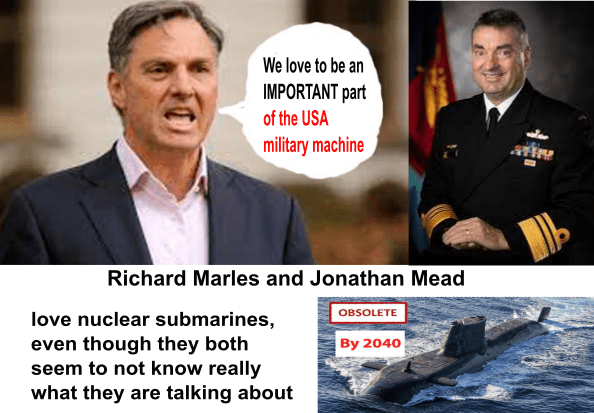
The gem in this whole venture, at least from the perspective of the U.S. military-industrial complex, is the roping in of the Australian taxpayer as the funder of its own nuclear weapons program.
By Binoy Kampmark | 6 January 2024. https://independentaustralia.net/politics/politics-display/funding-the-imperium-australia-subsidises-us-nuclear-submarines,18217
AUKUS, the trilateral pact between the United States, the United Kingdom and Australia, was a steal for all except one of the partners.
Australia, given the illusion of protection even as its aggressive stance (acquiring nuclear-powered submarines, becoming a forward base for the U.S. military) aggravated other countries; the feeling of superiority, even as it was surrendering itself to a foreign power as never before, was the loser in the bargain.
Last month, Australians woke up to the sad reminder that their government’s capitulation to Washington has been so total as to render any further talk about independence an embarrassment. Defence Minister Richard Marles, along with his deputy, Minister for Defence Industry Pat Conroy, preferred a different story.
Canberra had gotten what it wanted: approval by the U.S. Congress through its 2024 National Defense Authorisation Act (NDAA) authorising the transfer of three Virginia class nuclear-powered submarines to the Royal Australian Navy, with one off the production line, and two in-service boats. Australia may also seek congressional approval for two further Virginia class boats.
The measures also authorised Australian contractors to train in U.S. shipyards to aid the development of Australia’s own non-existent nuclear-submarine base, and exemptions from U.S. export control licensing requirements permitting the ‘transfer of controlled goods and technology between Australia, the United Kingdom, and the United States without the need for an export license’.
For the simpleminded Marles, Congress had “provided unprecedented support to Australia in passing the National Defense Authorisation Act which will see the transfer of submarines and streamlined export control provisions, symbolising the strength of our Alliance, and our shared commitment to the AUKUS partnership”.
Either through ignorance or wilful blindness, the Australian Defence Minister chose to avoid elaborating on the less impressive aspects of the authorising statute. The exemption under the U.S. export licensing requirements, for instance, vests Washington with control and authority over Australian goods and technology while controlling the sharing of any U.S. equivalent with Australia. The exemption is nothing less than appropriation, even as it preserves the role of Washington as the drip feeder of nuclear technology.
An individual with more than a passing acquaintance with this is Bill Greenwalt, one of the drafters of the U.S. export control regime.
As he told the ABC last November:
“After years of U.S. State Department prodding, it appears that Australia signed up to the principles and specifics of the failed U.S. export control system.”
In cooperating with the U.S. on this point, Australia would “surrender any sovereign capability it develops to the United States control and bureaucracy”.
The gem in this whole venture, at least from the perspective of the U.S. military-industrial complex, is the roping in of the Australian taxpayer as the funder of its own nuclear weapons program. Whatever its non-proliferation credentials, Canberra finds itself a funder of the U.S. naval arm in an exercise of modernised nuclear proliferation.
Even the Marles-Conroy media release admits that the NDAA helped ‘establish a mechanism for the U.S. to accept funds from Australia to lift the capacity of the submarine industrial base’. Airily, the release goes on to mention that this “investment” (would “gift” not be a better word?) to the U.S. Navy would also ‘complement Australia’s significant investment in our domestic submarine industrial base’.
A few days after the farcical spectacle of surrender by Australian officials, the Congressional Research Service provided another one of its invaluable reports that shed further light on Australia’s contribution to the U.S. nuclear submarine program. Australian media outlets, as is their form on covering AUKUS, remained silent about it. One forum, Michael West Media, showed that its contributors – Rex Patrick and Philip Dorling – were wide awake.
The report is specific to the Navy Columbia (SSBN-826) Class Ballistic Missile Submarine Program, one that involves designing and building 12 new SSBNs to replace the current, aging fleet of 14 Ohio class SSBNs. The cost of the program, in terms of 2024 budget submission estimates for the 2024 financial year, is US$112.7 billion (AU$168.2 billion).
As is customary in these reports, the risks are neatly summarised. They include the usual delays in designing and building the lead boat, thereby threatening readiness for timely deployment; burgeoning costs; the risks posed by funding the Columbia class program to other Navy programs; and ‘potential industrial-base challenges of building both Columbia-class boats and Virginia-class attack submarines (SSNs) at the same time’.
Australian funding becomes important in the last concern. Because of AUKUS, the U.S. Navy “has testified” that it would require, not only an increase in the production rate of the Virginia class to 2.33 boats per year, but ‘a combined Columbia-plus-Virginia procurement rate’ of 1+2.33. Australian mandarins and lawmakers, accomplished in their ignorance, have mentioned little about this addition.
But U.S. lawmakers and military planners are more than aware that this increased procurement rate:
‘…will require investing several billion dollars for capital plant expansion and improvements and workforce development at both the two submarine-construction shipyards (GD/EB [General Dynamics’ Electric Boat in Groton, Connecticut] and HII/NSS [Huntington Ingalls Industries’ Newport News Shipbuilding]) and submarine supplier firms.’
The report acknowledges that funding towards the 1+2.33 goal is being drawn from several allocations over a few financial years, but expressly mentions Australian funding ‘under the AUKUS proposed Pillar 1 pathway’, which entails the transfer component of nuclear-powered submarines to Canberra.
The report helpfully reproduces the 25 October 2023 testimony from the Navy before the Seapower and Projection Forces Subcommittee of the House of Armed Services Committee. Officials are positively salivating at the prospect of nourishing the domestic industrial base through, for instance, ‘joining with an Australian company to mature and scale metallic additive manufacturing across the SIB [Submarine Industrial Base]’.
The testimony goes on to note that:
‘Australia’s investment into the U.S. SIB builds upon ongoing efforts to improve industrial base capability and capacity, create jobs, and utilise new technologies. This contribution is necessary to augment VACL [Virginia class] production from 2.0 to 2.33 submarines per year to support both U.S. Navy and AUKUS requirements.’
The implications from the perspective of the Australian taxpayer are significant.
‘Australian AUKUS funding will support construction of a key delivery component of the U.S. nuclear strike force, keeping that program on track while overall submarine production accelerates.’
The funding also aids the advancement of another country’s nuclear weapons capabilities, a breach, one would have thought, of Australia’s obligations under the Treaty of Non-Proliferation of Nuclear Weapons.
Defence spokesman for the Australian Greens, Senator David Shoebridge, makes that very point to Patrick and Dorling:
“Australia has clear international legal obligations to not support the nuclear weapons industry, yet this is precisely what these billions of dollars of AUKUS funding will do.”
The Senator also asks:
“When will the Albanese Government start telling the whole truth about AUKUS and how Australians will be paying to help build the next class of U.S. ballistic missile submarines?”
For an appropriate answer, Shoebridge would do well to consult the masterful, deathless British series Yes Minister, authored by Antony Jay and Jonathan Lynn.
In one episode, the relevant minister, Jim Hacker, offers this response to a query by the ever-suspicious civil service overlord Sir Humphrey Appleby on when he might receive a draft proposal:
“At the appropriate juncture. In the fullness of time. When the moment is ripe. When the necessary procedures have been completed. Nothing precipitate, of course.”
In one word: never.
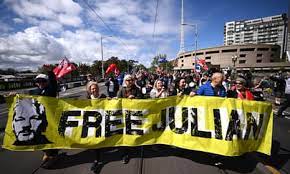
The Last Flurry: The US Congress and Australian Parliamentarians seek Assange’s Release
January 19, 2024 : Dr Binoy Kampmark, https://theaimn.com/the-last-flurry-the-us-congress-and-australian-parliamentarians-seek-assanges-release/
On February 20, Julian Assange, the daredevil publisher of WikiLeaks, will be going into battle, yet again, with the British justice system – or what counts for it. The UK High Court will hear arguments from his team that his extradition to the United States from Britain to face 18 charges under the Espionage Act of 1917 would violate various precepts of justice. The proceedings hope to reverse the curt, impoverished decision by the remarkably misnamed Justice Jonathan Swift of the same court on June 6, 2023.
At this point, the number of claims the defence team can make are potentially many. Economy, however, has been called for: the two judges hearing the case have asked for a substantially shortened argument, showing, yet again, that the quality of British mercy tends to be sourly short. The grounds Assange can resort to are troublingly vast: CIA-sponsored surveillance, his contemplated assassination, his contemplated abduction, violation of attorney-client privilege, his poor health, the violation of free-speech, a naked, politicised attempt by an imperium to capture one of its greatest and most trenchant critics, and bad faith by the US government.
Campaigners for the cause have been frenzied. But as the solution to Assange’s plight is likely to be political, the burden falls on politicians to stomp and drum from within their various chambers to convince their executive counterparts. In the US Congress, House Resolution 934, introduced on December 13 by Rep. Paul A. Gosar, an Arizona Republican, expresses “the sense of the House of Representatives that regular journalistic activities are protected under the First Amendment, and that the United States ought to drop all charges against and attempts to extradite Julian Assange.”
The resolution sees a dramatic shift from the punishing, haute view taken by such figures as the late Democratic Senator Dianne Feinstein, who was one of the first political figures to suggest that Assange be crucified on the unsteady timber of the Espionage Act for disclosing US cables and classified information in 2010. The resolution acknowledges, for instance, that the disclosures by WikiLeaks “promoted public transparency through the exposure of the hiring of child prostitutes by Defense Department contractors, friendly fire incidents, human rights abuses, civilian killings, and United States use of psychological warfare.” The list could be sordidly longer but let’s not quibble.
Impressively, drafters of the resolution finally acknowledge that charging Assange under the Computer Fraud and Abuse Act (CFAA) for alleged conspiracy to help US Army intelligence analyst Chelsea (then Bradley) Manning access Defense Department computers was a fabled nonsense. For one, it was “impossible” – Manning “already had access to the mentioned computer.” Furthermore, “there was no proof Mr Assange had any contact with said intelligence analyst.”
Ire is also directed at the espionage counts, with the resolution noting that “no other publisher has ever been prosecuted under the Espionage Act prior to these 17 charges.” A successful prosecution of the publisher “would set a precedent allowing the United States to prosecute and imprison journalists for First Amendment protected activities, including the obtainment and publication of information, something that occurs on a regular basis.”
Acknowledgment is duly made of the importance of press freedoms to promote transparency and protect the Republic, the support for Assange, “sincere and steadfast”, no less, shown by “numerous human rights, press freedom, and privacy rights advocates and organizations”, and the desire by “at least 70 Senators and Members of Parliament from Australia, a critical United States ally and Mr Assange’s native country” for his return.
Members of Australia’s parliament, adding to the efforts last September to convince members of Congress that the prosecution be dropped, have also written to the UK Home Secretary, James Cleverly, requesting that he “undertake an urgent, thorough and independent assessment of the risks to Mr Assange’s health and welfare in the event that he is extradited to the United States.”
-ADVERTISEMENT-
The members of the Bring Julian Assange Home Parliamentary Group draw Cleverly’s attention to the recent UK Supreme Court case of AAA v Secretary of State for the Home Department which found “that courts in the United Kingdom cannot just rely on third party assurances by foreign governments but rather are required to make independent assessments of the risk of persecution to individuals before any order is made removing them from the UK.
It follows that the approach taken by Lord Justices Burnett and Holroyde in USA v Assange [2021] EWHC 3133 was, to put it politely, a touch too confident in accepting assurances given by the US government regarding Assange’s treatment, were he to be extradited. “These assurances were not tested, nor was there any evidence of independent assessment as to the basis on which they could be given and relied upon.”
The conveners of the group point to Assange’s detention in Belmarsh prison since April 2019, his “significant health issues, exacerbated to a dangerous degree by his prolonged incarceration, that are of very real concern to us as his elected representatives.” They also point out the rather unusual consensus between the current Australian Prime Minister, Anthony Albanese, and his opposition number, Peter Dutton, that the “case has gone on for too long.” Continued legal proceedings, both in the UK, and then in the US were extradition to take place “would add yet more years to Mr Assange’s detention and further imperil his health.”
In terms of posterity’s calling, there are surely fewer better things at this point for a US president nearing mental oblivion to do, or a Tory government peering at electoral termination to facilitate, than the release of Assange. At the very least, it would show a grudging acknowledgment that the fourth estate, watchful of government’s egregious abuses, is no corpse, but a vital, thriving necessity.
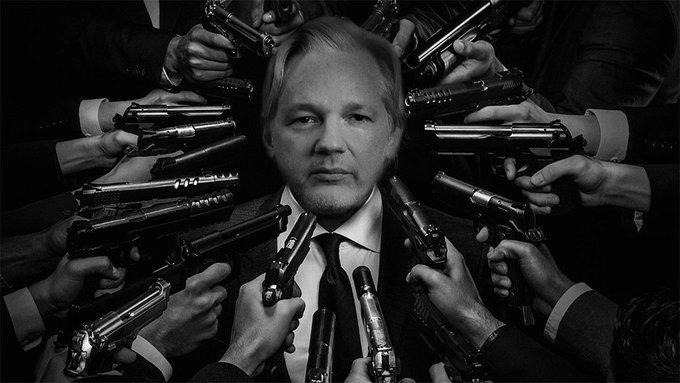
‘Do or die’: MPs launch urgent bid to spare Assange from US extradition.
By Matthew Knott, January 15, 2024 — https://www.theage.com.au/politics/federal/do-or-die-mps-launch-urgent-bid-to-spare-assange-from-us-extradition-20240114-p5ex2h.html
Australian politicians across the political divide have launched a last-ditch bid to prevent Julian Assange from being extradited to the United States to face espionage charges as the WikiLeaks founder faces a crucial final legal challenge in Britain next month.
The four co-convenors of the cross-party Bring Julian Assange Home Parliamentary Group wrote to British Home Secretary James Cleverly arguing for an urgent review of Assange’s case. This was in light of a judgment in the Supreme Court of the UK in November, striking down Prime Minister Rishi Sunak’s controversial plan to send asylum seekers to Rwanda.
On February 20 and 21, two British High Court judges will review an earlier ruling that refused Assange permission to appeal his extradition order. This is expected to be his final bid to prevent being sent to the US.
Assange faces decades in prison over his role in the publication of US classified files and diplomatic cables relating to the wars in Afghanistan and Iraq.
“If he loses in the UK courts next month he could be extradited to the USA within 24 hours,” Assange’s brother Gabriel Shipton said of the High Court review.
“This is literally a do-or-die scenario for Julian.”
Assange’s lawyer Jennifer Robinson has argued he was at high risk of suicide if the High Court rejects his final appeal, saying Assange was so mentally unwell that he would be unlikely to survive extradition.
Liberal MP Bridget Archer, Labor MP Josh Wilson, independent MP Andrew Wilkie and Greens Senator David Shoebridge wrote in their letter to Cleverly: “We are deeply concerned that the legal proceedings involving Mr Assange will now continue, first in the United Kingdom and then in the United States, if extradition is ordered and consented to by you.
“This would add yet more years to Mr Assange’s detention and further imperil his health.
“To this end, we are requesting that you undertake an urgent, thorough and independent assessment of the risks to Mr Assange’s health and welfare in the event he is extradited to the United States.”
As Home Secretary, Cleverly is one of the government’s most powerful ministers, presiding over law enforcement, national security and immigration and with oversight of the domestic counter-intelligence agency MI5.
The MPs argued in their letter that the judges’ reasoning in the Rwanda Supreme Court case – which found it was illegal for Britain to send asylum seekers to Rwanda – “clearly has direct relevance to the extradition proceedings involving Julian Assange”.
“The decision found that courts in the United Kingdom cannot just rely on third-party assurances by foreign governments but rather are required to make independent assessments of the risk of persecution to individuals before any order is made removing them from the UK,” they wrote.
The MPs said that the justices in Assange’s key extradition hearing had “expressly relied on the ‘assurances’ of the United States as to Mr Assange’s safety and welfare should he be extradited to the United States for imprisonment and trial.
“These assurances were not tested, nor was there any evidence of independent assessment as to the basis on which they could be given and relied upon.”
The MPs wrote that they were deeply worried about Assange being sent to a high-security American prison because he “has significant health issues, exacerbated to a dangerous degree by his prolonged incarceration, that are of very real concern to us as his elected representatives”.
In 2021, District Judge Vanessa Baraitser blocked the attempt to extradite Assange on the basis that the harsh conditions of US solitary confinement would create a substantial suicide risk. Her ruling was overturned on appeal.
Nuke policy quietly nuked: Australia to fund US nuclear weapon delivery program

Greens Defence Spokesperson Senator David Shoebridge said, “When will the Albanese government start telling the whole truth about AUKUS and how Australians will be paying to help build the next class of US ballistic missile submarines?”
by Rex Patrick and Philip Dorling | Jan 2, 2024, https://michaelwest.com.au/australia-to-fund-nuclear-missiles-aukus/
A newly released Congressional Research Service report confirms that Australian funds will be used to support the United States Navy’s nuclear ballistic missile submarine program. The Government has sunk Labor’s nuclear disarmament and non-proliferation pledges. Rex Patrick and Philip Dorling explain.
The Columbia class submarines will carry 16 thirteen metre long Trident II D5 missiles. Each of those missiles can carry up to eight (they can carry 12 but, by treaty, the number has been limited to eight) multiple independently targeted re-entry vehicles. Each re-entry vehicle can deliver a thermonuclear warhead to an individual target.
Fully loaded, each submarine will be able deliver thermonuclear weapons to 128 cities or hardened military targets.
When on patrol, the submarines are virtually undetectable, and there are no known, near-term credible threats to the survivability of the SSBN force. The ballistic missile submarines are the most survivable leg of the triad.
The US Navy for more than a decade consistently identified the Columbia Class program as its top priority program.
Enter AUKUS
There has been a lot of focus on how the US will meet its own production requirements for the conventionally armed Virginia class nuclear attack submarines with the AUKUS agreements providing for two existing submarines to be transferred to Australia and at least another new vessel acquired off the production line.
No-one in Australia has paid much attention to the Columbia Program. That’s been an oversight.
The Columbia class ballistic missile submarines will be built at General Dynamics’ Electric Boat in Groton, Connecticut, and Huntington Ingalls Industries’ Newport News Shipbuilding (HII/NNS), in Newport News, Virginia. That’s exactly the same shipyards the Virginia class attack submarines will be built.
And this will all be happening at the same time. The first Columbia submarine is to be delivered in October 2027, the second in April 2030, the third in August 2032, the fourth in September 2032, and the fifth in August 2033. At the same time those same shipyards will be pumping out Virginia Class submarine for the US Navy, and Australia. As the fifth Columbia is being delivered, Australia will get its first second hand Virginia Class submarine.
Both shipyards are currently collectively punching out 1.4 Virginia class boats per annum. By 2028 it is expected that the yards will be collectively be producing 2 per annum. That will meet US Navy requirements, but AUKUS takes the required production rate to 2.33 per annum. When the Columbia submarines are added to the mix, the US submarine industrial base needs to be producing 1+2.33 submarines per annum.
AUKUS funding to be used
In the meantime, Australia has agreed to contribute US$3B (AUD$4.7B) to “the US industrial base to support increased production and maintenance capacity to ensure there is no capability gap for Australia in acquiring Nuclear Powered Submarines.”
The latest Congressional Research Service report on the Columbia class program makes to clear that the Australian commitment is to generic US submarine industrial base funding; covering construction for both the Virginia and Columbia submarine programs.
“Building up the industrial base’s capacity to a 1+2.33 capacity will require investing several billion dollars for capital plant expansion and improvements and workforce development at both the two submarine-construction shipyards and submarine supplier firms.
Some of this funding has been provided in FY2023 and prior years, some of it is requested for FY2024, some of it would be requested in FY2025 and subsequent years, and some of it would be provided, under the AUKUS proposed Pillar 1 pathway, by Australia.”
Parliament in the dark on nuclear funding
To be perfectly clear, Australian AUKUS funding will support construction of a key delivery component of the US nuclear strike force, keeping that program on track while overall submarine production accelerates.
This fact has not been shared with the Australian public or Parliament.
Greens Defence Spokesperson Senator David Shoebridge said, “When will the Albanese government start telling the whole truth about AUKUS and how Australians will be paying to help build the next class of US ballistic missile submarines?”
Of course, the Government hasn’t exactly been upfront about a number of things in the AUKUS program, with Michael West Media being left to reveal (in contrast to statements made by Defence Minister Richard Marles) that Australia will be taking nuclear waste from the US and UK under the program.
A Merry AUKUS Surprise, Western Australia!
December 20, 2023, by: Dr Binoy Kampmark, https://theaimn.com/a-merry-aukus-surprise-western-australia/
The secretive Australian government just cannot help itself. Clamouring and hectoring of other countries and their secret arrangements (who can forget the criticism of the Solomon Islands over its security pact with China for that reason?) the Albanese government is a bit too keen on keeping a lid on things regarding the withering away of Australian independence before a powerful and spoiling friend.
A degree of this may be put down to basic lack of sensibility or competence. But there may also be an inadvertent confession in the works here: Australians may not be too keen on such arrangements once the proof gets out of the dense, floury pudding.
It took, as usual, those terrier-like efforts from Rex Patrick, Australia’s foremost transparency knight, forever tilting at the windmill of government secrecy, to discover that Western Australians are in for a real treat. The US imperium, it transpires from material produced by the Australian Department of Defence, will be deploying some 700 personnel, with their families, to the state. And to make matters more interesting, Western Australia will also host a site for low-level radioactive waste produced by US and UK submarines doing their rotational rounds under the AUKUS arrangements.
The briefing notes from the recently created Australian Submarine Agency reveal that the Submarine Rotational Force-West (SRF-West) will host as many as four US nuclear submarines of the US Navy Virginia-class at HMAS Stirling and one UK nuclear-powered boat from 2027. As part of what is designated the first phase of AUKUS, an Australian workforce of some 500-700 maintenance and support personnel is projected to grow in response to the program before Australia owns and operates its own US-made nuclear-powered boats. Once established and blooded by experience, “This workforce will then move to support our enduring nuclear-powered submarine program and will be a key enabler for SRF-West.”
The ASA documents go on to project that “over 700 United States Personnel could be living and working in Western Australia to support SRF-West, with some also bringing families.” The UK will not be getting the same treatment, largely because the contingent from the Royal Navy will be moving through on shorter rotations.
The stationing of the personnel in question finally puts to rest those contemptible apologetics that Australia is not a garrison for the US armed forces. At long last Australians can be reassured, if rather grimly, that these are not fleeting visits from great defenders, but the constant, and lingering presence of an imperial power jealously guarding its interests.
The issue of storing waste will have piqued some interest, given Australia’s current and reliably consistent failure to establish any long-term storage facility for any sort of nuclear waste, be it low, medium or high grade. But never fear, the doltish poseurs of the Defence Department are always willing to please and, as the department documents show, learn in their servile role.
As Patrick reveals, the documents released under FOI tell us that “operational waste” arising from the Submarine Rotational Force operation at HMAS Stirling will include the storage of low to intermediate level radioactive waste on Australian defence sites. One document notes that, “The rotational presence of United Kingdom and United States SSNs in Western Australia as part of the Submarine Rotational Force – West (SRF-West) will provide an opportunity to learn how these vessels operate, including the management of low-level radioactive waste from routine sustainment.”
The ASA also confirms with bold foolhardiness that, “All low and intermediate radioactive waste will be safely stored at Defence sites in Australia.” The storage facility in question is “being planned as part of the infrastructure works proposed for HMAS Stirling to support SRF-West.”
The Australian Defence Minister Richard Marles has retained a consultant, Steve Grzeskowiak, to the remunerative value of AU$396,000 from February to December this year to identify a suitable site on land owned by the Commonwealth. Absurdly, the same consultant, when Deputy Secretary of Defence Estates, conducted an analysis of over 200 Defence sites in terms of suitability for low-level waste management, finding none to pass muster.
In a troubling development, Patrick also notes that the Australian Naval Nuclear Power Safety Bill 2023, in its current form, would permit the managing, storing or disposing of radioactive waste from an AUKUS submarine, which would include UK or US submarines. Importantly, that waste could well be of a high-level nature. “While the Albanese Government has made a commitment that it will not do so, the Bill leaves the legal door open for possible future agreement from the Australian Government to store high-level nuclear waste generated from US or UK nuclear-powered submarines.”
To round matters off, Australia’s citizenry was enlightened to the fact that they will be adding some $US3 billion (AU$4.45 billion) to the US submarine industrial base. In the words of the ASA, “Australia’s commitment to invest in the US submarine industrial base recognises the lift the United States is making to supporting Australia’s acquisition of nuclear-powered submarines.” This will entail the pre-purchase of “submarine components and materials, so they are on hand at the start of the maintenance period” thereby “saving time” and “outsourcing less complex sustainment and expanding planning efforts for private sector overhauls, to reduce backlog.”
Decoding such naval, middle-management gibberish is a painful task, but nothing as painful as the implications for a country that has not only surrendered itself wholly and without qualification to Washington but is all too happy to subsidise it.
Indonesia ratifies nuclear weapons ban treaty. Australia should too.
MARIANNE HANSON, https://www.lowyinstitute.org/the-interpreter/indonesia-ratifies-nuclear-weapons-ban-treaty-australia-should-too
Why does the government remain at odds with the vast majority of its neighbours?
Indonesia’s parliament last month agreed to ratify the United Nations Treaty on the Prohibition of Nuclear Weapons (TPNW). This is an important political development, and it deserves attention – across the region and in Australia. The approval of ratification was done very symbolically, just ahead of the second meeting of States Parties of the TPNW at the United Nations, held last week. The meeting at UN headquarters in New York was attended by most of the TPNW’s 69 parties, as well as by representatives from 35 non-parties, including Australia as well as NATO members Belgium, Norway and Germany.
Indonesia will soon deposit its instrument of ratification at the UN, formally becoming a state party. By ratifying the TPNW, Indonesia is making it clear that it rejects the most destructive of all weapons of mass destruction, nuclear weapons. That is good news. It’s a recognition that there are still around 12,500 nuclear weapons in existence, many of them vastly more destructive than the Hiroshima bomb, and a reminder that the world still lives under the very real – indeed growing – threat of complete annihilation.
Indonesia is a leading member of the Association of Southeast Asian Nations, a grouping which, decades ago, made its stance against nuclear weapons clear by creating the Southeast Asian Nuclear Weapon Free Zone (SEANWFZ). Nine of the ten ASEAN members have signed or ratified the TPNW (as has ASEAN observer Timor-Leste), but Indonesia’s ratification is especially important because it signals a clear commitment by one of the world’s largest states to work towards the global elimination of these inhumane weapons.
Indonesia is also a founding member of the 120 nation Non-Aligned Movement, a grouping which marshals considerable collective diplomatic clout on the international stage. For the great majority of non-aligned states, nuclear weapons are seen not just as weapons of horrific destruction, but also as instruments of continuing domination and exploitation. Many formerly colonised states are asking the large and powerful countries to listen to them and to consider their security preferences. They have a point: nuclear weapon states effectively hold the entire world to ransom.
Indonesia’s ratification should make Australians ask why its government remains at odds with the vast majority of its neighbours. Most of the South Pacific states, Southeast Asia, and New Zealand clearly oppose the threat of nuclear weapons. The TPNW makes these inhumane weapons illegal, as other treaties do for biological and chemical weapons, landmines, and cluster munitions.
Prime Minister Anthony Albanese has supported the TPNW, stating that “nuclear weapons are the most destructive, inhumane, and indiscriminate weapons ever created”, and that “the struggle for nuclear disarmament is the most important struggle for the human race”. Labor’s national policy platform, repeated in August this year, commits Australia to signing and ratifying the TPNW. But the government is yet to do so, leaving Australia now out of step with its largest neighbour and the region more broadly.
The AUKUS arrangement with the US and the UK signals a faith in the old-fashioned militarism of the Anglosphere more than the promising dynamics and peaceful potential of the region. Indonesia, Malaysia, and other states expressed concern about Australia’s plan to acquire nuclear-powered submarines. Proceeding with AUKUS makes it even more important that Australia credibly reassure the world it has no intention of acquiring nuclear weapons. Signing the TPNW would make that commitment concrete.
Clearly there has been pressure from the United States on Canberra not to sign. But fears of endangering the ANZUS alliance are overblown; Washington will be displeased when Australia signs the TPNW, but Canberra can remain an invaluable (conventional weapons) partner for the United States in the Asia-Pacific region. Signing the TPNW does not void the ANZUS alliance, nor does it mean Australia cannot proceed with AUKUS, although this pact would have to be managed carefully.
Several US allies have already signed the TPNW and even some NATO states have explored the option of joining. Australia can take a principled stand. Nuclear weapons are immoral and threaten the existence of everyone, the environment and life on Earth.
And a closer alignment by Canberra with the views of Australia’s region will be important.
Indonesia has a population of around 280 million people and is a secular democratic country with a Muslim-majority population, the largest in the world. Its economic growth is strong, with predictions that it will be among the top five world economies within a few decades. It has a growing middle-class, with an overwhelmingly young population (a quarter are aged under 14). Indonesia is a vibrant and vital part of Australia’s local geography and will become an increasingly important trading partner. All this suggests that Canberra should be paying more attention to the security wishes of its near neighbours. By signing the TPNW, Australia will be on the right side of history and be more in sync with its region.
Indonesia and other Asia-Pacific neighbours are showing the way. It’s time to work towards a common future with them, not a future blighted by the danger of nuclear annihilation.
Independents pressure Australia on nuclear ban treaty ahead of UN meeting
November 24th, 2023
11 independent parliamentarians have issued a public call on the Prime Minister to keep Labor’s promise to sign and ratify the UN Treaty on the Prohibition of Nuclear Weapons, ahead of the treaty’s Second Meeting of States Parties on 27 November – 1 December in New York.
The letter, which is signed by Kate Chaney MP, Zoe Daniel MP, Dr. Helen Haines MP, Senator David Pocock, Dr. Monique Ryan MP, Dr. Sophie Scamps MP, Allegra Spender MP, Zali Steggall OAM MP, Senator Lidia Thorpe, Kylea Tink MP, and Andrew Wilkie MP, states that “nuclear weapons do not promote security, they undermine it. We don’t accept the everlasting presence of these weapons.” They “urge the Government to advance its signature and ratification of the Ban Treaty without delay, to bring Australia in line with our South-East Asian and Pacific island neighbours.”
In regards to the letter, Federal Member for Goldstein, Zoe Daniel MP, said: “Voters supported Labor at the election, believing in good faith that they would implement their platform.
“Signing and ratifying was Labor Party policy before the election and has been reaffirmed since.
“In the most perilous times since the height of the Cold War this treaty is needed more than ever; voters want it and so do the vulnerable nations of the Pacific whose backyards were used for nuclear testing without their permission.
“Look at what Labor does, not what it says.”
Australia will attend the Second Meeting of States Parties as an observer, with a parliamentary head of delegation, after attending the first Meeting of States Parties in June 2022. It is expected that several states, including Indonesia, will ratify the treaty during the meeting, bolstering universalisation efforts. Around 100 countries will attend, along with over 400 civil society delegates.
Gem Romuld, ICAN Australia Director, welcomed the independents’ statement and Australia’s attendance at the meeting, but said the Albanese Government must do more, in line with their policy platform to sign and ratify the treaty.
“We welcome the Australian government’s engagement with the Treaty on the Prohibition of Nuclear Weapons, but observing meetings isn’t enough. There is clearly broad support for signing on to this treaty in the Australian Parliament, as indicated by the independents’ statement to the PM.
“Labor needs to make good on their promise to join the majority of our South East Asian and Pacific neighbours and sign and ratify the TPNW. We hope that Australia’s attendance at this meeting will spur efforts towards this urgent goal.”
Romuld is joining the international ICAN delegation at the meeting, including Yankunytjatjara-Anangu woman and second-generation nuclear test survivor Karina Lester, and current ICAN Executive Director, former Labor MP Melissa Parke.
A four-decade-old Pacific treaty was meant to preserve the ‘peaceful region’. Now experts say it’s being exploited
“We regret that the Aukus agreement … is escalating geopolitical tensions in our region and undermining Pacific-led nuclear-free regionalism,” says the Pacific Elders’ Voice,
the US and the UK will increase rotations of nuclear-powered submarines to Australia,
Pacific countries rushed to join the TPNW six years ago, reflecting their longstanding concerns about nuclear testing legacies. It’s the same regional sentiment that spurred the earlier Treaty of Rarotonga.
Daniel Hurst in Rarotonga
Nearly 40 years after the Treaty of Rarotonga came into force, the region is on edge about another rise in geopolitical tension
…………………………………………………………………………….heightened concerns permeated the region in the months leading up to the crucial meeting in the Cook Islands in August 1985 where leaders endorsed a nuclear-free zone.
Hawke, the Australian prime minister at the time, hailed the negotiations as a “dramatic success” that would send “a clear and unequivocal message to the world”, with the treaty leaving major powers in no doubt about the region’s desire to preserve “the South Pacific as the peaceful region which its name implies”.
But nearly 40 years after the Treaty of Rarotonga came into force, the region is on edge about another rise in geopolitical tensions – and critics say gaps in the treaty’s coverage are now being exploited.
“The treaty was really important to a lot of people, especially for grassroots activists,” says Talei Mangioni, a Fijian-Australian board member of the International Campaign to Abolish Nuclear Weapons Australia.
But it was quite watered down. And so even though we celebrate it today, what activists were saying in the 1980s and what progressive states like Papua New Guinea, Solomon Islands and Vanuatu were saying was that it wasn’t comprehensive enough.”
Mangioni, who researches the legacy of the Nuclear Free and Independent Pacific Movement, adds: “That’s what’s left us now with things like Aukus exploiting certain loopholes that have remained in the treaty.”
A hotbed of great-power competition?
When leaders met last week in the Cook Islands for the annual meeting of the Pacific Islands Forum (Pif), the Treaty of Rarotonga was once again on everyone’s lips.
The host of the summit, prime minister Mark Brown of the Cook Islands, argued the region “should rediscover and revisit our Rarotonga treaty to ensure that it reflects the concerns of Pacific countries today, and not just what occurred back in 1985”.
The treaty – signed on the 40th anniversary of the US atomic bombing of the Japanese city of Hiroshima – reflected “the deep concern of all forum members at the continuing nuclear arms race and the risk of nuclear war”.
Also known as the South Pacific Nuclear Free Zone Treaty, it designated a vast area from the west coast of Australia to Latin America where its parties must prevent the “stationing” (critics say this was always a deliberately ambiguous word) of nuclear weapons.
“The treaty prohibits the use, testing or stationing of nuclear explosive devices in the South Pacific,” the Cook Islands News explained on 7 August 1985.
“It does not prohibit countries from transporting nuclear devices through the zone nor does it prohibit nuclear-powered or equipped ships from calling in ports within the area.”
Today the parties to this treaty are Australia, Cook Islands, Fiji, Kiribati, Nauru, New Zealand, Niue, Papua New Guinea, Samoa, Solomon Islands, Tonga, Tuvalu and Vanuatu.
Once again, many of these nations are worried about the Pacific becoming a hotbed of great-power competition and the risk of that spiralling into conflict. Aukus feeds into some of those fears.
“We regret that the Aukus agreement … is escalating geopolitical tensions in our region and undermining Pacific-led nuclear-free regionalism,” says the Pacific Elders’ Voice, a group of former leaders whose members include Anote Tong, the ex-president of Kiribati.
The legality of a treaty – and the spirit of it
Under the Aukus plan, Australia will buy at least three Virginia class nuclear-powered submarines from the US in the 2030s, before Australian-built boats enter into service from the 2040s.
In the meantime, the US and the UK will increase rotations of nuclear-powered submarines to Australia, all aimed at deterring China from unilateral action against Taiwan or destabilising activities in the increasingly contested South China Sea.
One point of sensitivity is that it will be the first time a provision of the Nuclear Non-Proliferation Treaty regime has been used to transfer naval nuclear propulsion technology from a nuclear weapons state to a non-weapons state.
The Australian government has worked assiduously behind the scenes to reassure Pacific leaders on a key point about Aukus.
“Certainly when I was talking to people about it I would explain how it was consistent with the Treaty of Rarotonga,” says the Australian minister for the Pacific, Pat Conroy.
Donald Rothwell, a professor of international law at the Australian National University, concurs. The treaty, he notes, does not deal with nuclear-propelled submarines.
“My view is that Aukus is consistent with Australia’s Treaty of Rarotonga obligations,” Rothwell says.
“Pacific states may have concerns about the potential stationing of US and UK nuclear-armed warships in Australian ports under Aukus. The stationing of such vessels, as opposed to port visits, would be contrary to the treaty.”
The Australian prime minister, Anthony Albanese, sought to allay any Aukus-related concerns when he briefed Pacific leaders during the Pif meetings last week and appears to have held off any open rebellion.
Albanese insists the treaty remains “a good document” and “all of the arrangements that we’ve put in place have been consistent with that”.
But anti-nuclear campaigners point to the planned new aircraft parking apron at the Tindal base in the Northern Territory that will be able to accommodate up to six US B-52 bombers.
The US refuses to confirm or deny whether the aircraft on rotation would be nuclear-armed, in line with longstanding policy.
“We should delineate between a legalistic interpretation of the Treaty of Rarotonga and the spirit of it,” says Marco de Jong, a Pacific historian based in Aotearoa New Zealand.
“Pacific nations are growing increasingly frustrated at Australia’s reliance on loopholes and technicalities.”
Australia: the regional outlier
The Nobel prize-winning International Campaign to Abolish Nuclear Weapons says a good way for Australia to reassure the region about its long-term intentions would be to sign the newer Treaty on the Prohibition of Nuclear Weapons (TPNW).
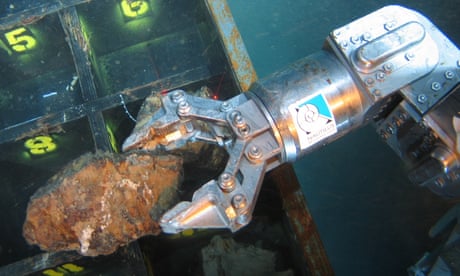
This is an idea Albanese previously supported enthusiastically but which appears stalled.
One potential problem is that the US has warned that the TPNW – which includes a blanket ban on helping others to use or threaten to use nuclear weapons – wouldn’t allow for close allies like Australia to enjoy the protection of the American “nuclear umbrella”.
Documents obtained by the Guardian under freedom of information laws show the Australian defence department has warned the Labor government that the TPNW is “internationally divisive” because the nuclear weapons states “are all opposed”.
But Mangioni, a member of the Youngsolwara Pacific movement of activists, counters that Pacific countries rushed to join the TPNW six years ago, reflecting their longstanding concerns about nuclear testing legacies. It’s the same regional sentiment that spurred the earlier Treaty of Rarotonga.
“I would say that Australia is indeed the outlier compared to the rest of the Pacific states,” Mangioni says.
“Australia depends on nuclear deterrence as its policy but the rest of the Pacific states are nuclear abolitionists.” https://www.theguardian.com/world/2023/nov/19/a-40-year-old-pacific-treaty-was-meant-to-maintain-the-peaceful-region-now-experts-say-its-being-exploited
Republicans and Democrats Unite to Push for Assange’s Freedom

Sixteen members of Congress signed a letter to President Biden urging him to drop the case against the WikiLeaks founder.
By Dave DeCamp / Antiwar.com https://scheerpost.com/2023/11/12/republicans-and-democrats-unite-to-push-for-assanges-freedom
Abipartisan group of 16 members of Congress has called on President Biden to drop the case against WikiLeaks founder Julian Assange, warning of the grave threats to press freedom if he is convicted.
The lawmakers made the call in a letter sent to President Biden on Wednesday. The effort was led by Reps. Thomas Massie (R-KY) and James McGovern (D-MA), who began circulating the letter to their colleagues for signatures last month.
“It is the duty of journalists to seek out sources, including documentary evidence, in order to report to the public on the activities of government,” the letter reads, according to a press release from Assange Defense.
“The United States must not pursue an unnecessary prosecution that risks criminalizing common journalistic practices and thus chilling the work of the free press. We urge you to ensure that this case be brought to a close in as timely a manner as possible,” the letter states.
The letter was also signed by Reps. Alexandria Ocasio-Cortez (D-NY), Jamaal Bowman (D-NY), Ayanna Pressley (D-MA), Greg Casar (D-TX), Ilhan Omar (D-MN), Cori Bush (D-MO), Rashida Tlaib (D-MI), Eric Burlison (R-MO), Marjorie Taylor Greene (R-GA), Paul Gosar (R-AZ), Jesús García (D-IL), Pramila Jayapal (D-WA), Matthew Rosendale (R-MT), and Sen. Rand Paul (R-KY).
The letter comes as the Biden administration has been under pressure from the Australian government to free Assange, who is an Australian citizen. In September, a delegation of Australian members of parliament from across the political spectrum visited Washington and met with US officials to lobby for Assange. Australian Prime Minister Anthony Albanese brought up the case with President Biden when he visited the White House in October.
Assange faces up to 175 years in prison if extradited to the US and convicted for exposing US war crimes. The charges stem from documents published by WikiLeaks that Assange obtained from his source, former Army Private Chelsea Manning, a standard journalistic practice. Assange has been held in London’s Belmarsh Prison since April 2019 as his legal team is fighting against US efforts to extradite him.
Pacific Islands Forum – time to reinvigorate the Treaty of Rarotonga, the nuclear weapons-free pact ?
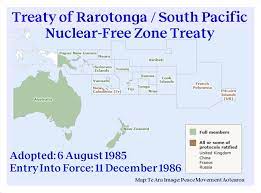
Pacific backs Australian climate policy: Albanese.
St George and Sutherland Shire Leader, Australian Associated Press 9 Nov 23
“…………………………………………………………………………………………………. Joining climate as one of the top issues at the gathering are nuclear concerns, with Pacific leaders showing their resolve to keep the region nuclear-free.
The Pacific is stridently nuclear-free, a legacy of the region’s painful history with testing of nuclear weapons by the United States, United Kingdom and France.
Australia’s AUKUS deal to obtain nuclear-powered submarines raises concern among many, given the sensitivity of nuclear issues.
Leaders in Kiribati, Tuvalu, Solomon Islands and Fiji have previously expressed reservations on different fronts, including the extravagant cost, which exceeds the entire annual GDP of PIF members excepting Australia and New Zealand.
PIF chair and Cook Islands Prime Minister Mark Brown has suggested the time could have come to “reinvigorate” the Treaty of Rarotonga, the nuclear weapons-free pact signed during the Cold War.
Mr Albanese was less forthcoming on whether reform was needed, declining to respond to questions on whether he supported Mr Brown’s calls.
“We support the Treaty of Rarotonga. It is a good document. It has stood the test of time, all of the arrangements that have been in place, we’ve been consistent with that, and it retains our support,” he said.
The legacy of another nuclear incident – the 2011 Fukushima power plant disaster – also hangs over the Pacific.
Japan is releasing treated wastewater from the power plant, insisting it is safe to do so, with an International Atomic Energy Agency report as proof.
Australia and New Zealand accept those guarantees, but a growing number of Pacific nations hold concerns, including Polynesian and Melanesian blocs.
At the PIF summit, Fiji Prime Minister Sitiveni Rabuka is championing another initiative: declaring the Pacific an “ocean of peace”.
That proposal, the nuclear concerns and the Suva Agreement regional unity pact are late inclusions onto the agenda of the leaders retreat. https://www.theleader.com.au/story/8417306/pacific-backs-australian-climate-policy-albanese/
Small modular nuclear reactor that was hailed by Coalition as future cancelled due to rising costs

Opposition climate and energy spokesperson had pointed to SMRs as a solution to Australia’s energy needs, but experts raise questions over price tag.
Adam Morton, Guardian, 9 Nov 23
The only small modular nuclear power plant approved in the US – cited by the Australian opposition as evidence of a “burgeoning” global nuclear industry – has been cancelled due to rising costs.
NuScale Power announced on Wednesday that it had dropped plans to build a long-promised “carbon free power project” in Idaho. It blamed the decision on a lack of subscribers for the plant’s electricity.
The Coalition’s energy and climate spokesperson, Ted O’Brien, has cited NuScale’s technology as part of the opposition’s contentious argument that Australia should lift a national ban on nuclear energy and that small modular reactors (SMRs) could be an affordable replacement for its ageing coal-fired power plant
In an opinion piece in the Australian earlier this year, O’Brien said the company’s integrated reactors, starting with the Idaho plant in 2029, offered “exceptional flexibility” and were an example “of a burgeoning nuclear industry for next-generation technology” in the US.
The climate change minister, Chris Bowen, said SMRs were “the opposition’s only energy policy”.
“The most advanced prototype in the US has been cancelled. The LNP’s plan for energy security is just more hot air from Peter Dutton,” he said………………………………………………………………………………
Industry experts say SMRs are not commercially available, that nuclear energy is more expensive than alternatives and in a best-case scenario could not play a role in Australia for more than a decade, and probably not before 2040. The Australian Energy Market Operator found renewable energy could be providing 96% of the country’s electricity by that time.
The Coalition opposes Labor’s goal of reaching 82% renewable electricity by 2030. It has argued for a slower response to the climate crisis and amplified local concerns about new clean energy and electricity transmission connections.
The projected cost of the NuScale project had blown out from US$3.6bn for 720 megawatts in 2020 to US$9.3bn for 462MW last year. It failed after securing subscriptions for only 20% of the required capital from a Utah-based consortium of electricity companies.
Simon Holmes à Court, a clean energy advocate and commentator and convener of political fundraising body Climate 200, said the estimated capital cost of the Idaho project before it was cancelled was 70% higher than CSIRO projections of what nuclear power plants could cost to build in 2030.
He said this undermined arguments by the Coalition and other nuclear advocates, who had accused the CSIRO of exaggerating the likely cost of nuclear energy.
Holmes à Court said Australia needed a rapid rollout of solar, wind and energy storage. He recently toured nuclear power projects in the US.
“The simple fact is that commercial SMRs don’t exist. There are zero in operation or even contracted for construction outside Russia and China. The cancellation of one of the three leading proposals underscores the speculative nature of this far-off technology,” he said.
“More than two thirds of our coal generators will retire in the next decade due to age. By pushing a unicorn technology the Coalition is posing a threat to the cost and security of Australia’s electricity grid.” https://www.theguardian.com/australia-news/2023/nov/09/small-modular-nuclear-reactor-that-was-hailed-by-coalition-as-future-cancelled-due-to-rising-costs
—
1 This month

of the week – Australians for War Powers Reform (AWPR)
To see nuclear-related stories in greater depth and intensity
 Antinuclear