AUKUS is ‘going against’ Pacific nuclear free treaty – Cook Islands leader

Cook Islands Prime Minister Mark Brown has joined a growing list of Pacific leaders to object to the $US250 billion nuclear submarine deal between Australia, United Kingdom and the United States (Aukus).
The Aukus project, which will allow Australia to acquire upto eight nuclear-powered submarines, has been widely condemned by proponents of nuclear non-proliferation.
It has also fuelled concerns that the submarine pact, viewed as an arrangement to combat China, will heighten geopolitical tensions and disturb the peace and security of the region, which is a notion that Canberra has rejected.
Brown, who is the Pacific Islands Forum (PIF) chair, told Cook Islands News he was concerned about the Aukus deal because it is “going against” the Pacific’s principal nuclear non-proliferation agreement.
We’ve all abided by the Treaty of Rarotonga, signed in 1985, which was about reducing the proliferation of nuclear weapons and nuclear vessels,” he told the newspaper.
The Treaty of Rarotonga has more than a dozen countries signed up to it, including Australia and New Zealand.
But it is what it is,” he said of the tripartite arrangement.
“We’ve already seen it will lead to an escalation of tension, and we’re not happy with that as a region.”
Other regional leaders who have publicly expressed concerns about the deal include Solomon Islands PM Manasseh Sogavare, Tuvalu’s foreign Minister Simon Kofe, and Vanuatu’s Climate Change Minister Ralph Regenvanu.
With Cook Islands set to host this year’s PIF meeting in October, Brown has hinted that the “conflicting” nuclear submarine deal is expected to be a big part of the agenda.
“The name Pacific means peace, so to have this increase of naval nuclear vessels coming through the region is in direct contrast with that,” he said.
“I think there will be opportunities where we will individually and collectively as a forum voice our concern about the increase in nuclear vessels.”
Brown said “a good result” at the leaders gathering “would be the larger countries respecting the wishes of Pacific countries.”
“Many are in opposition of nuclear weapons and nuclear vessels,” he said.
“The whole intention of the Treaty of Rarotonga was to try to de-escalate what were at the time Cold War tensions between the major superpowers.”
This Aukus arrangement seems to be going against it,” he added.
AUKUS, the Australian Labor Party, and Growing Dissent
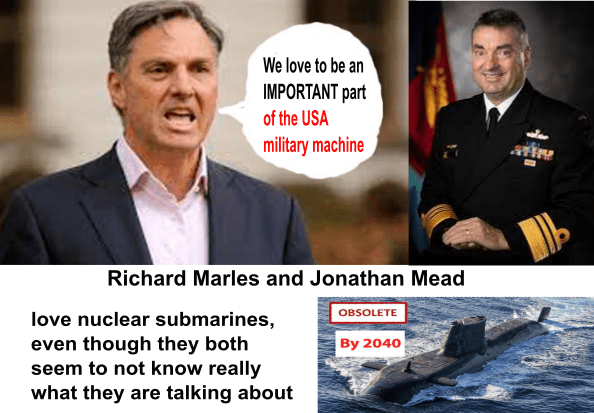
the Royal Australian Navy would be far better off acquiring between 40 to 50 of the Collins Class submarines to police the coastline rather than having nuclear powered submarines lying in wait off the Chinese shoreline.
March 25, 2023, by: Dr Binoy Kampmark https://theaimn.com/aukus-the-australian-labor-party-and-growing-dissent/
It was a sight to behold and took the wind out of the bellicose sails of the AUKUS cheer squad. Here, at the National Press Club in the Australian capital, was a Labor luminary, former Prime Minister of Australia and statesman, keen to weigh in with characteristic sharpness and dripping venom. Paul Keating’s target: the militaristic lunacy that has characterised Australia’s participation in the US-led security pact that promises hellish returns and pangs of insecurity.
In his March 15 address to a Canberra press gallery bewitched by the magic of nuclear-propelled submarines and the China bogeyman, Keating was unsparing about those “seriously unwise ministers in government” – notably Foreign Minister Penny Wong and Defence Minister Richard Marles, unimpressed by their foolish, uncritical embrace of the US war machine. “The Albanese Government’s complicity in joining with Britain and the United States in a tripartite build of a nuclear submarine for Australia under the AUKUS arrangements represents the worst international decision by an Australian Labor government since the former Labor leader, Billy Hughes, sought to introduce conscription to augment Australian forces in World War One.”
In terms of history, this was chilling to Keating. The AUKUS security pact represented a longing gaze back at the Mother Country, Britain, “shunning security in Asia for security in and within the Anglosphere.” It also meant a locking alliance with the United States for the next half-century as a subordinate in a containment strategy of Beijing. This was a bi-partisan approach to foreign policy that saw the US dominating East Asia as “the primary strategic power” rather than a balancing one.
For Keating, the impetus for such madness came from a defence establishment that dazzled the previous Prime Minister, Scott Morrison. That effort, he argues, was spearheaded by the likes of the US-funded Australian Strategic Policy Institute and Andrew Shearer of the Office of National Intelligence. They even, he argues, managed to convince PM Albanese, Marles and Wong to abandon the 20-month review period on the scope of what they were seeking.
The steamrolling Keating was also unsparing in attacking a number of journalists for their ditzy, adolescent belligerence. The sword, once produced, was never sheathed. Peter Hartcher, most notably, received a generous pasting as a war infatuated lunatic whose anti-China campaign at the Fairfax presses had been allowed for years.
In terms of the submarines themselves, Keating also expressed the view that the Royal Australian Navy would be far better off acquiring between 40 to 50 of the Collins Class submarines to police the coastline rather than having nuclear powered submarines lying in wait off the Chinese shoreline.
As we all should know, submarine policy is where imagination goes to expire, often in frightful, costly ways. For all Keating’s admiration for the Collins Class, it was a nightmarish project marred by fiascos, poor planning and organisational dysfunction within the defence establishment. At stages, two-thirds of the Australian fleet of six submarines was unable to operate at full capacity. The lesson here is that submarines and the Australian naval complex simply do not mix.
The reaction from the Establishment was one of predictable dismissal, denial and distortion, typical of what Gore Vidal would have called deranged machismo. Instead of being critical of the powers that are, they have turned their guns and wallets on spectres, ghosts and devilish images. The tragedy looms, and it will be, like many tragedies, the result of colossal, unforgivable stupidity.
At the very least, the intervention by Keating, notably in the Labor Party, has not gone unnoticed. Within the Labor caucus, tremors of dissatisfaction are being recorded, breaches growing. West Australian Labor backbencher Josh Wilson defied his own party’s dictates by telling colleagues in the House of Representatives how he was “not yet convinced that we can adequately deal with the non-proliferation risks involved in what is a novel arrangement, by which a non-nuclear weapons state under the NPT (Non-proliferation of Nuclear Weapons Treaty) comes to acquire weapons-grade material.”
Wilson’s views are not outlandish to the man. He is keen to challenge the notion of unaccountable executive war powers, a problem that looms large in the Westminster system. “To assume that such decision-making is already perfect, immutable, and beyond scrutiny,” he wrote in December last year, “puts Australia at risk of making the most dangerous judgments without the best institutional framework for doing so.”
A gaggle of former senior Labor ministers have also emerged, even if they initially proved sluggish. Peter Garrett, former environment minister and front man of Midnight Oil, while proving a bit squeamish about Keating’s invective, found himself in general agreement. “The deal stinks with massive cost, loss of independence, weaking nuke safeguards & more.”
Kim Carr, who had previously held ministerial positions in industry and defence materiel, revealed that the matter of AUKUS had never been formally approved in the Federal Labor caucus, merely noted. Various “key” Labor figures – again Marles and Wong – agreed to endorse the proposition put forth to them on September 15, 2021 by the then Coalition government.
He also expressed deep concern “about a revival of a forward defence policy, given our performance in Vietnam.” For Carr, the shadow cast by the Iraq War was long. “Given it’s 20 years since Iraq, you can hardly say our security agencies should not be questioned when they provide their assessments.”
For former foreign minister, Gareth Evans, there were three questions: whether the submarines are actually fit for purpose; whether Australia retained genuine sovereignty over them in their use; and, were that not the case, “whether that loss of agency is a price worth paying for the US security insurance we think we might be buying.”
Will these voices make a difference? They just might – but if so, Australia will have to thank that political pugilist and Labor veteran who, for all his faults, spoke in terms that will be considered, in a matter of years, treasonous by the Empire and its sycophants.
AUKUS – “These are the horrors”
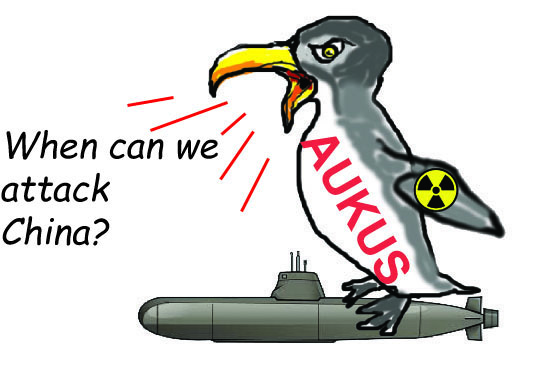
Instead of humiliatingly accepting the smirking American ‘we neither confirm nor deny the presence of nuclear weapons visiting your country’, the Albanese government could reassert a little of our lost sovereignty by stating up front, no nuclear weapons never.
The AUKUS submarines will not be here to defend Australia, but only to attack China in a subordinate role with the American forces.
Pearls and Irritations, By Richard Tanter, Mar 24, 2023
AUKUS. This is a horror for which I now fear for the lives of my children and their children. Every time a Labor member of parliament or senator puts foot outside their office to appear in public, turns up at a public meeting, we need to ask them: why have you betrayed us? Why have you allowed this to happen? What are you going to do?
Transcript of a speech at the Anti-AUKUS Rally, Naarm, State Library of Victoria lawn, 18 March 2023.
These are horrors.
This is a horror for which I now fear for the lives of my children and their children.
This is now changing the direction of Australia for the next forty or fifty years.
We have never seen anything like this in peacetime Australia. At any stage.
This must not stand.
But it’s with the suite of profound horrors that we must start with.
The horrors of AUKUS
Firstly, the automatic involvement in war.
We have already been tied to the United States by the bases – by Pine Gap, by North West Cape, by the Space Surveillance Telescope that take us into space warfare, by the many other Australian bases to which the US has access.
We are already tied in, hard-wired in many cases, to the American war machine.
And the ADF is barely an autonomous force today.
But AUKUS takes us very much further down that road.
We already know what the submarines are there for.
In a rational world I actually think submarines are very important for the defence of Australia – but not in the form of this politically-driven, call-from-Washington-inspired scheme for long-range, long-endurance nuclear-powered submarines whose only rational use is to attack China.
Not on their own – Keating’s right about that calling them toothpicks thrown at a mountain – but in concert with American submarines and carrier task forces.
Maybe not immediately nuclear-armed, but almost certainly capable of nuclear-attack as well.
The AUKUS submarines will not be here to defend Australia, but only to attack China in a subordinate role with the American forces.
The horror of that fiscal black hole.
What does that $368 billion actually amount to? As if we have any idea of what the value of a dollar will be in forty years time – the lifetime cost of AUKUS will be an order of magnitude higher, certainly two or even four trillion dollars.
But what that means in terms of the sacrifice from what’s needed from government for decent health and survival for the Australian people is itself horrific.
This moves us towards what I think is an almost irrevocable position of enmity as far as the Chinese are concerned.
Principally because the only rational strategic role for those submarines is to contribute, potentially, to an American existential threat to China.
Even if we stop tomorrow, is China going to forget that?
Why should they?
We’ve revealed our hand.
We have a Minister for Defence who is effectively the minister for Washington, and this is where we have come to.

The horror of the sacrifice zone that the high-level nuclear waste storage site that is to be somewhere built in Australia.
I have to say that of all things that have shocked me about this scheme, this is one that has shocked me most.
Not just because I made the mistake of thinking that Albanese might be halfway reasonable because in my role as a former president of ICAN I had relations with those people, and he pledged he would support a nuclear ban treaty.
Well, that’s not happening now unless we make it happen.
But the announcement of a nuclear waste dump for high-level toxic nuclear waste, radioactive for thousands of years, is another world all together.
I had foolishly thought that they would follow their own mantra for the past year of saying that ‘this will be a sealed reactor full of highly enriched uranium, and to prevent diversion to nuclear weapons, the US will deliver it sealed, and when the fuel is exhausted it will return to the United States sealed for disposal, somewhere safe, where no-one else can get at it …’
More fool me. More fool me.
They betrayed us again, and that nuclear sacrifice zone of high level waste is going to be a huge problem – and struggle – for decades and decades.
What really troubles me as someone who works on strategic issues and thinks that defence issues are real and important, is that this the largest defence expenditure – if we can use the word ‘defence’ with a straight face in this context – this massive defence expenditure actually disables our genuinely necessary defence capabilities.
There will be very little money left over for anything else in defence.
Worst of all, it disables the possibility of what we have come here today to call for – an independent defence and foreign policy – because there will be nothing left.
I heard one of those defence experts quoted in that authoritative source, Nine Entertainment’s Red Alert on the front pages of The Age – the same report that said yes, we have allies, we have Diego Garcia – all 27 square kilometres of it grabbed by the Brits and rented by the Americans, and we have Guam – the tiny American colony almost wholly taken up by US military bases – it would be funny if it wasn’t so awful and so telling about the government’s grasp of the actual facts – I saw that one of those experts said ‘we have to accept that if there is a war with China ‘that means Pine Gap goes’.
Actually I think that’s quite true, under certain circumstances. But the blitheness, the casualness with which that is said tells us a lot about how these people think.
Because if ‘Pine Gap goes’ in a nuclear missile attack, then Alice Springs and most of its 25,000 citizens ‘go’ too. No need to think about that, is there?
Just the casualness with which this is proposed and debated, apart from the ignorance, is stunning and revealing.
And the last part of the horror for me is the nuclear permissiveness which is now beginning to swell in discussions in Canberra security circles.
The momentum that is going to be built out of this first step of nuclear-powered submarine will mean we’re already going to have naval training for this; we’re going to have expanded nuclear engineering programs at places like the ANU.
We’re going to have military and naval careers built around this.
We’re going to have an industry here which has a deep interest in going the next step from naval nuclear propulsion to a civilian nuclear power industry.
We also know, because this is preceded by the US B-52 bombers at RAAF Tindal near Katherine in the Northern Territory – not nuclear-armed bombers at present, but quite definitely possibly nuclear-armed in the future at the stroke of a presidential pen –that those bombers will be used as part of an attack on China.
And what’s really important to understand now is that the South pacific Nuclear Weapon Free Zone, which Australia signed and says it’s proud of, has a loophole in it sponsored by the Australians to meet US needs, which says there are to be no nuclear weapons in the territories of the member states, like Australia, except in the case of ‘transits’ or ‘visits’.
Transits and visit in these days of American rotational deployments can cover an awful lot of interpretations.
The Albanese government could do one very simple thing to address this fear: it could declare that under no circumstances will any nuclear weapons from any country be allowed into Australia.
Not for a visit, not of layover in transit, just never.
No nuclear-armed aircraft, warships or submarines will ever be allowed to enter Australia.
The USS Asheville nuclear-powered attack submarine in Perth at the moment at Stirling Naval Base, and its successors, will never be allowed to return without a verifiable declaration that they come without nuclear weapons.
Instead of humiliatingly accepting the smirking American ‘we neither confirm nor deny the presence of nuclear weapons visiting your country’, the Albanese government could reassert a little of our lost sovereignty by stating up front, no nuclear weapons never.
The strategy of AUKUS
The strategic part of what’s happening at the American bases in Australia (aka ‘joint facilities’) is part of all this.
You know what is happening at Pine Gap, the giant American-built and American-paid for joint surveillance station outside Alice Springs.
You know about the wonderfully-named Harold E. Holt Naval Communications Station on the tip of North West Cape in Western Australia – a critical submarine communications base for American nuclear submarines and in the future for these AUKUS submarines. It’s immensely important, and probably another priority target, most likely nuclear under certain circumstances.
But just down the road the US has built a giant and highly advanced space telescope.
That doesn’t sound very much, does it.
But what it’s there for is our contribution to American plans for space warfare, to ensure what the US calls ‘space dominance’. And you understand perfectly well how critical space is for all militaries – and indeed our whole society – today.
We are deeply and increasingly plugged into that activity.
All governments have talked for the last thirty years about ‘the joint facilities’ – we don’t have any American bases, of which Australia has full knowledge and concurrence of any activities conducted at these bases.
When you peel that back, and when you talk to ministers – I can tell you I am continually shocked by their ignorance, as well as their deceptions………………………………………………………………………………………………………….. more https://johnmenadue.com/these-are-the-horrors-of-aukus/
Australia needs to rethink plan to buy nuclear submarines
If the sale goes ahead, this would be a clear violation of the Treaty on the Non-Proliferation of Nuclear Weapons, and open up a Pandora’s box
SCMP Editorial, 20 Mar, 2023
The Aukus alliance powers – Australia, the United Kingdom and the United States – have revealed details of the controversial plan to equip Australia with eight nuclear-powered submarines in coming years. This does nothing to ease growing concerns about an arms race and a threat to peace and security in the region. The three countries are parties to the Treaty on the Non-Proliferation of Nuclear Weapons (NPT).
But the plan amounts to nuclear proliferation because, unlike the other two, Australia is not presently a nuclear power and will become the first to acquire nuclear-powered submarines. The US is willing to share nuclear technology with a Pacific ally as part of its containment policy towards China.
No matter how the narrative is shaped around the defence needs of a security partner, this is proliferation. Where is the line to be drawn now? How are other nuclear powers to be restrained when it suits their geopolitical interests to export nuclear technology and weapons potential to other, non-nuclear countries?
Consider the real potential for nuclear proliferation through a loophole in the NPT that exempts fissile material for military use such as naval propulsion from scrutiny by the International Atomic Energy Agency. This raises concerns among proliferation experts about the future diversion of exempt fissile materials to weapons production. This would make it difficult to avoid a nuclear arms race in the region……….. more https://www.scmp.com/comment/opinion/article/3214086/australia-needs-rethink-plan-buy-nuclear-submarines
What the nuclear-powered submarine deal really means

Australia has made a very poor deal with its great power ally and has once again demonstrated that the framing of its Defence policy has little to do with national security and everything to do with burnishing Australia’s faithfulness to the US and the ANZUS alliance.
In this instance, the US has schooled Australia in the conduct of foreign policy – states advance their own interests, even at the expense of their friends. Well done, President Biden!
Australia has made a very poor deal with its great power ally and has once again demonstrated that the framing of its Defence policy has little to do with national security and everything to do with burnishing Australia’s faithfulness to the US and the ANZUS alliance.
The Saturday Paper, Albert Palazzo Adjunct professor at UNSW Canberra. He was a former director of war studies for the Australian Army. 18 Mar 23,
The deal is done. On Monday morning in San Diego, the leaders of the United States, Australia and Britain jointly revealed the key details of Australia’s road to becoming a nuclear power – of sorts. President Joe Biden announced that the US will sell Australia three to five used Virginia-class nuclear-powered submarines sometime in the 2030s. The three countries will also design a future boat, the tri-flavour SSN-AUKUS class, which will enter service from some time in the 2040s and extend into the 2050s. Australia will receive about five AUKUS boats by about 2055.
Prime Minister Anthony Albanese thanked President Biden for his administration’s willingness to share its nuclear propulsion technology, before – perhaps inevitably – spruiking the jobs that the program will create across the nation. Both leaders stressed that Australia’s submarines will be nuclear-powered, not nuclear-armed. The cost is an estimated $368 billion for an uncertain number of warships whose final arrival may be as long as four decades away.
What Albanese neglected to mention is that the deal effectively makes a massive shift to the foundation of Australia’s long-established Defence policy. …………………………
in this instance the submarine pact creates risks that, when combined, will actually make Australia less safe.
The government has been very clear that the target of the submarine acquisition is an increasingly assertive China. However, China is also Australia’s largest economic partner and responsible for much of the nation’s present wealth. In acquiring these weapons, Australia has sent an unmistakable message to its biggest customer. One risk Australia has accepted is that the submarine deal creates enough jobs in the shipbuilding sector to offset possible losses in mining, agriculture, education and tourism if China decides to spend elsewhere.
“Monday’s announcement brings an end to 70 years of a highly effective Defence policy, without any discussion with the Australian public or seemingly any awareness within the government … The submarine pact creates risks that, when combined, will actually make Australia less safe.”
Further, the pact is unlikely to result in greater physical security for Australia. Several more Australian communities, in addition to those in Pine Gap, Exmouth and Darwin, will find themselves on a Chinese target list. The government is yet to announce the home of these submarines, but wherever that is will become a legitimate target, as will support facilities.
Of greater significance to Australia’s security is the false claim that these submarines will enable us to deter China from taking actions that are not in our interest. Unfortunately, capability does not equate to deterrence. Rather it is perception of deterrence by the adversary that matters most. If at some point in the early 2040s Australia has all five of its Virginia-class boats within striking distance of Chinese targets, combined they will be able to launch – at most – 60 Tomahawk missiles. Australia may succeed in blowing up some Chinese missile launchers, cratering a runway or two, or even collapsing a few bridges or power plants, but this is a country with thousands of targets and plenty of physical redundancy. Psychologically, the Chinese people are strong: they endured the Great Leap Forward and the Cultural Revolution without cracking. For China, 60 missiles will barely be felt. These submarines may awe Australia’s leaders and national security commentators but they are not a credible deterrent against a power as large as China.
And though the missiles may not be felt, they will unfortunately be noticed. China will respond to Australia’s piffling attempt at deterrence with a larger number of missiles against our much smaller number of critical targets. We’ll feel it, alright.
In their glee to get these weapons, commentators seem to skate over the immensity of the nuclear submarine project’s cost. Admittedly, they are highly capable and powerful weapons, but $368 billion, even spread over decades, will reverberate through the Defence budget and beyond. The government will either have to massively increase expenditure from the present $48 billion (in this financial year), reduce expenditure on other projects or eliminate them entirely. The result will be that the ADF will remain a boutique force, but one now dominated by the nuclear-powered submarine niche, while the land and air forces will see reductions.
The acquisition of nuclear-powered submarines poses a risk to Australia’s sovereignty, too. ………………..
To succeed, Australia will need to rely on the US and Britain to assist in developing a usable and safe capability. Instead of increasing self-reliance, these ships will actually magnify dependence on Australia’s allies. ….
If this decision were to result in a larger allied submarine fleet, then the change in Defence policy and the taking of so many risks might be worthwhile. But it won’t. When Australia buys its three to five Virginias, it will simply reduce the US inventory. There is no fleet increase. It is simply a change-of-flag deal in which a highly experienced operator of nuclear submarines sells a part of its fleet to an L-plater. ………..
…….. Australia will also contribute $3 billion to improvements at US shipyards – again, increasing its commitment to the alliance.
……….Australia has made a very poor deal with its great power ally and has once again demonstrated that the framing of its Defence policy has little to do with national security and everything to do with burnishing Australia’s faithfulness to the US and the ANZUS alliance.
The submarine deal is more than just a function of Australia’s need to be seen to support the alliance, however. It is also because the US visualises security challenges only in military terms. Both the US and Australia are bypassing other levers of government power, such as trade and diplomacy, in the rush to solve a problem by force of arms alone. Until both governments broaden their definitions of national security strategy to include more than military affairs, this will no doubt continue.
Australia’s journey to nuclear-powered submarines will take a risk-filled route that will reshape our traditional Defence policy into one that increases alliance commitments yet offers less security. In this instance, the US has schooled Australia in the conduct of foreign policy – states advance their own interests, even at the expense of their friends. Well done, President Biden! https://www.thesaturdaypaper.com.au/opinion/topic/2023/03/18/what-the-nuclear-powered-subs-deal-really-means
Chinese official asks if Australia’s Aukus nuclear submarines intended for ‘sightseeing’
Multiple sources present confirm the remark was made, but it is unclear if it was made sarcastically
Daniel Hurst, Guardian, 17 Mar 23,
“……… The comment was made during a briefing held by the Department of Foreign Affairs and Trade on Wednesday at which dozens of representatives from other diplomatic missions were also present.
It is believed to have been made in the context of Beijing’s longstanding claims that the Aukus deal is a breach of either the letter or spirit of the Nuclear Non-Proliferation Treaty (NPT).
One source said a Chinese official at the briefing said words to the effect of: “What are these boats for? Sightseeing?”…….. The Chinese embassy has been contacted for a response.
The Australian government declined to comment………………………….
Australia, the US and the UK argue the NPT regime expressly allows for the transfer of naval nuclear propulsion technology, although they acknowledge this is the first time such a transfer has been made from a nuclear weapons state to a non-nuclear weapons country.
The Aukus partners say they are committed to negotiating a rigorous verification and safeguards package with the International Atomic Energy Agency to set the strongest possible precedent.
China, however, has argued such transfers should only be for peaceful uses.
China – a nuclear weapons state – has put nuclear non-proliferation concerns at the centre of its international campaign against Aukus, knowing that these issues have resonance in south-east Asia and the Pacific.
A Chinese foreign ministry spokesperson said this week that the Aukus countries were trying to “coerce the IAEA secretariat into making safeguards exemption arrangements, which would seriously undermine the authority of the body”…………………………………… more https://www.theguardian.com/world/2023/mar/16/chinese-official-asks-if-australias-aukus-nuclear-submarines-intended-for-sightseeing
AUKUS subs deal binds us to a country that can change its mind on whim
Clinton Fernandes, Academic and former intelligence officer, SMH 18 Mar 23
The AUKUS $368 billion submarine deal announced this week sets Australia on a trajectory from which it will be very difficult to depart.
The deal, in which Australia purchases submarines from the US and UK, means that those countries’ future is now intertwined with ours for decades. The danger is that our defence force winds up as a component of the US armed forces rather than a sovereign force.
The key word here is interoperability: to operate inside the strategy of a superpower by contributing a well-chosen, niche capability to augment the larger force. AUKUS means that the Australian Defence Force will be interoperable, even interchangeable, with US and British forces.
………………. A sub-imperial consciousness is intrinsic to Australian conceptions of security and identity, and remains at the heart of AUKUS, taking precedence over other goals such as defence self-reliance and cost.
Interoperability under AUKUS means that the submarines will be co-built with Britain, based on a British design, using American nuclear propulsion technology, combat systems and weapons……………………………………
Long-term interoperability with the US Navy implies long-term political alignment with the US. Australia has placed a very big bet on two unknowns: that the US’s internal political stability and the US-led global order will endure into the 2070s. We don’t get to vote in US elections, however, and it is obvious that in recent years it has developed a sharply polarised domestic landscape and the prospect of democratic erosion. Australia must take out some form of political insurance in the event we find ourselves tied structurally to an illiberal, unreliable power that changes its stance from one administration to another – something radically different to the America we have long been used to.
Insisting on parliamentary authorisation before military deployments (other than when we’re attacked and must respond in self-defence) is a good way to preserve Australian sovereignty.
….. But wars of choice and other overseas military deployments are an entirely different matter, as other US allies including Norway, Germany and the Netherlands recognise. The Australian parliament and people must remain in control, especially because of the geopolitical traps that lie in wait.
Submarine operations are arguably the most dangerous military operations of all, even in peacetime. Their margin for error is extremely small. A small fire, a flood, or a gas leak can have tragic consequences when you’re 200 metres underwater. Submarines are out of radio contact for extended periods of time. Their commanding officers are uniquely vulnerable to incidents that escalate quickly and seriously because they may be unable to seek guidance and direction from ashore. The diplomatic fallout and geopolitical consequences that result from such incidents can be grave.
“Sovereignty” isn’t just about operational control of a boat but about its principal purpose: in the case of AUKUS, that means fitting into the US combat force aimed at China…………..
Nor can we take for granted the US-led global order persisting into the 2070s. We are at the threshold of an emerging multipolar world order, one very different to the immediate aftermath of World War II, as well as to the US-led unipolar order after the Soviet Union dissolved itself. Our elected representatives must preserve genuine Australian sovereignty and ensure we are not automatically and irreversibly hitched to US objectives far into the future. https://www.smh.com.au/national/aukus-subs-deal-binds-us-to-a-country-that-can-change-its-mind-on-whim-20230316-p5cskq.html
Because the U.S. says so – $368 Billion for nuclear subs!
Prime Minister Anthony Albanese has just committed Australia to spending $368 billion on second-hand US Virginia Class submarines, and a follow on build of eight next generation British AUKUS nuclear submarines. It’s a strategic blunder. The Story: https://michaelwest.com.au/i-just-wan… Patreon: https://www.patreon.com/TheWestReport Merch: https://lonelykidsclub.com/new/michae… Facebook: https://www.facebook.com/michaelwest…. Insta: https://www.instagram.com/michaelwest…
Australian nuclear submarine program to cost up to $368b as AUKUS details unveiled in the US

ABC News, By defence correspondent Andrew Greene in San Diego and political reporter Matthew Doran
Australia’s nuclear submarine program will cost up to $368 billion over the next three decades, with confirmation that the federal government will buy at least three American-manufactured nuclear submarines and contribute “significant additional resources” to US shipyards.
Key points:
- The AUKUS class submarines will be operated by both the UK and Australia, using American combat systems.
- One submarine will be built every two years from the early 2040s through to the late 2050s
- From as early as 2027, four US submarines and one from the UK will start rotating through Western Australia
The Australian government will take three, potentially second-hand Virginia-class submarines early next decade, pending the approval of the US Congress.
There will also be an option to purchase another two under the landmark AUKUS defence and security pact, announced in San Diego this morning.
In the meantime, design and development work will continue on a brand new submarine, known as the SSN-AUKUS, “leveraging” work the British have already been doing to replace their Astute-class submarines.
That submarine — which will form the AUKUS class — would eventually be operated by both the UK and Australia, using American combat systems.
One submarine will be built every two years from the early 2040s through to the late 2050s, with five SSN-AUKUS boats delivered to the Royal Australian Navy by the middle of the 2050s.
Eventually, the fleet would include eight Australian submarines built in Adelaide into the 2060s, but the federal government is leaving open the option of taking some from British shipyards if strategic circumstances change.
Meanwhile, the federal government estimates the cost of the submarine program will be between $268 billion and $368 billion over the next 30 years.
As part of that figure, $8 billion will be spent on upgrading the naval base HMAS Stirling in Western Australia.
From as early as 2027, four US and one UK submarine will start rotating through Western Australia, to be known as the Submarine Rotational Forces West.
No decision has been made on a future east coast base for submarines, although Port Kembla has firmed as the most likely location.
Standing alongside Prime Minister Anthony Albanese and UK Prime Minister Rishi Sunak, US President Joe Biden spoke of the strength of the alliance already………..
US subs to rotate off Australian coast
During the announcement, President Biden flagged that, from this year, Australian navy personnel would embed with both US and UK crew on submarines and at their shipyards………………………
Mr Albanese confirmed that Australian submariners were already undergoing nuclear power training in the US……………
Money for US shipyards
Australia will also contribute $3 billion over the next four years to US and UK production lines, with the bulk of that money heading stateside.
White House officials insisted Australia was preparing to make a “substantial contribution” to US submarine production facilities.
The US government will also request an extra $US4.6 billion from Congress to upgrade the nation’s submarine infrastructure, with a concession that the readiness of American production lines are “not where it should be”.
Included in its overall project budget, Australia will spend $2 billion over the next four years upgrading the Osborne shipyards in South Australia.
The purchase of Virginia-class submarines from the United States was described by American officials as “a potent nuclear powered submarine force in the 2030s, much earlier than many had expected”.
US officials tried to allay concerns about restrictions on sharing its nuclear technology with Australia…………..
The three AUKUS leaders made the announcement at Naval Base Point Loma, in front of the Virginia-class submarine USS Missouri, which arrived in San Diego Harbor late last week.
Opposition Leader Peter Dutton said the Coalition would support the submarine deal “come hell or high water”.
“We were the authors of it. We give full credit to the government for continuing it and arriving at today,” he said.
………………………………………………… “It is also part of a seismic shift in the US-Australia alliance that will see Australia play an increasingly pivotal role in supporting and contributing to military operations in the region.” – Ashley Townshend from the Carnegie Endowment https://www.abc.net.au/news/2023-03-14/aukus-nuclear-submarine-deal-announced/102087614
Albanese and the subs: a looming “Goat Rodeo”

one American commentator has already labelled the tripartite AUKUS project a looming “Goat Rodeo”. For which Google provided the following explanation : “a slang term for something going totally, unbelievably, disastrously wrong, and there’s nothing left to do but to sit back and watch the trainwreck. In other words, a goat rodeo is a chaotic situation, fiasco, or, more vulgarly, a s…show.”
Australia will have absolutely no sovereignty over the USN submarines
Pearls and Irritations, By Mack WilliamsMar 13, 2023
Details of the proposed AUKUS submarine deal to be announced next week in San Diego are leaking out all around the world. It seems that it will be much more complicated and expensive than intended at the outset of the path to the Holy Grail of an “optimal” solution. Already there are ominous signs that the three countries cannot even harmonise their rush into PR to launch the program.
Reflecting the reaction of a growing number of gobsmacked Australians to the extraordinary explosion of rumoured detail of the tripartite project, one American commentator has already labelled the tripartite AUKUS project a looming “Goat Rodeo”. For which Google provided the following explanation : “a slang term for something going totally, unbelievably, disastrously wrong, and there’s nothing left to do but to sit back and watch the trainwreck. In other words, a goat rodeo is a chaotic situation, fiasco, or, more vulgarly, a s…show.”
The claimed details of the project have been well covered in the media but what do they mean?
Sovereignty
A word in which Prime Minister Albanese has come to place great faith – and avoid others like “dependency” which has been expunged from the discussions. In a TV interview in India, Albanese has asserted that “Australia will retain, absolutely, our sovereignty — absolute sovereignty, 100 per cent. it is very important [for] Australia, as a sovereign nation state — and that’s something that’s respected by all of our partners as well.” It is arrant nonsense to claim “absolute” sovereignty when our geostrategic interests have become so enmeshed with those of the US – and have been for some time.
Let us not forget how we needed the US to weigh in with Indonesia before we launched the East Timor operation. Or more recently when Julia Gillard folded to US pressure for the rotational deployment of US Marines and greater USAF use of airfields in Northern Australia and our Defence force posture plans in return for a visit by President Obama. And so this has developed over subsequent years with embedment of senior Australian defence officers in the US IndoPacific Command in Hawaii and elsewhere, our increasing dependence on the US dominated Five Eyes intelligence network (despite some of its failures) and, of course, our ready participation in the disastrous US controlled “coalitions of the willing “ in Afghanistan and Iraq. And the conga line of US service and Pentagon chiefs which has graced our shores in the past year with their megaphones proffering “advice” on Australian strategic policy and defence procurement . Imagine if any other foreign country had done this in Australia with the DSR and submarine project underway !
Even without that background to just how “absolute” our sovereignty has not been, the details of the project definitely take this a significant step further. It is here where the spin from the US and Australia has already diverged. Defence Minister Marles has the temerity today to posit that there will not be any submarine “capability” gap because the Collins class subs are still very much in operation and will be around as we wait for the first of the new submarines to become operational.
(The Collins class, of course, does not have anything like the operational capability or weapons system of the new submarines).
But the US leaks have argued that the capability gap will be covered by US nuclear powered submarines expanding their current operations by regular visits in our region to Stirling in WA. The USN has long been keen to establish some homeporting arrangements there for its nuclear powered submarines and aircraft carriers. US media are also reporting that the early US Virginia class submarines to be delivered would be under US command with that gradually phasing out to mixed crews before eventually being run by the Australians. So Australia will have absolutely no sovereignty over the USN submarines in the first 15 years or so – and probably only very limited consultation with the Americans about their operations – which naturally are always so tightly held. For the following 10 years or so the command and control lines will be at best messy until the second set of submarines emerge. The British will want part of that action! So Albanese could well end up being the one with the credibility gap! As another US commentator has rightly pointed out that will be for politicians years down the track to sort!
Where will they be built?
Another key question on which there is some diverging spin. In keeping with his overall political strategy, Albanese has presented the deal so far as being a major plank in his efforts to boost manufacturing and R&D in Australia (and help argue the case for the huge budget damage the submarines alone will do). From the US side the push has been to emphasise how big a contribution the construction ( seemingly of all 5 or so) will be to US manufacturing and shipbuilding in particular. Some of the leaks have pointed out that very significant Australian funding will be required to US shipbuilders to expand their capacity to manufacture the Australian submarines. There has also been some persistently strong arguments in the US that the deal will exert too much pressure on US industry’s capacity.
A recent article in Foreign Policy summarised these concerns :
“But is it going to work? That’s been the major question all along through phase one of AUKUS, which has been beset by sticky U.S. export control and intelligence-sharing rules that have depth-charged key features of submarine design. First, the United States has to expand its own shipyard output to send five nuclear-powered submarines to Australia as well as make sure Congress is on board. Second, even if all goes to plan, the land Down Under will be operating a Frankenstein-like Navy with nuclear subs from two different countries, a potential nightmare for training and spare parts—and presumably, and most importantly, reactor maintenance and little details like that.”
Then there is the British spin. It seems clear from Prime Minister Sunak’s exuberant reaction to the leaks that they have probably received more out of the deal than they might have expected. No doubt BaE (in which the UK Government has a major interest and which also has bought out ASC in Adelaide) which runs the Astute class construction program in Barrow has been a major player in what appears to have been a relatively recent improvement in their prospects. This is also what Peter Dutton’s curious intervention would suggest as the Astute track record has been littered with failures, delays and cost overruns. ……………..
How much will it all cost?
Without confirmed details this cannot be estimated. But there is a consensus that it will well exceed not only the original French submarine but go well beyond.
Is the Virginia class submarine the best answer ?
In his rush to announce his preference for the Virginia class submarine over a new British design, Dutton placed weight on it being a simpler solution given that it was a proven design. But as I pointed out earlier this year in these columns (Nuclear submarines: from “optimal” to “the best they can get”) the Virginia has been the subject of detailed criticism from the Congressional Research Service and the GAO over its maintenance problems.
“Just last December the US Congressional Research Service issued a very detailed report (Navy Virginia (SSN-774) Class Attack Submarine Procurement: Background and Issues for Congress) outlining the significant delays in SSN repair and maintenance. It contains frequent references to serious concern expressed by a range of US Admirals with command responsibility for submarines. There have been similar criticisms from the GAO in recent years about the poor performance on SSN maintenance reducing significantly the already deficient number of SSN’s the USN can deploy.” https://johnmenadue.com/albanese-and-the-subs-the-goat-rodeo/—
Ocean discharge is the worst plan for Fukushima waste water — IPPNW peace and health blog

Japan may soon start dumping radioactively contaminated waste water from the Fukushima Daichi nuclear plant into the Pacific Ocean, despite warnings from neighboring countries, marine scientists, and health experts. As soon as within a month or two, Japan could begin dumping into the Pacific Ocean 1.3 million tons of treated but still radioactively contaminated wastewater […]
Ocean discharge is the worst plan for Fukushima waste water — IPPNW peace and health blog
As soon as within a month or two, Japan could begin dumping into the Pacific Ocean 1.3 million tons of treated but still radioactively contaminated wastewater from the stricken Fukushima Daichi nuclear plant. Construction of the kilometer long undersea discharge tunnel and a complex of pipes feeding it commenced last August.
This cheap and dirty approach of “out of sight out of mind” and “dilution is the solution to pollution” belongs in a past century. It ignores the significant transboundary, transgenerational and human rights issues involved in this planned radioactive dumping, projected to continue over the next 40 years.
Concerns about Japan’s ocean dumping plans have been strongly voiced by China and South Korea, and by numerous Pacific island nations. Multiple UN Special Rapporteurs have severely criticised the plan, which has also been opposed by the United States National Association of Marine Laboratories and many regional and international health and environmental civil society organisations.
Australia bears a particular responsibility in relation to the aftermath of the ongoing Fukushima nuclear disaster, since fuel fabricated with uranium from Australia was in each of the Fukushima reactors which exploded. Yet my letters to the relevant Australian federal ministers on this matter have gone unanswered for seven weeks, and no evidence is publicly available that the Australian government has supported our Pacific neighbours in raising concerns about the planned discharge with its Japanese counterparts.
We are in the UN Decade of Ocean Science for Sustainable Development (2021-30). As Pacific Islands Forum (PIF) Secretary-General Henry Puna reminded us in his piece in The Guardian on 4 January, in 1985 the Forum welcomed the then Japanese prime minister’s statement that “Japan had no intention of dumping radioactive waste in the Pacific Ocean in disregard of the concern expressed by the communities of the region.” The current plan is inconsistent with this commitment.
In a public event organised by the PIF in Suva on 18 January, Puna noted Prime Minister Kishida’s reassurance during Japan’s regular meeting with the Forum in July 2022 of the need to progress this matter consistent with international law and verifiable science. The Secretary-General reiterated his request on behalf of Forum members for postponement of the planned discharge in order to allow adequate consideration of alternative options and to engage in respectful and full evidence-based consultation with Pacific nations in planning the best course of action. His calls have been ignored.
The most authoritative independent scientific assessment of the planned discharge has been conducted by a five-member independent international scientific panel appointed by the PIF. The experts were unanimous in their conclusions and recommendations. Their main conclusions:
- TEPCO’s knowledge of the specific radionuclide contents of all the tanks is seriously deficient. Only roughly one quarter of the more than 1,000 tanks at the site have been sampled at all, and in almost all cases only nine or fewer of 64 total radionuclides are measured in the data shared with PIF. TEPCO’s assumptions of consistent ratios of various radionuclides across different tanks are contradicted by the data, with show many thousand-fold variation.
Sampling and measurements have been unrepresentative, statistically deficient and biased, and have not included the debris and sludges, which Japan has acknowledged are present in at least some of the tanks. Sludges and debris are likely to be most radioactive, particularly in relation to harmful isotopes like plutonium and americium.- More than 70% of the tanks which had gone through ALPS (Advanced Liquid Processing System), designed to remove most of the radioactive contaminants, will require re-treatment. For some isotopes, the levels after treatment are up to 19,900 times higher than the regulatory limits for discharge. There is no evidence confirming that even repeated processing through ALPS can provide consistently effective purification.
- There has been no adequate consideration of the behavior of radioactive elements in the ocean, with transport by ocean currents and organisms, accumulation in biota and sea floor sediments, or the behavior of organically bound tritium in an ocean environment. The seafloor off Japan’s east coast still contains up to 10,000 times the cesium concentration as before the disaster, before any planned discharge.
- Neither TEPCO nor the IAEA acknowledged or addressed the many serious scientific questions raised by the panel. For example, TEPCO reported that tanks sampled in 2019 contained tellurium-127, an isotope with a half-life of only 9 hours. This signifies either that accidental criticality with fission reactions are occurring on an ongoing basis in the molten reactor cores, which would be very significant, or that the measurements are wrong. However no satisfactory answers were provided. Indeed the IAEA cut off contact with the panel.
- Neither TEPCO, the International Atomic Energy Agency (IAEA) nor the Japanese Nuclear Regulatory Authority have properly considered several viable alternative approaches, including storage in purpose-built seismically safe tanks, possibly after initial purification, subsequent use in concrete for structural applications with little or no potential for contact with humans and other organisms, and bioremediation for some important isotopes such as strontium-90. All the proposed alternatives would have orders of magnitude less impact and avoid transboundary impacts.
The argument that the site is running out of room to store water is spurious. Contaminated water will continue to be generated for many decades hence, and there is plenty of nearby space available that will be unfit for other uses for a very long time and is already being used to store large amounts of contaminated soil from around the prefecture. There is in fact no urgency to begin ocean discharge.
The independent expert panel recommended unanimously that the planned ocean dumping should not proceed. Their overwhelming case, based on scientific evidence and the need to minimise transboundary and transgenerational impacts, is that new approaches and alternatives to ocean dumping are needed and are the responsible way forward.
This matter requires urgent attention. Construction of the pipeline through which the ocean discharge is planned to occur is well underway, and the discharge may commence as soon as this month. Given that the discharge is planned to continue over 30-40 years, reconsideration could still be undertaken even after ocean discharge commenced. However it would be far better if the planned discharge were postponed until better alternatives were properly considered and implemented.
Now is the time for the Australian government, scientists and citizens to join with our Pacific neighbours in calling on Japan to stop its irresponsible plan to use the Pacific Ocean as a radioactive waste dump.
Australia to buy 5 nuclear-powered submarines as part of AUKUS in violation of previous commitments to China.
But Western leaders while discussing AUKUS have taken pains to avoid calling out China directly, but it’s clearly aimed at countering Beijing’s influence in the Indo-Pacific, and certainly China sees it as directly impacting its own defense priorities – and has accused Australia of severely violating prior commitments to not introduce nuclear weapons or nuclear technology to its military.
BY TYLER DURDEN, 12 Mar 23, https://www.zerohedge.com/geopolitical/australia-buy-5-us-nuclear-powered-submarines-deal-counter-china
In a major expansion and overhaul of its navy, Australia is planning to buy up to five US Virginia class nuclear powered submarines beginning in the next decade, Reuters and others are reporting. US as well as European officials have disclosed the future deal as part of a “landmark defense agreement between Washington, Canberra and London, four U.S. officials said on Wednesday, in a deal that would present a new challenge to China.”
The impending agreement is seen as central to the relatively new AUKUS partnership, and the major sub deal is expected to be announced when President Joe Biden, Australian Prime Minister Anthony Albanese and UK Prime Minister Rishi Sunak meet in San Diego Monday.
When the partnership was first announced and formalized eighteen months ago, President Biden said of it, “We all recognize the imperative of ensuring peace and stability in the Indo-Pacific over the long term,” and that “We need to be able to address both the current strategic environment in the region and how it may evolve.”
The nuclear submarines at center of the expected deal cost $3 billion each and will initially be built in Virginia and Connecticut. But sources say other submarines could be built in the UK and Australia while utilizing US technology and assistance.
The AUKUS partnership has multiple defense components components, chief among them the development of the nuclear submarine capability for Australia. This has been known since the AUKUS agreement was announced in Sept. 2021, but this week marks the first time specifics have been revealed.
Other components include security cooperation in cyberspace, artificial intelligence, quantum technologies and undersea capabilities. While the US, the UK and Australia already take part in common security arrangements, and all three participate in the Five Eyes alliance, an intelligence-sharing arrangement that also includes Canada and New Zealand, the AUKUS security structure provides for the technology cooperation needed to share nuclear submarine technology and other common efforts in a region where China poses growing security concerns.
But Western leaders while discussing AUKUS have taken pains to avoid calling out China directly, but it’s clearly aimed at countering Beijing’s influence in the Indo-Pacific, and certainly China sees it as directly impacting its own defense priorities – and has accused Australia of severely violating prior commitments to not introduce nuclear weapons or nuclear technology to its military.
Australian Media Are Outright Telling Us They Are Feeding Us War Propaganda About China
Caitlin’s Newsletter, 8 March 23
The mass media in Australia have been churning out brazen propaganda pieces to manufacture consent for war with China, and what’s interesting is that they’re basically admitting to doing this deliberately.
Australians are uniquely susceptible to propaganda because we have the most concentrated media ownership in the western world, dominated by a powerful duopoly of Nine Entertainment and the Murdoch-owned News Corp. Both of those media megacorporations have recently put out appalling propaganda pieces about the need for Australians to rapidly prepare to go to war with China in defense of Taiwan, and in both of those instances have straightforwardly told their audiences that there’s an urgent need to effect a psychological change in the way all Australians think about this war.
Nine Entertainment’s Sydney Morning Herald and The Age have been busy flooding the media with testimony from a panel of war machine-funded “experts” who say Australia must hasten to get ready to join the United States in a hot war with China in the next three years. Yesterday’s dual front-page propaganda assault featured imagery of Chinese war planes flying straight at the reader, awash in red and emblazoned with the words “RED ALERT” to help everyone understand how evil and communist China is.
“Today’s Sydney Morning Herald and Age front-page stories on Australia’s supposed war risk with China represents the most egregious and provocative news presentation of any newspaper I have witnessed in over 50 years of active public life,” former Australian Prime Minister Paul Keating opined in response to the publications.
“Apart from the outrageous illustrations of jet aircraft being shown leaving a profiled red-coloured map of China, the extent of the bias and news abuse is, I believe, unparalleled in modern Australian journalism,” he added.
In the first installment of their “Red Alert” propaganda series, SMH and The Age share that their empire-funded panelists believe there’s a need to bring about a “psychological shift” in the public’s attitude toward war with China, with one panelist asserting that “the nation’s leaders should trust the public enough to include them in what can be a confronting discussion” about the need to prepare for that war.
In the second “Red Alert” installment, this same message is repeated, saying that “Australia’s vulnerabilities are not only physical, but psychological,” and again repeating the need to get everyone talking and thinking about the possibility of war with China.
“It is a real national taboo to think about the likelihood of a conflict in anything other than the most remotely theoretical perspective,” says Peter Jennings of the war machine-funded propaganda firm Australian Strategic Policy Institute, countering that “we will sleepwalk into disaster unless we openly discuss unpalatable scenarios.”
Saying that the real threat is “complacency rather than alarmism,” think tanker Lavina Lee urges Australia to confront “the possibility that we might go to war and what would happen either way. We should talk about what the world would look like if we win and what it would look like if we lose.”
Over and over again they are telling us that something must be done to change the way Australians think and talk about a war with China, in articles designed to change the way Australians think and talk about war with China. They are doing the exact thing they say must be done, while explaining why it needs to be done. They are brainwashing us with propaganda while explaining why it is necessary to brainwash us with propaganda.
Last month Murdoch’s Sky News Australia released an astonishingly propagandistic hour-long special titled “China’s aggression could start new world war,” which in its attempts to show “China’s aggression” hilariously flashed a graphic of all the US military operations currently encircling China. The segment features footage of bayonet-wielding Chinese forces overdubbed with ominous cinematic Bad Guy music, and in Sky News’ promotions for the special all the footage from China was tinged red to help viewers understand how evil and communist China is.
Toward the end of the special, Sky News’ empire-backed “experts” tell their audience that Australia needs to double its military spending, and that those in power need to explain to them why this is so important…………………………………….
Again, they’re saying there’s a desperate need to explain to Australians why they need to make sacrifices to prepare for war with China, while explaining to Australians that they need to make sacrifices to prepare for war with China. They are openly telling us that we need to be propagandized for our own good, while filling our heads with propaganda.
They’re not just filling our minds with war propaganda, they are openly telling us that war propaganda is good for us.
………………………….. This latest propaganda piece says that in the event of a hot war with China, our nation may be struck with intercontinental ballistic missiles, we may find ourselves cut off from the world while the fuel supplies we rely on dry up in a matter of weeks, and we may find our infrastructure rendered useless by massive Chinese cyberattacks.
The empire-funded “experts” acknowledge that this will not be because China is just randomly hostile to Australia, but because we are a US military and intelligence asset who will support the US empire in its war:
But why would China use its limited resources to attack Australia instead of focusing solely on seizing Taiwan? Because of the strategically crucial role Australia is expected to play for the United States in the conflict.
“Our geography means we are a southern base for the Americans for what comes next,” Ryan says. “That’s how they’re seeing us. They want our geography. They want us to build bases for several hundred thousand Americans in due course like in World War II.”
Interestingly, the article contains a rare acknowledgement in the mainstream press that the presence of the American surveillance base Pine Gap makes Australia a legitimate target for ICBMs:
At no time is it ever suggested that the fact that going to war with China could cost Australia its shipping lanes and infrastructure and even get us nuked means we should probably reconsider this grand plan of going to war with China. At no time is it ever suggested that riding Washington’s bloodsoaked coattails into World War Three against our primary trading partner might not be a good idea. At no time is it ever suggested that de-escalation, diplomacy and detente might be a better approach than rapidly increasing militarism and brinkmanship.
And at no time is it ever suggested that we should reconsider our role as a US military/intelligence asset, despite the open admission that this is exactly what is endangering us. We’re not being told to prepare for war with China because China is going to attack us, we’re being told to prepare for war with China because our masters in DC are planning to drag us into one. We’re not being told to prepare for war to defend ourselves, we’re being told to prepare for war because our rulers plan to attack China.
We see this in the way Australia is assembling its war machinery, buying up air-to-ground missiles that cannot possibly be used defensively because their sole purpose is for taking out an enemy nation’s air defenses. We see it in the way Australia is buying up sea mines, which as journalist Peter Cronau has noted is less suitable for protecting our 34,000 km of coastline than for blockading the shipping lanes of an enemy nation you wish to lay siege to. We see it in the fact that China’s military budget remains steady at around one and-a-half percent of its GDP, while the US spends 3.4 percent and Australia is being persuaded to double our share from two to four percent.
We’re not being prepared for a war to defend ourselves, we’re being prepared for a war of aggression to secure US unipolar hegemony — one that has been in the works for many years. We must resist this, and we must resist the tsunami of mass media propaganda that is designed to manufacture our consent for it. China https://caitlinjohnstone.substack.com/p/australian-media-are-outright-telling?utm_source=post-email-title&publication_id=82124&post_id=107109488&isFreemail=true&utm_medium=email
The British-American coup that ended Australian independence
Guardian, John Pilger, Thu 23 Oct 2014

In 1975 prime minister Gough Whitlam, who has died this week [Oct 2014], dared to try to assert his country’s autonomy. The CIA and MI6 made sure he paid the price.
Across the media and political establishment in Australia, a silence has descended on the memory of the great, reforming prime minister Gough Whitlam. His achievements are recognised, if grudgingly, his mistakes noted in false sorrow. But a critical reason for his extraordinary political demise will, they hope, be buried with him.
Australia briefly became an independent state during the Whitlam years, 1972-75. An American commentator wrote that no country had “reversed its posture in international affairs so totally without going through a domestic revolution”. Whitlam ended his nation’s colonial servility. He abolished royal patronage, moved Australia towards the Non-Aligned Movement, supported “zones of peace” and opposed nuclear weapons testing.
Although not regarded as on the left of the Labor party, Whitlam was a maverick social democrat of principle, pride and propriety. He believed that a foreign power should not control his country’s resources and dictate its economic and foreign policies. He proposed to “buy back the farm”. In drafting the first Aboriginal lands rights legislation, his government raised the ghost of the greatest land grab in human history, Britain’s colonisation of Australia, and the question of who owned the island-continent’s vast natural wealth.
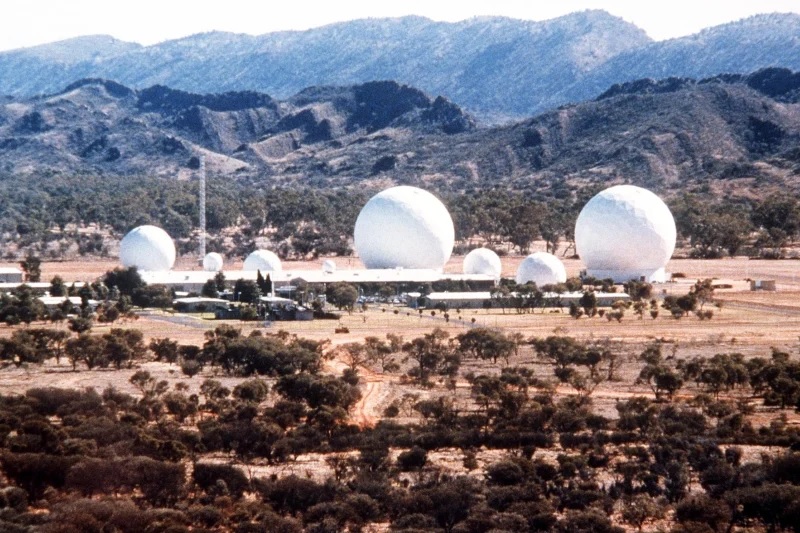
……………………………………… Whitlam demanded to know if and why the CIA was running a spy base at Pine Gap near Alice Springs, a giant vacuum cleaner which, as Edward Snowden revealed recently, allows the US to spy on everyone. “Try to screw us or bounce us,” the prime minister warned the US ambassador, “[and Pine Gap] will become a matter of contention”
Victor Marchetti, the CIA officer who had helped set up Pine Gap, later told me, “This threat to close Pine Gap caused apoplexy in the White House … a kind of Chile [coup] was set in motion.”
Pine Gap’s top-secret messages were decoded by a CIA contractor, TRW. One of the decoders was Christopher Boyce, a young man troubled by the “deception and betrayal of an ally”. Boyce revealed that the CIA had infiltrated the Australian political and trade union elite and referred to the governor-general of Australia, Sir John Kerr, as “our man Kerr”.
Kerr was not only the Queen’s man, he had longstanding ties to Anglo-American intelligence. He was an enthusiastic member of the Australian Association for Cultural Freedom, described by Jonathan Kwitny of the Wall Street Journal in his book, The Crimes of Patriots, as “an elite, invitation-only group … exposed in Congress as being founded, funded and generally run by the CIA”. The CIA “paid for Kerr’s travel, built his prestige … Kerr continued to go to the CIA for money”.
When Whitlam was re-elected for a second term, in 1974, the White House sent Marshall Green to Canberra as ambassador. Green was an imperious, sinister figure who worked in the shadows of America’s “deep state”……………………………..
The Americans and British worked together. In 1975, Whitlam discovered that Britain’s MI6 was operating against his government. “The Brits were actually decoding secret messages coming into my foreign affairs office,” he said later. One of his ministers, Clyde Cameron, told me, “We knew MI6 was bugging cabinet meetings for the Americans.” In the 1980s, senior CIA officers revealed that the “Whitlam problem” had been discussed “with urgency” by the CIA’s director, William Colby, and the head of MI6, Sir Maurice Oldfield. A deputy director of the CIA said: “Kerr did what he was told to do.”
…………………………….. On 11 November – the day Whitlam was to inform parliament about the secret CIA presence in Australia – he was summoned by Kerr. Invoking archaic vice-regal “reserve powers”, Kerr sacked the democratically elected prime minister. The “Whitlam problem” was solved, and Australian politics never recovered, nor the nation its true independence.
John Pilger’s investigation into the coup against Whitlam is described in full in his book, A Secret Country (Vintage), and in his documentary film, Other People’s Wars, which can be viewed on http://www.johnpilger.com/
Fixing a fatal, nuclear flaw in AUKUS
With an AUKUS announcement imminent, nonproliferation expert Alan Kuperman says there’s still time to make sure Australian subs use less dangerous low-enriched uranium and make the world safer.
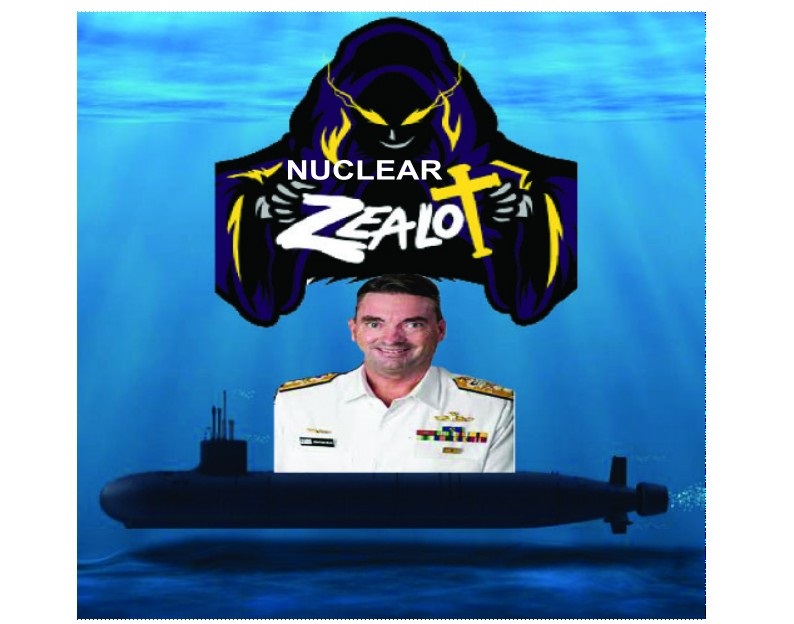
In Australia, the admiral who leads the AUKUS task force disclosed on national television last month, when asked if Australia wanted HEU or LEU, “We will accept the reactor they give us.”
Since Australia cannot obtain its first nuclear submarine until “well into the 2040s,” according to the US Navy’s top admiral, there is still time for the United States to design that ship’s reactor for LEU fuel.
(Jonathon Mead probably does not understand the significance of this)
By ALAN J. KUPERMAN March 07, 2023 https://breakingdefense.com/2023/03/fixing-a-fatal-nuclear-flaw-in-aukus/
In coming days President Joe Biden is expected to host a much-anticipated summit to announce how the United States and United Kingdom will provide nuclear-powered submarines to Australia – the centerpiece of the trilateral AUKUS partnership dramatically unveiled 18 months ago.
When first publicized in September 2021, the deal sounded like a win for all three countries. The United States would get Australia to buy submarines that effectively would come under US command. Australia would increase the likelihood of the United States defending it from China. And the United Kingdom would bolster its ship-building industry.
However, the current implementation plan, as confirmed recently by a senior Australian official, contains a fatal and unnecessary flaw: Australia’s submarines would be fueled by tons of nuclear weapons-grade, highly enriched uranium (HEU) – an amount sufficient for hundreds of nuclear weapons – setting a precedent that would foster nuclear proliferation.
President Biden can and should insist on a safer nuclear fuel that could preserve both AUKUS and nonproliferation.
Weapons-grade uranium is arguably the most dangerous substance on earth. Terrorists could make a Hiroshima-sized bomb from just 100 pounds of it. Using more advanced methods, a country could produce an equivalent explosion from only 20 pounds [PDF]. Yet, Australia would acquire up to 10,000 pounds of it [PDF] – in reactors for “at least eight nuclear-powered submarines” under AUKUS.
Because HEU is so dangerous, the United States has striven for half a century to eliminate its use globally, except in nuclear weapons, by converting domestic facilities to use safer, low-enriched uranium (LEU), and then persuading other countries to follow suit. Around the world, some 71 nuclear reactors and all major producers of medical isotopes have already switched to LEU. In 2018, the United States also declared that Army reactors would use LEU fuel, and in 2020 expanded that to NASA reactors [PDF].
The only US exception has been for Navy reactors in submarines and aircraft carriers, which still rely on HEU fuel. However, in a 2016 report to Congress [PDF], the Navy said that it too could probably switch to LEU fuel. Yet the Navy has failed to do so, dismissing proliferation concerns on grounds that the United States already has nuclear weapons.
That excuse clearly does not apply to Australia, a country that has pledged under the Nuclear Non-Proliferation Treaty (NPT) never to acquire nuclear weapons.
The precedent of such a state acquiring tons of weapons-grade uranium could unravel the global nonproliferation regime, because other countries would demand the same right. If the United States refused to provide them bomb-grade fuel, they could construct their own uranium enrichment facilities to produce it for naval or other reactors, on grounds that Australia had sundered the decades-long international taboo against HEU fuel.
Several countries rang the alarm last summer at the United Nations’ NPT review conference. Indonesia warned that “HEU in the operational status of nuclear naval propulsion” would endanger “the global non-proliferation regime” [PDF]. China asserted that it “sets a dangerous precedent for the illegal transfer of weapons-grade nuclear materials from nuclear-weapon states to a non-nuclear-weapon state” [PDF]. Even close US allies — the Netherlands, Norway, and South Korea — admonished the AUKUS countries by reaffirming that, “Efforts to reduce stocks of HEU and to minimize and eventually eliminate the use of HEU are a form of permanent threat reduction.”
The good news is that nuclear submarines do not require – and Australia has not demanded – weapons-grade fuel. France and China use LEU fuel in their submarines even though they possess HEU for nuclear weapons. Even the United States has been researching LEU naval fuel since 2016 [PDF], which also could be applied to British submarines that depend on US reactor designs and fuel.
In Australia, the admiral who leads the AUKUS task force disclosed on national television last month, when asked if Australia wanted HEU or LEU, “We will accept the reactor they give us.” Since Australia cannot obtain its first nuclear submarine until “well into the 2040s,” according to the US Navy’s top admiral, there is still time for the United States to design that ship’s reactor for LEU fuel.
That means it is entirely up to Biden to determine whether the AUKUS submarines will undermine the international nonproliferation regime by needlessly using tons of weapons-grade uranium fuel, or instead will reinforce that regime by complying with the international norm against HEU.
The wrong decision would set a precedent that many countries could exploit to produce HEU ostensibly for reactor fuel but in fact for nuclear weapons. In that case, AUKUS would create many more problems than it possibly could solve.
Alan J. Kuperman is associate professor and coordinator of the Nuclear Proliferation Prevention Project (www.NPPP.org) at the LBJ School of Public Affairs, University of Texas at Austin.
1 This month

of the week – Australians for War Powers Reform (AWPR)
To see nuclear-related stories in greater depth and intensity
 Antinuclear