France’s Foreign Minister raises concerns about AUKUS, nuclear submarines, and risks of weapons proliferation.
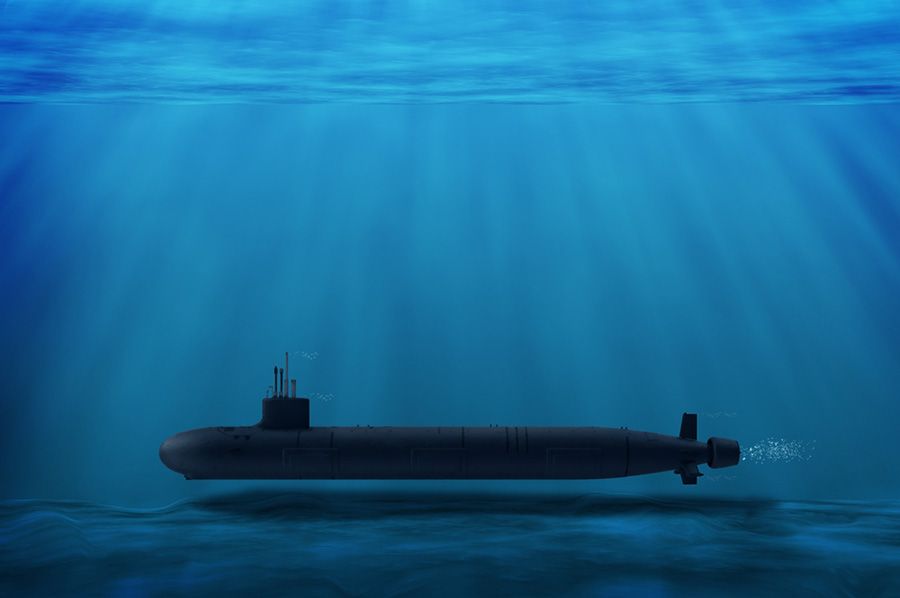
the theme of ‘betrayal’ in terms of both being ‘cheated’ out of a deal and being deceived by NATO allies and, in Australia’s case, a historical ally.
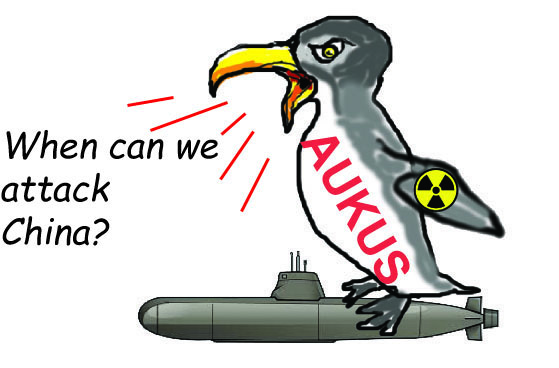
AUKUS was about ‘pressing a sense of confrontation with China’
if tomorrow Australia has some nuclear-powered submarines, why not, some other countries could ask for similar technology, it could be Indonesia, why not?’
Australia needs an entente cordiale with Indonesia over nuclear propulsion and non-proliferation, The Strategist, 29 Nov 2021, |David Engel However relaxed and comfortable Indonesian Defence Minister Prabowo Subianto might be about Australia’s plans to acquire nuclear-powered submarines (SSNs), the visit to Jakarta of French Foreign Minister Jean-Yves Le Drian has probably validated the very different view of Le Drian’s counterpart, Retno Marsudi.
……………………………………………. the most striking moment of the visit came during Le Drian’s address to Indonesia’s leading international affairs think tank, the Centre for Strategic and International Studies (CSIS). While his speech focused on issues such as multilateralism and the EU’s position on the Indo-Pacific, his response to a question on ‘minilateralism’—specifically, AUKUS and the Quad—took on a very different tone.
Ignoring the Quad, he levelled his remarks at AUKUS, stressing four points. The first two reiterated the theme of ‘betrayal’ in terms of both being ‘cheated’ out of a deal and being deceived by NATO allies and, in Australia’s case, a historical ally. He talked about American efforts to restore trust through various US commitments to France. He didn’t mention Australia in this context.
More significantly, his third point was that AUKUS was about ‘pressing a sense of confrontation with China’ (as the simultaneous translation put it). He said that, while France was not oblivious to China’s military threats and risks, he believed that the best way to respond to these threats was to ‘develop an alternative model rather than to first of all oppose’.
Perhaps his most significant point for Australian interests was his fourth, which went to the transfer of nuclear technology for submarine propulsion. He pointed out that until now no nuclear-weapon state had done this. But ‘if tomorrow Australia has some nuclear-powered submarines, why not, some other countries could ask for similar technology, it could be Indonesia, why not?’ He continued that, even though this technology was not covered by the Nuclear Non-Proliferation Treaty (NPT), the risk the arrangement posed of starting a trend was nonetheless of concern.
Irrespective of Le Drian’s intentions in answering the question in this manner—and it’s noteworthy that he didn’t cover AUKUS in his formal address—he would surely have known that his words would resonate powerfully with his audience, both at CSIS and more generally among Indonesia’s foreign policy establishment. While his depiction of Australia as duplicitous was evidently personal and heartfelt, it would also have struck a chord with those Indonesians who have characterised Canberra the same way over such issues as East Timor, Papua and spying allegations, irrespective of how justified that judgement might be.
Le Drian’s last point went directly to concerns about nuclear proliferation—issues that Indonesia highlighted in its official statement on AUKUS and the planned submarines. It corresponds closely ‘in spirit’ with subsequent official commentary to the effect that Indonesia was considering advocating a change to the NPT aimed at preventing non-nuclear-weapon states from acquiring SSNs………
whoever governs in Canberra now and into the future should at least make a priority of assuaging Jakarta’s worries on this subject, however overstated and unbalanced they are. While Indonesia’s prospects of changing the NPT and precluding Australia from having SSNs look remote at best—not least because several of its ASEAN colleagues do not share its views of Australia’s ambitions—the sooner the two countries can put this latest irritant to rest the better.
In the circumstances, the onus for doing so must primarily rest with Canberra………https://www.aspistrategist.org.au/australia-needs-an-entente-cordiale-with-indonesia-over-nuclear-propulsion-and-non-proliferation/
Australian Conservation Foundation comments to Parliamentary Committee on nuclear submarine agreement.

Australian Conservation Foundation comment on the Joint Standing Committee on Treaties review of the Agreement between the Government of Australia, the Government of the United Kingdom of Great Britain and Northern Ireland, and the Government of the United States of America for the Exchange of Naval Nuclear Propulsion Information (ENNPIA)
November 2021
- Unreasonable time frame
ACF maintains that the focus of the proposed Treaty action – the planned acquisition of nuclear powered submarines – has profound security, diplomatic, environmental and economic implications. The plan has been described by the RAN’s Head of Navy as one that “will shape the direction of our navy forevermore, and will no doubt change the shape of our nation”.
In this context the scarcity of time given to the consideration of this proposed action is neither justified nor acceptable.
To provide less than one working week for invited comment is not consistent with the credible and comprehensive consideration of the many and complex issues.
This truncated approach undermines community confidence and procedural credibility. There is a risk JSCOT be perceived not as a respected and effective review mechanism, but rather an eviscerated rubber stamp.
ACF seeks to formally record our concern and disappointment that the first piece of policy architecture being used to advance such a significant change has been approached in this fashion.
If part of the rationale for the planned action is to ensure “Australia is a responsible and reliable steward of this technology” this cavalier approach is a counter-productive one.
- Limited consultation
The consultation process for the proposed Treaty action mirrors the compressed timeline as it both unnecessarily restrictive and limited.
Only federal government agencies – DFAT, PMC and AGs – were consulted.
There has been no consultation with wider nuclear related agencies including the Australian Radiation Protection and Nuclear Safety Agency, the Australian Radioactive Waste Agency or any environmental experts.
State governments and state agencies were not consulted, despite these jurisdictions being the host sites for activities directly related to the Treaty action.
The comment that no public consultation was undertaken “as the ENNPIA relates to national security and operational capability matters” ignores the fact that there is a legitimate and high level of community interest and concern with the wider AUKUS proposal and further undermines community confidence in these politicised decision making processes.
In light of this, ACF would welcome clarification through the JSCOT review of the nature of the proposed “18 month consultation period” Who is going to be consulted? Will there be a public or wider stakeholder aspect to these consultations? Are they genuine consultations or top-down information updates?
ACF also notes that the NIA (in particular NIA point 5) contains assumptions on the benefits of nuclear submarines that underpin the wider AUKUS plan that have not been openly tested. The clear focus of this process is to advance a pathway to operationalise a decision that has already been made, rather than have an open examination of the issues to inform evidence-based decision making.
- Non-proliferation concerns
Should AUKUS be advanced, Australia would be the only non Nuclear Weapon State to have nuclear powered submarines. This unhelpful exercise in Australian exceptionalism and the proposed use of weapons grade highly enriched uranium (HEU) has clear proliferation sensitivities and has understandably been the focus of deep concern from nations in the region.
This has also attracted attention and concern from the International Atomic Energy Agency which has stated that “with Australia, with the United States and with the United Kingdom, we have to enter into a very complex, technical negotiation to see to it that as a result of this there is no weakening of the nuclear non-proliferation regime.”
The current approach to fast-track this Treaty action utterly fails to recognise or reflect the complexity and significance of the non-proliferation concerns related to the AUKUS plan.
The proposed use of a designated non-explosive military use, facilitated by direct military transfer, in order to place weapons grade HEU outside of IAEA safeguards is a disturbing development that could increase pressure on the already strained global non-proliferation framework. It raises the likelihood of other nations seeking similar exceptions and HEU safeguard exemptions.
ACF notes and welcomes that the “ENNPIA does not authorise and will not support the sharing or transfer of any information related to nuclear weapons”. ACF further notes that a comparable commitment that AUKUS does not involve nuclear weapons was made by the Prime Minister when the plan was announced in mid-September.
This pivotal commitment needs to be given a firmer basis than a political assurance. ACF has called on the PM and federal government to send an unequivocal signal that Australia will not countenance or consider nuclear weapons by moving to sign and ratify the UN Treaty on the Prohibition of Nuclear Weapons
- Nuclearisation by stealth
ACF has previously expressed concern that the AUKUS nuclear submarine plan could lead to increased pressure for a domestic nuclear industry: https://www.acf.org.au/dont-turn-nuclear-powered-subs-into-nuclear-power-subsidies and https://www.acf.org.au/nuclear-submarines-australia
ACF notes and welcomes that both the Prime Minister and Opposition Leader have explicitly ruled out a domestic nuclear power industry and stated that the AUKUS plan is not a forerunner to any such activity.
ACF notes that the NIA (12) limits the scope of the planned action to naval nuclear propulsion and states that the ENNPIA “does not support the transfer of any equipment or technology, nor does it support the sharing or transfer of any information on civil nuclear matters”. This is a welcome but insufficient specification.
Since the mid-September AUKUS announcement a range of voices, including within the federal government, have made calls for Australia to embrace domestic nuclear power. The Prime Minister needs to act decisively to give effect to his clear statements that AUKUS is not linked to and will not propel any domestic nuclear industry by explicitly referencing and re-affirming the two key legislative prohibitions on nuclear power in the EPBC and ARPANS Acts.
ACF notes with concern the potential for opaque expansion of the proposed Treaty action, including in Article 2 which states that parties will “provide support to facilitate such communication or exchange, to the extent and by such means as may be mutually agreed”.
This provides considerable latitude and given the AUKUS process to date has been characterised by surprise announcements, non-inclusion and fast-tracking there is no basis for community confidence that mutual agreement might see an expanded set of activities. Could UK or US nuclear submarines be hosted routinely or permanently in Australia as part of this critical skills and information exchange?
In a similar vein, the approach taken with this ENNIPA process reinforces community unease over the nature and speed of AUKUS related decision making and the risk that this approach will become the standard. In relation to further Treaty actions ACF notes that the “agreement can be changed subject to all party agreement and subject to Australia’s domestic treaty-making requirements”. Given the current truncated approach there is no assurance in this statement and no confidence that any future changes will be openly and robustly scrutinised.
- Recommendations:
- JSCOT not recommend advancing the current Treaty in the absence of sufficient time to credibly review key aspects of the proposed action, especially in relation to the “very complex, technical negotiation” needed to ensure there is no weakening of the nuclear non-proliferation regime.
- JSCOT recommends Australia sign the Treaty on the Prohibition of Nuclear Weapons (TPNW) both as a regional assurance mechanism and to give effect to PM Morrison’s clear statements that AUKUS is not related to any Australian ambition to acquire a nuclear weapons capability
- That greater detail on the proposed AUKUS submarine plan be presented to the Australian Parliament and people, including but not limited to issues around cost, rationale, the 18 month “consultation” process and emergency and waste management concerns.
- That the Prime Minister give effect to his repeated commitment that naval nuclear propulsion will not lead to increased moves for an Australian nuclear power industry by explicitly referencing and re-affirming the two key legislative prohibitions on domestic nuclear power in the EPBC and ARPANS Acts.
To discuss or clarify any aspect of this submission please contact Dave Sweeney, ACF nuclear policy analyst via dave.sweeney@acf.org.au or 0408 317 812
China calls on the Association of Southeast Asian Nations (ASEAN) to make Southeast Asia a nuclear-weapons-free zone
China pushes for nuclear-weapon-free Southeast Asia, KhmerTimes, Aandolu Agency ISTANBUL 22 Nov 1 – China on Monday said it is ready to work with the members of the Association of Southeast Asian Nations (ASEAN) towards a nuclear-weapon-free region besides ensuring stability in the disputed South China Sea.
“China supports ASEAN’s efforts to build a nuclear-weapon-free zone, and is prepared to sign the Protocol to the Treaty on the Southeast Asia Nuclear-Weapon-Free Zone as early as possible,” President Xi Jinping told the China-Asia summit marking 30 years of the relations between two sides.
Beijing’s demand for a nuclear-free Southeast Asia comes as the US and UK empower their ally Australia with nuclear-armed submarines under a deal called AUKUS signed in September………..
The bilateral trade between China and ASEAN has skyrocketed by 85 times to $684.6 billion in 2020 from less than $8 billion in 1991, making the two sides each other’s largest trading partners. https://www.khmertimeskh.com/50975461/china-pushes-for-nuclear-weapon-free-southeast-asia/
I MAY VOMIT
Australia, the United States and the United Kingdom officially signed the Exchange of Naval Nuclear Propulsion Information Agreement in Canberra, giving Australia access to nuclear-powered submarines technology.
New files expose Australian govt’s betrayal of Julian Assange and detail his prison torment
The documents obtained by Tranter and provided to The Grayzone provide an unobstructed view of the Australian junior ally’s betrayal of one of its citizens to the imperial power that has hunted him for years. As Julian Assange’s rights were violated at every turn, Canberra appears to have been complicit.
New files expose Australian govt’s betrayal of Julian Assange and detail his prison torment https://thegrayzone.com/2021/11/17/files-australian-julian-assange-prison/ KIT KLARENBERG· NOVEMBER 17, 2021
Documents provided exclusively to The Grayzone detail Canberra’s abandonment of Julian Assange, an Australian citizen, and provide shocking details of his prison suffering
Was the government of Australia aware of the US Central Intelligence Agency plot to assassinate Julian Assange, an Australian citizen and journalist arrested and now imprisoned under unrelentingly bleak, harsh conditions in the UK?
Why have the country’s elected leaders refused to publicly advocate for one of its citizens, who has been held on dubious charges and subjected to torture by a foreign power, according to UN Special Rapporteur on Torture Nils Melzer? What does Canberra know about Julian’s fate and when did it know it?
The Grayzone has obtained documents revealing that the Australian government has since day one been well-aware of Julian’s cruel treatment inside London’s maximum security Belmarsh Prison, and has done little to nothing about it. It has, in fact, turned a cold shoulder to the jailed journalist despite hearing his testimony of conditions “so bad that his mind was shutting down.”
Not only has Canberra failed to effectively challenge the US and UK governments overseeing Assange’s imprisonment and prosecution; as these documents expose in stark detail, it appears to have colluded with them in the flagrant violation of an Australian citizen’s human rights, while doing its best to obscure the reality of his situation from the public.
Continue readingAustralian TV blatantly advertises weapons sales, in absurd claims about China invading Australia

Australian War Propaganda Goes Off the Rails https://consortiumnews.com/2021/11/17/australian-war-propaganda-goes-off-the-rails/ November 17, 2021 In a blatant advert for arms sales masquerading as news, 60 Minutes tries to tie Taiwan to the fantasy of China randomly invading a continent of white foreigners thousands of miles away, writes Caity Johnstone. By Caitlin Johnstone
CaitlinJohnstone.com
60 Minutes Australia has churned out yet another fear-mongering war propaganda piece on China, this one so ham-fisted in its call to beef up military spending that it goes so far as to run a brazen advertisement for an actual Australian weapons manufacturer disguised as news reporting.
This round of psychological conformity-making features Australian former major general Jim “The Butcher of Fallujah” Molan saying that in three to ten years a war will be fought against China over Taiwan and that Australians are going to have to fight in that war to prevent a future Chinese invasion of the land down under.
He argues Australia will need to greatly increase its military spending in order to accomplish this, because it can’t be certain the United States will protect it from Chinese aggression.
“Australia is monstrously vulnerable at the moment; we have this naive faith that American military power is infinite, and it’s not,” says Molan, who is a contributor to government/arms industry-funded think tanks Lowy Institute and Australian Strategic Policy Institute.
Decrying what he calls “panda huggers” (meaning people who aren’t China hawks), Molan claims that “the Chinese Communist Party’s aim is to be dominant in this region and perhaps dominant in the world.” Asked when war might break out, he claims “Given the power that they have in their military they could act any time from now on, and that’s what frightens me more than anything.”
“The next war is not going to be ten or twenty years away, it’s going to be in the next three to ten years,” Molan asserts.
“My estimate is that in a serious fight the Australian Defense Force only has enough missiles for days. This is not going to be resolved in days. And of course we’re not big enough. We should expand the defense force significantly… We should fund defense now based on our assessment of the national security strategy which is based on the war that we want to win.”
“In short do you think Australia needs to prepare for war tomorrow?” the interviewer asks Molan.
“Absolutely,” he replies.
Molan makes the ridiculous argument that if Australia does not to commit to defending Taiwan from the mainland then it won’t be long before they can expect a Chinese invasion at home, as though there’s any line that could be drawn between the resolution to a decades-old Chinese civil war and China deciding to invade a random continent full of white foreigners thousands of miles away.
Suppose we said okay Taiwan you’re on your own up there and the Chinese snapped it up, and the Chinese started looking around the world and they might snap up other liberal democracies like Australia,” Molan argues. “And we might then turn to America and say America well could you give us a bit of a hand here? And the Americans might say what we said to Taiwan. Where do you draw the line? This situation that is developing now is an existential threat to Australia as a liberal democracy.”
Incredibly, the 60 Minutes segment then plunges into several minutes of blatant advertising for Australian defense technology company Defendtex which manufactures weaponized drones designed to be used in clusters, saying such systems could handily be used to defeat China militarily in a cost-effective manner.
The segment also promotes bare-faced lies which have become commonplace in anti-China propaganda, repeating the false claim that Chinese fighter planes have been “breaching Taiwanese airspace” and repeating a mistranslation of comments by Xi Jinping which it used in a previous anti-China segment made to sound more aggressive than they actually were.
This segment follows a cartoonishly hysterical fear porn piece on China put out by the same program this past September which featured Australian Strategic Policy Institute ghouls insisting that Australians must be prepared to fight and die in defense of Taiwan and that a Chinese invasion of Australia is a very real threat. That 60 Minutes segment was preceded by an equally crazy one in May which branded New Zealand “New Xi-Land” for refusing to perfectly align with U.S. dictates on one small foreign policy issue.
To be perfectly clear, there is no evidence of any kind that China will ever have any interest in an unprovoked attack on Australia, much less an invasion, and attempts to tie that imaginary nonsense threat to Beijing’s interest in an island right off its coast which calls itself the Republic of China are absurd.
As we’ve discussed previously, anyone who’d support entering into a war against China over Taiwan is a crazy idiot. In the unfortunate event that tensions between Beijing and Taipei cannot be resolved peacefully in the future there is no justification whatsoever for the U.S. and its allies to enter into a world war between nuclear powers to determine who governs Taiwan.
The cost-to-benefit ratio in a conflict which would easily kill tens of millions and could lead to the deaths of billions if it goes nuclear makes such a war very, very, very far from being worth entering into, especially since there’s no actual evidence that Beijing has any interest in attacking nations it doesn’t see as Chinese territory.
There’s so much propaganda going toward generating China hysteria in westerners generally and Australians in particular, and it’s been depressingly successful toward that end.
Watching these mass-scale psyops take control of people’s minds one after another has been like watching a zombie outbreak in real time; people’s critical thinking faculties just fall out their ears and then all of a sudden they’re all about cranking up military spending and sending other people’s kids off to die defending U.S. interests in some island.
Please don’t become a zombie. Keep your brain. Stay conscious.
Australian Parliament should urgently review the potentially dangerous AUKUS deal
 | |||
Australian Federal Parliament Should Urgently Review the Potentially Dangerous AUKUS Deal https://worldbeyondwar.org/australian-federal-parliament-should-urgently-review-the-potentially-dangerous-aukus-deal/
By Australians for War Powers Reform, November 17, 2021
On September 15 2021, with no public consultation, Australia entered into a trilateral security arrangement with Britain and the United States, known as the AUKUS Partnership. This is expected to become a Treaty in 2022.
At short notice, Australia cancelled its contract with France to purchase and build 12 submarines on 16 September 2021 and replaced it with an arrangement to buy eight nuclear submarines from either Britain or the United States or both. The first of these submarines is unlikely to be available until 2040 at the earliest, with major uncertainties in relation to cost, delivery schedule and the ability of Australia to support such a capability.
Australians for War Powers Reform sees the public announcement of AUKUS as a smokescreen for other undertakings between Australia and the United States, the details of which are vague but which have major implications for Australia’s security and Independence.
Australia said the United States had requested increased use of Australian defence facilities. The US would like to base more bomber and escort aircraft in the north of Australia, presumably at Tindale. The US wants to increase the number of marines deployed in Darwin, which would see numbers rise to around 6,000. The US wants greater home porting of its vessels in Darwin and Fremantle, including nuclear-powered and armed submarines.
Pine Gap is in the process of significantly expanding its listening and war directing capabilities.
Acquiescing to these requests or demands considerably undermines Australian sovereignty.
The US is likely to want oversight, amounting to control, of northern air space and shipping lanes.
If the US deploys Cold War tactics against China, for that is what this military build-up is all about, it is likely to conduct aggressive flight missions up to the edge of Chinese air space with nuclear armed bombers, just as it did against the USSR. The US will patrol shipping lanes with greater frequency and intensity, knowing it has secure home bases only a short distance away, protected by surface-to-surface and surface-to-air missiles which are soon to be installed.
Any one of these flights or naval patrols could trigger a warlike response directed against Australian and US defence facilities and other assets of strategic value, such as oil, fresh water and infrastructure, or a cyber-attack on Australian communications and infrastructure.
Australia could be at war before most Australian politicians are aware of what is happening. In such an event, Parliament will have no say on going to war nor on the conduct of hostilities. Australia will be on a war footing as soon as these arrangements are in place.
AUKUS will be detrimental to national security. The ADF will lose its capacity to act independently.
Australians for War Power Reform believes these arrangements should not come into force, and that AUKUS should not become a Treaty.
We deplore the lack of consultation with neighbours, friends and allies, particularly relating to the storage and home porting of nuclear weapons and other US arms, ammunition and materiel.
We deplore the hostile profile adopted against our recent friend and major trading partner China.
We deplore the activities of the Australian Strategic Policy Institute (ASPI), funded by foreign arms manufacturers and the US State Department, in blind-siding the Australian people with its advocacy for such a deleterious outcome.
Morrison’s tactless belligerence towards China, while USA moves to mend relationship to China
Morrison didn’t mention China – he didn’t have to, https://www.afr.com/policy/foreign-affairs/morrison-didn-t-mention-china-he-didn-t-have-to-20211117-p599t4
Scott Morrison is selling the broader and immediate technology benefits of the AUKUS deal as he campaigns on national security.Jennifer HewettColumnist he Morrison government’s blueprint for critical technologies is supposed to demonstrate the immediate benefits of much broader research and technology exchange as a result of the AUKUS deal on nuclear submarines.
After all, it’s not just France’s Emmanuel Macron expressing savage criticism about the “fantasy” of the decades-long timetable for Australia’s new submarine strategy to be realised.
So the Prime Minister wants to sell the national security significance of advanced technology co-operation with allies in protecting Australia from urgent, increasing threats in the Indo-Pacific region, including cyber attack.
A first step is $70 million for a quantum commercialisation hub to co-ordinate industry and research in quantum computing and partner with equivalent bodies in “like-minded countries”, starting with a joint co-operation agreement with the US.
“Our trilateral efforts in AUKUS will enhance our joint capabilities and interoperability with an initial focus on cyber capabilities, artificial intelligence, quantum technologies and additional undersea capabilities,” Morrison told the inaugural Sydney Dialogue.
Even though he didn’t specifically name China, Morrison’s primary target might as well have had blinking red lights around it. It wasn’t just that the government partnered for the dialogue with the Australian Strategic Policy Institute, regularly condemned by Beijing for overt antagonism towards China.
Morrison’s repeated references to the importance of trust, shared values and like-minded countries are all supposed to buttress the image of an Australian government in lockstep with other leading democracies against aggression and interference from governments that don’t “see technology the same way”.
“To state the obvious, AUKUS is about much more than nuclear submarines,” he said.
“The simple fact is that nations at the leading edge of technology have greater economic, political and military power. And, in turn, greater capacity to influence the norms and values that will shape technological development in the years to come.”
But the timing of Morrison’s address, right after US President Joe Biden held his virtual summit with China’s Xi Jinping, is an awkward reminder of Australia’s uniquely isolated status in China’s diplomatic deep freeze.
Even the government’s relatively modest $111 million “down payment” on quantum computing as one of nine priority critical technologies demonstrates the limits of Australia’s attempts to harness revolutionary global trends in technology as well as in geopolitics.
China’s leadership is clearly willing to punish Australia’s supposed transgressions with punitive trade measures and a refusal to engage indefinitely. Beijing’s blanket attitude will not soften and may yet harden, especially given the propensity of various government ministers to emphasise Australia’s determination to confront China.
US-China relationship reset
Beijing certainly paid furious attention to recent comments by Defence Minister Peter Dutton, for example, that it would be “inconceivable” for Australia not to support the US in defending Taiwan if the US chose to take that action. So much for the attempt at maintaining deliberate diplomatic nuance with a long-term policy of “strategic ambiguity” on this sensitive topic.
It will become yet another marker making it hard for Australia to retreat on its rhetoric and easy for China to berate with its own. While it is certainly China under Xi that has changed most – and made no friends in the region by doing so – Australia’s challenges to China’s approach can never add up to an argument between economic and power equals.
That’s why most other governments are more cautious in their wording unless their borders or direct interests are threatened.
And now the Biden administration is also keen to at least partially reset its relationship with China after the open hostility of the past few years.
That is despite continuing US ire over China’s behaviour translating into rare bipartisanship in Congress about the need to aggressively counter China as a military and economic threat.
Despite his confidence in the West’s steady decline and China’s inevitable ascendance, Xi also wants to improve the connection with the US.
Unlike its rejection of Australia, China can’t afford to ignore the potential moves and countermoves of another great power. With the erratic Donald Trump no longer in office and Xi seemingly in office for as long as he wants, talks have become more feasible.
The US President declared it to be the responsibility of both leaders to “ensure that the competition between our two countries does not veer into conflict, whether intended or unintended”.
The most obvious flashpoint is Taiwan with the virtual summit not producing any breakthroughs or much evidence of the “commonsense guardrails” that Biden had suggested could help manage tensions.
But beneath the litany of grievances reiterated by both leaders on a range of issues, the three-and-a-half-hour meeting demonstrated a desire to keep lines of communication open and encourage potential co-operation in discreet areas of mutual interest.
That was evident in their agreement on climate change – however vaguely worded – that was unexpectedly announced in Glasgow. After the summit, the two sides have also tentatively agreed to explore the possibility of arms control talks – spurred by China’s rapid acceleration of its nuclear weapons capability.
In contrast to the treatment of Australian journalists, there is also an apparent easing of current restrictions on journalists following China’s expulsion of some US reporters during the Trump Administration.
How much all this will alter the substance as well as the tone of the strategic rivalry and disputes between two great powers asserting themselves in the Indo-Pacific is even less clear.
But for all the talk of trusted partners, the importance of alliances of democracies and the US not “leaving Australia on the field” in terms of China’s economic coercion, the Biden administration will be heavily focused on its own national interest in dealing with China.
Caveat emptor.
”.
US Ex military man says nuclear submarines could arrive sooner, wants USA to get tough on China, re Taiwan
Nuclear subs can arrive much earlier than 2040, US ex-commander says Australia should be able to acquire nuclear submarines much earlier than a mooted 2040 delivery date, easing fears of a capability gap, according to a former top US military commander with responsibility for the Indo-Pacific. AFR, Andrew TillettPolitical correspondent In an interview with The Australian Financial Review, retired admiral Harry Harris said the AUKUS agreement the Morrison government struck with the United States and United Kingdom to access nuclear technology “changes the regional balance” amid growing alarm over China…………
Time for clarity on Taiwan
Mr Harris said the US needed to harden its position of “strategic ambiguity” over the defending Taiwan from a Chinese invasion to one of “strategic clarity” that makes it explicit how America would react to a Chinese attack.
Currently the US is not obliged by treaty to defend Taiwan, but US laws allow for arms sales to help Taiwan’s self-defence, leaving open the question of whether America would come to its aid. https://www.afr.com/politics/federal/nuclear-subs-can-arrive-much-earlier-than-2040-us-ex-commander-says-20211114-p598rm
Australian-UK-US nuclear submarine deal makes the connection clear between civilian and military nuclear activities
In failing fully to investigate this link between military nuclear and civil energy policy, the UK media have also missed more intimate connections. The senior Energy Ministry figure who negotiated the extraordinarily costly electricity contracts with France from the sole UK nuclear power plant currently under development went on to become the leading official in the Defence Ministry.
This same individual confirmed under questioning by Parliament that the nuclear submarine program is connected to civil nuclear policy. And it is this same person who is reported to have played a lead role in brokering the AUKUS deal.
In the United Kingdom, France, the United States, and Australia, policies in non-military, non-nuclear areas are often shaped by military nuclear interests. The AUKUS alliance is driven, in part, by a longstanding crisis in the nuclear submarine industry’s efforts to realize economies of scale.
In these countries, energy policy is steered towards risky, costly, delay-prone nuclear options rather than alternatives. In the process, policymakers impede progress on vital climate targets. Throughout, the public remains unaware. So, the gravest damage inflicted by hidden nuclear military interests is not their warping effects on non-military policy but on the health of democracy.
Australian-UK-US nuclear submarine deal exposes civilian-military links, https://thebulletin.org/2021/11/australian-uk-us-nuclear-submarine-deal-exposes-civilian-military-links/ Bulletin, By, Phil Johnstone | November 9, 2021 Andy Stirling Andy Stirling is Professor of Science and Technology Policy in the Science Policy Research Unit at Sussex University where he co-directs the ESRC. Phil Johnstone is a Senior Research Fellow at the Science Policy Research Unit at Sussex University. Phil has researched and published widely .
Under the AUKUS agreement, the United States and the United Kingdom plan to transfer nuclear submarine technologies to Australia. One international security scholar characterized the deal as “a terrible decision for the nonproliferation regime,” noting grave concerns for peace and security worldwide. Others have expressed concerns about “loopholes” surrounding nuclear submarine fissile materials, increased nuclear risks in the Pacific, and a potential acceleration of an arms race in the region. Still others doubt the purported efficacy of nuclear-propelled submarine designs.
Within national borders, nuclear activities often depend on expensive access to specific skills, supply chains, regulatory and design capabilities, educational and research institutions, and waste management and security infrastructures. These dependencies are especially strong in national struggles to build, maintain, and operate nuclear-propelled submarines. The AUKUS announcement overturned normally sacrosanct nuclear secrecy on these matters. It also raised bigger questions about energy policy, climate strategies, and democracy itself.
In democratic nuclear weapons states such as the United States, the United Kingdom, and France, shared civil-military nuclear industrial bases are largely—albeit indirectly—funded by electricity consumers. Colossal investments in new nuclear power are underwritten by anticipated revenues from future electricity sales. These investments flow through nuclear construction supply chains and outward to support military nuclear activities. In this way, crucial support is given to military infrastructures, outside of defense budgets and off the public books. But as civil nuclear power declines, this massive hidden funding flow may diminish, which presents problems for nuclear submarines whose costs are not only often prohibitive but escalating.
The AUKUS deal makes more sense when viewed in light of this crisis in the US, UK, and French national nuclear submarine industries. Spiralling civil nuclear construction delays, technological failures, bankruptcies, and fraud exercise little effect on government commitments to civil nuclear power, given pressure to underpin military capability. This is why these governments are failing to recognize the radical technology and market changes that render baseload power, according to industry, “outdated.” This is why policymakers so often neglect renewables and storage options that are outcompeting nuclear power. This is why some argue that nuclear power must persist as a “necessary part of the mix” in nuclear weapons states, despite diverse alternatives offering sufficient volumes of zero carbon power more quickly and cheaply than can nuclear.
Although well documented in the defense policy documents of existing and aspiring nuclear weapons states, these military drivers have been seriously neglected in discussions of energy and climate strategies. Recently however, some countries have begun to acknowledge the strong connections between civil and military nuclear capabilities.
In the United States, for instance, a report led by former energy secretary Ernest Moniz said in 2017 that “a strong domestic supply chain is needed to provide for nuclear Navy requirements. This supply chain has an inherent and very strong overlap with … commercial nuclear energy.” Since then, multiple high level reports have acknowledged that US military nuclear programs depend on a vibrant civil nuclear sector. “The connectivity of the civilian and military nuclear value chain—including shared equipment, services, and human capital—has created a mutually reinforcing feedback loop, wherein a robust civilian nuclear industry supports the nuclear elements of the national security establishment,” according to one study. Civil nuclear activities transfer an effective value of $26.1 billion dollars to the US military nuclear enterprise, according to this study.
In recent years, French press reports have hinted that dwindling civil nuclear power threatens national military nuclear capabilities. President Macron confirmed this when he said that “without civil nuclear power, there can be no military nuclear power.” Military drivers of civil nuclear activities are also acknowledged in more authoritarian nuclear states like Russia and China.
Australia possesses some of the most abundant and competitive renewable energy resources in the world. Yet the Australian nuclear lobby argues that acquiring military nuclear technology will benefit the claimed imperative to establish a civil nuclear industry. Prime Minister Scott Morrison asserted that he is not pushing for a civil nuclear power program, but other prominent voices disagree. Referring to submarine-derived small modular reactors, Australian politician and UK trade advisor Tony Abbott said that “if nuclear power is ok at sea, pretty soon it will be ok on land, too.” The Minerals Council for Australia claims that acquiring military nuclear technology is an “incredible opportunity” because it “connect[s] [Australia]… to the growing global nuclear power industry and its supply chains.”
Australian civil nuclear proponents welcome the aspirations of military nuclear proponents—and the reverse is also true. Australia’s military is concerned that a lack of a civil nuclear industry may pose difficulties for sustaining nuclear submarine competencies. Australian Navy Admiral Chris Barry pointed out that the absence of a civil nuclear industry left a “big gap” in the country’s ability to manage nuclear submarines. Some argue that a civil nuclear sector in Australia could provide the skills and expertise to enable military nuclear capability. Others are concerned that Australia will be the only country with nuclear submarines but no civilian nuclear industry. Military nuclear ambitions drive otherwise-inexplicable civil nuclear attachments.
In the United Kingdom, some worry about a post-imperial loss of a coveted “seat at the top table” of world affairs. Here again, nuclear submarine capabilities take center stage. Former prime minister Tony Blair worried that relinquishing nuclear capabilities would be “too big a downgrading of our status as a nation.” Meanwhile, detailed official energy policy analyses urged the government to set nuclear plans aside, given trends in renewables and related options. But shortly after a Defence Ministry report on submarine capabilities, Tony Blair swapped the open energy policy consultation for a quicker, covert process, after which the government proclaimed a “nuclear renaissance.”
The Royal Courts of Justice found reasoning for this policy insufficient, but Blair doubled down. “Nuclear power is back with a vengeance,” he said, invoking the name of the recently launched ballistic missile submarine, HMS Vengeance. He did not mention the military rationale. Since then, UK government white papers have failed to justify the country’s civil nuclear commitments—for instance by comparing nuclear costs with those of renewable alternatives. The commitment is taken for granted.
In the United Kingdom, the submarine industry’s openness about military pressures for civil nuclear power contrasts with energy policymakers’ silence. Now-declassified defense reports express grave worries that faltering civil nuclear programs undermine provision for essential military skills. Submarine-builder BAE Systems admits that funding for civil programs “masks” military costs. Naval reactor manufacturer Rolls Royce states that their expensive, government-funded efforts on ostensibly civilian small modular reactors can “relieve the burden” on Defence Ministry efforts to retain skills and capabilities for military programs. Numerous other government documents highlight synergies between civil and military nuclear skills. Yet when challenged, the UK Government denies that civil nuclear commitments influence military activities.
Boris Johnson emphasized that the AUKUS deal offers the United Kingdom “a new opportunity to strengthen Britain’s position as a science and technology superpower, and … could reduce the cost of the next generation of nuclear submarines for the Royal Navy.” Indeed, as discussed in this publication, the deal is “…likely to have particular significance for the UK’s nuclear program” because “the UK is struggling through a number of issues related to the revamping of its nuclear enterprise.” Despite government denials, Johnson’s statement confirms that the AUKUS deal is influenced by the same cost pressures and economies of scale associated with dogged maintenance of a shared civil-military industrial base.
In failing fully to investigate this link between military nuclear and civil energy policy, the UK media have also missed more intimate connections. The senior Energy Ministry figure who negotiated the extraordinarily costly electricity contracts with France from the sole UK nuclear power plant currently under development went on to become the leading official in the Defence Ministry. This same individual confirmed under questioning by Parliament that the nuclear submarine program is connected to civil nuclear policy. And it is this same person who is reported to have played a lead role in brokering the AUKUS deal.
In the United Kingdom, France, the United States, and Australia, policies in non-military, non-nuclear areas are often shaped by military nuclear interests. The AUKUS alliance is driven, in part, by a longstanding crisis in the nuclear submarine industry’s efforts to realize economies of scale. In these countries, energy policy is steered towards risky, costly, delay-prone nuclear options rather than alternatives. In the process, policymakers impede progress on vital climate targets. Throughout, the public remains unaware. So, the gravest damage inflicted by hidden nuclear military interests is not their warping effects on non-military policy but on the health of democracy.
Former Prime Minister Paul Keating scathing about Australia’s planned nuclear submarine deal
Mr Keating accused Mr Morrison of ‘wantonly leading Australia into a strategic dead end by its needless provocations against China’.
Australia’s eight nuclear subs by 2040 will be like ‘throwing toothpicks at a mountain’ when facing China, ex-PM declares in scathing pro-Beijing speech slamming Scott Morrison’s Covid origins probe. Daily Mail UK
- Australia cancelled a $90billion submarine contract with France in September
- Instead Scott Morrison has partnered with US and UK to obtain nuclear boats
- Former Prime Minister Paul Keating said they will be ‘very old’ when ready
- He also blasted Mr Morrison for offending China with call for Covid inquiry
By CHARLIE MOORE, POLITICAL REPORTER FOR DAILY MAIL AUSTRALIA 10 November 2021 In September, Mr Morrison cancelled a contract with France for 12 conventional submarines in favour of a new partnership with the US and UK known as AUKUS which will give Australia the technology to build nuclear boats for the first time.
But Mr Keating said they will take too long to arrive and pale in comparison to China’s navy which already has six nuclear-powered subs and more than 50 diesel-powered subs.
Mr Keating, who led Australia as a Labor Prime Minister between 1991 and 1996, said the eight US-style nuclear submarines would have no impact militarily.
‘These Virginia-class submarines were designed in the 1990s – by the time we have half a dozen of them it’ll be 2045 or 2050 – they’ll be 50 or 60 years old.
‘In other words, our new submarines will be old tech – it’ll be like buying an old 747.
‘And here we are, we’re going to wait 20 odd years to get the first one and 35 to 40 years to get the lot. For what will be then very old boats.’
Mr Keating said Australia was falling in line with the US strategy to use nuclear ‘hunter killer’ submarines to contain China.
‘The whole point of these hunter killer submarines is to round up the Chinese nuclear submarines and keep them in the shallow waters of the Chinese continental shelf before they get to the Mariana Trench and become invisible,’ he said.
‘To stop them having nuclear capability towards the United States.’
The 77-year-old insisted that China has no desire to expand its territory in the east and said Australia should be focussing on its own defence with conventional subs.
[Former Deputy Prime Minister] Kim Beazley and I built the Collins [class submarines]. I built the Anzac frigates, they were built for the defence of Australia. Their range was to stop any incoming vessels, military vessels against us,’ he said. ……….
Mr Keating accused Mr Morrison of ‘wantonly leading Australia into a strategic dead end by its needless provocations against China’.
Instead, he said Australia should show China respect for the way it has brought millions of people out of poverty with rapid economic growth over the past few decades.
‘I think what the Chinese want is the acknowledgement of validity of what they have done and what they have created,’ he said.
Mr Keating, who has frequently defended the Chinese Government, said Beijing does not represent a threat to Australia despite its military build up in the south and east china seas and its sweeping territorial claims in the region.
China does not represent a contiguous threat to Australia,’ he said, insisting it is not like the Soviet Union which wanted communism to spread across the world after the Second World War.
‘China is not about turning over the existing world order. It only wants to reform it, and it wants to reform it because of its only scale,’ he said.
‘It signed up to the World Trade Organisation, it signed up to the International Monetary Fund, it signed up to the World Bank, it signed up to the World Health Organisation.’……………… https://www.dailymail.co.uk/news/article-10184775/Paul-Keating-blasts-Australias-nuclear-submarines-pro-China-speech.html
Australia’s very awkward nuclear embrace
The very awkward nuclear embrace, Jon Faine,
https://www.smh.com.au/national/the-very-awkward-nuclear-embrace-20211105-p5969l.html November 7, 2021 How can Scott Morrison just decide and announce – with no mandate or national debate whatsoever – that Australia is going to embrace nuclear technology?
One of the most impassioned and torrid domestic policy tussles of the last 50 years has suddenly been gazumped – after extensive secret discussions with top Americans and Brits but not a word with Australians. A fleet of Australian Navy nuclear-powered submarines, unimaginable just a few weeks ago, have been declared as integral to our future with barely a murmur.
The transition to and adoption of nuclear technology may well be the right call – my quibble is that we have not even had the courtesy of a national debate about the biggest technology shift in a generation.
Our Prime Minister no more readily engages in discussion about underwater matters than he did with “on water” matters as immigration minister. He has again stopped the boats – stopped the making of boats. The decades of policy paralysis on climate change has been matched by nearly 20 years of flip-flopping on replacing our vintage Collins Class subs.
We have long been a people committed to keeping nuclear technology at arms length. The British military in the 1950s used the Montebello islands off WA and the Pitjantjatjara lands of Maralinga in the South Australian outback to experiment with and test nuclear bombs.
It took a royal commission in 1985 to establish the causal link to an otherwise inexplicable rise in the rate of birth defects and cancers among the service personnel and local Indigenous communities impacted
The British soldiers involved were issued protective gear, but the Aussies were not. The authorities were indifferent – to say the least – to the safety of First Nations people, many of whom suffered terribly. Widespread community outrage followed.
Around the same time as that royal commission, regular huge street protests expressed our collective anger with – yes – France over their years of nuclear explosions at Mururoa Atoll in the Pacific Ocean.
When French secret service agents bombed the Greenpeace flagship the Rainbow Warrior in Auckland harbour in 1985 and killed Portuguese volunteer photographer Fernando Pereira, anti-French sentiment across Australia and NZ was palpable.
Sales of Citroens, Peugeots and Renaults suffered – while croissant and Camembert sales barely dipped.
Vigorous discussion has centred on whether PM Morrison ought to be apologising to President Macron. But what about an apology to the Australian people for ignoring our legitimate role in making one of the most significant decisions any government of this country will ever make? It is astonishing that any PM can make such a momentous decision without asking us first.
The ALP has pragmatically supported the new commitment to the AUKUS alliance and its essential ingredient of a commitment to nuclear-powered subs from either the USA or the UK instead of the French alternative.
Anthony Albanese is determined to deny the PM a “khaki election” and consistent with his small-target strategy, has all but ensured that the numbers are there in the Parliament to vote through the legislative changes required to embrace a technology that we have consistently rejected.
We have long embraced laws that prohibit nuclear proliferation. There are many on the left of the ALP who have profound disquiet about “going nuclear” but dare not say anything controversial as a federal poll approaches.
Has the Australian public changed their mind about embracing nuclear technology? The only real test has been in South Australia, which recently abandoned a plan for a lucrative nuclear waste program amid overwhelming opposition.
Germany and Japan are retreating from decades of relying on nuclear power, and post-Fukushima and Chernobyl, nuclear industry boosters have had to accept the commercial reality that their technology is uninsurable and unwelcome.
Defence insiders despair as the original submarine proposal for a German design to be built here for $20 billion morphed to Japanese-designed subs for $40 billion, then French designed but locally assembled subs for $50 billion and now $90 billion for subs that decades from now will be made in the USA or the UK. And this is supposed to be a better outcome?
Naval planners concede that the future use for submarines is as underwater mother-ships for a range of satellite autonomous submersible drones.
What Morrison has announced is no more than an idea for a plan for a proposal for a contract to splurge vast amounts of Australian taxpayer’s money overseas for technology that almost surely will be redundant by the time anything is delivered.
Naval planners concede that the future use for submarines is as underwater mother-ships for a range of satellite autonomous submersible drones.
What Morrison has announced is no more than an idea for a plan for a proposal for a contract to splurge vast amounts of Australian taxpayer’s money overseas for technology that almost surely will be redundant by the time anything is delivered.
Russian deputy UN envoy supports China’s concern on AUKUS’ nuclear threat
Russian deputy UN envoy supports China’s concern on AUKUS’ nuclear threat
By Global Times Russia supported the concerns voiced by China on AUKUS, the new tripartite defense alliance formed with the intention of intimidating China, at a recent meeting of the UN General Assembly’s First Committee, saying that they are legitimate concerns as this kind of cooperation is related to the nuclear field and clearly has a military dimension.
More time and information are needed in order to respond properly to the trilateral nuclear cooperation, Russian Deputy Permanent Representative to the UN Office and Other International Organizations in Geneva Andrei Belousov, who represented Russia at recent meetings of the UN General Assembly’s First Committee in New York, was quoted as saying in Russian media reports. …………
He noted that ASEAN countries also expressed serious concerns at the First Committee’s session as they viewed AUKUS as a threat to regional security. In particular, the delegations of Indonesia and Malaysia said that the implementation of the initiative might trigger an arms race in the region.
The trilateral partnership announced in September will allow Australia to build at least eight nuclear-powered submarines using US technology. Russian President Vladimir Putin accused AUKUS of undermining regional stability and hoped the nuclear submarine cooperation will not develop in an unprecedented way and create additional problems in the region. Chinese Foreign Ministry spokesperson Zhao Lijian said on October 14 that the AUKUS nuclear submarine cooperation has created serious nuclear proliferation risks, and clearly violated the spirit of the Treaty on Non-Proliferation of Nuclear Weapons.
He noted that it would not only have a far-reaching impact on the international non-proliferation system, but also bring real threats to regional peace and stability. …….. https://www.globaltimes.cn/page/202111/1238296.shtml
Lies, lies and nuclear submarines
Lies, lies and nuclear submarines, Green Left, Binoy Kampmark, November 6, 2021
The sundering of the relationship between Australia and France over the new trilateral security relationship between Canberra, Washington and London and, more importantly, the rescinding of the submarine contract with Australia, was playing on President Emmanuel Macron’s mind at the G20 Summit in Rome.Did he think he had been lied to by the Australian Prime Minister Scott Morrison about the intended scrapping of the Franco-Australian submarine deal with the creation of AUKUS? “I don’t think, I know,” came the definitive answer.
The response from Morrison was one of shameless dissembling. Making sure that Australian audiences and news waves would only pick up select gobbets, he told the media that the French president had attacked Australia. He said he was concerned about “the statements that were made questioning Australia’s integrity and the slurs that have been placed on Australia”. Further, he said, he was “not going to cop sledging at Australia”. A full reading of Macron’s words in the brief encounter suggests that didn’t happen. He respected “sovereign choices” but said it was vital to “respect allies and partners.” It was the conduct of Australia’s government Macron had issues with………………….
Morrison’s mendacity is also pronounced in how he justified pursuing the nuclear submarine option with the United States…………
The Morrison government also used the well worn practice of selective leaking to bolster its quicksand position.
A prodding text from Macron to Morrison, sent two days prior to the AUKUS announcement and the cancellation of the contract, involved a query as to whether good or bad news could be expected about the French submarines.
The insinuation is that Macron had an inkling that something was afoot from the Australian side — hardly counting as being informed. Morrison’s response is not noted. The Elysée has also denied suggestions that Canberra made several warning efforts regarding the AUKUS announcement.
An Elysée official said: “Disclosing a text message exchange between heads of state or government is a pretty crude and unconventional tactic”. It may be crude, but it is an apt summation of the Prime Minister’s view of diplomacy. https://www.greenleft.org.au/content/lies-lies-and-nuclear-submarines
Australia’s Foreign Minister off to South East Asian countries to try to soothe their worries about nuclear submarines
Australian foreign minister seeks to allay south-east Asia fears that nuclear submarines will stir up conflict
Marise Payne is visiting four countries in the region, including Malaysia and Indonesia, which have both raised concerns over Aukus deal, Guardian, Daniel Hurst Foreign affairs and defence correspondent Sat 6 Nov 2021 0 Australia’s foreign minister will attempt to reassure south-east Asian countries that the government’s plan for nuclear-powered submarines will “make us a more capable partner” and is not intended to stir up conflict.
Marise Payne flew out of Australia on Friday for a four-country trip that will include Malaysia and Indonesia – both of which have raised concerns the Aukus deal could add to a regional arms race and pose nuclear non-proliferation issues.
It is understood Payne will seek to reassure counterparts that Australia’s decision to acquire at least eight nuclear-propelled submarines is driven by a reassessment of its defence capability needs – not a change of Australia’s intentions in the region…………..
China is increasingly emphasising nuclear proliferation concerns as it condemns the “extremely irresponsible” Aukus arrangement.
Beijing also cited the increasingly messy diplomatic dispute between France and Australia, amid accusations the Morrison government failed to be upfront about its plans to dump the $90bn contract for 12 French-designed conventional submarines.
“I want to stress that the Aukus nuclear submarine cooperation is not just a diplomatic spat between a few countries, but a serious matter that will create risks of nuclear proliferation and undermine regional peace and stability,” a Chinese foreign ministry spokesperson, Wang Wenbin, said………………………… https://www.theguardian.com/australia-news/2021/nov/06/australian-foreign-minister-seeks-to-allay-south-east-asia-fears-that-nuclear-submarines-will-stir-up-conflict
1 This month
17 October, Free Public Talk on Nuclear Issues in South Australia
David Noonan will speak on public interest concerns over the new Roxby Downs Indenture Act 2026 on BHP copper-uranium mining and ore processing in SA, and on how AUKUS may face SA with a High-Level nuclear waste agenda.
Dr Jim Green will discuss international developments in the field of nuclear power including ‘small modular reactors’ and Generation 4 ‘advanced’ nuclear reactor concepts.


Help Aunty Sue Protect Her Land and Sacred Sites From Destructive Rocket Testing.
.

Australians deserve the truth
about
AUKUS – https://aukuspublicinquiry.com/

PETITION – To: Prime Minister Anthony Albanese and the Australian Labor Government

of the week – Australians for War Powers Reform (AWPR)
To see nuclear-related stories in greater depth and intensity

