Australia’s Prime Minister Scott Morrison on the defensive as Europe and South-East Asian countries react badly to AUKUS and the nuclear submarines
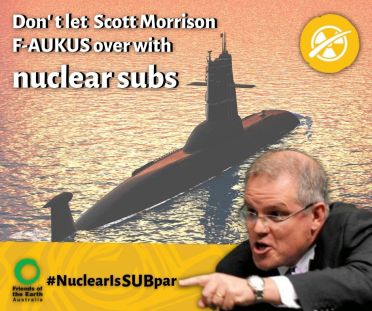
Morrison in defence mode as AUKUS fallout goes global, Frozen out in Europe, feted in Washington, alarming some of its south-east Asian neighbours: questions are being raised about whether Australia has the right diplomatic skills and resources to perform on the world stage. The Age By Anthony Galloway SEPTEMBER 25, 2021 or six days, the Indonesians knew something big was coming from Australia.
At a meeting in Jakarta on September 9, Australian Foreign Minister Marise Payne let her friend, Indonesian Foreign Minister Retno Marsudi, know a major shift was coming.
“The Foreign Minister of Australia mentioned there will be an announcement, but at the time we didn’t receive any information [about] what sort of announcement because I assume at that time it was not final yet,” Retno said this week.
The following Wednesday, Payne messaged Retno hours before the announcement of the AUKUS defence pact between Australia, the United States and Britain to share military technology and help Canberra build a fleet of nuclear-powered submarines in the face of Beijing’s growing aggression and military might.
The two ministers then talked over the phone, and Retno told Payne she hoped Australia would uphold its obligations to the Treaty on the Non-Proliferation of Nuclear Weapons and its commitment to “contribute to the peace and stability of the region”.
“I mentioned to my good friend Marise that Indonesia really hopes Australia will fulfil that commitment,” Retno said.
Since then, Malaysia has gone even further in expressing its reservations about the agreement, saying this week it will now consult China on how to react to the development.
And French President Emmanuel Macron is continuing to snub Australian Prime Minister Scott Morrison’s offer of a phone call after he was infuriated by Australia’s decision to dump a $90 billion submarine agreement with Paris and instead negotiate the AUKUS deal behind his back.
All of this contrasts sharply with Morrison’s week-long trip to New York and Washington. His interactions with the Americans have been glowing: not just with President Joe Biden, but also Democratic House Speaker Nancy Pelosi and Republican Senate leader Mitch McConnell. The first physical leaders meeting of the “Quad” grouping – Australia, the US, Japan and India – was expected to have a similar air of friendliness to it on Friday.
A week after the announcement of AUKUS, Australia finds itself at the forefront of world politics in a way it has never before been. Frozen out in Europe, feted in Washington, alarming some of its south-east Asian neighbours, and backed in by the Quad, these are unfamiliar times for little old Australia. And questions are being asked about whether we’ve got the right diplomatic skills and resources to perform on the world stage.
The ‘Anglosphere’ is back
When announcing AUKUS, Morrison described it as a “forever partnership”, while British Prime Minister Boris Johnson said it was an agreement among “kindred” nations. This led to a perception it was an alliance, when it is not. AUKUS is an agreement to share military technology including nuclear submarine capability, long-range missiles, cyber, artificial intelligence, quantum technologies and undersea drones.
Former senior diplomat and intelligence official Allan Gyngell, now national president of the Australian Institute of International Affairs, says Australia sent a problematic message to the region that the “Anglosphere is back”.
It reinforces perspectives that Australia is not really a legitimate part of the region, but a junior partner in a three-way partnership between English-speaking countries,” Gyngell says. “However much we say Asia is important to us, it is clear that home is where the heart is and the heart is with our two great and powerful friends.”
Some south-east Asian countries were also said to be uneasy with the focus on “values” and “democracy”. Many countries in the region are anxious about the growing assertiveness of China but they aren’t liberal democracies. They don’t see a nexus between liberal democratic values and the need to counterbalance a stronger, more aggressive China………………….
With the emergence of new formations such as the Quad and AUKUS, south-east Asian nations have been concerned about the power of ASEAN weakening. Australian diplomats have been insisting the nation is committed to “ASEAN centrality” in both private meetings and public statements.
Gyngell says Australia needs to be careful not to dismiss the concerns of south-east Asian nations, adding “we always look to vindication of our own positions and prejudices”.
Europe’s fury
Further afield, the Morrison government is most concerned about the repercussions in Europe, where there is visceral anger stemming from the AUKUS agreement being negotiated in secret all year even though the US and Britain are key members of NATO.
On the sidelines of the United Nations General Assembly, European Council President Charles Michel reminded Morrison of the need for “transparency and loyalty” during an awkward encounter, while German Foreign Minister Heiko Maas described the agreement as “unsettling”.
While the EU contemplates whether to scuttle talks over a free trade deal with Australia, Canberra can also expect a Europe that is less forgiving over its action on climate change………
Not enough focus has been on whether Australia is adequately investing in all the instruments of statecraft, most notably diplomacy and foreign aid, to support its strategic intentions.
Between 2013 and 2020, Australia’s total diplomatic and development budgets fell from 1.5 per cent of the federal budget to 1.3 per cent. The government gutted parts of the foreign aid budget in south-east Asia to pay for its “step-up” in the Pacific…………. https://www.theage.com.au/politics/federal/morrison-in-defence-mode-as-aukus-fallout-goes-global-20210924-p58ui2.html
France and other NATO members perturbed at the AUKUS agreement
“This is not about French disappointment about losing a contract. This is about a strategic decision that has implications for the whole of Europe. And to address that there is no easy fix.”
The AUKUS agreement is particularly sensitive for European security because the US and UK are influential members of NATO.
No timeframe, let alone a date’: France has no immediate plans to speak to Canberra, SMH, By Bevan Shields, September 25, 2021 — Paris: France has no immediate plans to restore diplomatic relations with Australia, as Emmanuel Macron and Boris Johnson move to heal a damaging rift triggered by the Morrison government’s new pact to counter China.
The French President and British Prime Minister spoke over the phone on Friday, local time – two days after an angry Macron held a similar bridge-building call with United States President Joe Biden.
A high-level French government official told The Sydney Morning Herald and The Age that it was far too soon to even consider when its ambassador to Australia, Jean-Pierre Thebault, would return to Canberra after being recalled amid the fallout from a shock deal for the US and UK to help Australia build a fleet of nuclear-powered submarines.
The deal sunk a $90 billion contract between Australia and France for 12 diesel-powered submarines, which Macron had used as a central plank of his strategy to be a major security partner in the increasingly contested Indo-Pacific.
Thebault remains in Paris for “consultations” over the so-called AUKUS pact and how France should re-engage with Australia at the diplomatic, ministerial and leader level……
The French government is angry with Australia over three key factors, including that Australia, the US and UK were negotiating behind an ally’s back; and that the Morrison government has downplayed the connection between the submarine contract and Macron’s interest in the Indo-Pacific.
“This is not about French disappointment about losing a contract. This is about a strategic decision that has implications for the whole of Europe. And to address that there is no easy fix.”
Some Australian government ministers have concluded that even if Thebault returns in the coming weeks, relations with France will not begin to thaw until after presidential elections in April 2022……..
The AUKUS agreement is particularly sensitive for European security because the US and UK are influential members of NATO……
Christop Huesgen, a longtime foreign policy adviser to the retiring German Chancellor Angela Merkel and German ambassador to the United States until earlier this year, said the US involvement in the AUKUS agreement was an “insult” to a key NATO nation…..
The French government is angry with Australia over three key factors, including that Australia, the US and UK were negotiating behind an ally’s back; and that the Morrison government has downplayed the connection between the submarine contract and Macron’s interest in the Indo-Pacific.
“This is not about disappointment over a commercial contract,” the French official said. “This is way more profound.”
They are also baffled that Australia has torn up a contract for French vessels when the AUKUS agreement only provides for an 18-month review into what sort of nuclear boats the US and UK could help Australia acquire. The cost of the eight vessels is not known, nor is when they will first enter the water.
Macron’s supporters are annoyed at what they say was an attempt on Morrison’s part to give the impression he had spoken with the French President about the submarine decision the night before it was announced in a press conference with Biden and Johnson.
…….French fury is also directed at Foreign Minister Marise Payne, who presided over the submarine contact’s birth during her time as defence minister and held a meeting with French Foreign Minister Jean-Yves Le Drian just two weeks before the AUKUS announcement.
Payne gave Le Drian no indication the deal was about to be scuttled and even released a joint statement afterwards praising the French-Australia submarine project………https://www.smh.com.au/world/europe/no-timeframe-let-alone-a-date-france-has-no-immediate-plans-to-speak-to-canberra-20210925-p58uo8.html
This week – AUKUS, nuclear submarines and the new dangers of weapons proliferation and war.
Paul Keating has explained the folly of antagonising China, constantly provoking further militarisation. Regional countries are concerned at the heightened militarisation, and the passage of nuclear submarines through their waters. The use of Highly Enriched Uranium (HEU) fuel brings risks of weapons proliferation. Now the previously nuclear-free zone looks like soon to be bristling with nuclear weapons .

And the big corporations that rule USA policy, UK policy, and now Australian policy, will be rejoicing. Watch as UK’s BAE Systems and USA’s General Dynamics fight it out for the loot from Australian tax-payers.
AUKUS, nuclear submarines, Highly Enriched Uranium and weapons proliferation
The AUKUS decision to equip Australia with SSNs not only is a fool’s errand but also could pose a grave threat to regional and international security.
Australia’s acquisition of SSNs under AUKUS could well open a Pandora’s box of proliferation with non-nuclear-weapon states such as Argentina, Brazil, Canada, Iran, Japan, Saudi Arabia and South Korea among others also going in for nuclear-powered submarines and keeping nuclear fuel (both low- and highly-enriched uranium) outside the scope of IAEA safeguards. This would weaken the IAEA safeguards (verification) system already facing challenges from new technologies and open up possibilities of diversion of nuclear material for nuclear weapons.
Australia’s nuclear-powered submarines will risk opening a Pandora’s box of proliferation, https://johnmenadue.com/australias-nuclear-powered-submarines-will-risk-opening-a-pandoras-box-of-proliferation/ By Tariq Rauf, 22, 2021 The AUKUS decision to equip Australia with SSNs not only is a fool’s errand but also could pose a grave threat to regional and international security.
After first suffering a seeming “brain snap” to acquire a fleet of nuclear-powered submarines (SSNs) some years back, at long last Australia has been promised a fleet of eight SSNs by the Biden administration under the newly minted and awkwardly named AUKUS (Australia, United Kingdom and United States) alliance against China.
Fresh from an ignominious debacle in Afghanistan that led to that bedevilled country once again falling under the repression of the murderous Taliban, the Biden administration has capped off its recent Afghan escapade by driving a stake through the global nuclear non-proliferation regime through its ill-advised decision to supply SSNs and related technology to Australia.
The problem
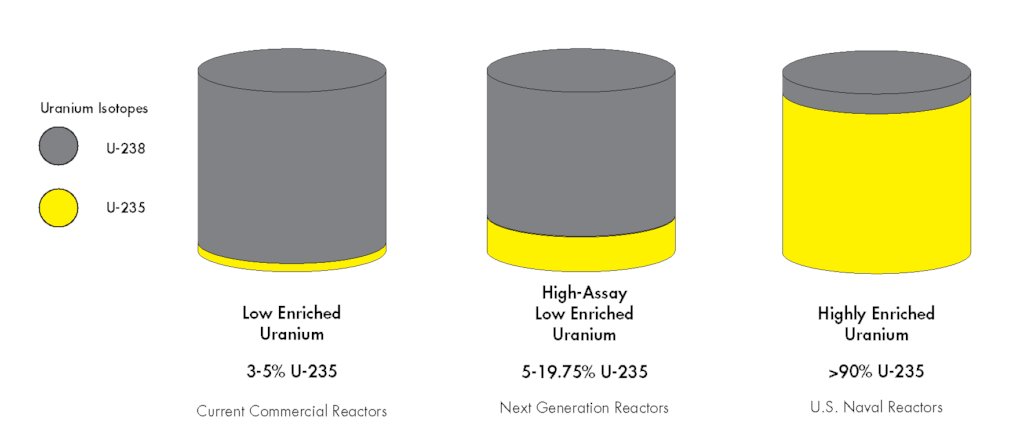
Nuclear-powered submarines of the United States (and the United Kingdom) reportedly are fuelled with highly-enriched uranium (HEU) of 93 per cent to 97 per cent enrichment level that can last for up to 33 years — this is the same enrichment level as for use in nuclear weapons. In contrast, French nuclear-powered submarines run on low-enriched uranium 5 per cent to 7.5 per cent enrichment level and need to be refuelled on average after about 10 years but do not need weapon-grade enriched uranium.
Nuclear ship propulsion technology and reactor design for military vessels as well as the isotopic composition and quantity of their nuclear fuel remains highly classified. When Canada was considering acquiring a fleet of SSNs in 1987, the two potential suppliers were France (Rubis/Améthyste-class) and the United Kingdom (Trafalgar-class).
In the case of the United Kingdom, Canada was informed that US Congressional approval would be required for the UK to construct and supply SSNs (with US design reactors and nuclear fuel) to Canada. The nuclear ship propulsion reactor design and nuclear fuel information would be subject to a high level of classification. With this requirement for secrecy, Canada would not have been able to provide detailed information to the IAEA under its Treaty on the Non-Proliferation of Nuclear Weapons (NPT) safeguards agreement (INFCIRC/164) thereby creating a loophole or gap in IAEA safeguards coverage in Canada. A certain (likely unspecified) large quantity of HEU for naval nuclear fuel would be taken out of safeguards for use in the SSNs and the spent fuel coming out the boats after 30 years or more also would be subject to secrecy. Thus the IAEA would not be able to measure the quantity or isotopic composition or to verify the HEU in naval use.
The IAEA Additional Protocol, to safeguards agreements, provides for the “broader conclusion” regarding the absence of undeclared nuclear material or activities. As such, to be clear and precise, were Australia to withhold from the IAEA information on and access to its naval nuclear fuel, then the IAEA would be unable to provide a broader conclusion for Australia under its additional protocol INFCIRC/217/Add.1.
Australia and the two other AUKUS states have communicated to the IAEA director general their intention for the Royal Australian Navy to acquire a fleet of SSNs and this means that at some future time Australia would be invoking paragraph 14 of its NPT safeguards agreement to exclude significant quantities of highly-enriched uranium for naval nuclear fuel. Thus, the claim by AUKUS states “that a critical objective of this cooperation will be to maintain “the strength of both the nuclear non-proliferation regime and Australia’s exemplary non-proliferation credentials” and that they will be “engaging with the IAEA throughout the coming months” is at best an oxymoron.
It should be matter of serious concern for the IAEA board of governors that the “IAEA will engage with them [AUKUS] on this matter in line with its statutory mandate, and in accordance with their respective safeguards agreements with the agency” — as this does not make much sense in that the paragraph 14 provisions on keeping HEU naval nuclear fuel out of safeguards apply only to Australia and not to the UK and the US (the latter two being nuclear-weapon states).
The only responsible course for the IAEA board of governors should be to warn Australia regarding the deleterious effects on safeguards should it implement paragraph 14 provisions and keep large quantities of HEU for its fleet of SSNs outside of IAEA safeguards. The IAEA board would be well advised to reject any request placed before it from Australia or from any other NPT non-nuclear-weapon state to implement paragraph 14 provisions. Rather, the board should take the responsible decision to revoke application of paragraph 14 of INFCIRC/153 (Corr.) and in all related safeguards agreements, much like the board rescinded the original provisions of the Small Quantities Protocol in 2005.
Australia’s acquisition of SSNs under AUKUS could well open a Pandora’s box of proliferation with non-nuclear-weapon states such as Argentina, Brazil, Canada, Iran, Japan, Saudi Arabia and South Korea among others also going in for nuclear-powered submarines and keeping nuclear fuel (both low- and highly-enriched uranium) outside the scope of IAEA safeguards. This would weaken the IAEA safeguards (verification) system already facing challenges from new technologies and open up possibilities of diversion of nuclear material for nuclear weapons. The AUKUS decision to equip Australia with SSNs not only is a fool’s errand but also could pose a grave threat to regional and international security.
This article was first published by the Toda Peace Institute and is reproduced with permission. Tariq Rauf was formerly head of verification and security policy coordination, office reporting to the director general of the International Atomic Energy Agency and previously advised Canada’s parliamentary committees on national defence and foreign affairs.
USA has conned Australia into paying for its super-costly nuclear submarine project

Last week’s AUKUS announcement was nothing more than PR stunt in Australia, with the government merely committing to spend the next 18 months deciding what to buy—which conveniently kicks any actual the decision far enough down the road to avoid the next federal election.
Has PM put Australia on the hook to finance struggling UK, US submarine projects? Michael West Media, By Marcus Reubenstein| September 23, 2021,
“Almost comical”. Experts lambast Scott Morrison’s “crazy” AUKUS deal to buy nuclear submarine tech from parlous UK and US programs. Marcus Reubenstein finds a real prospect Australia will be used to “underwrite” the foundering foreign submarine industry.
Twenty-five years of ongoing maintenance delays for nuclear submarines, chronic shortage of both parts and skilled workers, under capacity at shipyards, and attack class submarines missing from deployments for up to nine months. These sound like potential problems for Australia’s future nuclear submarine fleet but they are actual problems right now confronting the US Navy and its fleet of 70 submarines.
The US is at the cutting edge of nuclear propulsion. It has the largest and most sophisticated submarine fleet in the world, its first nuclear submarine was commissioned 67 years ago, and the US has literally decommissioned twice as many nuclear subs as Australia is planning to buy.
If the US cannot manage to keep its fleet in the water, how can the Morrison government commit up to $100 billion of taxpayer money to secure nuclear submarines and guarantee they will be always operational and ready for deployment?
Professor Hugh White, ANU Professor of Strategic Studies, former Deputy Secretary of Defence and an eminent figure in strategic policy, wrote in The Saturday Paper, “The old plan was to build a conventionally powered version of a nuclear-powered French submarine. It was crazy.”
“The new plan—to buy a nuclear-powered submarine instead—is worse”.
Says White, “There is a reason why only six countries, all of them nuclear-armed, operate nuclear powered subs.”
The sales pitch is underway
Last week’s AUKUS announcement was nothing more than PR stunt in Australia, with the government merely committing to spend the next 18 months deciding what to buy—which conveniently kicks any actual the decision far enough down the road to avoid the next federal election.
The ripples of the announcement, however, reached British shores in double-quick time. Just two days after the AUKUS alliance UK Defence Secretary Ben Wallis announced a $320 million (£170m) grant to be shared between BAE Systems and Rolls Royce to develop technology for Britain’s next generation submarines.
According to Department of Finance figures, In the past twelve months BAE Systems has collected $1.88 billion from Australian taxpayers. The Astute class submarine, touted as one of the two options Australia is considering, is manufactured by BAE Systems.
US Naval analyst, and Forbes Defense columnist, Craig Hooper predicts AUKUS could give the US Navy a big shot in the arm as well. He says a deal with Australia could effectively underwrite major improvements to the US Navy’s outdated submarine maintenance facilities by supporting “America’s decade-long, $US25 billion ($34.6 billion) effort to refit the U.S. Navy’s four aging public shipyards. With yard repair costs already high, America would go to great lengths to welcome any additional bidders for shipyard capability improvements.”
US subs in dry dock In a report published six months ago, the US Congressional Budget Office (CBO) found: “The Navy’s four shipyards have experienced significant delays in completing maintenance on its submarines (all of which are nuclear-powered).” ………. Should Australia go down the nuclear sub path what choice will it have other than to outsource the fleet’s maintenance? …..
Her Majesty’s sub optimal fleet
Britain, touted as the alternative nuclear submarine supplier to Australia, has problems of its own. The Royal Navy operates ten submarines, only four of them were designed and commissioned this century.
Like their American nuclear counterparts there are systemic problems keeping these subs in service……
That report also indicated significant delays to the BAE Systems built Astute hunter-killer submarines, the same class of nuclear submarine being touted for Australian as part of the AUKUS deal………. https://www.michaelwest.com.au/has-pm-put-australia-on-the-hook-to-finance-struggling-uk-us-submarine-projects/
Deceived’: France says it had assurances from Australia on day subs deal cancelled
Deceived’: France says it had assurances from Australia on day subs deal cancelled, ABC, By Jack Hawke and Nick Dole in London 22 Sept 21,
Australian officials had written to their French counterparts to say they were “satisfied” with how a $90 billion submarine deal was progressing on the same day it was announced the deal was being cancelled, France’s defence ministry has claimed.
Key points:
- Australia has terminated a $90bn deal to buy 12 conventionally-powered submarines from France in a deal brokered in 2016
- Instead it has teamed up in a new alliance with the UK and US, which will deliver nuclear-powered submarines
- France’s defence ministry says it feels “cheated” and “blindsided” by Australia’s decision
Herve Grandjean, a spokesman for the defence ministry, also told the ABC the French feel cheated and blindsided by the announcement.
It is the latest in a barrage of criticism from France following Australia’s decision last Thursday to pull out of the deal for 12, French-built submarines in order to forge a new defence relationship — AUKUS — with the United Kingdom and the United States, which will see Australia gain a fleet of nuclear-powered submarines.
The fallout has also included France recalling its ambassadors to Australia and the US at the request of French President Emmanuel Macron.
Prime Minister Scott Morrison said he had tried to call Mr Macron on the evening before the announcement, but France’s Foreign Minister Jean-Yves Le Drian said Canberra only informed Paris one hour before Mr Morrison joined a video link-up with British counterpart Boris Johnson and US President Joe Biden to announce the new deal.
Mr Grandjean told the ABC on the same day AUKUS was announced, the French had been reassured by Australian officials the submarine program was continuing as planned.
“We received an official letter from the Australian ministry of defence, saying that they were satisfied with the advancement of the project and with the submarine’s performance, which meant that we could launch the next phase of development of these submarines,” he said.
“We were very surprised by the announcement, which was not at all in line with the official letter we had received.
“So, yes, we do consider there was duplicity. We do consider we have been deceived.”………
…………… Mr Grandjean said that, in August this year, there was a meeting with Foreign Minister Marise Payne and her French counterpart in which there was no indication the contract was in jeopardy.
He said it also appeared none of the Australian engineers or military personnel involved in the French submarine program – which was being headed up by French defence contractor Naval Group – had any idea about the policy shift.
………. He said the AUKUS deal would be “bad news” for Australians and that, instead of getting new French submarines in 2030, Australia would likely have to wait until 2040 for nuclear-powered ones.,,,………. https://www.abc.net.au/news/2021-09-22/french-defence-spokesman/100481322
US nuclear submarines: a dangerous nonsense

A third reason concerns the continued use of military might as the way to address conflicts. Bellicose, top-down exercise of power demonstrates a fascination with violence and a corresponding illiteracy about non-violence
. You have to ask whether men in suits, in politics, corporations and in association with media acolytes, ever learn.
US nuclear submarines: a dangerous nonsense https://www.greenleft.org.au/content/us-nuclear-submarines-dangerous-nonsense, Stuart Rees,September 20, 2021Issue 1320Australia Unless you think that force of arms gives security and that revival of alliances with far away governments makes sense, the decision to own and operate United States nuclear submarines should be judged a dangerous nonsense.
There are four reasons for making this claim.
Foreign policy in search of an enemy — in this case China — looks like a guarantee of conflict if not war. Polarisation with little room for dialogue only benefits the arms industry, United States corporations and those in the US, Britain, Australia and China who think a taste for militarism and masculinity will show the benefits of violence. Capacity to learn from the devastation of the past is once again shoved aside.
A second reason concerns Australia’s geography: as though days of empire must not be forgotten, a country located in South East Asia and the Pacific chooses an alliance with elderly friends in Washington and London underscores my submarine despair.
Such a decision reeks of cultural disdain for diverse countries. Even if dialogue with China seems currently blocked, it should make diplomatic sense to communicate about security by being at coffee tables and in tea houses in Malaysia, Vietnam, Indonesia, Cambodia and the Philippines, as well as Pacific Island nations.
Such communication would be about Millennium goals, COVID-19 vaccinations and the future of planet Earth. Alliances with those countries about those issues would make sense.
A third reason concerns the continued use of military might as the way to address conflicts. Bellicose, top-down exercise of power demonstrates a fascination with violence and a corresponding illiteracy about non-violence. You have to ask whether men in suits, in politics, corporations and in association with media acolytes, ever learn.
At a time when surveys of young people record their fear of the future and their despair that powerful, inaccessible men refuse to hear them, they are offered a massive bill for nuclear operating submarines.
Indifference to contracts and derision about trust is a fourth and final reason for disdain about the nuclear submarine alliance.
Whatever the merits of building even one submarine, at least there were years of agreement with French companies to undertake that ship building task. I understand there are up to 60 Australian naval personnel in Cherbourg, France, who have been taken by surprise at US President Joe Biden, British Prime Minister Boris Johnson and Prime Minister Scott Morrison’s announcement.
Who cares? Trust is of no consequence. Contracts can be torn up. Promises were never meant to be kept. Besides, in Morrison’s case, an election looms and boasting about national security by having US submarines gives a potential war-like platform for winning.
There are and there will be no winners.
Can anyone forget the very recent US betrayal and refusal to consult friends and allies in Afghanistan? To distract from that debacle, just pretend that Washington will provide strength and trust in submarines. This is a dangerous nonsense.
[Stuart Rees OAM is Professor Emeritus, University of Sydney, recipient of the Jerusalem (Al Quds) Peace Prize and author of Cruelty or Humanity. He is also the founding Director of the Sydney Peace Foundation. This article was first published at The New Bush Telegraph.]
French ambassador says Scott Morrison gave no warning on the nuclear submarine deal
‘Maybe we’re not friends’: French Ambassador claims ScoMo offered no warning about AUKUS deal A powerful French official has slammed Scott Morrison, accusing the Prime Minister of one thing to do with the submarine deal. news.com.au , Helena Burke, 20 Sep 21
The former French Ambassador to Australia has ripped into Scott Morrison for his defence of the AUKUS submarine deal, claiming the Prime Minister lied about warning France about it.
Jean-Pierre Thebault, who had been the French Ambassador in Canberra since 2020, was recalled last week after France expressed outrage at being left out of the new nuclear submarine deal between the US, UK, and Australia.
Speaking to Radio National on Monday, Mr Thebault said France had been completely blindsided by Mr Morrison’s decision to accept the new deal.
“We discover(ed) through the press that the most important person in the Australian government kept us in the dark intentionally until the last minute and was not willing to at least have the decency to enter conversation about the alternative,” Mr Thebault said.
“This is not an Australian attitude towards friends.”
Maybe we’re not friends.”
Mr Morrison had previously rejected that he had not warned France about the new deal, insisting he told French President Emmanuel Macron in June that Australia might scrap its original submarine agreement,,,,
But the French Ambassador insisted France had never been warned about the potential for a new deal which would exclude them. https://www.news.com.au/national/politics/maybe-were-not-friends-french-ambassador-claims-scomo-offered-no-warning-about-aukus-deal/news-story/467293b479eca4741c116ba5ced54751
Big questions remain about Australia’s nuclear submarines, but it’s a massive financial gain for nuclear corporations

The possibility of a submarine deal with Australia came at an opportune moment. It provided Biden with a chance to demonstrate support for a close ally and boost its military strength. For Boris Johnson it could show that
relations with the US had not fallen apart because of the chaotic Afghanistan withdrawal, and it validated claims that the UK can play a prominent security role in the Indo-Pacific region.
For Australians it provides reassurance that it is still backed by its oldest allies. Having abandoned a “forever war”, the US and UK have signed up to what the Australian prime minister, Scott Morrison, has described as a “forever
partnership”. The test will lie in this submarine project being more successful than the French-backed one it has replaced. This is not something that can be taken for granted.
The big questions about the boats’ design and manufacture will not be answered until 2023. The value
of the contract will be massive, and we should expect the competing claims of all three partners to be pressed hard when they are deciding their contributions. Instead of building diesel-powered submarines with the French, Australia upgraded its requirement to nuclear-powered submarines. These are quieter, can spend more time at sea and can travel greater distances, but they are fiendishly difficult to construct. Although the UK’s Astute-class programme is now running reasonably smoothly, with each boat costing almost £1.5 billion, the first vessel was almost five years
late and massively over budget.
Times 19th Sept 2021
https://www.thetimes.co.uk/article/the-submarine-deal-is-a-real-downer-for-china-x6t89v022
Malaysia and Indonesia warn Australia’s Indo-Pacific pact could trigger nuclear arms race
Malaysia and Indonesia warn Australia’s Indo-Pacific pact could trigger nuclear arms race, Taipei Times, 19 Sep 21
The new AUKUS alliance will involve Australia, the US and Britain exchanging technology and intelligence
Australia will have access to US nuclear technology, which will enable it to build nuclear submarines
Australia’s nuclear arms ban remains in new deal
Birmingham said there was no “quid pro quo” in Australia agreeing to step up its strategic relationship with the UK and the US.
He insisted that nuclear weapons would not be based within Australia’s jurisdiction. “We’ve been clear, Australia’s position in relation to nuclear weapons does not change, will not change,” he said yesterday.
“We will meet all of our non-proliferation treaty arrangements and obligations and not be changing any of our policies in relation to the nuclear weapons technology.”
Birmingham did not rule out an increase in the number of UK and US military personnel on Australian shores. “We already have US troops and marines who work in Australia on rotational deployments at times,” he said………….
it is not just the French who have been made uneasy by the AUKUS arrangement, which is still to be worked out in detail. Australia’s allies in the Indo-Pacific have also raised concerns over what the deal will mean for tensions in the region.
Malaysia said on Saturday that Canberra’s decision to build atomic-powered submarines could trigger a regional nuclear arms race, echoing concerns already raised by Beijing.
“It will provoke other powers to also act more aggressively in the region, especially in the South China Sea,” the Malaysian prime minister’s office said, without mentioning China……https://www.taipeitimes.com/News/world/archives/2021/09/20/2003764684
China fears that the nuclear-powered submarines could be armed with nuclear weapons at short notice
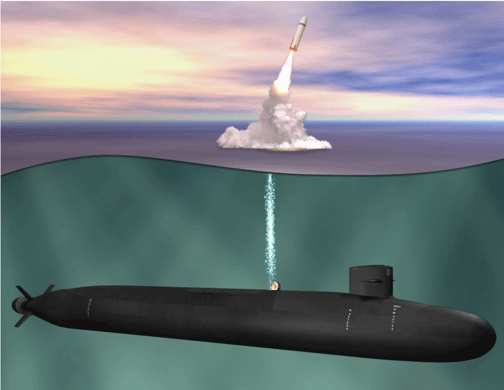
US FORCES US submarine launches Trident II nuclear missiles in stunning show of strength U.S,Sun Olivia Burke, Sep 19 2021
THE US Navy triumphantly test-launched Trident D5LE nuclear missiles on Friday in a stunning show of strength.
The scheduled two-missile deployment of the unarmed revamped weapon took place off the coast of Cape Canaveral, Florida from the USS Wyoming (SSBN-742) submarine……
The Navy boasted of the “unmatched reliability” of the new “sea-based nuclear deterrent” as tensions continue to increase with China.
It was the 184th successful Trident II (D5 & D5LE) SWS missile test flight and follows the last launch in February this year off the coast of Florida……..
“This same team is now developing the next generation of the Trident Strategic Weapon System, which will extend our sea-based strategic deterrent through 2084,”
The Navy also revealed the submarine missiles have been given “a life extension program to address potential impacts from aging and obsolescence”.
They are now primed to be stationed amongst the rest of the fleet alongside the UK Vanguard-class, US Colombia-class, UK Dreadnought-class.
With an estimated annual cost of $170million, the US spend a whopping $2.4million each year to run the Ohio-class submarines.
….the launch comes in the wake of the revelation of the UK’s and US’ plans to build nuclear-powered submarines for Australia.
AUKUS’ ALLIANCE
The alliance has angered China, who fear the subs could be armed at short notice with nukes, despite assurances they will only carry conventional weapons.
The countries leaders carefully navigated the announcement without directly mentioning China’s imposing power – but hinted at their intentions behind the move by discussing “democracy, freedom of navigation, and security.”
The new Indo-Pacific security pact, known as AUKUS, will give the land Down Under the technology to deploy nuclear-powered submarines.
It is part of an agreement intended to counter China’s rising military might – that they have splashed six times more cash on than Australia.
With 42 times more soldiers, 55 times more tanks, 13 times more submarines and 16 times more fighter jets, they eclipse the Aussies artillery.
And with 3.3 million troops in service, Beijing dwarves Australia’s 80,000 soldiers – but AUKUS has still managed to seriously ruffle some feathers.
CHINA’S FURY
Chinese Foreign Ministry spokesman Zhao Lijian condemned the alliance as “seriously damaging regional peace and stability, intensifying the arms race, and undermining the Treaty on the Non-Proliferation of Nuclear Weapons”.
China is believed to have between 250 and 350 nuclear weapons, compared to America’s colossal arsenal of 5,800 and Russia’s total of 6,375. ……. https://www.the-sun.com/news/3691458/us-submarine-trident-ii-nuclear-missiles-chinas-threats/
Nuclear submarine deal planned for 18 months – French ambassador says this is treasonous
Recalled French ambassador accuses Australia of ‘treason in the making’ https://www.theage.com.au/politics/federal/recalled-french-ambassador-accuses-australia-of-treason-in-the-making-20210918-p58ssg.html. By Anthony Galloway
France’s recalled ambassador to Australia has likened Canberra’s actions to treason after the Morrison government dumped a $90 billion submarine contract with Paris and instead decided to build nuclear-powered submarines with the United States and Britain.
France on Saturday has taken the extraordinary step of recalling its ambassadors from Australia and the US, as the fallout grows from a new defence pact that has infuriated French President Emmanuel Macron.
Speaking to The Sydney Morning Herald and The Age hours before he was recalled, France’s ambassador to Australia, Jean-Pierre Thebault, did not rule out suspending talks to allow French troops greater access to Australian military bases after his nation was “stabbed in the back”.
Adding insult to the process… we have very reliable reports from the independent press, which I thank, about the fact that all this was in the making for 18 months. Which means we have been blind-sided intentionally for 18 months…. The crime was prepared for 18 months,” he said.
France’s recalled ambassador to Australia has likened Canberra’s actions to treason after the Morrison government dumped a $90 billion submarine contract with Paris and instead decided to build nuclear-powered submarines with the United States and Britain.
France on Saturday has taken the extraordinary step of recalling its ambassadors from Australia and the US, as the fallout grows from a new defence pact that has infuriated French President Emmanuel Macron.
Speaking to The Sydney Morning Herald and The Age hours before he was recalled, France’s ambassador to Australia, Jean-Pierre Thebault, did not rule out suspending talks to allow French troops greater access to Australian military bases after his nation was “stabbed in the back”.
“Adding insult to the process… we have very reliable reports from the independent press, which I thank, about the fact that all this was in the making for 18 months. Which means we have been blind-sided intentionally for 18 months…. The crime was prepared for 18 months,” he said.
He slammed Australia for allowing a meeting to go ahead between Mr Dutton and Foreign Minister Marise Payne late last month with their French counterparts where they spoke about enhancing defence ties between the two countries.
“It is us, through letters that were sent by the President [Macron] some months ago to the Prime Minister [Scott Morrison], who proposed to look at more ambitious and new ambitious cooperations,” Mr Thebault said……….. The extraordinary move follows the Morrison government’s decision to tear up a $90 billion contract to buy 12 French submarines in favour of a new nuclear-powered fleet using technology from the US and United Kingdom under a new partnership called AUKUS.
Russia urges IAEA monitoring, ‘transparency’ on US-Australia nuclear sub pact,
Russia urges IAEA monitoring, ‘transparency’ on US-Australia nuclear sub pact, Press TV, Friday, 17 September 2021 Russia warns against Australia’s attempt to becoming a nuclear power under a trilateral pact Canberra signed with the United States and Britain earlier this week.
Russian Permanent Representative to the International Atomic Energy Agency (IAEA) in Vienna Mikhail Ulyanov said on Friday that “time has not come yet for such estimations” about Australia turning into a nuclear power.
Under a new Australia-UK-US alliance (Aukus), Canberra would be building at least eight nuclear submarines, using US technology.
The first of the submarines is expected to enter service is 2036.
Ulyanov warned that the plan “is alarming and makes you keep a close eye on that.”
“Australia is a non-nuclear power,” he said, adding that “all this should be closely supervised by the IAEA and its inspection mechanism.”……..
Many observers warned that the trilateral pact could lead to a situation very similar to the US-Russian arms race during the cold war…… https://www.presstv.ir/Detail/2021/09/17/666731/Russia-Australia-nuclear-powered-submarines-Aukus-
The AUKUS deal and nuclear submarine plan ties Australia in to any American engagement against China

This pact ties Australia to any US military engagement against China, https://www.smh.com.au/national/this-pact-ties-australia-to-any-us-military-engagement-against-china-20210916-p58s5k.html
The announced agreement between the United States, Britain and Australia for Australia to move to a fleet of US-supplied nuclear submarines will amount to a lock-in of our military equipment and forces with those of the US, with only one underlying objective: the ability to act collectively in any military engagement by the US against China.
This arrangement would witness a further dramatic loss of Australian sovereignty, as materiel dependency on the US would rob Australia of any freedom or choice in any engagement it may deem appropriate.
Australia has had great difficulty in running a bunch of locally built conventional submarines. Imagine the difficulty in moving to sophisticated nuclear submarines, their maintenance and operational complexity. And all this at a time when US reliability and resolution around its strategic commitments and military engagements are under question.
If the US military, with all its might, could not beat a bunch of Taliban rebels with AK-47 rifles in pickup trucks, what chance would it have in a full-blown war against China, not only the biggest state in the world but the commander and occupant of the largest land mass in Asia? When it comes to conflict, particularly among great powers, land beats water every time.
It has to be remembered that China is a continental power and the US is a naval power. And that the US supply chain to East Asia would broadly need to span the whole Pacific from its base in San Diego and other places along the American west coast. Australia, by the announced commitments, would find itself hostage to any such a gambit.
There is no doubt about the Liberals: 240 years after we departed from Britain, we are back there with Boris Johnson, trying to find our security in Asia through London. Such is the continual failure of the Liberal Party to have any faith in Australia’s capacity, but, more particularly, its rights to its own independence and freedom of action.
New Zealand PM says Australian nuclear subs will NOT be welcome in country’s waters
New Zealand PM says Australian nuclear subs will NOT be welcome in country’s waters, https://7news.com.au/politics/federal-politics/australian-nuclear-subs-not-welcome-in-nz-c-3978704 7 News, Ben McKay, 16/09/20
Australia’s planned nuclear submarine fleet won’t be welcome in New Zealand, according to Prime Minister Jacinda Ardern.
The new submarines are the centrepiece of the new AUKUS security tie-up of Australia, the United States and the United Kingdom.
NZ has been left out of the AUKUS alliance, despite being a member of the Five Eyes intelligence-sharing network, along with AUKUS members and Canada.
The country has been staunchly nuclear-free for decades, earning the ire of treaty partner US by declining visits from its nuclear-powered ships.
“We weren’t approached by nor would I expect us to be,” Ardern said.
“Prime Minister Morrison and indeed all partners are very well versed and understand our position on nuclear-powered vessels and also nuclear weapons.
Australia’s planned nuclear submarine fleet won’t be welcome in New Zealand, according to Prime Minister Jacinda Ardern.
The new submarines are the centrepiece of the new AUKUS security tie-up of Australia, the United States and the United Kingdom.
NZ has been left out of the AUKUS alliance, despite being a member of the Five Eyes intelligence-sharing network, along with AUKUS members and Canada.
The country has been staunchly nuclear-free for decades, earning the ire of treaty partner US by declining visits from its nuclear-powered ships.
“We weren’t approached by nor would I expect us to be,” Ardern said.
“Prime Minister Morrison and indeed all partners are very well versed and understand our position on nuclear-powered vessels and also nuclear weapons.
That of course means that they well understood our likely position on the establishment of nuclear-powered submarines and their use in the region.”
Ardern said by law, and by a consensus of NZ’s major political parties, nuclear-powered vessels would not be welcome.
“Certainly they couldn’t come into our internal waters,” she said.
Ardern declined to say whether it would be appropriate for Australia’s new fleet to sail in the Pacific but welcomed interest from the US and the UK in the “contested region”.
“I am pleased to see that the eye is being tuned to our region, from partners that we work closely with.”
Some Kiwi experts believe the AUKUS formation shows an Australian acquiescence to US foreign policy.
“It highlights that much deeper level of Australian integration into US defence and security planning and thinking,” Victoria University professor David Capie told The Guardian.
“New Zealand and Australia were in a different space to begin with and this has perhaps just made that look sharper again.”
Ardern said the new alliance “in no way changes our security and intelligence ties with these three countries”.
NZ’s opposition is less sure, with leader Judith Collins saying other aspects of the defence alliance would be worth involvement.
1 This month
17 October, Free Public Talk on Nuclear Issues in South Australia
David Noonan will speak on public interest concerns over the new Roxby Downs Indenture Act 2026 on BHP copper-uranium mining and ore processing in SA, and on how AUKUS may face SA with a High-Level nuclear waste agenda.
Dr Jim Green will discuss international developments in the field of nuclear power including ‘small modular reactors’ and Generation 4 ‘advanced’ nuclear reactor concepts.


Help Aunty Sue Protect Her Land and Sacred Sites From Destructive Rocket Testing.
.

Australians deserve the truth
about
AUKUS – https://aukuspublicinquiry.com/

PETITION – To: Prime Minister Anthony Albanese and the Australian Labor Government

of the week – Australians for War Powers Reform (AWPR)
To see nuclear-related stories in greater depth and intensity

