France angry at Australia’s cancellation of submarine pact
France vents subs anger with recall of Australian, US envoys, AFR Hans van Leeuwen, Europe correspondent Sep 18, 2021 –London | France has issued a diplomatic slap in the face to Canberra and Washington, recalling its ambassadors to vent its displeasure at the cancellation of Australia’s $90 billion submarine contract with state-controlled defence company Naval Group.
The move signals a potentially serious rupture in Franco-Australian relations, after Foreign Minister Jean-Yves Le Drian publicly described Australia’s switch to a maritime security pact with the US and Britain as “a stab in the back”.
This exceptional decision is justified by the exceptional gravity of the announcements made on September 15 by Australia and the United States,” Mr Le Drian said in a statement on Friday (Saturday AEST).
“The cancellation of the Attack class submarine program binding Australia and France since 2016, and the announcement of a new partnership with the United States meant to launch studies on a possible future cooperation on nuclear-powered submarines, constitute unacceptable behaviour between allies and partners.”
Mr Le Drian said the “consequences directly affect the vision we have of our alliances, of our partnerships and of the importance of the Indo-Pacific for Europe”………
Although Australia’s French embassy has issued a statement arguing that the decision was made purely on technical grounds, the French government and commentariat has interpreted it as a political decision – and it will potentially rankle for years to come…… https://www.afr.com/world/europe/france-vents-subs-anger-with-recall-of-us-australian-envoys-20210918-p58srz
Buying nuclear-powered submarines now doesn’t make sense strategically, and it doesn’t make sense operationally.

White says Australia is now tied more closely to the US strategy against China, which is aimed at stopping Beijing from challenging American primacy. Australia’s eventual acquisition of eight nuclear-powered submarines is not going to make any difference to Xi Jinping’s calculations.
And if deterrence fails, and we end up going to war, will eight Australian submarines make any difference to the outcome? I don’t think it will,” White says.
Nuclear family: Setting a new course in submarine policy
The acquisition of nuclear-powered submarines promises to transform the Australian navy, but there are some uncomfortable realities Australia must also confront. AFR Andrew Tillett correspondent ’17 Sep 21, ‘……………. n Thursday, the Prime Minister unveiling plans to build nuclear-powered submarines in Adelaide with the help of the United States and United Kingdom.
Morrison, who places a high premium on secrecy, had explored the proposal with a tight-knit circle of aides and officials for 18 months. So classified was their work that officials in Defence’s Capability, Acquisition and Sustainment Group, including those overseeing the $90 billion French submarine project, found out the dat before. Morrison effectively destroyed one of the shibboleths of Australian public policy – that nuclear technology falls in the “too hard” basket.
…………….. “This is a big policy shift in Washington, DC,” says Hugh White, Australian National University emeritus professor of strategic studies.
Buying nuclear-powered submarines now doesn’t make sense strategically, and it doesn’t make sense operationally.
The acquisition of nuclear-powered submarines promises to transform the navy – just a handful of countries operate them – but there are some uncomfortable realities Australia must also confront.
…….. A Defence-led taskforce will spend up to 18 months assessing whether the British or American submarine is the best option, along with workforce, shipyard and training needs. The government maintains construction can still start in the latter part of this decade, but the new submarine will be delivered a couple of years later than the French one would have been.
But this is predicated on the project going well. If Australia wants to tinker with the design, that will add time. There are also capacity constraints in the US and UK. Their shipyards are busy and the construction of Australian reactors will need to be squeezed into production schedules.
And despite assurances that reactors will be sealed and Australia effectively just has to “plug” them in, it goes without saying this is technology that has never been used here before. So even a 2040 delivery date may be optimistic.
China challenge
By then, it may be too late. “The challenge we face from China is not a challenge that is going to emerge in the 2050s. It’s happening now. The timeframe is wrong,” White says. “[Buying nuclear-powered submarines now] doesn’t make sense strategically, and it doesn’t make sense operationally.”
White says Australia is now tied more closely to the US strategy against China, which is aimed at stopping Beijing from challenging American primacy. Australia’s eventual acquisition of eight nuclear-powered submarines is not going to make any difference to Xi Jinping’s calculations.
And if deterrence fails, and we end up going to war, will eight Australian submarines make any difference to the outcome? I don’t think it will,” White says.
…… White says he is not against eventually acquiring nuclear-powered submarines but the question Morrison should be asking is what boats best suit Australian objectives, not American.
White says the navy’s priority should be using submarines closer to Australian shores to protect shipping lanes. He says for the cost of 12 French submarines, or eight nuclear-powered ones, Australia could buy 24 Collins class size conventionally powered subs.
“The reason we have been driven towards a big boat is we have decided our most important role is helping the US to hunt Chinese submarines in the South China Sea and East China Sea,” he says. “You would sink more enemy ships with 24 boats than you would with eight nuclear-powered ones.”…………… https://www.afr.com/policy/foreign-affairs/nuclear-family-setting-a-new-course-in-submarine-policy-20210916-p58s9t
Russian international envoy says that Australia’s acquisition of nuclear submarines imperils non-proliferation
Australia’s acquisition of nuclear technologies imperils non-proliferation — Russian envoy, https://tass.com/world/1339043, Canberra plans to use US technologies to build at least eight nuclear-powered submarines, the first of which will become operational in 2036
MOSCOW, September 17. /TASS/. Australia’s acquisition of technologies for producing nuclear-powered submarines may create issues for the nuclear non-proliferation system, Russian Permanent Envoy to International Organizations in Vienna Mikhail Ulyanov told the Rossiya-24 TV channel on Friday.
“Why exactly does Australia need to acquire these sensitive technologies? There is no reasonable explanation. At the same time, it is a fact that it can create problems for the nuclear non-proliferation regime on a global scale,” he pointed out.
On September 16, Australia, the United Kingdom and the United States announced the formation of a new security partnership to be known as AUKUS. Australia particularly plans to use US technologies to build at least eight nuclear-powered submarines, the first of which will become operational in 2036, as well as to equip its armed forces with US-made cruise missiles.
Canberra’s plan breaks an earlier defense contract inked with France, the biggest in Australia’s history. Paris has slammed the move as “a stab in the back.” China, in turn, warned that the creation of the AUKUS partnership would speed up the arms race, and called on the three member countries to abandon “the mentality of the Cold War era” and “narrow-minded geopolitical concepts”.
Secret nuclear submarine deal started in March

Like a scene from Le Carré’: how the nuclear submarine pact was No 10’s biggest secret
Only ten people in Britain knew about its plans to stand with Australia and the United States against Chinese aggression in the Indo-Pacific. This is how the deal was done The Times UK 17 Sept 21,
When the First Sea Lord was invited to a meeting at the Australian high commission in March this year, he had no idea of the magnitude of what was about to unfold. Admiral Sir Tony Radakin — described by colleagues as a “doer” — was asked by Vice-Admiral Michael Noonan, the Australian Chief of Navy, whether the British and Americans could help their ally to build a new fleet of nuclear-powered submarines……….. (subscribers only) https://www.thetimes.co.uk/article/like-a-scene-from-le-carre-how-the-nuclear-submarine-pact-was-no10s-biggest-secret-dj7z5f8bh
New Australia, Britain, and U.S. military alliance—AUKUS— a serious escalation of the new Cold War on China.

‘Anti-China’ Military Pact ‘Threatens Peace and Stability’ in Pacific, Groups Warn
“The announcement of the new Australia, Britain, and U.S. military alliance—AUKUS—represents a serious escalation of the new Cold War on China.” Common Dreams , KENNY STANCIL, September 16, 2021 Anti-war advocates are denouncing Wednesday’s formation of a trilateral military partnership through which the United States and the United Kingdom plan to help Australia build a fleet of nuclear-powered submarines—a long-term initiative broadly viewed as a challenge to China by Western powers determined to exert control over the Pacific region.
Although Australian Prime Minister Scott Morrison, U.K. Prime Minister Boris Johnson, and U.S. President Joe Biden did not mention Beijing during their joint video announcement of the so-called AUKUS alliance, “the move is widely seen as a response to China’s expanding economic power, military reach, and diplomatic influence,” the Washington Post reported. “China is believed to have six nuclear attack submarines, with plans to increase the fleet in the next decade.”
The Guardian noted that it could take more than a decade for AUKUS to develop submarines propelled by enriched uranium—which allow the attack vessels to operate more quietly and remain deployed for up to five months—”but once at sea, the aim is to put Australia’s currently diesel-powered navy on a technological par with China’s navy, the world largest.”
In addition to “cooperation on naval technology,” the newspaper reported, “the partnership will involve closer alignment of regional policies and actions, and greater integration of the militaries and the defense industries of the three allies,” which “also intend to work together on cyberwarfare and on artificial intelligence capabilities.”
In response to the development, the British chapter of the No Cold War coalition said Thursday in a statement that “the new anti-China military alliance forged between Australia, Britain, and the U.S.—AUKUS—is an aggresive move which threatens peace and stability in the Pacific region.”
According to the coalition of nearly two dozen peace groups, the creation of AUKUS “follows the recent sending of a British warship to the South China Sea in an aggressive and provocative gesture of support for the U.S.’s massive military build-up against China.”
“It should be noted,” the coalition continued, “that New Zealand is not participating in this aggressive military alliance and it’s no nuclear policy means that Australian nuclear-powered submarines will be banned from New Zealand’s ports and waters.”
“It is against the interests of the British people, the Chinese people, and all of humanity for Britain to join the U.S. and Australia in racheting up aggression against China,” No Cold War added. “The world needs global cooperation to tackle shared threats of the pandemic and climate change, not a new Cold War.”
Anti-war progressives from Australia and the U.S. have also condemned the new military alliance.
“It was only a few weeks ago that a generation-long war in Afghanistan came to an end,” Alison Broinowski of the Independent and Peaceful Australia Network, said in a statement shared prior to the official launch of AUKUS. “Instead of reflecting on the pointlessness and horror of U.S. militarism, Australia and the U.S. are already talking about their next military adventure.”
“How can Australia assert an independent and peaceful foreign policy with a military that is so integrated into the U.S.?” Broinowski asked.
During his remarks publicizing the pact, Biden claimed that “we need to be able to address both the current strategic environment in the region, and how it may evolve, because the future of each of our nations, and indeed the world, depends on a free and open Indo-Pacific enduring and flourishing in the decades ahead.”
China Is Not Our Enemy, a project of U.S.-based peace group CodePink, responded by asserting that “if Biden and the Pentagon really want to ‘ensure peace and stability’ in the region, they could simply stop dealing missiles, weapons, [and] nuclear tech to Australia, Japan, South Korea, and Taiwan that escalate conflict and threaten global safety.”
Officials in Beijing also criticized the agreement, with China’s Foreign Ministry spokesperson Zhao Lijian reportedly calling the U.S. and U.K.’s decision to export extremely sensitive nuclear technology to Australia an “extremely irresponsible” move that exposes “double standards.”
AUKUS “seriously undermines regional peace and stability, aggravates the arms race, and hurts international nonproliferation efforts,” Zhao added.
Describing AUKUS as a “disastrous” deal, CodePink co-founder Medea Benjamin tweeted Wednesday that Australia, the U.K., and the U.S. “are ratcheting up the tension that could easily lead to a nuclear war with China.”
Amid growing concerns that Washington’s increasingly hostile approach to China could escalate into a full-blown military conflict, nearly 50 advocacy organizations in July sent a letter to Biden and members of Congress in which they argued that “nothing less than the future of our planet depends on ending the new Cold War between the United States and China.” https://www.commondreams.org/news/2021/09/16/anti-china-military-pact-threatens-peace-and-stability-pacific-groups-warn
What does the nuclear submarines announcement mean for Australia?
The Australian Conservation Foundation’s Dave Sweeney explains what today’s
announcement – that Australia’s next submarine fleet will be nuclear-powered – might mean
for Australia.
“While there is much we still don’t know about the new defence deal with the USA and
Britain, this is a significant move with serious implications for Australia.
“Nuclear powered submarines pose specific environmental and security concerns – to
Australian ports, shipyards and seas.

16 Sept 21, “At this stage it’s not clear whether the plan is to manufacture nuclear-powered submarines in Australia or to assemble submarines that have been purchased from the UK and the US, but regardless this announcement raises concerns about the management of nuclear waste and the human and environmental impacts.
“This arrangement will further imbed Australia into global war-fighting plans and is a blow to Australian sovereignty.
“It is worth noting the UK and USA are both in breach of their international obligations on nuclear weapons.
“ACF welcomes the Prime Minister’s commitment today that this new arrangement does not signal a move towards domestic nuclear power or nuclear weapons. “Australians could have confidence in the Prime Minister’s statement if he signed and ratified the Treaty on the Prohibition of Nuclear Weapons now. “Not to do so leaves the door open for a future stealthy slide towards nuclear weapons.
“Nuclear submarines and aircraft carriers are powered by onboard nuclear reactors. “The controlled splitting of atoms releases heat which boils water and generates steam. This in turn drives turbines that power the propellor and provide electricity for the vessel. “Nuclear power does not require air, so the submarine can remain submerged for long
periods.
“It is likely these submarines would be prohibited from visiting New Zealand and many
Pacific nations that have bans on nuclear-powered vessels.
Planned UK-Australia trade deal – a dangerous precedent for climate change policy
Green groups and opposition MPs have responded angrily to news the UK
government has agreed to drop binding climate targets from the planned
UK-Australia trade deal, accusing Ministers of “a massive betrayal of our
country and our planet”.
Greenpeace’s John Sauven offered a withering
assessment of the government’s decision, warning that it set a dangerous
precedent for future trade deals with other carbon intensive nations. “It
will be a race to the bottom, impacting on clean tech sectors and farmers’
livelihoods. There should be a moratorium on trade deals with countries
like Australia until they improve on their weak climate targets and end
deforestation. At the moment the public and parliament are being duped by
the Prime Minister into thinking this deal is great for Britain when in
reality nothing could be further from the truth.”
Business Green 9th Sept 2021
Australia is part of Asia, and is unwise and unsafe in parroting the USA agression about China.
As tensions rise with China, Australia is ‘not so safe’, warns Mahathir,
more https://www.theage.com.au/world/asia/as-tensions-rise-with-china-australia-is-not-so-safe-warns-mahathir-20210907-p58pmg.html-–, By Chris Barrett, September 9, 2021 ,

What is happening now is, of course, people regard Australia almost as an extension of America,” said the 96-year-old. “Your policies are seldom different from America.
Singapore: Australia is needlessly risking its security with a standoff with China, says former Malaysian prime minister Mahathir Mohamad, who claims Canberra must make the first move to settle tensions with Beijing.
In an interview with The Sydney Morning Herald and The Age, Mahathir also attacked the use of the Quadrilateral Security Dialogue – comprising the US, Australia, Japan and India – as a vehicle to try and stand up to China.
He believes it risks provoking Xi Jinping’s regime and that rallying countries together against the Chinese Communist Party is not the way to raise concerns about its behaviour, from its claims to most of the South China Sea to alleged human rights abuses in Xinjiang province.
“It is an aggressive move,” Mahathir said.
“We should have just bilateral relations with countries without any appearance of trying to force our policies on China. Yes, of course, we are unhappy about the treatment of the Uighurs. But for Malaysia, we can’t fight against China. We have to continue to work with them and try to influence them in a small way so that they will treat the Uighurs better.”
Australia’s ties with China remain at an all-time low as Foreign Minister Marise Payne and Defence Minister Peter Dutton embark on a diplomatic tour this week with visits to Jakarta, Seoul, Delhi and Washington DC.
Treasurer Josh Frydenberg is foreshadowing a further rising of tension with China, declaring Australia will not compromise on its “core values” even in the midst of damaging economic coercion.
However, Mahathir, who led Malaysia between 1981 and 2003 and from 2018 to 2020, argues Australia is largely responsible for turning its differences with China into a full-blown diplomatic and trade dispute.
“What is happening now is, of course, people regard Australia almost as an extension of America,” said the 96-year-old. “Your policies are seldom different from America. And America is aggressive because it thinks it is safe. But Australia is not so safe.
“This idea that Australia is part of Europe is still there. You don’t think you are an eastern nation but over time you have to think that you are here. Therefore, what policies you follow must take into consideration your geographical position. But when you just reflect the policies of America sometimes, of course, it will not work because you are not as safe and powerful as America.”
The Australian government has been trying to reopen a dialogue with China for months to no avail, with Beijing still incensed by issues it laid out in a list of 14 grievances it released last November.
They include Australia’s call for an independent probe into the origins of COVID-19, the blocking of Huawei from the 5G network in 2018, Australia’s prominence in an international “crusade” on Taiwan, Hong Kong and Xinjiang and the barring of multiple Chinese investment deals on the grounds of national security.
China was further angered by the cancellation in April of Victoria’s Belt and Road Initiative agreement under the Australian government’s new foreign veto laws.
It has retaliated with continuing sanctions against Australian exports including coal, barley and wine while demanding Australia walk back some of its policies on China.
n 2018, Mahathir himself pushed back against $22 billion in contracts Malaysia had signed with China’s Belt and Road Initiative under predecessor Najib Razak, who has since been found guilty of corruption over the country’s 1MDB sovereign wealth fund scandal.
Warning China could secure influence with debt traps, he renegotiated the terms of the East Coast Rail Link, the signature Belt and Road project in Malaysia, to save a third of the cost but says he did so because it was a bad deal not because it was Chinese.
Mahathir believes Australia needs to loosen restrictions on Chinese investment.
“The country which first made the move should also make the move to reduce that tension,” he said. “And for that, you should remove the restrictions you have on Chinese products. Maybe having Huawei coming in to Australia is too dangerous. But you may think of other things.
“And slowly, I think the Chinese will respond by opening up the imports of Australian products. It may be a gradual process, but I think in the meantime, as you reduce the bans and all that you should also talk to the Chinese about human rights, about things you think they have done wrong.”
China will inevitably be high on the agenda in next week’s Australia-United States Ministerial (AUSMIN) talks between Payne, Dutton and their counterparts in President Joe Biden’s administration.
Australia and the US last week celebrated the 70th anniversary of the ANZUS Treaty, with US Defence Secretary Lloyd Austin saying the Western military power was committed to a “shared vision for a free and open Indo-Pacific” for decades to come.
The mode of the US exit from Afghanistan, however, has raised questions about its dependability as a security guarantor, particularly in a regional landscape in which China is increasingly assertive.
“Americans think of America first,” Mahathir said. “America is forever trying to help people but when the help is extended it’s in the interest of America, not in the interest of the country concerned.”
Australia’s business leaders want stronger climate policy, but nuclear lobby stooge Senator Matt Canavan wants Australia to boycott COP 26
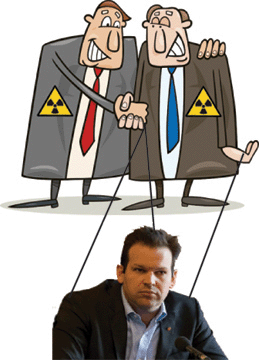
On Wednesday, Queensland Nationals Senator Matt Canavan called on Australia to boycott Glasgow, labelling the conference a “sham” in reaction to news that the nuclear industry has not been granted permission to host exhibits at the conference.
“They have banned nuclear technologies – reliable, emission-free power – from presenting. Climate change activism is not about changing the climate, it is about changing our politics. Australia should not bother going,” Senator Canavan tweeted.
Retiring Flynn MP Ken O’Dowd said Britain, the USA and Canada use nuclear power and he would “tend to agree” with Mr Canavan.
“Why would the Glasgow conference not want to discuss it? It should be one of the first items on the agenda,” Mr O’Dowd said.
Business urges government to take net zero pledge to UN climate talks, https://www.theage.com.au/politics/federal/business-urges-government-to-take-net-zero-pledge-to-un-climate-talks-20210831-p58nma.html By Mike Foley, September 2, 2021 Australia’s energy, business and oil and gas lobbies are joining calls from key international allies for Prime Minister Scott Morrison to set a net zero emissions deadline ahead of the United Nations climate conference in Glasgow this November.
But division within the federal government threatens to block the Prime Minister’s push for a commitment, with the Nationals still opposed to a deadline that is supported by every major farming group.
Senior officials from the European Union, Britain and US have urged Australia to set more ambitious goals. US presidential climate envoy John Kerry said scientists’ dire warnings over global warming placed more pressure on Australia.
Australia has pledged to reduce its greenhouse gas contribution by at least 26 per cent by 2030, based on 2005 emissions, but has not set a deadline to hit net zero emissions. Most other developed nations have committed to roughly halve their emissions by 2030 and reach net zero by 2050 or earlier.
But the government has not committed to greater action because the Nationals party, which has not yet backed a carbon-neutral deadline, has demanded to see the economic cost of greater climate action before signing up.
Mr Morrison says he wants to achieve net zero as soon as possible – “preferably by 2050.”
On Wednesday, Queensland Nationals Senator Matt Canavan called on Australia to boycott Glasgow, labelling the conference a “sham” in reaction to news that the nuclear industry has not been granted permission to host exhibits at the conference.
Australia’s petroleum lobby, its peak employer association, big power generators and investors from the booming clean energy industry say the government should head to the high-profile international climate talks armed with a 2050 commitment for carbon neutrality.
“They have banned nuclear technologies – reliable, emission-free power – from presenting. Climate change activism is not about changing the climate, it is about changing our politics. Australia should not bother going,” Senator Canavan tweeted.
Retiring Flynn MP Ken O’Dowd said Britain, the USA and Canada use nuclear power and he would “tend to agree” with Mr Canavan.
“Why would the Glasgow conference not want to discuss it? It should be one of the first items on the agenda,” Mr O’Dowd said.
However, former Nationals leader Michael McCormack said, in response to Mr Canavan, that Australia must be “at the table” in Glasgow.
“We have to be part of discussions, part of finding the way forward,” Mr McCormack said.
Australian Energy Council, which represents Australia’s largest electricity providers and major emitters including AGL, Origin and EnergyAustralia, backs a net zero deadline. Chief executive Sarah McNamara said the industry had a key role in climate action.
Settling on an economy-wide target will let us then decide the best ways to get there at the lowest cost and undoubtedly prompt a steady reduction in our emissions,” Ms McNamara said.
The Australian Industry Group chief executive Innes Willox said it was crucial government deliver on its promise to release a long-term strategy for climate change before Glasgow.
“(It) should include a clear long term national goal of net zero emissions by 2050 to guide government policy and private investment (and) medium term emissions reduction goals in line with the long-term goal and Australia’s peers,” Mr Willox said.
Australian Petroleum Production and Exploration Association also backed net zero by 2050 and said the industry was investing heavily to reduce emissions.
“Anyone reading the sobering report from the Intergovernmental Panel on Climate Change this week knows the world has no other option but to take practical steps to address the climate challenge,” an APPEA spokesman said.
Peak mining lobby the Minerals Council backs the Prime Minister’s current policy stance to reach net zero by as soon as possible and preferably by 2050. It called for Australia to open its carbon credit scheme, which pays private industry for emissions reduction, to international trading.
The council lodged a submission this week on the Japan-Australia Economic Partnership Agreement which said Japan’s commitment to decarbonise its economy provided a significant opportunity for the mining industry to supply “technologies of the future, including hydrogen with carbon capture storage”.
The Clean Energy Investor Group, which represents Macquarie Bank, Andrew Forest’s Squadron Energy and the world’s largest asset manager BlackRock said Australia would take an economic hit if it took weaker climate commitments to Glasgow.
Chief executive Simon Corbell said Australia should set an economy-wide net zero deadline of 2040 including a 2035 deadline for the electricity sector.
“This would only result in the cost of capital for clean energy projects in Australia remaining more expensive than other advanced economies,” he said.
The Investor Group of Climate Change, backed by funds managing $2 trillion of assets, said many nations had moved beyond net zero and were making more ambitious near term goals
“Australia risks being the only major advanced economy to not substantially and formally increase its 2030 target by Glasgow,” said policy director Erwin Jackson.
“Capital is mobile and will move to countries which deliver the best long-term returns. For long-term investors this is a net zero emission economy. Investors expect nations to demonstrate strong ambition to 2030 to get on an orderly pathway to net zero emission by 2050.”
The ANZUS treaty does not make Australia safer. Rather, it fuels a fear of perpetual military threat

Instead of viewing our region with empathy and generosity — or partnering with the US to prevent the world from becoming poorer, more dangerous or more disorderly — the Australian government seeks to arm itself.
In the process, it serves only to perpetuate a world in which conflict becomes ever more likely, and economic, racial and environmental inequality more entrenched.
The ANZUS treaty does not make Australia safer. Rather, it fuels a fear of perpetual military threat https://theconversation.com/the-anzus-treaty-does-not-make-australia-safer-rather-it-fuels-a-fear-of-perpetual-military-threat-165670?utm_medium=email&utm_campaign=Latest%20from%20The%20Conversation%20for%20September%201%202021%20-%202047620154&utm_content=Latest
Emma Shortis, Research Fellow, RMIT University, September 1, 2021 In June 2020, the Australian federal government announced a new, A$270 billion defence strategy. Part of this entailed spending $800 million on new AGM-158C long-range anti-ship missiles from the United States.
The new spend formed part of a long tradition of Australian defence procurement from the US. In 2017, the Australian National Audit Office estimated the Australian Defence Force (ADF) had spent an eye-watering $10 billion on American weapons and equipment in the previous four years alone.
This trend looks set to continue. This May, for example, the ADF announced the establishment of a $7 billion space division, which will inevitably deepen Australia’s security and economic ties with the US.
And as the Biden administration focuses more attention on “the Quad” — the quadrilateral security arrangement between the US, Australia, Japan and India — to counter Chinese influence in the Asia-Pacific region, Australia will most likely purchase even more American weapons and military equipment.
ANZUS is no security guarantee
These close security linkages reflect the broader consensus underpinning the Australia, New Zealand, United States Security Treaty (ANZUS), which marks its 70th birthday today.
This consensus – shared not just by US and Australian governments, but also by the broader foreign policy and media establishments in both countries – is that ANZUS makes Australia, and the world, safer.
The belief is the treaty — and the deep friendship between our two countries — gives Australia special access to advanced American military technology that we need (although not at a discount).
And, more importantly, that it keeps us under an American security umbrella. Australians can rely, in the recent words of one senior bureaucrat, on the “protection afforded” by ANZUS.
This assumption rests specifically on Article IV of the treaty, in which each party “declares that it would act to meet the common danger”. This language is widely assumed to constitute a security guarantee from the US. However, the reality is, it does not.
The belief is the treaty — and the deep friendship between our two countries — gives Australia special access to advanced American military technology that we need (although not at a discount).
And, more importantly, that it keeps us under an American security umbrella. Australians can rely, in the recent words of one senior bureaucrat, on the “protection afforded” by ANZUS.
This assumption rests specifically on Article IV of the treaty, in which each party “declares that it would act to meet the common danger”. This language is widely assumed to constitute a security guarantee from the US. However, the reality is, it does not.
Reinforcing a perception of perpetual military threat
Why is this? One reason is the treaty (and Australia’s relationship with the US more broadly) reinforces and perpetuates a belief that Australia faces a perpetual military threat.
It also reinforces the idea that military might is needed to meet that threat. The purchase of more American weapons, in the words of Prime Minister Scott Morrison, has the effect of “deterring an attack on Australia and helping to prevent war”.
Even putting the questionable basis of this assumption aside, this focus on military threat at the expense of all else has had significant consequences for both Australia and our region. Other genuine threats, such as climate change, are always treated as peripheral to the core of Australia’s relationship with the US.
It was perhaps telling that as Australian officials were negotiating the purchase of more American weaponry last year, they weren’t using our uniquely close relationship to secure priority access to something that would actually make Australians safer: American vaccines.
When Morrison announced the country’s new defence strategy, he justified both the spending and aggressive posturing on the basis a post-COVID world will be “poorer, more dangerous and more disorderly”.
As I argue in my new book, Our Exceptional Friend: Australia’s Fatal Alliance with the United States, ANZUS reinforces this way of seeing the world.
Instead of viewing our region with empathy and generosity — or partnering with the US to prevent the world from becoming poorer, more dangerous or more disorderly — the Australian government seeks to arm itself.
In the process, it serves only to perpetuate a world in which conflict becomes ever more likely, and economic, racial and environmental inequality more entrenched.
A shift in mentality is needed
ANZUS was born out of a shared experience of war in the 1950s, and particularly Australian perceptions of ongoing, existential threats from non-white neighbours. These perceptions, based on deep racism and fear, were wrong then, and they are wrong now.
Yet, the current US-Australia strategic relationship still requires an enemy – a “common danger”. As a result, the US and Australia will always find one, together.
The only way to change this is through a deep, honest reckoning with the origins of Australia’s security alliance with the US — and its consequences.
This doesn’t mean scrapping ANZUS. Even if that were possible, the structures that exist around it and the ideas that inform Australian foreign policy would endure.
It does mean, however, trying to find different ways for Australia to manoeuvre within those structures, stepping back from a fear-mongering, military threat mentality, and forging genuine relationships with our neighbours.
It means trying to forge a relationship with the United States that is not, in the words of a former US president, “sealed with … blood”.
Yet, even as the recent events in Afghanistan make the consequences of our unquestioning security alliance so glaringly obvious, there is no indication Australia will do anything other than double down on it.
The mindset that has led successive Australian governments to follow the US will not change, no matter what Washington does or who is in charge. The position of the current government is to strengthen the treaty, rather than try to dismantle it.
That’s dangerous for us and the world. Happy birthday, ANZUS.
Emma Shortis’s new book, Our Exceptional Friend: Australia’s Fatal Alliance with the United States, was published last month by Hardie Grant Books.
Australia’s participation in America’s wars. Was it worth it?
War Powers: immense profits for arms dealers, incalculable losses for Australians,michael West Media,
By Tasha May|August 17, 2021
“Freedom’s always worth it,” said Scott Morrison. “What a waste,” said the father who had lost his son in Afghanistan. Afghanistan, Iraq, Vietnam. Tasha May totes up the immense cost of futile wars and the immense profits.
As Australians watched the Taliban take Afghanistan’s capital Kabul Sunday, many were left wondering why Australia spent two decades there.
If we draw a line back to Australia’s participation in foreign wars since we followed America into Vietnam in 1962, Afghanistan presents yet another conflict with far greater losses than anything gained. It begs the question of why the pattern keeps repeating itself, with yet more soldier and civilian lives lost, billions more dollars spent, without any greater foresight exercised before entering these conflicts?
As Adam Bandt, leader of the Greens has said, “the wars in Vietnam, Afghanistan and Iraq were all wars Australia got involved in with the Prime Minister exercising the powers as though they were a monarch. They didn’t even consult cabinet. All those invasions were disasters”.
These were the words Bandt shared with Parliament as he introduced a bill for war powers reform, requiring parliament’s approval before Australians are sent into armed conflict abroad. Yet it’s a reform that’s been introduced before, first by the Democrats in 1985 and 1988 and 2003, and then by the Greens in 2003 and 2014 and which Coalition and Labor governments have opposed.
While this most serious of decisions has continued to rest with the Prime Minister and his executives, where have their decisions led Australia and what has been achieved?
Michael West Media has summarised below the toll the wars in Vietnam, Iraq and Afghanistan have taken on human lives, both solider and civilian, as well as heavy economic costs. Looking at the balance sheet, it’s clear only the defence contractors like Lockheed Martin, Raytheon, BAE and Northrup Grumman come out as winners.
The Losses
The economic cost to Australia are in the billions of dollars………. [ excellent graph]
But of course that price tag is nothing compared to the millions of lives that have been lost, lives of Australian defence personnel and civilians. [graph]
The number of defence personnel killed does not even include the 500 veteran suicides in Australia since the start of the Afghanistan war.
The Winners
In the last 20 years, arms manufacturer Lockheed Martin’s value on the New York Stock Exchange has risen from $US33 to today over $US360. They have proudly called their technology “Afghanistan’s Eyes in the Sky.”
In the same period arms manufacturer Northrup Grumman have risen from $US40 on the NYSE to today to today over $US365. The company has supported unmanned aircraft systems in Afghanistan. https://www.michaelwest.com.au/war-powers-immense-profits-for-arms-dealers-incalculable-losses-for-australians/—
Despite Australia’s laws prohibiting nuclear development, Angus Taylor signs up for development of small nuclear reactors with UK.
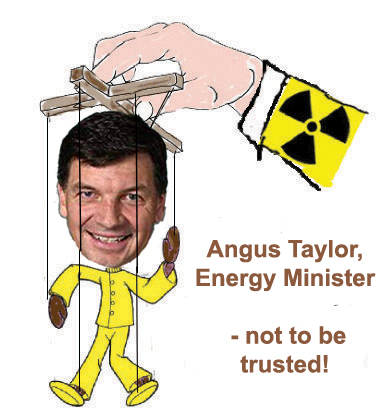
It is understood the co-operation will involve “leveraging” the expertise of the Australian Nuclear Science and Technology Organisation in waste processing and advanced materials to help advance development of small modular reactors
Top union leader backs Angus Taylor’s nuclear deal with UK https://www.afr.com/policy/energy-and-climate/top-union-leader-backs-angus-taylor-s-nuclear-deal-with-uk-20210730-p58eiz Jacob Greber, 13 Aug 21,
One of Australia’s leading union leaders has lent support to Energy Minister Angus Taylor’s decision to enable Australian scientists to work with the UK on next-generation nuclear power development even as two Labor MPs slammed the idea of such power plants as “deeply moronic” and “toxic” to the environment and human health.
Daniel Walton, head of the Australian Workers Union called for “open and pragmatic energy solutions” to reduce carbon footprints at reliable and affordable rates…….
Mr Taylor signed a letter of intent this week with his British counterpart, Kwasi Kwarteng, for both countries to collaborate on low-emissions technology, including “advanced nuclear designs and enabling technologies”.
It is understood the co-operation will involve “leveraging” the expertise of the Australian Nuclear Science and Technology Organisation in waste processing and advanced materials to help advance development of small modular reactors, which are about the size of a standard shipping container. ( small? deceptive spin – see below for an example)
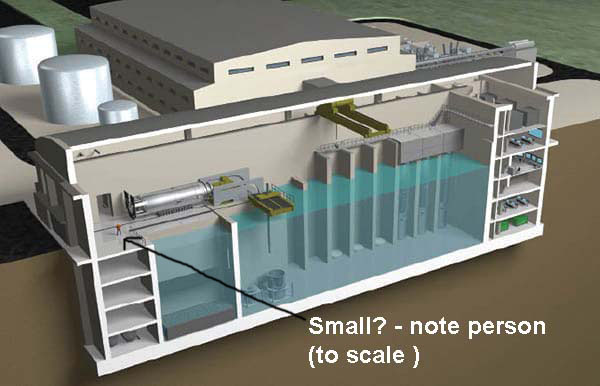
In Wyoming, a company owned by Bill Gates, TerraPower, is seeking approval for a nuclear power plant that proponents say would replace 200 local coal-related jobs within a year.
Reports of the UK-Australia nuclear tie-up triggered an immediate backlash from two West Australian Labor MPs.
“Nothing better demonstrates the Liberals’ deeply moronic approach to energy and economics,” Josh Wilson, federal MP for Fremantle, tweeted on Friday. “Nuclear power is not only ferociously expensive, but also slow, inflexible and toxic to the environment and human health.”
Perth MP Patrick Gorman accused the Coalition of failing to listen to West Australians….. https://www.afr.com/policy/energy-and-climate/top-union-leader-backs-angus-taylor-s-nuclear-deal-with-uk-20210730-p58eiz
A Day in the Death of British Justice – the case of Julian Assange
WikiLeaks has given us real news about those who govern us and take us to war, not the preordained, repetitive spin that fills newspapers and television screens. This is real journalism; and for the crime of real journalism, Assange has spent most of the past decade in one form of incarceration or another, including Belmarsh prison, a horrific place.
Diagnosed with Asperger’s syndrome, he is a gentle, intellectual visionary driven by his belief that a democracy is not a democracy unless it is transparent, and accountable.
JOHN PILGER: A Day in the Death of British Justice, Consortium News, August 12, 2021 The reputation of British justice now rests on the shoulders of the High Court in the life or death case of Julian Assange.
I sat in Court 4 in the Royal Courts of Justice in London Wednesday with Stella Moris, Julian Assange’s partner. I have known Stella for as long as I have known Julian. She, too, is a voice of freedom, coming from a family that fought the fascism of Apartheid. Today, her name was uttered in court by a barrister and a judge, forgettable people were it not for the power of their endowed privilege.
The barrister, Clair Dobbin, is in the pay of the regime in Washington, first Trump’s then Biden’s. She is America’s hired gun, or “silk”, as she would prefer. Her target is Julian Assange, who has committed no crime and has performed an historic public service by exposing the criminal actions and secrets on which governments, especially those claiming to be democracies, base their authority.
For those who may have forgotten, WikiLeaks, of which Assange is founder and publisher, exposed the secrets and lies that led to the invasion of Iraq, Syria and Yemen, the murderous role of the Pentagon in dozens of countries, the blueprint for the 20-year catastrophe in Afghanistan, the attempts by Washington to overthrow elected governments, such as Venezuela’s, the collusion between nominal political opponents (Bush and Obama) to stifle a torture investigation and the CIA’s Vault 7 campaign that turned your mobile phone, even your TV set, into a spy in your midst.
WikiLeaks released almost a million documents from Russia which allowed Russian citizens to stand up for their rights. It revealed the Australian government had colluded with the U.S. against its own citizen, Assange. It named those Australian politicians who have “informed” for the U.S. It made the connection between the Clinton Foundation and the rise of jihadism in American-armed states in the Gulf.
Continue readingUS and Allies’ military machine – out of Afghanistan (where it’s needed) and into the Pacific – against its new enemy – The Great Barrier Reef

War games on despite pandemic, threat to Great Barrier Reef https://www.greenleft.org.au/content/war-games-despite-pandemic-threat-great-barrier-reef, Kerry SmithJuly 16, 2021 Lurking off the coast of China’s eastern seaboard now are three United States aircraft carrier battle groups (each with about 30 support vessels).
They will be joined by a British aircraft carrier group and Australian and Canadian warships as part of biennial military exercises, which start on July 18 and last until the end of the month.
Talisman Sabre 2021 (TS21) will involve a US expeditionary strike group from the USS America, the amphibious assault ship based at Sasebo Naval Base in Japan, and 17,000 Australian, US and foreign troops in combined land, sea and air war exercises.
According to Stars and Stripes, for the first time, there will be live-fire training: the US Army will fire a Patriot missile defense system from Shoalwater Bay in Queensland at a pair of drone targets on July 16.
This is within the Great Barrier Reef Marine Park and other environmentally and culturally significant areas.
The war games will also take place in Darwin in the Northern Territory and Evans Head, New South Wales.
All are thousands of kilometres away from their home base, and provocatively close to the new declared enemy — China.
Forces from Canada, Japan, New Zealand and the Republic of Korea will take part and Australia-based personnel from India, Indonesia, France and Germany will observe.
Meanwhile, the ABC’s “defence correspondent” hyperventilated on July 14 that a solitary Chinese military ship, outside Australian territorial waters, poses a threat to national security.
The Independent and Peaceful Australia Network (IPAN) is concerned about both the war games and its impact on environmentally and culturally significant sites.
“TS21 will involve amphibious assaults, movement of heavy vehicles, use of live ammunition as well as the use of U.S. nuclear-powered and nuclear-weapon capable vessels,” IPAN spokesperson Annette Brownlie said.
“These activities are incompatible with the protection of the environment and, in particular, the Great Barrier Reef.
“During Talisman Sabre 2013, the US jettisoned four unarmed bombs on the Great Barrier Reef when they had difficulty dropping them on their intended target, Townshend Island,” Brownlie said.
The objective of Talisman Sabre is to further integrate the Australian military with the US — now ranked among the world’s worst polluters.
IPAN said the ADF did not engage in a Public Environment Report process for TS21 and has yet to release an environmental assessment for the areas in which TS21 will take place.
However, the Department of Defence did produce an environmental awareness video for visiting troops that promotes the military use of the Great Barrier Reef. The video reminds troops to consider the reef and not to litter.
“Talisman Sabre is a threat to the reef and to the environment. Putting out a video is a completely inadequate response,” Brownlie said.
This comes as federal environment minister Sussan Ley is lobbying to keep the Great Barrier Reef off the United Nations Educational, Scientific and Cultural Organization World Heritage Committee’s “in danger” list.
Despite a global pandemic, about 1800 foreign military personnel have arrived in Darwin to participate.
Australian Members of Parliament from right and left parties call on US President Biden to drop charges against Julian Assange,
Australian MPs call on US President Biden to drop charges against Assange, https://www.smh.com.au/politics/federal/australian-mps-call-on-us-president-biden-to-drop-charges-against-assange-20210629-p585a1.html By Rob Harris, June 30, 2021 Former security analyst turned federal Labor MP Peter Khalil has joined a group of Australian politicians directly lobbying the United States to drop an appeal over a British court’s ruling against the extradition of the WikiLeaks co-founder Julian Assange.
In a video message to US President Joe Biden released on Wednesday evening Australian time, 11 federal MPs from across the political spectrum have also appealed to Washington to drop its espionage charges against the Australian citizen and for the British government to allow him to return home.
Before entering politics Mr Khalil, the member for the Victorian seat of Wills, was director of National Security Policy of the Coalition Provisional Authority in Iraq. As a national security adviser to former prime minister Kevin Rudd, he was personally named in diplomatic cables sent to Washington by the US Embassy, which were later released by Wikileaks.
While he has previously criticised Mr Assange’s actions in helping obtain and leak classified information on the wars in Afghanistan and Iraq, Mr Khalil said the case was “not just about one individual”.
“In an era where rising authoritarian regimes are denying and attacking freedom of the press, such as the shut down of Hong Kong’s Apple Daily by the Chinese Community Party, it is more important than ever that when it comes to condemning the denial of press freedom the rhetoric of liberal democracies is actually matched with substantive actions to protect the right of journalists and the media to do their work freely to hold governments to account,” Mr Khalil said.
He said while the Obama administration had clearly chosen not to indict Mr Assange because it would set a damming precedent against journalistic practice and behaviour, the Trump administration aggressively pursued the case.
“Therein lies the problem. These charges are so broad-based that if successful they would go well beyond this individual case – they would impact investigative journalism and open up prosecutions of countless media doing this journalism, they would have a chilling effect on all journalists reporting on national security and foreign affairs matters,” he said.
The 49-year-old Mr Assange has been in Belmarsh Prison since April 2019 trying to avoid extradition to the US to face charges on multiple counts of conspiring with and directing others, from 2009 to 2019, to illegally obtain and release US secrets.
In doing so he aided and abetted hacking, illegally exposed confidential US sources to danger and used the information to damage the US, according to the charges. If convicted on all counts he faces a prison sentence of up to 175 years.
In 2012 Mr Assange sought asylum at the Ecuadorean embassy to avoid extradition to Sweden on a rape allegation that he denied. An investigation into the 2010 rape allegation has since been dropped by Swedish prosecutors.
He was awarded a Walkley award, Australian journalism’s highest honour, in 2011 for a “most outstanding contribution to journalism” for his “brave, determined and independent stand for freedom of speech and transparency”.
In March this year Nationals MP George Christensen, Independent Andrew Wilkie and Labor’s Julian Hill personally met with the US embassy’s charge d’affaires, Michael Goldman, arguing that Mr Assange should be allowed to return home.
A 24-member parliamentary group established to support Mr Assange’s bid to return home contains members from all major parties, including now Deputy Prime Minister Barnaby Joyce.
Prime Minister Scott Morrison said in January Mr Assange would be allowed to return to Australia if all charges were dropped. He said consular support had consistently been offered to Mr Assange, but made clear the government were “not parties to those set of proceedings”.
.
1 This month
17 October, Free Public Talk on Nuclear Issues in South Australia
David Noonan will speak on public interest concerns over the new Roxby Downs Indenture Act 2026 on BHP copper-uranium mining and ore processing in SA, and on how AUKUS may face SA with a High-Level nuclear waste agenda.
Dr Jim Green will discuss international developments in the field of nuclear power including ‘small modular reactors’ and Generation 4 ‘advanced’ nuclear reactor concepts.


Help Aunty Sue Protect Her Land and Sacred Sites From Destructive Rocket Testing.
.

Australians deserve the truth
about
AUKUS – https://aukuspublicinquiry.com/

PETITION – To: Prime Minister Anthony Albanese and the Australian Labor Government

of the week – Australians for War Powers Reform (AWPR)
To see nuclear-related stories in greater depth and intensity

