British Prime Minister urges Scott Morrison on climate action: Morrison twists the message
|
But a statement from Mr Morrison described the call differently, noting that Mr Johnson “welcomed” Australian emissions reduction initiatives and “strongly endorsed” the Australian approach. The UK has a policy of achieving net zero carbon emissions by 2050. A press release from 10 Downing Street following the call said Mr Johnson “stressed that we need bold action to address climate change, noting that the UK’s experience demonstrates that driving economic growth and reducing emissions can go hand-in-hand”. The equivalent statement from the Australian Prime Minister’s office stated: “PM Johnson welcomed our significant increase in emissions reduction programs announced through the Budget, and strongly endorsed our focus on unlocking practical pathways to reducing emissions,” it read. “Both countries agreed to work closely together to accelerate research and deployment of low-emission technologies ahead of COP26.” COP26, the 2021 United Nations Climate Change Conference, will be held next year in Glasgow. Policies to be set locally Labor Senator Penny Wong pressed Foreign Minister Marise Payne over the contrast during senate estimates. “There is no reference to net zero emissions [in Scott Morrison’s statement] there is no reference to bold action and there is no reference to ambitious targets,” Senator Wong said……. https://www.abc.net.au/news/2020-10-28/boris-johnson-scott-morrison-climate-change-bold-action/12817474 |
|
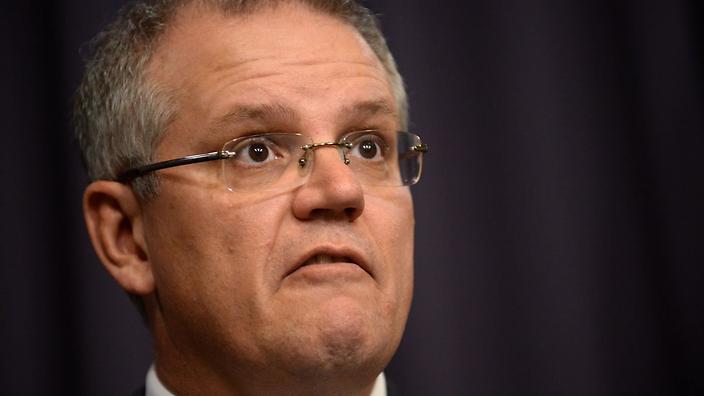
Australia’s submarine deal with a corrupt French company

 Meanwhile, in Australia, the submarine deal continues. In February last year, after two years of negotiations, the government signed a ‘strategic partnership agreement’ with Naval Group. The signing took place despite the emergence of two more investigations into Naval, including alleged corruption on a 2009 submarine deal with Brazil and a significant security breach where complete plans of the new Scorpène submarines Naval had provided to India were apparently leaked from within Naval.
Strong anti-corruption measures essential
Vast amounts of Australian taxpayers’ money are being handed to military industrial companies, including Naval Group, in contracts. Yet the perennial lack of transparency in defence procurement, blanket secrecy surrounding Australian weapons exports, and a pervasive “culture of cosiness” between government and industry all continue.
|
Murder, corruption, bombings – the company at centre of Australia’s submarine deal, Michael West Media by Michelle Fahy | Oct 24, 2020 The arms company at the centre of a deadly criminal saga and numerous global corruption scandals, Naval Group, was selected by the Australian government to build our new fleet of submarines – a deal heralded as ‘one of the world’s most lucrative defence contracts‘. How did this happen? In this special investigation Michelle Fahy discovers significant gaps in anti-bribery and corruption measures on this massive procurement project. The message communicated far and wide is that our standards are lax; grey areas are tolerated; and we’ll bend the rules and look the other way.
|
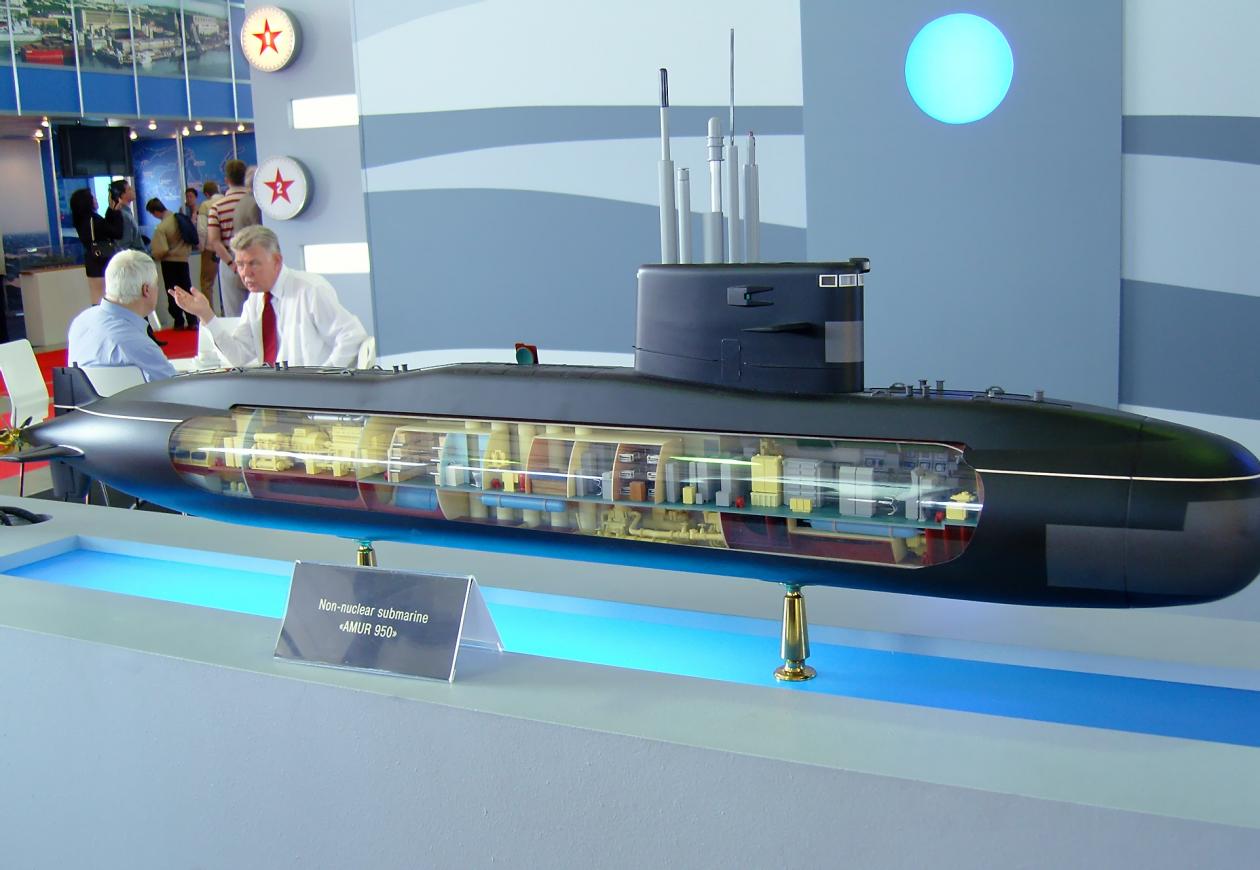
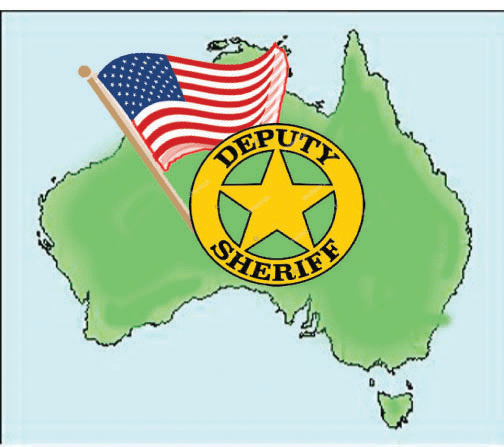
U.S. Deputy Sheriff Australia taken for a ride on an obsolete $90 billion submarine
|
In for a penny, in for a pound: $90 billion for an obsolete submarine fleet, Michael West Media, by Brian Toohey | Oct 18, 2020 So much for sovereignty. Australia is locked out of repairing key US components of our submarines’ computer systems, and the government has committed our fleet to the extraordinarily dangerous role of helping the US conduct surveillance in the South China Sea. Brian Toohey reports.
It is hard to believe that a government genuinely committed to defending the nation would sign a contract to buy 12 ludicrously expensive submarines that would not be operational for at least 20 years, with the final submarine not ready for nearly 40 years. The fleet will be obsolete before its delivered. But this is what the Turnbull government did when it announced in September 2016 that the majority French government-owned Naval Group would build 12 large submarines in Adelaide. The first sub is unlikely to be operational until the late 2030s and the last one until well after 2050. It is even harder to understand why the government endorsed the extraordinarily dangerous role for Australian submarines of helping the US conduct surveillance and possible combat operations within the increasingly crowded waters of the South China Sea. And while the Morrison government repeatedly claims that Australia’s defence force has a “sovereign” capability, in reality we are locked in “all the way” with the USA.
Ominously, an earlier Coalition government gave Lockheed Martin the contract to integrate these systems into the Attack subs. This is the same company that wasted billions on a dud computerised system for the US made F-35 fighter planes.. Called the Attack class, the conventionally powered submarines to be built in Adelaide by Naval will rely on an unfinished design based partly on France’s Barracuda nuclear submarines. Their official cost has already blown out from an initial $50 billion to $90 billion. It was revealed earlier this week that Defence officials knew in 2015 that the cost of the fleet had already blown out by $30 billion to $80 billion, yet continued to state publicly that the price tag was $50 billion. Life-cycle costs are expected to be around $300 billion…….. Under US commandAustralian subs in the South China Sea will be integrated into US forces and will be relying on them for operational and intelligence data. In an escalating clash, accidental or otherwise, they will be expected to follow orders from US commanders. Again, so much for Australia’s sovereignty. There is no compelling strategic reason why Australian submarines should travel that onerous distance to support the US in the South China Sea. ………… Perhaps the best argument, however, for not wasting $90 billion on the Attack class is that cheap underwater drones will soon have an important military role particularly suited to use from bases in northern Australia. https://www.michaelwest.com.au/in-for-a-penny-in-for-a-pound-90-billion-for-an-obsolete-submarine-fleet/ |
|
USA election result, and Australia’s response- the world’s climate in the balance
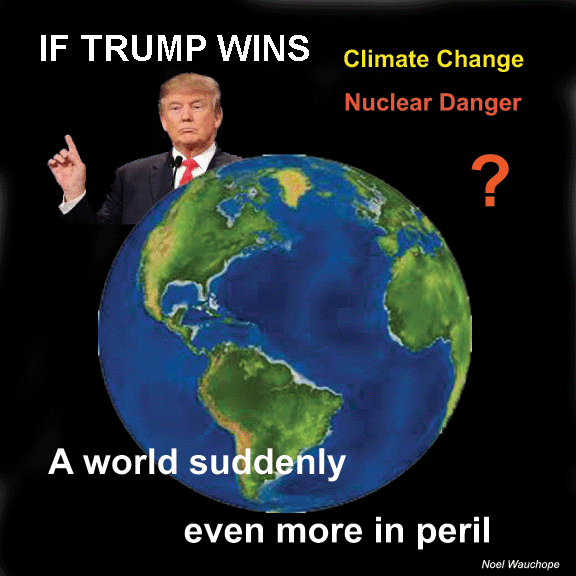
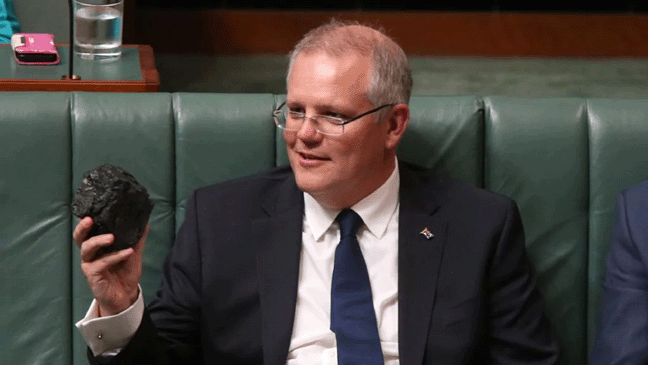
This is a cautionary tale for Australia. In both the US and Australia, conservative politicians seem more eager to bail out dirty polluters than protect the public
For Australia’s sake, I hope Trump’s climate science denialism loses. https://www.theguardian.com/commentisfree/2020/oct/17/for-australias-sake-i-hope-trumps-climate-science-denialism-loses, Michael Mann US policy has emboldened Scott Morrison to be less ambitious on climate, just when so much is at stake.
|
Anyone in Australia who witnessed the Black Summer bushfires (as I did), and anyone in the US who experienced the thick smoke from our western wildfires (as I have), knows how much damage climate change is already doing. The stark reality is that worldwide efforts to avert ever-more catastrophic climate change impacts lie in the balance in the 2020 US election. Donald Trump will go down in history bearing substantial responsibility for the deaths of over 200,000 Americans due to his rejection of the advice of public health experts and his refusal to endorse policies such as social distancing and mask-wearing that could have saved many thousands of lives. But his rejection of the science of climate change sets the stage for a far greater toll. Far more human lives will be lost from the impacts of climate change if we fail to act. Whether or not Trump gets re-elected – and how other countries like Australia respond to the outcome of the US election – could determine the fate of our planet. Indeed, I’ve stated that a second Trump term might well be “game over for the climate” if it leads to the collapse of international efforts to act. The damage caused by Trump’s climate denial is painfully visible within the US as we endure climate change-fuelled extreme weather events, including unprecedented wildfires in the west and unprecedented hurricanes in the east. But the damage can be felt around the world. Trump has proudly, and shamelessly, trumpeted his climate denialism on the global stage, joining with petrostates such as Russia, Saudi Arabia and Brazil in opposing international climate efforts. Indeed, Trump’s actions have emboldened Australia to be less ambitious on climate too, prime minister Scott Morrison following Trump’s lead in promoting climate denial, coddling fossil fuel interests and blocking efforts to support a clean, renewable energy transition. By pulling the US out of the Paris agreement (one of the first and only campaign promises he kept) Trump ceded America’s leadership on the defining challenge of our time. Thus far, other countries have fortunately filled the leadership void, at least temporarily. The EU and China, with its new net-zero pledge, have stepped up to the plate, recognising that they will benefit from the opportunities of a clean energy economy and better protect their citizens from dangerous climate change impacts. But nobody stands to benefit more from climate action, or lose more if we fail to act, than Australia. Having spent a sabbatical leave down under earlier this year, aimed at collaborating with scientists in Australia to study the impact of climate change on extreme weather events, I instead witnessed those impacts first-hand. I saw the muted beauty of the Blue Mountains when shrouded in wildfire smoke. If Trump is re-elected, and we collectively continue down a path of insufficient climate action, it may not be long before those fires rage year-round, and the Blue Mountains are lost in a perpetual grey and dismal haze. It’s the same with the vibrant sea life of the Great Barrier Reef, which I was fortunate enough to witness with my family during my time in Australia. The delicate ecosystems of the GBR are already on the ropes, with fossil fuels pushing up temperatures in the ocean to the point where bleachings occur with such frequency and ferocity that corals simply cannot recover. Research released this week found that the reef has lost half its coral, largely due to warming oceans caused by climate change. Add the impact of ocean acidification from increasing carbon emissions, and we could sadly, within a decade or two, be reading the GBR’s obituary for real. It doesn’t have to be like that. For one thing, renewable energy costs are plummeting while the technology just keeps getting more efficient and better, so dirty energy no longer makes economic sense. For example, on one recent Sunday, all the electricity demand for the entire state of South Australia was met by solar power alone, and every state and territory in Australia has committed to go carbon neutral by 2050. Here in the US, we’ve seen a record number of cities and states stepping up on climate goals too, knowing clean energy is good for their communities’ health, resilience and prosperity. Policymakers must accelerate the shift to clean energy that is already under way. As we’ve learned in the Trump-era, some fossil fuels are too far gone for even the most determined polluter-in-chief to save. Though another term would give Trump time to defend his environmental rollbacks in court and solidify his dirty energy policies, he has already failed to save coal from market forces, and another four years isn’t going to reverse the long-term decline of the industry. This is a cautionary tale for Australia. In both the US and Australia, conservative politicians seem more eager to bail out dirty polluters than protect the public, denying politically inconvenient science in order to offer lavish payouts to help unprofitable fossil fuel companies. If we are to avert catastrophic warming, we must do just the opposite, providing financial incentives for renewables and disincentives for fossil fuels. That will level the playing field, and accelerate the clean energy transition. We must take the earliest exit possible off the fossil fuel highway. By trying to squeeze out the last drop of fossil fuel industry profits, the Morrison government could well be on its way to bleaching the life from Australia’s coral reefs and blighting the blue of its mountains. There is some good news, however. Regardless of whom Americans vote for – and for the sake of the planet, I hope it’s Joe Biden and the Democrats – Australians can still work together for structural change at home. You can’t solve it alone, but we also can’t solve it without you. Australia has seen that the sun can power an entire state’s electricity for a day. Now it’s time to make that happen every day. Australia must distance itself from the handful of bad petrostate actors who have sabotaged global climate action and rejoin the coalition of the willing, when it comes to the battle to save our planet. • Michael E. Mann is distinguished professor of atmospheric science at Pennsylvania State University. He is author of the upcoming book The New Climate War: The Fight to Take Back Our Planet, due out in January (Public Affairs Books) |
|
Assange extradition case could esrablish a dangerous legal precedent
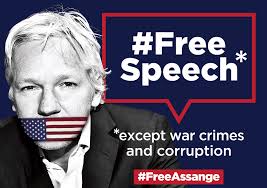
Crumbling Case Against Assange Shows Weakness of “Hacking” Charges Related to Whistleblowing
The charge against Assange is about establishing legal precedent to charge publishers with conspiring with their sources, something that so far the U.S. government has failed to do because of the First Amendment.
Five years later, in 2018, the Trump Administration indicted Assange anyway. But, rather than charging him with espionage for publishing classified information, they charged him with a computer crime, later adding 17 counts of espionage in a superseding May 2019 indictment.
The computer charges claimed that, in 2010, Assange conspired with his source, Chelsea Manning, to crack an account on a Windows computer in her military base, and that the “primary purpose of the conspiracy was to facilitate Manning’s acquisition and transmission of classified information.” The account enabled internet file transfers using a protocol known as FTP.
New testimony from the third week of Assange’s extradition trial makes it increasingly clear that this hacking charge is incredibly flimsy. The alleged hacking not only didn’t happen, according to expert testimony at Manning’s court martial hearing in 2013 and again at Assange’s extradition trial last week, but it also couldn’t have happened.
The new testimony, reported earlier this week by investigative news site Shadowproof, also shows that Manning already had authorized access to, and the ability to exfiltrate, all of the documents that she was accused of leaking — without receiving any technical help from WikiLeaks. …….
the charge is not actually about hacking — it’s about establishing legal precedent to charge publishers with conspiring with their sources, something that so far the U.S. government has failed to do because of the First Amendment………
Whether or not you believe Assange is a journalist is beside the point. The New York Times just published groundbreaking revelations from two decades of Donald Trump’s taxes showing obscene tax avoidance, massive fraud, and hundreds of millions of dollars of debt.
Trump would like nothing more than to charge the New York Times itself, and individual journalists that reported that story, with felonies for conspiring with their source. This is why the precedent in Assange’s case is so important: If Assange loses, the Justice Department will have established new legal tactics with which to go after publishers for conspiring with their sources. https://portside.org/2020-10-10/crumbling-case-against-assange-shows-weakness-hacking-charges-related-whistleblowing
As Julian Assange faces extradition to USA, global press freedom is endangered
|
Assange Faces Extradition for Exposing US War Crimes, BY Marjorie Cohn, Truthout, October 11, 2020 Three weeks of testimony in Julian Assange’s extradition hearing in London underscored WikiLeaks’s extraordinary revelation of U.S. war crimes in Iraq, Afghanistan and Guantánamo Bay. But the Trump administration is seeking to extradite Assange to the United States to stand trial for charges under the Espionage Act that could cause him to spend 175 years in prison.
Assange founded WikiLeaks during the Bush administration’s “war on terror,” which was used as a pretext to start two illegal wars and carry out a widespread program of torture and abuse of prisoners at Guantánamo and the CIA black sites. On October 8, 2011, Assange told a Stop the War Coalition rally in London’s Trafalgar Square, “If wars can be started by lies, peace can be started by truth.” In 2010 and 2011, WikiLeaks published classified material that Army intelligence analyst Chelsea Manning had provided to the organization. Manning was prosecuted, convicted and sentenced to 35 years in prison for leaking the documents. As he left office, Barack Obama commuted her sentence to the seven years she had already served. That commutation provoked “tremendous anger” in the Trump administration and drew Trump’s attention to Assange, Eric Lewis testified. Lewis, chairman of the board of Reprieve U.S. and lawyer for Guantánamo and Afghan detainees, called this “a politically motivated prosecution.” The files that WikiLeaks published contained 90,000 reports about the war in Afghanistan, including the Afghan War Logs, which documented a greater number of civilian casualties by coalition forces than the U.S. military had reported. In addition, WikiLeaks published nearly 400,000 field reports about the Iraq War, more than 15,000 unreported deaths of Iraqi civilians, and the systematic murder, torture and rape by the Iraqi army and authorities that were ignored by U.S. forces. WikiLeaks also published the Guantánamo Files, 779 secret reports constituting evidence of the U.S. government’s abuse of approximately 800 men and boys, ages 14 to 89. That abuse violated the Geneva Conventions and the Convention Against Torture and Other Cruel, Inhuman or Degrading Treatment or Punishment. Perhaps the most notorious release by WikiLeaks was the 2007 “Collateral Murder” video, which depicts a U.S. Army Apache helicopter target and fire on unarmed civilians in Baghdad. At least 18 civilians were killed, including two Reuters reporters and a man who came to rescue the wounded. Two children were injured. A U.S. Army tank drove over one of the bodies, cutting it in half. The video contained evidence of three separate war crimes prohibited by the Geneva Conventions and the U.S. Army Field Manual. As they are firing on the civilians, U.S. gunmen can be heard saying, “Look at those dead bastards.” In his written testimony, investigative journalist Nicky Hager drew a parallel between the Collateral Murder video and the television image of George Floyd screaming “I can’t breathe.” Assange Cannot Be Extradited for a Political OffenseThe 2003 U.S.-U.K. Extradition Treaty forbids extradition for a political offense. Although the treaty doesn’t define “political offense,” it generally includes espionage, treason, sedition and crimes against state power. Trump is asking the U.K. to extradite Assange for exposing war crimes. This is a classic political offense. Assange is charged under the Espionage Act and espionage constitutes a political offense as well……….. Assange’s Prosecution Violates Freedom of PressWhile the Obama administration declined to file criminal charges against Assange for fear of setting a dangerous precedent, Team Trump demonstrated no such forbearance. By charging Assange under the Espionage Act, Trump is making him a poster boy for its full court press against the media, which he calls “the enemy of the people.” Assange’s prosecution would send an ominous message to all journalists: report the unvarnished truth at your peril. No media outlet or journalist has ever been prosecuted under the Espionage Act for publishing truthful information, which is protected First Amendment activity. Journalists are permitted to publish material that was illegally obtained by a third person and is a matter of public concern. The U.S. government has never prosecuted a journalist or newspaper for publishing classified information, an essential tool of journalism. Information-gathering, reporting and disclosure fit the classic definition of activity protected by the First Amendment’s guarantee of freedom of the press. There is no distinction between what WikiLeaks did and what The New York Times, Der Spiegel, Le Monde, El País and The Guardian did as well. They all published articles based on documents WikiLeaks released. This is the reason Obama administration — which prosecuted an enormous number of whistleblowers — considered, but refrained from, indicting Assange. ……… WikiLeaks Didn’t Endanger Informants and Saved LivesAlthough the U.S. government claims that Assange endangered informants named in the published documents, John Goetz, an investigative reporter who worked for Germany’s Der Spiegel, testified that Assange took pains to ensure that the names of U.S. informants in Iraq and Afghanistan were redacted to protect their identities. …….. Moreover, WikiLeaks’s revelations actually saved lives. After WikiLeaks published evidence of Iraqi torture centers the U.S. had established, the Iraqi government refused Obama’s request to extend immunity to U.S. soldiers who commit criminal and civil offenses there. As a result, Obama had to withdraw U.S. troops from Iraq. WikiLeaks also revealed evidence of wrongdoing by other countries besides the United States. The organization uncovered Russian surveillance, published exposés of Bashar al-Assad in Syria, and some say WikiLeaks’s exposure of corruption in Tunisia and torture in Egypt helped catalyze the Arab Spring………… Assange’s Prosecution Will Chill JournalismOstensibly to get around allegations that it is prosecuting Assange for conducting journalism, the Trump administration is trying to paint him as a hacker by accusing him of conspiring with Manning to break into a government computer to steal government documents, in violation of the Computer Fraud and Abuse Act. But, as Patrick Eller, a digital forensic expert, testified, the attempted cracking of the password hash was not technologically possible in 2010, when the conversation between Assange and Manning occurred. Even if it were feasible, the purpose would not have been to conceal Manning’s identity and it would not have given Manning any increased access to government databases. The prosecution of Assange would set a disturbing example for journalists and media outlets that publish information critical of the government. Team Trump singled out Assange to deter journalists from publishing material that criticizes U.S. policy. If Assange is extradited to the United States and convicted of the charges against him, it would chill journalists from reporting the facts for fear they could be indicted under the Espionage Act………. When she set the November 16 date for the defense to submit closing arguments, Judge Vanessa Baraitser asked the defense how the U.S. presidential election would affect its case and declared that her decision on extradition would come after that election, stating, “That’s one of the factors going into my decision.” Kristinn Hrafnsson, editor-in-chief of WikiLeaks, said that the judge “acknowledged what has been clear since even before the first indictment against Julian Assange was unsealed — that this is a politically motivated prosecution.” Baraitser, who has granted extradition in 96 percent of the cases that have come before her, plans to issue her ruling on January 4. If she grants extradition, there will be several levels of appeals, including to the European Court of Human Rights. The stakes could not be higher. https://truthout.org/articles/assange-faces-extradition-for-exposing-us-war-crimes/?eType=EmailBlastContent&eId=614ce999-9844-4d61-a600-169db0c99052 |
Pretty despicable -tax breaks for company exporting weapons to Saudi Arabia, UAE.
Tax break for weapons exports to Mid-East countries accused of war crimes, Michael West Media, by Michelle Fahy | Oct 6, 2020 Australian weapons manufacturer Electro Optic Systems, with financial support from the federal and ACT governments, is capitalising on the ‘growth market’ of the Middle East, one of the world’s most volatile regions. Michelle Fahy reports.
As has been reported repeatedly, remote weapons systems manufactured by EOS are being exported to the United Arab Emirates and Saudi Arabia despite both countries being accused of war crimes. Numerous UN reports have detailed shocking human rights violations over the six years of the Yemen war.
After a shutdown due to Covid-19, EOS announced last month that it is exporting again.
EOS and the federal government have been asked repeatedly for proof that its weapons are not being used in Yemen. “Trust us,” is the standard response.
Assurances from a company chasing millions in profit and a government intent on catapulting Australia into the global top 10 of weapons exporters seem to be the best the public can expect in terms of accountability.
There is zero transparency when it comes to Australian weapons exports………..
Government support for EOS
EOS has received extensive government support, including an exemption from paying state payroll tax. Under questioning last November by the ACT Greens, Chief Minister Andrew Barr said the ACT Government provided support to EOS (PDF p44), “principally for its space industry related activity”. While EOS separates its space industry work from its weapons side, both companies operate in the same group under the same board……..
EOS has so far supplied the UAE and Saudi with its remote weapons systems. The systems are mounted on armoured vehicles and can incorporate a light cannon, machine gun, grenade launcher or anti-tank missile, which EOS does not manufacture. The system enables the weapon to be operated from inside the vehicle, which makes the soldier safer. It can identify targets and automatically aim the weapon, making the firing of the weapon faster and more accurate. In military parlance, the system enhances lethality. See it in action here.
The claim that it was not a weapons manufacturer may have been technically correct when asserted by EOS and Barr, but that is no longer the case.
Last month EOS announced it had moved into production with a new range of directed energy (laser) weapons. The weapons are being marketed by EOS as ‘drone kill’ technology (counter unmanned aircraft system or CUAS). EOS says “CUAS are entirely defensive systems”. The potential market is large. EOS has named its new range of weapons Mopoke, after the small native Australian owl.
EOS has not disclosed its list of interested customers for Mopoke, but industry insiders – such as AuManufacturing – have noted that its first customers are likely to come from the Middle East, given drone attacks on infrastructure there……….
EOS is now unequivocally a weapons manufacturer, and likely to soon start exporting its weapons to the Middle East.
Supplying weapons to war crimes accused
Melissa Parke, a lawyer, former federal Labor MP, and human rights expert, is one of three UN-appointed Eminent Experts on Yemen. Parke told SBS Dateline last year:
“No country can claim not to be aware of the violations being perpetrated in Yemen. To continue to provide weapons in the knowledge of such violations is both morally and legally hazardous.”
A former secretary of the Defence Department, Paul Barratt, has also stated his position on these weapon sales:
“Regardless of whether Australian-made weapons [are] crossing the border into Yemen, Australia now has a national policy which seeks and facilitates weapons sales with countries that stand accused of gross violations of human rights and likely war crimes. When did this particular trade in arms become official Australian policy? As a country that routinely asks other countries to abide by the rules-based international order, it would seem hypocritical, at best, that Australia is now willing to … make a profit from weapons sales to nations that are openly flouting this international order.”……….
In addition to ministerial lobbying, EOS Defence Systems has received federal financial support, including:
- $3.7 million from Defence between 2013 and 2016
- $41.5 million performance bond from Export Finance Australia (EFIC) (PDF p66)
The company has also gained from influential appointments to its board. Former Chief of Army, Peter Leahy, joined the EOS board in May 2009, just 10 months after retiring as army chief. In April 2016 Leahy was joined by former Chief of Air Force, Geoff Brown, less than 10 months after he had retired from the air force…… https://www.michaelwest.com.au/eos-weapons-export-transparen
Pine Gap could play role in accidental US-China nuclear fight
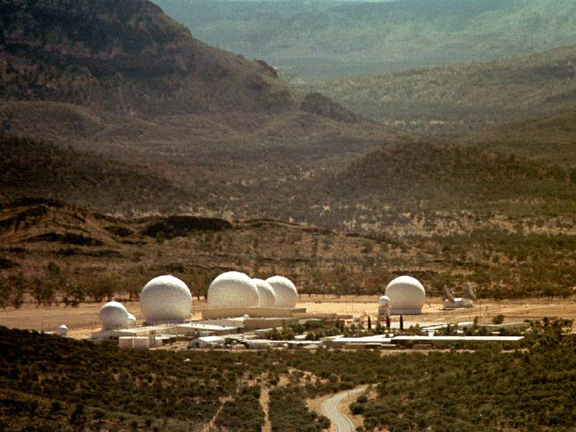
Pine Gap could play role in accidental US-China nuclear fight NT News, 30 Sept 20
Heightened US-China tensions have increased the risk of an accidental nuclear exchange between the two superpowers — and whether or not the Northern Territory’s Pine Gap surveillance base is playing a role in hyping this up needs to be looked at ……. (subscribers only)
Medical experts testify to court on Julian Assange’s precarious mental health
Assange faces “very high risk of suicide,” medical expert tells court, WSWS, By Thomas Scripps and Laura Tiernan, 23 September 2020Medical evidence was produced in Julian Assange’s extradition hearing yesterday detailing the terrible harm done to the heroic journalist by a decade of state-orchestrated persecution.
The day was given over to the examination of Professor Michael Kopelman who testified to Assange’s mental health. Kopelman is a psychiatrist and Emeritus Professor of Neuropsychiatry at Kings College London. He has given expert evidence in multiple extradition cases on behalf of both the defence and the prosecution. In assessing Assange, he conducted seventeen visits in 2019 and additional visits in 2020, constructed a “full family history” and a “full personal psychiatric history,” and carried out “interviews with his family and lifelong friends.”
His findings constitute a clear bar to Assange’s extradition to the United States. Under Section 91 of the UK Extradition Act (2003), extradition is prohibited if “the physical or mental condition of the person is such that it would be unjust or oppressive to extradite him.”
Under Section 87, extradition is prohibited if it is incompatible with the European Convention on Human Rights (ECHR). Article 3 of the ECHR states, “No one shall be subjected to torture or to inhuman or degrading treatment or punishment.”
Medical evidence speaking to these bars has played a critical role in previous US-UK extradition hearings, for example in the case of Lauri Love. The risk of notoriously poor conditions in US prisons exacerbating mental illness is an important factor.
Assange’s case meets these criteria. The details in today’s WSWS coverage are being reported consistent with the “sensitivity” called for by defence lawyer Edward Fitzgerald QC, on behalf of his client. Nonetheless they make overwhelmingly clear the “unjust and oppressive” treatment to which Assange has already been subjected.
Assange, Kopelman told the court, has experienced periods of serious mental illness in his earlier life. Since being confined to the Ecuadorian Embassy and then Belmarsh maximum security prison, these issues have resurfaced and worsened. Assange has suffered symptoms of severe and recurrent depression. Those symptoms have included “loss of sleep, loss of weight, a sense of pre-occupation and helplessness” and auditory hallucinations which Kopelman summarised as “derogatory and persecutory.”
They have also included “suicidal preoccupations.” Kopelman told the court, “There are… an abundance of known risk factors in Mr Assange’s case” and that Assange has “made various plans and undergone various preparations.” He gave his opinion that there was a “very high risk of suicide.”
These symptoms and risks, Kopelman explained, are exacerbated by an anxiety disorder and Post Traumatic Stress Disorder (PTSD) and by a diagnosis of Asperger’s syndrome. Kopelman cited a paper by world-leading autism expert Dr Simon Baron-Cohen which found that the lifetime experience of suicidal thoughts in those with Asperger’s “was more than nine times higher than in the general population in England.”
Explaining the impact of the US government’s persecution, Kopelman said, “The risk of suicide arises out of the clinical factors of depression and the other diagnoses, but it is the imminence of extradition and/or an actual extradition that will trigger the attempt, in my opinion.”
If Assange were to be incarcerated in the US and segregated from other prisoners, Kopelman gave his opinion that the WikiLeaks founder would “deteriorate substantially” and see an “exacerbation” of his “suicidal ideas.” This would “amount to psychological harm and severe psychological suffering.”
Kopelman’s evidence confirms the warnings made since November 2019 by Doctors for Assange, representing hundreds of medical professionals from around the world, that Assange is suffering “psychological torture” and “could die in prison.” It underlines in distressing detail UN Special Rapporteur on Torture Nils Melzer’s comment regarding Assange’s treatment that “psychological torture is not torture-lite. Psychological torture aims to wreck and destroy the person’s personality and identity… to make them break.”
Assange’s year-and-a-half long incarceration at Belmarsh has been designed to achieve this objective. It has profoundly undermined, in numerous ways, his legal right to prepare his defence against extradition. Kopelman reported yesterday that Assange has repeatedly complained that the medication taken for his mental health has caused him “difficulty in thinking, in memorising [and] in concentration.”
During the morning’s cross examination, Kopelman forcefully rebuffed prosecution lawyer James Lewis QC’s challenge to his credentials. He said solicitors had called him several times in recent years saying that Lewis himself was “keen to have your services” in an extradition case.
In the afternoon, cross-examination continued, with Lewis challenging the veracity of Kopelman’s diagnosis, and claiming that Assange’s appearance was “wholly inconsistent with someone who is severely or moderately-severely depressed and with psychotic symptoms.”
Kopelman replied, “Could we go back a step?” Having seen Assange between May 30 and December [2019], “I thought he was severely depressed, suicidal and was experiencing hallucinations.”………….. https://www.wsws.org/en/articles/2020/09/23/assa-s23.html
Australia is to build new nuclear reactors, in partnership with China (does Parliament know?)


Republishing again, in view of Dr Adi Paterson’s departure from Ansto.
Republishing this one, in view of news from the UK, that a British-China nuclear research programme may be siphoning UK tax-payers’ funds off into China’s military projects.
Australia is back in the nuclear game, Independent Australia, By Noel Wauchope | 24 March 2019, One of Australia’s chief advocates for nuclear power Dr Adi Paterson, CEO of Australian Nuclear Science and Technology Organisation, (ANSTO), has done it again.
This time, he quietly signed Australia up to spend taxpayers’ money on developing a new nuclear gimmick — the Thorium Molten Salt Reactor (TMSR).
This new nuclear reactor does not physically exist and there is no market for it. So its development depends on government funding.
Proponents claim that this nuclear reactor would be better and cheaper than the existing (very expensive) pressurised water reactors, but this claim has been refuted. The TMSR has been described by analyst Oliver Tickell as not “green”, not “viable” and not likely. More recently, the plan has been criticised as, among other things, just too expensive — not feasible as a profitable commercial energy source.
Paterson’s signing up to this agreement received no Parliamentary discussion and no public information. The news just appeared in a relatively obscure engineering journal.
The public remains unaware of this.
In 2017, we learned through the Senate Committee process that Dr Paterson had, in June 2016, signed Australia up to the Framework Agreement for International Collaboration on Research and Development of Generation IV Nuclear Energy Systems (also accessible by Parliament Hansard Economics Legislation Committee 30/05/2017).
This was in advance of any Parliamentary discussion and despite Australia’s law prohibiting nuclear power development. Paterson’s decision was later rubber-stamped by a Senate Committee……..
Dr Paterson was then obviously supremely confident in his ability to make pro-nuclear decisions for Australia.
Nothing seems to have changed in Paterson’s confidence levels about making decisions on behalf of Australia.
Interestingly, Bill Gates has abandoned his nuclear co-operation with China. His company TerraPower was to develop Generation IV nuclear reactors. Gates decided to pull out of this because the Trump Administration, led by the Energy Department, announced in October that it was implementing measures to prevent China’s illegal diversion of U.S. civil nuclear technology for military or other unauthorised purposes.
Apparently, these considerations have not weighed heavily on the Australian Parliament.
Is this because the Parliament doesn’t know anything about Dr Paterson’s agreement for Australia to partner with the Shanghai Institute of Applied Physics (SINAP) in developing Thorium Molten Salt Reactors? https://independentaustralia.net/environment/environment-display/australia-is-back-in-the-nuclear-game,12488#.XJWdhxDqitc.twitter
BHP betrays international safety efforts
|
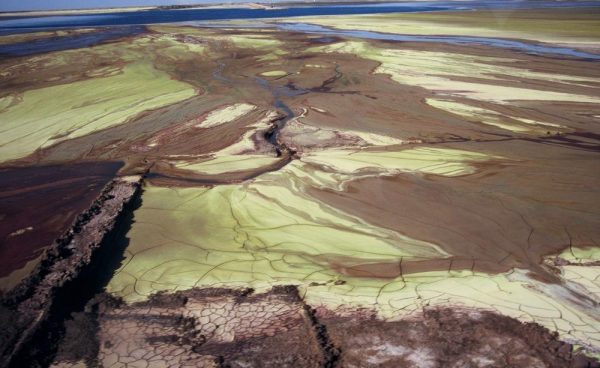
BHP betrays international safety efforts https://theecologist.org/2020/sep/15/bhp-betrays-international-safety-efforts, Dr Jim Green, David Noonan 15th September 2020, Mining giant BHP was complicit in the Samarco mining disaster in Brazil but the company has not learned from the experience. The world’s largest mining company BHP has betrayed international efforts to reform the mining sectors’ ongoing potential to cause catastrophic impacts though the failure of tailings dams. Operations at the Olympic Dam copper-uranium mine in South Australia show BHP has failed to learn key lesson’s regarding transparency, accountability and corporate responsibility following its complicity in the November 2015 disaster at the BHP and Vale joint venture Samarco iron ore mine in Brazil. Samarco was a corporate mining disaster which caused the loss of 19 lives and catastrophic environmental impacts with permanent pollution of native people’s land and rivers. Brazilian prosecutors say the company failed to take actions that could have prevented the disaster. Mine BHP now faces a $6.3 billion (US dollars) law-suit in the UK on behalf of 200,000 Brazilian people. The case alleges the Anglo-Australian mining giant BHP was “woefully negligent” in the run-up to the 2015 dam failure that led to Brazil’s worst environmental disaster. Mayors of two towns wiped out by the Samarco disaster assert that BHP has been using delaying tactics to avoid paying compensation to thousands of people affected by the flood of tailings waste. There have long been calls from environmentalists and others for Australian mining companies to be required to apply Australian standards to their overseas mining operations. The logic is sound given the often inadequate practices of Australian mining companies overseas. But the logic is also a little shaky given that mining standards in Australia leave much room for improvement. Olympic Dam is a case in point. BHP orchestrated approval in 2019 for a massive new tailings dam at Olympic Dam ‒ Tailings Storage Facility 6 (TSF6). This tailings dam is to be built in the same risky ‘upstream’ design that featured in both the Samarco disaster and the January 2019 Vale Brumadinho tailings dam disaster that killed over 250 people – mainly mine workers ‒ in Brazil. Community An internal 2016 report reveals that TSF6 has the potential to cause the death of 100 or more BHP employees and to cause “irrecoverable” environmental impacts from release of tailings waste. Yet, contrary to the recommendations of NGOs in Australia, Federal Environment Minister Sussan Ley granted approval for TSF6 without a comprehensive safety impact assessment and without setting any conditions on BHP to protect workers and the environment. TSF6 is to cover an area of nearly three sq km in tailings waste up to a height of 30 metres at the centre of the tailings pile, equivalent to the height of a nine-story building. BHP will leave this toxic mine waste there forever. Australian Prime Minister Scott Morrison has announced a “fast track” taskforce to further prioritise and accelerate approvals to BHP mining interests in a major Olympic Dam mine expansion process. BHP has clearly failed to learn the lessons of the disasters in Brazil. TSF6 represents an untenable risk to the lives of BHP employees and is unfit for community safety expectations in the 2020’s. Such approaches are clearly inconsistent with modern environmental practice and community expectations. Secret Radioactive tailings waste at Olympic Dam poses a significant long-term risk to the environment and must be isolated for over 10,000 years ‒ effectively forever. Continue reading |
Julian Assange was offered a pardon, if he would name a source
Trump ‘associates’ offered Assange pardon in return for emails source, court hears
WikiLeaks founder was asked to reveal source of leak damaging to Hillary Clinton, hearing told, Guardian, Peter Beaumont in London, Sat 19 Sep 2020 Two political figures claiming to represent Donald Trump offered Julian Assange a “win-win” deal to avoid extradition to the US and indictment, a London court has heard.
Under the proposed deal, outlined by Assange’s barrister Jennifer Robinson, the WikiLeaks founder would be offered a pardon if he disclosed who leaked Democratic party emails to his site, in order to help clear up allegations they had been supplied by Russian hackers to help Trump’s election in 2016.
According to a statement from Robinson read out to the court, the offer was made by the then Republican congressman Dana Rohrabacher and Trump associate Charles Johnson at a meeting on 15 August 2017 at the Ecuadorian embassy in London where Assange was then sheltering. At the time he was under secret investigation by a US grand jury.
Robinson added: “The proposal put forward by Congressman Rohrabacher was that Mr Assange identify the source for the 2016 election publications in return for some kind of pardon, assurance or agreement which would both benefit President Trump politically and prevent US indictment and extradition.”
……….. The barrister added that Assange did not name the source of the emails.While Assange’s legal team first made the claim in February detailing a deal for a pardon in exchange for denying the source of the emails was Russia, Robinson’s statement – admitted as evidence by the court – provides substantial details of the meeting………
Robinson’s description of the offer suggests Trump was prepared to consider a pardon for Assange in exchange for information almost a year before a federal grand jury issued a sealed indictment against the WikiLeaks founder.
If it is confirmed that the approach did indeed have the approval of Trump, it would mark the latest in a number of interventions by the US president in relation to the investigation into Russian election interference.
In her statement, Robinson said Rohrabacher and Johnson “wanted us to believe they were acting on behalf of the president”.
“They stated that President Trump was aware of and had approved of them coming to meet with Mr Assange to discuss a proposal – and that they would have an audience with the president to discuss the matter on their return to Washington DC,” she said……
Appearing to confirm that the approach had been made, James Lewis QC, for the US government, said: “The position of the government is we don’t contest these things were said,” adding: We obviously do not accept the truth of what was said by others.” ……. https://www.theguardian.com/media/2020/sep/18/trump-offered-julian-assange-pardon-in-return-for-democrat-hacking-source-court-told
Julian Assange exposed “a very serious pattern of actual war crimes”
Speaking on the significance of the WikiLeaks releases, Ellsberg said, “It was clear to me that these revelations, like the Pentagon papers, had the capability of informing the public that they had been seriously misled about the nature of the [Iraq and Afghan] war[s], the progress of the war, the likelihood that it would be ended successfully or at all, and that this was information of the highest importance to the American public.”
Characterising the wars that WikiLeaks exposed, Ellsberg explained, “The Iraq war was clearly recognisable, even to a layman, as a crime against the peace, as an aggressive war.”
|
Assange exposed “a very serious pattern of actual war crimes,” Daniel Ellsberg tells extradition hearing https://www.wsws.org/en/articles/2020/09/17/ells-s17.html, By Thomas Scripps, 17 September 2020Daniel Ellsberg gave powerful testimony to the Julian Assange extradition hearing yesterday, speaking via videolink to London’s Old Bailey. Ellsberg’s release of the top-secret Pentagon Papers in 1971 exposed the US government’s lies and criminality in the Vietnam War. “[T]he Afghan war was immediately recognisable as what might be called ‘Vietnam-istan.’ It was a rerun of the Vietnam war despite the great differences in terrain, in religion, in language … [T]he basic nature of the war, as basically an invasion and occupation of a foreign country against the wishes of most of its inhabitants, was the same. And that meant the prospects were essentially the same, which were for an endless stalemate which we’ve now experienced in Afghanistan for 19 years. And it might have gone on that long in Vietnam had not truths that the government was trying to withhold been made public.” Referring to the brutality of these occupations which the WikiLeaks releases uncovered, Ellsberg said, “I saw for the first time in virtually forty years … since the Pentagon papers, the release of a sufficient quantity of documentation to make patterns of decision making [in the war] very evident, to show that there were policies at work and not merely aberrant incidents.” He drew special attention to how the documents had exposed “a very serious pattern of actual war crimes. … In the Afghan case the reports of torture and of assassination and death squads were clearly describing war crimes. I would have, by the way, been astonished to see such reports in Secret level communications [as opposed to Top Secret] in 1971 or 1964 in the Pentagon. They would have been much higher in classification. What these reports revealed was that in the intervening years, in the Iraq War and the Afghan War, torture had become so normalised, and death squads and assassination, that reports of them could be trusted to a network at the Secret level available to … people with low-level clearances.” Ellsberg said of the Iraq “Collateral Murder” video, “We were watching somebody pursue with his machine gun an unarmed man, wounded, crawling for safety. … I was very glad that the American public was confronted with this reality of our war.” Speaking on the significance of the WikiLeaks releases, Ellsberg said, “It was clear to me that these revelations, like the Pentagon papers, had the capability of informing the public that they had been seriously misled about the nature of the [Iraq and Afghan] war[s], the progress of the war, the likelihood that it would be ended successfully or at all, and that this was information of the highest importance to the American public.” Characterising the wars that WikiLeaks exposed, Ellsberg explained, “The Iraq war was clearly recognisable, even to a layman, as a crime against the peace, as an aggressive war.” Continue reading |
Professor Paul Rogers – a witness explaining how Julian Assange is to be extradited for POLITICAL REASONS
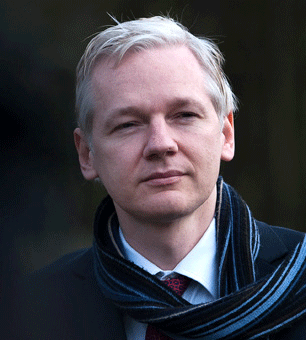 Julian Assange clearly political, says extradition trial witness, https://www.theaustralian.com.au/world/julian-assange-clearly-political-says-extradition-trial-witness/news-story/735ef7d40551d52f4f7f12d9d6c318d7 JACQUELIN MAGNAY, FOREIGN CORRESPONDENT@jacquelinmagnay, THE TIMES, SEPTEMBER 10, 2020
Julian Assange’s nomination for the Senate during the 2013 federal election campaign and the establishment of the WikiLeaks political party the year before “clearly shows’’ the WikiLeaks founder has a political view and a libertarian standpoint, a witness has told the Old Bailey.
Professor Paul Rogers, the emeritus professor of peace studies at Bradford University, was called as a witness by Assange’s team to persuade the judge that Assange is being targeted for political means, and thus an extradition to the US should not be permitted under the Anglo-US extradition treaty.
In day three of the court hearing where Assange, 49, is objecting to extradition to the US, Professor Rogers said in written testimony that Assange’s expressed views, opinions and activities demonstrate very clearly “political opinions”. He cited how Assange had formed the political party to contest the Australian general election and “central of this is his view to put far greater attention to human rights’’.
He added: “The clash of those opinions with those of successive US administrations, but in particular the present administration which has moved to prosecute him for publications made almost a decade ago, suggest that he is regarded primarily as a political opponent who must experience the full wrath of government, even with suggestions of punishment by death made by senior officials including the current President.’’
But US prosecutor James Lewis QC said: “Assistant US Attorney Gordon D. Kromberg explicitly refutes that this is a political prosecution but rather an evidence-based prosecution.’’
In documents to the court, the prosecution says the investigation into Assange had been ongoing before the Trump administration came into office.
“Assange’s arguments are contradicted by judicial findings, made in the US District Court of the District of Columbia, that the investigation into the unauthorised disclosure of classified information on the WikiLeaks website remained ongoing when the present administration came into office,” the prosecution says.
Mr Lewis added: “If this was a political prosecution, wouldn’t you expect him to be prosecuted for publishing the collateral murder video?’’https://www.theaustralian.com.au/world/julian-assange-clearly-political-says-extradition-trial-witness/news-story/735ef7d40551d52f4f7f12d9d6c318d7
He said Assange was being extradited to face charges relating to complicity in illegal acts to obtain or receive voluminous databases of classified information, his agreement and attempt to obtain classified information through computer hacking; and publishing certain classified documents that contained the unredacted names of innocent people who risked their safety and freedom to provide information to the United States and its allies, including local Afghans and Iraqis, journalists, religious leaders, human rights advocates, and political dissidents from repressive regimes.
Professor Rogers told the court the motivation of Assange and WikiLeaks was to achieve greater transparency and was political. The trial continues.
INJUSTICE at work? The extradition trial of Julian Assange
|
UK: Assange extradition hearing will be a key test for UK and US justice https://www.amnesty.org/en/latest/news/2020/09/uk-assange-extradition-hearing-will-be-a-key-test-for-uk-and-us-justice/?fbclid=IwAR2HY0lPIxV4m0h3u7ikxEmtaJ0m5YxUITtTgqmVViX03L6qsd40vHEwq2Y 4 September 2020 US authorities must drop all charges against Julian Assange relating to his publishing activities, and UK authorities must reject the related US extradition request, said Amnesty International ahead of Julian Assange’s extradition hearing which resumes on Monday and is expected to last several weeks. The hearing will decide on the Trump administration’s request for Julian Assange’s extradition to the US, where he faces a sentence of up to 175 years for publishing materials that document possible war crimes committed by the US military. “This hearing is the latest worrying salvo in a full-scale assault on the right to freedom of expression. If Julian Assange is prosecuted it could have a chilling effect on media freedom, leading publishers and journalists to self-censor in fear of retaliation,” said Amnesty International’s Europe Director, Nils Muižnieks. “If Julian Assange is extradited it will have far reaching human rights implications, setting a chilling precedent for the protection of those who publish classified information in the public interest.” The US extradition request is based on charges that stem directly from the publication of classified documents as part of Assange’s journalistic work with Wikileaks. Publishing such information is a cornerstone of media freedom and the public’s right to access public interest information, and must be protected rather than criminalized. In the US, Julian Assange could face trial on 18 charges, 17 of them under the Espionage Act; and one under the Computer Fraud and Abuse Act. He would also face a real risk of serious human rights violations including detention conditions that could amount to torture or other ill-treatment, including prolonged solitary confinement. Julian Assange is the first publisher to face charges under the Espionage Act. The fact that Assange was the target of a negative public campaign by US officials at the highest levels undermines his right to be presumed innocent and puts him at risk of an unfair trial. “The UK must abide by its obligations under international human rights law, which forbid the transfer of individuals to another country where they would face serious human rights violations,” said Nils Muižnieks. The case will begin at the Old Bailey, London, on the morning (9.30am UK time) of 7 September. Stefan Simanowitz will be outside the court with an Amnesty International spokesperson. Follow @StefSimanowitz for updates and analysis Amnesty will have trial observers monitoring remotely the entire series of hearings. During the first week, Sebastian Elgueta (@sebelgueta), a UK based barrister, will be monitoring. Background: Amnesty International also has concerns with regard to Julian Assange’s physical and mental well-being, particularly with the spread of COVID-19. Conditions in UK prisons and detention centres are substandard. It is imperative that health and safety protocols are put in place to reduce the risk of COVID-19 infection, while ensuring that prisoners’ and detainees’ rights are protected. Bail or release should be considered for any detainee or prisoner who has serious underlying health conditions and is particularly at risk of infection. See Amnesty International’s statement on prison conditions for Assange here |
|
1 This month

of the week – Australians for War Powers Reform (AWPR)
To see nuclear-related stories in greater depth and intensity
 Antinuclear