U.S. government offers meaningless assurances on Julian Assange’s well-being, as it gets right to appeal on UK court ruling against his extradition

UK High Court grants US government right to appeal on Assange extradition, World Socialist Website, Laura Tiernan7 July 2021 Stella Moris, the partner of imprisoned WikiLeaks publisher Julian Assange, spoke outside Britain’s High Court yesterday warning he is “still at risk of extradition” after a judge decided the US government can appeal an earlier court ruling that blocked his extradition on health grounds.
The judge also ruled that Assange must remain in prison until the appeal is heard, effectively extending his incarceration for at least many more months.The ruling underscores the Biden administration’s determination to ensure Assange’s removal to the US. According to a report in the Wall Street Journal, based on excerpts of the judge’s ruling supplied by the UK Crown Prosecution Service, the US government offered “assurances” that Assange would not be imprisoned in oppressive conditions and could be permitted to serve any sentence in Australia.Such assurances are meaningless. Once Assange is in US custody, those pledges will be cast aside. The Wall Street Journal reported: “The US said it reserved the right to impose special measures on Mr. Assange, or hold him in a Supermax jail, if ‘he were to do something subsequent to the offering of these assurances’ that meets the test for applying them.”
Assange has been denied bail and remains detained in London’s Belmarsh Prison despite a January decision by District Court Judge Vanessa Baraitser denying his extradition to the US. Assange faces trumped-up charges under the Espionage Act over his exposure of war crimes, illegal mass surveillance and torture by the US and its allies. He has been held captive in the UK for a decade.
Baraitser ruled January 4 that Assange’s extradition to a US federal prison would be “oppressive” because of his compromised mental health and risk of suicide. The US Department of Justice (DoJ) under President Donald Trump immediately appealed Baraitser’s decision. Two days later, Trump mounted a fascist coup attempt in Washington D.C. The Democrats under Joseph Biden and Kamala Harris have seamlessly continued US imperialism’s political vendetta against Assange.The WikiLeaks publisher is being held in violation of his First Amendment rights to free speech and freedom of the press and in breach of international human rights law.
Britain’s High Court has reportedly granted a right of appeal to the US on three grounds. The court will decide whether Baraitser applied the Extradition Act correctly; whether sufficient advance notice was given of the court’s decision, and whether “assurances” by the US over mitigating the risk of suicide were properly considered.A date for the appeal hearing has not been announced, but it will likely take place after the courts’ summer recess. This leaves Assange imprisoned at Belmarsh indefinitely in conditions long condemned by doctors and human rights lawyers as “psychological torture.”
In a letter sent yesterday to Biden and US Attorney General Merrick Garland by Doctors for Assange, 250 doctors from 35 countries demanded the dropping of all charges against the WikiLeaks publisher. They denounced his ongoing imprisonment due to the US appeal as “amounting to cruel, inhuman and degrading treatment in the UK.”……….. https://www.wsws.org/en/articles/2021/07/08/gnkp-j08.html?pk_campaign=assange-newsletter&pk_kwd=wsws
U.S. proposals about extradition of Julian Assange are designed to keep him in prison for life
Assange fiancee rejects US proposals over possible extradition
Stella Moris says measures intended to keep her partner ‘in prison effectively for the rest of his life’, https://www.theguardian.com/media/2021/jul/08/julian-assange-fiancee-rejects-us-proposals-over-possible-extradition Ben Quinn@BenQuinn75, Thu 8 Jul 2021
US assurances that Julian Assange would not be held under the strictest maximum-security conditions if extradited from the UK have been rejected by his fiancee, who described them as a formula to keep him in prison for the rest of his life.
Details of the proposals made to British authorities emerged after permission was granted this week to appeal against January’s ruling that the Wikileaks co-founder cannot be extradited on mental health grounds.
They include assurances that Assange, if convicted in relation to charges of alleged espionage and hacking, would be allowed to serve any jail time in his native Australia.
The package contains a particular assurance that Assange would not be subject to “special administrative measures” (SAMs) in US custody or imprisoned at the “supermax” prison in Florence, Colorado, procedures reserved for high-security prisoners. The assurances were subject to change if he were to “do something” subsequently that met the US test for the imposition of the high-security measures.
Details were contained in excerpts of the UK court ruling granting limited permission to appeal, which were released by the Crown Prosecution Service.
In January, the district judge Vanessa Baraitser ruled Assange could not be extradited because of concerns over his mental health and risk of suicide in a US prison.
Stella Moris, Assange’s fiancee, described reports about US undertakings as “grossly misleading”, adding that 80,000 prisoners in US prisons were held in solitary confinement on any given day and only a handful were held in the conditions specifically mentioned in the proposals.
“The US government also says it may change its mind if the head of the CIA advises it to do so once Julian Assange is held in US custody,” she added.
In relation to him serving jail time in Australia, she said that it had always been his right to request a prison transfer to finish serving his sentence.
“What is crucial to understand is that prisoner transfers are eligible only after all appeals have been exhausted. For the case to reach the US supreme court could easily take a decade, even two.
“What the US is proposing is a formula to keep Julian in prison effectively for the rest of his life.”
Nick Vamos, a partner at the Peters & Peters law firm and a former head of extradition at the Crown Prosecution Service, said it was “highly unusual” for the US Department of Justice to offer broader assurances to a foreign court on prisoner treatment upfront. In fact, he said it had previously refused to do so in terrorism cases.
“It’s not unusual in extradition, but it is for the Americans to give this type of assurances because their previous approach over many years has been to say, ‘the US legal system is a fair one and our prison system is capable of dealing with people with all kinds of conditions,’” he said.
While a date has yet to be set for a high court hearing in relation to the US appeal, Vamos suggested things could move “quite quickly”.
While the ruling earlier this year had gone in Assange’s favour, he added: “The difficulty he and his legal team now have is that, if the court says we are denying extradition because we are concerned about his treatment, we are worried that a, b or c might happen, and the requesting state then provides an assurance which says, ‘under no circumstance will that ever happen’, then it defeats the objection.
“There’s also a longstanding history of our courts accepting the assurances from requesting states. The question is: ‘Does the assurance address it in fact or can it be undermined by suggesting that it is not quite as good as it appears or that they will dishonour it anyway?’”
Need for a USA”no first use” of nuclear weapons policy – the concern of regional U.S. allies

In our lead article this week, Van Jackson makes a compelling case for the United States to establish a no-first use policy on nuclear weapons. This would entail a pledge from Washington that its nuclear arsenal would not be used as a means of warfare except in the event that it was first subject to a nuclear attack by an adversary. While there is already some momentum behind such a policy amongst Democrats, Biden has taken no concrete steps towards implementing it and it has yet to be legislated by Congress.
No-first use nuclear policy. https://www.eastasiaforum.org/2021/07/05/no-first-use-nuclear-policy/ Author: Editorial Board, ANU, 5 July 21,
Since the election of Joe Biden in 2020, much of the world has breathed a collective sigh of relief as we have witnessed what appears to be a return to ‘pre-Trump normalcy’ in the United States. One of the greatest foreign policy challenges that faces the Biden administration, however, is recovering US credibility in Asia, which was severely undermined by his predecessor Donald Trump.
From the standpoint of US allies in the region, a concerning aspect of Trump’s rise to the presidency was his loose talk about nuclear weapons and apparent openness to utilising them against adversaries. While most allies have long emphasised the immense benefits of the US security guarantee and its attendant nuclear umbrella, Trump’s rise to power rendered alliance relationships potential liabilities.
These concerns among allies in the region were significantly elevated in 2017, when Trump began to entertain the prospect of launching a pre-emptive — albeit non-nuclear — strike against North Korea. He supposedly even went so far as to order an evacuation of US servicemen and their families from Seoul — an injunction that was ultimately not carried out by US officials in South Korea. His apparent willingness to engage in conflict with a nuclear-armed North Korea was reinforced rhetorically as he threatened ‘fire and fury’ against Kim Jong-un’s regime.
These developments had US allies (and non-allies alike) in the region beleaguered by the prospect of nuclear war in the region. Their concerns were reinforced by Trump’s predilection to appoint family members — with little to no foreign policy expertise — as official advisors. The notion that a US-initiated conflict with North Korea, entailing probable commitment by American allies, might be informed in part by the likes of Ivanka Trump and Jared Kushner was a severe indictment of alliance management.
The election of Joe Biden allayed some of the concerns of US allies. But the fact that Trump received over 70 million votes in the election and may run again for president in 2024 means that his tenure cannot be easily viewed as an unfortunate aberration.
What can Biden do during his presidency to restore confidence among American allies in the region, and restore US credibility in the aftermath of the Trump administration?
In our lead article this week, Van Jackson makes a compelling case for the United States to establish a no-first use policy on nuclear weapons. This would entail a pledge from Washington that its nuclear arsenal would not be used as a means of warfare except in the event that it was first subject to a nuclear attack by an adversary. While there is already some momentum behind such a policy amongst Democrats, Biden has taken no concrete steps towards implementing it and it has yet to be legislated by Congress.
Jackson outlines three common arguments that are cited against a non-first use nuclear policy: China, Russia and North Korea would never believe in the veracity of no-first use declarations; it would encourage uncertainty among adversaries as to whether the United States could use nuclear weapons against them; and there would also be concerns among American allies about the implications of a no-first use policy for US extended nuclear deterrence and Washington’s ability to deter threats on their behalf.
Yet Jackson argues that, ‘ … the world is no longer unipolar. The old bargain — Washington does arms-racing so allies don’t — makes no sense in a world where US politics is depressingly awry. Allied nuclear proliferation poses its own risks, but it may be a better alternative to US nuclear preponderance and presidential first-use launch authority’.
As the region becomes increasingly volatile, a policy of US restraint on the use of nuclear weapons has acquired new urgency. The advent of the Biden administration has done little to alleviate US–China tensions; Biden’s China policy so far appears to be a continuation of that of the Trump administration. Meanwhile, prospects of a cross-Strait crisis continue to rise and progress on the denuclearisation of North Korea remains elusive. These political tensions have been aggravated by economic destabilisation in the region that has been fuelled by the COVID-19 crisis.
These developments have spawned new concerns about conflict and the role of US alliances in the region. Some analysts believe that such conflict would have potential to evolve into nuclear war. Given that the US-led alliance network is premised on the maintenance of regional peace and security, it behoves Washington to clarify that it will not employ first use of nuclear weapons.
This is important for the Biden government. It is also important for the future US administrations that could see the likes of Trump with a finger back on the nuclear button.
The EAF Editorial Board is located in the Crawford School of Public Policy, College of Asia and the Pacific, The Australian National University.
Bob Hawke – his allegiance to USA was geater than to the union movement
Secret embassy cables cast the Bob Hawke legend in a different light, Guardian,Jeff Sparrow 4 July 21,
Papers show Hawke as a unionist said one thing to his members, and something quite different to his US embassy friends….
The documents uncovered by Coventry date from 1973 to 1979, a period of bitter industrial and political conflict during which Hawke, as leading trade unionist, often featured in the press as a stalwart militant……..
In public, he backed an “independent non-aligned Australia” (a popular stance in the aftermath of the Vietnam war); in private, he told US officials he wanted the Anzus co-defence pact extended beyond a “purely military alliance”.
Coventry says the Americans valued their relationship with Hawke because he “helped protect [US] defence installations, provided information about union disputes and warned officials that installations could be targeted”…….
In 1973, the American Labour Attaché (a figure quite probably connected to the CIA) contacted Hawke about a potential union dispute at the joint American-Australian facility at North West Cape. The cables record that Hawke “volunteered to intervene informally”, saying he felt “concern and surprise at the militancy” of the workers.
The Americans particularly appreciated Hawke’s willingness to deradicalise the labour movement. As Coventry puts it: “Hawke proved useful in pre-empting and pacifying union disputes.”…………
the context in which it has emerged makes the material particularly significant. The high court recently upheld the constitutional legitimacy of Australia’s new foreign interference laws.
One challenge came from John Shi Sheng Zhang, a political adviser to NSW Labor MP Shaoquett Moselmane. The second challenge, however, came from a rightwing US group called LibertyWorks, which objected to the new legally requirement to register a conference featuring Tony Abbott and Nigel Farage.
That’s because, on paper at least, the new laws criminalise the kind of meddling in which the Americans have gleefully engaged for decades………
Had today’s foreign interference laws been in place in the 1970s, Hawke’s conduct would certainly have invited legal investigation……. https://www.theguardian.com/commentisfree/2021/jul/03/secret-embassy-cables-cast-the-bob-hawke-legend-in-a-different-light
Australia’s collective voice should silence the ‘drums of war’

Australia’s collective voice should silence the ‘drums of war’ Independent AustraliaBy Barbara Hartley | 24 June 2021, With Australia raising its hand to be part of joint naval exercises in the South China Sea, its departure from the G7 in Cornwall continues the “down-under” tradition of following U.S. foreign policy.
Although the beat of war drums is currently more muffled, anti-China rhetoric still echoes down the chilly halls of Federal Parliament as the winter sitting takes place.
In 2003, without parliamentary oversight, Australia followed the U.S. into Iraq. The given purpose was to initiate action against what then-U.S. President George W. Bush called the “axis of evil”: initially Iraq, Iran and North Korea, and later expanded to Cuba, Libya and Syria. This axis was in fact quite shaky.
One consequence of that unconscionable invasion was the toll on young Australian defence personnel, and others such as journalists, in terms of moral injury and stress. The compulsive loop of the Federal Government supporting U.S. wars with no direct relation to Australia – Korea, Vietnam, Iraq, Afghanistan – and those wars damaging Australian lives, has played non-stop since its entry into the ANZUS agreement.
Some, especially weapons trade profiteers and their political lackeys, want conflict with China to continue that unhappy pattern.
It is imperative that the now muted “drums of war” are silenced once and for all.
Readers are therefore urged to respond to the People’s Inquiry for a Peaceful and Independent Australia being conducted by the Independent Peaceful Australia Network (IPAN).
The inquiry’s purpose is to examine the impact of involvement in U.S.-led wars and the U.S.-Australia Alliance on everyday Australians. The current obsession with China and the inexplicable desire to face off with the world’s greatest military power is arguably a result of our alliance with the U.S.
The Inquiry Chairperson is Kelly Tranter, one of Australia’s leading authorities on the growing influence of weapons manufacturers on government policy in Australia.
There are also several panels addressing the various ways in which involvement in U.S.-led wars impacts our lives.
In addition, an IPAN website questionnaire can be completed in a very short time. Both submission and questionnaire suggestions will inform the Inquiry’s final report. Possible submission talking points are raised below………………………….. https://independentaustralia.net/politics/politics-display/australias-collective-voice-should-silence-the-drums-of-war,15219
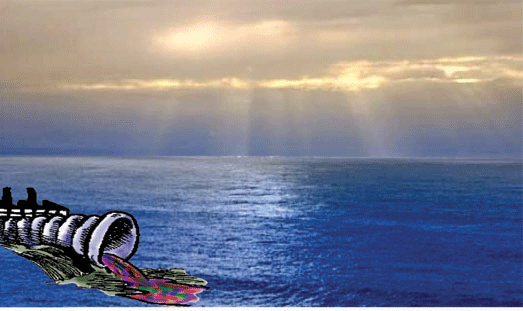
Australian group writes to Japanese Ambassador, calls for halt to plan to empty Fukushima nuclear wastewater into the Pacific.
ACE Nuclear Free Collective . Friends of the Earth Australia, 14/06/21
To Ambassador YAMAGAMI Shingo,
We, the undersigned, are sending this letter to express our concern at the recent decision of the Japanese government to release around 1.25 million tons of treated wastewater from the Fukushima Daiichi site into the Pacific Ocean. Treatment cannot remove all radioactive contaminants from the wastewater. We join international calls for the Japanese government to reconsider its decision and pursue alternative options for long term storage.
We are concerned that Japanese government claims that the treated wastewater is “safe” enough to drink, ignores the inability of the Multi-Nuclide Removal Facility used for treatment remove radioactive materials such as tritium. Plans to dilute the wastewater to solve this issue do not change the amount of radioactive material that will be released and could accumulate in parts of the marine environment.
We are concerned about the effects of the wastewater on the wide Pacific region as the Pacific accounts for around 58% of the world’s fisheries, and many of the region’s nations are dependent on these resources. In addition, many of these states have long suffered from the effects of nuclear testing and illicit dumping of nuclear waste by wealthy nations.
We the undersigned call on the Japanese government to:
・Withdraws its plan to release wastewater from the Fukushima Daiichi site into the Pacific Ocean.
・Disclose all relevant information about the wastewater issue in a transparent fashion.
Australia’s incompetent leadership – continued subservience to American militarism

Australia is in denial over one-way relationship with U.S. https://independentaustralia.net/politics/politics-display/australia-is-in-denial-over-one-way-relationship-with-us,15171#.YMBaWGL2H14.twitter By Bruce Haigh | 9 June 2021, Tensions with China resulting in economic sanctions are the result of Australia’s blind allegiance to the USA that began decades ago, writes Bruce Haigh.
AFTER THE AMERICAN defeat by the Japanese in the Philippines, it needed a base from which to regroup, resupply and take the fight back through the Pacific. Australia was a bread bowl, training camp and aircraft carrier. Its north was intersected with airfields used by American bombers and fighters in attacks against Japanese bases and shipping on and around Papua New Guinea, the Solomons and other nearby Islands.
Australia was fearful of attack by the Japanese after their rapid advance through south Asia and the Pacific. The Americans arrived as the Japanese were advancing over PNG toward Port Moresby. The Australian Army had been conducting a successful fighting retreat in order to shorten their supply line, extend that of the Japanese and organise a major offensive. Douglas MacArthur, the arrogant American general in command, sacked a number of Australian generals and ordered the retreat to stop.
Instead of being angry with MacArthur, the average Australian thought he was a hero. The myth was born that America had saved Australia, whereas America came to Australia purely for self-interest. Australians were impressed with American largesse and technology. Many bought into the American “dream”. This was the point at which America could do no wrong. The ANZUS Treaty came into being at the time of the Cold War and hostilities in Korea. America was seen by Australians as the protector against Russian and Chinese expansionism.
Australia was also seduced by American consumerism, Hollywood, Nashville and Detroit. A common language facilitated the absorption of American culture. Military, academic and business exchanges grew. However, it was largely a one-way street, although that went mostly unnoticed in Australia given the sycophantic nature of the relationship. Australians were in awe of American power and wealth.
They undertook no foreign policy initiatives without first checking with the Americans. The exception being the recognition of China by the Whitlam Government in 1972, which many junior diplomats welcomed with pride and pleasure. Australia bought into the American line on the civil war in Viet Nam, much to its subsequent but unacknowledged regret. That did not stop the “provincial” Prime Minister, John Howard, from buying into the wars in Iraq and Afghanistan as a favour to the equally limited George Bush.
Australia bought military hardware from the Americans, under pressure, to increase U.S. force structure in the region. We bought the F-111 which took forever to iron out the cracks (pun intended), the single screw FFGs, the next to useless Abrams tanks, the F35 flying lemon and to boost the alliance, Australia has ordered 12 submarines from the French which it does not need.
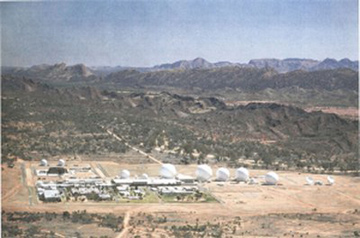
America has a highly sophisticated spy base, Pine Gap, in the Northern Territory, but from which Australia is excluded from sharing sensitive information. They have access to Tindal Airbase from which B52s, in theory, could bomb submarine pens in Sanya and they have established a military base in Darwin for 10,000 American marines.
None of this offers any advantage for Australia, although the Americans have convinced the conservative governing establishment that it does. They believe that no matter what, Australian interests are best served by remaining in lockstep with American interests. The Australian Government lacks emotional intelligence and courage. They are “provincial” politicians who know and understand very little of the wider world. To illustrate the point, the Government does not believe in climate change, at least insofar as believing in the efficacy of fossil fuels.
As products of the Howard-era Prime Ministers, Tony Abbott, Malcolm Turnbull and, most recently, Scott Morrison have all demonstrated blind faith in the American alliance. They have placed a great deal of trust in the word of Americans. Morrison has possibly been the most naive and gullible. He took Trump at his word — a big mistake. Trump fired up Morrison over China and convinced him that not only did the COVID-19 virus originate in Wuhan, but he should unilaterally make a demand that an international investigation take place. Morrison took Australia way out in front with an unsustainable and undiplomatic demand — the U.S. and Trump stood in the background and grinned.
Australia refused to back down and apologise, so China imposed sanctions on a range of Australian imports in order to obtain a change of attitude on the part of Australia. The loss of income has not been felt because of unprecedented levels of borrowing by Australia to meet the economic challenges of COVID-19. And Australia has allowed itself to be lulled into a false sense of security by words of reassurance from U.S. Secretary of State Antony Blinken, who guaranteed that America had Australia’s back.
It does not and it never did. America acts purely in self-interest. Australia, because of its long love affair with the U.S. and its inferiority complex, is in denial. Australia seems blind to the fact that the U.S. has stepped in to supply China with many of the goods denied through trade sanctions.
China does not seem to understand the extent of the incompetence and naivety of the Australian leadership. Thinking people and intellectuals in Australia are appalled at Morrison and his Government. However, tough Chinese sanctions and harsh words have only given Morrison the domestic ammunition he needs to bolster his claims that China is aggressively expansionist and seeks to dominate the region. Bruce Haigh is a political commentator and retired diplomat.
Australia/UK Free Trade Agreement will give corporations the right to sue governments.

Australia/UK Free Trade Agreement: What’s the Scam? https://www.michaelwest.com.au/australia-uk-free-trade-agreement-whats-the-scam/
by Michael West | May 31, 2021 The British Trade Minister has confirmed that corporations are likely to have the right to sue the Australian and UK governments if governments make laws which hit their profits. What’s the scam?
ISDS is the scam; Investor-State Dispute Settlement that is, clauses buried in “Free Trade” agreements, such as this one, which allow corporations to sue governments in obscure foreign tribunals. Australia’s most celebrated ISDS case was brought by tobacco giant Phillip Morris which sued Australia in Hong Kong when Australia introduced its wonderfully successful plain packaging laws.
“There are now over 1,000 known ISDS cases, with increasing numbers against health and environment laws, including laws to address climate change,” says Patricia Ranald convenor of the Australian Fair Trade & Investment Network (AFTINET).
“ISDS would give UK corporations the right to sue Australia over democratic legal changes in Australia. For example, British aged care company BUPA could claim compensation if the government follows the recommendations of the Royal Commission into Aged Care Quality and Safety and regulates for improved staffing levels and quality of care.”
Just another chapter in the saga of rising corporate power over democracy.
The appalling mistreatment of Australian citizen, Julian Assange, – by USA, UK, and Australia
CHRIS HEDGES ON THE RULING CLASS’ REVENGE AGAINST JULIAN ASSANGE, May 31, 2021 · by Rise Up Times ·
Pulitzer Prize-winner Chris Hedges joins Robert Scheer to discuss the WikiLeaks founder’s plight as he languishes in a British prison. SCHEER INTELLIGENCE: A ROBERT SCHEER PODCAST
BY MODERATOR SCHEERPOST MAY 7, 2021
The mistreatment of WikiLeaks founder Julian Assange over the past decade has been defined as “psychological torture” by the UN Special Rapporteur on Torture, Nils Melzer. Yet, there is still no real end in sight to Assange’s promethean plight. Several months after a British judge blocked his extradition to the U.S.–citing that conditions in America’s inhumane prison system would be detrimental to his health–the WikiLeaks founder continues to be held in a maximum security prison in the U.K. The U.S. government, first under Donald Trump’s rule and now under Joe Biden’s, is appealing the extradition ruling. With a new decision in the case is due to be announced any day now, Pulitzer Prize-winning journalist and ScheerPost columnist Chris Hedges joins Robert Scheer on this week’s installment of “Scheer Intelligence” to discuss what Hedges has called Assange’s “martyrdom.”
Scheer and Hedges assert that Assange’s case is a clear threat to freedom of the press given that he acted in the capacity of a publisher in the same way the global media outlets that printed the content released by WikiLeaks did. Should the publishers of the Washington Post, New York Times and other media have been charged with a crime for publishing the content? Hedges and Scheer, who have both been staunch supporters of the WikiLeaks founder, conclude that there can only be one reason for all recent Republican and Democratic administrations to doggedly persecute Assange: he is a major threat to the establishment’s most sinister interests.
“Your job [as a publisher] is not to be partisan,” says Hedges. “Your job is to expose the machinations of power, the crimes of power, the lies of power–whoever’s in power. And that’s precisely what Julian did. when he was going after Bush with the Iraq War Logs, the Democrats loved him. But as soon as his journalistic integrity led him to also expose the inner workings of the Democratic Party establishment, they turned on him as vociferously as the Republicans.
“I’ve been stunned at what an egregious assault [Assange’s persecution] is on press freedom and how the institutions that purport to care about freedom of the press have been complicit in the persecution of Julian.”
As Assange is tortured before our eyes, Hedges decries the silence of organizations such as PEN, which “are tasked with holding up the kind of liberties and press freedoms that we care about.” The award-winning journalist argues that PEN and others have not only sold out to their liberal donor base, but have been “taken over” by Democratic establishment figures such as Suzanne Nossel, the current head of PEN America and former member of the State Department under Secretary of State Hillary Clinton. Scheer also highlights the plight of another person who has become collateral damage in America’s tyrannical mission against Assange.
“The real hero of this whole thing is Chelsea Manning,” says Scheer. “The U.S. government has been tormenting Chelsea Manning because they basically want to get her to say: ‘Julian Assange put me up to this; he’s the really bad guy.’ It’s a horrible story of government torture and manipulation that you have this rare, exemplary citizen, Chelsea Manning, who does the right thing and says our government, in our name, is committing war crimes–killing innocent children and journalists and everything–and then they want to now break her so she’ll go against Julian Assange.”
Listen to the full conversation between Hedges and Scheer as they examine in detail the U.K.’s role in the Assange trial, as well as discuss the very real dangers the results of the case could pose to journalists and journalism the world over.
TRANSCRIPT
RS: Hi, this is Robert Scheer with another edition of Scheer Intelligence, where the intelligence comes from my guests. And in this case, unquestionably; a very shrewd observer, Chris Hedges, longtime correspondent, bureau chief for the New York Times, and wrote for a lot of other publications.
But I want to get Chris on now with some urgency, because I’m really concerned about the fate of Julian Assange. I’ve turned 85; in my whole life I don’t think I’ve had, experienced a case of such splendid indifference to press freedom and the suffering of a brave journalist in this country, in the United States. He’s of course not from the U.S., which makes it even more appalling that he’s being held under terrible conditions in an English prison……………….. https://riseuptimes.org/2021/05/31/chris-hedges-on-the-ruling-class-revenge-against-julian-assange/
Australian Robert Floyd to head the Comprehensive Nuclear-Test-Ban Treaty Organisation.
‘Never in my wildest dreams’: The Australian set to head UN body policing nuclear weapons has grand plans, SMH, By Anthony Galloway, May 30, 2021 When Australian Robert Floyd began his career as a biological scientist, he had no aspirations of heading a United Nations body charged with policing the world for any signs of nuclear tests. He did not foresee a life of negotiating with the world’s major powers to ban all testing of nuclear weapons.
But that is exactly what is in store for him after last week being elected as the first Australian executive secretary of the Comprehensive Nuclear-Test-Ban Treaty Organisation.
………… He will take up his position in Vienna in August, after 10 years as the Director-General of the Australian Safeguards and Non-Proliferation Office, which implements Australia’s treaty obligations on weapons of mass destruction……..
The CTBTO is the organisation charged with policing the Comprehensive Nuclear-Test-Ban Treaty, which was adopted by the United Nations General Assembly in 1996 and seeks to ban all nuclear tests.
But the treaty is not legally binding because eight countries have held off on ratifying it: the US, China, North Korea, India, Pakistan, Iran, Israel and Egypt.
Floyd concedes it is unlikely that he will convince all eight countries to ratify the treaty, but he is going to try to get some of them across the line before his four-year term is up.
…….. The CTBTO has an arsenal of more than 300 monitoring stations that can pick up seismic vibrations or radioactive particles in the air, ocean or atmosphere. Floyd says this allows it to detect a nuclear explosion “anywhere, anytime”.
“That network produces data that no country can have by themselves. So everyone sees value in the treaty,” he says.
………. Unlike other nuclear treaties, the CTBT is not about nuclear getting states to rid themselves of nuclear weapons; it is focused on convincing them not to test them. ………..https://www.smh.com.au/politics/federal/never-in-my-wildest-dreams-the-australian-set-to-head-un-body-policing-nuclear-weapons-has-grand-plans-20210527-p57vlf.html
Australian company Greenland Minerals fails community test over controversial rare earths and uranium mine plan
Greenland Minerals fails community test over controversial rare earths and uranium mine plan, https://www.acf.org.au/greenland-minerals-fails-community-test 27 May 21, It is a long way from Greenland to Western Australia, but concerns from the Narsaq community in Greenland about a controversial mining project will be raised at today’s annual meeting of Perth-based company Greenland Minerals, listed on the ASX as GGG, which is behind the Kvanefjeld rare earths and uranium mine.
Opposition to the planned mine dominated Greenland’s recent national elections. On 6 April Greenlanders elected the Inuit Ataqatigiit (Community for the People) party, which campaigned on an explicit platform opposing Kvanefjeld.
The new coalition government has committed to stop the mine going ahead.
“When a mine proposal triggers an election and the results show a clear rejection of the project, it is time for the company to accept the community’s will and end its mining plans,” said Mineral Policy Institute board member Dr Lian Sinclair, who will attend the GGG meeting.
Australian groups are calling on GGG to recognise that it has failed to secure social license for the Kvanefjeld project.
“We need a different approach to mining, one based on free, prior and informed consent,” said Australian Conservation Foundation nuclear free campaigner Dave Sweeney.
“Mining materials that are used in renewable energy does necessarily make a company ethical or responsible.
“There are dangerous radioactive elements within these deposits, including uranium, that pose long term environmental and health risks.
“These risks should not be imposed on an unwilling community.
“The Narsaq and wider Greenland community and the new Government have rejected this project. GGG should recognise and respect this clear and democratic decision”.
Australia risks bringing on a nuclear war with China. Urgent need to change foreign policy.
Nuclear’: Grim prediction for what war with China would look like, Yahoo News. Brooke Rolfe· News ReporterSat, 8 May 2021
Australia’s escalating rift with China could see the hypothetical prospect of war swiftly become a reality if the government doesn’t urgently rethink its approach, according to Hugh White, a leading expert on Australia’s strategic defence………..
Now our government has begun, with disconcerting nonchalance, to talk of war,” he wrote in The Saturday Paper.
“And yet our government seems to have no idea how serious, and dangerous, our situation has become, and has no viable plan to fix it. This must count as one of the biggest failures of statecraft in Australia’s history.”………..
“It would be a war the US and its allies would have no clear chance of winning. Indeed, it is not even clear what winning a war with a country such as China means. And it would very likely become a nuclear war,” he wrote.
Recent reports from the government saying Australia’s troops should be ready for a military conflict suggest Prime Minister Scott Morrison and Defence Minister Peter Dutton are prepared to go to war with China, Prof White noted.
He urged against any notion of heated conflict and implored the Federal Government to rethink its relationship with China from the ground up.
China’s inevitable rise needs to be accepted, combined with “a new order in Asia” which includes the rise of India and Indonesia.
“Australia must conceive a new relationship with China, one that takes account of this reality and works to balance and protect the full range of our interests … this would require hard work, deep thought and subtle execution. It would mean a revolution in our foreign policy.”…….
He urged against any notion of heated conflict and implored the Federal Government to rethink its relationship with China from the ground up.
China’s inevitable rise needs to be accepted, combined with “a new order in Asia” which includes the rise of India and Indonesia.
“Australia must conceive a new relationship with China, one that takes account of this reality and works to balance and protect the full range of our interests … this would require hard work, deep thought and subtle execution. It would mean a revolution in our foreign policy.” https://au.news.yahoo.com/nuclear-grim-prediction-for-what-war-with-china-would-look-like-051637841.html
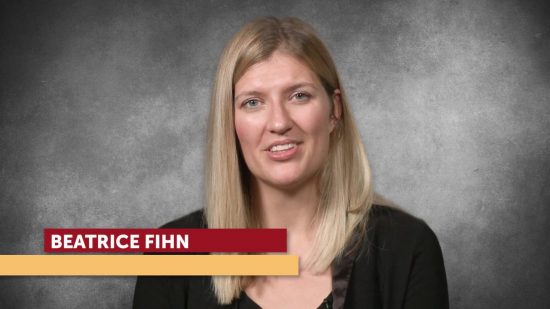
Nobel prize winner Beatrice Fihn urges Australia to join the Nuclear Weapons Ban Treaty, as public support for it grows
Australian government urged to heed public support for treaty banning nuclear weapons. Nobel prize-winning anti-nuclear campaigner Beatrice Fihn says ‘change is not only possible, it’s inevitable’ https://www.theguardian.com/australia-news/2021/may/06/australian-government-urged-to-heed-public-support-for-treaty-banning-nuclear-weaponsDaniel Hurst Foreign affairs and defence correspondent@danielhurstbne Thu 6 May 2021
The Australian government is being urged to rethink its opposition to a new international treaty banning nuclear weapons, with a leading campaigner warning of the “indiscriminate destructiveness” of such arms.
Beatrice Fihn, the head of the Nobel prize-winning International Campaign to Abolish Nuclear Weapons (Ican), will use a speech in Tasmania on Thursday to implore the government to heed strong public support for joining the treaty.
“Change is not only possible; it’s inevitable,” Fihn will say when she presents the annual Red Cross Oration at the University of Tasmania.
The Australian government has not joined the Treaty on the Prohibition of Nuclear Weapons, a relatively new agreement that requires parties not to develop, test, produce, acquire, possess, stockpile, use or threaten to use nuclear weapons.
So far, the treaty has been signed by 86 countries, of which 54 have formally ratified it – but it has been snubbed by the nuclear weapons states including the US, Russia and China.
“Australia does not support the Treaty on the Prohibition of Nuclear Weapons,” a spokesperson for the Department of Foreign Affairs and Trade said on Wednesday.
The Australian government argues the new treaty “would not eliminate a single nuclear weapon” because none of the nuclear weapons states have signed it and because it “ignores the realities of the global security environment”.
The government also says the treaty would be inconsistent with its US alliance obligations. However, campaigners point out that several US allies, such as New Zealand, Thailand and the Philippines, have already ratified the treaty.
Fihn, who is based in Geneva and will be addressing the University of Tasmania via video link, will call on the government to act on the “strong and growing support that exists in Australia for this crucial new piece of international law”.
According to prepared remarks provided to Guardian Australia in advance, she will describe the treaty as an “incredible step forward towards a world without nuclear weapons”.
Fihn will say the countries that have joined the treaty are “leading the way forward to a world without nuclear weapons”.
“Meanwhile, in countries that have not yet joined the treaty, including Australia, people are speaking up against nuclear weapons and calling on their countries to join,” she will say.
“Cities around the world, including Berlin, Paris and Washington DC are adopting resolutions calling on their governments to join. In fact, the very first city to sign our Cities Appeal was Melbourne, followed soon after by Sydney – and we’re delighted that the City of Hobart is also on board.”
Polling commissioned by Greenpeace in 2017 found 72.7% of 1,669 Australians surveyed said they supported a ban on nuclear weapons as a step towards the elimination of all nuclear weapons.
“From Australia to Canada, Germany, Japan and the United Kingdom, polls show that the majority of people want their government to join,” Fihn will say.
“Thousands of parliamentarians have pledged to work to bring their respective countries on board. In Australia, 88 of the current members of parliament have taken Ican’s pledge.”
The Ican pledge commits parliamentarians “to work for the signature and ratification of this landmark treaty by our respective countries”.
The federal MPs and senators who have signed up are mostly Labor politicians, including the opposition leader, Anthony Albanese, who has been campaigning against nuclear weapons since early in his political career.
The list also includes the Greens leader, Adam Bandt, and crossbenchers. The Liberal National party MP for Flynn in central Queensland, Ken O’Dowd, has also signed up.
In Thursday’s speech, Fihn will also emphasise the need to “amplify the voices of First Nations peoples in Australia and the Pacific who continue to suffer the horrendous impacts of nuclear tests carried out on their lands and in their waters by the United Kingdom, the United States and France”.
More than 75 years after the US bombing of the Japanese cities of Nagasaki and Hiroshima in 1945, she says, nuclear-armed states are spending billions of dollars each year to build new weapons and to keep the 13,000 existing weapons.
But Fihn says nuclear-armed states “do not prepare for what comes next, after the bombs are dropped”, citing reports that about 80% of hospitals were destroyed in Hiroshima. Out of 300 doctors in the city, 270 died or were injured; out of 1,780 nurses, 1,654 were killed or injured.
“They do not prepare for the hundreds of thousands of burn victims, for the blasted hospitals, for the injured and dying medical professionals left to heal an entire city,” Fihn says.
“The trauma of overwhelmed hospitals and overburdened doctors and nurses around the world who are struggling to meet the needs of patients during the Covid-19 pandemic shows just how impossible it would be for medical infrastructure to respond to even one nuclear weapon detonation.” The Australian government and other non-signatories are being encouraged to send officials to attend, as observers, the first meeting of parties in Vienna early next year.
Guardian Australia understands Australia will consider attendance closer to the event.
Greenland’s election won by party opposing Chinese-backed Australian uranium and rare earths company
Greenland’s Rare-Earth Election
A vote last month answered an important question about the world’s largest island. The Atlantic, ROBINSON MEYER 3May 21, ”’……… Since 1979, the ruling Siumut party has dominated Greenland’s elections; in all those years it has lost power only once, in 2009, after the island reformed its government and loosened ties with Denmark, which has ruled it for three centuries. Earlier this month, the democratic-socialist Inuit Ataqatigiit party (IA), Greenlandic for “Community for the People,” won an election with more than a third of the vote, after centering its campaign on a promise to cancel the controversial mining project.
Greenland, the world’s largest island, is populated by about 56,000 people, and its election is, in some ways, an extremely local story. The mining project is called Kvanefjeld, and it would excavate thorium, uranium, and rare-earth elements. Kvanefjeld is less than four miles from Narsaq, one of the larger cities in South Greenland and a local tourism center. (It also has an excellent brewery.)
“There is no way for me to have the mine, because it’s only six kilometers from our town,” Mariane Paviasen, 56, a local activist who ran for Parliament under IA, told me in an interview before the election.
But the election touches on some of the biggest issues in global politics: climate change, mineral economics, and indigenous sovereignty. Rare earths are used to make finely tuned magnets that are essential to modern electronics, including electric vehicles and wind turbines. There is some irony here: Greenland, whose ice sheet is a visual metaphor for the inevitability of climate change, will be mined to power the only technology that can stop it. But the actual interest here is not so overdetermined—like all true climate stories, it draws together questions of money, land, power, and growth. IA’s answer to those questions is not to oppose all extraction, but it has taken a less friendly stance toward some proposed projects. It is particularly opposed to mining that could create radioactive waste……..
The plans for Kvanefjeld had long been paused, according to Zane Cooper, an anthropologist at the University of Pennsylvania who studies how communities respond to mineral extraction. Then, during the pandemic, the plans seemed to accelerate. Greenland Minerals Ltd., an Australian-headquartered but Chinese-backed company, began pressing its plans forward, and the ruling Siumut party complied. The local population had worries, particularly about uranium, which is often found next to thorium, itself a sign of rare earths. A rushed series of public meetings in February gave residents little warning about how rumored uranium dust would affect their farms and settlements. When someone called in a bomb threat to a meeting that Siumut officials were due to attend, they canceled their appearance. Another party, the Democrats, announced it would leave the governing coalition, depriving Siumut of its majority and precipitating snap elections.
The election, on April 6, saw a major victory for IA. It won overwhelmingly in southern Greenland.
IA does not oppose most mining; what it opposes is uranium mining. Another mine, about 30 miles from Narsaq, meets its approval, and the party supports developing mineral extraction as part of a broader strategy. “I think it will work better for us to have our own mining company in Greenland,” Paviasen said. She also supports more economic diversification, embracing a larger role for tourism and local agriculture. Most vegetables in Greenland are imported from Denmark.
Greenland’s blessing and curse is the large block grant, equivalent to more than $500 million, that it receives every year from the Danish government. It makes up about half of Greenland’s annual budget. Greenland has promised to deposit about a third of the revenue from its mineral wealth into a sovereign-wealth fund modeled off the Norwegian oil fund, which could help it replace the Danish block grant
If IA does find a way to instill some measure of economic autarky in Greenland, then it would be the world’s first completely independent indigenous country, Cooper said. Onlookers expect that Greenland would seek independence from Denmark faster under the separatist IA party than the more moderate Siumut. But that remains a ways off: First, IA must figure out how, and whether, it can cancel the mine in a fjord. Greenland Minerals has vowed to fight the decision in court and in international trade tribunals. (Múte Egede, the new IA prime minister, did not respond to a request for comment.) It may seem like a narrow question, but it could have sweeping implications for the island’s 56,000 inhabitants—and for how the world’s largest powers comport themselves with regard to the world’s largest island.
If IA does find a way to instill some measure of economic autarky in Greenland, then it would be the world’s first completely independent indigenous country, Cooper said. Onlookers expect that Greenland would seek independence from Denmark faster under the separatist IA party than the more moderate Siumut. But that remains a ways off: First, IA must figure out how, and whether, it can cancel the mine in a fjord. Greenland Minerals has vowed to fight the decision in court and in international trade tribunals. (Múte Egede, the new IA prime minister, did not respond to a request for comment.) It may seem like a narrow question, but it could have sweeping implications for the island’s 56,000 inhabitants—and for how the world’s largest powers comport themselves with regard to the world’s largest island. https://www.theatlantic.com/science/archive/2021/05/greenlands-rare-earth-election/618785/
Australia sleepwalks towards nuclear war – enthusiasm for nuclear rockets and submarines.
Small nuclear reactors (SMRs) are being pitched to Australians as ”climate salvation”, ”cheap electricity” etc. Of course this is nonsense. But the toxic macho nuclear zealots are confident that SMRs will have a great future in nuclear wars on land, on sea, in space.

SPACE: Australia’s ”cultural cringe” is so obvious, in the fervour for space research. Breathless enthusiasm in media coverage of rockets, space exploration . Yet the truth is that Australian space research is tied to America’s goal of militarising space. We hold events like The Australian International Aerospace and Defence Exposition – pitched as family entertainment:
”THE AIRSHOW will feature the raw potency and power of modern military aviation. The thrust and grunt of the latest military heavy metal will take centre stage. The stars of the show will be state-of-the-art jet fighters, bombers and giant heavy lift leviathans from home and abroad. See them so close you could almost touch them. Shudder to the roar of their mighty jet turbines as they perform high octane routines and simulated combat manoeuvres. Marvel as swarms of attack helicopters join in the fray.”
Of course, if we can help the American drive for weapons in space, it is all the better to have the tax-payer fund our space research.
SUBMARINES. Australia’s nuclear zealots have long been working away for nuclear submarines…… way before the so-called ”neutral” nuclear military fan Kevin Scarce was made head of the South Australian Nuclear Fuel Chain Royal Commission, in 2016.
A push for nuclear submarines has been part of Australia’s appalling history of submarine deals in recent years. Part of this mess was recently exposed by Michelle Fahy in Murder, corruption, bombings – the company at centre of Australia’s submarine deal. But the whole sorry tale goes further. It probably explains why the Australian government chose the super costly French submarine design – in the hopes that it could easily be transformed from a diesal to a nuclear -powered form.
Impelled by the very right-wing Australian Strategic Policy Institute, the push continues. Academia is co-opted, as The University of New South Wales joins with the Submarine Institute to promote nuclear submarines in a July 15 Canberra seminar. The speakers include well known nuclear propagandists Tom Frame, Kevin Scarce, and Hugh White.
Tom Frame has also recently published a book, rapturously received by the nuclear lobby, enthusing about nuclear submarines, and recommending them as Australia’s way into the full nuclear fuel chain, and into the space race .
With Australia’s Murdoch media monopoly, and the ever-weakening ABC, the public is unaware of these machinations towards Australia’s role in nuclear militarism. The push for small nuclear reactors is the starting point.
1 This month
17 October, Free Public Talk on Nuclear Issues in South Australia
David Noonan will speak on public interest concerns over the new Roxby Downs Indenture Act 2026 on BHP copper-uranium mining and ore processing in SA, and on how AUKUS may face SA with a High-Level nuclear waste agenda.
Dr Jim Green will discuss international developments in the field of nuclear power including ‘small modular reactors’ and Generation 4 ‘advanced’ nuclear reactor concepts.


Help Aunty Sue Protect Her Land and Sacred Sites From Destructive Rocket Testing.
.

Australians deserve the truth
about
AUKUS – https://aukuspublicinquiry.com/

PETITION – To: Prime Minister Anthony Albanese and the Australian Labor Government

of the week – Australians for War Powers Reform (AWPR)
To see nuclear-related stories in greater depth and intensity

