There is really no market in India for Australia’s uranium

 No market for Australian uranium in India, 23 June 2020, M V Ramana and Cassandra Jeffery, https://www.eastasiaforum.org/2020/06/23/no-market-for-australian-uranium-in-india/
In 2011, the Australian Labor Party (ALP) voted to overturn a ban on uranium sales to India. The Civil Nuclear Cooperation Agreement between Australia and India was then signed in 2014. The Australian Parliament subsequently passed a bill permitting its uranium mining companies to supply nuclear material to India. These efforts were supposedly intended to allow Australia to profit from Indian uranium purchases.
At the 2011 ALP national conference, then prime minister Julia Gillard argued that India was planning to generate 40 per cent of its electricity with nuclear energy by 2050. ‘Having access to this market is good for Australian jobs’, said Gillard during the conference. The Australian Uranium Association projected that ‘Australia could expect to sell some 2500 tonnes of uranium annually to India by 2030, generating export sales of AU$300 million’ (US$205 million). But nearly a decade later, what is the reality?
Aside from a small shipment of uranium sent to India for testing in 2017, no uranium appears to have been exported to India from Australia. In 2018, India’s Ministry of Atomic Energy stated that the country had signed contracts with firms from Kazakhstan, Canada, Russia and France to procure uranium. And in March 2020, India signed a contract with Uzbekistan. There has been no mention of Australia.
A large order for Australian uranium appears unlikely in the future as well. With a net generating capacity of only 6.2 gigawatts (GW), India does not have a large requirement for uranium in the first place. Further, Australian uranium can only be used for reactors under International Atomic Energy Agency (IAEA) safeguards, which attempt to ensure that no materials are used for nuclear weapons. Such reactors amount to less than 2 GW of India’s capacity.
India’s nuclear fleet will not expand dramatically either. India’s Department of Atomic Energy (DAE) has a long history of setting ambitious nuclear power generation targets and failing to meet them. In 1984, the DAE promised a nuclear capacity of 10 GW by 2000. The actual figure in 2000 was 2.7 GW. By then the DAE had set a new target, 20 GW by 2020. Again, today’s current capacity (6.2 GW) is nowhere close to this target.
Seven more reactors, with a total capacity of 4.8 GW, are under construction. But five of these reactors have been significantly delayed. Four of them were supposed to be commissioned in 2015 and 2016. But these reactors are now expected to start operating in October 2020, September 2021, March 2022 and March 2023 respectively.
The fifth is India’s flagship project, the Prototype Fast Breeder Reactor (PFBR). Construction started in 2004 and the reactor was supposed to start functioning in 2010 but is now ‘expected to commence production of electricity in October 2022’.
Costs have increased, too. The PFBR’s estimate has jumped from Rs 34.9 billion (US$457 million) to Rs 68.4 billion (US$896 million). And the PHWRs will cost around 40–45 per cent more than initially projected.
In contrast, India’s renewable energy sector is a different story. Wind and solar power have only recently been introduced to India’s energy mix, but both technologies are expanding rapidly while becoming significantly cheaper. Between 2016 and 2019, installed solar capacity increased from 9.6 GW to 35 GW, while wind capacity increased from 28.7 GW to 37.5 GW. In 2019, both wind (63.3 terawatt-hours (TWh)) and solar (46.3 TWh) power contributed more to overall electricity generation in India than nuclear power (45.2 TWh).
India’s renewable energy sector is expected to continue growing, while nuclear energy will likely remain stagnant. Recently, the Department of Economic Affairs assembled a task force to ‘identify technically feasible and financially viable infrastructure projects that can be initiated in fiscals 2020–25’. The task force foresaw renewable capacity increasing from 22 per cent of the total installed electrical capacity in 2019 to 39 per cent by 2025. Conversely, nuclear capacity stays around 2 per cent of installed capacity.
Even the Indian government expects the divergence between the growing renewable energy sector and the stagnant nuclear sector to increase as the rapidly falling cost of solar power makes nuclear power redundant.
Australian policymakers who advocated for exporting uranium to India were betting on the wrong energy source. Perhaps there were ulterior motives, including recognising India as a major power. But good policy cannot be made on the basis of false claims.
Australian uranium companies continue to insist that India is expanding its nuclear power capacity. Energy Resources of Australia Ltd’s 2017 annual report claims that ‘India has 22 reactors in operation and plans to generate as much as 25 per cent of electricity from nuclear power by 2050’. Paladin and Yellow Cake made similar claims in 2019.
Nuclear power has never constituted more than a few per cent of India’s electricity supply. Given current trends, it will never amount to much more. Nuclear reactors are expensive and time-consuming to construct, factors that explain why the share of electricity supplied by nuclear power plants globally has declined continuously, from 17.5 per cent in 1996 to 10.15 per cent in 2018. This global trend must be considered by Australian policymakers as they deal with lobbyists for uranium mining and the push there to build nuclear plants.
M V Ramana is Professor, Simons Chair in Disarmament, Global and Human Security, and Director of the Liu Institute for Global Issues at the School of Public Policy and Global Affairs, the University of British Colombia. Cassandra Jeffery is a recent Master‘s of Public Policy and Global Affairs graduate of the University of British Columbia.
Julian Assange’s fiancé calls on the Australian government to secure his freedom
 Julian Assange’s fiancé calls on the Australian government to secure his freedom, https://www.wsws.org/en/articles/2020/06/22/assa-j22.html, By Oscar Grenfell, 22 June 2020Stella Morris, the fiancé of Julian Assange and mother of his two young children, issued a powerful call last night for the Australian government to secure the WikiLeaks founder’s freedom and prevent his extradition to the US, where he faces life imprisonment for exposing American war crimes. Julian Assange’s fiancé calls on the Australian government to secure his freedom, https://www.wsws.org/en/articles/2020/06/22/assa-j22.html, By Oscar Grenfell, 22 June 2020Stella Morris, the fiancé of Julian Assange and mother of his two young children, issued a powerful call last night for the Australian government to secure the WikiLeaks founder’s freedom and prevent his extradition to the US, where he faces life imprisonment for exposing American war crimes.
Morris was featured on Channel Nine’s “60 Minutes” program. The 24-minute segment provided an objective account of Assange’s decade-long arbitrary detention, first in Ecuador’s London embassy where he was a political refugee, and since April 2019 in the maximum-security Belmarsh Prison. The program, presented by Tara Brown, was the first substantive examination of Assange’s plight by the Australian media since the coronavirus pandemic began. Despite the fact that he is an Australian journalist being persecuted by the most powerful governments in the world for his publishing activities, corporate media outlets have maintained an effective D-notice on Assange for more than three months. This has dovetailed with the refusal of the Australian government, the Labor opposition and all of the official parties to defend the WikiLeaks founder. Morris warned that Assange’s incarceration in Belmarsh, which she noted has been dubbed the “UK’s Guantanamo Bay,” is exacerbating physical and psychological health issues stemming from his protracted persecution. “He’s very unwell and I’m very concerned for his ability to survive this,” she said. “Now he’s in the UK’s worst prison. It’s a high-security prison. One in five prisoners are murderers. He shouldn’t be there. He’s not a criminal, he’s not a dangerous person, he’s a gentle intellectual thinker and a journalist. Those people are not the people who belong in prison.” Morris stated that she was “very worried” about Assange’s circumstances. She has been unable to visit him since February, as a result of coronavirus lockdown measures. Despite widespread infections throughout the British penitentiary system, including in Belmarsh, and Assange’s vulnerability to the virus as a result of a chronic lung condition, he has been refused bail. “If you’re separated from your family and you’re alone in a tiny, dark room for 23-hours a day, with no control over your surroundings, I think people can imagine what that is like,” Morris said. Brown stated that in such circumstances, “most people would probably go mad.” Morris responded: “I think any person would get very severely depressed and he is very depressed.” “60 Minutes” showed Morris and her two young children speaking with Assange on the phone. The older of the two asked Assange when he was coming home. Morris, a 37-year-old lawyer, recounted the circumstances of her relationship with Assange. They had grown close when she was working on his legal cases after he had successfully sought political asylum in the Ecuadorian embassy. When the couple’s two children were born in 2017 and 2018, the new Ecuadorian government had initiated closer relations with the US and was increasingly hostile to Assange. UC Global, a Spanish firm contracted to manage the embassy’s security, was surveilling every aspect of Assange’s life and was passing the the material gathered to the US Central Intelligence Agency. When she fell pregnant, Morris informed Assange by writing the news on a piece of paper. They were fearful that any conversation about their personal life would be picked up by the audio recording devices placed throughout the embassy by UC Global. Morris sought to hide her pregnancies from the embassy staff and after the children were born, a friend of Assange pretended to be their father and brought them to the embassy. “The real issue was I thought that our family would be targeted by the same people that were trying to harm Julian,” Morris stated. The program featured news clips of senior US government figures denouncing Assange in hysterical terms and calling for him to be silenced. Morris noted that UC Global had considered stealing the diaper of one of her children to confirm his paternity, and had even discussed plans to kill Assange or allow American agents to kidnap him. Morris commented that it would be difficult for many people to appreciate the lawlessness that had characterised Assange’s persecution. “There’s incredible criminality that has been going on in order to gather information about Julian’s lawyers, and his family, and journalists who were visiting him,” she said. “I’ve been in a permanent state of fear for years and now it’s slowly playing out.” Significantly, the politically-motivated character of Swedish sexual misconduct allegations against Assange was made clear in the program. The allegations were concocted by that country’s police and judiciary, in the midst of a frenzied US campaign against WikiLeaks’ exposure of war crimes in Iraq and Afghanistan. Brown noted that Assange had never been charged with a crime in Sweden, and that the Swedish investigation had been dropped. Australian independent parliamentarian Andrew Wilkie pointed out that documents had shown that the British government used the allegations to enforce Assange’s arbitrary detention in the Ecuadorian embassy. The British authorities had been aware that the Swedish claims were a smokescreen for plans to dispatch Assange to his US persecutors. The program concluded with an appeal from Morris to the Australian government. She said: “I want people to understand that we’re being punished as a family. It’s not just Julian in the prison. The kids are being deprived of their father. I need Julian and he needs me.” Morris declared: “I’d like to ask [Australian Prime Minister] Scott Morrison to do everything he can to get Julian back to his family. If Australia doesn’t step in I’m very fearful this wrong won’t be righted. It’s a nightmare.” Tellingly, Brown stated that Morrison, Foreign Minister Marise Payne and Christian Porter refused to be interviewed. This was in line with the ten-year collaboration of Australian governments in the US-led vendetta against Assange. Beginning with the Greens-backed Labor government of Julia Gillard, they have rejected calls to defend the WikiLeaks’ founder, instead participating in the campaign against him. The official hostility to Assange is bound up with the Australian ruling elite’s unconditional support for the US military alliance and all of American imperialism’s illegal wars and military preparations and dovetails with a domestic assault on democratic rights, including attacks on press freedom and laws increasing punishments for whistleblowers. It is facilitated by the refusal of the Greens, the pseudo-left groups and the unions to mount any campaign for Assange’s rights. This underscores the fact that the fight for Assange’s freedom and for the defence of all civil liberties requires the mobilisation of the working class. The international protests over recent weeks against police violence have demonstrated the objective basis for building such a movement. |
|
Pacific leaders do not want the coronavirus pandemic to distract from work on climate change
 Pacific leaders fear climate change campaign will ‘lose momentum’ amid COVID-19 pandemic, ABC, By foreign affairs reporter Melissa Clarke 19 June 20 Pacific leaders fear climate change campaign will ‘lose momentum’ amid COVID-19 pandemic, ABC, By foreign affairs reporter Melissa Clarke 19 June 20
Pacific leaders have said action on climate change “cannot and should not” take a back seat during the COVID-19 pandemic and have appealed for Australia to help rally global support for more emissions cuts.
Key points:
Senior political leaders from both the Fijian and Samoan governments have raised concerns that climate change is being overlooked while global leaders and the media focus on the coronavirus. The Fijian Government, which has been a strong critic of Australia for not doing more to reduce carbon emissions, has said the urgency for addressing climate change has not abated. “It may appear that climate change has taken a back seat, but it cannot and should not,” Fiji’s Attorney-General Aiyaz Sayed-Khaiyum said. Coronavirus update: Follow all the latest news in our daily wrap.Taking part in an online forum hosted by the Australian National University (ANU) on Thursday, Mr Sayed-Khaiyum said the impacts of climate change were being felt every day by Fijians.
Pacific nations regard climate change as an existential threat, with changing weather systems affecting sea levels, fish stocks, water quality and the frequency of severe weather events. Samoa’s Deputy Prime Minister Fiame Naomi Mata’afa, speaking on the same forum, said it is important attention isn’t diverted from climate change. “We’re talking about a pandemic, but… climate change impacts us in all aspects of our lives, including health as well.”…….. Pacific Island nations have been trying to get all countries to agree to register more ambitious emissions reductions targets under the Paris Agreement on climate change. Ms Mata’afa is concerned their campaign could “lose momentum” during the pandemic and appealed for Australia’s help. “I think it is very important for Australia, as a member of the Pacific [Islands] Forum, that it comes in strongly as one of our larger members, with the Pacific and the message: to ensure that the 1.5 [degree] objective that we’ve been advocating for and that we raise the global ambition in regards to [cutting] emissions.” Pacific nations have previously expressed their disappointment that Australia has not fully embraced their calls for more global action……… https://www.abc.net.au/news/2020-06-18/pacific-leaders-fear-coronavirus-distraction-climate-change/12371182 |
|
Don’t send uranium to India- Dr Vaishali Patil speaks to Australia
 Dr Patil spoke on the first of the Yellowcake Country webinars on 10th June. She spoke of the beautiful country of the Konkon area, formerly a place of thriving agriculture, fruit growing and fishing. It is now known for having the largest nuclear power plant in the world. Despite the opposition of farmers and fishermen, this gigantic and enormously expensive nuclear project has gone ahead.
The local people have continued their protest for 15 years. The government has the right to commandeer land for nuclear activities, giving very little compensation. Many protestors have been gaoled. Livelihoods are threatened, not only by the loss of land, but also, the remaining agricultural and fishing industries lose their markets, due to both the real contamination of the environment, and the perceived contamination, as the area becomes known as a nuclear hub.
Environmental damage has affected the lives of the community, as well as their livelihoods. Radiation has resulted in a rise in cancer incidence. Men who never took part in the past, in protest movements are now joiningthe anti-nucler movement. But women have always been prominent in opposition to nuclear power, in the Jaitapur Anti-Nuclear Movement. It’s a peaceful protest, following Ghandian philosophy. But activists face gaol, and condemnation – are depicted as being against development, against the national interest.
Nuclear power contributes very little to India’s energy, less than 2% of energy supply. However the government invests hugely in it. Despite the devastation from the recent cyclone, despite the onslaught of the coronavirus, the government pours huge amounts of money into nuclear industry, nuclear weapons. This investment continues, while the cyclone destruction has ravaged the Konkon area, with 7000 school buildings collapsed, 500,000 trees uprooted, and thousands of migrant workers still walking through.
The National Alliance of Anti Nuclear Movement of India (NAAM) continues its work and calls for Australia’s anti-nuclear movement to join forces with it, and work to prevent the export of uranium to India.
Injustice of UK court process regarding Julian Assange. Assange too sick to attend
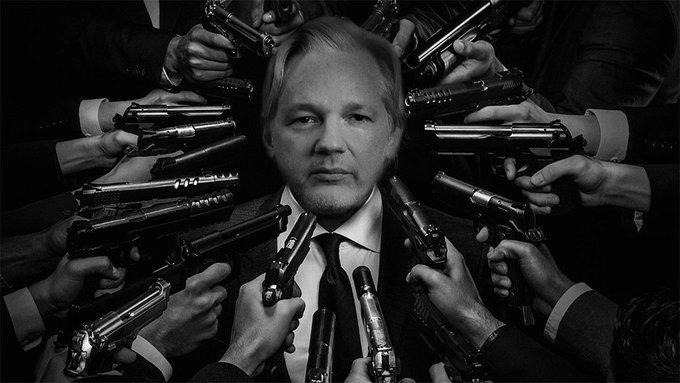
2. In addition to other ongoing health concerns, Assange faces the serious risk of exposure to Covid in Belmarsh prison, and has been advised that even going to the video room to take part in hearings is unsafe. This is another reason he should be immediately released.
3. Assange’s lawyers have long complained they have had insufficient access to him in prison. Under lockdown conditions, they have had no access to him at all. They have repeatedly flagged that this lack of access seriously impacts their ability to prepare his defence.
4. One of the next steps agreed today is that psychiatric reports on Assange from the prosecution and defence will be due to the court on 31 July. Remember that UN Special Rapporteur @NilsMelzer has expressed alarm many times that Assange shows symptoms of psychological torture.
5. It is a welcome step that the continuation of the full extradition hearing was adjourned, as lockdown conditions present clear barriers to open justice – but 7 September may not be late enough to make a meaningful difference. Also the court is still struggling to find a venue.
6. It remains extremely frustrating that the court does not adequately accommodate NGO observers. I have never experienced so much difficulty accessing a trial in any country as at Woolwich Crown Court in February, and the teleconference option we now have is far from sufficient.
7. The press are also facing severe restrictions. Only 6 journalists have been allowed to attend in person the past 2 hearings, with others limited to the awful phone line. This case is of high public interest and a better solution must be found before the full hearing resumes.
8. Assange’s next callover hearing has been scheduled for 29 June at 10 am. We urge the court to find workable solutions to enable his safe attendance and ensure the press and observers are able to properly monitor proceedings. /END
COVID-19: US Military Pursues War Games Amid Contagion. Australia involved
The U.S. Army is also pursuing a 6,000-person war game in Poland, June 5-19, with a Polish airborne operation and a U.S.-Polish division-size river crossing.
If these weren’t too many military operations during an epidemic in which personnel on 40 U.S. Navy ships have come down with the hyper-contagious virus and during which military personnel and their families have been told not to travel, plans are also underway for a U.S. Army division-sized exercise in the Indo-Pacific region in less than a year. Known as Defender 2021, the U.S. Army has requested $364 million to conduct the war exercises throughout Asian and Pacific countries.
The pivot to the Pacific, begun under the Obama administration, and maintained by the Trump administration, is reflected in a U.S. National Defense Strategy (NDS) that sees the world as “a great power competition rather than counterterrorism and has formulated its strategy to confront China as a long-term, strategic competitor.”
Earlier in May, the U.S. Navy sent at least seven submarines, including all four Guam-based attack submarines, several Hawaii-based ships and the San Diego-based USS Alexandria to the western Pacific in what the Pacific Fleet Submarine Force announced as simultaneous “contingency response operations” for all of its forward-deployed subs. This was all in support of the Pentagon’s “free and open Indo-Pacific ” policy — aimed at countering China’s expansionism in the South China Sea — and as a show of force to counter ideas that the capabilities of U.S. Navy forces have been reduced by Covid-19…….
In May, 2020, the Australian government announced that a delayed six-month rotation of 2,500 U.S. Marines to a military base in Australia’s northern city of Darwin will go ahead based on strict adherence to Covid-19 measures including a 14-day quarantine. The Marines had been scheduled to arrive in April but their arrival was postponed in March because of the pandemic.
The remote Northern Territory, which had recorded just 30 Covid-19 cases, closed its borders to international and interstate visitors in March, and any arrivals must now undergo mandatory quarantine for 14 days. U.S. Marine deployments to Australia began in 2012 with 250 personnel and have grown to 2,500. The Joint U.S. Defense facility Pine Gap— the U.S. Department of Defense, Five Eyes and CIA surveillance facility that pinpoints airstrikes around the world and targets nuclear weapons, among other military and intelligence tasks — was also adapting its policy and procedures to comply with Australian government COVID restrictions.
As the U.S. military expands its presence in Asia and the Pacific, one place it will NOT be returning to is Wuhan, China. In October 2019, the Pentagon sent 17 teams with more than 280 athletes and other staff members to the Military World Games in Wuhan. Over 100 nations sent a total of 10,000 military personnel to the games in Wuhan last October.
The presence of a large U.S. military contingent in Wuhan just months before the outbreak of the Covid-19 in Wuhan in December 2019, fueled a theory by some Chinese officials that the U.S. military was somehow involved in the outbreak, which now has been used by the Trump administration and its allies in Congress and the media that the Chinese deliberately used the virus to infect the world and adding justification for the U.S. military build-up in the Pacific region.
Ann Wright served 29 years in the U.S. Army/Army Reserves and retired as a colonel. She was a U.S. diplomat for 16 years and served in U.S. Embassies in Nicaragua, Grenada, Somalia, Uzbekistan, Kyrgyzstan, Micronesia, Afghanistan and Mongolia. She resigned from the U.S. government in March 2003 in opposition to President George W. Bush’s war on Iraq. She is co-author of “Dissent: Voices of Conscience.” https://consortiumnews.com/2020/05/26/covid-19-military-pursues-war-exercises-amid-contagion/
Australia could address another global threat by supporting the UN the Treaty on the Prohibition of Nuclear Weapons.
|
As we wait for a vaccine, there is another global threat we could address today, https://www.canberratimes.com.au/story/6767846/as-we-wait-for-a-vaccine-there-is-another-global-threat-we-could-address-today/?cs=14246 Sue Wareham, 25 May 20
Calls by scientists and others have been made for climate action to play a key role in the post-COVID-lockdown world that is slowly coming into view. These calls are critically important; no responsible government can ignore them. After warnings in recent years about the risk of a global pandemic, we should have learnt that risks don’t go away simply by being ignored. However, there is another call to action on a profound risk to humanity that has received less attention – the need to get rid of the 14,000 nuclear weapons in existence. This risk has been highlighted again this month by President Trump’s discussions with senior officials of a possible resumption of US nuclear testing, a dangerous move that would break a nuclear test moratorium which has been honoured for over two decades by all nations except North Korea. In addition, an important high-level meeting, the five-yearly Review Conference of the Nuclear Non-Proliferation Treaty (NPT), which was scheduled to take place at the UN in New York from April 27 to May 22, has been postponed for the obvious reason until early 2021.
The NPT entered into force exactly half a century ago, in 1970, and has played a very significant role in preventing the rapid spread of nuclear weapons; currently there are just nine nuclear-armed states. At the quarter-century mark, in 1995, it was extended indefinitely, with member states reaffirming their commitment to the complete elimination of nuclear weapons, a goal that is central to the treaty and yet remains unfulfilled. That failure lies at the heart of growing tensions, between the countries with the weapons and those without, that have marked the five-yearly NPT Review Conferences since 1995. Far from disarming, the nuclear-armed states are updating their arsenals.
The US, followed by Russia, abandoned the Intermediate Nuclear Forces (INF) Treaty in February last year, with mutual accusations of violations. In 2018 Trump pulled out of the nuclear accord with Iran. The New START (Strategic Arms Reduction Treaty), the last remaining treaty limiting the world’s two largest nuclear arsenals (the US and Russia), is due to expire next February, with no renewal in sight.
The same rules apply to all nations, and the rule is zero tolerance of the world’s worst weapons. Australia boycotted the whole process, arguing that the security needs of the nuclear-armed states need special consideration – a bit like special pleading for those planning genocide. Entry into force of the TPNW was expected this year but, like everything else, is now delayed.
The driver for negotiating the TPNW was the overwhelming scientific evidence of the catastrophic harm that humanity would face with any use of nuclear weapons, and the knowledge that the risk is increasing. In January this year, the Bulletin of the Atomic Scientists advanced the hands of its Doomsday Clock to 100 seconds to midnight, closer to global catastrophe than at any other time, including during the Cold War.
|
|
The torture that awaits Julian Assange in the US.
From the frying pan into the fire. The torture that awaits Julian Assange in the US.https://www.thecanary.co/uk/analysis/2020/05/10/from-the-frying-pan-into-the-fire-the-torture-that-awaits-julian-assange-in-the-us/
Tom Coburg 10th May 2020 WikiLeaks founder Julian Assange is currently held in Belmarsh prison awaiting hearings that could see him extradited to the US to face prosecution for alleged espionage-related offences.
Award-winning US journalist Chris Hedges described the torture that would await Assange in the US prison system, adding “they will attempt to psychologically destroy him”. If extradited, Assange would likely be detained in accordance with ‘Special Administrative Measures’ (SAMs). One report equates this to a regime of sensory deprivation and social isolation that may amount to torture.
Journalists speak out
US journalist Chris Hedges spoke about the treatment Assange is likely to receive in the US. He argues that the US authorities will “psychologically destroy him” and that conditions imposed could see him turned into a ‘zombie’ to face life without parole:
Australian journalist John Pilger agrees:
If Julian is extradited to the US, a darkness awaits him. He’ll be subjected to a prison regime called special administrative measures… He will be placed in a cage in the bowels of a supermax prison, a hellhole. He will be cut off from all contact with the rest of humanity.
From the frying pan…
Assange is already in a precarious position, alongside all other UK prisoners. Belmarsh is a high-security Category A facility and, as with all other prisons in the UK, inmates there are at risk to infection from coronavirus (Covid-19).
On 28 April, the BBC reported that there were “1,783 “possible/probable” cases of coronavirus – on top of 304 confirmed infections across jails in England and Wales”. Also that there were “75 different “custodial institutions”, with 35 inmates treated in hospital and 15 deaths”.
Vaughan Smith, who stood bail for Assange, reported that the virus was “ripping through” Belmarsh:
We know of two Covid-19 deaths in Belmarsh so far, though the Department of Justice have admitted to only one death. Julian told me that there have been more and that the virus is ripping through the prison.
Assange has a known chronic lung condition, which could lead to death should he become infected with coronavirus. Assange’s lawyers requested he is released on bail to avoid succumbing to the virus, but that request was rejected.
As for the psychological effects of segregation, a European Committee for the Prevention of Torture and Inhuman or Degrading Treatment or Punishment report argued that it can “can have an extremely damaging effect on the mental, somatic and social health of those concerned”.
…and into the fire
It’s likely that Assange will be placed under SAMs if he is extradited to the US. The Darkest Corner, a report authored by the Allard K. Lowenstein International Human Rights Clinic and The Center for Constitutional Rights, describes how SAMs work.
In its summary, the report explains that:
SAMs are the darkest corner of the U.S. federal prison system, combining the brutality and isolation of maximum security units with additional restrictions that deny individuals almost any connection to the human world. Those restrictions include gag orders on prisoners, their family members, and their attorneys, effectively shielding this extreme use of government power from public view.
It continues:
SAMs deny prisoners the narrow avenues of indirect communication – through sink drains or air vents – available to prisoners in solitary confinement. They prohibit social contact with anyone except for a few immediate family members, and heavily regulate even those contacts. And they further prohibit prisoners from connecting to the social world via current media and news, limiting prisoners’ access to information to outdated, government-approved materials. Even a prisoner’s communications with his lawyer – which are supposed to be protected by attorney-client privilege – can be subject to monitoring by the FBI.
It ominously adds that: “Many prisoners remain under these conditions indefinitely, for years or in some cases even decades”. Moreover, these conditions can be used as a weapon to force a prisoner to plead guilty:
In numerous cases, the Attorney General recommends lifting SAMs after the defendant pleads guilty. This practice erodes defendants’ presumption of innocence and serves as a tool to coerce them into cooperating with the government and pleading guilty.
The report provides further details on how SAMs incorporate sensory deprivation and social isolation measures that “may amount to torture”. Also, it argues that the SAMs regime contravenes both US and international laws.
ECHR article 3
Should the UK courts agree to extradite Assange, he could face months, if not decades, of psychological torture. However, Article 3 of the European Court of Human Rights states clearly: “No one shall be subjected to torture or to inhuman or degrading treatment or punishment”. Under that article, the US extradition request should be rejected by the UK courts.
For a publisher to be subjected to such a nightmare scenario would be intolerable.
Australia to feature at Fukushima in the opening Olympics event

Japan, Australia to open Tokyo Olympics with Fukushima softball game, NBC Sports , By OlympicTalkMar 12, 2020 Japan and Australia will play the first sporting event of the Tokyo Olympics, a softball game in Fukushima, the site of 2011 nuclear plant meltdowns caused by an earthquake and tsunami 155 miles north of Tokyo.
Japan and Australia will play on Wednesday, July 22, at 9 a.m. local time (Tuesday evening U.S. time), two days before the Opening Ceremony. In Summer Olympics, soccer matches have traditionally started days before the Opening Ceremony, though the first soccer match will not be held before the first softball game in Japan….
The Olympic softball schedule was announced Wednesday evening. https://olympics.nbcsports.com/2020/03/12/olympic-softball-schedule/?fbclid=IwAR0mQPZoaa44H6NIkyVlIQgXV-Yqq18kLvFrhG9pS8Xhu55gRnKHBpCon68
Australia’s early nuclear history – a scandalously crooked co-operation with Britain
The British also deliberately spread plutonium dust over the outback in so called safety tests. Although a number of Australians had knowledge they desperately wanted to share with the Australian people, the Australian government threatened these people with many years jail if they spoke out.
Australian service personnel and their health status records were treated and kept at the Maralinga Hospital. John Hutton was the only involved person to ever see his Maralinga file and actually get to retain a page from it. (He nicked it).
Australia and Britain perfected a medical regime in which medical responses to radiation induced syndromes were solved without documenting the actual diagnosis. The afflicted personnel, with the exception of Mr. Hutton, never got to read their own medical records, all of which disappeared when the British Bombardiers left Australia in the 1960s. And some say they took the Maralinga medical records with them. That’s very close collaboration, isn’t it?
|
Part 1 of A Study of the “Report of the inquiry into the prerequisites for nuclear energy in Australia” Australian Parliamentary Committee 2020. Nuclear History, 29 Feb 2020 “………..Australia cooperated with the United Kingdom in that nations’ successful attempt to duplicate the Manhattan’s Project plutonium bomb. Prime Minister Menzies, without the approval of ordinary Australians, agreed to the British request to detonate atomic bombs over and on Australia. This involved excluding the Australian Sir Mark Oliphant from participating in the Atomic Weapons Safety Committee (AWTSC). Instead following British desires, Australia appointed the Englishman Professor Titterton, a radar and timing expert, to that committee. Even though the Committee was not a British Committee, but one which was paid for by Australians, and which reported to, and was subordinate to, the Australian government. Titterton rose quickly to head the committee. Justice Jim McClelland, during the Royal Commission into the British Nuclear Bombing of Australia, concluded that Titterton deliberately with held important safety information from the safety committee, the Australian government and the Australian people. Justice McClelland found that Titterton was acting under security protocols imposed by Britain and the United States. And that this was counter to Australian interests and to the safety and security of Australians. The results of this deception against Australia continue to resonant in Australia today. Continue reading
|

Global heating, rising seas, and the plight of Torres Strait Islanders
It’s our right to be here’: the Torres Strait Islanders fighting to save their homes from a rising sea
An entire way of life is under threat in the Torres Strait, where locals have taken their case to the United Nations, Guardian Jack Banister, 1 Mar 20
Kabay Tamu slows his dusty white ute to walking speed on the dirt road that runs along the south-western shoreline of Warraber, a tiny coral cay in the Torres Strait that is home to about 250 people.
“This was the best spot for a day out,” 28-year-old Tamu says, recalling his childhood.
Most of the beach where Tamu used to play is gone, along with several enormous wongai trees that were a barrier of sorts, protecting the dirt road and the nearby dam, which supplies the island’s drinking water, from the sea.
Warraber is just 1.4km long, and half as wide, but shrinking fast. Some data suggests that sea levels in the Torres Strait could be rising at twice the global rate.
Now, Islanders dump their green waste to hold back the rising sea. The Intergovernmental Panel on Climate Change (IPCC) estimates that by 2100 tides will rise 30–60cm with immediate cuts to carbon emissions, and 61-110cm without…….
The Billy family also live on nearby Poruma island, where Danny spent part of his childhood. Just a 15-minute flight away, Poruma is smaller and thinner. On the western shore, a road and buildings are threatened, and 250 coconut trees – a source of food, shelter and leaves used in traditional ceremonies – have already been washed away.
Local man Phillemon Mosby feels that loss keenly. The picturesque plantation should be a place to share with children and grandchildren, who would ordinarily take over the nurturing of the site.
“That experience was taken away because of climate change, because of the rising sea levels. We’ve seen areas where we used to go fishing that are no longer there. We’ve seen rocks where people used to go diving that are covered.”…….
Tamu, Billy, and Uncle Frank’s cousin, Nazareth Fauid, are among the eight Torres Strait Islanders who lodged a complaint last May with the United Nations human rights committee against the Australian government, alleging that its failure to reduce emissions, or pursue proper adaptation measures across the region impedes their human rights, to culture and life.
Sophie Marjanac, a lawyer with environmental non-profit ClientEarth, is representing the group, who want the government to meet its targets under the Paris Agreement, to reach net zero emissions by 2050 and to phase out thermal coal.
In December, the federal government matched an earlier commitment of $20 million from the Queensland governmentto build new seawalls. But there is widespread scepticism among Islanders about when the new walls will be constructed.
Other islands including Boigu, Masig, and Iama need new seawalls. It is unclear which islands will be prioritised, and if the new funding will cover them all.
Tamu is quick to point out that “sea walls are only to buy us time” – the best fix is emissions reduction.
“The thing that got me was [the federal government] didn’t announce [the new funding] as seawalls to combat climate change. They said it was ‘an infrastructure development in the community’. They’re still trying to cover up climate change and the rising sea levels here.”
Tamu gained international headlines when he asked prime minister Scott Morrison to visit Warraber during the UN climate summit in New York last September. He maintains that the damage visible on Warraber and other islands would shock them into action on climate and coal…….
The invitation was rejected via email in November, and Tamu says that the government is still “hearing, but not listening” when it comes to nationwide pleas for climate action. ……
While the UN complaint won’t be settled until 2021, Danny Billy says islanders won’t stop making noise until Australia finally offers global leadership on climate change…https://www.theguardian.com/australia-news/2020/mar/01/its-our-right-to-be-here-the-torres-strait-islanders-fighting-to-save-their-homes-from-a-rising-sea
Immoral and illegal spying on Julian Assange and his lawyers – MP Andrew Wilkie calls on Australian government to act.
|
Wilkie says Assange extradition efforts should be dropped after US spying revelations, https://www.theage.com.au/politics/federal/wilkie-says-assange-extradition-efforts-should-be-dropped-after-us-spying-revelations-20200223-p543j3.html, By Rob Harris, February 24, 2020 The revelation Julian Assange’s confidential conversations with his Australian lawyers were secretly recorded should force the British courts to throw out attempts to extradite him to the United States, independent MP Andrew Wilkie says.Mr Wilkie has again called on Prime Minister Scott Morrison to lobby the British government to reject the United States attempts to extradite Australian-born WikiLeaks founder who faces several espionage charges over the publication of hundreds of thousands of confidential government documents.
A Spanish private security company is under investigation over allegations it spied on Mr Assange while he was living at the Ecuadorian embassy, passing on hundreds of hours of recordings and other surveillance to American intelligence, according to former workers at the Spanish company. The ABC reported on Sunday that Mr Assange’s Australian lawyers, including prominent QC Geoffrey Robertson, were also among those spied on in “Operation Hotel”. Mr Wilkie, who met with Mr Assange as part of Australian parliamentary delegation in London last week, told The Sydney Morning Herald and The Age the actions were “immoral and illegal”. “It alone should be the basis for the extradition to be dropped this week,” Mr Wilkie said. “If the court doesn’t drop the proceedings in light of these allegations, a question mark hangs over the court’s neutrality. It just adds to the injustice that’s being experienced by Julian”. The ABC reported the covert surveillance was uncovered through a public investigation into the Spanish company, UC Global, contracted by the Ecuadorian government to provide security at the embassy. WikiLeaks Spanish lawyer, Aitor Martinez, told the ABC it came to light after Mr Assange was arrested, when former UC Global employees provided a large file of material.
Hundreds of supporters of Julian Assange marched through London on Saturday to pressure the British government into refusing to extradite the WikiLeaks founder to the United States to face spying charges. Famous backers, including Pink Floyd’s Roger Waters, Pretenders singer Chrissie Hynde and fashion designer Vivienne Westwood joined the crowd protesting the US espionage charges against the founder of the secret-spilling website. He will again face an extradition hearing on Monday night (Australian time) relating to US criminal charges against him for his role in the WikiLeaks releases of classified US government material. WikiLeaks adviser Jennifer Robinson, one of the Australian lawyers caught in the spying operation, said the federal government had not done enough to protect Mr Assange. “His Australian lawyers — all of us Australian citizens — have [also] had our rights as lawyers and our ability to give him a proper defence superseded by the US and potentially the UK government,” she told the ABC. “This is something that the Australian government ought to be taking very seriously and ought to be raising, both with the UK and with the United States. It is time the Australian government stands up for this Australian citizen and stops his extradition.” A spokesman for the Department of Foreign Affairs and Trade said the Australian government had discussed Julian Assange’s circumstances with partners, including as recently as during the UK Foreign Secretary Dominic Raab’s visit. “In the past 12 months, we have sought relevant assurances on multiple occasions from the UK,” the spokesman said. |
|
How will Julian Assange’s extradition case proceed in court?
 Julian Assange’s extradition case is finally heading to Julian Assange’s extradition case is finally heading to  court – here’s what to expect more https://www.sbs.com.au/news/julian-assange-s-extradition-case-is-finally-heading-to-court-here-s-what-to-expe court – here’s what to expect more https://www.sbs.com.au/news/julian-assange-s-extradition-case-is-finally-heading-to-court-here-s-what-to-expeFebruary 24, 2020 Holly CullenAdjunct professor, University of Western AustraliaThe extradition hearing to decide whether to send Julian Assange to the United States to be tried for publishing classified military documents on Wikileaks is expected to finally begin today in London. Assange is charged with 17 counts under the Espionage Act, involving receipt, obtaining and disclosing national security information. He has also been charged with one count of conspiracy to assist Chelsea Manning to crack a US Department of Defense password to enable her to access classified information. Assange has been in Belmarsh prison since his arrest in April 2019. He had been in solitary confinement in a prison medical unit, but was recently moved into a less isolated section of the prison due to concerns about his mental health. From May to September of last year, Assange served a sentence for bail absconding, but since then has been waiting for the extradition hearing. How will the process play out? Continue reading |
What was #ScottyFromMarketing planning, with U.S. military, at PineGap?
PRIME MINISTER’S PINE GAP VISIT RAISES EYEBROWS NT NEWS, 21 Feb 20,
The Prime Minister has made a visit to the secretive Pine Gap military intelligence base raising eyebrows about the potential involvement of the facility in ongoing tensions between the United States and Iran….. (subscribers only)
Australia the ‘poster child’ for climate change inaction
 Paris Agreement architect Christiana Figueres says Australia the ‘poster child’ for climate inaction
The bushfire crisis made Australia the “poster child” for climate change inaction – but the fires should force the world to act, the architect of the Paris Agreement says. https://www.adelaidenow.com.au/technology/paris-agreement-architect-christiana-figueres-says-australia-the-poster-child-for-climate-inaction/news-story/e1798a8339a817804c2330731f11775f, Tory Shepherd, State Editor, The Advertiser, 21 Feb 20
Devastating bushfires have made Australia the “poster child” for climate change inaction and the world is weeping for us, the architect of the Paris Agreement says.
Christiana Figueres was the executive secretary of the United Nations Framework Convention on Climate Change when it brought almost 200 nations together to commit to the historic agreement in 2015.
The global goal is to reach net zero emissions by 2050 in order to cap temperature rises, and Ms Figueres’ comments come as federal Labor commits to that goal.
“Any time the word Australia is uttered outside of Australia we all have to contain our tears,” she told The Advertiser.
“This has been so painful, so deeply painful to witness in the news every day the destructive power of bushfires that have gone completely out of control despite the heroic efforts of the firefighters.”
Ms Figueres is coming to Womadelaide in two weeks to talk about her new book The Future We Choose: Surviving the climate crisis.
The lives lost – including a billion animals – and the destruction of the environment and property are just “completely irreplaceable”, she said.
“This is not normal. This is so tragic that Australia is now the poster child, the example of irresponsible management and of undue care on climate change measures.
“I think history will be (divided into) before the Australian fires and after the Australian fires.”
Despite those words, Ms Figueres is optimistic the world can meet the Paris targets, although she is still concerned it won’t happen fast enough.She welcomed Labor leader Anthony Albanese’s commitment to the 2050 target. In a major policy speech today, the Opposition Leader said Australia had always prided itself on pulling its weight.
“We have seen climate change be a factor in our devastating bushfires. We could see it, smell it, even touch it,” he said.
”Our amazing continent is particularly vulnerable, so we have a lot to lose. But the good news is we also have a lot to gain. Action on climate change will mean more jobs, lower emissions and lower energy prices.”
Ms Figueres said it had been “rather odd” that Australia had seemed to be stepping away from the agreement, as the Federal Government battles a split on the issue.
Energy Minister Angus Taylor says the government is not going to “commit to a target without costings and without a clear plan”.
She said Mr Albanese’s commitment was “the only responsible target”.
“It’s the target stipulated in the Paris agreement. The Paris agreement is science based,” she said.
The Federal Government is setting up a Royal Commission on the summer’s devastating bushfires.
1 This month

of the week – Australians for War Powers Reform (AWPR)
To see nuclear-related stories in greater depth and intensity
 Antinuclear