A recent U.S. airstrike in Nigeria, coordinated with the nation’s authorities, has elicited a forceful response from Australian Senator Michaelia Cash. Her declaration – “ISIS is evil… Australia should always stand with partners confronting Islamist terror” – presents a binary, morally unambiguous view of a profoundly complex reality. While condemning extremist violence is unobjectionable, this framing serves as a case study in strategic omission. It ignores the multifaceted drivers of Nigeria’s conflicts, the role of external actors in shaping its crises, and the dangerous simplification of a struggle over resources, identity, and power into a singular war of religion. This analysis will deconstruct the senator’s statement by examining Nigeria’s historical context, the true nature of its security challenges, and the geopolitical interests at play.
Section 1: The Colonial Crucible and Post-Colonial Fragility
To understand modern Nigeria is to understand a nation forged by colonial cartography, not organic nationhood. The 1914 amalgamation of hundreds of distinct ethnic and religious groups – primarily Muslim in the north and Christian in the south – into a single British colony created a fundamental political fault line. The colonial administration’s indirect rule entrenched these divisions, empowering northern elites and fostering systemic regional inequality. This engineered disparity over access to political power, education, and economic resources laid the groundwork for the communal and sectarian tensions that plague the nation today. The competition is not inherently theological but is a scramble for a stake in the modern state, a competition framed and often inflamed by the identities colonialism hardened.
Section 2: Deconstructing the “Religious Conflict” Narrative
Senator Cash’s focus on “Islamist terror” reflects a narrative heavily promoted by certain U.S. political figures. However, data and expert analysis reveal a more complex picture:
A Mosaic of Violence: The security landscape in Nigeria is fragmented. It includes the jihadist factions of Boko Haram and Islamic State West Africa Province (ISWAP), ethno-communal conflicts – often between predominantly Muslim Fulani herders and Christian farmers – criminal banditry, and secessionist agitation
Muslims as Primary Victims: While attacks on Christian communities are severe and warrant condemnation, the data shows that Muslims constitute the majority of victims of Islamist extremist violence. Groups like Boko Haram have killed tens of thousands of Muslims they deem insufficiently orthodox. A 2025 data analysis of over 20,400 civilian deaths found more were from attacks targeting Muslims than Christians, though the majority of fatalities were unattributed.
Resource Competition as Core Driver: Underlying much of this violence, particularly the farmer-herder conflicts, is intense competition over dwindling arable land and water, exacerbated by climate change and population growth. The Nigerian government itself has consistently rejected the characterisation of a one-sided religious war, emphasising that “people of many faiths” are victims.
Violence Profile in Nigeria’s Northwest and Middle Belt
This following breaks down the complex actors and motives often simplified as “Islamist terror”:
Main Actor(s): Jihadist Groups (ISWAP, Boko Haram) Primary Motivations and Targets: Establish Islamic law; target state, Christians, and Muslims deemed non-compliant. Relation to Religious Narrative: Exploits religious identity but kills more Muslims; seeks to impose sectarian frame……………………………………………………………………………………….
Section 4: The Australian Position – A Critical Independence Foregone
Senator Cash’s call for Australia to “stand with partners” uncritically adopts the simplified U.S. framing. An independent Australian foreign policy, one committed to a “rules-based order” and nuanced humanitarian engagement, would demand a more forensic approach:
Acknowledge All Victims: Public statements must recognise that Muslims are the primary victims of the jihadist groups Australia condemns, and that violence stems from multiple, overlapping conflicts.
Address Root Causes: Effective, long-term policy must engage with the governance failures, corruption, climate-induced resource scarcity, and lack of economic opportunity that fuel all forms of instability.
Scrutinise Geopolitical Motives: Australia’s alignment should be with the Nigerian people’s sovereignty and complex reality, not with a single ally’s simplified narrative or resource-driven interests. Silence on these dimensions is a form of complicity in a misleading story.
Conclusion: Beyond the Simplistic Frame
Senator Cash’s statement is not false in its condemnation of ISIS’s evil, but it is dangerously incomplete. By reducing Nigeria’s agony to a front in a global war on “Islamist terror,” it erases history, obscures complexity, and echoes a geopolitical narrative that serves external interests as much as it claims to serve Nigerian ones. It ignores the colonial roots of strife, the resource wars masked as holy wars, and the plight of millions of Muslim victims.
Médecins Sans Frontières has warned Israel’s suspension of NGO operations in Gaza would be “absolutely devastating”. Stephanie Tran reports on Australian reaction to Israel expelling humanitarian orgs.
Overnight, Israel announced it has banned the world’s leading humanitarian agencies from Gaza, including Doctors without Borders (Médecins Sans Frontières), World Vision, Oxfam, Caritas and more than two dozen others. For antisemitism.
Ashley Killeen, director of engagement at Médecins Sans Frontières (MSF) Australia and New Zealand, said MSF was continuing to operate in Gaza but remained in limbo about whether it would be allowed to remain.
“We’re continuing to operate in Gaza, unless we hear otherwise,” Killeen told MWM. “We are awaiting official communication from Israeli authorities whether we have or have not received registration.”
Israel has said it will halt the operations of 37 international humanitarian organisations in the Gaza Strip from 1 January 2026, accusing them of failing to meet new requirements introduced by its Ministry of Diaspora Affairs and Combating Antisemitism.
The new regulations require aid groups to submit detailed information on their staff, funding and activities, and include conditions that organisations “must not engage in any activities or criticism which delegitimise the state of Israel”.
The Israeli Ministry also came under fire on Monday for releasing a report naming dozens of Australians as “Key generators of anti-Semitism and delegitimization in Australia”.
Killeen said MSF was currently in a “grey area” following the December 31 deadline set by Israeli authorities.
“The 31st of December was the deadline so I’m sure we’ll know in the next 24 hours,” she said. “But what we can say is that if this comes into effect, it will be absolutely devastating.”
MSF is one of the largest medical providers operating in Gaza. Killeen said the organisation currently supports six hospitals and two field hospitals, delivering a scale of care that would be impossible to replace.
“In 2025, we delivered 800,000 outpatient consultations,
“100,000 trauma surgeries, and delivered 10,000 babies.”
“This gives you a sense of the huge gap that will be there if we are told that we have to cease these operations,” she said.
Gaza’s health system is heavily reliant on international NGOs, with local facilities overwhelmed, damaged or destroyed.
We’re experienced in operating in these types of situations where the infrastructure and the medical facilities are decimated,” Killeen said. “So to be able to replace that, I’m honestly not quite sure how that would happen.”
“The population of Gaza is reliant on these international NGOs. This is not something that is a complementary service. It’s a core service.
“And if it’s not there, it’s horrific to think what will happen to these people.”
Killeen expressed concern that organisations similar to the Gaza Humanitarian Foundation (GHF) may be brought in to fill the gaps left by the NGOs. In August, the UN called for the dismantling of the GHF after 859 Palestinians were killed while seeking food at GHF sites.
“We know that there have been interventions introduced, such as the so-called ‘humanitarian hubs’, where people have gone to receive food and have been met with gunshots,” she said. “The prospect of that type of solution is terrifying.”
MSF has operated in Gaza since 1989 and employs a predominantly Palestinian workforce, many of whom are unable to leave the territory.
“We will do everything to try and remain in Gaza,” Killeen said. “The majority of people that work for MSF in Gaza are Palestinian. They can’t leave. We come in and we complement that with international staff, but these are people that are there, their families there.
“To no longer be there and provide this service – it’s so much more than taking away a lifeline for people. It’s ripping the fabric of the community.
How to make ‘Iran like Gaza’ and describing the genocide in Palestine as a weapons testing laboratory. Michael West and Stephanie Tran with the inside story of a weapons expo.
Inside a conference hall at Tel Aviv University, executives, generals and venture capitalists took turns boasting about “combat-proven” Israeli weapons and surveillance systems.
At Defense Tech Week 2025, senior figures from Israel’s defence establishment openly described how the genocide in Gaza has accelerated weapons development, unlocked new export markets and reshaped Israel’s global identity as a defence powerhouse.
Less than 70 kilometres from where the conference was held, Gaza has been reduced to rubble. More than two years of genocide, indiscriminate bombardment and mass displacement have left at least 70,000 Palestinians dead and 90% of the Strip destroyed.
Gaza weapons lab
Defense Tech Week advertises itself as a forum connecting startups, investors, defence primes and policymakers. According to its organisers, the event showcases “practical lessons from Israel’s cutting-edge solutions that are addressing global security challenges”.
MWM has obtained the footage with Drop Site News in the US.
The speakers resembled a roll call of Israel’s military-industrial complex with senior Israeli military leadership, officials from the Ministry of Defense, and executives from Israel’s largest arms manufacturers, including Israel Aerospace Industries, Elbit Systems and Rafael Advanced Defense Systems.
Speaker after speaker framed the war as a lucrative opportunity for weapons development and sales.
“These are not lab projects or PowerPoint concepts,” said Amir Baram, Director General of Israel’s Ministry of Defense.
“They are combat-proven systems.”
Gili Drob-Heistein, Executive Director at the Blavatnik ICRC and Yuval Ne’eman Workshop for Science, Technology and Security, described defence technology as Israel’s “next big economic engine”.
Israel is known for being the startup nation,” she said. “We all believe that defence tech has the potential to become the next big economic engine for Israel.”
She credited what she called Israel’s “technological leadership” and “out of the box thinking” for results “we’ve seen recently on the battlefield.”
For Boaz Levy, President and CEO of Israel Aerospace Industries, the war has presented an opportunity to showcase the company’s wares with IAI’s weapons being deployed in Gaza, Iran and Yemen.
“The war that we faced in the last two years enabled most of our products to become valid for the rest of the world,” he said.
“Starting with Gaza and moving on to Iran and to Yemen, I would say that many, many products of IAI were there.”
Real-time combat data
Elbit Systems CTO Yehoshua (Shuki) Yehuda spoke about deploying autonomous systems and mass data collection in real-time combat. He showed a video demonstrating how an AI-powered system developed by Elbit is used to select and track targets “less than a pixel.”
“All of it is done by collecting the data,” he said, describing the ability to track “small targets in a very tough background… less than a pixel.”
He explained that these systems were developed in collaboration with the IDF and refined through continuous data collection during military operations.
Profiting from genocide
The speakers were candid about the scale of the financial opportunity presented by genocide.
According to Amir Baram, more than 300 startups are now working with Israel’s military research directorate, MAFAT, with 130 joining during the current war alone. In 2024, he said, the ministry invested 1.2 billion shekels in defence startups.
Baram oriented Israel’s surge within the global boom in defence spending.
“Global defence spending reached $2.7 trillion in 2024,” he said, pointing to the increase in expenditure from NATO countries and US defence spending exceeding $1 trillion.
“By partnering with Israel, you gain access to our advanced technologies as well as the valuable insights and experience that make our system truly effective. The world has chosen to partner with Israel because trust in defence must be built on credibility, performance, and shared strategic purposes.”
In 2024 alone, Baram said, Israel signed 21 government-to-government defence agreements worth billions, positioning Tel Aviv as the world’s third largest defence tech hub.
At Israel Aerospace Industries, Levy said 80% of the company’s activity is export-oriented.
“IAI as of now has $27 billion of new orders,” he said, with annual sales of around $7 billion.
Elbit Systems reported $8 billion in annual revenue and a $25 billion backlog, with more than 20,000 employees worldwide.
‘Make Iran like Gaza’
The speakers were explicit about how techniques developed and used in Gaza could be deployed in future conflicts.
Dr Daniel Gold, head of Israel’s Directorate of Defense Research and Development, described scenarios in which Israel would replicate Gaza style control in Iran.
“Once we have operational freedom in the air,” he said, “we inject inside… our UAV fleet controlling Tehran and controlling Iran – which means we make Iran like Gaza.”
Gold highlighted the practicality of “dual use” technology which have both civilian and military applications.
“A swarm of drones that control the traffic in Tel Aviv can be the same swarm of drones that control in Gaza,” he said.
During his presentation, video footage was shown of a semi-autonomous drone targeting an individual inside an apartment building, imagery that bears striking resemblance to documented Israeli strikes that have killed civilians in residential homes, including the attack that killed Dr Marwan al-Sultan and his family.
“It is very simple to operate,” Gold explained. “Semi-autonomous.”
Mounting pressure
In her report on the “Economy of Genocide”, UN Special Rapporteur for Palestine, Francesca Albanese stated that “for Israeli companies such as Elbit Systems and Israel Aerospace Industries, the ongoing genocide has been a profitable venture.”
the report found.
Two years into Israel’s livestreamed genocide in Gaza, execs appear to be acutely aware of the mounting international pressure.
Shlomo Toaff, an executive at RAFAEL Advanced Defense Systems, lamented that “Israel is experiencing a boycott.”
“I think Israel is experiencing a boycott,” he said, citing the company’s exclusion from the Paris Air Show last year. “This is something that we have to take into account when we’re talking about what we’re doing here in the industry.”
The final stage of the playbook is the deliberate conflation of three distinct entities: the Jewish faith, the Jewish people (especially in the diaspora), and the political State of Israel. Political Zionism’s success depends on merging these concepts, thereby framing any criticism of Israeli state policy as an attack on Jewish people globally, which is then branded as antisemitism.
Introduction: A Sovereign Nation on a Foreign Hook
The premise is stark and troubling: Australia is being played. This manipulation operates on two interconnected levels: the geopolitical, where Australian sovereignty and policy are leveraged to serve a foreign nation’s interests, and the communal, where the rich, complex history of Australian Jewry is reduced to a political pawn. The cynical exploitation of the Bondi Beach tragedy – used to justify cross-border political pressure and a rapid legislative response absent in domestic crises – is not an anomaly. It is the latest move in a long game, one that deliberately conflates Jewish identity, faith, and safety with the agenda of the modern Israeli state. This article traces the historical roots of this conflation and examines its contemporary manifestation, arguing that both the Australian body politic and its Jewish citizens are victims of a sophisticated foreign policy playbook.
Part I: The Australian Jewish Tapestry – From First Fleet to National Pillars
The history of Jews in Australia begins with the First Fleet in 1788, with at least eight Jewish convicts among the initial colonists. This community grew steadily through the 19th century, comprised initially of British Jews and later supplemented by those fleeing persecution in Eastern Europe. By Federation in 1901, they numbered over 15,000 and were recognised as equal citizens in a society where the antisemitism endemic to Europe was notably rare.
Their integration and contribution to Australian nation-building are undeniable. In commerce, Jewish entrepreneurs were central to sectors like clothing manufacturing, particularly in Melbourne’s Flinders Lane, creating employment and industry. In service to the nation, no figure looms larger than General Sir John Monash. The son of Jewish parents from East Prussia, Monash commanded the Australian Corps in 1918 with such brilliance that he is considered one of the war’s most celebrated commanders. His leadership, however, was attacked by rivals, including official war historian C.E.W. Bean, who expressed antisemitic views about Jews’ “ability… to push themselves”. Monash’s triumph over this bigotry to become a national hero symbolised a powerful truth: loyalty and identity for Australian Jews were directed at their home country, Australia.
This history creates a clear benchmark: for over a century, Australian Jewish identity was synonymous with Australian civic identity. The community’s battles were against stereotypes and prejudice, not for the political objectives of a foreign state. The notion of a “Jewish society” in Australia is a historical falsehood; Australia is and has always been a pluralist, secular democracy.
Part II: The Fracturing Instrument – Zionism’s Rise and the Haavara Precedent
The rise of political Zionism in the 20th century created a new and potent ideology that sought to redefine Jewish identity in national-political terms. This movement often found itself at odds with established Jewish communities in the diaspora, including in Australia, where early Zionist overtures were reportedly dismissed by a government wary of disruptive foreign influence.
A critical and darkly revealing historical nexus is the 1933 Haavara Agreement between Nazi Germany and Zionist organisations. This pact allowed approximately 60,000 German Jews to transfer some assets to Palestine in exchange for boosting German exports. For the Nazis, it was a tool to forcibly emigrate Jews while breaking an international boycott. For some Zionist leaders, it was a pragmatic, if horrifying, means to build the Jewish population in Palestine.
The agreement was deeply controversial. Mainstream Jewish leaders like American Rabbi Stephen Wise opposed it, and right-wing Revisionist Zionist leader Ze’ev Jabotinsky denounced it vehemently. The pact illustrates a chilling precedent: the willingness of a nationalist political movement to engage in realpolitik with even the most abhorrent regimes when it served its demographic and state-building goals, treating individual Jewish lives as political currency. This instrumental approach foreshadowed later accusations of Zionist leaders showing contempt for Holocaust survivors, viewing them less as victims to be comforted than as demographic assets to be utilised.
Part III: The Geopolitical Playbook – From USS Liberty to Bondi Beach
The modern playbook for manipulating Western democracies was refined over decades. A foundational event was the 1967 Israeli attack on the USS Liberty, a U.S. Navy spy ship in international waters, which killed 34 American servicemen. Declassified documents and senior U.S. officials, from Secretary of State Dean Rusk to CIA Director Richard Helms, concluded the hour-long assault on a clearly marked ship in broad daylight was deliberate.
The subsequent cover-up was a masterclass in political coercion. Records show Israeli diplomats threatened to accuse President Lyndon Johnson of “blood libel” if he pressed the issue, while U.S. officials, fearing domestic political fallout, ordered the Navy to “hush this up”. The lesson was clear: a foreign nation could attack a sovereign ally with impunity by leveraging perceived political control over a minority voting bloc and the weaponised charge of antisemitism.
This template is now visible in Australia. Following the Bondi attack, the U.S. Special Envoy to Monitor and Combat Antisemitism (a role with an explicitly American mandate) publicly blamed the Australian government for “inaction,” inserting himself as an authority on Australian internal security. The Australian government’s response was tellingly swift, pledging to adopt recommendations from its own Antisemitism Envoy, Jillian Segal. Critics note the government is simultaneously ignoring the report’s “unlawful” aspects while fast-tracking measures that curtail free speech—a reaction that stands in stark contrast to the glacial pace of action on homelessness or healthcare. The tragedy was leveraged to advance a pre-existing, contentious policy agenda, demonstrating how external pressure can create “political will” for a foreign-aligned objective where none exists for domestic suffering.
Part IV: The Conflation and the Crisis – Playing Both Sides Against the Middle
The final stage of the playbook is the deliberate conflation of three distinct entities: the Jewish faith, the Jewish people (especially in the diaspora), and the political State of Israel. Political Zionism’s success depends on merging these concepts, thereby framing any criticism of Israeli state policy as an attack on Jewish people globally, which is then branded as antisemitism.
This conflation is a betrayal of both the Australian Jewish community and the Australian public. It ignores the long tradition of Jewish voices in Australia and globally who are strident critics of Israeli policy and the ongoing violence in Gaza. It resurrects the very ideas of racial-national identity the world sought to bury after WWII. It forces a false choice upon Australian Jews: either express unwavering support for a foreign government’s actions or be accused of betraying your people.
The ultimate goal is to create a political monolith. By fostering suspicion and manufacturing crises – whether through the amplification of extremist attacks or the promotion of divisive legislation – the architects of this playbook aim to polarise societies, dismantle bipartisan foreign policy, and align democracies unquestioningly behind a single geopolitical vision. As recent statements from U.S. figures about creating a singular empire suggest, Australia’s sovereignty is not a principle to be respected but a variable to be managed.
Conclusion: Reclaiming Sovereignty and Sanity
Australia is indeed being played. Its Jewish community, with its deep and patriotic history, is being used as a wedge and a shield. Its political class is being manipulated into prioritising a foreign nation’s narrative over its own citizens’ welfare. The rapid, forceful response to the Segal report’s agenda, contrasted with the neglect of foundational domestic issues, is proof of a hijacked policy compass.
Breaking this hook requires intellectual and moral courage. It requires disentangling faith from nationalism, rejecting the conflation that is the playbook’s central weapon, and reaffirming that in a pluralist democracy like Australia, loyalty is to the nation and its people – not to a foreign flag. It requires remembering the legacy of Sir John Monash, who served Australia, not a foreign ideology. The task is to reclaim sovereignty from foreign manipulation and sanity from manufactured crisis, for the benefit of all Australians.
The earth has moved under our feet, and our massive security gamble is crumbling, but the government pretends nothing has happened, writes Michael Pascoe.
Tits on a bull, the Joint Standing Committee on Foreign Affairs, Defence and Trade and the Parliamentary Joint Committee on Intelligence and Security, all same same. The former committee is a random mix of odds and sods – even Ralph Babet – as could be assembled, the latter stacked with fans of last century’s security stories, devotees of Pax Americana, fed and watered by the local and American security establishment
“to think no further than their outdated Anglosphere prejudices.“
This was the year the earth moved for Australia’s security, while our timid government kept its head under the pillows, desperately hoping it would not have to face up to the changes and challenges, praying its political strategy of copying coalition policy would help keep it safe at the polls. What’s Labor’s main security concern? How it looks in khaki on election day.
Can the opposition come up with a more pro-American defence spokesman than Richard Marles? No. Labor remains safe on the security right flank that was traditionally Liberal high ground.
With the Albanese/Marles/Wong government devoted to exerting discipline, quashing dissent and going all the way with Donald J, Australia’s national security future goes unexamined while its current blueprint burns.
Strategic failure
We have proven ourselves to be rich in the greatest strategic failure: lacking imagination. Our defence establishment – politicians, spooks, bureaucrats, military, salespeople, foreign agents – could not imagine the change that has been foisted on them, could not conceive any future for Australia other than one embedded in the American military armpit,
can’t grasp that the game has irreversibly changed.
Now, as America changes faster than anyone dared guess, we pursue the path of failure that comes from not believing what is happening. Having explicitly bet our strategic future on America always protecting us, that that is our only hope for survival, it is too painful for the establishment to face up to America withdrawing, to being proven wrong.
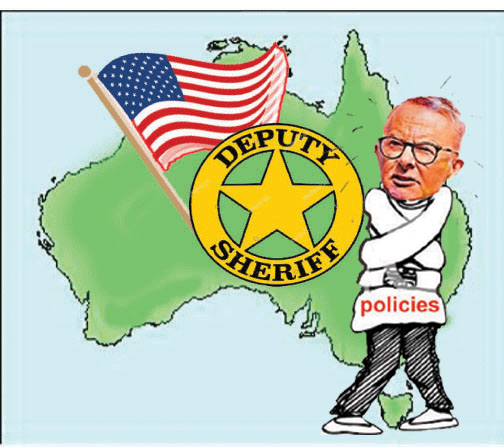
Australia Deputy Sheriff
There have been rare and largely ignored voices forecasting what is happening under Trump. A decade ago, Geoff Raby warned of the US eventually withdrawing from Western Pacific domination, leaving Deputy Dawg Australia an orphaned shag on a rock. Hugh White, more recently, has made the case that America is in retreat to its core interests.
That has now been spelt out in the Trump administration’s National Security Statement and by its “Secretary for War” Pete Hegseth. America is to be about the Americas, with Europe left to itself, or Russia, and China’s military rise acknowledged and accepted in Asia.
A new reality
Crikey’s Bernard Keane summarised the new reality ($) while highlighting local mainstream media’s failure to examine it, citing a speech last weekend in which Hegseth said the quiet bits out loud:
“Our interests in the Indo-Pacific are significant, but also scoped and reasonable … this includes the ability for us, along with allies, to be postured strongly enough in the Indo-Pacific to balance China’s growing power.
“President Trump and this administration seek a stable peace, fair trade and respectful relations with China…this involves respecting the historic military buildup they are undertaking.”
Keane concluded Hegseth had said the unthinkable: the US aims merely to be present in the Pacific, not to dominate it. It merely seeks to balance China’s power, not defeat it. And it “respects” China’s military build-up.
“Imagine the absolute uproar from the media — and not just from News Corp — if Anthony Albanese had talked about ‘respecting’ China’s military build-up,” Keane posited.
Like the US blatantly committing war crimes and now piracy off the Venezuelan coast, America’s declared security strategy is an embarrassment Australia doesn’t want to see. This is the America which preferences Russia over Europe.
Not “just a phase”
The optimistic view within the defence establishment clinging to American coattails is that Trump, too, will pass and everything will get back to just the way it was.
It won’t. That’s not the way it happens when the world changes. Much of MAGA will prove sticky even if the Democrats reclaim the White House and Congress.
“Having given ground, it’s very difficult to reclaim it.
Not much of Trump 1.0 was overturned by Biden. The tax cuts and Chinese tariffs remained. The domestic chaos created by Trump will be more than enough for a Democrat administration to wrestle with, if there is a Democrat administration next.
America is set for so many problems by 2028, China’s role in Asia won’t register.
In little ol’ Australia, we’ll watch the cricket and slumber through summer. Prime Minister Albanese’s interview on the final Insiders program for 2025 was typical, being purely domestic. A minister’s expensive airfares was a major issue, American war crimes and the national strategic statement Russia applauded didn’t rate a mention.
And with an iron grip on Labor Party members and an irrelevant opposition, Albanese/Marles/Wong will continue to treat the somnambulant Australian public with contempt, refusing to be open about our AUKUS fantasy,
“refusing to risk a public inquiry,
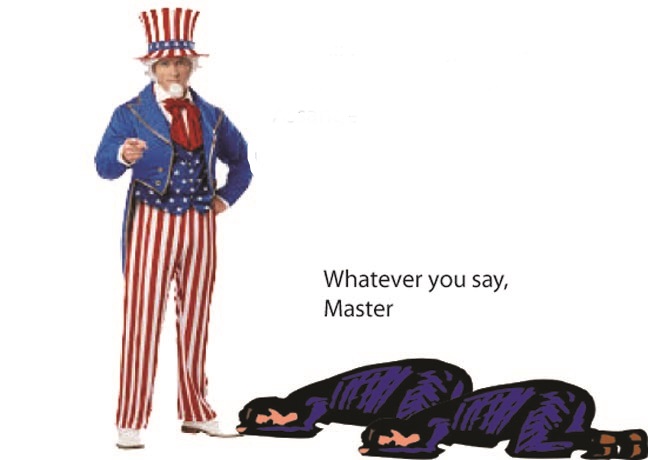
refusing to tell us what more the US is demanding of its South Pacific vassal.
Oh well, we can concentrate on the cricket, ignore our complicity in piracy and war crimes and just keep handing over the billion-dollar cheque
Michael Pascoe is an independent journalist and commentator with five decades of experience here and abroad in print, broadcast and online journalism. His book, The Summertime of Our Dreams, is published by Ultimo Press.
Benjamin Netanyahu is blaming the attack at Bondi Beach on Australia’s support for Palestinian statehood. He conflates Jewish safety with Zionism to garner support for Israel, but in doing so, he enlists all Jews as agents of Palestinian oppression.
On September 21, Australia officially recognized the State of Palestine. This recognition coincided with that of several other Western countries, including France, Canada, and the United Kingdom. This is, of course, a problem for an Israeli government that “flatly rejects the establishment of a Palestinian Arab state west of the Jordan River.”
So what better than a massacre of Jews on Hanukkah to undermine this effort?
At an Israeli government meeting following the Bondi Beach massacre, Netanyahu admonished the Australian government and its Prime Minister, Anthony Albanese, for its supposed role. This rhetorical attack aimed not only to delegitimize support for Palestinian statehood but also to garner support for the continuing genocide in Gaza. It does not seem to matter that the shooters, a father and a son of Pakistani Muslim background, are reported to have been inspired by ISIS and not a Palestinian cause as such. Israel never misses an opportunity to incite against Palestinians.
“On August 17th, about four months ago, I sent Prime Minister Albanese of Australia a letter, in which I gave him warning, that the Australian government’s policy was promoting and encouraging antisemitism in Australia. I wrote: ‘Your call for a Palestinian state pours fuel on the antisemitic fire. It rewards Hamas terrorists. It emboldens those who menace Australian Jews, and encourages the Jew hatred now stalking your streets. Antisemitism is a cancer. It spreads when leaders stay silent. It retreats when leaders act. I call upon you to replace weakness with action, appeasement with resolve’.
Instead, Prime Minister, you replaced weakness with weakness, and appeasement with more appeasement. Your government did nothing to stop the spread of antisemitism in Australia, you did nothing to curb the cancer cells that were growing inside your country, you took no action, you let the disease spread, and the result is the horrific attacks on Jews we saw today.”
So, following the Bondi Beach attack, Netanyahu is basically saying, “I told you so.”
The “appeasement” narrative is one that Netanyahu likes a lot, because it alludes to the appeasement policy of Britain towards Nazi Germany under PM Neville Chamberlain, who sought at the time to play soft with Hitler. The analogy turns Palestinians into Nazis, and those who seek to ‘appease’ them, weaklings and antisemites. For Netanyahu, antisemitism is a cancer, and who embodies it? Palestinians.
Netanyahu continued to apply pressure on Albanese, and in turn, any other leaders in the West who are considering supporting the Palestinians:
“We saw an action of a brave man, turns out a Muslim brave man [Netanyahu first claimed he was Jewish], that stopped one of these terrorists from killing innocent Jews. But it requires the action of your government, which you’re not taking, and you have to, because history will not forgive hesitation and weakness – it will honor action and strength. That’s what Israel expects of each of your governments in the West, and elsewhere. Because the disease spreads, and it will consume you as well. But we are worrying right now about our people, our safety, and we do not remain silent”.
And he then expanded his analogy to lump the Bondi Beach attack in with recent news from Syria, Gaza, and Lebanon:
“We fight those who try to annihilate us. They’re not only trying to annihilate us, they attack us because they attack the West. In Syria, we saw yesterday two American soldiers killed, and one American interpreter killed as well, killed because they represent our common culture. Now as a result of this, Secretary of War Pete Hegseth said the following. He said ‘let it be known, that if you target Americans anywhere in the world, you will spend the rest of your brief, anxious life, knowing the United States will hunt you, find you, and ruthlessly kill you’. We send our condolences to the people of America, and I want to say that our policy is exactly that policy. That’s why those who target Israelis, target our soldiers, try to kill them, or try to hurt them and wound them, as happened in Gaza yesterday – we take action. They will spend the rest of their brief, anxious lives knowing that Israel will hunt them, find them, and ruthlessly dispose of them. That is American policy, this is Israel’s policy. It’s our policy in Gaza, Lebanon, anywhere around us. We do not sit by and let these killers kill us.”
This is thus also a message to the U.S., we are one in our imperialist alliance. Netanyahu is signaling to Albanese, Australia, and anyone else who is thinking about aligning with the Palestinians in any form or shape, that they will be aligning with those who seek to annihilate Jews.
Netanyahu is playing an all-or-nothing game, and it’s forcing governments that seek to be liberal to choose a side – with Israel, or with the Palestinians, since Israel is so clearly bent on their destruction. Albanese was asked about Netanyahu’s accusations on ABC. Sarah Ferguson asked:
“Let me just talk to you about antisemitism. I want to bring up what Prime Minister Netanyahu said today. He singled you out personally, he said, for ‘pouring fuel on the antisemitism fire by recognising a Palestinian State’. Do you accept any link between that recognition and the massacre in Bondi?”
Albanese: “No, I don’t. And overwhelmingly, most of the world recognises a two-state solution as being the way forward in the Middle East.”
Albanese is clearly trying not to respond with fury to Netanyahu’s demeaning provocations, but Netanyahu is seeking to divide the world, are you with us or against us – and with us is against the Palestinians.
And it is exactly this rhetoric from Israel that arguably fuels antisemitism, or at least anti-Jewish animus.
This is because it seems impossible to protect Palestinians or even offer symbolic support for their national aspirations without being labeled a coward, an appeaser, or an antisemite seeking the destruction of the Jewish people. When these accusations set the terms, many feel that proving their worth against Israel’s claims is pointless. This dynamic also sustains hostility toward the Jewish community.
In 2015, after an attack in France on a Jewish supermarket, Netanyahu said to French Jews: “Israel is your home”. It caused considerable discontent among the Jewish community at the time, which is probably why he didn’t repeat it now. But he’s still posing as the strong leader of all Jews, whom the “weak” leaders should take example from, as it were. When such self-appointed ‘Jewish leaders’ conflate Judaism with Zionism and insist on unquestioning support for Palestinian destruction as proof of solidarity, people will often side with humanity—supporting those facing genocide, not those perpetrating it—and grow resentful of anyone demanding support for such actions.
We are already seeing the Zionist exploitation of the massacre to target Palestine solidarity in Australia, as well as internationally. We will likely also see a further crackdown on Palestinians from the river to the sea.
Following the massacre, mourners descended upon Bondi Beach to remember the victims. Jews waving Israeli flags were permitted, while anti-Zionist Jews wearing a kuffiyeh were distanced by the police. It was a message to all that the lessons drawn from this will likely be the Zionist ones.
Many are now once again listening to Netanyahu’s violent incitement, as if he weren’t wanted by the ICC for crimes against humanity. He has been granted moral authority once again, even if for a fleeting moment, as head of the self-proclaimed Jewish state. He is using it to berate the world about how to be on the right side of history, while actively commanding a genocide.
Gaza is being carved up. Palestinians are being written out.
As governments and billionaires design a “new Gaza,” most corporate media treat it as a technical project, not a colonial mandate that denies Palestinians the right to govern themselves. The basic fact of Palestinian self-determination is pushed to the margins or erased
How US military and corporate power reshaped Australian sovereignty, limited democratic control, and constrained independent decision-making.
Introduction: When Control Slips Quietly
Many Australians feel that major national decisions are no longer made entirely in Canberra. Defence policy, foreign affairs, intelligence cooperation, and even economic priorities increasingly align with United States interests, often without meaningful public debate.
At the centre of this shift is Australian sovereignty, the ability of citizens, through democratic institutions, to decide the nation’s direction. This erosion did not occur through invasion or emergency powers. It occurred gradually, through treaties, trade agreements, military integration, and political choices made over decades.
The Origins of US Military Influence in Australia
ANZUS and the Post-War Security Mindset
The 1951 ANZUS Treaty embedded Australia within a US-led security framework. While often described as a mutual defence pact, it imposes no binding obligation on the United States to defend Australia.
Over time, strategic alignment hardened into an assumption. Independent defence thinking was increasingly treated as unrealistic.
Pine Gap and Intelligence Dependency
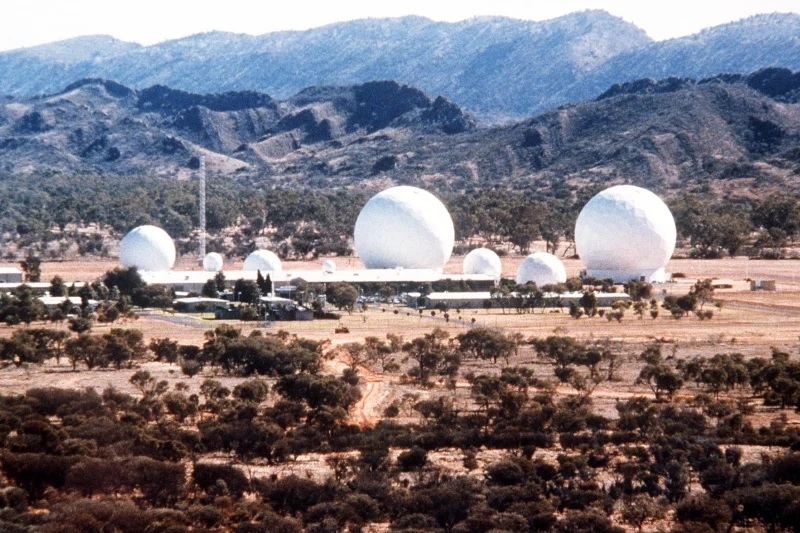
Pine Gap is often described as a joint facility. In practice, it primarily supports US intelligence, surveillance, and targeting systems. Australia receives help from access, but not operational control. This dependency discourages dissent. Restricting operations risks exclusion from the intelligence systems Australia now relies upon.
US Marines now rotate continuously through Darwin. Australian bases support US operations across the Indo-Pacific. Command systems and logistics are increasingly integrated. These changes occurred with limited parliamentary scrutiny, shifting Australia from ally to forward operating platform.
AUKUS and Strategic Lock-In
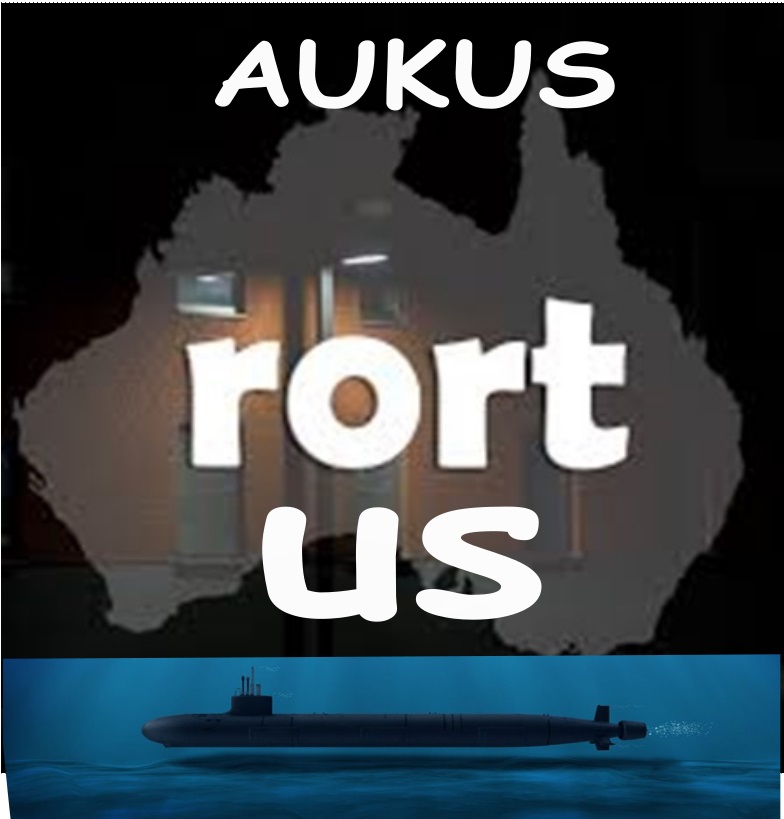
AUKUS commits Australia to decades of nuclear submarine dependency and foreign technology control. Decisions on deployment and escalation often fall outside democratic oversight. This significantly weakens independent defence policy.
Foreign Influence in Australian Politics and the Economy
US corporations dominate defence procurement, digital platforms, energy services, and critical infrastructure. Privatisation transferred public assets into private, often foreign-owned, hands.
Trade agreements such as AUSFTA further limit regulatory freedom, allowing corporations to challenge laws designed to protect the public interest.Political Leadership, Capability, and Accountability
Successive governments approved deeper military and corporate integration with little public mandate. Many ministers responsible for defence and trade have limited experience outside party politics or corporate-aligned advisory roles. The revolving door between politics, lobbying, and defence contracting undermines independence and accountability.
Politics Ebook
Is This Treason or Democratic Breakdown?
Treason under Australian law requires intent to assist an enemy during wartime. That threshold is not met.
However, legality is different from legitimacy. What has occurred reflects dereliction of duty, erosion of democratic consent, and policy capture by foreign and corporate power.
Why Governments Now Fear Change
Challenging entrenched US dominance risks diplomatic pressure, intelligence withdrawal, capital flight, and media backlash. As a result, even modest reforms are framed as security threats. This is structural dependence, not conspiracy.
Australia’s Dollar Sovereignty and Defence Independence
Australia issues its own currency. It cannot run out of Australian dollars. Yet, governments behave as though public investment depends on foreign approval or balanced budgets.
This misunderstanding weakens Australia’s defence independence. A currency-sovereign nation can fund domestic industry, defence capability, infrastructure, and diplomacy using public money.
The AUKUS agreement allows any party to withdraw with one year’s notice. But here’s the lethal asymmetry: Australia’s payments are subsidies, not deposits; they are not refundable, and there is no guarantee that the submarines will ever be delivered.
How the AUKUS Caucus built a cargo cult and called it strategy.
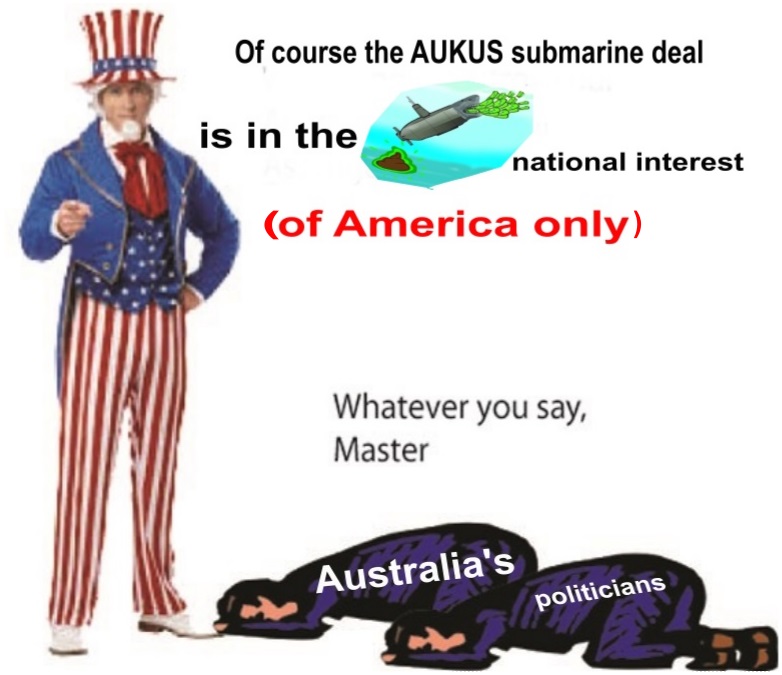
There’s a certain kind of Australian politician who never quite grew out of childhood. You know the type: Richard Marles, Tony Abbott, Christopher Pyne. Peter Pan to a man. Their eyes light up whenever a Pentagon staffer remembers their name. They sit bolt upright like kelpie pups on the back of the ute, ears pricked for master’s return. They mistake condescension for intimacy, patronage for partnership, obedience for relevance.
Marles, Pat Conroy (Defence Industry), and Brendan O’Connor (Veterans’ Affairs) along with “Rear Admiral-Albo” and Wayfinder Penny Wong make up the AUKUS Caucus: a dream team. Not bound by evidence, timelines, or arithmetic; only by faith. Faith that if Australia sends enough money, bases and deference across the Pacific, the Great Mate in the Sky will someday descend bearing nuclear submarines and strategic salvation.
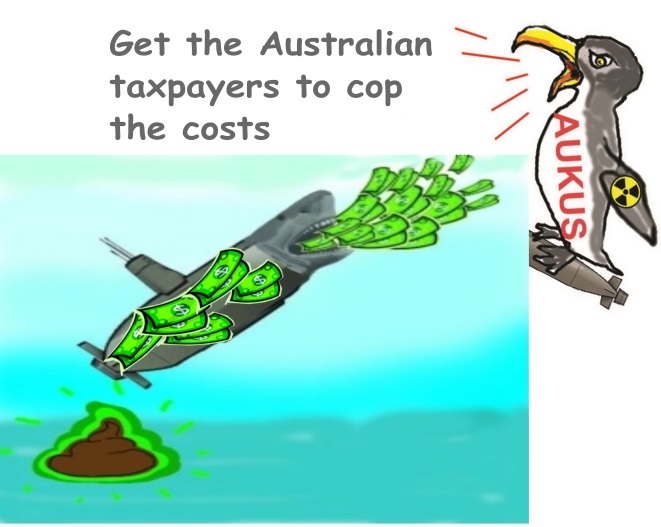
Australia’s $368 billion imaginary friend.
The Cargo Cult Playbook
Cargo cults arise when isolated societies witness advanced powers arrive with miraculous technology. Locals build imitation runways; light signal fires hoping the planes will return. The AUKUS Caucus has updated the ritual for the modern age. Our runways are ports. The offerings are our sovereignty. The signal fires are AUSMIN pressers. And the planes, as ever, do not land.
Richard Marles, Labor’s embattled Defence Minister, is the cult’s high priest. Asked about implementation delays, he smiles wanly and intones the sacred words: “Full steam ahead.” Full steam ahead to where is never explained.
AUKUS is sold as strategic realism. In practice, it operates as faith: belief substituted for capacity, ritual for delivery, loyalty for leverage.
The Hegseth Problem
This week Marles and Wong flew to Washington for the annual, ceremonial abasement known as AUSMIN. Their opposite number is Pete Hegseth. Former Fox News shouter, veterans’ charity mismanager, and a chap once carried from a strip club by mates after trying to storm the stage. Now improbably directing US defence as Secretary of War.
Hegseth’s character matters because AUKUS asks us to entrust our strategic future to decision-makers whose judgment, attention span and institutional grip are already demonstrably strained. His own mother calls him as an “abuser of women” who “belittles, lies and cheats,” urging him to “get some help and take an honest look at yourself.”
When a nation stakes $368 billion on the judgment of a man disqualified by his own mother from trust, it has crossed from strategy into pathology.
8 December, Marles and Wong are pictured nodding earnestly as Hegseth endorses a $368 billion submarine fantasy he cannot possibly deliver. He barks approval of AUKUS as “pragmatic hard power.” Wong, cryptic as ever, merely echoes Trump’s mantra: “full steam ahead.” The boats are not coming, so who cares what fuels the boiler?
The Pragmatic Hard Power Con
Pragmatic hard power? It could be a new brand of laundry detergent. The absurdity runs deeper than performance.
Australia is trading real sovereignty for imaginary submarines.
AUKUS legislation effectively transfers operational priority and access over key Australian military bases to the US. The terminology is pure institutional dissemblance: “expanded US rotational presence” and “integrated command arrangements.” In plain English: we concede control over our own strategic assets. We slip a few lazy billion to US and British shipyards to “expedite” production; meaning we subsidise their accumulated backlogs. We bind our “defence posture” so thoroughly into US command that when Washington sneezes, Canberra catches cold.
But we do get to wave flags. Hum anthems. Pay invoices.
Each concession merits national debate. Yet, the AUKUS Caucus has sealed the deal without meaningful parliamentary inquiry, without detailed public costings, only an “oversight” committee denied subpoena power, denied independent costing, and so carefully neutered it might as well be chaired by a shredder.
The Legal Trap
And yes, the legal architecture is exactly what critics feared. Under the agreement, Australia provides $4.7 billion (with more coming) to US and UK submarine builders, and according to questioning in Senate Estimates, there is no clawback provision; Australia does not get its money back if the US fails to transfer nuclear submarines.
The AUKUS agreement allows any party to withdraw with one year’s notice. But here’s the lethal asymmetry: Australia’s payments are subsidies, not deposits; they are not refundable, and there is no guarantee that the submarines will ever be delivered.
The US and UK can walk away at any time. They keep the cash, the upgrades, the expanded industrial bases and the sovereign right to prioritise their own needs. Which, as serious countries, they will do.
Australia, meanwhile, is padlocked like a rental fridge in a share-house. Jiggle the handle all you like, but the thing won’t open unless the bloke with the key decides you’ve paid up.
A Big Perhaps
At some point, the more unsettling explanation has to be entertained. Perhaps the submarines are not delayed. Perhaps they are not even expected. Perhaps AUKUS is not failing at all, but performing exactly as intended. The money flows early and without clawback. The bases open. Command structures integrate. Strategic dependency is formalised. The submarines remain permanently over the horizon, always promised, never required. If this were a ruse designed to secure American basing access and regional posture while outsourcing the political pain to future governments, it would be hard to design it differently. Whether Australia’s political class believes its own story, or merely finds it convenient, becomes almost beside the point. The outcome is the same.
And whatever the truth of the submarines, Defence needs a bit of a rescue.
Defence’s House of Horrors
Marles’ predicament worsens when you look at Defence itself: a moral, administrative and institutional nightmare he inherited and, like his predecessors, Linda Reynolds and Peter Dutton, has failed to master. Could anyone? Australia’s predicament worsens also.
The Brereton inquiry exposed 39 unlawful killings in Afghanistan. The stain remains. Atop this moral wreckage sits administrative farce: a Defence official leaked confidential information before walking straight into a job with a private weapons contractor.
The Hunter class frigates tell the broader story. What began life as a $45 million per ship concept has metastasised into $2.6 billion per ship, with hundreds of millions in variations already locked in, and the program at least 18 months late due to design immaturity.
When Labor took office, 28 major Defence projects were running a combined 97 years behind schedule, with roughly a quarter of procurement unfunded. Over it all looms $368 billion we’ve agreed to throw at AUKUS, as a $60 billion annual defence budget swells toward $100 billion by 2034, absorbing failure without correcting it. (AUKUS costs are a guess, announced without consulting Treasury, Parliament or any other authority.)
What Do We Actually Get?
And what does Australia receive for this tithe?
Not submarines.
Not even capability.
A promise.
Five SSN AUKUS boats to be built in Adelaide at some conveniently indeterminate date. Early 2040s if all goes well. If Britain remembers how to build submarines at scale. If the US has spare industrial capacity. If history pauses politely to accommodate our fantasy.
The BAE Systems Track Record
BAE Systems, cast as AUKUS’s industrial saviour, spent two decades struggling to deliver the UK’s Astute class submarines……………………………………………………..
The Pillar Two Mirage
When reality intrudes, the faithful point to Pillar Two, the sideshow of defence tech collaboration; AI, cyber and hypersonics; meant to suggest strategic depth where there is only debt. Scott Morrison dubbed it “AUKUS in Space,” as if adding a preposition and some stars transformed a lopsided submarine purchase into visionary strategy.
But the real achievement is rhetorical: substituting buzz-words for credible policy. In this sense, AUKUS is Scott Morrison’s most enduring legacy.
The Question Marles Won’t Answer
No-one likes a smart-arse but the pitiful Richard Marles still cannot explain why nuclear submarines are worth this ruinous spend when modern diesel-electric boats exist.
Modern diesel-electric submarines provide maximum range, endurance and stealth, operating underwater before having to resurface to snorkel and recharge batteries. Australia’s own Collins-class diesel submarines demonstrated during 2003 multinational exercises that they were comparable in underwater warfare to US Los Angeles-class nuclear-powered attack submarines, trading roles and achieving , successful attacks despite being smaller and less powerful……………………………………………………………………………………………………………………………………………………………………………………………..
The Runway at Dusk
For $368 billion, AUKUS is not a procurement program. It is a wager on dependency.
Australia is paying staggering sums for submarines that do not yet exist, to be built by industries in chronic difficulty, on timelines that belong to fantasy, while ceding real autonomy over real assets in the present. In return, we receive reassurance. Access. Attention. The comforting sense that someone larger, louder and more heavily armed is standing somewhere behind us………………………………………………………………………………
History will not ask whether the submarines eventually arrived. It will ask why a nation willingly surrendered so much, so early, for so little certainty in return. And it will judge us not by the promises we believed, but by the choices we made when the risks were already plain. https://theaimn.net/aukus-caucus/
In one of his many cutting observations about the fallibility of politicians, H. L. Mencken had this to say about the practical sort: “It is his business to convince the mob (a) that it is confronted by some grave danger, some dreadful menace to its peace and security, and (b) that he can save it.” Regarding Australia’s often provincial politicians, that grave danger remains the Yellow Peril, albeit it one garbed in communist party colours, while the quackery they continue to practise involves the notion the United States will act as shield bearer and saviour in any future conflict.
The AUKUS trilateral security pact between Australia, the United Kingdom and the United States has turned the first of these countries into an expectant vassal state, mindful of security guarantees it does not need from a power that can, and would at a moment’s notice, abandon it. But more dangerously, the expectation here is that Canberra, awaiting Virginia Class (SSN-774) nuclear-powered submarines from the US, will offer unconditional succour, resources and promises to the projection of Washington’s power in the Indo-Pacific. Without any guarantee of such submarines, Australian money is underwriting US submarine production, which remains consistently tardy. (Currently, 1.3 boats are being produced annually, when 2.3 are needed.)
The 2023 National Defense Authorization Act makes it irrefutably clear that Congress shall be notified that any transfer of boats “will not degrade the United States underseas capabilities.” Pursuing AUKUS still entailed “sufficient submarine production and maintenance investments” on the part of the US to meet undersea capabilities, with Australia advancing “appropriate funds and support for the additional capacity required to meet the requirements” along with Canberra’s “capability to host and fully operate the vessels authorized to be transferred.”
This true steal for US diplomacy, and sad tribute to Homo boobiens on the part of the Australians, has continued with the review of AUKUS conducted by Undersecretary of Defense Policy Eldridge Colby. The review is not available for public eyes, but Colby had previously released smoke signals that the AUKUS pact would only “lead to more submarines collectively in 10, 15, 20 years, which is way beyond the window of maximum danger, which is really this decade.”
The Australian Defence Minister Richard Marles told reporters on December 4 that the review had been received. “We’re working through the AUKUS review, and we very much thank the United States for providing it to us.” (Surely that’s the least they could have done.) He had identified unwavering support for the pact. Pentagon spokesman Sean Parnell also released a statement to the media expressing enthusiasm. “Consistent with President Trump’s guidance that AUKUS should move ‘full steam ahead,’ the review identified opportunities to put AUKUS on the strongest possible footing.” No doubt opportunities have been identified, but these are likely to be consistent with the lopsided arrangements Australia has had with the US to date.
Australia has so far provided A$1.6 billion in funding to the US submarine base, with the promise of more. What remains unclear is how much of this is also going into training Australian personnel to operate and maintain the vessels. “There’s a schedule of payments to be made,” explained Australian Prime Minister Anthony Albanese in July. “We have an agreement with the United States as well as with the United Kingdom. It is about increasing their capacity, their industrial capacity.” As part of such arrangements, “we have Australians on the ground, learning those skills.”
The joint fact sheet on the 2025 Australia-US Ministerial Consultations (AUSMIN), held between US Secretary of State Marco Rubio, US Secretary of War Pete Hegseth and their Australian counterparts Penny Wong and Marles in Washington, makes one reference to AUKUS and nothing in terms of substance to Colby’s recommendations. There is, however, this bit of unpardonable gibberish: “In line with President Trump and Prime Minister Albanese’s direction to move ‘full steam ahead’ on AUKUS, the [ministers] recognised the work underway to deliver priority infrastructure works and workforce uplift plan in support of an enhanced trilateral submarine industrial base.”
Given such statements, it is hard to see what opportunities identified in the Colby report could possibly be advantageous to Australia, a mere annexure of the US imperium. There is bound to be continued pressure on Australia to increase its defence spending. There are also unaddressed concerns about how sovereign the SSNs in Australian hands are going to be when and if they ever make it across the Pacific. In a conflict involving the United States, notably in the Indo-Pacific, Canberra will be expected to rush in with that mindless enthusiasm that has seen Australian soldiers die in theatres they would struggle to name for causes they could barely articulate.
Even the confident opinion of Joe Courtney, a Democrat member of the House Armed Services Committee and representative of Groton, Connecticut (the “Submarine Capital of the World”), should be viewed warily. “The statutory authority enacted by Congress in 2023 will remain intact, including the sale of three Virginia-class submarines starting in 2032,”comes his beaming assessment. The Colby review “correctly determined that there are critical deadlines that all three countries have to meet. Therefore, maintaining disciplined adherence to schedule is paramount.” That degree of discipline and adherence to schedules is unlikely to be an equal one. It is bound to favour, first and foremost, Washington’s own single perspective.
The strategic placement of key US and joint military facilities across Australia reveals a pattern not of national defence, but of integration into a global, offensively-oriented network for force projection and intelligence gathering. An analysis of their locations and functions demonstrates that these bases are designed to serve the strategic interests of a superpower, often at the expense of Australian sovereignty and security.
The Official Rationale: A Volatile Region and the Strategy of Denial
According to official Australian government assessments, the strategic environment is increasingly volatile, characterised by falling international cooperation, rising competition, and uncertainty about US reliability. In response, Australia’s National Defence Strategy: 2024 has adopted a “strategy of denial,” emphasising deterrence as its primary objective. This policy shift is used to justify initiatives such as:
Acquiring nuclear-powered submarines through AUKUS.
Upgrading and expanding northern military bases.
Acquiring new long-range strike capabilities.
The public-facing logic is that longer-range weapons have overturned Australia’s geographic advantage, making the “sea-air gap” to the north a vulnerability. However, a closer examination of the specific facilities tells a different story.
Pine Gap: The Beating Heart of Global Surveillance
The Joint Defence Facility Pine Gap, near Alice Springs, is the most prominent example. Ostensibly a joint facility, it is a critical node in US global intelligence. Its functions extend far beyond any defensive mandate for Australia.
Global Signals Intelligence: Pine Gap acts as a ground control and processing station for US geosynchronous signals intelligence (SIGINT) satellites. These satellites monitor a vast swath of the Eastern Hemisphere, collecting data including missile telemetry, anti-aircraft radar signals, and communications from mobile phones and microwave transmissions.
Warfighting and Targeted Killing: Information from Pine Gap is not merely for analysis. It is used to geolocate targets for military action. The base has played a direct role in US drone strikes and has provided intelligence in conflicts from Vietnam and the Gulf War to the ongoing wars in Gaza. Experts testify that data downlinked at Pine Gap is passed to the US National Security Agency and then to allies like the Israel Defense Forces, potentially implicating Australia in international conflicts without public knowledge or parliamentary oversight.
A History of Secrecy and Sovereignty Betrayed: The base’s history is marked by breaches of Australian sovereignty. During the 1973 Yom Kippur War, the US government placed Pine Gap on nuclear alert (DEFCON 3) without informing Australian Prime Minister Gough Whitlam. Whitlam’s subsequent consideration of closing the base was followed by his dramatic dismissal in 1975, an event that former CIA officers have linked to US fears over losing access to the facility.
Northern Bases: Launchpads for Power Projection
The network of bases across Australia’s north forms an arc designed for forward operations, not homeland defence.
RAAF Base Tindal: This base in the Northern Territory is undergoing upgrades to host US B-52 strategic bombers. This transformation turns Australian territory into a forward operating location for long-range strike missions deep into Asia, fundamentally changing the nation’s role from a sovereign state to a launching pad for another power’s offensive operations.
Marine Rotational Force – Darwin: The stationing of up to 2,500 US Marines in Darwin functions as a persistent force projection and logistics hub, enhancing the US ability to rapidly deploy forces into the Southeast Asian region.
NW Cape (Harold E. Holt): The facility in Exmouth, Western Australia, hosts advanced space radar and telescopes for “space situational awareness.” This contributes to US space warfare and communications capabilities, a global mission with little direct relation to the defence of Australia’s population centres.
The True Cost: Compromised Sovereignty and Incurred Risk
This integration into a superpower’s military apparatus comes with severe, often unacknowledged, costs.
The Loss of Sovereign Control: The operational control of these critical facilities is often ceded to the United States. At Pine Gap, the chief of the facility is a senior CIA officer, and certain sections, such as the NSA’s cryptology room, are off-limits to Australian personnel. This creates a situation where activities conducted on Australian soil are not fully known or controlled by the Australian government.
Becoming a Nuclear Target: The critical importance of bases like Pine Gap to US global military dominance makes them high-priority targets in the event of a major conflict. By hosting these facilities, Australia voluntarily assumes the risk of being drawn into a nuclear exchange, a strategic decision made without public debate.
Complicity in International Conflicts: As the protests and legal actions surrounding Pine Gap’s role in Gaza highlight, Australia faces legal and moral accusations of complicity in actions that may constitute war crimes or genocide. This places the nation in direct opposition to international law and global public opinion, all for the sake of an alliance that often prioritises US interests.
Conclusion: From Independent Ally to Integrated Base
The evidence is clear: the strategic network of US-linked bases in Australia is not primarily for the nation’s defence. It is the architecture of a vassal state, designed to service the global force projection and intelligence-gathering needs of a superpower. From the satellite surveillance of Pine Gap to the bomber forward deployment at Tindal, these facilities entangle Australia in conflicts far beyond its shores, compromise its sovereignty, and incur immense strategic risks. Until this fundamental reality is confronted, Australian defence policy will continue to serve an empire’s interests, not its own.
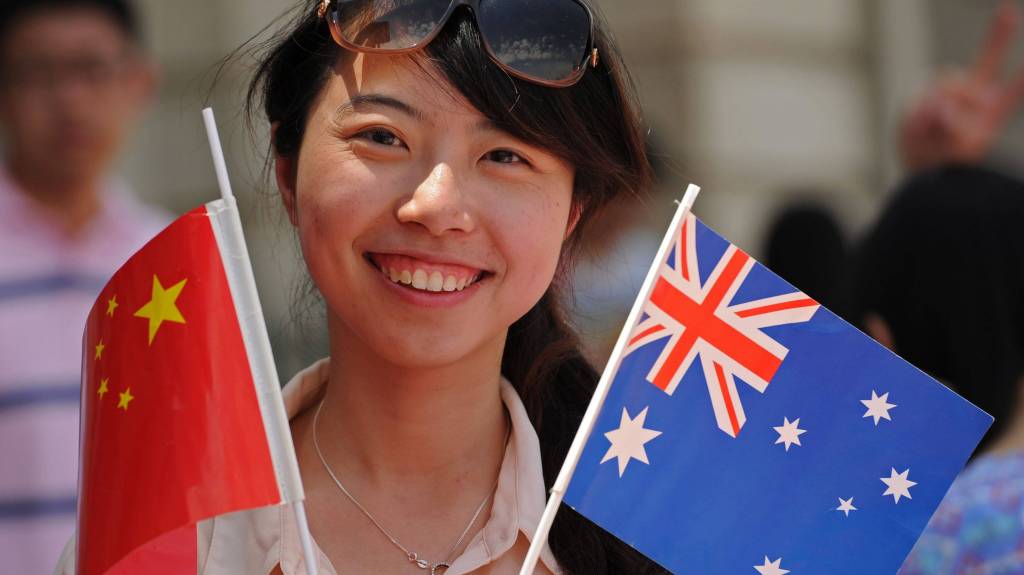
Cooperation between Australia and China could send a useful message to the Trump regime and other countries around the world about both the possibility of developing alternatives to failing American leadership and the institutional order it did so much to create.
If we are to survive, unprecedented levels of cooperation are needed, no matter how unlikely. Mark Beeson writes.
GLOBAL GOVERNANCE is failing. Nothing highlights this reality more dramatically than our collective inability to address the degradation of the natural environment adequately. Addressing an unprecedented problem of this magnitude and complexity would be difficult at the best of times. Plainly, these are not the best of times.
Even if climate change could be dealt with in isolation, it would still present a formidable challenge. But when it is part of a polycrisis of intersecting issues with the capacity to reinforce other more immediate, politically sensitive economic, social and strategic problems, then the prospects for effective cooperative action become more remote.
Indeed, the polycrisis makes it increasingly difficult to know quite which of the many threats to international order and individual well-being we ought to focus on. The “we” in this case is usually taken to be the “international community”, which has always been difficult to define, generally more of an aspiration than a reality, frequently more noteworthy for its absence than its effectiveness.
Nation-states, by contrast, can still act, even if we don’t always like what they do. The quintessential case in point now, of course, is the administration of U.S. President Donald Trump. Because it is by any measure still the most powerful country in the world, what America does necessarily affects everyone. This is why its actions on climate change – withdrawing from the Paris Agreement, gutting the Environmental Protection Authority, encouraging fossil fuel companies – matter so much.
But nation-states can also be forces for good and not just for those people who live within the borders of countries in the affluent global North. On the contrary, states that oversee a reduction in CO2 emissions are not only helping themselves, but they are also helping their neighbours and setting a useful example of “good international citizenship”.
When global governance is failing and being actively undermined by the Trump regime, it is even more important that other countries try to fill the void, even if this means cooperating with the unlikeliest of partners. Australia and China really could offer a different approach to climate change mitigation while simultaneously defusing tensions in the Indo-Pacific and demonstrating that resistance to the Trump agenda really is possible.
Friends with benefits
In the long term, if there still is one, environmental breakdown remains the most unambiguous threat to our collective future, especially in Australia, the world’s driest continent. And yet Australia’s strategic and political elites remain consumed by the military threat China supposedly poses, rather than the immediate, life-threatening impact of simultaneous droughts, fires and floods.
One of the only positives of the climate crisis is that it presents a common threat that really ought to generate a common cause. Some countries are no doubt more responsible for the problem and more capable of responding effectively, so they really ought to overcome the logic of first-mover disadvantage. No doubt, some other country will take over Australian coal markets, but someone has to demonstrate that change is possible.
China is possibly at even greater risk from the impact of climate catastrophes because of water shortages and, paradoxically enough, rising sea levels that will eventually threaten massive urban centres like Guangzhou and Shanghai. While there is much to admire about the decrease in poverty in the People’s Republic, it has come at an appalling cost to the natural environment. China also has powerful reasons to change its ways.
Unfortunately, Chinese policymakers, like Australia’s and their counterparts everywhere else, are consumed with more traditional threats to national strategic and economic security. This may be understandable enough in a world turned upside down by an unpredictable administration bent on creating a new international order that puts America first and trashes the environment in the process.
But in the absence of accustomed forms of leadership from the U.S. and the international community, for that matter, states must look to do what they can where they can, even if this means thinking the unthinkable and working with notional foes. China and Australia really do have a common cause when it comes to the environment and they could and should act on it.
Yes, this does all sound a bit unlikely. But if we are to survive in anything like a civilised state, unprecedented levels of cooperation would seem to be an inescapable part of limiting the damage our current policies have inflicted on the environment. In this context, Australia and China really could lead the way by simply agreeing to implement coordinated domestic actions designed to set a good example and address a critical global problem.
Leading by example
As two of the biggest consumers and producers of coal, Australia and China could make an outsize contribution to a global problem that would almost certainly win near universal praise, not to say disbelief. In short, China could agree not to build any more coal-fired power stations and Australia could commit to not opening any more new mines and rapidly moving to close down existing ones.
This would be a challenge for both countries, no doubt, but if we are ever going to address the climate challenge seriously, this is the sort of action that will be needed. There are no easy or painless solutions. But voluntarily abandoning the use of one of the most polluting fossil fuels is a potentially feasible and effective gesture that would make a difference. After all, China is a world leader in the development and use of green energy already, so the transition would be difficult but doable.
Australia has a shameful record of exporting carbon emissions and could live without the coal industry, which produces most of them, altogether. Coal extraction doesn’t employ many people and Australia is a rich enough country to compensate those affected by the loss of what are awful jobs in a dirty industry. If Australia can find $368 billion for submarines that will likely never arrive, to counter an entirely notional threat from China, it ought to be able to find a couple of billion to deal with a real one.
No doubt there would be significant pushback from coal industry lobbyists and politicians who think their future depends on being “realistic”, even if it means wrecking the planet. And yet it is possible, even likely, that such actions on the part of Australia and China would be very well received by regional neighbours, who would directly benefit from their actions and who might also be encouraged to consider meaningful cooperative actions themselves.
Given the failure of regional organisations like ASEAN to tackle these issues, normative pressure could be useful.
China might even get a significant boost to its soft power and regional reputation. President Xi Jinping frequently talks about the need to develop an “ecological civilisation”. Moving away from coal and collaborating with an unlikely partner for the collective good would be an opportunity to demonstrate China’s commitment to this idea, and to offer some badly needed environmental leadership.
If that’s not an example of what Xi calls win-win diplomacy, it’s hard to know what is.
A sustainable world order?
In the absence of what U.S. Senator Bernie Sanders calls a “revolution” in American foreign policy, multilateralism may well be in terminal decline. Indeed, it is an open question whether interstate cooperation will survive another four years of Trumpism, especially when the United Nations faces a funding crisis and politics in the European Union is moving in a similarly populist and authoritarian direction.
Cooperation between Australia and China could send a useful message to the Trump regime and other countries around the world about both the possibility of developing alternatives to failing American leadership and the institutional order it did so much to create. American hegemony was frequently self-serving, violent and seemingly indifferent to its impact on the global South, but we may miss it when it’s gone.
If multilateralism is likely to be less effective for the foreseeable future, perhaps minilateralism or even bilateralism can provide an alternative pathway to cooperation. Narrowly conceived notional strategic threats could be usefully “decoupled” from the economic and environmental varieties. In such circumstances, geography may be a better guide to prospective partners than sacrosanct notions about supposed friends and enemies.
Someone somewhere has to show leadership on climate change and restore hope that at least one problem, arguably the biggest one we collectively face, is being taken seriously. There really isn’t any choice other than to contemplate unprecedented actions for an unprecedented problem. Australia and China may not save the world, but they could make things a bit less awful and inject some much-needed creativity and hope into international politics.
Mark Beeson is an adjunct professor at the University of Technology Sydney and Griffith University. He was previously Professor of International Politics at the University of Western Australia.
As Russia and the US both threaten to resume nuclear testing and China has tripled its stock of nuclear arms, former foreign minister Gareth Evans has written an essay for Australian Foreign Affairs Magazine arguing that Australia should lead a new arms control push. He says “nuclear arms control has never been more necessary, and never more difficult to achieve. The important arms control agreements of the past are dead, dying or on life support. And the recent behaviour of the actors that matter most – the United States, Russia and China – has fed concerns that things can only get worse.”
Guest: Gareth Evans, Distinguished Honorary Professor, Australian National University, former Australian Foreign Affairs Minister, author of “Doomsday diplomacy: Australia can lead a new arms control push”, for Australian Foreign Affairs
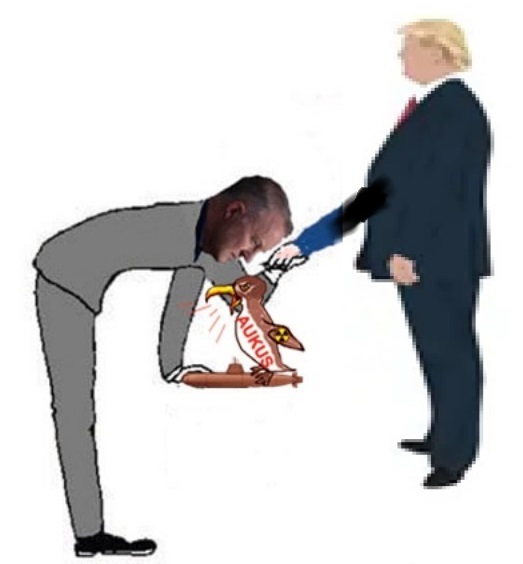
Albanese may come to regret his meeting with Trump, the deal and the endorsement by Trump. He may have underestimated the risk in kissing the ring of the Confidence Man.
but now he was a man of compromise, the politician who has exchanged principles for politics.
Australia should have put AUKUS on hold to let the people decide whether it should proceed. After all, we will pay for AUKUS, and we pay the salaries of the representatives of the people
Australia is paying for America’s submarines, striking a deal with a President we still have to fact-check. Dr Kim Sawyerreports.
HE IS THE MASTER showman. He knows where to position the actors, where to position the cameras, where to position the lights. He knows how to spray on his make-up and the make-up of others. Every press conference, every Cabinet meeting is the reality show of the showman.
“Young Donald Trump had been an athlete as a teenager, and he aspired to a career in Hollywood. He ultimately fulfilled his father’s desire for a successor in the family business in real estate. But what the son really always wanted was to be a star.”
The reality show The Apprentice made him a star. The Apprentice was his apprenticeship. Trump knows who is willing to be conned; he knows their price or how to determine their price. He thinks he knows the price of everything and everyone, but really knows the value of nothing. He is the confidence man.
Trump is the confidence man of fiction best understood by reading Ibsen’s Master Builder or by viewing the 1958 episode‘The End of the World’ of the CBS series Trackdown that featured a character who wanted to build a wall, and who had all the confidence of the confidence man. Sound familiar? The fictitious character was called Trump. He was finally exposed as a fraud. The fictitious Trump was finally arrested.
The meeting of Trump and Albanese was his latest reality show, the Master and the Apprentice. The Master got what we wanted. He got the deference he craved. He got the deal he wanted. The Apprentice got what he wanted. He got the endorsement of power of the Confidence Man.
The art of the deal.
Perforce, the deal is a con. Turnbull and Keating understand. Morrison and Albanese do not. We should never have agreed to AUKUS. It’s not just the cost of $368 billion over 30 years that includes $123bn as a contingency for the risk of a cost blowout. The risks are everywhere.
We have already paid more than $3 billion, the premium for a very uncertain insurance policy. As Turnbull has noted, the submarines are currently being produced at a rate of 1.1 per year.
“They need to get to two by 2028 to be able to meet their own requirements, and to 2.33 to meet their own, plus Australia’s. And they have not been able to lift production rates despite expenditure of over $10 billion over the last six or seven years. So, they’ve got a real problem.”
We’ve got a bigger problem.
Governments are like portfolio managers. The government needs to understand diversification, that you do not put all your eggs in a basket of submarines. The defence budget is so tied up in submarines, we don’t have room to invest in emerging defence technologies, in patrol boats, frigates or the amphibious landing craft we need for immediate problems like evacuations. The budget is being skewed towards submarines that will not be supplied until the early 2030s, away from writing off the $70 billion of student debt that three million young Australians face. The cost of the deal.
We have become so inured to the lies of the conman, we have to fact-check everything he says. When Trump said he had been to Australia, I thought it was another porky, but no, he had visited Australia, not as the President but as a spruiker to the National Achievement Congress in 2011. The conman spruiked the message of the grifter as to how to get everyone else to pay his debts. It wasn’t Trump’s first visit to the antipodes. In August 1993, Trump visited Auckland as part of a consortium bidding for a casino operator’s licence. At the time, Trump was mired in debt. The bid was unsuccessful.
Truth and falsity are transactional for Trump. He has always used the mantra. “If you say something often enough, it becomes true.” Interviewed by the Sydney Morning Herald in 2011, Trump criticised Obama’s job plan as doomed and unlikely to have any impact. At the time, the unemployment rate was nine per cent, at the end of Obama’s term, unemployment was 4.9 per cent. Trump was always anti-Obama. Trump was always false.
The other leading actor in the show that we watched last Monday was our own Prime Minister. Albanese had a lot to thank Trump for; perhaps that’s why he had wanted so much to meet him. The polls in February 2025 had the coalition leading 51–49, and then the Trump-Dutton factor came into play. Dutton was Albo’s trump card. No wonder he wanted the selfie with Trump. He invited Trump to visit, perhaps to spruik why Australia is paying for America’s submarines.
Albanese wore a lot of make-up to the meeting. The real Albo shared his confidences in private, perhaps with the other actor who sat opposite Trump, the Ambassador who Trump did not like. Albanese may come to regret his meeting with Trump, the deal and the endorsement by Trump. He may have underestimated the risk in kissing the ring of the Confidence Man.
The risk was everywhere to be seen. Two days before, 7 million joined the No Kings’ protests. Thirty years ago, when Albo was a man of principle, he may have joined those same protests, but now he was a man of compromise, the politician who has exchanged principles for politics.
On the day that Albo met Trump in the Whitehouse, the East Room was being demolished. In 1984, on a tour of the Whitehouse, we were asked to stand still, as the President appeared. Reagan had just left the East Room, where he had given a speech, where Carter, Obama, and FDR gave speeches. The East Room was built by President Theodore Roosevelt in 1902.
Apparently, there was no heritage overlay, at least for Trump. Betty Ford reflected on its significance. “If the West Wing is the mind of the nation, then the East Wing is the heart.” Confirmation that Trump is heartless.
Australia should have put AUKUS on hold to let the people decide whether it should proceed. After all, we will pay for AUKUS, and we pay the salaries of the representatives of the people. However, most will never get to see the submarines, not like the HECS debt on their tax bill. Australia has been too subservient, too sycophantic, too risk-averse in our dealings with Trump. There is a cost to being risk-averse just as there is a cost to being a risk-taker.
The Democrats paid the price for not dealing with Trump as they should have dealt with him. Dealing with Trump is like dealing with the devil; you must deal on your terms, not his terms. He is a convicted felon, a fraudster, a showman, the confidence man who became President.
The No Kings protests showed the divergence between the people and the institutions, between those who will not defer to Trump and those who will defer to him; between right and wrong. History may rewrite some of the story, but not the story of the Master and the Apprentice.
“Submarines in our time!” He didn’t say it, but Anthony Albanese might as well have, as he returned triumphantly from his meeting with Donald Trump this week.
AUKUS is indeed a fantastic deal. For the Americans, at least.
“Trump is not going to cancel AUKUS”, a well-connected industry source told MWM two weeks ago.
“AUKUS is so good for US industry – Australia is spending billions on their shipyards, and then there’s the purchase of the submarines themselves. General Dynamics Electric Boat and Huntington Ingalls Industries will see tens of billions of Australian dollars flow their way, as will Lockheed Martin and Raytheon”, said the source.
“And assuming things go well, the shipyard mess in the UK will see us going from three US Virginia-class subs to five, and then likely eight. Australia will abandon the UK AUKUS-designed subs, and even more Australian money will flow into the bank accounts of US companies.”
‘They’ll be lobbying the White House to ensure this cash keeps on flowing.’
And clearly, the lobbying has worked so far. Trump has endorsed AUKUS. It’s the sort of deal he likes.
As former Prime Minister Malcolm Turnbull stated in the lead-up to the meeting, it wasn’t going to be in Trump’s interest to withdraw, “The AUKUS deal is a fantastic deal for the Americans, a terrible deal for Australia, so there is no way Donald Trump will walk away from it because what does he get?” he said.
Turnbull was right. He was also right in his analysis after the meeting, “warm words don’t build submarines”.
Submarine woes
The United States is not building enough Virginia-class subs. They’re not building enough for their own Navy, let alone ours. That is the determining fact sitting in the middle of the AUKUS slipway.
For more than a decade, the US Government has been trying to build two Virginia subs per year. But they haven’t been able to move the shipbuilding dial. They’re currently struggling along at 1.1 submarines per annum, not enough to meet their own demand, let alone the 2.3 boats per annum they need to hit to be able to spare a submarine or three for Australia.
The spin from US and Australian politicians is turning in the opposite direction to the analysis of the United States Congressional Research Service, the US Government Audit Office and the US Chief of Naval Operations. No matter the spin from politicians, they can’t cause a change in the engineering and construction taking place at Groton, Connecticut and Newport News, Virginia.
Trump needn’t be worried though; he won’t be the President in the early 2030s when the first Virginia Class sub can’t be delivered because doing so,
will have a detrimental effect on the US Navy’s undersea warfare capability.
The US Congress has enshrined that “America First” requirement in their AUKUS legislation, and the crunch point is already less than a decade away – too little time for the US submarine industrial base to make the enormous strides that are so easily spruiked but so difficult, if not impossible, to achieve.
Eroding our sovereignty
Meanwhile, MWM’s industry source has foreshadowed the closing down of some Australian Defence companies struggling to make ends meet after Defence has cancelled a range of local programs, and is not initiating replacement work, so that they can meet the almost $10B in payments to both the US and UK governments to invest in their industry.
‘AUKUS is sending Australia into a sovereignty-eroding spiral.’
We are already tightly integrated into the US military with common hardware, common ordinance and common tactics. As the US turns its eye towards its superpower competitor, China (incidentally, our biggest trading partner), we are also seeing an expanding US military footprint on Australian soil, including:
and logistics storage in both Victoria and Queensland.
the long-standing Pine Gap joint communications and intelligence facility at Alice Springs,
the critical submarine very low frequency communications station at WA’s North West Cape,
a new mission briefing/intelligence centre and aircraft parking aprons at RAAF Darwin,
fuel storage at Darwin Port, infrastructure at RAAF Tindal near Katherine,
And there’ll be a forward staging base for US Navy Virginia-class subs out of HMAS Stirling near Perth from 2027.
US nuclear-powered, and by the early 2030s likely nuclear-armed, submarines will be using Western Australia as a strategic base for operations extending from the Gulf of Aden and Arabian Sea, the Bay of Bengal, to the South China Sea and the East China Sea and beyond.
‘All th’is is about strategic competition with China.‘
The Australian Defence Force, as it diverts money to AUKUS, will suffer in terms of independent capability. Industry will suffer. The taxpayer will suffer.
Best deal in history
Trump must be rubbing his hands together. This will play out well for the US.
Billions of Australian dollars will flow into the continental US to contribute to its submarine industry – this is a certainty. In contrast, the US will almost certainly not deliver. There is no clawback of expended money for non-delivery.
Australia’s Collins Class submarine capability will atrophy further, as will the general capabilities of the Australian Defence Force, starved of funds. More reliance on the US will see the US Navy station more subs in WA, the US Air Force stationing and staging additional air capabilities in our north, and an increase in the number of US Marines rotating through Darwin.
More than ever, Australia will be reduced to being “a suitable piece of real estate” in US war planning (to adopt the words of one of Australia’s most insightful strategic critics, the late Professor Des Ball).
Australia will have little choice but to let the US do this … and we might be pressured into much more.
‘There will be no choice but to follow the US into conflict with China.‘
We will have limited capabilities and will be left totally reliant on red, white and blue military capabilities. When Richard Marles talks of sovereign capabilities and decision-making, it’s just a political con job.
Trump will, in retirement, post on Truth Social his genius and how he suckered retired Prime Minister Albanese into what Paul Keating would call, in the view from the White House and Pentagon, the best deal in all of history.
Rex Patrick is a former Senator for South Australia and, earlier, a submariner in the armed forces. Best known as an anti-corruption and transparency crusader, Rex is also known as the “Transparency Warrior.”
Australia will make a second billion-dollar payment to boost U.S. nuclear submarine shipyards soon, Defence Industry Minister Pat Conroy said in Washington on Tuesday, ahead of an official visit by Prime Minister Anthony Albanese next week.
The AUKUS agreement to transfer nuclear-powered submarines to Australia is being reviewed by the Pentagon, although Australia has expressed confidence the deal, which also includes Britain, will proceed.
In its first phase, Australia has pledged 3 billion U.S. dollars to boost U.S. submarine production rates, to later allow the sale of three Virginia submarines to Canberra, with a 2025 deadline for the first $2 billion.
David Noonan will speak on public interest concerns over the new Roxby Downs Indenture Act 2026 on BHP copper-uranium mining and ore processing in SA, and on how AUKUS may face SA with a High-Level nuclear waste agenda.
Dr Jim Green will discuss international developments in the field of nuclear power including ‘small modular reactors’ and Generation 4 ‘advanced’ nuclear reactor concepts.