AUKUS proves why Australia is no longer a middle power with sovereignty and autonomy
If AUKUS is such a good deal for the Americans, why did Albanese fall over himself to talk it up in DC? It points towards a crisis of control.
Wanning Sun, Oct 24, 2025, https://www.crikey.com.au/2025/10/24/aukus-deal-united-states-america-australia-anthony-albanese-defence/?utm_campaign=daily&utm_medium=email&utm_source=newsletter
Australian media coverage of Prime Minister Anthony Albanese’s meeting with US President Donald Trump was teetering on the brink of euphoria.
Emerging from the cabinet room where the meeting took place, the ABC’s reporter Jane Norman appeared breathless in her account of the big moment. Even Sally Sara, host of Radio National’s Breakfast, who is usually calm and is known to ask probing questions, seemed to have abandoned her cool. She pronounced: “Well, the bonds between the United States and Australia appear tighter than ever today.’
But our prime minister didn’t rest on his laurels, even after securing various assurances from Trump. Albanese seemed to feel he needed to further convince the Americans of our nation’s commitment to their nation. As he told a roomful of US Congress members: “We’ve already contributed a billion dollars to your industrial base; there’ll be a billion dollars on its way before Christmas.”
He went on to say there would be “a further billion dollars next year because … we want to uplift your industrial capacity. … We’ll be providing a capacity for maintenance of your subs from 2027 on top of the facilities that we have already in the West.” And just to ensure his audience understood his message, he added, “It will increase your capacity to forward project.”
In other words, he wanted to drive home that AU
When asked by Sara what securing a commitment from Trump meant, the ABC’s John Lyons said: “From America’s point of view, why wouldn’t you? When a country comes along and says we will pay you $380 billion to boost your manufacturing industry in America for submarines you may one day see, of course! America loves the deal.”
But Lyons didn’t mention that while the AUKUS contract commits the US to deliver eight nuclear-powered submarines to Australia by 2032, there’s a condition: under the US legislation, the president of the day can stop the transfer if the American government believes the sale could affect its undersea capabilities, thereby undermining the national interest. To put it plainly: Australia has no way of recovering its money, even if we end up with no submarines.
If AUKUS is such a good deal for the Americans, why does our prime minister feel the need to keep talking up AUKUS to them? KUS is really in America’s national interest.
Could the Albanese government be so desperate to secure a continuous commitment because it needs to convince Australian voters it is doing its utmost to persuade America to stay the course, so that their taxpayer money won’t go down the drain? Perhaps the government believes it can’t afford to let up on the PR surrounding AUKUS in both the US and Australia, even though it isn’t certain the submarines will eventually turn up, nor that they will deter Australia’s enemies?
Australia’s news media are prone to switch from pursuing a “public interest” mandate to a “national interest” mandate when covering foreign policy. For this reason, despite Trump’s assurances this week, they will doubtlessly continue to focus on the trope of “Is AUKUS on track or is it in trouble?” They are likely to keep ignoring or downplaying critical questions such as “What does Australia get out of the AUKUS deal?” and “Will the US submarines keep us safe?”
Both past and present Labor prime ministers, as well as foreign policymakers, like to describe Australia as a middle power. This self-description is consistent with our leaders’ rhetoric of what Australia does: that it is a good global citizen, that it seeks to maintain “the existing global rules-based order”, and that it believes in multilateralism.
Although middle powers have less global influence, they nevertheless exercise agency strategically in the emerging multipolar world as great powers contest the rules of order. They gain influence by mediating between great powers through what international relations theorists call “hedging”.
Such scholars believe that hedging enables middle powers to engage with competing great powers, while avoiding alignment that limits their autonomy. Through hedging, less powerful states preserve sovereignty in a context of uncertainty by balancing engagement and resistance. Our Asian neighbours, such as India, Indonesia and Singapore, do precisely that.
Despite our leaders’ rhetoric, signing up to AUKUS seems to signal that Australia has somewhat voluntarily relinquished its capacity as a middle power to practise effective hedging.
For instance, Sydney University’s James Curran believes AUKUS could mean the US would expect Australia to join them in a potential war with China over Taiwan:
Similarly, the Lowy Institute’s Sam Roggeveen argues that Australia’s deeper alignment with the US and the hosting of US bomber capabilities at Tindal and future nuclear-submarine infrastructure raises the likelihood of Australia becoming “an important target” in a conflict with China.
Neither of the major parties has ruled in or out the possibility that Australia would join the US in a potential war. But despite Defence Minister Richard Marles’ rebuttal of criticism from AUKUS critics over the issue of sovereignty, one thing is clear: unlike many Western European and Scandinavian middle powers, Australia’s constitution implies that decisions to engage in armed conflict are made by the executive government under prerogative powers, not by parliament as a whole.
In other words, the Parliament of Australia apparently has no power to stop Australia from going to war, even though it could be consulted.
It is for these reasons that Clinton Fernandes, in the Future Operations Research Group at UNSW Canberra, believes that “rules-based international order” is a “euphemism” for the US-led imperial order, and that Australia is really a “subimperial power upholding a US-led imperial order”.
Without giving a full account of the myriad concerns raised by critics of AUKUS, let’s just say here that with AUKUS, Australia’s capacity to function as a true middle power — one that is confident of its sovereignty, autonomy and capacity to exercise agency to influence superpowers — seems gravely in doubt. And signing up to AUKUS may be another case study that supports Fendandes’s argument.
Wanning Sun, Contributor
Wanning Sun is a professor of media and cultural studies at the University of Technology, Sydney. She also serves as the deputy director of the UTS Australia-China Relations Institute. She is a fellow of the Australian Academy of the Humanities and a member of the Australian Research Council’s College of Experts (2020-23). She is best known in the field of China studies for her ethnography of rural-to-urban migration and social inequality in contemporary China. She writes about Chinese diaspora, diasporic Chinese media, and Australia-China relations.
Trump’s Gaza peace move raises questions over AUKUS priorities

More to the point for an Australian audience, the nearly AU$80 billion price tag is less than a quarter of what our Government, with the enthusiastic support of the Opposition, is planning to spend on submarines that will likely never arrive, won’t work as advertised if they do and will cost much more than we were led to believe.
So, what we could do is to scrap AUKUS because it is increasingly seen as a pointless, unrealisable, ineffective waste of money
Independent Australia, By Mark Beeson | 16 October 2025
Trump’s unexpected diplomatic win has reignited debate over Australia’s defence spending and foreign policy priorities, writes Mark Beeson.
GOOD FOR U.S. President Donald Trump!
These are words I never thought I’d utter, but when good news is in short supply, take what you can get. Stopping the genocidal slaughter in Gaza is unambiguously a good outcome, no matter who managed to engineer it.
True, it does suggest that this outcome might have been achieved months ago – even by former President Joe Biden – and thousands of lives might have been saved, but who’s counting? The big question now, of course, is whether the peace will prove durable and, even more challengingly, who will pay for the reconstruction of Gaza?
There is some comparatively good news on this front, too. Remarkably enough, it may “only” take an estimated US$50billion (about AU$77billion) to lift Gaza from the rubble. Yes, that is a lot of money, but not compared to what the $US997 billion (AU$1.5 trillion) America spent on the military in 2024.
More to the point for an Australian audience, the nearly AU$80 billion price tag is less than a quarter of what our Government, with the enthusiastic support of the Opposition, is planning to spend on submarines that will likely never arrive, won’t work as advertised if they do and will cost much more than we were led to believe.
You may be able to guess where I’m going with this and your eyes are already rolling. But before I voluntarily shred what little credibility I may have as a “serious” analyst of security policy, let me remind you that President Trump isn’t exactly famous for his grasp of strategic (or economic) reality and look what he managed to do.
At least I don’t have an ulterior motive, unless trying to avoid watching Palestinians being blown to pieces on the news every night counts.
So, what we could do is to scrap AUKUS because it is increasingly seen as a pointless, unrealisable, ineffective waste of money – not just by ageing peaceniks, either – and put the money to an unambiguously more productive purpose: rebuilding Gaza. Not only would the Palestinians be delighted (and disbelieving, no doubt), but it would do wonders for Australia’s somewhat tarnished international reputation…………………………………………………………………………………………………………………….. https://independentaustralia.net/politics/politics-display/trumps-gaza-peace-move-raises-questions-over-aukus-priorities,20272
AUKUS Anxiety
“after wasting billions of dollars, Canberra could end up with shattered hopes of a defense industrial boom from production of a new class of submarines and no domestic submarine capability at all. Australia’s existing fleet of submarines is aging and requires costly, time-consuming refits to extend its service; only one of six vessels is currently operational. Replacing them will be no easier.”…………………… [Subscribers only] https://www.foreignaffairs.com/australia/aukus-anxiety
Unmet Expectations Could Fracture the U.S.-Australian Alliance
James Curran, Foreign Affairs, October 8, 2025
Australia, like many U.S. allies, is struggling to deal with President Donald Trump. At issue is the country’s national security. Although China is by far Australia’s most important trade partner, it is also the country that Australia’s national security establishment perceives as its greatest threat. Australia’s fear of China is more than a century old and runs deep through every defense strategy that Australia has developed since the signing of the Australia, New Zealand, United States Security Treaty (ANZUS) in 1951 and the resolution of its postwar relationship with Japan later that decade. The same fear ……………………………………………………………………………………………………………. [Subscribers only] https://www.foreignaffairs.com/australia/aukus-anxiety
Australian Politicians Ignore Israel’s Brutality Against Our Citizens
by Paul Gregoire, 10 Oct 2025, https://www.sydneycriminallawyers.com.au/blog/australian-politicians-ignore-israels-brutality-against-our-citizens/?fbclid=IwY2xjawNYYbpleHRuA2FlbQIxMQBicmlkETFvZW56NldIYVltV0JSQ1pBAR7k_Ehv4MPM4mBZcl8Ys4k5ckUYvmGHNzne6Ki56oAJjwRA-5TC1-qnzNMnJw_aem_5XDTJx0Kt9Abixs7ELefHA
The morning of Friday, 10 October 2025 saw the Australian Global Sumud Flotilla participants arrive back in our nation, after attempting to breach the Gaza blockade and then being illegally apprehended by Israel. A sizable crowd gathered on Gadigal land at Sydney Airport to welcome them back. However, another Australian flotilla participant has been in Israeli custody and again Australia’s top ministers are silent.
The Global Sumud Flotilla was part an ongoing campaign to breach the 18-year-long goods blockade on Gaza. Six Australians were taken into custody by Israel in international waters last week, amongst over 400 foreign nations, and they were then brutalised and mistreated in prison, while Australian woman Madeline Habib, a participant in a second flotilla, is likely in the hands of Tel Aviv now.
The participants themselves, as well as publics across the planet, have been shocked by the brutalisation and intimidation Israeli forces have subjected the more than 400 illegally detained foreign nationals to. And what’s resulted in equal dismay is the fact that our PM and foreign minister have failed to raise issue over the kidnapping of their fellow citizens, including the plight of Habib.
After focusing on the six Australians in Israeli custody that federal Labor publicly ignored, while the Department of Foreign Affairs and Trade sought to provide them with consular assistance, the mainstream media has failed to raise the alarm over Habib’s detention, even though the testimonies arising from the Sumud Flotilla mean she’s likely being abused by an allied nation as well.
And as Israel has been dealing with a further 145 foreign nationals it intercepted in international waters on Wednesday 8 September 2025, as part of another Freedom Flotilla Coalition (FFC) mission, what has been revealed to Australians is not only will our politicians look the other way on a genocide, but they’ll do the same if Israel gets the chance to brutalise any of our constiuency.
Shameful lack of support
“The Australian government is absolutely shameful in our extraction,” said Australian Global Sumud Flotilla participant Julie Lamont, speaking to the ABC from Jordan on Wednesday, after being released from Israel’s notorious Ktzi’ot prison. “It did not really support us at all. We were the last people out of 50 nationalities. We were left their probably because it was October 7.”
In response to an ABC question as to whether our government arranged the flight out of Israel to the Jordanian capital of Amman, Lamont said, “No. We were facilitated by other governments not the Australian government. And now we are here trying to find a way to come back to Australia, and we really are upset that the Australian government have been so shameful in support of their citizens.”
Lamont said Italy had risen to support flotilla participants, whereas her government hadn’t. The documentary filmmaker added that she’d thought they might be detained for months, while fellow local participant Surya McEwen was reportedly singled out for extra rough treatment by the Israeli military, which included beatings, dislocating his arm and slamming his head into a concrete floor.
Lamont and the other Australians were released by Israel on Wednesday. They were part of the final one-third of participants still detained in Ktzi’ot prison. The fact that the Australian government was less responsive to its own nationals would have compounded the hard time they were receiving at the hands of a rogue nation that’s developed diplomatic tensions with ours over recent months.
A spokesperson for foreign minister Penny Wong released a statement on Wednesday that suggested DFAT officials were working hard to assist detained Australians. The spokesperson for the minister said officials conducted welfare checks at the prison and liaised with Israeli officials to obtain their release. However, the statement failed to explain why Israel was illegally detaining these people.
Israeli immunity
The disturbing fact that Australia’s top ministers don’t appear to consider there is any reason to waste their breath while citizens who’d risked their lives to feed a group of people being purposefully starved to death are being illegally imprisoned and subjected to harsh conditions has been coupled by the reacquaintance with the realisation that Israel can harm foreign nationals with impunity.
The flotilla apprehended this week with Habib was the fourth such attempt to breach the Gaza blockade since June. Participants are aware they are risking their lives, because the six boats making up a 2010 FFC flotilla were boarded by Israeli soldiers in international waters, and then nine foreign nationals were shot dead on sight, with a tenth dying later in a coma.
Irish comedian Tadhg Hickey was also part of last week’s Global Sumud Flotilla. Following his release, Hickey told a reporter that he had considered that if he ended up in an Israeli prison, he wouldn’t be subjected to the levels of brutality and deprivation that he was subjected to at the hands of the Israeli Defence Forces, due to the fact that he is a westerner and a white person.
To face the level of sadism and inhumanity that they displayed was really quite shocking,” Hickey explained. “I mean in the five to six days that we were incarcerated, no access to doctors, no access to medicine, no contact with the outside world” and “no lawyers”. He then explained that one of his fellow participants, a 75-year-old, was deprived of his insulin, which could have killed him.
“In my opinion, they were very happy to let him die,” continued Hickey. “It’s not even a patch of what Palestinians are going through. That was on my mind the whole time. I was thinking, ‘If they’re treating me like this, with the passport I have and the privilege I have, imagine what they are doing to Palestinians in prison, many of whom are children.”
A dereliction of duty
The Gaza Freedom Flotilla Instagram page reported on Friday that the participants in the latest flotilla have begun appearing before an Israeli court. Several participants had already been deported. The detainees were also reporting that they had too been subjected to punishing treatment at the hands of the Israeli military, although there was no specific word on Australian citizen Habib.
A large sector of the Australian public that had been aware that foreign nationals would be subjected to human rights violations at the hands of the Israeli state have been given a quick starter course on how there is one nation on the planet that is provided such impunity that it can violate and breach international laws and standards in a completely unbridled manner.
The other lesson Australia learnt is that while Israel might illegally detain and brutalise Australians, this won’t be an issue officially addressed because it is permissible. And this week was really a confirmation after Israel killed Australian aid worker Zomi Frankcom and six others last year and all the foreign minister could do to respond was produce a declaration on the protection of aid workers.
View from The Hill: Two years of a distant war have brought much damage to Australian society
The Conversation, October 7, 2025, Michelle Grattan, Professorial Fellow, University of Canberra
Two years ago, who would have imagined the police and the Palestine Action Group (PAG) would be fighting in court over whether demonstrators should be allowed to rally outside the Sydney Opera House?
Indeed, 24 months ago, who would have thought we’d have (or need) designated “envoys” to combat antisemitism and Islamophobia in Australia?
On Tuesday’s second anniversary of the Hamas atrocities in Israel, it is sobering to reflect how much damage this horrific Middle East conflict, which has cost tens of thousands of lives, most of them Palestinian, has done to Australia’s own society.
In Fitzroy in Melbourne, pro-Palestinian graffiti appeared to mark the anniversary: “Glory to Hamas”, “Oct 7, do it again”, “Glory to the martyrs”.
Prime Minister Anthony Albanese described this as “terrorist propaganda” that was “abhorrent,” saying those responsible “must face the full force of the law”.
On Wednesday, the issue of Sunday’s proposed protest outside the Opera House will be back in court. The police don’t want the protesters’ march to be allowed to end in the tight space at the Opera House, citing dangers to safety.
The lawyer for the PAG said on Tuesday: “If the police application is conceded to, the ramifications for the right to protest in Australia will not be confined to the Opera House, but for a wide variety of protest activities”. The group argues the issue is a constitutional one.
In the past two years, this faraway conflict has done substantial harm to Australia’s social cohesion, raised questions about the future of multiculturalism, and produced serious divisions about where lines should be drawn on limiting free speech and the right to protest. The response of institutions, universities in particular, has been tested and in some cases found wanting.
NSW Labor Premier Chris Minns gave a flavour of the cross pressures when speaking on Sydney radio on Tuesday.
“We’ve moved significant changes to hate speech laws in New South Wales and we’ve done it because we recognise we live in a multicultural community and yes, you’ve got a right to freedom of speech but someone else has a right not to be vilified or hated on the basis of their race or religion. All of those laws are currently being challenged in the High Court because of the implied freedom of political communication.”…………………………
The conflict has fractured the Australia-Israel relationship, with the Albanese government increasingly critical of Israel’s unrelenting prosecution of the war, and the Netanyahu government turning on Australia.
This culminated with Australia’s recognition of a Palestinian state at the United Nations during the prime minister’s recent trip. The recognition was the end of Labor’s internal journey, which commenced many years before this war began.
The Greens Party has been at the left edge of the political spectrum.
The Australian community was divided about Palestinian recognition: an Essential poll published in late September showed 34% in favour, and 30% against.
The conflict has shattered what used to be a bipartisan Middle East policy, when both main parties strongly supported Israel and also backed a two-state solution for a long-term Middle East settlement.
Over the past two years, the Coalition has been strongly pro-Israel, accusing the Labor government of deserting an ally and failing to deal robustly with antisemitism in this country.
Opposition leader Sussan Ley used her parliamentary speech on Tuesday’s anniversary to home in on the government’s policy towards Israel.
“To our great shame, under the leadership of the Albanese Labor government, Australia has not stood with the people of Israel, nor with the United States, as they have sought to dismantle Hamas and establish the conditions for peace”.
The local rifts that have come to the surface in Australia were there well before October 7 2023. The war caused them to widen dramatically and explode.
Even if, and when, this conflict subsides, it will leave fractures, anger, bitterness and fear within sections of the Australian community.
Whatever healing takes place almost certainly won’t be complete. For governments, federal and state, intractable policy challenges will remain. https://theconversation.com/view-from-the-hill-two-years-of-a-distant-war-have-brought-much-damage-to-australian-society-265858?utm_medium=email&utm_campaign=Latest%20from%20The%20Conversation%20for%20October%208%202025%20-%203541836106&utm_content=Latest%20from%20The%20Conversation%20for%20October%208%202025%20-%203541836106+CID_fb6124771c1b55570097f86c7e58b5ee&utm_source=campaign_monitor&utm_term=View%20from%20The%20Hill%20Two%20years%20of%20a%20distant%20war%20have%20brought%20much%20damage%20to%20Australian%20society
Two leaders, two realities: Trump vs Albanese at the UN.

26 September 2025 Roswell , https://theaimn.net/two-leaders-two-realities-trump-vs-albanese-at-the-un/
President Trump has spoken at the United Nations, and now Prime Minister Anthony Albanese has too.
The contrast could not have been starker. Trump rambled like a man who’d just been handed the microphone at a small-town karaoke night – except the song was foreign policy and he didn’t know the words. He wandered through half-baked grievances, boasted about imaginary achievements, and at one point seemed to forget which country he was president of.
Albanese, meanwhile, spoke like an actual world leader – calm, confident, and passionate. He talked about climate action, regional security, and cooperation with the kind of clarity that makes you think, “Ah yes, this person knows what he’s talking about.”
And yet, if you relied on Australia’s right-wing media, you’d think you’d just watched two completely different events. To them, Trump was basically Moses parting the Red Sea with one hand while balancing the U.S. economy on the other. Albanese, apparently “reckless,” was a bumbling tourist who accidentally stumbled into the General Assembly and asked for directions to Times Square.
One commentator even claimed Trump was “extraordinary” – which is technically true if you count all the diplomats burying their heads in their hands. Meanwhile, Albanese’s calm and measured speech was branded “utterly humiliating” and dismissed as nothing but “symbolic gestures,” because apparently international diplomacy should be performed like a WWE entrance.
This is the theatre we live with now: policy and substance don’t make headlines, but a man ranting about wind turbines does. If Trump had started selling selfies from the UN podium, they’d have called it “bold economic diplomacy.”
The world saw two very different leaders this week – one looking like he could chair a serious discussion about global challenges, the other looking like he should be gently escorted back to his seat before he accidentally sanctioned Canada.
US Threat to World Peace, AUKUS, and Dollar Sovereignty
US threat to world peace, why AUKUS spending risks Australia, and how dollar sovereignty offers a safer path.
Social Justice Australia, by Denis Hay, 17/09/2025
The US threat to world peace sits at the centre of a heated claim that the United States underpins peace in our region. Is that really true, or just easy politics? The facts tell a different story. Australia has pledged hundreds of billions for the AUKUS defence deal, with an additional $12 billion for the Henderson Defence Precinct, enabling the servicing of US and future Australian nuclear submarines in WA.
Australia now targets more than 2.3% of GDP for defence by 2033 to 2034, while NATO’s counting methods inflate figures by adding items like pensions and infrastructure.
Stat box, big picture:
- AUKUS cost envelope, 268 to 368 billion dollars.
- Defence to rise beyond two-point three per cent of GDP by 2033 to 2034.
- Australians’ trust in the US has fallen to record lows in two decades of polling.
Why accept the line that Washington guarantees peace when ordinary Australians see mounting risks, higher costs, and shrinking control?
The Problem: Why Australians Feel Stuck
Root cause, alliance pressure and spending metrics
Pressure to lift spending, often framed in GDP targets, now runs alongside discussion of higher NATO style thresholds and even a five per cent security envelope in Atlantic debates.
The government dismisses a fixation on GDP, yet the headline numbers continue to climb, and new shipyard commitments lock in path dependency.
Reflective question: Are we buying safety or buying into someone else’s strategy?
Power question: Who benefits when accounting rules redefine defence to push the headline number up?
Consequences for citizens
Australians worry the alliance could drag us into conflict in Asia, even as trust in US leadership falls. The truth is that fear and doubt grow when commitments rise faster than accountability. Who carries the risk if a submarine schedule slips or a crisis erupts in the Taiwan Strait?
The Impact: What Australians Are Experiencing
Everyday effects
AUKUS locks in decades of spending, crowding out housing, health, and climate resilience. The WA maintenance push at Henderson aims to support docking and servicing, including for US boats, tying local industry to the US force structure.
Reflective question: Will your family be safer because a US submarine gets serviced in WA next year, or because your town is flood-ready?
Power question: Why should budget rules expand for weapons while social services are told to tighten their belts?
Who benefits
Prime contractors and allied militaries gain capacity and access. Communities near critical bases, such as Pine Gap, a joint US-Australia intelligence hub central to US operations, often become a focus of protests.
The Hidden Cost for Every Australian
The AUKUS defence deal is not just an abstract number. It means about $368 billion spread across a population of roughly 26.5 million Australians, which equals $13,900 for every man, woman, and child.
Imagine if every Australian family received the value of this public investment in tangible safety and wellbeing:
- Housing security: Build more than one million new social and affordable homes to end the housing crisis.
- Health and aged care: Expand Medicare to include dental and mental health, and properly staff aged care.
- Education and skills: Abolish student debt, guarantee free TAFE and university, and fund lifelong learning.
- Climate and disaster resilience: Construct nationwide flood defences, bushfire readiness systems, and renewable energy infrastructure.
- Jobs guarantee: Use dollar sovereignty to ensure meaningful work for every Australian, focused on local and sustainable projects.
Reflective question: Which makes your community safer, a nuclear submarine or a flood levy that holds?
Power question: Why does Canberra accept scarcity for health and housing, but never for warships?
Rally line: We can do better. We must do better.
The Solution: What Must Be Done
Australia dollar sovereignty and reform
Australia issues its own currency. That means we can always purchase what is available in our currency, including public purpose jobs and resilience, without needing foreign approval.
Real constraints are inflation, resources, skills, and the exchange rate, not a household budget analogy. So, the choice to pour hundreds of billions into AUKUS defence deal is political.
Use that fiscal capacity for civil security first, such as climate adaptation, cyber defence, and regional diplomacy.
Reflective question: If we can fund subs, why not fund safety at home?
Power question: Who says the only credible path is more weapons?
Doug Cameron’s Warning on Militarism and Sovereignty
Cameron argues AUKUS erodes sovereignty, risks entrapment, and diverts billions from real security.
- Entrapment risk, US access: AUKUS ties Australia to US operations, including US submarine use of Henderson, WA, raising escalation and targeting risks. Reuters
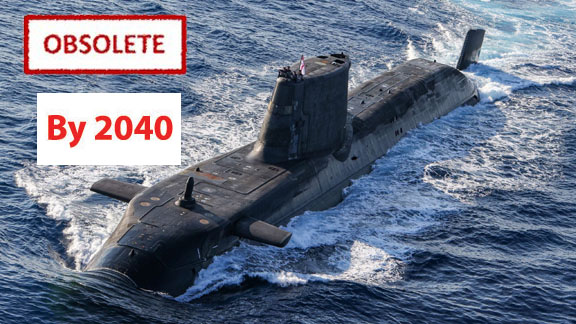
- Mega-cost, weak timelines: The AUKUS envelope, up to $368b over decades, risks obsolescence as detection tech advances. Who benefits if subs are outdated by delivery? ABC+1
- Bases and nuclear exposure: Pine Gap’s role and HMAS Stirling’s US maintenance periods deepen Australia’s role in US war-fighting networks. Is this the path to peace or a bullseye on home soil? Wikipedia+2Defence+2
- Accountability gap: Parliamentary intelligence oversight remains constrained, though reforms are proposed. Why spend the most on a kit without thorough scrutiny? Parliament of Australia+1
- Opportunity cost: The $12b Henderson spends and broader AUKUS outlays crowd out housing, health, climate resilience, and jobs. Real security starts with people. SBS
Rally line: Prepare for peace, not war. Ordinary Australians deserve safety, not pre-commitments to foreign conflicts.
Source: Australian Sovereignty and the Path to Peace – Doug Cameron | 2025 Laurie Carmichael Lecture
Policy solutions and demands
-
-
- Publish complete life cycle AUKUS costs, schedule risks, and opportunity costs in one transparent report each year.
- Cap major platform shares of the defence budget and shift funds to cyber, disaster response, and diplomacy.
- Require independent reviews of US base roles and accident liability at HMAS Stirling and Pine Gap.
- Adopt a regional peace plan with ASEAN and the Pacific that prioritises de-escalation and climate security.
- Use dollar sovereignty to guarantee jobs in housing retrofit, flood levees, and bushfire readiness, with measurable outcomes.
-
Rally line: We can do better. We must do better…………………………………………. https://socialjusticeaustralia.com.au/us-threat-to-world-peace-sovereignty/
Think Tanker Demands for AUKUS: What Australia Should do with US Submarines.
“AUKUS is only going to lead to more submarines collectively in 10, 15, 20 years, which is way beyond the window of maximum danger, which is really this decade.”
26 August 2025 Dr Binoy Kampmark, https://theaimn.net/think-tanker-demands-for-aukus-what-australia-should-do-with-us-submarines/
The moment the security pact known as AUKUS came into being, it was clear what its true intention was. Announced in September 2021, ruinous to Franco-Australian relations, and Anglospheric in inclination, the agreement between Washington, London and Canberra would project US power in the Indo-Pacific with one purpose in mind: deterring China. The fool in this whole endeavour was Australia, with a security establishment so Freudian in its anxiety it seeks an Imperial Daddy at every turn.
To avoid the pains of mature sovereignty, the successive Australian governments of Scott Morrison and Anthony Albanese have fallen for the bribe of the nuclear-powered Virginia Class SSN-774 and the promise of a bespoke AUKUS-designed nuclear–powered counterpart. These submarines may never make their way to the Royal Australian Navy. Australia is infamously bad when it comes to constructing submarines, and the US is under no obligation to furnish Canberra with the boats.
The latter point is made clear in the 2023 National Defense Authorization Act, which directs the US President to certify to the relevant congressional committees and leadership no later than 270 days prior to the transfer of vessels that this “will not degrade the United States underseas capabilities”; is consistent with the country’s foreign policy and national security interests and furthers the AUKUS partnership. Furthering the partnership would involve“sufficient submarine production and maintenance investments” to meet undersea capabilities; the provision by Australia of “appropriate funds and support for the additional capacity required to meet the requirements”; and Canberra’s “capability to host and fully operate the vessels authorized to be transferred.”
In his March confirmation hearing as Undersecretary of Defense Policy, Eldridge Colby, President Donald Trump’s chief appointee for reviewing the AUKUS pact, candidly opined that a poor production rate of submarines would place “our servicemen and women […] in a weaker position.” He had also warned that, “AUKUS is only going to lead to more submarines collectively in 10, 15, 20 years, which is way beyond the window of maximum danger, which is really this decade.”
The SSN program, as such unrealised and a pure chimera, is working wonders in distorting Australia’s defence budget. The decade to 2033-4 features a total projected budget of A$330 billion. The SSN budget of A$53-63 billion puts nuclear powered submarines at 16.1% to 19.1% more than relevant land and air domains. A report by the Strategic Analysis Australia think tank did not shy away from these implications: “It’s hard to grasp how unusual this situation is. Moreover, it’s one that will endure for decades, since the key elements of the maritime domain (SSNs and the two frigate programs) will still be in acquisition well into the 2040s. It’s quite possible that Defence itself doesn’t grasp the situation that it’s gotten into.”
Despite this fantastic asymmetry of objectives, Australia is still being asked to do more. An ongoing suspicion on the part of defence wonks in the White House, Pentagon and Congress is what Australia would do with the precious naval hardware once its navy gets them. Could Australia be relied upon to deploy them in a US-led war against China? Should the boats be placed under US naval command, reducing Australia to suitable vassal status?
Now, yet another think tanking outfit, the Washington-based Center for Strategic and International Studies (CSIS), is urging Australia to make its position clear on how it would deploy the Virginia boats. A report, authored by a former senior AUKUS advisor during the Biden administration Abraham Denmark and Charles Edel, senior advisor and CSIS Australia chair, airily proposes that Australia offers “a more concrete commitment” to the US while also being sensitive to its own sovereignty. This rather hopeless aim can be achieved through “a robust contingency planning process that incorporates Australian SSNs.” This would involve US and Australian military strategists planning to “undergo a comprehensive process of strategizing and organizing military operations to achieve specific objectives.” Such a process would provide “concrete reassurances that submarines sold to Australia would not disappear if and when needed.” It might also preserve Australian sovereignty in both developing the plan and determining its implementation during a crisis.
In addition to that gobbet of hopeless contradiction, the authors offer some further advice: that the second pillar of the AUKUS agreement, involving the development of advanced capabilities, the sharing of technology and increasing the interoperability between the armed forces of the three countries, be more sharply defined. “AUKUS nations should consider focusing on three capability areas: autonomy, long-range strike, and integrated air defense.” This great militarist splash would supposedly “increase deterrence in both Europe and the Indo-Pacific.”
In terms of examples, President Trump’s wonky Golden Dome anti-missile shield is touted as an “opportunity for Pillar II in integrated air defense.” (It would be better described as sheer science fiction, underwritten by space capitalism.) Australia was already at work with their US counterparts in developing missile defence systems that could complement the initiative. Developing improved and integrated anti-missile defences was even more urgent given the “greatly expanding rotational presence of US military forces in Australia.”
This waffling nonsense has all the finery of delusion. When it comes to sovereignty, there is nothing to speak of and Australia’s security cadres, along with most parliamentarians in the major parties, see no troubles with deferring responsibility to the US imperium. In most respects, this has already taken place. The use of such coddling terms as “joint planning” and “joint venture” only serves to conceal the dominant, rough role played by Washington, always playing the imperial paterfamilias even as it secures its own interests against other adversaries.
US bases including Pine Gap saw Australia put on nuclear alert, but no-one told Gough Whitlam.
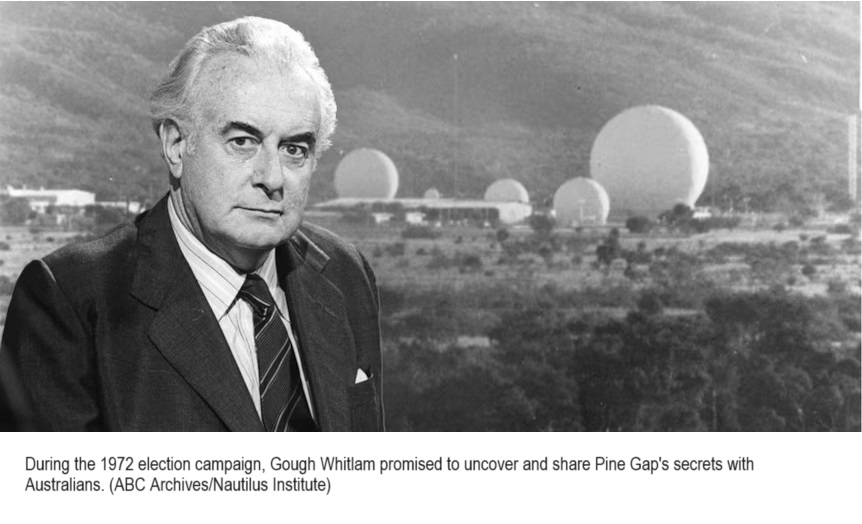
By Alex Barwick for the Expanse podcast Spies in the Outback
When Australia was placed on nuclear alert by the United States government in October 1973, there was one major problem.
No-one had told prime minister Gough Whitlam.
One of the locations placed on “red alert” was the secretive Pine Gap facility on the fringes of Alice Springs.
Officially called a “joint space research facility” until 1988, the intelligence facility was in the crosshairs with a handful of other US bases and installations around Australia.
In fact, almost all United States bases around the world were placed on alert as conflict escalated in the Middle East. Whitlam wasn’t the only leader left out of the loop.
A prime minister in the dark
“Whitlam got upset that he hadn’t been told in advance,” Brian Toohey, journalist and former Labor staffer to Whitlam’s defence minister Lance Barnard, said.
Toohey said Whitlam should have been told that facilities including North West Cape base in Western Australia, and Pine Gap were being put on “red alert”.
“There had been a new agreement knocked out by Australian officials with their American counterparts, that Australia would be given advance warning.”
They weren’t.
Suddenly, the world was on the brink of nuclear war.
Why were parts of Australia on ‘red alert’?
The Cold War superpowers backed opposing sides in the Yom Kippur War.
The Soviet Union supported Egypt and the United States was behind Israel.
As the proxy war escalated in October 1973, United States secretary of state Henry Kissinger believed the crisis could go nuclear and issued a DefCon 3 alert.
A DefCon 3 alert saw immediate preparations to ensure the United States could mobilise in 15 minutes to deliver a nuclear strike.
The aim was to deter a nuclear strike by the Soviets.
And, it simultaneously alerted all US bases including facilities in Australia that a nuclear threat was real.
This level of alert has only occurred a few times, including immediately after the September 11 attacks.
Politics, pressure and protest
The secretive intelligence facility in outback Australia caused Whitlam more trouble beyond the red alert.
During the 1972 election campaign, the progressive politician had promised to lift the lid on Pine Gap and share its secrets with all Australians.
“He gave a promise that he would tell the Australian public a lot more about what Pine Gap did,” Toohey said.
But according to Toohey, the initial briefing provided to Whitlam and Barnard by defence chief Arthur Tange left the prime minister with little to say.
“Tange came along and he said basically that there was nothing they could be allowed to say. And that was just ridiculous,” Toohey said.
“He said, the one thing he could tell them was the bases could not be used in any way to participate in a war. Well, of course they do.”
Whitlam would cause alarm in Washington when he refused to commit to extending Pine Gap’s future.
In 1974 on the floor of parliament he said:
“The Australian government takes the attitude that there should not be foreign military bases, stations, installations in Australia. We honour agreements covering existing stations. We do not favour the extension or prolongation of any of those existing ones.”
According to Toohey, “the Americans were incredibly alarmed about that”.
“As contingency planning, the whole of the US Defence Department said that they would shift it to Guam, a Pacific island that America owned,” he said.
And the following year, allegations would emerge that the CIA were involved in the prime minister’s dismissal on November 11, 1975.
Former Labor defence minister Kim Beazley labels the scuttlebutt as “bulldust”.
“I’d heard that stuff about the Americans getting frightened and therefore getting involved. I put the matter to study, I got a couple of senior public servants to have a look at it, nothing there, nothing there.”
Despite no conclusive evidence, the rumours continue to swirl.
Episode Two of the ABC’s Expanse podcast: Spies in the Outback is now available. This episode explores the wild political tensions surrounding the spy base in Australia’s backyard. Listen here.
Australia to chart its own course on Palestinian statehood, without Trump’s say-so.

Trump’s return to the White House has already shifted global diplomatic currents, with several leaders recalibrating their positions to maintain favour. By declaring that Australia’s decision will not be subject to U.S. approval, Albanese is signalling a willingness to resist that pressure – even if it means copping criticism from one of the country’s most powerful media empires.
9 August 2025 Michael Taylor, https://theaimn.net/australia-to-chart-its-own-course-on-palestinian-statehood-without-trumps-say-so/
Australia’s decision on whether to recognise a Palestinian state will not be dictated by Washington – and that, apparently, was enough to attract howls of condemnation and disapproval from sections of the Murdoch media.
Prime Minister Anthony Albanese confirmed this week that he was unlikely to consult with U.S. President Donald Trump before making any decision on recognition. It’s a simple case of Australia acting in Australia’s national interest, emphasising that the issue will be decided in Canberra, not in the White House.
The reaction from the Murdoch media was swift and fierce. Headlines and opinion columns framed Albanese’s stance as a diplomatic snub to a “key ally,” warning of potential damage to the Australia–U.S. relationship. The coverage fits a familiar pattern: when leaders diverge from U.S. policy – especially under a Republican president – Murdoch media frequently portrays it as reckless or unpatriotic.
At the heart of the dispute is a deeper question of sovereignty. Critics argue that Australia should stand firm on charting its own foreign policy, particularly on sensitive Middle East matters, which have been shaped for decades by complex international law and humanitarian concerns. Recognition of a Palestinian state has long been debated within Australia, with supporters citing the need for a two-state solution and opponents warning of diplomatic repercussions with Israel and the United States.
Trump’s return to the White House has already shifted global diplomatic currents, with several leaders recalibrating their positions to maintain favour. By declaring that Australia’s decision will not be subject to U.S. approval, Albanese is signalling a willingness to resist that pressure – even if it means copping criticism from one of the country’s most powerful media empires.
In a political environment where foreign policy is often filtered through the prism of domestic politics and media narratives, Albanese’s comments draw a sharp line: Australia will make its own call. The real question is whether the public sees that as principled independence – or unnecessary defiance.
Either way, the stance taps into a deeper tradition in Australian foreign policy: the belief that while alliances matter, sovereignty matters more. From Whitlam’s recognition of China to Howard’s refusal to sign the Kyoto Protocol, Australia has occasionally charted its own course against the preferences of powerful allies. Albanese’s decision – or even just his refusal to seek Trump’s blessing – may yet be remembered as another of those moments.
AUKUS delusions. More rivets pop in submarine drama.
by Rex Patrick | Aug 4, 2025 https://michaelwest.com.au/aukus-delusions-more-rivets-pop-in-submarine-drama/
Announcing a new one-sided subs-deal with the UK, resisting calls for a review, ignoring a US Admiral’s caution, while building hundreds of houses for US military. AUKUS is having a shocker. Former senator and submariner Rex Patrick reports.
On Friday, 25 July, Defence Minister Richard Marles and Foreign Minister Penny Wong stood beside their UK counterparts at a brief press conference in Sydney. They answered questions on a new 50-year treaty-level agreement between the UK and Australia related to the AUKUS submarine scheme.
The journalists who attended the press conference were not in possession of the text of the agreement, which was not actually signed by Marles and UK Defence Secretary John Healey until the following day, and not in Sydney but rather in Geelong. Without the text of the treaty being released, no hard questions could be asked (see below).
Marles apparently thought it more important to have the text signed a day after the ministerial discussions so that the “Nuclear-Powered Submarine Partnership and Collaboration Agreement between the Government of Australia and the Government of Great Britain and Northern Ireland” could be informally named after his hometown, as “the Geelong Treaty”.
The whole stage-managed affair was one that would have left everyone feeling warm and fuzzy in the halls of Parliament, where rhetoric counts for more than reality.
Meanwhile, in US Congress
About the same time, the Geelong Treaty was being announced, news was breaking in Australia of the testimony to the United States Senate of the nominee to serve as the next US Chief of Navy, Admiral Daryl Caudle. What he had to say did not augur well for Australia eventually being provided with three US Virginia-class nuclear-powered attack submarines as envisaged under AUKUS.
“The question of Australia’s ability to conduct undersea warfare is not in question by me or by anyone,” the admiral told the Senate Armed Services Committee’s seapower subcommittee. “But as you know, the delivery pace is not where it needs to be to make good on the Pillar 1 of the AUKUS agreement, which is currently under review by our Defense Department”.
Caudle testified that “There are no magic beans.”
“We do have to understand whether or not the industrial base can produce the submarines required so that we can make good on the actual pact that we made with the U.K. and Australia, which is around 2.2., 2.3 Virginia-class submarines per year.”
“That’s going to require a transformational improvement, not a 10 percent improvement, not a 20 percent, a 100 percent improvement.”
Of course, none of this was really news. The US Congressional Research Service and numerous other well-informed observers have been spelling out these facts for some time, but Prime Minister Anthony Albanese and Defence Minister Marles remain wilfully blind to the facts. Having put all their political chips on AUKUS, they don’t want to see or hear anything negative. Instead of a pause, they’ve been writing taxpayer-funded cheques to gift United States shipyards.
They quietly slipped the US Government another non-refundable $800M last week – following on from a non-refundable $800M in February.
No control, no warranty
By Monday, the ‘Geelong Treaty’ had been tabled in the Parliament.
A read of the treaty documents revealed the completely lop-sided nature of the partnership with the UK. Whilst Australia gets to have a bit of a say, the UK get to decide the design of SSN-AUKUS. Australia will be buying and building a British design, and the success, delivery schedule, and cost will be absolutely dependent on the United Kingdom’s currently run-down and struggling submarine industrial base.
And if it doesn’t work in the end, there is no warranty.
During the election campaign, a number of cross-benchers and the Greens started calling for an AUKUS inquiry, a call repeated this week by Senator David Shoebridge. He lodged a motion to establish a Select Committee into what is our most expensive and purportedly most important Defence procurement project ever.
The inquiry motion was originally set to be voted on on Tuesday, but as the week progressed, Senator Shoebridge kept postponing it. That’s a signal that he didn’t have the numbers to get a ‘yes’ vote. The Labor Party has already ruled out an inquiry, and it looks like the Senator is trying to get the Liberal Party on board.
We’ll now find out the inquiry’s fate on 25 August. The Liberal Party are unlikely to support the inquiry. They want to criticise the government’s handling of the US alliance, but they have no intention of questioning AUKUS, which, after all, was first conceived by their man, Prime Minister Scott Morrison.
It’s an all-eggs-in-the-one-$368B-basket capability acquisition full of risk – but it appears as though there will be no oversight.
As the Parliament appears reluctant to review AUKUS, in true Trump tariff negotiation style, the US Defence Department announced its review of AUKUS would not be completed until “fall” (the next three months).
Housing bill waved through
To add icing on the cake, the government’s first Housing Bill in the 48th Parliament, voted through the House on Wednesday by the duopoly, was one to build houses, not for Australians, but for foreign military personnel and their families in Perth.
As Senator Shoebridge tried to have this Bill referred to a Senate Committee, he laid it out:
“In the last parliament, we saw Labor coming up with a million reasons they couldn’t do anything on public housing. They couldn’t help people out on rents, they couldn’t build public housing, and they kept saying it was all the Greens’ fault for not supporting their crap bills. Then, in this parliament, they start with a public housing bill. Well done, Labor! You bring a public housing bill into the chamber. You push it through the lower house. And do you know what public housing they’re building? They’re building public housing for US troops under AUKUS. That’s their public housing bill.”
“Please, minister, you haven’t explained in the bill how much this is going to cost; is it going to come from the Defence budget or some other budget?”
No answer was given, and no referral to a committee occurred.
The AUKUS week closed with some lobbying on Sky by former Secretary of Home Affairs, Michael Pezzulo. Pezzulo is officially disgraced, but is not without expertise on national security issues.
Pezzulo does know something about the financing of Australia’s defence capabilities, and he issued a blunt warning about the scale and urgency of Australia’s AUKUS commitments, saying the nuclear submarine program will demand a national effort on par with Medicare.
“It’s like having the military version of Medicare. It’s something that’s got to become an all-consuming, focused effort that transcends Commonwealth, state, territory governments into industry, academia, the training pipeline through both universities and vocational educational training institutions.”
All that statement does is roll out the trifecta. The US can’t deliver Virginia Class submarines to us; the UK submarine industry is a cluster fiasco; and Australia’s not ready. And, we will have to make AUKUS submarines our number one national priority if we are to have any chance of success.
In 2023 Paul Keating – without knowledge of the total $4.7B that is to be gifted to the United States, or the similar amount that is being gifted to the UK, nor the facts that the US is unlikely to deliver, and that we really don’t have any rights in relation to the SSN-AUKUS – called it “the worst deal in all history”.
Knowing what we know now, Keating was wrong. He should have said “dumbest deal in all history”.
Assange Joins Historic Anti-Genocide March Across Sydney’s Harbour Bridge
By Joe Lauria, Consortium News, 3 August 25, https://consortiumnews.com/2025/08/03/assange-joins-historic-anti-genocide-march-across-sydneys-harbour-bridge/
Julian Assange joined at least 90,000 and as many as 300,000 people who marched across Australia’s most famous bridge on Sunday to protest Israel’s genocide in Gaza.
Wikileaks founder Julian Assange, his wife Stella and brother Gabriel Shipton joined Australian journalist Mary Kostakidis and, according to police estimates, 90,000 other people, but according to organizers as many as 300,000, to march across Sydney’s Harbour Bridge on Sunday to demand an end to Israel’s genocide in Gaza.
The Sydney Morning Herald reported:
“At least 90,000 pro-Palestine protesters walked across Sydney Harbour Bridge and into history through the pelting rain, as a larger crowd than expected used the landmark as a symbol, bringing the city to a standstill and leading police to sound the alarm of a potential crowd crush.
In the face of the sheer size of the protest against the Israeli government’s actions in Gaza, which organisers say drew between 200,000 and 300,000 people, police were forced to ditch plans for the march to end at North Sydney and redirected the crowd. … The last major march across the bridge was 25 years ago, when 250,000 people marched in support of reconciliation [with Indigenous Australians.]”
Kostakidis is in court accused of racial hatred by the Zionist Federation of Australia for her social media reporting and commentary critical of the Israeli government’s genocide in Gaza.
[Consortium News was on the bridge and will be providing a full video report.].
The New South Wales premiere and police both tried to stop the march from happening by making protestors liable to arrest for blocking traffic. It took a Supreme Court ruling on Saturday to let it go ahead. About four times as many people turned up than organizers had expected — even in a driving winter rain — because of the concerted effort to stop it, an organizer told The Sydney Morning Herald.
The paper quoted Palestine Action Group organiser Josh Lees as saying said the march was “’even bigger than we dreamt of’ after people travelled from across the country to attend. He called the event a ‘monumental and historic’ success. ‘Today was just a huge display of democracy,’ he said.”
The massive turnout shows the revulsion a good number of Australians feel for Israel’s ongoing slaughter and for their government’s complicity. “Netanyahu/Albanese you can’t hide. Stop supporting genocide,” the protestors chanted.
Police were not prepared for the outpouring of outrage. The Herald said:
“NSW Police acting deputy commissioner Peter McKenna said the march came ‘very close’ to a ‘catastrophic situation’ and that officers had been forced to make a snap decision to turn tens of thousands around to avoid a crowd crush as people exited for North Sydney. McKenna said part of the problem was the organisers’ application to march stated that 10,000 people were likely to attend, not the 90,000 people the police estimated turned up.”
Dare To Hope
Caitlin Johnstone, Aug 04, 2025, https://www.caitlinjohnst.one/p/dare-to-hope?utm_source=post-email-title&publication_id=82124&post_id=170050544&utm_campaign=email-post-title&isFreemail=true&r=1ise1&triedRedirect=true&utm_medium=email
At least 100,000 Australians, including WikiLeaks founder Julian Assange, marched for Gaza across the Sydney Harbour Bridge in the pouring rain at a demonstration on Sunday.
It wasn’t that long ago when I sincerely wondered if we’d ever see Assange’s face again, let alone in public, let alone in Sydney, let alone heading up what had to be one of the largest pro-Palestine rallies ever held in Australia. Dare to be encouraged. The light is breaking through.
The western political/media class is fuming with outrage about images of Israeli hostages who are severely emaciated, which just says so much about how dehumanized Palestinians are in western society. Everyone stop caring about hundreds of thousands of starving Palestinians, it turns out two Israeli hostages are starving in the same way for the same reason.
Israel’s Foreign Ministry has announced that in order to improve “public diplomacy” efforts the term “hasbara” will no longer be used, because people have come to associate it with lies and propaganda.
The Times of Israel reports:
“Long referred to as hasbara, a term used to denote both public relations and propaganda that has been freighted with negative baggage in recent years, the ministry now brands its approach as toda’a — which translates to ‘awareness’ or ‘consciousness’ — an apparent shift toward broader, more proactive messaging.
That “negative baggage” would of course be public disgust at the nonstop deluge of lies that Israel and its apologists have been spouting for two years to justify an act of genocide. Westerners have grown increasingly aware that Israel and its defenders have a special word for their practice of manipulating public narratives about their beloved apartheid state, so they’re changing the word.
Simply stopping the genocide is not considered as an option. Simply ceasing to lie is not considered as an option. They’re just changing the word they use for their lies about their genocide.
One of the reasons Israel’s supporters love to hurl antisemitism accusations at its critics is because it’s a claim that can be made without any evidence whatsoever. It’s not an accusation based on facts, it’s an assertion about someone’s private thoughts and feelings, which are invisible. Support for Israel doesn’t lend itself to arguments based on facts, logic and morality, so they rely heavily on aggressive claims about what’s happening inside other people’s heads which cannot be proved or disproved.
It’s entirely unfalsifiable. I cannot prove that my opposition to an active genocide is not in fact due to an obsessive hatred of a small Abrahamic religion. I cannot unscrew the top of my head and show everyone that I actually just think it’s bad to rain military explosives on top of a giant concentration camp full of children, and am not in fact motivated by a strange medieval urge to persecute Jewish people. So an Israel supporter can freely hurl accusations about what’s going on in my head that I am powerless to disprove.
It’s been a fairly effective weapon over the years. Campus protests have been stomped out, freedom of expression has been crushed, entire political campaigns have been killed dead, all because it’s been normalized to make evidence-free claims about someone’s private thoughts and feelings toward Jews if they suggest that Palestinians deserve human rights.
A Harvard professor of Jewish studies named Shaul Magid recently shared the following anecdote:
“I once asked someone I casually know, an ardent Zionist, ‘what could Israel do that would cause you not to support it?’. He was silent for a moment before looking at me and said, ‘Nothing.’”
This is horrifying, but facts in evidence indicate that it’s also a very common position among Zionists. If you’re still supporting Israel at this point, there’s probably nothing it could do to lose your support.
Anthony Albanese says Israel’s denial of starvation in Gaza ‘beyond comprehension’
ABC News, By national affairs correspondent Jane Norman, 29 July 25
In short:
Anthony Albanese has expressed his astonishment at claims made by Israel’s prime minister that “there is no starvation in Gaza”, telling Labor MPs that statement is “beyond comprehension”.
The prime minister made the comments in response to a question from a Labor backbencher about when Australia would move to recognise Palestinian statehood.
What’s next?
Overnight, US President Donald Trump also appeared to dispute Mr Netanyahu’s statement, but Opposition Leader Sussan Ley later declined to say whether she believed starvation was occurring.
Anthony Albanese has expressed his astonishment at claims made by Israel’s prime minister that “there is no starvation in Gaza”, telling Labor MPs that statement is “beyond comprehension”.
The prime minister made the comments in response to a question from a Labor backbencher about when Australia would move to recognise Palestinian statehood.
Mr Albanese — who has been sharpening his criticism of Israel’s actions in the Gaza Strip — appeared to directly criticise Israeli Prime Minister Benjamin Netanyahu, who posted a clip to X saying “there is no starvation in Gaza, no policy of starvation in Gaza”.
That assertion was repeated in Canberra yesterday by Israeli’s deputy ambassador to Australia, Amir Meron.
“Those claims that there’s no starvation in Gaza are beyond comprehension,” Mr Albanese told the Labor caucus, according to a spokesperson.
The prime minister outlined Australia’s pre-conditions for recognition, including “democratic reforms” in the Palestinian territory, but indicated these obstacles were not insurmountable, referencing a famous quote from Nelson Mandela that “it always seems impossible until it’s done”.
……………………………………………………….. The prime minister’s intervention came amid growing international concern about both the number of deaths at aid centres managed by the Israeli-backed Gaza Humanitarian Foundation and the level of hunger in the enclave………………………………………………………………… https://www.abc.net.au/news/2025-07-29/pm-criticises-israels-denial-of-starvation-in-gaza/105585494
Out of Step with the World: Australia’s Refusal to Recognise Palestine is a Moral Failure
27 July 2025, Michael Taylor, https://theaimn.net/out-of-step-with-the-world-australias-refusal-to-recognise-palestine-is-a-moral-failure/
In a world that is finally waking up to the urgent need for justice and peace in the Middle East, Australia has chosen silence and hesitation. While 147 of the 193 United Nations member states have formally recognised the State of Palestine – including France, Spain, Ireland, and Norway – Australia continues to sit on its hands. This refusal is not only out of step with global momentum; it is out of step with the values of fairness, dignity, and the will of the Australian people.
Recognition of Palestine is not an endorsement of violence, nor is it a rejection of Israel’s right to exist. It is a simple acknowledgement that the Palestinian people – stateless for 76 years – deserve the same rights and recognition afforded to others. It is a step toward equality, toward dialogue, and ultimately toward peace.
Yet Australia clings to a failed policy of “not yet” – as though Palestinian dignity must forever be postponed for fear of offending a powerful ally. In doing so, our government aligns itself not with justice or international law, but with the shrinking minority of countries who continue to look the other way.
This decision does not reflect the views of the Australian public. Poll after poll shows a majority of Australians support Palestinian statehood and an end to the occupation. We are a people who believe in the fair go, in standing up for the underdog, in peace over power. And yet, our government refuses to act – cowed by geopolitical caution and domestic political pressure.
Refusing to recognise Palestine is not a neutral act. It is a political choice – one that undermines the international consensus, emboldens the status quo, and tells the Palestinian people that their suffering is invisible.
Australia once stood tall in the fight against apartheid. We helped build international pressure that led to its end in South Africa. Why, then, do we hesitate now?
If we truly believe in a two-state solution – if we truly believe in peace – then we must recognise both states. It is time for Australia to find its moral courage and join the vast majority of the world in recognising Palestine.
Justice delayed is justice denied.
1 This month
17 October, Free Public Talk on Nuclear Issues in South Australia
David Noonan will speak on public interest concerns over the new Roxby Downs Indenture Act 2026 on BHP copper-uranium mining and ore processing in SA, and on how AUKUS may face SA with a High-Level nuclear waste agenda.
Dr Jim Green will discuss international developments in the field of nuclear power including ‘small modular reactors’ and Generation 4 ‘advanced’ nuclear reactor concepts.


Help Aunty Sue Protect Her Land and Sacred Sites From Destructive Rocket Testing.
.
Australians deserve the truth
about
AUKUS – https://aukuspublicinquiry.com/

PETITION – To: Prime Minister Anthony Albanese and the Australian Labor Government

of the week – Australians for War Powers Reform (AWPR)
To see nuclear-related stories in greater depth and intensity

