Will Donald Trump kill US-UK-Aussie sub defense deal?

The landmark defense agreement between the U.S, U.K. and Australia could be in jeopardy with the maverick Republican back in the White House.
Politico, December 9, 2024, By Stefan Boscia and Caroline Hug
LONDON — There are few issues on which we do not know Donald Trump’s opinion.
After thousands of hours of interviews and speeches over the past eight years, the president-elect has enlightened us on what he thinks on almost any topic which enters his brain at any given moment.
But in the key area of defense, there are some gaps — and that’s leading global military chiefs to pore over the statements of the president’s allies and appointees to attempt to glean some clues, specifically over the $369 billion trilateral submarine program known as AUKUS he will inherit from Joe Biden.
Trump does not appear to have publicly commented on the AUKUS pact — named for its contingent parts Australia, the United Kingdom and the United States — which would see the U.S. share technology with its partners to allow both countries to build state-of-the-art nuclear submarines by the 2040s.
This uncertainty has left ministers and government officials in London and Canberra scrambling to discover how the Republican is likely to view the Biden-era deal when he returns to the White House in January.
Two defense industry figures told POLITICO there were serious concerns in the British government that Trump might seek to renegotiate the deal or alter the timelines.
This is because the pact likely requires the U.S. to temporarily downsize its own naval fleet as a part of the agreement — something Trump may interpret as an affront to his “America First” ideology.
Looking east
There is hope in Westminster that Trump would be in favor of a military project which is an obvious, if unspoken, challenge to China.
The deal would see American-designed nuclear submarines right on China’s doorstep and would form a part of Australia’s attempts to bolster its military might in the Indo-Pacific.
When former U.K. Prime Minister Boris Johnson said in September 2021 that the deal was not “intended to be adversarial toward China,” President Xi Jinping simply did not believe him.
The Chinese leader said AUKUS would “undermine peace” and accused the Western nations of stoking a Cold War mentality.
Mary Kissel, a former senior adviser to Trump’s ex-Secretary of State Mike Pompeo, said “you can assume Trump two will look a lot like Trump one” when it comes to building alliances with other Western countries against China.
“We revivified the Quad [Australia, India, Japan and the U.S.], got our allies to bolster NATO funding and worked to prevent China from dominating international institutions,” she said.
However, the deal also forces the U.S. government to sell Australia three to five active Virginia attack submarines, the best in the U.S. Navy’s fleet, by the early 2030s as a stopgap until the new AUKUS subs are built.
Is America first?
This coincides with a time where there is a widely recognized crunch on America’s industrial defense capacity.
In layman’s terms, the U.S. is currently struggling to build enough submarines or military equipment for its own needs.
One U.K. defense industry figure, granted anonymity to speak freely, said there was “a lot of queasiness” in the U.K. government and a “huge amount of queasiness in Australia” about whether Trump would allow this to happen.
“There is a world in which the Americans can’t scale up their domestic submarine capacity for their own needs and don’t have spare to meet Australia’s needs,” they said.
“If you started pulling on one thread of the deal, then the rest could easily fall away.”
One U.K. government official played down how much London and Canberra are worried about the future of the deal, however.
They said the U.K. government was confident Trump is positive about the deal and that the U.S. was “well equipped with the number of submarines for their fleet.”………………………………………………………………………………………………………………………………..
‘Everyone’s a winner
This attempted U.K.-China reset will likely be high on the list of talking points when Healey meets with his Australian counterpart Richard Marles next month in London for an “AUKMIN” summit.
The Australian Labor government, after all, has conducted a similar reset with the Chinese government since coming to power in 2022 after relations hit a nadir during COVID.
Also at the top of the agenda will be how to sell the incoming president on the AUKUS deal in a positive way.
A second defense industry insider said the British and Australian governments should try to badge the deal in terms that make it look like Trump has personally won from the deal.
“Everybody is worried about America’s lack of industrial capacity and how it affects AUKUS,” they said.
“He is also instinctively against the idea of America being the world’s police and so he may not see the value in AUKUS at all, but they need to let him own it and make him think he’s won by doing it.”………………………………………………………………………..
Pillar II
While the core nuclear submarine deal will get most of the headlines in the coming months, progress on the lesser-known Pillar II of AUKUS also remains somewhat elusive.
Launched alongside the submarine pact, Pillar II was designed to codevelop a range of military technologies, such as quantum-enabled navigation, artificial intelligence-enhanced artillery, and electronic warfare capabilities.
One Pillar II technology-sharing deal was struck on hypersonic missiles just last month, but expected progress on a range of other areas has not transpired.
Ambitions to admit Japan to the Pillar II partnership this year have also gone unfulfilled……………………………………………………………
https://www.politico.eu/article/donald-trump-aukus-kill-us-uk-aussie-sub-defense-deal/
Canada’s nuclear waste organisation joins forces with the Australian Radioactive Waste Agency
World Nuclear News, November 25, 2024
Canada’s Nuclear Waste Management Organization said it recently signed a
new co-operation agreement with the Australian Radioactive Waste Agency
at a ceremony in the Australian Parliament in Canberra. The NWMO and
ARWA will collaborate on a range of issues related to the safe
management of radioactive waste, including the important topic of
reconciliation with Indigenous peoples.
The NWMO said it was honored to
learn from the experiences of Aboriginal Australians and Torres Strait
Islanders during the visit and it “looks forward to a relationship of
partnership and knowledge-sharing”.
Trump, AUKUS and Australia’s Dim Servitors
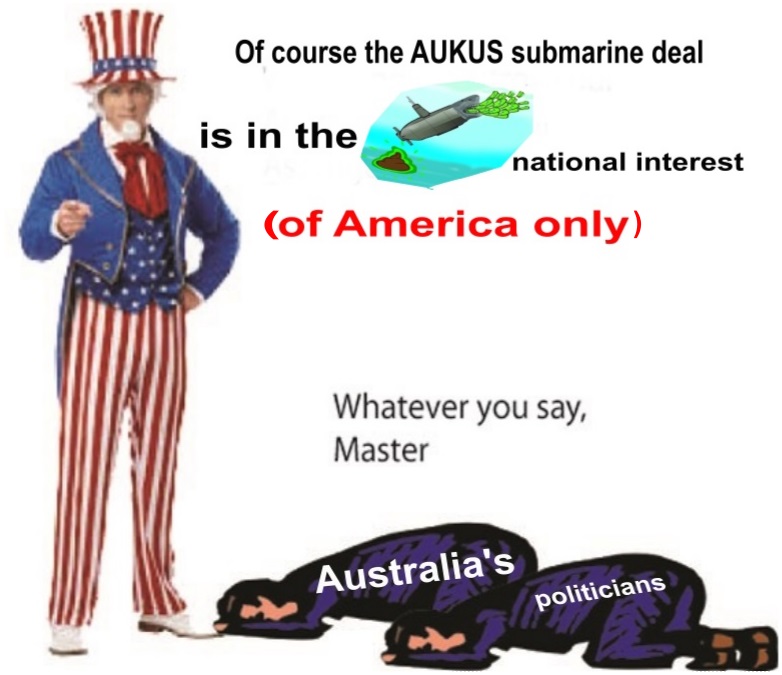
November 22, 2024, Dr Binoy Kampmark, https://theaimn.com/trump-aukus-and-australias-dim-servitors/
There is something enormously satisfying about seeing those in the war racket worry that their assumptions on conflict have been upended. There they were, happily funding, planning and preparing to battle against threats imagined or otherwise, and there comes Donald Trump, malice and petulance combined, to pull the rug from under them again.
What is fascinating about the return of Trump to the White House is that critics think his next round of potentially rowdy occupancy is going to encourage, rather than discourage war. Conflict may be the inadvertent consequence of any number of unilateral policies Trump might pursue, but they do not tally with his anti-war platform. Whatever can be said about his adolescent demagogic tendencies, a love of war is curiously absent from the complement. A tendency to predictable unpredictability, however, is.
The whole assessment also utterly misunderstands the premise that the foolishly menacing trilateral alliance of AUKUS is, by its nature, a pact for the making of war. This agreement between Australia, the UK and the US can hardly be dignified as some peaceful, unprovocative enterprise fashioned to preserve security. To that end, President Joe Biden should shoulder a considerable amount of the blame for destabilising the region. But instead, we are getting some rather streaky commentary from the security wonks in Australia. Trump spells, in the pessimistic words of Nick Bisley from La Trobe University, “uncertainty about just what direction the US will go.” His policies might, for instance, “badly destabilise Asia” and imperil the AUKUS, specifically on the provision of nuclear–powered submarines to the Royal Australian Navy. On the last point, we can only hope.
The Australians, being willing and unquestioning satellites of US power, have tried to pretend that a change of the guard in the White House will not doom the pact. Australian Foreign Minister Penny Wong expressed a “great deal of confidence” that things would not change under the new administration, seeing as AUKUS enjoyed bipartisan support.
Australia’s ambassador to the US, Kevin Rudd, is also of the view that AUKUS will survive into the Trump administration as it “strengthens all three countries’ ability to deter threats, and it grows the defence industrial base and creates jobs in all three countries.”
Another former ambassador to Washington, Arthur Sinodinos, who also occupies the role of AUKUS forum co-chair, has pitched the viability of the trilateral pact in such a way as to make it more appealing to Trump. Without any trace of humour, he suggests that tech oligarch Elon Musk oversee matters if needed. “If Musk can deliver AUKUS, we should put Musk in charge of AUKUS, and I’m not joking, if new thinking is needed to get this done,” advises the deluded Sinodinos.
The reasoning offered on this is, to put it mildly, peculiar. As co-head of the proposed Department of Government Efficiency, Musk, it is hoped, will apply “business principles” and “new thinking”. If the Pentagon can “reform supply chains, logistics, procurement rules, in a way that means there’s speed to market, we get minimum viable capability sooner, rather than later.”
These doltish assessments from Sinodinos are blatantly ignorant of the fact the defence industry is never efficient. Nor do they detract from the key premise of the arrangements. Certainly, if an anti-China focus is what you are focusing on – and AUKUS, centrally and evidently, is an anti-China agreement pure and simple – there would be little reason for Trump to tinker with its central tenets. For one, he is hankering for an even deeper trade war with Beijing. Why not also harry the Chinese with a provocative instrument, daft as it is, that entails militarising Australia and garrisoning it for any future conflict that might arise?
Whatever the case, AUKUS has always been contingent on the interests of one power. Congress has long signalled that US defence interests come first, including whether Australia should receive any Virginian class submarines to begin with.Trump would hardly disagree here. “Trump’s decisions at each phase of AUKUS cooperation will be shaped by zero-sum balance sheets of US interest,” suggests Alice Nason of the University of Sydney’s US Studies Centre rather tritely.
If Trump be so transactional, he has an excellent example of a country utterly willing to give everything to US security, thereby improving the deal from the side of Washington’s military-industrial complex. If there was one lingering, pathological complaint he had about Washington’s NATO allies, it was always that they were not doing enough to ease the burdens of US defence. They stalled on defence budgets; they quibbled on various targets on recruitment.
This can hardly be said of Canberra. Australia’s government has abandoned all pretence of resistance, measure or judgment, outrageously willing to underwrite the US imperium in any of its needs in countering China, raiding the treasury of taxpayer funds to the tune of a figure that will, eventually, exceed A$368 billion. Rudd openly acknowledges that Australian money is directly “investing into the US submarine industrial base to expand the capacity of their shipyards.” It would be silly to prevent this continuing windfall. It may well be that aspect that ends up convincing Trump that AUKUS is worth keeping. Why get rid of willing servitors of such dim tendency when they are so willing to please you with cash and compliments?
Signing US/UK nuclear deal would shred Australia’s credibility: Turnbull
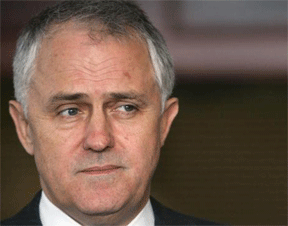
Australia would kill its credibility internationally if it were to embrace domestic nuclear power to please key foreign allies, Malcolm Turnbull has warned, accusing the Coalition of gaslighting voters over power prices.
Amid a heated fight in parliament over a nuclear agreement signed by the United States and the United Kingdom at the COP29 talks in Azerbaijan this week, the former prime minister said Australia had distinct advantages on renewable energy and must make decisions in its national interest.
“The job of the Australian prime minister is to stand up for Australia and recognise Australia has distinct interests and distinct characteristics,” Mr Turnbull told The Australian Financial Review.
“Simply falling into line and being some sort of sycophantic copier of everybody else’s agendas doesn’t bring you in any respect.”
The former Liberal leader’s comments followed Britain and the US signing a deal for civil nuclear collaboration at the summit in Baku, part of plans to combine billions of dollars for research and development of new technologies.
An early version of the British government’s statement announcing the deal said Australia would be among a number of other countries signing on. But the UK government conceded on Tuesday that Australia had been included in the statement erroneously.
The original statement, viewed by the Financial Review, said countries signing on would include Canada, France, Japan, South Korea, South Africa, China, Switzerland and Australia.
But the updated agreement, published online by UK Energy Secretary Ed Miliband, has the names of participating countries removed and says only that Russia will remain excluded because of its invasion of Ukraine.
A spokeswoman for Energy Minister Chris Bowen, who is representing Australia at the talks, ruled out any participation, noting Australia had no nuclear energy industry and a federal ban on nuclear power is in place.
The government said Australia would remain as an observer to the deal, and support scientists in other nuclear research fields.
In question time on Wednesday, Acting Prime Minister Richard Marles accused the Coalition of exaggerating the significance of the statement.
“Every expert out there makes it completely clear that what we are awaiting is a 20-year duration before we could reasonably expect to have nuclear energy in this country, were we to go down that path,” he said.
“Even then, all we are talking about is a contribution of 4 per cent to the electricity grid.
“What we are pursuing is policies in the here and now, which are being pursued around the world: firmed renewable energy, which is the cheapest form of energy, which is being brought online around the world.”
Mr Dutton accused the government of a stubborn refusal to consider nuclear, as countries including South Korea, Turkey and Nigeria had joined another pledge to triple global nuclear power by 2050. He said nuclear could “reduce emissions and deliver energy at a reasonable cost”.
Long a critic of Mr Dutton’s leadership, Mr Turnbull said nuclear would not complement renewable energy.
“That is nonsense. That’s gaslighting, quite frankly,” he said. “What complements renewables is something that is flexible. We have 4 million households in Australia. Over a third of all Australian homes have got solar panels on. It’s the highest percentage of solar household solar penetration in the world.”
Tom McIlroy is the Financial Review’s Canberra Bureau Chief based in the press gallery at Parliament House. He was previously the AFR’s political correspondent. Connect with Tom on Twitter. Email Tom at thomas.mcilroy@afr.com
Paul Smith edits the technology coverage and has been a leading writer on the sector for 20 years. He covers big tech, business use of tech, the fast-growing Australian tech industry and start-ups, telecommunications and national innovation policy. Connect with Paul on Twitter. Email Paul at psmith@afr.com
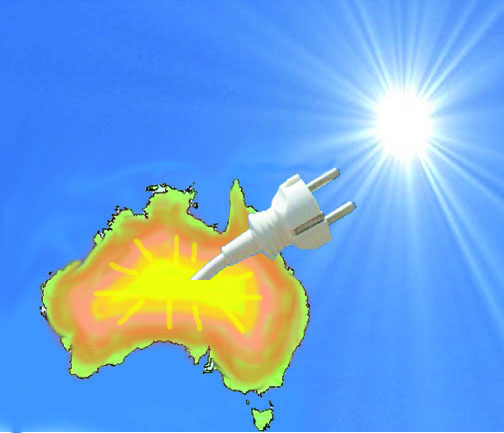
Albanese government gives firm ‘no’ to joining UK-US agreement to advance nuclear technology
The Conversation, November 19, 2024, Michelle Grattan, Professorial Fellow, University of Canberra
The Albanese government has been put on the spot by a new agreement – which it has declined to join – signed by the United Kingdom and the United States to speed up the deployment of “cutting edge” nuclear technology.
The original version of the British government’s press release announcing the agreement said Australia, among a number of other countries, was expected to sign it.
But the reference was removed from the statement.
The UK Energy Secretary Ed Miliband and the US deputy Secretary of Energy David Turk signed the agreement in Baku during COP29…….
A spokesperson for Energy Minister Chris Bowen, who is at the COP meeting, said: “Australia is not signing this agreement as we do not have a nuclear energy industry.
“We recognise that some countries may choose to use nuclear energy, depending on national circumstances.
“Our international partners understand that Australia’s abundance of renewable energy resources makes nuclear power, including nuclear power through small modular reactors, an unviable option for inclusion in our energy mix for decarbonisation efforts.”
Australia would remain as observers to the agreement to continue to support its scientists in other nuclear research fields, the spokesperson said………
In parliament, acting Prime Minister Richard Marles said for Australia to pursue a path of nuclear energy would add $1200 to the bills of each household in this country.
………………………Update: UK government seeks to clear things up
Later The Guardian reportred: “The UK government has conceded it made a mistake in including Australia in a list of countries that has signed up to a US-UK civil nuclear deal”. https://theconversation.com/albanese-government-gives-firm-no-to-joining-uk-us-agreement-to-advance-nuclear-technology-244041
B-2 Bomber Strikes in Yemen and their significance for Australia
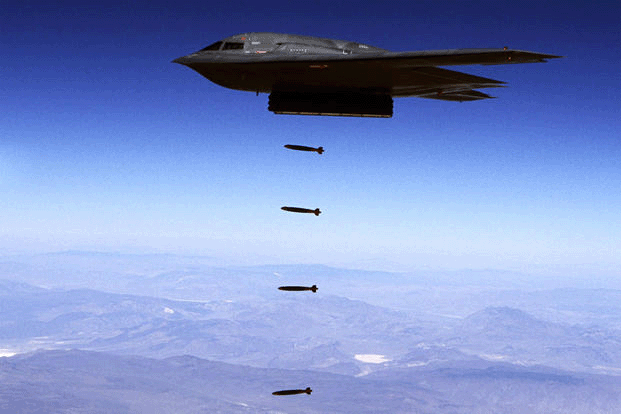
Australia is the only foreign country publicly known to have provided direct military support for the B-2 strikes in Yemen.
The obvious question that comes to mind therefore is why the Australian government acquiesced to involving Australia in the B-2 strikes?
what, if any, are the limits to Australia’s support for US strategic bomber operations should the region become engulfed in all-out war?
s. Washington now views Australia as ‘the central base’ of its Indo-Pacific operations squarely targeted at China
By Vince Scappatura Nov 12, 2024
Australian territory has been used in supporting US B-2 bombers en route and in return from strikes against Houthi targets in Yemen on October 17, and highlights the profound strategic significance of this event for the future role Australia may play in US strategic bomber operations against China, in the Asia Pacific and beyond.
NAPSNet Special Report:
Vince Scappatura, “B-2 BOMBER STRIKES IN YEMEN AND THEIR SIGNIFICANCE FOR AUSTRALIA”, NAPSNet Special Reports, November 11, 2024, https://nautilus.org/napsnet/napsnet-special-reports/b-2-bomber-strikes-in-yemen-and-their-significance-for-australia/
I. Introduction
Washington now views Australia as ‘the central base’ of its Indo-Pacific operations squarely targeted at China; and the strikes in Yemen make clear that the United States is willing and able to utilise its new base capabilities in Australia to devastating effect.[1]
Vince Scappatura documents the novel use of Australian territory in supporting US B-2 bombers en route and in return from strikes against Houthi targets in Yemen on October 17, and highlights the profound strategic significance of this event for the future role Australia may play in US strategic bomber operations in the Asia Pacific and beyond.
Vince Scappatura is Sessional Academic in the Macquarie School of Social Sciences at Macquarie University, and author of The US Lobby and Australian Defence Policy,………………………………………….
The global significance of B-2 strikes in Yemen
In a statement published late on the evening of Wednesday 16 October 2024 (EDT), Secretary of Defense Lloyd Austin revealed US forces had conducted strikes against five hardened underground weapons storage locations in Houthi-controlled areas of Yemen.[1] Although the US Navy also played a role in the operations, US Central Command announced the use of US Air Force B-2 Spirit long-range stealth bombers.[2]
The decision to launch strikes using the distinctive bat-wing bomber, which has been employed relatively infrequently in combat operations, contains a significance beyond the immediate conflict with the Houthis and carries implications that have assumed greater importance in light of the results of the recent US presidential election.
In the first instance the strikes signal the possibility of a larger conflagration in the Middle East, with the B-2’s unique combination of stealth and ‘bunker buster’ capabilities sending a clear message to Iran about America’s commitment to the defence of Israel; a commitment Washington has made even as Israel has taken a series of escalatory steps against Iran that have placed the region on the brink of all-out war.
However, they also carry a broader significance in demonstrating the ability of the US Air Force to deliver devastating strikes worldwide, including nuclear strikes due to the dual-capable role of the B-2, which is particularly salient for any future operations against both China and Russia.
Moreover, the B-2 strikes have momentous strategic implications for Australia, although this fact was left unexamined in media coverage of the event.
The Australian Department of Defence (hereafter Defence) confirmed to the Australian Broadcasting Commission (ABC) that Australian airspace and airbases were accessed in support of the strikes.[3] This participation marks the first time since World War II that Australian territory has been directly used to support US strategic bomber operations.
This novel use of Australian territory follows significant infrastructure developments at airbases across the north of the country, still ongoing, that are ultimately being developed to enable full-spectrum support for US ‘deterrence’ operations against China.[4]
The B-2 strikes in Yemen are the first active demonstration of these developing capabilities and a harbinger of more comprehensive Australian support for any future US strategic air operations, including potential nuclear missions, perhaps in the Middle East, but also ultimately against China and even Russia.
The Australian government is yet to acknowledge the profound strategic implications foregrounded by the strikes in Yemen, while Defence has been unnecessarily opaque about the details of the operation. A full account and wide understanding of Australia’s role in the strikes and what it portends are crucially important for democratic transparency and accountability, while the spectre of the forthcoming Trump administration contributes to the urgency.
Trump’s erratic and unpredictable decision-making, combined with the president’s sole authority over the use of nuclear weapons, highlights the risks of the United States, and by implication, Australia, becoming engulfed in a fateful conflict that is neither anticipated nor desired by their respective peoples. If there was a time for Australian political leaders to be forthright about the dangers of positioning Australia in the frontline of US strategic bomber operations it is now more than ever.
A rare bomber strike; and a message to Iran
…………………………………………….The Pentagon refused to divulge the specific type of ordinance that was employed in the strikes, although an anonymous source revealed to a specialist military journal that the B-2s dropped 2,000-pound BLU-109 JDAM ‘bunker buster’ bombs.[8]
Of particular significance for Iran is the fact that the B-2 is uniquely capable of employing the 30,000-pound GBU-57 Massive Ordinance Penetrator (MOP) in combat operations, reportedly reaching targets of up to 200 feet underground.[9] Iran’s nuclear facilities are known to be deeply embedded underground at Fordow and Natanz and could only plausibly be destroyed by the employment of the MOP.[10]
Although Iran wasn’t mentioned by name, the Pentagon made it clear that the employment of the B-2 was not only a message to the Houthis but any ‘potential adversaries that hide things deep underground. It’s a message to them as well.’[11]
An historic first for Australia
Although aspects of the Australian role in supporting the B-2 strike mission remain unclear, the fact that it prefigures future support for a range of US missions involving conventional and nuclear forces in contingencies anywhere in the world demands a full account and understanding.
Australia is the only foreign country publicly known to have provided direct military support for the B-2 strikes in Yemen. Moreover, achieving this level of logistical cooperation represents a significant milestone in Australia-US military cooperation.
In its statement to the ABC, Defence declared that support for US strikes in Yemen was provided ‘through access and overflight for US aircraft in northern Australia’. The ABC also reported that air-to-air refuelling aircraft were part of the mission, although Defence declined to confirm this claim.[12]
The precise extent and nature of Australia’s support is still unknown, including whether any Australian Defence Force (ADF) capabilities were employed in support of the B-2 bombers. Defence has so far declined to comment further about Australia’s involvement, citing operational security. However, a Defence department spokesperson did issue a clarification to the ABC that American B-2s were not operating out of RAAF Base Tindal in the Northern Territory at the time of the strikes.
RAAF Base Tindal is currently undergoing a major infrastructure expansion project to support the future forward-deployment of up to six B-52 (and eventually, possibly B-2 and B-1) strategic bombers, along with refuelling and transport aircraft. The upgrades include a squadron operation facility for mission planning, crew briefings and intelligence, along with maintenance facilities, strategic fuel reserves, and earth covered magazines for stockpiling munitions. The massive fuel storage facilities at Tindal have already been completed.[13]
B-2 bombers are known to have been operating out of RAAF Base Amberly in Queensland across the months of August and September in a Bomber Task Force mission that saw the aircraft covering vast distances throughout Australia and the Indo-Pacific, including ‘hot pit’ refuelling at the US base in Diego Garcia. However, the BTF mission had concluded by September 18.[14]
The clarification about Tindal issued by Defence, along with the nondescript use of the term ‘US aircraft’, leaves open the possibility that B-2 bombers operated from other RAAF bases in northern Australia, either en route or in return from Yemen, although there is no operational reason for the B-2s to have landed in Australia as against overflying and refuelling from aircraft operating from Australian airfields.
……………………………..photos taken by local Australian aviation enthusiasts provide evidence for a plausible scenario whereby US tankers operating out of Australia were used to refuel US B-2 bombers both enroute and in return from strikes in Yemen.
Western route to the Middle East
To fly over Australian airspace enroute to Yemen, US B-2 bombers are likely to have flown west over the United States and out across the Pacific Ocean before continuing over northern Australia and across the Indian Ocean to their eventual target.
A similar route, although traversing further to the north of Australia into Southeast Asia, was used when B-2 bombers launched strikes against the Taliban in Afghanistan in the aftermath of the terrorist attacks on 11 September 2001. To reach their targets without landing, the bombers were required to carry out aerial refuelling five times off the coasts of California, Hawaii, Guam, the Strait of Malacca and finally Diego Garcia (see figure 1).[16]
Although there is a shorter and more direct route to Yemen flying east from the United States, this path has the advantage of avoiding the need to inform and seek permission from several countries in Europe and the Middle East whose airspace would otherwise be traversed. Flying a carefully plotted western path over northern Australia would avoid the airspace of several Southeast Asian states with large Islamic populations and potential political sensitivities to the strikes. Whether intended or not, it also signals to China and Russia that US strategic airpower can attack them via their ‘soft’ southern underbelly as was planned and exercised during the Cold War.
Overflying northern Australia
The presence of B-2s over Australian airspace at the time of the strikes in Yemen can be confirmed by aircraft communications with civilian air traffic control towers responsible for managing Australia’s airspace.[17] This type of communications is publicly available via online sources such as LiveATC.net.[18]
………………………………………………….Having left their location in the Coral Sea after checking in with the Brisbane Centre on October 16 at 3pm AEST, the B-2 bombers arrived at their target destinations in Yemen approximately 19 hours later at around 3am in local time on October 17.[24]
As reported by ABC News, air-to-air refuelling aircraft were a part of the B-2 mission that logistically required ‘access and overflight’ in northern Australia. This claim was neither confirmed nor denied by Defence…………………………………………………………………………………………………………………..
Unanswered questions
There was no immediate post-strike assessment provided by the Pentagon when the strikes in Yemen were first announced on October 16………………………………………..
Although the Pentagon provided only scant details of the strikes, there has not to date even been an official statement about Australia’s participation in the operation made by the Minister for Defence or released on the website of the Australian Department of Defence. Nor has there been a post-operation account about the success or otherwise of the strikes.
This lack of transparency by Defence is typical but especially unwelcome given the operation marks an escalation in Australia’s participation in the conflict in the Middle East and especially its contested role in providing direct and indirect support to Israel in its wars in Gaza and Lebanon where there are reasonable grounds for believing war crimes and even genocide have been committed.[33]
Defence frequently promotes capability demonstrations of increased interoperability between the ADF and US military forces in official media releases, and Australia’s participation in the US strikes in Yemen represents the first combat demonstration of how Enhanced Air Cooperation under the framework of the US Force Posture Initiatives can be successively used for strategic bomber operations.[34] But if the joint operation was intended to contribute to ‘deterrence’ then the logical approach would have been to draw attention to it.
The obvious question that comes to mind therefore is why the Australian government acquiesced to involving Australia in the B-2 strikes? Australia’s long history of reflexive support for US military operations probably goes a long way in explaining the decision. But incremental decisions announced in a series of recent AUSMIN consultations has led to an unprecedented degree of Australia-US defence integration with implications for Australian participation in US global military operations that political leaders in Australia may not have fully appreciated.[35]
Whatever the rationale, Australians have a right to know about the nature and extent of Australia’s support for the strikes in Yemen, including what US aircraft were involved and what Australian bases they may have operated from. Specifically, Defence should be transparent with the Australian people about the following questions:
- Although it seems unlikely, did the B-2s in fact land at any Australian bases?
- US aerial refuelling aircraft were undoubtedly part of the mission. But did they draw from Australian or US dedicated fuel reserves?
- Were any ADF capabilities employed to support the B-2 strikes during their overflight of Australia or in the region more broadly?
- What assessment was made to ensure Australia’s participation in the strikes was compliant with International Humanitarian Law?
Finally, participation in the B-2 strikes in Yemen have taken Australia a step closer to becoming further entangled in the conflict in the Middle East. This leads to the obvious question of what, if any, are the limits to Australia’s support for US strategic bomber operations should the region become engulfed in all-out war?
Merely citing ‘operational security’ in refusing to answer such questions is wholly inadequate. Democratic transparency and accountability require any potential operational security concerns to be fully explained and justified.
The future of US strategic bomber operations in Australia
Although the strikes in Yemen point to the risks Australia faces in reflexively supporting its ally in yet another conflict in the Middle East, ultimately this unique demonstration of Australia’s growing capabilities to contribute to US strategic air operations is a harbinger of more comprehensive support for any future US conflict with China and/or Russia.
The Australian government has displayed no willingness to publicly acknowledge, let alone debate, the implications of America’s steady military buildup in the north of the country and the deepening integration of the ADF with US armed forces. Washington now views Australia as ‘the central base’ of its Indo-Pacific operations squarely targeted at China; and the strikes in Yemen make clear that the United States is willing and able to utilise its new base capabilities in Australia to devastating effect.[36]
It is critical therefore that the Australian public and its political leaders at all levels comprehend the profound implications of participating in the B-2 strikes in Yemen. It prefigures similar and more prominent roles for Australia in American conventional and nuclear operations not only in the Middle East, but in East Asia and the Pacific, and especially around China and even Russia.
Although tactical surprise may require opacity before and during such a joint operation, there is no excuse for the failure to share with the Australian people what Australia has done, not least so that they are prepared to make informed judgements that will restrain or enable future expanded joint operations now envisioned by the two governments under the 2014 Force Posture Agreement and more recent AUKUS rubric, but not shared with their respective peoples.[37]
Until a full official account is provided, observers could be forgiven for assuming that supine acquiescence on the part of the Australian government in supporting American strikes combined with Defence’s utter lack of accountability explains how Australian airbases and airspace were utilised to support the B-2 strikes in Yemen.
III. ENDNOTES – 1 – 37…………………………………more https://johnmenadue.com/b-2-bomber-strikes-in-yemen-and-their-significance-for-australia/
Trumped: $9B to US and UK shipyards … but why not make Australia make again?

The Government is shy on spending money on a steel works which they would have complete control over, in terms of success, but are happy to recklessly throw money at US shipyards.

Senator David Shoebridge: “The AUKUS submarine deal is a non-refundable $368 billion gamble on the goodwill of some future US President, and the US just elected Donald Trump. You only need to put these two facts side by side to realize what a disaster the whole thing is.”
by Rex Patrick | Nov 16, 2024, https://michaelwest.com.au/aukus-9b-to-us-and-uk-shipyards-but-wait-theres-more/
Make Australia Make Again?
The future of Whyalla’s steelworks is of vital national importance and should matter to all of us. It is critical to Australia’s manufacturing, construction and national security and resilience.
Being frank, the steelworks are in dire straits. They are 60 years old and have been on a rocky road for well over a decade. Its blast furnace has been out of action for over six months now, and whilst there is some optimism that they will get it back up and running it will not change the fact that the steelworks have been in operation for some six decades.
In 2016 when the previous owner, Arrium, went into administration with $4 billion in debts, UK billionaire Sanjeev Gupta’s GFG Alliance bought the steelworks making lots of big promises for a bright future, but it was not to be. At the turn of the decade Greensill Capital, GFG’s financier, collapsed and there’s been trouble ever since.
As it stands, the future of the steelworks, and Whyalla, is in the hands of a court entangled foreign billionaire with a gaping chasm between his promises and delivery. Those promises of a 21st century industrial transformation look very much like ever receding mirages.
The Federal Government needs to have the SA Government bring matters to a head by putting GFG’s South Australian operations into administration (by calling for unpaid and overdue mining royalties), taking an equity stake in the steelworks alongside someone like BlueScope Steel, and investing the necessary billions to build a new green steel industry for Australia.
It would be a part of Make Australia Make Again.
Make America Great Again!
Prime Minister Albanese’s focus is on investment in US industry, not Australian industry.
In September 2023 the Federal Government announced it was pouring $4.7 billion ($US3B) into the US submarine industrial base to assist the largest economy in the world get their submarine production rate up to 2.3 subs per annum (from the current rate of 1.4 subs).
Some $1.5 billion will be paid to the US this financial year, and $1.8 billion next financial year. The remaining $1.4B will follow thereafter.
The Government is shy on spending money on a steel works which they would have complete control over, in terms of success, but are happy to recklessly throw money at US shipyards.
Go figure!
Make Great Britain Great Again Too!
That’s not the end of the story though.
The British are in on this deal of a lifetime too. They’ve managed to pull $4.4B (£2.4 billion) over the next decade from Australian consolidated revenue.
There is no clawback on payment to the United Kingdom either.
Everyone must be feeling pretty chuffed in Groton, Connecticut, and Barrow-in-Furness, England.
But Wait, There’s More!
Whilst the Federal Government has been open about the totals, albeit with a little ‘encouragement’ from Green’s Senator David Shoebridge at Senate Estimates, there’s a dark secret being withheld from the Parliament and the public.
There’s more ‘shared’ cost to come.
FOI returns from the US Department of the Navy reveal that behind the scenes the three AUKUS government participants have been negotiating trilateral cost sharing principles to guide future cost sharing negotiations.
Whilst the Federal Government has been open about the totals, albeit with a little ‘encouragement’ from Green’s Senator David Shoebridge at Senate Estimates, there’s a dark secret being withheld from the Parliament and the public.
There’s more ‘shared’ cost to come.
FOI returns from the US Department of the Navy reveal that behind the scenes the three AUKUS government participants have been negotiating trilateral cost sharing principles to guide future cost sharing negotiations.
Senator David Shoebridge backed this in telling MWM, “Why on earth do cost-sharing principles need to be secret? Of course they should be made public.”
He went on to comment, “Once again, we get more transparency on AUKUS out of the US than Australia.“
“The one-sided secrecy is because the US has a whole lot less to be embarrassed about than Australia. They are the ones getting all our money after all.”
Transactional Trump
Transactional Trump
The approved appropriations in the US for enhancing their submarine industrial base through upgrades as well as recruitment and training of thousands of additional workers amount to $US14.7B. Australia adds another $US3B to that. But the total the US administration is seeking for this work is in the order of $US28.4B.
Of course, there is some quid quo pro in all of this with the Australia Government having committed to spending $8 billion upgrading HMAS Stirling near Rockingham to support the operations of UK and US nuclear powered submarines from 2027, and possibly Australian nuclear submarines from 2035.
There is a danger under the incoming Trump administration that the President will seek a greater contribution from Australia – just as he has demanded that members of NATO pull their weight. And it will be a case of having no choice but to pay, no matter the cost sharing principles negotiated, because our Defence Department simply has no Plan B.
Senator Shoebridge commented, “The AUKUS submarine deal is a non-refundable $368 billion gamble on the goodwill of some future US President, and the US just elected Donald Trump. You only need to put these two facts side by side to realize what a disaster the whole thing is.”
Ships and Steel
Meanwhile, as Australian money is being tossed around the US and UK like it’s free, Albanese is sitting on his hand on the issue of green steel manufacturing in Whyalla.
Anthony Albanese says he wants to revitalise manufacturing and Make Australia Make Again. But in this topsy-turvey world, he’s instead working to deliver on Donald Trump’s slogan to Make America Great Again.
Airstrip One: How Albanese has integrated us into Trump’s military machine
Thanks to the Albanese government, the new Trump administration will find Australia a well-established launch pad for any conflict with China.
Bernard Keane, Nov 11, 2024, https://www.crikey.com.au/2024/11/11/anthony-albanese-australia-us-military-integration-donald-trump/
The next Trump administration will arrive in power to learn that Australia is far more deeply enmeshed in in the US military and intelligence apparatus than in 2020, partly thanks to an eager Albanese government subordinating Australian sovereignty to Washington.
AUKUS is a Biden-era initiative that advocates worry Trump may look askance at, given the pressure it will place on US nuclear submarine production — although the fact that America and the UK can walk away whenever they like, and that Australia is handing $5 billion to each for the privilege of participating, should mitigate Trump’s hostility. That AUKUS will effectively place Australia’s submarine fleet — if it ever arrives — under US control in the 2040s and 2050s may be appealing, but that’s far beyond Trump’s short-term mindset.
But the bigger story of Australian sovereignty under the Albanese government isn’t AUKUS but the steady integration of Australia’s military systems into America’s, and Australia’s transformation into a launch pad for the deployment of American power. The Albanese government has:
- Facilitated “regular and longer visits of US [nuclear submarines] from 2023 to Australia, with a focus on HMAS Stirling. These visits would help build Australia’s capacity in preparation for Submarine Rotational Force-West, an important milestone for the AUKUS Optimal Pathway that would commence as early as 2027”. Submarine Rotational Force-West is the permanent operation of one British and four US nuclear submarines from Perth.
- Allowed US intelligence officials to be embedded in the Defence Intelligence Organisation, a “significant step” toward what Defence Minister (and, as he always insists on being called, Deputy Prime Minister) Richard Marles hailed as “seamless” intelligence ties between the US and Australia.
- Established sharing of satellite imagery “and analysis capability” between Geoscience Australia and the US government.
Established rotation of State Department officials through the Department of Foreign Affairs and Trade “in the areas of technical security, cyber security, and threat analysis”.- Upgraded Top End RAAF airfields to accommodate more US military aircraft, with more upgrades planned, in work hailed by Stars and Stripes as reflecting how “Australians are alarmed at Chinese efforts to gain influence among their South Pacific neighbours”.
- Established facilities for “prepositioning of initial US Army equipment and materiel in Australia at Albury-Wodonga”.
- Continued the Morrison government’s support for the expansion of the Pine Gap surveillance facility, while it is being used, inter alia, to provide intelligence to the Israeli Defence Forces in their genocidal campaign against Palestinians.
- US Marine rotations through Darwin have also been used as “a hub in a lengthy kill web that could protect the region, should Australia face outside threats. ‘Every single day Darwin is becoming more of a hub for us, not just in Australia but through the island chain,’” one American officer says.
In one recent exercise, “Marines set up a bare bones air base on the York Peninsula, Queensland, Australia complete with a fires unit armed with anti-ship missiles and a sensing unit to run air defense … Marines also used their own and Australian aircraft, including C-130s, C-17s and Ospreys to establish an Expeditionary Advanced Base that set up an Osprey maintenance base to extend the aircrafts operations during military exercises. ‘These are real posture gains being made there that will be useful for us in conflict.’”
This demonstrates the validity of Paul Keating’s description of Australia under Albanese as becoming “a continental extension of American power akin to that which it enjoys in Hawaii, Alaska and more limitedly in places like Guam … the national administrator of what would be broadly viewed in Asia as a US protectorate”.
The difference now is that from January, this “continental extension” will be under the control not of a traditional centrist Democrat, but an unstable populist with a deep hostility to China and a stated determination to weaken the country he believes caused the COVID pandemic, as well as an outright hostility to international law and desire to unshackle Israel from any limitations on its mass slaughter of Palestinians. In the event Trump’s proposed trade war with China significantly increases military tensions, Australia will be Airstrip One for the deployment of American power.
Australia US Alliance: Is It Time to Rethink Our Loyalty?
November 10, 2024, by: The AIM Network, By Denis Hay
Australia US alliance has costs. Learn how this impacts Australians and how reallocated funds could benefit citizens.
Introduction
Australia and the United States have been strategic allies for over seventy years. This Australia US alliance, often celebrated with the phrase “old allies and true friends,” is rooted in shared history and mutual defence agreements like the ANZUS Treaty.
However, many Australians are now questioning if the costs of this alliance—both in terms of military and economic impact—outweigh the benefits. This article explores the consequences of Australia’s allegiance to the U.S., the human costs of U.S. interventions, and how Australia’s financial resources might better serve its citizens’ social well-being.
1. The Costly Legacy of the Australia-U.S. Alliance
– Historical Overview: Australia US alliance began formally with the ANZUS Treaty in 1951. Through wars in Korea, Vietnam, Iraq, and Afghanistan, Australia has stood beside the U.S., incurring both financial costs and human losses.
– Casualty Estimates: The human toll of this alliance is staggering. The wars led by the U.S. have resulted in estimated casualties of over 200,000 American troops, 60,000 Australian troops, and millions of civilians globally. For instance, the Iraq War alone caused around 500,000 civilian deaths and displaced over 3 million people.
– The Refugee Crisis: The consequence of U.S.-led wars has been a refugee crisis affecting countless lives. Countries like Syria, Iraq, and Afghanistan have seen millions of citizens fleeing war zones, often with little support from Western nations. Australia’s involvement in these wars contributes to a moral responsibility for the refugee influx, yet the country struggles to support displaced persons adequately.
2. The Social Cost of Alliance-Bound Military Spending
– Military Expenditures at the Cost of Social Welfare: Australia’s defence budget has increased significantly, with estimates of $48.7 billion given in 2023. Much of this spending is tied to keeping military readiness to support the U.S. in conflicts. These funds could otherwise enhance healthcare, education, and housing for Australians.
Military funding without public transparency.
– Impact on Public Services: Redirecting even a part of the defence budget could fund initiatives like universal healthcare, improved mental health services, and housing for the homeless. For example, just 10% of the current defence budget could support building 10,000 public housing units annually or fund a significant expansion of mental health services for underserved communities.
– Consequences of Refugee and Displacement Crises: Australia’s participation in U.S.-led interventions indirectly contributes to refugee crises that strain social services and humanitarian aid. Public sentiment on immigration has also been affected, often creating divisive views within Australian society about who should be supported and who is viewed as a “burden.”
3. A Call for a More Independent and Socially Conscious Foreign Policy
Australia’s alliance with the United States has provided strategic support over the decades, yet many argue that it is time for Australia to pursue a foreign policy that is more reflective of its own interests, values, and the well-being of its citizens.
Despite growing public interest in a more independent, socially conscious approach, Australian governments have hesitated to diverge significantly from U.S.-aligned policies. This reluctance may stem from multiple factors:
1. Fear of Political and Economic Repercussions:
– Australian policymakers often cite strategic security concerns as a reason for adhering closely to U.S. foreign policy, fearing that any independence might jeopardize Australia’s access to American intelligence, technology, and defence resources.
– Economically, a close alliance with the U.S. bolsters trade relations and provides access to powerful American markets. For some politicians, the potential economic fallout of alienating a significant trading and security partner outweighs the call for a more independent stance.
2. Lack of Political Courage and Vision:
– Some critics argue that the Australian government lacks the courage to challenge established norms or take bold steps toward an independent foreign policy. This lack of vision may stem from a longstanding alignment with U.S. interests that has become entrenched in Australia’s political and diplomatic culture.
– Breaking away from such a powerful ally requires a willingness to redefine national priorities, a path that requires courage, strategic foresight, and often a willingness to face criticism from powerful interest groups invested in maintaining the alliance.
3. Disconnect from Public Opinion:
– Surveys show that Australians increasingly favour a more balanced, socially conscious approach to foreign policy, especially as they see the domestic impact of military spending and U.S.-influenced policies. However, successive Australian governments have often ignored this sentiment, raising questions about whether the government genuinely prioritizes the public’s voice in its decisions…………………………..
4. Influence of External Powers and Lobbying:
– Australian foreign policy decisions are also influenced by lobbying from powerful industries, including defence contractors and political think tanks with ties to the U.S. These entities often push for policies that favour a strong alliance with the U.S., as it aligns with their economic and strategic interests.
– The cumulative effect of these influences can stymie efforts for a more independent policy path, effectively sidelining the public’s desire for a foreign policy that prioritizes social well-being and peaceful diplomacy.
In summary, Australia’s reluctance to adopt a more independent, socially conscious foreign policy is a combination of economic dependency, political caution, and a systemic disconnect from the will of the people.
For Australia to shift toward a foreign policy that truly serves its citizens, it would require not only a realignment of political priorities but also a renewed commitment to placing the public’s interests and values at the heart of its foreign relations.
1. The Historical Basis of Australia-U.S. Relations and Its Human Cost……………………………………………….
2. Australia’s Position on U.S. Leaders and Policies
– Unquestioned Loyalty: Australian leaders often affirm support for U.S. presidents and foreign policies without critical evaluation. This approach reflects a hesitancy to challenge U.S. decisions even when they conflict with Australia’s best interests.
– Impact on Australian Sovereignty: The uncritical acceptance of Australia US alliance policies can undermine Australia’s autonomy. For example, Australia’s alignment with U.S. policies on China has strained trade relationships, affecting vital economic sectors like agriculture, tourism, and education. The result is a compromise of national interests to support a symbolic “alliance.”
3. U.S. Military Interventions, Global Casualties, and the Refugee Crisis
– Scope of U.S.-Led Wars: The U.S. has been involved in conflicts worldwide, from the Middle East to Latin America and beyond, often resulting in widespread devastation. These conflicts have had lasting impacts, including millions of civilian deaths and widespread destruction.
– The Refugee Crisis and Australia’s Responsibility: Australia’s support for U.S. interventions creates a moral obligation to help refugees from war-torn countries. However, current refugee policies fall short, leaving many displaced people without adequate support or protection. Accepting more refugees from conflict zones would reflect Australia’s commitment to international human rights and fulfill part of its alliance-driven responsibility.
4. Australia’s Role as a Supporting Partner and Its Consequences
– Participation in Conflicts and Reputational Impact: Australia’s involvement in U.S. wars affects its international reputation, often casting the country as a secondary player rather than an independent, neutral voice in global politics. This alignment can make Australia appear complicit in conflicts driven by U.S. interests, compromising its image as a peaceful nation.
– Economic and Social Impact on Australians: By aligning with U.S. defence priorities, Australia diverts significant public money to defence spending, reducing resources for vital services. Citizens bear the costs through reduced access to affordable healthcare, housing shortages, and an underfunded education system. The pressure to conform to U.S. policies, especially in the Indo-Pacific, risks escalating regional tensions that could directly affect Australians.
5. The Opportunity Cost: How Reallocating Military Spending Could Benefit Australians……………………………………………………………..
Rethinking Australia’s Foreign Policy Approach for the Future
As global dynamics shift, Australia faces a critical juncture in deciding how to position itself on the world stage. A key element of this decision lies in its relationship with China, a rapidly growing economic and political power in the Indo-Pacific region.
While the Australia US alliance has historically shaped much of Australia’s foreign policy, the rise of China presents an opportunity for Australia to pursue a balanced, independent approach that prioritizes regional stability and mutual benefit.
1. China’s Role as Australia’s Major Trading Partner:……………………………………….
2. Promoting Regional Stability and Security:
– As a dominant power in the Indo-Pacific, China’s influence on regional security is substantial. Building a constructive, diplomatic relationship with China could position Australia as a mediator and stabilizer within the region, promoting dialogue over conflict.
– With rising tensions between the U.S. and China, Australia has a unique opportunity to champion a foreign policy that values peace, cooperation, and shared interests, rather than one that escalates division. This approach would reduce the risk of Australia being drawn into potential conflicts that do not serve its national interests.
3. Economic and Diplomatic Benefits of Non-Alignment:………………………….
4. Preparing for a Multipolar World:
– The global power landscape is shifting from U.S.-led dominance to a multipolar world where countries like China, India, and emerging economies play a larger role. For Australia, recognizing and adapting to this reality is crucial for staying relevant and resilient in the international arena…………………………….
Conclusion
Australia US alliance has served strategic purposes in the past, but as global dynamics shift, it’s vital to reassess whether the benefits of this alliance outweigh the costs. The loss of lives, the displacement of millions, and the diversion of public money from critical social services highlight the urgent need for a foreign policy that prioritizes Australia’s long-term interests and humanitarian values.
By adopting a more independent stance, Australia could enhance the social well-being of its citizens and contribute to a more peaceful, stable global community. https://theaimn.com/australia-us-alliance-is-it-time-to-rethink-our-loyalty/
Reconsider AUKUS, say former Labor foreign ministers
David Crowe, The Age November 7, 2024
Former Labor foreign ministers have warned that Australia must reconsider the AUKUS pact with the United States in the wake of Donald Trump’s victory in the presidential election, predicting the US will scale back the deal to protect itself.
The warnings heighten the argument over the far-reaching defence pact as Foreign Minister Penny Wong insists the government will keep ambassador Kevin Rudd in place in Washington, DC, despite his past criticism of Trump.
Prime Minister Anthony Albanese and Opposition Leader Peter Dutton have both insisted the alliance is secure because of Australia’s historic friendship with America, while the defence plan assumes the US will sell nuclear-powered submarines to Australia from 2032.
Former foreign minister and NSW premier Bob Carr said the United States was already struggling to meet its targets to build more nuclear-powered submarines and would be reluctant to sell vessels to Australia as promised.
Carr said the most likely outcome was that the US president – such as the leader who comes after Trump – would decide to keep the Virginia-class vessels to maximise the number of nuclear-armed submarines in the US fleet. Once sold to Australia, the vessels could not be nuclear-armed.
“They’re not going to harm themselves by selling precious subs to Australia that, once they are sold to Australia, will cease to be nuclear-armed,” he said.
“I think that’s going to be the transmutation of AUKUS into a simple pact that says US subs will be based on the west and quite possibly the east coast of Australia.
“And it means the only sovereign submarine capacity we’ve got is the ageing Collins-class and what in the future might emerge from British shipyards.”
Carr said the “grandiosity” of AUKUS rendered it vulnerable to decisions by the Trump administration and a decision in the 2030s by a future president.
“I think at the very least there’s got to be a serious discussion in Canberra about whether we want a sovereign submarine capacity and whether we’ve got to accept that under intense competition with China, whether America in the 2030s can conceivably adhere to the grand promise.
“We’ve got to discuss the prospect that the decision will be made by people not yet in power in America.”
Gareth Evans, foreign minister in the Hawke and Keating governments, said the new administration was likely to voice support for AUKUS until practical pressures forced a new approach.
“Trump is transactional and will start like the Biden administration – seeing this as a good deal for the US financially and because the boats will be, for all practical purposes, US assets,” said Evans.
“But that will last only until it becomes apparent, probably in the next year or two, that the US shipyards are not meeting their own Virginia replacement targets.”
The AUKUS pact says the first vessel in a new design, known as the SSN-AUKUS, will be completed at an Australian shipyard in the early 2040s.
As an interim step, the government assumes US and UK submarines will start operating on rotation from HMAS Stirling, near Perth, from 2027, easing the burden on the ageing Australian Collins-class vessels.
Australia will also pay $4.7 billion to US companies to help fund the technologies – such as nuclear propulsion – needed for the new fleet.
Former attorney-general George Brandis, who was Australian high commissioner to the UK when the AUKUS pact was struck, said he believed the agreement was not under threat from Trump.
…………………………………………Former prime minister Malcolm Turnbull said he did not think Australia would ever get the Virginia-class submarines promised under AUKUS, but he said this would be due to constraints on the US Navy and not the personal views of Trump as president.
“The bottom line is the American Navy is at least 17 Virginia-class submarines short of what they believe they need,” Turnbull told Radio National on Thursday.
“The legislation which authorises America to sell Virginia-class submarines to Australia says that before doing so, the president has to certify that the US Navy’s underwater capabilities would not be diminished by the sale.
“In other words, that they’re surplus to the US Navy’s requirements. Now, I don’t see how an American president could do that.”…………………. https://www.theage.com.au/politics/federal/reconsider-aukus-say-former-labor-foreign-ministers-20241107-p5koko.html
Australia votes at the UN General Assembly

A few days ago, Australia voted on a number of nuclear weapons resolutions at the UN General Assembly. Thank you to the hundreds of you that emailed Foreign Minister Wong urging Australia to vote in the right way! In good news, Australia voted “Yes” on the scientific research resolution (L.39) supporting a major new UN-mandated study on the effects of nuclear weapons. Several nuclear-armed states were trying to mobilise supporters to vote against this resolution so we know they are threatened by it. Knowledge is power!
Disappointingly, Australia continued its abstention on the TPNW resolution (L.37) and humanitarian impacts resolution (L.36), instead of voting “Yes”.
Earlier in October ICAN visited Parliament to advocate for the TPNW with parliamentarians across the political spectrum. We were also delighted to have met with Siswo Pramono, Indonesia’s Ambassador to Australia, and congratulate him on Indonesia’s recent ratification of the TPNW. Mr Pramono addressed the Parliamentary Friends of the TPNW group and stated that the success of the TPNW also hinges upon the participation of countries who possess nuclear weapons. “We need a concerted effort to convince them to become Parties to the Treaty,” he said. “In doing so, leadership from developed countries such as Australia is needed.”
Top Australian honour (whaa-at !!!!) for American politician who helped push Australia into the shonky AUKUS agreement
Rex Patrick, 24 Oct 24
Albanese pours $5B of Australian taxpayers’ cash into US shipyards (with no guarantee #AUKUS subs will ever be delivered). He then arranges for the local US Congressman to get a top Australian honour. Icing on the cake for that guy.
Rep. Courtney to receive Australia’s top civilian award
WSHU | By Brian Scott-Smith, October 23, 2024
U.S. Rep. Joe Courtney (D-CT-2) has been chosen for one of Australia’s top civilian awards. Courtney is one of a few Americans to be given the Order of Australia, which recognizes extraordinary service by a non-citizen…………………… He has also been instrumental in the AUKUS trilateral defense agreement between Australia, the UK and the U.S. to help provide nuclear submarines to Australia. It’s the first time the U.S. has entered into such an agreement with another country…….. https://www.wshu.org/connecticut-news/2024-10-23/ct-joe-courtney-australia-civilian-award
Congressional report suggests Australia could dump plans to acquire AUKUS nuclear submarines

“This division of power no doubt makes sense from a US perspective with Australia providing them with funds and bases and getting no actual submarines,”
“From an Australian perspective that looks far more like a strategic surrender than a partnership – Greens Senator David Shoebridge
ABC News, By Defence Correspondent Andrew Greene and State Political Reporter Rory McClare, 18 Oct 24
In short
An influential US research body has published a report arguing Australia could invest in long-range bombers and other capabilities instead of nuclear-powered submarines.
The report says there is “little indication” that “rigorous” analysis was conducted on whether there were more cost-effective options.
What’s next?
Greens senator David Shoebridge, a vocal opponent, said the AUKUS partnership looked like a “surrender” of Australian interests.
Research prepared for the United States Congress argues Australia could abandon its $368 billion AUKUS push to buy nuclear-powered submarines (SSNs), outlining several alternatives including US owned boats serving both nations.
According to the report published by the Congressional Research Service (CRS), billions of Australian dollars could instead be diverted to military capabilities for this country and the US, such as missiles and B-21 long-range bombers.
Under the AUKUS Pillar 1 plan, US and British nuclear submarines will rotate out of Western Australia from 2027, before Australia buys up to five second-hand Virginia class boats in the 2030s, and then begins constructing a new fleet known as SSN-AUKUS.
In the 105-page report, a number of policy options are presented including Australia no longer purchasing US submarines but instead having American boats perform missions on its behalf, while still continuing to design and build the SSN-AUKUS fleet.
“An alternative to Pillar 1 as currently structured would be a US-Australia military division of labour under which US SSNs would perform both US and Australian SSN missions while Australia invested in military capabilities for performing non-SSN missions for both Australia and the United States,” the report reads.
“Australia, instead of using funds to purchase, build, operate, and maintain its own SSNs, would instead invest those funds in other military capabilities — such as, for example, long-range anti-ship missiles, drones, loitering munitions, B-21 long-range bombers, or other long-range strike aircraft.
“Under this variation, the size of the US SSN force would eventually be expanded above previously planned levels by eight boats (i.e., the planned eventual number of SSNs that Australia had planned to acquire).”
Using stark language, the report warns that the costs of AUKUS Pillar 1 for Australia could “reduce, perhaps significantly, funding within Australia’s military budget for other Australian military capabilities” particularly if the project’s budget blows out.
“If this were to occur, there could be a net negative impact on Australia’s overall military capabilities for deterring potential Chinese aggression,” the report says.
The CRS report claims no alternatives were ever considered by AUKUS partners and concludes by diverted spending elsewhere it would help “create an Australian capacity for performing non-SSN military missions for both Australia and the United States”.
“There is little indication that, prior to announcing the AUKUS Pillar 1 project … an analysis of alternatives (AOA) or equivalent rigorous comparative analysis was conducted to examine whether Pillar 1 would be a more cost-effective way to spend defence resources”.
Proposals a ‘strategic surrender’
Greens Senator David Shoebridge, a vocal opponent of AUKUS, says the proposals outlined in the congressional report appeared more like “a strategic surrender than a partnership”.
“This division of power no doubt makes sense from a US perspective with Australia providing them with funds and bases and getting no actual submarines,” he said.
“From an Australian perspective that looks far more like a strategic surrender than a partnership.
“For the US, the whole AUKUS deal always had at its heart US access to Australian real estate for their submarines, bombers and marines, with any marginal additional Australian capacity being very much secondary.”……….. https://www.abc.net.au/news/2024-10-17/report-suggests-australia-dump-aukus-nuclear-submarine-plans/104486868—
Indonesia, Solomon Islands join countries banning nuclear weapons, putting Australia at odds with neighbours
ABC, By Lachlan Bennett and Erwin Renaldi, 29 Sept 24.
Indonesia, a country of 275 million and one of Australia’s closest neighbours, is stepping up efforts to enforce a global ban on nuclear weapons.
This week, it officially joined the United Nations Treaty on the Prohibition of Nuclear Weapons — confirming its ratification of the pact along with Solomon Islands and Sierra Leone.
Indonesia’s Ministry of Foreign Affairs said in a statement it would put “moral and political pressure on nuclear weapon states to stop their development”.
The treaty, which came into force in 2021, now boasts almost 100 signatories.
But it has thus far failed to secure Australia or the big nuclear powers: China, the US, Russia, India, the UK and France.
Amid rising tensions in the Asia-Pacific, many smaller nations want the bomb banned before it’s too late.
Why hasn’t Australia signed the new prohibition treaty?
Australia has a long history of supporting anti-nuclear weapons initiatives.
This includes helping to establish the 1996 Comprehensive Nuclear Test Ban Treaty and the 2010 Non-Proliferation and Disarmament Initiative.
Most importantly, Australia’s efforts are underpinned by the Treaty on the Non-Proliferation of Nuclear Weapons — which it signed in 1970.
That treaty has 191 signatories, more than any other arms disarmament agreement in history, and has overseen a decline in global stockpiles and countries including South Africa and Ukraine agreeing to relinquish their arsenals.
But international relations lecturer Muhadi Sugiono, from Gadjah Mada University in Indonesia, said non-proliferation alone had failed to force nuclear powers to abandon their weapons programs.
“It is impossible, in fact, to expect the Non-Proliferation of Nuclear Weapons Treaty will achieve this goal,” he said.
“There is no legal framework which demands them to do so.”………………………………………………………………………
Is Australia really serious about banning nukes?
Despite Australia’s strong anti-nuclear activities, its alliance and reliance on nuclear superpower the US has raised eyebrows among advocates.
Dr Sugiono said Indonesian authorities recognised Australia’s “very, very strong” opposition to nuclear proliferation.
“But at the same time, the position is very ambiguous because Australia is very close to the US,” he said.
These concerns were brought into focus during a Senate hearing in 2023, when the Defence Department was grilled about Australia’s commitment to the South Pacific Nuclear Free Zone.
That treaty prohibits the stationing of nuclear explosives on Australian territory.
However, the United States’ policy of “neither confirming or denying” the presence of its weapons raised suspicions about what might be onboard visiting US aircraft…………………………………………………..
University of Sydney international relations professor Justin Hastings said that explains why most signatories of the new prohibition treaty were “non-aligned states” — in other words, countries that are neither allied with Western powers or their strategic rivals like China and Russia.
“Australia and many other countries want to have their cake and eat it too,” he said.
“They don’t have nuclear weapons, but they do want to benefit from the extended deterrence that comes from other countries having nuclear weapons.”
What does AUKUS have to do with it?
The optics were further clouded by the signing of the AUKUS defence pact with the US and UK, even though it will bring nuclear-powered submarines and not nuclear weapons to Australian shores.
The Indonesian government said it was blindsided by the announcement, forcing Australian diplomats to rush to calm the anxieties in South-East Asia and emphasise that Australia has no desire to obtain nuclear weapons.
International Campaign to Abolish Nuclear Weapons coordinator Tim Wright said signing the prohibition treaty would help Australia allay the concerns of its Pacific neighbours and “create additional guardrails against nuclear weapons”.
And Australia wouldn’t have to end its alliance with the US, given other allies like the Philippines have already signed.
“There would clearly be issues that arise in relation to the alliance that would need to be dealt with,” Mr Wright said.
“But there are precedents that we can point to that suggests that this wouldn’t spell an end to the alliance, as some people have feared.”
Why is there a new treaty, when we’ve already got one?
The prohibition treaty is designed to work in conjunction with existing non-proliferation agreements and fill a “legal gap” to ensure nuclear nations eliminate their weapons……………………………………………………
The new treaty also contains provisions to people and places impacted by nuclear testing, such as the Pacific, which saw hundreds of bombs denoted over several decades.
“It’s not just a treaty about disarmament, it’s also a treaty for nuclear justice,” Mr Wright said.
“There’s a real strong sense of regional solidarity in advancing disarmament, this understanding that people in the region have suffered.”
So what does this mean for Australia’s relations in the region?…………………………………. https://www.abc.net.au/news/2024-09-29/indonesia-ratifying-nuclear-pact-what-it-means-for-australia/104401610—
1 This month

of the week – Australians for War Powers Reform (AWPR)
To see nuclear-related stories in greater depth and intensity
 Antinuclear