Why Military Neutrality is a Must for Australia
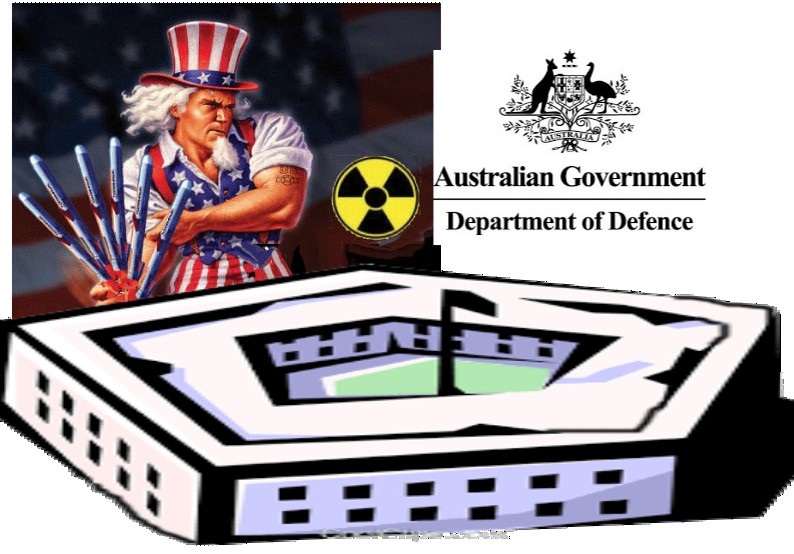
Embrace military neutrality. Australia faces a choice: join declining empires or lead in peace. Discover why neutrality is the way forward in a multipolar world.
April 30, 2025 , By Denis Hay, Australian Independent Media
Introduction: A Nation at the Crossroads
Picture this: It’s 2030. Australian submarines sail under U.S. command in the Taiwan Strait. Canberra receives intelligence briefings written in Washington. The media frames any dissent as disloyalty. Ordinary Australians ask: “How did we get dragged into another war we never voted for?”
Rewind to 2025: our foreign policy is shaped not by peace or diplomacy, but by deals like AUKUS, designed to entrench Australia within the military-industrial interests of a declining superpower. Meanwhile, the world is shifting. BRICS is rising. The U.S. is losing credibility. And Australia must decide: Will we continue to act as a pawn, or will we embrace military neutrality and sovereignty through peace?
The Global Realignment: The World Beyond the U.S.
U.S. Decline and the Rise of Multipolarity
In 2015, analysts inside global financial circles began quietly withdrawing from the U.S. The reasons were clear:
• America’s fertility rate had fallen to 1.8 (below replacement).
• Civil unrest, mass shootings, and institutional collapse painted a picture of chaos.
• Trust in government and media plummeted (Edelman Trust Barometer, 2021).
Meanwhile, the BRICS+ bloc was expanding rapidly. By 2024, Saudi Arabia, UAE, and Iran had joined, and member nations began transacting in local currencies. The world was no longer unipolar—and Australia must adapt.
The BRICS+ Bloc and the Global South
The global South is now:
• Home to the largest youth populations (India, Nigeria, Indonesia)
• Receiving billions in tech investment (e.g., Microsoft’s $1B in African AI infrastructure)
• Transitioning to local currency trade
Australia can no longer afford to cling to outdated alliances that tie us to declining powers.
Why Australia Must Reassess Its Strategic Alliances
The Cost of U.S. Dependence
Our military is deeply entwined with U.S. command structures:
• AUKUS submarine deal: $368 billion to be tied into U.S. war planning
• Hosting U.S. troops, ships, and bombers in the Northern Territory
The Failure of U.S. Militarism
• Iraq and Afghanistan: trillions spent, no peace achieved
• Ukraine: Proxy war fuelled by NATO expansion and U.S. arms interests
Quote from the video: “America is being phased out… not because they hate it, but because it’s obsolete.”
What the OCGFC Knows – And Why We Should Listen
The Owners and Controllers of Global Financial Capital (OCGFC) have already moved on from America. They’re investing in the South. Australia should follow their strategy—but for peace, not profit.
The Case for Military Neutrality
What Is Military Neutrality?
Military neutrality means:
• No participation in military blocs
• No hosting of foreign military bases
• No involvement in foreign wars
Example of military neutrality: Switzerland has remained neutral for over 200 years. Reference: https://worldpopulationreview.com/country-rankings/neutral-countries
Benefits of Military Neutrality for Australia
• Enhanced sovereignty: Canberra decides, not Washington
• Improved regional trust
• Reduced risk of becoming a target in U.S.-China conflict
Strategic Independence……………………………………………………………………………….
Australia is now home to:
The Pine Gap spy base, integral to U.S. drone warfare and nuclear targeting
Rotational deployments of U.S. marines and bombers in the Northern Territory
Massive investment under AUKUS, where Australia receives nuclear-powered submarines it will not command independently
Growing integration into U.S. war planning around China and the South China Sea
The Quiet Absorption of Sovereignty
These developments raise serious questions:
If we cannot deny access to foreign troops on our soil, are we still sovereign?
If our military relies on foreign command systems, do we retain independent defence?
This is not a conspiracy theory. This is creeping dependency. Sovereignty is rarely lost overnight. It is eroded decision by decision, treaty by treaty, base by base—until there is nothing left to reclaim.
The Choice Before Us
We must confront an uncomfortable possibility: Australia is at risk of becoming a de facto 51st state – not through constitutional change, but through military submission.
The warning signs are clear. If we continue down this path unquestionably, we may find ourselves unable to make decisions without a nod from Washington.
Neutrality offers a way out. …………………………………………………………………………………………………… https://theaimn.net/why-military-neutrality-is-a-must-for-australia/
Dotty and Cretinous: Reviewing AUKUS

April 20, 2025 Dr Binoy Kampmark, https://theaimn.net/dotty-and-cretinous-reviewing-aukus/
It was a deal for the cretinous, hammered out by the less than bright for less than honourable goals. But AUKUS, the trilateral security alliance between Australia, the United Kingdom and the United States, is now finally receiving the broader opprobrium it should have had from the outset. Importantly, criticism is coming from those who have, at points, swooned at the prospect of acquiring a nuclear-powered submarine capability assuming, erroneously, that Australia somehow needs it.
A report by the Strategic Analysis Australia think tank has found that AUKUS, despite the increasingly vain promise of supplying the Royal Australian Navy with nuclear powered submarines in 2032, has already become its own, insatiable beast. As beast it is, with the cost over the next four years for the submarine program coming in at A$17.3 billion, exceeding by some margin the capital budget of the Royal Australian Airforce (RAAF) at A$12.7 billion. One of the authors of the report, Marcus Hellyer, notes that “in terms of acquisition spending, the SSN [nuclear-powered attack submarine] enterprise has already become the ADF’s [Australian Defence Force’s] ‘fourth service’.”
The report notes some remarkable figures. Expenditure on SSNs is estimated to be somewhere between A$53 billion and A$63 billion between 2024-2034, with the next five years of the decade costing approximately A$20 billion. The amount left over for the following years comes in at $33 to $44 billion, necessitating a target of $10 billion annually by the end of the financial decade in the early 2030s. What is astounding is the amount being swallowed up by the ADF’s investment program in maritime capabilities, which will, over the coming decade, come to 38% of the total investment.
The SSN program has made its fair share in distorting the budget. The decade to 2033-4 features a total budget of A$330 billion. But the SSN budget of $53-63 billion puts nuclear powered submarines at 16.1% to 19.1% more than either the domains of land and air relevant to Australia’s defence. “It’s hard to grasp how unusual this situation is,” the report notes with gravity. “Moreover, it’s one that will endure for decades, since the key elements of the maritime domain (SSNs and the two frigate programs) will still be in acquisition well into the 2040s. It’s quite possible that Defence itself doesn’t grasp the situation that it’s gotten into.”
To add to the more specialist literature calling large parts of AUKUS expenditure into question comes the emergence of disquiet in political ranks. Despite the craven and cowardly bipartisan approval of Australia’s dottiest military venture to date, former Labor senator Doug Cameron, who fronts the Labor Against War group, is a symptom of growing dissent. “There are other more realistic and cost-effective strategies to protect our territorial integrity without subjugating ourselves to a dangerous, unpredictable and unworthy Trump administration.”
On the other side of the political aisle, former Liberal Prime Minister Malcolm Turnbull is pessimistically inclined to the view that Australia will never get those much heralded submarines. “There will be Australian sailors serving on US submarines, and we’ll provide them with a base in Western Australia.” Furthermore, Australia would have “lost both sovereignty and security and a lot of money as well.”
The spineless disposition of Australia’s political cadres may prove irrelevant to the forced obsolescence of the agreement, given the scrutiny of AUKUS in both the United States and the United Kingdom. The pugilistic nature of the tariff system imposed by the Trump administration on all countries, friendly or adversarial, has brought particular focus on the demands on naval and submarine construction. Senior Democrat on the Senate Armed Services Subcommittee, Virginia Senator Tim Kaine, told an AUKUS dinner in Washington this month that “We are already having trouble getting these ships and subs on time [and] on budget. Increase those prices – it’s going to be a problem.”
Taine’s point is logical enough, given that steel and aluminium have been targeted by particularly hefty rates. Given the array of products requiring exchange in the AUKUS arrangement, tariffs would, the senator reasons, “slow us down and make things harder.”
Another blow also looms. On April 9, the White House ordered the Department of Government Efficiency (DOGE) to comb through the procurement of US Navy vessels in order “to improve the efficiency and effectiveness of these processes” and contribute to the Trump administration’s Maritime Action Plan. Consistent with Trump’s near obsession of reviving national industry, the order seeks “to revitalize and rebuild domestic maritime industries and workforce to promote national security and economic prosperity.”
Australian taxpayers have every reason to be further worried about this, given the order’s emphasis that US departments and agencies pursue “all available incentives to help shipbuilders domiciled in allied nations partner to undertake capital investment in the US to help strengthen the shipbuilding capacity of the US.” Given that that US submarine industrial base is already promised $US3 billion from Australia’s pockets, with $500 million already transferred in February, the delicious exploitation of Canberra’s stupidity continues apace.
In the UK, the House of Commons Defence Committee this month announced a parliamentary inquiry into the defence pact, which will evaluate the agreement in light of changes that have taken place since 2021. “AUKUS has been underway for three years now,” remarked Defence Committee chairman and Labour MP, Tan Dhesi. “The inquiry will examine the progress made against each of the two pillars, and ask how any challenges could be addressed.”
The first pillar, perennially spectral, stresses the submarine component, both in terms of transferring Virginia class SSNs to Australia and the construction of a bespoke nuclear-powered AUKUS submarine; the second focuses on the technological spread of artificial intelligence, quantum capabilities, hypersonic advances and cyber warfare. While Dhesi hopes that the inquiry may throw up the possibility of expanding the second pillar, beady eyes will be keen to see the near non-existent state regarding the first. But even the second pillar lacks definition, prompting Kaine to suggest the need for “some definition and some choices”. Nebulous, amorphous and foolish, this absurd pact continues to sunder.
Dump nuclear, restore momentum – new poll shows opportunity for Coalition
Liberals Against Nuclear. 14 Apr 25
New polling shows the Liberal Party would increase its primary vote by 2.8 percentage points if it abandoned its nuclear energy policy, according to research commissioned by Liberals Against Nuclear.
Andrew Gregson, spokesperson for Liberals Against Nuclear, said the polling demonstrates that the same political flexibility recently shown by Peter Dutton on the work-from-home policy should be applied to the Coalition’s nuclear energy plan.
“Peter Dutton has shown he can make hard-headed decisions when they’re needed to win government. Our polling shows dumping nuclear would deliver an immediate 2.8% boost to the Liberal primary vote in key seats – potentially the difference between winning and losing this election,” Mr Gregson said.
The uComms survey of 5,177 voters across 12 marginal electorates, including Liberal-held seats and those targeted for recovery from Labor and independents, found that 50.6% of undecided voters are less likely to vote for the Coalition because of its nuclear policy.
“Just as Mr Dutton recognised that the work-from-home policy was hurting his standing with women voters, our polling shows that dropping nuclear would increase the Liberal vote among women by four percentage points,” Mr Gregson said.
“The Coalition’s backdown on forcing public servants back to the office full-time shows Mr Dutton can listen to voters and change direction when necessary. We’re simply asking for that same political flexibility to be applied to a fiscally irresponsible nuclear policy that’s proving even more unpopular.”
Mr Gregson noted that 48% of respondents indicated they don’t support nuclear power at all, with concerns about reducing investment in renewable energy (17.3%), nuclear waste management (14.6%), and high build costs (11.6%) topping the list of voter concerns.
“Our message to Liberal candidates is simple – even if you personally support nuclear energy, this polling shows dropping the policy gives you the best chance of winning your race. We’re running out of time, but it’s not too late to make this change and give the Coalition its best shot at forming government.”
How US Dependence is Not in Our Best Interest
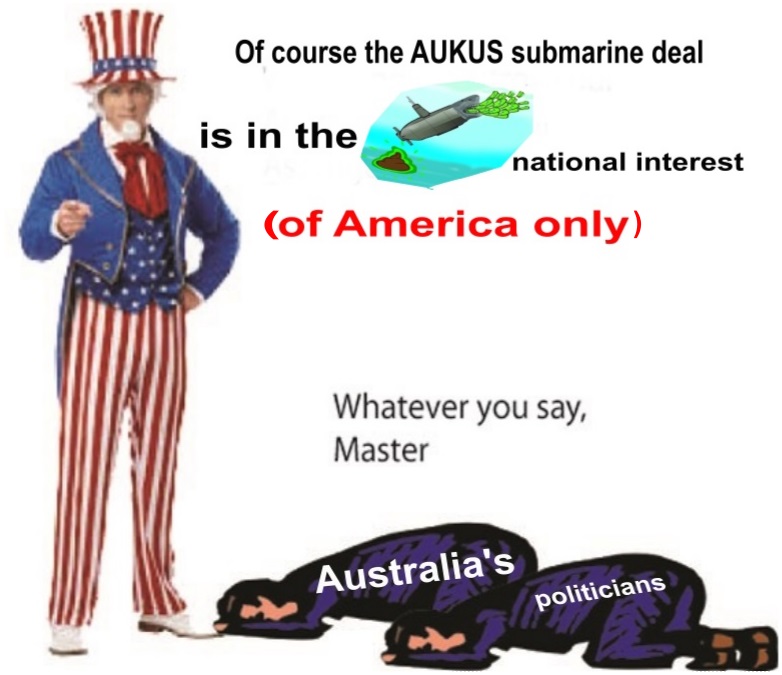
Real Example: The AUKUS submarine deal, projected to cost over $368 billion, ties Australia into US military logistics for decades – yet those funds could be spent on domestic defence innovation, regional aid, or green manufacturing.
Real Example: The AUKUS submarine deal, projected to cost over $368 billion, ties Australia into US military logistics for decades – yet those funds could be spent on domestic defence innovation, regional aid, or green manufacturing.
April 9, 2025 AIMN Editorial By Denis Hay
Description
US dependence. Discover real steps Australia can take to diversify defence, diplomacy & trade while using its currency power to reclaim sovereignty.
Introduction: A Turning Point for Australia
Location: Canberra, 2024. The Defence Minister stands before cameras, repeating familiar rhetoric: “The US alliance is central to Australia’s security.” But in community halls, cafés, and public forums across the nation, a growing number of Australians are beginning to ask: What if it’s not?
Thoughts: Many Australians feel a quiet unease about our nation’s strategic direction. We’ve followed the US into war zones, hosted its military bases, and allowed our foreign policy to align too closely with American interests. Yet few alternative paths are ever seriously discussed in public debate.
Emotions: There’s frustration, even disillusionment. Australia is a sovereign nation. Why then do we act like a client state?
Dialogue: “It’s not anti-American to want independence,” says Jenny, a retired diplomat. “It’s just good strategy.”
Problem: The Australia-US alliance has become a crutch. While it served a purpose post-WWII, the world has changed. The Indo-Pacific is more multipolar than ever. To secure a peaceful, just future, Australia must explore new defence partnerships, deepen regional diplomacy, and reshape trade alliances. Critically, we must use our monetary sovereignty to do this independently, not through the profit-driven mechanisms of public-private partnerships.
The Problem: Locked into a Narrow Strategic Path
Following WWII, Australia signed onto ANZUS, believing American power would guarantee our safety. But since then, Australia has:
• Participated in every major US-led conflict since Vietnam.
• Spent billions hosting US military infrastructure (like Pine Gap).
• Aligned its foreign policy with US military objectives, often at odds with neighbours.
Meanwhile, the security landscape has shifted:
• China, India, and ASEAN nations now influence the Indo-Pacific.
• US influence is declining, with unpredictable leadership changes.
• Regional cooperation, not superpower allegiance, is the new path to peace.
Real Example: The AUKUS submarine deal, projected to cost over $368 billion, ties Australia into US military logistics for decades – yet those funds could be spent on domestic defence innovation, regional aid, or green manufacturing.
Internal Reflections: “Why are we borrowing American power when we have the capacity to build our own?”
Note on Defence Think Tanks: When assessing defence strategies, it’s important to consider the source. The Australian Strategic Policy Institute (ASPI), often referenced by the government and media, receives funding from the Australian Department of Defence, foreign governments, and major US arms manufacturers such as Lockheed Martin and Northrop Grumman.
These financial ties raise serious concerns about bias in ASPI’s advocacy for militarised solutions and deepening reliance on the US military-industrial complex.
Heightened Risk Through US Dependence: By embedding ourselves in the strategic priorities of the United States, Australia risks becoming a target in conflicts that are not of our making.
Should tensions escalate between the US and China, Australia’s hosting of American military bases, integration into US-led command systems, and participation in initiatives like AUKUS make us more – not less – vulnerable to retaliation.
Instead of ensuring protection, over reliance on US dependence could make Australia a frontline state in the event of a major geopolitical confrontation. The risk is amplified when one considers the United States’ long and well-documented history of military interventions, regime change operations, and aggressive foreign policy – often justified under the banner of “freedom” but resulting in destabilisation, displacement, and long-term suffering in regions such as Iraq, Vietnam, Libya, and Afghanistan.
The Consequences of Strategic US Dependence
Imagine you’re a young Pacific Island leader sitting across from an Australian diplomat in 2030. Rising seas threaten your nation, yet Australia prioritises nuclear submarines over climate aid. “You talk about friendship,” she says, “but you act like a US outpost.”
This isn’t just geopolitical optics:
• Australia risks alienating regional neighbours.
• We are perceived as an extension of Western military ambitions.
• The economic burden of defence decisions like AUKUS will fall on future generations.
Stat: 56% of Australians in a 2024 Lowy Institute poll said Australia should remain neutral in a US-China conflict. The people are ahead of the policymakers.
Diversifying Alliances Through Sovereign Action
Diversifying Defence Partnerships………………………………………………………………………………………………………………………………. https://theaimn.net/how-us-dependence-is-not-in-our-best-interest/
Trump tariffs spark questions over US alliance
Andrew Tillett, AFR, Foreign affairs, defence correspondent, 3 Apr 25
The alliance with the United States is facing its toughest test in decades after Donald Trump imposed a 10 per cent tariff on Australian exports as part of his escalating trade war, which has sent shockwaves around the world and heightened the risk of a global recession.
Markets plunged on news of Trump’s Liberation Day tariffs, with Australian stocks shedding more than $21 billion, while traders bet the Reserve Bank could cut interest rates up to four times this year.
Australia escaped Trump’s tariffs relatively unscathed, with just the minimum baseline of 10 per cent applied to goods exported to the US, although the President singled out the longstanding ban on American beef as a grievance.
A government source, speaking on condition of anonymity because of the sensitivities, said there had been indications from the US that it was willing to negotiate to reduce or remove tariffs on Australian exports.
However, the government remains on alert for more tariff hikes after pharmaceuticals, copper and gold were among a select few commodities exempted from Trump’s “liberation day” executive order.
Prime Minister Anthony Albanese said the tariffs were totally unwarranted and would prompt some Australians to question the relationship with the US. Former prime minister Paul Keating suggested Trump’s tariff campaign cast doubt on the value of the ANZUS alliance, the cornerstone of Australian defence policy for more than 70 years.
“The administration’s tariffs have no basis in logic and they go against the basis of our two nations’ partnership. This is not the act of a friend,” Albanese said.
The Australian people have every right to view this action by the Trump administration as undermining our free and fair trading relationship and counter to the shared values that have always been at the heart of our two nations’ long-standing friendship. This will have consequences for how Australians see this relationship.”
Keating said the announcement was effectively the death knell of the North Atlantic Treaty Organisation, the US-led military alliance with Europe, a decision which would inform other allied relationships with the US.
“Australia’s clutch of Austral-Americans, that phalanx of American acolytes,
must have choked on their breakfasts, as Donald Trump laid out his blitzkrieg on globalisation, with all its implications for the rupture of cooperation and goodwill among nations,” he said.
“If NATO, America’s principal strategic alliance, is expendable, what credible rationale could underpin US fidelity to ANZUS and with it, to Australia?”
Former foreign minister Bob Carr said the alliance with the US “counts for nothing” and was reason to axe the AUKUS pact, Australia’s agreement to acquire nuclear-powered submarines from the US and UK…………………………………………………………………………………
a mining industry source, speaking anonymously, said the government could buy up critical minerals and stockpile them to use as leverage in future trade negotiations.
Opposition Leader Peter Dutton said if he won the May 3 election he would use access to Australia’s critical minerals and deeper defence cooperation, particularly in defence industry, as bargaining chips to get tariffs lifted…………………….https://www.afr.com/politics/federal/trump-tariffs-spark-questions-over-us-alliance-20250403-p5lox9
Why The US Australia Alliance Needs a Rethink
Australian Independent Media March 29, 2025, By Denis Hay
Description
Why the US Australia alliance needs a rethink. The U.S. is no ally. Discover why Australia must distance itself to avoid war and reclaim its sovereignty.
How Australia Can Safely Distance Itself from U.S. Hegemony
Introduction – The US Australia Alliance: Myth vs Reality
Picture this: You’re sitting in a Brisbane café, sipping a flat white while reading the headlines – Australia has just signed another defence pact with the United States. More American troops, military hardware, and diplomatic praise about our “unbreakable alliance.” Yet, beneath the headlines lies a growing discomfort – are we allies, or are we just a strategic pawn in U.S. global dominance?
Joh Bjelke-Petersen once said that this is just politicians “feeding the chooks.” Empty words. The truth is, the U.S. government doesn’t respect its people, let alone Australia. It sees nations – including its own – as resources to be mined for profit. This article will explore how Australia can break free from this exploitative alliance without putting itself in harm’s way.
The U.S. Government’s Track Record: A Global Power Without Respect
Exploiting Its Own Citizens
Visit Detroit, Michigan – a city once bustling with manufacturing pride. Now, it stands as a ghost town of forgotten promises, where basic water access has become a luxury. Millions of Americans are homeless or working two jobs or more just to survive. U.S. billionaires soared in wealth, while 45 million Americans live impoverished.
Internal reflection: “If they treat their own citizens this way, what hope do allies have?”
Exploiting Other Nations
Let’s take Iraq. The 2003 invasion, sold on lies about weapons of mass destruction, cost hundreds of thousands of lives, all to secure oil. In Libya, a once-stable nation descended into chaos after U.S.-led intervention. This is not defence—it’s corporate imperialism.
When the U.S. backs coups in Latin America or imposes sanctions on countries like Venezuela or Cuba, the motive is always clear: control the global economy for U.S. corporate gain.
The U.S.–Australia Relationship: Not What It Seems
Political Rhetoric vs Reality
Australian and U.S. politicians often repeat phrases like “shared values” and “strong friendship.” But how many Australians were consulted when Pine Gap was set up or when AUKUS was signed?
Dialogue: “This isn’t a partnership. It’s a surrender of our sovereignty,” says a former Australian diplomat.
The Cost of Loyalty
Australia’s blind support for U.S. policy has real consequences:
• Trade tensions with China – our largest trading partner
• Environmental destruction from military exercises on Australian soil
• Loss of independence as U.S. bases expand here without public debate.
Why China Matters More Than Ever
60% of Australia’s exports go to Asia, with China alone accounting for over 25%. Australia’s economy is tightly linked to Chinese demand, from iron ore to wine. Trade disruptions – often driven by political antagonism encouraged by the U.S. – have already cost farmers, winemakers, and miners dearly.
The Danger of Choosing Sides
We risk becoming collateral damage in a U.S.-China conflict. Australia should not repeat its mistakes from Vietnam or Iraq – wars that had nothing to do with our national interest but cost us dearly in blood, treasure, and reputation. This has been the outcome of the US Australia alliance.
Thought: “Must we always fight other nations’ wars? When do we stand up for ourselves?”
Pathways Toward Australian Independence………………………………………..
Phasing Out US Australia Alliance and Military Influence
Start with transparency:
• Conduct a national audit of U.S. bases and agreements.
• Establish parliamentary oversight.
• Hold a public referendum on AUKUS.
Dialogue: “Our security must not come at the cost of our sovereignty,” says Senator David Shoebridge.
………………………………………….more https://theaimn.net/why-the-us-australia-alliance-needs-a-rethink/
Complicity of Labor and Liberal in Israel’s genocide of Palestinians
David Bradbury, 21 Mar 25
This clip shows the complicity of the Australian Govt – both major parties – in allowing/subsidising over 70 Australian companies to produce vital component parts for Lockheed Martin’s F35 fighter which has caused so many deaths in Gaza, the West Bank, southern Lebanon and Syria. Elsewhere in the world.
‘Vandals in the White House’ no longer reliable allies of Australia, former defence force chief says
Henry Belot and Ben Doherty, Guardian, 21 Mar 25
Chris Barrie says Donald Trump’s second term is ‘irrecoverable’, but stops short of calling for end to Aukus pact.
A former Australian defence force chief has warned “the vandals in the White House” are no longer reliable allies and urged the Australian government to reassess its strategic partnership with the United States.
Retired admiral Chris Barrie spent four decades in the Royal Australian Navy and was made a Commander of the Legion of Merit by the US government in 2002. He is now an honorary professor at the Australian National University.
“What is happening with the vandals in the White House is similar to what happened to Australia in 1942 with the fall of Singapore,” Barrie said. “I don’t consider America to be a reliable ally, as I used to.
“Frankly, I think it is time we reconsidered our priorities and think carefully about our defence needs, now that we are having a more independent posture … Our future is now in a much more precarious state than it was on 19 January.
“Trump 1.0 was bad enough. But Trump 2.0 is irrecoverable.”
Barrie said it was “too soon” to say whether Australia should end its multibillion-dollar Aukus partnership, but raised concerns about a lack of guarantee that nuclear-powered submarines would actually be delivered. He also warned about an apparent lack of a back-up option.
Pillar One of the Aukus deal – which would see the US sell Australia nuclear-powered submarines before the Aukus-class submarines were built in Australia – is coming under increasing industry scrutiny and political criticism, with growing concerns the US will not be able, or will refuse, to sell boats to Australia, and continuing cost and time overruns in the development of the Aukus submarines.
“Let’s define why we really need nuclear submarines in the first instance, given a new independent defence posture for Australia,” Barrie said. “If they still make sense in that context, fine. But they might not. There might be alternatives. There might be alternatives with conventional submarines if we didn’t want to go any further than the Malacca Straits.”
Barrie’s warning comes after former foreign affairs minister Bob Carr said Australia would face a “colossal surrender of sovereignty” if promised US nuclear-powered submarines did not arrive under Australian control.
Carr, the foreign affairs minister between 2012 and 2013, said the Aukus deal highlighted the larger issue of American unreliability in its security alliance with Australia.
“The US is utterly not a reliable ally. No one could see it in those terms,” he said. “[President] Trump is wilful and cavalier and so is his heir-apparent, JD Vance: they are laughing at alliance partners, whom they’ve almost studiously disowned.”………………………. https://www.theguardian.com/australia-news/2025/mar/21/vandals-in-the-white-house-no-longer-reliable-allies-to-australia-former-defence-force-chief-says-ntwnfb?CMP=share_btn_url
Greens leader Adam Bandt says Australia should walk away from AUKUS in wake of Trump’s tariffs

ABC News, By political reporter Maani Truu, 16 Mar 25
In short:
Greens leader Adam Bandt has urged the government to walk away from the AUKUS pact with the United States, describing the imposition of steel and aluminium tariffs as a “wake-up call” to rethink Australia’s relationship with its key ally.
It comes as Trade Minister Don Farrell said the challenge going forward is figuring out what US President Donald Trump wants and to “make an offer he can’t refuse”.
What’s next?
The minor party is open to a formal agreement with Labor in the event of a hung parliament after the upcoming federal election, due on or before May 17.
Greens leader Adam Bandt says the government should get out of the AUKUS deal with the United States and explore other relationships in the wake of Donald Trump’s tariffs, warning it puts a “very big” target on Australia’s back.
The minor party has long opposed the AUKUS nuclear submarine project, which is expected to cost $368 billion, but Mr Bandt said the new tariffs imposed this week were a “wake-up call that we need to rethink our relationship with the United States”.
“We should get out of AUKUS, now is not the time to be hitching Australia’s wagon to Donald Trump — it puts Australia at risk and it is billions of dollars being spent on submarines that might never arrive,” he told ABC’s Insiders on Sunday.
Mr Bandt said the US president was a “very dangerous man” and it was “wishful thinking” to believe he would come to Australia’s aid in the event of a security threat.
Prime Minister Anthony Albanese has already ruled out walking away from the AUKUS deal as a response to the tariffs, describing it as a “good deal for Australia”.
The trilateral agreement with the US and UK would deliver Australia eight new nuclear submarines based on British design and with American technology, with the first five due by the middle of the 2050s.
The federal government had fought for an exemption to Mr Trump’s sweeping 25 per cent tariff on steel and aluminium imports, but on Wednesday the White House revealed that no country would be spared.
In the wake of the decision, Mr Albanese said it was “not a friendly act” and lashed the US president’s order as “entirely unjustified”.
But he said Australia would not respond with tariffs of its own, pivoting instead to a pre-election pitch at Australians to “buy local”……………………………………………………………………………………………
Greens open-minded to formal hung parliament deal
The Greens are preparing for the possibility of a minority government after the federal election, which is due on or before May 17.
Mr Bandt said the party would be “open minded” to striking a formal agreement with Labor if that eventuated, as was the case in 2010, categorically ruling out working with the Coalition leader.
He said his preference would be to work with Labor to get action on the cost of living crisis and climate change………………………………………………………………………………………………………………………………
he said a hung parliament would be a “once in a generation chance” to push the major parties to act…………………………. https://www.abc.net.au/news/2025-03-16/greens-adam-bandt-aukus-insiders/105057580?utm_medium=social&utm_content=sf276668174&utm_campaign=tw_abc_news&utm_source=t.co
Bandt says Australia should cancel Aukus payments and leave pact.
Bandt says Australia should reconsider its relationship with the US and particularly the Aukus pact.
“It is being led by a very dangerous man, and we should get out of Aukus. Now is not the time to be hitching Australia’s wagon to Donald Trump. It puts Australia at risk, and it is billions of dollars that is being spent on submarines that might never arrive, even the United States Congress has said that they’re not building the submarines at the rate that is needed to in order to abide by the Aukus agreement.”
Bandt says that Aukus commits Australia to serving as “an attack force of the United States” and that any assumption the Trump administration is committed to standing with Australia if there was a security threat is a mistake.
“Thinking that Donald Trump will ride to our rescue if there’s any security threat, is now absolutely wishful thinking.”
Money being spent on Aukus submarines could be reallocated in defence: Bandt
Asked about whether Australia should close Pine Gap, Bandt says his “priority right now is Aukus” given that Australia has already been paying the US and UK to rebuild their shipyards.
“The prime minister and the government just gave Donald Trump the best part of $1bn in the last couple of weeks for submarines that may never arrive. And what’s happened in return? We have tariffs imposed on us and now the threat of more.
That is something that we could concretely do right now, instead of spending hundreds of billions of dollars on submarines that may never arrive.”
Pressed on the possibility of increased defence spending if Australia were to walk away from the US alliance, Bandt says the money currently being spent on nuclear submarines could be reprioritised, including to other parts of the defence force.
We have costed the Aukus contributions. It’s over the near-term, the next decade. We’re looking at $70bn being spent on it. Now, reallocating that would go a long way to ensuring that Australia has a fit for purpose defence force.
Australia’s Trump cards
by Rex Patrick | Mar 16, 2025, https://michaelwest.com.au/tariffs-australias-trump-cards/
Australia does have Trump cards; North West Cape, Pine Gap, US Marine Rotational forces in Darwin, AUKUS and/or critical minerals that the US needs. Perhaps it’s also time to cancel the traitorous quantum computing development contract given to a US company over Australian companies.
These are things that we can put on the table. But doing that requires a measure of boldness. Our problem is our Prime Minister doesn’t have the ticker. Neither does the opposition leader. They are with Trump internationally as they are with the gas cartel domestically; owned and weak.
Anthony Albanese has it all wrong, writes former senator and submariner Rex Patrick. He’s trying to bribe Trump with sweeteners in response to trade tariffs. Instead, he needs to tell Trump he’s prepared to take things away.
US nuclear deterrent
Deep beneath the Indian Ocean, USS Kentucky, a nuclear-powered Ohio Class Ballistic Missile Submarine (SSBN) ploughs its way through the water. Contained within its 18,750 tonne pressure hull structure are 24 Trident ballistic missiles, each capable of carrying eight nuclear warheads to targets up to 12,000 km away.
The launch of all of USS Kentucky’s missiles would, quite literally, change the world by exacting severe destruction on whole societies.
This ability to inflict damage on an exceptionally large scale is the basis of the SSBN’s deterrent capability. Unlike silo based missiles, which are vulnerable to a first strike, or aircraft delivered nuclear weapons, which can be pre-emptively hit or shot down, SSBNs are essentially invisible. They provide certainty of response.
SSBNs serve as the ultimate nuclear deterrent. They’re extremely important to the US, whose navy possesses 14 of them. At any one time six to eight will be at sea, with four of them always on deterrent patrol. They are spread about the globe giving the US President the ability to quickly deliver return-fire with nuclear warheads at any adversary.
24/7 Operation
The primary performance metric for an SSBN is to be able to deliver its nuclear weapons with reliability, timeliness and accuracy.
The Commanding Officer of USS Kentucky must be able to loiter undetected in a place suited for the launching of weapons, be able to receive an order to launch, have an understanding of the submarine’s exact navigational position to a high degree of accuracy and have the ability to launch the weapons quickly and reliably once that order arrives.
Loitering undetected and being able to receive an order to launch is challenging. When a submarine is near the surface, their hulls can be seen by aircraft, and raised periscopes and communications masts can be seen visually and on radar. Operating a submarine at shallow depth can also result in acoustic counter-detection.
The Commanding Officer of USS Kentucky knows that deep is the place to be.
But being deep frustrates a submarine’s ability to receive communications, particularly an ‘emergency action message’.
And that’s were Very Low Frequency (VLF) communications stations come into play. In conjunction with a submarine’s buoyant wire antenna – a long wire that sits just below the sea surface – they can receive a launch command from the President.
The US has a network of these VLF communication stations around the world including in Maine, Washington state and North West Cape, Australia.
North West Cape
The VLF Communication Facility at North West Cape (NAVCOMMSTA Harold E Holt) has been in operation since 1967. Born of secrecy, it was at first exclusively US operated until 1974 when the facility became joint and started communicating with Australian submarines. In 1991 it was agreed that Australia would take full command in 1992 and US Naval personnel subsequently left in 1993.
The facility’s deterrence support role now rests on a 2008 treaty which, ratified in 2011, is formally titled the “Agreement between the Government of Australia and the Government of the United States of America relating to the Operation of and Access to an Australian Naval Communication Station at North West Cape in Western Australia”.
The station’s antenna is 360 meters high, with a number of supporting towers in a hexagon shape connected to it by wires. Considered to be the most powerful transmitter in the southern hemisphere, it transmits on 19.8 kHz at about 1 megawatt.
The station enables emergency action messages to be relayed to submerged SSBNs, like USS Kentucky, when operating in the Indian and Western Pacific oceans.
If the facility was taken out by a first strike nuclear attack, the US Air Force can temporarily deploy Hercules ‘TACAMO’ aircraft, with a long VLF wire they deploy while airborne. It’s a back-up measure with much lower transmission power capabilities.
A bedrock of certainty
After US steel and aluminium tariffs were put into play, the Australian Financial Review ran with a headline “How Australia was blindsided on the US tariffs”. The article opened with, “Australia pulled out all stops to avoid Donald Trump’s duties on steel and aluminium, but it’s impossible to negotiate with someone who doesn’t want anything”.
But the US does want something.
A fact not so well appreciated with respect to nuclear deterrence is it must be seen to be a robust and continuous capability. Onlookers must see a 24/7 capability including deployable submarines manned by well-trained crews, proven and reliable missile systems, an organised strategic command, a continuous communication system that reliably links that strategic command to the submarines with appropriate redundant communication pathways, training facilities and maintenance support.
Potential adversaries must know that they could be struck by an SSBN that could be lurking anywhere in the world’s major oceans.
Effective nuclear deterrence must be built on a bedrock of operational certainty.
Remove the transmitter keys
North West Cape forms part of that certainty.
Australia has the keys to take some certainty away. Without our cooperation the US can’t operate a certain global deterrent capability. Turning off transmissions at North West Cape reduces the effectiveness of the US nuclear deterrence while eliminating one Australian nuclear target
The North West Cape Treaty provides leverage. While the agreement has another decade to run, Article 12 provides that “either Government may terminate this Agreement upon one year’s written notice to the other Government.”
It’s open to Australia to signal or give actual notice of termination. That would focus up policy makers in Washington.
Would we do that to a mate? No, but the US is showing they are not a mate. They are not showing us the loyalty we have shown them. Other actions; abandoning Ukraine, threatening Greenland and Panama and a not so subtle push to annex Canada have also shown they are an unreliable ally who doesn’t share our values.
Trump cards
In negotiating with President Zelensky over the war in Ukraine, President Trump told him in no uncertain terms. “We’re going to feel very good and very strong. You’re, right now, not in a very good position. You’ve allowed yourself to be in a very bad position. You don’t have the cards right now with us.”
But Australia does have Trump cards; North West Cape, Pine Gap, US Marine Rotational forces in Darwin, AUKUS and/or critical minerals that the US needs. Perhaps it’s also time to cancel the traitorous quantum computing development contract given to a US company over Australian companies.
These are things that we can put on the table. But doing that requires a measure of boldness. Our problem is our Prime Minister doesn’t have the ticker. Neither does the opposition leader. They are with Trump internationally as they are with the gas cartel domestically; owned and weak.
Things have changed
Alliances are means to ends, not an end in themselves; and, as pointed out above, things have changed. We can pretend everything is okay, but that doesn’t make it so.
But the bureaucracy is unlikely to advise the Government of alternatives.
Our uniformed leaders are locked into AUKUS, a program that gives them relevance at the big table; something they wouldn’t otherwise have with the depleted Navy they’ve built out of their procurement incompetence. They’re clinging to that relevance, despite all signs showing the program is running aground.
Our spooks are in the same place. In response to calls to put Pine Gap on the table, former Home Affairs Secretary Mike Pezzullo (sacked for failing to safeguard sensitive government information) spoke out, putting the facility ahead of trade interests and Aussie jobs.
The bulk of the intelligence from Pine Gap is very usable for the US and rather less so for Australia. Senior spooks just want to maintain their own relevance in the Five Eyes club; but it’s a mistake to conflate their interest with our national interest.
We should be prepared to play our Trump cards and we should be prepared to face the national security consequences.
If that means an Australia that‘s more independent and more self-reliant, that would be a very good thing. If there’s a shock to the system, then all well and good, because in the changing world we find ourselves in, it might be the only thing that wakes the Canberra bubble from its stupor and pushes us to actually be prepared.
In these uncertain times, there are no hands more trustworthy than our own.
Rex Patrick is a former Senator for South Australia and earlier a submariner in the armed forces. Best known as an anti-corruption and transparency crusader, Rex is running for the Senate on the Lambie Network ticket next year – www.transparencywarrior.com.au.
Surface tension: could the promised Aukus nuclear submarines simply never be handed over to Australia?

Guardian, Ben Dohert, 7 Mar 25.
The multi-billion dollar deal was heralded as ensuring the security of the Indo-Pacific. But with America an increasingly unreliable ally, doubts are rising above the waves.
Maybe Australia’s boats just never turn up.
To fanfare and flags, the Aukus deal was presented as a sure bet, papering over an uncertainty that such an ambitious deal could ever be delivered.
It was assured, three publics across two oceans were told – signed, sealed and to-be-delivered: Australia would buy from its great ally, the US, its own conventionally armed nuclear-powered attack submarines before it began building its own.
But there is an emerging disquiet on the promise of Aukus pillar one: it may be the promised US-built nuclear-powered submarines simply never arrive under Australian sovereign control.
Instead, those nuclear submarines, stationed in Australia, could bear US flags, carry US weapons, commanded and crewed by American officers and sailors.
Australia, unswerving ally, reduced instead to a forward operating garrison – in the words of the chair of US Congress’s house foreign affairs committee, nothing more than “a central base of operations from which to project power”.
Reliable ally no longer
Officially at least, Aukus remains on course, centrepiece of a storied security alliance.
Pillar one of the Australia-UK-US agreement involves, first, Australia buying between three and five Virginia-Class nuclear-powered submarines from the US – the first of these in 2032.
Then, by the “late 2030s”, according to Australia’s submarine industry strategy, the UK will deliver the first specifically designed and built Aukus submarine. The first Australian-built version will be in the water “in the early 2040s”. Aukus is forecast to cost up to $368bn to the mid-2050s.
But in both Washington and Canberra, there is growing concern over the very first step: America’s capacity to build the boats it has promised Australia, and – even if it had the wherewithal to build the subs – whether it would relinquish them into Australian control.
The gnawing anxiety over Aukus sits within a broader context of a rewritten rulebook for relations between America and its allies. Amid the Sturm und Drang of the first weeks of Trump’s second administration, there is growing concern that the reliable ally is no longer that…………………….
‘The cheque did clear’
On 8 February, Australia paid $US500m ($AUD790m) to the US, the first instalment in a total of $US3bn pledged in order to support America’s shipbuilding industry. Aukus was, Australia’s defence minister Richard Marles said, “a powerful symbol of our two countries working together in the Indo-Pacific”.

“It represents a very significant increase of the American footprint on the Australian continent … it represents an increase in Australian capability, through the acquisition of a nuclear‑powered submarine capability … it also represents an increase in Australian defence spending”.
………….. just three days after Australia’s cheque cleared, the Congressional Research Service quietly issued a paper saying while the nuclear-powered attack submarines (known as SSNs) intended for Australia might be built, the US could decide to never hand them over.
It said the post-pandemic shipbuilding rate in the US was so anaemic that it could not service the needs of the US Navy alone, let alone build submarines for another country’s navy…………………………………………………………………………………………………..
‘Almost inevitable’
Clinton Fernandes, professor of international and political Studies at the University of New South Wales and a former Australian Army intelligence analyst, says the Aukus deal only makes sense when the “real” goal of the agreement is sorted from the “declared”.
“The real rather than declared goal is to demonstrate Australia’s relevance to US global supremacy,” he tells the Guardian.
“The ‘declared goal’ is that we’re going to become a nuclear navy. The ‘real goal’ is we are going to assist the United States and demonstrate our relevance to it as it tries to preserve an American-dominated east Asia.”
Fernandes, author of Sub-Imperial Power, says Australia will join South Korea and Japan as the US’s “sentinel states in order to hold Chinese naval assets at risk in its own semi-enclosed seas”.
“That’s the real goal. We are demonstrating our relevance to American global dominance. The government is understandably uneasy about telling the public this, but in fact, it has been Australia’s goal all along to preserve a great power that is friendly to us in our region.”
Fernandes says the Aukus pillar one agreement “was always an article of faith” based on a premise that the US could produce enough submarines for itself, as well as for Australia.
“And the Congressional Research Service study argues that … they will not have enough capacity to build boats for both themselves and us.”
He argues the rotation of US nuclear-powered submarines through Australian bases – particularly HMAS Stirling in Perth – needs to be understood as unrelated to Aukus and to Australia developing its own nuclear-powered submarine capability.
“Submarine Rotational Force-West (SRF-W) is presented by the spin doctors as an ‘optimal pathway’ for Aukus. In fact, it is the forward operational deployment of the United States Navy, completely independent of Aukus. It has no connection to Aukus.”
The retired rear admiral and past president of the Submarine Institute of Australia, Peter Briggs, argues the US refusing to sell Virginia-class submarines to Australia was “almost inevitable”, because the US’s boat-building program was slipping too far behind.
“It’s a flawed plan, and it’s heading in the wrong direction,” he tells the Guardian.
Before any boat can be sold to Australia, the US commander-in-chief – the president of the day – must certify that America relinquishing a submarine will not diminish the US Navy’s undersea capability.
“The chance of meeting that condition is vanishingly small,” Briggs says.
It now takes the US more than five years to build a single submarine (it was between three and 3.5 years before the pandemic devastated the workforce). By 2031, when the US is set to sell its first submarine to Australia, it could be facing a shortfall of up to 40% of the expected fleet size, Briggs says.
Australia, he argues, will be left with no submarines to cover the retirement from service of the current Collins-class fleet, weakened by an unwise reliance on the US.
The nuclear-powered submarines Australia wants to buy and then build “are both too big, too expensive to own and we can’t afford enough of them to make a difference”.
He argues Australia must be clear-eyed about the systemic challenges facing Aukus and should look elsewhere. He nominates going back to France to contemplate ordering Suffren-class boats – a design currently in production, smaller and requiring fewer crew, “a better fit for Australia’s requirements”……. https://www.theguardian.com/world/2025/mar/07/surface-tension-could-the-promised-aukus-nuclear-submarines-simply-never-be-handed-over-to-australia
‘Not everyone knows acronyms’: Australian politicians shrug off Trump blunder on AUKUS
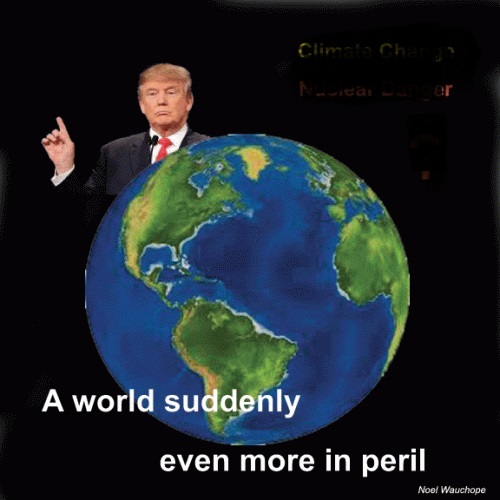
By Richard Wood • Senior Journalist Feb 28, 2025, https://www.9news.com.au/world/donald-trump-stumbles-when-asked-about-aukus-defence-deal/6a602864-b990-4d37-95a4-530e31bd96e8
Politicians from both sides in Australia have weighed in today on US President Donald Trump’s apparent stumble when he said he did not know what AUKUS was.
Trump was hosting visiting British Prime Minister Keir Starmer at the White House when the pair were asked by a reporter whether they’d be discussing AUKUS, under which Australia will acquire nuclear-powered submarines.
“What does that mean?” Trump replied.
American or Trump’s values, or are they the same?
Crispin Hull, 11 Feb 25 https://www.crispinhull.com.au/2025/02/10/american-or-tumps-values-or-are-they-the-same/?utm_source=mailpoet&utm_medium=email&utm_campaign=crispin-hull-column
Australia can now either grimace and bear it for four years pretending nothing has happened; or face reality and question whether AUKUS and the US alliance more generally are worth it.
ANZUS and AUKUS were, from the start, purportedly based on “shared values”. Less than a month into the Donald Trump presidency can we put our hands on our hearts and say, “We share values with the US, and we will spill blood and treasure for those values”?
The acid question now is: to what extent are Trump’s values American values?
Can they be separated as if there is a separate pocket of American values – the rule of law; the separation of powers; freedom of the press; international order; liberal democracy and its spread throughout the world; and the helping hand to people and countries less fortunate?
It is difficult to see how.
The assertion by Trump of his “values” has attracted dozens of lawsuits in less than a month. He acts unlawfully; he bullies; he acts with cruel indifference to human suffering; he acts capriciously and vindictively and without diplomacy.
Trump is reversing 400 years of progress in governance: the rule of law; and the principle that those who are governed owe their loyalty to the law and not to the ruler and that those who govern do so with the consent of the governed and owe their loyalty to the law and the people not to themselves.
The time has come for the allies of the US to ask: what are the passing Trump values that we do not share that will disappear and what values, under Trump, have transmogrified into American values. After all, that is what Trump asserts: that his values are American values.
And, let’s face, a majority of voters voted for Trump.
If Trump values are now American values and American values Trump values, does Australia want to be a part of it? Is Australia safe relying on a new transactional America that sees everything through the selfish prism of only what is good for America, or more narrowly what is good for Trump.
Surely it is dangerous to presume that there are some underlying intrinsically good Amercian values that transcend Trump and will re-emerge when he is gone – when the chances are that this Trump administration will have trashed America’s constitutional framework and electoral processes so badly that the next election, if there is one, will be Trump’s for the taking, with the constitutional prohibition against third terms ignored. Or it will be a shoe-in for his anointed successor – probably JD Vance.
Surely, a better, safer, and more morally sustainable position would be for Australia to suspend the alliance until we can truly say that we have “shared values”.
How do we know that contributing militarily to any US international action is nothing more than Australian blood and treasure being expended to enhance Trump’s personal real-estate empire? He wants to buy Greenland; make Canada the 51st state; and overrun Gaza.
The treatment of Canada is alarming. Canadian Prime Minister Justin Trudeau said that Trump’s desire to make Canada a 51st state “is a real thing”. Remember Trump referred to Trudeau as “Governor Trudeau”.
He threatened Canada with crippling tariffs They have been suspended, but you cannot undo the threat. The relationship dynamic is forever changed because threats (economic, violent, or psychological) destroy trust.
If he can treat Canada, the US’s closest neighbour geographically, linguistically, and historically in that way, surely Australia is no more than a bit piece in the American game of global dominance and economic exploitation.
Australia should now also look at its alliance with the US against the background of history. Against that it is alarming: Trump is not a passing aberration but part of a continuum of some deep-seated ugly American traits.
It starts with the Declaration of Independence when “all men are created equal” excluded women and slaves. Then the Constitution was framed with a deep suspicion of the mass of people and set up an Electoral College to elect the President, rather than by the people directly.
Violence, racism and guns have dominated US history, beginning with the dispossession and genocidal cruelty against the indigenous population. Shortly after fighting a civil war over slavery, the south reverted to segregationist racism that lasted into the 1960s.
In the 19th century, the US was a vicious colonial occupier of the Philippines, In the 20th century, rampant capitalism tipped the US into the Great Recession. Selfish America refused to join the fight against racist Nazism and Japanese fascism until it was itself directly attacked.
Yes, Australia benefited from the US joining the fight against Japan, but the US did not do it to help Australia; that was a side-effect. It just used Australia as a base for its efforts to counter Japan’s threat to the US.
What if our naïve belief in US goodness and exceptionalism is misguidedly founded upon those four or five years of US munificence immediately after World War II despite a 250-year violent history of a male, white, Christian assertion of supremacy?
In those brief years after World War II, the US led the foundation of the United Nations; set up the international rules-based order leading to the World Bank and International Monetary Fund.
The US led the way promoting peace, law, harmony, and immense generosity in adopting the Marshall Plan to reconstruct Europe and a benign, forgiving occupation of Japan.
The US has benefitted and traded off that immediate sunlit post-war image for way longer than its used-by date. And US allies have fallen for it.
Later decades gave us the Korean war; the Vietnam War; Iraq; and Afghanistan. It gave us the Bay of Pigs and numerous other ill-founded, unwarranted interferences in small nations to promote US economic interests under the guise of promoting democracy over communism. The incessant US blood-spilling belligerence went on and on, and Australia was sucked into it at great cost to our blood and treasure.
Do we really now want to contribute to a genocidal expulsion of two million Palestinians so Trump’s America can erect a hotel-strewn shoreline in Gaza for Israel and exploit the rights to newly found oil and gas offshore?
Under Trump, the AUKUS deal takes on a different complexion. Australia, under then Prime Minister Scott Morrison, was stupid enough to sign up to an asymmetrical deal where we pay (and have in fact mostly paid) $A4 billion to US shipyards to help them hasten the construction of Virginia-class nuclear submarines of which we are supposed to get three. But this would be contingent on the President of the day certifying that US would not need the submarine.
Does anyone imagine that transactional Trump would allow any submarines to go to Australia without some further payment or supplication?
The US does not protect Australia, it uses us – and puts us in harm’s way in doing so.
Perhaps we should just be honest and say we do not care about shared values or morality we just want protection and we are willing to pay for it – like some nervous shop owner being stood over by a gangster.
But I think Australia is better than that and that, in the face of the Trumpian wrecking ball, we should suspend AUKUS and the US alliance, or at least have an inquiry into them. Disruptive surprises need not be the sole purview of the attention-seeking and attention-demanding man in the Oval Office.
Is “Bad Faith”‘s Council for National Policy the Atlas Network’s half-brother?

Ed COMMENT. I put this article up on the Australian website. You might think that it has nothing to do with Australia.
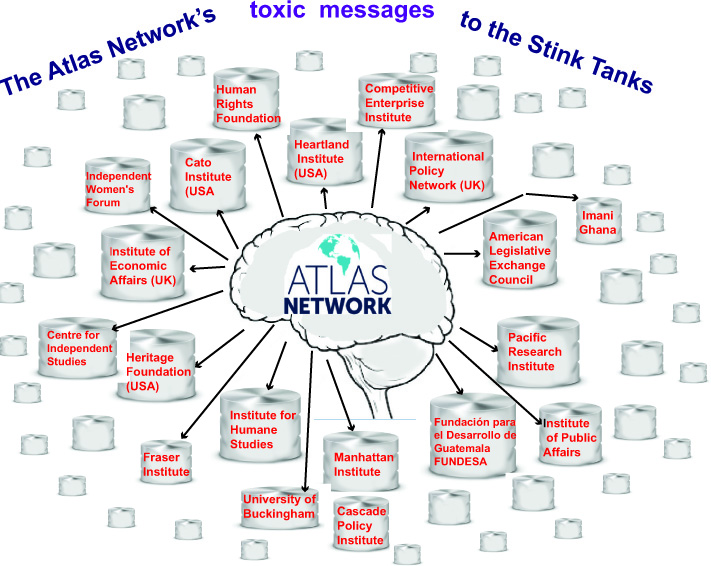
But it does! The fascist chaos now developing in the USA could spread to Australia, as the Atlas Network promotes its Australian off-shoot “Advance”. Advance will funnel $millions into Trumpian-style propaganda, to influence the coming Australian federal election.
The long game of the Mont Pelerin Society that spawned the Atlas Network became colonising government and the law, to make them the servants of the largest players in the economy.
February 6, 2025 Lucy Hamilton, https://theaimn.net/is-bad-faiths-council-for-national-policy-the-atlas-networks-half-brother/
The Council for National Policy is the ultra-secret body tracked in the documentary Bad Faith. Are the Mont Pelerin Society fingerprints there just by chance?
The chaos that is erupting from the people around Trump was forecast in the 900 pages of Project 2025 for those paying attention. The firehose of brutality and stupidity is coming too fast for observers to encompass. Whether it’s 25 year olds with the power to alter code in the Bureau of Fiscal Service or a Christian Nationalist-driven freeze on all public spending or trying to deport Navajo people, the whole project reeks of reckless cruelty and apparent irrationality.
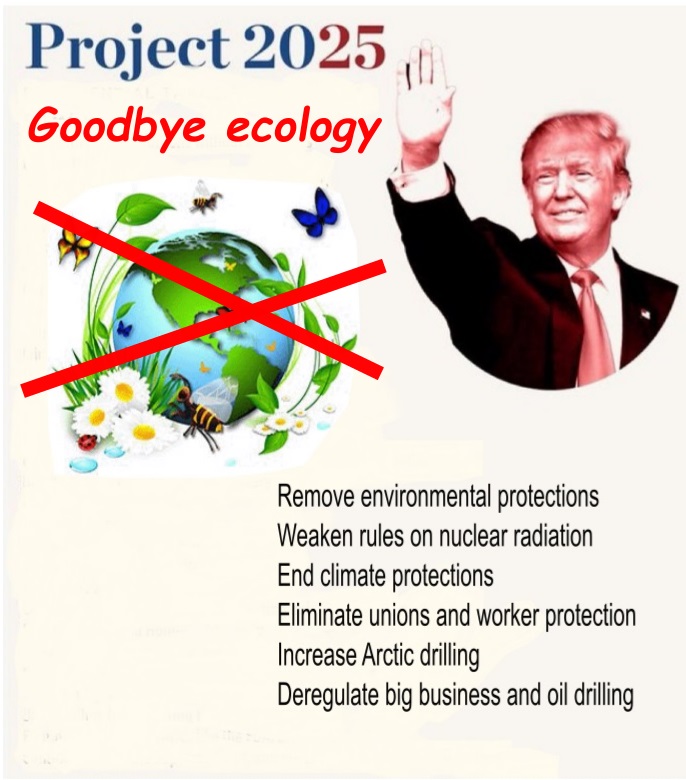
Just as Ronald Reagan implemented 2/3 of the first Mandate for Leadership, Donald Trump implemented 2/3 of his first iteration. Now the Mandate is known as Project 2025 and it’s no longer just a “business republican” project. It’s a Christian Nationalist project too. And 2/3 of the first executive orders of this Trump administration came from Project 2025.
The man likely to take the helm of the Office of Management and Budget, Russell Vought, was revealed as the Christian Nationalist radical he is in this undercover sting operation last year. The chaos is intended to continue. He has said he intends to put career civil servants “in trauma.” He also intends to use the military to crush protests.
This domestic chaos will be deadly; the freeze on USAID spending will kill people sooner. These radicals around Trump do not care: their eugenicist beliefs run deep. It’s a longterm goal: this 2006 annual Atlas Network report contains an essay repeating disdain for foreign aid as a failed concept by (MPS member since 1984, erstwhile president and critical figure in the growth of Atlas and several junktanks), Leonard Liggio. There is no reflection on how many nations need foreign aid because of MPS-driven restructuring and neoliberal interventions to keep those nations impoverished and dependent.
Ronald Reagan, the first de facto Atlas Network US president said: “The nine most terrifying words in the English language are: I’m from the Government, and I’m here to help.” The Trump apparatchiks are trying to make that a vicious reality.
The long game of the Mont Pelerin Society that spawned the Atlas Network became colonising government and the law, to make them the servants of the largest players in the economy. They sold the mission as “freedom” in a “free market,” with “small government” staying out of the little guy’s way. That was not the real intent. Democratic projects, rights or a decent life for the individual (below enabler class) were intended by few in the project. Neofeudalism is a more apt label. You are not even to be allowed to protest your (or others’) immiseration.
People committed to the neoliberal project have a firm commitment to making government look ineffective and wasteful. It may be that government efforts to tackle the pandemic risked making people trust government. The steps towards a UBI might have stung badly for people who believe government spending should only serve the already rich. It is likely also that coercive measures like lockdowns, mask wearing and vaccine mandates triggered their socialism-alarms. There is extensive evidence of junktank partners’ investmentin pandemic disinformation and the fighting of public health measures including masking.
It’s possible that the greater inclusivity of a pluralist society might have been enough on its own to repulse the narrow-minds of this machinery; it could be that the pandemic broke them.
Either way, after the worst of the pandemic, one of the Atlas Network’s most pivotal junktanks appointed a Rad Trad Catholic extremist with connections to Opus Dei as its president, in September 2021. Kevin Roberts was an Atlas operative before this. He used to run the Atlas Texas Public Policy Foundation.
He was also however, by 2022, already on the Council for National Policy board.
The Bad Faith (2024) documentary reveals in grim detail how the Council for National Policy (CNP) was the theocratic machine that built the Moral Majority. It was the network that brought together the extremist Evangelical preachers of that movement, media organisations and funders with some of the Republican Party’s most effective strategists. The documentary is based on journalist Anne Nelson’s extensive investigations in Shadow Network.

Key figures amongst the Republican Party strategists that founded the CNP belonged to the Mont Pelerin Society, just as the key operators in the Atlas Network did – and do.
(Atlas has, since it was founded in 1981, vacuumed up other junktanks and networks into its web of shared strategies and personnel connections: whether they are Atlas spawned or interlinked can be complex to disentangle. Whether CNP was in part an MPS project at its foundation is opaque. It could be that class interests of a small band of operatives led to overlaps in strategising. The two networks are, however, overtly operating in concert now with both strongly represented in the Project 2025 Advisory Board.)
Catholic zealot Paul Weyrich co-founded the Heritage Foundation in 1973. Many historic clips of Weyrich uttering his extreme beliefs are to be viewed in Bad Faith. In 1981, the CNP was founded to galvanise the 1978 undertaking to use the issue of abortion to create a Christian Republican voter bloc. (In 1978, abortion was a fringe Catholic issue, of little interest to Evangelicals.)
Weyrich’s co-founder at Heritage was Catholic Edwin Feulner, later an MPS president, but a member from 1972. He is also a CNP member.
The CNP’s Republican founders included Episcopalian (Anglican) Morton Blackwell, an MPS member from 2007, who created the Atlas Network-and-CNP’s Leadership Institute founded in 1979. It aims to increase “the number and effectiveness of conservative leaders in the public policy process. More than 300,000 conservatives have become leaders through Leadership Institute training.”
Fellow CNP founder was Evangelical? Edwin Meese III who worked with Atlas’s Ronald Reagan from 1966, and was later one of his attorney-generals. Meese was involved with Heritage from 1988. A third was Catholic Richard Viguerie who invented the direct mail scam that fostered the demonising of Democrats to scare grannies out of their pittance.
Both Atlas and the CNP receive funding from Charles Koch and his circle including the Bradleys. On the CNP leaked membership list, Lawson Bader is identified. He is an MPS member and has been president and CEO of Donors Trust and Donors Capital Fund since 2015. Donors Trust is known as the “dark money ATM of the right.” The Mercer family, that funded Breitbart and Cambridge Analytica, is also listed as a CNP donor. The united Devos and Prince families are key donors. Betsy DeVos has roles at several Atlas junktanks. Peter Thiel, tech plutocrat, is now a significant funder of Donors Trust.
Boeing, Coors, Cinemark, Forbes media and Morgan Stanley all have senior figures affiliated with CNP. (Coors money was central to the Heritage Foundation’s funding, with Joseph Coors, Evangelical and white supremacist, a co-founder.)
Currently the CNP and Atlas share several critical partner organisations apart from Heritage and Leadership such as the Federalist Society which has been described as creating the imperial juristocracy around Donald Trump’s second presidency. Another is the American Legislative Exchange (ALEC) that produces reactionary and anti-labour model bills for state legislatures to reproduce. A thirdis Americans For Tax Reform, which Grover Norquist (CNP member) founded at Ronald Reagan’s “request.”
The Acton Institute, Media Research Center, Capital Research Center, Buckeye Institute, National Center for Public Policy Research, Center for Security Policy, Young America’s Foundation, American Conservative Union (parent of CPAC), Discovery Institute and Americans for Prosperity are other joint members. Tea Party Patriots is a CNP member that is spawned as an astroturf outfit out of Atlas’s Freedomworks.
The CNP’s members include the Club for Growth, which is another Koch-supported entity. It funds Republican candidates who fight labour rights. The farce of fighting for the working man that Trump’s campaign feigns is exposed by the many junktanks here strategising to suppress workers.(1)
The CNP is a particularly ugly partner for the Atlas Network which advertises itself as “strengthening the worldwide freedom movement.” It unites the NRA with Turning Point USA with a range of hate groups promoting Islamophobia and homophobia. Its Christofascist members fight rights for women as well.
A key member is the Alliance Defending Freedom which the SPLC summarises as having supported “the recriminalization of sexual acts between consenting LGBTQ adults in the U.S. and criminalization abroad; has defended state-sanctioned sterilization of trans people abroad; has contended that LGBTQ people are more likely to engage in pedophilia; and claims that a “homosexual agenda” will destroy Christianity and society.” Not much freedom there.
The Conservative Partnership Institute (CPI) founded by Senator Jim DeMint, former Heritage Foundation president, in 2017, is a CNP member since 2020. This sub-network has spawned a range of extreme election denial and reactionary policy junktanks. One notable CPI entity is America First Legal, white supremacist Stephen Miller’s critical creation. It is largely funded by Bradley donations.
One of the significant names on the CNP list is Steve Bannon. He has been fighting for the “deconstruction of the administrative state” for years. His esoteric traditionalist beliefs call for the destruction of the age of slaves (democracy) to be replaced by the age of priests. His ally Curtis Yarvin, inspiration of many of the tech-fascist oligarchs, argues a CEO-monarch should replace the democratic experiment. It looks like Elon Musk thinks that should be him.
Many of the Christofascist organisations and individuals in the CNP are anti-democratic, believing that a theocracy is the answer to America’s ills. There is, at minimum, no freedom of religion allowed.
The destruction around Trump is a genuine threat to American’s democratic experiment.
That Reagan’s Mandate for Leadership should have become Project 2025 is startling on its own. The linking of Atlas’s ostensible campaign for freedom with the CNP’s campaign for theocratic coercion illustrates starkly that the freedom is only for a few.
* * * * *
Mont Pelerin is a secretive, invitation only organisation, but some of its leaked members can be found here. The Council for National Policy is ultra-secretive but its leaked members can be found here.
(1) (Business donors who had captured former Democrat Kirsten Sinema years back seem to have sent her back from early retirement to vote down Biden’s choice for a Labor Relations Board that might have been able to protect workers’ rights into the Trump era.)
This research is supported by an Australian Government Research Training Program Scholarship.
1 This month
17 October, Free Public Talk on Nuclear Issues in South Australia
David Noonan will speak on public interest concerns over the new Roxby Downs Indenture Act 2026 on BHP copper-uranium mining and ore processing in SA, and on how AUKUS may face SA with a High-Level nuclear waste agenda.
Dr Jim Green will discuss international developments in the field of nuclear power including ‘small modular reactors’ and Generation 4 ‘advanced’ nuclear reactor concepts.


Help Aunty Sue Protect Her Land and Sacred Sites From Destructive Rocket Testing.
.
Australians deserve the truth
about
AUKUS – https://aukuspublicinquiry.com/

PETITION – To: Prime Minister Anthony Albanese and the Australian Labor Government

of the week – Australians for War Powers Reform (AWPR)
To see nuclear-related stories in greater depth and intensity

