Airstrip One: How Albanese has integrated us into Trump’s military machine
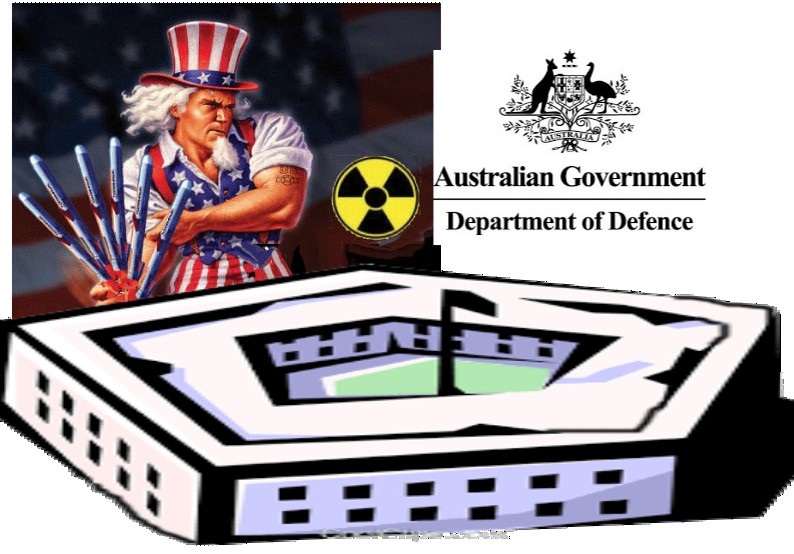
Thanks to the Albanese government, the new Trump administration will find Australia a well-established launch pad for any conflict with China.
Bernard Keane, Nov 11, 2024, https://www.crikey.com.au/2024/11/11/anthony-albanese-australia-us-military-integration-donald-trump/
The next Trump administration will arrive in power to learn that Australia is far more deeply enmeshed in in the US military and intelligence apparatus than in 2020, partly thanks to an eager Albanese government subordinating Australian sovereignty to Washington.
AUKUS is a Biden-era initiative that advocates worry Trump may look askance at, given the pressure it will place on US nuclear submarine production — although the fact that America and the UK can walk away whenever they like, and that Australia is handing $5 billion to each for the privilege of participating, should mitigate Trump’s hostility. That AUKUS will effectively place Australia’s submarine fleet — if it ever arrives — under US control in the 2040s and 2050s may be appealing, but that’s far beyond Trump’s short-term mindset.
But the bigger story of Australian sovereignty under the Albanese government isn’t AUKUS but the steady integration of Australia’s military systems into America’s, and Australia’s transformation into a launch pad for the deployment of American power. The Albanese government has:
- Facilitated “regular and longer visits of US [nuclear submarines] from 2023 to Australia, with a focus on HMAS Stirling. These visits would help build Australia’s capacity in preparation for Submarine Rotational Force-West, an important milestone for the AUKUS Optimal Pathway that would commence as early as 2027”. Submarine Rotational Force-West is the permanent operation of one British and four US nuclear submarines from Perth.
- Allowed US intelligence officials to be embedded in the Defence Intelligence Organisation, a “significant step” toward what Defence Minister (and, as he always insists on being called, Deputy Prime Minister) Richard Marles hailed as “seamless” intelligence ties between the US and Australia.
- Established sharing of satellite imagery “and analysis capability” between Geoscience Australia and the US government.
Established rotation of State Department officials through the Department of Foreign Affairs and Trade “in the areas of technical security, cyber security, and threat analysis”.- Upgraded Top End RAAF airfields to accommodate more US military aircraft, with more upgrades planned, in work hailed by Stars and Stripes as reflecting how “Australians are alarmed at Chinese efforts to gain influence among their South Pacific neighbours”.
- Established facilities for “prepositioning of initial US Army equipment and materiel in Australia at Albury-Wodonga”.
- Continued the Morrison government’s support for the expansion of the Pine Gap surveillance facility, while it is being used, inter alia, to provide intelligence to the Israeli Defence Forces in their genocidal campaign against Palestinians.
- US Marine rotations through Darwin have also been used as “a hub in a lengthy kill web that could protect the region, should Australia face outside threats. ‘Every single day Darwin is becoming more of a hub for us, not just in Australia but through the island chain,’” one American officer says.
In one recent exercise, “Marines set up a bare bones air base on the York Peninsula, Queensland, Australia complete with a fires unit armed with anti-ship missiles and a sensing unit to run air defense … Marines also used their own and Australian aircraft, including C-130s, C-17s and Ospreys to establish an Expeditionary Advanced Base that set up an Osprey maintenance base to extend the aircrafts operations during military exercises. ‘These are real posture gains being made there that will be useful for us in conflict.’”
This demonstrates the validity of Paul Keating’s description of Australia under Albanese as becoming “a continental extension of American power akin to that which it enjoys in Hawaii, Alaska and more limitedly in places like Guam … the national administrator of what would be broadly viewed in Asia as a US protectorate”.
The difference now is that from January, this “continental extension” will be under the control not of a traditional centrist Democrat, but an unstable populist with a deep hostility to China and a stated determination to weaken the country he believes caused the COVID pandemic, as well as an outright hostility to international law and desire to unshackle Israel from any limitations on its mass slaughter of Palestinians. In the event Trump’s proposed trade war with China significantly increases military tensions, Australia will be Airstrip One for the deployment of American power.
Australia US Alliance: Is It Time to Rethink Our Loyalty?
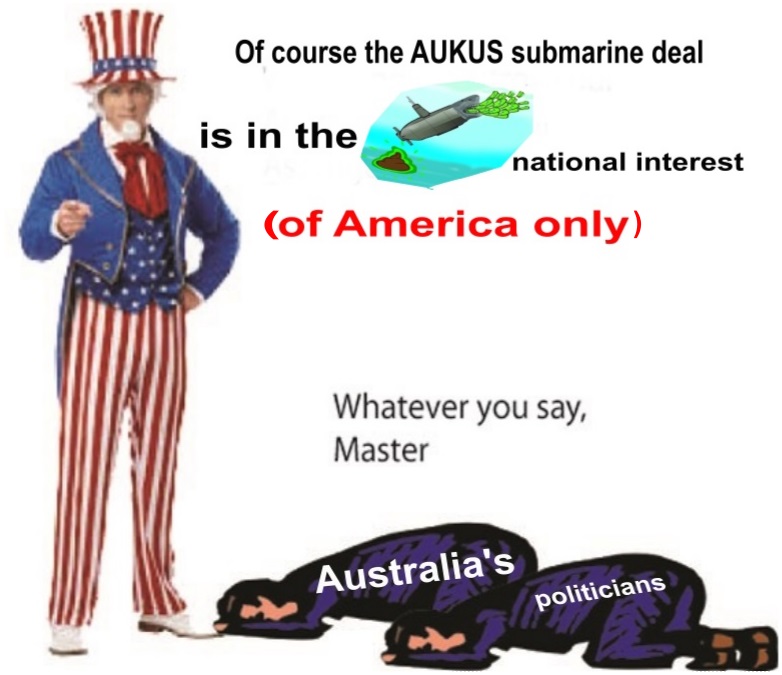
November 10, 2024, by: The AIM Network, By Denis Hay
Australia US alliance has costs. Learn how this impacts Australians and how reallocated funds could benefit citizens.
Introduction
Australia and the United States have been strategic allies for over seventy years. This Australia US alliance, often celebrated with the phrase “old allies and true friends,” is rooted in shared history and mutual defence agreements like the ANZUS Treaty.
However, many Australians are now questioning if the costs of this alliance—both in terms of military and economic impact—outweigh the benefits. This article explores the consequences of Australia’s allegiance to the U.S., the human costs of U.S. interventions, and how Australia’s financial resources might better serve its citizens’ social well-being.
1. The Costly Legacy of the Australia-U.S. Alliance
– Historical Overview: Australia US alliance began formally with the ANZUS Treaty in 1951. Through wars in Korea, Vietnam, Iraq, and Afghanistan, Australia has stood beside the U.S., incurring both financial costs and human losses.
– Casualty Estimates: The human toll of this alliance is staggering. The wars led by the U.S. have resulted in estimated casualties of over 200,000 American troops, 60,000 Australian troops, and millions of civilians globally. For instance, the Iraq War alone caused around 500,000 civilian deaths and displaced over 3 million people.
– The Refugee Crisis: The consequence of U.S.-led wars has been a refugee crisis affecting countless lives. Countries like Syria, Iraq, and Afghanistan have seen millions of citizens fleeing war zones, often with little support from Western nations. Australia’s involvement in these wars contributes to a moral responsibility for the refugee influx, yet the country struggles to support displaced persons adequately.
2. The Social Cost of Alliance-Bound Military Spending
– Military Expenditures at the Cost of Social Welfare: Australia’s defence budget has increased significantly, with estimates of $48.7 billion given in 2023. Much of this spending is tied to keeping military readiness to support the U.S. in conflicts. These funds could otherwise enhance healthcare, education, and housing for Australians.
Military funding without public transparency.
– Impact on Public Services: Redirecting even a part of the defence budget could fund initiatives like universal healthcare, improved mental health services, and housing for the homeless. For example, just 10% of the current defence budget could support building 10,000 public housing units annually or fund a significant expansion of mental health services for underserved communities.
– Consequences of Refugee and Displacement Crises: Australia’s participation in U.S.-led interventions indirectly contributes to refugee crises that strain social services and humanitarian aid. Public sentiment on immigration has also been affected, often creating divisive views within Australian society about who should be supported and who is viewed as a “burden.”
3. A Call for a More Independent and Socially Conscious Foreign Policy
Australia’s alliance with the United States has provided strategic support over the decades, yet many argue that it is time for Australia to pursue a foreign policy that is more reflective of its own interests, values, and the well-being of its citizens.
Despite growing public interest in a more independent, socially conscious approach, Australian governments have hesitated to diverge significantly from U.S.-aligned policies. This reluctance may stem from multiple factors:
1. Fear of Political and Economic Repercussions:
– Australian policymakers often cite strategic security concerns as a reason for adhering closely to U.S. foreign policy, fearing that any independence might jeopardize Australia’s access to American intelligence, technology, and defence resources.
– Economically, a close alliance with the U.S. bolsters trade relations and provides access to powerful American markets. For some politicians, the potential economic fallout of alienating a significant trading and security partner outweighs the call for a more independent stance.
2. Lack of Political Courage and Vision:
– Some critics argue that the Australian government lacks the courage to challenge established norms or take bold steps toward an independent foreign policy. This lack of vision may stem from a longstanding alignment with U.S. interests that has become entrenched in Australia’s political and diplomatic culture.
– Breaking away from such a powerful ally requires a willingness to redefine national priorities, a path that requires courage, strategic foresight, and often a willingness to face criticism from powerful interest groups invested in maintaining the alliance.
3. Disconnect from Public Opinion:
– Surveys show that Australians increasingly favour a more balanced, socially conscious approach to foreign policy, especially as they see the domestic impact of military spending and U.S.-influenced policies. However, successive Australian governments have often ignored this sentiment, raising questions about whether the government genuinely prioritizes the public’s voice in its decisions…………………………..
4. Influence of External Powers and Lobbying:
– Australian foreign policy decisions are also influenced by lobbying from powerful industries, including defence contractors and political think tanks with ties to the U.S. These entities often push for policies that favour a strong alliance with the U.S., as it aligns with their economic and strategic interests.
– The cumulative effect of these influences can stymie efforts for a more independent policy path, effectively sidelining the public’s desire for a foreign policy that prioritizes social well-being and peaceful diplomacy.
In summary, Australia’s reluctance to adopt a more independent, socially conscious foreign policy is a combination of economic dependency, political caution, and a systemic disconnect from the will of the people.
For Australia to shift toward a foreign policy that truly serves its citizens, it would require not only a realignment of political priorities but also a renewed commitment to placing the public’s interests and values at the heart of its foreign relations.
1. The Historical Basis of Australia-U.S. Relations and Its Human Cost……………………………………………….
2. Australia’s Position on U.S. Leaders and Policies
– Unquestioned Loyalty: Australian leaders often affirm support for U.S. presidents and foreign policies without critical evaluation. This approach reflects a hesitancy to challenge U.S. decisions even when they conflict with Australia’s best interests.
– Impact on Australian Sovereignty: The uncritical acceptance of Australia US alliance policies can undermine Australia’s autonomy. For example, Australia’s alignment with U.S. policies on China has strained trade relationships, affecting vital economic sectors like agriculture, tourism, and education. The result is a compromise of national interests to support a symbolic “alliance.”
3. U.S. Military Interventions, Global Casualties, and the Refugee Crisis
– Scope of U.S.-Led Wars: The U.S. has been involved in conflicts worldwide, from the Middle East to Latin America and beyond, often resulting in widespread devastation. These conflicts have had lasting impacts, including millions of civilian deaths and widespread destruction.
– The Refugee Crisis and Australia’s Responsibility: Australia’s support for U.S. interventions creates a moral obligation to help refugees from war-torn countries. However, current refugee policies fall short, leaving many displaced people without adequate support or protection. Accepting more refugees from conflict zones would reflect Australia’s commitment to international human rights and fulfill part of its alliance-driven responsibility.
4. Australia’s Role as a Supporting Partner and Its Consequences
– Participation in Conflicts and Reputational Impact: Australia’s involvement in U.S. wars affects its international reputation, often casting the country as a secondary player rather than an independent, neutral voice in global politics. This alignment can make Australia appear complicit in conflicts driven by U.S. interests, compromising its image as a peaceful nation.
– Economic and Social Impact on Australians: By aligning with U.S. defence priorities, Australia diverts significant public money to defence spending, reducing resources for vital services. Citizens bear the costs through reduced access to affordable healthcare, housing shortages, and an underfunded education system. The pressure to conform to U.S. policies, especially in the Indo-Pacific, risks escalating regional tensions that could directly affect Australians.
5. The Opportunity Cost: How Reallocating Military Spending Could Benefit Australians……………………………………………………………..
Rethinking Australia’s Foreign Policy Approach for the Future
As global dynamics shift, Australia faces a critical juncture in deciding how to position itself on the world stage. A key element of this decision lies in its relationship with China, a rapidly growing economic and political power in the Indo-Pacific region.
While the Australia US alliance has historically shaped much of Australia’s foreign policy, the rise of China presents an opportunity for Australia to pursue a balanced, independent approach that prioritizes regional stability and mutual benefit.
1. China’s Role as Australia’s Major Trading Partner:……………………………………….
2. Promoting Regional Stability and Security:
– As a dominant power in the Indo-Pacific, China’s influence on regional security is substantial. Building a constructive, diplomatic relationship with China could position Australia as a mediator and stabilizer within the region, promoting dialogue over conflict.
– With rising tensions between the U.S. and China, Australia has a unique opportunity to champion a foreign policy that values peace, cooperation, and shared interests, rather than one that escalates division. This approach would reduce the risk of Australia being drawn into potential conflicts that do not serve its national interests.
3. Economic and Diplomatic Benefits of Non-Alignment:………………………….
4. Preparing for a Multipolar World:
– The global power landscape is shifting from U.S.-led dominance to a multipolar world where countries like China, India, and emerging economies play a larger role. For Australia, recognizing and adapting to this reality is crucial for staying relevant and resilient in the international arena…………………………….
Conclusion
Australia US alliance has served strategic purposes in the past, but as global dynamics shift, it’s vital to reassess whether the benefits of this alliance outweigh the costs. The loss of lives, the displacement of millions, and the diversion of public money from critical social services highlight the urgent need for a foreign policy that prioritizes Australia’s long-term interests and humanitarian values.
By adopting a more independent stance, Australia could enhance the social well-being of its citizens and contribute to a more peaceful, stable global community. https://theaimn.com/australia-us-alliance-is-it-time-to-rethink-our-loyalty/
Reconsider AUKUS, say former Labor foreign ministers

David Crowe, The Age November 7, 2024
Former Labor foreign ministers have warned that Australia must reconsider the AUKUS pact with the United States in the wake of Donald Trump’s victory in the presidential election, predicting the US will scale back the deal to protect itself.
The warnings heighten the argument over the far-reaching defence pact as Foreign Minister Penny Wong insists the government will keep ambassador Kevin Rudd in place in Washington, DC, despite his past criticism of Trump.
Prime Minister Anthony Albanese and Opposition Leader Peter Dutton have both insisted the alliance is secure because of Australia’s historic friendship with America, while the defence plan assumes the US will sell nuclear-powered submarines to Australia from 2032.
Former foreign minister and NSW premier Bob Carr said the United States was already struggling to meet its targets to build more nuclear-powered submarines and would be reluctant to sell vessels to Australia as promised.
Carr said the most likely outcome was that the US president – such as the leader who comes after Trump – would decide to keep the Virginia-class vessels to maximise the number of nuclear-armed submarines in the US fleet. Once sold to Australia, the vessels could not be nuclear-armed.
“They’re not going to harm themselves by selling precious subs to Australia that, once they are sold to Australia, will cease to be nuclear-armed,” he said.
“I think that’s going to be the transmutation of AUKUS into a simple pact that says US subs will be based on the west and quite possibly the east coast of Australia.
“And it means the only sovereign submarine capacity we’ve got is the ageing Collins-class and what in the future might emerge from British shipyards.”
Carr said the “grandiosity” of AUKUS rendered it vulnerable to decisions by the Trump administration and a decision in the 2030s by a future president.
“I think at the very least there’s got to be a serious discussion in Canberra about whether we want a sovereign submarine capacity and whether we’ve got to accept that under intense competition with China, whether America in the 2030s can conceivably adhere to the grand promise.
“We’ve got to discuss the prospect that the decision will be made by people not yet in power in America.”
Gareth Evans, foreign minister in the Hawke and Keating governments, said the new administration was likely to voice support for AUKUS until practical pressures forced a new approach.
“Trump is transactional and will start like the Biden administration – seeing this as a good deal for the US financially and because the boats will be, for all practical purposes, US assets,” said Evans.
“But that will last only until it becomes apparent, probably in the next year or two, that the US shipyards are not meeting their own Virginia replacement targets.”
The AUKUS pact says the first vessel in a new design, known as the SSN-AUKUS, will be completed at an Australian shipyard in the early 2040s.
As an interim step, the government assumes US and UK submarines will start operating on rotation from HMAS Stirling, near Perth, from 2027, easing the burden on the ageing Australian Collins-class vessels.
Australia will also pay $4.7 billion to US companies to help fund the technologies – such as nuclear propulsion – needed for the new fleet.
Former attorney-general George Brandis, who was Australian high commissioner to the UK when the AUKUS pact was struck, said he believed the agreement was not under threat from Trump.
…………………………………………Former prime minister Malcolm Turnbull said he did not think Australia would ever get the Virginia-class submarines promised under AUKUS, but he said this would be due to constraints on the US Navy and not the personal views of Trump as president.
“The bottom line is the American Navy is at least 17 Virginia-class submarines short of what they believe they need,” Turnbull told Radio National on Thursday.
“The legislation which authorises America to sell Virginia-class submarines to Australia says that before doing so, the president has to certify that the US Navy’s underwater capabilities would not be diminished by the sale.
“In other words, that they’re surplus to the US Navy’s requirements. Now, I don’t see how an American president could do that.”…………………. https://www.theage.com.au/politics/federal/reconsider-aukus-say-former-labor-foreign-ministers-20241107-p5koko.html
Australia votes at the UN General Assembly

A few days ago, Australia voted on a number of nuclear weapons resolutions at the UN General Assembly. Thank you to the hundreds of you that emailed Foreign Minister Wong urging Australia to vote in the right way! In good news, Australia voted “Yes” on the scientific research resolution (L.39) supporting a major new UN-mandated study on the effects of nuclear weapons. Several nuclear-armed states were trying to mobilise supporters to vote against this resolution so we know they are threatened by it. Knowledge is power!
Disappointingly, Australia continued its abstention on the TPNW resolution (L.37) and humanitarian impacts resolution (L.36), instead of voting “Yes”.
Earlier in October ICAN visited Parliament to advocate for the TPNW with parliamentarians across the political spectrum. We were also delighted to have met with Siswo Pramono, Indonesia’s Ambassador to Australia, and congratulate him on Indonesia’s recent ratification of the TPNW. Mr Pramono addressed the Parliamentary Friends of the TPNW group and stated that the success of the TPNW also hinges upon the participation of countries who possess nuclear weapons. “We need a concerted effort to convince them to become Parties to the Treaty,” he said. “In doing so, leadership from developed countries such as Australia is needed.”
Top Australian honour (whaa-at !!!!) for American politician who helped push Australia into the shonky AUKUS agreement
Rex Patrick, 24 Oct 24
Albanese pours $5B of Australian taxpayers’ cash into US shipyards (with no guarantee #AUKUS subs will ever be delivered). He then arranges for the local US Congressman to get a top Australian honour. Icing on the cake for that guy.
Rep. Courtney to receive Australia’s top civilian award
WSHU | By Brian Scott-Smith, October 23, 2024
U.S. Rep. Joe Courtney (D-CT-2) has been chosen for one of Australia’s top civilian awards. Courtney is one of a few Americans to be given the Order of Australia, which recognizes extraordinary service by a non-citizen…………………… He has also been instrumental in the AUKUS trilateral defense agreement between Australia, the UK and the U.S. to help provide nuclear submarines to Australia. It’s the first time the U.S. has entered into such an agreement with another country…….. https://www.wshu.org/connecticut-news/2024-10-23/ct-joe-courtney-australia-civilian-award
Congressional report suggests Australia could dump plans to acquire AUKUS nuclear submarines

“This division of power no doubt makes sense from a US perspective with Australia providing them with funds and bases and getting no actual submarines,”
“From an Australian perspective that looks far more like a strategic surrender than a partnership – Greens Senator David Shoebridge
ABC News, By Defence Correspondent Andrew Greene and State Political Reporter Rory McClare, 18 Oct 24
In short
An influential US research body has published a report arguing Australia could invest in long-range bombers and other capabilities instead of nuclear-powered submarines.
The report says there is “little indication” that “rigorous” analysis was conducted on whether there were more cost-effective options.
What’s next?
Greens senator David Shoebridge, a vocal opponent, said the AUKUS partnership looked like a “surrender” of Australian interests.
Research prepared for the United States Congress argues Australia could abandon its $368 billion AUKUS push to buy nuclear-powered submarines (SSNs), outlining several alternatives including US owned boats serving both nations.
According to the report published by the Congressional Research Service (CRS), billions of Australian dollars could instead be diverted to military capabilities for this country and the US, such as missiles and B-21 long-range bombers.
Under the AUKUS Pillar 1 plan, US and British nuclear submarines will rotate out of Western Australia from 2027, before Australia buys up to five second-hand Virginia class boats in the 2030s, and then begins constructing a new fleet known as SSN-AUKUS.
In the 105-page report, a number of policy options are presented including Australia no longer purchasing US submarines but instead having American boats perform missions on its behalf, while still continuing to design and build the SSN-AUKUS fleet.
“An alternative to Pillar 1 as currently structured would be a US-Australia military division of labour under which US SSNs would perform both US and Australian SSN missions while Australia invested in military capabilities for performing non-SSN missions for both Australia and the United States,” the report reads.
“Australia, instead of using funds to purchase, build, operate, and maintain its own SSNs, would instead invest those funds in other military capabilities — such as, for example, long-range anti-ship missiles, drones, loitering munitions, B-21 long-range bombers, or other long-range strike aircraft.
“Under this variation, the size of the US SSN force would eventually be expanded above previously planned levels by eight boats (i.e., the planned eventual number of SSNs that Australia had planned to acquire).”
Using stark language, the report warns that the costs of AUKUS Pillar 1 for Australia could “reduce, perhaps significantly, funding within Australia’s military budget for other Australian military capabilities” particularly if the project’s budget blows out.
“If this were to occur, there could be a net negative impact on Australia’s overall military capabilities for deterring potential Chinese aggression,” the report says.
The CRS report claims no alternatives were ever considered by AUKUS partners and concludes by diverted spending elsewhere it would help “create an Australian capacity for performing non-SSN military missions for both Australia and the United States”.
“There is little indication that, prior to announcing the AUKUS Pillar 1 project … an analysis of alternatives (AOA) or equivalent rigorous comparative analysis was conducted to examine whether Pillar 1 would be a more cost-effective way to spend defence resources”.
Proposals a ‘strategic surrender’
Greens Senator David Shoebridge, a vocal opponent of AUKUS, says the proposals outlined in the congressional report appeared more like “a strategic surrender than a partnership”.
“This division of power no doubt makes sense from a US perspective with Australia providing them with funds and bases and getting no actual submarines,” he said.
“From an Australian perspective that looks far more like a strategic surrender than a partnership.
“For the US, the whole AUKUS deal always had at its heart US access to Australian real estate for their submarines, bombers and marines, with any marginal additional Australian capacity being very much secondary.”……….. https://www.abc.net.au/news/2024-10-17/report-suggests-australia-dump-aukus-nuclear-submarine-plans/104486868—
Indonesia, Solomon Islands join countries banning nuclear weapons, putting Australia at odds with neighbours
ABC, By Lachlan Bennett and Erwin Renaldi, 29 Sept 24.
Indonesia, a country of 275 million and one of Australia’s closest neighbours, is stepping up efforts to enforce a global ban on nuclear weapons.
This week, it officially joined the United Nations Treaty on the Prohibition of Nuclear Weapons — confirming its ratification of the pact along with Solomon Islands and Sierra Leone.
Indonesia’s Ministry of Foreign Affairs said in a statement it would put “moral and political pressure on nuclear weapon states to stop their development”.
The treaty, which came into force in 2021, now boasts almost 100 signatories.
But it has thus far failed to secure Australia or the big nuclear powers: China, the US, Russia, India, the UK and France.
Amid rising tensions in the Asia-Pacific, many smaller nations want the bomb banned before it’s too late.
Why hasn’t Australia signed the new prohibition treaty?
Australia has a long history of supporting anti-nuclear weapons initiatives.
This includes helping to establish the 1996 Comprehensive Nuclear Test Ban Treaty and the 2010 Non-Proliferation and Disarmament Initiative.
Most importantly, Australia’s efforts are underpinned by the Treaty on the Non-Proliferation of Nuclear Weapons — which it signed in 1970.
That treaty has 191 signatories, more than any other arms disarmament agreement in history, and has overseen a decline in global stockpiles and countries including South Africa and Ukraine agreeing to relinquish their arsenals.
But international relations lecturer Muhadi Sugiono, from Gadjah Mada University in Indonesia, said non-proliferation alone had failed to force nuclear powers to abandon their weapons programs.
“It is impossible, in fact, to expect the Non-Proliferation of Nuclear Weapons Treaty will achieve this goal,” he said.
“There is no legal framework which demands them to do so.”………………………………………………………………………
Is Australia really serious about banning nukes?
Despite Australia’s strong anti-nuclear activities, its alliance and reliance on nuclear superpower the US has raised eyebrows among advocates.
Dr Sugiono said Indonesian authorities recognised Australia’s “very, very strong” opposition to nuclear proliferation.
“But at the same time, the position is very ambiguous because Australia is very close to the US,” he said.
These concerns were brought into focus during a Senate hearing in 2023, when the Defence Department was grilled about Australia’s commitment to the South Pacific Nuclear Free Zone.
That treaty prohibits the stationing of nuclear explosives on Australian territory.
However, the United States’ policy of “neither confirming or denying” the presence of its weapons raised suspicions about what might be onboard visiting US aircraft…………………………………………………..
University of Sydney international relations professor Justin Hastings said that explains why most signatories of the new prohibition treaty were “non-aligned states” — in other words, countries that are neither allied with Western powers or their strategic rivals like China and Russia.
“Australia and many other countries want to have their cake and eat it too,” he said.
“They don’t have nuclear weapons, but they do want to benefit from the extended deterrence that comes from other countries having nuclear weapons.”
What does AUKUS have to do with it?
The optics were further clouded by the signing of the AUKUS defence pact with the US and UK, even though it will bring nuclear-powered submarines and not nuclear weapons to Australian shores.
The Indonesian government said it was blindsided by the announcement, forcing Australian diplomats to rush to calm the anxieties in South-East Asia and emphasise that Australia has no desire to obtain nuclear weapons.
International Campaign to Abolish Nuclear Weapons coordinator Tim Wright said signing the prohibition treaty would help Australia allay the concerns of its Pacific neighbours and “create additional guardrails against nuclear weapons”.
And Australia wouldn’t have to end its alliance with the US, given other allies like the Philippines have already signed.
“There would clearly be issues that arise in relation to the alliance that would need to be dealt with,” Mr Wright said.
“But there are precedents that we can point to that suggests that this wouldn’t spell an end to the alliance, as some people have feared.”
Why is there a new treaty, when we’ve already got one?
The prohibition treaty is designed to work in conjunction with existing non-proliferation agreements and fill a “legal gap” to ensure nuclear nations eliminate their weapons……………………………………………………
The new treaty also contains provisions to people and places impacted by nuclear testing, such as the Pacific, which saw hundreds of bombs denoted over several decades.
“It’s not just a treaty about disarmament, it’s also a treaty for nuclear justice,” Mr Wright said.
“There’s a real strong sense of regional solidarity in advancing disarmament, this understanding that people in the region have suffered.”
So what does this mean for Australia’s relations in the region?…………………………………. https://www.abc.net.au/news/2024-09-29/indonesia-ratifying-nuclear-pact-what-it-means-for-australia/104401610—
Marles, with all pretension, flogging a dead seahorse

By Paul Keating, Sep 28, 2024, https://johnmenadue.com/marles-with-all-pretention-flogging-a-dead-seahorse/
Richard Marles and his mate, the US defence secretary, are beginning to wilt under the weight of sustained comment in Australia critical of the AUKUS arrangement.
Marles, unable to sustain a cogent argument himself, has his US friend propping him up in London to throw a 10,000-mile punch at me – and as usual, failing to materially respond to legitimate and particular criticisms made of the AUKUS arrangement.
The US Defence Secretary, Lloyd Austin, claims AUKUS would not compromise Australia’s ability to decide its own sovereign defence issues, a claim made earlier by Richard Marles and the prime minister.
But this would only be true until the prime minister and Marles got their phone call from the president, seeking to mobilise Australian military assets – wherein, both would click their heels in alacrity and agreement. The rest of us would read about it in some self-serving media statement afterwards. As my colleague, Gareth Evans, recently put it, “it defies credibility that Washington will ever go ahead with the sale of Virginias to us in the absence of an understanding that they will join the US in any fight in which it chooses to engage anywhere in our region, particularly over Taiwan”.
In London, Marles claimed that the logic behind AUKUS matched my policy as prime minister, in committing to the Collins class submarine program. This is completely untrue.
The Collins class submarine, at 3,400 tonnes, was designed specifically for the defence of Australia – in the shallow waters off the Australian continental shelf.
The US Virginia class boats at 10,000 tonnes, are attack submarines designed to stay and stand on far away station, in this case, principally to wait and sink Chinese nuclear weapon submarines as they exit the Chinese coast.
At 10,000 tonnes, the Virginias are too large for the shallow waters of the Australian coast – their facility is not in the defence of Australia, rather, it is to use their distance and stand-off capability to sink Chinese submarines. They are attack-class boats.
When Marles wilfully says “AUKUS matches the Collins class logic” during the Keating government years, he knows that statement to be utterly untrue. Factually untrue. The Collins is and was a “defensive” submarine – designed to keep an enemy off the Australian coast. It was never designed to operate as far away as China or to sit and lie in wait for submarine conquests.
And as Evans also recently made clear, eight Virginia class boats delivered in the 2040s-50s would only ever see two submarines at sea at any one time. Yet Marles argues that just two boats of this kind in the vast oceans surrounding us, materially alters our defensive capability and the military judgment of an enemy. This is argument unbecoming of any defence minister.
As I said at the National Press Club two years ago, two submarines aimed at China would be akin to throwing toothpicks at a mountain. That remains the position.
The fact is, the Albanese Government, through this program and the ambitious basing of American military forces on Australian soil, is doing nothing other than abrogating Australia’s sovereign right to command its own continent and its military forces.
Marles says “there has been demonstrable support for AUKUS within the Labor Party”. This may be true at some factionally, highly-managed national conference — like the last one — but it is utterly untrue of the Labor Party’s membership at large – which he knows.
The membership abhors AUKUS and everything that smacks of national sublimation. It does not expect these policies from a Labor Government.
AUKUS boss insists project remains on track despite frustrations and staff upheaval within submarine agency
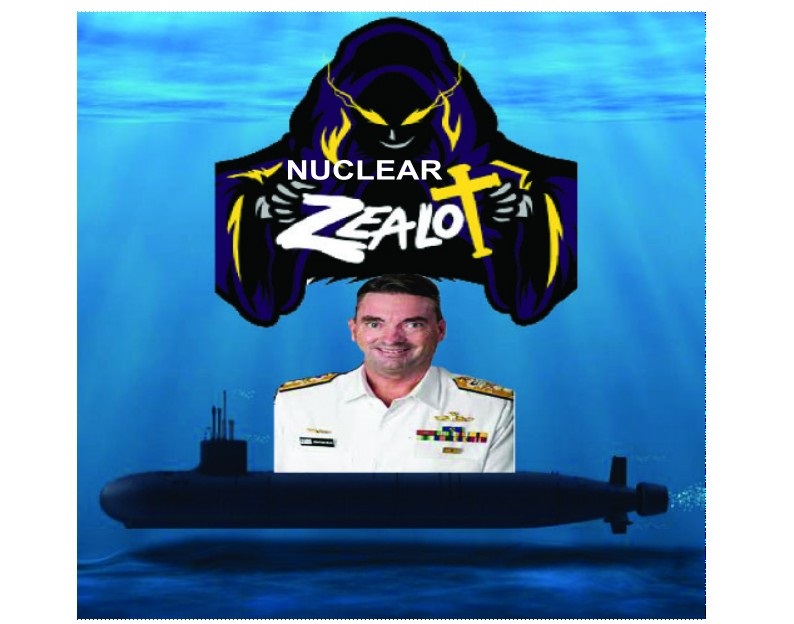
In an interview coinciding with the third anniversary of the AUKUS agreement, Admiral Mead rejected criticism within defence that the multi-billion-dollar push to acquire nuclear-powered submarines was cannibalising the budget for other military projects
ABC News, by defence correspondent Andrew Greene, 20 Sept 4
In short:
The head of Australia’s submarine agency has acknowledged staff turnover but insists the $368 billion AUKUS project is on track.
Privately, Australian Submarine Agency insiders and other officials have expressed frustrations with the progress of Australia’s nuclear submarine endeavour.
Staff upheaval and frustrations with leadership are emerging inside the new government agency that is overseeing Australia’s $368 billion AUKUS project, as concerns mount about the ambitious push to acquire nuclear-powered submarines.
Australian Submarine Agency (ASA) boss Vice Admiral Jonathan Mead has rejected claims his organisation is “top heavy” but acknowledged some recent departures of senior figures, while also insisting “AUKUS is real and it’s happening”.
Defence figures, foreign officials and industry representatives have privately spoken to the ABC about their disquiet with the ASA’s progress on preparing for AUKUS, contradicting recent optimistic statements about the trilateral venture.
AUKUS was first unveiled in 2021 by former prime minister Scott Morrison and aims to deliver a nuclear submarine capability for Australia through a security partnership struck with the United States and United Kingdom.
In July last year, the ASA was established to “safely and securely acquire, construct, deliver, technically govern, sustain and dispose of Australia’s conventionally armed nuclear-powered submarine capability” under the AUKUS partnership.
Several weeks ago, ASA staff say they were stunned to learn one of the organisation’s most senior technical directors was leaving after playing a significant role that he had taken on following years of distinguished service in defence and the private sector.
“There’s a lot of disquiet here and we are really struggling to keep staff,” one ASA insider told the ABC, speaking under the condition of anonymity through fear of retribution by defence.
Another source connected to the agency claimed “several” relatively senior and experienced people left the organisation in recent months because of “concerns with the ASA’s top leadership”…………………………………………………………………………………….
Mead defends AUKUS project
Since its establishment under Admiral Mead, the ASA has grown to almost 700 full-time staff, including a dozen military officers holding a 1-star rank or higher, and an annual budget of $330 million, which is mainly comprised of salary costs.
In an interview coinciding with the third anniversary of the AUKUS agreement, Admiral Mead rejected criticism within defence that the multi-billion-dollar push to acquire nuclear-powered submarines was cannibalising the budget for other military projects…………………..
Under stage one of AUKUS, British and American nuclear submarines will rotate out of Perth from 2027. Then in the 2030s, Australia will receive second-hand Virginia boats from the United States, before constructing a new SSN-AUKUS fleet in Adelaide.
Privately, US officials have also expressed alarm at the slow progress in preparing for the stationing of nuclear-powered submarines out of Western Australia, under Submarine Rotational Force-West, and the transfer of second-hand boats in the 2030s.
We keep hearing announcements of new workforce recruitment initiatives, but they need to be far greater and much faster — the sense of urgency just isn’t there,” an American official who is not authorised to speak publicly told the ABC.
Admiral Mead insists “the US is very happy” with Australia’s progress but also declined to say what would happen if American shipyards do not deliver 2.33 Virginia submarines a year by 2028, the target required before boats can be transferred here…………………….
Frustration over slow progress
Frustration with the ASA’s direction is also privately shared by local defence industry representatives who have expressed disquiet with the slow progress in striking a joint venture to build the future SSN-AUKUS fleet in Adelaide.
In March, the government announced the Commonwealth-owned ASC would partner with British-owned company BAE Systems Australia to construct the nuclear-powered boats in Adelaide, but the joint venture is yet to be finalised.
One figure involved in the process claims targets are already being missed, highlighting the competing tensions and agendas between defence and ASC, which is run by the finance department……………………… more https://www.abc.net.au/news/2024-09-20/aukus-boss-defends-project-amid-frustrations-staff-turnover/104372920?utm_source=abc_news_app&utm_medium=content_shared&utm_campaign=abc_news_app&utm_content=mail
Albanese has a second chance with AUKUS
Australia is to spend mind-boggling money to weaken its own security. Marles has released a National Defence Strategy which centres on what he calls “projection”. That is, Australian forces threatening China from China’s surrounding waters.
it is America which now sets our defence policy,
By Mike Gilligan, Sep 14, 2024 https://johnmenadue.com/albanese-has-a-second-chance-with-aukus
Australia is to spend mind-boggling money to weaken its own security. Minister RIchard Marles has released a National Defence Strategy which centres on what he calls “projection”. That is, Australian forces threatening China from China’s surrounding waters. The Albanese Government’s defence policy manufactures grievous risk for Australia. That risk must be understood by the government.
The weekend Sydney Morning Herald (7 September) front page said: “Australia key to new US security scheme” by Peter Hartcher in Washington.
Hartcher is known as part of the Herald’s China-threat scare in March 2023, telling Australians that we face war with China within three years. Today that leaves just 18 months at the outside before war breaks out. Clearly ill-founded, it was a sensationalist attempt to panic Australians into embracing America’s planning for conflict with China.
The Americans are still at it, of course. And Hartcher is their messenger – boasting that his access in Washington is special because his interview at the White House is the only one which President Joe Biden’s National Security Adviser, Jake Sullivan, has given to Australian media in his 3-1/2 years in the role. Hartcher followed up with another report a few days later explaining that the Americans are looking for another big technology project to foist on Australia. In a hurry, because progress against China has been too slow.
Sullivan wants the new scheme stitched up before Biden leaves office. And by the way, Australia must spend more on defence for its role against China.
America is accustomed to dealing with its allies in that way. Europe’s NATO forces always have been shaped by US close oversight. Its member states are regularly hectored to spend more on defence against a common enemy. Sullivan is treating Australia just as he would another NATO ally. Without a second thought. And Australia’s leaders have fallen into line obsequiously.
Again it has to be said – Australia is not like the NATO countries. NATO was set up in response to an agreed security threat, the USSR.
We have no security threat. No Australian Government has declared, much less demonstrated, that China is a security threat. We had decades of understanding with the United States that our defence spending should be directed to Australia’s own defence with our own forces. Without relying on America. In situations where Australia supported the US militarily overseas, it would be with forces which we held for our own priorities. Nothing special would be done for America. America agreed. That was Australia’s independence in action.
It worked for 35 years until President Barack Obama visited in 2010 effectively requiring Australia to do an about-face. Signalling that henceforth Australia’s defence would be done America’s way.
The Albanese Government’s defence policy manufactures grievous risk for Australia. That risk must be understood by the government.
It is Australia’s experience with the US itself which defines the risk. No need to look elsewhere for examples. Ever since the ANZUS treaty was signed in 1953, America has told Australia not to rely on it if attacked. Again in contrast to NATO, ANZUS deliberately avoids American commitment to assisting Australia if attacked. It was the proof of that American reluctance (over Indonesia) and the Vietnam tragedy which led to Australia facing reality – bipartisanly adopting a self- reliant defence policy in 1976. The risk of not embracing self- reliance was deemed intolerable. To not pursue self-reliance feckless. And that initiative came with America’s enthusiastic endorsement, for 35 years.
Today it suits America to use Australia’s forces for its own ends against China. Yet it won’t commit to our security by dignifying us with a genuine treaty. The obvious risk is that America’s interest in Asia will decline, for many reasons. Then Australia will be left with defences of little use for our own need. What good is an island-hopping army dependent on US Marines, who have gone home? It’s been said before. But the profound risk hasn’t sunk in.
At the business end, the Albanese Government is spending heavily to dump Australia ever deeper into the risk predicament. Marles flaunts the financial cost. Noting that the Defence budget was $48 billion in 2022-23, the Albanese Government will raise it to $55.7 billion in 2024-25:
“These increases will see annual Defence spending almost double over the next ten years to $100 billion in the financial year 2033-34. Taken over a 10-year period, it will be the largest sustained growth in the Defence budget since the Second World War.”
This is the spending which Sullivan says should be increased. Australia’s defence budget of $58 billion is the same as Japan’s, also accelerating because of US pressure.
Australia is to spend mind-boggling money to weaken its own security. Marles has released a National Defence Strategy which centres on what he calls “projection”. That is, Australian forces threatening China from China’s surrounding waters. Sam Roggeveen in his elegant essay “The Jakarta Option” describes the influences which render Marles’ strategy foolhardy. He presents evidence of a structural shift in warfare which renders maritime attack on an opponent’s territory increasingly hazardous. The exchange ratio of maritime forces to land-based weapons has swung heavily to the defender ie China in this case. Marles strategy of “projection” is squarely on the wrong side of this asymmetry.
So, what to do about this latest American “initiative”? Albanese tells the tale of having just one day to consider AUKUS when in opposition. He now has the full resources of Cabinet and can set his own timetable. He can require Marles to talk to the risks and costs to Australia of his National Strategy of power projection. And this latest directive from Washington. Ministers, especially the treasurer, should work through the risks, costs and consequences so that they genuinely know what Australia is being led into at vast cost.
Back to Hartcher. He unwittingly does us a service, demonstrating yet again that Australians have to rely on the candour of American leaders to see through the murky verbiage of Defence Ministers, confirming that it is America which now sets our defence policy, down to project detail. Hartcher will have something to brag about when he has the level of access in Beijing which he claims in Washington.
The tangled nuclear web of lies and half-truths – can we believe that Australia will refuse to take USA toxic wastes?
How is the Australian government going to twist their way around THIS ONE!
I’d really like to believe Prime Minister Anthony Albanese, who once was a noble opponent of the military-industrial-nuclear complex.
But – now – I fear that he is as gutless as most Australian politicians when it comes to sucking up to the USA.
https://theaimn.com/can-we-believe-that-the-australian-government-will-really-refuse-to-take-usa-uk-nuclear-submarine-waste/ 12 Sept 24, Today comes one of those amazing bits of news that a national government, in this case, it seems, Australia, has actually listened and responded to the many voices of peace and environment activists who are shocked at the proposed Naval Nuclear Propulsion Treaty which benefits the USA, but not Australia, and which makes Australia responsible for high level nuclear wastes from U.S/UK nuclear submarines.
If we can believe the Labor government – they are going to stand up to the USA and the UK, and refuse to accept high level toxic radioactive trash from USA – ‘Relief’ Australia won’t take high-level nuclear waste under AUKUS.
The latest information on Australia getting nuclear submarines is that as early as 2027, the United States will begin rotational presence in the Western Australia facility. Ultimately, there will be up to four U.S. Virginia-class submarines and one United Kingdom Astute-class submarine at HMAS Stirling. https://www.defenseone.com/business/2024/01/race-prepare-australia-nuclear-subs/393601/
So these nuclear submarines will be stationed in Australia , but owned by the USA and UK, not by Australia.
Well- here are a couple of clauses from this jargon-filled proposed Treaty:
ARTICLE IV – D
Australia shall be responsible for the management, disposition, storage, and disposal of any
spent nuclear fuel and radioactive waste resulting from the operation of Naval Nuclear
Propulsion Plants transferred pursuant to this Article, including radioactive waste generated
through submarine operations, maintenance, decommissioning, and disposal.
ANNEX B: SECTION I – SPECIAL NUCLEAR MATERIAL
Such Power Units shall contain highly enriched uranium and, only with respect to irradiated fuel, may contain plutonium.
Friends of the Earth are among the many who have sounded the warning:
Minister for Defence Richard Marles has stated that Australia would not accept radioactive waste from overseas, but this has not been explicitly ruled out in the Australian Naval Nuclear Power Safety Bill 2023 currently before Parliament. The words of an under-pressure defence minister in 2024 are unlikely to count for much decades hence if Australian legislation and the Agreement between Australia, the UK and
the US do not prohibit the acceptance of foreign spent nuclear fuel.
It is important to acknowledge Australia’s poor history regarding radioactive waste disposal
facilities.
How is the Australian government going to twist their way around THIS ONE!
I’d really like to believe Prime Minister Anthony Albanese, who once was a noble opponent of the military-industrial-nuclear complex.
PM Albanese has been adroit at making himself a “small target” for both the Opposition nuclear enthusiasts, and for his own Labor Party members who deplore the AUKUS nuclear deal. No doubt he will rely on the mealy-mouthed USA-sycophant defence Minister Richard Marles to spin the story on this.
‘Relief’ Australia won’t take high-level nuclear waste under AUKUS
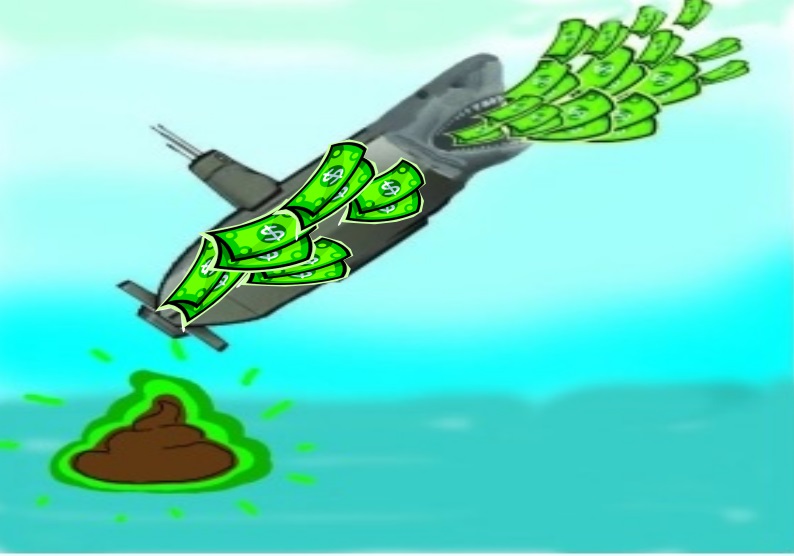
In response to recommendations made by a parliamentary committee, Labor has proposed changes that make clear Australia will be responsible only for high-level waste produced by its submarines
New Daily Tess Ikonomou, Sep 11, 2024
Australia will not accept high-level nuclear waste from other countries under a security pact with the US and UK.
Australia will acquire nuclear-powered submarines for $368 billion under the AUKUS agreement.
The Albanese government is introducing amendments to the bill which sets up the framework to regulate the safety of activities relating to the nuclear-powered submarines.
In response to recommendations made by a parliamentary committee, Labor has proposed changes that make clear Australia will only be responsible for high-level waste produced by its submarines.
The need to manage nuclear fuel is expected to occur in the 2050s
The University of Melbourne’s Professor Tilman Ruff, from the International Campaign to Abolish Nuclear Weapons, said the welcome move was a “relief”.
“The other issue that concerns us is the proliferation potential of the fact that there is highly enriched uranium in any nuclear submarine that Australia is likely to acquire,” he said.
Dr Ruff said it was “really unfortunate” the new regulator monitoring how nuclear material would be handled would sit within Defence.
“That’s a fundamental conflict with good governance – the regulators should be independent,” he said.
“This obviously requires very expert, but also very independent, transparent and accountable regulation.”
Under the treaty, the US or UK can quit the pact with a year’s notice.
It also requires Australia to legally protect both allies against costs or injuries arising from nuclear risks.
The agreement will remain in force until 2075 and says the AUKUS deal should not adversely affect the ability of the US and UK to “meet their respective military requirements and to not degrade their respective naval nuclear propulsion programs”.
US government and military officials have moved to reassure the deal will withstand changing administrations for decades to come, amid fears it could be torn up by a new leader. https://www.thenewdaily.com.au/news/politics/australian-politics/2024/09/11/australia-nuclear-waste-aukus—
That time when Canada cancelled its nuclear submarine order
The decision to cut the Australian community out altogether — except where we will be called upon to service the US military as it builds its base in WA — puts us in the relationship of a vassal state, existing only to do the bidding of our powerful friend.
By Julie Macken and Michael Walker, Aug 30, 2024, https://johnmenadue.com/that-time-when-canada-cancelled-its-nuclear-submarine-order/
Back in 1987, when no one knew that the Cold War was just about to end, the Canadian Government signed up to build 10 nuclear-powered submarines. That submarine program lasted for all of two years before being cancelled in 1989. No nuclear Canadian sub ever even began construction, let alone getting put in the water.
There is a very real sense of déjà vu when we look at the Canadian experience and the current Australian experience of AUKUS. The good news is that it is not too late to learn the lessons the Canadians learnt for us.
One of the reasons for the Canadian cancellation was the $8 billion price tag, or about $19 billion in today’s money. Two billion dollars per submarine now sounds like a bargain compared to the astronomical $45 billion per submarine under AUKUS. Canada decided it had other priorities where that money could be put to better use.
But before the contract was cancelled in Canada, the ministries involved in its construction became embroiled in conflict, the Government itself was in a cost-of-living-crisis with immediate, real-world needs pressing and the hasty and secretive choice of vessel design came under withering criticism from the Treasury department for poor procurement with the cost expected to blow out to $30 billion ($70 billion today). And finally, media support eroded, with 71% of the population opposed to the project.
Déjà vu much?
On 12 June, the US Congressional Research Document service produced a research and advice document called the Navy Virginia-Class Submarine Program and AUKUS Submarine (Pillar 1) Project: Background and Issues for Congress.
The document points out the AUKUS deal was a three-step process. The first was to establish a US-UK rotational submarine force in Western Australia. The second was that the US would sell us three or five Virginia nuclear powered submarines and the third would be that the UK assists us in building our own AUKUS class nuclear submarines.
But the Congressional report outlines when comparing the “potential benefits, costs, and risks” of the three stage plan, it might just be better for the US to operate more of its own boats out of WA. That is, “procuring up to eight additional Virginia-class SSNs that would be retained in US Navy service and operated out of Australia along with the US and UK SSNs”.
That’s right, why bother with the whole step two and three when the US is best served by simply operating its nuclear-powered attack submarines out of WA?
This is an extraordinary development and one that demands more attention than has been given previously because a number of issues flow from this kind of thinking.
First, this potentially frees up $400 billion that could be put to far better use on a national housing construction program or high-speed rail network running the entire east coast of Australia or other large and much-needed nation-building projects. But not so fast.
The US Congressional Research Document suggests that “those funds (the $400 billion) could be invested in other military capabilities”, such as long-range missiles and bombers, “so as to create an Australian capacity for performing non-SSN military missions for both Australia and the United States”.
The decision to cut the Australian community out altogether — except where we will be called upon to service the US military as it builds its base in WA — puts us in the relationship of a vassal state, existing only to do the bidding of our powerful friend.
The fact that the document only referenced the “potential benefits, costs, and risks” from the US perspective, without any attempt to imagine how Australia may view becoming a life support for a US submarine base, makes the nature of our relationship pretty clear.
Australia’s Government may not consider it necessary to have done its due diligence on AUKUS but the Americans are happy to do that for us and, you guessed it, even though they quietly have doubts about the SSN project, they’ve already thought of plenty of other ways to spend our money on their own defence objectives. Spending it on the well-being and prosperity of our own people didn’t even rate a mention.
1 This month
17 October, Free Public Talk on Nuclear Issues in South Australia
David Noonan will speak on public interest concerns over the new Roxby Downs Indenture Act 2026 on BHP copper-uranium mining and ore processing in SA, and on how AUKUS may face SA with a High-Level nuclear waste agenda.
Dr Jim Green will discuss international developments in the field of nuclear power including ‘small modular reactors’ and Generation 4 ‘advanced’ nuclear reactor concepts.


Help Aunty Sue Protect Her Land and Sacred Sites From Destructive Rocket Testing.
.

Australians deserve the truth
about
AUKUS – https://aukuspublicinquiry.com/

PETITION – To: Prime Minister Anthony Albanese and the Australian Labor Government

of the week – Australians for War Powers Reform (AWPR)
To see nuclear-related stories in greater depth and intensity

