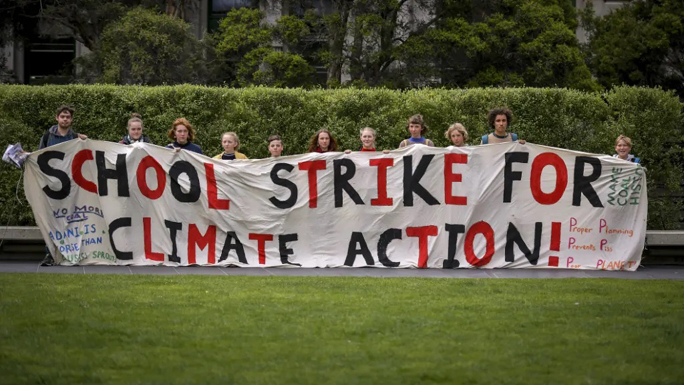
Students left hanging during Canberra trip to confront Morrison on climate change
Guardian, 5 Dec 18, Group rallies outside Parliament House after being told they needed to have a prearranged meeting organised. High school students from across Australia calling for emergency action on climate change have travelled to Canberra to confront the prime minister after he criticised them for skipping school to stage national strikes.
Students from Scott Morrison’s southern Sydney electorate of Cook – as well as Townsville, Melbourne and Brisbane – arrived at Parliament House on Wednesday morning to meet with him.
Morrison said he would sit down with the school students……..
But one group of 11 students gathered out the back of Parliament House in the hope of speaking to Morrison had not yet had any luck.
Fourteen-year-old Tully Bowtell-Young travelled solo from Townsville for the chance to share her concerns with the prime minister – using her own pocket money to help cover costs.
“I think it’s worthwhile because nothing I have now is going to mean anything if I don’t have a future in this world,” she said.
The striking students want federal policymakers to stop the Adani coalmine and move Australia from fossil fuels to 100% renewable energy.
Weird responses of righteous fury, against students who protested about about climate change
The weirdest right-wing takes on the student climate protest , Australia’s free speech warriors took a righteous stand against children fighting for their future. Crikey, KISHOR NAPIER-RAMAN DEC 03, 2018 After years of apocalyptic headlines and government intransigence on climate change, the sight of thousands of high school students packing Sydney’s Martin Place last Friday provided a jolt of much-needed hope for the future. Armed with loudspeakers, and some incredibly creative posters, the strike — which also took place in Melbourne, Brisbane, Perth, Coffs Harbour, Bendigo and other city centres — represented part of a global surge of student-led climate change protests.
It also caused a surge of righteous fury among conservative politicians and commentators; a feeling that was not shared by most Australians who are more worried about climate change than ever, and increasingly are in favour of more renewable energy. Here’s a selection of the responses from those who chose to take a stand against the children advocating for their future: … (subscribers only)
https://www.crikey.com.au/2018/12/03/student-climate-protest-takes/
Striking school students are more likely to have successful careers
 School strikers are going places but the dole queue isn’t one of them, https://www.brisbanetimes.com.au/environment/climate-change/school-strikers-are-going-places-but-the-dole-queue-isn-t-one-of-them-20181202-p50jog.html, By Clive Hamilton 2 December 2018 The resources minister, Matt Canavan, last week told students that the only thing they’d learn by skipping school to protest over inaction on climate change would be how to join the dole queue.
The history of protest in Australia shows the opposite. The protest leaders of the 1960s and 1970s, including many high school students, were denounced by conservatives as long-haired layabouts who would never amount to anything. In fact, they became the next generation of leaders in politics, universities, media, the public service, NGOs and even business.
Take the 1965 Freedom Ride, for instance. “Look at em,” said one RSL stalwart when students turned up to protest against the ban on black diggers. “The brains of Australia! God help you if you ever end up under em.” That’s exactly what happened. The Freedom Ride’s leaders included Jim Spigelman, who would go on to become Chief Justice of NSW and chair of the ABC, Ann Curthoys, later an eminent professor, and Charles Perkins, who became an Aboriginal leader, leading public servant and one of Australia’s Living National Treasures.
Student protesters have become newspaper editors, cabinet ministers, prize-winning poets, much-loved cartoonists, publishers, world-famous authors and Supreme Court judges.
There’s a reason they develop into leaders. It’s those young people who throw themselves into civic engagement who become the best citizens and most productive members of our society. They are the passionate ones willing to stand up. They are not content to “work, consume, die” but commit themselves to making a better Australia.
When we hear Canavan tell 2GB the protesters are “not actually taking charge of their lives” and they should get a real job, he’s telling them they should not be active, motivated citizens but docile consumers who leave politics to the politicians.
The protesting school kids, tired of watching the sacrifice of their future by a government dominated by climate science deniers, had some sharp answers to that, waving placards reading “Why should we go to school if you won’t listen to the educated?” and “I’ve seen smarter cabinets in Ikea”.
The students are carrying on a noble tradition. The great social movements that defined modern Australia—the movements for women’s liberation, gay rights, Indigenous rights, and environmental protection—all inspired school students to get out on the streets, wave banners and chant slogans.
Clive Hamilton is the author of What Do We Want? The Story of Protest in Australia and professor of public ethics at Charles Sturt University in Canberra.
Government Divides Hawker and Kimba Communities While Hiding Suitable Alternate Radioactive Waste Sites
 28 NOVEMBER 2018, Centre Alliance Senator Rex Patrick today called on the Australian Government to reopen consideration of the 122,000 square kilometres of the Woomera Prohibited Area (WPA) as a location for a National Radioactive Waste Management Facility (NRWMF).
Documents released under FOI to Senator Patrick show the Department of Industry undertook analysis of a number of sites, including the WPA, as potential homes for a NRWMF. In a very shallow response to the Department of Industry, Defence dismissed the WPA for its “impracticability” and “intolerable risk”.
Defence’s analysis cannot be reconciled with the fact that Woomera Test Range is already serving as a radioactive waste storage site. CSIRO is storing 10,000 drums of low and intermediate level waste in a hangar at Evetts Field, 1.3 kilometres from the Woomera Range head, while Defence is storing 35 cubic metres of intermediate level waste in a bunker 5 kilometres down range. Both the CSIRO and Defence waste has been stored there for 24 years.
“Defence’s claims are disingenuous and are nimby in attitude,” said Rex.
“If storing radioactive waste in the WPA represents an intolerable risk, why has this considerable store of waste been allowed to stay there for 24 years?”
“It seems that Defence is never stronger in defending territory than when it comes to defending its own.”
At question time today Senator Patrick today revealed the existence of a 414 page report undertaken for the former Department of Education, Science and Training that examines locating a NRWMF inside and nearby the WPA. It recommends Evetts Field inside the WPA as a preferred location.
The 414 page report contradicts Defence’s shallow analysis and addresses all of Defence’s concerns, and more.
“How can the Government tell the deeply divided communities of Hawker and Kimba that there is absolutely nowhere within the more than 122,000 square kilometres of Woomera that would be suitable for a radioactive waste facility,” Rex asked.
“Noting Minister Payne’s apparent lack of knowledge of the Evetts field option in the Senate today, I will definitely be pursuing this further.”
The relevant FOI documents and reports can be found here.
Concerned citizens of Kimba petition the Senate to remove Kimba site from radioactive waste site shortlist
 ENuFF South Australia No Nuclear Waste Dump Anywhere in South Australia
“Radioactive Waste
TO THE HONOURABLE PRESIDENT AND MEMBERS OF THE SENATE IN PARLIAMENT ASSEMBLED.
This Petition of Concerned Citizens of Kimbo District, Eyre Peninsula. South Australia and Australia, draws the attention of the Senate that:
The petition of the undersigned concerned Citizens of Kimba District, Eyre Peninsula, South Australia, draws the attention of the Senate to our opposition to the siting of the National Radioactive Waste Management Facility on agricultural land in Kimba or South Australia, as currently proposed. We are particularly concerned about the risks this proposal presents to Kimba and Eyre Peninsula’s clean and green reputation, on which our export industries rely.
We therefore ask the House to:
Your petitioners ask the Senate work to remove both Kimba sites from the shortlist to host the National Radioactive Waste Management Facility, We request that the Federal Government undertake a proper process to seek the best possible site for disposal of all our Nation’s Waste, where it cannot impact on local agriculture, industry or community cohesion. We sincerely hope that this will allow the Kimba community to return to the harmonious, cooperative and civil community life that existed prior to the introduction of this proposal.
by Senator Hanson-Young (from 1039 citizens) (Petition No. 869)” Page 38 of the Hansard record.
://parlinfo.aph.gov.au/…/Senate_2018_11_27_6792.pdf…/pdf https://www.facebook.com/groups/1314655315214929/
Australia’s Resources Minister Matt Canavan scorns children who protest for climate action
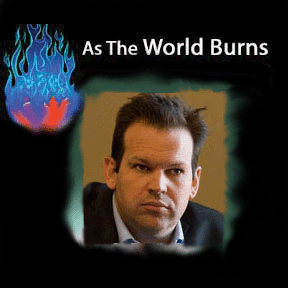 A Deadshit Senator Says Students Striking Today Are Headed For The Dole Queue ,Pedestrian,
 Matt Canavan, the federal minister for resources, has a considered take on today’s student protests against climate change that currently remain on-going across major Australian cities. Unsurprisingly, it’s a piss-awful one.
Canavan, a Liberal senator representing Queensland which is currently being belted by catastrophic and unprecedented bushfires, took to 2GB earlier this morning to make his thoughts on the Strike 4 Climate Action protests, in which thousands upon thousands of school children are literally screaming at politicians like Matt Canavan, abundantly clear.
Chiefly, the big dumbass reckons that students who attend today’s protests are only going to learn one thing: How to join a dole queue………The Minister for Resources then followed that up by suggesting activism solves nothing and instead the students should be in school learning how to build mines and drill for gas which, again in his words, “is one of the most remarkable science exploits in the world.” Incredibly wild that he quite literally used the word “exploits” there……..https://www.pedestrian.tv/news/matt-canavan-looks-like-someone-rigged-a-blobfish-to-a-car-battery/
Australia’s school students not impressed with PM Scott Morrison’s criticism of their climate change activism
Students hit back at PM after ‘less activism in schools’ climate change comment, SBS, 28 Nov 18 Hundreds of students are planning to leave school this Friday to protest government inaction on climate change. There’s a storm brewing between Prime Minister Scott Morrison and school students planning a national strike on climate change inaction this Friday.
Hundreds of students are vowing to put the books away and converge on MP offices and parliaments around the country in the Big School Walk Out for Climate Action.
On Monday, Mr Morrison implored children to stay in class rather than protesting things that “can be dealt with outside of school”.
What we want is more learning in schools and less activism in schools,” he said.
But students aren’t happy with the response.
Melbourne student Jagveer Singh, who will take part in the protest, said Mr Morrison’s broadside made him “want to go on strike even more”. [We want to] demonstrate that we’re not happy with the federal government for not listening to us and demand that we get a safe climate,” he said.
“It’s our future. We are the ones that will be facing the consequences of the decisions that are made today, and that is why we need to have a say.
“The time that they’re using to debate this issue is time that’s being wasted … We need to act on this.” …….https://www.sbs.com.au/news/students-hit-back-at-pm-after-less-activism-in-schools-climate-change-comment
Crossbench joins Julie Bishop and Labor in renewed push for energy agreement
|
ABC By political reporter Jackson Gothe-Snape 28 Nov 18, Crossbenchers are demanding action on energy following the Government’s decision to abandon its signature policy, the National Energy Guarantee (NEG).
Key points:
However they are wary over the role of renewable energy in any potential compromise. Liberal MP Julie Bishop, the party’s former deputy leader, announced on Tuesday that she wanted her party to revive the NEG. Centre Alliance MP Rebekha Sharkie echoed those calls and urged the Government to find an agreement with Labor, saying the industry needed a bipartisan policy for investment certain……..https://www.abc.net.au/news/2018-11-27/bishop-gets-crossbench-support-on-energy/10557446 |
|
How to squash democracy – Australia’s National Radioactive Waste Management Facility shows the way, in Quorn, South Australia

Anti-Nuclear Coalition of South Australia, 27 Nov 18 Today at Quorn, the NRWMF Taskforce has vetoed Flinders Ranges’ residents their democratic right to participate in community consultation re the proposed radioactive suppository.
Tomorrow at 1pm the bureaucrats supporting that gag order will be facing members of the ANC at 26 Franklin Street.
To voice your displeasure at DIIS denying local participation; join us at 12:45 outside their Adelaide Bunker.
In any case, this is a National issue & the scapegoats of regional S.Aust need all of us to stand firm against such Federal victimisation. https://drive.google.com/open?id=1zIzX4KpM-io84DHJFg3i30mEFGDiN5k4
MORE about this: Continue reading
Australia’s Prime Minister Scott Morrison furiously against the Big School Walkout for Climate Action.
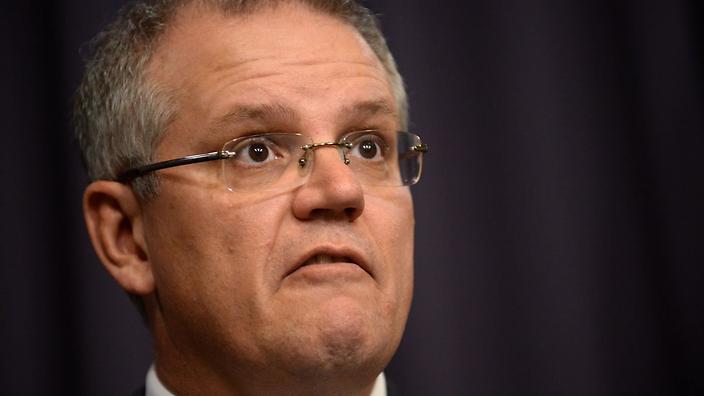 theguardian.com/environment/2018/nov/26/scott-morrison-tells-students-striking-over-climate-change-to-be-less-activist
Prime minister is labelled ‘out of touch’ after he says let the politicians not schoolchildren deal with the issue
Scott Morrison has been labelled “out of touch” for angrily condemning a national student strike to protest government inaction on climate change.
The prime minister implored children to stay in class rather than protesting things that “can be dealt with outside of school”.
“Each day I send my kids to school and I know other members’ kids should also go to school but we do not support our schools being turned into parliaments,” Morrison told parliament on Monday.
“What we want is more learning in schools and less activism in schools.”
Morrison furiously reacted to Greens MP Adam Bandt during question time about the protest, dubbed the Big School Walkout for Climate Action.
Hundreds of Australian school students are vowing to put the books away and converge on MP offices and parliaments around the country this Friday.
Morrison began his answer to Bandt’s question by saying climate change is a “very real and serious issue” that demands attention.
He said the government was acting on climate change through initiatives such as the emissions reduction fund and the renewable energy target.
“We are committed to all of these things, but I will tell you what we are also committed to – kids should go to school,” Morrison said.
Bandt said he had met with some of the students involved and backed their actions.
“The PM is unbelievably out of touch with young people, not only in Australia but around the world,” he said.
“These students want a leader to protect their future, but they got a hectoring, ungenerous and condescending rebuke from someone even worse than Tony Abbott.”
Australian Youth Climate Coalition spokesperson Laura Sykes said Morrison had shown “irrational outrage” to students who care about their education.
“It was shocking see our prime minister condemning students as young as eight, who are sacrificing a day of schooling to stand up for a safe climate future,” Sykes told AAP.
“When young people try to have a voice in politics, Scott Morrison is shutting them down, yet he’s happy to listen to the coal lobby and big corporations who continue to profit from making climate change worse.”
Events are planned in all capital cities, along with about 20 regional areas.
Hawker community given telecommunications bribe, BUT THEY STILL CAN REJECT NUCLEAR WASTE DUMP ANYWAY

Communities at the centre of the radioactive waste management debate benefit from “goodwill” funding, Amy Green, Transcontinental, 26 Nov 18
Unreliable mobile phone coverage between Hawker and Leigh creek will soon be a thing of the past with the planned installation of a new mobile base station on Wonoka Hill.
Telstra will work with the Barndioota Consultative Committee (BCC), Regional Development Australia (RDA) Far North and the Outback Communities Australia (OCA) to improve telecommunications in the notorious ‘black spots’. The project has been bolstered by federal funding as part of the National Radioactive Waste Management Facility Community Benefit Program……
The federal government planned to make a decision on the future of the facility by the end of the year, but after continued delays – and a battle in the Supreme Court of South Australia – will now have to wait until after January 30…….
Revolving doors: Australian politicians move seamlessly from government to fossil fuel industries
Revolving Doors Top 24 Former Australian politicians with links to fossil fuel & resource extraction industries. https://www.michaelwest.com.au/revolving-doors-top-24/
Australian Senate vote – a resounding NO to a nuclear power development Bill
 Hanson supports Bernardi on Nuclear Energy: Senate says No https://scorchinghotnews.com/hanson-supports-bernardi-on-nuclear-energy-senate-says-no/?fbclid=IwAR3yUI10cm2ts_fz5uIs9UTA7m_ZhTYzFAfmfZK4ElGRkkP3TDx2mrNEC4s 29 Oct 18
The PRESIDENT: The question is that the motion be agreed to.
Division Data Division: NOES 45 (38 majority) AYES 7 PAIRS 0
Ayes: F. Anning, C Bernardi, P. Giorgiou, P Hanson, D Hinch, D Leyonhjelm, TR Storer
Senator RUSTON- (who voted NO) – “ The government currently has no plans to review the ban on nuclear generation. ”
Senator BERNARDI (South Australia): I move: Continue reading
Labor to adopt Malcolm Turnbull’s National Energy Guarantee (NEG), and promote renewable energy – bigtime
 Bill Shorten to adopt Malcolm Turnbull’s energy policy, pledges to throw billions at renewables, ABC 21 Nov 18 By political editor Andrew Probyn and political reporter Melissa Clarke Australian households will be offered federal rebates to install solar storage batteries under a federal Labor energy policy that will also direct billions of taxpayer dollars at solar, wind and hydro projects.
Key points:
- Labor to adopt Malcolm Turnbull’s National Energy Guarantee (NEG)
- Rebates for households and businesses to install batteries if Labor wins election
- Pledge of $10 billion for Clean Energy Finance Corporation
With climate and energy expected to be subjects of fierce battle ahead of the election next year, Opposition Leader Bill Shorten will unveil Labor’s long-awaited policy today.
The ABC understands Mr Shorten will formally adopt former prime minister Malcolm Turnbull’s ill-fated National Energy Guarantee (NEG) as Labor policy.
Though Mr Shorten is likely to frame ALP adoption of the NEG as an attempt to find common ground with the Coalition on energy and climate change, it will also serve to give Labor political cover against Coalition attack.
The NEG, which was enthusiastically backed by then-energy minister and current Treasurer Josh Frydenberg, was twice supported by the Liberal party room but was dropped in August after some Coalition conservatives continued agitating against the policy.
“We remain committed to a bipartisan solution, if that is possible,” Shadow Energy Minister Mark Butler told AM.
“But we’re not going to wait for this Government.
“We’re willing to work with them, but we’re not willing to wait for them.”
Mr Shorten will recommit a Labor Government to a 45 per cent emissions reduction target by 2030, based on 2005 levels.
He will promise massive spending on renewable energy projects, with the Clean Energy Finance Corporation (CEFC) to have its funding topped up to $10 billion………..https://www.abc.net.au/news/2018-11-21/labor-energy-policy-ahead-of-election/10519018
Labor’s Environment Action Network (Lean) determined that a Shorten Labor government must overhaul federal environment laws
 Labor to face pressure on environment policies after embarrassing stuff-up, Guardian, Katharine Murphy Political editor@murpharoo, 19 Nov 2018 Party members vow to step up push for national environment protection authority at ALP conference Labor’s Environment Action Network (Lean) has warned the ALP it will not give up on securing a significant overhaul of federal environment laws in the first term of a Shorten government, and a national environment protection authority to police the framework, despite an embarrassing process stuff-up with the draft policy platform.
A draft policy platform signed off by the ALP national executive and circulated to conference delegates last month suggested both policy commitments and a national environment commission would be adopted by the party’s national conference in December – but the shadow environment minister, Tony Burke, has now put the brakes on.
Burke has written to the party’s national secretary, Noah Carroll, arguing the initiatives were not signed off by the national policy forum in September, and the specific commitments were included in the draft platform in error.
Labor’s Environment Action Network (Lean) has warned the ALP it will not give up on securing a significant overhaul of federal environment laws in the first term of a Shorten government, and a national environment protection authority to police the framework, despite an embarrassing process stuff-up with the draft policy platform…….https://www.theguardian.com/australia-news/2018/nov/19/labor-to-face-pressure-on-environment-policies-after-embarrassing-stuff-up
1 This month
17 October, Free Public Talk on Nuclear Issues in South Australia
David Noonan will speak on public interest concerns over the new Roxby Downs Indenture Act 2026 on BHP copper-uranium mining and ore processing in SA, and on how AUKUS may face SA with a High-Level nuclear waste agenda.
Dr Jim Green will discuss international developments in the field of nuclear power including ‘small modular reactors’ and Generation 4 ‘advanced’ nuclear reactor concepts.


Help Aunty Sue Protect Her Land and Sacred Sites From Destructive Rocket Testing.
.

Australians deserve the truth
about
AUKUS – https://aukuspublicinquiry.com/

PETITION – To: Prime Minister Anthony Albanese and the Australian Labor Government

of the week – Australians for War Powers Reform (AWPR)
To see nuclear-related stories in greater depth and intensity

