Federal govt keeping Australia’s pollution data secret
Independent estimates suggest Australia’s greenhouse gas emissions have risen sharply since the government last released its quarterly data in December – a trend that would make the nation’s commitment to cutting emissions more disruptive and expensive.
Quarterly updates by the National Greenhouse Gas Inventory, described as “up-to-date information on emissions trends for business, policymakers and the public”, have been released 28 times since 2009, but not since last year.
Documents obtained under FOI by the Australian Conservation Foundation reveal that while the government possesses data on greenhouse pollution for the two quarters leading up to the end of last year, it has failed to release them……..http://www.brisbanetimes.com.au/environment/foi-documents-confirm-government-holding-almost-one-years-worth-of-pollution-data-20170706-gx5um3.html
Australia’s energy policy now under the control of the climate denying extreme right wing idealogues
 How the far Right have hijacked Australia’s energy policy, REneweconomy,
That was, however, before he was prime minister and became master of all he surveyed, apart from his own climate and energy policies. The thrust of Harwin’s speech was this: the era of baseload coal is coming to an end, fossil fuel plants are not a guarantee of reliability, wind and solar offer the cheapest forms of new generation, we need to look at storage, and we must not lose sight of the long-term climate targets.
Turnbull is not allowed to say any of these things, for fear of upsetting the Far Right. The sight of the craven apology offered by front bencher and government whip Christopher Pyne last weekend for daring to suggest that the moderates had some influence over policy matters was testimony to that.
The thrust of Harwin’s speech was this: the era of baseload coal is coming to an end, fossil fuel plants are not a guarantee of reliability, wind and solar offer the cheapest forms of new generation, we need to look at storage, and we must not lose sight of the long-term climate targets. Turnbull is not allowed to say any of these things, for fear of upsetting the Far Right. The sight of the craven apology offered by front bencher and government whip Christopher Pyne last weekend for daring to suggest that the moderates had some influence over policy matters was testimony to that.
Frydenberg said this to the party room and then repeated it when addressing an energy conference in Melbourne a week later. He made clear it was not about energy security, but “levelling the playing field” between lower cost renewable and expensive and polluting coal.
It’s a classic case of overkill – of politics over policy, and of ideology over technology.
It is true that the Far Right in Australia have not had the same powers as their colleagues now have in the US, where climate science, environmental protections, renewable policies, and emission controls are being systematically trashed and dismantled by the Trump administration.
But they have given it a good shot. While in power, the Abbott government abolished the carbon price, slashed the renewable energy target and other institutions. Since losing power, they have still succeeded in freezing their policy, or politics, in time.
And so too have been the efforts of federal energy minister Josh Frydenberg to placate the Far Right by suggesting that each individual new wind and solar farm should carry an equal amount of storage for its rated capacity – megawatt-hour per megawatt – effectively trying to turn the new technology into the same monoliths that exist now in the current energy market model which is clearly past its use by date. Frydenberg said this to the party room and then repeated it when addressing an energy conference in Melbourne a week later. He made clear it was not about energy security, but “levelling the playing field” between lower cost renewable and expensive and polluting coal. It’s a classic case of overkill – of politics over policy, and of ideology over technology. It is true that the Far Right in Australia have not had the same powers as their colleagues now have in the US, where climate science, environmental protections, renewable policies, and emission controls are being systematically trashed and dismantled by the Trump administration. But they have given it a good shot. While in power, the Abbott government abolished the carbon price, slashed the renewable energy target and other institutions. Since losing power, they have still succeeded in freezing their policy, or politics, in time.
The whole debate around the potentially ground-breaking Finkel Review boiled down to whether it was good for coal generators or not.
The climate science was discarded, and then the fossil fuel industry and the conservatives began to question the very idea that wind and solar were cheaper than new coal. Fake news made front page headlines in the Murdoch media as the incumbents fought back.
Harwin’s speech puts a nonsense to this, and highlights the fact that to be a member of a conservative government does not necessarily equate to the need to deny basic facts.
It is worth repeating Harwin’s major themes, because like the $565 million investment in Nectar Farms, the creation of 1,300 jobs and the shift of one of Australia’s biggest vegetable growing operations to 100 per cent renewables, it did not get a single mention in the mainstream media.
It seems there are some things MsM doesn’t want you to know. (Although we should belatedly note that the Guardian did finally write a story on the Harwin speech on Tuesday, nearly a week after it was delivered).
The whole debate around the potentially ground-breaking Finkel Review boiled down to whether it was good for coal generators or not. The climate science was discarded, and then the fossil fuel industry and the conservatives began to question the very idea that wind and solar were cheaper than new coal. Fake news made front page headlines in the Murdoch media as the incumbents fought back. Harwin’s speech puts a nonsense to this, and highlights the fact that to be a member of a conservative government does not necessarily equate to the need to deny basic facts. It is worth repeating Harwin’s major themes, because like the $565 million investment in Nectar Farms, the creation of 1,300 jobs and the shift of one of Australia’s biggest vegetable growing operations to 100 per cent renewables, it did not get a single mention in the mainstream media. It seems there are some things MsM doesn’t want you to know. (Although we should belatedly note that the Guardian did finally write a story on the Harwin speech on Tuesday, nearly a week after it was delivered).
The major themes of the speech were in direct opposition to the positions and beliefs held by the Far Right. Continue reading
Even pro nuclear THE AUSTRALIAN pours scorn on Tony Abbott’s nuclear submarine call
 Idea of an Australian nuclear submarine fleet just won’t float, http://www.theaustralian.com.au/news/inquirer/idea-of-an-australian-nuclear-submarine-fleet-just-wont-float/news-story/dd5123c0be52dffb4ec161dd2789be3c, 29 June 17 “…..Abbott’s proposal is also completely unrealistic and, if it gains any traction, can serve only to inject yet new delay into the already insanely slow process of our acquiring new subs.
……..Nuclear-powered subs are vastly more formidable than conventionally powered subs. As Julia Gillard was occasionally wont to point out, submarines are so important in modern warfare partly because they are an asymmetrical weapon.
They can do enormous damage and they require enormous effort from an adversary to detect and destroy. The key to their lethality and their asymmetry is their stealth. You never quite know where the buggers are. Because nuclear subs have an almost infinitely greater submerged range than conventional subs, not to mention being able to carry a much greater payload, they pose a much bigger threat.
………With characteristic and refreshing directness, Abbott tells us what a sub’s main role is: “To inflict massive damage on an enemy’s ability to wage war.”
……. Abbott established definitively that, starting from a position of great strength, he could not sustain a project to buy subs that were built overseas. Now that Adelaide has been solemnly promised, by both sides of politics, that our new subs will be built there, what possible basis is there for imagining that any government could break this promise and survive? Nuclear subs could not be built in Adelaide.
……Even if magically we did make a national commitment to nuclear subs tomorrow, it would take 10 to 20 years for us to acquire the expertise and build the infrastructure, if the Americans would agree to supplying it at all, another initial hurdle that would take years to jump. If we did ever go down the nuclear sub road, it would involve very heavy reliance on the US for an extended period.
……Those in the Coalition who think a leadership change would save them are mistaken, just as the past leadership change did not save them. The Liberals need to rediscover their direction and their leader needs to reunite them. …. http://www.theaustralian.com.au/news/inquirer/idea-of-an-australian-nuclear-submarine-fleet-just-wont-float/news-story/dd5123c0be52dffb4ec161dd2789be3c
Coalition pours scorn on Tony Abbott’s call for nuclear submarines
 Tony Abbott rebuked by Marise Payne over criticism on nuclear submarine rejection, ABC News, 30 June 17 By political correspondent Louise Yaxley One of Tony Abbott’s Coalition colleagues has warned the former prime minister he is damaging his credibility with recent speeches and interviews.
Mr Abbott wants the Government to consider nuclear-powered submarines, and criticised the capability of the subs that have been chosen.
Defence Minister Marise Payne has rebuked him, pointing out the list of problems preventing Australia choosing nuclear-propelled boats.
“We don’t have a civil nuclear industry, we don’t have the personnel or the experience or infrastructure, we don’t have the training facilities or regulatory systems that you would need to design to operate to construct a fleet of nuclear-powered submarines,” Senator Payne said.
And she reinforced Mr Abbott was prime minister when the process to choose new submarines started.
“What we are in fact doing is delivering the plan to acquire the plan that was set out and agreed by Tony Abbott and his team in 2015,” Senator Payne said……http://www.abc.net.au/news/2017-06-30/tony-abbott-urged-to-wind-back-nuclear-submarine-comments/8665972
ANSTO’s hidden agenda? – nuclear waste dump to precede tax-payer funded “new nukes”
 From ENuFF South Australia Australia 20 June 2017, The hidden agenda becomes less opaque….. Coupled to the recent GenIV treaty endorsement, the proposed dumps will be used as additional justification for developing a commercial reactor industry “…. see, we have already resolved the ‘back end’ problem… “.
Since when have the Liberals’ been interested in Government having commercial money making enterprises? Never. We are witnessing the global military industrial wedge being hammered home…
In the Senate, Arthur Sinodinos tabled the ‘AUSTRALIAN NUCLEAR SCIENCE AND TECHNOLOGY ORGANISATION AMENDMENT BILL 2017′
“…. includes the use of ANSTO’ s property to bring together start-ups, high-tech industry … it will allow ANSTO to leverage its facilities to generate additional capability and increase opportunities for ANSTO to generate commercial revenues…” https://www.facebook.com/sanuclearfree/posts/1693731754265029
Washed up former Prime Minister Abbott still in the embrace of the nuclear industry
Australia should embrace nuclear subs: Abbott http://www.skynews.com.au/news/politics/federal/2017/06/27/australia-should-embrace-nuclear-subs–abbott.html, 27 June 2017 Tony Abbott will deliver a speech on Thursday calling for Australia to embrace nuclear powered submarines
Mr Abbott has previously expressed his ‘regret’ at not considering off-the-shelf nuclear propelled subs while he was prime minister. The former PM will raise his concerns that Australia will not have replacement subs until the 2030s during his address.
The Turnbull Government awarded the contract for designing Australia’s new submarine fleet to French shipbuilder DCNS
Australia would have to buy the nuclear power from the US or Japan to power the submarines if the Navy bought nuclear submarines.
Businessman Dick Smith, Gary Johnston of Jaycar Electronics and John Singleton have previously taken out full page ads urging for the government to purchase for nuclear power submarines.
Twists and turns in the saga of Adani loan deal for giant Carmichael coal mine
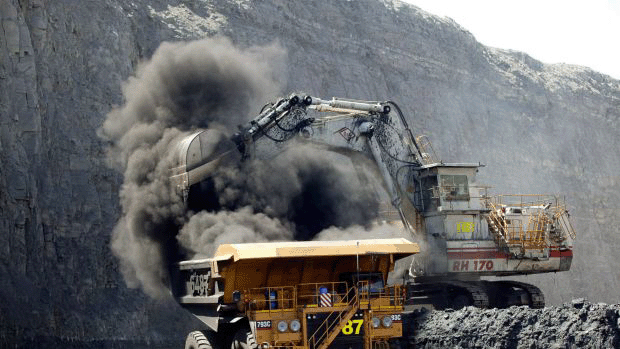 Final chapter in Adani loan deal, Karen Middleton , Saturday Paper, 24 June 17, While the dealings of the government’s Northern Australia Infrastructure Facility remain shrouded in secrecy, pressure mounts over funding for the Adani rail line. “…….Among those addressing the annual Developing Northern Australia conference, held this year in Cairns, was Sharon Warburton, the chairwoman of the somewhat opaque Northern Australia Infrastructure Facility, known as the NAIF.
The NAIF is a $5 billion-government-owned lender, set up to make concessionary loans to companies planning infrastructure projects in northern Australia that are of demonstrated public benefit and would not otherwise be able to proceed…..
The NAIF has not yet lent any money. But Warburton is hinting that it’s close to a decision on at least one application, the one that’s attracted the most controversy and has become an open secret: the request from Indian mining conglomerate Adani for $1 billion to fund a railway line to support its proposed Carmichael coalmine in Queensland’s Galilee Basin.
“We know there is a lot of interest in NAIF and the Adani rail project,” Warburton told the conference on Monday. “I can confirm we are in our due diligence phase on that project.”
That translates as the final stage of assessment, with three other applications apparently also reaching finality. But, Warburton said, she could not say any more about Adani than that…..
Greens senator Larissa Waters said clean coal was “a lie”.
“This is straight from the big tobacco playbook,” Waters said. “Remember ‘light’ cigarettes? To meet the commitment under the Paris Agreement to keep global warming to safe levels, we need to reach zero pollution in the electricity sector transitioning away from coal. Building more coal-fired power stations is simply incompatible with the science.”
Environmental activists continue to mount a strenuous campaign against any kind of coal-fired power and the Adani mine development in particular, on the grounds that it represents an investment in a backwards-looking energy source that will add to Australia’s greenhouse gas emissions and damage the Great Barrier Reef…….
The company has sent mixed messages on whether it needs the NAIF loan to proceed, initially saying it wasn’t essential and then saying it was, a distinction crucial to NAIF’s considerations.
Details of any NAIF decision will only be published after it has been finalised and within 30 days of being taken.
Larissa Waters and Labor senator Murray Watt succeeded last week in establishing a senate inquiry into the NAIF, and Waters is pushing to have Adani called before it.
In recent senate budget estimates committee hearings, Labor and the Greens attempted to extract information on the status of the NAIF’s deliberations in general and the fate of Adani’s bid in particular.
As part of its processes, the NAIF must consult with Infrastructure Australia on projects it proposes to fund.
Greens leader Richard Di Natale asked Infrastructure Australia chief executive Philip Davies whether it had received a submission on the Adani rail line, as per the requirement that it must assess all projects seeking more than $100 million.
Davies said it had not…..
….NAIF director Karla Way-McPhail, who is chief executive of two companies that service the mining industry.
Minister Matt Canavan confirmed to a senate estimates hearing this month that Way-McPhail, who has spoken out in support of opening up the Galilee, was a friend whom he had recommended for the board…..
NAIF chief executive Laurie Walker declined to tell the senate estimates committee whether Way-McPhail or any other NAIF director had recused themselves from any discussions on the grounds of a potential conflict of interest. Walker said that was “not information that I think is appropriate to disclose”.
She said more than six conflicts had been declared…..
The Greens’ main focus has been on the suitability of the loan applicant rather than the assessors.
Larissa Waters wants the government to insert a “suitable person” test into the NAIF’s process for assessing loan bids, arguing she believes it would rule out Adani.
The Greens also want the environmental history test strengthened within environmental law and are calling for Adani’s approvals for the Carmichael project to be reviewed on the basis of “revelations about their environmental and corporate history” in activities overseas.
Waters has produced a private member’s bill to reflect the concerns but the government is not obliged to bring it forward for a vote……
despite Adani having announced with flourish recently that it had taken the final decision to proceed, others argue there are still obstacles to be cleared.
Tim Buckley, a director at the Institute for Energy Economics and Financial Analysis, believes it is not viable without massive taxpayer subsidies.
“The green light that Adani made such a fuss about a couple of weeks ago was actually just a sham,” Buckley told The Saturday Paper.
He has written a paper suggesting “defer, delay and pray” appear to be the company’s unspoken watchwords……despite Adani having announced with flourish recently that it had taken the final decision to proceed, others argue there are still obstacles to be cleared….https://www.thesaturdaypaper.com.au/news/economy/2017/06/24/final-chapter-adani-loan-deal/14982264004830
Australian Greens REJECT Australia joining Generation IV Nuclear Energy Accession
 Dissenting Report – Australian Greens, Senator Sarah Hanson-Young Australian Greens Senator,
 Unchecked capacity and resourcing
Prohibited Technology
Lack of Procedural Fairness and over reliance on evidence from ANSTO
Australia’s accessibility to nuclear technology and standing on nuclear non-proliferation
Labor politicians give half-hearted support to Generation IV Nuclear Energy Systems
 MPs Michael Danby, Josh Wilson , Susan Templeman and Senator Jenny McAllister support the recommendation that binding treaty action be taken to enable further collaboration in relation to international research and development of Generation IV Nuclear Energy Systems.
At the same time, they note Labor’s policy :
# uranium mining companies in Western Australia could lose their licences
 Uranium mining ultimatum in Western Australia sparks nuclear debate, Xinhua Song Lifang, SYDNEY, June 22) — A nuclear debate is heating up in Western Australia on Thursday, after the state government informed three uranium mining companies that their approval licenses will expire if their sites are not operational within five years.
The newly formed State Government’s clarification on its policy has followed on from an election promise to ban uranium mining in the State for environmental concerns.
But prior to their victory in the vote, under the former State Government, three companies at four separate sites were given the go ahead to develop projects.
Vulnerable to legal action from the operators, the Premier of Western Australia, Mark McGowan, on Wednesday told local media, “everyone knows our position is we are not very happy about these approvals, so the mining companies need to be aware that they have a potential deadline heading at them in five years from now.”
“Bear in mind five years is a long time, I mean they’ve already had eight years of getting a project approved and another five years to develop it, that’s a pretty reasonable length of time for them to get a project up,” McGowan said.
“If they can’t do that, then that’s not our problem, that’s their problem.”
In response to the ultimatum, chief executive of Vimy Resources, Mike Young, said, “We’re confident that we will start substantive works before 2021.” And Toro Energy general manager, Andrew Worland, stated, “Their policy statement is not surprising to us.”
The main reason for the delay in getting the mine-sites up and running has been due to the historically low trading price of the commodity……. http://news.xinhuanet.com/english/2017-06/22/c_136386192.htm
Mark Parnell on South Australia’s budget
 Mark Parnell MLC, Parliamentary Leader, Greens, 22 June 17
 The Government is spending two thirds of their $550 million energy security fund on fossil fuels. This includes a $360 million gas fired power station and $48 million to gas companies for exploration, including in high value farm land in the South East. These priorities are all wrong. We need to phase out fossil fuels and move to a more reliable and affordable renewable energy future with battery storage, such as the proposed solar thermal plant at Port Augusta.
Every budget in the last decade has cut funding to the Environment Department. This budget is no exception, cutting 43 full-time jobs at a time when the urgency of climate change requires even more attention than ever.
Matt Canavan calls for taxpayers to fund corporate gas exploration
 Matt Canavan now wants public money for gas exploration in South East Australia as well as $1 billion taxpayer leg-up for Adani.
https://independentaustralia.net/politics/politics-display/matt-canavan-calls-for-taxpayers-to-fund-corporate-gas-exploration,10428
Australian Parliamentary Treaties Committee nuclear fast-track cuts corners and lacks evidence
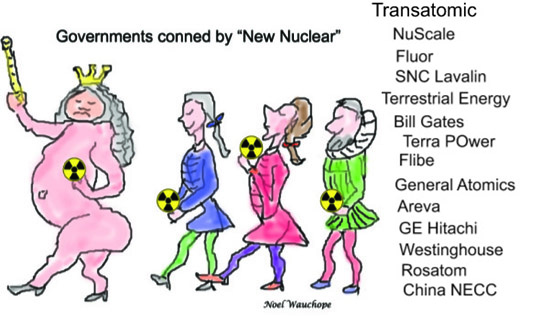
The federal parliament’s Joint Standing committee on Treaties (JSCOT) has today signed off on the use of public funds to support research into so-called Generation IV nuclear reactors.
“This reckless decision follows a rushed process with no public hearings. It lacks evidence and justification and flies in the face of a clear and sustained global trend away from nuclear energy options,” said Australian Conservation Foundation campaigner Dave Sweeney.
ACF joined Friends of the Earth Australia in making a detailed critique of the nuclear plan to JSCOT (attached).
The submission highlighted that the various Generation IV nuclear systems share many of the same risks and constraints as the wider nuclear industry, including prohibitive costs and safety, waste and proliferation concerns.
“Australia’s involvement with Generation IV promotion is a distraction from the real energy challenges and solutions,” said Dave Sweeney.
“Propping up nuclear research is not consistent with clear action to address nuclear non-proliferation, energy transition or climate change. It’s also inconsistent with both Australian prohibitions and community expectations on nuclear power.”
These concerns have been noted in both the Greens’ dissenting report and federal Labor’s additional comments, however they are not reflected in the final report.
“Committing public funds to a risky, divisive and under-performing industry deserves the highest scrutiny and justification, not an under the radar rubber-stamp,” Mr Sweeney said.
Further context or comment:
Dave Sweeney – ACF nuclear free campaigner – 0408 317 812
Dr Jim Green – Friends of the Earth Australia national nuclear campaigner – 0417 318 368
Committee Report: http://www.aph.gov.au/Parliamentary_Business/Committees/Joint/Treaties/CITES/Report_171
Disappointment over Labor’s broken promise on uranium mining in Western Australia
The West Australia Nuclear Free Alliance, an Indigenous alliance opposed to uranium mining, have expressed their deep disappointment by the announcement from Labor that will allow four uranium mines to proceed, that have been contested by Traditional Owners
Janice Scott, Spinifex Pilgi Woman “The Labor Government, we thought they would stand up for us be strong, and all that we’re fighting for – be different from the other Government. They told us lies. We believed that Labor they would help us to stop uranium mining, they got our trust and that’s why we voted for them.”
Mr Glen Cooke Ngaanyatjarra elder “we will be stepping up the fight talking to our countrymen. This impacts our lands and stories all over not just the mine sites. Tribal people are saying we don’t want uranium. Enough is enough. We will take this further, this country is beautiful and we have to look after it for our children and grandchildren and all future generations.”
“What is so disappointing is that the Labor Government did not sit down and talk with us about this decision which affects our country. Today’s decision Labor has not made one friend but has lost them many.” Concluded Mr Cooke.
Liberal Senator challenges Tony Abbott on his climate ;policy u-turn
 Tony Abbott: Concetta Fierravanti-Wells challenges former PM on climate policy ‘about-face’ ABC News, PM 20 June 17 By political reporter Tom Iggulden, Former prime minister Tony Abbott is being accused of damaging Australia’s international reputation and his own political credibility in another outbreak of internal coalition infighting.
Key points:
- Prime ministers are judged on what they’ve done when in government, Concetta Fierravanti-Wells says
- Criticism follows Tony Abbott’s comment his Paris Agreement targets were “aspirational”
- She calls on Mr Abbott to reflect on his actions for the good of the party
International Development Minister Concetta Fierravanti-Wells, once seen as an ally of Mr Abbott’s, says he has performed a “total about-face” on climate policy that is threatening to turn off investors.
“Credibility is a very important commodity in politics,” she told PM.
“Any former prime minister will be judged on what they’ve actually done when they were in government, not on what they say they should have done or could have done subsequently.”
The criticism follows Mr Abbott’s assertion last week that the Paris Climate Agreement targets he devised as prime minister in 2015 were “aspirational”.
Senator Fierravanti-Wells pointed to “categoric” comments Mr Abbott made in 2015 when he announced the “pledge” to reduce emissions by 26 to 28 per cent by 2030…….http://www.abc.net.au/news/2017-06-19/abbott-shows-about-face-in-climate-policy:-fierravanti-wells/8631956
1 This month
17 October, Free Public Talk on Nuclear Issues in South Australia
David Noonan will speak on public interest concerns over the new Roxby Downs Indenture Act 2026 on BHP copper-uranium mining and ore processing in SA, and on how AUKUS may face SA with a High-Level nuclear waste agenda.
Dr Jim Green will discuss international developments in the field of nuclear power including ‘small modular reactors’ and Generation 4 ‘advanced’ nuclear reactor concepts.


Help Aunty Sue Protect Her Land and Sacred Sites From Destructive Rocket Testing.
.

Australians deserve the truth
about
AUKUS – https://aukuspublicinquiry.com/

PETITION – To: Prime Minister Anthony Albanese and the Australian Labor Government

of the week – Australians for War Powers Reform (AWPR)
To see nuclear-related stories in greater depth and intensity

