Major political parties downplay environment as election approaches
 Parties yet to turn on the green light http://www.heraldsun.com.au/news/breaking-news/parties-yet-to-turn-on-the-green-light/news-story/33847ddc845b64eaffc5a62566d89188 May 28, 2016 One of the key issues missing from the election campaign so far is the environment.
The economy, health and education have been the focus of the first three weeks of the campaign.
However, the environment has proven to be a well-trodden battleground in federal elections over the past two decades.
Tony Abbott’s crusade against Labor’s carbon tax helped propel him into office in 2013, despite Kevin Rudd’s best efforts to bring forward the start of the emissions trading scheme.
In 2010, both major parties made announcements on climate change, the health of the Murray-Darling system, marine parks, Queensland’s controversial wild rivers laws and forestry.
In 2007, Rudd’s promise to ratify the Kyoto protocol and take strong action on climate change helped convince thousands of voters to unseat the Howard coalition government.
John Howard himself kicked around the idea of an emissions trading scheme, having realised tackling issues such as water and climate were not only good for the environment but made economic and electoral sense.
Turnbull was rolled by his own party in 2009 over his support for Labor’s ETS and has been forced to embrace Abbott’s direct action plan, despite evidence of its ineffectiveness and voter confusion over what he really believes. Shorten says separate emissions trading schemes for the electricity sector and industry, coupled with a target of 50 per cent renewable energy by 2030, is the way to go.
For both major parties, there are votes to be won in talking up the benefits of jobs and economic growth from renewable energy, clean technology, greener farming practices and ensuring the long-term health of the Great Barrier Reef.
There are big electoral benefits for strong environmental policy.
Younger voters, especially, rate climate and the environment among their top concerns and if Labor or the coalition are to woo them away from the Greens they will need to come out early with some impressive policy.
A policy misstep by Labor could cost the party valuable Greens preferences.
Australia’s Deputy Prime Minister Barnaby Joyce all for the full nuclear fuel chain
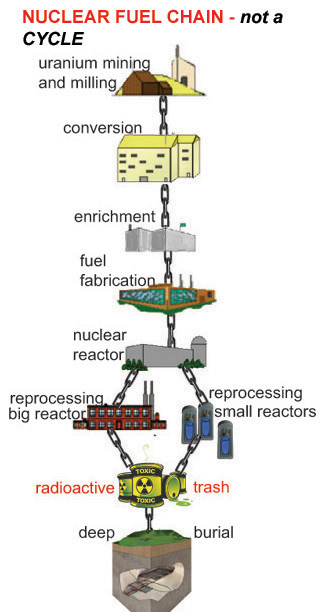 Deputy Prime Minister Barnaby Joyce warns South Australians face higher power prices because of renewable energy, Adelaide Now, PAUL STARICKCHIEF REPORTER March 16 The Advertiser DEPUTY Prime Minister Barnaby Joyce is warning of rising household electricity prices triggered by South Australia’s world-leading renewable energy use and is urging nuclear power as a clean alternative.
In an interview with The Advertiser, Mr Joyce seized on the Port Augusta power stations’ looming closure in May and declared its impact of slashing baseload supply would likely result in higher prices for consumers……
Mr Joyce applauded SA’s Nuclear Royal Commission and backed public debate on its key interim recommendations, delivered last month, of an international waste repository for SA and further exploring nuclear power.
Declaring he would be unsurprised if both major parties eventually supported a waste repository, Mr Joyce said there was unprecedented bipartisan support for exploiting SA’s globally significant uranium resource across most aspects of the nuclear fuel cycle…..
“The ultimate renewable energy — zero emissions energy — is nuclear energy…” http://www.adelaidenow.com.au/news/south-australia/deputy-prime-minister-barnaby-joyce-warns-south-australians-face-higher-power-prices-because-of-renewable-energy/news-story/89eb86ecfdc980fbb472a7617be0fdbb
Exposing Turnbull’s deceit on fossil fuels and climate change
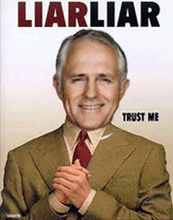 Turnbull’s #Innovation and #IdeasBoom is to flog fossil fuels. KaBOOM! Independent Australia Tracey Anton 28 May 2016 Transitioning the economy away from fossil fuel dependency is now the global catchcry. So why is Turnbull funding DICE-y coal technology at the expense of renewables whilst claiming to mitigate climate change? Mining reformist, Tracey Anton reports.
CLIMATE CHANGE has quickly become an economic and energy policy nightmare for Government but what Turnbull is presenting to the public is based on deceit. The LNP’s mishmash of policy contradiction and current economic mismanagement of fossil fuel extraction is to defraud the public of billions of dollars.
Turnbull states:
“we transition from an economy that has been fired up by an unprecedented mining construction boom as we transition to the new economy of the 21st century.”
The great disparity between saying you will reduce emissions but then stealthily grow a new and bigger fossil fuel industry needs to be called out and exposed.
We already have LNP’s ongoing team assault on the environment now showing a jump in emissions since the removal of the carbon price in 2014 with increases in liquefied natural gas (LNG) greenhouse gases adding to the rise.
Worst still is the report by the Grantham Research Institute on Climate Change and the Environment. Due to the LNP’s continual backflip and integrity of Turnbull and Co to apply believable climate mitigation strategies, Australia is way down the list for credibility to implement policy commitments.
Under the LNP, the Department of Climate Change has never been valued with their aim to subvert its legitimacy. Now, Climate Change dwells as a subsection in the Department of Environment.
Currently, the taxpayers will be shelving out billions of dollars to facilitate and subsidise a burgeoning fossil fuel energy future and the pain will only get worse if the Turnbull government is returned………
As for new coal technologies, coal still has to be extracted so the pits get bigger, groundwater is still bleed, air pollution is increased, waste water still needs to be disposed of and land and coastal subsidence will worsen, and the cycle goes on.
We already know that the mining industry is dictating government policy but the infiltration of agencies and our main science and research organisation, CSIRO is concerning.
CSIRO is now one of “entrepreneurial” innovation to market technology to the world…….
The innovation that he [CSIRO’s CEO Dr Larry Marshall] wants to sell to the world is the DICE technology, a coal to fuel derivative that starts with turning prime agricultural land into an open cut brown coal mine. How is that to mitigate climate change? Worse, the technology is also water and energy intensive — so it can burn cleaner somewhere else. Meanwhile, Turnbull has to build more dams because he is giving all our precious water to mining……..https://independentaustralia.net/politics/politics-display/turnbulls-innovation-and-ideasboom-is-to-flog-fossil-fuels-kaboom,9038
Doubts about the integrity of South Australia’s “Citizens’ Jury” nuclear waste plan
 I am in fact, in favour of the Citizens’ Jury Idea. Instead of us being ‘talked down to’ by experts, (who are likely to have a vested interest in the nuclear waste import plan), ordinary non experts hear all the evidence and opposing opinions, discuss these, and come up with a sensible verdict.
After all, that is what we expect in a criminal trial. We do not trust the verdict to “experts” although we do expect their opinions to be heard.
My problem with the South Australia’s Citizens’ Jury on nuclear waste importing is that it doesn’t seem to be given a truly jury role.
The letter sent to potential jury participants says that their task will be to produce an independent guide to help every South Australian understand the recommendations raised by the Royal Commission’s report.
No mention of a verdict on whether or not the jury thinks that the nuclear waste import plan should go ahead.
The organisation running the process, newDemocracy, is using a trademarked definition of ‘Citizens’ Jury’ That trademark belongs to the Jefferson Center. They define the term;
The Citizens Jury convenes diverse groups of citizens to study an issue deeply, discuss different perspectives on the issue, and recommend a course of action or craft their own solutions to address the issue at hand.
I would like to give newDemocracy the benefit of the doubt. Their all too brief notes on this plan do end with this statement:
The first stage of the project will run from May through November 2016, and results in a gateway decision as to whether or not there is broad social consent to continue to pursue opportunities related to the Nuclear Fuel Cycle.
Greens push for Inquiry and assistance to Maralinga nuclear veterans and civilians affected
 $130m vow for Maralinga veterans JARED OWENS, The Weekend Australian, May 28-29, p.29 Survivors of British nuclear testing in outback South Australia would receive a special “atomic survivors’ healthcare card” under a $130 million redress scheme being pushed by the Greens.
The policy, timed to coincide with Barack Obama’s historic visit to Hiroshima, includes an inquiry into the health effects of the nuclear testing and compensation for those who abandoned or were removed from their homes to escape the radiation.

Between 1952 and 1963 the Menzies government permitted nuclear testing at the Monte Bello Islands, off the West Australian coast, and at Emu Field and Maralinga in South Australia.
“Successive Australian governments ignored the humanitarian consequences of the British atomic weapons tests. It is now time for Australia to acknowledge the devastating health impacts suffered by ADF veterans and provide immediate health support from radiation fallout,” Greens co-deputy leader Scott Ludlam said, noting many Aboriginal people were driven from their traditional lands.
The civilian healthcare card would give “priority treatment” for medical conditions caused by radiation exposure and would be available to descendants who display “intergenerational health impacts”. Affected military personnel would receive a veterans’ gold card providing support for all conditions.
The Greens also want Australia to support UN efforts to abolish nuclear weapons.
Will the Citizens’ jury be able to say NO to nuclear waste importing for South Australia?
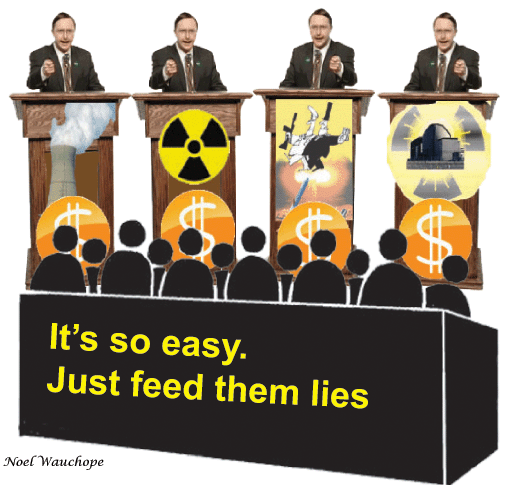 Just how strictly controlled the process is becomes obvious when it emerges that the task of those 50, during two weekend meetings in June and July, will be to produce ‘a short independent guide to help every South Australian understand the recommendations raised’ by the report.
ABC news dubbed this whole process the Premier’s ‘public relations exercise’, and surely they’re not wrong.
The Premier is urging all South Australians to remain ‘open’ about the proposal. But are they, including the Citizens’ Jury, allowed to be open to refusal?
SA Premier coopts democracy for nuclear nefariousness http://www.eurekastreet.com.au/article.aspx?aeid=48345#.V0eKYTV97Gg Michele Madigan | 25 May 2016
 I was trying to think what the invitation reminded me of. It took me a moment, but then I had it: the Project for the New American Century, the neo-conservative think tank and ‘educational’ organisation that went on to play a key role in shaping the foreign policy of the George W. Bush administration.
It’s a different time and different circumstances, but there was something about this invitation — a joint missive from the Premier of South Australia and the newDemocracy Foundation — that seemed to resonate with that ominous American institution; a sense that democratic ideas such as consultation and partnership were being co-opted for nefarious ends. In the address section of the envelope, in beautiful script, the partnership was emphasised: ‘An Invitation from the Premier and the newDemocracy Foundation’.
The gold and black lettered document was an invitation ‘to take part in the Citizens’ Jury of the Nuclear Fuel Cycle Royal Commission’s report’. This Citizens’ Jury will take place now that Royal Commissioner Kevin Scarce has handed down his final report, with the primary extraordinary recommendation that South Australia invite high-level radioactive waste from overseas. Continue reading
Xenophon wants nuclear waste referendum, but only AFTER a dump site is selected
Independent Senator Nick Xenophon might vote against company tax cuts, seeks referendum on nuclear waste dump, The Advertiser May 26, 2016 Political Reporter Peter Jean INDEPENDENT Senator Nick Xenophon wants a referendum to decide whether South Australia should be home to a nuclear waste dump……
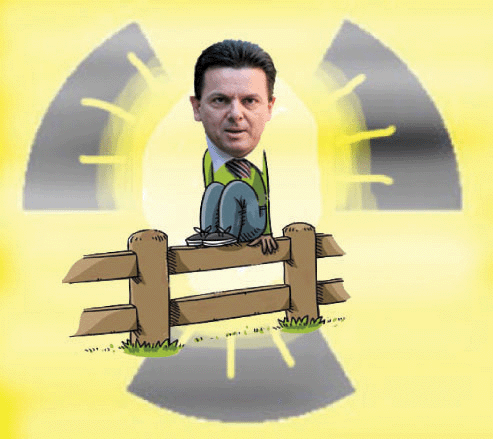 After a South Australian Press Club election debate on Thursday, he told The Advertiser that a waste dump referendum should happen once a location was decided.
“The people of SA should have a direct say on it,” he said. If the state referendum passed, it is likely the federal Parliament would pass the legislation needed at that level…..http://www.adelaidenow.com.au/news/south-australia/independent-senator-nick-xenophon-might-vote-against-company-tax-cuts-in-senate/news-story/0207bb0fe9c9fd5761d2ab8b474942
Federal Liberal and Labor support nuclear waste import: Xenophon suggests referendum
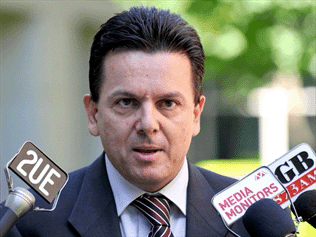 Xenophon calls for SA nuclear referendum http://www.9news.com.au/national/2016/05/26/15/09/sa-needs-nuclear-referendum-xenophon South Australia should hold a referendum on whether to host a high-level nuclear waste dump, independent senator Nick Xenophon says.
The decision to host the dump would have far-reaching consequences, Senator Xenophon told an SA Press Club debate on Thursday.
“If we had a high-level dump it will be around for tens of thousands of years,” he said.
Premier Jay Weatherill has consistently rejected the idea of a referendum, saying the government will instead pursue “qualitative” consultation.
The government will receive feedback from two citizen juries and a bipartisan parliamentary committee.
A decision to host a high-level dump appears likely to be supported at a federal level regardless of who wins the July election.
Education Minister Simon Birmingham said the Turnbull government would change laws to facilitate a dump if the state government wanted to host one.
 Labor Senator Penny Wong expressed misgivings about a nuclear dump but praised the state government’s public consultation.
“I share some of the concerns which have been raised in the community about this,” she told the debate.
“I think the process Jay and the government are going through and the way in which they’re approaching it is the right one. That process itself will yield the outcome. It will have community support or it won’t.”
The Greens remained strongly opposed to a nuclear dump, South Australian senator Sarah Hanson-Young said. http://www.9news.com.au/national/2016/05/26/15/09/sa-needs-nuclear-referendum-xenophon#lR58JolbQ0ZlvYfC.996/15/09/sa-needs-nuclear-referendum-xenophon#lR58JolbQ0ZlvYfC.99
Indigenous owners put Minister Frydenberg on the spot about nuclear waste dump
 Indigenous owners appeal to Minister’s ‘human side’ to shelve proposed nuclear waste site, ABC News By Alex Mann, 27 May 16
Wallerberdina Station part-owner Grant Chapman did not consult the neighbouring Adnyamathahna community before nominating his land as a nuclear waste site. Opposition to the Federal Government’s proposed nuclear waste facility in the Flinders Ranges is heating up, with traditional owners travelling to meet with Federal Resources Minister Josh Frydenberg to demand the Government shelve its plans.
Traditional owner Regina McKenzie said she hoped travelling the more than 1,000 kilometres to Melbourne would appeal to the Minister’s “human side” and get him to change his mind.
“It’s always, every waste dump is near an Aboriginal community,” she told 7.30.
“Don’t you think that’s a bit confronting for us? When it happens to us all the time?”
Ms McKenzie is also a member of Viliwarina Yura, the corporation that was granted the land neighbouring the proposed waste site in 2000. Now she has teamed up with veteran anti-nuclear campaigner Dave Sweeney to take her message across the country.
Mr Sweeney told 7.30 that as the national anti-nuclear campaigner for the Australian Conservation Foundation, and with more than 20 years experience in nuclear issues, he would use his connections, contacts and ability to amplify the story.
“It just feels disturbingly familiar, and disturbingly like we’re replicating past mistakes,” he said.
Mr Frydenberg declined 7.30’s request for an interview but acknowledged in a statement that “legitimate issues have been raised about the Indigenous heritage in the broader area”. As a result, he said the Government would undertake a “comprehensive and independent heritage assessment and further consult with key stakeholders before any final decisions are made”.
But the traditional owners maintain that nowhere would be acceptable.
Local Indigenous owners not consulted
This is just the latest front in a battle around nuclear waste that has raged for decades…….http://www.abc.net.au/news/2016-05-26/local-indigenous-owners-protest-hawker-nuclear-dump/7449124
We can ask every candidate about climate policy, and not vote for the polluters
 Our democracy has been bought. To win on climate, we have to take it back, Guardian, 26 May 16 Christine Milne “…… In an era of partisanship, these vested interests are bipartisan in providing lucrative post-politics careers. Tony Abbott made this blatantly clear when he said recently he hoped the mining industry would demonstrate their gratitude to Ian Macfarlane in his years of retirement for his magnificent achievement in scrapping the mining tax.
APPEA, the voice of the oil and gas industry, has already appointed former Labor energy minister Martin Ferguson as chair of its advisory board. Interestingly, Ian Macfarlane introduced the generous frontier tax arrangements and royalty payments for oil exploration that Martin Ferguson extended such that BP will be able to claim 150% of drilling costs in the Great Australian Bight. That’s bipartisanship for you.
The fossil fuel industry currently donates millions of dollars to both major parties, and in return secures billions in tax breaks and subsidies – not to mention preferential treatment when applying for mining and gas lease and oil drilling approvals and favourable decisions under the Environment Protection and Biodiversity Conservation Act.
If donations aren’t enough, then hostile advertising is held over prime ministers as a threat. This tactic worked for them in destroying the mining tax and the carbon price and they are banking on it working again in 2016.
But how do they get away with it given the level of community concern about global warming? The concern that continues to grow in the wake of the terrifying fires, extreme droughts, and devastating storm surges people are living through.
How did the fossil fuel industry get away with all their subsidies intact in this year’s budget when hospitals and schools are defunded? This includes keeping their lucrative fuel tax rebate, which is worth $2bn a year while single parents and community legal centres are done over. Why didn’t Labor raise the roof about this and why didn’t they reject utterly the LNP’s billion dollar Arena cut?
Because it is not just the Liberal party that is captured by dirty money. Labor, Liberals and National parties have proven that they are utterly captured by this pervasive and polluting industry, that is rapidly condemning our planet to burn. And they are getting away with it because politicians on both sides of the aisle – with the exception the Greens – are unwilling to stand up to the big miners.
There is an unspoken bipartisan agreement supported by the mainstream media that the continuation of the coal, gas and oil industries is a given and will not be debated. The approval of Adani’s Carmichael mega coal mine still stands……
We can make a choice to stay lukewarm and lose any possibility of keeping warming below dangerous levels or we can ask every candidate for a yes or no answer and not vote for anyone who props up the big polluters and lets dangerous climate change runaway on their watch. It’s the only way to start reforming a broken system. http://www.theguardian.com/commentisfree/2016/may/26/our-democracy-has-been-bought-to-win-on-climate-we-have-to-take-it-back
Turnbull govt’s election gamble: ignoring climate change at their political peril?
have Hunt’s strategies worked on the Australian electorate? Not according to a recent ReachTEL poll of 2,400 respondents on May 9, which revealed that 56% believed the government needed to do more to tackle global warming.
64% said they would be more likely to vote for a party that has a plan to source 100% of Australia’s electricity from renewable sources like wind, solar and hydro in the next 20 years.
 Prime Minister Malcolm Turnbull seems to have switched off his personal barometer on climate as an issue that is too politically fraught.
The Greens, for their part, are making many more inroads into this election than the last. They certainly have thestrongest climate policy, with a renewable energy target of 90% by 2030. The ReachTEL poll referred to earlier shows the Greens have four times the primary vote than the National Party.
The Greens know that for under 30 voters they are already matching the primary vote of the major parties, and that a core platform of strong action against global warming is a big part of this support. Whether the major parties can ignore this support that springs from climate will be one of the biggest gambles of this election.
Why has climate change disappeared from the Australian election radar? http://www.sbs.com.au/news/article/2016/05/23/comment-why-has-climate-change-disappeared-australian-election-radar Two weeks into a protracted election campaign, it is looking ever-more likely that climate change is to be placed way down the order of business – at least for the major parties, writes David Holmes. Source: The Conversation 23 MAY 2016 DAVID HOLMES, MONASH UNIVERSITY
The contest over climate change that characterised the previous three elections seems to have disappeared off the political radar despite the issue being more urgent than ever. Since the Paris climate summit, global average temperatures continue to break month-on-month records.
Just a few weeks after the summit, the North Pole was briefly not even able to reach freezing point – in the middle of winter. And just this month, Cape Grim surpassed a 400 ppm baseline minimum.
Then there is the truly frightening climate spiral developed by Ed Hawkins from the University of Reading. It shows what an El Niño amplified global temperature has climbed to. The spiral assumes a tight-knit but ever-expanding ball until April 2015, when the spiral line starts to separate dramatically from the ball. This year it careers dangerously close to the 1.5℃ threshold.
The diminishing political and media spiral on climate
While global temperatures may be spiralling out of control, the opposite appears to be happening with the climate issue attention cycle in Australia. Continue reading
First impressions of South Australian government’s “Citizens’ Jury”
 Well, they will provide to the jury members meals, $500 compensation, travel assistance and accommodation if needed. This is all fair enough. If the jury members were not compensated in this way, we’d be likely to end up with a bunch of volunteered pro nuclear shills.
They apparently don’t assist with child care – probably eliminating young mothers from the jury.
The jury is asked to produce an independent guide to help every South Australian understand the recommendations raised by the Royal Commission’s report.
No change to Labor’s policy against importing nuclear waste – National President Mark Butler
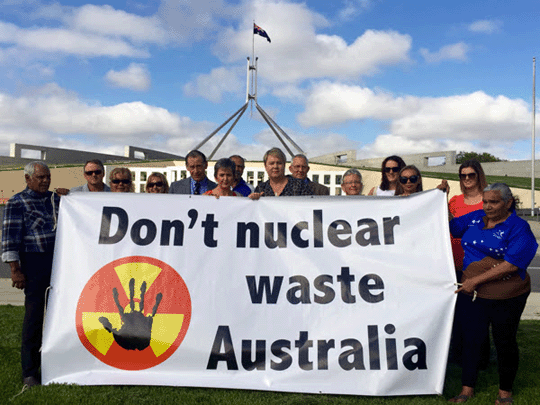
 Labor National President Mark Butler raises doubts about international nuclear waste dump proposed for South Australia, Adelaide Now , 19 May 16 LABOR national president and Port Adelaide MP Mark Butler has poured cold water over the proposal for an international nuclear waste storage facility to be located in South Australia.
The State Government will need federal approval if it decides to adopt Royal Commissioner Kevin Scarce’s recommendation for the international waste dump.
Labor’s national policy platform prohibits further Australian involvement in the nuclear fuel cycle beyond uranium mining — including the importation of foreign nuclear waste.
Mr Butler, federal Labor’s environment spokesman, said Wednesday the case was yet to be made for a waste dump in SA.
“I think it’s still a very open question about whether the South Australian community will accept that or not,’’ Mr Butler said during a debate with Environment Minister Greg Hunt at the National Press Club in Canberra.
“Our position as federal Labor is that no case has been made to change our longstanding platform about this issue.’’….http://www.adelaidenow.com.au/news/south-australia/labor-national-president-mark-butler-raises-doubts-about-international-nuclear-waste-dump-proposed-for-south-australia/news-story/12626f088948b5b9e72953e65ac2dd30
Remind Labor Party of their staunch policy against nuclear industry expansion
2015 National Policy Platform states:
- Labor will:
- Vigorously and totally oppose the ocean dumping of radioactive waste;
- Prohibit the establishment of nuclear power plants and all other stages of the nuclear fuel cycle in Australia;
- Fully meet all Australia’s obligations as a party to the NPT; and
- Remain strongly opposed to the importation and storage of nuclear waste that is sourced from overseas in Australia.
It would be good if people could contact Butlers office and welcome this comment. And as many as possible contact Labor contacts, candidates and connections to make them aware of this and call for them to echo it.
Australia’s political leaders ignoring climate change, in lead-up to election
 Climate policy silence: Can’t our leaders handle the heat?, ABC, 19 May 16 By Greg Jericho We’re way past the point of pretending the world isn’t warming, so the question really should be why the major parties are so silent on their climate policies during an election campaign, writes Greg Jericho.
One aspect of having an election during winter is that even though temperature records are being broken, climate change is largely out of voters’ minds.
While there is fierce debate over housing affordability, jobs and industrial relations, the debate on climate change has largely been put to the side by Labor and only used by the Government as a fear tactic to cover their own policy failure.
On Monday, NASA announced that April this year was the hottest April on record, marking the seventh month in a row the monthly record had been broken, and the third month in a row of the record being broken by a record amount…….
Since 1880 the record average temperatures for January-April has been set 17 times (including 1880). The average increase in the record has been .07C, and there has never been an increase in the record of more than 0.2C. And yet in the first four months of this year the average temperature was 0.38C above the previous best – an increase 5.3 times greater than the average increase:…..
The temperature in April also meant that the previous 12 months was the warmest 12 month period on record – beating the previous best which was set in March, which beat the previous best which was set in February, which beat the previous best which was set in January, which beat the…
……On the Friday after the budget the Department of Environment released the latest quarterly update on our nation greenhouse gas emissions.
It showed that for the sixth quarter in a row, annual electricity emissions had risen. Continue reading
1 This month
17 October, Free Public Talk on Nuclear Issues in South Australia
David Noonan will speak on public interest concerns over the new Roxby Downs Indenture Act 2026 on BHP copper-uranium mining and ore processing in SA, and on how AUKUS may face SA with a High-Level nuclear waste agenda.
Dr Jim Green will discuss international developments in the field of nuclear power including ‘small modular reactors’ and Generation 4 ‘advanced’ nuclear reactor concepts.


Help Aunty Sue Protect Her Land and Sacred Sites From Destructive Rocket Testing.
.

Australians deserve the truth
about
AUKUS – https://aukuspublicinquiry.com/

PETITION – To: Prime Minister Anthony Albanese and the Australian Labor Government

of the week – Australians for War Powers Reform (AWPR)
To see nuclear-related stories in greater depth and intensity

