Abbott’s funding of Bjorn Lomborg – a travesty of climate science and economics
 Lomborg’s influence over key ministers in the Abbott government is quite well-known. He is seen to be at the centre of much of federal cabinet’s climate groupthink………
The real travesty of funding Lomborg’s newest franchise is that it comes from the same government that defunded the Climate Commission. This was composed of Australia’s best climate scientists, economists and energy experts, with an operating cost of A$1.5 million per year. This, more than even the most horrendous of storms, really exposes the parlous state of the Abbott government’s desertion of future generations
As such, one has to have some sympathy for Lomborg, who is a strange kind of “climate change refugee”. In 2012, the Danish government pulled all funding from his centre. Since, he has only set up shop in countries that have strong climate change-denying lobbies – both in the private sector and within mainstream media. He has enjoyed this in the US.
Lomborg operates by attaching himself to these centres as an adjunct professor, which will be his title at UWA, rather than a staff member. This offers the freedom to command remuneration well above a professorial salary – such as the US$775,000 he was paid in 2012 by the CCC and the US$200,484 paid for his work in 2013……… Continue reading
Australian tax-payers funding shonky climate economics with $4m Bjørn Lomborg centre
So is this “methodology” the Abbott Government has spent $4million on any good?……
while cost-benefit analysis can be useful, it doesn’t work when you apply it to climate change policy.
How do you price, for example, the loss of a Pacific island nation and what that would mean for the cultures that have thrived there? What’s the price losing multiple species of flora and fauna or the Great Barrier Reef Jotzo adds:
Climate change is exceptional because it has all of these dimensions that go beyond the practical capability of cost benefit analysis.
 Australian taxpayers funding climate contrarian’s methods with $4m Bjørn Lomborg centre Graham Readfearn, Guardian 23 Apr 15 Lomborg’s think tank methods underplay the impact of climate change and have ‘no academic credibility’ says leading climate economist. Danish political scientist and climate change contrarian Bjørn Lomborg says the poorest countries in the world need coal and climate change just isn’t as big a problem as some people make out.
Australia’s Prime Minister Tony Abbott says “coal is good for humanity” and there are more pressing problems in the world than climate change, which he once described as “crap” but now says he accepts.
So it’s not surprising then that the latter should furnish the former with $4 million of taxpayer funds to start an Australian arm of Lomborg’s Copenhagen Consensus Centre (CCC) at the University of Western Australia’s business school.
The CCC has consistently said that targets to cut greenhouse gas emissions are too expensive and money should be spent elsewhere
After a couple of weeks of doubt and confusion over the origins and the funding of the centre, latest reports suggest that the idea came from the Prime Minister’s office.
A spokesperson for the Prime Minister told Fairfax media it was “the government’s decision to bring the Lomborg consensus methodology to Australia”.
More on this “methodology” and some pretty fundamental problems with it in a bit.
Students at UWA are gathering names on a petition and campaigning in protest, saying Lomborg’s appointment as an adjunct (unpaid) professor there damages the university’s reputation and is an embarrassment. The University’s Student Guild claimed that “students, staff and alumni” were outraged. Continue reading
Bjorn Lomborg’s climate contrarianism: where his money comes from

many of the earlier donors to Lomborg’s US think tank have been linked to the conservative side of politics, some with links to the billionaire Koch brothers.
There’s nothing “smart” about spending $4 million of taxpayer cash on a highly questionable methodology that by design downgrades climate change.
Australian taxpayers funding climate contrarian’s methods with $4m Bjørn Lomborg centre Graham Readfearn, Guardian 23 Apr 15 Lomborg’s funding“………Exactly how and where Bjorn Lomborg’s think tank has gathered its cash over the years has been a tough story to get the bottom of.
When the Danish Government’s funding of the CCC ran out in 2012, Lomborg had already registered the US arm of the think tank four years earlier.
Since 2008, the US tax records of the Copenhagen Consensus Center show it has gathered about $5million in income, more than half of which had come in 2012 and 2013 (the most recent years for which records are available).
Lomborg himself was paid $975,000 via the think tank in those two years.
Yet much of the think tank’s income is not disclosed Continue reading
International nuclear lobby pleased with Abbott’s gift to climate contrarian Lomborg
 Nuclear lobby backs Abbott’s $4m gift to climate contrarian Lomborg, Independent Australia Giles Parkinson 23 April 2015, When push comes to shove to act on global warming, Big Mining will wheel in nuclear as a ploy to stall the take up of renewables. Is pro-nuclear Bjorn Lomborg’s thinktank in WA just a cynical move by Abbott to kill the clean energy industry? RenewEconomy’s Giles Parkinson runs the ruler over the nuclear option. THE PRO-NUCLEAR lobby has welcomed the decision by the Abbott government to award $4 million to Bjorn Lomborg, a climate “contrarian” who favours nuclear energy and opposes deployment of renewable energy.
Michael Schellenberger, president of the US-based Breakthrough Institute, a pro-nuclear think tank, tweeted over the weekend that the Australian government’s granting of funds to Lomborg was no different to the German government’s funding of an environmental think tank that favours renewable energy.
The difference may be that the Energiewende, or energy transition, is official bipartisan government policy in Germany. But Australia does not – at least officially, although its actions suggest otherwise – embrace climate obstructionism and nuclear technology. And it has defunded independent climate analysis such as that from the Climate Commission.
The tweet from the Breakthrough Institute might be unremarkable, but for that institution’s recent alliance with the pro-nuclear lobby in Australia, and the joint release of an “EcoModernist Manifesto” last week that says present day renewables are incapable of providing zero carbon energy, and that nuclear fission is the only technology capable of meeting most, if not all, the energy demands of a modern economy.
This, it would appear, seems to concur with the not-so-subtle secret agenda of Australian Coalition government policy. Continue reading
Bjorn Lomborg’s climate views have no credibility in the scientific community
“UWA was approached by the federal government” [ to host Bjorn Borg’s Centre, with govt funding]
In an email to supporters of the Climate Council on Friday, former Australian of the Year Tim Flannery said it was “extraordinary” that the government had abolished the Climate Commission “which was composed of Australia’s best climate scientists, economists and energy experts” on the basis of lack of funding only to find the money to “import a politically-motivated think tank to work in the same space.”
“Mr Lomborg’s views have no credibility in the scientific community,” Professor Flannery wrote.
Bjorn Lomborg centre: leaked documents cast doubt on Abbott government claims, The Age April 23, 2015 Lisa Cox, Matthew Knott It was the Abbott government’s original idea for the University of Western Australia to host a think tank created by the “sceptical environmentalist” Bjorn Lomborg, according to leaked talking points.
The government will provide $4 million over four years to bring Dr Lomborg’s Copenhagen Consensus Centre methodology to Australia at a new centre within the University of Western Australia (UWA) business school. Continue reading
South Australia faces job losses if Renewable Energy Target is cut
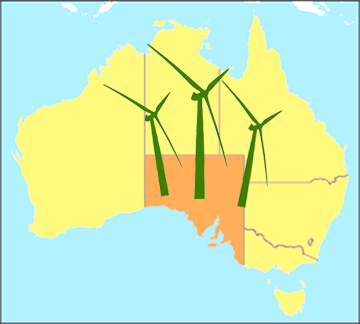
 Renewable Energy Target: Conservation Foundation warns cut would threaten potential SA jobs http://www.abc.net.au/news/2015-04-20/acf-warns-against-renewable-energy-target-cut/6405544 The Australian Conservation Foundation (ACF) says South Australia could lose up to $6 billion worth of investment, if the Renewable Energy Target (RET) is reduced.
The Federal Government wants to cut the target from 41,000 gigawatt hours to less than 32,000 gigawatt hours by 2020.
The foundation’s energy analyst, Tristan Knowles, said leaving the target as is would have huge benefits for South Australia.
“The bigger picture here if the RET isn’t weakened is that there’s 10 wind projects across South Australia that have been approved and the investment potential for those is about $6 billion and if they went ahead there’d be over 6,000 construction jobs and 31 ongoing jobs,” he said.
“So there’s a lot of potential.”
“South Australia was the only state that saw a drop between 2009 and 2014, so if these projects go ahead, they will generate jobs in construction and in ongoing maintenance and operations.”
Be aware of the Pro Nuclear Royal Commission’s publicity meetings in South Australia
 The Commissioner will be undertaking a series of community engagements during the Royal Commission.
The first of these community engagement visits are listed below.
- 20 April 2015: Mount Gambier
- 30 April 2015: Port Augusta
- 01 May 2015: Port Augusta/Port Pirie
- 05 May 2015: Berri
- 11-14 May 2015: Remote Aboriginal Communities (locations to be confirmed).
Further information will be posted on this site when available.
Guide to submissions to South Australia’s Pro Nuclear Royal Commission
 Submissions to the Royal Commission have to be in by July 24.
Well, they seem to be making this as difficult as possible for the ordinary peasant. You have to register at the website, you have to read the Issues Papers, and abide by their guidelines. (So far, only one Issues Paper is available Exploration, Extraction and Milling, with 3 more supposed to come later – Further Processing and Manufacture Electricity Generation Management, Storage and Disposal of Waste) Anything you want to say outside of their stated questions must not go into your submission, but be attached as an Appendix.
The submission must be in their stated form, as an affidavit, witnessed as a legal document.
Most of the stated questions are worded in such a way that they invite positive opinions about the industry. Having said all this – there still is scope to raise some pertinent questions to the Commission. For example – these 3 curly ones:
1.7 Is there a sound basis for concluding that there will be increased demand for uranium in the medium and long term? Would that increased demand translate to investment in expanded uranium production capacity in South Australia (bearing in mind other sources of supply and the nature of South Australia’s resources?). Figure 4: World Uranium Production and Demand 10 Figure 5: Traded price for uranium
1.10 Would a future expansion of exploration, extraction and milling activities create new environmental risks or increase existing risks? If so, are current strategies for managing those new risks sufficient? If not, in what specific respects? How would any current approach need to changed or adapted?
1.13 Would an increase in extraction activities give rise to negative impacts on other sectors of the economy? Have such impacts been demonstrated elsewhere in Australia or in other economies similar to Australia?”
Kevin Scarce kicks off the SA Nuclear Royal Commission with a warning about people being “emotional”
 Kevin Scarce expects debate around the future of the nuclear fuel cycle in SA to be ‘emotional’ CAMERON ENGLAND THE ADVERTISER APRIL 17, 2015 “……. Commissioner Scarce said he expected there to be a lot of “emotion” associated with the debate, and he was committed to running a transparent process.
“Today really is the start of business,’’ Commissioner Scarce said. “We are issuing our first issues paper which covers the opportunity to expand mining and exploration, and also the risks and costs of doing that……..
“I think there’s going to be a lot of emotion about the nuclear industry. We can’t walk away from the fact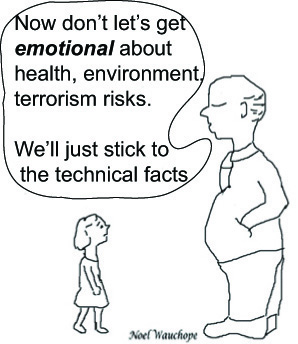 that when there are accidents they are catastrophic and I would expected there will be a lot of emotion about the risks, the impact on the environment, and I want to encourage people, again in an evidence-based way, to give us their views on that, but at the end of the day, the purpose of a Royal Commission is to inquire and to get evidence-based information back…….
The issues paper addresses issues around exploration, mining and milling uranium, and poses 13 questions for discussion around what could be done to foster more activity, whether that is economically viable, and what the environmental and social costs might be.
Three further issues papers will be released over the next two to three weeks, looking at fuel management and storage, fuel enrichment and power generation.
Commissioner Scarce said once all of the issues papers were released there would be 90 days for companies, organisations and individuals to make submissions.
“The we’ll take all of that evidence, bring it together in a report, and then we will engage the community in the outcomes of all of the reports that come to us through the issues papers.’’
Commissioner Scarce will spend the next month travelling to areas such as Aboriginal communities including the APY Lands, and Maralinga and regional areas including Port Pirie and Whyalla……http://www.theaustralian.com.au/news/kevin-scarce-expects-debate-around-the-future-of-the-nuclear-fuel-cycle-in-sa-to-be-emotional/story-e6frg6n6-1227307853022
South Australian Commission chief Kevin Scarce already aligns himself with the nuclear industry
Dennis Matthews 17 April 15 Commissioner Kevin Scarce has made an unconvincing start to his inquiry into the nuclear industry, now officially “The Nuclear Fuel Cycle” Royal Commissioner.
By accepting the nuclear industry spin that it is a nuclear fuel cycle he has immediately identified himself with the nuclear industry. Do we talk about the coal fuel cycle or the gas fuel cycle? No, like nuclear fuel these are one way processes – fuel in, heat and waste out.
It is typical of the nuclear industry that they would like to give the impression that it is otherwise – fuel in, more fuel out – a mirage fostered by its so-called fast breeder programme, itself another example of nuclear spin. The only thing fast about fast breeders is that they use fast neutrons to attempt to slowly produce nuclear fuel in a nuclear reactor. This technology has not only failed to produce significant amounts of nuclear fuel but has rapidly consumed huge amounts of tax payers money.
If Kevin Scarce and the SA Government want to retain any skerrick of credibility then they will take immediate steps to change the name to the “Nuclear Industry” commission.
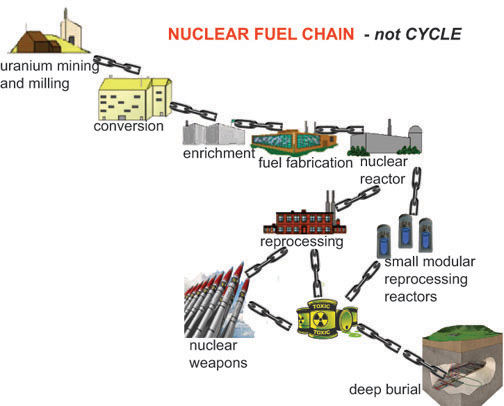
S.A. Nuclear Royal Commission to Mt Gambier: note the issues that will NOT be on the agenda
They don’t mention the health and environmental aspects of the nuclear fuel chain. They don’t mention the national laws that will have to be overturned. They don’t mention the existing problems from Australia’s history of uranium mining.
And then there’s the continuing nuclear radiation crisis at Fukushima – you can bet that will not be on the agenda. Nor will they be talking about the global nuclear decline in the nuclear industry, and the fact that the new geewhiz nuclear reprocessing reactors (a) don’t exist yet and (b) nobody wants to invest in them
17 APRIL 2015 – NUCLEAR FUEL CYCLE ROYAL COMMISSION VISITS MOUNT GAMBIER The first public forum of the Nuclear Fuel Cycle Royal Commission will be held in Mount Gambier on Monday 20 April – the formal start of a three month state-wide community engagement program.
The public meeting to be held at City Hall at midday is an opportunity for community, industry and other interested stakeholders to hear more about the Royal Commission and how they might take part in the process. It will also be the first time the Commission’s Issues Papers will be presented to the public for comment.
While in Mount Gambier, Royal Commissioner Rear Admiral the Honourable Kevin Scarce AC CSC RANR (Rtd) will also meet with city representatives and community leaders.
Key areas of discussion will include those activities relating to the potential for the expansion of exploration and extraction of minerals; the undertaking of further processing of minerals and manufacture of materials containing radioactive substances; the use of nuclear fuels for electricity generation; and the storage and disposal of radioactive and nuclear waste……http://nuclearrc.sa.gov.au/media-centre/17-april-2015-nuclear-fuel-cycle-royal-commission-visits-mount-gambier/
South Australia’s Nuclear Royal Commission appoints prominent pro nuclear advisors
South Australia’s Nuclear Royal Commission: 3 out of 5 of those named for the Expert Advisory Committee are well known pro nuclear industry advocates.
1. Professor Barry Brook purports to be a leader in climate action, but in fact is internationally known as a strident advocate for the nuclear industry
2. Dr Timothy Stone comes from the Office for Nuclear Development (OND): it “focuses on removing potential barriers to investment, and signals clearly to the industry the serious intent of the Government to push forward nuclear new build”
3. John Carlson – advocate for An Asia Pacific Nuclear Energy Community
http://nuclearrc.sa.gov.au/media-centre/17-april-2015-nuclear-fuel-cycle-royal-commission-begins-public-consultation/The Royal Commissioner the Nuclear Fuel Cycle Royal Commission, Rear Admiral the Honourable Kevin Scarce AC CSC RANR (Rtd) detailed two key milestones today with announcement of the Expert Advisory Committee and the first of the Commission’s Issues Papers.
The Expert Advisory Committee comprises eminent leaders from academia, law, industry and the community and includes:
- Visiting professor at University College London Dr Timothy Stone CBE
- Professor of Environmental Sustainability Professor Barry Brook from Tasmania
- Past president of the Australian Conservation Foundation and Emeritus Professor of Science, Technology and Society at Griffith University Ian Lowe
- South Australian’s chief scientist Dr Leanna Read, who has a medical science background, and Mr John Carlson, former director of the Australian Safeguards and Non Proliferation Office (ASNO).
However, the committee does include Ian Lowe who has a long and honourable record of pointing out the risks and the diseconomics of the nuclear industry
Commissioner Scarce said the Expert Advisory Committee had been engaged to provide high-level expert advice to him and the Commission’s staff for the duration of the Royal Commission.
“The members of this Committee have been chosen to ensure that the Commission receives a broad range of advice and reflects the diversity of views that the community holds,” he said.
“The membership of the Committee comprises both proponents and opponents of the nuclear fuel cycle, and I believe this type of diverse contribution will ultimately allow the Royal Commission to develop a comprehensive final report.”
Commissioner Scarce said that the release of the first of four Issues Papers today was a key milestone for the Royal Commission and marked the start of the formal engagement process.
“Today is also an important step in the consultation process with the release of the first Issues Paper, which will help guide the community and industry in their understanding of the nuclear fuel cycle and assist them in making their submissions,” he said.
“I want this Royal Commission to be a far reaching enquiry into the nuclear fuel cycle, investigating the associated risks and opportunities.
“I am seeking to engage in a conversation with the South Australian community, speak to people, hear their lived experience and obtain the views of those who wish to have a say on this important matter.”
The Commission also announced its first public forum will be held at Mount Gambier City Hall at noon on Monday, April 20, with future metropolitan and regional meeting dates to be confirmed.
Written submissions can be made through www.nuclearrc.sa.gov.au and must be lodged by July 24, 2015.
Abbott govt funds W.A. centre to stall action on climate change
Labor’s foreign affairs spokeswoman, Tanya Plibersek, questioned what kind of message the appointment sent to Pacific countries who are deeply concerned about the impact of climate change……
Last year Lomborg spoke at an event on “energy poverty” in the leadup to the G20 in Brisbane, sponsored by Peabody Coal……in a speech to the Grattan Institute in 2013, the then shadow environment minister, Greg Hunt, used Copenhagen Consensus Center findings to support his policy to abolish the carbon tax…..Lomborg will be the co-chair of the Australia Consensus Centre Advisory Board with Prof Johnson, the university’s vice-chancellor.
 Abbott government gives $4m to help climate contrarian set up Australian centre, Guardian, Lenore Taylor 17 Apr 15 Bjørn Lomborg has been given money from the hard-pressed federal budget to set up a ‘consensus centre’ at the University of Western Australia
A spokesman for the education minister, Christopher Pyne, said the government was contributing $4m over four years to “bring the Copenhagen Consensus Center methodology to Australia” at a new centre in the University of Western Australia’s business school.
The spokesman said the “Australia Consensus Centre” was a proposal put forward by the “university and Dr Lomborg’s organisation”.
Sources have told Guardian Australia the establishment of the centre had come as a surprise even to senior staff in the business school, who were unaware that the centre was being established until shortly before it was announced this month……..
As Lomborg explained in a Freakonomics podcast last year, his consensus centre was defunded by the centre-left Danish government in 2012 and he was searching for a long-term funding solution. Continue reading
South Australian government gives funding for mining exploration
 SA Government commits $2 million to mining exploration projects
The South Australian Government says now is the time to invest in exploration projects, after granting a range of mining companies funding for exploration drilling. …
Resources and Energy Minister Tom Koutsantonis said it would enable those companies to stimulate the next crop of greenfield discoveries.
Media player: “Space” to play, “M” to mute, “left” and “right” to seek.
“This is the way to build our extensive knowledge of what deposits we have in South Australia, we spend a lot of money on pre-competitive data, going out doing geological surveys to try and understand where the copper is, where the uranium is, where the iron-ore is,” he said. http://www.abc.net.au/news/2015-04-13/sa-government-mining-exploration-grants-drilling/6389166
Abbott govt’s Energy White Paper is highly political, as is its stand on Renewable Energy Target
Energy white paper has some huge black holes, SMH 12 Apr 15 Was it an accident or wilful blindness? The federal government’s 74-page energy white paper, released last week, contained just a single reference to climate change. Given the Abbott government’s self-imposed blindness on this issue, we have to suspect it was the latter. The omission renders the document deeply flawed.
The white paper’s approach is that of the classic free-marketeer: governments should not intervene to modify energy consumers’ behaviour (by, say, subsidising renewables or reserving gas supplies for domestic use at a lower cost to consumers). Applied to other industries that analysis may still sketch the outlines of a workable policy, but it is no longer adequate in a supposedly comprehensive review of energy production and use. The burning of fossil fuels is the world’s single most important contributor to greenhouse gases and therefore to climate change. Yet the white paper virtually ignores this link which is central to its subject…….
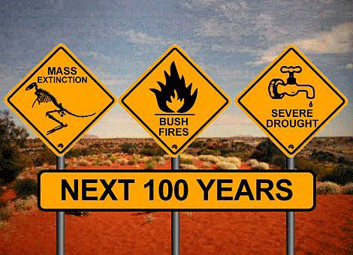 Despite its dispassionate pretence, Australia’s white paper is a highly political document. Economics rules Australia’s politics, and hence our political response to climate change has also been achingly slow. Cocooned by the country’s income from hydrocarbons in a world of comfortable fantasy, many in this country deeply still resent any disturbance from scientists or others who try to point out the stark evidence of record average temperatures, changed farming environments, warmer oceans, longer and harsher bushfire seasons……..
There is no risk now that Australia will lead the world in acting against climate change, since most developed nations are already ahead of us, and our recent steps have all been retrograde. But Australia should not be cutting off any options to act when at last it makes up its mind to do so. Unfortunately the white paper, and the row over the RET, look to have precisely that effect. http://www.smh.com.au/comment/smh-editorial/energy-white-paper-has-some-huge-black-holes-20150412-1mjflr.html
1 This month
17 October, Free Public Talk on Nuclear Issues in South Australia
David Noonan will speak on public interest concerns over the new Roxby Downs Indenture Act 2026 on BHP copper-uranium mining and ore processing in SA, and on how AUKUS may face SA with a High-Level nuclear waste agenda.
Dr Jim Green will discuss international developments in the field of nuclear power including ‘small modular reactors’ and Generation 4 ‘advanced’ nuclear reactor concepts.


Help Aunty Sue Protect Her Land and Sacred Sites From Destructive Rocket Testing.
.

Australians deserve the truth
about
AUKUS – https://aukuspublicinquiry.com/

PETITION – To: Prime Minister Anthony Albanese and the Australian Labor Government

of the week – Australians for War Powers Reform (AWPR)
To see nuclear-related stories in greater depth and intensity

