Push-polling goes nuclear

Dr Jim Green , 18th April 2024 https://theecologist.org/2024/apr/18/push-polling-goes-nuclear
Conservative political parties in Australia actually believe that nuclear power is popular – based on biased push-polling.
A Newspoll survey led to a page-one article in the Australian, the Murdoch national newspaper, under the following headline: “Powerful majority supports nuclear option for energy security”.
The Australian’s political editor Simon Benson wrote in February: “Labor is now at risk of ending up on the wrong side of history in its fanatical opposition to nuclear power.” The party “ignores this community sentiment potentially at its peril”, he added. The story was prominent across the Murdoch owned press and on Murdoch’s Sky News.
The Newspoll question was as follows: “There is a proposal to build several small modular nuclear reactors around Australia to produce zero-emissions energy on the sites of existing coal-fired power stations once they are retired. Do you approve or disapprove of this proposal?”
Push-polling
The results: 55 per cent approval, 31 per cent disapproval and 14 per cent ‘don’t know’. However the poll was a crude example of push-polling designed to generate pro-nuclear results and headlines. Its many faults were identified by polling experts Kevin Bonham and Murray Goot and by economist Professor John Quiggin.
To give just one example of the bias, replacing Australia’s 21,300 megawatts of coal-fired power generation capacity with small modular reactors (SMRs) would require a large number of reactors, not ‘several’ as Newspoll asserted. If, for example, NuScale Power’s 77-megawatt reactors were chosen, 277 reactors would be required.
In broad terms, the tricks used by pro-nuclear push-pollers involve swaying opinions with biased preliminary comments, biased questions, limited response options, and misreporting the findings. Specific tricks include the following:
* Presenting or implying a narrow or false choice – as with the implication in the Newspoll survey that Australians could choose between nuclear reactors or coal.
* Asking respondents if nuclear power should be “considered” or if they support an “informed and balanced conversation”, and then conflating support for those bland propositions with support for nuclear power itself.
* Linking nuclear power to climate change abatement without mention of the downsides or expense of nuclear power, or alternative and arguably better ways to address climate change.
* Asking respondents if they support ‘advanced’ nuclear power or ‘the latest nuclear energy technologies’ without noting that ‘advanced’ nuclear power reactors are few in number, they aren’t really ‘advanced’ in any meaningful sense, and in some cases they are used to power fossil fuel mining or pose increased weapons proliferation risks.
* Reporting on poll results without clearly stating what the actual survey questions were.
* Avoiding the word ‘nuclear’ by referring to small modular reactors, or avoiding the word reactors by using phrases such as ‘the latest nuclear energy technologies’.
* Using the word ‘small’, as in ‘small modular reactors’: expect to see more of this, it seems to work well despite the spectacular implosion of the most advanced SMR project in the US, the NuScale project in Idaho.
* Reporting self-selecting, online polls as if the results mean anything. For example Australian academic Oscar Archer is impressed by a meaningless ABC poll, a meaningless Murdoch tabloid poll, and a meaningless Channel 7 Sunrise poll.
Australia’s conservative parties fall for push-polling
Partly because of the Murdoch media’s promotion of nuclear power and its push-polling, the federal Liberal-National Coalition opposition has “pledged” to introduce nuclear power to Australia by the mid-2030s if it wins and forms a government at the election to be held no later than May next year.
The Coalition believes that most Australians support nuclear power, that younger Australians are particularly enthusiastic, and that local communities will welcome a nuclear power reactor. The problem is that those views are underpinned by nothing other than biased push-polling.
Unbiased polls find that support for nuclear power in Australia falls short of a majority; that Australians support renewables to a far greater extent than nuclear power and nuclear power is among the least popular energy sources; that a majority do not want nuclear reactors built near where they live; and that most Australians are concerned about nuclear accidents and nuclear waste.
Even the push-polling results should raise red flags for the Coalition. A 2019 Roy Morgan poll preceded the poll question with this highly dubious assertion: “If the worries about carbon dioxide are a real problem, many suggest that the cleanest energy source Australia can use is nuclear power.”
Even with that blatant attempt to sway respondents, only a bare 51 per cent majority expressed support for nuclear power.
Locals are ‘hostile’
The Coalition hasn’t even formally released its nuclear power policy yet ‒ that will happen in the coming weeks. But already the policy has been disastrous for the Coalition with near-zero support beyond the far-right of the Coalition and the far-right media, in particular the Murdoch-Sky echo chamber.
Opposition to locally-built nuclear power reactors has been clearly and consistently demonstrated in Australian opinion polls for 20 years or more. A 2019 Essential poll was typical of the others: 28 per cent of respondents “would be comfortable living close to a nuclear power plant” while 60 per cent would not.
The Coalition proposes replacing retiring coal power plants with nuclear reactors and expects an enthusiastic response from local communities. A ‘Coalition source’ told the Murdoch press that Coalition MPs “had convinced themselves that people would be queuing up” for nuclear reactors.
But recent focus group research carried out in the Hunter Valley in NSW and the Latrobe Valley in Victoria ‒ two of the coal regions that might be targeted ‒ found that voters are “hostile” to plans for reactors in their areas.
Local hostility is just one of the problems facing the Coalition’s nuclear policy. Coalition MPs have said on countless occasions that the development of nuclear power in Australia would require bipartisan support. But nuclear power isn’t supported by the Labor Party and it faces strong resistance even from within the Coalition.
Indeed there is bipartisan opposition to nuclear power in most of the four states with operating coal plants that are likely to be targeted in a coal-to-nuclear program ‒ Victoria, Queensland, New South Wales, and Western Australia. Labor state governments in those four states are opposed to nuclear power in their states, and Liberal/Coalition opposition leaders are opposed to nuclear power or have failed to endorse it.
Colourful commentary
Tony Barry ‒ a former deputy state director and strategist for the Victorian Liberal Party, and now a director at the research consultancy RedBridge ‒ describes the Coalition’s decision to make nuclear power the centrepiece of its energy and climate policy as “the longest suicide note in Australian political history”.
On the strength of a detailed RedBridge analysis of Australians’ attitudes to nuclear power, Barry says that just 35 per cent of Australians support nuclear power and that only coal is less popular. If the Coalition is to have any chance of winning the next election it will not be with nuclear power, he says.
Colourful commentary has also been offered to Murdoch journalists by Coalition MPs under cover of anonymity. One Coalition MP says the nuclear policy is “madness on steroids”, another says the Liberal and National Party rooms are “in a panic” about the nuclear policy and “they don’t know what to do”, and another says the nuclear policy is “bonkers”,
Former Liberal prime minister Malcolm Turnbull also describes the nuclear policy as “bonkers”. He says nuclear power’s only utility is “as another culture war issue for the right-wing angertainment ecosystem, and a means of supporting fossil fuels by delaying and distracting the rollout of renewables”, and that nuclear power “is exactly what you don’t need to firm renewables.” Turnbull describes ultra-conservative Coalition leader Peter Dutton as a “thug” who says “stupid things” about nuclear power. With friends like that…
Matt Kean, the NSW Liberal MP and former deputy premier, states: “I not only regard advocacy for nuclear power as against the public interest on environmental, engineering and economic grounds, I also see it as an attempt to delay and defer responsible and decisive action on climate change in a way that seems to drive up power prices in NSW by delaying renewables.”
John Hewson, the former federal Liberal leader, says the Dutton opposition has become “ridiculous” with its pro-nuclear, anti-renewables stance which is economic “nonsense”, and that Dutton may be promoting nuclear “on behalf of large fossil-fuel donors knowing nuclear power will end up being too expensive and take too long to implement, thereby extending Australia’s reliance on coal and natural gas”.
Nuclear power a ‘dog whistle to climate denialists’
The cynicism reflects concerns about the Coalition’s opposition to the federal Labor government’s target of 82 per cent renewables by 2030 and the Coalition’s plans to expand gas and prolong the use of coal. The Nationals are calling for a moratorium on the rollout of large-scale renewables.
Professor John Quiggin, an economist, notes that, in practice, support for nuclear power in Australia is support for coal and he has described nuclear advocacy in Australia as a dog whistle to climate denialists.
Even in the Murdoch-Sky right-wing echo-chamber, splits are emerging. A Murdoch media editor says the Coalition’s nuclear policy is “stark raving mad” and “madness…total madness”.
Australia’s big private electricity generators ‒ AGL Energy, Alinta, EnergyAustralia and Origin Energy ‒ have dismissed nuclear energy as a viable source of power for their customers. One senior executive says that power bills would triple if the nuclear path was pursued. Industry isn’t interested, and trade unions are overwhelmingly opposed.
The Australian chief scientist opposes to the introduction of nuclear power to Australia, as do at least two former Australian chief scientists and the NSW chief scientist.
A recent survey by the Investor Group on Climate Change asked big institutional investors with $37 trillion under management which energy and climate solutions they believed had good long-term returns. Nuclear power was ranked last of the 14 options, renewable energy first.
History repeating itself
In the mid-2000s, John Howard as the Liberal prime minister promoted nuclear power and conservatives hoped the policy would create splits within the Labor Party and the environment movement.
Labor wasn’t split, nor was the environment movement, but at least 22 Coalition candidates publicly distanced themselves from the Howard government’s nuclear policy during the 2007 election campaign. Howard lost his seat, the Coalition lost the election, and the nuclear policy was ditched immediately.
We could be seeing history repeating itself with Peter Dutton’s ill-advised promotion of nuclear power.
Labor MPs can’t believe their luck. Speaking in parliament, prime minister Anthony Albanese compared Peter Dutton to a nuclear reactor: “One is risky, expensive, divisive and toxic; the other is a nuclear reactor. The bad news for the Liberal Party is that you can put both on a corflute, and we certainly intend to do so.”
This Author
Dr Jim Green is the national nuclear campaigner with Friends of the Earth Australia and a member of the Nuclear Consulting Group.
Modular Reactors. Peter Dutton hasn’t done his nuclear homework

by Rex Patrick | Apr 16, 2024 , https://michaelwest.com.au/nuclear-reactors-peter-dutton-has-not-done-his-homework/—
Has Peter Dutton’s proposed ‘rollout’ of modular nuclear reactors real policy or just politics? What research has he done to develop the policy? Not much, it seems. Rex Patrick reports.
In September 2020, the Morrison Government released a Low Emissions Technology Statement that placed Small Modular Reactors (SMR) on a list of watching brief technologies. SMR developments were to be monitored to see if they might play a part in Australia’s energy future.
Consistent with that listing, the Government directed the Australian Nuclear Science and Technology Organisation (ANSTO) to join an International Atomic Energy Agency (IAEA) Coordinated Research Project focused on the Economic Appraisal of SMRs to provide information to assist in evaluating the technology’s economic viability.ANSTO assembled a team to prepare, among other things, a case study on Australia’s potential to adopt SMR technologies in the future and analyse financing options for the technology. As part of that project, ANSTO even supported a University of Queensland PhD thesis on SMRs.
Flip flop politics
Peter Dutton, a minister in the Government that commissioned the ANSTO work, came out mid-way through 2023 with a proclamation of the Coalition’s plans for Australian to adopt SMRs as a preferred tool in our movement towards net zero carbon emissions.
In doing so Dutton opened himself up to a political battering because of the nascent state of SMR development around the world and huge questions around costs.
Undeterred, in early March Dutton doubled down on nuclear power, switching his thinking to large nuclear power plants scattered about the country. As public controversy raged about the new plans, Dutton has started reinjecting SMRs into the total mix.
There are now to be a mix of economic and taxation incentives for the local communities targeted by the Coalition to host a nuclear reactor.
Missing homework
In response to their hip flip to a larger nuclear power plant and his small flop back to SMRs, I thought MWM set out to see if Dutton has visited ANSTO or taken a brief from them in relation to his plans.
After all, there’s no shortage of precedent for parliamentary oppositions to seek factual briefings from government agencies, especially on complex and specialised subjects.In a recent nuclear estimates brief prepared for the CEO of ANSTO, the first two paragraphs stated:
“ANSTO has significant insight into what other countries and jurisdictions are doing around the world in terms of nuclear power.”
As mentioned above, ANSTO was specifically engaged by the former Coalition Government to take a look at SMRs.So, I was left gobsmacked when a Freedom of Information request I made to ANSTO to find out what Dutton’s interactions with ANSTO had been over the past five years returned nil information.
ANSTO FOI response (on original)
Dutton has not visited Australia’s only nuclear reactor and has not received a brief from our country’s expert agency on the policy area he was developing.
In some measure, it explains the flip-flopping and limited detail in many of his announcements.
For completeness, I also asked the Government’s nuclear safety regulator, ARPANSA, if Dutton had visited them or sought advice from them. FOI came up with the same answer from them. (on original) Nothing at all..
Politics, not policy
You can’t develop policy just by chin-wagging at party room meetings and with briefs from vested business interests. That’s not how it works. You have to get independent and expert advice, and in the case of nuclear matters, a vital place to get that advice in Australia is ANSTO and ARPANSA.
So, just what policy work has Dutton done? In large part, he appears completely dependent on the Google skills of his little-known Climate Change and Energy spokesperson, Ted O’Brien.
With a background in marketing, O’Brien has no ministerial experience, so the practicalities of major project implementation may be quite novel for him. He did once chair a parliamentary committee inquiry into nuclear energy, but as so often is the case, the research there was largely done by the committee secretariat, with O’Brien just adding a thin layer of pro-nuclear evangelism on the top.
It’s pretty safe to say that, in the absence of comprehensive briefs from and engagement with Australia’s leading experts, Dutton is not engaging in serious policy development. Rather it’s a manoeuvre to achieve political differentiation and keep the anti-renewals, climate-change-denying core of his Coalition happy. Dutton’s approach to policy development, in this instance, says just as much about him as it does about his nuclear plans.
“It’s all politics”
Why South Australia will be a nuclear power battleground at the 2025 federal election

Adelaide Now, 15 Apr 24
Crunch time for affordable, reliable electricity is coming fast and SA will be key to deciding nuclear power’s fate, writes Paul Starick.
Crunch time is rapidly approaching in the race to deliver affordable, reliable electricity while transitioning Australia to a net-zero economy.
The next federal election, expected early next year, will be yet another battle in the climate war that has deadlocked politicians and delivered little for voters – other than dramatically higher power prices.
The fundamental choice at this election will be between pumping billions of dollars into building wind and solar farms – or nuclear power plants.
Prime Minister Anthony Albanese argues renewable energy will bring cheaper power prices and boost sovereign capability by reviving manufacturing.
A Net Zero Australia report released last July finds $1.5 trillion will have to be spent by the end of this decade, particularly on rolling out transmission networks to support new wind and solar, if Australia is going to meet its emissions reductions targets by 2050.
The group, which included experts form Melbourne, Queensland and Princeton universities, said: “Nuclear power should not be in our plans, because it’s too expensive and slow”.
His rival, Opposition Leader Peter Dutton, argues the Coalition could deliver cheaper power prices by installing the first small-modular nuclear power reactors into the grid by the mid-2030s, at a cost of $3.5bn to $5bn each.
They would be built by Rolls-Royce, also the supplier of nuclear reactors for AUKUS submarines to be built in Adelaide as part of $368bn project.
The reported cost and timeline, at the very least, raises strong questions over Labor’s blanket rejection of nuclear as uneconomic, given the amount that is being ploughed into renewables.

I find it amazing that the Advertiser just accepts Peter Dutton’s claims on the timing and costs of the as yet non-existent small nuclear reactors
South Australia will be at the epicentre of this epic battle over electricity generation and prices.
The state has world-leading penetration of renewable energy and the world’s largest uranium resource at Olympic Dam.
The Coalition wants a nuclear power plant at Port Augusta.
The consequences are huge, as straight-talking Alinta Energy chief Jeff Dimery said on Wednesday, when he argued Australians must face the “hard truth” of having to pay more for electricity to reach net zero by 2050”.
State and federal Labor governments want to rapidly accelerate the renewable push.
Premier Peter Malinauskas in late February said the 100 per cent renewables net electricity generation target would be brought forward three years from 2030 to 2027.
The catalyst, he vowed, would be a clean energy boom underpinned by the state-owned, $593m hydrogen power plant operating in Whyalla from 2026.
This project, a core 2022 election promise, almost certainly will attract federal funding in the May federal budget, as part of massive government investment in the energy transition promised by Prime Minister Anthony Albanese in a landmark speech on Thursday.
Mr Albanese is citing green iron production at Whyalla steelworks, fuelled by green hydrogen from the state-operated plant, as a key example of his Future Made in Australia plan.
But the federal Coalition and state Liberals sense an opportunity to wedge Mr Malinauskas on nuclear energy.
He seems a supporter, frustrated only by a disciplined commitment to implement his hydrogen power plant election promise, plus remain in lock-step with Labor colleagues by insisting it is uneconomic……………….
Whatever the machinations, voters will soon, appropriately, decide nuclear power’s future.
No decisions on site for nuclear waste dump as spin doctor sought

By Karen Barlow – Canberra Times, April 15 2024 – https://www.canberratimes.com.au/story/8591149/the-nuclear-waste-dump-quest-is-waiting-for-its-spin-doctor/
The Albanese government has confirmed it is searching for, and is yet to settle on, sites for both low- and intermediate-level radioactive waste as it seeks a highly skilled PR team to manage likely “high” outrage over possible sites.
In a series of answers to questions from potential suppliers on the federal tender site, the Department of Industry, Science and Resources also advised that there may be a need to reference the future AUKUS nuclear-powered submarine program through the contract, but only in educational materials.
It comes after a major government approach to market was uncovered by The Canberra Times, revealing that a nuclear-specific crisis management team is being sought – six months after the government abandoned plans for a low-level waste dump near Kimba in remote South Australia – to bid for a two-year contract to help manage public discussion of nuclear waste in Australia.
The move has been criticised by the Greens and the Coalition as spin and “steamrolling regional communities,” but the new approach to market appears to address other criticism that nuclear waste dumps are announced and later argued as needed.
Asked by an unnamed potential supplier if the department has a list of sites or communities looking to be engaged over the two-year contract period, the answer is “no.”
“This information is unknown,” the answer reads. “The Australian Radioactive Waste Agency has started work on alternative proposals for the storage and disposal of the commonwealth’s civilian low-level and intermediate-level radioactive waste.”
So that is not just the low-level option that was being sought, but abandoned, at Napandee at the top of the Eyre Peninsula.
The answers to the questions of potential suppliers, which have to bid for the contract, offer greater insight to the process for delivering a secure storage facility, but are limited to current timelines.
“No site has been been shortlisted or selected and no benefits package has been determined, this will be a matter for government,” the department stated.
The department also advises that there are not currently “specific deliverables” that the department is looking to complete. It is also advised there may be some stakeholder engagement activities that involve a role in decision making.
The original approach to market, posted March 26, asked for assistance with “nuclear-specific” public relations and professional communications services during the early stages of a new radioactive waste management approach being identified. This is described as the first three to five years of a 100-year project.
It would involve engagement with “impacted communities”, “stringent preparation for technical and challenging questions” from the public, and support for the public’s “comprehensive understanding of the nation’s radioactive waste inventory, origins and need for safe management.”
“This is a highly specialised high-outrage area and there are times of uplift where urgent assistance is required and additional industry-relevant specialist support is needed, including upskilling staff to undertake these activities in a high outrage environment,” the document reads.
It comes as Australia, as well as AUKUS partners the United States and the United Kingdom, continues to be without a long-term solution for radioactive waste disposal.
Asked by a potential supplier if there is consideration for SSN-AUKUS (nuclear powered submarines under the AUKUS trilateral pact) or visiting nuclear-powered naval capabilities, the department said maybe, but not much.
“While information about Australia’s nuclear-powered submarine program may form a small part of ARWA educational materials, the supplier will not be required to undertake engagement work focused on AUKUS or nuclear-powered submarines,” it responded.
There appears to be no willingness to waive the requirement for baseline security clearance, even for a world-leading technical subject matter expert.
Asked if a waiver was possible for the duties which include assisting in preparing “factually correct nuclear technology and radioactive waste engagement materials”, the department responded, “Any specified personnel must be able to obtain and hold a Baseline Security Clearance.”
Asked further if people with equivalent security clearances from other five eyes nations (the US, UK, New Zealand and Canada) are able to work on the project, the response was the same: “Any specified personnel must be able to obtain and hold a Baseline Security Clearance.”
Coalition nuclear plan flips back to SMRs after latest meeting with lobbyists

Giles Parkinson, Apr 12, 2024, https://reneweconomy.com.au/coalition-nuclear-plan-flips-back-to-smrs-after-latest-meeting-with-lobbyists/
And then, in a single bound, it was back to small modular reactors. The federal Coalition’s confused nuclear power policy has lurched from SMRs to large scale nuclear and back again to SMRs. It’s as if the policy is decided by the nuclear lobbyist most recently consulted.

Coalition leader Peter Dutton’s latest thought bubble on nuclear, dutifully reported in The Australian newspaper last weekend, is that Australia should sign up to SMRs, and should be able to build the first of them by the middle of the 2030s – faster than even most of the technology’s boosters admit is possible.
And then, in a single bound, it was back to small modular reactors. The federal Coalition’s confused nuclear power policy has lurched from SMRs to large scale nuclear and back again to SMRs. It’s as if the policy is decided by the nuclear lobbyist most recently consulted.
Coalition leader Peter Dutton’s latest thought bubble on nuclear, dutifully reported in The Australian newspaper last weekend, is that Australia should sign up to SMRs, and should be able to build the first of them by the middle of the 2030s – faster than even most of the technology’s boosters admit is possible.
Dutton says the new plan will be fully sketched out before the federal Labor government’s budget in early May – and according to The Australian this latest plan follows meetings last week with executives of Rolls Royce SMR and its Australian partner Penske.
Renew Economy decided to check all this out with Rolls Royce SMR itself, and got some surprising answers.
“It wasn’t a representative of ours (who met with Peter Dutton),” a company spokeswoman said by email. “I believe it was a potential partner of ours that met with Peter Dutton who spoke about RR SMR on our behalf.”
Dutton and other Coalition boosters like to talk about SMRs in the present tense, and most mainstream media dutifully follow suit, as if they are already operating.
This is deception. A group of my friends chatting over coffee this week was stunned to hear that SMRs are not actually a thing, despite what they read in the press. A few smaller nuclear reactors exist, such as in China and Russia, but they are in no way modular, which is the supposed key selling point of this new technology.
“One of the biggest problems for SMRs is that they don’t exist,” Allison Macfarlane, director of the school of public policy and global affairs at the University of British Columbia and a former chair of the US Nuclear Regulatory Commission, told the Financial Times this week.
“We’re still at the paper stage, the computer model stage. To get to demonstration models and then a full-scale model when you are ready to commercialise will take billions of dollars,” she added.
Rolls Royce SMR is still at least two years away from obtaining a licence, and the spokesperson told Renew Economy this week that the company is hopeful that the first SMR can be completed “in the early 2030s.”
However, Simon Bowen, the chair of Great British Nuclear, the government agency that is trying to lead the technology’s revival and find ways to replace its existing ageing fleet, told the FT this week the first SMR won’t likely be seen until the mid 2030s.
That time line is important, because it goes to the fantasy nature of the Coalition’s nuclear policy. Is Dutton seriously suggesting that Australia, with no civil nuclear power industry, can match the UK on timing on their proprietary nuclear technology.
And first-of-their-kind technologies are always considerably more expensive than those that follow. But more on the timing later, because that goes to the heart of what the Coalition is trying to do – not so much build nuclear, but to stop renewables in their tracks.
But it is impossible to think that Australia would commit to an SMR before it is built in its host country, with all the embedded infrastructure and know-how. And no country is going to commit to more SMRs until the first one is built, and can prove itself. Which straightaway pushes the Coalition timeline back into the 2040s.
On costs, Dutton is trying to convince everyone that nuclear – contrary to all available evidence – is low cost, which The Australian, unsurprisingly, reported as a matter of fact.
The Coalition’s energy spokesman Ted O’Brien engages in some impressive verbal calisthenics by claiming that they might be expensive for investors, but are low cost for consumers.
But if new-build nuclear is to be low cost to consumers it will be the result, as it is in France, of massive government subsidies. And given the Coalition’s horrified reaction to Labor’s “Made in Australia” green manufacturing plan, they are definitely not in favour of government subsidies.
The Australian reported that the Rolls Royce SMR is priced at around $5 billion for a 470 MW facility, which appears an heroic assumption given it is less than one third of the price of the only SMR to actually obtain a licence to date, the NuScale project in the US that was cancelled last year because it was too expensive for consumers.
Rolls Royce SMR’s own web page describes a study produced last year that claimed its technology could reduce wholesale prices in the UK by between three per cent and 13 per cent, depending on how many SMRs were rolled out.
Curiously, the study – according to the detailed Rolls Royce summary of it – arrives at these numbers by comparing SMRs to the cost of peaking gas plants, the most expensive generation on the grid, and which – in reality – is rarely used. They are only switched on around 1 to 2 per cent of the time.
These peaking gas plants are not seen as the usual competitor to nuclear or SMRs, because nuclear is designed to be baseload, not the fast response and flexible capacity needed to fill in the gaps of a grid dominated by wind and solar.
And, it should be noted, nuclear itself is highly dependent on fast-response capacity – peaking gas and pumped hydro – to make up for its own lack of flexibility.
The Rolls Royce spokesperson told Renew Economy that this analysis was conducted in the winter of 2022/23, when the energy crisis was at its worst, gas prices had soared, and energy consumers were being hit by huge bills.
It begs a question, which Rolls Royce didn’t answer: If SMRs are only able to undercut peaking gas power plant prices by a small amount, what does that imply when those costs are spread across the whole day?
The spokesperson confirmed that Rolls Royce SMRs will indeed be focused on “baseload” power, and its SMRs are designed not to displace renewables, but replace “the loss in low-carbon electricity … caused by our ageing existing reactor fleet going offline in the years ahead.”
The spokesperson said SMRs do have a degree of flexibility to load follow and respond “when the wind doesn’t blow and the sun doesn’t shine,” and can use its thermal output to produce hydrogen or process heat, which might be attractive in the northern hemisphere.
But they have little ability to ramp up to fill in gaps of wind and solar because, as the spokesperson told Renew Economy in their email: “SMRs work most cost-effectively when ‘always on’.”
And this is important because it goes to the heart of why the Coalition nuclear plan makes absolutely no sense and is more about destruction of one industry, rather than construction of another.
Australia is heading towards 82 per cent renewables by 2030, and even if it doesn’t meet that deadline, it will be above 90 per cent by the mid 2030s, and likely close to 100 per cent.
A fleet of “always on” nuclear power plants will struggle to find a role in that scenario, particularly as daytime demand will be almost entirely met by the anticipated ongoing boom in small-scale solar on the roofs of household and business consumers.
But the Coalition policy, and it makes no secret of this, is not about compatibility. O’Brien’s own energy advisor admits that nuclear and renewables are effectively an “either-or” because the system is either going to be baseload or renewables and storage.
And the Coalition’s fundamental stand is that it refuses to believe that wind and solar can power a modern economy. “The lights will go out,” says Dutton, or “your fridge goes off at home” he added this week.
Which is why they are calling for a moratorium on the roll out of wind, solar, battery storage and transmission, and why they want coal-fired power stations to stay open until nuclear can arrive.
And it’s why their proxies in the mainstream and social media – and so-called think tanks and ginger groups backed by billionaires such as Gina Rinehart and Trevor St Baker – spend so much time demonising the technologies that are currently available, and which can do the job, such as solar, wind, battery storage and electric vehicles.
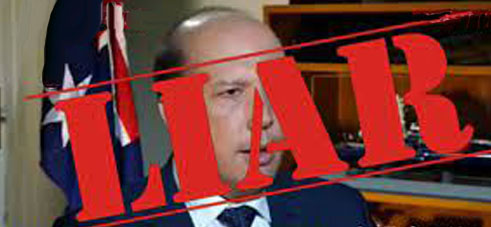
Dutton’s rhetoric is also liberally splattered with outright falsehoods. A check of his media transcripts this week reveals a number of common false statements.
The first is the claim that Australia is the only OECD country not to have or want nuclear. Not true. Germany closed down the last of its nuclear generators a year ago, and Italy voted against the technology in a referendum a decade ago after shutting down the last of its reactors. A number of other EU countries are following suit.
Dutton also claims that the federal government is planning “28,000 kms of new transmission lines by 2030.” Again, not true. The Australian Energy Market Operator’s Integrated System Plan models 10,000km by 2030 in its core step change plan. That’s still a lot, but little more than one third of what Dutton claims.
The 28,000km number is a 2050 target, not 2030, and only in the scenario where Australia becomes a renewable energy superpower by exporting green hydrogen and other green products, most likely from vast wind and solar projects in the middle of the country that will need to link into the grids or production facilities.
Dutton says he wants to have a “mature” discussion about the energy mix. But that can’t happen if his rhetoric is based around obvious lies.
Cook by-election candidate Simon Kennedy says locals are ‘comfortable’ living near nuclear reactors
ABC News, By Ethan Rix 13 Apr 24
The by-election for former prime minister Scott Morrison’s southern Sydney seat has not garnered national fanfare the way other by-elections have in the past.
And as voters head to the polls today, you can count the apathy being felt in the electorate of Cook — with early voting down by about 11 per cent compared to the 2022 federal election and nearly 13 per cent lower than the Voice referendum late last year, according to the Australian Electoral Commission.
Even the Liberals’ candidate, Simon Kennedy, won’t be able to personally boost voter turnout as his team confirmed he didn’t move into the electorate in time to meet the registration deadline — denying him an opportunity to pose for the cameras as he votes for himself.
Perhaps the lack of enthusiasm is because the Liberals look set to comfortably hold a seat they have held for half a century, or maybe it’s because the Labor Party has opted not to put a horse in the race, diminishing any usual analysis the result could be a “test” of Anthony Albanese’s leadership.
But for people who are eligible to cast a ballot today, what are they really voting for?
A nuclear reactor in Cook’s backyard
Former McKinsey consultant Simon Kennedy has openly backed his party’s push to introduce nuclear power to the national energy grid, with the opposition preparing to announce up to six possible sites for nuclear plants.
When asked whether he would oppose a nuclear power reactor being built in the electorate of Cook, Mr Kennedy said locals were “comfortable” with the concept because there was already one positioned on its “doorstep” in Lucas Heights.
“People are comfortable with where Lucas Heights is, they’ve been comfortable with that concept,” he said.
“I haven’t heard any fear or worries about that at all.”
Lucas Heights, which is located on the outskirts of the Sutherland Shire, is home to Australia’s only nuclear reactor, which is not used to produce electricity.
It instead produces medical and industrial isotopes and stores low-level waste and a small amount of intermediate-level waste on-site.
“They’re [voters] not looking for people pushing clean or coal or one over the other, they’re looking for cheap, reliable and clean power,” Mr Kennedy said.
Looking at getting more female candidates
The number of female MPs in the Coalition has also been a key question in the lead-up to this by-election.
Mr Kennedy comfortably defeated the only female candidate to put her hand up for Liberal pre-selection, Veteran Family Advocate Commissioner Gwen Cherne, who received 35 votes to his 158.
The result was said to have upset those within the party pushing for more females to be preselected to safe Liberal seats……………….
Who else is running?
…………… The Australian Greens have put up Martin Moore, who has a Fine Arts Degree with a Masters in Social Ecology and ran for the local seat of Miranda at the 2023 NSW election.
Mr Moore disagreed with Mr Kennedy that locals would be comfortable living next to a nuclear reactor.
“I feel that people are really concerned that we’re being dragged into a nuclear wasteland with the AUKUS deal … and the opposition’s ideas of reactors,” he said……………………………… https://www.abc.net.au/news/2024-04-13/cook-byelection-simon-kennedy-nuclear-reactors/103696760—
TODAY. Australia is EVER so grateful to the global nuclear lobby!
First of all, we Australians LOVE spending money! Not on health, education, preserving our unique biodiversity, certainly not on shelter for our growing homeless.
With our relatively small population, we are still delighted to cough up nearly $400billion to buy a second-hand American nuclear submarine and to buy all the USA and UK nuclear submarine wastes that these dear friends vouchsafe to dump on us.
And, it was interesting to read today, that the UK has spurned paying $millions to Rolls Royce as the maker for its proposed fleet of small modular nuclear reactors.
No problem to the nuclear lobby. Rolls Royce now plans to flog them off to Australia instead – Opposition leader Peter Dutton has pledged, if elected, to deliver Rolls Royce small modular reactors into the grid by the mid-2030s.
Any old or useless stuff that the nuclear industry has to get rid of – no probs – Australia will buy it!
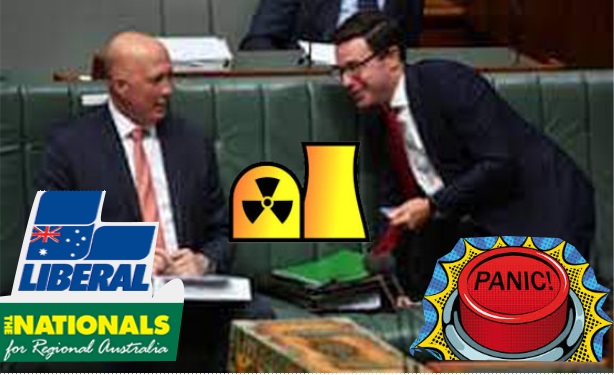
Coalition “in a panic” about response to confused and unpopular nuclear power plan
The Australian noted the Australian Workers Union’s support for nuclear power but didn’t mention the opposition of the Australian Council of Trade Unions, Australian Education Union, Australian Manufacturing Workers Union, Australian Nursing and Midwifery Federation, Australian Services Union, Communication Workers Union, Electrical Trades Union, Independent Education Union (Vic – Tas), Maritime Union of Australia, National Union of Workers, Tasmanian Unions, Unions ACT, Unions WA, Unions SA, Unions NT, United Voice, United Firefighters Union, and the Victorian Trades Hall Council.
Jim Green, Apr 8, 2024, https://reneweconomy.com.au/coalition-in-a-panic-about-response-to-confused-and-unpopular-nuclear-power-plan/
The Coalition’s nuclear power policy is being released in instalments in the Australian newspaper ahead of its formal release sometime before the May budget.
Under a plan taken to the Coalition shadow cabinet in March, seven coal regions have been identified as potential locations for nuclear power plants, the Australian reports.
Presumably those regions are Collie in WA, the Latrobe Valley in Victoria, the Hunter Valley and Lithgow in NSW, and three regions in Queensland — the Darling Downs, Gladstone and Central Queensland.
The Australian reports that a shadow cabinet subcommittee will produce ‘economic impact statements’ to promote the potential economic benefits in the seven regions.
The Coalition will try to win local support by using taxpayer funds to reduce power bills for people living near the proposed nuclear plants. Workers will be offered higher-paid jobs, presumably at taxpayers’ expense. And taxpayers will be on the hook for workforce training, regulation, waste disposal and much more.
The plan “will involve the creation of new precincts for advanced manufacturing centred on cheap energy from small nuclear reactors”, the Australian reports. Cheap nuclear power will attract heavy industry, adding to the high-paid jobs bonanza.
A “community engagement process” would be rolled out once the coal sites had been identified, opposition leader Peter Dutton says.
But just like everything else associated with the Coalition’s nuclear policy, the plan to win over communities in coal regions has hit a snag.
The Murdoch press reported on April 7 that focus group research carried out in the Hunter Valley in NSW and the Latrobe Valley in Victoria found that voters are “hostile” to plans for reactors in their own areas.
An unnamed Coalition MP said of the Liberal and National Party rooms: “My read is they’re in a panic about it. They don’t know what to do.” A Coalition frontbencher said Dutton is “obsessed with this nuclear thing — obsessed with it.”
Rolls-Royce reactors

“There is every reason to be optimistic about bringing small modular net-zero emission nuclear into the power mix in the 2030s,” Dutton told the Australian.
Indeed he has “pledged” that if the Coalition were returned to government at the next election, the first nuclear reactors would be up and running by the mid-2030s. That’s a big pledge since there is zero chance of reactors operating in Australia by the mid-2030s.
Dutton recently met privately with executives from Rolls-Royce to discuss “the pursuit of low-cost small modular reactor technology for Australia”, the Australian reports.
Rolls-Royce claims it could build a reactor in Australia in just four years (once licensing and a myriad of other issues were sorted). Let’s compare that speculation with real world experience:
Continue readingPeter Dutton to press ahead with nuclear despite opposition in regional Australia

Locals who live in areas earmarked for nuclear reactors have delivered a blow to Peter Dutton’s energy plan.
James Campbell National political editor, April 7, 2024, The Sunday Telegraph
https://www.adelaidenow.com.au/news/nsw/peter-dutton-to-press-ahead-with-nuclear-despite-opposition-in-regional-australia/news-story/53a7108e83484542ee99870d5002fba9
Peter Dutton will press on with his plans for nuclear power, despite recent Coalition research finding widespread opposition to the proposals in regional areas earmarked for reactors.
Coalition sources said focus group research carried out in the Hunter Valley in NSW and the Latrobe Valley in Victoria in recent weeks found hostility to the proposed polices.
It found that while voters were aware of the general arguments for nuclear power, they were hostile to plans for reactors in their own areas.
A Coalition source familiar with the research said the findings had come as a shock.
“They had convinced themselves that people would be queuing up for these things,” the source said.
Another said it was clear “more work needs to be done” on winning the argument.
But Mr Dutton is still set to release his plan for net-zero energy before the May budget.
The Weekend Australian reported the Coalition’s plan would offer heavily discounted power bills to communities with nuclear power plants.
It also reported the plan is to install small nuclear reactors at as many as seven sites, which will be operating by the mid-2030s.
“The ability to produce zero-emissions baseload with 24/7 electricity to firm up renewables is within our grasp,” he told the paper.
However a Coalition MP who strongly supports nuclear power said there was increasing concern in both the Liberal and National Party rooms that it was already too late to win the public argument about nuclear power in the time left before the next election.
“We haven’t even seen the policy yet,” the MP said. “My read is they’re in panic about it. They don’t know what to do.”
The Sunday Telegraph spoke to a number of Coalition MPs, including frontbenchers, who expressed concerns about the saleability of nuclear power from opposition.
But they all agreed Mr Dutton is not for turning on ¬nuclear power.
According to one frontbencher who supports the plan “the best case scenario” from pushing nuclear power would be a “nil-all draw” with the Government.
“Let’s not kid ourselves that this is some kind of vote-catching policy,” the frontbencher said.
But he said there was no chance Mr Dutton would walk away from it.
“He’s obsessed with this nuclear thing – obsessed with it,” the frontbencher said.
“Peter is very determined to go down this path,” another said.
On Wednesday, Mr Dutton told reporters: “I think we need to have a proper, mature discussion about how we migrate to a new energy system where we can have renewables that are firmed up by zero emissions, latest generation nuclear technology”.
He added: “In terms of regions, we’ve been very definite in our advice that we’re looking at about half a dozen sites, on brownfield sites, those where you’ve got a coal-fired generator coming to an end of life”.
The high-stakes power play that will shape our future
April 5, 2024, The Australian, Simon Benson; Political editor
The climate wars may be over but an equally divisive battle is arising out of the nation’s new political consensus. Both sides of politics are locked into a net-zero emissions target by 2050, Labor by choice, the Coalition by the force of political reality. But Peter Dutton’s introduction of the nuclear option creates a stark contest between the main parties on how to get there.
The competing pathways to net zero offer profoundly different outcomes for the nation’s future. They go beyond climate change and raise the fundamental question: what sort of Australia will emerge once a point of no return in the rollout is reached?
…………………………………. a new ideological contest into the debate, reigniting a clash of ideas not only over the future of energy but for the communities that have generational ties to its production.
There are two essential issues at stake.
While the question of energy security has become the axis around which Albanese’s radical transformation of the economy pivots, the economic future of the nation’s coal communities has become the new political frontline between Labor and the Coalition.
In this sense, Australia is not unique. The US is grappling with its own socio-economic dilemma……….
Last week, as the Prime Minister was preparing to fly to the Hunter Valley coalfields to announce a $1bn solar panel scheme to generate jobs as coal exits the community, Dutton was meeting privately with executives from Rolls-Royce for a deep dive into the feasibility of small modular reactors in an Australian context.
This juxtaposition symbolises the chasm of policy approaches to the challenge of decarbonising the economy. Both sides are embarking on equally ambitious road maps. While Albanese has rubbished the idea of an Australian civil nuclear energy program, Dutton is convinced it can work.
In an interview with Inquirer on Wednesday, he pledged that if the Coalition were returned to government at the next election, the first nuclear reactors would be up and running by the mid-2030s.
It is understood Rolls-Royce is confident its small modular reactor technology could be ready for an Australian market in this time-frame with a price tag of $5bn for a 470-megawatt plant. Each plant would take four years to build and have a life-span of 60 years.
Rolls-Royce signed a contract with the Albanese government in February to build the nuclear reactors for the second tranche of AUKUS submarines.
According to this timeline, nuclear power generation could begin being rolled out at about the same time as the first nuclear-powered submarines are delivered. The feasibility of this timeline will be strongly contested.
Social licence is essential to the Coalition’s ambitions…………………..
Under a plan taken to Dutton’s shadow cabinet two weeks ago, seven coal communities were identified as potential locations for coal-to-nuclear transition on or near the sites of exiting coal-fired power stations, with the promise of cheaper electricity for those communities, higher paying jobs and upgraded infrastructure……………………………………
Not all of Dutton’s colleagues are convinced there is enough time in the political cycle to start building the political case for nuclear power……………………..
Both sides are highly alert to the acute political consequences of an ill-managed transition.
What looms is an election battle over energy security set against vastly contrasting ideologies…………………………………………………
The Albanese government’s Net Zero Economy Authority bill passed by the parliament before Easter set out the agency’s purpose as one clearly designed around the transition to renewables. It was unambiguous in its assessment of the cost and scope of Labor’s plan. The bill was equally clear about what is at stake with the exiting of coal-fired power stations across the country and the consequences if steps aren’t taken to protect these communities.
It defines coal-fired power stations and associated thermal coalmines as being located in six regions around Australia: Collie in Western Australia, the Latrobe Valley in Victoria, the Hunter Valley and Lithgow in NSW and three regions in Queensland – the Darling Downs, Gladstone and Central Queensland.
The political expression of this reality is the number of regional seats that will be affected. Some sooner than others. Neither side can claim a monopoly on ownership of these constituencies.
In NSW, Labor is at risk in the Hunter Valley in the seats of Hunter, Shortland and Paterson, while Calare west of Sydney, held by the Nationals until Andrew Gee resigned to sit on the crossbench, covers the coal community of Lithgow.
In Queensland, the LNP has Flynn stretching west from Gladstone to consider with legacy coal community economics also stretching into Capricornia, which takes in Rockhampton up to southern Mackay. Both seats have been in Labor hands before. Nationals leader David Littleproud’s massive Queensland seat of Maranoa is another that takes in coal communities through Queensland’s southern and central west.
In Victoria, coal communities stretch across the Nationals’ seat of Gippsland, which now takes in the industrial region of the Latrobe Valley………………………………………………………………………………..
Peter Dutton vows to bring small nuclear reactors online in Australia by mid 2030 if elected.
April 5, 2024, The Australian, Simon Benson
https://www.theaustralian.com.au/nation/politics/peter-dutton-vows-to-bring-small-nuclear-reactors-online-in-australia-by-mid2030-if-elected/news-story/eaf9eaf2084916fa118fbeebf2ed72c9
Cheaper power prices would be offered for residents and businesses in coal communities to switch from retiring coal-fired generators to nuclear power if the Coalition wins government.
Peter Dutton has pledged that if elected, the Coalition could deliver the first small modular reactors into the grid by the mid-2030s, with British manufacturer Rolls-Royce understood to be able to deliver them at an estimated $3.5bn to $5bn each.
Economic impact statements will also be conducted on at least seven communities identified by a shadow cabinet subcommittee established by the Opposition Leader to develop the Coalition’s energy security policy.
Mr Dutton confirmed to The Weekend Australian that under the Coalition’s net-zero energy plan, to be released before the May budget, cheaper electricity bills would be offered to those communities that took up nuclear when coal-fired power stations were retired.
The plan will involve the creation of new precincts for advanced manufacturing centred on cheap energy from small nuclear reactors.
Mr Dutton met privately last week with executives from nuclear power plant manufacturer Rolls-Royce and its Australian partner Penske over the pursuit of low-cost small modular reactor technology for Australia.
It is understood Rolls-Royce is confident that its small modular reactor technology could be ready for the Australian market by the early to mid-2030s with a price tag of $5bn for a 470 megawatt plant.
Each plant would take four years to build and have a life span of 60 years.
Rolls-Royce will also build the nuclear reactors for the second tranche of the future AUKUS nuclear-powered naval submarines under contracts signed in February with the Albanese government.
“There is every reason to be optimistic about bringing small modular net-zero emission nuclear into the power mix in the 2030s,” the Opposition Leader said in an interview with The Weekend Australian, adding: “I think the mid-2030s.
Grattan Institute Deputy Energy Director Alison Reeve says the nuclear energy debate is a “bit of a distraction” when there are “immediate problems” to worry about. Ms Reeve joined Sky News Australia to discuss the future of energy in the country. “The federal opposition has said they want to take the ban off nuclear power – they could do that,” she said. “The thing is that there’s a hell of a lot of things that would need to happen before you end up with being able to actually build a nuclear power station. “In the meantime, we’ve got an awful lot of other stuff that we need to concentrate on building.”
“If we win the election, it is clear to me that (South Australian Labor Premier) Peter Malinauskas would be the first to sign up, and we could deal with regulatory burdens quickly.
“There is no question about that. And there is every reason to believe other jurisdictions would follow suit.
“I think when you look at where technology has advanced and what Rolls-Royce is doing with the nuclear submarines the government has signed up to buy, the future is much closer than we think.
“The ability to produce zero-emissions baseload with 24/7 electricity to firm up renewables is within our grasp.
“My honest view is we have to embrace a new energy system and we have to have an orderly transition but the government doesn’t have a credible pathway to net zero by 2050.”
Mr Dutton said a community engagement process would soon be rolled out once the potential coal sites had been finalised. He confirmed that those communities supportive of future transitions from coal to nuclear would be offered cheaper power prices and higher-paid jobs…………………
The first phase of the Coalition’s net-zero energy plan was taken to shadow cabinet two weeks ago and will be released before the May budget.
The debate facing the Coalition now is over the cost and timely delivery of nuclear into the energy mix, as well as the future of some coal communities facing bleak socio-economic outcomes one coal-fired generators exit the system……………….
Anthony Albanese told The Weekend Australian his government had a clear focus on the future of coal communities and insisted that no one would be “left behind”, claiming Labor’s renewable energy plans would drive new manufacturing jobs in those regions.
“Eleven coal-fired power plants have already closed and the former Coalition government didn’t lift a finger to help workers in these communities,” the Prime Minister said
“Rather than playing politics with the transition, the government is putting in place practical measures to ensure workers are looked after. The Net Zero Economy Authority will support workers to access new employment and to help create jobs in new businesses and industries.
“The Energy Industry Jobs Plan introduced into parliament last week outlines a redeployment scheme to align workers with jobs in new industries.
“The authority will work with business unions and communities.
“We will not leave them behind.
“A practical example is the Liddell site in the Upper Hunter which is being transformed into an energy and manufacturing hub, employing more people than the old power station did.
“Recently, Rio Tinto signed Australia’s biggest renewable energy deal to power its Boyne aluminium smelter in Gladstone.”
https://www.theaustralian.com.au/nation/politics/peter-dutton-vows-to-bring-small-nuclear-reactors-online-in-australia-by-mid2030-if-elected/news-story/eaf9eaf2084916fa118fbeebf2ed72c9
“No feasible pathway:” Liberal MP Matt Kean quits Coalition-based charity because of its obsession with nuclear
Giles Parkinson, Apr 4, 2024, https://reneweconomy.com.au/no-feasible-pathway-kean-quits-coalition-based-charity-because-of-its-obsession-with-nuclear/
Former NSW Liberal government energy minister Matt Kean has quit his role as ambassador of an environmental charity dominated by state and federal Liberal and National Party MPs, saying it had become obsessed with promoting nuclear power and is seeking to delay the rollout of renewables.
Kean says he is quitting the Coalition for Conservation (c4C) because of concerns about the direction of the charity, which has undergone a major shift in focus in the past year, coinciding – according to the AFR – with the growing involvement of patrol Trevor St Baker, the former coal baron and now nuclear investor and proponent.
“When the network was formed, I was an enthusiastic supporter, because I believe that it is the Coalition that should be the best custodians for our environment,” Kean wrote in a letter to the organisation’s chair, former federal Coalition minister Larry Anthony.
“It has become clear in recent times that the Coalition for conservation has increasingly focussed on nuclear power in the electricity system.
“In particular I was concerned to read an article in the Canberra times advocating nuclear power stations as an alternative to building new large scale transmission lines.
“While I recognise that one cannot rule out nuclear playing a constructive role in the Australian electricity system in the distant future, the reality is that there is no feasible pathway to play any material role in helping Australia replace our coal fired power stations in line with the climate science.”
The C4C appears to have undergone a rapid rethink on emissions reductions, dumping its previous support for renewable as the cheapest path to net zero in favour of nuclear.
It is a major major shift which has coincided – according to the AFR’s Rear Window column – with the growing involvement of one of the C4C two patrons, the billionaire Trevor St Baker, the former coal baron and now nuclear investor and proponent.
Kean is the architect of the plan to replace Australia’s biggest fleet of coal generators with wind, solar and storage, and whose work now forms the basis of the Federal Labor government’s Capacity Investment Scheme that will lead its own ambitious renewable energy targets.
His decision to quit the group highlights the growing divide between moderates in the Coalition, and the hard right, which has become obsessed with nuclear and is supported by a growing number of so-called “think tanks”, Murdoch media, and charities such as C4C.
The group’s recent activity on X and its own website have been focused entirely on nuclear, and it has joined the chorus of conservatives, including Coalition leader Peter Dutton and energy spokesman Ted O’Brien, in attacking institutions such as the CSIRO and AEMO for their GenCost reports and renewable energy roadmaps.
Kean wrote in his letter that large scale nuclear reactors have proven costly and slow to deliver, particularly in the UK with the massive delays and cost overruns at the Hinkley point C nuclear power project.
He also noted that small modular nuclear reactors promoted by the charity as a solution to Australia’s energy challenges are not currently commercial anywhere in the world, and early stage demonstration projects have been cancelled or delayed into the 2030’s.
“Even if (nuclear energy in Australia) were possible, it would be extremely expensive and far more expensive than the alternative as set out in AEMO’s integrated system plan,” he wrote.
“I not only regard advocacy for nuclear power as against the public interest on environmental, engineering and economic grounds, I also see it as an attempt to delay and defer responsible and decisive action or climate change in a way that seems to drive up power prices in NSW by delaying renewables.”
Matt Kean admonished by federal Opposition for criticising nuclear direction
NSW Shadow Health Minister Matt Kean has been admonished by Shadow Treasurer Angus Taylor after he expressed concern over the Coalition’s direction away from renewables and towards nuclear power, reports NSW Political Reporter Julia Bradley.
The comments follow former NSW treasurer and energy minister Matt Kean’s public resignation from an organisation called Coalition for Conservation, which works with the Liberal Party on issues to do with climate change.
The Shadow Health Minister for NSW says he became “increasingly concerned with the direction of the Coalition for Conservation” after he claimed the institution became “increasingly focused” on nuclear power rather than renewable energy, Ms Bradley explained.
Mr Kean posted the resignation letter to his X social media page on Friday morning, claiming there is “no feasible pathway” for nuclear energy “to play any material role in helping Australia replace our coal-fired power stations in line with climate science.”
Shadow Treasurer and former energy minister Angus Taylor responded to the story with a statement expressing his disappointment a Coalition MP could not understand “Labor’s renewable only madness will fail”.
Dutton’s perks for nuclear plan

April 2, 2024, The Australian, Simon Benson; Political Editor
Peter Dutton is poised to release a major incentive package for coal communities to move from coal-fired power stations to nuclear energy, promising higher paying jobs and industry energy subsidies, following a US report that found the coal-to-nuclear transition pumped millions of dollars into regions that adopted them.
The Australian understands the Coalition will release the first major plank of its nuclear energy plan within weeks after identifying six or more potential sites, primarily in Queensland and NSW.
The Liberal leader will address a small business conference on Wednesday to promote the Coalition’s nuclear plan as the only proven technology that emits zero emissions while providing cheap, consistent and clean power as a source of baseload power to firm up renewables.
A report by the US Department of Energy released on Monday confirmed it would look to replace its fleet of coal-fired power plants with nuclear reactors, citing significant economic benefits to the local communities who agreed to the transition………………………………………..
Coalition climate change and energy spokesman Ted O’Brien confirmed that a Coalition package that would incentivise local coal communities would be announced before the May budget.
He said that “social licence” would be key to a future rollout of coal-to-nuclear with gas as a transition baseload energy provider.
Mr Dutton has flagged that the Coalition’s nuclear energy plan would provide incentive packages, including potential subsidised electricity prices for local industries as well as new infrastructure.
A key element of the packages would be transition arrangements for coal plant workers to upgrade to higher-paid jobs in nuclear plants………………..
Former Victoria Liberal Party President Michael Kroger says Peter Dutton has to show why “life will improve” under his government, in order to win the next election………………….
Mr Dutton will tell the Council of Small Business Australia conference that under its current approach, the government couldn’t credibly meet its 2050 net zero emissions target.
“That is why a Coalition government will ramp up domestic gas production to make energy more affordable and reliable and to help transition our economy to new energy systems,” he will say.
“And that is why we want Australia to move towards adopting the latest nuclear power technologies.
“Nuclear is the only proven technology which emits zero emissions, which can firm up renewables, and which provides cheap, consistent and clean power………………………………………….
https://www.theaustralian.com.au/nation/politics/peter-dutton-to-reveal-key-details-of-going-nuclear/news-story/87fc2f81063750adfd93a0c802d7c0e4
Coalition to release nuclear incentive package
Sky News 3 Apr 24
Peter Dutton has flagged higher paying jobs and energy subsidies for coal-fired power stations that move to nuclear energy.
Sky News Australia understands the Opposition Leader could release part of his party’s nuclear energy plan within weeks.
This comes after flagging more potential sites along the East Coast.
He is attending a small business conference in Sydney today to promote the Coalition’s nuclear plan……https://www.skynews.com.au/australia-news/politics/coalition-to-release-nuclear-incentive-package/video/fad99f67779685ace4f51b1e1ffbf58d
1 This month

of the week – Australians for War Powers Reform (AWPR)
To see nuclear-related stories in greater depth and intensity
 Antinuclear