Nuclear misinformation in Australia is Hail Mary policy by the Opposition
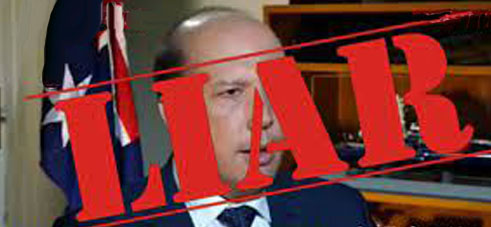
The Fifth Estate, DARRIN DURANT, Dr Darrin Durant is Senior Lecturer in Science and Technology Studies at the University of Melbourne.17 JUNE 2024
Having promised a nuclear power policy for several years, the Australian Liberal-National Party finally announced one: no reactors before 2040 and approving new gas and coal projects instead. At the same time, it is abandoning the emissions reduction target for 2030 (a 43 per cent cut compared with 2005 levels) and refusing to commit to details about nuclear projects until after the May 2025 election.
This is a Nuclear Hail Mary Policy: reduce emissions aspirations and hope a final play two decades from now will work out.
Most commentary has focused on what this nuclear Hail Mary implies for Australia’s commitment to the Paris Agreement. Some suggest the LNP plans to “rip up” the agreement. Others that the LNP plans to “breach the text and spirit” of the agreement.
Closest to the mark, I suggest, is that LNP is internally fractured and confused about both what its nuclear and emissions policy should be and how it should conduct itself regarding international agreements.
Opposition Leader Peter Dutton’s climate backtracking on Saturday, 8 May 2024, pushed from the news cycle a clear marker of the LNP’s policy vacuum on nuclear power, climate emissions and international. On 7 June, the LNP engaged in disinformation about regional cooperation on decarbonization.
The occasion for the LNP’s disinformation campaign was the signing by the Albanese Labor government of the Indo-Pacific Economic Framework (IPEF) Clean Economy Agreement. The IPEF was signed by Australia and 13 other nations on 6 June 2024.
Ted O’Brien MP (Shadow Minister for Climate Change and Energy in the LNP) claimed the ALP signing of the IPEF “exposes rank hypocrisy”, demonstrates a “lack of integrity”, and amounts to “treating Australians like mugs”.
None of the claims by O’Brien and the LNP are true. It is the LNP nuclear disinformation campaign that displays hypocrisy and duplicity and treats Australians like mugs.
The IPEF Clean Economy Agreement
The IPEF agreement aims to build regional economic cooperation across four pillars: trade, supply chains, clean energy, and tax. Australia joined IPEF on 23 May 2022, after the 21 May 2022 election in which Labor swept the LNP from power. Since then, eight rounds of negotiations between the member nations have taken place…………………………………………………………………………………………………..
Australian nuclear misinformation goes walkabout
Thus far, Coalition claims about nuclear prospects have been domestic doomsday claims about Australia’s fate if it does not “go nuclear”.
Yet the Coalition’s claims routinely hinge on misinformation: inflating estimations of transmission projects, over-playing the risk of load shedding, over-estimating G20 reliance on nuclear, exaggerating renewables-related land use, and inventing risks from windfarms (on and offshore).
While the international nuclear renaissance has been a farcical (short) history of massive cost and construction blowouts, the Coalition has sidelined those facts at home, leading to claims that Coalition nuclear plans are a delay tactic to perpetuate coal and gas………..
The IPEF stipulates that the Parties should:
“promote transparent licensing, siting, and permitting for clean energy and related generation, transmission, distribution, and storage projects in the electricity sector” (Sect 4, Point 2b)
Furthermore, for those parties supportive of nuclear, they should:
“ensure that sound policy and regulatory frameworks in nuclear safety and waste management are in place when considering the adoption of nuclear energy technologies” (Sect. 4, Point 7a).
The LNP has spent years spruiking nuclear power, yet the Australian public remains in the dark about those two important clauses in the IPEF agreement.
The LNP cannot be ‘transparent’ if it has provided no detail to the Australian public about licensing, siting and permitting. The LNP claims to be considering nuclear, yet where are any serious policy proposals regarding the regulatory frameworks for nuclear safety and nuclear waste?
Instead, the LNP treats citizens as incapable of spotting fabrications and omissions.
For instance, the O’Brien’s/LNP press release tells citizens they will find the IPEF “supporting small modular reactors (SMRs) in the Indo Pacific”. This is a fabrication: the negotiated text of the agreement never mentions SMRs. Similarly, the Coalition omits that the IPEF agreement strongly supports windfarms and energy efficiency, two key elements of the ALP’s Rewiring the Nation plan………….
Treating citizens like mugs
……………………………To be a mug is to be easily deceived. The LNP must assume citizens are mugs if it thinks Australian voters cannot spot the LNP’s misrepresentation of the IPEF agreement. No, Labor is not in contradiction for opposing domestic nuclear and signing the IPEF, because the IPEF favours clean energy in general and advocates for member nations to pursue their own pathway (which may or may not include nuclear power)
Yet even if tempted by the Coalition logic, just remember, the Coalition opposes most of what is supported in the IPEF agreement. The Coalition is not talking straight about either energy policy or international agreements, and voters should keep this in mind as the Coalition obfuscates important international agreements like the Paris Agreement. https://thefifthestate.com.au/columns/spinifex/nuclear-misinformation-in-australia-is-hail-mary-policy-by-the-opposition
Superficial coverage of Dutton’s nuclear policy does Australia a disservice
By Ernst Willheim, Jun 17, 2024, https://johnmenadue.com/superficial-coverage-of-duttons-nuclear-policy-does-australia-a-disservice/
Noel Turnbull correctly writes that media coverage of the federal opposition’s nuclear power proposal is superficial. There is a very wide range of as yet unanswered issues.
First, who will build and operate the proposed nuclear power stations.
Many years ago, when the Commonwealth proposed establishment of a nuclear power station, it settled on Jervis Bay because the ‘territories’ power in the Commonwealth Constitution gave the Commonwealth plenary power. The proposal was well advanced, and a large concrete platform was built, before the proposal was eventually abandoned because it proved to be uneconomic.
The opposition apparently contemplates location of nuclear power stations on the sites of disused coal fired power stations. Does the opposition believe the Commonwealth has constitutional power to establish and operate nuclear power stations in the States?
The States would of course have the constitutional power to establish nuclear power stations. Remember State electricity authorities used to be publicly owned before they were privatised. But has any of the States indicated any enthusiasm for establishing and operating nuclear power stations?
If the opposition doesn’t envisage either Commonwealth or State government involvement, do they envisage private enterprise.
There are many capable private operators around the world but I haven’t seen any evidence of private corporations clamouring for the right to build nuclear power stations in Australia. Could it be that the private sector understands that privately owned nuclear power stations in Australia would not be competitive, that is, they would not return a profit.
There remain a range of wider regulatory issues, who would be responsible for planning, oversight and safety. How would liability and insurance be handled. Would the opposition envisage that Australia should become a party to the Vienna Convention on Civil Liability for Nuclear Damage. What about safeguards. Would the opposition accept oversight by the International Atomic Energy Agency?
It is not clear that the opposition has addressed any of these issues.
Key question Peter Dutton refuses to answer about his nuclear power plan

- Peter Dutton refused to answer question
- He was probed about nuclear power policy
By NCA NEWSWIRE and ELEANOR CAMPBELL FOR NCA NEWSWIRE, 16 June 2024 https://www.dailymail.co.uk/news/article-13534571/Key-question-Peter-Dutton-refuses-answer-nuclear-power-plan.html
Peter Dutton has again refused to reveal key details on the Coalition’s nuclear power policy, declaring he would consider announcing his alternative 2035 emissions reduction goal if the government released modelling on interim climate targets.
In a fiery interview on Sunday with Sky’s Sunday Agenda host Andrew Clennell, the federal Opposition Leader became defensive after being pressed to reveal the locations and costings of his six proposed nuclear power plants.
Mr Dutton said he would reveal the opposition’s energy plan within ‘weeks’ in March but again declined to spell out the full details of his vision for Australia’s energy transition.
‘What we’ve said, the sites that we’re looking at are only those sites where there’s an end-of-life coal-fired power stations,’ he told Sky on Sunday.
‘One of the main reasons is that people in those communities know that they’re going when coal goes and we have the ability to sustain heavy industry, we have the ability to keep the lights on.’
A recent report from peak scientific body CSIRO suggested that building a large-scale nuclear power plant in Australia would cost at least $8.5bn and take at least 15 years to deliver.
The Coalition has refused to confirm reports of the locations of up to seven proposed power sites, which according to speculation, include sites in two Liberal-held seats and four or five Nationals-held seats.
Potential sites include the Latrobe Valley and Anglesea in Victoria, the Hunter Valley in NSW, Collie in WA, Port Augusta in South Australia, and potentially a plant in the southwest Queensland electorate of Maranoa, held by Nationals leader David Littleproud.
When pressed on the locations of the sites, Mr Dutton responded: ‘We’ve said that we’re looking at between six and seven sites, and we’ll make an announcement at the time of our choosing, not of Labor’s choosing.’
When asked if a power plant would be placed on each of the unspecified sites, Mr Dutton did not answer directly, saying only that he would consider output and environmental impact.
The Opposition Leader was then asked if the plants would be government subsidised, and responded by saying all power sources, other than coal, receives funding.
‘We’ll make an announcement in due course, but I just make the point that wind and solar don’t work without government subsidy,’ he said.
Mr Dutton also came under scrutiny this week after revealing he would oppose a legislated 2030 carbon emissions target at the next election.
Asked directly if he would consider a 2035 interim reduction target, which would be legally required under the 2015 Paris agreement, the Liberal leader said he would ‘take advice’ from the treasury before changing climate legislation, citing concerns about the nation’s economic situation
‘I think we have a look at all of that information and if there were settings we need to change … it doesn’t mean exiting Paris or walking away from our clear commitment to be net zero by 2050,’ he said.
Mr Dutton was asked for a second time if he would set a 2035 target, but again spoke at length about cost of living pressures facing the country.
Trade Minister Don Farrell said Mr Dutton’s comments were ‘outrageous’ and argued watered down climate commitments would damage Australia’s standing with its international allies.
‘It’s beyond the pale to be perfectly honest,’ Mr Farrell said on Sunday.
‘We went to the last election committing to a 2030 target and despite what Mr Dutton might say, we’re on track to meet that target.’
Nationals seats to go nuclear

https://www.abc.net.au/listen/programs/pm/nationals-seats-to-go-nuclear/103970680, 13 June 24
As debate over energy policy intensifies again, the Nationals leader David Littleproud has confirmed that nuclear reactors would be built in Nationals electorates under the Coalition’s plan.
The Coalition is yet to reveal exactly where it would construct nuclear reactors, only saying it would be limited to areas with existing coal fire power stations.
The nuclear option has already sparked some debate the coal heartlands of New South Wales and Victoria.
Who prepared Dutton’s report on nuclear power?

By Noel Turnbull Jun 13, 2024, https://johnmenadue.com/who-prepared-duttons-report-on-nuclear-power/
The Canberra Press Gallery is not a homogenous group although its members do seem to suffer from a fair amount of groupthink; preference for gotchas and speculation about what might happen next in politics; and heavy dependence on leaks and drops for copy.
One part of it – the Murdoch part – subsumes this into propaganda and sneering opinion pieces.
All this makes intelligent analysis of policy difficult – as illustrated by the recent coverage of the Dutton Opposition commitment to nuclear power – which is mainly superficial and focussed on the politics of it all. The Albanese Government has not been helpful by saying that they will campaign every day until the election on nuclear policy – a vow unlikely to be kept given the short attention span of the media and party staffers.
Yet just as the best staffers plan answers (usually zingers rather than substance) to media questions about policies and recent political developments it is useful to consider the sort of questions the media might ask – if someone is smart enough to brief them first – after Dutton announces his plans.
The first ones are pretty obvious. Why is the report you commissioned more credible than the CSIRO report’s conclusion that nuclear is more expensive than renewables? Who prepared your report and what are their credentials on nuclear power? Do they have any conflicts of interests?
Then they can get more detailed.
What are the current time frames around the world for building nuclear reactors? Are you aware that the average is about 14 years? How can you be certain, given Australia’s record of infrastructure cost overruns, that they will be built by the announced date and on budget when even at the earliest it would be the late 20240s before one is operational?
Who will you get to build it and what is their track record? Have you analysed the construction record of nuclear power stations around the world and the cost overruns they have experienced?
Where will Australia get the staff and nuclear fuel required to build and commission the plants?
Are you aware that there is currently a worldwide shortage of people who can operate and maintain the existing plants operating around the world? How will you recruit sufficient skilled and experienced staff to operate them given this global shortage?
You have continued to refer to small modular reactors – Can you refer us to one which is in operation or planned?
Are you aware that SMRs and proposed micro sized reactors are so inefficient that they would need HALEU (high-assay low enriched uranium) fuel to power the new stations?
As this would require that, unlike traditional nuclear power stations which require only 3% to 5% enrichment, these new stations would require enrichment of 19.75%, would this mean that a single reactor might contain enough HALUE to make a nuclear weapon?
You have said you will build them on the sites of former coal powered stations? What will be the cost of demolishing the stations and remediating any environmental problems on the sites? How many such sites exist and how many others will become available in time for nuclear construction to meet your timetables?
As you have dumped current emissions targets what will the climate impacts if there are delays in bringing the nuclear power stations online?
What is the impact on meeting carbon targets if support for renewables is diluted in the time lag required for nuclear power?
How do you plan to override States which have legalised nuclear bans?
What are your plans for disposal of nuclear waste?
Now staffers are more likely to be spending their time on factional manoeuvring; writing zingers; thinking about how they can get pre-selection or which lobbying firm might offer them a well-paid gig than other matters.
But Opposition staffers might find it useful to start coming up with convincing answers to questions such as this. And Government staffers should be thinking of how they can be used to demolish Dutton’s case.
Dutton’s nuclear plan wouldn’t even meet net zero by 2050 target, report finds
“The proposal by the federal Coalition would not significantly reduce emissions until the late 2040s, by which time catastrophic impacts would be almost certain.”
Giles Parkinson, Jun 11, 2024, https://reneweconomy.com.au/duttons-nuclear-plan-wouldnt-even-meet-net-zero-by-2050-target-report-finds/
The federal Coalition’s nuclear energy proposal would not just result in the tearing up of Australia’s commitment to the Paris climate treaty, it wouldn’t even be able to deliver net zero emissions on Australia’s main electricity grid by 2050, according to a new report.
Opposition leader Peter Dutton’s admission on the weekend that the Coalition’s energy plan – to stop the roll out of renewables, keep coal fired power stations online, and build more gas while waiting for nuclear – would render Australia’s interim emissions target for 2030 impossible to meet.
Dutton suggested that the Coalition would be willing to tear up that agreement, but would still seek to honour the later 2050 net zero target once nuclear power generators could be rolled out in the country in the 2040s.
A report prepared by Solutions for Climate Australia, led by Barry Traill, says Dutton’s proposal would result in some 2.3 billion tonnes of additional carbon emissions over the Australian Energy Market Operator’s step change scenario.
That is bad enough, because it would mean Australia walking away from its international commitments – the Paris treaty that Australia signed up to requires no backtracking because of the urgency of emissions reduction – and becoming a pariah once again on the international stage.
Worse than that, SCA says that even rolling out nuclear as early as 2040/41 – which it does not believe is feasible, but is using that date for the sake of modelling – and rolling it out as quickly as France (also questionable), would still leave Australia well short of reaching net zero by 2050.
The Coalition energy plan remains vague, but to fill the gap created by the lack of renewables and the shutting down of ageing coal fired power stations would require a 10-fold increase in gas generation, which with its newly understood methane leaks and ambitions is barely cleaner than coal.
“The calculations in this paper use a series of assumptions based on what the federal Coalition has said their nuclear reactors plan would achieve,” the report says.
“Many of these assumptions are not considered feasible by energy experts: it is near impossible that nuclear reactors could come online in 2040, nor that Australia could build nuclear reactors at one of the fastest rates in
history.
“The build rate used in this analysis generously matches the relatively fast rate achieved by France from 1978, which had a population of 53 million, and had already been building nuclear power reactors for 23 years.
“It is extremely unlikely that Australia could match this build rate, but this has been used as a proxy for the purposes of the analysis. Even with this scenario’s very ambitious build rate of nuclear reactors, the National Electricity Market would
not reach net zero by 2050.”
“Drastically reducing carbon emissions this decade is essential to avoiding more extreme fires, heatwaves, floods and droughts as the impacts of climate intensify.
“The proposal by the federal Coalition would not significantly reduce emissions until the late 2040s, by which time catastrophic impacts would be almost certain.
“The proposal would break Australia’s existing international commitments to both the current 2030 target and its obligations under the Paris Agreements.
“Any proposal to introduce nuclear reactors to Australia is therefore not a climate policy, but rather a policy to increase emissions, acting to distract from urgent climate action over the coming decades.”
Dutton to ditch Paris Agreement: analysis reveals nuclear impact on emissions
SMH By Mike Foley. June 9, 2024
The opposition’s nuclear energy plans would force Australia to fall massively short of the nation’s emissions target and generate more than 2 billion tonnes of extra greenhouse gas by 2050, breaking Australia’s commitment to the Paris Agreement. New analysis revealed the emissions blowout following Opposition Leader Peter Dutton’s declaration he would ditch Australia’s legally binding climate target to cut emissions 43 per cent from 2005 levels by 2030.Dutton told The Australian on Saturday that the government’s renewable goal was unattainable and “there’s no sense in signing up to targets you don’t have any prospect of achieving”, and pledged only to meet a goal of net zero emissions by 2050.
Solutions for Climate Australia calculated the extra emissions that would be generated by coal and gas plants while waiting for the first nuclear plants to be built, which CSIRO reported last month could not be achieved until 2040 at the earliest.
Dutton has said the Coalition would boost the role of gas power to fill gaps in the energy grid until his reactors are built, and would ensure coal plants are not shut before their energy supply is replaced.
This increased reliance on fossil fuels would generate 2.3 billion tonnes more greenhouse emissions compared to the Albanese government’s climate policy. That’s more than five years’ worth of Australia’s annual emissions, which were 433 million tonnes in 2023.
Dutton’s declaration will reignite the climate wars and ensure the next federal election, due by May, is a referendum on climate policy after Prime Minister Anthony Albanese last week vowed his government will campaign on this issue every day.
The opposition’s plan would break from the terms of the Paris Agreement, which demands its members increase their emissions goal every five years, with the Albanese government committed to set a 2035 target by February.
It is also at odds with findings of the Intergovernmental Panel on Climate Change – the United Nations’ expert science body – that fossil fuels must be rapidly phased out to meet the Paris Agreement, which the Abbott government signed Australia up to in 2015.
The Paris Agreement commits nations to contributing to action that limits global warming to under 2 degrees – and as close to 1.5 degrees as possible – to avoid the worst damage.
Climate scientists say reaching net zero emissions by 2050 is not enough to achieve this goal, and countries must start reducing emissions rapidly now to have any hope of limiting warming to below 2 degrees, rather than waiting until later decades to deliver deep reductions in greenhouse gases.
Currently, 194 nations are signatories to this deal, including all developed nations and Australia’s major trade and security partners – the US, UK, Japan, Korea, China and India.
Dutton’s rejection of Australia’s 2030 goal will place Australia outside the bounds of the Paris Agreement.
“They’re walking away from the Paris Agreement … saying that Australia will join Libya, Yemen and Iran outside the Paris Accord,” said Climate Change and Energy Minister Chris Bowen.
The Investor Group on Climate Change, representing institutional investors with total funds under management of more than $30 trillion, said Dutton’s policy threatened to derail the clean energy transition.
“Back-flipping on these commitments and withdrawing from the Paris Agreement would corrode investor confidence at a time when Australia is competing for funding for new technologies and clean industries, local jobs and training opportunities,” said the group’s policy director Erwin Jackson………………………………..
“Our analysis shows the federal Coalition’s plan for nuclear reactors would see Australia throw its commitment to limit global heating to 1.5 degrees out the window,” said Solutions for Climate Australia campaigner Elly Baxter……………………………..
The modelling assumes, based on comments from senior figures including Nationals Leader David Littleproud, that a Coalition government would halt construction of large-scale wind and solar farms and continue to roll out rooftop solar panels for homes.
When asked if the opposition still wanted to pause the rollout of renewables, O’Brien said details of the policy would be released in due course. https://www.smh.com.au/politics/federal/dutton-to-ditch-paris-agreement-analysis-reveals-nuclear-impact-on-emissions-20240604-p5jj8s.html
Peter Dutton proposes decades of delay on climate: Federal Liberals still with no climate plan
June 8, 2024: The AIM Network, https://theaimn.com/peter-dutton-proposes-decades-of-delay-on-climate-federal-liberals-still-with-no-climate-plan/
National climate group Solutions for Climate Australia expressed extreme disappointment and concern at the Opposition Leader Peter Dutton proposing further decades of delay in tackling climate change, despite increasing climate disasters.
This follows a statement by Peter Dutton today, in an interview with The Australian, that the Federal Liberal Party wants to reject current targets and plans to reduce Australia’s climate pollution this decade.
“It is a tragedy that the Federal Liberal Party has no plan to stop the increasing climate disasters which are directly killing Australians, and damaging communities, agriculture and businesses across the country, and globally,” said Dr Barry Traill, Director of Solutions for Climate Australia.
“We need decisive action on climate pollution this decade to protect farmers, our food supply, businesses and trade. From uninsurable houses, to declining crop yields, to direct threats to life and property, we are all now being hurt by climate disasters.
“Australians voted decisively for action on climate in the 2022 election. Mr Dutton’s weak, do-nothing approach on climate is out of step with the electorate. The community showed it expects all political parties to adopt strong, science-based targets to reduce pollution.”
“The federal Coalition has not heeded the message of the nation on climate. They must do better.”
Dutton’s nuclear policy a disaster for Australia
Climate Council Media Release, 8 June 24 https://theaimn.com/duttons-nuclear-policy-a-disaster-for-australia/
Responding to reports today that Opposition Leader Peter Dutton would rip up Australia’s 2030 climate targets if elected, Climate Council CEO Amanda McKenzie said:
“Dutton’s climate policy is a disaster, and the consequence for Australians would be more extreme heat, fires and floods. Instead of ripping up Australia’s 2030 climate targets, Peter Dutton must listen to the communities already ravaged by worsening climate disasters.
“There are 195 countries signed up to the Paris Agreement. Opting out would make Australia a global laughing stock.
“The Liberals haven’t learned the lesson Australians gave them at the last election: this is more of the same from the party who already gave us a decade of denial and delay on climate.”
Head of Policy and Advocacy Dr Jennifer Rayner said: “Peter Dutton is now promising Australians more climate pollution and a more dangerous future for our kids.
“This is the make-or-break decade to slash climate pollution by accelerating Australia’s move to clean energy. This is what it takes to keep our kids safe from escalating climate change and set Australia up for our next era of prosperity.
“Australia is already making great progress, with 40 percent of the power in our main national grid coming from clean energy, and one in three households having solar on their roof. Doing a massive u-turn on this momentum makes no sense when we can accelerate it instead.”
Resources Minister Madeleine King challenges Peter Dutton to name Western Australia nuclear power station sites
Joe Spagnolo, The West Australian, Sat, 8 June 2024
WA Federal Labor Minister Madeleine King has challenged Peter Dutton to come clean on where nuclear power stations would be located in WA — as the Federal Liberal leader spruiks nuclear energy for Australia.
Addressing the media in Kwinana on Saturday morning, the Resources Minister said WA communities like Collie, Kwinana and Fremantle could all be targets for a nuclear power station under a Dutton-led Federal Government…………………. (Subscribers only) https://thewest.com.au/politics/state-politics/resources-minister-madeleine-king-challenges-peter-dutton-to-name-wa-nuclear-power-station-sites-c-14953838
Every day between now and the election’: Albanese ignites nuclear fight with Dutton
SMH, By James Massola, June 2, 2024
…………………….. the prime minister highlighted recent CSIRO research that found nuclear power is up to eight times more expensive than large-scale wind or solar power.
“They also found building a single nuclear power plant would cost at least $8.5 billion and take 15 years. At the next election, we will offer voters a choice between renewable energy and nuclear power,” he said.
“We will raise this every day between now and the election. [Dutton] needs to stop hiding his plans and release the locations of these planned nuclear reactors. We will join communities in campaigning against them.”………………………………..
The prime minister said Dutton had promised to look communities that could host nuclear power plants in the eye and engage with them but “he hasn’t been anywhere near [them]”.
“He has not been within 40 kilometres of a coal-fired power station. And he’s saying they’ll have six or more sites. He’s been nowhere near any of them in Gippsland, the Hunter, Flynn, Maranoa, O’Connor, seats like this,” Albanese said.
Back in 2007, when he was infrastructure spokesman in the Kevin Rudd-led opposition, Albanese helped lead Labor’s attack against John Howard’s plans to build nuclear power plants across the country – and he has not forgotten those lessons.
…………………Dutton had initially flagged the nuclear policy would be outlined before last month’s federal budget, but that timeline has since slipped.
This masthead then revealed the Coalition planned to unveil either six or seven sites had been selected to host nuclear power plants in the current parliamentary sitting fortnight but following that report, the opposition pressed pause on the announcement once more.
The Coalition’s policy announcement has now been pencilled in for the week after next, once parliament has risen at the end of next week, and is expected to take place outside of Canberra.
Possible sites for nuclear reactors include the Latrobe Valley in Victoria, the Hunter Valley in NSW, Collie in Western Australia, Port Augusta in South Australia, and even potentially a plant in Nationals leader David Littleproud’s electorate of Maranoa in south-west Queensland. All of these locations are on the site of, or near, current or former coal-fired power plants.
Coalition sources, who asked not to be named so they could detail internal discussions about the policy, said the six or seven MPs who would potentially host nuclear power plants in their seats had been notified.
…………………. Labor strategists believe that once the potential sites are named – all of which are expected to be in Coalition seats – that will sharpen the political debate and force voters to consider the implications of having a power plant in their own seat.
A Dutton-led government, if elected, would face a fight with state Labor premiers including Victoria’s Jacinta Allan, NSW’s Chris Minns and Western Australia’s Roger Cook, who have all hosed down suggestions their states could host nuclear power plants.
Queensland Opposition Leader David Crisafulli, who is widely expected to lead the LNP to victory in a state election in October, has indicated he would not back nuclear power unless it had bipartisan support at a federal level.
Albanese said the Labor government opposed the construction of nuclear power plants in Australia for four main reasons.
“Nuclear reactors are simply wrong for Australia, the International Energy Agency said that this week, they support nuclear reactors but for Australia, given the comparative costs and time frames, it makes no sense given that we have access to the best renewables on Earth, along with hydro, batteries and gas to firm them,” he said.
“Second is nuclear is too slow [to build] to keep the lights on, the CSIRO speak about 15 years at least for it to happen. So you’re talking about 2040 just small modular nuclear reactors and years later, if they want to go down the large-scale route and Australia doesn’t have that time.”
“Third, relates to cost, nuclear will push up power bills – independent analysis from CSIRO, AEMO [the Australian Energy Market Operator], says nuclear is the most expensive form of energy to build. And the fourth is communities don’t want nuclear. That includes state LNP leaders that have said that, local councils, state and indeed even [federal] coalition MPs like Darren Chester and Dan Tehan.”
Back in March, 12 Coalition MPs told this masthead they backed lifting the moratorium on nuclear power in Australia but would not commit to hosting a nuclear power plant in their own electorate.
And Nationals MP Darren Chester, who holds the Victorian seat of Gippsland, which is widely considered a probable pick for a nuclear site, said he would not accept a site unless his community was handed a significant economic package.
https://www.smh.com.au/politics/federal/every-day-between-now-and-the-election-albanese-ignites-nuclear-fight-with-dutton-20240601-p5jigh.html
If regional communities don’t want a windfarm, why would they accept a nuclear power station?
Guardian, Gabrielle Chan, 4 June 24
The Coalition’s energy policy is leveraged on regional discontent about renewables. But many farmers don’t want nuclear in their back yard either.
Here’s the thing about the Coalition’s latest nuclear policy. It tries to use one of the most contentious issues in rural areas, which is the rollout of renewables and the electricity transmission lines to carry energy around the country, to push an even more controversial energy transition.
Because nuclear power stations would also be built in the regions. And if you’re worried about renewables, hands up who wants a nuclear reactor next door?
My generation grew up with the US-Russian cold war and the Doomsday Clock.
While the conversation and the technology of nuclear energy has moved on, the cost, complexity and construction time has not, as the CSIRO found in a report released last month………………………
If there is one thing that I have learned from calling a country town home, it is that people are very attached to their place and how it is identified.
Not everyone opposes renewables but there is a significant portion of people who don’t want them in their own back yard. Others are quietly making their fortunes, having struck the formula for drought-proofing their businesses for decades to come. If the Big Dry strikes, you will probably find them on a beach somewhere.
That is because annual payments to host turbines start from $40,000 each though I know of agreements that are much higher, especially when communities collectively bargain. The New South Wales government pays landowners $200,000 to host transmission lines in annual instalments over 20 years, with Victoria paying the same over 25 years.
Those payments have crept up because of ongoing regional protests. That action has been amplified by poor community consultation from some energy companies highlighted in the Australian Energy Infrastructure Commissioner Andrew Dyer’s report. He found the rollout had created “material distrust” of developers in some communities.
Discontent is also being amplified for political purposes, including by David Littleproud, Barnaby Joyce and Matt Canavan, who spoke at a rally against renewables at parliament house.
The politics is clear. For starters, the long lead time kicks the nuclear energy can down the road to 2040. The Liberals cannot walk naked into the next election without at least a fig leaf for a net zero policy. The Nationals, on the other hand, don’t give a toss about net zero. They just want to extract the funding from the Liberals in compensation for hosting any technology that delivers on the net zero promise. Nuclear can be that fig leaf.
It is also true the Nats and the country Liberals will have to wear any pushback on where nuclear facilities are placed. They won’t be able to campaign against their own policy like some do on renewables.
Peter Dutton has not, as yet, specifically named any potential sites for a nuclear power station but he has pointed to current coal production facilities that are due to close. His announcement is imminent, perhaps even after the party room meeting on Tuesday.
Possible sites include the Hunter Valley in NSW; Anglesea and Latrobe Valley in Victoria; Port Augusta in South Australia; Collie in Western Australia; and perhaps Tarong in central Queensland – within Littleproud’s Maranoa electorate.
Since then the game has begun to get Coalition MPs to commit to host or rule out a reactor in their own back yard.
This is a bit silly really, because apart from the ACT, which renewable-supporting metropolitan MPs could commit to hosting a wind turbine or a solar farm in their city seats?
Littleproud and Joyce have both indicated their approval to host a reactor. But a dozen others would not commit when asked by Nine newspapers.
Keith Pitt told Nine he supported lifting the moratorium on nuclear power but, alas, there were technical restrictions, including earthquakes in his electorate. But if Pitt is worried about his area, other MPs might be scurrying to the Geoscience Australia map of faultlines for their own get-out-of-jail-free card.
Pitt’s seat of Hinkler looks like a shoo-in compared to the faultlines under Darren Chester’s Gippsland electorate, which covers the Latrobe Valley in Victoria, or the Liberal MP Rick Wilson’s seat of O’Connor, which covers Collie in WA…………………………………………..
Once you combine the feelings of the existing populations with younger populations, does that add up to support for nuclear over renewables in these changing back yards? I wouldn’t bet on it. https://www.theguardian.com/australia-news/article/2024/jun/04/liberal-coalition-nuclear-power-plant-policy-renewable-energy
Nuclear Shaping Up To Be The Big Issue Next Election
https://10play.com.au/theproject/articles/nuclear-shaping-up-to-be-the-big-issue-next-election/tpa240602vcgxm 2 June 24 We’ve just passed the two-year anniversary of Anthony Albanese being elected as the Prime Minister of Australia, and now rumours are swirling around when the PM will call the next election.
And there’s one issue that shapes up to be a cornerstone election issue when we go to the polls.
The battle lines have been drawn and nuclear power plants are at the centre of them.
The Prime Minister has set the agenda for the remainder of his term, saying the government will campaign on the issue until the day Australia heads to the polls.
It’s been almost two years since the opposition leader first flagged his nuclear policy proposal, but the devil is in the details, and that’s precisely what the PM says is missing.
It comes as rumours swirl around whether Anthony Albanese will call an early election when he still has more than a year left to do so.
And while the PM has repeatedly said he intends to serve a full term… There are a few reasons he may decide not to.
The impact of foreign forces could also play a role in his decision.
So will Albo stick to his guns and hold out until next year, and will the next campaign go totally nuclear.
“We haven’t been consulted:” Coal town on transition to renewables is not interested in nuclear
ReNewEconomy, Aaron Bunch, Jun 2, 2024
A Western Australian coal town lined up as a potential site for a nuclear power station by the federal Coalition says the plan is a distraction as it works to ditch fossil fuels and transition to renewables and storage.
The federal coalition has floated plans to add nuclear energy to the power grid should it win government by building reactors at sites currently home to either coal or gas-fired power stations.
The sites have not yet been announced but the list is widely reported to include Collie, 200km south of Perth and home to about 7500 people, where a state government-supported pivot away from the coal industry is underway. It is the site for two of the country’s biggest battery storage projects.
Shire President Ian Miffling said the state $662 million Just Transition plan had created a “buzz” in the town and the federal coalition’s nuclear power plan hadn’t received much attention.
“Collie hasn’t been consulted at all and we don’t know any of the details of the policy and what they propose, so we’ve not given it too much credence at this stage,” he told AAP…………………
Mr Miffling said locals were focused on bolstering their skills for jobs in new industries, like the recently approved green steel mill and Synergy’s $1.6 billion battery to store renewable energy once coal is retired as an energy supply in 2030.
“The potential for nuclear, which would be a long way down the track, is a bit of a distraction and it really doesn’t need us to spend too much time talking about it at this point,” he said………………..
Local state Labor MP Jodie Hanns said federal opposition leader Peter Dutton and the coalition were out of touch with what was happening on the ground in Collie and floating plans for a reactor in the town was “arrogant and disrespectful”……………………….
“No one I’ve spoken to is in support of a nuclear reactor being put in Collie … my house will be up for sale if this becomes a reality.”
AMWU state secretary Steve McCartney said Collie workers had been discussing for years what they wanted for the town after coal mining ended, “and I can guarantee you one of the things wasn’t a nuclear power station”…………… https://reneweconomy.com.au/we-havent-been-consulted-coal-town-on-transition-to-renewables-is-not-interested-in-nuclear
Do young people support nuclear power?

Jim Green 31 May 24
Earlier this year the Murdoch-Coalition echo-chamber was excited about younger poll respondents in a February Newspoll survey ‒ 65 percent support and 32 percent opposition among 18 to 34-year-olds to this survey question: ‘There is a proposal to build several small modular nuclear reactors around Australia to produce zero-emissions energy on the sites of existing coal-fired power stations once they are retired. Do you approve or disapprove of this proposal?’
However the Newspoll survey was a crude example of push-polling as discussed by polling experts Kevin Bonham and Murray Goot and by economist Professor John Quiggin. The question was loaded, the response options were mischievous (excluding a “neither approve nor disapprove” option, without which majority support (across all age groups) almost certainly would not have been achieved), and the Murdoch/Sky reporting on the poll was biased and dishonest.
Moreover, as Murray Goot notes, other polls reach different conclusions:
“But eighteen- to thirty-four-year-olds as the age group most favourably disposed to nuclear power is not what Essential shows, not what Savanta shows, and not what RedBridge shows.
“In October’s Essential poll, no more than 46 per cent of respondents aged eighteen to thirty-four supported “nuclear power plants” — the same proportion as those aged thirty-six to fifty-four but a smaller proportion than those aged fifty-five-plus (56 per cent); the proportion of “strong” supporters was actually lower among those aged eighteen to thirty-four than in either of the other age-groups.
“In the Savanta survey, those aged eighteen to thirty-four were the least likely to favour nuclear energy; only about 36 per cent were in favour, strongly or otherwise, not much more than half the number that Newspoll reported.
“And according to a report of the polling conducted in February by RedBridge, sourced to Tony Barry, a partner and former deputy state director of the Victorian Liberal Party, “[w]here there is support” for nuclear power “it is among only those who already vote Liberal or who are older than 65”.”
1 This month


Help Aunty Sue Protect Her Land and Sacred Sites From Destructive Rocket Testing.
.

Australians deserve the truth
about
AUKUS – https://aukuspublicinquiry.com/

PETITION – To: Prime Minister Anthony Albanese and the Australian Labor Government

of the week – Australians for War Powers Reform (AWPR)
To see nuclear-related stories in greater depth and intensity

