Opposition eyeing off six sites for nuclear reactors
New Daily, Poppy Johnston, Mar 12, 2024
Households and businesses close to the six nuclear power reactors the opposition hopes to see built could have their energy bills subsidised.
Teasing the coalition’s yet-to-be-unveiled energy policy at the Australian Financial Review Business Summit in Sydney on Tuesday, opposition leader Peter Dutton said the plan would likely include six nuclear plant sites.
Tasmania has been ruled out as a potential host state.
Dutton said the coalition would seek a social licence by incentivising close-by communities with subsided energy, a model he said was used in the United States.
“It provides incentive for industry to establish jobs,” he told the audience.
The opposition is expected to release its energy policy ahead of the federal budget in May, with the plan likely to include overturning the moratorium on nuclear technology and possible sites for reactors on old coal station locations to take advantage of existing transmission infrastructure…………….
The Albanese government has dismissed nuclear as an unsuitable technology for Australia that has a high price tag and will take too long to roll out.
Energy experts also say it’s difficult to estimate the cost of transitioning to nuclear given the technology is not currently commercially available.
Dutton addressed a number of what he described as “straw man arguments” against nuclear, including cost.
He used other regions with nuclear in the energy mix – South Korea and the Ontario region of Canada – to make his case for the system-wide cost of the energy source and its influence on power bills.
Reactors also produce a “small amount of waste” and Dutton said the government had already signed up to deal with nuclear waste via the AUKUS agreement……………………………. https://www.thenewdaily.com.au/news/politics/australian-politics/2024/03/12/dutton-six-sites-nuclear-reactors
Refuting Peter Dutton’s recycled nuclear contamination
By Michelle Pini | 14 March 2024, https://independentaustralia.net/politics/politics-display/peter-duttons-recycled-nuclear-contamination,1841
Nuclear power is one hell of a way to boil water.
~ Albert Einstein
MANY AUSTRALIANS are accustomed to the Coalition’s deliberate lies and obfuscation on most issues, which is why they are no longer in power, at least for now.
The lengths to which the “friendly” media’s ongoing Right-wing public relations campaign is prepared to go in support of such obvious nonsensical blathering is, however, alarming.
In recent days, Opposition Leader Peter Dutton has been running free all over the countryside spruiking nuclear energy. Who cares? We hear you say. Well, apparently, every mainstream media platform, since they are not only publicising his outright lies, but in many cases, promoting them as credible policy.
Despite the current political state of play in Australia, in which the Labor Party has been elected federally and in every mainland state and territory, plus his “popularity” continuing to dwindle towards complete extinction, Peter Dutton appears mired to the outdated policies of generations past.
After yet another election loss, this time in the Dunkley by-election, Dutton has sprung up on every media platform, keeping the climate denial fires burning and rambling about nuclear as if it were a new idea, rather than the stale, worn-out dance with annihilation that it actually is.
According to Pete, nuclear is:
“…The only credible pathway we have to our international commitments to net zero by 2050.”
And proving yet again that facts never stood in the way of a good PR campaign, the Fourth Estate say: Facts be damned! We already had to (mostly) give up on climate denial so let’s give nuclear a good old-fashioned, vested-interests-funded, radioactive show of support!
This week, the usual suspects flooded our screens, radio waves and Google searches with headlines such as:
‘Nuclear will help Australia reduce emissions by 2050’ ~ Sky News
‘Shadow Energy Minister Ted O’Brien floats 10-year timeframe to get nuclear up and running in Australia’ ~ The West Australian
And the winner of the Most Creative Bullshit Headline award, once again, goes to that much-awarded Murdoch rag…
‘There’s no rational reason for maintaining the nuclear ban’ ~ The Australian
We may currently have a Labor Government, which has canned nuclear energy, but the media barons’ collective power to keep greenhouse gases spewing, corporate donors’ pockets overflowing and public minds contaminated should not be underestimated.
And so in answer to the Coalition and its nuclear-friendly media disciples, here are a few, by no means exhaustive, rational reasons to maintain Australia’s nuclear ban, keep nuclear energy firmly out of the energy mix and out of everyone’s backyard.
LIE #1: IT’S CHEAP
Even in the U.S., which boasts the biggest nuclear energy sector in the world, nuclear power costs have escalated. As recently as mid-2021, despite huge government subsidies, the target price for nuclear power increased by 53 per cent, to almost twice the price of utility-scale solar PV systems with battery storage.
Climate Change and Energy Minister Chris Bowen has estimated that the Coalition’s nuclear plan will carry a price tag of $387 billion – 20 times more than Labor’s current renewables investment fund – and would not be delivered before 2040. Nuclear energy, then, does not appear to be cost-effective.
LIE #2: IT’S QUICK
We (thankfully) don’t have nuclear reactors in Australia and thus there is no established nuclear reactor industry in place.
Nonetheless, back in 2023, Dutton first claimed:
“New nuclear technologies can be plugged into existing grids and work immediately.”
In their more recent ramblings, Dutton, his current Shadow Energy Minister Ted O’Brien and the unnamed “experts” to whom they refer claim Australia can have large nuclear reactors – magically – ready to go within ten years.
In the U.S., which boasts the largest nuclear industry in the world, it currently takes 19 years to achieve this.
According to Ted, the UAE produced a nuclear reactor from go to whoa in “ten years”. In reality, however, even with the UAE being an autocracy with a command economy, where communities are not permitted to object to reactors in their backyards, it actually took 13 years.
But what’s three extra years and a few more glow-in-the-dark communities between climate-denying friends?
Nuclear energy does not appear to be fast, either.
LIE #3: IT’S CLEAN AND GREEN
Even before we get to the radioactive leaks part of why nuclear power isn’t “clean”, there is the small matter of the Coalition’s stated need to maintain coal-fired power stations until all these nuclear reactors magically emerge, which even in Dutton’s plan, requires at least ten more years, but which based on the U.S. experience, we know will take more like 20.
This is, of course, at the heart of the Coalition’s nuclear push. This is the reason the Coalition gets energetic (pardon the pun) about most things. Nuclear energy generation takes a long time to develop at great cost, which would prohibit further investment in renewables and necessitate the extension of coal-fired power stations, currently set to be phased out by 2040.
According to its own Nuclear Regulatory Commission, in 2017, out of 61 operating – and self-regulating – nuclear power plant sites in the United States, 43 have had leaks or spills involving groundwater contamination above the EPA’s safe drinking water threshold.
So, nuclear energy does not appear to be “clean” or “green” or, as we indicate below, safe.
LIE #4: IT’S SAFE
There is still no answer to nuclear waste disposal or the toxic bi-products of nuclear storage. There is no safe way of “recycling” it.
There is still no answer to the “management” of radioactive leaks.
Nuclear waste, depending on its elemental composition, takes between 290 to a few hundred billion years to decompose. High-level nuclear waste consisting of spent fuel from nuclear reactors – of the type Peter Dutton and co would like to build – accounts for most radioactive waste and needs to be safely stored for up to a million years.
And then there are unplanned natural disasters, such as Fukushima.
As Dave Sweeney recently explained on IA, despite its established technical sophistication and even after 13 years, the best Japan can do with Fukushima’s ongoing radioactive waste is ‘pump and dump’ it into our oceans.
LIE #5: THE LIGHTS WILL GO OUT
According to self-styled nuclear energy mastermind Ted O’Brien, if we “prematurely” shut down coal-fired energy generators and implement nuclear reactors right now, “the lights will go out”.
Unsurprisingly, there is no factual basis for this claim. However, the lights may well go out if we do as his party is suggesting since natural disasters affecting nuclear reactors on a scale like Fukushima cannot be anticipated or prevented. Then there’s the “slight” problem of global warming, which, if we continue to accelerate by burning fossil fuels, will, indeed, result in all the lights going out.
To sum up – rationally – we repeat, nuclear power isn’t safe, it’s not cost-effective and it certainly ain’t green, unless you count glowing in the dark.
Dutton’s blast of radioactive rhetoric on nuclear power leaves facts in the dust

Graham Readfearn, Guardian, 14 Mar 24
Coalition’s claim of cheap power and quickly built reactors is at odds with real world experience of other countries.
We may not yet be entering a nuclear age in Australia, but we would all be best advised to handle the rhetoric around the issue as carefully as we would radioactive waste.
This week opposition leader Peter Dutton said an annual CSIRO report that had included estimates of costs for small modular reactors – which are not yet available commercially – was “discredited” because it “doesn’t take into account some of the transmission costs, the costs around subsidies for the renewables”.
Dutton is referring to a report known as GenCost, which calculates the cost of generating electricity from different technologies when fuel, labour and capital are included. This metric is known as the levelised cost of electricity.
Despite Dutton’s claim, the most recent GenCost report does include the cost of integrating renewables such as solar and wind into the electricity grid. That is, it includes the cost of building new transmission lines and energy storage such as batteries.
The most recent GenCost report estimates a theoretical small modular reactor built in 2030 would cost $382 to $636 per megawatt hour. It says this is much more expensive than solar and wind, which it puts at between $91 and $130 per MWh even once integration costs are included.
The calculations in GenCost don’t include subsidies for any generating technologies – including renewables or future SMRs.
The cost estimates for SMRs are challenging because no commercial plant has been built. But the closest a project has got to existing – the Carbon-Free Power Project in Utah – was cancelled late last year primarily because the cost of the power would have been too high. And that project was given more than $2bn from the US Department of Energy.
Mycle Schneider is an independent nuclear expert and coordinator of the annual World Nuclear Industry Status report that tracks nuclear power development around the globe. He points to research from US financial group Lazard that says in the US, the costs of unsubsidised solar and wind including firming costs, such as batteries, range from US$45 to $141 per MWh compared to new-build nuclear at US$180 per MWh.
Ramping up the nuclear rhetoric
On Tuesday, Dutton said he would soon reveal six potential sites for nuclear reactors around Australia – likely to be close to, current or retiring coal-fired power stations.
Shadow energy minister Ted O’Brien claimed this week Australia could have nuclear power “up and running” within a decade.
“Nuclear ‘up and running within a decade’ does not fit with the experience we have seen elsewhere,” said Prof MV Ramana, a nuclear expert at the University of British Columbia and a contributor to the nuclear industry status reports.
Ramana points to Finland that has operated reactors since the 1970s, where parliament voted in 2002 to add a fifth reactor to the country’s fleet. Work started in 2005 but the reactor didn’t connect until 2022 “almost exactly 20 years after the parliamentary vote,” he said.
“We can see similar long periods of time between decisions to build reactors and when they start operating, again in countries that already have nuclear plants, in countries like the United States and the United Kingdom.”
Dutton and O’Brien have both said there are 30 economies around the world using nuclear and “50 more” that want to.
But Schneider says there are actually 32 countries with nuclear reactors, “but the top five generators produced 72% of the nuclear electricity in the world.”
“Over the past 30 years, only four countries started nuclear programs (Romania, Iran, Belarus, UAE) and three phased out their programs (Kazakhstan, Lithuania, Germany). There are reactors under construction in three more newcomer countries (Bangladesh, Egypt, Turkiye). Most other ‘plans’ are vague.”
The UAE – a model case study?
On Sky News, O’Brien pointed to the United Arab Emirates as a country that had commissioned South Korea’s Kepco to build four reactors of the size that could be considered for Australia in less than a decade.
In fact, each of the 1.4GW UAE plants was expected to be delivered in five years, but took eight, according to the industry status report. And it took 12 years from the announcement of the plan in 2008, to the first unit coming online in 2020.
The problem with using the UAE as a case study is that it is not a democracy, but an autocracy.
“The UAE is not a good model for Australia,” Ramana said………………………………………..
Reactor reactions
Experts have told the Guardian that even if Australia were to remove its federal and state bans on nuclear energy, it would be unlikely to see reactors generating power until the 2040s – at which point most, if not all, of Australia’s coal-fired power will have been turned off years earlier. One nuclear advocate questioned whether Australia could actually find a company to build reactors.
This week one political journalist said on Sky that “Canada is about to put in small modular reactors” and had selected a site in Ontario.
While Ontario Public Generation does plan to build a fleet of four small modular reactors, the company doesn’t yet have a licence to construct them.
If it does go ahead, OPG has said it doesn’t expect the first-of-its-kind unit – each about one-tenth the size of Australia’s biggest coal-fired power plant – to be working commercially until the end of 2029.
Expertise needed to make giant leap
O’Brien and Dutton have rejected the notion that Australia would be “starting from scratch” on nuclear, citing the existence of the tiny reactor at Lucas Heights near Sydney, the country’s existing reserves of uranium and the agreement to buy nuclear-powered submarines in the future.
Glenne Drover, the secretary of the Victorian branch of the Australian Institute of Energy and a broad supporter of nuclear power, said it was “quite a step up” from the 20MW Lucas Heights research reactor “to 1,000MW+ and to build, own and operate a pressure reactor”………………………more https://www.theguardian.com/environment/2024/mar/14/peter-dutton-nuclear-power-comments-csiro-small-modular-reactors
Cold turkeys: The demise of nuclear power
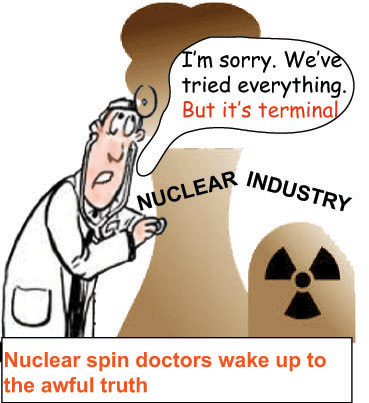
Jim Green, Mar 12, 2024, https://reneweconomy.com.au/cold-turkeys-the-demise-of-nuclear-power-in-australias-aukus-partner-countries/
When announcing the AUKUS agreement in 2021, then Prime Minister (and secret energy minister) Scott Morrison said: “Let me be clear: Australia is not seeking to establish … a civil nuclear capability.” He also said that “a civil nuclear energy industry is not a requirement for us to go through the submarine program.”
However, Coalition Senators argued in a report last year that Australia’s “national security” would be put at risk by retaining federal legislation banning nuclear power and that the “decision to purchase nuclear submarines makes it imperative for Australia to drop its ban on nuclear energy.”
So, let’s see how nuclear power is faring in our AUKUS partners, the UK and the US.
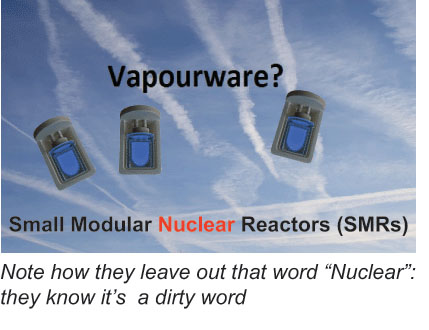
This is a story about conventional, large reactors. All that needs to be said about ‘small modular reactors’ in the UK and the US is that none exist and none are under construction.
This is a story about conventional, large reactors. All that needs to be said about ‘small modular reactors’ in the UK and the US is that none exist and none are under construction.
The UK
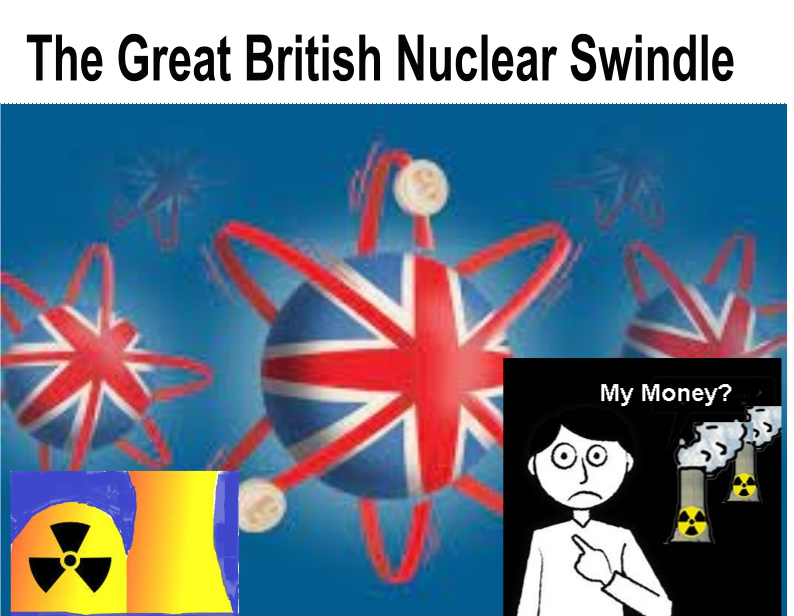
The last power reactor start-up in the UK was 29 years ago — Sizewell B in 1995.
Over the past decade, several proposed new nuclear power plants have been abandoned (Moorside, Wylfa, Oldbury) and the only project to reach the construction stage is Hinkley Point C, comprising two French-designed EPR reactors.
In the late 2000s, the estimated construction cost for one EPR reactor in the UK was £2 billion (A$3.9 billion). When construction of two EPR reactors at Hinkley Point commenced in 2018 and 2019, the cost estimate for the two reactors was £19.6 billion.
The current cost estimate for the two reactors has ballooned to £46 billion (A$89 billion) or £23 billion (A$44.5 billion) per reactor. That is 11.5 times higher than the estimate in the late 2000s. Further cost overruns are certain. This is an example of the Golden Rule of Nuclear Economics: Add a Zero to Nuclear Industry Estimates.
The UK National Audit Office estimates that taxpayer subsidies for Hinkley Point — primarily in the form of a guaranteed payment of £92.50 (A$180) per megawatt-hour (2012 prices), indexed for inflation, for 35 years — could amount to £30 billion (A$58 billion) while other credible estimates put the figure as high as £48.3 billion (A$94 billion).
Delays
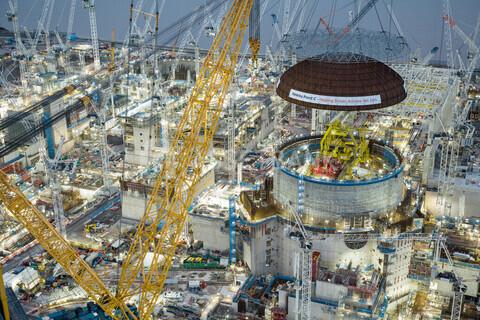
The delays associated with Hinkley Point have been as shocking as the cost overruns. In 2007, French utility EDF boasted that Britons would be using electricity from an EPR reactor at Hinkley Point to cook their Christmas turkeys in 2017. In 2008, the UK government said the reactors would be complete “well before 2020”.
But construction of the two reactors didn’t even begin until 2018 and 2019, respectively, at which time completion was expected in 2026. Now, completion is expected in 2030 or 2031.
Undoubtedly there will be further delays and if the reactors are completed, it will be more than a quarter of a century after the 2007 EDF boast that Britons would finally be using electricity from Hinkley Point to cook their Christmas turkeys.
Construction will take well over 10 years; planning and construction over 25 years. Yet in Australia, the Coalition argues that Australians could be cooking Christmas turkeys with nuclear power 10 years from now.
‘Something of a crisis’
Nuclear industry lobbyist Tim Yeo said in 2017 that the UK’s nuclear power program faced “something of a crisis”. The following year, Toshiba abandoned the planned Moorside nuclear power project near Sellafield despite generous offers of government support — a “crushing blow” according to Yeo.
Then in 2019, Hitachi abandoned the planned Wylfa reactor project in Wales after the estimated cost of the twin-reactor project had risen by 50 percent.
Hitachi abandoned the project despite an offer from the UK government to take a one-third equity stake in the project; to consider providing all of the required debt financing; and to consider providing a guarantee of a generous minimum payment per unit of electricity.
Long gone was the 2006 assertion from then UK industry secretary Alistair Darling that the private sector would have to “initiate, fund, construct and operate” nuclear power plants.
The UK Nuclear Free Local Authorities noted that Hitachi joined a growing list of companies and utilities backing out of the UK nuclear new-build program:
“Let’s not forget that Hitachi are not the first energy utility to come to the conclusion that new nuclear build in the UK is not a particularly viable prospect. The German utilities RWE Npower and E-on previously tried to develop the site before they sold it on Hitachi in order to protect their own vulnerable energy market share in the UK and Germany.
“British Gas owner Centrica pulled out of supporting Hinkley Point C, as did GDF Suez and Iberdrola at Moorside, before Toshiba almost collapsed after unwise new nuclear investments in the United States forced it to pull out of the Sellafield Moorside development just a couple of months ago.”
Sizewell C

The UK government hopes to progress the Sizewell C project in Suffolk, comprising two EPR reactors, and is once again offering very generous support including taking an equity stake in the project and using a ‘regulated asset base‘ model which foists financial risks onto taxpayers and could result in taxpayers paying billions for failed projects — as it has in the US.
If recent experience is any guide, the government will struggle to find corporations or utilities willing to invest in Sizewell regardless of generous government support.
(The same could be said for plans for small modular reactors or mid-sized reactors envisaged by Rolls-Royce — it is doubtful whether private finance can be secured despite generous taxpayer subsidies.)
Many reactors have been permanently shut down in the UK: the IAEA lists 36 such reactors. Since the Sizewell B reactor startup in 1995, there have been 24 permanent reactors shut-downs and zero startups.
Repeat: since the last reactor startup in the UK, there have been 24 shut-downs!
The capacity of the nine remaining reactors (5.9 gigawatts — GW) is less than half of the peak of 13 GW in the late 1990s. Nuclear power’s contribution to electricity supply has fallen from 22 percent in the early 2000s to 14.2 percent.
Meanwhile, the UK government reports that renewable power sources accounted for 44.5 percent of total UK generation in the third quarter of 2023, a higher share than fossil fuels and around three times more than nuclear’s share.
What to make of the conservative UK government’s goal of quadrupling nuclear capacity to 24 GW by 2050? It is deeply implausible. The facts speak for themselves. Two dozen reactor shutdowns and zero startups since 1995.
The Hinkley Point project has been extremely slow and extremely expensive. The Sizewell C project is uncertain. Other proposals — including proposals for small modular reactors — are even more uncertain and distant.
Unsurprisingly, the extraordinary cost overruns and delays associated with Hinkley Point have complicated plans to advance the proposed Sizewell C project.
In 2010, the UK government announced that Sizewell was one of the locations slated for new reactors. Fourteen years later, construction is some years away and it remains uncertain if the project will reach the construction stage. EDF and the UK government are seeking to raise a further £20 billion from new investors. All reasonable offers considered.
France
The Sizewell C project is equally complicated across the channel due to EDF’s massive debts and its plan to replace the EPR design with an EPR2 design, about which little is known except that safety will be sacrificed on the altar of economics. EDF’s debt as of early 2023 was €64.5 billion (A$107 billion) and it was fully nationalised later in 2023 due to its crushing debts.
In addition to its adventures across the channel, EDF has a “colossal maintenance and investment programme to fund” in France as the Financial Times noted in October 2021.
As in the UK, there has not been a single reactor startup in France since the last millennium. The only current reactor construction project is one EPR reactor under construction at Flamanville. The current cost estimate of €19.1 billion (A$31.6 billion) is nearly six times higher than the original estimate of €3.3 billion (A$5.5 billion).
Construction of the Flamanville reactor began in 2007 and it remains incomplete 17 years later. Planning plus construction have taken over a quarter of a century. Yet the Coalition argues that Australians could be cooking Christmas turkeys with nuclear power 10 years from now.
France’s nuclear industry was in its “worst situation ever“, a former EDF director said in 2016 — and the situation has worsened since then. Another former EDF director said in early 2024 that the French nuclear industry is “on a slow descent to hell” and he has “fierce doubts about EDF’s ability to build more reactors.”
The US

The V.C. Summer project in South Carolina (two AP1000 reactors) was abandoned in 2017 after the expenditure of around US$9 billion (A$13.6 billion). Construction began in 2013 and the project was abandoned in 2017.
The project was initially estimated to cost US$11.5 billion; when it was abandoned, the estimate was US$25 billion (A$38 billion).
Largely as a result of the V.C. Summer disaster, Westinghouse filed for bankruptcy in 2017 and its parent company Toshiba only avoided bankruptcy by selling its most profitable assets. Both companies decided that they would no longer take on the huge risks associated with reactor construction projects. A year earlier, Westinghouse said its goal was to win overseas orders for at least 45 AP1000 reactors by 2030.
Criminal investigations and prosecutions related to the V.C. Summer project are ongoing: the fiasco is known as the ‘nukegate’ scandal.
Vogtle

With the abandonment of the V.C. Summer project in South Carolina, the only remaining reactor construction project in the US was the Vogtle project in Georgia (two AP1000 reactors).
Construction of the Vogtle reactors began in 2013 and the expected completion dates of 2016 and 2017 were pushed back seven years to 2023 and 2024. In 2014, Westinghouse claimed a three-year construction schedule for AP1000 reactors but the Vogtle reactors took 10 and 11 years to complete.
The first licence application for the Vogtle project was submitted in 2006 so planning and construction took 17 years in addition to the time spent before the 2006 application.
The latest cost estimate for the Vogtle project is $34 billion (A$51 billion), more than twice the estimate when construction began (US$14–15.5 billion). The project only survived because of multi-billion-dollar taxpayer bailouts.
In 2006, Westinghouse said it could build an AP1000 reactor for as little as US$1.4 billion (A$2.1 billion) — 12 times lower than the latest Vogtle estimate of US$17 billion (A$25.5 billion) per reactor. Another example of the Golden Rule of Nuclear Economics: Add a Zero to Nuclear Industry Estimates.
Corruption scandals
In 2005, the US Nuclear Energy Institute claimed that Westinghouse’s estimate of US$1,365 per kilowatt “has a solid analytical basis, has been peer-reviewed, and reflects a rigorous design, engineering and constructability assessment.”
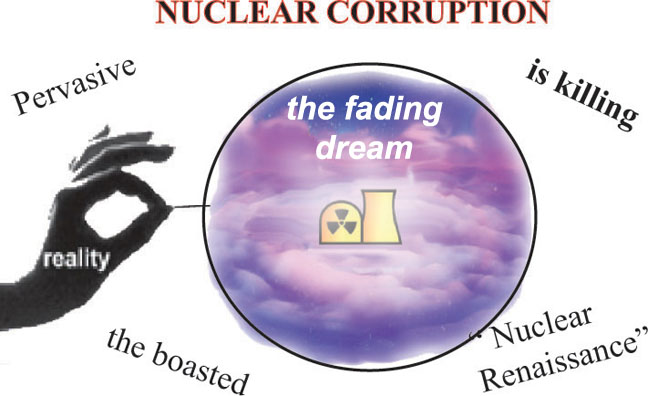
In fact, the estimate was out by an order of magnitude and the Institute’s involvement in a raft of corruption scandals has been exposed. No doubt the Dutton Coalition would happily parrot whatever lies the Institute chose to feed them, and no doubt the Murdoch/Sky/AFR echo-chamber would happily amplify those lies.
During the ill-fated ‘nuclear renaissance’, the US Nuclear Regulatory Commission received applications to build 31 reactors, but only the Vogtle and V.C. Summer projects reached the construction stage and only the twin-reactor Vogtle project was completed. Two out of 31 ain’t bad. Well it is, actually.
Thirteen reactors have been permanently shut down since 2013 with many more closures in the pipeline. The US has one of the oldest reactor fleets in the world with a mean age of 42.1 years. The mean age of the 29 reactors closed worldwide from 2018‒2022 was 43.5 years.
Around 20 unprofitable, ageing reactors have been saved by nuclear bailout funding but their future is precarious. In addition to the V.C. Summer corruption scandal, nuclear bailout programs are mired in corruption scandals (see here, here, here and here and if you’re still not convinced see here, here, and here).
Dr. Jim Green is the national nuclear campaigner with Friends of the Earth Australia and a member of the Nuclear Consulting Group.
Coalition will seek a social licence for nuclear: Dutton

AFR, Phillip Coorey, 12 Mar 24
Communities will be consulted and “incentivised” to adopt nuclear power, Opposition Leader Peter Dutton says as he amplifies his case for the energy source to play a central role in Australia reducing its emissions.
Mr Dutton will also pledge to “ramp up” the domestic production of gas to help firm renewable energy, in his keynote speech to be delivered to The Australian Financial Review Business Summit on Tuesday.
He will also hint at an expansion of rooftop solar, as already flagged by Nationals leader David Littleproud, as an alternative to large-scale renewable energy projects and the thousands of kilometres of transmission infrastructure that those will require……………………….
In setting the scene for his nuclear announcement, Mr Dutton will outline three principles that will guide the policy.
“First and foremost, we want to get the highest yield of energy using the smallest amount of land,” he will say.
“We want to maximise the amount of energy we can obtain per square metre and minimise our environmental footprint.”
This will be achieved by putting reactors on or near the sites of old coal-fired power stations so they can use the existing transmission grid.
The second principle will involve seeking a “social licence” for the policy “by listening to and incentivising communities to adopt nuclear power”.
A third principle is that the Coalition will put people at the centre of our energy policy by making lower energy bills a key consideration.
Mr Dutton dared the government to lift the nuclear power moratorium and let the market decide.
‘Does not make sense’
But energy experts appearing at the Summit continued to cast doubt on the feasibility of the Coalition’s approach.
Carbon Market Institute chair Kerry Schott said she was technology neutral but nuclear “really does not make sense for Australia”.
“Nuclear by far, like daylight by far, [is] the most expensive,” she said.
“It really doesn’t make sense for Australia because we have so much renewable energy resources.”
She said firming wind and solar with hydro and “a little bit of gas” until hydrogen was commercially available was “by far the cheapest and easiest”.
She did, however, agree, that putting solar panels on every rooftop would alleviate the need for Labor’s thousands of kilometres of transmission infrastructure……………………………… https://www.afr.com/business-summit/coalition-will-seek-a-social-licence-for-nuclear-dutton-20240311-p5fbby
Dutton’s nuclear plan will require huge subsidies
AFR 12 Mar 24
So the two prongs of Peter Dutton’s energy plan are to adopt nuclear power and to ramp up production of gas? (“Coalition to seek ‘social licence’ for nuclear power,” March 11)
Well, we know which of the two prongs will actually happen, and it won’t be the nuclear one.
To go down the nuclear path would require massive government subsidies – not just in the construction phase, but over their entire life of the power stations.
This is what is happening in France, where nuclear supplies 70 per cent of the nation’s electricity, and in Ontario, where the figure is 59 per cent.
Otherwise, the government would have to set electricity prices at a level that would underwrite the power companies’ profitability – irrespective of whether those prices were competitive with other forms of energy.
Either way, nuclear is not viable in Australia – at least, not on economic grounds.
Ken Enderby, Concord, NSW
Coalition must consider nuclear cost
Peter Dutton’s nuclear ideas (“Coalition to seek ‘social licence’ for nuclear power,” March 11) fly in the face of evidence.
The cost to build, the huge subsidies, the intellectual capital required, the siting, the water use, the lead-up time for power generation, the cost to consumers, the decommissioning costs, the half-life of plutonium 239 – none of this will deter him. He will continue to juxtapose the idea of nuclear against the reality of renewables.
He and his party will continue to stymie, mock and disparage our transition efforts. The Coalition’s “all of the above” approach sounds open-minded but disguises the fact that “all” does not include the necessary all-out push for renewables.
Nuclear has no chance of getting us to where we need to be, either in terms of emissions or in developing our crucial renewables industries.
Fiona Colin, Malvern East, Victoria……………………. https://www.afr.com/policy/economy/dutton-s-nuclear-plan-will-require-huge-subsidies-20240311-p5fbhj
Tell him he’s dreaming’: Bowen rubbishes Coalition claim Australia could have nuclear power in a decade
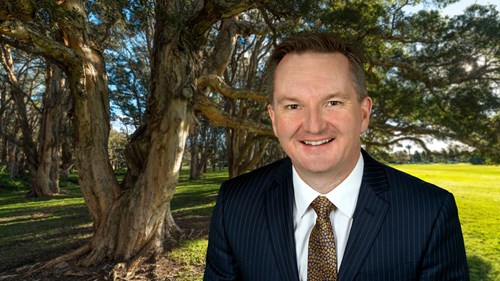
Energy minister says average build time for a nuclear plant in US is 19 years and giving up on renewables would be a ‘massive economic own goal’
Josh Butler, 10 Mar 24, Guardian
The federal energy minister, Chris Bowen, has dismissed Coalition MP Ted O’Brien’s claim that Australia could develop a nuclear power industry within a decade, stating: “Tell him he’s dreaming.”
The mocking comment on Sunday came as the government continued to pour scorn on the opposition’s speculative alternative plan to renewable energy. O’Brien said the Coalition was in the “advanced stages” of finalising its policy, which is not expected to be unveiled for several weeks.
Bowen also told ABC TV that the government was open to amending its fuel
The federal energy minister, Chris Bowen, has dismissed Coalition MP Ted O’Brien’s claim that Australia could develop a nuclear power industry within a decade, stating: “Tell him he’s dreaming.”
The mocking comment on Sunday came as the government continued to pour scorn on the opposition’s speculative alternative plan to renewable energy. O’Brien said the Coalition was in the “advanced stages” of finalising its policy, which is not expected to be unveiled for several weeks.
Bowen also told ABC TV that the government was open to amending its fuel efficiency standards for motor vehicles while again denying claims from the Coalition and some manufacturers that it would increase car prices.
The Coalition’s push for nuclear energy in Australia has been derided by the government and experts. The opposition leader, Peter Dutton, has not specified where the potential nuclear facilities would be located, nor how much they could contribute to the nation’s energy mix.
Sky News reported on Sunday that a 2020 paper from the NSW chief scientist found a nuclear power industry would require tens of thousands of trained staff and at least two decades to become operational.
Responding to the report, O’Brien – the opposition’s energy spokesman – claimed the Coalition had received different advice.
“The best experts around the world with whom we’ve been engaging are saying Australia could have nuclear up and running within a 10-year period,” O’Brien said.
O’Brien did not reveal which experts the Coalition had talked to. Guardian Australia asked his office for more information.
The shadow minister said nuclear could be part of a “balanced mix” of other power types and he criticised Labor for being “negative”.
Bowen was asked about O’Brien’s claim that nuclear could be developed in Australia within a decade.
“Tell him he’s dreaming,” Bowen said on the ABC’s Insiders program, referencing the Australian comedy movie The Castle. “I don’t know what experts he’s talking to.”
Bowen said the average build time for a nuclear plant in the US – a country he called “the nuclear leader of the world” – was 19 years.
“Ted O’Brien thinks he can do it in Australia in 10 with a standing start, no regulations, banned not only nationally but in the three most populous states,” Bowen said.
The minister rubbished arguments that Australia should scrap its ban on nuclear energy to allow private industry to investigate options, claiming that establishing a nuclear industry would require “eye-watering amounts of government taxpayer subsid[ies].”
“I’ve had no one knock on my door to say ‘I want to build a nuclear power plant in Australia’ but I had plenty of the world’s biggest renewables companies through my door,” Bowen said on Sunday.
“There’s a myth this is happening elsewhere in the world. It’s not. Australia has the best renewable resources in the world. It would be a massive economic own goal to give up utilising those resources and go down this nuclear fantasy.”
Beyond suggesting nuclear plants be built at former coal-powered facilities, the Coalition has not confirmed details of their policy – including costs, timeframes, how local opposition would be overcome and the amount of power to be generated.
Dutton could fill in some of the blanks in his budget reply speech in May. He is under pressure to announce details.
Coalition MPs have been agitating for the opposition leader to outline new policies they can spruik ahead of the federal election, which could be held this year…………. https://www.theguardian.com/australia-news/2024/mar/10/tell-him-hes-dreaming-bowen-rubbishes-coalition-claim-australia-could-have-nuclear-power-in-a-decade
Coalition’s nuclear red herring is a betrayal of the Australian people.
Coalition’s nuclear red herring is a betrayal of the Australian people
March 9, 2024 | Canberra Times
Tim Buckley, Annemarie Jonson
https://www.canberratimes.com.au/story/8547521/peter-duttons-nuclear-red-herring-is-a-coalition-betrayal-of-australians/
The sudden enthusiasm of the LNP for nuclear energy is another divisive, cynical and damaging ploy to ignite Climate Wars 2.0 and disrupt and delay Australia’s accelerating renewables transition on behalf of the fossil fuel cartel. The LNP’s climate and energy luddites burned a decade when they were in office. We can’t afford more of the same policy lunacy.
Policy confusion, disinformation and chaos around the nuclear furphy is exactly the solution if you are looking to destroy renewable energy investor confidence, deter investment, and set back our accelerating pathway to decarbonisation – the bedrock of our nation’s economic future. Investors need credible and stable policy and regulation.
The Coalition’s nuclear red herring, and its related threat to pull strategic public capital investment from utility-scale renewables, increases sovereign risk, and is a betrayal of the Australian people.
Nothing about nuclear power makes sense in Australia.
As former Chief Scientist Dr Alan Finkel has said, it would be 20 years or more before the first operation of small modular reactor (SMR) technology in Australia. We need to decarbonise our energy system and economy this critical decade to address the concurrent climate, energy and cost-of-living crises.
SMR technology is not commercial. There are no SMRs in operation outside of Russia and China. In November, the only SMR development in the US was terminated.
There are no private companies worldwide who can build and operate nuclear power plants without massive government underwriting, because they can’t get insurance.
Tokyo Electric Power Company went bankrupt overnight due to its Fukushima nuclear disaster, requiring a US$200 billion taxpayer bailout of the cleanup costs, which will still be being funded beyond 2050.
In promoting nuclear, the LNP is essentially calling for a massive multi-decade subsidy fest that would make the LNP’s Snowy 2.0 and NBN white elephants look like value for money by comparison. Where has the LNP’s staunch preference for free markets gone?
The LNP nuclear shills say they will soon announce sites for reactors. It is not clear in what universe they think they can secure social licence from impacted communities. Legal challenges and civic protest are inevitable.
How they propose to manage the financial cost of multi-centuries of waste storage and rehabilitation to mitigate risk remains a mystery. It is worth noting the unfunded £260 billion liability this decade UK taxpayers face for decommissioning its nuclear waste. Does the LNP suggest leaving this massive cost to future generations?
The economics simply don’t stack up. Firmed renewables are the cheapest form of energy. The cost of nuclear power generation is much higher than its low-cost clean energy alternatives.
But don’t take our word for it. The CSIRO and the Australian Energy Market Operator said in May 2023 that nuclear is “not an economically competitive solution in Australia”, and that we lack the “frameworks for its consideration and operation within the timeframe required.”
The 2022 World Nuclear Industry Status Report said that between 2009 and 2021, costs for solar declined from US$359 to US$36 per megawatt hour (MWh), a fall of 90 per cent, and for wind from US$135 to US$38 per MWh, a 72 per cent fall, while nuclear power costs rose from US$123 to US$167 per MWh, up 36 per cent in the same period.
Battery storage costs are falling double digits each year, and Goldman Sachs just forecast another 40 per cent decline by 2025. Massive ongoing deflation is a feature of renewables, nuclear is the opposite; massive ongoing inflation of costs, externalised onto the public (as highlighted by the World Nuclear News).
The Investor Group on Climate Change, representing investors with $30 trillion in assets, said there is no interest among investors in nuclear.
The IGCC notes nuclear has “project time blowouts of anything from seven to 15+ years and cost blowouts in the tens of billions, and lowest-cost technologies, renewables, batteries and so on, are available to deploy now”.
At last, we are seeing a huge influx of capital into Australia’s renewables transition, triggered by the enabling policy architecture of the Albanese federal government such as Energy Minister Chris Bowen’s federal Capacity Investment Scheme announced in late 2023. Our $3.6 trillion super industry has flagged this policy framework as key to crowding in private capital into renewables infrastructure.
Just last month Rio Tinto inked landmark world-scale 25-year power purchasing agreements worth billions that will underwrite the nation’s biggest yet wind and solar developments, powering the processing of its alumina and aluminium in central QLD with green energy.
The Investor Group on Climate Change, representing investors with $30 trillion in assets, said there is no interest among investors in nuclear.
The IGCC notes nuclear has “project time blowouts of anything from seven to 15+ years and cost blowouts in the tens of billions, and lowest-cost technologies, renewables, batteries and so on, are available to deploy now”.
At last, we are seeing a huge influx of capital into Australia’s renewables transition, triggered by the enabling policy architecture of the Albanese federal government such as Energy Minister Chris Bowen’s federal Capacity Investment Scheme announced in late 2023. Our $3.6 trillion super industry has flagged this policy framework as key to crowding in private capital into renewables infrastructure.
Just last month Rio Tinto inked landmark world-scale 25-year power purchasing agreements worth billions that will underwrite the nation’s biggest yet wind and solar developments, powering the processing of its alumina and aluminium in central QLD with green energy.
Peter Dutton’s nuclear implosion after Dunkley byelection loss

The Saturday Paper, 9 Mar 24 Paul Bongiorno
Anthony Albanese had a good week, thank you very much. His opponent, Peter Dutton, not so much. In fact, you could say the Dunkley byelection blew the opposition leader’s credibility out of the water and left him stranded for a reset.
Not that anyone who bothered to watch the byelection night on the news channels would get the impression from the Liberals they had fallen miserably short of stalling Albanese’s new year momentum. Nor did their performance demonstrate that their strategy was on target to recapture the outer suburban seats they need to offset the loss of 19 seats at the 2022 election………………………………………………………………………………………………………………………………………………………..
a lesson for Advance and Dutton is that winning an election is a very different challenge to disrupting a referendum……………………………………………………………………………………………….
We now have the framework for the Coalition’s “energy plan” – although whether this policy to build large-scale and yet to be commercially viable nuclear small modular reactors (SMRs) is a winner is questionable to say the least.
Albanese took time out from hosting the Association of Southeast Asian Nations (ASEAN) summit in Melbourne to say he looked forward to Dutton announcing the locations for nuclear reactors and where the financing would come from.
Dutton is in the same denial mode his colleagues showed in their reactions to the byelection loss. When he finally put up his head on Tuesday, the opposition leader ducked questions on who would pay for his nuclear “fantasy”, as Albanese calls it, and kept talking about a cheaper, firmer option. His spiel could only be viewed as unbelievable.
The GenCost report from the CSIRO and the Australian Energy Market Operator estimates by 2030 the cost of power from an SMR would be between $200 and $350 per megawatt hour, compared with between $60 and $100 per megawatt hour for wind and solar.
Treasurer Jim Chalmers said Dutton “is always on the hunt for cheap politics, not cheap electricity”.
It’s hard to see this as the winning reset the Liberals crave. https://www.thesaturdaypaper.com.au/comment/topic/2024/03/09/peter-duttons-nuclear-implosion#mtr
Coalition must come clean on how its nuclear vision would work
NUCLEAR QUESTIONS
Simon Holmes a Court is right, “Australia’s climate wars will not end until the Coalition chooses engineering and economics over ideology and idiocy”, (“Nuclear option scorns our natural advantage”, 7/3).
Shadow minister for climate change and energy, Ted O’Brien has said, “The world is embracing zero-emissions nuclear energy because it solves the energy trilemma of affordability, reliability and emissions reduction”.
Does the Coalition honestly believe, in the face of successive GenCost reports and overwhelming overseas experience, that nuclear would provide Australian consumers with cheaper-than-renewables electricity? What then of the huge government subsidies propping up nuclear, for instance the $4 billion for the failed US NuScale SMR experiment?
If we, as David Littleproud suggests, allowed “the marketplace to decide”, how much would Australians subsidise such ventures? How does the Coalition propose to create reliability in our energy grid with nuclear, when it would not be available until at least around 2040?
Finally, in what year does the Coalition propose reaching net zero emissions? Some in its ranks want to renege on our 2050 international commitments, so any commitment is sounding hollow.
The Coalition needs to come clean with the electorate.
Fiona Colin, Malvern East
Nuclear numbers don’t add up
Nuclear power plants take six to eight years to construct. They have an expected working life of 20 to 40 years, but decommissioning takes 20 to 30 years. The numbers just don’t stack up. However, the building and decommissioning phases would provide substantial employment opportunities.
Louise Zattelman, Box Hill
What does Dutton know that we don’t?
Peter Dutton must believe the nuclear option for the provision of power is a vote winner at the next federal election. This seems to fly in the face of public opinion, experts who claim it is not feasible, practical, proven or economical.
So what does he know that we don’t? An election is looming. It’s time for the Coalition to think of practical policies that at least give them a chance.
Bruce MacKenzie, South Kingsville
Nuclear power: Peter Dutton changes gear in favour of big reactors not small modular ones,

Mr O’Brien told The Australian Financial Review in June 2022 that SMRs, not large-scale power plants, were the future of nuclear.
Mr Dutton is now saying modern giant power plants would be the backbone of the Coalition’s energy policy.
Phillip Coorey, https://www.afr.com/politics/federal/dutton-changes-gear-on-nuclear-plans-pm-dismissive-20240305-p5f9vg 5 Mar 24
Plans by the Coalition to build large nuclear reactors on the sites of old coal-fired power stations would be prohibitively expensive, take more than a decade to implement, and would not work in most cases because such reactors need to be near water, Prime Minister Anthony Albanese said.
Mr Albanese, who as shadow environment minister two decades ago fought plans by John Howard to consider nuclear power plants near populated coastal communities, said little had changed in terms of the political difficulties of such a proposal.
“He is now speaking about large nuclear reactors. They need to be near populations, they need to be near water,” he said of Mr Dutton.
“I look forward to him announcing the locations for nuclear reactors in Australia and for there to be an appropriate debate about that.”
Mr Dutton and his energy spokesman Ted O’Brien are proposing nuclear power be used to provide baseload power to firm renewable energy and ensure Australia can achieve new zero emissions by 20250.
Rather than build, as Labor is intending to do, 28,000 kilometres of poles and wires to transmit renewable energy from wind and solar farms, Mr Dutton is proposing building nuclear power pants on the sites of coal fired plants as they are decommissioned.
The proposal builds on the original plan, which would involve a strong focus on small modular reactors.
Mr O’Brien told The Australian Financial Review in June 2022 that SMRs, not large-scale power plants, were the future of nuclear.
“Nobody wants old Soviet technology, you wouldn’t touch it with a barge pole,” he said.
But SMR technology is still embryonic, and Mr Dutton is now saying modern giant power plants would be the backbone of the Coalition’s energy policy.
“It doesn’t resemble anything that you’ve seen in the past. It’s like comparing a motor vehicle you’re driving off the showroom floor today in 2024, compared to something in 1954,” he said.
“So, the technology is unbelievable compared to what it was 50 or 70 years ago.”
He said bipartisan support for nuclear-powered submarines under the AUKUS deal had removed any opposition to nuclear power on the basis of their needing to have a high-level nuclear waste dump.
Mr Albanese said the nuclear argument had changed little since Mr Howard had businessman and nuclear physicist Ziggy Switkowski examine the option in 2006.
“Every 10 years, there are these proposals, we’ve seen the Switkowski report come and go,” he said.
“What never comes is any investment, because it simply doesn’t stack up commercially.
“I look forward as well to him arguing where the financing will come [from] for such reactors, or whether taxpayers will be expected to pay for this.”
The Opposition argues Mr Albanese should lift the moratorium on nuclear power and let the market decide.
Mr Dutton said Mr Albanese was out of touch with public opinion which, according to opinion polls, is warming to nuclear power.
“It’s … supported by a lot of younger people because they’re well-read, and they know that it’s zero emissions, and it can firm up renewables in the system,” he said.
“The government’s got sort of a wing and a prayer at the moment where they think if we have 100 per cent renewables in the system, the costs will go down, or there can be reliability. Neither of those things will happen, in fact, the opposite.”
Nuclear slow and expensive, renewables fast and cheap: Bowen slaps down Coalition “fantasy”
Giles Parkinson, Mar 7, 2024, https://reneweconomy.com.au/nuclear-slow-and-expensive-renewables-fast-and-cheap-bowen-slaps-down-coalition-fantasy/—
Federal climate and energy minister Chris Bowen has again slammed the federal Coalition’s “nuclear fantasy”, describing it as a deliberate distraction and the latest “desperate effort” to keep the culture war over energy and climate alive.
“(They say) renewable energy is all too hard, we’ll just have to go nuclear,” Bowen said in comments at the Smart Energy Council conference in Sydney, adding that the technology is “utterly uneconomic.”
Bowen was asked why the government would not support a lifting of the ban against nuclear power and allow – as the Coalition and others suggest – to let the “market decide.” He pointed to the fact that it would take a decade to develop a regulatory regime, and three states also had their own bans in place.
“They say ‘lift the ban’ and the market will sort it,” Bowen said.
“Well, the market hasn’t sorted it out anywhere else in the world, there is not a market in the world where nuclear isn’t subsidised substantially by government. So this idea that we lift the ban and all these foreign investors are going to suddenly come to help Australia’s nuclear sector is just fantasy.”
Bowen said three states would also have to lift their bans, and only then could a regulatory process be put in place which he said would require at least 10 years, before deciding on location, environmental approvals and the question of subsidies.
“It would be a massive distraction,” Bowen said. “And it would send the signal somehow to the market that Australia and the Australian Government are interested in nuclear, when we’re not because it uneconomic, utterly uneconomic.
Coalition leader Peter Dutton and energy spokesman Ted O’Brien had favoured small modular reactors, and dismissed large “Soviet era” reactors, but appear to have now changed their mind and flipped back towards large scale nuclear after the only prospective SMR in the western world was cancelled because of soaring costs.
Bowen says the push to nuclear is simply an extension of the culture war over climate and energy issues.
“We know the sorts of arguments they run. It’s a desperate effort to keep the culture war alive. Renewable energy is all too hard. We’ll just have to go nuclear.”
Federal Labor has adopted a target to reach 82 per cent renewables by 2030, and most energy experts suggest all remaining coal fired power stations would be closed by around 2035.
Nuclear is seen as impossible to deliver in Australia before 2040, notwithstanding its costs, and energy experts question how an essentially “baseload” energy supply can be jammed into what will by then be a grid dominated by wind and solar, and particularly rooftop solar, which will require storage and flexible capacity.
The federal government’s Capacity Investment Scheme is likely to seek 10 GW of new wind and solar capacity in a series of auctions in 2024, and likely a similar amount in 2025, along with at least 3 GW of long durations storage in each of the next three years.
Bowen said a formal announcement is expected soon. He said the result of the first CIS auction, for 600 MW of long duration storage (defined as a minimum four hours) had elicited a very good response and the results would be announced in coming months.
Top scientist explains nuclear process and risks: Sunshine Coast previously considered for facility
Sunshine Coast News, STEELE TAYLOR, 6 MARCH 2024
A leading local academic has detailed the risks posed by nuclear power, amid revelations the Sunshine Coast was, in 2007, put on a shortlist of possible sites for a facility.
Emeritus Professor Ian Lowe says there are multiple problems with nuclear energy, including high costs, lengthy builds, health threats and international tension.
Professor Lowe explained the process of nuclear energy production, and the potential for accidents.
“In a nuclear reactor, the process of fission (breaking up of unstable large atoms like uranium) releases heat energy, which is used to boil water,” he said.
“It is basically just a more complicated way of boiling water than burning coal or gas.
“The steam produced by the boiling water is used to turn a turbine and generate electricity.
“In normal operation, nuclear reactors have a good safety record but there have been a series of large-scale accidents like the Windscale fire, the Three Mile Island meltdown, the Chernobyl explosion and the destruction of the Fukushima reactor by a tsunami.
Those accidents have made people nervous about living near a nuclear power station.
“In the cases of Chernobyl and Fukushima, whole regions have been made permanently uninhabitable because the radiation levels are not safe for people to live there.
“As well as the small but non-zero risk of serious accidents, nuclear reactors produce radioactive waste that will need to be safely stored for thousands of years.
“This is a problem that is causing real headaches for all the countries that have nuclear power stations, with only one – Finland – being on the path to a solution.”
Professor Lowe says nuclear energy production has multiple requirements, and locations for power plants have been considered.
“If we were to build a nuclear power station in Australia, the need for massive amounts of cooling water would demand a coastal site,” he said.
“It would also need to be connected to the electricity grid and ideally be near a major power user like a capital city.”
The Australia Institute used a checklist of the needs to produce a shortlist of possible sites for nuclear power plants, for a research paper that was produced in late 2006 and released in early 2007.
The Sunshine Coast, where Professor Lowe has lived for the past 20 years, was among the locations named.
“In a nuclear reactor, the process of fission (breaking up of unstable large atoms like uranium) releases heat energy, which is used to boil water,” he station.
“In the cases of Chernobyl and Fukushima, whole regions have been made permanently uninhabitable because the radiation levels are not safe for people to live there.
“As well as the small but non-zero risk of serious accidents, nuclear reactors produce radioactive waste that will need to be safely stored for thousands of years.
“This is a problem that is causing real headaches for all the countries that have nuclear power stations, with only one – Finland – being on the path to a solution.”
Professor Lowe says nuclear energy production has multiple requirements, and locations for power plants have been considered.
“If we were to build a nuclear power station in Australia, the need for massive amounts of cooling water would demand a coastal site,” he said.
“It would also need to be connected to the electricity grid and ideally be near a major power user like a capital city.”
The Australia Institute used a checklist of the needs to produce a shortlist of possible sites for nuclear power plants, for a research paper that was produced in late 2006 and released in early 2007.
The Sunshine Coast, where Professor Lowe has lived for the past 20 years, was among the locations named.
“It is worth adding that the tsunami of panic among sitting members of parliament when that list was released had to be seen to be believed,” he said.
“But we do now have a local member (Fairfax MP Ted O’Brien), promoting nuclear energy with great enthusiasm.”
There is no indication that the Sunshine Coast is on a current shortlist of possible sites………..
Mr O’Brien has previously said, via ABC Radio National, that he would welcome a nuclear facility in his electorate or any other electorate, “where it is proven to be technologically feasible, has a social licence and is going to get prices down”.
But he also told Sunshine Coast News that a nuclear facility would probably be better placed somewhere other than the Coast………………..
Legalities and history
Professor Lowe says there would be legal hoops to jump through to make nuclear power production possible in the country.
“Nuclear power is not legal in Australia. To get support for its Environmental Protection and Biodiversity Conservation Act in 1999, the Howard government included clauses that specifically prohibit uranium enrichment, fuel fabrication and the building of power reactors,” he said.
“So, any proposal for nuclear power would require repealing that prohibition.
“The current government has no interest in doing that; neither did the Coalition at any point in their nine years in office.
“Since the 2007 report, no Australian government – national or state, Coalition or ALP – has shown any serious interest in nuclear power………… there is certainly enough opposition to make any politician very nervous about the chances of the community supporting it.”…………………………………………….. https://www.sunshinecoastnews.com.au/2024/03/06/academic-outlines-risks-of-nuclear-power-coast-on-shortlist/?fbclid=IwAR2I76u7tz5tjM31QVgAq3P_UBlTk8qySjV7dflzmrLmWai10-bUq65Cq9Q—
Peter Dutton’s climate denial is morphing into a madcap nuclear fantasy. The ban should stay

And don’t think for a moment that the Coalition, if in power and with no nuclear ban standing in its way, would not propose some mad-cap scheme to lock in some unproven projects from the first nuclear salesman that turns up at their door.
And don’t think for a moment that the Coalition, if in power and with no nuclear ban standing in its way, would not propose some mad-cap scheme to lock in some unproven projects from the first nuclear salesman that turns up at their door.
Giles Parkinson, Mar 5, 2024, https://reneweconomy.com.au/peter-duttons-climate-denial-is-morphing-into-a-madcap-nuclear-fantasy-the-ban-should-stay/
The energy tropes on social media are getting so bizarre it is sometimes hard to imagine how anyone would take them seriously.
Welcome to the Trumpian world we now live in: Say something often enough and people may end up believing it. And just when you think it could not get any more weird, up pops the federal Coalition with a plan for nuclear power.
There is a lot to be said about nuclear energy, and despite its exorbitant costs some countries are still trying to build nuclear plants because it either supports their military complex, or because they feel they have no choice.
In most countries, the arguments in favour of nuclear power are usually based around the promise and determination that it can accelerate the transition towards net zero and low carbon economies.
Not in Australia: The Coalition makes their position very, very clear. They don’t buy into the renewables thing, they think it is reckless and will ruin the environment, and the economy. And they are not particularly interested in accelerating, or even meeting, net zero emission targets.
Far better, they say, to stop the renewables transition in its tracks, keep coal fired power stations open and wait for small modular reactors. Which, if they ever arrive, cannot realistically be deployed in Australia before 2040, if then.
Even the large nuclear reactors suggested on Tuesday by Coalition leader Peter Dutton – maybe he realises that SMRs are indeed a fantasy – could not be built before 2040, more likely 2045.
The push for nuclear over renewables, and keeping coal fired power stations open, is an argument you can only prosecute if you happen to believe that climate science is a load of crap, and the result of some UN-based conspiracy to deprive us all of our liberties.
Which just happens to be a core belief of key members of the Coalition, its loudest media mouthpieces, and what appears to be its main advisory body, the Gina Rinehart-funded Institute of Public Affairs.
As Michael Mazengarb reported last week, a whole cast of right-wing so-called “think tanks” are prosecuting the argument for nuclear, attacking renewables, and helping feed the social media frenzy against this and other technology solutions – battery storage, EVs, and the very concept of demand management and smart energy.
The nuclear debate is moving into the mainstream. Surveys, most with loaded questions, suggest there is majority support for nuclear and the removal of Australia’s ban of the technology. That’s questionably, but even Australia’s pre-eminent business commentator, Alan Kohler, bought into the argument this week.
Kohler argued the ban against nuclear should be removed, but won’t matter much because the market will decide, and investors will not put money into nuclear because they don’t want to bury themselves under a wall of debt and absurdly expensive production costs.
“The market will decide” is a key Coalition and nuclear booster talking point.
Kohler is wrong. And so is the Coalition. The market will not decide. The market has not decided the fate of nuclear power stations for decades – they are funded, owned and often enough bailed out by governments and state-owned entities.
And there are not that many actually being built. The Coalition’s “nuclear renaissance” is a mirage and a fiction. According to a report from the International Energy Agency this week, new solar installations across the world rose to 420 gigawatts in 2023, new wind to 117 GW, and new nuclear slumped to just 5.5 GW.
And they are not doing much for emissions either. In the five year period from 2019 to 2023, the IEA says, solar accounted for 1.1 billion tonnes of avoided annual emissions. Wind accounted for 830 million tonnes of avoided annual emissions, and already installed nuclear just 160 million tonnes.
That won’t phase a Coalition government in Australia. The nuclear ban should stay because the country’s ruling parties, and the Coalition in particular, have shown a penchant for hare-brained and vanity projects that make little or no financial or strategic sense.
Think of the Aukus deal – $368 billion for six nuclear submarines, which, as was feared, as acted as a kind of Trojan horse for the nuclear boosters. Think of Snowy 2.0, already costing $12 billion and counting for a project that won’t deliver anything like the benefits claimed, and that does not include the cost of transmission.
Snowy 2.0 is an interesting case.
Read more: Peter Dutton’s climate denial is morphing into a madcap nuclear fantasy. The ban should stayIt could be argued that Snowy 2.0 has done more damage to the Australian renewable energy transition than any other project, or policy position. And you could also argue its parent company, the government-owned Snowy Hydro, could provide the perfect vehicle for Dutton’s nuclear dreams.
The sheer scale of Snowy 2.0 has caused countless of smaller, more sensible and more distributed storage projects to be delayed or cancelled.
The Snowy Hydro rhetoric in support of the project – that battery storage is not feasible, and household batteries are a waste of money – has helped deflect the media and policy debate away from where it needed to be: consumer energy resources.
Snowy Hydro didn’t like want to change their primacy in the market with new fangled ideas. Demand management, its former CEO Paul Broad liked to say, is akin to “forced blackouts.”
Their push against CER and smart energy solutions is much reported and quoted position that has caused pain across the grid and for consumers, and helped derail plans for a sensible and fair transition. Regulators and policy makers only now realise they have been led up the garden path and are scrambling for ways to repair the situation.
And the transmission lines that have been fast-tracked to support Snowy 2.0 – the HumeLink and VNI-West, most notably – have been rushed and poorly handled, and have provided a trigger point for the anti-transmission and anti-renewable agenda that now floods the airwaves.
Snowy Hydro is still at it. During a recent media tour of the stalled and costly Snowy 2.0 tunnelling project, CEO Dennis Barnes was quoted by one of the invited journalists as saying that “no other technology” exists that can deliver more than four hours storage.
“There may be technologies in 15, 20 years, but there is no commercial technology other than pumped hydro that goes beyond four hours,” Barnes was quoted as saying by The Australian.
That would be news to global energy giants such as RWE, BP and Ark Energy (owned by Korea Zinc) who have contracted to build eight-hour batteries for the NSW government as part of their plan to fill the gap that could be created if the Eraring coal generator does close as planned in August next year.
Those eight-hour batteries will all be up and running well before Snowy 2.0.
But it’s merely a symptom of the nonsense and misinformation that must be stated by developers to justify projects that are not such as great idea.
The nuclear cartel and its supporters are no different, and have been emboldened by Trump’s triumph with fake news: Facts don’t seem to matter so much any more.
The energy world, particularly in Australia, is moving away from “baseload” to renewables and “flexible” dispatchable capacity. Rooftop solar is expected to increase four fold over the next two decades, and be accompanied by a mass switch to electrification (business and households), and electric vehicles.
The switch to EVs is significant, because it causes consumers to think on a near daily basis how and where they will charge the electric vehicles, and at what cost.
It makes them focus on their options for solar, and storage, and smart software, and whether they are getting a fair deal from the current market that is now so focused on big centralised power.
The Coalition wants to throw that transition into reverse.
Exactly how the Coalition expects to jam baseload nuclear into a grid where rooftop solar accounts for all grid demand and more during the day is not explained. Don’t expect an answer, because they haven’t thought about it yet, and when they do it will probably feature curtailment and more storage.
See Alan Pear’s comment: How can nuclear fit into a renewable grid where base load cannot compete
And don’t think for a moment that the Coalition, if in power and with no nuclear ban standing in its way, would not propose some mad-cap scheme to lock in some unproven projects from the first nuclear salesman that turns up at their door.
Private investors won’t put up the money for nuclear power plants, but the Coalition – be it the LNP in Queensland with their state-owned utilities, or the Dutton-led Coalition in Canberra with Snowy Hydro – won’t need them.
Perversely, Snowy Hydro, might provide an attractive synergy for the Coalition’s nuclear plans, and not just for their shared disregard and disdain for consumer and distributed energy resources and smart energy solutions.
EdF, the French government-owned utility that runs its nuclear power plants, is also the biggest operator of pumped hydro in the world, because much of the world’s pumped hydro was built half a century ago with the specific task of backing up nuclear energy. As the name suggests, Snowy Hydro, has lots of hydro.
(Yes, nuclear needs back up power, and a lot of it. Because of that, and because its business model is based around “baseload”, it doesn’t really help in the renewables transition. In a country like Australia with world-leading wind and solar resources, it competes against it).
And, like the French government which shields French consumers from the soaring cost of nuclear (it cost $40 billion in 2022/23 alone after half their fleet went offline), the Coalition can dip into the Commonwealth budget for funds – as they did for Aukus – for which the current crop of MPs and Senators will never be accountable.
Their denial of economic reality is total. The only small modular reactor that has got close to regulatory approval and to actually being built, was the NuScale technology in the US, which got pulled because the costs spiralled beyond what even the technology’s naysayers were predicting.
But we are told repeatedly that nuclear isn’t expensive at all. “Billionaires are demanding Australians refuse cheaper, reliable, emission-free nuclear power,” Vikki Campion, the wife of National MP and anti-renewable ring-leader Barnaby Joyce, writes in the Murdoch media. Cheaper than what, exactly? Nothing much.
The Coalition has been trying to stop the renewable energy revolution for the last two decades, and is now launching attacks against institutions such as the CSIRO and AEMO.
Maybe it’s time people paused to reflect about why that is. Exactly whose purpose are they serving, whose interests are they defending? Why was it so important for Dutton to fly to Perth last week for an hour to celebrate Rinerhart’s birthday?
The fossil fuel mafia ganged up on John Howard over the then mandatory renewable target and the proposed carbon price, and right through Tony Abbott and Scott Morrison to Dutton, it’s been the same story. Malcolm Turnbull might have been different, but his legacy is Snowy 2.0.
Labor is now in power, its climate policies still fall short of what the science demands by 2030, but it is having a real crack at meeting the 82 per cent target modelled in the market operator’s Integrated System Plan, and which is now an official target.
Even the biggest energy users – those that run the smelters and the refineries – are demanding the transition to renewables, and are acting on it.
Curiously, the renewables industry stays largely mum on the nuclear issue – relying, perhaps, on the notion that rational thought, science and economics will prevail. We don’t live in that world any more.
Nuclear is nothing more than a distraction, and a dangerous one at that. The ban should stay.
Continue readingMP says coalition ‘must’ explain plan for nuclear power near Anglesea on the Victorian Surf Coast
March 3, 2024 by Tim Lamacraft, https://www.bay939.com.au/local-news/mp-says-coalition-must-explain-nuclear-coast-plan/—
The federal member for Corangamite says the coalition needs to explain where it would build a nuclear reactor on the Surf Coast.
It follows suggestions from Liberal leader Peter Dutton the former Anglesea power station would be a suitable location for nuclear power generator.
Anglesea was in Labor MP Libby Coker’s seat of Corangamite before it moved into the electorate of Wannon for the 2022 election, held by senior Liberal MP Dan Tehan who’s now seeking to downplay nuclear talk there.
Asked last week if Anglesea could host a small modular reactor (SMR) as suggested by his leader, Mr Tehan said Alcoa’s former coal mine and power generator there was already earmarked for an eco-tourism site by the UK based Eden Project.
“Planning is already taking place, and we’re looking at the first small modular nuclear reactor occurring in 2035, obviously the community and everyone hopes that the Eden Project will be up and running by that stage,” he said.
The Eden Project is facing increasing pushback from the Surf Coast community, including from the local shire where the deputy mayor is opposed to it.
“There are a lot like me who are wary of the proposal and definitely question the need, probably very, very sceptical about their being a need for it,” Cr Mike Bodsworth said, who also represents the Anglesea ward.
When asked by Geelong Broadcasters what he thought the chances of nuclear reactor going into Anglesea were, Dan Tehan said he was “on the record as supporting the Eden Project.”
“The community strongly supports the Eden Project, like I do,” Mr Tehan said.
“As we continue to investigate sites around the country, there’ll be other sites which will tick the box more so than Anglesea, where there is already – I think – a very worthwhile proposal.”
Libby Coker remains unconvinced, and says the opposition is yet to outline much of the detail behind its push for nuclear power, including the disposal of spent fuel.
“Peter Dutton and the Coalition must tell us where on the Surf Coast they’re planning to build this nuclear reactor and put its waste,” she said.
1 This month

of the week – Australians for War Powers Reform (AWPR)
To see nuclear-related stories in greater depth and intensity
 Antinuclear